Mobile Hardness Testing
Application Guide for
Hardness Testers
Mobile Hardness Testing –
Application Guide
Dr. Stefan Frank
1. Introduction ... 4
1.1 What is hardness? ... 4
1.2 Why hardness testing? ... 5
1.3 On-site mobile hardness testing? ... 5
2. The UCI method (MIC 10, MIC 20) ... 5
2.1 The method ... 5
2.2 Selecting the suitable UCI probe ... 6
3. The Rebound method (DynaPOCKET, DynaMIC, MIC 20) ... 8
3.1 The method ... 8
3.2 Selection of the suitable impact device ... 9
4. The optical Through-Indenter-Viewing method (TIV) ... 10
4.1 The method ... 10
4.2 Selection of the suitable probe ... 12
5. The Hardness Testers – an Overlook ... 13
5.1 The DynaPOCKET ... 13
5.2 The DynaMIC ... 13
5.3 The MIC 10 ... 13
5.4 The MIC 20 ... 14
5.5 The TIV ... 14
6. The different methods in the field ... 14
6.1 Selecting the test method ... 14
6.2 Significance of indentation size ... 15
6.3 Relation between penetration depth and minimum thickness for coatings ... 16
6.4 Hardness testing on welds (HAZ) ... 16
6.5 Test piece mass requirements ... 17
6.6 Wall thickness requirements ... 17
6.7 Surface quality ... 18
6.8 Handling, alignment, and fixing ... 18
6.9 Calibration ... 18
6.10 Verifying instrument performance ... 20
7. Summary and help in choosing the suitable test method ... 20
7.1 The UCI method (MIC 20 / MIC 10) ... 21
7.2 Rebound method (MIC 20 / DynaMIC / DynaPOCKET) ... 21
7.3 Optical method – Through-Indenter-Viewing (TIV) ... 21
Mobile hardness testing is on the ad-vance: in these times of cost pressure and higher quality requirements, it repre-sents not only a quick but most of all an economical supplement to stationary hardness testing in the modern produc-tion process. The applicaproduc-tion possibilities are far ranging - this refers to both large and smaller components, especially at positions which are difficult to access. There are three different physical methods which are particularly recognized in the field: the static UCI (Ultrasonic Contact
Impedance) method and the dynamic rebound hardness testing method, as well as the optical TIV (Through-Indenter-Viewing) method. The decision as to which method is to be used depends on the test problem. Krautkramer offers five instru-ment series for mobile hardness testing, operating according to the UCI, the re-bound or the TIV methods: DynaPOCKET, DynaMIC, MIC 10, MIC 20, and TIV. This Application Guide explains the basic principles of these test methods and compares them, using examples from the
field, e.g. hardness testing in the heat-affected zone (HAZ) of welds.
In addition to this, the subjects critically discussed are the factors liable to influ-ence the measured values, such as sur-face preparation at the test location or the mass of parts to be tested as well as their thickness.
1.1 What is hardness?
With regard to metallic materials, hard-ness has always been (and still is) a sub-ject of much discussion among
metallur-1. Introduction
Fig. 1:
Hardness testing using the MIC 20 in combination with the test support MIC 227 and a UCI probe in the heat-affected zone (HAZ) of a weld.
Fig. 2:
Hardness testing with a rebound hardness tester (DynaMIC) on the drive wheel of a large hydraulic excavator.
Fig. 3:
Hardness testing using the DynaPOCKET on the chain of an open-pit mining excavator.
Fig. 4:
gists, engineers, and material scientists. It is no wonder therefore that there is a wide range of definitions for the term hardness. Attributes like wear resistance, deformation behavior, tensile strength, as well as modulus of elasticity or Young’s modulus are connected with the term hardness.
An exact description of the method must be made if one wishes to compare the obtained readings with each other in order to achieve a usable hardness value. However, if the reading depends on the method, then the conclusion may quite clearly be drawn that hardness is no physical quantity but that it must be a parameter.
Hardness testing is almost nondestructive and in many cases used for determining parameters to differentiate and describe materials. For example, hardness values can easily provide data on the strength properties of a material.
The term hardness is generally understood as being the resistance of a material against the penetration of a body made of a stronger material.
Hardness is therefore not a fundamental quantity of a material but always a re-sponse of the material to a certain load or test method. A hardness value is calculat-ed on the basis of the response of the material to this load.
Depending on the test method, other numerical values are then determined which are due to and characterized by • the shape and material of the indenter • the type and size of the load,
e.g. test load.
The different test methods can be roughly divided into two groups:
a) Static test method:
With this method of testing, the load is applied statically or quasi-statically. After removing the test load, the hardness value is defined as a ratio of test load and the surface or projected area of the per-manent test indentation (Brinell, Vickers, or Knoop). In tests according to Rockwell, the hardness is determined by means of the permanent penetration depth of a body due to the test load.
b) Dynamic test method
As opposed to the static method, the load is applied in the impact mode in this case, and the hardness is determined on the basis of the indenter’s ”loss of energy”.
It is normal practice – and often neces-sary – to indicate the hardness values using another scale than the one used for measuring them. The following should always be taken into account regarding this:
• There are no generally applicable relati-onships for the conversion of hardness values from one to another
• Conversions are possible whenever the conversion relationship has been deter-mined by statistically backed compari-son measurements
• Conversion relationships from national and international standards apply to certain material groups to a limited extent.
The various conversion relationships, as specified in standards DIN 50 150 and ASTM E 140, are stored and can be selected in the instruments of the MICRODUR series (MIC 10 and MIC 20) and in the rebound hardness testers (DynaPOCKET, DynaMIC, MIC 20), as well as in the optical TIV hardness tester.
1.2 Why hardness testing?
Within the production and assembly lines, the hardness of materials or com-ponents is mainly tested for two reasons: firstly, to determine the characteristics of new materials, and secondly, for the purpose of quality assurance by meeting the required specifications.1.3 On-site mobile hardness testing?
Conventional hardness testers according to Rockwell, Brinell, or Vickers always require the test piece be brought to the tester. As this is not always possible for practical reasons and, most of all, for reasons of geometry, small and portable hardness testers were developed that enable quick on-site testing on the component.Different methods are applied here. Most of all the portable hardness testers according to the UCI, rebound, and TIV method are successfully used in practical operations in the field.
2. The UCI method (MIC 10, MIC 20)
2.1 The method
As in Vickers or Brinell hardness testing, the question as to the size of the test indentation left in the material by a
Vickers diamond after applying a fixed test load also arises in Vickers hardness testing according to the Ultrasonic Contact Impedance method (UCI for short).
However, the diagonals of the test inden-tation are not determined optically for the hardness value as usual, but the indentation area is electronically detected
Standardized according to ASTM A 1038
900
700
500
300
100
by measuring the shift of an ultrasonic frequency. The UCI method can be illus-trated by a small imaginary experiment. A UCI probe essentially consists of a Vickers diamond attached to the end of a metal rod (Fig. 5). This rod is excited into longi-tudinal oscillation by piezoelectric trans-ducers. Imagine instead of the metal rod (we refer to it as oscillation rod) a large spiral spring held at one end and
oscillat-ing at a resonant frequency of 70 kHz at the free end. At the very top of this spring, there is a contact plate, the Vickers dia-mond. The test material, with which the Vickers diamond comes into contact, can also be imagined as being a system of smaller spiral springs positioned vertically to the surface - an atomic bond, two atoms inter-linked via a “spring“. If only one of these “atomic springs“ is touched by the Vickers diamond - with very hard material in which the diamond can only slightly penetrate and consequently pro-duce a small indentation – then an addi-tional spring, i.e. mass, is coupled to the large spiral spring. This produces a shift in resonant frequency.
This frequency shift will become greater when additional “springs“ are touched, that means if the diamond penetrates deeper into a material of medium hard-ness, and the test indentation becomes
larger. Analogously, the largest frequency shift is produced on soft test materials; the diamond penetrates deeper into the material leaving a large indentation.
The frequency shift is proportional to the size of the test indentation produced by the Vickers diamond. Therefore, the diagonals of the test indentation are not optically determined for the hardness value, as is usually done, but the inden-tation area is electronically detected by measuring the frequency shift – taking just a few seconds.
This is the whole secret of UCI hardness testing: the frequency shift is proportional to the size of the Vickers test indentation. Equation 1 describes this basic relation in comparison to the definition of the Vickers hardness value.
Naturally, such a frequency shift likewise depends on the spring constant of our small ”atomic springs”.
When applied to the material to be tested, this is known as the modulus of elasticity or Young’s modulus. After completing the calibration, the UCI method can be used
for all materials showing this modulus of elasticity. The probes are factory-calibrated on low-alloy or unalloyed steels; however, modern test instruments can also be quickly calibrated to other materials, such as titanium or copper, at the test location.
2.2 Selecting the suitable UCI probe
To carry out a test according to the UCI principle, a probe containing a rod with a Vickers diamond attached to the contact end is oscillated by piezoelectric ceramic transducers at an ultrasonic frequency.Fig. 5:
Schematic description of the UCI method (Test load / Oscillation rod / Vickers diamond / Material to be tested).
Fig. 6:
Frequency shift of the oscillation rod as a function of hardness (HV).
Frequency shift (kHz)
Equation 1:
The frequency shift is proportional to the indentati-on size of a Vickers indenter.
Piezo Transducer Piezo Receiver Oscillating Rod Vickers Diamond 2 2.5 3 3.5 4 4.5 5 = frequency shift
A
= area of indentationE
eff = effective Young´s modulusHV
= Vickers hardness valueA spring applies the load, and the fre-quency of the rod changes in proportion to the contact area of the indentation produced by the Vickers diamond. There-fore, the hardness value is not optically determined by the diagonals of the in-dentation, as would normally be the case with a hardness tester measuring statically, but by an electronic measurement of the frequency shift within seconds.
The instrument constantly monitors the frequency, calculates the value, and instantaneously displays the hardness value.
The UCI method is best suited for testing homogeneous materials. Six test loads are employed by the various models of UCI probes (table 1).
Table 1:
UCI probe models, benefits, and typical applications.
98 N MIC 2010 Largest indentation; requires Small forgings, weld testing, HAZ
(10 kgf) Standard Length minimal surface preparation Handheld Style
50 N MIC 205 Solves most general Induction or carburized
(5 kgf) Standard Length application problems mechanical parts, e.g. camshafts,
Handheld Style turbines, welds, HAZ.
MIC 205L 30 mm extended length Measurement in grooves, gear
Extended Length tooth flanks and roots
Handheld Style
10 N MIC 201 Load easy to apply; enables Ion-nitrided stamping dies and
(1 kgf) Standard Length controlled testing on a sharp molds, forms, presses, thin walled
Handheld Style radius parts
MIC 201L Measurement on complicated Bearings, tooth flanks
Extended Length geometries Handheld Style
8 N MIC 211 Automatic load application Finished precision parts, gears,
(0.9 kgf) Motor Probe Style bearing raceways
3 N MIC 2103 Automatic load application Layers, e.g. copper or chromium
(0.3 kgf) Motor Probe Style layers on steel cylinders
(≥ 40 µm),
rotogravure cylinders, coatings, hardened layers
(≥ 20µm)
1 N MIC 2101 The shallowest indentation These layers with a polished surface
(0.1 kgf) Motor Probe Style
Fig. 7:
UCI-probes – different models.
Ekin = mvI2/2 Epot = mghI Ekin = mvR2/2 E pot = mghR hI m m VI m VR m hR d
▲
▲
▲
▲
▲
▲
3. The Rebound method (DynaPOCKET, DynaMIC and MIC 20)
standardized according ASTM A 956
Fig 8:
The basic principle of rebound hardness testing: d = diameter of indentation
Epot = potential energy Ekin = kinetic ennergy.
Fig 10:
Schematic course of the voltage signal generated by the impact body traveling through the coil. The signal shows the voltage before and after the impact. (VDI Report No. 208, 1978).
Fig 9:
Cross-section of an impact device.
m = mass
hI, hR = height before/after the impact VI, VR = speed before/after the impact
Equation 2:
Hardness according to Leeb
3.1 The method
Even with hardness testers operating according to the Leeb’s or rebound method, the size of the test indentation generated is depended on the hardness of material. However, it is in this case indirectly measured via the loss of
energy of a so-called impact body. Figure 8 illustrates the physical principle of rebound hardness testing.
A mass, in this case the impact body with a tungsten carbide ball attached to its tip, is fired against the test surface at a
defined speed by spring force. The im-pact creates a plastic deformation of the surface due to which the impact body loses part of its original velocity, viz. i.e. the softer the material, the greater the loss in velocity. The velocity before and after the impact is measured in a non-contact mode. This is done by a small permanent magnet within the impact body (Fig. 9) generating an induction voltage during its passage through a coil, this voltage being proportional to the velocity (refer to Fig. 10).
The Leeb’s hardness value HL, named after the inventor of the rebound method D. Leeb, is calculated from the ratio of the impact and rebound velocities. Leeb defined the hardness value as follows:
HL = V
R/ V
1· 1000
Coil Impact body Magnet Tungsten carbid ballHardness Leeb
TimeBefore Impact After impact Rebound
500 600 700 800 900 HRC
HLD
Fig 11:
Conversion of Leeb’s hardness HL into Rockwell C (HRC) as a typical example of conversion curves as they are stored in rebound hardness testers. These curves are experimentally determined by measuring different test objects having varying hardness values in HL and HRC.
Material group
Low-alloy/unalloyed steel
and cast steel
Tool steel
Corrosion-resistant steel
Gray cast iron
Nodular graphite iron
Aluminum cast alloys
Brass / CuZn
Bronze / CuAl, CuSn
Wrought copper alloys
Table 2:
Stored material groups in the hardness testers DynaPOCKET, DynaMIC, and MIC 20. With respect to this relatively young
hard-ness testing method, the question never-theless arises as to the extent to which the Leeb’s scale is accepted or applied by the user. Up until now, it has only been used in a few cases for specifications and test certificates. The measured speed ratio has mostly been converted into one of the conventional hardness scales (HV, HB, HS, HRB, HRC, or N/mm2). It was
only this conversion possibility which increased acceptance of rebound hard-ness testers in the field.
If one wishes to convert a measured hard-ness value into another scale (i.e. possibly into the result of a completely different hardness test method), there is no mathe-matical formula for this purpose. So-called conversion tables are therefore empirically determined by carrying out a corresponding number of experiments. To do this, the hardness of a certain material is measured using the different test meth-ods, and the relationship between the
individual scales is determined (Fig. 10). A correct and reliable conversion requires the application of a conversion table produced from the results of a sufficiently large number of hardness measurements using both scales and carried out on the corresponding material of interest.
The main cause for the necessity to have different material groups is the influence of elastic properties (Young’s modulus) on the hardness test using the rebound method. Two materials having the same ”real hardness” indicate, under certain conditions, different Leeb’s hardness values owing to different values of Young’s modulus. That is the reason why no uni-versal conversion relationship exists from the rebound hardness HL into the con-ventional hardness scales. In order to do justice to these facts, several material groups, beneath which the corresponding conversion tables are hidden, can be selected in modern rebound hardness testers (refer to Table 2).
3.2 Selection of the suitable
impact device
The rebound hardness tester variants include the instruments MIC 20 TFT and DynaMIC / DynaMIC DL with three impact device versions, and the compact DynaPOCKET. The operation of these instruments is based on Leeb’s method. To apply this principle, an impact device uses a spring to propel an impact body through a guide tube towards the test piece. As it travels towards the test piece, a magnet contained within the impact body generates a signal in a coil encir-cling the guide tube. After the impact, it rebounds from the surface inducing a second signal into the coil. The instru-ment calculates the hardness value using the ratio of the voltages and analyzes their phases to automatically compensate for changes in orientation.
The Krautkramer hardness testers MIC 20, DynaMIC, and DynaPOCKET are the only rebound hardness testers to have this patented signal processing feature enab-ling an automatic direction correction. 80.0 70.0 60.0 50.0 40.0 30.0 20.0 10.0
The question as to which instrument and which impact device is suitable for the corresponding application depends on the
required impact energy and on the type or size of the indenter. Apart from Dyna-POCKET, with integrated impact device D,
there is a choice between three impact devices: Dyna D, Dyna E, and Dyna G for MIC 20 and DynaMIC (refer to table 3).
4. The optical Through-Indenter-Viewing
method (TIV)
Model
Indenter
Impact Energy
Typical Application
(Nmm)
Dyna D
3 mm Tungsten
12
General-purpose testing of homogeneous materials
Carbide Ball
Dyna E
3 mm Diamand
12
> 50 HRC, e.g. forged and hardened steel mill rolls
Dyna G
5 mm Tungsten
90
< 650 HB, e.g. large castings and forgings,
require
Carbid Ball
lower surface requirements (as opposed to Dyna D)
DynaPOCKET
3 mm Tungsten
12
Compact rebound hardness tester
Carbid Ball
Table 3:
Impact devices for rebound hardness testing, benefits, and typical applications.
4.1 The method
TIV is a portable test instrument for opti-cal hardness testing according to Vickers under test load (Fig. 11). An optical system including a CCD camera enables viewing “through the diamond” (Through-Indenter-Viewing). For the first time this new method makes it possible to directly watch the process of the Vickers diamond penetrating the test material on the display.
The TIV technique can be used to carry out a hardness test without any additional calibration on different materials thanks to the optical method of measurement. Moreover, the static test load application also makes it possible to carry out mea-surements on both thin and small objects, as well as on coatings.
As soon as the test load is reached, the diagonal lengths of the indentation are
determined and converted into a hardness value according to the Vickers definition. This evaluation can be done both manually and automatically. The TIV hardness tester contains stored tables according to DIN 50150 and ASTM E 140 that can be selected to convert the measured hardness value into other scales.
The picture of the indentation or Vickers diamond on the display does not only allow an immediate verification and assessment of the quality of the measured value but also enables direct checking of the indenter’s (Vickers diamond) condition.
TIV can be used to open up new fields of application for mobile hardness testing in which conventional instruments could not produce any reliable results up to date, owing to the optical hardness testing method.
Fig.12:
“Through-Indenter-Viewing” enables a hardness test:
• independent of measurement direction, • on different materials without any
cali-bration (independent of the material), • on thin and light components, • on elastic materials.
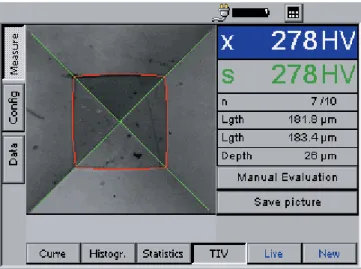
TIV is the first portable hardness tester that does not determine the indentation size of the Vickers diamond and conse-quently the hardness of the material indirectly but directly: “Through-Indenter-Viewing” means that one can simulta-neously see the indentation of the Vickers diamond “grow” on the test object’s surface while the test load is being ap-plied. This is ensured by a special optical lens combination including a CCD camera to digitize the indentation picture. As soon as the test load is attained, the picture of the indentation or of the dia-mond is stored in the instrument and automatically evaluated.
A special software is used in a first step to determine the edges of the indentation. The intersection points with the edges of the Vickers diamond (roof angle 136°) displayed on the screen are finally taken as a basis to determine the lengths of the two diagonals. The average of the two diagonals is then used for calculating the
hardness value according to the Vickers definition. The automatic evaluation is not only fast compared to the use of a conventional measuring micro-scope but subjective effects due to the user are also excluded which become noticeable, espe-cially in manual evaluation of the Vickers indentation.
Figure 12 shows the result of a hardness test using the Through-Indenter-Viewing method. The optical verification of the shape of the indentation is the only method to allow reliable conclusions to be drawn with regard to the quality of the measure-ment. One look on the display is enough to recognize whether the measurement has been influenced by the surface quality,
the material’s micro-structure or by other effects.
In addition to the automatic evaluation, the instrument also makes it possible to evaluate the Vickers indentation manually. The edges of the indentation are adjusted by hand in an enlargement of the picture on the display. The length of the diago-nals is automatically updated, and the corresponding hardness value is dis-played.
The display of the Vickers diamond pre-sents the additional possibility of directly checking the condition of the indenter. Any defects on the indenter, such as edge breaks, are identified at once,
Fig. 13:
Measurement of hard-ness using the TIV. The indentation of the Vickers diamond is displayed on the screen and automati-cally evaluated.
Fig. 14:
Graphic display of the measurement results as a curve.
Fig. 15:
Display of the measurements results in tabular form, including statistical data such as e.g. range, standard deviation, and minimum or maximum.
therefore avoiding any incorrect measure-ments from the very start.
The results of a test series can be graphi-cally represented as a curve, or even in tabular form, including statistical data (see Figures 13 and 14). All the necessary data such as average, single value, or statistical data are displayed or updated during the measurement.
The essential benefits of the Through-Indenter-Viewing method are achieved by the static application of the test load and to the direct as well as automatic determi-nation of the diagonal lengths of the in-dentation made by the Vickers diamond:
a) The TIV enables mobile and on-site measurement of hardness on different materials without having to carry out any additional adjustments and calibration procedures (see Figure 15).
b) Due to the static test load application, TIV also enables measurements on both thin and small parts, such as coils, sheet metal, etc.
c) The “live” picture of the indentation on the display enables immediate analysis of measurement quality.
d) The TIV is provided with an automatic evaluation of the Vickers indentation, i.e. the diagonal lengths are directly and automatically determined.
e) The display of the diamond edges on the screen enable condition checks to be made on the indenter.
The TIV opens up a large variety of new application fields which were previously not accessible to mobile hardness testers. Hardness tests are not only independent of test positions and directions but now also of the test object’s material and mass or geometry.
4.2 Selection of the suitable probe
Two different handheld probes, having test loads of 10 N / 1 kgf and 50 N / 5 kgf respectively, are available for the optical TIV hardness tester. Table 4 shows the corresponding ranges of measurement for the two probes. The measuring range of the two TIV probes is essentially limited by the optical system used. The size of the CCD sensor only allows a certain maximum size of indentation so that a minimum value of the measuring range is predefined by the optics in this case.In the case of larger hardness values, i.e. with smaller test indentations, the resolution of the CCD camera limits the range of measurement. Although reliable and reproducible measurements have been carried out on ceramic materials within the hardness range of 1500 HV using the TIV105 probe; an upper limit value of 1000 HV is nevertheless generally specified because a clear effect of the test object’s surface quality and of the test load application on the measurement result is to be expected at higher hardness values.
Fig.16:
Hardness testing on different materials using the Through-Indenter Viewing method.
Probe
Test Load
Hardness range
Typical application
TIV 101
10 N / 1kgf
approx. 30 – 500 HV
Optical hardness testing on thin components
made of aluminum, copper, or brass.
Hardness testing on thin layers
TIV 105
50 N / 5 kgf
approx. 100 – 1000 HV
Hardened surfaces, mechanical parts, semi-finished productsTable 4:
Probes for TIV hardness testing, benefits, and typical applications.
Steel Sheet steel
5. The Hardness Testers – an Overlook
Fig. 17: The DynaPOCKET. Fig. 19: The MIC 10. Fig. 18: The DynaMIC.5.1 The DynaPOCKET
Method: Rebound hardness testing
Typical application
• solid, coarse-grained test objects • forgings having an inhomogeneous
surface structure • cast materials
Accessories: e.g.
• test attachments for curved surfaces • hardness reference blocks
5.2 The DynaMIC
Method: Rebound hardness testing
Typical application
• mechanical parts or motor units made of steel and aluminium cast alloys • solid components with surface as rolled • large serial products during production
Accessories: e.g.
• impact devices D, G, and E
• test attachments for curved surfaces • hardness reference blocks
• software UltraHARD
5.3 The MIC 10
Method: UCI hardness testing
Typical application • fine-grained material • hardened materials • thin layers
• hardness progress: on curve on welds, etc.
Accessories: e.g. • supports
• guides (probe attachment) • hardness reference plates • software UltraHARD
5.4 The MIC 20
Method: UCI and rebound hardness testing
Typical application • all UCI applications • all rebound applications Accessories: e.g.
• all UCI probes
• all rebound impact devices • supports
• guides (probe attachment) • hardness reference plates • software UltraDAT
5.5 The TIV
Method: Optical hardness testing
Typical application
• hardness testing on different materials without calibration
• hardness testing on thin components (e.g. sheet metal, coils)
• hardened surfaces
Accessories: e.g. • supports
• guides (probe attachment) • hardness reference plates • software UltraDAT
Fig. 20:
The MIC20.
Fig. 21:
The TIV.
6. The different Methods in the Field
6.1 Selecting the test method
The UCI method is recommended for testing fine-grained material having almost any shape and size. It is especially used where material properties are to be deter-mined within narrow tolerances, e.g. for determination of the strain-hardening process on drop forgings.The TIV method is almost independent of test material and geometry. It, therefore, can be used everywhere, where conven-tional portable hardness testing failed so far: different materials without calibration,
thin lightweight parts, sheet metal and coils, etc.
Rebound hardness testing is mainly carried out on large, coarse-grained materials, forgings, and all types of cast materials because the spherical tungsten carbide tip of the impact device produces a larger indentation than the Vickers diamond and therefore reveals the characteristics of the cast structure better.
On the other hand, the relatively small test indentations of UCI probes enable
hardness testing on welds, and especially in the critical area of the heat-affected zone, viz. HAZ.
A large number of UCI probes and re-bound impact devices having different test loads or indenter diameters enable an application-oriented selection of a suitable method and of a suitable probe / impact device. The following applies to the use of impact devices available for DynaMIC and MIC 20: in addition to the Dyna D, which is suitable for most fields of application, the Dyna G – provided
Dyna G
Dyna D
HV 10
HV 5
HV 1
HV 0,3
5 mm
3 mm
MIC 2010
MIC 205
MIC 201
MIC 2103
90 Nmm
12 Nmm
TIV 105
TIV 101
64 HRC
350
152
107
48
25
55 HRC
898
449
175
124
56
28
30 HRC
1030
541
249
175
79
41
with an impact energy which is nine times higher and with a larger spherical tungsten carbide tip as indenter - can be used, especially on relatively inhomogeneous surfaces, e.g. on cast materials or forgings.
For hard materials (650 HV/56 HRC), causing the spherical tungsten carbide tip to wear faster, we recommend the impact device Dyna E provided with a diamond tip as indenter.
6.2 Significance of indentation size
In general, the larger the area of indenta-tion the more consistent the test results. The variations in microstructure of inho-mogeneous materials or in coarse-grained materials are averaged out so that consis-tent hardness values can be achieved. A larger indentation area also sets less demands on the surface finish andrequires less surface preparation.
In comparison, the resulting indentation areas yielded by the various impact devices are much larger than those created by any UCI or TIV probe. The rebound tester is recommended when testing large cast-ings and forgcast-ings. Testing small areas of homogenous materials that are surface-hardened requires the shallower indenta-tions produced by UCI or TIV probes. Tables 6 a + b are provided to compare the indentation size of rebound impact devices, UCI and TIV probes at three levels of hardness.
Fig. 22:
Comparison of indentation areas for DynaD impact device and UCI probes MIC 2010, MIC 205, MIC 201.
Table 6 a:
Approximate indentation area (in mm).
Application
UCI hardness testing
Rebound hardness testing
MIC 10, MIC 20
DynaPOCKET, DynaMIC, MIC 20
TIV
Solid parts
+
++
++
Coarse-grained materials
–
++
o
Steel and aluminum cast alloys
o
++
o
HAZ with welds
++
–
++
Tubes: wall thickness > 20 mm
++
++
++
Tubes: wall thickness < 20 mm
++
–
++
Sheet metal, coils
o
–
++
Inhomogeneous surfaces
–
+
–
Thin layers
++
–
+
Hard-to-get-at-positions
++
+
–
++ especially well-suited / + well-suited / o sometimes suitable / - not recommended
Table 5:
Dyna G
Dyna D
HV 10
HV 5
HV 1
HV 0,3
5 mm
3 mm
MIC 2010
MIC 205
MIC 201
MIC 2103
90 Nmm
12 Nmm
TIV 105
TIV 101
800 HV
16
22
16
7
4
600 HV
63
28
25
20
9
5
300 HV
83
35
35
25
11
6
d = 0,062 ·
F / HV
6.3 Relation between penetration
depth and minimum thickness for
coatings
For Vickers hardness testing, the thick-ness or depth of hardened layer or coat-ing, e.g. chromium on steel rolls, must be substantial enough to support the indentation. As a rule, the thickness should be a minimum of ten times the indentation depth.
You can easily calculate the penetration depth of the Vickers diamond if you know the force of the probe and approximately the hardness by using equation 3. This formula is based on the geometry of the Vickers diamond. Therefore, it only applies to a Vickers hardness test. Remember: 10 N ≈ 1 kgf.
Table 6 b:
Approximate indentation depth (in mm).
Equation 3:
Penetration depth of a Vickers diamond.
Minimum thickness s = 10 · d
HV
= Vickers hardness in HVF
= Test Load in Nd
= Penetration depth in mm Penetration (µm) Hardness (HV) Fig. 23:Penetration depth of the Vickers diamond vs. the hardness of material (for different test loads).
6.4 Hardness testing on welds (HAZ)
With the small test indentations made by Microdur-UCI probes, it is possible for example to determine the hardness of a welded component, above all in the criti-cal area of the weld, viz. the heat-affected zone (HAZ). The result of the hardness test gives information about the proper welding of a material. For example, if there is an excessive martensite content in the heat-affected zone (HAZ), a very hard zone will be formed there often causing cracks.Naturally, only hardness testing methods can be used which reliably cover the critical area of the weld, viz. the HAZ, with indentations which are not too large. Only low test loads (HV5 or HV10) pro-duce a Vickers indentation which is still situated in the critical area of the HAZ. HV30, HB, and test indentations from the rebound hardness test, as well as measure-ments using the Poldi hammer go beyond this zone. Only an average value over the
whole weld area is determined in these cases. This leads to lower hardness values due to the fact that the adjacent areas are also detected with lower hardness. Today, Poldi hammers can still be encountered in weld testing. It is evident that a low hard-ness value results from this test indentation, which, for the operator means, that further heat treatment of the HAZ is no longer necessary. Whether this is a wise decision, must be left to the opinion of the reader.
contour of the back surface of the part. The support reinforces the part to make it rigid and stable. Extremely thin materials may also require the use of a slight film of grease or paste to couple the test object to the support.
The UCI method is based on measuring a frequency shift. Test objects weighing less than about 0.3 kg can go into self-oscillation causing erroneous or erratic readings. The support plate and coupling technique described above are also an effective method to avoid oscillations with small components. If the use of a support plate is not feasible, select a probe with a lower test load to reduce the effects of self-oscillation.
Table 7 is provided as a guideline for determining holder or support require-ments. The effectiveness of the holder or support is determined by how precisely it matches the contour of the test piece.
There are – in principle – no limitations regarding the test piece mass for the TIV,
as long as the probe can be positioned properly and the load can be applied without any movements of the test piece.
6.6 Wall thickness requirements
The wall thickness of tubes, pipelines, or valves is critical for mobile hardness testing, especially for the rebound method. For example, a thin wall will start to oscillate like the skin of a drum when it’s hit by the impact body in a rebound test.In addition to the mass (Section 6.5), it’s mainly the wall thickness which also plays an important part when choosing the test methods. It can influence the hardness value even when the test object is solid and weighs a few tons.
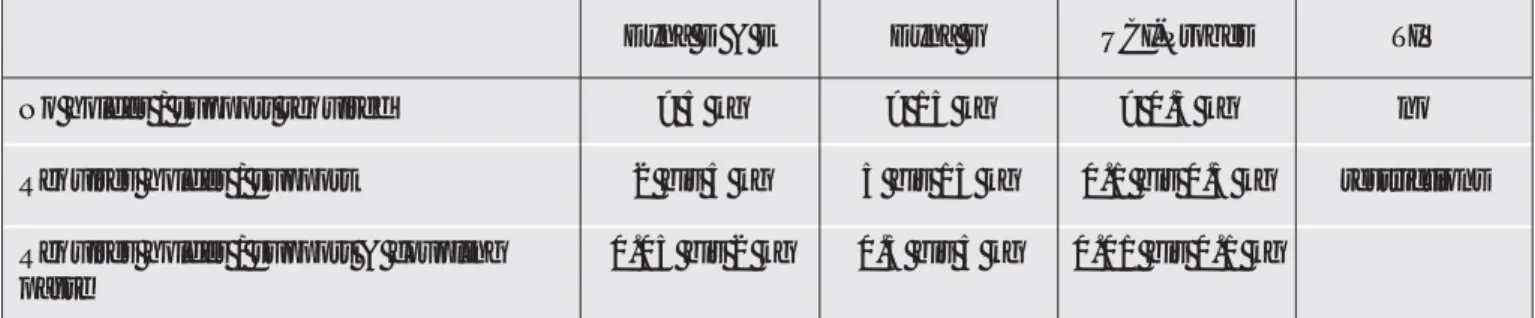
Despite the small mass of the impact device Dyna D and the low impact energy, there is a large force of about 900 N (90 kgf) produced at the time of impact (compared to that, the maximum force of a UCI probe is 98 N / 10 kgf). That is sufficient to produce vibrations with a wall thickness of under 20 mm. This can
Table 8:
Recommended minimum wall thickness. By coupling to a support plate, small test pieces can be made rigid and stable to enable measurement of small wall thicknesses.
Table 7:
Mass requirements for test piece
Fig. 24:
Hardness testing in the heat-affected zone (HAZ).
Hardness testing method
Wall thickness
Wall thickness
in mm
in inch
Rebound
20 mm
0.79
UCI
2 – 3 mm
0.08 – 0.12
TIV
10 x penetration depth of diamond
Dyna D & E
Dyna G
UCI-Probes
TIV
No holder / support required
> 5 kg
> 15 kg
> 0.3 kg
no
Requires holder / support
2 bis 5 kg
5 bis 15 kg
0.1 bis 0.3 kg
restrictions
Requires holder / support & coupling
0.05 bis 2 kg
0.5 bis 5 kg
0.01 bis 0.1 kg
paste
6.5 Test piece mass requirements
Consideration must be given to the mass of the test piece. Although the mass criteria for Leeb’s method are higher than those for the UCI method, the results of both methods can be influenced by the mass and thickness of the test piece.Leeb’s method creates a large force of short duration during the impact. Thin and lightweight materials yield causing erroneous values. A solution for testing small components having a simple geometry is a machined support that matches the
0 20 40 60 80
cause incorrect hardness values and large amounts of scatter. In such cases, the UCI method should be preferred to the rebound method.
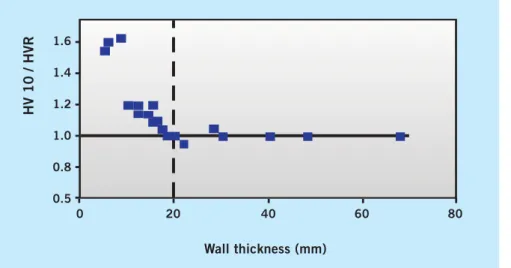
Figure 25 shows the hardness values measured by a standard Vickers test with a 10 kgf (98N) force in relation to those measured by a Dyna D impact device. For a wall thickness beyond 20 mm, both tests show the same results. Below 20 mm, the Vickers value measured using the rebound test method is lower than the true value resulting in a deviation from the horizontal line.
6.7 Surface quality
All hardness testing methods require smooth surfaces free of oxide scale, paint, lubricants, oil, plastic coating due to corrosion protection, or metal coating for better conductivity. The indentation depth should be large in comparison to the sur-face roughness.
If surface preparation is necessary, care must be taken not to alter the surface hardness by overheating or strain-hardening.
More practical results can be achieved by using a battery-driven, high-speed (>12000 rpm) handheld grinder, e.g. the
MIC 1060. Use 180 grain to get a smooth surface. It takes just 10 seconds.
6.8 Handling, alignment, and fixing
Move the MIC probe at a slow and steady speed. The probe should be rectangular with respect to the surface. Maximum angular deviation from the straight axis should be less than 5 degrees. Avoid turning, don’t drill. There should be no lateral forces on the diamond.The rebound impact device must be within one or two degrees of being perpendicular to the surface.
Test attachments in the form of support rings for the impact devices and probe shoes for the UCI probe ensure proper alignment.
The standard support rings provided with each Dyna D and Dyna E are used to test convex or concave radii greater than 30 mm. The larger diameter of the Dyna G standard support ring requires the radius to be greater than 50 mm. Support rings for the Dyna D and Dyna E impact devices are available to cover the range of r = 10-30 mm for testing the ID’s or OD’s of cylindrical and spherical shaped parts (see Dyna 41 and Dyna 42). Customized support rings are available on request.
For standard length UCI probes, the MIC 270 and MIC 271 probe shoes are offered as accessories. The MIC-271 probe shoe is recommended for testing cylindrical parts with radii from 3 to 75 mm. The flat probe shoe is designed to test flat surfaces but is also useful in testing radii greater than 75 mm.
Position the TIV probe perpendicular to the test piece. Probe attachements for flat and curved surfaces are available. Apply the load at a slow and steady speed. On the screen the “growing” indentation can be observed. The indentation is evaluated automatically when the load is applied.
6.9 Calibration
The modulus of elasticity (or Young’s Modulus) is a material property that can influence instrument calibration. Proper calibration is required to ensure the accuracy of the test results.
To calibrate the DynaMIC or the MIC 20 for rebound hardness testing, the operator must first select one of nine material groups (refer to Table 9). Selecting the appropriate material provides a rough calibration, and the type of impact device connected to the instrument determines the available conversions. A more precise calibration is possible for a specific material if samples of known hardness are used to calibrate the instrument. To perform the calibration, several readings are taken on the sample and the displayed average value is adjusted to the actual hardness. This enables to achieve precise calibration and a calibration offset value for that specific material that can be used to recalibrate the instrument.
UCI probes compatible with the MIC10 and MIC20 series are calibrated on steel reference blocks having a modulus of elasticity or Young’s modulus of 210,000 MPa. Because unalloyed or low-alloy steels have a similar Young’s modulus, accurate results are obtained with the standard calibration. In many cases, the
Fig. 25:
Standard Vickers values (HV10) compared with rebound Vickers values (HVR) for different wall thicknesses of tubes.
Wall thickness (mm) 1.6 1.4 1.2 1.0 0.8 0.5
difference in Young’s modulus of medium-alloy and high-medium-alloy steels is so insignifi-cant that the error created falls within the allowable tolerances of the part.
However, the Young’s modulus for non-ferrous materials require special calibra-tions. Several readings are taken on a test piece sample of known hardness to per-form the calibration. The displayed aver-age value is then adjusted to the actual hardness. This calibrates the instrument and also establishes a calibration offset value for that specific material that can be used to recalibrate the instrument.
Calibration offset values are referenced from a factory-set value for steel. Please note that they can be either a positive or negative value. Table 10 contains a list of approximate calibration values that can be referenced for some common materials. Because of the principle of the TIV based on the Vickers test, there is no calibration necessary when measuring on different materials. For details see chapter 4.
Table 9:
Material groups and available conversions.
Fig. 26:
Range of measured hardness values versus surface preparation. HVR indicates converted Vickers hardness values measured by rebound hardness testing.
Material Group
HV
HB
HRB
HRC
HS
N/mm
21 Steel - unalloyed,
D, E, G
D, E, G
D, E, G
D, E, G
D, E, G
low-alloy or cast
2 Tool steel
D, E
D, E
3 Stainless steel
D
D
D
D
4 Gray cast iron
D, G
5 Nodular graphite iron
D, G
6 Cast aluminum
D
D
7 Brass
D
D
8 Bronze
D
9 Copper
D
grain size Sand- rough blastedTable 10:
Approximate UCI calibration offset values.
Table 11:
Measuring tolerances for the different test methods.
7. Summary and help with the choice
of the suitable test method
The Krautkramer product range of portable hardness testers includes the instrument families DynaPOCKET, DynaMIC, MIC 10, MIC 20, and TIV. Three different physical methods of measurement are used in these instruments – the UCI, the rebound,
and the optical TIV method. It is neces-sary to choose the suitable equipment for the present application in each case, i.e. the test method and the corresponding instrument.
The following chapter gives you a brief survey of the different test methods and of the typical applications, at the same time helping you with the choice of the correct equipment for your hardness test task.
Principle
Measuring tolerances
Rebound
±
5 HL deviation of average from the value of the hardness
reference block with 3 to 5 readings.
UCI
±
3,6 % deviation of average from the value of the hardness
reference block with 3 to 5 readings using the test support
MIC 222-A.
Larger deviations are possible with freehand measurements.
TIV
±
3,6 % deviation of average from the value of the hardness
reference block with 3 to 5 readings.
Material
Calibration Offset Value
Aluminium
– 8800
Chromium
+ 0250
Copper
– 5800
Cast iron
– 4800
Titanium
– 6500
300-series stainless steel
– 1500
400-series stainless steel
– 0900
6.10 Verifying instrument
performance
The performance of a hardness tester is periodically verified using standardized reference blocks.
The perfect functioning of the rebound hardness testers (DynaPOCKET, DynaMIC, and MIC 20) is based on 5 single mea-surements on a certified Leeb’s hardness reference block. The average of these 5 measurements should be within ± 5 HL of the reference block’s certified value. The MICD62 hardness reference block has a nominal value of about 765 HL. If these values are converted into a HRC value, the result is a hardness value of 55 HRC with a tolerance of ±0.5 HRC. The accuracy of the UCI and TIV hard-ness testers (MIC 10, MIC 20 and TIV) is based on measurements using Vickers hardness reference blocks. The average of 5 readings should be within ± 3.6% of
the certified value of the reference block when using a rigid/stable support or holder such as the MIC222 test support. When testing freehand, a minimum of 10 readings should be averaged with the
tolerance being ± 5%. The above toler-ances for the dfferent test principles are summarized in table 11.
7.1 The UCI method (MIC 20 /
MIC 10)
With the UCI method, the size of the hardness test indentation is not measured optically but the indentation area is de-tected electronically by determining the shift of ultrasonic frequency under load. With ”soft” materials, the Vickers dia-mond penetrates deeper into the material leaving a relatively large indentation area in the material, which leads to a high frequency shift.
This is the secret of UCI hardness testing: the frequency shift is proportional to the size of the indentation produced by the Vickers diamond in the material. UCI instruments can be easily calibrated to different test materials.
Typical applications:
Heat-treated or case-hardened mechani-cal parts (e.g. camshafts), weld testing (HAZ), finished precision parts, gears, raceways of ball bearings, tooth flanks, turbine blades, thin layers, e.g. copper or chromium on steel cylinders, rotogravure cylinders, coatings.
Instruments:
MIC 10, MIC 10 DL, MIC 20, MIC 20 TFT
Probes:
Handheld probes • 10 N / 1 kgf (MIC 201-A, MIC 201-AL) • 50 N / 5 kgf (MIC 205-A, MIC 205-AL) • 98 N / 10 kgf (MIC 2010-A) Motor probes • 8.6 N / 0.9 kgf (MIC 211-A) • 3 N / 0.3 kgf (MIC 2103-A) • 1 N / 0.1 kgf (MIC 2101-A)7.2 Rebound method (MIC 20 /
DynaMIC / DynaPOCKET)
With the rebound method, an impact body is accelerated at a defined speed against the surface of the test object. Due to the plastic deformation of the surface produced at the moment of impact, the impact body loses some of its original energy or velocity.With a soft material, the test indentation produced by the impact body is relatively large, i.e. the impact body loses most of its original energy and rebounds at a corres-pondingly lower velocity. The velocities before and after the impact are measured in non-contact mode. A permanent magnet in the impact body generates an induction voltage when passing through the coil, with this voltage being proportional to the velocity. The rebound velocity, on the other hand, is a measure for the hardness of test material.
Only Krautkramer instruments can be used in any direction without any additional adjustments (patented non-directional function).
Nine different material groups are already stored in hardness testers using the rebound method. In addition to this, the DynaMIC and the MIC 20 can be easily calibrated to other test materials.
Typical applications:
Large, coarse-grained components with surface as rolled, motor units, or mechani-cal parts made of cast steel and cast aluminum alloys, forgings having an inho-mogeneous surface structure, material differentiation in material stores and wrought copper alloys.
Instruments:
DynaPOCKET, DynMIC, DynaMIC DL, MIC 20, MIC 20 TFT
Impact devices:
• Dyna D dia. 3 mmtungsten carbide ball • Dyna G dia. 5 mm
tungsten carbide ball • Dyna E
diamond test tip
7.3 Optical method –
Through-Indenter-Viewing (TIV)
With the TIV method (Through-Indenter-Viewing), the indentation size of the Vickers diamond, i.e. the diagonal lengths, is automatically measured under load by viewing through the diamond by means of an optical system using a CCD camera.The TIV measurement of diagonal length immediately results in a Vickers hardness value for the test load applied.
The ”live” picture of the indentation on the instrument’s LCD also allows an im-mediate opinion about the reliability of the measurement, i.e. a verification of the quality of the displayed indentation pro-duced by the Vickers diamond.
By viewing through the indenter, the TIV method enables hardness tests on all materials without any additional calibra-tion. Even tests on thin materials, e.g. coils and thin metal sheets, are no longer a problem for this portable instrument. Typical applications:
Hardening shops and heat-treatment companies (different materials without calibration), aviation industry (thin-walled components, different alloys) sheet metal (coils),…
Instruments:
TIVProbes:
TIV 101 (10 N / 1 kgf) TIV 105 (50 N / 5 kgf)DynaPOCKET
DynaMIC
MIC 10
MIC 20
TIV
Coatings
No
No
Yes
Yes
Yes
Hardened surfaces
No
No
Yes
Yes
Yes
Weld (HAZ)
No
No
Yes
Yes
Yes
Diffrent materials
Yes*
Yes*
Yes*
Yes*
Yes
(*with calibration)
Castings/forgings
Yes
Yes
Partly
Yes
Partly
Tubes
Partly
Partly
Yes
Yes
Partly
Sheet metal, coils
No
No
Partly
Partly
Yes
7.4 Fundamental questions to the user
1. What do you want to measure?DynaPOCKET
DynaMIC
MIC 10
MIC 20
TIV
Steel (alloy, stainless,...)
Yes
Yes
Yes
Yes
Yes
Other metals (Al, Cu,...)
Yes
Yes
Yes
Yes
Yes
Cast steel
Yes
Yes
Partly
Yes
Partly
Cast Aluminum
Partly
Yes
Partly
Yes
Partly
Ceramics
No
No
Partly
Partly
Yes
Glass
No
No
No
No
Yes
Plastics
Partly
Partly
Partly
Partly
Yes
2. What is the material
DynaPOCKET
DynaMIC
MIC 10
MIC 20
TIV
Data memory/
No
Only DL
Only DL
Yes
Yes
PC interfacing
Statistical evaluation
No
Yes
Yes
Yes
Yes
Scale conversions
Yes
Yes
Yes
Yes
Yes
Non-directional
Yes
Yes
Yes*
Yes*
Yes
(*except motor probe)
Wall thickness < 20 mm
Partly*
Partly*
Partly
Partly
Yes
(*with coupling)
Mass < 2 kg
Partly*
Partly*
Partly
Partly
Yes
(*with coupling)
3. Are there any other requirements?
Depending on the test task, either the UCI method, the rebound method, or the optical TIV method is used for the hardness test.
A suitable method cannot always be clear-ly defined right away. An experienced engineer is therefore the best person to
give the right answer about the test object itself directly on site.