Developing critical thinking in EFL learners within the perspectives
of CHAT: the case of Oman
By:
Thushara Manouri Samarasinghe
A thesis submitted in partial fulfilment of the requirements for the degree of
Doctor of Education
The University of Sheffield
School of Education
ii
Abstract
The Sultanate of Oman is situated on the Arabian Gulf in the Middle East. It has invested enormously in the education and training of its people. However, recent reports on Oman’s development, as well as educational articles by Omani scholars, highlight that many Omani graduates lack critical thinking skills (Ministry of Education & The World Bank Report, 2016; Thakur & Al-Mahrooqi, 2015; Mehta & Al-Mahrouqi, 2014). Situated within the context of Oman’s only national university, a qualitative case study was conducted on 11 English as a foreign language (EFL) teachers and 10 EFL learners. Informed by socio constructivist
perspectives that Cultural-historical activity theory (CHAT) provides, this study aims to identify effective teaching and learning practices that contribute to the development of critical thinking skills that can then be integrated into EFL teaching. This thesis contends that the development of critical thinking in Omani learners through EFL education at university level is important
because EFL teaching can provide the necessary affordances by incorporating the perspectives of CHAT. Results indicate that the creation of constructivist learning environments (CLEs) that enable diverse scaffolding techniques, promoting social interaction, development of meta-cognitive skills (Richardson, 2003), use of open-ended questioning (Paul, 1990), teacher-modelling of strategies (Bailin et al., 1999b), and purposeful practising of tasks for
development/transfer of skills (Halpern, 1990) are effective strategies that can foster critical thinking. Focusing on the development of these key strategies can be an effective approach for EFL teachers to adopt to help improve the critical thinking skills of their learners. It is hoped that the findings of this study can be theoretically advanced to situations other than the chosen
sample. The study hopes that Omani EFL learners will achieve their educational goals and will be prepared to face the challenges of 21st century jobs through their enhanced critical thinking.
iii
Acknowledgements
I have always appreciated people’s help but at the end of the journey of this study, I understand the magnitude of someone’s help when help is really needed. My deepest gratitude is reserved for the teachers that I met in
Sheffield in March 2016. I call them teachers because to me, they are teachers in the true sense of the word. I will always be grateful for their advice in the form of incredible wisdom they bestowed upon me, without which this work would not be possible.
Next, I need to mention how grateful I am to Dr Mark Payne for his continued support and guidance over the years, and above all, for being patient with me despite all my faults. I do thank my mother, my two sisters, and my brother for their advice, long-distance support, and patience with me. Among my friends and colleagues in Oman, I am grateful to Dr Vindhya, Dr Allison, Robert Smith, Melissa, Dr Fatima, Keith, Moin, Dr Misbah, Robert Poulton, Dr Khalfan, Dr Norma, and Kristina for their love and support throughout this endeavour. I will cherish the memories of you. I extend my thanks to my research participants (both teachers and
students) for offering their wisdom and support. I owe you more than I thank you for because you made this study better with your presence! Finally, I thank Samantha for supporting me from the beginning to the end of this journey in every way. I can never repay your help, kindness, or patience with me. To complete my acknowledgements, I thank my Cooky who sat next to me as long as he could with unconditional love.
iv
Contents
Abstract ... ii
Acknowledgements ……….………..…………..iii
Chapter One: Introduction ... 9
1.1. A brief description of CHAT ... 9
1.1.1. The first of the three generations of CHAT ……….………10
1.1.2. The interpretations of CHAT ……….………..13
1.1.3. Implications of CHAT for my research ……….………..14
1.2. Rationale for the research ... 16
1.3. The statement of problem ……….19
1.4. Aims and objectives and the research question ………..20
1.4.1. Sub-research questions ……...……….20
1.5. Theoretical framework of the study ………22
1.6. Summary of chapter one and research overview ... 23
Chapter Two: The context of research ……….……….………. 24
2.1. Introduction to chapter two... 24
2.2. The context of Oman …....……….24
2.3. Higher education in Oman ………...27
2.3.1. Oman’s national university: Sultan Qaboos University (SQU) ... 27
2.3.2. The Language Centre at SQU ... 28
2.3.2.1. The Foundation Program (FPEL) ... 29
2.3.2.2. Credit English Language Programs (CELP) ... 29
2.4. Important academic documents of the LC ... 30
2.5. EFL teaching and contextual issues ... 30
2.6. Importance of critical thinking in education in the context of Oman ... 32
2.7. Summary of chapter two ………...…….. 36
Chapter Three: Literature Review ... 37
3.1. Introduction to chapter three ... 37
3.2 Definitions of critical thinking... 38
3.2.1. Characteristics of critical thinkers ... 40
3.2.2. Dispositions of critical thinking: ... 41
3.2.3. Critiques and issues of critical thinking ... 42
3.2.4. Key components of critical thinking ... 45
3.2.4.1. Problem-solving skills ... 45
3.2.4.2. Creative thinking skills ... 46
3.2.4.3. Meta-cognitive skills ... 46
3.2.4.4. Background knowledge ... 47
3.2.4.5. Syllogism as informal logic ... 47
v
3.2.4.7. Language proficiency (L2) ... 48
3.2.4.8. Motivation ... 49
3.3. What kind of a skill is critical thinking? ... 51
3.4. Transferability of critical thinking skills ... 52
3.5. Assessment of critical thinking skills ... 53
3.5.1. Critical thinking tests ... ..53
3.6. Cultural assumptions about developing critical thinking in students ... 54
3.7. Developing critical thinking in general education ... 56
3.8. Critical thinking in EFL education ... 57
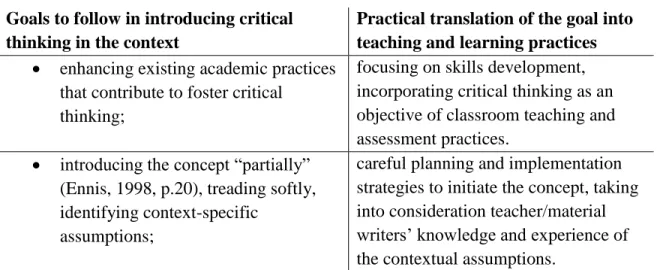
3.9. Teaching implications ... 59
3.10. Constructivist perspectives to developing critical thinking ... 62
3.10.1. Dewey’s active constructivism ... 63
3.10.2. Piaget’s Cognitive constructivism ... 66
3.10.3. Vygotskyan social constructivism ... 70
3.11. Context-specific research on fostering critical thinking within EFL education...77
3.12. Summary of chapter three ... 79
Chapter Four: Research Methodology ... 81
4.1. Introduction to chapter four: research questions and the overall research design ... 81
4.2. The chosen research paradigm: qualitative paradigm ... 83
4.3. Research methodology: a case study ... 86
4.4. Data collection tool: semi-structured interviews ... 90
4.5. Sampling ... 95
4.6. Designing case studies: maintaining the trustworthiness of the research ... 98
4.6.1. Credibility ... 98 4.6.2. Dependability ... 99 4.6.3. Transferability ... 99 4.6.4. Confirmability ... 99 4.6.5. Reflexivity ... 102 4.6.6. Pilot study ... 103
4.6.7. Data analysis: thematic content analysis ………...…105
4.7. Addressing the ethical issues in research conduct ... 109
4.8. Summary of chapter four ... 112
Chapter Five: Pilot Study ... 114
5.1. The analysis and discussion of the pilot study ... 114
5.2. The analysis and the discussion of the pilot study ... 114
vi
Chapter Six: Findings and Discussions ……….………118
6.1. Introduction to chapter six ... 118
6.1. The analysis of student perspectives ... 120
6.1.1. SUB-RESEARCH QUESTION 1: ... 120
6.1.1.1. Defining the concept of critical thinking ... 120
6.1.1.2. The qualities of critical thinking ... 120
6.1.1.3. Habits of critical thinkers ... 122
6.1.1.4. Importance of developing critical thinking in Omani learners ... 123
6.1.2. SUB-RESEARCH QUESTION 2 ... 125
6.1.3. SUB-RESEARCH QUESTION 3 ... 126
6.1.4. SUB-RESEARCH QUESTION 4 ... 130
6.1.5. SUB-RESEARCH QUESTION 5 ... 132
6.1.6. Discussion of the findings of the student perspectives... 136
6.2. The analysis of the teacher perspectives ... 139
6.2.1. SUB-RESEARCH QUESTION 1 ... 139
6.2.1.1. Defining the concept of critical thinking ... 140
6.2.1.2. Qualities of critical thinkers ... 141
6.2.1.3. Developing the habits of critical thinking ... 142
6.2.1.4. Importance of developing critical thinking in Omani learners ... 142
6.2.2. SUB-RESEARCH QUESTION 2 ... 145
6.2.3. SUB-RESEARCH QUESTION 3 ………...147
6.2.4. SUB-RESEARCH QUESTION 4 ... 151
6.2.5. SUB-RESEARCH QUESTION 5 ………...153
6.3. The discussion of the findings of teacher analysis ... 159
6.4. Summary of chapter six ... 164
Chapter Seven: Conclusions………..………..167
7.1. Introduction to chapter seven ... 167
7.2. summary of findings: answering the main research question ……… 167
7.3. Contributions of my research ... 176
7.4. Limitations of this research ………178
7.5. Recommendations for future research ... 179
7.6. Researcher reflections ………...………..180
vii APPENDICES:
Appendix 1: Student consent forms: SQU LC research committee 198
Appendix 2: Participant Information Sheet 202
Appendix 3 Semi-structured interview questions- thematically arranged 204
Appendix 4 Copy of pilot interview transcript 206
Appendix 5 Newspaper article/cutting about critical thinking 210
List of figures
Figure 1 Flag of Oman ………..………..… 25Figure 2 Map of Oman ……….………... 25
Figure 3 Profiles of workforce ……….... 34
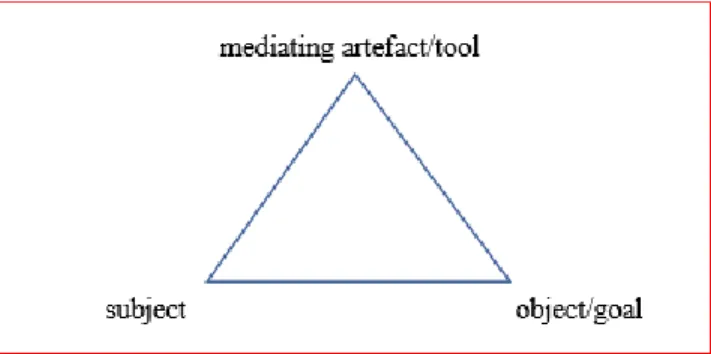
Figure 4 A basic representation of mediated action triangle (CHAT) ……… 70
List of tables
Table 1 Characteristics of critical thinkers ………..……40- 41 Table 2 Goals in adopting an approach to critical thinking .………..……….……60- 61 Table 3 List of teacher and student participants under pseudonyms ……….…………97 Table 4 The six steps of thematic analysis that this study followed ….……….…… 106- 108Key words
• L2 = Second language
• EFL = English as a foreign language
• ESL = English as a second language
• CHAT = Cultural-historical activity theory
• SQU = Sultan Qaboos University
• Knowledges = I use knowledges to indicate the integrated knowledge categories, including knowledge that, knowledge how, knowledge of language.
viii
Author’s declaration
I declare that this dissertation is the result of my own work, and that explicit reference is made when recognising the contributions of others. Secondly, this work has not been submitted for any other degree at the University of Sheffield or any other institution.
Name: Thushara Manouri Samarasinghe Signature: Thushara Manouri Samarasinghe Date: Nov.30th, 2017.
9
Chapter One: Introduction
1.1. A brief description of CHAT
Cultural-historical activity theory (CHAT) is a theory that explains how individuals develop their consciousness. It espouses that individuals create their own meanings of the world by engaging in social interaction (Lunenburg, 2011; Larochelle et al., 2009; Daniels, Cole, & Wertsch, 2007; Airasian & Walsh, 1997). CHAT centres on the Vygotskyan theory of mediated action though its roots that trace back to the 19th century German philosopher, Goethe and Marx (Blunden, 2010). The current interpretation of CHAT owes its development to Vygotsky’s students, colleagues, and several modern scholars, including Leont’ve, Lantolf, Cole, Wertsch, and Engeström who continue to enhance it in diverse ways (Daniels, Cole, & Wertsch, 2007).
The name, CHAT has been invented by Cole (1996; 2007, cited in Blunden, 2010, p.3) and each word of the theory’s name signifies a meaningful aspect. Culture holds the prominent place within the theory, indicating that an individual’s environment is the socio-cultural milieu that interprets meanings, through their historical significance (of these
meanings). Hence, individuals and their actions are embedded within the social practices, and individual actions make sense in relation to their context-specific cultural values rather than in isolation (Daniels, Cole, & Wertsch, 2007; Fleury, 1996).
Secondly, in CHAT, the term culture is followed by the phrase historical, implying that “…cultures are grounded in histories” (Foot, 2014, p.3). The “historical” aspect of CHAT translates that any human action has a historical perspective to it, and examining this
historical value enhances the understanding of the current action. Therefore, in any analyses that CHAT is a part of, people’s actions are considered in light of their historical importance. Thirdly, within CHAT, the word ‘activity’ epitomises that activity means a system of actions pursuing an object. An activity has intention, motive, action, as well as a goal which depict a range of outcomes (Leont’ev, 1978). The presence of these phenomena within the activity indicates that the motive of the object visualises these phenomena as requirements of the task that in fact, the society demands in reproducing the task. This also implies that an activity is a relation between the subject and object and that understanding the activity leads to the
10
uncovering of the psychological significance of actions because actions are a part of the activity (Blunden, 2010). Thus, CHAT recognises activity as the unit of analysis in
evaluating the actions of people’s daily lives. The recognition of activity (from action) in the activity theory has been one of the significant contributions of Leont’ve (Blunden, 2010). These key phenomena of culture, activity, and the way individuals interact are represented in CHAT through subject, object, and artefact. They emulate a theoretical triangle, explaining how they contribute to ontogenesis (further discussed on pp.70-77 of this research).
CHAT has been recognised as an interdisciplinary framework since scholars from different domains collaborate and theorise about its significant theoretical constructs, in addition to communicating using a common language (Blunden, 2010). Some of the major focus of contemporary research in relation to CHAT include, the environment, culture, knowledge within individuals, the role of input (signs/artefacts), problem-situations, and motivation for problem-solving in relation to educational settings (Blunden, 2010; Lantolf & Thorne, 2006). The significance of these concepts in learning and teaching has enhanced CHAT’s position within today’s educational systems as a theory of knowledge and learning (Lunenburg, 2011; Larochelle et al., 2009; Airasian & Walsh, 1997). In the domain of education, CHAT inspires a profound understanding of the ways that different learning activities can instigate learning in different ways.
1.1.1. The first of the three generations of CHAT
Vygotsky is considered the first generation of CHAT since the theory centres on the Vygotskyan concept of mediated action. Vygotsky, who was a Russian philosopher and a psychologist living during the 1917 Russian revolution, focused on exploring a psychological approach that could explain human development. Subsequently, he arrived at the stance that it is the interaction between an individual and his/her environment that enables the
development of human consciousness. According to Blunden (2010), Vygotskyan views were introduced to the Western world through the English translations of ‘Thought and language’ (1962) and after his death, ‘Mind in society' (1978).
The rationale of Vygotsky’s theory of mediated action was that humans are not passive, they instigate their own meaning-making processes by interacting with the social others in the environment (Vygotsky, 1962). Vygotsky (1978) explained how individuals use different artefacts (physical tools and mental tools such as language) in different ways in achieving
11
goals, supporting the notion that all actions are mediated (Scribner, 1997). The process of mediated action includes interaction among the individual, artefact, activity, and sign. A sign is seen as a semiotic that generates an abstract impression, resulting from interaction and a sign facilitates the meaning-making process.
CHAT comprises the fundamental social constructivist principles. The perspectives of CHAT imply that that knowledge is emergent (resulting from interaction), non-objective, and developmental (Larochelle et al., 2009). This is supported by the idea that individuals’ age and mental capacity can affect how they interpret their social environment (Vygotsky, 1979). For example, a book can mean different things to individuals who have different capabilities, and are of different ages (van der Veer, 2007). Therefore, knowledge is non-objective and emergent as knowledge is constructed by individuals with diverse understandings.
Vygotskyan perspectives within CHAT have been recognised for their greater impact in education. Many education systems across the world today centre the notion that “…human mind must be understood as the emergent outcome of cultural-historical processes” (Daniels, Cole, & Wertsch (2007, p.1). Consequently, learning activities are designed in ways that promote and elicit individual thinking. Similarly, instead of treating students as empty bowls that need to be filled with objective knowledge; contemporary educationists focus on
enabling students to create knowledges using what students already know (Brooks & Brooks, 1993).
CHAT rationalises how knowledge develops through the process of mediation within the zone of proximal development (ZPD, see below and pp.73-75) as Lantolf (2000) highlights. Supporting this stance, Cummins et al. (2005) provide greater insight into how students develop knowledge through social interaction in multi-cultural academic environments. Through their findings, Cummins et al. highlight how teachers’ acknowledgement of their students’ native languages, existing knowledge, and capabilities stimulate students’ knowledge and skills, as mediating tools in creating knowledges. Clearly, by treating students’ thinking as “…emergent outcomes” (Daniels et al., 2007) teachers can draw their students to construct knowledges collaboratively, using the two higher thinking tools of L1 and L2.
12
The “…individual mental development is the gradual internalisation and transformation of socially constructed shared activities” as Arievitch (2003, cited in Feryok, 2012, p.97) writes. Arievitch’ shares the Vygotskyan (1978) stance that an individual’s mental
(cognitive) development is facilitated when he/she is given assistance to close the cognitive gap. Vygotsky described this theoretical distance between what a learner can achieve
individually, and what can be achieved by that learner with the assistance of a knowledgeable other (usually an adult), as the zone of proximal development (ZDP, further discussed on p.67). The assistance can be physical learning materials such as certain tasks, materials, or cognitive assistance through the use of more knowledgeable others (MKO), such as adults and peer (Wertsch, 2007).
Vygotsky also explained that mental formations can be developed in individuals by reforming how cultural tools (physical/ psychological) are used. This notion has become a fundamental principle of learning and skill development across the domains of education, including English as a second/ foreign language teaching. Educationists have adopted it in diverse ways, focusing on enabling/ enhancing higher mental functions in transforming human thinking. A study by Meredith (2003) on developing reading and writing skills through an English language learning (ELL) course reveals how adopting social
constructivist learning perspectives, especially, focusing on building students’ background knowledge and student-centred teaching, have left positive impacts in learners. Her study reveals that ELL students demonstrated their ability to contextualise information deeply and meaningfully (compared to surface-level understanding) as a result of adopting these
principles of CHAT. Furthermore, Meredith also supports the need to focus on the teacher’s role in a constructivist learning environment (CLE) consistent with the Vygotskyan stance that teachers are facilitators as the more knowledgeable other, assisting (scaffolding) learners. Meredith’s study exemplifies that the fundamental role of the teacher in a constructivist environment is mediating.
Moreover, in relation to mediation, the relationship between language and thought was an area of special interest for Vygotsky (Cole & Wertsch, 1996). Discussing the characteristics of thought, Vygotsky gravitated towards the idea that thought is often manifested in a word, an image, or in an action (deed); and that thought is, by its nature, elusive to the naked eye (Zinchenko, 2007). One of Vygotsky’s many references about language and thought asserts
13
that the relationship of thought to word is not a thing but a process, i.e. a movement from thought to word and from word to thought. Affirming, psychological analysis indicates that this relationship is a developing process which changes as it passes through a series of stages, implying that the movement of thinking from thought to word is a developmental process. (Vygotsky, 1987, cited in Wertsch, 2007, p.186).
The oscillation from thought to word and word to thought depicts the complex nature of defining thinking and its development in humans. This movement of thought implies how language acts as an implicit tool (sign/artefact) of mediation in thought-building and expression, as thought is mediated by words that depict explicit meanings. However, “…meaning is related not to thinking, but to the whole of consciousness” for Vygotsky (1982, cited in Zinchenko, 2007, p.226). Therefore, consciousness development becomes a self-regulated meaning-making process for individuals, when they take part in social interaction (shifting meaning from word to thought and thought to word). A profound understanding about consciousness and meaning requires an examination of immeasurable depth. However, as implied in the above discussion, since the relationship between the word and its meanings leads to consciousness development; this process can enhance the learning of languages. In light of that, since L2 learning contributes to developing the language skills of learners; L2 teaching can also enhance individual thinking.
1.1.2. The interpretations of CHAT
CHAT owes its development largely, to a second generation of social constructivists, including Leonti’ve, who was a student of Vygotsky (Blunden, 2010). Leonti’ve is also considered the architect of the Activity Theory known today. He identified action (within the theory of mediated action) from activity, defining it through the relation between the object and the subject. He explained activity as the unit of analysis, comprising the three levels of operation, action, and the activity. Leonti’ve positioned activity at a higher level of goal-oriented actions (rather than in the sense of everyday activities), explaining the need to understand an activity within its context as cultural-historical background (Blunden, 2010; Kaptelinin, 1996).
An important aspect of the activity theory is that within the activity, physical and mental separation is not given consideration. The underlying reason is that separation between the mind and body can hinder understanding (of the viewer) and the carrying out of the activity
14
by the subject. Therefore, one of the implications is that both the aspects of mind and body (mental and physical) are related to each other when carrying out a task. The argument is that though it is possible to separate the two aspects within an activity; understanding them separately can be challenging and possibly fruitless. Hence, the interconnectedness of the subject, object, and the artefacts (tools/practices that mediate the action) within the
theoretical triangle of CHAT is rationalised. Clearly, many contemporary scholars, including Cole, Engeström, Wertsch, Lantolf, Luria, Bruner, Kozulin, Kaptelinin, and Rogoff have made significant contributions to the development of CHAT in many ways (Blunden, 2010; Daniels, Cole, & Wertsch, 2007).
The third generation of CHAT is credited to Engeström (1993) who also built on the original theory of mediated action and the activity theory. He theorises that cultural tools (language, practices, or technology) influence (mediate) an individual’s (subject’s) action on the object. Engestrom’s (1993) extended explanation of activities widens the lenses to examine how subjects (individuals/professionals) carry out activities within the larger community which comprises rules/norms, indicating the division of labour in diverse ways. He identifies motive as the force that drives an activity, in addition to the object that the activity is oriented for within the social milieu.
1.1.3. Implications for my research
Clearly, the interpretations of CHAT can provide wider scope for research. However, this study centres on the version that originated from the theory of mediated action, transforming ‘action’ into ‘activity’. In my view, this version facilitates focus on the important concepts of mediation, higher mental functions and tools, interrelation between language and thinking, ZPD, scaffolding, internalisation, and collaborative learning. They are the fundamental concepts that contribute to the development of individual consciousness, enhancing the knowledge construction process in teaching and learning. Contributing to the recognition of the interrelationship between these concepts and the educational process; Vygotsky’s stance that “…teaching should promote general mental development as well as the acquisition of special abilities and knowledge” (cited in Daniels, 2007, p.315) reflects the centrality of the principles of CHAT in my study. In support, global research (Kwek, 2011; Abrami et al., 2008; Snyder & Snyder 2008; Miri, David, & Uri, 2007; Richardson 2003; Kaufmaan 2004; Appel & Lantolf, 1994; Airasian & Walsh, 1997; Brooks & Brooks, 1993; Lave & Wenger,
15
1991) continues to demonstrate how CHAT provides a rich framework to enhance pedagogy and andragogy.
Similarly, several context-specific EFL studies from Oman emphasise the effectiveness of CHAT in enabling learning and fostering critical thinking. Among these key studies,
Tuzlukova, Al-Busaidi, & Burns (2017) focus on exploring the effective language teaching methodologies that contribute to fostering critical thinking in EFL education. They
investigate EFL teacher-understandings about critical thinking and conclude that to teach critical thinking; teachers need to be able to explicitly express what critical thinking means (also Paul, 1993; 1990).
Furthermore, Al Khoudary (2015) examined how the role of writing in EFL teaching contributes to fostering critical thinking. He recommends the integration of critical thinking skills into EFL writing classrooms. Similarly, Mehta & Al-Mahrouqi (2014) discuss the ways that critical thinking can be explicitly taught in EFL contexts. Situated in an English language and literature teaching context; their study highlights the significance of focusing on fostering critical thinking within the current teaching approaches. Mehta & Al-Mahrouqi (2014)
identify the value of overt instruction in developing critical thinking skills in EFL teaching, supporting the stance of my own research.
Moreover, Emenyeonu (2012) highlights that learner-centred approaches are crucial for developing critical thinking in learners. Examining contextual interpretations of student-centred learning in Oman, he reveals that the adaptation of learner-student-centred approaches in EFL education is often challenged by students’ cultural perceptions. Thus, Emenyeonu identifies the need to raise awareness of learner-centred approaches in the educational contexts.
In sum, by discussing not only the positive aspects, but also the challenges to implement constructivist teaching approaches within EFL teaching; these key studies raise awareness of the need to fostering critical thinking in Omani learners within EFL education. Hence, my study constantly refers to these context-specific scholarly works, because they are key sources of sustenance for my study, which commenced in 2010. The important contributions that these studies make to the context and towards the topic of my study will be discussed in detail under the literature review.
16 1.2. Rationale for the research
This research focuses on developing critical thinking in EFL learners in the academic context of Oman. This objective has been influenced by the current educational practices at university level in the context. To be more specific, one of the statements of objectives of Sultan Qaboos University states that it focuses on producing specialist and expert job
candidates to be employed in diverse fields in Oman by: (a) taking into account the changing needs of marketplace, (b) working within the framework of state policy on resource
development, and (c) by promoting creative thinking (SQU homepage, n.d.). However, while developing creative thinking is an important aspect of education, to be skilled experts in diverse fields of employment and successfully face the challenges of ever-changing market places; Omani learners need to develop critical thinking. Critical thinking has been widely recognised as an important 21st century skill (American Colleges of Education Association, 2013; Al-Mahrooqi, 2012; Johnston et al., 2011; Lunenburg, 2011; Stuart & Dahm, 1999).
Research establishes that critical thinking is one of the most important concepts in
education in both teaching and learning (Mehta & Al-Mahrouqi, 2014; Johnston et al., 2011; Lunenburg, 2011; Mulnix, 2010; Ennis, 1996). For instance, a recent research by Bok (2006) reveals that more than 90% of faculty members across universities in the United States consider critical thinking as “…the most important goal of an undergraduate education” (cited in Haynes et al., 2016, p.45). The importance of critical thinking in the field of EFL education has been identified for its relevance to language learning, applicability in subject learning, and scope to produce meaningful learning experiences (Tuzlukova, Al-Busaidi, & Burns, 2017;Thakur & Al-Mahrooqi, 2015; Johnston et al., 2011; Shirkhani & Fahim, 2011; Halvorsen, 2005). The experts of critical thinking (Mehta & Al-Mahrouqi, 2014; Johnston et al., 2011; Bailin et al., 1999b; Ennis, 1989) exemplify how the interdependent
interrelationship between language learning and thinking provides the necessary affordances to develop critical thinking in L2 learners. In light of that, L2 learning can be considered as an essential tool that contributes to develop language learning, skills development, and critical thinking (Johnston et al., 2011; Mulnix, 2010; Richardson, 2003; and Brooks & Brooks, 1993).
The idea of developing critical thinking in general education (including EFL teaching) has been challenged by the traditional school of thought. Arguing that ‘thinking is always
17
about something’ (Vandenberg, 2007; McPeck, 1996, further discussed on pp.42-45); the traditional school of thought implies that thinking develops through domain-specific content education rather than general education. However, following Ennis (1989); the current study argues that in general education, skills are not taught in isolation since learners are always provided with ‘something to think about’ when teaching the skills (Mehta & Al-Mahrouqi, 2014; Mulnix, 2010; Brooks & Brooks, 1993). In light of that, general education (and EFL education) affords focus on developing critical thinking. Moreover, as EFL teaching focuses on developing life skills within regular teaching practices (EFL skills for future careers); focusing on the development of critical thinking (through EFL teaching) can also be
considered as developing an important life skill that promotes learning, helping to widen the scope of professional endeavours.
In addition, this study considers researcher positionality as a rationale for instigating this research. As an experienced practitioner with the well-being of students at heart, I observed that many of my students often fall short in achieving academic excellence, mainly due to a lack of critical thinking abilities. Therefore, based on a brief evaluation of the stipulated ‘learning objectives, learning contents, and learning outcomes1, I came to the realisation that students need help to achieve their learning goals. Since I noticed that they perform their learning tasks more effectively, when they are scaffolded through well-designed learning activities that enable analytical thinking and critical thinking, this realisation has inspired me to reach for the goal of arguing for fostering critical thinking in my learners in EFL teaching.
In my view, twenty-two years of experience in EFL teaching, including my ten years of teaching experience in Oman, can enable reflection on the aspects and issues in relation to one’s practice and contextual concerns. O’Reilly’s (2012) stance that reflexivity relates to ‘the wider conditions under which knowledge is produced’ supports my view. Therefore, making the others aware of the beliefs, habits, and traditions that I value can indicate ‘where the researcher is coming from’ (Opie, 2010), enabling the others to see the ‘wider
conditions’. Through such an understanding, a researcher can create a shared history that contributes to meaningful interpretations, implying why researcher positionality becomes a rationale in this research.
1 I compared my students’ end-of-semester exam marks and learning objectives only within the course that I was
18
To begin with, my experiences of being an EFL learner continue to enrich my
experiences as an EFL teacher. For instance, they often prompt reflection on the strengths, and weaknesses of many learning strategies that I experienced as a learner, enabling effective ways that enhance some of those learning strategies in my learners. I was an ESL learner, since English was taught as the second language in my country. I was born in Sri Lanka where the culture and traditions are valued more than education, requiring me to respect the religion, the socio-cultural values, worship parents and teachers, but above all, revere books. Among these values, questioning of neither the traditions nor the people did not have a place. I had never heard about critical thinking (even as a teacher in Sri Lanka) until I started my masters course (MA in ELT) at the University of Southampton in the United Kingdom.
I developed my strong love for the English language because as a child, I studied in a Catholic convent where English-speaking nuns and teachers, English hymns and piano music, and a library full of musty English novels made a big impression on me. Compared to government school teaching where English was neglected in general, 40 years ago; this Catholic convent provided the basic facilities that promote reading. The most important feature was that there was a teacher throughout the year to teach English, unlike in many government schools at that time. I eventually became a qualified ESL teacher and worked in both Sri Lanka and The Maldives. Then, after completing my MA degree in English
language teaching (TESOL) in the UK; I joined a private university college in Oman and two years later, I joined Sultan Qaboos University (SQU) where I am currently employed.
I have always enjoyed teaching irrespective of my students’ behaviour; whether they are well-behaved or unruly. However, teaching Omani students is an exceptional privilege, because they are always well-behaved in classrooms, wonderfully cooperative, and respectful of their teachers. While I adored my students for their human qualities; I also noticed that their own cultural influences had more control over them than their own will, when it came to behaving as active learners in EFL classrooms. It was clear that when teachers encourage them in learner-centred environments, many students would try to be active learners and participate in classroom dialogue; however, they would all go back to be the timid learners in more teacher-centred classes. Meanwhile, through my trials, I observed that the regular practice of questioning, reading with awareness, focus on the process of
19
writing rather than the product, and engaging students in group work have influenced my students to become more aware of their own learning. Knowledge of these aspects of teaching became central during the latter half of my study.
In my third year of teaching at SQU, I came across Professor Rosamond Mitchell’s research work on critical thinking. She was my teacher in the MA program at The University of Southampton. The awareness of the learning problems of my students drew me closer to her work (Johnston et al., 2011), influencing my decision to pursue higher education and the current research topic. I realised that pursuing a higher degree is a greater opportunity to learn how to foster critical thinking in my students and an effective way to raise awareness of the EFL community, benefitting me in many ways. Therefore, I applied to The University of Sheffield as a candidate for an Ed.D degree, because it offered a distance Ed.D program, which I could join while teaching. I must admit that I was fully aware of the seriousness of the commitment that I was making as a fulltime teacher in Oman, participating in a distance-learning program at Sheffield. However, I also admit that I had no idea how uncritical I was; compared to what my research topic indicates, until I reached the last few pages of my dissertation.
Amidst the difficulties of this personal investment, I consider it a privilege to suggest a rational solution that makes EFL teaching more meaningful to my learners, especially, compared to the surface-level language-teaching that often takes place through fun-games at university level (Pesoa & Freitas, 2012). I consider my study as a privileged-journey that I have taken with my students and colleagues. For, to share their views and concerns and be able to offer a long-lasting rational suggestion to alleviate those concerns is, indeed, a privileged position.
1.3. The statement of problem
The Omani government has made huge investments in education and training of the Omani nationals (Oxford Business Group, 2014; Romano & Seeger, 2014; Al-Busaidi, 1995). On par with this knowledge; the national policy of Omanisation estimated 80% of Omani employment within different sectors of the national employment market by year 2010 (MoE, 1996). However, as national statistics reveal, many of the national educational
objectives have only met marginally (Romano & Seeger, 2014; World Bank data for Oman, 1991-2014).
20
Moreover, recent national and international reports on Oman’s development highlight many socio-economic and political reasons for lack of realization of the national educational policies (MoE & The World Bank Report, 2016; Romano & Seeger, 2014; Oxford Business Group, 2013). They highlight that Omani graduates’ lack of analytical and critical thinking skills in relation to job performance can cause negative repercussions in the competitive Middle Eastern job market. Sharing the view, many Omani scholars (Tuzlukova et al., 2017; Thakur & Al-Mahrooqi, 2015; Mehta & Al-Mahrouqi, 2014) raise the need to developing critical thinking in Omani learners, equipping them for the 21st century jobs that await them. 1.4. Aims and objectives and the research questions
The main aim of this research includes finding out the ways that EFL teaching can develop critical thinking in learners at university level in the context of Oman. Towards this goal, this research explores how the principles of socio-constructivism translate into
effective teaching practices that can be integrated into EFL classroom teaching. Hence, the main research question of the study asks,
What are the ways that EFL teaching, within the perspectives of CHAT, can develop critical thinking in learners at university level in the context of Oman? In my view, in order to answer the main research question; the themes that are embedded
within the main research question need to be explored. With this purpose in mind, I developed six sub-research questions to gain the participants’ perspectives on the key aspects that are embedded within the main research question, as shown below.
1.4.1. Sub-research questions
1. Why is developing critical thinking in Omani students important? 2. In what ways/whether the current EFL teaching practices contribute to
develop critical thinking in learners?
3. In what ways can the constructivist principles, within the perspectives of CHAT, contribute to develop critical thinking in EFL learners?
4. What are the out-of-classroom contextual elements that can contribute to developing critical thinking in EFL learners?
5. What are, if any, classroom/social factors that can be barriers to developing critical thinking in learners?
21
6. What are the key teaching/learning practices and strategies that contribute to developing critical thinking in EFL teaching?
The rationale for incorporating the first sub-research question is that asking, ‘why it is important for the Omani learners to develop critical thinking’ provides reasons for doing so, which also justifies this research. Moreover, the second sub-research question is designed to further enhance the need to foster critical thinking, informing whether/how the current teaching practices contribute to fostering critical thinking.
The third sub-research question plays a deciding role in this research. It asks participants to identify the ways that constructivist principles, within the perspectives of CHAT,
contribute to develop critical thinking in EFL learners. In order to do so, participants’ awareness about (a) what critical thinking means, (b) why developing critical thinking is important for the Omani learners, and (c) whether/how the current contextual teaching practices contribute to foster critical thinking, is raised. Moreover, as the fourth element, awareness about (d) the constructivist principles that relate to the learner-centred teaching practices is raised in learner participants; in order to elicit their views under sub-research question three.
The fourth question asks the research participants to identify the ways that the out-of-classroom aspects of their lives influence the development of critical thinking. Therefore, the fourth sub-research question attempts to establish a link between formal learning and the social context, based on participant understandings. The fifth question is an extension of the fourth question, asking the participants to recognise the classroom/social factors that can hinder the development of critical thinking. Finally, after raising awareness about these key issues, participants are asked to identify effective teaching/learning practices and strategies that contribute to developing critical thinking in EFL teaching, which they can do by reflecting on their own experiences.
In sum, these sub-research questions contribute to establish the need to focus on developing critical thinking in EFL education in the context of Oman, identifying the contextual socio-cultural stances and hindrances to recommend the teaching practices that are effective and context-appropriate.
Moreover, both participant views gained through these key questions will be analysed, and discussed separately, under the two sections of student discussions and teacher
22
discussions. Then, drawing from both student and teacher discussions, this study attempts to answer the main research question through the following three aspects of:
i. What is the teacher role in the constructivist EFL classroom in developing critical thinking?
ii. What comprises the learner role in the constructivist EFL classroom in developing critical thinking?
iii. What are the key teaching/learning practices and strategies that contribute to developing critical thinking in EFL teaching?
1.5. Theoretical framework of the study
The main research question and the six sub-research questions are informed by the
theoretical perspective of this research, which centres the Vygotskyan (1979) stance of social constructivism. Vygotsky implies that individuals develop by constructing their own
knowledge, collectively and individually through social interactions. Vygotskyan theory of social constructivism relates to education as a theory of knowledge and learning
(Richardson, 2003; Airasian & Wolf, 1997; Fosnot, 1993; Brooks & Brooks, 1993). The principles of social constructivism are represented in cultural-historical activity theory (CHAT). Through its fundamental concept of mediation, CHAT explains ‘knowing’ and ‘how one comes to know’. Thus, CHAT has become the key framework of constructivist teaching/learning approaches. Hence, on the premise that individuals develop through social interaction; formal learning focuses on enhancing individual development. In order to do so, formal learning centres constructivist learning environments (CLEs) and scaffolding, using more capable peers and teaching/learning materials within the abstract zone of proximal development (ZPD).
Social constructivism indicates that the development of mind (development of
individuals) depends on social interaction, where language is used as the highest cultural tool of mediation (Lantolf & Thorne, 2007; Vygotsky, 1978). Therefore, since language and thinking are interrelated and interdependent, developing each other; language teaching that involves two of the highest cultural tools of mediation (L1 and L2) has a higher capacity for developing thinking.
23
1.6. Summary of chapter one and research overview
In sum, chapter one offers a brief discussion about the historical perspectives and the development of CHAT, which is a central theme of this study. In doing so, this study identifies the key principles that CHAT contributes to enrich fostering critical thinking in EFL teaching. Chapter one also discussed the rationale of this study, mentioning the primary reasons that prompted this research. This was followed by an explanation about the aims of the study, indicating the main research question and the sub-research questions.
Subsequently, a brief discussion of the theoretical framework of the study is provided before the conclusion of chapter one.
Chapter two includes an overview of the context of research, highlighting its current educational characteristics. This chapter strives to look at the contextual cultural
assumptions that may influence the fostering of critical thinking in EFL education positively or negatively. Chapter three provides a review of the related literature, examining the key components and challenges to fostering critical thinking in education. Chapter three also examines the three main schools of constructivism that derive from Dewey’s active
constructivism, Piaget’s cognitive constructivism, and Vygotsky’s social constructivism. The discussion on the teaching implications examines how the key constructs of the three
paradigms contribute to form teaching approaches that promote critical thinking.
Chapter four introduces the methodology of the research, discussing the data collection procedure, sampling, the steps of data analyses, triangulation of data, and how the ethical issues have been addressed. This is followed by chapter five that presents the findings of the pilot interview, analysing its impact on some of the key aspects of the research conduct.
Chapter six offers a detailed account of the participant views that are analysed, using thematic data analyses. Therefore, it includes the analyses of student and teacher
perspectives gained under the five sub-research questions. Each analysis concludes with a discussion that contributes towards the recommendations of this study. Chapter seven is the final chapter, and it attempts to answer the main research question by drawing from the summary of the findings, the literature review, and the theoretical stance of this study. Chapter seven also discusses the research implications, limitations, the significant
contributions of this research to knowledge, and future recommendations, with a glimpse of the researcher reflections.
24
Chapter Two: The Context of Research
2.1. Introduction to chapter two
Chapter two provides a comprehensive look at the context of research. Hence, this
chapter starts with a brief explanation about Oman’s geographical position and socio-cultural characteristics, leading to a look at the cultural-historical aspects of the Omani traditions which sets the background to the context and its current situation. This is followed by an explanation about Oman’s socio-academic stance that builds up on the academic landscape of the country.
Moreover, a closer look at the objectives and outcomes of the academic programs can enhance the understanding of the national academic and socio-economic expectations since educational policies are formed to achieve those expectations. In light of that, chapter two takes the opportunity to use four important academic documents as sources of knowledge that also fulfil the task of substantiating the academic claims of the research participants.
Similarly, since EFL teaching is one of the primary tools to realising the national goal of ‘Omanisation’; this chapter attempts to examine some of the socio-academic and contextual characteristics that impact on EFL teaching thereby affecting the achievement of the national academic goals. In doing so, the chapter identifies that fostering critical thinking in EFL education can contribute to achieving the national goals.
2.2. The context of Oman
The context of research is the education context of Sultan Qaboos University in Oman. Situated in the Middle Eastern region of the world, Oman enjoys a strategic geographical position that gives an unparalleled advantage to the country. As Barrett (2011) writes, Oman’s importance to the Arabian Gulf and the world today “… cannot be exaggerated” because for instance, Oman shoulders its responsibility of protecting the deep-water channels of the Middle East that carry one-fifth of the world’s oil daily (p.6). However, since Oman lies just outside the Gulf, its geographical situation is even more valuable geopolitically as its ports will still be able to function, should there be any regional conflicts (The Middle East, 2017). Oman’s Ministry of Information (2014) describes its geographical position as,
25
… located in south-eastern part of the Arab semi- peninsula, … Its shore extends from Hormoz in the north to Yemen republic in the south, so it is open to three seas: Arab Gulf, Oman Gulf and Arab sea. Bordered by UAE and Saudi Arabia in the west, Republic of Yemen in the south, Hormoz bay in the north, and Arab sea in the eastern border. This location has given Oman its historical role in
connecting Arab Gulf states with these countries…
(http://www.omaninfo.om/english/2014 n.d.; cited in Al-Harthi 2011, p.345).
Figure 1 Omani flag (Ministry of Information, 2013, p.17)
Figure 2 Map of Oman (Ministry of Information, 2013, p.21)
Geographically, Oman is about 80% desert (barren land), containing mountains. Geopolitically, Oman is divided into the three governorates of Muscat, Dhofar, and
26
hot and dry in general, although climate can vary across regions. For instance, Dhofar region, which is situated in the southern tip of Oman is famous for its heavy rainy season, attracting thousands of tourists each year for four months of the year. Dhofar and Nizwa are two of the most fertile geographical areas in Oman.
By land, Oman is bordered by the United Arab Emirates, Saudi Arabia, and Yemen as the map of Oman (p.25) shows. However, Oman is still able to enjoy a long coastline of 1,700 km with pristine beaches surrounded by Gulf of Aden, Arabian sea, and the Persian Gulf (Al-Harthi, 2011). Consequently, from the historic times, Oman has been famous for its marine strength. Omani sailors who started trade relations with Asia had travelled to India and China on the famous ‘silk route’. Oman’s historical relationships travel back to the 6th century trade relations with Egypt, Persia, China, India, and Greece which centred the trading of frankincense, fish, and minerals. The interior of Oman engages in agriculture, mining, traditional handcrafting, and livestock keeping. The ancient nomadic lifestyles that focused on trading, livestock raising, and farming fertile lands have left big impacts on the Omani people. For instance, the Ministry of Education’s efforts to educate every child is affected by those culturally influenced traits; as some Omani nomadic tribes still refuse to send their children to schools (MoI, 2002).
The Omani economy has been depending on its oil income since the start of its renaissance era of the 1970s (Al-Badri, 2012). However, considering the non-renewable nature of the source; the Omani government has started focusing on strategic income
sources, such as developing gas-based economic development, fishing, mining, tourism, and information technology (MoI, 2002). This shows that despite the slow progress; the Omani government plans to maintain and balance adequate levels of sustainable economic practices. For the purpose of boosting the country’s diverse economic activities; the national economic plans and policies have been revisited, introducing accelerated developmental plans that centre the concept of ‘Omanisation’ (Issan, 1998).
The culture of Oman depicts how the inherent Islamic origins are deeply rooted in every aspect of life (MoE & The World Bank Report, 2013). Supporting the idea, Al-Issa (2002) writes that “…for Arab-Muslims, Islam is not only a religion, but Islam is the core of life”
27
(p.4). This is exemplified through the way that their lifestyles revolve around the religious institution. In the past, centring the ancient Arabic traditions, the Omani children were educated through the Quranic schools or the “Madrasat Al-Quran” (نارقلاةسردم), which existed for the sole purpose of teaching how to read the sacred script of Quran. Schooling was optional. The tradition required that students are handed over to the teacher by their parents to be ‘socialised and educated’, indicating a teacher’s “…absolute power” over students, which seems to be a continued trait to date (Al-Harthy, 2011, p.352). Modern Oman provides free education and its Ministry of Education makes a strong effort to encourage school attendance among the Omani learners. At the end of school education, Omani students have the option of leaving school at secondary level, join vocational colleges, or opt for university education.
2.3. Higher education in Oman
The central authority for developing and maintaining higher education in Oman is the Ministry of Higher Education (MoHE, 1996). In its attempt to preparing Omani graduates that can meet the socio-cultural and economic requirements; MoHE coordinates school and university education as well as the emerging private higher education institutions. Towards this purpose; the Council for Higher Education (CHE) was formed in 1998. The central figure in the landscape of Omani higher education is Sultan Qaboos University (SQU), which is the national university started in 1986. Before the start of SQU, Omani students were sent to Western and Arabic universities on government scholarships. Today, the majority of Omani students attend the 27 higher education institutions existing in Oman (MoHE, n.d.).
2.3.1. Oman’s national university: Sultan Qaboos University (SQU)
As the national university of Oman, SQU is the pride of the nation. It is the brainchild of His Majesty Sultan Qaboos Bin Said. Since its start in 1986, it has grown into a
well-recognised institution of the Middle East, earning the 5th place in the GCC (Gulf Cooperation Council) rankings (SQU homepage, 2014). As the first university of Oman, it has been respectful of the country’s sociocultural traditions and values so that students and teachers from different regions, cities, and remote villages of Oman are facilitated and encouraged to
28
attend. For instance, in keeping up with the Islamic tradition of maintaining male-female separation within the social realm; university buildings are connected through lower (male) and upper (female) walkways, assigning separate entrances to buildings and separate seating areas in classrooms. Currently, SQU consists of 9 colleges and departments (Arts & Social Sciences; Commerce, Economics & Political Sciences; Sciences; Education; Agriculture & Marine Sciences; Engineering; Medicine & Health Sciences; Nursing; and Law) and 9 support centres, assisting the achievement of goals of the university (SQU homepage, 2014). It is also the largest higher educational institution in Oman with student enrolment numbers ranging between 15,000-19,900 approximately (SQU homepage, 2016). Its Mission
statement declares how it seeks excellence in,
…teaching and learning, research and innovation, and community service by promoting the principles of scientific analysis and creative thinking in a collegial and stimulating environment and to participate in the production, development and dissemination of knowledge and interact with national and international communities. (SQU homepage, 2014).
Furthermore, SQU centres the development of the core values of “…Professionalism, Excellence, Commitment, Integrity, Loyalty, Collaboration, and Equity (Vision, Mission, & Objectives, SQU, 2014) which are also the fundamental values that a university comprises (Barnett, 1990). These core principles influence the goals of the university, contributing to developing the wealth of the nation, i.e. its youth, complying with the national policies.
2.3.2. Language Centre at SQU
The Language Centre (LC) is a support centre of SQU. Its vision includes ‘providing a flexible environment for students to study and be creative, fulfilling their potential’ and the mission is to ‘offer quality teaching services to prepare learners for the challenging academic and professional engagements of learners’ (The Vision & Mission of LC, 2014). The LC consists of a large expatriate EFL teacher population (Annual Statistics Book, 2012-2013, p.306) and between 2012-2013; there were approximately 222 EFL teachers with 171 expatriate teachers and 51 Omani teachers. Structurally, the LC consists of the 6 units of:
• Assessment Unit (AU);
• Curriculum Unit (CU);
• Professional Development Unit (PDDU);
29
• Student Support Unit (SSU);
• Community Support Unit (CSU) (www.squ.edu.om/lc 2014).
For the purpose of equipping students with appropriate knowledge and EFL skills to qualify them for their academic and professional lives; the LC offers foundation (FPEL) and Credit English Language Programs (CELP).
2.3.2.1. The Foundation Program (FPEL)
Omani students complete their basic school education in the medium of Arabic (L1) in Omani public schools. Hence, it is compulsory for higher education institutes of Oman to offer foundation programs (MoHE, n.d.). The foundation programs need to include the three major components of English (EFL), Mathematics, and Information Technology in the medium of English; preparing students for their higher studies and professional lives.
The foundation English language courses that the LC offers are structured in a way that allows proficient L2 learners to have the opportunity to skip the FPEL programs and proceed to credit courses (domain-specific education) with the provision of scoring IELTS2 bands 4.5 or above (FPEL Curriculum Document, 2014). The foundation program also includes
portfolio management based on Oman academic accreditation authority’s (OAAA) recommendations (FPEL Curriculum Document 2014, p.5).
2.3.2.2. Credit English Language Programs (CELP)
The CELP courses exist on the rationale that students need further support in their content education at the university, as they are required to read, understand, and work with subject-specific reading texts. CELP course syllabi are structured according to the respective college requirements. Therefore, CELP courses fall under the category of English for
specific/academic purposes (ESP/EAP). The CELP document explains that credit courses are designed in ways that enable teachers to “engage” their learners, so that they can ‘make sense of their real-world experiences as educational goals, simultaneously focusing on developing the required academic skills’ (CELP, 2014, pp.6-7). However, since teacher and teaching evaluations are not a regular occurrence; the achievement of the aforesaid course objectives depend on teacher discretion.
30 2.4. Important academic documents of the LC
While this study does not focus on document analysis as a research method; it utilises the opportunity that the important academic related documents of SQU and the LC present. Therefore, the study is able to substantiate participant claims by referring to these documents. Moreover, since these documents are freely available on the SQU website in English
language; they are a rich source of information for this research. The four documents include, i. the vision and mission statements of SQU (electronic copies: SQU homepage); ii. the vision and mission statements of LC (electronic copies: SQU, LC homepage); iii. the FPEL curriculum document (electronic copies: LC homepage); and
iv. the CELP curriculum document (electronic copies: LC homepage).
While there is a wide scope for choosing documents from SQU and LC; the afore-mentioned documents have been chosen for the relevancy of information that they provide and ease of access. They inform of the institutional and course objectives, leading to
specified outcomes of learning. In addition, my own familiarity with them as an EFL teacher who works at the LC in SQU is another reason for choosing them.
All four documents originate from the context of SQU and LC, and their intended audience includes the internal and external stakeholders of teachers, students, parents, potential employees, and relevant higher authorities along with the quality assurance committees. However, since this study intends to examine the course objectives and goals critically; as a precautionary measure, permission to do so was requested from the Language Centre Research Committee (LCRC). Permission was granted in the form of ‘no objection’, since these documents are already in the public domain. Nevertheless, being mindful about the socio-cultural climate of the context; these documents are looked at in a context-sensitive manner, avoiding potential constraints. In sum, these documents promise the triangulation of evidence in relation to the (a) vision & mission of the LC and SQU and (b) FPEL & CELP course objectives and learning outcomes.
2.5. EFL teaching and contextual issues
English language teaching was introduced in Oman for achieving two main purposes. Firstly, English is considered “…a resource for national development” and secondly, Oman has recognised English as the means for wider communication within the international community” (Al Jadidi, 2009, p.22). These goals ground the National English Language Policy/Plan (NELP) launched in 1987 (MoE, 1995) and the 8 five-year reforms to date,
31
contributing to enhance the development of English language teaching in Oman quantitatively and qualitatively.
In Oman, English is taught as a foreign language (EFL) in addition to Omanis’ first language of Arabic. With this purpose in mind; Oman employs a skilled and qualified expatriate workforce to meet the educational and training needs at school and university levels. Omani students start EFL education as a subject from grade one in all state schools. Their medium of instruction is changed from Arabic to English only at the university level on par with the national goal of using EFL as a tool of national development and wider global communication. Focusing on the goal of national development; the policy of Omanisation which was introduced under the grand scheme of “2020 Vision” is expected to intensify the development of a skilled national workforce Oman. In line with the policy, MoE and MoHE have set out accelerated general and English education programs in both government and private educational institutions (The National Report of Sultanate of Oman, 2008, p.20). However, though Oman has received praise for its rapid developmental efforts; Omani education system has also received criticism (The National Report of Sultanate of Oman, 2008, p.18; Al Issa, 2006). For instance, Al Issa (2006) refers to the system of education as ‘rigid’ since the centrality of textbooks and teachers in the Omani culture tends to refrain students from critiquing the content of the textbooks or teacher views; leading to the depositing of knowledge as Freire (1971/1996) once wrote (Al Issa, 2006).
In general, the novice Omani EFL teachers are expected to follow communicative language teaching (CLT) approaches in their classroom teaching centring the input of the teacher education courses. However, as Al-Mahrooqi (2012) writes, “…most new recruits are not well-trained to incorporate communication skills to their classroom teaching and need professional development help” (p.129). The new recruits that Al-Mahrooqi (2012) refers to include the Omani graduates of the SQU teacher education programme. On one hand, Al-Mahrooqi’s comment implies the need for practicum within teacher education programmes and professional development courses as on-the-job training because novice teachers develop their knowledge of the practice as a result of reflective teaching, employing meta-cognition (thinking about one’s own thinking/actions while practising). On the other hand, it highlights
32
the need for developing critical thinking in Omani learners (who are also trainee-teachers in this case) so that they will be disposed to think critically and use key skills such as reflective and meta-cognitive thinking to close the gaps in their learning and the practice of teaching.
A recent study on the challenges of Omani education, by Emenyeonu (2012), highlights that in Omani EFL students’ and often, their teachers’ view, the change from L1 to L2 at university level hinders students’ achievements to a large extent in higher education. The study further reveals that as students highlight, poor L2 vocabulary causes poor attitude towards EFL learning. Furthermore, the study also highlights that lack of exposure for EFL learners especially, in rural areas, as a genuine issue that affects the development of EFL. The authors also add that imported course books can be challenging for the Omani learners
largely due to vocabulary issues (also Flowerdew & Miller, 2008).
In general, issues in EFL education show that context-specific educational policy has a large responsibility towards reducing and resolving of these issues. For instance, the use of imported course books can be unavoidable as replacing them with locally produced teaching material is a gradual process. However, since contextual education policy decisions are formed in consideration with national economic achievements of the country (Issan, Nariman, & Gomaa, 2003); there is a need for educational institutions to share the responsibility of finding preventive measures to contain the issues that hinder the achievement of national educational goals.
2.6. Importance of critical thinking in education in the context of Oman
Current research demonstrates a multitude of reasons for developing critical thinking in learners (Tuzlukova et al., 2017; Johnston et al., 2011; Mulnix, 2010; Paul, 1990). Similarly, definitions of critical thinking (discussed on pp.38-39) informs how critical thinking is fostered gradually by developing the specific skills and capabilities (Paul, 1990). Since formal education has a higher potential for developing students’ skills and capabilities (Miri, David & Uri, 2007); focusing on the development of critical thinking becomes an aspect of formal education. In light of that, developing critical thinking is also considered an outcome of education. For instance, according to a recent survey by The Association of American Colleges and Universities (AACU, 2013); employers (93%) prioritise the importance of demonstrating a candidate’s capacity to “…think critically, communicate clearly, and solve
33
complex problems” rather than the specific (subject) major of undergraduate education (p.1). The same notion has been highlighted by many scholars from different parts of the world, including Tuzlukova et al. (2017), Thakur & Al-Mahrooqi (2015), Richardson (2003), and Kurfiss (1998). In their view, the complexities of modern life demand critical thinking from today’s citizens. They argue that the innovative 21st century jobs are complex and
challenging and need employees who can think critically. Hence, the implication is that developing critical thinking in education is an obligation rather than an option. The
discussion also exemplifies how critical thinking extends beyond the immediate educational context, leading to professional spheres based on the assumption of skills transfer.
Another important reason for fostering critical thinking in Omani students is to develop them into successful learners that achieve their goals of learning. Since education is the key tool to realising the economic goals of a country (Benesch, 2008); Oman focuses on the development of its economy and citizens ‘through education’ (Al Lamki, 2000). Towards this goal, the national policy of ‘Vision 2020’ was launched, outlining the socio-economic goals of the country for the next 25 years (World Finance Review, 2016; Al Lamki, 2000). The plan focuses on the key areas of,
• economic and financial stability;
• reshaping the role of government in the economy and broadening private sector participation;
• diversifying the economic base and source of national income;
• globalization of the Omani economy;
• upgrading the skills of the Omani workforce and developing human resources (World Finance Review, 2016, p.59).
Under the national development plan of ‘Vision 2020’; Oman launched the policy of Omanisation, in 1996. It was an effective strategy to achieve the primary goal of creating a skilled Omani labour force that can replace the large expatriate work force. The following figures show the dire need (to employ Omanis) that existed in 1998, with an 81.8% of expatriate population dominating the Omani employment market.