Masthead Logo
Nova Southeastern University
NSUWorks
Department of Physical Therapy Student Theses,Dissertations and Capstones Department of Physical Therapy
1-1-2015
Achieving Competence: Clinical Instructors'
Perspective
Kimberly W. Coleman-Ferreira Nova Southeastern University
This document is a product of extensive research conducted at the Nova Southeastern UniversityCollege of Health Care Sciences. For more information on research and degree programs at the NSU College of Health Care Sciences, please clickhere.
Follow this and additional works at:https://nsuworks.nova.edu/hpd_pt_stuetd Part of thePhysical Therapy Commons
Share Feedback About This Item
This Dissertation is brought to you by the Department of Physical Therapy at NSUWorks. It has been accepted for inclusion in Department of Physical Therapy Student Theses, Dissertations and Capstones by an authorized administrator of NSUWorks. For more information, please contact
NSUWorks Citation
Kimberly W. Coleman-Ferreira. 2015.Achieving Competence: Clinical Instructors' Perspective.Doctoral dissertation. Nova Southeastern University. Retrieved from NSUWorks, College of Health Care Sciences - Physical Therapy Department. (1)
i
Achieving Competence: Clinical Instructors’ Perspective
by
Kimberly W. Coleman-Ferreira
A dissertation submitted in partial fulfillment of the requirements for the degree of Doctor of Philosophy
Nova Southeastern University College of Health Care Sciences
Physical Therapy Department 2015
iv
Achieving Competence: Clinical Instructors’ Perspective by
Kimberly W. Coleman-Ferreira 2015
Abstract
Purpose: The profession of physical therapy uses physical therapist clinical instructors to educate students in the clinical education portion of the curriculum. The
requirements to become a clinical instructor are minimal and non- specific regarding formal training and development. A variety of educational opportunities is available to clinical instructors, but the evidence in the physical therapy literature is conflicting regarding the effectiveness of these programs. Additionally, no previous research regarding the meaning of competence, nor the pathway to achieving competence as a clinical instructor was found. Therefore, the purpose of this study was to describe the experience of achieving competence as perceived by clinical instructors who have
chosen different paths toward becoming effective CIs. Methods: This study utilized
phenomenological methodology to explore the meaning of clinical instructor
competence and the experience of achieving competence from the perspectives of the clinical instructors themselves. Data was collected through the use of focus groups, semi-structured interviews and written statements. Data was analyzed for themes using
thematic analysis. Participants: A purposive sample of twenty-nine physical therapist
clinical instructors was recruited to participate in five focus groups, each group
consisted of 5-7 participants. Results: An overarching theme of “Empowerment”
emerged from the data analysis of the transcriptions and field notes. This overarching theme was supported by eight themes which resonated across the five focus groups. These themes were 1: The meaning of competence, 2: “My first student”, 3: Finding the way, 4: Feeling supported, 5: A fork in the road, 6: Barriers to achieving competence, 7:
The “ah-ha” moment, 8: “Ongoing road”. Conclusion: The results of this study provide
a description and interpretation of the meaning of clinical instructor competence and the journey of achieving competence. These findings can inform and empower clinical instructors on their own journey to competence. CCCEs may also find a deeper awareness of the meaning of competence and the importance of providing support for CIs. The physical therapy education community and it’s professional bodies can also be informed by these findings in establishing a definition of clinical instructor
competence. As well as give direction to future efforts and programs designed to prepare clinicians to effectively educate students in the clinic setting.
v
Acknowledgments
It is a delightful privilege to finally put in writing the gratitude that has been in my heart throughout my pursuit of the PhD. I would like to acknowledge those who played pivotal roles in my dissertation. First and foremost, I am thankful to my God for the refining fires of this journey and His faithfulness to His promises.
I am grateful for my committee and their commitment to me and my dissertation, despite the time it took to complete. More specifically, I am thankful for Dr. Melissa Tovin’s time, mentorship, challenges, advice, and encouragement. I am appreciative of Dr. Shari Rone-Adam’s feedback that challenged me to be a better writer. And, to Dr. Aaron Rindflesch, I am grateful for the challenge to understand and remain true to my methodology. This study also would not have been possible without the clinical
instructor participants; I am indebted to them for their participation. My hope is that this study gives them a voice in the current debate on clinical instruction in physical therapy.
Additionally, I am thankful for my supportive faculty and staff at Andrews University who carried extra loads and kept the department running in my absence. I am also thankful for supportive friends and extended family who encouraged and prayed for me regularly. And last, but certainly not least, to my family who cheered me on and supported me unconditionally on this journey. To my husband, Kevin, for carrying more than your load with joy and unselfishness and believing in me when I did not. To my children, Seth and Madalyn, for enduring all the moments when my
“homework” trumped your wants, but hopefully not your needs. I know you are just as happy as me that I am done my “disrotation”. Thank you for your patience and
vi Contents
CHAPTER 1: INTRODUCTION ...1
INTRODUCTION ...1
PROBLEM STATEMENT ...6
RELEVANCE AND SIGNIFICANCE ...7
RESEARCH QUESTION ...8
DEFINITION OF TERMS ...8
SUMMARY ... 11
CHAPTER 2: REVIEW OF LITERATURE ... 12
INTRODUCTION ... 12
CLINICAL EDUCATION EXPERIENCE ... 13
CLINICAL INSTRUCTOR ... 13
PT Clinical Instructor Demographics ... 14
CLINICAL INSTRUCTOR REQUIREMENTS ... 16
Physical Therapy ... 16
Other Health Professions ... 17
CLINICAL INSTRUCTOR EFFECTIVENESS ... 17
Interpersonal Skills ... 20
Teaching Behaviors ... 21
Professionalism ... 23
Professional Skills ... 24
Summary of Clinical Instructor Effectiveness ... 24
EXPERT CI ... 25
CLINICAL INSTRUCTOR DEVELOPMENT ... 26
Resources for Physical Therapist Clinical Instructors... 27
Summary of Resources ... 31
Effectiveness of Resources ... 31
Summary of Effectiveness ... 38
METHODS FOR DEVELOPING THE SKILLS OF A CLINICAL INSTRUCTOR ... 38
vii
Academic Program Provides Training ... 41
Identification of Standards and Qualifications... 43
CALL FOR INNOVATION AND COLLABORATION ... 45
The Absence of a Stakeholders’ Voice ... 47
CONCLUSION... 47
CHAPTER 3 METHODOLOGY ... 49
INTRODUCTION ... 49
METHODOLOGY ... 49
The Qualitative Research Approach ... 49
Types of Qualitative Inquiry ... 51
Overview of Phenomenology as a Method of Inquiry ... 51
History of Phenomenology ... 52
Metaphors ... 58
Application of Phenomenology of Practice to the Proposed Study ... 59
PARTICIPANTS ... 60
Inclusion and Exclusion Criteria ... 61
Participant Recruitment Method ... 61
Informed Consent ... 62
RESEARCHER BACKGROUND/POSITIONALITY ... 63
DATA COLLECTION METHOD ... 65
Pilot Interview ... 68
Focus Group Interviews ... 69
DATA ANALYSIS ... 71
Establishing Rigor and Trustworthiness ... 73
RESOURCES ... 80
SUMMARY ... 80
CHAPTER 4: RESULTS ... 81
INTRODUCTION ... 81
FINDINGS ... 81
viii
Results from Data Analysis ... 88
The Metaphorical Journey to Clinical Instructor Competence ... 116
RESEARCHER OBSERVATIONS/REFLECTIONS ... 119
SUMMARY ... 121
CHAPTER 5: DISCUSSION ... 123
INTRODUCTION ... 123
DISCUSSION ... 123
Clinical Instructor Competence ... 124
The Journey to Clinical Instructor Competence ... 127
Empowerment ... 134
IMPLICATIONS FOR THE CLINICAL EDUCATORS ... 137
IMPLICATIONS FOR PROFESSIONAL EDUCATION ... 138
IMPLICATIONS FOR THE PROFESSION ... 140
LIMITATIONS AND DELIMITATIONS ... 142
RECOMMENDATIONS FOR FUTURE RESEARCH ... 146
SUMMARY ... 147
Appendix 1 IRB Approval Forms ... 149
Appendix 2 - Consent Form ... 151
Appendix 3- Email to the PT Clinical Instructor Participants ... 154
Appendix 4 - Email to the Andrews University Center Coordinators of Clinical Education and Clinical Instructors ... 155
Appendix 5 – Recruitment Flyer ... 156
Appendix 6 - Interview Guide ... 157
Appendix 7 – Written Statement ... 158
Appendix 8 – Participant Demographics ... 159
Appendix 9 – Participant Demographics continued ... 160
Appendix 10 - The Competent CI ... 161
Appendix 11 - The Journey to Competence ... 162
ix
List of Tables
Table 1. Timeline of APTA Task Force on Education events ... 3
Table 2. Physical Therapist Clinical Instructor Highest Earned Degree ... 15
Table 3. Percentage of PT Programs with Clinical Instructors with <1 year of Clinical Experience ... 15
Table 4. Credentials and Specialty Certifications of Clinical Instructors ... 16
Table 5. Skills, Behaviors and Characteristics of Effective Clinical Instructors ... 19
Table 6. Overview of Phenomenology ... 53
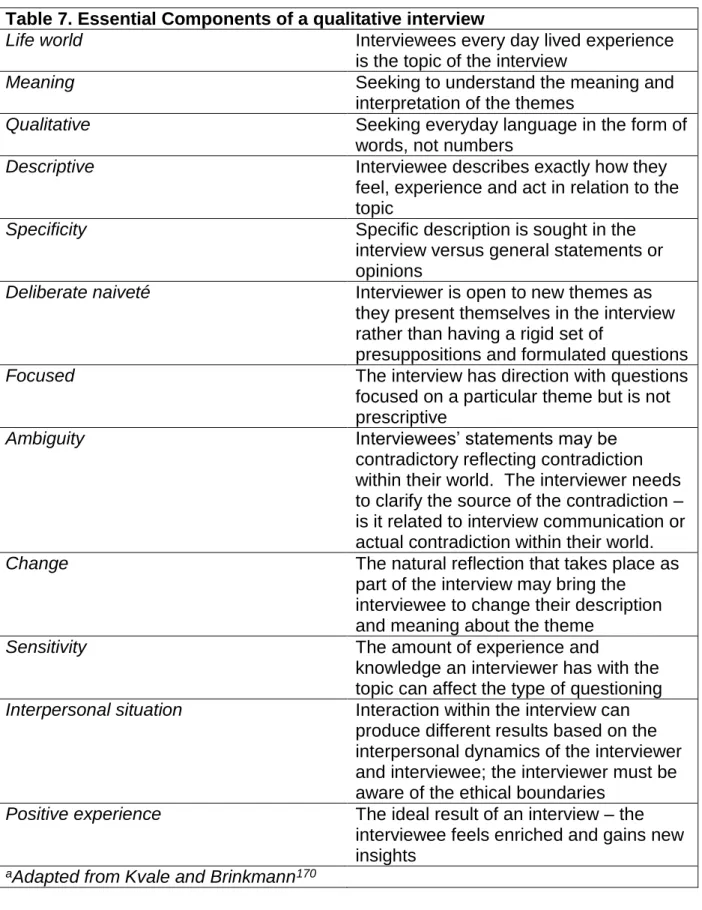
Table 7. Essential Components of a qualitative interview ... 67
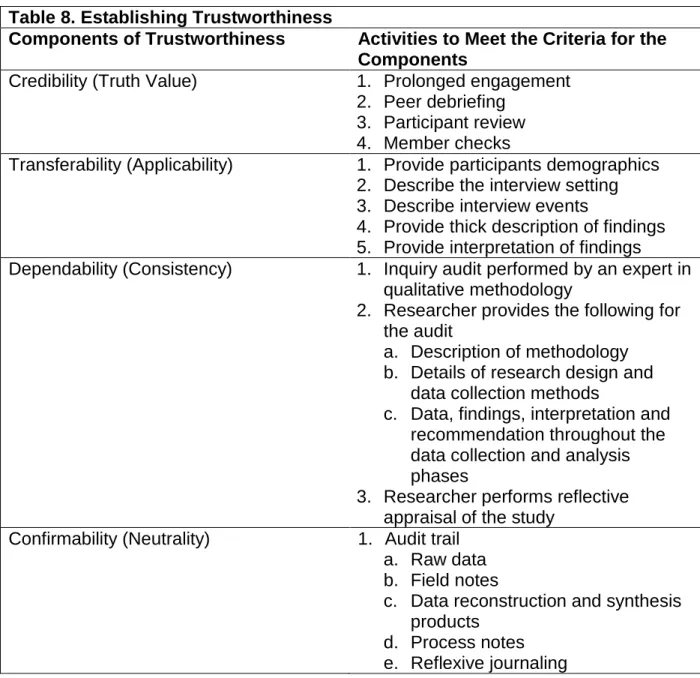
Table 8. Establishing Trustworthiness ... 79
List of Figures Figure 1. The Journey to Clinical Instructor Competence ... 118
1
CHAPTER 1: INTRODUCTION INTRODUCTION
Competence is defined as the “possession of a required skill, knowledge,
qualification or capacity.”1 Currently, no standardized process or evaluation exists to
determine the competence of physical therapist clinical instructors (CIs). Despite the lack of standardization, clinical education is an integral part of physical therapist (PT) education, and the Commission on Accreditation in Physical Therapist Education (CAPTE) requires all physical therapist programs have a minimum of 30 weeks of full time clinical education (CE). Within the clinical setting, CIs are directly responsible for the instruction and education of student physical therapists during CE experiences.
The journey to competence as a clinical instructor appears to begin as a physical therapist student. The development of the ability to educate others is a required part of the curriculum content in all accredited physical therapist programs on the authority of the Commission on Accreditation in Physical Therapist Education Evaluative Criteria. According to these criteria, the curriculum must include content and learning
experiences in the behavioral sciences such as teaching and learning, and facilitate students' ability to “effectively educate others using culturally appropriate teaching
methods that are commensurate with the needs of the learner (CC 5.26).”2 CAPTE
does not dictate the amount of time or credits necessary to reach these established criteria. Each individual program determines the depth and breadth of the content; they must exhibit evidence of achieving the standards upon program evaluation. In theory,
2
every physical therapist (PT) graduate possesses the ability to educate others, including their patients, family members, caregivers, peers, other professionals, and students.
Theory and practice are two different actualities, which raises the question, ‘who determines if a clinical instructor is equipped to educate?’ According to CAPTE
evaluative criteria, it is incumbent upon the Director of Clinical Education (DCE) to determine if the clinical education faculty meet the needs of the program by evaluating,
at a minimum, the clinical education provided by clinical instructors.2 The process and
tools used to evaluate clinical education faculty are open to interpretation with only minimal specific standards noted in CAPTE’s evaluative criteria. For example, clinical education faculty must “have a minimum of one year experience and be effective role
models and teachers (Element 4O).”2 There are, however, no standard tools used
across programs to evaluate even these minimum standards, nor a way to be certain that these minimum standards sufficiently prepare all CIs to be an effective, competent clinical educator.
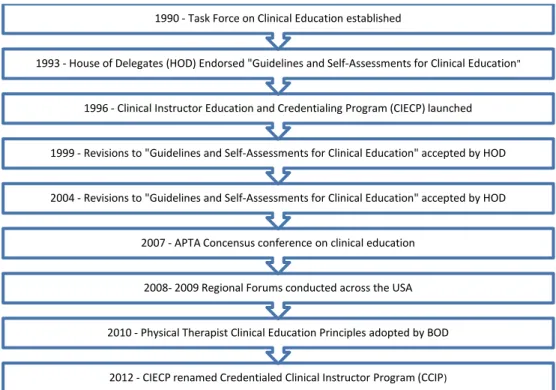
The American Physical Therapy Association (APTA) recognized the lack of standardization and the need for providing direction to the profession for improving the quality of clinical education and clinical instructors. In 1990, the APTA established the
Task Force on Clinical Education3 in an effort to provide some standardization for
training CIs (Figure 1). The task force developed a credentialing program that focused on enhancing the clinical education skills of teaching, instructing and mentoring. Additionally, the credentialed status affords the recognition CIs deserve for their
contribution to clinical education.3,4 The program requires each participant to
3
credentialed CI. After development, implementation, testing and evaluation were completed, the program entitled APTA Clinical Instructor Education and Credentialing Program (CIECP) was launched by the APTA and was recently renamed the
Credentialed Clinical Instructor Program (CCIP).4
In addition to the CCIP, the task force developed voluntary guidelines for clinical education sites, CIs, and Center Coordinators of Clinical Education (CCCEs). These guidelines contain minimums for quality clinical education and provide guidance in the development and advancement of sites, CIs and CCCEs. In conjunction with the
guidelines, the task force developed self-assessment tools entitled “Guidelines and Self-Assessments for Clinical Education” (Table 1). These self-assessment tools allow the
CI to evaluate their own preparedness as a CI.5
Table 1. Timeline of APTA Task Force on Education events 2012 - CIECP renamed Credentialed Clinical Instructor Program (CCIP)
2010 - Physical Therapist Clinical Education Principles adopted by BOD 2008- 2009 Regional Forums conducted across the USA 2007 - APTA Concensus conference on clinical education
2004 - Revisions to "Guidelines and Self-Assessments for Clinical Education" accepted by HOD 1999 - Revisions to "Guidelines and Self-Assessments for Clinical Education" accepted by HOD
1996 - Clinical Instructor Education and Credentialing Program (CIECP) launched 1993 - House of Delegates (HOD) Endorsed "Guidelines and Self-Assessments for Clinical Education"
4
Despite the task force’s efforts to improve clinical education through numerous guidelines and programs, the APTA recognized the need to develop standards in clinical education to meet the expectations of the Doctorate of Physical Therapy (DPT)
degree and the goals of the APTA education strategic plan.6 The APTA convened a
consensus conference in 2007, which included 36 consultants who represented the necessary stakeholders in clinical education to develop a rich discussion about physical
therapist clinical education.6 From this conference, the APTA developed a draft of the
consensus-based clinical education principles identified in the conference and then conducted regional forums across the United States in 2008 and 2009 involving
approximately 1,000 individuals, leading to additional revisions. The revised document resulted in the Physical Therapist Clinical Education Principles (PTCEP), and in March 2010, the APTA Board of Directors (BOD) adopted the PTCEP. The APTA and the BOD intended the document to be a resource for academic and clinical educators, to provide guidance for decision making, and inspire further discussion and collaboration amongst stakeholders in clinical education. The PTCEP addresses the competence of a CI in the Clinical Instructor Performance Principles for Student-Patient Mentoring section of the document, which includes sixteen categories with examples and barriers
acknowledged.6
The categories pertaining to competence of CIs in the PTCEP include, but are
not limited to, teaching, communication and interpersonal skills.6 The literature supports
the importance of these skills and characteristics.7-9 Communication, interpersonal
skills, teaching and professional skills behaviors are characteristics identified by
5
exemplary CI, as well as the importance of being a reflective individual.9,10 Accurate
self-assessment has also been linked with self-reflection and improvement as a CI.11
An important question is: does CI competence increase with credentialing and self-assessment? Only in the last several years have studies been published regarding the effectiveness of credentialed versus non-credentialed CIs. These studies have looked at the students’ perception of effectiveness of credentialed vs. non-credentialed CIs, as well as empirical data showing outcomes of students who have had credentialed vs. non-credentialed CIs. There is inconsistency in the results of the studies. Some of the studies’ findings indicate no difference in effectiveness or behaviors between credentialed CIs and non-credentialed CIs, and conclude that CIs reach a level of
effectiveness over time and with experience as CIs.12,13 Other research findings
suggest that outcomes of student clinical education (i.e., student skills) showed greater
improvement for credentialed CIs.9
These minimal standards may not sufficiently prepare CIs to feel competent.
According to Recker-Hughes et al14, there was a statistically significant difference
between CIs’ perception of their current level of knowledge and desired level of knowledge for teaching DPT students. Most CIs felt their knowledge was less than adequate, however, DPT-prepared CIs were more likely to perceive their knowledge as
more than adequate.14 Competence is the possession of a skill.1 If these minimal
standards do not sufficiently prepare all CIs, how do they obtain the skills to be an effective, competent CI?
While teaching, communication and interpersonal skills are essential to CI competence, clinical competence in the area of practice is also important. Recent
6
changes to CAPTE evaluative criteria no longer include clinical competence as a
requirement, but according to Ellen Price, Lead Accreditation Specialist for PT programs it is the burden of the CCCE and clinical instructors to evaluate and assess the clinical
competence of the CI.15 Formal and informal training provide maintenance and
development of clinical competence. Continuing professional development through informal and formal opportunities is a lifelong commitment, as indicated by Bennet et al.16
The literature reveals how physical therapists perceive this lifelong commitment to continuing professional development, and they also consider many variables when pursuing continuing education, including the quality of the continuing education, monetary impact, geographic location, formal versus informal, timing and
socialization.17-19
PROBLEM STATEMENT
A thorough review of the literature has revealed a gap in the evidence regarding competence of clinical instructors. CAPTE demands proof of competence for CIs associated with accredited programs, and the APTA has attempted to improve the quality of CIs by the development of courses, guidelines, self-assessments and standards. Nevertheless, there is no definition of competence, and the journey of achieving competence through the eyes of the CI is unclear.
Another problem is the unknown effect of minimal standards and limited prerequisites on the CIs journey to competence. While CAPTE provides oversight of the accreditation of physical therapy education programs, minimal standards exist in PT education for teaching and assessment skills, as well as prerequisites for becoming a
7
CI. Determination of clinical instructor competence is up to the interpretation of the Director of Clinical Education in the PT programs. Current research in clinical education supports the importance of CI continuing education and professional development, as well as effective teaching skills and accurate self-assessment.
And finally, while the literature does identify some important traits for CIs, as well
as a recent theoretical model for clinical teaching based on analysis of expert CIs,20 the
journey from novice to expert CI and the CIs perspective of this journey was not found in the literature.
RELEVANCE AND SIGNIFICANCE
CAPTE’s evaluative criteria for entry-level programs require curriculum content related to teaching and learning, and curricular experiences that educate students on how to educate others effectively. CAPTE also requires the DCE to assess the clinical education portion of the PT program, including the competence of the clinical education
faculty, namely CIs and CCCEs.2 According to CAPTE,2 currently there is no exact path
or standardized measure to determine competence of CIs. Each program interprets ‘competence’ and defends their interpretation during the accreditation and
reaccreditation processes. Tools to assist programs in curriculum planning are available from the APTA, including Guidelines and Self-Assessments for Clinical Education, the PT Clinical Education Standards document, and the CCIP. As noted earlier there are inconsistencies in the published research regarding the effectiveness of the CCIP.12,13,21
Experience and training may have an impact on CIs ability to effectively educate students in the clinical setting. Good teaching skills are a strong contributor to
8
successful clinical education.7,9 Continuing professional development and continuing
education are avenues toward improving clinical and teaching skills, and achieving competence as a CI. Many factors, strategies, and experiences contribute to the
process of becoming a competent CI. However, the path to successful clinical teaching is not well-understood, nor is the overall impact of these factors, strategies and
experiences. Understanding the meaning of competence, as experienced and
perceived by CIs who have chosen different paths toward becoming effective CIs, may provide clarity and direction for future efforts and programs designed to prepare
clinicians to effectively educate students in the clinic setting.
RESEARCH QUESTION
The aim of this phenomenological study was to describe and interpret the lived experience of achieving competence as a clinical instructor, from the perspectives of the clinical instructors themselves. This study sought to answer the following guiding
questions:
1. What is the meaning of “competence” for clinical instructors?
2. What is the lived experience of achieving competence as a clinical instructor? 3. What meaning do these experiences have for CIs?
DEFINITION OF TERMS
American Physical Therapy Association (APTA) – A national professional
organization that represents physical therapists and physical therapist assistants in the
United States of America.22
Commission on Accreditation in Physical Therapist Education (CAPTE) – An
9
(USDE) and the Council for Higher Education Accreditation (CHEA). CAPTE grants specialized accreditation status to qualified entry-level education programs for physical
therapists and physical therapist assistants.”23
Center Coordinator of Clinical Education (CCCE) – Individual with clinical education
experience, with strengths in communication, interpersonal skills, organization, an interest in students and a knowledge of the facility. Preferably an experienced Physical Therapist however other non-physical therapy professionals with the aforementioned
skills may be a CCCE.5
Clinical Education (CE) – Clinical component of Physical Therapist education which
takes place in a variety of clinical settings away from or outside of the academic
institution. CE comprises at least 45% of the PT curriculum and is critical to developing
competent, entry-level practitioners.2
Clinical Education Faculty –“The individuals engaged in providing the clinical education components of the curriculum, generally referred to as either Center
Coordinators of Clinical Education (CCCEs) or Clinical Instructors (CIs).”2
Competence – “possession of a required skill, knowledge, qualification or capacity.”1 Continuing Education – Education for professionals beyond formal entry-level
education.18
Credentialed Clinical Instructor Program – A course “for health care providers who
work primarily in a clinical setting and are interested in developing their teaching abilities. Participants will explore different aspects of the clinical learning environment and will learn skills and techniques necessary to provide a structured and effective learning environment for students. The goal is not to improve individual clinical skills,
10
but to develop and each refine participant's ability to teach, instruct, and guide the
development of his or her students.”4
Director of Clinical Education (DCE) – “The core faculty member(s) responsible for the planning, coordination, facilitation, administration, monitoring, and assessment of the clinical education component of the curriculum. The ACCE/DCE(s) is/are the faculty
member(s) of record for the clinical education courses.”2
Physical Therapist Clinical Education Principles (PTCEP) – Document published by
the APTA, in 2010, on standards in clinical education; based on a consensus
conference in 2007 and feedback from regional forums held in 2008 and 2009.6
Physical Therapist Clinical Instructor/Clinical Instructor (CI) – Physical Therapist
directly responsible for the clinical education of the student physical therapist at the clinical site having at least one year of clinical experience with demonstrated clinical
competence.5
Physical Therapist Clinical Performance Instrument (CPI) – An instrument
developed by the APTA which is a voluntary standardized valid tool used by Physical Therapist Programs to assess student performance during clinical education
experiences. This tool was initially developed and field-tested in 1997 and significant revisions were made and field-tested in 2006. The CPI is available online; online training and assessment are required of the student and the clinical instructor to utilize this tool.24
11 SUMMARY
The literature supports the importance of the CIs role in clinical education, as well as the need for continuing education, professional development, effective teaching skills and accurate self-assessment. Despite the APTA’s development of education and assessment tools for CIs, the path to achieving competence is not clear. Understanding of the experience of becoming competent, from the CIs perspective, is also lacking. This study explored the lived experience of achieving competence as a CI, from the perspectives of clinical instructors themselves.
12
CHAPTER 2: REVIEW OF LITERATURE INTRODUCTION
Clinical education experience is an essential part of most healthcare professional education programs and clinical instructors play a vital role in the education of their students. In the field of physical therapy, clinical education experiences (CEE)
constitute a large percentage of the curriculum, signifying the programs’ identification of the vital role clinical education experiences play in becoming a competent entry-level Physical Therapist (PT). These clinical education experiences take place in the “real world” with “real PTs” who function as Clinical Instructors (CIs) supervising the students’ experience while in the clinical setting. Clinical instructors report to Center Coordinators of Clinical Education (CCCE) in the clinic and to Directors of Clinical Education (DCE) or Academic Coordinators of Clinical Education (ACCE) at the university.
As introduced in the previous chapter, several voluntary tools and resources have been developed over the years to assist in educating the CI, however still today there remains no standard procedure or requirement for gaining, proving or maintaining competence as a clinical instructor. This chapter will define the clinical education experience and clinical instructor as they pertain to health professions. A review of PT CI demographics is presented as well as clinical instructor requirements in PT and other health professions. A comprehensive review of the literature on clinical instructor
effectiveness, the expert CI and clinical instructor development is presented. The chapter closes with a review of current efforts in the PT profession for innovation in clinical education and a conclusion.
13 CLINICAL EDUCATION EXPERIENCE
The American Physical Therapy Association (APTA) defines clinical education experience (CEE) as the portion of the curriculum that immerses the student in the “real-life” PT practice environment, facilitating student learning by applying classroom knowledge, skills and developing professional behaviors. These clinical education experiences take place in a variety of PT practice settings for varying durations of time,
including part-time and full-time experiences.25 Though there are differences in the
structure of clinical education experiences, other health professions also identify the experiences as those that take place in the “real world”, outside of the classroom or
laboratory setting, which allow students to apply knowledge and skills to real patients.26-31
As noted in the previous chapter, the Commission on Accreditation of Physical
Therapy Education (CAPTE)2 mandates students have a minimum of 30 weeks of full
time clinical education (Evaluative Criteria CC-6), and a depth and breadth of
experiences across the lifespan and continuum of care in common PT practice settings
(Evaluative Criteria CC-4).2 The transition from baccalaureate and master’s to the
doctor of physical therapy (DPT) degree played a major factor in the increased time
required in clinical education.32 Today, clinical education experiences occupy an
average of 45% of the total program length as compared to 26% in the early years,
1918 through the 1950’s, of the profession.33,34
CLINICAL INSTRUCTOR
CAPTE defines a PT clinical instructor as a licensed physical therapist who engages in the clinical education component of the curriculum by supervising and
14
instructing the PT student in the clinical environment. CAPTE indicates a CI should demonstrate clinical competence in their area of practice as well as effective clinical teaching skills including evaluation, assessment and documentation of student
performance.2 Although the title varies in other health professions,
instructor/preceptor/supervisor/fieldwork educator/clinical faculty, there is a consensus that the individual is a licensed professional in their field and provides a learning experience for the student in the clinical environment.2,26,28,29,31
PT Clinical Instructor Demographics
Over the years, the characteristics of CIs have transformed; several studies reveal the changing appearance of PT clinical instructors (Table 2). A noteworthy increase of nearly 15% occurred in the number of CIs possessing a doctorate of physical therapy, versus a bachelor or master’s degree, in a 2008 study by
Recker-Hughes et al14,35, as compared to studies in the previous ten years.12-14,32,36 The
professions’ transition to the Doctor of Physical Therapy (DPT) as the accepted entry-level physical therapist degree, is likely the cause for the increase in the DPT as the highest earned degree.
Other areas of change in CI demographics include years of experience as a clinical instructor, credentialing and specialty certification status. CAPTE evaluative criteria requires CIs have a minimum of one year experience, however some programs report students are assigned CIs with less than one year experience. Since 2004, the
CAPTE aggregate program data Fact Sheet has shown a decrease in the number of
programs reporting students who had a clinical instructor with less than one year
15
3).33 The same Fact Sheet shows in 2012-2013 48.3% of CIs were APTA credentialed
clinical instructors and 22.4% held some type of certification like APTA clinical specialist
(Table 4).33 Similarly, several studies including CI demographics reveal 21-46% of CIs
are APTA credentialed.12-14,32,35,36 This infers more CIs are pursuing credentialing or
programs are seeking credentialed CIs to supervise the clinical education experiences. However, there could be a change partially due to calculation differences. In the annual report, CAPTE asks programs what percent of clinical instructors are credentialed; if programs report percentages as total number of CIs for the academic year, and count each clinical education experience rather than individual CIs, a CI who has served more than once that academic year may be counted again resulting in a potentially different statistic.
Table 2. Physical Therapist Clinical Instructor Highest Earned Degree
Survey/Study Year 1965-6637 2000-0132 200638 200812 200813 2008 & 201014,35 n= 2402 PTs 230 CIs 599 CIs 112 CIs 158 CIs 497 CIs/CCCEs Degree - Baccalaureate 98% 56% 52.3% 59.6% 38.6% 37.1% Masters No report 43% 43.7% 34.0% 52.5% 47.5% Doctoral N/A 0.43% 1.3% 0.9% 0.04% 15.2%
Table 3. Percentage of PT Programs with Clinical Instructors with <1 year of Clinical Experience
Survey/Study Year 2004-05 2006-07 2007-08 2009-10 2010-11 2011-12 2012-13
(# of programs)n= 208 208 207 218 225 217 219
< 1 year Clinical
Instructor Experience 8% 6.5% 6.1% 6.5% 6.3% 1.4% 4.7%
16
Table 4. Credentials and Specialty Certifications of Clinical Instructors
Survey/Study Year 2000-0132 200638 200812 200813 200814 201035 2011-1233 2012-1333 Credentialed CIs 23.48% 21% 31% 46% 31.3% 45.3% 48.3% Specialty Certifications 97% 30% 4% 13% 6.3% 22.4% 22.4%
CLINICAL INSTRUCTOR REQUIREMENTS Physical Therapy
The level of PT clinical instructor experience and training varies significantly; only minimal specific standards are noted in CAPTE’s evaluative criteria. For example, clinical education faculty must be a licensed physical therapist and “demonstrate clinical
competence in the area of practice in which they are providing clinical instruction.”2
This current CAPTE requirement mirrors the recommendation made nearly four decades ago by Margaret Moore, then APTA Education Section President, that a clinical instructor should have at least one year of experience, have some teaching and supervisory experience, and completed an orientation and training program for clinical
instructors.39 Despite the professions advancement to the DPT, it appears no change
has taken place in requirements for the role of the CI according to CAPTE standards.
The APTA Board of Directors has approved Guidelines for Clinical Education40
with the intent of providing direction and guidance in the development and enhancement of clinical education, including clinical instructors. The document represents current practice and future ideals in PT clinical education including identification of minimal
guidelines as well as ideal guidelines to foster growth.40 These guidelines represent the
17
available and consensus conferences have resulted in Physical Therapist Clinical
Education Principles,6 clinical education experiences across all PT programs vary in
quality and lack consistency.41
Other Health Professions
Many health professions have minimal standards and requirements of clinical
educators similar to the PT profession.42 Licensure in the respective profession is an
expectation of the corresponding accrediting body in the professions of athletic training,
medicine, nursing, occupational therapy and speech-language pathology.26,28,29,31,43
Similar to physical therapy, the establishment of a minimum of one year of practice
experience is required by the American Occupational Therapy Association (AOTA).28 In
contrast to physical therapy, the American Speech-Language-Hearing Association requires at least two years of clinical experience beyond the clinical fellowship year;
medicine and nursing do not state a minimum experience requirement.26,29,43
Adherence to the respective education program policies and procedures including collaboration between the clinical educator and academic program for professional development and assessment is also an expectation of some of the accrediting
bodies.28,29,31,43 The AOTA has a Fieldwork Educators (FWE) Certificate workshop to
assist in the development of FWEs, however this is not a requirement.44
CLINICAL INSTRUCTOR EFFECTIVENESS
The effectiveness of clinical instructors in physical therapy and other health professions is a well-published topic. Many authors agree on traits that lead to success as an instructor and those that may result in less than optimal experiences. This
18
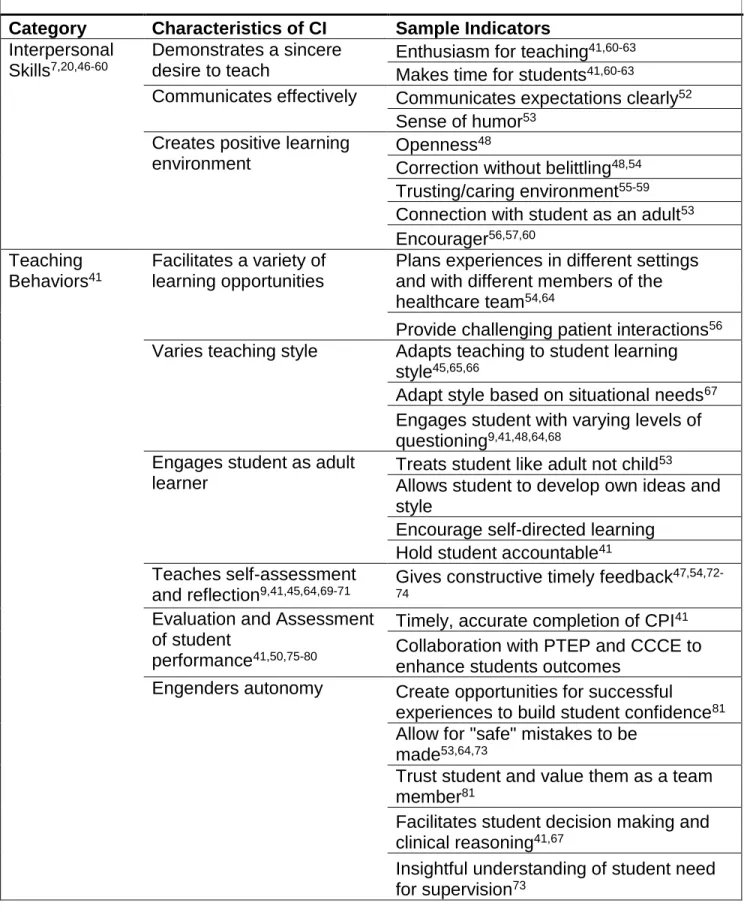
based on the categories of interpersonal skills, teaching behaviors, professionalism, and professional skills. A summary of the skills and behaviors are included in Table 5.
As early as 1976, Moore and Perry39 asserted successful learning experiences
were a result of skills and behaviors in the following areas: a positive atmosphere accepting of the student, an evaluation process that facilitates ongoing assessment or performance and adequate feedback, and a clinical instructor with at least one year of experience who has some teaching and supervisory experience and has completed an
orientation and training program for clinical instructors.39
Faculty in other professions also resonates with the need for skills and behaviors in each of these areas. Assisting students in developing learning outcomes and
arranging learning experiences, providing a positive environment where learning
outcomes can be reached, evaluating the students’ performance by facilitating, guiding and critiquing, and affirming or clarifying students’ perceptions are all essential
characteristics of clinical teachers as agreed upon by 99-100% of the 2,218 nursing faculty surveyed by Ard et al.45
Students similarly identified effective clinical educators with high scores in four categories: professional competence, interpersonal relationships, personality
characteristics and teaching abilities. Ineffective teachers scored low in all four
categories with personality and interpersonal relationships being the lowest.46 Recent
graduates have also identified knowledge, interpersonal skills and teaching strategies
as attributes of good clinical educators.47 Additionally, effective clinical educators are
able to manage the interplay of the three phases of clinical education: preparation,
19
Table 5. Skills, Behaviors and Characteristics of Effective Clinical Instructors
Category Characteristics of CI Sample Indicators
Interpersonal Skills7,20,46-60
Demonstrates a sincere desire to teach
Enthusiasm for teaching41,60-63
Makes time for students41,60-63
Communicates effectively Communicates expectations clearly52
Sense of humor53
Creates positive learning environment
Openness48
Correction without belittling48,54
Trusting/caring environment55-59
Connection with student as an adult53
Encourager56,57,60
Teaching
Behaviors41
Facilitates a variety of learning opportunities
Plans experiences in different settings and with different members of the
healthcare team54,64
Provide challenging patient interactions56
Varies teaching style Adapts teaching to student learning
style45,65,66
Adapt style based on situational needs67
Engages student with varying levels of questioning9,41,48,64,68
Engages student as adult learner
Treats student like adult not child53
Allows student to develop own ideas and style
Encourage self-directed learning
Hold student accountable41
Teaches self-assessment
and reflection9,41,45,64,69-71 Gives constructive timely feedback
47,54,72-74
Evaluation and Assessment of student
performance41,50,75-80
Timely, accurate completion of CPI41
Collaboration with PTEP and CCCE to enhance students outcomes
Engenders autonomy Create opportunities for successful
experiences to build student confidence81
Allow for "safe" mistakes to be made53,64,73
Trust student and value them as a team
member81
Facilitates student decision making and clinical reasoning41,67
Insightful understanding of student need
20
Table 5. Skills, Behaviors and Characteristics of Effective Clinical Instructors continued
Professionalism 9,46,54,60,82
Role model Receives constructive feedback73
Commitment to lifelong learning14,41,73
Models APTA Core Values41
Promotes a comprehensive team
approach to patient care41
Self-assesses and implement change6,36,75
Continual self-improvement Seek feedback on teaching performance41
Seeks professional development
opportunities to improve teaching skills41
Professional skills41,83,84
Demonstrates competence
in clinical practice2 Uses patient-focused, outcomes-oriented,
evidence based practice41
Interpersonal Skills
No matter the format of clinical education, the presence of effective interpersonal skills in a clinical instructor appears to be of primary concern among students in PT and other health professions. Students rate communication and interpersonal skills as more important than professional skills indicating that attitude, not professional ability, is crucial to students.7,46,48,49
Effective interpersonal behaviors and skills include openness,48 facilitating a
trusting and caring relationship,55-59 respect,54 optimism,59 a sense of humor,53
connecting with the student as an adult not just as an instructor,53 encourager,56,57,60
integrity,60 and once again good overall interpersonal skills.20,47,50,51 Additionally,
correcting students without belittling them, communicating expectations clearly in a non-threatening manner are also noted by students and CIs, as desirable teaching
21
Students seem to desire the development of a meaningful interpersonal relationship with instructors and those instructors who exhibit genuine interpersonal
skills appear to ease the anxiety students experience in the clinical environment.49,59
The research clearly shows faculty, students, and clinical educators believe interpersonal skills are an essential component of effective clinical instructors.
Teaching Behaviors
In addition to interpersonal skills, a clinical instructor with essential teaching and
instruction skills leads to higher quality clinical education experiences.41 The research
in PT and other health professions again supports these necessary skills and identifies effective teaching behaviors.
Demonstration of a desire to teach is an essential teaching behavior, which includes, showing enthusiasm for teaching and making one’s self available to
students.41,60-63 Providing a variety of opportunities for students including exposure to
different settings, patient populations, diagnoses, acuity level, and complexity, as well as different members of the healthcare team can enrich the clinical education
experience.54,64 The Clinical Instructor also plays a dominant role in constructing and
leading the learning experience, which can facilitate or hinder students’ decision-making, critical thinking and self-directed learning. The CI should be aware of and adjust their supervisory style and interactional techniques based on the students’
needs.67
Successful clinical instructors also actively assess student performance and
adapt teaching methods to student’s needs.65 Students are looking for teaching and
22
learning style and personality type in turn contribute to maximized learning
experiences.45,66 Good clinical teachers also make learning experiences out of ordinary
situations.83 Ordinary experiences can be extraordinary when CIs use questioning
effectively. The student reaches a deeper level of critical thinking by the CI intentionally using a progression from lower-level to higher-level questioning techniques on the
student.9,48,64,68 This can be most effective when the clinical instructor fosters a safe
environment that allows students to ask questions and make mistakes without fear.53,73
Students also desire their CIs to treat them like adults, not children,53 and to trust
them with more responsibility as they become more confident in their skills.81 The
effective CI recognizes the desires of an adult learner and engages the student as such by seeking their input on the learning experience and by holding them accountable for
their own learning41 as well as providing a balance of challenge and support.56,58
Teaching students how to self-assess and reflect45,64,69-71 is another essential
teaching behavior.9 The CI promotes self-assessment through providing timely and
constructive feedback,47,54,72-74 reviewing and discussing students’ strengths and
weaknesses, and answering students’ questions.47,73 Questioning the student before,
during and after patient interactions can also stimulate self-assessment.41
Another important component of assessment and necessary teaching skill is the evaluation and assessment of students. Effective clinical instructors evaluate students using a variety of information sources, and are timely, accurate, objective, and specific
in their assessment.41,50,75-80 In physical therapy, this includes completion of the Clinical
Performance Instrument (CPI) and collaboration with the PT education program and the
23
A final teaching behavior of effective clinical instructors is the ability to engender autonomy in students. This occurs by building students’ confidence through successful
experiences,81 allowing students to make mistakes safely,53,64 promoting students’
involvement in patient care,56 facilitating student decision making and clinical
reasoning41,67 and possessing an insightful understanding of students’ need for
supervision.73 Also, clinical instructors who acknowledge students’ positive actions
boost the students’ self-worth and confidence, which encourages them to continue with
the experience.81
Professionalism
Clinical instructors spend a significant amount of time with students, and students
view them as role models, be it positive or negative.60,85 Both clinical instructors and
students agree that modeling professional behaviors is an important part of effective clinical instructor performance.9,46,54,60,82 Physical therapist clinical instructors
demonstrate professionalism by modeling the APTA Core Values and promoting a
comprehensive team approach to patient care.41 No matter the clinical setting, crucial
skills identified by athletic trainer clinical instructors are: legal and ethical behavior
(92%), clinical skills and knowledge (74%), and interpersonal relationships (68%).84
As noted previously, positive teaching behaviors include giving students constructive feedback and teaching self-evaluation and reflection. Comparatively,
accepting constructive feedback from students73 and self-assessing6,36,75 are also
essential components of modeling professionalism. By self-assessing and making change, the clinical instructor is demonstrating a commitment to lifelong professional development. With the advancement of the profession and the change to the DPT,
24
clinical instructors without a DPT have felt less than adequately prepared to instruct DPT students; they also identified a deficit in knowledge and expressed a desire to gain
more knowledge.14
Professional Skills
In the profession of physical therapy, CAPTE expects all clinical instructors to demonstrate clinical competence in the area of practice in which they are providing
clinical instruction.2 Clinical instructors who are able to combine pedagogical skills and
clinical competence were found to have a tremendous influence on students.83
Providing patient focused care that is outcomes-oriented and evidence-based is
also believed to be an essential characteristic for clinical instructors.41 Evidence-based
practice models a commitment to lifelong learning, as well as helps students develop
clinical rationale for treatment by integrating current research into clinical practice.73
Summary of Clinical Instructor Effectiveness
Research in a variety of health professions reveals interpersonal skills, teaching behaviors, professionalism and professional skills are essential characteristics of clinical instructors. While most studies reveal interpersonal skills and teaching skills are most important characteristics of effective clinical instructors, a few studies found nursing
students rated clinical competency as most important.50,78 In one of these two studies
however, the faculty members from the same programs identified interpersonal
relationships as the most important characteristic.50 Overall, the literature shows a
comprehensive picture of the effective clinical instructor. However, the meaning of competence and the lived experience of achieving competence, from the CIs perspective, was not found.
25 EXPERT CI
The characteristics of an expert or exemplary CI are a culmination of the skills of effective clinical instructors. While the meaning of clinical instructor competence was
not found in the literature, a very recent study by Buccieri et al20 defined the “expert
clinical instructor”.
The role of the clinical instructor parallels the role of the physical therapist
clinician in many aspects,86 because of these parallels the literature on the expert
physical therapist clinician must be considered when defining the expert CI. To
understand fully the expert clinical instructor Buccieri et al51 began with the available
literature on the expert physical therapist clinician, specifically work of Jensen et al,87,88
who defined and studied in depth expertise in physical therapy practice using a grounded theory design with 12 peer-designated expert PT subjects. The theoretical model that emerged included four dimensions of expert PT practice: knowledge, clinical reasoning, movement, and virtues. The knowledge was dynamic, multi-dimensional, patient centered and evolved as the therapist utilized a reflective process. Clinical reasoning involved reflection-in-action and collaboration with the patient and family, the therapist always viewed the patient as a person and a valued and trusted source of knowledge. Virtues of caring and compassion were a part of the high standards these PTs set for themselves and the traits they displayed. Finally, movement was a central focus, specifically on the return of function.87
Based on this theoretical model and definition of expertise in PT practice,
Buccieri et al51 began their quest to define an expert CI with a pilot study which
26
professional development and relationships skills as a PT and application of those skills
after self-reflection as a CI. Then Buccieri et al20 conducted a different qualitative study
using a grounded theory approach to develop a theoretical model of CI expertise. Nine physical therapist clinical instructors participated in the study through semi-structured interviews. The model developed is one of expertise in action including the dimensions of teaching and learning, professional development, and relationships identified in the
pilot study. Again, they found, expert CIs were reflective individuals, who reflected for
action, the preparatory phase, in action, in real time, and on action, at the conclusion of
the learning occurrence. They found the expert CIs used this reflection strategy to identify their own needs and the student needs, as well. They integrate relevant teaching strategies from the themes of professional development, teaching and learning, and relationships. Additionally, the expert CIs approached problem solving with a strategy similar to the APTA Patient Client Management Model found in the
Guide to PT Practice.20,89 This model includes examination, evaluation, diagnosis,
prognosis, intervention and outcomes; the expert CI applied each of these phases to the
clinical education experience. In each of these steps, the expert CIs used reflection, for,
in and on action as they assessed the situation and moved forward to the next phase in
the problem solving process. The authors advocate for the use of this model to facilitate
clinical teaching skills in clinical instructors.20 This study however, does not present the
pathway to become an expert CI or the CIs’ lived experience of becoming an expert.
CLINICAL INSTRUCTOR DEVELOPMENT
A considerable amount of literature in the health professions documents the characteristics of effective clinical instructors, and researchers have recently defined the
27
expert clinical instructor in physical therapy, but no literature was found to support the meaning of clinical instructor competence or the journey to competence from the CIs perspective. The quality of physical therapy clinical education experiences vary
significantly partly due to the CIs competence and self-confidence in teaching.41
Although no standardized path for achieving competence was found in the literature, resources are available to assist in the development of a clinical instructor. This section will review the resources available to PT CIs and present the evidence on the
effectiveness of these resources.
Resources for Physical Therapist Clinical Instructors
The beginning stages of the development of teaching skills starts in the entry-level PT education program. The advancements of academic rigor in DPT education include the implementation of content focused on the ability of entry-level graduates to educate others, including patients, families and PT students. As a physical therapist, one is consistently educating patients and as a CI educating PT students. CAPTE Evaluative Criteria requires all curriculum to include content and learning experiences
that teach students how to effectively teach and educate others.2 Therefore, in theory,
every physical therapist (PT) graduate possesses the ability to educate others, including future PT students. Theory is different than practice so to assist in the development of PT CIs multiple resources are available through professional bodies and education programs.
Credentialed Clinical Instructor Program
In 1996, the APTA created and launched the Clinical Instructor Education and Credentialing Program (CIECP), the program was later renamed the Credentialed
28
Clinical Instructor Program (CCIP).3 This voluntary programs’ goal is to enhance the
clinical-education skills of Physical Therapists and Physical Therapist Assistants. The program consists of 12 hours of classroom work and a three-hour practical assessment center. The content of the course focuses on the development of teaching skills including recognition of the parallels between the clinician and CI role,
identification of learning styles and the students’ readiness to learn, the stages of learning and the development of learning experiences, evaluation methods, how to
manage the exceptional student and finally the legal aspects of clinical education.4
Upon successful completion of the assessment center, the Credentialed Clinical Trainer grants the PT credentialed clinical instructor status. Once granted, no requirements exist to maintain the credentialed status. The CCIP course has proven to be desirable
as there are now 42,680 credentialed PTs and 7,036 credentialed PTAs to date.90
Advanced Credentialed Clinical Instructor Program
To further the development of CIs beyond the basic CCIP level the APTA developed the Advanced CCIP. This course is a two-day program for physical therapists who have supervised and mentored at least one PT student. Professional development and best practice using the patient/client management model are the primary constructs of the course. Some of the expected outcomes of this course include the ability of a CI to teach students the following: application of professional standards, correct use of patient/client management model and evidence based practice, as well as the importance designing a professional development plan that promotes lifelong learning. Participants are also expected to understand the
29
relationship and distinctions between and among the APTA, Federation of State Boards
of Physical Therapy, CAPTE and state and federal regulations.91
APTA Guidelines and Self-Assessment for Clinical Education
In addition to the credentialing course, are the APTA Guidelines and
Self-Assessment for Clinical Education for clinical education sites, CIs and Center Coordinators of Clinical Education (CCCEs). These voluntary guidelines contain minimums for quality clinical education and provide guidance in the development and advancement of sites, CIs and CCCEs through a self-assessment tool which facilitates
evaluation of preparedness to be a CI.5
APTA core documents
The APTA core documents92 are the documents containing the fundamental
doctrines of the profession and are essential to practice, research and education.93
These documents are resources available to the clinical instructor through the APTA
and include the Core Values, APTA Code of Ethics for Physical Therapist, Standards of
Practice for Physical Therapy, and Guide for Professional Conduct. Some view the Core Values as essential to modeling professionalism and therefore an integral part of
successful clinical instruction.41
Physical Therapist Clinical Education Principles
The Physical Therapist Clinical Education Principles (PTCEP)6 endeavors to identify minimum standards and essential components for clinical education as it provides a resource for academic and clinical educators, and extensively outlines performance principles for clinical instructors. The APTA’s goal is to raise the bar of expectations and qualifications of CIs, to provide guidance for decision making, and
30
inspire further discussion and collaboration amongst stakeholders in clinical education. The PTCEP extensively outlines the performance principles for clinical instructors to
provide a guide for PT education programs and CIs themselves.6
Consortia
Consortia are also a source of support for the development of CIs. Physical therapist clinical education consortiums are groups of ACCE/DCEs, CCCEs, and CIs across the nation which offer professional development opportunities for CIs. For example, in the past, Florida Consortium of Clinical Educators offered a basic
certification course for clinical instructors, however, that has been discontinued in an
effort to support the APTA CCIP.94 Texas still offers a two-part Clinical Instructor
Certification Program, part I is a four part online module and part II is on-site
education.95 Many other clinical education consortiums offer workshops, educational
sessions and current information via the web or in-person events in an effort to foster development of CIs.96-98
PT education programs
ACCEs and DCEs also facilitate the professional development of CIs by way of mentoring them through difficult situations encountered during clinical education
experiences, as well as presenting current information, in-services, and other methods of education to the CI as part of the partnership expectations between facilities and the
university.41 Clinicians value practical knowledge and using practical knowledge to
facilitate the application of technical knowledge is a strength of most DCEs.38 This
31
Some education programs are not leaving the development of CIs to post-graduation and have explored models of integration of clinical teaching into the entry-level curriculum. One PT program that uses third year students as clinical instructors for second year students during integrated clinical education experiences in a pro bono clinic on the campus, found second year students became more aware of the role of the clinical instructor and more familiar with the process of evaluating clinical teaching. And, third year students’ increased awareness of their potential role of CI and desire to
be a CI someday, it also contributed to their appreciation of CIs.100
Summary of Resources
Multiple resources are available to the clinical instructor through the APTA,
consortiums and PT education programs. The resources available through the APTA
include the Core documents, Physical Therapist Clinical Education Principles, APTA
Guidelines and Self-Assessment for Clinical Education, APTA Vision Statements’ Guiding Principles, APTA Strategic Plan, APTA Education Strategic Plan, APTA
Credentialed Clinical Instructor Program and the APTA Advanced Credentialed Clinical Instructor Program. However, competencies and outcome measures related to these or any other education programs are not required of clinical instructors. Additionally, the use of these resources is voluntary and clinical instructors often have limited formal preparation to be a clinical educator.41
Effectiveness of Resources
Several authors have attempted to measure the effectiveness of the resources for PT clinical instructors. Understanding the impact of CI training in relation to student evaluation may support the effectiveness of some training resources.
32 Evaluation
The ability to perform an accurate and timely evaluation of student performance
is an essential characteristic of the effective clinical instructor.41 The development of a
CIs ability to evaluate is part of the CCIP and the Clinical Performance Instrument (CPI) training module. The CPI is an outcomes-based assessment tool used to evaluate a
student’s performance in the clinical setting. Vendrely and Carter101 found training has
an influence on CIs evaluation of students using the CPI. Thirty-four licensed PTs, who desired to become clinical instructors, were divided into four groups: CIECP training, CPI training, CIECP and CPI training, and no training at all. Results revealed CIs who were trained in the CCIP and the CPI training had a statistically significant difference in scoring of the safety criterion as compared to CIs who had CPI training only.
Credentialed versus non-credentialed Clinical Instructors
One of the goals of the APTA in creating the CCIP was to provide standardized education for clinical instructors, however, the effectiveness and necessity of
credentialing is debated in the literature. A few studies have found credentialed clinical
instructor performance is rated higher than non-credentialed CIs. Housel et al102 used a
double-blind cohort design to identify the difference in effectiveness of CIs using the students’ assessment of the credentialed vs. non-credentialed CI. Students evaluated
their CI using the New England Consortium of Academic Coordinators of Clinical
Education Student’s Evaluation of a Clinical Education Experience tool. A significant difference was found in two of the 27 categories, although credentialed CIs scored higher in 22 of the 27 categories. The results were then analyzed in summation and the credentialed CIs scored significantly higher than the non-credentialed. Again, in
33
another study by Housel and Gandy21 a significant interaction was found between
student outcomes for those who had credentialed versus non-credentialed CI’s. The interaction was found from midterm to final evaluation, and it showed that the students who had a credentialed CI had greater improvements in their skills than students who
had a non-credentialed CI. However, limitations to the study include: (1) no baseline
measurement of the students’ performance, (2) a significant disparity in the length of clinical education experience, from 3-20 weeks, and (3) the question “was there a statistically significant difference in the amount of change over time or the rate of
progression from midterm to final in the different groups?”21 was not the authors’ original
research question.
Other authors have found no significant difference between credentialed and
non-credentialed clinical instructors. For example, Morren et al12 studied the
association between CI characteristics and students’ perceptions of CI effectiveness. Over three clinical education experiences, 112 pairs of CIs and students, participated in
the study. Students scored the CI’s performance using the Physical Therapist Student
Evaluation103 (PTSE) at the end of each clinical education experience. The PTSE is
designed to assess the entire clinical education experience, including clinical instructor performance, from the students’ perspective. Students complete the PTSE and then review the results with their CI while still on the clinical education experience. In this study, once the student returned to campus, they verified the scores with the DCE and were permitted to revise the PTSE if necessary. A significant difference was found between the original and the revised scores. There was no significant positive association between the student-CI PTSE assessment scores and the CIs
34
characteristics; however, there was a strongly significant positive effect on four of the 21 PTSE items of clinical instruction for CIs who were APTA credentialed CIs versus those who were not credentialed. Authors conclude, although there was no association
between a CIs characteristics and more effective instruction, the APTA credentialed CIs did score significantly higher on some of the teaching skills perhaps due in part to the CCIP course focusing on those particular instruction skills. A limitation of the PTSE is
the ceiling effect of the tool, which may have affected the scoring.12
The influence of CI effectiveness, based on training, was also tested by
Wetherbee et al.13 Subjects included 158 fulltime PT students, 73 credentialed CI’s,
and 85 non-credentialed CI’s. An adapted form of the Nursing Clinical Teacher Effectiveness Inventory (NCTEI) was the survey tool, with a focus on the top five
general areas needed to be an adequate physical therapist. A multiple linear regression was implemented to examine demographic variables. The data analysis revealed no significant difference between the levels of degree the CI held, years as a CI, student to CI ratio, or credentialed vs. non-credentialed CI’s. However, there was a positive
correlation between the number of years the PT functioned as a CI and the NCTEI
score (rs=0.18, P = .03) suggesting that years of experience is more positively
associated with effective teaching behaviors. Although no significant difference was found between credentialed versus non-credentialed CIs, a significant difference was found in average number of students the CI instructed per year. The credentialed CI instructed more students per year with an average of three versus the non-credentialed