University of South Florida
Scholar Commons
Graduate Theses and Dissertations Graduate School
2006
RSVP: An investigation of the effects of Remote
Shared Visual Presence on team process and team
performance in urban search and rescue teams
Jennifer L. Burke University of South Florida
Follow this and additional works at:http://scholarcommons.usf.edu/etd
Part of theAmerican Studies Commons
This Dissertation is brought to you for free and open access by the Graduate School at Scholar Commons. It has been accepted for inclusion in Graduate Theses and Dissertations by an authorized administrator of Scholar Commons. For more information, please contact
Scholar Commons Citation
Burke, Jennifer L., "RSVP: An investigation of the effects of Remote Shared Visual Presence on team process and team performance in urban search and rescue teams" (2006).Graduate Theses and Dissertations.
RSVP: An Investigation of the Effects of Remote Shared Visual Presence on Team Process and Performance in Urban Search & Rescue Teams
by
Jennifer L. Burke
A dissertation submitted in partial fulfillment of the requirements for the degree of
Doctor of Philosophy Department of Psychology College of Arts and Sciences
University of South Florida
Major Professor: Michael D. Coovert, Ph.D. Walter C. Borman, Ph.D. Michael T. Brannick, Ph.D. Mark S. Goldman, Ph.D. Robin R. Murphy, Ph.D. Date of Approval: April 10, 2006
Keywords: human-robot interaction, rescue technology, shared mental models, communication analysis, field research methods
Dedication
For my family: my mother Jane, who always found something good to say, and told me she was proud of me; my sisters Jill and Krista, who patiently listened to my tales of woe
when things were not going well; my father Garfield, who inspired me to go for it in the first place; sweet daughter Sara, who dealt gracefully with a busy student-mom (“I can’t cook dinner, I have homework!”); and for my husband Michael, fellow traveler through
life, whose love and support kept me going through the adventures of the past five years—as it has throughout our lives together.
Acknowledgements
There are many people who played a part in this study coming to fruition, from funding agents that supported the research to fellow students who helped with the nitty gritty details. Whatever the role, I extend my heartfelt gratitude for your help. Thanks go to DARPA and NSF for their support; SSRRC staff members Sam Stover, Tim Slusser, and Colleen Cleveland; CSE staff members Valerie Mirra and John Giannoni; USF students Rahul Agarwal, Laura Barnes, Jeff Craighead, Thomas Fincannon, Matt Long, David Richards, Ashley Gray, Jamie Griffiths, Brian Day, and Rachel Sessions; CMU students Jason Geist, Mike Scherwin, Elie Shammas, and Anthony Kolb; and many others, including Bob Dolci at NASA-Ames, Jim Bastan at NJTF-1, Howie Choset from CMU, Jean Scholtz from NIST, Mark Micire, and Erika Rogers (who bought me the little red book in which to begin the writing process).
Special thanks go to my committee members: Wally Borman, who gave me good counsel on rater training, and lots of positive reinforcement; Mike Brannick, who always made time to answer my (many) questions on methodological issues; Mark Goldman, who gave me my first research job, and whose own research sets the standard by which I measure; and finally, to my mentors and advisors, Mike Coovert and Robin Murphy. Mike’s guidance, support, and encouragement inspired me, and his quiet questions challenged me to think and stretch to come up with new ideas. I can only hope to “be like Mike” in my career. Lastly, my thanks go to Robin Murphy, who made it possible for me to go places and do things I never dreamed possible. The day I visited her lab was a turning point in my career, opening the door to a future in a brand new field—human-robot interaction. I look forward to our future collaboration!
Table of Contents
List of Tables ... iii
List of Figures ... iv
Abstract...v
Chapter 1: Introduction...1
Chapter 2: Related Work ...8
Teams...8
Distributed Teams...10
Distributed Teams in US&R...11
Description of Technical Search Team Operations ...11
Communication and Coordination Challenges in Distributed Teams ...14
Shared Mental Models ...16
Team Communication and Shared Mental Models ...20
Shared Visual Presence...22
Robots ...25
What is a Robot?...25
Human-Robot Interaction ...27
Human-Robot Team Performance ...28
Situation Awareness and Team Processes ...30
Chapter 3: Mobile Robots as Shared Visual Presence: Approach...32
Hypotheses...36
Chapter 4: Method ...38
Setting, Participants, and Apparatus ...38
Setting ...38
Participants...39
Apparatus ...40
Design ...41
Location (Collocated vs. Distributed Teams) ...41
Remote Shared Visual Presence (RSVP or no-RSVP) ...41
Measures ...42
Team Performance Measure ...43
Team Process Measures...44
RASAR-CS ...46
Procedure ...51
Data Collection ...51
Data Analysis ...54
Data Editing and Preparation ...54
Data Coding and Rating...54
Statistical Analyses: Multilevel Regression...56
Chapter 5: Results...64
Descriptive Analyses ...65
Demographics ...65
RASAR-CS Analyses ...66
Descriptive Analyses for Study Variables ...72
Multilevel Regression Analyses ...76
Team Performance Measure ...76
Supplemental Regression Analyses ...78
Shared Mental Model Measure...80
Supplemental Regression Analyses ...81
Team Process Measure ...83
Supplemental Regression Analyses ...84
Summary of Hypotheses and Findings ...85
Chapter 6: Discussion ...94
RSVP and the Model ...96
Location and Site Effects ...98
Theoretical and Practical Implications...104
Theoretical Implications ...104
Practical Implications...107
Limitations ...110
Parting Thoughts and Future Directions ...111
References...114
Appendices...122
Appendix A: Script for Search Task Scenario...123
Appendix B: Demographic Survey Questionnaire ...125
Appendix C: Complete Correlation Table for Study Variables...127 About the Author ... End Page
List of Tables
Table 1 Distribution of teams across experimental conditions ...42
Table 2 Team process dimensions ...45
Table 3 Robot-Assisted Search and Rescue Coding Scheme (RASAR-CS) ...48
Table 4 Raw agreement, Kn, and K for the four RASAR-CS categories ...56
Table 5 Means/proportions, standard deviations, and percentages for demographic survey data ...66
Table 6 RASAR-CS statement frequencies and percentages...68
Table 7 RASAR-CS form x content comparisons of statement frequencies and proportions for speaker-recipient dyads...70
Table 8 RASAR-CS statement proportions by location and RSVP conditions...71
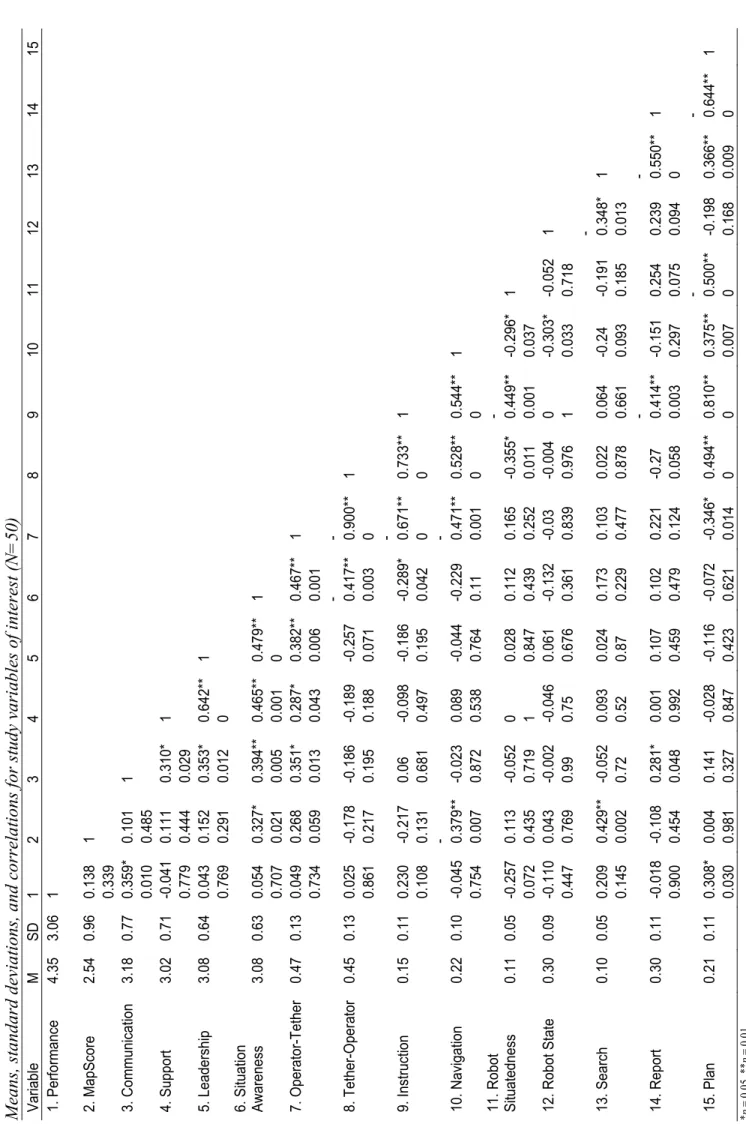
Table 9 Means, standard deviations, and correlations for study variables of interest (N = 50)...73
Table 10 Multilevel regression analysis of location and RSVP effects on team performance ...77
Table 11 Supplemental multilevel regression analyses for team performance...78
Table 12 Multilevel regression analysis of location and RSVP effects on shared mental model...81
Table 13 Supplemental regression analyses for shared mental model...82
Table 14 Multilevel regression analysis of location and RSVP effects on team process...84
Table 15 Supplemental regression analyses for team process ...85
List of Figures
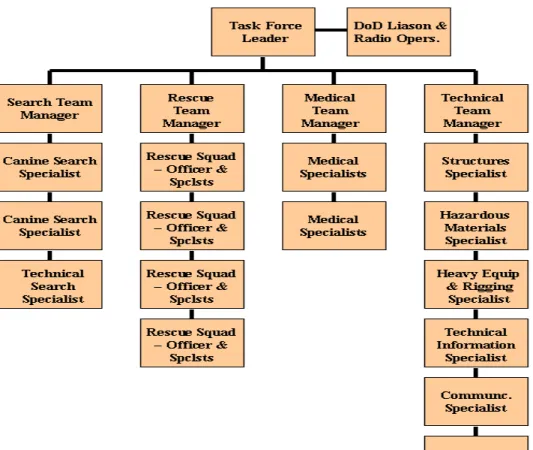
Figure 1. Organizational Structure of US&R Task Force (FEMA,1992) ...13
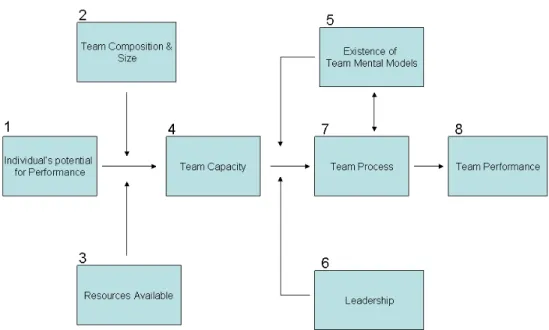
Figure 2. Klimoski & Mohammed’s Framework for Explaining the Role of Team Mental Models in Team Performance ...19
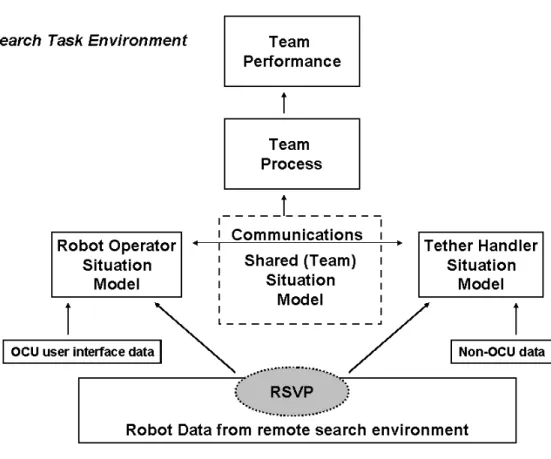
Figure 3. Model of Team Performance in Robot-Assisted Technical Team Search...34
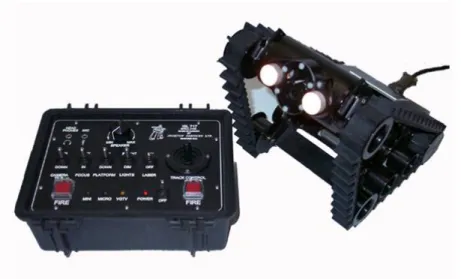
Figure 4. Inuktun Micro-VGTV Robot System ...40
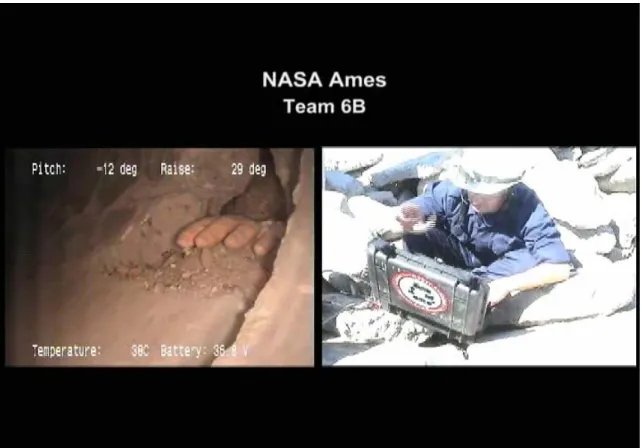
Figure 5. A Mannequin Hand Hidden in the Search Space Serves as a Visual Cue ...44
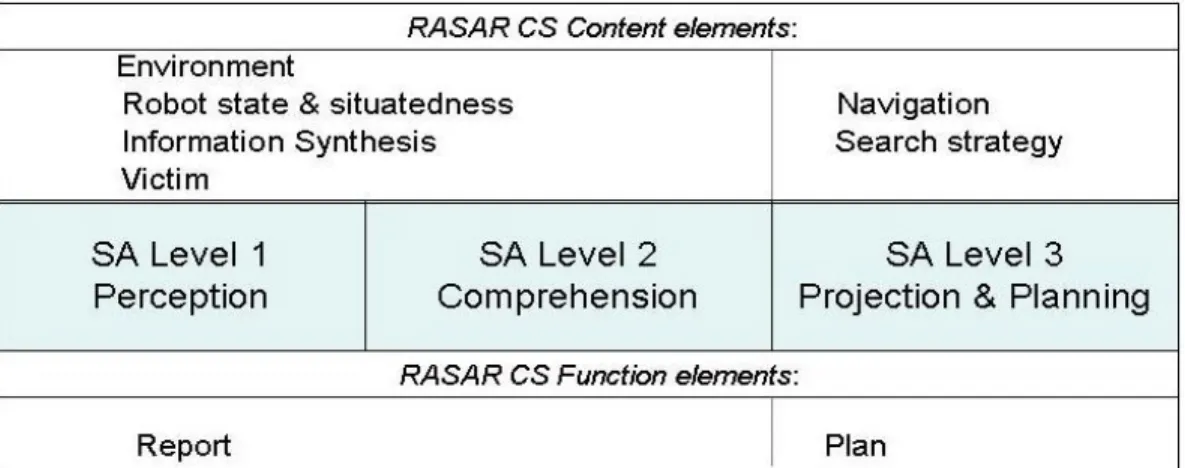
Figure 6. SA Indicators in the RASAR-CS...49
Figure 7. A 3-Person Team of Researchers Manned Each Task Scenario Site...53
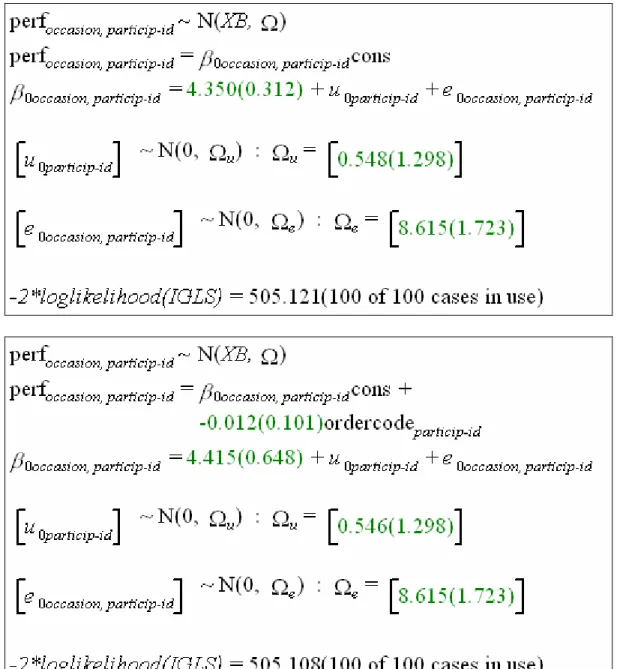
Figure 8. Baseline and Ordercode Model Estimates of Performance ...63
Figure 9. Mean Performance Scores Plotted by Location and Use of RSVP ...99
Figure 10. Bar Graphs Showing Mean Performance Scores at NASA-Ames and NJTF-1 Sites According to Location (Distributed or Collocated) and Use of RSVP...102
RSVP: An Investigation of the Effects of Remote Shared Visual Presence on Team Process and Team Performance in Urban Search & Rescue Operations
Jennifer L. Burke ABSTRACT
This field study presents mobile rescue robots as a way of augmenting
communication in distributed teams through a remote shared visual presence (RSVP) consisting of the robot’s view. It examines the effects of RSVP on team mental models, team processes, and team performance in collocated and distributed Urban Search & Rescue (US&R) technical search teams, and tests two models of team performance. Participants (n=50) were US&R task force personnel drawn from high-fidelity training exercises held in California (2004) and New Jersey (2005). Data were collected from the 25 dyadic teams as they performed a 2 x 2 repeated measures search task entailing robot-assisted search in a confined space rubble pile. Team communication was analyzed using the Robot-Assisted Search and Rescue coding scheme (RASAR-CS). Team mental models were measured through a team-constructed map of the search process. Ratings of team processes (communication, support, leadership, and situation awareness) were made by onsite observers, and team performance was measured by number of victims
(mannequins) found. Multilevel regression analyses were used to predict team mental models, team process, and team performance based upon use of RSVP (RSVP or no-RSVP) and location of team members (distributed or collocated). Results indicated that the use of RSVP technology predicted team performance (β = -1.322, p = 0.05), but not
team mental models or team process. Location predicted team mental models (β = -0.425,
p = 0.05), but not as expected. Distributed teams had richer team mental models as measured by map ratings. No significant differences emerged between collocated and distributed teams in team process or team performance. Findings suggest RSVP may enhance team performance in US&R search tasks. However, results are complicated by differences detected between sites. Support was found for both models of team
performance, but neither model was found sufficient to describe the data. Further research is suggested in the use of RSVP technology, the exploration of team mental models, and refinement of a modified model of team performance in extreme
Chapter 1 Introduction
Distributed team performance is becoming one of the most popular and critical research areas in industrial-organizational psychology. The “perfect storm” combination of workforce globalization, the proliferation of teams as an organizational structure, and the onslaught of increasingly complex technology has made the concept of distributed teams a necessary reality without a clear understanding of what it takes to make them work. The communication and coordination challenges posed by distributed teaming are readily evident as a hindrance to effective team performance (Olson & Olson, 2003). These challenges are sometimes exacerbated rather than alleviated by the insertion of new technology designed to address them. This study, which explores the effects of one type of technology (robots) on distributed team performance, is motivated largely in the interests of making robots a help, not a hindrance, in distributed team tasks of the future.
This study presents mobile rescue robots as a way of augmenting communication in distributed teams through a shared remote visual presence consisting of the robot’s view. The research has a theoretical focus, testing portions of an existing model of team performance (Klimoski & Mohammed, 1994), and probing further to examine questions as to how certain constructs within the model are related. It moves from theoretical constructs to a quasi-experimental investigation that will tease apart some of the issues pertaining to the relationships between team mental models, team processes and team performance. The question is addressed within the purview of the Federal Emergency
Management System, which became part of the U.S. Department of Homeland Security in March, 2003. FEMA's continuing mission within the new department is to lead the effort to prepare the nation for all hazards and effectively manage federal response and recovery efforts following any national incident. Emergency/disaster management is a system composed of many (distributed) ad hoc teams; one of these is Urban Search and Rescue (US&R).
Urban search and rescue has been posed by the DARPA/NSF study on human-robot interaction (Burke, Murphy, Rogers, Lumelsky, & Scholtz, 2004) as an exemplar domain for human-robot interaction (HRI). US&R involves the rescue of victims from the collapse of a man-made structure. The environment can be characterized as a pile of steel, concrete, dust, and other rubble and debris. The areas are perceptually disorienting; they no longer look like recognizable structures due to the collapse, it is dark, and
everything is covered in gray dust from concrete or sheet rock. Robot assisted search and rescue in this field domain, requires that small shoe-box sized physically situated robots operate under these unstructured, outdoor environmental conditions in real-time to visually search areas that are either too narrow for safe human or canine entry or
generally unsafe for human exploration The robots are short, providing a viewpoint from less than one foot off the ground. This exacerbates any “keyhole effects” (Woods, Tittle, Feil, & Roesler, 2004). These domain and agent characteristics present many challenges that distinguish US&R from other human-robot interaction settings, e.g. manufacturing, entertainment and office-oriented applications.
The relationship between humans and robots in US&R is different than
team with people to perform any activity. Because of their small size and the mobility challenges imposed by the US&R environment, robots must be carried in backpacks to the voids targeted to be searched. Humans must interpret the video, audio, and thermal imaging data provided from the robots and fuse it with other data sources (e.g., building plans) and knowledge (e.g., time of day) in order to identify victims and structural anomalies as well as conduct and coordinate large-scale rescue efforts. The information extracted from the robot’s search must be abstracted and propagated up a hierarchy of decision makers as well as distributed laterally among search specialists. Therefore, the human-robot team must cooperatively transform data into information and levels of knowledge. This means human-robot interaction in US&R must consider distributed information transfer and cooperation.
Though the use of robots as remote shared visual presence is presented specifically within the domain of US&R, the potential applications have far-reaching implications for propagation throughout the emergency management system structure, encompassing all of the federal response and recovery efforts following any national incident. It is believed that using the remote presence provided by the robot as the basis for establishing mutual knowledge among distributed teams can increase communication efficiency in distributed teams by building shared awareness, or common ground.
Communication efficiency has been shown to reduce workload and can result in better performance (MacMillan, Entin, & Serfaty, 2004). Moreover, the use of mobile robots as a visual resource allows for assessment of the situation while avoiding information overload, and can assist in resource allocation by incident command. It can also provide reliability/redundancy in communication support to existing communication channels,
and help with accountability of resources and personnel—all critical issues in firefighting and emergency response (Jiang, Hong, Takayama, & Landay, 2004).
This study hypothesizes that the shared visual presence provided by the robot’s eye view can serve as common ground for the distributed team onsite, and for others removed from the site. Robot-assisted technical search presently requires a 2:1 human-to-robot ratio (Burke & Murphy, 2004a). The human-to-robot operator bears the brunt of the cognitive load in teleoperating the robot and searching the remote environment; the tether-handler can provide some physical assistance through manuevering the tether, but mostly relies on communication with the operator to participate in the cognitive aspects of the task. The tether-handler can share the cognitive load by assisting with the search, but lacks the same point-of-view as the operator, since she is typically several meters away and cannot observe the visual image provided by the robot. The robot’s view offers a medium for building a shared mental model of the remote search space, allowing for feedthrough of awareness information by positions, orientation and movement of both the robot and other artifacts in the visual environment (Gutwin & Greenberg, 2004).
Shared visual presence in the remote environment can enhance team
communication and coordination, serving as a source for conversational grounding (common ground), and facilitating the use of gaze awareness, deictic references and targeted communication, as well as providing a feedback source (visual evidence of understanding). Operators and tether-handlers currently utilize verbal communication to create team mental models of the search environment, and to support mutual knowledge of both the task and their respective roles and actions in performing the task. By
robot operator via an auxiliary monitor, more contextual information can be conveyed using targeted communication and deictic references toward artifacts in the environment. The robot operator can convey gaze awareness by camera manipulation or changes in the robot’s configuration. Feedback between the two team members may be enriched by providing the visual channel as a conduit for confirmatory communication on an implicit level.
For example, the tether-handler may suggest that the robot operator take a closer look at a particular artifact in the remote environment. When the robot operator focuses on the intended object, the tether-handler has visual confirmation of the operator’s understanding. In addition, using the visual image provided by the robot to build mutual knowledge may allow team members to anticipate each other’s informational needs, and provide needed information without being asked. This simple switch from explicit to implicit coordination in teams can increase communication efficiency, and has been linked with effective team performance in high stress situations (Morris, Rouse, & Zee, 1987). Therefore it is expected that the use of mobile robots as a shared visual presence in remote environments may lead to more effective distributed team performance in robot-assisted technical search tasks. Moreover, as wireless communication technology improves, this shared visual presence does not have to be limited to the distributed team onsite. A team member “looking over the shoulder” of the robot operator from a site well-removed from the Hot Zone can assist in the search task, offering a fresh pair of eyes that are not subject to the physical and cognitive stressors present onsite.
As mentioned earlier, this study is a theoretical piece, presenting a context- and task-specific model of team performance that tests relationships between shared (team)
mental models, team process, and team performance as outlined in Klimoski and Mohammed’s (1994) framework explaining the role of team mental models in team performance. This model draws on Kraiger and Wenzel’s (1997) proposed framework for mental models as well, which situates shared mental models in a nomological net of antecedents and consequent effects (including team process and performance.) Unlike Klimoski and Mohammed’s model, however, the Kraiger and Wenzel framework makes no attempt to explain how shared mental models influence team process and performance. This proposal tests a portion of Klimoski and Mohammed’s theoretical model, that shared mental models do contribute to team performance directly and indirectly through greater team capacity and more effective team processes. A further theoretical contribution is made by exploring more specifically how these team mental models are created, and whether particular team processes (communication, backup/support, leadership, situation awareness) are affected by their quality. In this study, the remote shared visual presence provided by the robot is posited as a team resource that increases the team’s capacity (readiness) and serves as the common ground from which team mental models are constructed. Through communication analysis and other measures, I intend to trace the formation of the team mental model, examine its influence on team processes and investigate the effects, if any, on team performance.
To understand the research presented in this study, there are some terms and background information you need to know. The following chapter will give you some background on teams and distributed teams, and on the communication and coordination challenges that confront distributed teams. The concepts of shared awareness and shared mental models are discussed, as is research on shared visual space. Next, a short review
of the research on robots and human-robot interaction is recounted, focusing on the studies that relate to the search and rescue domain. Armed with this information, you can then wade into the approach outlined in Chapter 3, which explains the proposed model of performance in robot-assisted technical search teams, and enumerates specific
hypotheses. This is followed by the method section (Chapter 4), which details the specifics of the field study, and the analyses used to examine the research questions. Results are presented in Chapter 5, and are followed by discussion and conclusions in Chapter 6.
Chapter 2 Related Work
This chapter reviews important characteristics of teams and distributed teams, explains some of the communication and coordination challenges that confront
distributed teams, and presents relevant research on human-robot interaction. It begins with a brief discussion of the characteristics that define teams and how we look at team processes and performance. Next, the communication and coordination challenges that confront distributed teams are enumerated. The concepts of shared awareness and shared mental models are introduced here, as is research on shared visual space. Finally, a short review of the research on robots and human-robot interaction is recounted, focusing on the studies that relate to the search and rescue domain.
Teams
Teams are an important organizing structure in the workplace, a fact reflected in the burgeoning literature and research on team performance, processes, and training. The increasing size, complexity and globalization of organizations have fostered the use of teams to speed development and delivery of products and services in a timely and cost-effective manner. Moreover, the technology-driven changes in work settings often necessitate coordinated efforts between team members (Coovert & Foster Thompson, 2001). Teams exist as they perform cyclically over context and time, interacting among themselves and others (Ilgen, Hollenbeck, Johnson, & Jundt, 2005), and have an identity as a work group within a defined organizational function (e.g., a technical search team
within a USAR Task Force unit) (West, Borrill, & Unsworth, 1998). There are many definitions of a work team, most of which share the notions of interdependence and shared goals. For the purposes of this study, a work team is defined as “…two or more people with different tasks who work together adaptively to achieve specified and shared goals” (Brannick & Prince, 1997). More than thirty years of research on the factors which contribute to team performance has yielded a plethora of models and theories of team functioning. Theoretical models of team work typically focus on the inputs, processes and outputs that characterize team effectiveness (Hackman, 1987; McGrath, 1984; Salas, Dickinson, Converse, & Tannenbaum, 1992), though recent models have included more complex representations of teams to include temporal influences (Marks, Mathieu, & Zaccaro, 2001), mediational effects (Ilgen et al., 2005), and multilevel constructs
(DeShon, Kozlowski, Schmidt, Milner, & Wiechmann, 2004). Key to all of these models and theories is the assumption that various team variables and processes contribute to successful team functioning. Variables on the environmental, organizational, team and individual levels can influence the processes seen as integral to effective team
performance: e.g., communication, coordination, situation awareness, leadership, adaptability, and support/backup behavior. In this study, the input variable of interest is the team level psychological construct of shared mental models. This construct is discussed in detail later.
Distributed Teams
Distributed or virtual teams are those whose members are mediated by time, distance or technology (Driskell, Radtke, & Salas, 2003). Distributed teams are usually project or task-focused groups. The team membership may be stable (e.g., an established
sales team) or change on a regular basis (e.g., in project teams). Members may come from the same organization, or from many different organizations. They can be co-located and work in the same physical space, but usually are thought of as working interdependently in remote, geographically separated workspaces. Moreover, they may work at different times, i.e. asynchronous work-cycles. Other factors can influence team processes in distributed teams, such as whether the teams are assembled for a single, time-limited project or on a long term basis, whether team members know each other and have worked with each other before, and whether they expect to have any
interaction/shared work in the future.
Research on distributed teams has consistently reported special challenges in communication and coordination which negatively affect team performance (Hinds & Bailey, 2003; Thompson & Coovert, 2003). The difficulties in establishing shared context across distributed teams can lead to increased conflict and confusion between team
members, and less satisfaction with team processes and outcomes. These difficulties are discussed in greater detail later in this chapter.
All of the characteristics of distributed teams described above are present in the US&R organizational structure, which consists of teams of teams.
Distributed Teams in US&R
Distributed teams in US&R are both project-and task-focused, in that they are created specifically to perform certain tasks in response to disaster incidents, and are mobilized as part of a larger emergency management effort, or project. Responders must go through a rigorous training and certification process to be eligible to serve on a regional or national US&R Task Force, and are often members of local fire rescue
departments. Members of the same Task Force may have worked together before; however, in most responses that require activation of US&R functions, teams are drawn from all over the country, so it is very likely that rescue workers will be working
alongside others from different teams for the single response incident. Teams work in 12-hour cycles, and though there is some overlap, they must coordinate their efforts with others as they enter or leave the Hot Zone (immediate disaster area). In the Hot Zone, team members operate in deconstructed, unfamiliar environments and rely heavily on radio communication as they work. The physical environment is dangerous and workers are required to wear heavy personal protective equipment, which exacerbates cognitive fatigue by making even the simplest tasks (breathing, walking) effortful. The work itself is highly stressful and time pressured, with serious (life-threatening) consequences for error. Technical search (Figure 1) is one of the four US&R functions: search, technical
support, medical, and rescue or extrication. These four operations represent
sub-specialties within the task force. Technical search teams are the particular type of distributed team examined in this study.
Description of technical search team operations. While no two disasters are
managed precisely the same way, US&R technical search operations often begin with a manual reconnaissance of the area of damage, called the hot zone. Victims on the surface or easily removed from light rubble are extracted immediately as encountered. After reconnaissance, the command staff determines what the safest strategy is to effectively search the hot zone for survivors within the rubble. In areas that are deemed safe for humans to investigate, canine teams may be sent forward. In most cases, technical search teams wait until called for. When a dog has indicated signs of a survivor in an area,
technical search specialists are summoned onto the pile. The command staff attempts to minimize the number of people in the hot zone, so technical search teams wait at the “forward station” of the hot zone perimeter until called over the radio or assigned an area to search. Technical search specialists may carry a fiber-optic boroscope, thermal imager, or a video camera mounted on a wand for a visual inspection of the rubble, depending on the verbal description of the void or the specific request of a particular device by the leader. If a survivor is found, the search team and command staff brings in the medical and rescue teams, who call on members of the technical support team as needed. Before leaving the void, the technical search team marks the exterior of the void with symbols indicating that it has been searched, the structural condition, and presence of
Figure 1. Organizational structure of USAR Task Force (FEMA, 1992).
The visual inspection of a void is most often done with a boroscope or a camera on a wand. These technologies generally cannot penetrate more than 12 feet into a void, whereas robots are well-suited for voids longer than 20 feet. Regardless of tool, the search activity takes on the order of 3-30 minutes, and a technical search team may spend most of a 12-hour shift waiting, and then work furiously for a few minutes. The
dds
ical search task
ith
, as
rdination of activities pose significant challenges to can affect team performance. Communication in distributed s c
al
e m technical search specialists can apply sensitive acoustic listening devices. This also a to the cognitive stress.
The field data collected in this study used the robots for a visual technical search task, where robots served as “cameras on wheels.” The visual techn
consists of four activities in order of importance: search for signs of victims, report of findings to the team or task force leader, note any relevant structural information that
might impact the further investigation of the void, and estimate the volume that has been
searched and map it relative to the rubble pile. In this case, the technical search teams
operated a robot instead of a boroscope or thermal imager. Technical search, along w the other primary tasks of victim rescue and extraction, medical care and patient transfer, requires close coordination of efforts with both co-located and remote team members well as prompt and accurate information transfer to incident command, local medical authorities, and others involved in the response. The communication and coordination challenges faced by distributed US&R teams are by no means unique, but are certainly exacerbated by the extreme environment and other stressors.
Communication and Coordination Challenges in Distributed Teams
Communication and coo distributed teams which
team an suffer from the loss of information gleaned through “back channels” such as physical gestures, body language, and interaction with artifacts in the environment. AI or computer-mediated technologies that do not support transmission of contextu
information are impoverished and provide less visibility and feedback, both of which ar needed for establishing and maintaining mutual knowledge, i.e. knowledge that tea
high
d,
re
derstood as intended (Clark & Marshall, 1981). Three
rimary pposes
s members share and know they share (Krauss & Fussell, 1990). Computer-mediated communication’s impact on mutual knowledge is likely to be greater for tasks where individual team members possess a large quantity of unique information, and where contextual information between remote sites differs. This problem is attenuated by requirements for complexity, workload and interdependence, and can lead to confusion among team members and errors in performance (Cramton, 2001).
Coordination of activities, which requires shared awareness, or common groun
is difficult when team members are distributed, and often requires more confirmatory communication, since many of the back channel types of awareness mentioned above a unavailable. Successful collaboration among distributed team members requires situation awareness – ongoing awareness of what each person is doing, status of task, and the environment (Endsley, 1995) and conversational grounding – working with each other to ensure messages are being un
p sources for common ground are common group membership (which presu a set of common knowledge), linguistic co-presence (hearing the same verbalizations), and physical co-presence (inhabiting the same physical setting). Physical co-presence provides multiple resources for building common ground, most prominently visual co-presence. Shared awareness and conversational grounding are integral components in creating shared mental models.
Shared Mental Models
The concept of shared mental models has been invoked to explain team dynamic and performance for many years (Mathieu, Heffner, Goodwin, Salas, & Cannon-Bowers, 2000). Shared, or team mental models represent efforts to simplify events or
rdinate l oup . Wellens e ls ntal and responsibilities to make them more tractable, and are an emergent characteristic of the team. Shared mental models serve an orienting and coordinating function in team processes. They contain organized knowledge, and may hold a variety of content, e.g., representations of tasks, situations, response patterns, or working relationships (Klimoski & Mohammed, 1994). Shared mental models are thought to improve team performance in several ways. First, they enable team members to form accurate explanations and
expectations for a task. Second, shared mental models allow team members to coo actions and adapt behavior to task demands. Lastly, they can facilitate information processing (Kraiger & Wenzel, 1997). Examples of applications of the shared menta model construct include Orasanu’s shared situation models (1990) and Wellens’ gr situation awareness model (1993). Orasanu’s shared situation models among air crew members included shared understanding of a problem, and team member roles
described group situation awareness among distributed decision making teams as th sharing of a common perspective regarding current environmental events, their meaning and projected future status.
Shared mental models can be described in terms of their focus or content. Cannon-Bowers, Salas and Converse (1993) listed four types of team mental models: equipment/technology, task, team interaction, and team. Equipment/technology mode include knowledge of operating procedures, equipment functions, limitations, and likely failures. Task models’ content includes task procedures and strategies, environme
constraints, likely contingencies and scenarios. Team interaction models reflect role responsibilities, information sources, interaction patterns and communication channels. Lastly, team models contain knowledge of team members’ knowledges, skills, abilities
ut ent of
measures and their interrelationships to adequately assess a) how team members perceive, process or react to external stimuli, b) how they organize or structure task-related
knowledge, c) common attitudes or effect for task-relevant behavior, and d) shared expectations of behavior. In the proposed framework, antecedents of shared mental models are classified as environmental, organizational, team or individual. These determinants affect the development of shared mental models in terms of knowledge, behaviors, and attitudes. Shared mental models, in turn, may affect both team
effectiveness and team performance. The authors note the reciprocal nature of the relationships, showing that these outcomes can have an influence on all of the preceding factors in the framework.
In their seminal article, Klimoski and Mohammed (1994) use the term “team c 003), representing efforts to simplify events or responsibilities to make them more tractable. Team mental models are thought to affect decisio
and other characteristics. Shared mental models can further be characterized in terms of knowledge type (e.g., declarative, procedural, structural), level of specificity (abstract, concrete), or function. They can provide information about what an element is, how it works, or why it is needed. Moreover, they may contain not only types of knowledge, b also behaviors and attitudes (Kraiger & Wenzel, 1997). This makes the measurem
shared mental models a complicated undertaking. Indeed, Kraiger and Wenzel argue for a construct-oriented approach, i.e., identifying a nomological net of related concepts,
mental model” to define the shared mental model construct as an emergent characteristi of the team, similar to Cooke et al. (2
n-making, team dynamics and performance, and to enhance the quality of teamwork skills and team effectiveness. Training, team composition and life cycle,
tal ong with leadership)
influen
2). communication patterns and cohesion are listed as determinants of team mental models. They acknowledge that content and form of team mental models can vary, and depend largely on the function (mission/task/subtask) of the team and its members, as well as the situational context. Further, team mental models reflect internalized beliefs, assumptions and perceptions, and exist to the extent they are apprehended by the team members at some level of awareness. Klimoski & Mohammed placed the existence of team men models in a framework of team performance as a factor (al
cing performance directly and indirectly through its effect on team capacity, i.e. a team’s latent potential for demonstrating effective process and performance (Figure
Figure 2. Klimoski & Mohammed’s framework for explaining the role of team mental
bers’ potential for performance, 2) le to the team. A team’s capacity (4), or read ing g nd effectiveness. Suppor s iving to Figure 2 walks you through the framework, beginning with the factors thought to determine team capacity: 1) the individual team mem
team composition and size, and 3) resources availab
iness, has an impact on team process (7) and performance (8) contingent on the availability of some orienting factor that enables the team to harness that capacity, to put it to work; team mental models and leadership (5 and 6) are 2 such factors. The orienting and coordinating aspects of team mental models can create smooth functioning teams through shared cognition. Interestingly, the authors imply leadership can serve as a guiding factor when that shared cognition is not possible:
“…absent the availability of TMMs a leader can serve to guide the team, serv such executive functions as assigning information gathering activities among team members, doing information integration and interpretation, adjudicating disagreements and/or directing individual team members into action” (p.431.)
It may be that RSVP technology can assume a leadership role (or help team members do so) by performing some of these executive functions (Coovert & Burke, 2005). RSVP technology may benefit other team processes (communication,
support/backup behaviors, situation awareness) in similar fashion. For example, givin team members access to RSVP may increase communication clarity a
t/backup behaviors may occur more frequently due to quicker detection of error and better monitoring capabilities. Team situation awareness may be enhanced by g all team members access to previously restricted sources of information, enabling them make projections as to each other’s information needs before being asked. The model utilized in this study posits RSVP as a team resource that is used to help create a team
s and ce, f n in 2) est work am “comm work ld specifically with human police SWAT teams). y in this article recorded real robot-user interaction as it occurred
context and situation, work process and domain-specific information were needed to situation model “on-the-fly”. Therefore it serves as a test of the theoretical construct relationships outlined in Klimoski and Mohammed’s (1994) model of team performan specifically looking at the influence of technology as a resource enabling the creation o richer shared mental models among team members.
Team Communication and Shared Mental Models
Research on team communication and shared mental models in police SWAT teams and other domains offers similar findings regarding the role of communicatio building shared awareness. Jones and Hinds’ qualitative analysis (Jones & Hinds, 200 of police SWAT teams (an “extreme team” domain similar to US&R) is the clos conceptually to the goals of this study. Jones and Hinds explored the importance of te communication in the development of a shared mental model (which they termed
on ground”), and noted the implications for SWAT team performance. They observed police SWAT teams in training exercises, and identified leader roles in
establishing common ground and coordinating distributed team member actions as factors transferable to system design for coordinating distributed robots. Jones and Hinds’
studied distributed SWAT teams (people) to model a team of distributed robots that cou work together in similar fashion (but not
In contrast, the field stud
between team members and a single robot to inform the development of coordinated human-robot systems within the organizational structure of US&R.
In a study of military command and control exercises, (Sonnenwald & Pierce, 2000) found that frequent communications between team members about the work
of ember communication, (Orasanu, 1990) found
.
tion)
e effects of fatigue.
6 t maintain shared situation awareness in dynamic, constraint-bound contexts. In a study the cognitive functions of cockpit crew m
that captains of high performing crews explicitly stated more plans, provided more explanations, and made more predictions, which were articulated for the whole crew This enabled crew members to contribute relevant information or strategies from their specialized perspectives, and to interpret requests and commands unambiguously. (Foushee, Lauber, Baetge, & Acomb, 1986) studied the effects of fatigue on crew coordination and performance, and suggested that team processes (e.g., communica contributed to the development of shared mental models in crews. They found that superior performance was associated with more task-related communications among crew members, specifically more commands, suggestions, statements of intent, exchanges of information, and acknowledgements. They also found that crews with mental models based on shared experiences were able to overcome th
Mathieu et al. (2000) noted that team communication mediated the relationship between mental model convergence and team effectiveness in a laboratory study using 5 undergraduate dyads who "flew" a series of missions on a personal-computer-based fligh combat simulation. This study uses the findings regarding the criticality of shared awareness in team-based, dynamic work domains as a justification for exploring team communications in the US&R domain.
Shared Visual Presence
Prior research investigating the effect of shared visual presence in collaborative physical tasks shows that the availability of a shared visual workspace can positively impact performance and team process in two ways: through creating awareness of the
ons,
subtasks within the collaborative process of
-ed l
f und to task state (i.e., situation awareness) and through providing an efficient resource for conversational grounding (Gergle, Kraut, & Fussell, 2004b; Kraut, Fussell, & Siegel, 2003; Kraut, Gergle, & Fussell, 2002).
Research investigating the role of visual information in collaborative physical tasks decomposed the visual information available when people share physical co-presence into 4 categories: participants’ heads and faces, participants’ bodies and acti task objects, and work environment/context (Kraut et al., 2003). Each type of visual information offers certain benefits in various
maintaining situation awareness and grounding conversation. Video conferencing systems usually focus on the participants’ heads and upper bodies, which affords limited benefit in attaining situation awareness and common ground. Research on workspace oriented video systems that provide input on task objects and work environment/context suggests it is likely to be more useful in supporting SA and conversational grounding ((Fussell, Setlock, & Kraut, 2003; Fussell, Setlock, & Parker, 2003).
Investigations comparing different shared fields-of-view revealed that a scene-oriented view of the workspace was more conducive to performance than headmount video. In a study examining distributed participants performing a collaborative physica task (Kraut et al., 2003) the use of head-mounted video did not seem to aid performance in terms of speed or accuracy. It did change the nature of communications between the participants, allowing for use of deictic references to task objects. However, the limitations of the field-of-vision provided by head-mounted video led to more queries designed to establish a shared field of view. In a follow-up study comparing the effects o head-mounted video to workspace-oriented video, the scene oriented video was fo
such -on h rs cond that a) be superior in terms of task completion, communication efficiency and user ratings of work quality, suggesting that providing remote helpers with a wide-angle, static view of the workspace was most valuable (Fussell, Setlock, & Kraut, 2003). The researchers noted the difficulties in gaining the advantages of static cameras in mobile settings as emergency telemedicine or remote repair. Finally, in a related “gaze” study using eye tracking technology during a collaborative physical task (Fussell, Setlock, & Parker, 2003), results indicated that the remote helper’s gaze was most directed at task (task objects, pieces/tools, and worker’s hands), i.e. targets relevant to gathering information about steps to be completed and task status.
Additional studies conducted by Gergle, Kraut, & Fussell suggest that a comm
visual referent facilitates the development of shared mental models of what each other knows or assumes of the situation, which is critical for team members to coordinate activities necessary to accomplish team goals. They reported that pairs with shared visual space in a collaborative puzzle task performed more quickly and accurately, and were more likely to use deictic references, and less likely to explicitly verify their actions wit speech; that is, they relied on observed actions to provide the necessary communicative and coordinative cues (Gergle, Kraut, & Fussell, 2004a; Gergle et al., 2004b). They examined a collaborative puzzle task manipulating the extent to which team membe viewed the same work area – a remote assistant had access to the same view, a 3-se delayed view or no view. They also manipulated various features of the visual space, such as proportion of shared field of view, spatial perspective, and color drift. Dyads had a simultaneous shared view performed about 1/3 faster than did the dyads in the delayed view or no view condition. Results showed that having a shared visual space
hen the information is visually complex and n vocabulary for describing the world is
pants. Sequential analysis of conversational discourse between team membe
rlier,
they had a shared visual space (though these results
vary de of d the remote om ies ffect helps team members understand the current state of the task, and enables them to
coordinate activities and communicate efficiently, and b) is even more important w o simple
available to partici
rs revealed that they used the visual information in two ways: 1) as a more efficient, less ambiguous source of confirmation (thus team members are less likely to verify w/speech) and 2) for coordination cues, e.g. team members can detect errors ea and remedy them before their actions become nested and more difficult to untwine. Overall, these studies show that dyads working together on a collaborative task were 30% faster on average when
pending on the features of the shared visual space), and that the availability shared visual space supports communication by creating a shared awareness of the task state and by serving as an efficient resource for conversational grounding. In each of these studies, one of the participants is operating in the task environment and the other is assisting remotely in the process. In robot-assisted search, both the robot operator an tether-handler are removed from the task environment—the robot serves as the
presence in the environment for both of them. The robot operator teleoperates the robot using the Operator Control Unit (OCU), which provides audio-visual information fr the robot’s camera as the robot moves through the remote environment. The tether-handler can manipulate the robot grossly through manuevering the tether, and can sometimes physically see the robot when it is first inserted into the void, but mostly rel on communication with the operator to participate in the task. My interest is in how providing both team members with a common view of the remote work space may a
team pr it al es not environ s e their e ocesses and performance in robot-assisted team tasks. This work extends the exploration of shared visual presence into a real world domain application. Moreover, provides a rare realtime observation of human-robot interaction in a work setting.
Robots What is a Robot?
The term robot came from Karl Capek’s 1921 play R.U. R. (Rossum’s Univers Robots). It was used to describe a race of menial workers, “artificial humans” created from a vat of biological parts to serve as slave labor for real humans. Science fiction books and movies transformed robots into mechanical creatures, and propitiated their menial stance by portraying them as factual-minded automatons that mimicked human qualities without understanding.
In reality, an intelligent robot is a mechanical creature which can function autonomously and interact with its world (Murphy, 2000). Intelligence implies it do perform in a mindless fashion, while autonomy means it can adapt to changes in the
ment (or itself) and continue to reach its goal. It is important to note that a robot’ goals are generated by a human, not by the robot itself. This is a critical distinction pointed out by Clancey (2004) that restricts one from referring to a robot as a
collaborative team member. Brooks (2002) defines two principles that distinguish robots from computers: situatedness and embodiment. Robots are situated in that they are embedded in the world, and interact with the world through sensors which influenc behavior. They are embodied in that sense of having a physical body that experiences th world in part through the influence of the world on that body. Like computers, robots
re n the worlds of entertainment, work and everyday life. nally been used for the three D’s: dull, dangerous or dirty
g,
e
ut arch Projects Agency (DARPA). Mobile robots have manitarian concerns, and are the primary focus in
search
n g ator has
supervision). Others have built upon the notion of shared control, where the robot does have evolved from research laboratories and military/industrial applications, and a rapidly gaining a presence i
Robots have traditio
work. Industrial robots have been developed for economic reasons in manufacturin agriculture and service industries, to increase productivity and reduce inefficient human resource allocation, particularly in hard-to-staff menial labor positions. Because th original goal was precision and repeatability for use in mass production, little effort was put into machine intelligence or human factors considerations. As the space program evolved, the need for artificial intelligence, i.e. robots capable of learning, planning, reasoning and problem-solving, spurred research sponsored not only through NASA, b also by the Defense Advanced Rese
developed more from safety and hu
nuclear, space exploration, military and rescue applications. This study is directed toward human-robot interaction with mobile robots. While the pervading notion in past re
has been the substitution of robots for people, the current trend is toward robots as assistive technology, i.e. designed to complement humans rather than replace them.
The current state of the art in mobile robots is situated autonomy (the robot acts on its own using information from its sensors), though teleoperation is more common i practice. Teleoperation is when a human operator controls a robot from a distance usin sensors and a display. (This differs from remote-control operation, where the oper visual contact with the robot). Some applications have moved to semi-autonomous control, where the robot is given an instruction or task to do on its own (but under
ore obotic
by cognitive functionality but rather according to the domain into , and with a the tric of Yanco, the dirty work and the human does that which requires finesse. Certainly there are m autonomous applications in the commercial sector (Honda’s Asimo, Sony’s Aibo r dog), but systemic problems have slowed the rate of development in military and governmental application.
Human-Robot Interaction
Human-robot interaction is a relatively new field. Studies in human-robot interaction are often categorized not
functionality of the robots in question: industrial, professional service, or personal service robots (Thrun, 2004). Urban search and rescue (US&R) robots fall the professional service category, along with those in the medical field, the military space applications (e.g., Ambrose et al., 2000; Endo, MacKenzie, & Arkin, 2004; Pineau, Montemerlo, Pollack, Roy, & Thrun, 2003), where robots are intended to work
human to meet the human’s goals.
Human-Robot Team Performance
Studies concentrating on improving task performance in human-robot teams appear to be universally robot-centric, testing either the robot’s abilities or some component of the robot as a factor influencing performance, and ignoring the role of human. This provides no insight into the larger human-robot team. Professional service robots assist people in attaining their professional goals; therefore, a logical me
human-robot team performance is whether the team’s goal is achieved. However, the question of how to measure human-robot interaction in terms of team performance is largely ignored, with the notable exceptions of Bruemmer et al. (2005); Marble, Bruemmer, & Few (2003); Nourbakhsh et al., (2005); Scholtz, Young, Drury, &
or -focused, this study relies on methodologies taken from the psychology
commu ke, d environ s and the (2004); Yanco, Drury, & Scholtz, (2004). Since these methods are generally usability-evaluation
nity and encapsulated in the RASAR-CS scheme described in Chapter 3. To date, no one has attempted to examine human-robot team performance from the “human” side, i.e., through investigation of team processes. Situation awareness and team processes have been identified as important elements needed for effective
communication and coordination of activities in robot-assisted US&R operations (Bur Murphy, Coovert, & Riddle, 2004).
The annual Robocup Rescue Competition has been used to compare human-robot teams’ performance in a rescue-oriented domain (Scholtz et al., 2004; Yanco et al., 2004). However, the physical setting and conditions are quite different from those experienced at a disaster site, and the robots used are not fieldable, i.e., they are designe for short competition rounds in the NIST testbed rather than for a true disaster
ment (Murphy, Blitch, & Casper, 2002). Moreover, the people on these teams are robot developers rather than rescue professionals, and have neither the training nor the skills of the intended end-users. Nourbakhsh et al. (2005) have created a simulated US&R environment in which humans, agents and robots operate in high-fidelity game-generated simulations of the NIST US&R test arenas, allowing them to test various configurations of heterogeneous agents and robots in actual Robocup competitions as well. Marble, Bruemmer and associates at the Idaho National Engineering and
Environmental Laboratory have measured human-robot team performance in search task conducted in laboratory settings and in field locations, varying the levels of control autonomy (Bruemmer et al., 2005; Marble et al., 2003). These experiments, by far
l
end-users in ecologically valid disaster response t
red
phy,
ies,
a most advanced in terms of experimental design and analysis, are gauged toward
evaluation of robot systems characteristics, and participants are typically high schoo students.
Field studies conducted with true
settings offer a more realistic look at human-robot team performance in terms of curren capabilities. Four field studies conducted by the Center for Robot-Assisted Search and Rescue (CRASAR) prior to this study recorded real robot-user interaction as it occur between team members and a single robot to inform the development of coordinated human-robot systems within the organizational structure of US&R (Burke & Murphy, 2004b; Burke, Murphy, Coovert et al., 2004; Casper & Murphy, 2002; Casper & Mur 2003). In each of these, situation awareness (Endsley, 1988) is a key construct for understanding (and improving) human-robot interaction. In the two most recent stud team processes, particularly communication between team members, have emerged as critical to the development of situation awareness in robot-assisted team tasks.
The first CRASAR field study was an ethnographic study of Florida Task Force 3 members using robots to search for a victim (Casper & Murphy, 2002), while the second was an analysis of data collected during the use of rescue robots at the World Trade Center disaster (Casper & Murphy, 2003). The Florida Task Force 3 study suggested that two operators are needed to interpret multiple sensor data while navigating due to the simultaneous nature of activities described as part of the technical search task (searching for victims and structural inspection). Casper and Murphy’s (2003) analysis of video dat collected during the World Trade Center disaster response found that operators’ lack of awareness regarding the state and situatedness of the robot in the rubble impacted
h process. In Burke et al. (2004), team members created shared mental models (mutual knowledge) of the search space through talking about the environment, the robot’s situatedness in that environment, and search strategy. Operators who reported to team members about the environment being searched by the robot and search strategy were rated as having better situation awareness (Burke & Murphy, 2004b). If the tether-handler or another distributed team member had access to the same robot’s eye view, the effort required to establish mutual knowledge, or common ground, would be far less. This is important because analyses comparing the performance of operators performance of human-robot teams. Operators also had difficulty linking current information obtained from the robot to existing knowledge or experience. Both the Florida Task Force and World Trade Center human-robot interaction studies reveal difficulties in operator teleproprioception and telekinesthesis, consistent with the problems described in Sheridan (1992).
Situation Awareness and Team Processes. In the two most recent field studies
(Burke & Murphy, 2004b; Burke, Murphy, Coovert et al., 2004) conducted with 33 teams (robot operator-tether handler), communication analyses revealed that 50 – 60 % of operator communication during a technical search task was related to building and maintaining situation awareness. One of the challenges presented was the fact that the robot operator was cognitively overloaded; he couldn’t drive and look at same time. Because the tether-handler did not share the same viewpoint, the operator alone had to interpret the robot’s eye view, and used talking with the tether handler (who might sometimes have an external view of the robot) to build common ground so that the tether-handler could assist in the searc
rated as having good or poor situation awareness in a victim search scenario revealed that those with high SA were 9 times as likely to locate the victim as those with low SA. This chapter has covered a great und. Teams, distributed teams, and
distributed teams tion and
e)
rse
a team’s capacity, enabling the creation of richer shared mental models
ng tive
deal of gro
in US&R have been described, as have the communica
coordination challenges in distributed teams. The concepts of situation awareness, shared awareness, common ground, and shared mental models (all variants on a similar them are introduced, and the research on shared visual presence as a conduit for these constructs is reported in detail. Finally, robots, human-robot interaction, and relevant studies on human-robot interaction in US&R are presented and discussed. These dive topics all play a part in the current study, which is described more fully in the coming chapters. The current study is a theoretical piece, testing portions of Klimoski and Mohammed’s model of team performance (1994). RSVP is presented as a team resource that increases
amo team members. These richer mental models can, in turn, foster more effec team processes and enhance team performance. The approach for testing the model (which includes the creation of a more context- and task-specific model—a submodel, if you please) is now explained.
ses and el present ting a Chapter 3
Mobile Robots as Shared Visual Presence: Approach
This chapter outlines the proposed model of team performance for human-robot teams in technical search, and presents specific hypotheses. The research questions addressed in this study are as follows: Does using the robot as a remote shared visual presence affect robot-assisted team performance? Team process? Can this remote shared visual presence facilitate the performance of human-robot teams where human team members are distributed? The model proposed in this study posits that use of a remote shared visual presence (RSVP) by team members will lead to creation of richer team mental models. These richer team mental models will in turn enhance team proces performance.
As described in Chapter 2, there are well-established theoretical models
circumscribing the role of shared mental models in team performance. Kraiger & Wenz (1997) place shared mental models within a nomological net of determinants and outcomes, along with measurement implications. Klimoski & Mohammed (1994) a framework for explaining the role of team mental models in team performance (Figure 2). These theoretical frameworks are used to situate this study within the body of exis research. Indeed, the proposed model and study serve as a test of some of the theoretical constructs and relationships posited in these frameworks. The model presented in this study is more specific in two ways. First, it is limited to the US&R environment, and particular task within that environment. This is important because the dynamic, high
a
situation-l.,
ight on some of the cloudier issues related to team mental models: how do these shared mental models
r, adership, situation awareness) and performance?
Figure 3 shows the conceptual model of team mental model formation for robot-assisted technical search. It is a synthesis of the results of previous field studies and is consistent with Kraiger & Wenzel’s (1997) framework for mental models, but is contextually task-specific, and focuses on team communications as central to the
development of the team situation model. The model is explained following the diagram, bottom upward. The human-robot team consists of two operators and one robot. The operators are the robot operator and the tether-handler. The robot operator is the person who directly operates the robot. The tether-handler handles the robot tether or safety line. The input to the robot operator is data (video) from the robot processed through the
Operator Control Unit (OCU). The OCU serves as the user interface. Both the robot
stress, high consequence nature of this task in this environment adds cognitive load to seemingly low-complexity task. The data collected is deliberately context- and
specific to inform analysis of this technology-altered task. Second, this model posits that team communication can be used as a measure of the shared mental model (Cooke et a 2003; Kiekel, Cooke, Foltz, & Shope, 2001; Orasanu, 1990; Orasanu, 1995)—in that the quality of the shared model is related to the presence of various indicators in team communication: that they talk more about goal-related aspects of the task (environment, robot situatedness, search strategy, information synthesis), engage in more planning and reporting, and anticipate each other’s information needs and provide information without being asked (communication efficiency). Thus, this model attempts to shed l
actually contribute to team processes (communication, backup/support behavio le
k f the void space (and at some p
s
this study), the tether-handler is given a separate monitor that display
operator and the tether-handler can view the OCU; the robot operator generally looks constantly at the OCU, and the tether-handler typically only looks at the OCU
intermittently as responsibilities permit (often he is located several meters away from the robot operator.) This means that the tether-handler has a different perspective on tas progress and the overall situation since he can see the exterior o
oints what the robot is doing), and can feel the robot’s movements through the tether (e.g., whether it is moving forward and drawing more line). To explore the effect of creating a remote shared visual presence between the two team members (one of the two dependent variables in
s the same robot’s view which appears in the robot operator’s OCU.
ften the case with US&R teams)
these sh of the
problem
goes fu at fusion takes place via communication between the human ls (Fiore &
1990; Sonnenwald & Pierce, 2000). The formation of a team situation model is an
or awareness of a given process
explicit shared
mental
situatio ith
technic here 50-60 % of operator communications was
Each team member has a situation mental model representing his or her current understanding of the task, system, and team member roles. Situation models extend beyond the more static mental models of the system, task and team to represent the dynamic, present state of the system. The model posits a team (shared) situation model as a fusion of the two individual situation models into a common ground (Jones & Hinds, 2002). The team situation model concept follows Orasanu (1990), who suggested that teams faced with novel situations or emergencies (as is o
must also develop shared situation models for the specific problem. Important parts of ared situation models according to Orasanu include shared understanding
, goals, information cues, strategies and member roles. The model in this study rther and assumes th
team members, which is consistent with research on team processes and mental mode Schooler, 2004; Foushee et al., 1986; Kanki, Lozito, & Foushee, 1989; Orasanu,
emergent process aptly described in (Fiore & Schooler, 2004) “…only as one articulates one’s understanding
does it truly become known to oneself and others. Thus, the act of making knowledge facilitates the development of not only one’s own mental model but also a model.” (p.143).
In other words, communication plays a consistent role in both the operators’ n models and the team situation model. This is supported by previous work w al search operators and teams, w
2004b;
backup perform
While the quality of the user interface will have some impact on individual SA, this study is restricted to the formation of the team situation model through team communication, and its influence on team process and performance. This restriction permits the study scope to be tractable.
Hypotheses
Hypotheses are presented related to each of the two experimental conditions—the presence of RSVP technology, and whether the teams are collocated or distributed. If the use of RSVP has the hypothesized effect, then differences will emerge between teams that have access to the technology and teams that do not. Based upon what is known about distributed team performance compared to that of collocated teams, the collocated teams will outperform the distributed teams. If using RSVP makes a difference, however, it may close the gap between collocated and distributed teams in terms of team process and performance. Specific hypotheses are listed below:
H1: Teams having access to RSVP technology will generate richer, more accurate team situation models than teams not having access to the technology, as
measured by search maps generated by the team, and frequencies of SA indicators in the RASAR-CS.
related to building and maintaining SA (Burke & Murphy, 2004a; Burke & Murphy, Burke, Murphy, Coovert et al., 2004).
In the model, the team situation model affects team processes (communication, behaviors, leadership/initiative, and team SA), which in turn affect team