Comparative Effectiveness of Dual-Action versus Single-Action Antidepressants for the Treatment of Depression in People Living with HIV/AIDS
Jon C Mills, PhD, MBA11, Jeffrey S Harman, PhD2, Robert L Cook, MD, MPH3, Nicole M Marlow, PhD, MSPH4, Christopher A Harle, PhD5, R. Paul Duncan, PhD4, Angela M Bengtson, PhD1, Brian W Pence, PhD, MPH1
1
University of North Carolina, Chapel Hill, Department of Epidemiology
2
Florida State University, Department of Behavioral Sciences and Social Medicine
3
University of Florida, Department of Epidemiology and Medicine
4
University of Florida, Department of Health Services Research, Management and Policy
5
Indiana University, Indianapolis, Department of Health Policy and Management [email protected]
[email protected] [email protected] [email protected]
[email protected] [email protected]
[email protected] [email protected] [email protected]
Abstract: Background:
Depression is the most common psychiatric comorbidity among people living with HIV/AIDS (PLWHA). Little is known about the comparative effectiveness between different types of antidepressants used to treat depression in this population. We
compared the effectiveness of dual-action and single-action antidepressants in PLWHA for achieving remission from depression.
Methods:
We used data from the Centers for AIDS Research Network of Integrated Clinic Systems to identify 1,175 new user dual-action or single-action antidepressant
treatment episodes occurring from 2005-2014 for PLWHA diagnosed with depression. The primary outcome was remission from depression defined as a Patient Health
1
University of North Carolina, Chapel Hill, Gillings School of Public Health, Department of Epidemiology, McGavran-Greenberg 2103B, Chapel Hill, NC 27599. Phone: 919-966-7410
_________________________________________________________________________________
Questionnaire-9 (PHQ-9) score <5. Mean difference in PHQ-9 depressive symptom severity was a secondary outcome. The main approach was an intent-to-treat (ITT) evaluation complemented with a per protocol (PP) sensitivity analysis. Generalized linear models were fitted to estimate treatment effects.
Results:
In ITT analysis, 32% of the episodes ended in remission for both dual-action and single-action antidepressants. The odds ratio (OR) of remission was 1.02 (95%CI=0.63,1.67). In PP analysis, 40% of dual-action episodes ended in remission compared to 32% in single-action episodes. Dual-action episodes had 1.33 times the odds of remission (95%CI=0.55,3.21), however the result was not statistically significant. Non-significant differences were also observed for depressive symptom severity.
Limitations:
Missing data was common but was addressed with inverse probability weights.
Conclusions:
Results suggest that single-action and dual-action antidepressants are equally effective in PLWHA. Remission was uncommon highlighting the need to identify health service delivery strategies that aid HIV providers in achieving full remission of their patients’ depression.
Keywords: HIV/AIDS; depression; antidepressants; comparative effectiveness; new
1. Introduction2
Depression is the most common psychiatric disorder among people living with HIV/AIDS (Nanni et al., 2015). People living with HIV/AIDS (PLWHA) are two to four times as likely to suffer from depression compared to the general population (Kaaya et al., 2013; Nanni et al., 2015; Wendorf and Mosack, 2013). Depression is associated with suboptimal antiretroviral treatment (ART) adherence, accelerated HIV disease progression, decreased quality of life, increased morbidity and premature mortality (Nanni et al., 2015).
Given the consequences of depression for PLWHA, depression treatment is extremely important. One common treatment approach is antidepressant medication. Several antidepressants with different pharmacological properties are considered appropriate for 1st line treatment in PLWHA. Currently selective-serotonin reuptake inhibitors (SSRIs) are the most commonly prescribed class of antidepressants to PLWHA (Freudenreich et al., 2010). SSRIs (e.g. citalopram) are considered to be single–action antidepressants because they impact only one neurotransmitter known as serotonin (Delgado, 2009; Rakesh, 2004). Dual-action antidepressants are another category of medications used as treatment for depression in PLWHA. Dual-action antidepressants differ from those with single-action in that they impact two
neurotransmitters thought to be associated with depression (i.e. serotonin,
norepinephrine, or dopamine) at the same time (Rakesh, 2004). Examples of dual-action antidepressants considered appropriate for PLWHA include
2
norepinephrine reuptake inhibitors (e.g. venlafaxine), bupropion and mirtazapine (Adams et al., 2012).
Randomized controlled trials have demonstrated that antidepressants have high levels of efficacy in PLWHA (Hill and Lee, 2013; Himelhoch and Medoff, 2005; Pence et al., 2012). However, there is limited literature that has compared the effectiveness of the different antidepressants currently used to treat PLWHA for depression. In fact we found only one study that compared a single-action and dual-action antidepressant commonly used today among PLWHA (Patel, 2013). This randomized open label eight-week trial compared mirtazapine (dual-action) to escitalopram (single-action) in a sample of seventy HIV positive patients. While remission and response rates did not differ statistically, the median Hamilton Rating Scale for Depression (HAM-D) score at eight weeks was significantly lower for mirtazapine (median=4) compared to
escitalopram (median=12) with a p-value of <0.001.
In contrast, substantial effort has been given to comparing effectiveness
(Gartlehner et al., 2011). However, there was a paucity of evidence specific to PLWHA contained in the meta-analysis, therefore caution is warranted when generalizing the conclusion to those with HIV-infection.
In fact, more nuanced findings from general population studies suggests that further investigation of the comparative effectiveness of dual-vs. single-action
antidepressants is warranted in PLWHA. First, mirtazapine is known to have a faster onset of action compared to single-action SSRIs (Gartlehner et al., 2011). While timely alleviation of depressive symptoms is important for all people with depression, it is especially salient to PLWHA given the negative HIV/AIDS related health consequences associated with this psychiatric condition. Secondly, bupropion has a lower risk of sexual side effects compared to single-action SSRIs which may lead to better antidepressant treatment adherence (Gartlehner et al., 2011) and therefore better response. PLWHA have been shown to be at higher risk of sexual dysfunction, independent of antidepressant exposure (Bouhnik et al., 2008), therefore in order to avoid additional exascerbation of this problem, bupropion may be more advantageous in the context of HIV infection. Finally, in a systematic review conducted in 2013, authors found sufficient evidence to conclude that SNRIs may have greater efficacy than SSRIs for more severe cases of depression. (Bradley and Lenox-Smith, 2013) These findings are relevant to PLWHA given depression in HIV/AIDS is typically chronic and often accompanied by additional psychiatric diagnoses (e.g. anxiety, substance use disorder), which in turn lends itself to greater severity in depressive symptomology.
PLWHA. To address this gap, we compared the effectiveness of dual-action and single-action antidepressants for achieving remission from depression among PLWHA. We also assessed comparative effectiveness for depression symptom severity. Results from this study have the potential to generate much needed comparative evidence that can reduce uncertainty for a physician when choosing an antidepressant to treat
depression in PLWHA. We hypothesized that dual-action antidepressants would be more effective than single-action antidepressants for achieving remission and reducing depression symptoms.
2. Methods
2.1. Data and study population
This comparative effectiveness study used data from the Center for AIDS Research Network of Integrated Clinic Systems (CNICS, 2014a). CNICS is a network of eight clinics located across the United States that collects, standardizes and stores point of care electronic data obtained during the delivery of routine HIV primary care. CNICS collects patient demographic information, documented diagnoses from medical records, medication utilization history (pharmacy fill and medical records), HIV
We employed a new-user approach (Ray, 2003) to identify antidepressant treatment episodes with a minimum washout period of 90-days; meaning participants received no treatment with any antidepressant considered in this analysis during a period of at least 90 days prior to the treatment episode initial prescription date (index date). Additionally, a treatment episode consisted of a twelve-month follow-up period. We limited our analysis to the patient’s first occurring treatment episode with the earliest index date, therefore a patient could contribute only one observation. Treatment
episodes were separated into two comparison groups based on the number of
neurotransmitters impacted by the antidepressant. Dual-action antidepressants were defined as the intervention group and included mirtazapine, bupropion, desvenlafaxine, duloxetine or venlafaxine(Delgado, 2009; Rakesh, 2004). Single-action (SSRIs)
antidepressants were used as the active comparator group. Single-action
antidepressants included citalopram, escitalopram, fluoxetine, fluvoxamine, paroxetine or sertraline (Delgado, 2009; Rakesh, 2004).
At the time of the query for this study, the CNICS cohort included 5,777
participants that had received any type of antidepressant medication (Figure 1). A total of 1,642 participants were excluded due to the following: (1) Antidepressants received where not medications under investigation in this study; (2) had a diagnosis of a major mental illness other than depression with the potential to impact treatment prognosis (e.g. bipolar disorder, psychosis); (3) contained unidentifiable dates in their
antidepressant treatment history which would preclude the identification of valid washout periods. After applying the above exclusion criteria, 4,135 participants
remained. Among these participants, we identified 1,579 treatment episodes that began after January 1, 2005 with a washout period ≥ 90-days. We excluded an additional 211 treatment episodes because the participant did not have a recorded diagnosis of depression. A depression diagnosis was identified based on CNICS’s verification methods for medical diagnoses described elsewhere (CNICS, 2014b). Finally, 193 treatment episodes were removed due to missing a baseline HIV viral load or CD4 T-cell count lab result. This final exclusion was made because we considered these lab results to be potential confounders. The final sample included 1,175 new user intent-to-treat episodes, of which 347 (30%) were for dual-action antidepressants and 828 (70%) were for single-action antidepressants. Of the 1,175 intent-to-treat episodes, 342 (29%) met our definition of a per protocol treatment episode. The per protocol sample
included 82 (24%) dual-action and 260 (76%) single-action treatment episodes.
2.2. Measures
assessing depression severity on a scale from 0-27 (Kroenke et al., 2001). A score of <5 was considered to be remission based on the defined severity levels of the PHQ-9 (Kroenke et al., 2001). The mean difference in depression symptom severity, a
secondary outcome, was defined as the difference in the raw PHQ-9 score between treatment groups. Only the last observation that occurred during the twelve-month follow-up period was used in the analysis in order to allow for the maximum amount of therapeutic exposure.
Several categories of pre-index date covariates were used to help control for any baseline differences in the two comparison groups. Medication utilization data was used to identify history of single-action or dual-action antidepressant treatments
(yes/no) prior to the 90-day minimum washout period. Anxiety, any diagnosed history of smoking, alcohol use and drug use were obtained from recorded diagnoses in medical records. Additional variables included the most recent HIV viral load and CD4 T-cell count and any mental health appointments occurring within six months prior to the index date. HIV viral load was dichotomized into a binary variable indicating viral suppression (yes/no), defined as less than 200 copies/mL (DHHS, 2014). Other baseline covariates included CNICS site, health insurance type, gender, race/ethnicity, age at treatment initiation, and receipt of ART on the index date (yes/no).
of both medications concurrently lasted less than thirty days); treatment exposure days (the number of continuous days in the treatment episode that the patient received the antidepressant identified as the exposure); and continuous receipt of ART during follow-up. We also identified if the patient had attended an appointment with a psychiatrist or non-prescribing mental health specialist. These variables are reported in the
Supplemental Online Appendix.
2.3. Confounding and treatment episodes with missing outcomes
We used inverse probability of treatment (IPT) weights (Austin and Stuart, 2015) to balance comparison groups on baseline (pre-index date) covariates that had the potential for confounding. IPT weights were computed with a two-step process. First we used logistic regression to model the predicted probability of receiving the intervention (dual-action antidepressants). Second, we took the inverse of the predicted probabilities from the logistic regression model to derive the IPT weights. Balance between treatment groups on baseline covariates was assessed using standardized differences in mean and frequencies (Austin and Stuart, 2015). We considered a standard difference of ≤0.25 to be indicative of good balance on the covariate (Harder et al., 2010).
were modeled as the predicted probability of having an observed PHQ-9 during the follow-up period.
We then multiplied the IPT and IPO weights to create a unified inverse probability of treatment and observation (IPTO) weight (Cole et al., 2010). By applying the IPTO weights to our sample, we created a theoretical pseudo-population that approximates what we would have observed if: (1) All 1,175 treatment episodes had an observed PHQ-9 at follow-up and; 2) treatment selection was independent of the observed baseline covariates included in the IPT model. All weights (IPT, IPO and IPTO) were stabilized per Harder et al. (2010) and met distributional recommendations (Harder et al. 2010). Details regarding the IPT, IPO and IPTO models are provided in the
Supplemental Online Appendix.
2.4. Statistical analysis
Statistical analyses were conducted using Statistical Analysis Software (SAS®) version 9.4 (SAS®, 2012). We estimated the relative odds of achieving remission with SAS® PROC GENMOD, whereby a generalized linear model was fitted with a binomial distribution and logit link. Additionally, we fitted a generalized linear model with a normal distribution and identity link to estimate the mean difference in depression symptom severity. Robust standard errors were used to account for potential bias in standard error estimates that can arise when using inverse probability weighting methods.
2.5. Ethics Approval
This study was reviewed and approved by the CNICS Research Review
3. Results
3.1. Intent-to-treat treatment episode characteristics
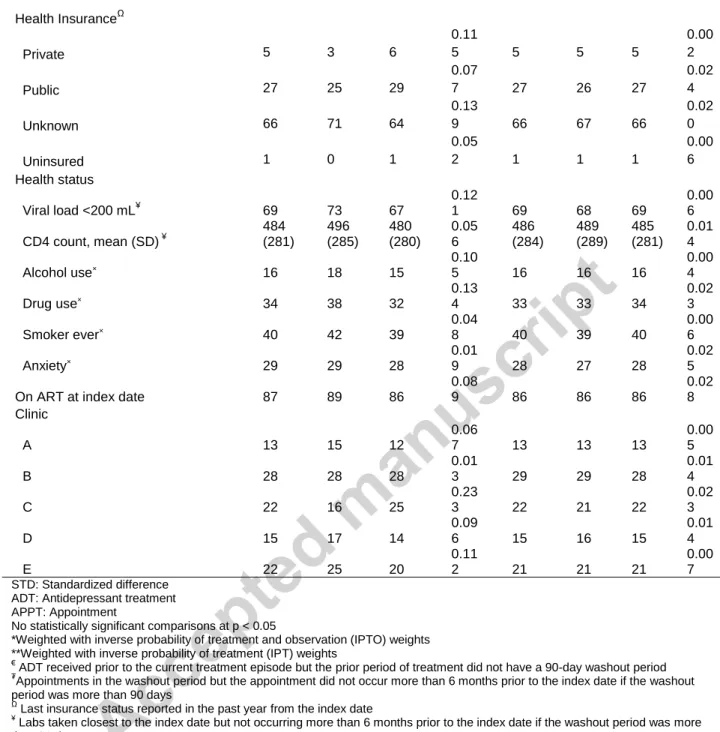
Citalopram (single-action) and bupropion (dual-action) were the most commonly prescribed antidepressants (see Supplemental Online Appendix). Approximately 19% of all patients had a history of being treated with single-action antidepressants prior to the current treatment episode, while 11% had prior exposure to dual-action antidepressants (Table 1). The mean age at the index date was 38 (standard deviation [SD] = 10 years) with the majority of subjects being white non-Hispanic males. Most subjects (87%) were receiving ART on the index date and based on the last lab result in the washout period, the mean CD4 T-cell count was 484 (SD = 281) and 69% of the patients were virally suppressed. About one third of the patients had a diagnosis of anxiety and a
documented history of drug use. In the dual-action group, patients were more likely to have received dual-action antidepressant therapy prior to the current treatment episode, to have seen a psychiatrist during the washout period, to be white non-Hispanic, to be virally suppressed during the washout period and to have a history of drug use
compared to patients in the single-action group. IPTO weighting had little influence on our results, and were similar to unweighted analyses. For simplicity we only report the estimates from IPTO models.
3.2. Intent-to-treat analysis
After applying IPT weights, the standardized differences for all baseline
single-action treatment episodes, respectively (Table 1). Results of the IPTO weighted
generalized linear models for both outcomes were not statistically significant (Table 2). The odds ratio for achieving remission was 1.02 (95% CI 0.63-1.67). The mean
difference in depression symptom severity between groups was 1.1 units on the PHQ-9’s 0-27 scale (95% CI -0.4-2.6).
3.3. Per-protocol sensitivity analysis
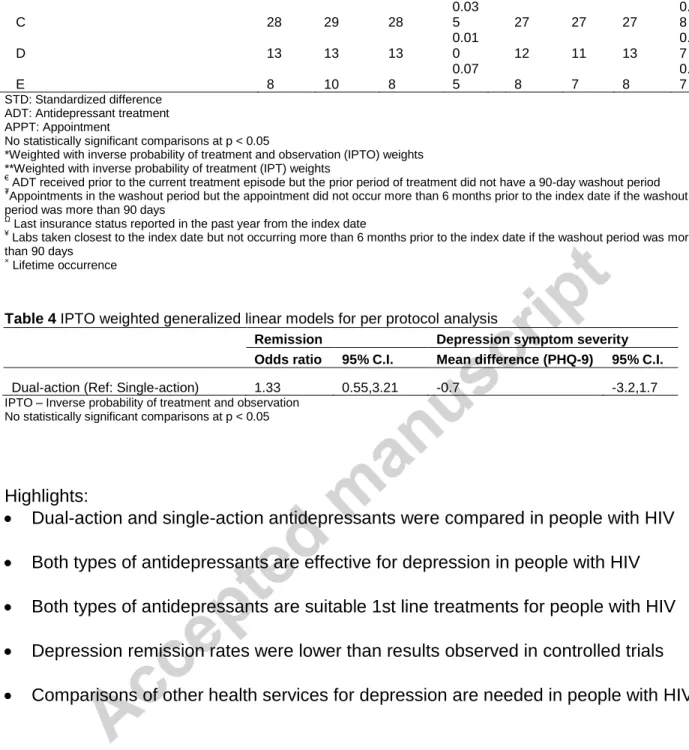
Per protocol baseline covariates and outcome values at follow-up are reported in Table 3. In the IPT weighted sample, all baseline covariates had standardized
differences less than 0.25. After applying IPTO weights, the frequency of remission at follow-up for dual-action treatment episodes was 40% compared to 32% for single-action treatment episodes, however the difference was not statistically significant. The IPTO weighted mean depression severity was lower, but not statistically different, for dual-action treatment episodes compared to single-action treatment episodes (6.9 vs 8.0). Table 4 contains the results of the IPTO weighted generalized linear models. Dual-action treatment episodes had 1.33 times the odds of ending in remission compared to single-action treatment episodes (OR=1.33, 95% CI 0.55-3.21), but this result was not statistically significant. The finding for the mean difference in depression symptom severity between treatment groups was also not statistically significant (β=-0.7, 95% CI -3.2-1.7).
4. Discussion
our hypothesis that dual-action antidepressants were more effective than single-action antidepressants in this population. This finding was the same in both intent-to-treat and per protocol analyses.
Our data suggest that therapeutic changes may have underestimated the effectiveness of dual-action relative to single-action antidepressants in intent-to-treat analyses. Specifically, post-index measures reveal that patients in dual-action
treatment episodes tended to discontinue earlier and switch or augment more frequently (see Supplemental Online Appendix). More frequent changes could be due to lack of treatment response or intolerance of side effect profiles. Unfortunately, we did not have measures to indicate what precipitated these changes. However, comparative
effectiveness is intended to incorporate factors such as treatment alterations, therefore based on our data, overall effectiveness appears comparable between dual-action and single-action antidepressants.
In terms of research outside the field of HIV/AIDS, our results are in line with the findings from an Agency for Healthcare Research and Quality systematic review which concluded there were no advantages between different classes of antidepressants (Gartlehner et al., 2011). However, our findings differed with Bradley and Lenox-Smith (2013) which concluded that dual-action serotonin-norepinephrine reuptake inhibitors (e.g. duloxetine) demonstrated greater efficacy compared to single-action SSRIs in more severe cases of depression (Bradley and Lenox-Smith, 2013). Had we limited dual-action treatment episodes to include only serotonin-norepinephrine reuptake inhibitors, we could make a more definitive comparison with Bradley and Lenox-Smith (2013). However, we were unable to identify an adequate number of
serotonin-norepinephrine reuptake inhibitor treatment episodes to define our intervention in this manner (see Supplemental Online Appendix for the specific medications identified in this study).
It is also important to note the low frequency of remission we observed for all patients in this study. Only 32% and 34% in total achieved remission at follow-up in the intent-to-treat and per protocol analysis, respectively (See Tables 1 and 3). Our results are similar to prior estimates of remission rates (28%) in real world conditions (Pence et al., 2012). However, 32% is well below commonly observed remission rates in
experienced substantial reductions in symptom severity but still not fall below the PHQ-9 definition of remission. A mean PHQ-PHQ-9 score of 8 was observed at follow-up in our analysis. A score of 8 is still indicative of mild depression, however, the patient may have experienced a significant improvement in depression severity after initiating treatment compared to baseline levels. Yet due to inconsistent availability of a pre-treatment PHQ-9 measure in our dataset, we were unable to examine change in PHQ-9 score as an outcome.
Missing or unavailable data was the most significant limitation we faced. We were unable to control for baseline depression severity because, as noted above, so few patients had a recorded PHQ-9 within the washout period. Given this data limitation, we chose not to require a baseline PHQ-9 as an inclusion criterion. This decision
increased the probability of unknown bias in the estimation of treatment effects due to potential differences in depression severity at baseline. One possible reason baseline depression severity would differ by treatment group is because several medications included in our analysis can be used for conditions other than depression. Bupropion (dual-action) is known to be used for smoking cessation (PDR, 2015b). Likewise, paroxetine (single-action) can be used for social anxiety disorder (PDR, 2015a).
CNICS has a rigorous method for verifying diagnosis data (CNICS, 2014b), using such data raises the potential for miss-classification bias stemming from coding and reporting errors as well as missed diagnoses.
In addition to unobserved depression severity at baseline, we also encountered a significant number (58% of the treatment episodes) of missing PHQ-9s during the
follow-up period. Given we could not rule out the possibility that depression severity was related to missing a PHQ-9 at follow-up, we chose to employ sophisticated statistical methods, specifically IPO weights to address this limitation. While IPO
weighting would not necessarily eliminate all the bias stemming from missing outcomes, it is a stronger approach than a complete case analysis which assumes that the missing data introduce no bias.
Several other important treatment selection factors exist that could have confounded our findings. For example, given literature suggests that single-action medications are the most commonly prescribed antidepressants for depression in PLWHA (Freudenreich et al., 2010), clinicians may be more experienced in managing this group of medications. Greater familiarity with these medications could improve the effectiveness of single-action antidepressants thereby biasing the results towards the null, assuming dual-action antidepressants are indeed more effective. Physician
However, appointment data also suggests that approximately 59% of the dual-action treatment episodes were administered by a prescribing physician other than a
psychiatrist. These data indicate that non-specialists (e.g. HIV primary care physicians) also possess a level of comfort utilizing a variety of antidepressants including both dual-action and single-dual-action medications. Ultimately, the potential impact of clinician
experience and specialty described above is unobserved, therefore we used IPT weights to balance treatment groups on an observed appointment with a psychiatrist in the washout period. This measure may be a crude indicator of whether or not the prescribing physician specialized in the treatment of psychiatric disorders. However, our approach only partially addressed this issue as data was not available that confirmed the actual physician prescribing the medication.
An additional unobserved factor that could have biased our results is the selection of one type of antidepressant over another based on potential drug interactions between ART and antidepressants. While research indicates the
pharmacokinetics of citalopram, escitalopram, duloxetine and mirtazapine is not known to be significantly altered by ART (Adams et al., 2012; Hill and Lee, 2013), interactions have been identified between the remaining antidepressants and certain protease inhibitors and non-nucleoside reverse transcriptase inhibitors (Hill and Lee, 2013). However, the potential impact of the drug interactions (potentiation or inhibition) varied by antidepressant and ART combination across both treatment groups, therefore we were unable to assess the effect of this factor in the present study.
factor depending on which group had the higher likelihood of non-adherence. We found no literature that specifically addressed differential rates of adherence based on how we classified antidepressants. However, the absence of literature does not indicate there is no difference. Therefore, we cannot speak thoroughly to the impact of this unobserved factor.
Finally, we were limited by how we operationalized the intervention. First we were unable to adequately define receipt of non-pharmacological treatment. The approach we took was to create a weight on a variable indicating the presence of an appointment with a mental health specialist at the CNICS clinic. However, we do not know the type and quality of therapy provided. Moreover, this approach only identifies a sub-set of patients receiving non-pharmacological treatment because the cohort can seek this type of treatment elsewhere. Secondly, data limitations prevented us from determining the consistency of adequate dosing across treatment groups.
Despite these limitations, this study makes several significant contributions to the field of psychiatric HIV/AIDS research. First, while our data did not support the
hypotheses for differential effectiveness, the purpose of a comparative effectiveness study is to enhance certainty in treatment decisions. Our study provides evidence that suggests differential effectiveness is not a reason to prefer dual-action antidepressants over single-action antidepressants, and medication choice can be driven by other factors such as patient preference, side effects, costs and provider familiarity. Second, this is the first study to address the question of antidepressant comparative
settings is difficult for PLWHA, this study highlights the importance for continued
comparative effectiveness research in this field. Third, this study draws attention to the data challenges faced when conducting comparative effectiveness research. Our approach to dealing with data limitations should prove useful to other investigators.
There are several future research projects that would logically flow from our present study. Given prior literature has identified citalopram as one of the most commonly used antidepressants in PLWHA (Freudenreich et al., 2010), future studies could compare the effectiveness of individual antidepressants against this medication. This would help inform the validity of the current practice. Additionally, future
investigations are warranted that aim to increase the probability that patients start regimens requiring minimal adjustments (switching, augmenting) and achieve remission in the shortest time frame. Such research could circumvent the negative interaction between depression and HIV/AIDS. Finally, the low rates of remission observed in this study highlight the need for on-going closely managed antidepressant therapy in PLWHA. In light of this fact, research that compares the long-term effectiveness of dual-action and single-action antidepressants is necessary to identify potential variations in treatment outcomes that may arise over an extended period of time.
In conclusion, we observed no difference in effectiveness between dual-action and single-action antidepressants for treatment of depression in PLWHA. This finding suggests both single-action and dual-action antidepressants are appropriate choices for first line treatment. However, we also found remission rates substantially lower
needed to identify health service delivery strategies that can aid HIV providers in achieving full remission of their patients’ depression.
Footnotes
1
Acknowledgements
References
Adams, J.L., Gaynes, B.N., McGuinness, T., Modi, R., Willig, J., Pence, B.W., 2012. Treating depression within the HIV "medical home": a guided algorithm for
antidepressant management by HIV clinicians. AIDS Patient Care STDS 26, 647-654. Austin, P.C., Stuart, E.A., 2015. Moving towards best practice when using inverse probability of treatment weighting (IPTW) using the propensity score to estimate causal treatment effects in observational studies. Statistics in medicine 34, 3661-3679.
Bauer, M., Tharmanathan, P., Volz, H.P., Moeller, H.J., Freemantle, N., 2009. The effect of venlafaxine compared with other antidepressants and placebo in the treatment of major depression: a meta-analysis. Eur Arch Psychiatry Clin Neurosci 259, 172-185. Bouhnik, A.D., Preau, M., Schiltz, M.A., Obadia, Y., Spire, B., group, V.s., 2008. Sexual difficulties in people living with HIV in France--results from a large representative
sample of outpatients attending French hospitals (ANRS-EN12-VESPA). AIDS Behav 12, 670-676.
Bradley, A.J., Lenox-Smith, A.J., 2013. Does adding noradrenaline reuptake inhibition to selective serotonin reuptake inhibition improve efficacy in patients with depression? A systematic review of meta-analyses and large randomised pragmatic trials. J
Psychopharmacol 27, 740-758.
Brookhart, S.B., Roy, J.A., Sauer, B., VanderWeele, T.J., 2013. Covariate Selection, in: Velentgas, P., Dreyer, N.A., Nourjah, P., Smith, S.R., Torchia, M.M. (Eds.), Developing a Protocol for Observational Comparative Effectiveness Research: A User's Guide. Agency for Healthcare Research and Quality, Rockville, MD, pp. 93-108.
CNICS, 2014a. Center For AIDS Research Network of Inegrated Clinical Systems. University of Alabama, Birmingham, Alabama.
CNICS, 2014b. CNICS Data Elements. University of Alabama, Birmingham, Alabama. Cole, S.R., Jacobson, L.P., Tien, P.C., Kingsley, L., Chmiel, J.S., Anastos, K., 2010. Using marginal structural measurement-error models to estimate the long-term effect of antiretroviral therapy on incident AIDS or death. Am J Epidemiol 171, 113-122.
Delgado, P.L., 2009. Neurobiology of Serotonin Norepinephrine Reuptake Inhibitors. Primary Psychiatry 16, 8-15.
DHHS, U., 2014. Guidelines for the use of antiretroviral agents in HIV-1 infected adults and adolescents, in: Adolescents, P.o.A.G.f.A.a. (Ed.). Department of Health and Human Services.
HIV-Gartlehner, G., Hansen, R.A., Morgan, L.C., Thaler, K., Lux, L., Van Noord, M., Mager, U., Gaynes, B.N., Thieda, P., Strobelberger, M., Lloyd, S., Reichenpfader, U., Lohr, K.N., 2011. Second-Generation Antidepressants in the Pharmacologic Treatment of Adult Depression: An Update of the 2007 Comparative Effectiveness Review. Agency for Healthcare Research and Quality, Rockville (MD).
Grunebaum, M.F., Keilp, J.G., Ellis, S.P., Sudol, K., Bauer, N., Burke, A.K., Oquendo, M.A., Mann, J.J., 2013. SSRI versus bupropion effects on symptom clusters in suicidal depression: post hoc analysis of a randomized clinical trial. J Clin Psychiatry 74, 872-879.
Harder, V.S., Stuart, E.A., Anthony, J.C., 2010. Propensity Score Techniques and the Assessment of Measured Covariate Balance to Test Causal Associations in
Psychological Research. Psychol Methods 15, 234-249.
Hill, L., Lee, K.C., 2013. Pharmacotherapy Considerations in Patients with HIV and Psychiatric Disorders Focus on Antidepressants and Antipsychotics, Ann
Pharmacother, pp. 75-89.
Himelhoch, S., Medoff, D.R., 2005. Efficacy of antidepressant medication among HIV-positive individuals with depression: a systematic review and meta-analysis. AIDS Patient Care STDS 19, 813-822.
Kaaya, S., Eustache, E., Lapidos-Salaiz, I., Musisi, S., Psaros, C., Wissow, L., 2013. Grand challenges: Improving HIV treatment outcomes by integrating interventions for co-morbid mental illness. PLoS Med 10, e1001447.
Kroenke, K., Spitzer, R.L., Williams, J.B., 2001. The PHQ-9: validity of a brief depression severity measure. Journal of general internal medicine 16, 606-613.
Nanni, M.G., Caruso, R., Mitchell, A.J., Meggiolaro, E., Grassi, L., 2015. Depression in HIV infected patients: a review. Curr Psychiatry Rep 17, 530.
Patel, S.K., S., Atram, U. et al., 2013. Escitalopram and Mirtazapine for the treatment of depression in HIV patients: A randomized controlled open label trial. ASEAN Journal of Psychiatry 14.
PDR, 2015a. Prescribers' Digital Reference - Paxil CR (paroxetine hydrochloride) - Drug Summary. PDR.net.
PDR, 2015b. Prescribers' Digital Reference - Zyban (bupropion hydrochloride) - Drug Summary. PDR.net.
Rakesh, J., 2004. Single-Action Versus Dual-Action Antidepressants. Prim Care Companion J Clin Psychiatry 6.
Ray, W.A., 2003. Evaluating medication effects outside of clinical trials: new-user designs. Am J Epidemiol 158, 915-920.
Richelson, E., 2013. Multi-modality: a new approach for the treatment of major depressive disorder. Int J Neuropsychopharmacol, 1-10.
SAS®, 2012. SAS® System for Microsoft Windows (Version 9.4), 9.4 ed. SAS® Institute, Inc, Cary, NC.
Seaman, S.R., White, I.R., 2013. Review of inverse probability weighting for dealing with missing data. Stat Methods Med Res 22, 278-295.
Wendorf, A.R., Mosack, K.E., 2013. Navigating hazardous conditions: understanding HIV medication adherence in the context of depression. Qual Health Res 23, 541-554.
Table 1 Characteristics of intent-to-treat treatment episodes
Unweighted Weighted
Total
Dual-action
Single-action Total
Dual-actio n Singl e-actio n (N=1,1 75) (N=347 ) (N=828 ) (N=1,1 75) (N=34 7) (N=82 8) % % % ST
D % % %
ST D
Outcomes at follow-up Outcomes at follow-up*
Remission: PHQ-9 < 5 32 30 32
0.04
2 32 32 32
0.00 1 Mean depression symptom severity
PHQ-9 (SD) 8.3 (6.4) 9.1 (6.6) 8.0 (6.3) 0.16 4 8.4 (6.5) 9.2 (7.2) 8.1(6. 1) 0.16 6
Covariates at baseline Covariates at baseline**
Receipt of prior ADT (single-action) € 19 20 18
0.07
0 19 19 19
0.00 2
Receipt of prior ADT (dual-action)€ 11 21 7
0.44
4 11 11 11
0.00 2
Psychiatrist appt in washout period₮ 21 28 18
0.24
3 21 21 21
0.00 7 Mental health specialist appt in
washout period₮ 14 15 13
0.04
1 14 14 14
0.00 4 Demographics
Age, mean (SD) 38 (10) 40 (9) 38 (10)
0.14
4 38 (10) 38 (9)
38 (10)
0.02 0
Male 83 87 82
0.13
0 84 85 83
0.06 6
White 62 69 59
0.19
8 61 60 62
0.02 7
Black 26 21 29
0.18
4 27 28 27
0.02 1
Other/unknown 11 10 12
0.04
6 12 12 12
0.01 2
Health InsuranceΩ
Private 5 3 6
0.11
5 5 5 5
0.00 2
Public 27 25 29
0.07
7 27 26 27
0.02 4
Unknown 66 71 64
0.13
9 66 67 66
0.02 0
Uninsured 1 0 1
0.05
2 1 1 1
0.00 6 Health status
Viral load <200 mL¥ 69 73 67
0.12
1 69 68 69
0.00 6
CD4 count, mean (SD) ¥
484 (281) 496 (285) 480 (280) 0.05 6 486 (284) 489 (289) 485 (281) 0.01 4
Alcohol use×
16 18 15
0.10
5 16 16 16
0.00 4
Drug use×
34 38 32
0.13
4 33 33 34
0.02 3
Smoker ever× 40 42 39
0.04
8 40 39 40
0.00 6
Anxiety× 29 29 28
0.01
9 28 27 28
0.02 5
On ART at index date 87 89 86
0.08
9 86 86 86
0.02 8 Clinic
A 13 15 12
0.06
7 13 13 13
0.00 5
B 28 28 28
0.01
3 29 29 28
0.01 4
C 22 16 25
0.23
3 22 21 22
0.02 3
D 15 17 14
0.09
6 15 16 15
0.01 4
E 22 25 20
0.11
2 21 21 21
0.00 7
STD: Standardized difference ADT: Antidepressant treatment APPT: Appointment
No statistically significant comparisons at p < 0.05
*Weighted with inverse probability of treatment and observation (IPTO) weights **Weighted with inverse probability of treatment (IPT) weights
€
ADT received prior to the current treatment episode but the prior period of treatment did not have a 90-day washout period
₮
Appointments in the washout period but the appointment did not occur more than 6 months prior to the index date if the washout period was more than 90 days
Ω
Last insurance status reported in the past year from the index date
¥ Labs taken closest to the index date but not occurring more than 6 months prior to the index date if the washout period was more
than 90 days
×
Lifetime occurrence
Table 2 IPTO weighted generalized linear models for intent-to-treat analysis
Remission Depression symptom severity
Odds ratio 95% C.I. Mean difference (PHQ-9) 95% C.I.
Dual-action (Ref: Single-action) 1.02 0.63,1.67 1.1 -0.4,2.6
IPTO – Inverse probability of treatment and observation No statistically significant comparisons at p < 0.05
Table 3 Characteristics of per protocol treatment episodes
n action (N=34
2) (N=82)
(N=260 ) (N=34 2) (N=8 2) (N=26 0)
% % % STD % % % STD
Outcomes at follow-up Outcomes at follow-up*
Remission: PHQ-9 < 5 39 47 37
0.20
2 34 40 32
0.16 9 Mean depression symptom severity
PHQ-9 (SD) 7.1 (6.2) 6.4 (6.0) 7.3 (6.3) 0.14 7 7.8 (6.2) 6.9 (6.4) 8.0 (6.2) 0.17 6
Covariates at baseline Covariates at baseline**
Receipt of prior ADT (single-action) € 19 23 18
0.13
9 18 16 19
0.06 3
Receipt of prior ADT (dual-action)€ 11 22 7
0.49
9 10 10 10
0.01 6
Psychiatrist appt in washout period₮ 15 18 14
0.11
3 16 16 16
0.01 1 Mental health specialist appt in washout
period₮ 18 21 17
0.11
0 16 15 17
0.05 9 Demographics
Age, mean (SD) 39 (9) 41 (9) 39 (9)
0.23
4 39 (9)
39
(9) 39 (9) 0.03 3
Male 82 90 80
0.27
9 83 89 81
0.22 8
White 63 71 60
0.22
2 62 63 62
0.00 4
Black 27 18 30
0.26
4 28 29 28
0.02 9
Other/unknown 10 11 10
0.03
2 10 8 10
0.05 1
Hispanic 21 22 21
0.01
9 20 16 21
0.14 1 Health InsuranceΩ
Private 6 6 7
0.01
8 7 7 7
0.02 2
Public 27 29 27
0.05
2 26 24 27
0.05 5
Unknown 66 65 67
0.04
0 67 69 66
0.06 3
Uninsured 0 0 0 0 0 0 0 0
Health status
Viral load <200 mL¥ 70 74 68
0.12
9 69 69 70
0.01 9
CD4 count, mean (SD) ¥
495 (279) 504 (274) 492 (282) 0.04 3 501 (293) 513 (317) 498 (286) 0.05 7
Alcohol use×
12 11 13
0.05
2 14 16 13
0.09 9
Drug use×
31 38 29
0.20
3 30 29 31
0.04 7
Smoker ever×
33 30 34
0.07
1 37 43 34
0.18 2
Anxiety×
25 22 26
0.08
8 25 26 24
0.02 4
On ART at index date 86 88 86
0.05
9 85 84 86
0.05 0 Clinic
A 16 18 15
0.09
0 15 14 16
0.03 7
C 28 29 28
0.03
5 27 27 27
0.01 8
D 13 13 13
0.01
0 12 11 13
0.04 7
E 8 10 8
0.07
5 8 7 8
0.03 7
STD: Standardized difference ADT: Antidepressant treatment APPT: Appointment
No statistically significant comparisons at p < 0.05
*Weighted with inverse probability of treatment and observation (IPTO) weights **Weighted with inverse probability of treatment (IPT) weights
€
ADT received prior to the current treatment episode but the prior period of treatment did not have a 90-day washout period
₮
Appointments in the washout period but the appointment did not occur more than 6 months prior to the index date if the washout period was more than 90 days
Ω
Last insurance status reported in the past year from the index date
¥
Labs taken closest to the index date but not occurring more than 6 months prior to the index date if the washout period was more than 90 days
×
Lifetime occurrence
Table 4 IPTO weighted generalized linear models for per protocol analysis
Remission Depression symptom severity
Odds ratio 95% C.I. Mean difference (PHQ-9) 95% C.I.
Dual-action (Ref: Single-action) 1.33 0.55,3.21 -0.7 -3.2,1.7
IPTO – Inverse probability of treatment and observation No statistically significant comparisons at p < 0.05
Highlights:
Dual-action and single-action antidepressants were compared in people with HIV
Both types of antidepressants are effective for depression in people with HIV
Both types of antidepressants are suitable 1st line treatments for people with HIV
Depression remission rates were lower than results observed in controlled trials