R E V I E W A R T I C L E
How widespread are the use of frameworks and
theories in applied health promotion research in rural
and remote places? A review of programs targeted at
cardiometabolic risk factors
S Iannella
1, A Smith
2, DK Post
3, MT Haren
31
The University of Adelaide, North Terrace, Adelaide, South Australia, Australia
2Griffith University, Gold Coast, Queensland, Australia
3
University of South Australia, North Terrace, Adelaide, South Australia, Australia
Submitted:
11 March 2015;
Revised:
25 April 2015;
Accepted:
8 September 2015;
Published:
30 October 2015
Iannella S, Smith A, Post DK, Haren MT
How widespread are the use of frameworks and theories in applied health promotion research in rural and
remote places? A review of programs targeted at cardiometabolic risk factors
Rural and Remote Health
15: 3228. (Online) 2015
Available: http://www.rrh.org.au
A B S T R A C T
Introduction:
In Australia, modifiable cardiometabolic risk factors are in excess in rural and remote communities. High-quality
community-level health promotion is paramount for the management of population health risk in such settings, especially in the
context of reduced access to healthcare services. Two indicators of quality of health promotion programs are the use of formal
frameworks and the adoption of socio-behavioural theories upon which to base intervention strategies. This study examined the
extent to which these two quality elements were reported in health promotion programs designed to reduce cardiometabolic disease
(CMD) risk in rural and remote settings.
Methods:
PubMed, ScienceDirect, Cochrane Library and EBSCOHost were searched using search strings linking health promotion
programs, the geographic setting and CMD and risk factors. A title/abstract eligibility screen was conducted prior to full-text
assessment. Articles had to report on the planning, implementation or evaluation of intervention strategies to be eligible. Articles
were ineligible if they reported clinical drug trials or behaviour prescription efficacy trials.
Results:
Of eligible programs (
n
=62) from 66 articles, 37% (
n
=22) reported using a framework and 35% (
n
=22) reported the use
of theories. While 16% (
n
=10) reported using both, 48% (
n
=30) reported neither.
Conclusions:
Fewer than one in five published health promotion programs for CMD risk in rural and remote settings report being
both guided by a formal framework and underpinned by theory. This low level of explicit reporting of quality indicators suggests a
large scope for improvement in the conduct and reporting of health promotion programs for CMD risk in rural and remote settings.
Key words:
Australia, cardiometabolic risk, frameworks, health behaviour theory, health promotion, health promotion planning,
implementation, program evaluation.
Introduction
In Australia, cardiometabolic risk factors (CMRs) and
cardiometabolic diseases (CMDs) are in excess in rural and
remote communities, which can be disadvantaged by reduced
access to primary and secondary health services
1and other
conditions of ‘place’ that drive the expression of risk factors
in individuals, termed ‘environmental risk conditions’
2,3.
Together, the poorer access to health services and the
population risk conferred by factors that are not amenable to
change by ‘treating the individual’ using traditional health
services makes high-quality community health promotion
paramount for the management of population health risk in
these settings.
The most prevalent CMD, type 2 diabetes mellitus, and its
common causal risk factor abdominal obesity are endemic in
the developed world and rising to epidemic levels across the
developing world. Current evidence suggests that abdominal
obesity constitutes the major clinical risk factor for the
development of CMDs, with population attributable risks of
47% (for type 2 diabetes) and 13% (for cardiovascular
disease) in Australia
4.
Producing positive behavioural change to reduce this major
causal risk factor requires targeting health behaviour at
multiple levels, such as individual, organisational and
community (as well as political). Thus, health promotion
programs built upon a solid understanding of health
behaviours and the socio-environmental contexts in which
they occur have been found to be the most successful
5.
The quality of applied health promotion research and practice
varies, and the failure of low-quality programs has been
associated with four major factors: (1) poorly specified or
poorly rationalised intervention strategies
6; (2) atheoretical
approaches or theory failure
5; (3) implementation failure
6;
and (4) weak evaluation
7.
The impact of these factors may be minimised by the use of
comprehensive frameworks, which enables strategic planning
and implementation of interventions, which can be further
improved through evaluation. The content and structure of
these frameworks are largely based on the guiding principles
in which initiatives should be empowering, participatory,
holistic,
intersectoral,
equitable,
sustainable,
and
multistrategy – features that have evolved throughout the
modern history of health promotion
8. Furthermore, a sound
theoretical basis underpinning the design of intervention
strategies has been shown to increase the ultimate likelihood
of success of health promotion programs, with increasing
evidence suggesting larger effects with the use of multiple
theories
5.
This study aims to examine the extent to which health
promotion programs focusing on modifying CMR or CMD in
rural and remote settings report the use of health promotion
planning, implementation and evaluation frameworks and
pertinent socio-behavioural theories.
Methods
A search of the literature indexed in PubMed, ScienceDirect,
the Cochrane Library and EBSCOHost was performed,
backwards from December 2013 with no limit for maximal
comprehensiveness. The search was limited to English
language. The search strategy, as follows, was developed in
order to achieve the stated research objective.
First, search terms for frameworks or theories were not
specifically included as this would bias the results towards
papers that report such use. Rather, health promotion
programs were first searched for using the following terms:
‘(community intervention OR complex intervention OR
community-based participatory research OR health
promotion program)’.
Second, for CMR- and CMD-focused health promotion
programs, behavioural and environmental intervention
strategies are critical, so to reduce the possibility of missing
pertinent studies in the above search, a search line was also
included based on behavioural and environmental
interventions using the following terms: ‘(behavioral risk
factor* OR lifestyle OR environment*)’.
Third, a geographical setting focus was taken on rural and
remote populations. Definitions of rural, remote and regional
differ from country to country so all three terms were
included: ‘(rural OR regional OR remote)’. Other terms
such as ‘agricultural populations’, ‘isolated populations’;
‘indigenous populations’ could also have been included;
however, the latter two are not necessarily confined to rural
and remote geographies.
Last, health promotion programs that target the prevention and
management of CMD and reduction of CMR in the population
were focused on. Common terms in this literature include
obesity, metabolic syndrome, type 2 diabetes and cardiovascular
diseases so the following search terms were included: ‘(obesity
OR type 2 diabetes OR metabolic syndrome OR cardiometabolic
risk OR cardiovascular disease risk)’. All studies identified by the
search were assessed for relevance on the basis of a screen of the
title and abstract, and, further to the search criteria, articles were
eligible for inclusion if they reported on the planning and/or
implementation and/or evaluation of intervention strategies.
Exclusion criteria were also applied and included: (1) the study
does not report on planning, implementation or evaluation of an
intervention; (2) clinical drug trials such as these are not within the
scope of community health promotion; (3) behaviour prescription
efficacy trials such as these are not within the scope of the
application of health promotion strategies in real-world contexts;
(4) reports only on the development of a framework or theory
(rather than on its application in context) and (5) not in a rural,
regional or remote setting.
The full text of the selected articles was then accessed and
reassessed for final inclusion, with additional relevant articles
being selected using the reference lists of the included
articles. A flowchart of the study selection is presented in
Figure 1. Data extraction was then performed using a
standardised form, which was piloted on the first ten articles
and then adjusted accordingly. Data were collected on the
study aim and conclusion; sample size and participant criteria;
study
design/methods;
comparison/control
groups;
planning, implementation and evaluation framework used;
theoretical constructs integrated; and process, impact and
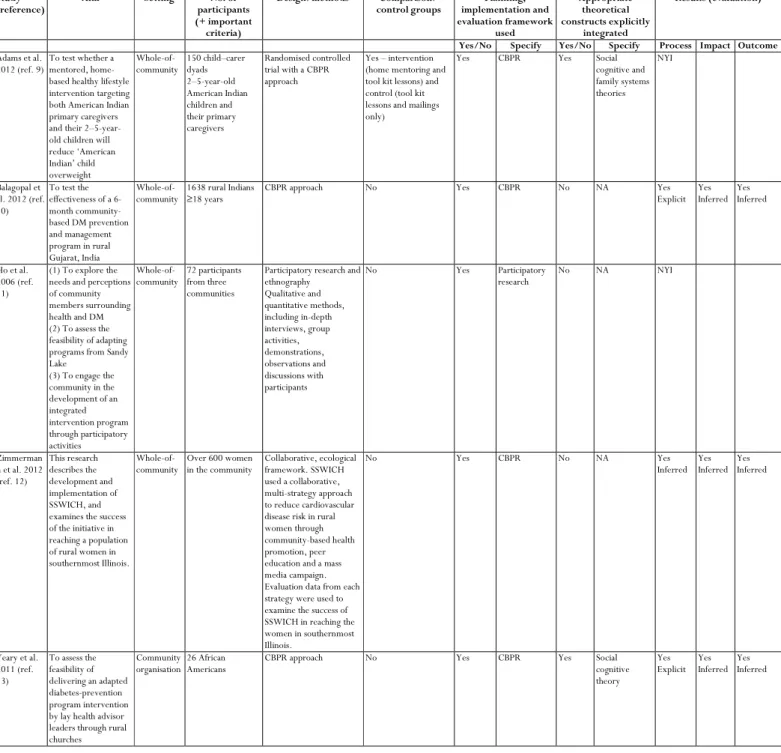
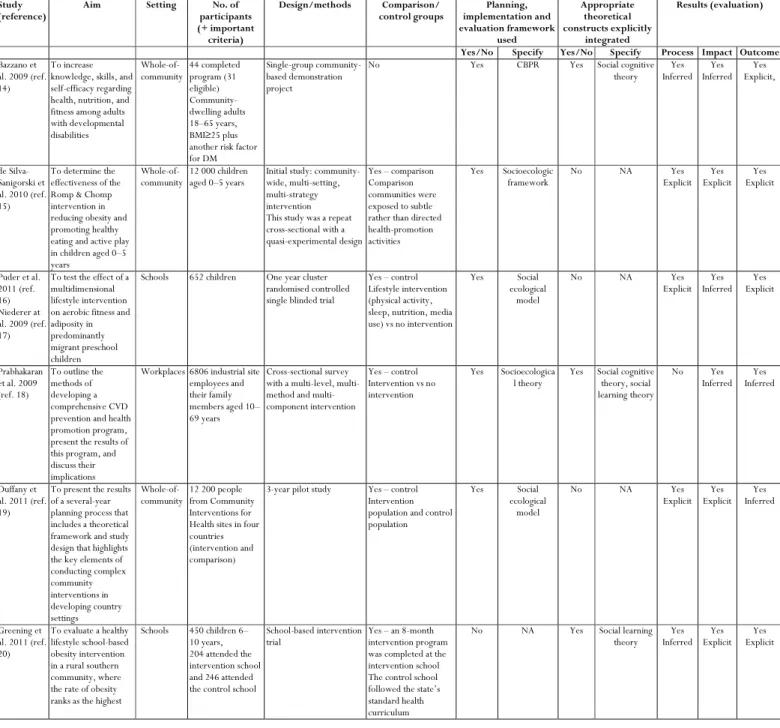
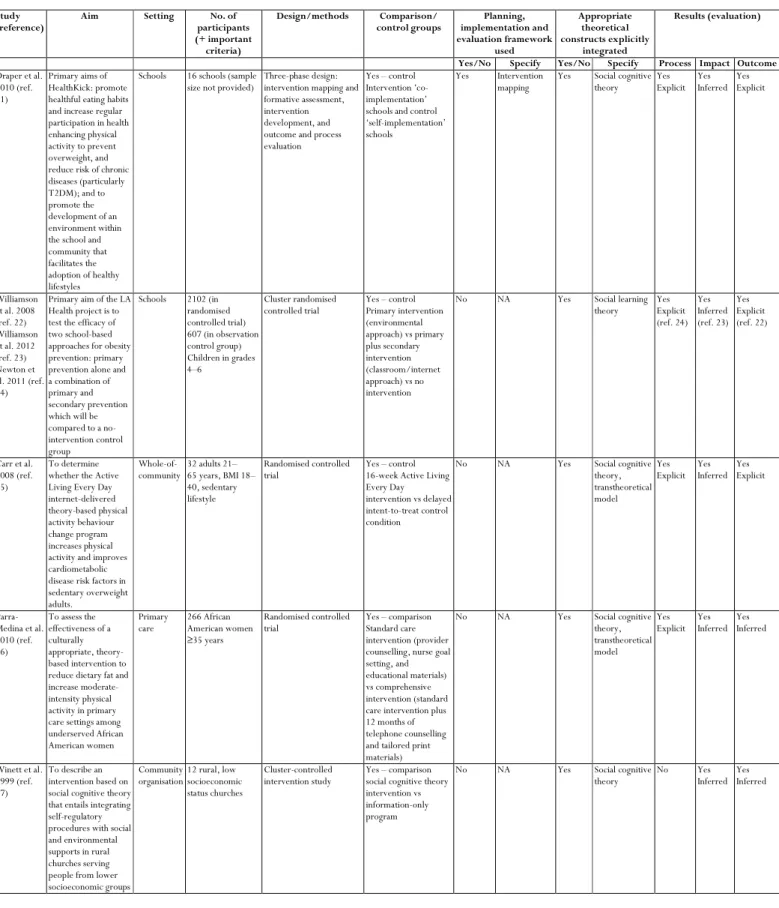
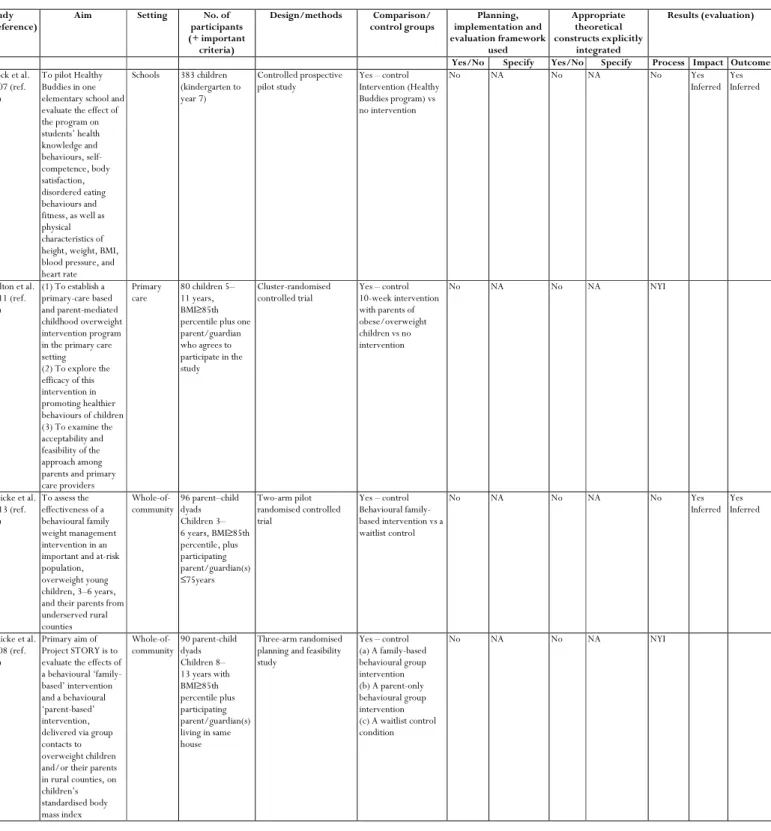
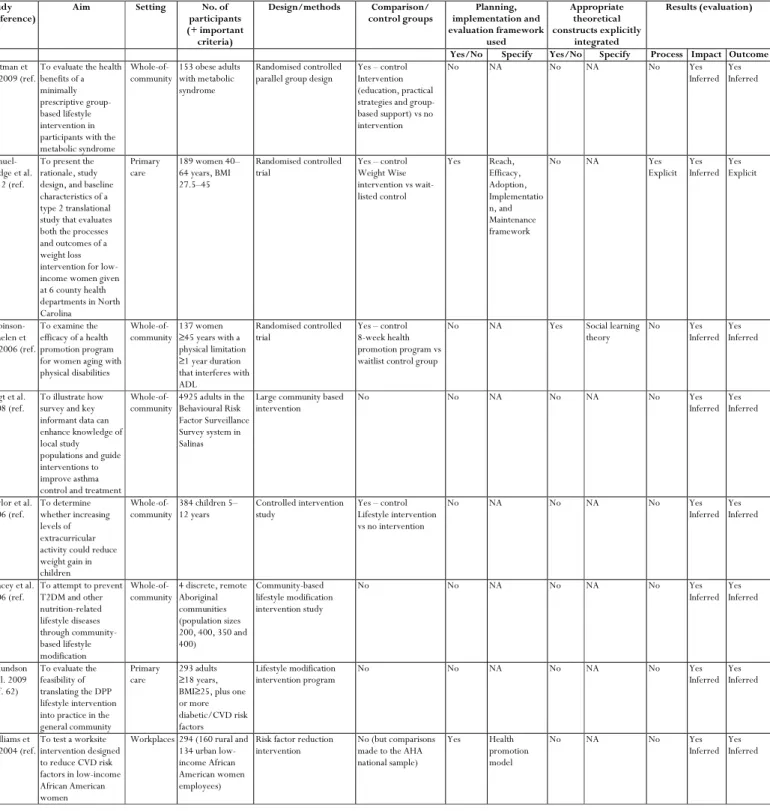
outcome evaluation. These data are synthesised in Table 1
(supplementary). A second author, who was blinded to the
results of the first author, assessed approximately 15% of
articles identified from abstracts and performed
inclusion/exclusion screening and data extraction as
aforementioned. This was in order to validate the results of
the first author, and due to the high consistency during the
literature screening and data extraction process, examining
the remaining 85% of articles was unnecessary.
Results
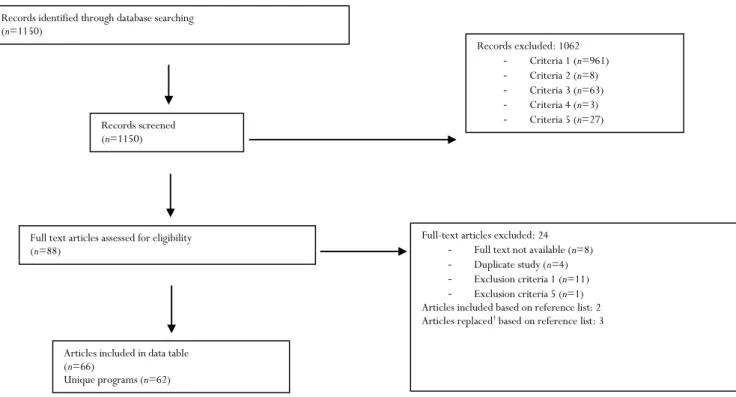
Figure 1 represents the results of the database search, the
application of inclusion and exclusion criteria, and additional
inclusions based on reference list searches. A total of
1150 unique articles were identified by the initial search, and
of these, 88 articles were eligible for study inclusion after
applying the exclusion criteria based on title and abstract
alone. Except for eight articles, the full text was retrieved
and following further assessment, a total of 66 articles were
included in Table 1, with 62 different programs being
reported.
Figure 1: Flowchart of search results and the application of inclusion and exclusion criteria and reference list
searching.
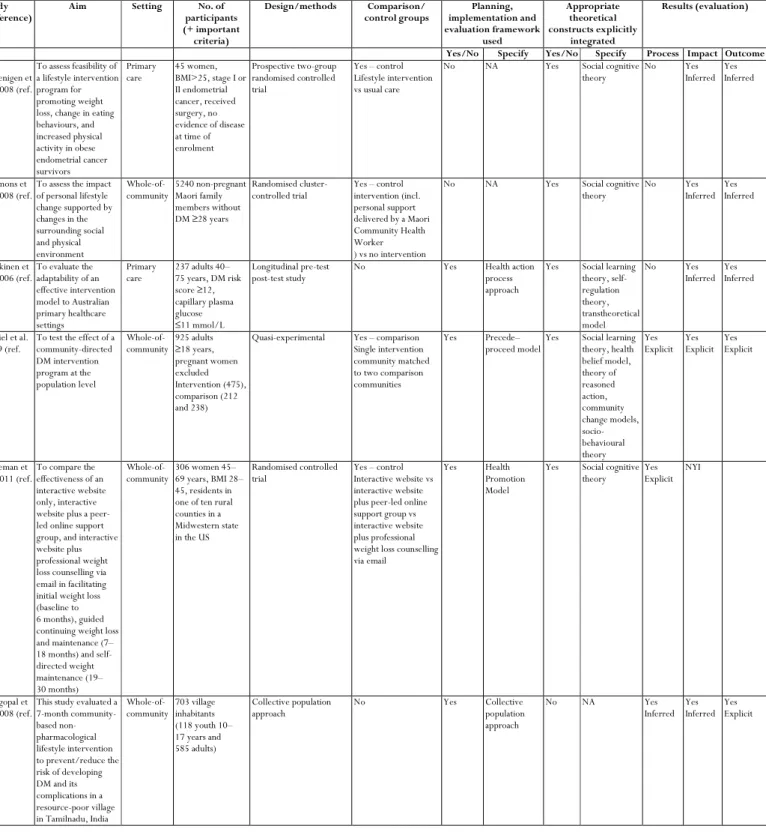
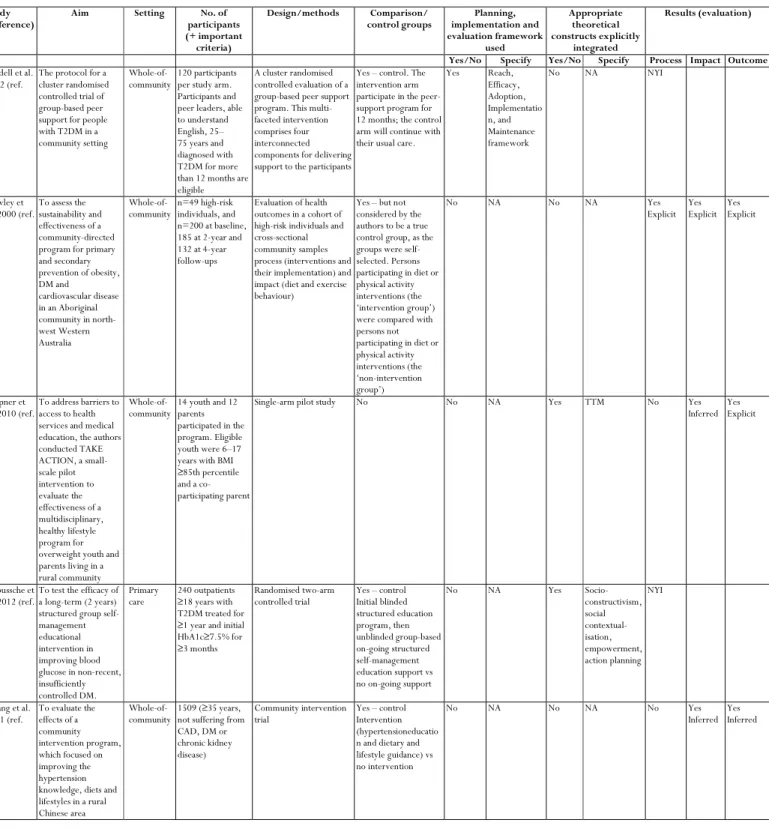
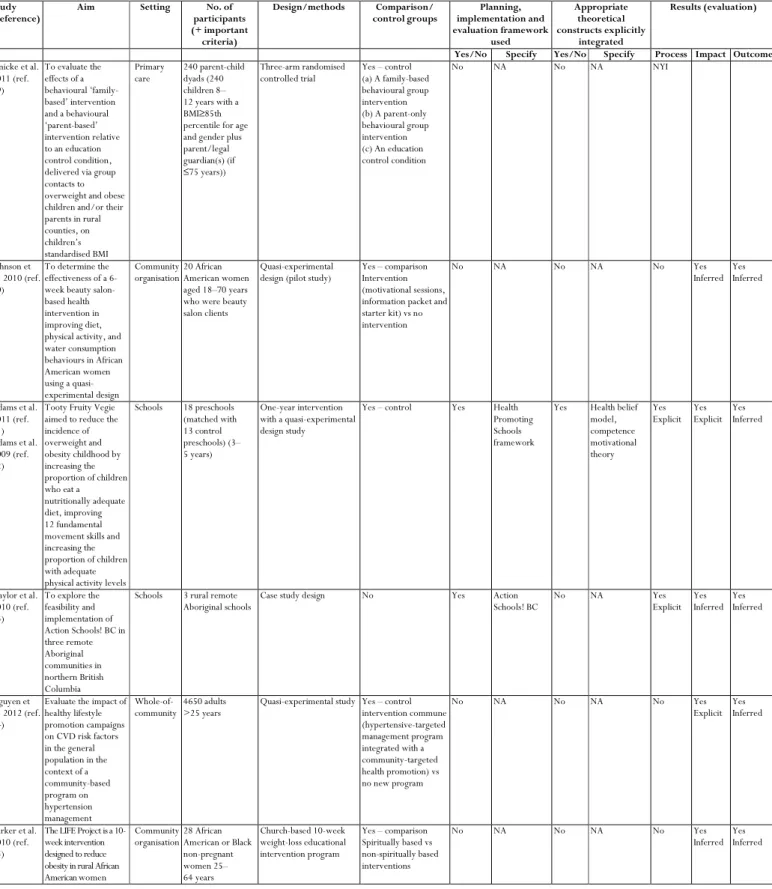
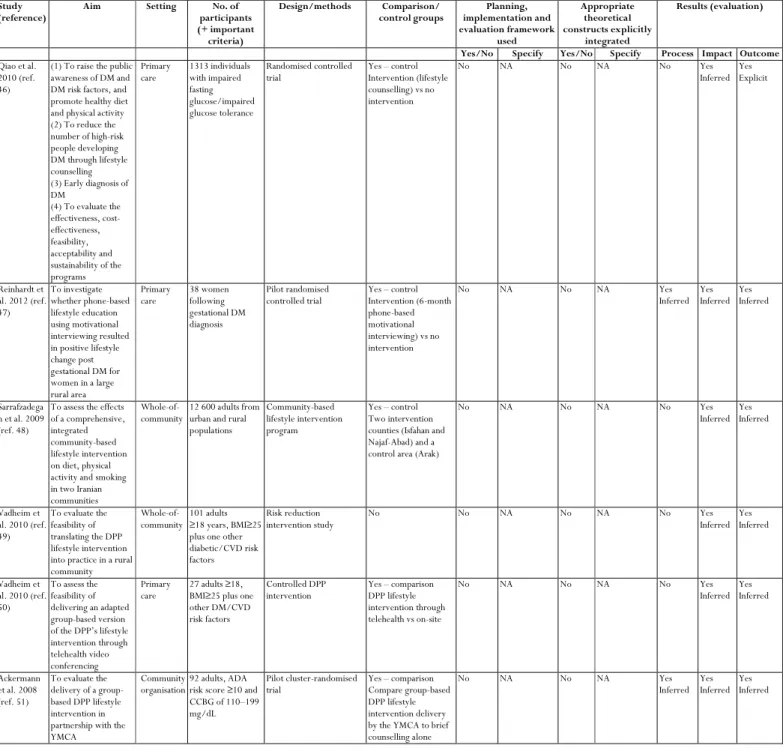
Of the 62 programs summarised (Table 1), 23 used a
planning, implementation and evaluation framework (37%).
The frequency of the reported frameworks is shown in
Table 2, with the community based participatory research
and social ecological model being the most frequently
reported, respectively. Of the 62 programs, 22 explicitly
reported the adoption of appropriate whole theories or
theoretical constructs (35%). The frequency of reported
theories is shown in Table 3, with social cognitive theory and
its predecessor social learning theory being the most
frequently reported, followed by the transtheoretical model.
In total, 32 programs (52%) reported using one or other of a
framework (for planning, implementation and evaluation) or
pertinent theories to underpin intervention strategies. Within
these, ten programs (16%) reported use of both.
The frequency of both reported framework and theory use
varied to a small degree across different health promotion
settings. Table 4 shows the frequency of reporting of both
frameworks and theories across the settings of primary care,
whole-of-community
and
community
organisations
(including schools and workplaces). The greater frequency of
reported use of both frameworks and theories occurred in the
community organisation settings.
Each program that had progressed to implementation as
reported in the articles included an impact and outcome
evaluation (
n
=52), and of these, nine explicitly reported an
impact evaluation (17%), and 14 an outcome evaluation
(27%). Twenty-four programs included a process evaluation
(46%), 18 of which explicitly reported such (75%).
Records identified through database searching (n=1150)
Records screened (n=1150)
Full text articles assessed for eligibility (n=88)
Articles included in data table (n=66)
Unique programs (n=62)
Records excluded: 1062
- Criteria 1 (n=961) - Criteria 2 (n=8) - Criteria 3 (n=63) - Criteria 4 (n=3) - Criteria 5 (n=27)
Full-text articles excluded: 24
- Full text not available (n=8) - Duplicate study (n=4) - Exclusion criteria 1 (n=11) - Exclusion criteria 5 (n=1)
Articles included based on reference list: 2 Articles replaced† based on reference list: 3
Table 1 (supplementary): A summary of the key data extracted from the 62 unique programs (66 unique journal
articles) regarding the quality of applied health promotion programs targeting cardiometabolic disease risk in
rural and remote populations. The key elements of quality examined were the explicit reporting of a planning,
implementation and evaluation framework(s); and explicit reporting of the integration of appropriate
behavioural theories/theoretical constructs into the development of intervention strategies
9-74Study
(reference) Aim Setting participants No. of
(+ important criteria)
Design/methods Comparison/
control groups implementation and Planning, evaluation framework
used
Appropriate theoretical constructs explicitly
integrated
Results (evaluation)
Yes/No Specify Yes/No Specify Process Impact Outcome
Adams et al.
2012 (ref. 9) To test whether a mentored, home-based healthy lifestyle intervention targeting both American Indian primary caregivers and their 2–5-year-old children will reduce ‘American Indian’ child overweight
Whole-of-community 150 child–carer dyads 2–5-year-old American Indian children and their primary caregivers
Randomised controlled trial with a CBPR approach
Yes – intervention (home mentoring and tool kit lessons) and control (tool kit lessons and mailings only)
Yes CBPR Yes Social
cognitive and family systems theories
NYI
Balagopal et al. 2012 (ref. 10)
To test the effectiveness of a 6-month community-based DM prevention and management program in rural Gujarat, India
Whole-of-community
1638 rural Indians ≥18 years
CBPR approach No Yes CBPR No NA Yes
Explicit Yes Inferred
Yes Inferred
Ho et al. 2006 (ref. 11)
(1) To explore the needs and perceptions of community members surrounding health and DM (2) To assess the feasibility of adapting programs from Sandy Lake
(3) To engage the community in the development of an integrated intervention program through participatory activities
Whole-of-community
72 participants from three communities
Participatory research and ethnography
Qualitative and quantitative methods, including in-depth interviews, group activities, demonstrations, observations and discussions with participants
No Yes Participatory
research
No NA NYI
Zimmerman n et al. 2012 (ref. 12)
This research describes the development and implementation of SSWICH, and examines the success of the initiative in reaching a population of rural women in southernmost Illinois.
Whole-of-community
Over 600 women in the community
Collaborative, ecological framework. SSWICH used a collaborative, multi-strategy approach to reduce cardiovascular disease risk in rural women through community-based health promotion, peer education and a mass media campaign. Evaluation data from each strategy were used to examine the success of SSWICH in reaching the women in southernmost Illinois.
No Yes CBPR No NA Yes
Inferred Yes Inferred
Yes Inferred
Yeary et al. 2011 (ref. 13)
To assess the feasibility of delivering an adapted diabetes-prevention program intervention by lay health advisor leaders through rural churches
Community organisation
26 African Americans
CBPR approach No Yes CBPR Yes Social
cognitive theory
Yes Explicit
Yes Inferred
Yes Inferred
Table 1: cont'
Study(reference) Aim Setting participants No. of
(+ important criteria)
Design/methods Comparison/
control groups implementation and Planning, evaluation framework used Appropriate theoretical constructs explicitly integrated Results (evaluation)
Yes/No Specify Yes/No Specify Process Impact Outcome
Bazzano et al. 2009 (ref. 14)
To increase knowledge, skills, and self-efficacy regarding health, nutrition, and fitness among adults with developmental disabilities Whole-of-community 44 completed program (31 eligible) Community-dwelling adults 18–65 years, BMI≥25 plus another risk factor for DM
Single-group community-based demonstration project
No Yes CBPR Yes Social cognitive
theory Yes Inferred Yes Inferred Yes Explicit, de Silva-Sanigorski et al. 2010 (ref. 15)
To determine the effectiveness of the Romp & Chomp intervention in reducing obesity and promoting healthy eating and active play in children aged 0–5 years
Whole-of-community
12 000 children aged 0–5 years
Initial study: community-wide, multi-setting, multi-strategy intervention This study was a repeat cross-sectional with a quasi-experimental design
Yes – comparison Comparison communities were exposed to subtle rather than directed health-promotion activities
Yes Socioecologic framework
No NA Yes
Explicit Yes Explicit
Yes Explicit
Puder et al. 2011 (ref. 16) Niederer at al. 2009 (ref. 17)
To test the effect of a multidimensional lifestyle intervention on aerobic fitness and adiposity in predominantly migrant preschool children
Schools 652 children One year cluster randomised controlled single blinded trial
Yes – control Lifestyle intervention (physical activity, sleep, nutrition, media use) vs no intervention
Yes Social
ecological model
No NA Yes
Explicit Yes Inferred Yes Explicit Prabhakaran et al. 2009 (ref. 18)
To outline the methods of developing a comprehensive CVD prevention and health promotion program, present the results of this program, and discuss their implications
Workplaces 6806 industrial site employees and their family members aged 10– 69 years
Cross-sectional survey with a level, method and multi-component intervention
Yes – control Intervention vs no intervention
Yes Socioecologica
l theory Yes Social cognitive theory, social learning theory
No Yes
Inferred Inferred Yes
Duffany et al. 2011 (ref. 19)
To present the results of a several-year planning process that includes a theoretical framework and study design that highlights the key elements of conducting complex community interventions in developing country settings Whole-of-community
12 200 people from Community Interventions for Health sites in four countries (intervention and comparison)
3-year pilot study Yes – control Intervention population and control population
Yes Social
ecological model
No NA Yes
Explicit Yes Explicit Yes Inferred Greening et al. 2011 (ref. 20)
To evaluate a healthy lifestyle school-based obesity intervention in a rural southern community, where the rate of obesity ranks as the highest
Schools 450 children 6– 10 years, 204 attended the intervention school and 246 attended the control school
School-based intervention
trial Yes – an 8-month intervention program was completed at the intervention school The control school followed the state’s standard health curriculum
No NA Yes Social learning
Table 1 cont’d
Study(reference)
Aim Setting No. of
participants (+ important criteria)
Design/methods Comparison/
control groups Planning, implementation and evaluation framework used Appropriate theoretical constructs explicitly integrated Results (evaluation)
Yes/No Specify Yes/No Specify Process Impact Outcome
Draper et al. 2010 (ref. 21)
Primary aims of HealthKick: promote healthful eating habits and increase regular participation in health enhancing physical activity to prevent overweight, and reduce risk of chronic diseases (particularly T2DM); and to promote the development of an environment within the school and community that facilitates the adoption of healthy lifestyles
Schools 16 schools (sample size not provided)
Three-phase design: intervention mapping and formative assessment, intervention development, and outcome and process evaluation
Yes – control Intervention ‘co-implementation’ schools and control ‘self-implementation’ schools
Yes Intervention
mapping
Yes Social cognitive theory Yes Explicit Yes Inferred Yes Explicit Williamson et al. 2008 (ref. 22) Williamson et al. 2012 (ref. 23) Newton et al. 2011 (ref. 24)
Primary aim of the LA Health project is to test the efficacy of two school-based approaches for obesity prevention: primary prevention alone and a combination of primary and secondary prevention which will be compared to a no-intervention control group
Schools 2102 (in randomised controlled trial) 607 (in observation control group) Children in grades 4–6
Cluster randomised controlled trial
Yes – control Primary intervention (environmental approach) vs primary plus secondary intervention (classroom/internet approach) vs no intervention
No NA Yes Social learning
theory Yes Explicit (ref. 24) Yes Inferred (ref. 23) Yes Explicit (ref. 22)
Carr et al. 2008 (ref. 25)
To determine whether the Active Living Every Day internet-delivered theory-based physical activity behaviour change program increases physical activity and improves cardiometabolic disease risk factors in sedentary overweight adults.
Whole-of-community 32 adults 21–65 years, BMI 18– 40, sedentary lifestyle
Randomised controlled
trial Yes – control 16-week Active Living Every Day intervention vs delayed intent-to-treat control condition
No NA Yes Social cognitive
theory, transtheoretical model
Yes
Explicit Yes Inferred Yes Explicit
Parra-Medina et al. 2010 (ref. 26)
To assess the effectiveness of a culturally appropriate, theory-based intervention to reduce dietary fat and increase moderate-intensity physical activity in primary care settings among underserved African American women
Primary
care 266 African American women ≥35 years
Randomised controlled
trial Yes – comparison Standard care intervention (provider counselling, nurse goal setting, and educational materials) vs comprehensive intervention (standard care intervention plus 12 months of telephone counselling and tailored print materials)
No NA Yes Social cognitive
theory, transtheoretical model
Yes
Explicit Yes Inferred Yes Inferred
Winett et al. 1999 (ref. 27)
To describe an intervention based on social cognitive theory that entails integrating self-regulatory procedures with social and environmental supports in rural churches serving people from lower socioeconomic groups
Community
organisation 12 rural, low socioeconomic status churches
Cluster-controlled
intervention study Yes – comparison social cognitive theory intervention vs information-only program
No NA Yes Social cognitive
Table 1: cont’d
Study(reference)
Aim Setting No. of
participants (+ important criteria)
Design/methods Comparison/
control groups Planning, implementation and evaluation framework used Appropriate theoretical constructs explicitly integrated Results (evaluation)
Yes/No Specify Yes/No Specify Process Impact Outcome
Von Gruenigen et al. 2008 (ref. 28)
To assess feasibility of a lifestyle intervention program for promoting weight loss, change in eating behaviours, and increased physical activity in obese endometrial cancer survivors
Primary care
45 women, BMI>25, stage I or II endometrial cancer, received surgery, no evidence of disease at time of enrolment
Prospective two-group randomised controlled trial
Yes – control Lifestyle intervention vs usual care
No NA Yes Social cognitive
theory
No Yes
Inferred Yes Inferred
Simmons et al. 2008 (ref. 29)
To assess the impact of personal lifestyle change supported by changes in the surrounding social and physical environment
Whole-of-community 5240 non-pregnant Maori family members without DM ≥28 years
Randomised
cluster-controlled trial Yes – control intervention (incl. personal support delivered by a Maori Community Health Worker ) vs no intervention
No NA Yes Social cognitive
theory No Yes Inferred Yes Inferred
Kilkkinen et al. 2006 (ref. 30)
To evaluate the adaptability of an effective intervention model to Australian primary healthcare settings
Primary care
237 adults 40– 75 years, DM risk score ≥12, capillary plasma glucose ≤11 mmol/L Longitudinal pre-test post-test study
No Yes Health action
process approach
Yes Social learning theory, self-regulation theory, transtheoretical model
No Yes
Inferred Yes Inferred
Daniel et al. 1999 (ref. 31)
To test the effect of a community-directed DM intervention program at the population level Whole-of-community 925 adults ≥18 years, pregnant women excluded Intervention (475), comparison (212 and 238)
Quasi-experimental Yes – comparison Single intervention community matched to two comparison communities
Yes Precede–
proceed model
Yes Social learning theory, health belief model, theory of reasoned action, community change models, socio-behavioural theory Yes Explicit Yes Explicit Yes Explicit Hageman et al. 2011 (ref. 32)
To compare the effectiveness of an interactive website only, interactive website plus a peer-led online support group, and interactive website plus professional weight loss counselling via email in facilitating initial weight loss (baseline to 6 months), guided continuing weight loss and maintenance (7– 18 months) and self-directed weight maintenance (19– 30 months)
Whole-of-community
306 women 45– 69 years, BMI 28– 45, residents in one of ten rural counties in a Midwestern state in the US
Randomised controlled trial
Yes – control Interactive website vs interactive website plus peer-led online support group vs interactive website plus professional weight loss counselling via email
Yes Health
Promotion Model
Yes Social cognitive theory
Yes Explicit
NYI
Balagopal et al. 2008 (ref. 33)
This study evaluated a 7-month community-based non-pharmacological lifestyle intervention to prevent/reduce the risk of developing DM and its complications in a resource-poor village in Tamilnadu, India
Whole-of-community
703 village inhabitants (118 youth 10– 17 years and 585 adults)
Collective population approach
No Yes Collective
population approach
No NA Yes
Inferred Yes Inferred
Yes Explicit
Table 1:cont’d
Study(reference)
Aim Setting No. of
participants (+ important criteria)
Design/methods Comparison/
control groups Planning, implementation and evaluation framework used Appropriate theoretical constructs explicitly integrated Results (evaluation)
Yes/No Specify Yes/No Specify Process Impact Outcome
Riddell et al. 2012 (ref. 34)
The protocol for a cluster randomised controlled trial of group-based peer support for people with T2DM in a community setting
Whole-of-community
120 participants per study arm. Participants and peer leaders, able to understand English, 25– 75 years and diagnosed with T2DM for more than 12 months are eligible
A cluster randomised controlled evaluation of a group-based peer support program. This multi-faceted intervention comprises four interconnected components for delivering support to the participants
Yes – control. The intervention arm participate in the peer-support program for 12 months; the control arm will continue with their usual care.
Yes Reach,
Efficacy, Adoption, Implementatio n, and Maintenance framework
No NA NYI
Rowley et al. 2000 (ref. 35)
To assess the sustainability and effectiveness of a community-directed program for primary and secondary prevention of obesity, DM and cardiovascular disease in an Aboriginal community in north-west Western Australia Whole-of-community n=49 high-risk individuals, and n=200 at baseline, 185 at 2-year and 132 at 4-year follow-ups
Evaluation of health outcomes in a cohort of high-risk individuals and cross-sectional community samples process (interventions and their implementation) and impact (diet and exercise behaviour)
Yes – but not considered by the authors to be a true control group, as the groups were self-selected. Persons participating in diet or physical activity interventions (the ‘intervention group’) were compared with persons not participating in diet or physical activity interventions (the ‘non-intervention group’)
No NA No NA Yes
Explicit Yes Explicit Yes Explicit Wapner et al. 2010 (ref. 36)
To address barriers to access to health services and medical education, the authors conducted TAKE ACTION, a small-scale pilot intervention to evaluate the effectiveness of a multidisciplinary, healthy lifestyle program for overweight youth and parents living in a rural community
Whole-of-community
14 youth and 12 parents participated in the program. Eligible youth were 6–17 years with BMI ≥85th percentile and a co-participating parent
Single-arm pilot study No No NA Yes TTM No Yes
Inferred Yes Explicit
Debussche et al. 2012 (ref. 37)
To test the efficacy of a long-term (2 years) structured group self-management educational intervention in improving blood glucose in non-recent, insufficiently controlled DM.
Primary care
240 outpatients ≥18 years with T2DM treated for ≥1 year and initial HbA1c≥7.5% for ≥3 months
Randomised two-arm controlled trial
Yes – control Initial blinded structured education program, then unblinded group-based on-going structured self-management education support vs no on-going support
No NA Yes
Socio-constructivism, social contextual- isation, empowerment, action planning NYI
Huang et al. 2011 (ref. 38)
To evaluate the effects of a community intervention program, which focused on improving the hypertension knowledge, diets and lifestyles in a rural Chinese area
Whole-of-community
1509 (≥35 years, not suffering from CAD, DM or chronic kidney disease)
Community intervention trial
Yes – control Intervention (hypertensioneducatio n and dietary and lifestyle guidance) vs no intervention
No NA No NA No Yes
Inferred Yes Inferred
Table 1: cont’d
Study(reference)
Aim Setting No. of
participants (+ important criteria)
Design/methods Comparison/
control groups Planning, implementation and evaluation framework used Appropriate theoretical constructs explicitly integrated Results (evaluation)
Yes/No Specify Yes/No Specify Process Impact Outcome
Janicke et al. 2011 (ref. 39)
To evaluate the effects of a behavioural ‘family-based’ intervention and a behavioural ‘parent-based’ intervention relative to an education control condition, delivered via group contacts to overweight and obese children and/or their parents in rural counties, on children’s standardised BMI Primary care 240 parent-child dyads (240 children 8– 12 years with a BMI≥85th percentile for age and gender plus parent/legal guardian(s) (if ≤75 years))
Three-arm randomised controlled trial
Yes – control (a) A family-based behavioural group intervention (b) A parent-only behavioural group intervention (c) An education control condition
No NA No NA NYI
Johnson et al. 2010 (ref. 40)
To determine the effectiveness of a 6-week beauty salon-based health intervention in improving diet, physical activity, and water consumption behaviours in African American women using a quasi-experimental design
Community
organisation 20 African American women aged 18–70 years who were beauty salon clients
Quasi-experimental
design (pilot study) Yes – comparison Intervention (motivational sessions, information packet and starter kit) vs no intervention
No NA No NA No Yes
Inferred Yes Inferred
Adams et al. 2011 (ref. 41) Adams et al. 2009 (ref. 42)
Tooty Fruity Vegie aimed to reduce the incidence of overweight and obesity childhood by increasing the proportion of children who eat a nutritionally adequate diet, improving 12 fundamental movement skills and increasing the proportion of children with adequate physical activity levels
Schools 18 preschools (matched with 13 control preschools) (3– 5 years)
One-year intervention with a quasi-experimental design study
Yes – control Yes Health
Promoting Schools framework
Yes Health belief model, competence motivational theory Yes Explicit Yes Explicit Yes Inferred
Naylor et al. 2010 (ref. 43)
To explore the feasibility and implementation of Action Schools! BC in three remote Aboriginal communities in northern British Columbia
Schools 3 rural remote Aboriginal schools
Case study design No Yes Action
Schools! BC
No NA Yes
Explicit Yes Inferred Yes Inferred Nguyen et al. 2012 (ref. 44)
Evaluate the impact of healthy lifestyle promotion campaigns on CVD risk factors in the general population in the context of a community-based program on hypertension management Whole-of-community 4650 adults >25 years
Quasi-experimental study Yes – control intervention commune (hypertensive-targeted management program integrated with a community-targeted health promotion) vs no new program
No NA No NA No Yes
Explicit Yes Inferred
Parker et al. 2010 (ref. 45)
The LIFE Project is a 10-week intervention designed to reduce obesity in rural African American women
Community
organisation 28 African American or Black non-pregnant women 25– 64 years Church-based 10-week weight-loss educational intervention program
Yes – comparison Spiritually based vs non-spiritually based interventions
No NA No NA No Yes
Table 1:cont’d
Study(reference)
Aim Setting No. of
participants (+ important criteria)
Design/methods Comparison/
control groups Planning, implementation and evaluation framework used Appropriate theoretical constructs explicitly integrated Results (evaluation)
Yes/No Specify Yes/No Specify Process Impact Outcome
Qiao et al. 2010 (ref. 46)
(1) To raise the public awareness of DM and DM risk factors, and promote healthy diet and physical activity (2) To reduce the number of high-risk people developing DM through lifestyle counselling (3) Early diagnosis of DM
(4) To evaluate the effectiveness, cost-effectiveness, feasibility, acceptability and sustainability of the programs Primary care 1313 individuals with impaired fasting glucose/impaired glucose tolerance Randomised controlled trial
Yes – control Intervention (lifestyle counselling) vs no intervention
No NA No NA No Yes
Inferred Yes Explicit
Reinhardt et al. 2012 (ref. 47) To investigate whether phone-based lifestyle education using motivational interviewing resulted in positive lifestyle change post gestational DM for women in a large rural area Primary care 38 women following gestational DM diagnosis Pilot randomised controlled trial
Yes – control Intervention (6-month phone-based motivational interviewing) vs no intervention
No NA No NA Yes
Inferred Yes Inferred Yes Inferred Sarrafzadega n et al. 2009 (ref. 48)
To assess the effects of a comprehensive, integrated community-based lifestyle intervention on diet, physical activity and smoking in two Iranian communities
Whole-of-community
12 600 adults from urban and rural populations
Community-based lifestyle intervention program
Yes – control Two intervention counties (Isfahan and Najaf-Abad) and a control area (Arak)
No NA No NA No Yes
Inferred Yes Inferred
Vadheim et al. 2010 (ref. 49)
To evaluate the feasibility of translating the DPP lifestyle intervention into practice in a rural community
Whole-of-community
101 adults ≥18 years, BMI≥25 plus one other diabetic/CVD risk factors
Risk reduction intervention study
No No NA No NA No Yes
Inferred Yes Inferred
Vadheim et al. 2010 (ref. 50)
To assess the feasibility of delivering an adapted group-based version of the DPP’s lifestyle intervention through telehealth video conferencing
Primary care
27 adults ≥18, BMI≥25 plus one other DM/CVD risk factors
Controlled DPP intervention
Yes – comparison DPP lifestyle intervention through telehealth vs on-site
No NA No NA No Yes
Inferred Yes Inferred
Ackermann et al. 2008 (ref. 51)
To evaluate the delivery of a group-based DPP lifestyle intervention in partnership with the YMCA
Community organisation
92 adults, ADA risk score ≥10 and CCBG of 110–199 mg/dL
Pilot cluster-randomised trial
Yes – comparison Compare group-based DPP lifestyle intervention delivery by the YMCA to brief counselling alone
No NA No NA Yes
Inferred Yes Inferred
Yes Inferred
Table 1: cont’d
Study(reference)
Aim Setting No. of
participants (+ important criteria)
Design/methods Comparison/
control groups
Planning, implementation and evaluation framework
used
Appropriate theoretical constructs explicitly
integrated
Results (evaluation)
Yes/No Specify Yes/No Specify Process Impact Outcome
Stock et al. 2007 (ref. 52)
To pilot Healthy Buddies in one elementary school and evaluate the effect of the program on students’ health knowledge and behaviours, self-competence, body satisfaction, disordered eating behaviours and fitness, as well as physical characteristics of height, weight, BMI, blood pressure, and heart rate
Schools 383 children (kindergarten to year 7)
Controlled prospective pilot study
Yes – control Intervention (Healthy Buddies program) vs no intervention
No NA No NA No Yes
Inferred Yes Inferred
Dalton et al. 2011 (ref. 53)
(1) To establish a primary-care based and parent-mediated childhood overweight intervention program in the primary care setting (2) To explore the efficacy of this intervention in promoting healthier behaviours of children (3) To examine the acceptability and feasibility of the approach among parents and primary care providers
Primary care
80 children 5– 11 years, BMI≥85th percentile plus one parent/guardian who agrees to participate in the study
Cluster-randomised controlled trial
Yes – control 10-week intervention with parents of obese/overweight children vs no intervention
No NA No NA NYI
Janicke et al. 2013 (ref. 54)
To assess the effectiveness of a behavioural family weight management intervention in an important and at-risk population, overweight young children, 3–6 years, and their parents from underserved rural counties
Whole-of-community
96 parent–child dyads Children 3– 6 years, BMI≥85th percentile, plus participating parent/guardian(s) ≤75years
Two-arm pilot randomised controlled trial
Yes – control Behavioural family-based intervention vs a waitlist control
No NA No NA No Yes
Inferred Yes Inferred
Janicke et al. 2008 (ref. 55)
Primary aim of Project STORY is to evaluate the effects of a behavioural ‘family-based’ intervention and a behavioural ‘parent-based’ intervention, delivered via group contacts to overweight children and/or their parents in rural counties, on children’s standardised body mass index
Whole-of-community
90 parent-child dyads Children 8– 13 years with BMI≥85th percentile plus participating parent/guardian(s) living in same house
Three-arm randomised planning and feasibility study
Yes – control (a) A family-based behavioural group intervention (b) A parent-only behavioural group intervention (c) A waitlist control condition
Table 1: cont’d
Study(reference)
Aim Setting No. of
participants (+ important criteria)
Design/methods Comparison/
control groups Planning, implementation and evaluation framework used Appropriate theoretical constructs explicitly integrated Results (evaluation)
Yes/No Specify Yes/No Specify Process Impact Outcome
Pettman et al. 2009 (ref. 56)
To evaluate the health benefits of a minimally prescriptive group-based lifestyle intervention in participants with the metabolic syndrome
Whole-of-community
153 obese adults with metabolic syndrome
Randomised controlled parallel group design
Yes – control Intervention (education, practical strategies and group-based support) vs no intervention
No NA No NA No Yes
Inferred Yes Inferred
Samuel-Hodge et al. 2012 (ref. 57)
To present the rationale, study design, and baseline characteristics of a type 2 translational study that evaluates both the processes and outcomes of a weight loss intervention for low-income women given at 6 county health departments in North Carolina
Primary care
189 women 40– 64 years, BMI 27.5–45
Randomised controlled trial
Yes – control Weight Wise intervention vs wait-listed control
Yes Reach,
Efficacy, Adoption, Implementatio n, and Maintenance framework
No NA Yes
Explicit Yes Inferred Yes Explicit Robinson-Whelen et al. 2006 (ref. 58)
To examine the efficacy of a health promotion program for women aging with physical disabilities
Whole-of-community
137 women ≥45 years with a physical limitation ≥1 year duration that interferes with ADL
Randomised controlled trial
Yes – control 8-week health promotion program vs waitlist control group
No NA Yes Social learning
theory
No Yes
Inferred Yes Inferred
Vogt et al. 2008 (ref. 59)
To illustrate how survey and key informant data can enhance knowledge of local study populations and guide interventions to improve asthma control and treatment
Whole-of-community 4925 adults in the Behavioural Risk Factor Surveillance Survey system in Salinas
Large community based
intervention No No NA No NA No Yes Inferred Yes Inferred
Taylor et al. 2006 (ref. 60) To determine whether increasing levels of extracurricular activity could reduce weight gain in children
Whole-of-community
384 children 5– 12 years
Controlled intervention study
Yes – control Lifestyle intervention vs no intervention
No NA No NA No Yes
Inferred Yes Inferred
Gracey et al. 2006 (ref. 61)
To attempt to prevent T2DM and other nutrition-related lifestyle diseases through community-based lifestyle modification
Whole-of-community 4 discrete, remote Aboriginal communities (population sizes 200, 400, 350 and 400)
Community-based lifestyle modification intervention study
No No NA No NA No Yes
Inferred Yes Inferred
Amundson et al. 2009 (ref. 62)
To evaluate the feasibility of translating the DPP lifestyle intervention into practice in the general community
Primary
care 293 adults ≥18 years, BMI≥25, plus one or more diabetic/CVD risk factors
Lifestyle modification
intervention program No No NA No NA No Yes Inferred Yes Inferred
Williams et al. 2004 (ref. 63)
To test a worksite intervention designed to reduce CVD risk factors in low-income African American women
Workplaces 294 (160 rural and 134 urban low-income African American women employees)
Risk factor reduction intervention
No (but comparisons made to the AHA national sample)
Yes Health
promotion model
No NA No Yes
Inferred Yes Inferred
Table 1: cont’d
Study(reference)
Aim Setting No. of
participants (+ important criteria)
Design/methods Comparison/
control groups Planning, implementation and evaluation framework used Appropriate theoretical constructs explicitly integrated Results (evaluation)
Yes/No Specify Yes/No Specify Process Impact Outcome
Ronda et al. 2004 (ref. 64)
To realise an effective combination of population strategy, (aiming at all inhabitants), and high risk strategy, (focusing on individuals with a high risk for CVD) so that CVD can be reduced
Whole-of-community
4 low socioeconomic status areas in Maastricht, (Mariaberg 5100, Malberg 6300, Wittevrouwenveld 6000, Heugemerveld 3000)
Community project – community-wide health intervention High-risk project – randomised controlled intervention study
Yes – control Yes Precede–
proceed model
Yes Health belief model, theory of planned behaviour, transtheoretical model Yes Explicit Yes Explicit Yes Inferred Aoun and Rosenberg 2004 (ref. 65)
To increase the quality of life of participants through the provision of knowledge and skills about cardiac events and their management, as well as participation in physical activity programs; to increase compliance with diet, exercise and non-smoking regimens and prescribed medications
Primary
care 203 hospital clients with a history of hospital admission for a cardiac event related to ischaemic heart disease and those identified to be at high risk of CAD
Cardiac rehabilitation
program No No NA No NA No Yes Inferred Yes Inferred
Lupton et al. 2003 (ref. 66) To change cardiovascular risk factors through community-based intervention in a fishing community in the Norwegian Arctic
Whole-of-community 4 communities (intervention community Båtsfjord (2500) and three control communities (total ~5000) from the same coastal area)
Quasi-experimental design
Yes – control Intervention (based on empowerment and cooperation) vs no intervention
Yes Community
empowerment
No NA No Yes
Inferred Yes Inferred
Mayer-Davis et al. 2004 (ref. 67)
To evaluate the effectiveness of a state-of-the-art lifestyle intervention for weight management and metabolic control of DM Whole-of-community 187 adults ≥45 years, BMI≥25, clinical diagnosis of DM
Randomised controlled trial
Yes – control ‘Intensive-lifestyle’ vs ‘reimbursable-lifestyle’ interventions vs usual care (control)
No NA No NA No Yes
Inferred Yes Inferred
Rowley et al. 2000 (ref. 68)
To assess the sustainability and effectiveness of a community-directed program for primary and secondary prevention of obesity, DM and cardiovascular disease in an Aboriginal community in north-west Western Australia
Whole-of-community 49 (high-risk overweight and diabetic people)
Controlled intervention
study Yes – control Intervention vs no intervention (self-selected) (in high-risk intervention) No comparison for the wider community intervention
No NA No NA Yes
Explicit Yes Explicit Yes Explicit
Weinehall et al. 1999 (ref. 69)
To examine the impact of a systematic risk factor screening and counselling carried out by family physicians and family nurses within the larger framework of a community intervention programme for the prevention of cardiovascular disease
Whole-of-community 1893 people aged 30, 40, 50 and 60 years in community
Quasi-experimental
design Yes – reference Intervention area (Northern Sweden municipality (5500 inhabitants)) vs reference area (Northern Sweden region (510 000 inhabitants))
No NA No NA No Yes
Table 1: cont’d
Study(reference)
Aim Setting No. of
participants (+ important criteria)
Design/methods Comparison/
control groups
Planning, implementation and evaluation framework
used
Appropriate theoretical constructs explicitly
integrated
Results (evaluation)
Yes/No Specify Yes/No Specify Process Impact Outcome
Gibbins et al. 1993 (ref. 70)
To assess the effectiveness of a program for reducing cardiovascular risk in men in terms of clinical measurements and perceptions of patients
Primary care
526 men 28– 60 years, attending well persons clinic
Collection of paired data on men attending well person clinics over 3– 5 years. Questionnaire to determine changes in risk related habits
No No NA No NA No Yes
Inferred Yes Inferred
Lakerveld et al. 2008 (ref. 71)
To investigate the effects of a CBP, compared with providing written information and brochures only on the risk of developing T2DM and/or CVD in high-risk individuals
Primary care
600 adults 30– 50 years, abdominal obesity (male waist ≥102 cm, female waist ≥88 cm), plus high risk of developing T2DM and/or CVD
Randomised controlled trial
Yes – control Intervention (CBP plus motivational interviewing and problem-solving treatment) vs control (written information about their risk and brochures)
Yes Cognitive
behavioural program
Yes Theory of
planned behaviour, theory of self-regulation
Yes Explicit
NYI
Chow et al. 2009 (ref. 72)
To investigate the effects of algorithm-based care on individuals at very high risk of a cardiovascular event who were identified and managed according to basic guidelines
Whole-of-community
44 villages ≥30 years at high risk of CVD
Factorial, cluster-randomised trial design
Yes – control Algorithm-based care approach vs health-promotion campaign (villages will be exposed to one, both or neither)
No NA No NA NYI
Harrell et al. 2005 (ref. 73)
To evaluate the effectiveness of a school-based pilot intervention program aimed at increasing knowledge of CVD risk factors among fifth grade students in a rural Mississippi community
Schools 205 fifth-grade
students Controlled school-based intervention Yes – control 16-week school-based intervention vs control school within same community
No NA No NA No Yes
Inferred Yes Inferred
Perri et al. 2008 (ref. 74)
To compare the effectiveness of extended-care programs designed to promote successful long-term weight management, using Cooperative Extension Service offices in rural communities as venues for the trial
Primary
care 234 obese women 50–75 years with BMI>30 from rural communities who completed an initial 6-month weight-loss program at Cooperative Extension Service
Randomised controlled
trial Yes – control Extended care (problem-solving counselling delivered in 26 biweekly sessions via telephone or face to face) vs an education control group (received 26 biweekly newsletters containing weight-control advice)
No NA Yes Self-regulation
theory No Yes Inferred Yes Inferred
ADA, American Diabetes Association; ADL, activities of daily living; CAD, coronary artery disease; CBP, cognitive behavioural program; CBPR, community-based participatory research; CCBG, casual capillary blood glucose; CVD, cardiovascular disease; DM, diabetes mellitus; DPP, Diabetes Prevention Program; HbA1c, haemoglobin A1c; NA, not applicable; NYI, not yet implemented; SSWICH, Southern Seven Women’s Initiative for Cardiovascular Health; T2DM, type 2 diabetes mellitus
The frequency of both reported framework and theory use
varied to a small degree across different health promotion
settings. Table 4 shows the frequency of reporting of both
frameworks and theories across the settings of primary care,
whole-of-community
and
community
organisations
(including schools and workplaces). The greater frequency of
reported use of both frameworks and theories occurred in the
community organisation settings.
Each program that had progressed to implementation as
reported in the articles included an impact and outcome
evaluation (
n
=52), and of these, nine explicitly reported an
impact evaluation (17%), and 14 an outcome evaluation
(27%). Twenty-four programs included a process evaluation
(46%), 18 of which explicitly reported such (75%).
Table 2: Proportion of planning, implementation and evaluation frameworks used in health promotion
programs targeting cardiometabolic disease risk in rural and remote places
Planning, implementation, evaluation framework Frequency of reported use
Community based participatory research 6
Social ecological model 4
Precede-proceed model 2
Health promotion model 2
Re-aim framework 2
Intervention mapping 1
Action schools! BC 1
Collective population approach 1
Health promoting schools framework 1
Community empowerment 1
Health action process approach 1
Cognitive behavioural program 1
Table 3: Proportions of whole theories or specific constructs used in health promotion programs targeting
cardiometabolic disease risk in rural and remote places
Theory Frequency of reported use
Social cognitive theory 12
Social learning theory 6
Transtheoretical model 5
Health belief model 3
Self-regulation theory 3
Theory of planned behaviour 2
Theory of reasoned action 1
Socio-constructivism 1
Social contextualisation 1
Empowerment 1
Action planning 1
Competence motivational theory 1
Community change models 1
Socio-behavioural theory 1
Family system theories 1
Table 4: A summary of the explicit reporting of the use of health promotion frameworks and theories by health
promotion setting, from the 62 unique programs covered in the 66 reviewed articles
Setting Number of
studies
Framework number (% total)
Theory number (% total)
Primary care 15 3 (20) 6 (40)
‘Whole-of-community’ 32 10 (31) 9 (28)
Community organisations (combined) 15 7 (47) 7 (47)
Schools 8 4 (50) 4 (50)
Workplaces 2 2 (100) 1 (50)