Sustainable Development
in a Complex World
PhD Thesis
Alex Robert Trisoglio
University College London
1996
B1gL.
Abstract
The thesis examines the development of theoretical models and practical tools for
understanding and making decisions regarding sustainable development (SD) in a
complex world. It seeks to answer three questions:
What is the meaning of SD in a complex world?
What are the implications for our policies and institutions?
• What tools can we use to assist decision-making for SD in a complex world?
The thesis examines these issues by bringing together thinking and research within
complex systems theory, cultural theory and management theory. It also draws on the
environmental and SD literatures, which are in turn associated with several disciplines
including geography, economics and environmental science. The thesis is in four parts:
The first part explores the diversity of SD definitions and the two main policy models for
SD. It identifies the need for a theoretical explanation of the plurality of perspectives in
the SD debate, and also for an integration of insights from complexity theory into SD
definitions and policy models.
The second part introduces complexity theory and cultural theory, and examines how they
can support development of an improved understanding of sustainability.
The third part applies complexity theory and cultural theory to analyse SD policies. It
argues that these theories yield significant new insights about sustainability, including
highlighting the importance of plurality and resilience in policy making for sustainability.
The final part explores how the theories and tools developed by management science can
be applied to sustainability, especially in increasing the plurality and resilience of SD
decision making. It demonstrates that scenarios can promote the organisational learning
and institutional resilience needed for sustainability, and that cultural theory provides an
appropriate theoretical basis for scenario-building. The thesis concludes by developing a
Table of Contents
Abstract .2
List of Tables and Figures . 8
Chapter1: Introduction...10
1.1. Sustainable Development in a Complex World: An Overview...10
1.2. Introduction to the Thesis...12
Chapter2: Methodology ...16
2.1. Introduction...16
2.2. The Three Theoretical Roots of the Thesis...16
2.3. Thesis Structure...19
Chapter 3: Typologies of Sustainable Development Definitions - A Review...22
3.1. Introduction...22
3.2. Frameworks for Understanding Sustainability...23
3.2.1. Two-Fold Distinctions within Sustainability...24
3.2.2. Multipolar Distinctions within Sustainability...29
3.2.3. Systems Approaches for Understanding Sustainability...33
3.2.4. Economic Approaches for Understanding Sustainability...35
3.3. Summary and Ways Forward...38
Chapter 4: Two Policy Models for Sustainable Development...40
4.1. Introduction...40
4.2. The Comprehensive/Rational Policy Model...40
4.3. The Complex/Adaptive Policy Model ...45
4.4. Science and Policy...50
4.5. The Role of Modelling...51
4.7. Conclusions .57
Chapter 5: Complexity...59
5.1. Introduction... 59
5.1.1. The Scope of Complexity Theory... 59
5.2. The Newtonian Revolution...61
5.3. Reductionism in Modelling, Thought and Language...64
5.4. The Behaviour of Non-linear Systems...69
5.4.1. The Economy as a Non-linear System...74
5.5. Surprise, Creativity and Evolutionary Change...76
5.5.1. Models of Evolutionary Change ...77
5.6. Complexity...85
5.7. Conclusions...88
Chapter 6: Examples of Complexity in the Sustainable Development Debate...90
6.1. Introduction...90
6.2. The Prevalence of Uncertainty...90
6.3. The Presence of Complexity at All Levels ...91
6.4. Conclusions...93
Chapter7: Cultural Theory ... 95
7.1. Introduction...95
7.2. An Overview of Cultural Theory...96
7.2.1. Myths of Nature ...102
7.3. Applications of Cultural Theory to Environmental Policy...104
7.4. Resilience and Plural Institutions...110
7.5. Conclusions...112
Chapter8: Sustainable Development - An Analysis...113
8.1. Introduction...113
8.2. Definitions of SD ...113
8.2.1. Establishing Three Benchmark Policy Perspectives...114
8.2.3. A Note on Individualism and Sustainability . 124
8.3. Conclusions...126
Chapter9: Cultural Theory and Complexity...128
9.1. Introduction...128
9.2. Classification and Cultural Theory ...128
9.2.1. Cultural Theory: Continuous or Discrete9...129
9.2.2. Rhetoric Stealing, Alliances and Plural Myths...131
9.2.3. A Cultural Explanation of Change and Surprise...133
9.2.4. Origins and Evolution in Cultural Theory ...134
9.3. Cultural Theory and Complexity ...136
9.3.1. The Ecologists' Myths of Nature: Holling and Timmerman...137
9.3.2. Myths of Nature in Cultural Theory: A Resolution...140
9.3.3. Cultural Theory and Complexity ...142
9.4. Conclusions...144
Chapter10: Resilience, Learning and Sustainability...146
10.1. Introduction...146
10.2. Cultural Theory and Complexity: Areas of Agreement...146
10.3. Cultural Theory and Complexity: Areas of Difference...149
10.4. Learning and Resilience...151
10.5. Resilience and Diversity ...156
10.6. Conclusions...160
Chapter 11: Sustainable Development in a Complex World...162
11.1. Introduction...162
11.2. Problem Statements...164
11.3. Small-Scale, Bottom-Up Approaches...167
11.4. Comprehensive, Top-Down Approaches...169
11.5. Learning and Flexibility...172
11.6. Conclusions...178
12.1. Introduction. 181
12.2. Managing For Optimisation: Re-Engineering . 182
12.3. Managing For Creativity: Organisational Learning...186
12.4. New Tools and Approaches...190
12.5. Conclusions...194
Chapter 13: Scenario-Based Tools for Decision Making...195
13.1. Introduction...195
13.2. The Emergence of Scenarios as a Tool for Decision Making...196
13.3. Scenarios: Definitions and History...197
13.4. The Scenario Method...201
13.5. The Benefits of Scenarios ...203
13.6. Unresolved Issues...206
13.7. Conclusions...208
Chapter14: Cultural Theory and Scenarios...210
14.1. Introduction...210
14.2. Cultural Theory as a Framework for Scenario Development ...210
14.3 A Cultural Analysis of Various Scenarios...213
14.4. A Set of Sustainability Scenarios Based on Cultural Theory ...218
14.5. Conclusions...222
Chapter 15: Sustainability Scenarios - Application and Results...223
15.1. Introduction...223
15.2. Results from the SOAR Application...224
15.3. Results from the EPE Application...225
15.4. Results from the CIMI Application...228
15.5. Conclusions...229
Chapter16: Summary and Conclusions...231
16.1. Summary...231
I. Review of Current Approaches to Sustainability ...231
III. Theoretical Application and Synthesis...233
IV. Management Tools for a Sustainability in a Complex World ....235
16.2. Areas for future research...236
16.3. Conclusions: Sustainable Development in a Complex World...237
Appendix A: Policies for Sustainable Development: Three Perspectives...240
Appendix B: Cultural Classification of Perspectives on Sustainable Development ...246
AppendixC: Three Sustainable Development Scenarios...263
CA. Introduction...263
C.2. None is best - All are best...264
Scenario(1) Orderly Transition...265
Scenario(2) No Limits...273
Scenario(3) Values Shift...279
AppendixD: Sustainability Scenarios - Results...288
D.1. SOAR - Report on Social Science and Climate Change...288
D.2. EPE - European Partners for the Environment...298
D.3. dM1 - Executive MBA Programme...309
List of Tables and Figures
Table 3.1. Technological Optimism / Pessimism and Related Bipolar Distinctions...26
Table3.2. North / South and Related Bipolar Distinctions...27
Table3.3. Four Attitudes towards Sustainability...29
Table3.4. Four Attitudes to Sustaining the Biosphere...30
Table3.5. Five-Fold Perspectives on Sustainability...31
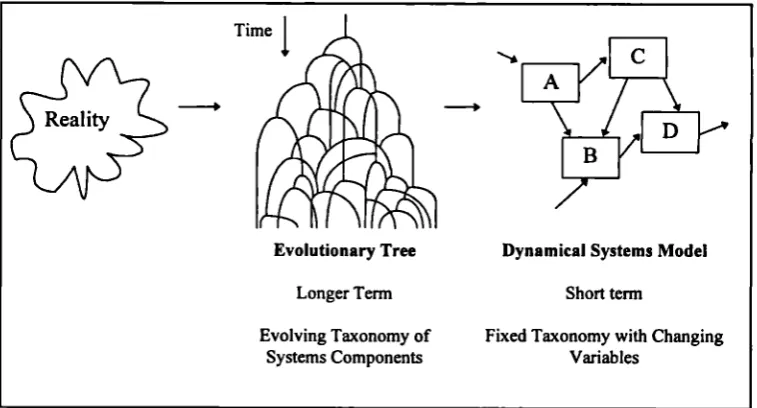
Figure 5.1. Modelling Necessitates Reducing Complexity... 65
Figure 5.2. Models of a Changing Complex Reality ...66
Figure 5.3. A Model as a Frozen Snapshot of Evolutionary Change...67
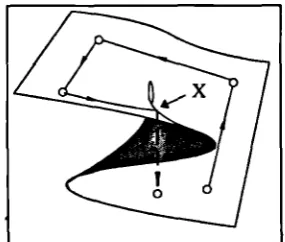
Figure 5.4. The Cusp Catastrophe...70
Figure 5.5. Fractal Behaviour in the Financial Markets...71
Table 5.1. Creation of Order and Disorder in Non-linear Systems...72
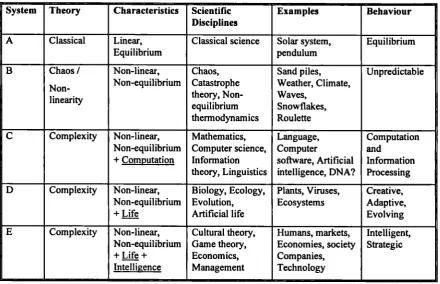
Table 5.2. The Emergence of Complex Behaviour in Five Types of System...75
Figure 7.1. The Four Political Cultures, Rationalities, and Ways of Life...98
Table 7.1. Three Kinds of Social Solidarity in Classic Social Science Literature...100
Figure 7.2. A Two-Dimensional Map of Social Solidarity and Ways of Life...101
Figure 7.3. The Political Cultures and their Four Myths of Nature...103
Table 7.2. Five Threefold Myths of Energy and Environmental Futures...106
Table 7.3. Management Strategies for Global Environmental Change...107
Table 7.4. Needs, Resources and Consumption Styles (Dake and Thompson 1993).. 107
Table 7.5. Perspectives on Sustainability Compared with Cultural Theory...109
Table 8.1. Illustrative SD Policies of the Cultural Perspectives...116
Table 9.1. Timmerman's Five Myths of Nature Contrasted with Holling's and Thompson's...138
Figure 9.1. The Political Cultures and Myths of Nature according to Thompson and Timmerman...139
Figure 9.2. Cultural Theory's Myths of Nature derived from Systems Theory...140
Table 10.1. Areas of Agreement, Complementarity and Disagreement Between Cultural Theoryand Complexity...147
Table 10.2. Three Types of Behaviour Needed for Resilience...157
Table12.1. Two Approaches to Management Theory...181
Table 12.3. Management theories, Metaphors and Intellectual Roots...187
Table 12.4. Problems facing Decision Making and Organisational Learning...188
Table 12.5. Senge's Five Disciplines for Organisational Learning ...189
Table 12.6. Organisational Learning and Complexity: An Evaluation...190
Chapter 1: Introduction
1.1. Sustainable Development in a Complex World: An Overview
The was a mood of optimism in certain quarters in the months before the 1992 United
Nations Conference on Environment and Development (UNCED) held at Rio. It appeared
to some people that the pathway to sustainability was clear, and nearly everyone seemed
to agree that the environment and the economy could be integrated. Environmental
concern would revive a country's economic and competitive outlook, generating new jobs
and reviving political fortunes, and eco-efficiency would be the basis of a new industrial
revolution, providing a rich source of new markets and profits for business (Schmidheiny
et a!. 1992). The details still had to be worked out, but the required change of course
seemed clear and attractive.
Today, as the sambas and caipirinhas have faded into distant memory, things seem rather
less rosy. Although 103 of the 178 nations represented at UNCED have established
national sustainable development commissions (Trisoglio 1 994b), there is still little
agreement on what a strategy for sustainable development might look like, and even less
enthusiasm to implement one. Growing unemployment and faltering competitiveness
have left industrialised countries with little appetite for costly environmental policy
measures, and business is also feeling the pain. Environmental spending in the OECD
region is some 1.5% of GNP and rising, while in environmentally-intensive industries
such as chemicals, it is between 4-6% of turnover. According to Klaus Eigenmann, head
of safety and environment at Ciba, 25% of the company's capital expenditure is on
environment: "We can't repeat this - it may be feasible technically, but financially it's just
not possible" (Trisoglio 1993). Leading environmental managers have tackled all their
relatively easy environmental problems, and are realising that further progress will be
much more difficult and expensive. Walley and Whitehead (1994) argue that the win-win
rhetoric of Rio: ". . . [had] tremendous appeal. Unfortunately this popular idea is also
unrealistic. Environmental costs at most companies are skyrocketing, with little economic
payback in sight". They conclude that optimistic rhetoric about sustainability "is not just
Faced with this "new realism", the debate on sustainability has lost momentum, returning
to the old trade-off between the environment and the economy. For environmental
managers and policy makers, this has led to retrenchment and short-termism, even though
the need for effective policies and institutions is as strong as ever. Policy makers appear
to lack the tools they need to move forward, or to resolve the central economic questions
of cost and benefit. Environmental policy making is supposed to be based on sound
science and cost-effectiveness, but in the face of large scientific uncertainty and significant
disagreement over the costs and benefits of proposed policy alternatives, the process has
got stuck. Policy makers cannot agree on what the future will look like, or whether
nations are prepared to pay to get there.
This is perhaps clearest with climate policy. The Intergovernmental Panel on Climate
Change (IPCC) forecasts used as the basis for economic and policy analysis estimate that a
warming of 1.5° to 4.5°C will result from a doubling of the atmospheric carbon dioxide
concentration. But climate modellers admit that their models are woefully inadequate,
since they still do not understand the direction of many important atmospheric feedback
processes, much less their magnitude. A typical debate took place during the US senate
hearing on global warming on 24 May 1994, when Jerry Mahiman, director of the
geophysical fluid dynamics laboratory at the National Oceanic and Atmospheric
Administration argued that damage from global warming was "virtually certain". Richard
Lindzen, Sloan professor of meteorology at MIT, countered that "man will most likely
have no effect on the environment" (Trisoglio 1 994b). In the face of such scientific
disagreement, it is not surprising that agreement on a climate policy appears as distant as
ever. Meanwhile, the US has abandoned plans for an energy tax, and the European
Union's carbon/energy tax, the centrepiece of its strategy for sustainability, has sunk
without a trace.
If this environmental impasse were temporary, it might perhaps be tolerable. There are,
however, good reasons to think that we are witnessing a more fundamental change, and
that we need a new approach to developing policies for sustainable development. Since
the birth of modern environmental policy some 25 years ago, the scale and complexity of
environmental issues has grown inexorably, from local to global. Decision making is
important at all levels, from individual consumers, to corporations, to nations; the entire
tightly linked to the economy. Today, environmental policy makers must also think about
cost-effectiveness, competitiveness, trade, employment, taxation policy and the financial
markets, an agenda of sobering complexity.
Environmentalists have always insisted that global biogeochemical systems are just that:
systems. Sustainable development policy-makers are fmally starting to see that they too
must operate in the world of complex systems, and not only in terms of the environment.
They must also integrate economic, social and technological considerations, each of which
taken alone is complex, and hence intrinsically unpredictable. Taken together, they signal
the end of an era when policy makers could expect simple answers. This complexity
suggests that new ways of thinking about sustainability are needed.
1.2. Introduction to the Thesis
"We are the absolute masters of what the earth produces. We enjoy the mountains and
the plains. The rivers are ours; we sow the seed and plant the trees. We fertilise the
earth. . . We stop, direct, and turn the rivers. In short by our hands we endeavour, by
our various operations on this world, to make, as it were, another nature".
Cicero [106-43 BC], cited in Hughes (1975)
"Now the country was in those days inhabited.. . The land was the best in the
world, and was therefore able. . . to support a vast army, raised from the
surrounding people. Even the remnant of Attica which now exists may compare
with any region in the world for the variety and excellence of its fruits. . . but the
earth has fallen away all round and sunk out of sight. . . in comparison of what then
was, there are remaining only the bones of a wasted body."
Even in classical times, there were differing opinions about whether the natural
environment can be moulded by humanity to suit its purposes, or whether it must be
protected from excessive human interference which would lead to its degradation and
collapse (Ponting 1991, Wall 1994).
A stream of environmentalism has continued through the last two millennia, but over
the last three decades, however, from the inauguration of the Club of Rome in 1967 to
Margaret Thatcher's famous 'green' speech to the Royal Society in 1988, environmental
concern has reached unprecedented heights. As Thatcher put it, "with all these
enormous changes - population, agriculture, use of fossil fuels - concentrated into such a
short period of time, we have unwittingly begun a massive experiment with the system
of the planet itself' (Woodell 1989:647). This concern for the global environmental is
at the heart of sustainable development (SD), a term that henceforth will be used
interchangeably with sustainability.
Although sustainability is often seen as a recent idea, it has been with us since the
beginnings of the modern environmental movement in the 1960s. It appears in
Boulding's (1966) discussion of "Spaceship Earth", as well as in the Club of Rome's
1972 report on The Limits to Growth (Meadows et al. 1972). The outlines of a
sustainable society were discussed by Pirages (1977) and Hayes (1978), and a series of
books on sustainability appeared in the early 1980s (Brown 1981, Cleveland 1981,
Coomer 1981), although it was not until the report of the Brundtland Commission
(WCED 1987) that the term achieved broad prominence within the policy debate. In
fact, its origins do not lie in industrial society at all, but rather with traditional societies
and indigenous peoples, who have based their lives on the concept of sustainability for
thousands of years. For example, the traditional teaching of Canadian indigenous
peoples would not be out of place in a contemporary discussion of sustainability and
intergenerational equity (Clarkson et a!. 1992):
"It is said that we are placed on the earth (our Mother) to be the caretakers of all that
is here. The way in which we interact with the earth, how we utilise the plants,
animals and the mineral gifts, should be carried out with the seventh generation in
mind. We cannot simply think of ourselves and our survival; each generation has a
It has been suggested that sustainability appears to command consensus as a policy
objective within the environmental debate (Marien 1994a), but a casual observation of
the continuing differences between industry and environmental groups suggests that
people do not all mean the same thing when they say they are in favour of sustainability
(Eden 1994). Now that the concept of sustainability has entered into international law,
however, the lack of consensus over its meaning presents a problem. For example, the
Framework Convention on Climate Change (FCCC) that was signed at Rio in 1992 sets
as its objective:
"The ultimate objective of this Convention. . . is to achieve. . . stabilisation of
greenhouse gas concentrations in the atmosphere at a level that would prevent
dangerous anthropogenic interference with the climate system. Such a level should
be achieved within a time frame sufficient to allow ecosystems to adapt naturally to
climate change, to ensure that food production is not threatened, and to enable
economic development to proceed in a sustainable manner"
(IER 1992, FCCC Article 2. Emphasis added)
Implementation of the FCCC, for example through protocols, is eventually likely to
require an interpretation of the meaning of 'sustainable', a requirement which will also
become necessary for other agreements incorporating the term, such as the 1992
Convention on Biological Diversity. A similar need is arising within the business
community, where there has been a rapid growth of interest in the measurement of
sustainability and the development of sustainability management and audit tools,
eco-labels and life-cycle assessments (Scbmidheiny et al. 1992, Miller and Szekely 1994).
In addition, there are attempts within the financial community to develop lending
procedures and investment products that distinguish between 'sustainable' and
'unsustainable' companies (Rada and Trisoglio 1993), and there are many initiatives
among international agencies, governments and non-governmental organisations to
develop "national strategies for sustainable development" (TUCN and lIED 1994). All
of these initiatives will require some kind of definition of sustainability and insights into
its implications, and there is unlikely to be significant progress in the integration of
sustainability into business strategies and economic policy making in the absence of a
One of the problems that this thesis seeks to examine is the question of the meaning, if
any, of 'sustainability', in order to explore whether it is possible to develop any
theoretical models or draw any conclusions which might support the evident need for
greater definitional clarity in the worlds of business and government.
The FCCC objective quoted above also suggests a further issue, however, since in its
use of concepts such as "a level that would prevent dangerous anthropogenic
interference with the climate system", or the idea of"a time frame sufficient to allow
ecosystems to adapt naturally", it implicitly assumes that these levels and time frames
are knowable, and that they can be derived through scientific inquiry. This thesis argues
that these modes of thinking belong to the Newtonian paradigm of a controllable,
modellable and knowable world, a paradigm that is being questioned by the emerging
sciences of complexity. A complex systems perspective suggests that our ability to
predict and manage the world is intrinsically limited by the non-linearity and
complexity of natural and social systems. If this perspective is valid, then we require a
radically different approach to designing policies and institutions for sustainability.
This, then, is the central question of the thesis: what are the implications of complexity
for sustainability? The question contains within it three issues that form the basis for
the approach taken in the thesis:
. What is the meaning of sustainable development in a complex world?
What are the implications for our policies and institutions?
• What tools can we use to assist decision-making for sustainability in a complex
world?
The approach and methodology of the thesis in exploring these three issues is discussed
in chapter 2, where there is also an introduction to the way that theoretical frameworks
Chapter 2: Methodology
2.1. Introduction
The evolution of the debate about sustainable development, including previous discussions
of the meaning of sustainability, has emphasised theoretical inquiry and understanding.
This thesis builds on this work, and makes an original contribution by developing new
approaches to understanding sustainability. It advances an original synthesis of theoretical
findings from disciplines that have not previously been brought together in an analysis of
SD, and also develops and tests a practical tool for improving the resilience of SD decision
making, namely a set of scenarios for sustainable development.
A PhD thesis is expected to form a distinct contribution to the knowledge of the subject
and afford evidence of originality shown by the discovery of new facts or by the exercise
of independent critical power. This thesis emphasises the second of these aspects, and is
primarily theoretical. Although it does generate new material, such as the scenarios
developed in chapter 14 and applied in chapter 15, its primary concern is to examine
existing material in a new way, developing and applying new explanatory frameworks.
This chapter provides a summary of the methodology followed in the thesis, together with
an outline of the structure of the argument.
2.2. The Three Theoretical Roots of the Thesis
Environmental degradation has been recorded for millennia, but the sustainability debate
is relatively recent in origin, with roots in the rebirth of modern environmentalism in the
1960s. Similarly, the theories used in this thesis also have recent origins, and they are still
being developed actively:
non-equilibrium thermodynamics and non-linear dynamical systems work of the 1 970s,
as well as cybernetics and computer science research, as described in chapter 5. It
provides an alternative to the Newtonian paradigm that has dominated Western
thinking for the last 300 years, not just in the physical sciences, but also in the
economic and social sciences that have drawn on prevailing world views in the
physical sciences. Complexity theory provides a model of stability, change and
unpredictability, and also a new set of tools for analysis and simulation.
The thesis applies complexity theory to provide a basis for understanding why the
highly complex and interconnected natural and social systems that are the concern
of the SD debate cannot be understood using the traditional linear and equilibrium
thinking of the Newtonian paradigm, and to glean insights into the types of
policies and institutions that might be required for managing in a complex world.
• Cultural theory: cultural theory was developed starting in the 1970s by the
anthropologist Mary Douglas, as described in chapter 7. It describes how
cognition, culture and organisational choice are linked, and it proposes that
institutional life may be understood in terms of the two dimensions grid and group,
which may be combined to produce four distinct rationalities and ways of life.
With its identification of four distinct 'myths of nature', cultural theory provides
an explanatory framework for the sustainability which may be examined in the
light of the policy debate. Cultural theory argues that institutional and policy
resilience may be increased by ensuring plurality, namely the inclusion of all the
myths of nature in policy design, although no tools are provided to operationalise
this theoretical proposal.
The thesis applies cultural theory to analyse the sustainability debate, and also
develops a set of scenario-based tools that can be used to attain greater plurality.
• Management theory: theories of organisational learning first became prominent in
management theory during the 1970s, when they were proposed as an alternative
to mechanistic models of how businesses function and how they might most
effectively be managed, as discussed in chapter 12. The 1970s also saw the
which provide a practical tool for enhancing organisational learning and resilience,
as discussed in chapter 13. Despite the practical success of scenarios, however,
there is no theory to support scenario development, which has reduced their
potential impact in improving decision making.
The thesis applies management theory to provide insights into institutional design
for SD in the face of complexity, and to set out how a scenario-based approach
might be used to aid decision-making for sustainability.
The complex systems, cultural and management theories have all been applied at some
level to understanding sustainability, but they have not previously been used together.
This thesis uses them in a mutually supportive way, as follows:
Complexity theory: provides a scientific basis and paradigm for the thesis,
including the ideas of cognition and model-building in a complex world. Cultural
theory builds on complexity theory by describing the emergence of patterns of
organisation and cognition in social life, while management theory and
organisational learning provide guidance on how to manage and develop
institutions in a complex world.
• Cultural theory: provides a hypothesis to account for the interaction of
world-views, organisational types and cognitive styles. Management theory builds on
cultural theory by providing operational understanding of such ideas as plurality,
clumsy institutions, organisational learning and resilience, while complexity theory
provides an understanding of the origins of cultural theory's myths of nature and
sheds light on the underlying ecological theory on which myths are based
• Management theory: provides a basis for designing strategies and institutions that
can flourish in a complex world, and with scenario planning it also provides a
practical tool to improve decision making. Cultural theory builds on scenario
theory by providing a basis for developing scenarios that can take account of social
and institutional behaviour, while complexity theory provides a basis for
understanding the implications of a turbulent and uncertain world for management
This thesis argues that the combination of these three approaches provides a rich
theoretical framework that combines insights from diverse disciplines, and is able to shed
light not only on the nature of the problem of SD, but also on the types of organisational
structures and decision making tools that would help to improve decision making for SD.
In addition to these three bodies of theory, the thesis also draws heavily on the literature of
the environmental and sustainable development debates, which are in turn associated with
several disciplines including geography, economics and environmental science.
2.3. Thesis Structure
The following chapters of the thesis are structured as follows:
3. Typologies ofSustainable Development Definitions - A Review: explores previous
classifications and frameworks of SD defmitions, and finds that previous work is
diverse and fragmentary, and lacks a coherent theoretical basis.
4. Two Policy Models for Sugtainable Development: introduces and explores the
differences between two competing models of policy development for SD, the
comprehensive/rational approach and the complex/adaptive approach.
5. Complexity: introduces complexity theory and explores the distinction between
complex and non-complex systems, the types of behaviour demonstrated by
complex systems, and new approaches to modelling and thinldng about complex
systems.
6. Examples of Complexity in the Sustainable Development Debate: examines the
presence of complexity and uncertainty at both large and small scales in the SD
debate, and the limitations of current scientific knowledge.
7. Cultural Theory: reviews the grid/group framework, the plural rationalities and
myths of nature, the key hypotheses and results of cultural theory, and the previous
8. Sustainable Development - An Analysis: applies the theories introduced in earlier
chapters to analyse and shed light on a diverse set of SD defmitions and policy
recommendations drawn widely from academic, business, governmental and
non-governmental sources.
9. Cultural Theory and Complexity: evaluates the success of cultural theory as an
explanatory framework for thinking about sustainability, and examines how
insights from complexity theory could be used to strengthen cultural theory.
10. Resilience, Learning and Sustainabilily: compares and contrasts insights from
complexity and cultural theory on the resilience and learning required for
sustainability, and how they might be attained.
11. Sustainable Development in a Complex World: examines the status of the SD
debate, including the implications for definitions and policy, in the light of the
theoretical synthesis and insights developed in previous chapters.
12. Managing in a Complex World: reviews two principal approaches in management
theory and the implications for management in a complex world, including their
conclusions about organisational learning and strategic resilience.
13. Scenario-Based Tools for Decision Making: introduces the scenario planning
technique and explores its strengths and shortcomings, as well as the absence of a
theoretical basis to guide scenario development.
14. Cultural Theory and Scenarios: applies cultural theory to develop a theoretical
basis for scenario planning, evaluates the strengths of this approach compared to
previous sets of scenarios, and introduces a set of three SD scenarios developed
using cultural theory.
15. Sustainability Scenarios - Application and Results: reviews the application of the
SD scenarios developed in chapter 14 in different contexts, and draws conclusions
16. Conclusions: summarises the fmdings of the thesis, draws conclusions, and
suggests directions for future work.
Chapter 3: Typologies of Sustainable Development Definitions - A Review
3.1. Introduction
Since the publication of the Brundtland Report (WCED 1987), the term sustainable
development (SD) has become prominent in environment and development policy. It has
been enshrined as a basic objective of several international agreements, including the
Maastricht Treaty on European Union; the European Union (EU) Fifth Environmental
Action Programme; the Rio Declaration; Agenda 21; the Framework Convention on
Climate Change; and the Convention on Biological Diversity (Grubb et al. 1993). SD is
widely debated among environmental policy researchers and non-governmental
organisations, and it also appears within numerous corporate mission statements and
environmental charters, notably the Business Charter for Sustainable Development (ICC
1990a), which has been signed by over 1,500 companies.
SD was defined by the Brundtland Commission (WCED 1987:43) as "development that
meets the needs of the present without compromising the ability of future generations to
meet their own needs." Yet despite numerous subsequent elaborations and uses of
sustainability (OECD 1989), which were presented in a "gallery of definitions" by Pearce
et al. (1989:173-185), the theoretical status of SD remains problematic. Some authors see
the diversity as undesirable, for example Lélé (1991:613), who argues that:
"[SD] is a 'metafix' that will unite everybody from the profit-minded industrialist and
risk-minimising subsistence farmer to the equity-seeking social worker, the
pollution-concerned or wildlife-loving First Wonder, the growth-maximising policy-maker, the
goal-oriented bureaucrat and, therefore, the vote-counting politician".
Other authors argue that sustainability is not something to be defined but to be declared,
since "it is an ethical guiding principle" (Viederman 1993). Yet others argue that the
breadth of SD definitions has allowed the concept to succeed politically where narrower
and clearer concepts such as limits to growth failed (Butte! et al. 1990, Bardwell 1991),
opposing perspectives and thus prevented dialogue and policy development.
Nevertheless, Brown et al. (1987) have shown that different SD definitions are
incommensurable, while Pearce et a!. (1989) argue that they lack rigour. Dasgupta and
Mäler (1994) contend that "most writings on sustainable development start from scratch
and some proceed to get things hopelessly wrong. It would be difficult to find another
field of research endeavour in the social sciences that has displayed such intellectual
regress". And in conclusion, Beckerman (1994) argues that sustainable development may
not have any conceptual utility at all, since it "has been defmed in such a way as to be
either morally repugnant or logically redundant".
Despite the academic dissent, Brooks (1992) insists that policy makers require an
operational definition of SD to infonn choices between alternative policies, technologies
and development strategies. To be useful, a definition must be operational, including
objectives and decision criteria, and there is no excuse for delay, since investment and
policy decisions made today can have consequences far into the future, many of which
may be physically or economically irreversible (Meadows et al. 1973). Policy makers are
beginning to grasp the importance of an operational definition, and have initiated
discussions on the meaning of SD in the EU and elsewhere (ERM 1 994a). Nevertheless,
as this chapter confirms, the need for a unified theoretical definition remains as strong as
ever.
3.2. Frameworks for Understanding Sustainability
As a starting point for understanding SD (Brown et al. 1987, Shearman 1990), we may
consider the definitions in the Oxford English Dictionary:
To develop is "to grow into a fuller, higher or maturer condition". Applied to human
society, development indicates progress towards a set of desirable goals which might,
for example, include meeting basic needs, increasing economic welfare and quality of
Sustainable is "capable of being upheld; maintainable", and to sustain is "to keep a
person, community etc. from falling or giving way; to keep in being, to maintain at the
proper level; to support life in; to support life, nature etc. with needs".
On the basis of these definitions, sustainable development is "human progress that can be
maintained into the future", an anthropocentric approach reminiscent of Brundtland's.
This objective is hard to condenm in general (Solow 1991), although it is saved from
being platitudinous by biocentrists who hold that it discriminates against non-human
species (section 3.2.2). There is an additional debate about whether sustainability should
be restricted to mean "able to be sustained" or "worthy of being sustained" (Dower 1992,
Attfield and Wilkins 1994, Dower 1994), although since both these usages are
commonplace, the following discussion will include them both.
Although general definitions of SD command wide acceptance, they are not operational,
and cannot guide decision making. When attempts at operationalisation are made,
alternative assumptions and differences in interpretation create a plurality of seemingly
incompatible definitions. Business, governments and environmental groups may all be in
favour of sustainability, but if they cannot agree on what it means, it is of little use as a
guide to policy making. The extent of the definitional divergence is explored in the
following sections.
3.2.1. Two-Fold Distinctions within Sustainability
(a) Technological Optimism and Pessimism
An early discussion of alternative perspectives of environmental quality in a growing
economy was provided by Boulding (1966), who contrasted the "Cowboy economy" of a
world without limits with the "Spaceship economy" of a world in which resources are
scarce and waste sinks are limited. The related distinction between technological
optimism and technological pessimism arose with the Limits to Growth debate of the early
1970s (Meadows et al. 1972, 1973, Cole et al. 1973), which questioned the effects of
economically viable solutions to environmental problems indefmitely into the future.
Optimists see man as powerful, ingenious, and able to solve any problems that may arise,
while pessimists see nature as vulnerable, human institutions as fallible and slow-moving,
and technology as the source of as many problems as it solves. Thus although optimists
and pessimists would both support SD, in the sense of maintaining human progress into
the future, they would recommend different policy responses to achieve this goal.
Optimists would promote growth and innovation, pessimists would limit them, and both
would argue that their favoured policies would further sustainability. The implacable
opposition of these perspectives is summarised by Meadows et al. (1973:131):
"We see no objective way of resolving these very different views of man and his role
in the world. It seems to be possible for either side to look at the same world and find
support for its view. Technological optimists see only rising life expectancies, more
comfortable lives, the advance of human knowledge, and improved wheat strains.
Maithusians see only rising populations, urban ugliness, and increasing gaps between
the rich and the poor".
The US National Academy of Sciences draws a similar distinction, between
conservationist and possibilist poles (NRC 1990). Conservationist thinking supports a
'better safe than sorry' prescription, based on an image of nature "in its original state
perturbed by sporadic human blundering, while the possibilists see spaceship earth as the
creation and responsibility of enlightened long-term engineering. In this perspective,
mistakes are possible, even likely, but with sufficient alertness and wisdom we may detect
and remedy them before their consequences are too serious. The same bipolar distinctions
emerge as ecocentrism and technocentrism in Gladwin, Kennelly and Krause (1995), as
neo-Malthusian and cornucopian in Ayres (1993), and in Goodwin (1994) as an axis of
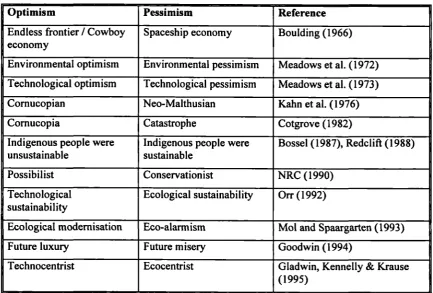
"predictions of the future of human civilisation", from future misery to future luxury (table
3.1). Mol and Spaargarten (1993) similarly find that the two poles of the post-modem
environmental debate are eco-alarmism and ecological modernisation.
The same two-fold distinction appears elsewhere, for example in the question of whether
traditional tribal people were more or less sustainable than humans today. Redclift
(1988:646) argues that indigenous people made use of the environment in "ways that are
Optimism Pessimism Reference
Endless frontier / Cowboy Spaceship economy Boulding (1966) economy
Environmental optimism Environmental pessimism Meadows et al. (1972) Technological optimism Technological pessimism Meadows et al. (1973)
Cornucopian Neo-Malthusian Kahn et al. (1976)
Cornucopia Catastrophe Cotgrove (1982)
Indigenous people were Indigenous people were Bossel (1987), Redclift (1988)
unsustainable sustainable
Possibilist Conservationist NRC (1990)
Technological Ecological sustainability Orr (1992) sustainability
Ecological modernisation Eco-alarmism Mol and Spaargarten (1993)
Future luxury Future misery Goodwin (1994)
Technocentrist Ecocentrist Gladwin, Kennelly & Krause
(1995)
Table 3.1. Technological Optimism I Pessimism and Related Bipolar Distinctions
they did not, and Rapport (1990) questions the implication that a "rediscovery of the past"
holds lessons for sustainability today.
Many authors take the optimism / pessimism split as the primary, if not the only, fault
line in definitions of SD, and argue that "reality probably lies intermediate between
these two" (Brooks 1992). Lecomber (1975 :42) argues that "everything hinges on the
rate of technical progress and the possibilities of substitution. This is perhaps the main
issue that separates resource optimists and resource pessimists", but he also notes that
"the central feature of technical advance is indeed its uncertainty". This technological
distinction is necessary in understanding alternative perspectives on SD, but it is not
sufficient, since other authors propose different bipolar distinctions, as outlined below.
(b) North-South and Rich-Poor
emerged from the developmental roots of SD (Brandt Commission 1980, 1983). The
argument here is that the North's concern for sustainability is typically environmental,
seeking to protect standards of living that have already been attained, while the South's
is developmental, focusing on poverty alleviation, improving education and health, and
socio-economic development (Redclift 1987, 1992). It should be noted that these
distinction refer to the debate conducted within the SD policy community, which tends
to comprise ministries of environment and overseas development. Among other
government ministries in Northern countries, such as industry, transport or economics,
the focus is still typically on promoting economic growth rather than protecting the
environment, and sustainability is used in its economic context of "sustaining growth",
or the "maximum sustainable growth rate" that can be attained without incurring
adverse inflationary consequences, rather than to refer to the environment.
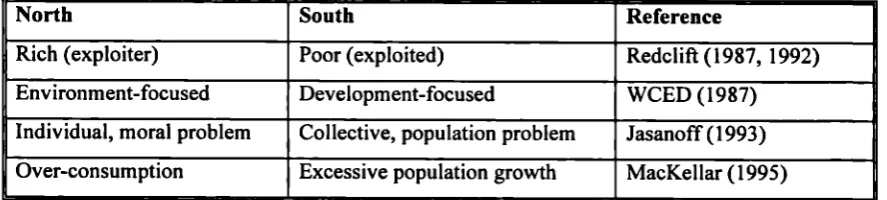
An alternative formulation locates the source of North's unsustainability in
over-consumption, and the South's in excessive population growth (MacKellar 1995) (table
3.2). These divisions are not simply between nations, as Jasanoff (1993) demonstrates
that even within India, there are sharply conflicting views on the 'causes' of
environmental degradation, between those who blame the "reckless consumption" of the
rich, and those who focus on population pressures. Jasanoff finds that here too both
sides of the debate favour SD as the 'solution', since they invest it with very different
meanings.
North South Reference
Rich (exploiter) Poor (exploited) Redclift (1987, 1992)
Environment-focused Development-focused WCED (1987)
Individual, moral problem Collective, population problem Jasanoff (1993)
Over-consumption Excessive population growth MacKellar (1995)
Table 3.2. North / South and Related Bipolar Distinctions
Apart from Jasanoff's observation that the consumption / population debate occurs even
is it meaningful to classify Singapore as 'Southern', given that this high-technology city
state has a higher per capita income, better education and lower infant mortality than
'Northern' Portugal? Similarly, UNDP (1991) has shown that human development is
not simply correlated with economic development. Nevertheless, the North / South axis
is another along which divergent policy priorities for SD may be analysed. Perhaps
more importantly, Jasanoff (1993) argues that "political divisions previously identified
with North-South cleavages are now more accurately seen as divisions between
fundamentally opposing views about human claims on nature and their mediation by the
state", thus pointing towards the importance of subjective cognitive distinctions in
analysing sustainability, rather than definitions derived from supposedly objective or
technical scientific and economic criteria. These approaches are investigated further
below, and also in chapter 7.
(c) Responding to Maithusianism: Intervention and No-Growth
In the Limits to Growth debate, pessimists favoured interventionist no-growth policies,
while optimists sought to liberalise markets and promote growth. In contrast, Goodland
et al. (1991) and MacNeill Ct al. (1991) are both environmentally pessimistic, yet
support different policies. The former recommend redistribution from rich to poor
countries, redirecting investment towards improving environmental quality, and limiting
economic growth. The latter advocate intervention, but in this case to support
technological and economic development while redirecting them along less
environmentally-intensive paths. There would therefore appear to be at least two forms
of environmental pessimism, indicating that if is our objective is to provide a complete
classification of perspectives on sustainability, we require a richer typology.
Similarly, Ayres (1993) notes that Boulding's "cowboy" / "spaceship" and Kahn's
cornucopian / neo-Malthusian axes do not correspond exactly. Cowboys and
cornucopians tend to be political conservatives, but cowboys see government as an
active, interventionist ally, while cornucopians seek to limit the role of government to
macroeconomic policy and defence. Equally, the emphasis in the spaceship is on
mutual co-operation and conservation, while the neo-Malthusian world requires
These distinctions demonstrate that there are additional discriminations in sustainability
beyond technological optimism / pessimism, and that a complete typology of SD must
include more than two basic types. More sophisticated typologies are discussed below.
At this point, concerns might legitimately be raised as to whether a richer typology will
aid improved policy making, or simply result in greater complication and confusion.
The response, which is addressed in chapters 4 and 7, is that a more complete
understanding of reality can usually be translated into superior policies. The converse,
of inferior understanding yielding superior policy, only arises by accident. Hence a
more complete understanding of SD is desirable.
3.2.2. Multipolar Distinctions within Sustainability
Several authors expand the optimist / pessimist scale with additional categories. Kahn
et a!. (1976) acknowledge four "world views" ranging from the extreme neo-Malthusian
to the extreme "technology / growth enthusiast", with two intermediate positions of
guarded pessimism and guarded optimism. Carley and Christie (1992:78) provide a
similar four-fold typology based on O'Riordan and Turner (1983) and Turner (1987)
(table 3.3).
Deep Ecologist "Bioethicist, extreme-preservationist, anti-growth".
Communalist "Resource-preservationist, oriented to limited or zero growth".
Managerial "Resource-conservationist, oriented to sustainable growth".
Technocentric "Resource-exploitative, growth-oriented".
Table 3.3. Four Attitudes towards Sustainability
O'Riordan (1991) provides a similar set of four positions along a one-dimensional scale
in his analysis of attitudes on biodiversity, in which the first three "world views" match
those of Carley and Christie, although the 'technocentric' and 'Gaianist' perspectives
Absolutist "Any further species loss is a crime against creation"
Ecologist "Endangered species and habitats should be protected"
Pragmatist "Some crude cost-benefit analysis at each stage of [prospective] further loss"
Gaianist "Earth is a creative force that will eventually establish its own equilibrium of species mix, within which humans may become marginal"
Table 3.4. Four Attitudes to Sustaining the Biosphere
MacKellar (1995) identifies three population-environment theories, based on a
classification by Jolly (1994), which also fit the four-fold typology. The same structure
appears in Pearce eta!. (1993:18) in a chapter co-authored by Turner, in which labels
are also attached for "weak" and "strong" sustainability, and each idea of sustainability
is associated with a preferred view of economic policies, management strategies and
ethics. Apart from O'Riordan's Gaianist, these four-fold typologies are seen to be
derived from Kahn et a!. (1976), and thus in turn from the original technological
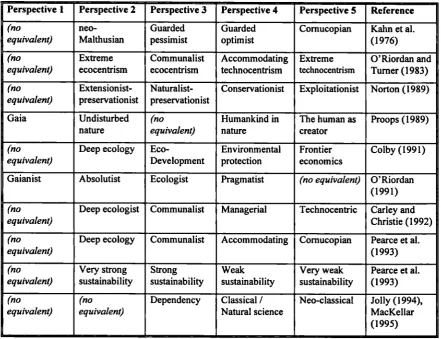
optimist / pessimist split first introduced by Boulding (1966) (table 3.5).
Colby (1991) proposes two perspectives corresponding to perspective 4 of table 3.5,
"environmental protection" and "resource management". He also speculates on the
evolution of definitions over the last three decades, arguing that 'frontier economics'
and 'deep ecology', which originated with Boulding (1966), were subsequently
integrated in the 'environmental protection' paradigm, which in turn spawned
'ecodevelopment'. Colby also mentions Gaiaism, but he does not attempt to classify it.
Proops (1989) also derives four perspectives, based on "paradigmatic images of the
world" which he draws from literary sources. These are:
(i) undisturbed nature, the hunter-gatherer world where humans are intruders;
(ii) humankind in nature, the agricultural world in which nature embodies human
presence;
(iii) the human as creator, the industrial world in which "nature is a tabula rasa"
upon which humankind can write its destiny; and
Perspective 1 Perspective 2 Perspective 3 Perspective 4 Perspective 5 Reference
(no neo- Guarded Guarded Cornucopian Kahn et al.
equivalent) Maithusian pessimist optimist (1976)
(no Extreme Communalist Accommodating Extreme O'Riordan and
equivalent) ecocentrism ecocentrism technocentrism technocentrism Turner (1983)
(no Extensionist- Naturalist- Conservationist Exploitationist Norton (1989)
equivalent) preservationist preservationist
Gaia Undisturbed (no Humankind in The human as Proops (1989) nature equivalent) nature creator
(no Deep ecology Eco- Environmental Frontier Colby (1991)
equivalent) Development protection economics
Gaianist Absolutist Ecologist Pragmatist (no equivalent) O'Riordan
(1991)
(no Deep ecologist Communalist Managerial Technocentric Carley and
equivalent) Christie (1992)
(no Deep ecology Communalist Accommodating Cornucopian Pearce et al.
equivalent) (1993)
(no Very strong Strong Weak Very weak Pearce et al.
equivalent) sustainability sustainability sustainability sustainability (1993)
(no (no Dependency Classical / Neo-classical Jolly (1994),
equivalent) equivalent) Natural science MacKellar
(1995)
Table 3.5. Five-Fold Perspectives on Sustainability
Proops does not include a paradigm based on communal management, and although he
convincingly establishes the identity of the other paradigms, he does not explain why
these particular four exist, rather than any others.
Norton (1989) also presents four world-views, along with a detailed historical
perspective, although he labels them differently (table 3.5). Unlike the previously
mentioned authors, Norton provides a systematic explanation for the perspectives,
which he bases on Rawls' (1971) idealised decision model. Rawls posits an "original
position" in which free and rationally self-motivated individuals choose from behind a
"veil of ignorance" the social arrangements they find acceptable as the basis for a just
society. Such individuals in the hypothetical original position do not know what their
fortune will be, either economically or in natural abilities, nor their social standing, nor
Norton explains that the different perspectives emerge from a Rawisian choice under
different assumptions. An individual would choose an exploitationist society only if he
accepted the Axiom of Abundance, namely that nature's goods are unlimited and
infinitely substitutable. He would choose conservationism if he rejected that principle,
but did not believe that earlier generations could preclude the existence of later
generations. Naturalism-preservationism would follow the view that exploitation could
endanger human life, while extensionism-preservationism would be associated with a
moral concern that the legitimate interests of non-human species would not be
adequately protected by policies to protect human interests.
Table 3.5 demonstrates that there are at least four distinct perspectives on sustainability,
or five if the Gaian perspective is included. Some authors develop additional
distinctions within these perspectives, such as Colby (1991) as noted above, and Jacob
(1994), who provides a detailed comparison of deep ecology, sustainability and
anthropocentrism. Redclift (1988) has three positions at the Maithusian end of the
spectrum: (i) neo-Malthusianism, based on limits to growth (Meadows et al. 1972) and
the tragedy of the commons (Hardin 1968), which could lead in turn to an authoritarian
"ecofascist" approach (Pepper 1984), or a political impasse where institutional change
does not keep up with environmental change (Commoner 1972, Ebrlich 1974, Myers
1979); (ii) a Marxist perspective that examines distributional issues left untouched by
the neo-Malthusians (Redclift 1987); (iii) an "ecocentric" perspective that questions the
ends of development, as well as the means (O'Riordan 1981). These more subtle
distinctions are discussed in chapters 7 and 8, but they do not add any fundamentally
different dimensions to the four-fold classification.
We may summarise these frameworks as follows:
1. Most two-fold and four-fold distinctions are developed along the axis between
cornucopian / neo-Malthusianism (or technological optimism / pessimism), which is
based on the distinction between cowboy / spaceship economies by Boulding (1966).
2. Some four-fold distinctions, notably those based on images of nature, include
Gaianism. This perspective does not appear to be classifiable on an axis between
3. Few authors provide theoretical justifications for the classificatory typologies they
propose. The exception is Norton (1989), who derives alternative perspectives by
considering hypothetical rational responses under a Rawlsian veil of ignorance.
Proops (1989) explains world views in terms of "utopias", or desired images of the
future, and although he includes Gaianism, he does not explain why there should
only be four utopias.
4. Differences between definitions of sustainability are associated with alternative
assumptions regarding the stability and resourcefulness of the natural world, the
potential for future technological innovation, and humanity's ethical responsibilities
towards other species, future generations, and less privileged members of current
generations. Many definitions of SD are restricted to scientific or economic criteria,
but these are seen to be inadequate if we wish to develop a complete definition that
includes social, cultural and ethical components.
The way in which several authors start from different positions and converge on a
similar four-fold typology suggests that this framework reflects something fundamental
about the sustainability debate, which is addressed in greater detail in subsequent
chapters. The next two sections examine other frameworks for defming sustainability
originating from systems and economic approaches.
3.2.3. Systems Approaches for Understanding Sustainability
The definitions of sustainability in section 3.2.2 are socio-economic or political in
nature, but an alternative path towards understanding sustainability can be derived from
ideas in systems theory. Since the social and environmental phenomena of SD comprise
complex interrelated sets of elements and processes, they are systems phenomena.
Furthermore, since human and natural systems are profoundly linked, no issue is purely
human or purely environmental (Dovers and Handmer 1992, Redclift 1987). Human
(i) complexity: the human agents in the system are active participants, cognising and
strategising reflexively (Soros 1994);
(ii) frequent non-repeatability plagues analysis;
(iii) there is a related difficulty in generating laws with any longevity in explaining
system behaviour.
Systems approaches within sustainability arose from work in ecology, particularly the
concept of resilience in populations and ecosystems. In his seminal work, Holling
(1973) defined resilience, as opposed to stability, as the ability to persist by absorbing
changes to key variables and parameters. Conway (1985, 1987) applied systems
thinking to analysis of agricultural ecosystems, for which he identified four properties:
(i) productivity: system output; (ii) stability: constancy of production of output; (iii)
equity: evenness of distribution of output; and (iv) sustainability: system ability to
maintain output after disturbance, which is equivalent to Holling's resilience. Building
on Conway's work, Dovers and Handmer (1992) suggest that:
"Sustainability is the ability of a human, natural or mixed system to withstand or
adapt to endogenous or exogenous change indefinitely. Sustainable development is
therefore a pathway of deliberate change and improvement which maintains or
enhances this attribute of the system, while answering the needs of the present
population".
Norgaard (1988) takes a similar approach towards a co-evolutionary view of SD, based
on six key concepts: complexity, continuous evolution, reflexivity, culturally framed
perception, learning through trial and error, and learning in organisations. Norgaard
argues that the world's complexity ensures that no single way of understanding it is
sufficient and, even with multiple ways, we will periodically be surprised. Defmitional
frameworks should therefore be plural and inclusive, and their success may be judged
by whether they "reduce single-minded intransigence". O'Connor (1991) explores the
implications of thermodynamic theory, entropy and far-from-equilibrium conditions,
and draws similar conclusions about the need for multiple levels of explanation in SD.
(1984), Bossel (1987), de Young and Kaplan (1988), Foy (1990), Shearman (1990),
Common and Perrings (1992), 1-lourcade et al. (1992), Ayres (1993), Binswanger
(1993), Dovers and Handmer (1993), Drepper and Mãnsson (1993), Perez-Trejo et a!.
(1993), Giampetro (1994), Holling (1994) and Clark eta!. (1995). Although these
authors lay out a broad range of theoretical approaches, they do not develop a unified
perspective on the definitional or policy implications of complex systems approaches
for SD. These issues are considered in more detail in chapter 5.
In summary, many authors sense the importance and potential of systems approaches in
shedding light on the meaning of SD, but the ideas still need to be operationalised and
set in a policy relevant context. Checkland (1993), cited by Roberts (1994), believes
that "there is little evidence that policy making at the highest levels is ever affected by
systems thinking", perhaps because most applications of systems approaches are lax or
nebulous: "the apparently all-embracing scope of systems thinking offers to many
people a heady elixir. We should decline to drink it". Nevertheless, systems
approaches for understanding sustainability complement socio-political approaches, and
should be integrated alongside them in an overall theoretical framework.
3.2.4. Economic Approaches for Understanding Sustainability
Economic definitions of sustainability have been developed within environmental and
ecological economics, which provide an additional dimension to economic theory to
deal with exhaustible and renewable natural resources. The mainstream approach of
environmental economics (Dasgupta & Heal 1979), the history of which is explored by
Klaasen and Opschoor (1991), is based squarely within the neo-classical paradigm, and
is therefore subject to all the criticisms directed at neo-classical theory. In particular,
the neo-classical assumptions of equilibrium, decreasing returns to scale, and rational
economic actors are contested (Simon 1978, Anderson et a!. 1988, Arthur 1994,
Ormerod 1994, Parker and Stacey 1994, Trisoglio 1995b). These criticisms tend to be
A typical economic definition of sustainability is "non-declining utility of a
representative member of society" for some long time period into the future (Pezzey
1989, 1992:323), which in turn requires that each generation should leave the next
generation a stock of capital no less than it started with (Pearce et al. 1993). Since
capital comprises both natural and man-made capital (Pearce et al. 1989), two further
possibilities arise: (i) the constant capital rule may refer to any sort of capital; or (ii)
natural capital must be conserved separately, to take account of ecological and
biophysical uncertainty and irreversibility. Pearce et al. (1993) label these variants as
weak / strong sustainability respectively, as noted in section 3.2.2. Apart from the
strong criticism by Beckerman (1994) of this approach and its contradictions, another
important critique of the neo-classical approach is directed at the valuation of natural
capital stocks in terms of price.
Several techniques exist to assign monetary values to natural resources, for example in
order to use these values in cost-benefit analysis or to 'correct' estimates of GNP and
GDP in national accounts (Pearce et al. 1989, 1993). Apart from ethical and moral
objections to this reduction of values, needs and welfare to monetary aggregates (Ekins
1986, Adams 1995), such valuation exercises say nothing about the complex behaviour
of the biogeochemical systems that comprise the environment. They may, for example,
reflect the opinions of laymen on the economic value of the ozone layer or the climate
system. But they provide no policy-relevant information regarding the likely costs or
benefits that might arise were such systems to be modified as a result of human
activities, not least because the scientific basis for such predictions is not yet available
(Jasanoff & Wynne 1995). Furthermore, green economic approaches are weak at
explaining or evaluating entrepreneurship and technological innovation, especially the
way information technology is revolutionising the global economy (Marien 1994a),
which leaves them unable to explore the dynamics, and hence sustainability, of global
economic change. These problems are discussed further in subsequent chapters.
An alternative approach to economic thinking is provided by 'green' or ecological
economics. Pioneered in work such as Schumacher's Small is Beautiful (1973), green
economics is less an attempt to describe economic behaviour than it is to propose a
vision of what would constitute a more human-oriented, spiritual and ecologically
harmonious economic system, which it would argue is the basis of a sustainable world.
convincing and experimentally verifiable account of economic decision making, but
rather that it ignores fundamental human, social and environmental values in its
calculus, and thus promotes unfairness, inequitable development, social decay and
environmental degradation (Daly & Cobb 1990, Costanza 1991, Jacobs 1991). The case
for including social concerns is that a system that is biophysically sustainable may
nevertheless be socially unsustainable, for example due to growing divisions in society
(Brooks 1992).
Although much of ecological economics takes a values-based critique, it also has a
strong component that stresses thermodynamic and biophysical constraints on economic
growth (Georgescu-Roegen 1971, Meadows et al. 1972, Daly 1992a), and argues for the
transition to a steady-state economy in the face of fundamental limits to growth. The
neo-classical rebuttal of this argument observes that neo-classical theory only speaks of
growth in value, which says nothing about growth in physical scale of the economy
(Pearce Ct al. 1993:5). In response, ecological economists point out that historically
there has been a close correlation between economic growth and growth in physical
scale of the economy (Daly 1992a:9). Since it is essentially about whether historical
and technological trends can be extrapolated into the future, this Limits to Growth
debate is likely to continue indefinitely. It is, in fact, simply restating in different
language the technological optimism / pessimism dichotomy explored in section 3.2.1.
Another variant on this theme, and of the weak / strong distinction, is the idea of
"critical natural capital" (Pearce et al. 1993:16), which includes environmental assets
that are vital for human well-being or survival, for example biogeochemical cycles.
Pearce argues that such critical capital, which is presumed to be non-substitutable,
should be subject to the constraint of strong sustainability. The problem is that this
criterion is non-operational, since we return to unanswerable questions such as: Are
there limits? If so, in which biogeochemical systems? This takes us back to the
fundamental environmental uncertainty and complexity, and the optimist / pessimist
distinction. The underlying complexity means no one economic defmition is "correct",
thus rendering unsuccessful Pearce's attempts to reduce the definitional plurality.
Any economic approach which seeks to assign value to natural systems and their