A modelling framework to support the selection and implementation of new tuberculosis diagnostic tools
Hsien-Ho Lin*1,2,3, Ivor Langley*4, Reuben Mwenda5, Basra Doulla6, Saidi Egwaga6, Kerry A.
Millington4, Gillian H. Mann4, Megan Murray7, S Bertel Squire4 and Ted Cohen7,8
*Joint first authors
1Institute of Epidemiology and Preventive Medicine, National Taiwan University, Taiwan
2International Union Against Tuberculosis and Lung Disease
3Department of Community Health, Mennonite Christian Hospital, Taiwan 4Liverpool School of Tropical Medicine, Liverpool, UK
5Health Technical Support Services (Diagnostics), Ministry of Health, Lilongwe, Malawi
6National Tuberculosis and Leprosy Control Program, Ministry of Health and Social Welfare, Dar
es Salaam, United Republic of Tanzania
7Department of Epidemiology, Harvard School of Public Health, Boston, MA, USA 8Division of Global Health Equity, Brigham and Women's Hospital, Boston, MA, USA
Corresponding author: Ted Cohen, Division of Global Health Equity, Brigham and Women's
Hospital, Assistant Professor in Epidemiology, Harvard School of Public Health, Boston, USA
Running head (max 45 letters and spaces): Modelling new tuberculosis diagnostic tools
Word count:3,461
References: 41
Summary
Efforts to stimulate technological innovation in the diagnosis of tuberculosis have resulted in the
recent introduction of several novel diagnostic tools. As these products come to market, policy
makers must make difficult decisions about which of the available tools to implement. This
choice should depend not only on the tools’ test characteristics (e.g. sensitivity and specificity),
but also on how they will be used within the existing health care infrastructure. Accordingly,
policy makers choosing between diagnostic strategies must decide: 1) What is the best
combination of tools to select?; 2) Who should be tested with the new tools?; and 3) Will these
tools complement or replace existing diagnostics? The best choice of diagnostic strategy will
likely vary between settings with different epidemiology (e.g. levels of TB incidence, HIV
co-infection, and drug-resistant TB) and structural and resource constraints (e.g. existing diagnostic
pathways, human resources and laboratory capacity).
We propose a joint modelling framework that includes a TB transmission component (a dynamic
epidemiological model) and a health system component (an operational systems model) to
support diagnostic strategy decisions. This modelling approach captures the complex feedback
loops in this system: new diagnostic strategies alter the demands on and the performance of
health systems which impact TB transmission dynamics which, in turn, result in further changes
to the demands on the health system. We demonstrate the use of a simplified model to support
the rational choice of diagnostic strategy based on health systems requirements, patient
outcomes, and population level TB impact.
INTRODUCTION
Investment in and coordination of efforts to develop new diagnostic tests for TB have resulted in
promising new tools (e.g. PCR-based DNA amplification tests), and modifications of existing
approaches (e.g. LED microscopy, front-loading, and sputum processing with bleach or by
centrifugation).1-6 Faced with this growing arsenal of diagnostic options, policy makers must
make difficult choices about which new technology or combination of technologies to
implement, and how to incorporate them in diagnostic algorithms. These choices are further
complicated by the rapidly-changing policy environment where investments made based on
current recommendations might need to be modified in response to subsequent
recommendations.7 Ideally, policy makers would select the most cost-effective tools that best
improve patient outcomes and, by reducing the expected duration of undetected infectious
disease, limit transmission in the community. In reality, understanding the health system
requirements and population-level impact of diagnostic tools is challenging because the
long-term dynamics of TB epidemics make it difficult to measure the epidemiological impact of
interventions and the wide array of tools (and potential combination of these tools) makes
testing and comparing all options impossible.
While most previous studies of the potential impact of new TB diagnostics have focused on the
test characteristics of the tools (i.e. sensitivity and specificity), we suggest that a more complete
understanding of impact also requires consideration of how these tools will be used within
diagnostic pathways. Accordingly, these decisions require the comparison of different diagnostic
strategies that incorporate consideration of both the technical characteristics of the tools and
how these tools will actually be implemented within a health system, and at what cost. Different
diagnostic strategies may prove superior in settings with different levels of HIV-associated TB or
drug-resistant TB or in areas with a different existing health care infrastructure.
Traditionally, separate modelling approaches have been used to project the impact of new
interventions on disease dynamics (i.e. dynamic epidemiological modelling) and to understand
the impact of new technologies on the performance of health systems (i.e. operational
modelling). While several previous studies have discussed the importance of the health system
context for TB diagnostics, a practical methodology for bringing this context into rational policy
assess the potential impact of new diagnostic strategies on health system costs and
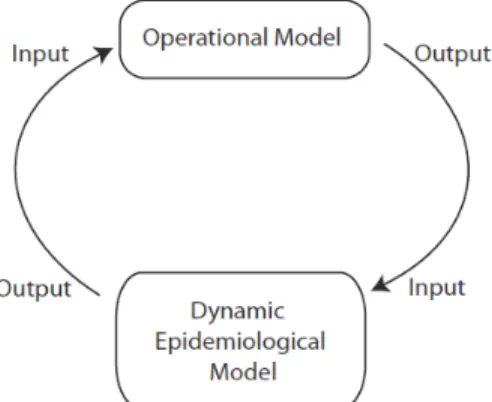
infrastructure, patient access and outcomes, and the TB epidemic. Since there is feedback
between the dynamic epidemiological and operational aspects of the system (Figure 1), this
linked modelling approach provides a natural framework for these comparisons.
Here, using a simplified example of a new diagnostic tool that requires less processing time,
fewer patient visits, and has increased test sensitivity in comparison to smear microscopy, we
illustrate the development and use of a linked modelling approach for assessing effects. We first
introduce each modelling component separately; we then describe how they can be linked to
compare different diagnostic strategies.
DEFINING POTENTIAL IMPACT OF A NEW DIAGNOTIC TOOL
Standard approaches for the diagnosis of pulmonary TB rely on microscopic examination of
sputum samples collected from TB suspects over at least two days. This approach has several
clear limitations: it requires that a patient return to a health care facility more than once
resulting in higher costs to patients14 and more opportunity for losses to follow up,15-17 cannot
differentiate between M. tuberculosis and other non-tuberculosis mycobacteria, and does not
detect drug resistance.
There are several different potential levels of effect from a new diagnostic tool that overcomes
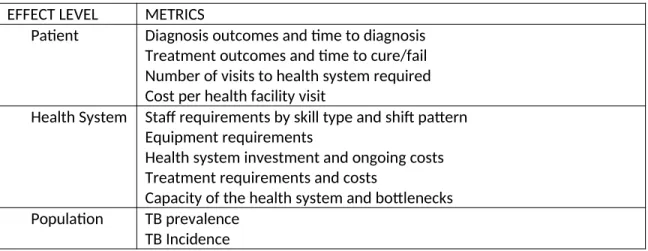
these limitations (Table 1). First, the new diagnostic may have a beneficial effect for patients
who receive early diagnosis because of a test with increased sensitivity. A test not requiring
multiple visits will reduce patient costs and limit losses to follow up4 and individuals detected at
earlier disease stages may have improved treatment outcome.15 Second, the new diagnostic will
have effects at the health systems level; in particular, there may be initial, or ongoing,
investment in equipment, training, and personnel requirements associated with the new tool.
Third, new diagnostics may also positively impact the epidemiology of TB in a community. In
particular, if the new tool is associated with increased case detection and treatment, it will likely
reduce the prevalence of infectious source cases and thus reduce TB transmission.
Understanding the overall impact of a new diagnostic is challenging not only because it is
among these levels. While some health system effects are easy to anticipate (e.g. the upfront
costs of new equipment and training requirements), there are also other, less obvious
consequences of the introduction of new diagnostic tools. A new tool may reduce one source of
delay in the laboratory, only to result in the appearance of a new downstream bottleneck that
prevents the full effects of the new tool from being appreciated. Conversely, a new tool may
reduce the need for alternative testing among those not diagnosed by the less sensitive existing
diagnostic (i.e. “smear negative TB suspects”) thereby unexpectedly freeing up additional
resources. Changing patterns of patient diagnosis can also change demand in other areas of the
health system. For example, a more sensitive TB diagnostic may initially produce increases in the
number of TB patients that are detected and thus require treatment. This initially raises the
burden on health care providers and requires additional investment to support treatment, but
over time, may actually reduce transmission in the population and relieve these burdens.
METHODS
Assessing the total effect of a new diagnostic tool requires attention not only to individual
benefits, but also health systems-level and population-level impact of interventions. Because
field-testing of all possible uses and combinations of interventions is not feasible and the effects
will likely differ between settings, we propose a modelling framework to help inform local
decision-making. The interrelated nature of the patient-, heath system-, and population-level
effects suggests the benefit of developing a linked operational and transmission model that can
simulate feedback in the system and expand our ability to compare the total effect of diagnostic
strategies. Before presenting our linked model, we briefly describe the general approaches
typically used for operational and dynamic epidemiological modelling.
Operational Models
Operational models have been widely used to plan and assess the performance and efficiency of
processes in industrial and commercial settings18-20 and have been increasingly used to help
improve the performance in the health sector. Some previous applications include models of
automotive manufacturing facilities and retail operations.25 While there are many examples of
operational modelling of health systems in the developed world, to our knowledge there are
Many operational models use a discrete event simulation approach where the system modelled
is first defined in terms of its most important elements including the items or people processed
through the facility, resources, activities, rules, and the process flow. The required outputs of
the model are defined (e.g. productivity, costs, identification of bottlenecks, capacity, and
sensitivity to changes) along with the key input parameters to be investigated. Once the system
is defined and appropriate parameter inputs are assigned (e.g. the number of items entering the
system, the quantity of resources, and the time for completing particular activities), then
simulations can be run to assess the relative effect of different assumptions about the values of
input parameters on model output.
Dynamic Epidemiological Models
Mathematical models that describe the within-host natural history of infection and allow for the
simple representation of transmission have offered many insights into the dynamics of
infectious diseases in communities and approaches for disease control.28
Many of these models are formulated as differential equation models that specify how a
population is divided into mutually exclusive health states (e.g. susceptible to infection,
infectious, recovered) and how the flow of individuals between states depends on the current
state of the system (e.g. how the incidence of infection depends on the prevalence of disease in
the population). Outputs of these models are most naturally shown as trends in the proportion
of population in each state over time (e.g. the prevalence of disease), but can also provide
insight into more complex considerations of cost-effectiveness associated with interventions.
While some insight from simple models can be gained through analytical approaches, more
complicated models usually require numerical simulation. Once the model equations and input
parameters (e.g. rate of recovery from infectiousness, treatment coverage levels, disease
associated mortality) are defined, simulation permits the rapid comparison of the relative
impact of different modelled interventions.
A Linked Operational and Dynamic Epidemiological Model for a new TB diagnostic
The operational model component is structured to reflect diagnostic pathways for TB suspects,
on the current WHO guidelines.31 The model structure includes entities (e.g. patients, sputum,
samples, and vehicles), activities (e.g. sputum collection, microscopy, and diagnosis), queues
(e.g. patient waiting areas and samples waiting to be processed), and resources (e.g. microscopy
technicians and clinicians). A simplified diagram of the process for suspects seeking TB diagnosis
and then subsequent treatment as appropriate is shown in Figure 2. All activities from TB
suspects arriving at the diagnostic centre, through reception, sputum collection, consultation,
diagnosis, and treatment are modelled. This includes patients returning home between sputum
sample collections and before diagnosis is received. Diagnostic algorithms for new TB suspects
and retreatment patients are represented in the model. Sample collection and sputum
examination by microscopy are also modelled in detail at the diagnostic centre and in the
reference laboratory. At the reference laboratory culture and drug sensitivity testing is
performed consistent with current diagnostic and treatment algorithms.27
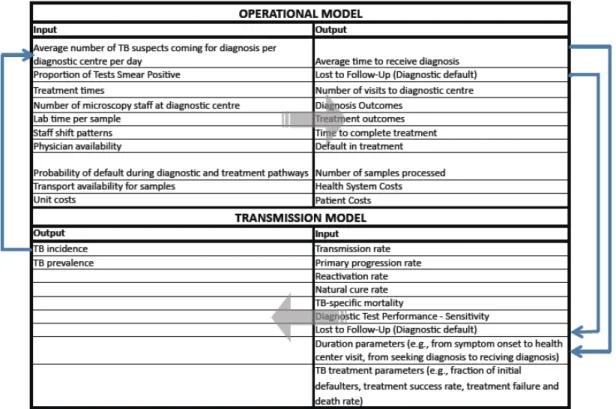
Necessary input data for and output from the operational model are provided in Table 2. We use
the WITNESS modelling tool,32 which is discrete event simulation software, to produce the
simulation results. The WITNESS software utilizes a graphical-based approach that allows for a
simple visual representation of model processes; these graphical features facilitate
communication between model developers and decision makers and allows for rapid
development, validation, and simulation.
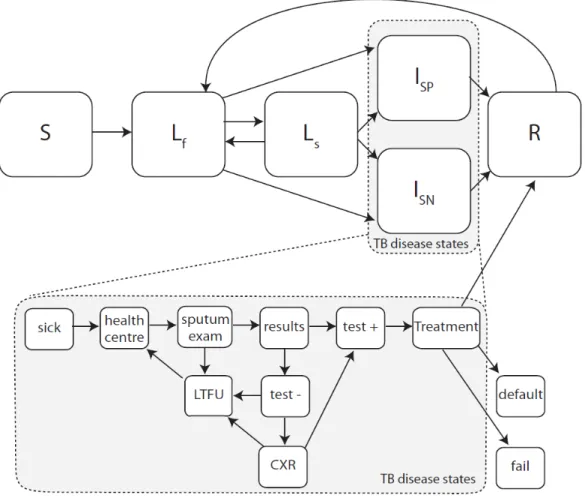
The dynamic epidemiological component is based in a differential equation model that captures
the most important features of the natural history of TB (Figure 3, top panel)33. As with many TB
transmission models, we include states that include individuals who are Susceptible (S), Latently
infected (Lf and Ls), Infectious (Isp and Isn), and Recovered (R). Several previous assessments of
the potential impact of new diagnostics on transmission dynamics of TB have simply decreased
the average infectious period for those with TB by increasing the rate at which individuals
recover, but this approach cannot account for how the diagnostic will operate within existing
diagnostic pathways. To incorporate the health system context where the diagnostic tool will be
employed, we further expand the active disease states of the model to include the details of the
pathway from disease onset to TB diagnosis and initiation of treatment. Figure 3 (top and
bottom panels together) illustrates an expanded transmission model using a diagnostic
X-ray for smear negative cases. By incorporating the patient pathway and mechanisms of action of
diagnostic tools within the health system context, the expanded transmission model provides a
platform to systematically understand how the improved test characteristics of new tools can be
translated into population impact on transmission and epidemiology of TB. Necessary input data
for and output from the transmission model are provided in Table 2. We use Berkeley Madonna
(Berkeley Madonna 8.3.18) as our numerical solver for this differential equation model.
The operational and dynamic epidemiological model components are linked by using selected
outputs of one model to serve as the inputs into the other. For example the incidence of TB is an
output of the transmission model; this informs the input into the operational model through the
number of TB suspects coming for diagnosis in the health system (see Table 2).
Model scenarios
While several novel diagnostic tools are now available that address one or more limitations of
standard smear microscopy,8 for illustrative purposes, we consider the potential impact of a new
generic diagnostic that has improved sensitivity, requires a shorter laboratory processing time,
and may decrease the number of patient visits compared with standard smear microscopy. We
use information that we collected from Tanzania and Malawi to demonstrate the development
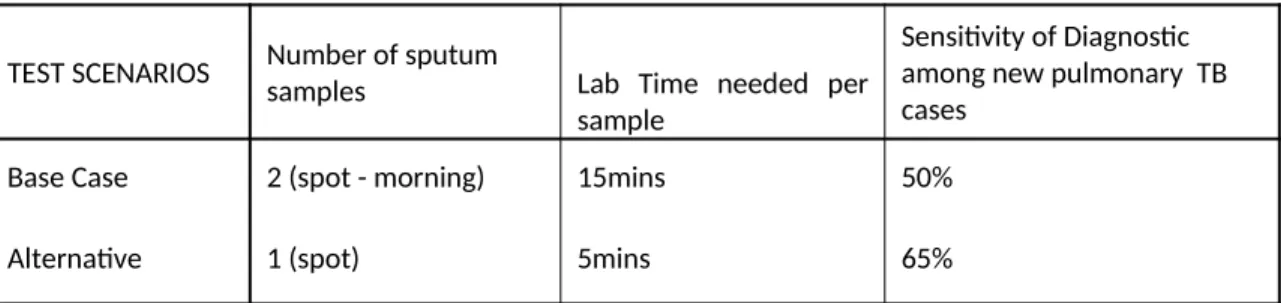
and application of a linked modelling approach. We compare a base case where sputum smear
examination using Ziehl Neelsen and light microscopy is used as the diagnostic to an alternative
scenario with an improved diagnostic requiring fewer sputum samples, shorter laboratory
processing times, and increased diagnostic sensitivity (Table 3). The inputs and outputs of the
operational and dynamic epidemiological models are exchanged annually; we present results
over ten years to illustrate short-term and longer-term effects of these two diagnostic
strategies.
RESULTS
To illustrate the need of a combined modelling approach for evaluating the impact of new
diagnostics and to demonstrate the feasibility of such an approach through actual development
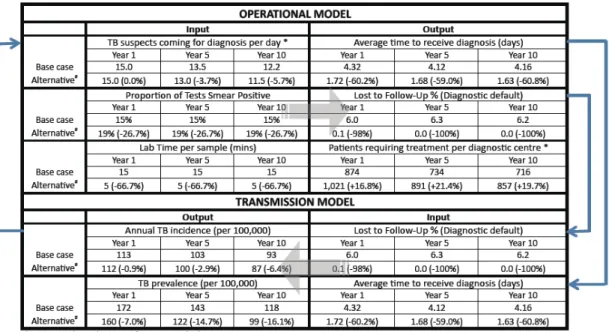
results from the operational component of the linked model illustrates that the alternative
diagnostic strategy can substantially decrease the average time to diagnosis (~60%), nearly
eliminate the fraction of suspects lost to follow-up (~100%), and increase the number of patients
accessing treatment at a diagnostic centre (~20%). The linked model was fit to country settings
in which TB incidence and prevalence are in decline when smear microscopy (base case) is in
use. The transmission model component projects that the alternative diagnostic scenario may
result in a more rapid decline in TB incidence, and that the proportional reduction in incidence
(compared to the base case) will increase over time (~1% in Year 1, ~3% in Year 5, and ~6% in
Year 10). These results demonstrate some of the effects different diagnostic tools may have on
key outcomes and are only intended to illustrate the feasibility of a linked modelling approach.
Further calibration and analysis is required before more detailed results from such an approach
can be presented.
DISCUSSION
The Stop TB Partnership's New Diagnostics Working Group has described a pathway from need
assessment to delivery for evidence-based policies for TB diagnosis; this includes concept
formation, development, evaluation, demonstration, scale-up, and epidemiological impact.36
Most existing research on TB diagnostics has taken the form of studies to measure the sensitivity
and specificity of new tools, systematic reviews of these types of studies, and demonstration
projects.38 While accurate and efficient diagnostic tools are essential, technological advances
alone will not ensure better TB control. The overall effect of these diagnostic tools depends on
whether the tools improve the timeliness of administration of effective treatment. Accordingly,
understanding the potential effects of diagnostic tools requires consideration of how these tools
may modify access to diagnostic services, the loss of patients during the diagnostic (and
treatment) processes, and the burdens on and performance of the health system itself.10
Projecting the overall effects of scaled-up use of a diagnostic tool with improved test
characteristics is not easy. First, the design of field studies to evaluate the epidemiological
impacts of a new tool presents a major challenge: the impact on transmission cannot be easily
observed because of the slow intrinsic dynamics of TB. Incomplete case notification in most
understanding how the adoption of a new diagnostic tool affects overall flow of patients and
specimens (and resultant burdens on personnel and equipment) is not easy to predict and
requires a detailed understanding of diagnostic pathways and health systems infrastructure. In
this paper, we discuss the role of operational and dynamic epidemiological models for
comparing the potential overall effects of different diagnostic tools and strategies.
We have provided a rationale for linking operational and dynamic epidemiological models and
the simple results included here show how the test characteristics of diagnostic tools (e.g.
sensitivity and number of specimens required for diagnosis) have an effect on important
epidemiological parameters (e.g. initial defaults during diagnosis and thus the average duration
of infectiousness). Similarly, changing epidemiological parameters (e.g. TB incidence) affect the
demand on health systems (e.g. TB suspects requiring diagnostic services). However, we also
believe that operational models and dynamic epidemiological models can also be of tremendous
use when used independently of one another. For example, analysis of the operational model
developed here shows the non-trivial impact of a new, more sensitive diagnostic tool on the
number of patients requiring treatment services (see Table 4). This type of effect is important to
anticipate in advance of adopting a new diagnostic strategy. Similarly, the dynamic
epidemiological model can itself provide important insight into how improved diagnostic
performances (e.g., test sensitivity) translate into reduced TB incidence and how external factors
(e.g., patient delay in seeking medical attention and lost to follow-up along the patient pathway)
could undermine their effects. Further research is required to identify the circumstances in
which linked models result in substantially different inference than models used in parallel.
This modelling framework identifies several types of input that are important to project the
impact of diagnostic tools. In many settings, detailed knowledge of flows (of patients,
specimens, and information) and related bottlenecks in the health system may not be available.
Models that include operational components demonstrate why these logistical issues are
important for predicting the effectiveness of diagnostic tools and sensitivity and uncertainty
analysis can be used to identify which unknown operational components are most important to
The goal of this model development activity is to demonstrate the feasibility of the linked
modelling approach. An essential consideration that we have not included in the model results
presented here is the costs and comparative cost-effectiveness of different diagnostic strategies.
As noted above, modelling provides an opportunity for attaching health system and patient
costs to the different elements of a diagnostic process and weighting them by the probability of
each element taking place, including accounting for the impact of bottlenecks and economies of
scale. The operational model can be run for multiple years enabling longer term cost
projections to be considered.
Health economic modelling has typically used static decision-models with a focus on health
system costs.39 Such models do not allow for assessing the longer-term impacts on
epidemiology. In our linked model, the long term impact of a new diagnostic on TB
epidemiology can be projected from the dynamic epidemiological component of the model.
Linked modelling therefore allows for a broader range of outcomes to be assessed against cost,
such as infections or deaths averted over longer time frames. Models can also be structured to
allow for outcomes and costs faced by groups of patients disaggregated by factors such as HIV
status, poverty and gender. Thus, the likely effects of new diagnostic strategies on health equity
can also be assessed.
We have also not included drug-resistant TB in the transmission component of the current
model, but plan to expand this work to consider diagnostics that detect drug-resistant TB.
Models that include drug resistance and costs will be used in future work that addresses more
realistic decisions faced by country-level decision makers. For example, there are many current
questions related to the potential impact of GeneXpert3 as a replacement for (or in addition to)
microscopy as specified in the WHO recommended algorithms that would be amenable to study
with these models.
In conclusion, we suggest that operational and dynamic epidemiological models can serve to
support inference on the overall effects of diagnostic strategies. In this paper, we developed a
simple example to demonstrate the structure and use of a linked model that can be used to
compare the projected individual, health-systems, and population-level effects of diagnostic
flexible and can be used to assess different diagnostic options (e.g. different tools and different
ways of using those tools within the health system) and can be adjusted to reflect specific
epidemiological situations and health system infrastructures. Accordingly, this linked modelling
approach can serve as an appropriate method for comparing strategies and helping policy
makers who must simultaneously consider their existing infrastructure and capabilities, their
local epidemiology, and what future tools may be in the pipeline before committing to a
particular decision. This assistance is particularly important as local policy makers grapple with a
ACKNOWLEDGEMENTS
This document has been produced thanks to a grant from USAID. The contents of this
document are the sole responsibility of the authors and can under no circumstances be
regarded as reflecting the positions of the International Union Against Tuberculosis and Lung
Disease (The Union) nor those of its Donors. The authors would like to thank Christy Hanson and
YaDiul Mukadi of USAID for their support and direction during the research. The research is part
of the TREAT TB initiative funded by USAID, and Anne Detjen of TREAT-TB has been involved in
providing guidance throughout. The operational modelling could not have been achieved in the
timescales available without the pilot models developed by Gautam Potadar and Hu i Lu,
students of the University of Liverpool School of Management, who were ably supervised by Dr.
Hossam Ismail. The authors would also like to thank Raymond Shirima of the National
Tuberculosis Programme in Tanzania for provision of data which enabled the modelling work to
be progressed.
Author contributions. HL, IL, GM, MM, SBS, and TC conceived of the study. HL and TC developed
the dynamic epidemiological component of the linked model; IL, SBS and KAM developed the
operational component of the model. HL and IL conducted the analysis. HL, IL, and TC wrote the
REFERENCES
1. Marais BJ, Brittle W, Painczyk K, Hesseling AC, Beyers N, Wasserman E, et al. Use of
light-emitting diode fluorescence microscopy to detect acid-fast bacilli in sputum. Clin Infect Dis.
2008; 47(2): 203-7.
2. Morgan M, Kalantri S, Flores L, Pai M. A commercial line probe assay for the rapid
detection of rifampicin resistance in Mycobacterium tuberculosis: a systematic review and
meta-analysis. BMC Infect Dis. 2005; 5: 62.
3. Boehme CC, Nabeta P, Hillemann D, Nicol MP, Shenai S, Krapp F, et al. Rapid molecular
detection of tuberculosis and rifampin resistance. N Engl J Med. 2010; 363(11): 1005-15.
4. Ramsay A, Yassin MA, Cambanis A, Hirao S, Almotawa A, Gammo M, et al. Front-loading
sputum microscopy services: an opportunity to optimise smear-based case detection of
tuberculosis in high prevalence countries. J Trop Med. 2009; 2009: 398767.
5. Mase SR, Ramsay A, Ng V, Henry M, Hopewell PC, Cunningham J, et al. Yield of serial
sputum specimen examinations in the diagnosis of pulmonary tuberculosis: a systematic review.
Int J Tuberc Lung Dis. 2007; 11(5): 485-95.
6. Angeby KA, Hoffner SE, Diwan VK. Should the 'bleach microscopy method' be
recommended for improved case detection of tuberculosis? Literature review and key person
analysis. Int J Tuberc Lung Dis. 2004; 8(7): 806-15.
7. van Kampen SC, Ramsay AR, Anthony RM, Klatser PR. Retooling national TB control
programmes (NTPs) with new diagnostics: the NTP perspective. PLoS One. 2010; 5(7): e11649.
8. Wallis RS, Pai M, Menzies D, Doherty TM, Walzl G, Perkins MD, et al. Biomarkers and
diagnostics for tuberculosis: progress, needs, and translation into practice. Lancet. 2010;
375(9729): 1920-37.
9. Pai M, Ramsay A, O'Brien R. Evidence-based tuberculosis diagnosis. PLoS Med. 2008; 5(7):
e156.
10. Mann G, Squire SB, Bissell K, Eliseev P, Du Toit E, Hesseling A, et al. Beyond accuracy:
creating a comprehensive evidence base for TB diagnostic tools. Int J Tuberc Lung Dis. 2010;
14(12): 1518-24.
11. Small PM, Pai M. Tuberculosis diagnosis--time for a game change. N Engl J Med. 2010;
12. Small PM. Strengthening laboratory services for today and tomorrow. Plenary Lecture
given during the 38th Union World Lung Conference on Lung Health, Cape Town, South Africa,
8-12 November 2007. Int J Tuberc Lung Dis. 2008; 8-12(10): 1105-9.
13. Perkins MD, Cunningham J. Facing the crisis: improving the diagnosis of tuberculosis in the
HIV era. J Infect Dis. 2007; 196 Suppl 1: S15-27.
14. Kemp JR, Mann G, Simwaka BN, Salaniponi FM, Squire SB. Can Malawi's poor afford free
tuberculosis services? Patient and household costs associated with a tuberculosis diagnosis in
Lilongwe. Bull World Health Organ. 2007; 85(8): 580-5.
15. Squire SB, Belaye AK, Kashoti A, Salaniponi FM, Mundy CJ, Theobald S, et al. 'Lost'
smear-positive pulmonary tuberculosis cases: where are they and why did we lose them? Int J Tuberc
Lung Dis. 2005; 9(1): 25-31.
16. Creek TL, Lockman S, Kenyon TA, Makhoa M, Chimidza N, Moeti T, et al. Completeness and
timeliness of treatment initiation after laboratory diagnosis of tuberculosis in Gaborone,
Botswana. Int J Tuberc Lung Dis. 2000; 4(10): 956-61.
17. Nyirenda T, Harries AD, Banerjee A, Salaniponi FM. Registration and treatment of patients
with smear-positive pulmonary tuberculosis. Int J Tuberc Lung Dis. 1998; 2(11): 944-5.
18. Robinson S. Simulation: The Practice of Model Development and Use. Warwick Business
School, University of Warwick: John Wiley & Sons; 2003.
19. Lanner. Case studies. [cited 26 Jan 2011]; Available from:
http://www.lanner.com/en/case-studies.cfm?offset=6
20. SIMUL8 Corporation. Solutions Case studies. [cited 26 Jan 2011]; Available from:
http://www.simul8.com/solutions/case_studies/
21. Günal M, Pidd M. Discrete event simulation for performance modelling in health care: a
review of the literature. Journal of Simulation. 2010; 4: 42-51.
22. Brailsford S, Harper P, Patel B, M P. An analysis of the academic literature on simulation
and modelling in health care. Journal of Simulation. 2009; 3: 130-40.
23. Williams E.J, VanBelle R. Exploring Alternatives in an Automotive Industry Job Shop Using
Simulation. SIMULATION. 2005; 81: 637.
24. Mayer G, Spieckermann S. Life-cycle of simulation models: requirements and case studies
25. Siebers P, Aickelin U, Celia H, Clegg C. Towards the development of a simulator for
investigating the impact of people management practices on retail performance. Journal of
Simulation. online publication 1 October 2010; doi: 10.1057/jos.2010.20.
26. Katsaliaki K, Mustafee N. Applications of simulation within the healthcare context. Journal
of the Operational Research Society. 2010; doi:10.1057/ jors.2010.20
27. Rauner MS, Brailsford SC, Flessa S. Use of discrete-event simulation to evaluate strategies
for the prevention of mother-to child transmission of HIV in developing countries. Journal of the
Operational Research Society. 2005; 56(2): 222-33.
28. Anderson RM, May RM. Infectious Diseases of Humans: Dynamics and Control. Oxford
University Press. 1991.
29. Murray CJ, Salomon JA. Modeling the impact of global tuberculosis control strategies. Proc
Natl Acad Sci U S A. 1998; 95(23): 13881-6.
30. Baltussen R, Floyd K, Dye C. Cost effectiveness analysis of strategies for tuberculosis control
in developing countries. BMJ. 2005; 331(7529): 1364.
31. World Health Organization. Treatment of tuberculosis: guidelines – 4th ed. WHO/HTM/TB/
2009.420; 2009.
32. Lanner. WITNESS PwE 2.0 Service and Process Performance Edition. [cited 26 Jan 2011];
Available from: http://www.lanner.com/en/witness.cfm
33. Blower SM, McLean AR, Porco TC, Small PM, Hopewell PC, Sanchez MA, et al. The intrinsic
transmission dynamics of tuberculosis epidemics. Nat Med. 1995; 1(8): 815-21.
34. Abu-Raddad LJ, Sabatelli L, Achterberg JT, Sugimoto JD, Longini IM, Jr., Dye C, et al.
Epidemiological benefits of more-effective tuberculosis vaccines, drugs, and diagnostics. Proc
Natl Acad Sci U S A. 2009; 106(33): 13980-5.
35. Dowdy DW, Chaisson RE, Maartens G, Corbett EL, Dorman SE. Impact of enhanced
tuberculosis diagnosis in South Africa: a mathematical model of expanded culture and drug
susceptibility testing. Proc Natl Acad Sci U S A. 2008; 105(32): 11293-8.
36. Stop TB Partnership's New Diagnostics Working Group WHO. Pathways to better
diagnostics for tuberculosis: a blueprint for the development of TB diagnostics. Geneva,
Switzerland: WHO, 2009.
37. Steingart KR, Henry M, Ng V, Hopewell PC, Ramsay A, Cunningham J, et al. Fluorescence
versus conventional sputum smear microscopy for tuberculosis: a systematic review. Lancet
38. Barnard M, Albert H, Coetzee G, O'Brien R, Bosman ME. Rapid molecular screening for
multidrug-resistant tuberculosis in a high-volume public health laboratory in South Africa. Am J
Respir Crit Care Med. 2008; 177(7): 787-92.
39. Soares-Weiser K, Bravo Vergel Y, Beynon S, Dunn G, Barbieri M, Duffy S, et al. A systematic
review and economic model of the clinical effectiveness and cost-effectiveness of interventions
for preventing relapse in people with bipolar disorder. Health Technol Assess. 2007; 11(39): iii-iv,
ix-206.
40. World Health Organization. WHO endorses new rapid tuberculosis test. [cited 17 January
2011]; Available from: http://www.who.int/tb/laboratory/new_rapid_test/en/index.html
41. Roadmap for rolling out Xpert MTB/RIF for rapid diagnosis of TB and MDR-TB. 2010 [cited
26 Jan 2011]; Available from:
Table 1: Potential effects of a new diagnostic tool
EFFECT LEVEL METRICS
Patient Diagnosis outcomes and time to diagnosis
Treatment outcomes and time to cure/fail Number of visits to health system required Cost per health facility visit
Health System Staff requirements by skill type and shift pattern Equipment requirements
Health system investment and ongoing costs Treatment requirements and costs
Capacity of the health system and bottlenecks
Population TB prevalence
Table 2 – List of inputs into and outputs from the operational model and transmission model.
The linkage between the two models results from using model outputs from one model as
Table 3: Test Scenarios
TEST SCENARIOS Number of sputum
samples Lab Time needed per
sample
Sensitivity of Diagnostic among new pulmonary TB cases
Base Case 2 (spot - morning) 15mins 50%
Figure legends:
Figure 2: Simplified diagram of TB diagnostic and treatment process Diagnostic Centre TB suspects home TB patients home Sputum Collection and Evaluation TB treatment dispensed
Microscopy, culture and drug susceptibility
testing
Reference Lab
Return for further samples or diagnosis
Smear negative or further sample required
Return for therapeutic monitoring
Return for next batch of medication New treatment required Drug resistance expected or quality assurance
Suspect referral to diagnostic centre
Continuation of treatment
Results
Return home with treatment
The figure shows the flow for patients and samples through a single diagnostic centre with
samples being transported to a central reference laboratory for drug sensitivity if that is
necessary. TB suspects are referred to the diagnostic centre for testing where they provide a
sputum sample which is examined using microscopy. In the base case a second sample is
required so suspects return home, returning the next day to provide a second sample. Some
suspects will receive diagnosis the same day, others may have to return home and return a
subsequent day to receive diagnosis. If diagnosed with TB they will receive treatment and return
home – see icon in top right. TB patients are required to return to the diagnostic centre every 2
weeks to receive subsequent medication. Therapeutic monitoring requires TB patients to return
to the diagnostic centre for further sputum examination at three points during therapy: at the
end of the intensive phase (month 2 for new patients, month 3 for retreatment patients), at
month 5 for all patients and at treatment completion (month 6 for new patients and month 8 for
retreatment patients). If smears are positive during these follow up assessment, further
specimens are required for microscopy, culture and DST at the reference laboratory in
accordance with current WHO guidelines.31 Every time a patient returns home there is a
follow-Figure 3: Graphical representation of the compartmental transmission dynamic model.
The upper part of the figure shows a structure that is similar to many TB transmission models:
The susceptible population (S), once exposed to infectious cases, may be infected and enter the
latent infection states (Lf for early latent stage and Ls for late latent stage). Latently infected
people can progress (from Lf) or reactivate (Ls) to the active disease state. Patients with active
disease have either smear-positive pulmonary (Isp) or smear-negative pulmonary (Isn) disease
(those with extrapulmonary TB do not contribute to the transmission dynamics of TB and
therefore are not accounted for in this model). Those with TB may recover from disease through
case detection and treatment (R), self-cure and return to the latent infection state, or die from
TB.
The lower part of the figure shows how this simple standard TB transmission model is further
expanded to investigate the effect of diagnostic tools within health systems. This requires
early TB disease state ("Sick") that prompts a person to visit a local health centre for medical
attention ("Health centre"). After some delay, a clinician might suspect TB and refer them to a
diagnostic centre for sputum exam ("Sputum exam"). The TB suspect may be lost to follow up
during this process ("LTFU"). Among those receiving a diagnostic test, there is a delay before the
results become available ("Results"). Some of these tested suspects will test positive ("Test+")
and this fraction represents the sensitivity of sputum smear microscopy ("σ", true positive).
Those who test negative ("Test-") will either receive chest X-ray if it is available ("CXR"), or be
lost to follow up with the false impression of not having TB ("LTFU"). A fraction of patients who
receive chest X-ray will test positive ("Test+"). For those who are test positive (from either
sputum exam or chest X-ray), a proportion of them will never initiate treatment because they
are lost to follow up ("LTFU", also known as initial defaulters). The rest of those testing positive
will be treated ("Treatment") after some delay and may then have different treatment outcomes