University of South Carolina
Scholar Commons
Theses and Dissertations
6-30-2016
Reflections On The Current State Of Healthcare
Transition for Young Adult Women With Turner
Syndrome: Strategies For Facilitating Autonomy
and Self-Management
Molly Elizabeth Snyder University of South Carolina
Follow this and additional works at:https://scholarcommons.sc.edu/etd Part of theGenetics Commons
This Open Access Thesis is brought to you by Scholar Commons. It has been accepted for inclusion in Theses and Dissertations by an authorized administrator of Scholar Commons. For more information, please [email protected].
Recommended Citation
Reflections on the Current State of Healthcare Transition for Young Adult Women with Turner Syndrome: Strategies for Facilitating Autonomy and Self-Management
by
Molly Elizabeth Snyder
Bachelor of Science Emory University,2014
Submitted in Partial Fulfillment of the Requirements
For the Degree of Master of Science in
Genetic Counseling
School of Medicine
University of South Carolina
2016
Accepted by:
Richard Ferrante, Director of Thesis
Kelly Behm, Reader
Della Marshall, Reader
Holly Zimmerman, Reader
Acknowledgements
First, I would like to thank the USC Genetic Counseling Program; I have had a
wonderful two years of graduate school and will be forever grateful for the program’s
dedication to my education and professional development. Janice, Peggy, Vicki, Emily,
and Whitney – I have enjoyed getting to know each of you and have appreciated all of
your support in the classroom and throughout my second year clinical rotations. It has
also been a pleasure to be a part of the program’s 30th year anniversary celebrations!
I would also like to thank my unconditionally supportive thesis advisor, Dr.
Richard Ferrante, who has kept me grounded throughout the thesis writing process. I
greatly admire your commitment to the program and to the South Carolina community.
Kelly, Della, and Holly – Thank you for all of your honest feedback, encouragement, and
direction as thesis committee members! I would also like to thank Danielle with the TSF
for helping me pilot my survey and Cindy with the TSSUS for including my survey
announcement in monthly society newsletters. I also want to extend many thanks to the
women who participated and openly discussed their transition experiences with me!
To my family and friends: Thank you for years of support and love and for
helping me make it this far in my educational career! It’s been a great journey, and I am
looking forward to starting a new chapter in Dallas, TX as a pediatric genetic counselor!
Thank you to Victory Junction, a SeriousFun camp, as well for exposing me to the
Abstract
The transition to adult-centered healthcare is a critical period for emerging adults,
especially those with special healthcare needs (SHCNs). Considering the ongoing
medical monitoring necessary for women with Turner syndrome (TS), it is essential that
the transition process be comprehensive and well-coordinated. The aims of this study
were to invite young women with TS to reflect on their healthcare transition experiences,
to explore participants’ perceived control of their medical management, and to identify
ways in which genetic counselors can be involved in multidisciplinary healthcare teams.
The hypotheses were that young women with TS are motivated to learn more about their
diagnosis, benefit from counseling on how to develop self-management skills, and
believe it would be useful to speak with a genetic counselor as adolescents.
Study participants included twenty-two women between the ages of 18 and 30
years with a diagnosis of TS. A mixed method study design was used, consisting of
quantitative data collection via an online survey tool and follow-up qualitative interviews.
Interviews were transcribed and reviewed for major themes using data driven coding and
subsequent exploratory thematic analysis. Results demonstrated that participants who
received counseling on the development of self-management skills as adolescents were
more confident, independent, and satisfied with their transition to adult-centered medical
care than participants who did not. Six major themes were identified in participant
In conclusion, young adult women with TS are highly motivated to achieve
autonomy in their healthcare and would appreciate being given additional information
about their condition at a younger age. Healthcare providers should carefully consider
patient preferences in order to provide patients with optimal support and appropriate
resources. New recommendations for clinical practice should incorporate involvement of
genetic counselors in the multidisciplinary healthcare teams of girls and women with TS.
Keywords: Turner syndrome, healthcare transition, emerging adulthood, patient
Table of Contents
Acknowledgements... iii
Abstract... iv
List of Tables ... vii
List of Figures... viii
List of Abbreviations ... ix
Chapter 1: Background ...1
Chapter 2: Reflections on the Current State of Healthcare Transition for Young Adult Women with Turner Syndrome: Strategies for Facilitating Autonomy and Self-Management...13
2.1 Abstract ...13
2.2 Introduction ...14
2.3 Materials and Methods ...16
2.4 Results ...23
2.5 Discussion ...40
2.6 Conclusion...52
Chapter 3: Conclusions...65
References...67
Appendix A: Supplemental Data ...72
Appendix B: Invitation to Participate ...75
List of Tables
Table 2.1 Principal Component Analysis – Perceived Confidence Score...54
Table 2.2 Principal Component Analysis – Transition Coordination and Satisfaction Score ...54
Table 2.3 Principal Component Analysis – Level of Independence...55
Table 2.4 Patient Demographics...56
Table 2.5 Existing Support and Resources for Healthcare Transition...57
Table 2.6 Exploration of Healthcare Transition Education Needs ...58
Table 2.7 Access to and Involvement of Multidisciplinary Healthcare Teams...59
Table 2.8 Development of Self-Management Skills...60
Table A.1 Open-Ended Responses in Comment Box on Survey Tool...72
Table A.2 Participants’ Level of Control and Confidence in Healthcare Transition ...73
List of Figures
Figure 2.1 Mean Perceived Confidence Score vs. Adolescent Counseling Groups ...61
Figure 2.2 Mean Transition Score vs. Adolescent Counseling Groups...62
Figure 2.3 Mean Level of Independence Score vs. Adolescent Counseling Groups...63
List of Abbreviations
AAP ... American Academy of Pediatrics
ACGC ...Accreditation Council for Genetic Counseling
KMO ...Kaiser-Meyer-Olkin
LC ... Learning collaborative
PCA(s) ... Principal component analysis
PI... Principal investigator
SHCNs ... Special health care needs
SPSS...Statistical Package for the Social Sciences
TRN ...Turner Resource Network
TS...Turner syndrome
TSF... Turner Syndrome Foundation
Chapter 1: Background
Increasingly more children with special healthcare needs (SHCNs) and various
genetic conditions are living into adulthood and flourishing as independent individuals
(Beal, Doty, Hernandez, Shea, & Davis, 2007). The majority of children with SHCNs
receive excellent care in the pediatric setting, but our confidence in providing these
individuals with the best quality care as they grow into adulthood is less well understood
(Oswald et al., 2013; Romelczyk et al., 2015). One critical component of quality
healthcare includes providers’ abilities to encourage emerging adults to take
responsibility for their medical management during the transition to adult-centered care.
The healthcare transition process, as described by Blum et al. (1993), is considered “a
multifaceted, active process that attends to the medical, psychosocial, and educational
needs of adolescents as they move from the child-focused to the adult-focused health-care
system” (p. 573). The process of transition has captured national attention, with various
organizations and advocacy groups striving to determine how professionals can achieve
the most comprehensive care for all emerging adults, especially those with SHCNs
(American Academy of Pediatrics, American Academy of Family Physicians, American
College of Physicians, & The Transitions Clinical Report Authoring Group, 2011).
Self-management and health literacy of emerging adults with SHCNs is another
area of healthcare that has received increased attention over the past few years (Sattoe et
stage from late adolescence to early adulthood, with an emphasis on ages 18 to 25, during
which individuals are recipients of healthcare transition services (Arnett, 2000).
Throughout these critical years, individuals are exploring their identity, experiencing a
great amount of life changes, and developing self-reliance skills. Therefore, emerging
adulthood is a crucial time when healthcare providers should strive to educate and better
engage adolescent patients, especially those with SHCNs, about their long-term medical
management requirements.
Encouraging young people with SHCNs to develop self-management skills can be
a daunting task, but fostering such skills in emerging young adults can greatly improve
confidence and health-related behavior in adulthood (Harvey et al., 2008).
Unfortunately, the development of innovative services to address the lifestyle and
psychosocial needs of emerging adults with SHCNs has not kept pace with other
achievements in medicine that have afforded these individuals longer lives (Betz, Lobo,
Nehring, & Bui, 2013). According to Betz et al. (2013), the voice of young adults with
SHCNs has not been effectively addressed, and
few studies [have] examined the services and/or supports needed [by those]
acquiring the health-related self-management knowledge and skills needed to
become self-sufficient with special health care needs management… or learning
the skills needed to access community-based transition and adult services and
programs (p. 333).
According to the World Health Organization’s revised definition of health in an
article by Huber et al. (2011), health is no longer the “state of complete physical, mental,
face of social, physical, and emotional challenges. The ability to self-manage has been
described by Barlow, Wright, Sheasby, Turner, and Hainsworth (2002) as one’s “ability
to manage the symptoms and the consequences of living with a chronic condition,
including treatment, physical, social and lifestyle changes” (p. 178) with the support of
family, community, and healthcare professionals. Considering the impact of
self-management on one’s overall health, fostering these skills in emerging adults is critical
and may encourage individuals to comply with follow-up appointments and management
plans. This increased compliance could then improve long-term health outcomes.
The transition of adolescents with SHCNs into adulthood was first identified as an
area for improvement by a consensus statement co-authored by various stakeholders in
2002 (American Academy of Pediatrics, American Academy of Family Physicians,
American College of Physicians, & American Society of Internal Medicine, 2002). An
update on this topic was provided in the most recent clinical report authored by the AAP
et al. (2011). In this report, various professional organizations commented on the
importance of patient medical homes and provided practicing medical professionals with
an algorithmic protocol that is intended to help patients succeed in their transition to
adult-centered care. Elements of this protocol include timely initiation of the transition
planning process; the use of written, adaptable, and up-to-date policies to be discussed
with youth and their families; thoughtful care coordination; education on the complexities
of self-care; the use of readiness checklists to ensure all age-appropriate transition issues
have been addressed; and lastly implementation of formal adult-centered healthcare
Various organizations have tried to promote such comprehensive transition
services for all youth and families, but high-quality care has not yet been realized. For
instance, many pediatric practices are not initiating transition planning early in
adolescence and many providers find that youths with SHCNs are often not prepared to
be their own, independent health advocates (AAP et al., 2011). Peter, Forke, Ginsburg,
and Schwarz (2009) explored internists’ opinions regarding transition in a recent study
and identified patient maturity, patient psychosocial needs, and seamless coordination of
the transition process as major areas of concern.Such insight into the perspective of
internists, who will be the primary medical care providers for many young adults with
chronic conditions, highlights the elements of transition that require greater attention and
underscores the significance of a smooth, effective transition (Peter et al., 2009).
Incorporation of high-quality transition support by both pediatric and adult
primary care practices into the medical home is also emphasized in the AAP’s most
recent clinical report (AAP et al., 2011). Additionally, the AAP’s clinical report (2011)
intended to “provide a structure for training, continuing education, and research to further
the understanding of best practices for transition of adolescents to adult care” (p. 182).
By providing a well-delineated decision-making algorithm and clearly defining the
various steps providers must take to achieve transitional success with patients, this report
serves as a useful guide for providing appropriate transitional support to patients,
regardless of their specific SHCNs (AAP et al., 2011).
One group of individuals who would benefit from an enhanced transition
experience is young adult women with Turner syndrome (TS). TS is a chromosomal
X chromosomes. TS affects approximately 1 in 2,500 females worldwide (Stochholm,
Juul, Juel, Naeraa, & Gravholt, 2006). The American College of Medical Genetics
recommends that a diagnosis of TS be made by identification of the complete or partial
absence of an X chromosome in females by a standard 30-cell karyotype, which can
detect a minimum of 10% mosaicism (Wolff, Van Dyke, & Powell, 2010). A 45,X
karyotype (complete absence of the second X chromosome) is observed in approximately
1-2% of pregnancies, 10% of miscarriages, and 1% of stillbirth. Greater than 99% of
45,X pregnancies result in miscarriage, usually prior to 28 weeks gestation. About 45%
of women with TS possess a 45,X karyotype, and the remainder of women with TS may
have mosaic cell lines with or without structural abnormalities involving the X
chromosome (Wolff et al., 2010). These cytogenetic results are always associated with
short stature and often accompanied by other phenotypic features characteristic of TS,
including endocrine deficiencies, kidney problems, cardiovascular issues, and
reproductive challenges such as premature ovarian failure and infertility. Most girls and
women with TS have normal intelligence, but developmental delays and nonverbal
learning disabilities are possible and vary from person to person (Saenger, 1996; Sybert
& McCauley, 2004).
Ongoing medical monitoring for women with TS is critical, as they are at risk for
a plethora of medical issues including cardiovascular complications such as aortic
dilation or dissection, atherosclerosis, and hypertension. Other comorbidities may
include hypothyroidism, high cholesterol, vision and hearing loss, and osteoporosis
Although fertility preservation in TS is an evolving area of research that may
allow women to conceive with their own oocytes, women with TS who become pregnant
may still encounter increased risk of various maternal and fetal complications (Bodri et
al., 2006). Chevalier et al. (2011) suggest that these women are at an increased risk for
cardiovascular events during pregnancy with oocyte donation, specifically hypertensive
disorders. Other studies also show there is a 2% risk of pregnancy-associated death and
aortic dissection in women with TS who have pursued pregnancy with assisted
reproductive technologies (Karnis et al., 2003). Considering the significance of the
associated long-term health problems women with TS may experience across their life
span, it is critical that these women receive appropriate education about their health risks.
Carolyn Bondy (2007) authored a paper for the Turner Syndrome Consensus
Study Group that discussed the proceedings of a multidisciplinary conference in April
2006. Various practice guidelines that were developed from peer-reviewed scientific
publications and expert opinions are outlined in this paper. Specifically, issues regarding
diagnosing TS, cardiovascular disease, growth and development, psychological and
educational needs, and TS in adulthood are emphasized as areas in need of attention.
This paper serves as the most up-to-date set of guidelines for clinical practice in the care
of patients with TS throughout the lifespan and is considered a pivotal piece of literature
for genetics practices.
The guidelines state that all patients with TS should receive screening for a
variety of health concerns at the time of diagnosis, but that equally important are interval
screenings for additional health issues that may develop with age. For example, all
should be monitored for a variety of health conditions including, but not limited to, celiac
disease, thyroid disease, liver disease, and psychosexual adjustment.
The guidelines also include recommended intervals for cardiac imaging. First, all
patients should have a formal cardiac evaluation at the time of diagnosis: MRI and
echocardiogram for adults/older girls and echocardiography for infants/young girls.
Reevaluation, according to Bondy (2007), should occur at “timely occasions, e.g. at
transition to adult clinic,” (p. 13) and at a minimum of every 5 to 10 years for those with
apparently normal heart health. Patients with a personal history of heart disease should
be treated and followed as determined by an experienced cardiologist (Bondy, 2007).
With regards to the healthcare transition process, Bondy (2007) recommends a
protocol that consists of a gradual, staged process beginning around the age of 12.
Additionally, Bondy (2007) states “the health care focus also shifts from maximizing
height to inducing feminization, counseling the adolescent with TS about the evolving
impact of her condition into adulthood, and promoting the development of independent
self-care behaviors” (p. 18). The responsibility is placed on the pediatric endocrinologist
to engage the emerging adult and to collaborate with her new providers in order to ensure
the patient will continue to receive optimal care as an independent adult (Bondy, 2007).
Dr. Karen Rubin (2008) added another element to this discussion by elaborating
on how the transition to adult-centered care should be a staged process initiated during
early adolescence. At that time, the patient can voice her opinion to healthcare providers
and her parents and develop confidence in her ability to be an equal partner in her own
care. By developing a transition checklist and completing a “TS Transition Passport,” (p.
with customized and supportive resources (Rubin, 2008). Considering their need for
lifelong care into adulthood, it is essential that women with TS have good relationships
with their medical providers and a full understanding of their condition, as confidence in
one’s transition will undoubtedly improve long-term health and quality of life (Davies,
2010).
Despite the efforts to improve healthcare transition for all individuals with
SHCNs, many patients, including women with TS, are lost to follow-up after being
discharged from their pediatric care providers. In one study, assessment of adequacy of
medical follow-up in a cohort of women with TS revealed that only 3.5% of patients had
undergone medical follow-up in accordance with international recommendations
(Devernay, Ecosse, Coste, & Carel, 2009). An Australian study of 39 women with TS
revealed that only 63% of women received regular follow-up and only 44% of women
had adequate health surveillance even though 87% of these women had one or more
medical concerns in addition to their TS diagnosis (Pedreira, Hameed, Kanumakala, &
Zacharin, 2006). Furthermore, a recent observational study at a multidisciplinary clinic
for adult women with TS determined that one third of their study participants lacked any
form of ongoing specialty care (Freriks et al., 2011). This study also recognized that
multidisciplinary evaluation of adult women with TS identified previously undiagnosed
morbidities in several women. Thus, women with TS are likely to benefit greatly from a
seamless and comprehensive transition from pediatric to adult medical care with the help
of a multidisciplinary healthcare team (Freriks et al., 2011).
While several studies have inquired about the perspective of providers and parents
al., 2009), fewer studies have explored the direct opinions, preferences, and attitudes of
these individuals. In a recent study conducted in the Netherlands, Jedeloo, van Staa,
Latour, and van Exel (2010) performed semi-structured interviews with adolescents to
learn more about their preferences for care delivery and self-management. Results
identified four distinct preference profiles: (1) conscious and compliant, (2) backseat
patient, (3) self-confident and autonomous, and (4) worried and insecure (Jedeloo et al.,
2010). This study illustrated that not all adolescents with chronic conditions share
common opinions about their medical management and that providers should not assume
one type of transition plan fits all. Individualized transition planning is critically
important and providers should take time to learn more about patients’ preferences for
parental and/or provider involvement, desire to learn more about their medical
conditions, and ability to engage in healthcare management planning. Furthermore, all
participants deeply valued the opportunity to have both a voice and choice in decisions
regarding their care (Jedeloo et al., 2010). By recognizing these preference profiles,
healthcare providers can achieve a more personalized approach to transition as well as
better engage adolescent patients in the conversation about their long-term care needs.
With regards to emerging adult women with TS, much of the same principles can
be applied to this patient population. Behm (2014) recently explored which factors
influence behavior and psychosocial outcomes of emerging adult women with TS ages 16
to 26. Her study underscores the idea that many women frequently feel misunderstood by
their healthcare team and experience insensitivity towards the emotional burden of
develop improved strategies that better address the psychosocial and cognitive needs of
this cohort of women (Behm, 2014).
In July of 2014, the inaugural Turner Resource Network (TRN) Symposium
brought together an assortment of stakeholders in TS research, including affected
individuals and their families, advocacy leaders, clinicians, scientists, and other persons
with interest in the wellbeing of women with TS (Backeljauw et al., 2015). The TRN
was established following collaborative efforts between the Turner Syndrome Society of
the United States (TSSUS) and the various professionals that comprise the TSSUS
advisory board. Ultimately, it was decided that an association such as the TRN was
necessary so that greater attention could be paid to the psychosocial and health issues
facing women with TS, such as the increased susceptibility to common adult conditions.
The TRN initiative is also tasked with trying to expand access to comprehensive
healthcare among girls/women with TS and establish a patient-powered program that
encourages interdisciplinary care and education for patients and their families
(Backeljauw et al., 2015).
Several prominent stakeholders spoke on the aforementioned topics and current
TS-related issues throughout the symposium. First, Steven Chernausek discussed future
healthcare needs and the role of patient advocates, emphasizing that care should be
delivered across the spectrum of ages and that a smooth transition to adult-care is
paramount for maintaining appropriate surveillance for comorbidities and optimal
delivery of care to women with TS (Backeljauw et al., 2015). David E. Sandberg spoke
on the discrepancy between what is recommended versus what is actually achieved with
with TS. Gary Lorigan reviewed the results of his survey, which asked the question of
what is needed to ensure care for patients with TS throughout the transition period. The
results of his survey indicated the need for more research into issues and concerns related
to TS and easy online access to information and resources for patients. Lastly, Philippe
F. Backeljauw shed light on the various barriers for improving health and wellness for
women with TS: lack of coordinated specialty care, challenges in identifying adult
providers with experience working with patients with TS, and lack of uniform criteria for
lifelong screening and care of women (Backeljauw et al., 2015). The plethora of
discussions and educational sessions that took place throughout this symposium certainly
underscored the importance of this research and illustrated that gaining a
patient-perspective is essential and closely aligns with the mission of the TSSUS and other
significant stakeholders in TS-related research.
One unique group of healthcare professionals that is well equipped to provide
both educational and psychosocial support to these women is genetic counselors. The
practice-based competencies for these medical professionals include a variety of domains
relevant to support needed by emerging adults with TS: (1) genetics expertise and
analysis, (2) interpersonal, psychosocial, and counseling skills, (3) education, and (4)
professional development and practice (Accreditation Council for Genetic Counseling,
2013). Some of the more specific skills these professionals must possess include the
ability to integrate knowledge of psychosocial aspects of genetic conditions to promote
client well-being and to employ active listening and interviewing skills to identify, assess,
and empathically respond to emerging concerns. Additionally, genetic counselors are
information based on patients’ needs and indication for referral while also advocating for
individuals, families, communities, and the genetic counseling profession (ACGC, 2013).
Considering the expertise and interest of the genetic counseling profession, these
individuals should be considered as essential members of integrative healthcare teams for
adolescents with SHCNs. As noted above, the literature shows that women with TS feel
that they are often times misunderstood by their healthcare providers. Although the
parents of many young adults with TS have met and extensively discussed the
ramifications of a TS diagnosis with a genetic counselor, gaps in the literature exist
concerning how individuals affected by TS have directly been counseled and educated
about their condition by a genetic counselor and whether or not such individuals would
appreciate having reliable fact sheets on TS written by genetics professionals to give to
their future health care providers. Questions such as these as well as others that assess
these women’s confidence in their understanding and knowledge of TS and
self-management skills are all important areas that should be addressed.
The purpose of this study was to find answers to several of these concerns and to
invite young adult women with TS to reflect upon their healthcare transition experiences.
Additionally, it explored the opinions of this population regarding meeting with
healthcare professionals such as genetic counselors during the transition process and prior
to their final transfer to adult care. By providing women with TS a voice through
participation in this study, the principal investigator hoped to shed light on the various
support needs of these women and their motivations for pursuing self-management and
Chapter 2: Reflections on the Current State of Healthcare Transition for Young Adult Women with Turner Syndrome: Strategies for Facilitating Autonomy and
Self-Management1
2.1 Abstract
The transition to adult-centered healthcare is a critical period for emerging adults,
especially those with special healthcare needs (SHCNs). Considering the ongoing
medical monitoring necessary for women with Turner syndrome (TS), it is essential that
the transition process be comprehensive and well-coordinated. The aims of this study
were to invite young women with TS to reflect on their healthcare transition experiences,
to explore participants’ perceived control of their medical management, and to identify
ways in which genetic counselors can be involved in multidisciplinary healthcare teams.
The hypotheses were that young women with TS are motivated to learn more about their
diagnosis, benefit from counseling on how to develop self-management skills, and
believe it would be useful to speak with a genetic counselor as adolescents.
Study participants included twenty-two women between the ages of 18 and 30
years with a diagnosis of TS. A mixed method study design was used, consisting of
quantitative data collection via an online survey tool and follow-up qualitative interviews.
Interviews were transcribed and reviewed for major themes using data driven coding and
subsequent exploratory thematic analysis. Results demonstrated that participants who
received counseling on the development of self-management skills as adolescents were
more confident, independent, and satisfied with their transition to adult-centered medical
care than participants who did not. Six major themes were identified in participant
interviews. These included diagnosis disclosure, TS education, genetics knowledge,
transition support, patient autonomy, and multidisciplinary care.
In conclusion, young adult women with TS are highly motivated to achieve
autonomy in their healthcare and would appreciate being given additional information
about their condition at a younger age. Healthcare providers should carefully consider
patient preferences in order to provide patients with optimal support and appropriate
resources. New recommendations for clinical practice should incorporate involvement of
genetic counselors in the multidisciplinary healthcare teams of girls and women with TS.
2.2 Introduction
Evidence-based recommendations for the quality and standard of care for women
with TS are limited; thus, the majority of guidelines have developed from the opinions,
perspectives, and judgments of experienced health professionals. Proper care for patients
with TS is extensive, encompassing screening for and management of a great variety of
organ system comorbidities including cardiovascular and renal complications, thyroid
disease, hearing loss, metabolic bone disease, infertility, and reproductive issues, as well
as the provision of growth hormone therapy, puberty induction, and psychosocial
counseling (Bondy, 2007). Considering the complex nature of TS, an integrative,
multi-disciplinary approach to the healthcare of these women is most appropriate.
According to Boon, Verhoef, O’Hara, Findlay, and Majid (2004), the working
definition of integrative healthcare emphasizes the process of utilizing a collaborative
healthcare. This ensures that each healthcare provider and the patient are able to
contribute their particular knowledge and skills to patient healthcare plans (Boon et al.,
2004). Since transition management is such a critical component of healthcare planning,
an integrative healthcare approach should continue to be employed during transition.
It is recommended that the transition to adult-centered healthcare occur during
late adolescence and as part of a staged process beginning around the age of 12 (AAP et
al., 2011; Rubin, 2008). In the most recent report on clinical practice guidelines by
Carolyn Bondy for the Turner Syndrome Consensus Study Group (2007), the importance
of counseling the adolescent about her condition and its evolving impact on her health
into adulthood is explicitly emphasized as an essential component of the healthcare
transition process in order to promote self-management and autonomy. By having this
conversation in early adolescence, emerging young adults, ages 18 to 30, should feel
empowered and confident in their skills.
Given the TS Consensus Study Group’s emphasis on having the emerging adult
and healthcare providers collaborate in order to ensure careful, continual, and coordinated
healthcare, there is a demand to address whether or not young adult women with TS feel
confident in their healthcare and understanding of their specific medical needs (Bondy,
2007). Patient education is extremely important, especially during the transition to
adult-centered care, as individuals must feel confident in their ability to self-manage and
communicate with health professionals about their health status (Ackerman & Bamba,
2014). Additionally, helping emerging adults with TS develop trusting relationships with
their healthcare providers as they transition to adult-centered care is a critical step that
2007). Studies have demonstrated that adolescents who receive effective counseling and
support during their healthcare transition are more confident in their self-management
skills (Londoño & Schulz, 2015; Taylor, Edwards, & Ku, 2006; Wells, McMorris,
Horvath, Garwick, & Scal, 2012). However, the current lack of such a consistent and
comprehensive healthcare transfer for women with TS is an issue that must be addressed,
and patient needs must be identified accordingly.
The objectives of this study were to explore participants’ perceived control of
healthcare transition, to identify existing resources and educational needs, to evaluate
access to genetic counseling, and to develop strategies for facilitating self-management of
long-term healthcare needs in young adult women with TS. The study hypotheses were
that young adult women with TS:
1. Are motivated to learn more about their diagnosis and specific long-term
healthcare needs, especially during the transition process from pediatric to
adult-centered medical care; and
2. Benefit from counseling on how to establish appropriate self-management
skills as emerging young adults; and
3. Believe it would be useful to speak with a genetic counselor as adolescents in
order to identify resources relevant to their healthcare needs and to discuss
psychosocial issues of developing patient autonomy.
2.3 Materials and Methods
This study utilized a mixed methods approach involving a quantitative online
Carolina Institutional Review Board approved this study prior to its implementation (see
Appendix B).
2.3.1 Participants. Participants were women between the ages of 18 to 30 years
who had a formal diagnosis of TS, were English speaking, and had access to the Internet.
There were no restrictions regarding geographic location, ethnicity, marital status, or
educational background. Participants were excluded if their age fell outside our specified
age range and if they did not complete the majority of the survey. Participants were
identified through a purposive sampling method, in which invitation letters were included
in newsletters that were emailed to members of the Turner Syndrome Society of the
United States (TSSUS) and posted on the research page of the Turner Syndrome
Foundation (TSF) website. After reading the invitation letter, individuals self-selected to
be study participants by accessing the online survey tool, answering the majority of our
survey questions, and either agreeing or refusing future contact for a follow-up interview.
2.3.2 Pilot study. The principal investigator (PI) developed the survey tool using
SurveyMonkeyTM after identifying major themes in the literature on the topic of transition
issues for women with TS. Because this was an original research project and the survey
tool had not yet been validated, a brief pilot survey was included as part of the ongoing
research process to evaluate the quality of survey questions asked. Five individuals with
TS completed the pilot survey one month prior to the official data collection period.
These women provided constructive feedback to the PI via email responses and phone
conversations. Adjustments were made to clarify misunderstandings, remove repetitive
questions, and eliminate confusing or insensitive language. The PI made the necessary
2.3.3 Quantitative data collection and statistical analysis. Participants completed
a nationally distributed online survey tool that was generated through SurveyMonkeyTM
and was kept open for official participant recruitment for a total of five months from
September, 2015, to January, 2016. Survey content included multiple-choice questions,
open-ended questions, and questions that assessed level of agreement to various
statements along a Likert measurement scale: Strongly Agree (6), Agree (5), Somewhat
Agree (4), Somewhat Disagree (3), Disagree (2), and Strongly Disagree (1). Each
response option was assigned a numerical value, as indicated by the number in
parentheses, so that quantitative scores could be computed. A power analysis was
performed before survey data collection in order to determine the sample size needed to
reveal statistically significant results in the quantitative portion of the study. The goal
sample size was 24 participants, but the PI adjusted the statistical analysis approach
accordingly following the completion of data analysis.
All quantitative analyses were performed using Microsoft Office Excel 2013
software and Statistical Package for Social Sciences (SPSS) version 23.0. Considering
the survey tool included a variety of questions that explored participants’ opinions and
feelings towards similar topics, principal component analyses (PCAs) were conducted in
order to reduce the data into single ‘artificial’ variables that would account for the
majority of variance in participant responses. More specifically, PCAs were performed
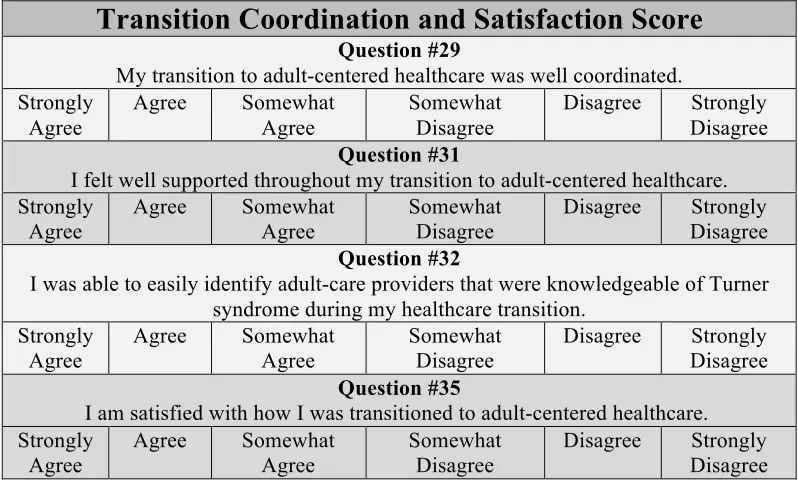
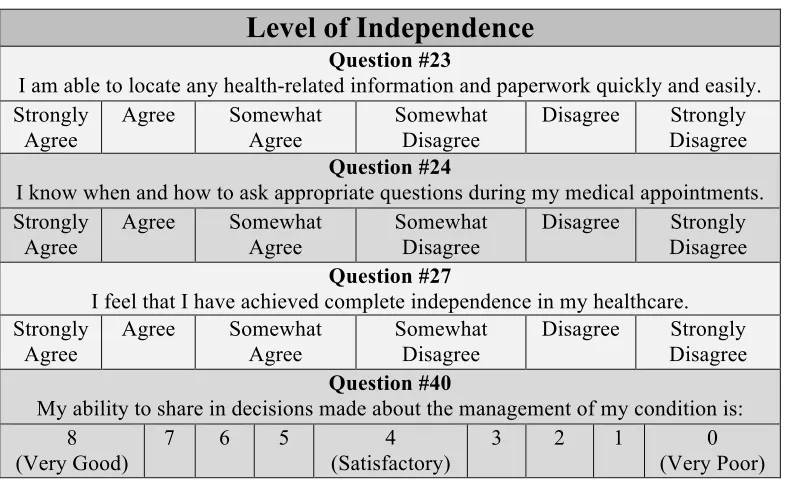
to establish a Perceived Confidence Score (Table 2.1), Transition Coordination and
Satisfaction Score (Table 2.2), and Level of Independence Score (Table 2.3) for each
survey participant. Typically, a minimum of five to ten cases per variable is necessary for
determined that a total of four variables would be factored together to represent each
‘artificial’ variable.
Questions #20, #21, #22, and #26 of the survey tool were used to establish
Perceived Confidence Scores for participants. These data elements were determined to
be factorable following identification of a Cronbach’s alpha of 0.769 that justified the
reliability of these four variables, an overall Kaiser-Meyer-Olkin (KMO) measure of
0.71, and a statistically significant (p < .0005) Bartlett’s test of sphericity. Following
inspection of the scree plot and component matrix generated by SPSS software, it was
determined that one component would be appropriate to use.
Prior to conducting independent samples t-tests to evaluate for group differences,
two additional PCAs were performed in order to establish a Level of Independence Score
as well as a cumulative Transition Coordination and Satisfaction Score for participants.
Similar methods as mentioned previously were employed to determine which factors (i.e.
survey questions) could be reduced into a single, representative principal component for
each of these new ‘artificial’ variables (i.e. Level of Independence Score and Transition
Coordination and Satisfaction Score).
Questions #23, #24, #27, and #40 of the survey tool were used to establish a Level
of Independence Score for participants. These elements were determined to be factorable
following identification of a Cronbach’s Alpha of 0.769 that justified the reliability of
these four variables, an overall KMO measure of 0.715, and a statistically significant (p <
.0005) Bartlett’s test of sphericity. SPSS software generated a scree plot and component
matrix and provided justification for a single principal component to be used as each
Questions #39, #31, #32, and #35 of the survey tool were used to generate a
Transition Coordination and Satisfaction Score for participants. They were determined to
be factorable following identification of a Cronbach’s Alpha of 0.921 that justified the
reliability of these four variables, an overall KMO measure of 0.74, and a statistically
significant (p < .0005) Bartlett’s test of sphericity. SPSS software generated a scree plot
and component matrix and provided justification for a single principal component to be
used as each participant’s Transition Coordination and Satisfaction Score.
Group differences with regards to perceived confidence, satisfaction with the
transition to adult-centered care, and level of independence were assessed according to
whether or not participants received counseling on the development of self-management
skills as adolescents. Independent samples t-tests were utilized to determine whether
participants who received counseling on the development of self-management skills as
adolescents (Table 2.8, question #68) reported significantly higher perceived confidence,
level of independence, and satisfaction with how well they were transitioned to
adult-centered healthcare than those who did not receive adolescent counseling. These
variables were assessed on a continuous scale of agreement and represented by
participants’ Perceived Confidence Score, Level of Independence Score, and Transition
Coordination and Satisfaction Score. Independence of observations was assumed since
participants could only be placed in one category or the other – agreed or disagreed with
receiving counseling as an adolescent. Other assumptions that were addressed when
analyzing the data included handling any outliers in the two groups, establishing a normal
distribution of dependent variables for each group, and evaluating homogeneity of
checking for normal distributions with a Shapiero-Wilk’s test, which is appropriate for
smaller sample sizes, and exploring the nature of descriptive statistics by creating a
boxplot that would check for any outliers.
All test assumptions for the investigation of counseling group differences in Level
of Independence Scores were met except for the absence of significant outliers and
homogeneity of variances. Levels of Independence Scores for each group were normally
distributed, as assessed by Shapiero-Wilk’s test (p > 0.05). Participant #1’s Level of
Independence Score of 1.75 was identified as an outlier upon inspection of a boxplot. In
order to correct for this result in an appropriate manner, her score was adjusted and
replaced with the next lowest Level of Independence Score, 2.25. Since the assumption
of homogeneity of variances was violated, results were interpreted from a modified t-test
that SPSS software produced. This modified t-test, or unequal variance t-test, is able to
accommodate unequal variances while still delivering valid test results.
All test assumptions for the investigation of counseling group differences in
Transition Satisfaction and Coordination Scores and Level of Independence Score were
met, except for the homogeneity of variances. The two score measurements for each
group were normally distributed, as assessed by Shapiero-Wilk’s test (p > 0.05). Since
the assumption of homogeneity of variances was violated, results were interpreted from a
modified t-test for the two score measurement, which SPSS software produced.
Considering the exploratory nature of this study, various descriptive statistics
extracted from survey responses were also incorporated in the data analysis process. The
various elements of the survey tool provided valuable information regarding participant
preferences’ and opinions about their healthcare transition experiences.
2.3.4 Qualitative data collection and analysis. Following official completion of
survey data collection, the PI implemented the qualitative portion of the study, which
involved 20-minute interviews with participants who agreed to follow-up upon
completion of the survey. Interviews took place during the month of February, 2016. The
list of interview questions used to guide the direction of participant interviews has been
included in Appendix A. Interviews were either conducted using the Adobe Connect web
conferencing software or by phone at The University of South Carolina Specialty Clinic,
which provided a secure, firewall-protected network to ensure study participants’
confidentiality. A video component to these interviews was intended to enhance
participants’ engagement and commitment to the research project; however, only one
participant agreed to this interview style. Participants were offered the alternative of
having telephone conversations with the PI in lieu of virtual interviews if they were
uncomfortable with or unable to use the video feature; this was the most used interview
technique. Interviews were recorded so that the information exchanged between each
participant and the PI could be transcribed for later analysis. Participants were not
identified by name in these transcriptions to ensure the anonymity of their responses. All
12 participants who consented to later interviews were contacted to allow for an unbiased
selection of interview participants and increased likelihood of reaching data saturation.
The final qualitative sample consisted of five participants who were successfully
interviewed using a semi-structured interview style, guided by questions derived from the
An inductive thematic analysis of qualitative interview data was performed using
data driven coding in order to determine the relationship to a priori hypotheses.
Subsequently, interviews were reviewed to determine the preference profile for care
delivery and self-management for each interview participant. Four care-delivery and
self-management preference profiles derived from the work of Jedeloo et al. (2010) were
used in this segment of the qualitative data analysis: (1) conscious and compliant, (2)
backseat patient, (3) self-confident and autonomous, and (4) worried and insecure. Data
were kept organized, coded, and analyzed for exploratory key themes using Excel.
2.4 Results
2.4.1 Quantitative analysis.
2.4.1.1 Demographics. By the end of the survey data collection period, 35 women
had completed the survey. Twenty-two of these women met all of the inclusion criteria
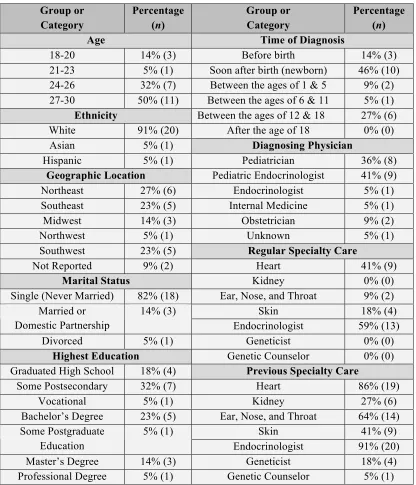
for participation in the study. Participant demographics are illustrated in Table 2.4. Half
of the participants were between the ages of 27 and 30 (50%, n = 11). The majority of
participants identified as Caucasian (91%, n = 20) and most women reported their marital
status as single, never married (82%, n = 18). Other noteworthy demographic elements
included participants’ reported time of receiving their diagnosis of TS: Before birth
(14%, n = 3), soon after birth as a newborn (46%, n = 10), between the ages of one and
five (9%, n = 10), between the ages of six and 11 (5%, n = 1), and between the ages of 12
and 18 (27%, n = 6). No participant had received her diagnosis of TS as an adult or after
the age of 18. While four participants reported meeting with a geneticist and one
participant reported being followed or seen by a genetic counselor in the past, no
2.4.1.2 Participant’s reported level of motivation. In order to assess the
hypothesis that women with TS are highly motivated, several different survey questions
that were intended to measure motivation were included in the survey tool. Seventeen
participants agreed that they are highly motivated to manage their own healthcare and
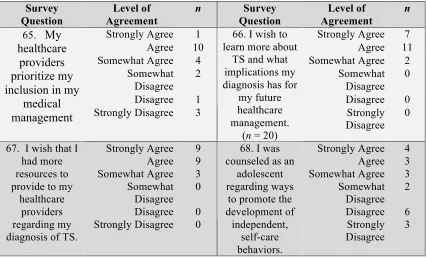
medical needs, while four participants disagreed (n = 21) (Table 2.6). Furthermore, all 22
participants agreed that they would like to learn more about TS and what implications
their diagnosis might have for their future healthcare management (Table 2.6 and Table
2.8). With regards to the healthcare transition process, all 22 participants agreed with
wanting additional resources and supports, and all participants also agreed that they
wished they had additional resources to provide their healthcare providers regarding TS
and associated medical needs as emerging adults transitioning to adult-centered care
(Table 2.8). These results indicate our population of emerging adult women desire more
information and are highly motivated to become independent, autonomous patients.
2.4.1.3 The impact of self-management counseling as an adolescent. With
regards to having previously received counseling as an adolescent (between the ages of
12 and 18) on ways to promote independence and self-care behaviors, only 10
participants agreed with this statement while 11 participants disagreed (Table 2.8,
question #68). Participants were grouped by whether they (1) agreed or (2) disagreed
with having received such counseling in order to determine if there were group
differences with regards to confidence, level of independence, and transition experiences.
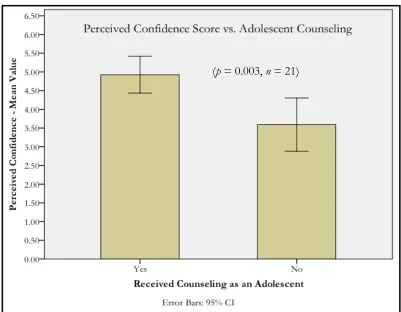
There was a statistically significant difference in mean Perceived Confidence
Scores between those who agreed with receiving adolescent counseling on developing
11). Those who received counseling had higher scores than those who did not: M =
1.34, 95% CI [0.52 to 2.15], t(17.29) = 3.446, p = 0.003. In other words, participants
who reported receiving adolescent counseling had scores that were 1.34 points higher
than those who did not receive counseling, which suggests that these participants have
higher levels of perceived confidence in their healthcare as adults (Figure 2.1).
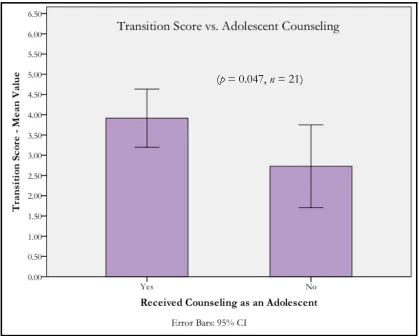
There was a statistically significant difference in mean Transition Coordination
and Satisfaction Scores between those who agreed with receiving counseling as
adolescents (score = 3.92, n = 9) and those who did not (score = 2.73, n = 11), with those
who received effective counseling having higher scores than those who did not: M =
1.19, 95% CI [0.02 to 2.41], t(16.87) = 2.143, p = 0.047. In other words, participants who
reported receiving counseling as an adolescent had scores that were 1.19 points higher
than those who did not receive counseling, indicating that these participants experienced
greater satisfaction with the coordination of their transition process (Figure 2.2).
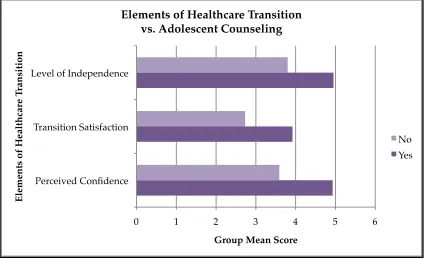
Lastly, there was a statistically significant difference in mean Level of
Independence Scores between those who agreed with receiving adolescent counseling
(score = 4.95, n = 10) and those who did not (score = 3.8, n = 11), with those who
received counseling having higher scores than those who did not: M = 1.15, 95% CI
[0.09 to 2.22], t(16.62) = 2.285, p = 0.036. In other words, participants who reported
receiving counseling as an adolescent had scores that were 1.15 points higher than those
who did not receive counseling, indicating that these participants have feelings of greater
independence in their healthcare (Figure 2.3). A side-by-side comparison of participants’
confidence, transition satisfaction and coordination, and level of independence scores can
2.4.1.4 Existing support during the healthcare transition process. Another area
of interest included participants’ preferences and opinions regarding their support needs
and access to resources during the transition to adult-centered care. While the majority of
participants agreed that their healthcare transition was well coordinated (n = 13), eight
participants disagreed, with four participants strongly disagreeing that their transition was
well coordinated (N = 22). Furthermore, 10 participants reported that their healthcare
providers began to shift their attention away from their parents and ask them questions
directly after the age of 18, while only two participants were addressed directly at the
ages of 12 and 13 (N = 22). Finally, approximately half of the participants (n = 12)
reported being satisfied with how they were transitioned to adult-centered care. A
summary of these findings as well as additional related results can be found in Table 2.5.
2.4.1.5 Healthcare transition education needs. Participants had mixed opinions
regarding the extent of counseling and education they received as emerging adults. The
large majority of participants (n = 15) reported being well educated about future health
problems they may face as an adult with TS, yet 10 participants did not feel that they had
been fully counseled about how their condition would affect them in adulthood (n = 21).
Interestingly, nine participants had not yet been educated on the topics of fertility and
reproductive options for women with TS at the time they completed the survey (n = 21).
Additionally, the large majority of participants (n = 20) indicated that they wish to learn
more about the genetic principles underlying TS, yet 18 participants had never been
offered genetic counseling (n = 21). These findings as well as additional related results
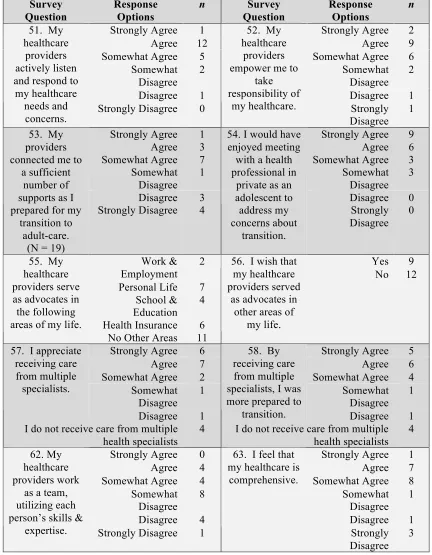
2.4.1.6 Access to and involvement of multidisciplinary healthcare teams. With
regards to feeling like their voice is being heard, a large majority of participants (n = 18)
agreed that their healthcare providers actively listen and respond to their healthcare needs
and concerns (n = 21). In reference to this particular study cohort, healthcare providers
reportedly serve as advocates in the following areas: personal life (n = 7), health
insurance (n = 6), school and education (n = 4), and work and employment (n = 2). Yet,
11 participants reported that their healthcare providers do not serve in areas outside of
their immediate medical needs (n = 21). Fifteen participants appreciate receiving care
from multiple specialists, and each of these participants agreed that by receiving
multidisciplinary care, they were better prepared to transition to adult care (n = 21).
While participants may be receiving multidisciplinary care, only eight agreed that their
providers work as a team (n = 21). These findings as well as additional results are
summarized in Table 2.7. Additional data collected through survey responses can also be
found in Appendix A.
2.4.2 Qualitative analysis
Participants were asked a series of open-ended questions that expanded on the
survey questionnaire topics specifically pertaining to the healthcare transition experience
(see Appendix A). Data driven coding and subsequent exploratory thematic analysis
identified themes as areas of concern to participants surrounding six key elements of the
healthcare transition process specifically related to TS: (1) diagnosis discovery and
disclosure, (2) diagnosis education and counseling needs, (3) exposure to and knowledge
of genetics, (4) important elements of patient autonomy, (5) healthcare transition barriers
2.4.2.1 Demographics. Of the 22 survey respondents that met inclusion criteria,
12 participants agreed to be contacted for a follow-up interview at a later date. Of the 12
participants who were contacted via email to be interviewed, five participants responded
and completed the qualitative interviewing portion of the study. Of the five participants
interviewed, one participant successfully completed a virtual interview, while the other
four participants chose to be interviewed by phone.
2.4.2.2 Diagnosis discovery and disclosure. The majority of participants could
not remember the exact age at which their diagnosis was disclosed to them or at what age
they were first educated on what TS is and the reasons TS can happen. As one
participant stated, “I honestly don’t remember. Growing up, I always knew that I had TS.
I don’t remember exactly how I found out the reason, or cause, behind TS. It’s just been
something that I’ve always known.” Three of the five participants were diagnosed as
newborns and each explained how they have always been aware of their condition, yet
none of these women could pinpoint when they were educated about TS. One participant
said her understanding came with age: “I would say that as I was getting older, I was
explained more about it. So I guess at various stages, but I guess more as I was older
and over time.” Another participant expressed regret in not trying to learn more about
TS at a younger age: “That is one of my major regrets, not doing my research and not
looking into it… It just never really mattered to me until I got to be like a teenager… it
just started to be more noticeable.”
Two participants who were 12 years old when they were diagnosed with TS
commented on how their shorter stature or delayed pubertal development contributed to
I was twelve. I didn’t know anything was different about me until I reached the
age when every other girl was developing and I wasn’t right around the 7th
grade. So that’s kind of how my parents noticed it even though I was clueless. So
they brought me to an endocrinologist and confirmed it at twelve.
The other participant also spoke about a similar experience:
I was 12 years old and hadn’t gotten my period yet, so I went in to see a doctor
and that’s kind of how they found out because I was really short as well…that was
kind of the red flag because from the outside you couldn’t tell there was anything
wrong.
With regards to how each of these participants was educated about TS and how
their diagnosis was disclosed, each expressed similar feelings of not fully understanding.
One woman stated, “At 12 years old, I didn’t know a whole lot. To be honest with you,
when they explained the whole missing part of an X chromosome, I thought I was a dude.
Like I really didn’t understand at first.” Another participant commented that she felt
overwhelmed at the time of her diagnosis and did not feel she was fully informed even
though she could have handled the information: “It was kind of a lot. I wouldn’t say that
I was educated as much as I should have been… I feel like I could have gotten more
information, and I could have been involved more in the situation.”
2.4.2.3 Diagnosis education and counseling needs. Most participants expressed
that it would have been helpful to receive a greater amount of education about TS at an
earlier age. One participant stated,
Yeah, I think I would have benefited from [genetic counseling] more when I
were trying to tell me I was somehow genetically a guy. It didn’t register. I wish
probably I had [a genetic counselor] at 12, but now I understand.
Another participant commented on how she feels confident in her understanding of TS at
her current age (26-years-old) but that additional education at a younger age would have
been valuable: “I mean I feel like at this point… I do know a lot. It just would have been
more important like during the growth process and like back when I could have had
growth hormone and stuff.” She remarked that she would have appreciated having and
could have comprehended additional information about TS “…around age 8 or 9, before
going through puberty.” A third participant, who also felt that she has a good
understanding at her current age (20-years-old), explained, “…it would have been really
easy to sit down with a genetic counselor or someone to learn a lot more…I would be
really interested to learn more specifics because I think my family didn’t.” A fourth
participant commented on how having a better understanding at a younger age would
have helped her be more accepting of the diagnosis of TS: “Yeah, I think it would have
helped me be more accepting. I think it was hard to accept it because I didn’t really
understand [the diagnosis of TS]… I think with more knowledge, it would have been
easier.”
Some participants also shared their opinions regarding their healthcare providers
understanding and knowledge of TS. Participants seemed to have mixed feelings with
regards to how much their providers understood about their diagnosis. One participant
who expressed having to educate several of her healthcare providers stated,
We just kind of had to do our own research and say, people with TS have these
[worked with TS]. And the major thing, with regards to cardiac anyway, is
everyone needs a baseline cardiac MRI. And then every 5 years after that, so you
have to explain that kind of stuff to a practitioner who has actually never worked
with someone with TS.
In contrast, another participant, who was very appreciative of the care and knowledge her
pediatric healthcare providers demonstrated, had the following to say about returning to
see that same provider as a young adult: “Yeah, he is awesome. And during the break, I
didn’t go see him for maybe 3 or 4 years, but when I went back he was very supportive
and knew exactly where to pick back up in my care.”
2.4.2.4 Exposure to and knowledge of genetics. Participants also seemed to have
a discrepant amount of exposure to providers who were knowledgeable about genetics
and received little general education on the genetics of TS throughout their healthcare
experiences. Those who admitted that they were unaware of the field of genetic
counseling or who were not familiar with genetics seemed to lack an understanding of the
etiology of TS (meiotic or mitotic nondisjunction rather than a mutation) and how their
personal genetic make-up (genotype) influences how their condition manifests
(phenotype). For example, one participant stated, “They told me that I was a mosaic.
Which, I guess, they define as like someone who doesn't totally have all of the features…
whatever that is supposed to mean?” Another participant expressed, “I guess that’s one
thing that I would be curious about. I mean what causes the mutation?” and later
admitted that she was uncertain about what having the mosaic form of TS meant exactly:
“I don’t really know. I think it’s kind of like having an X and a half or like having one X
counseling had been a service that was offered to her at a particular age. Another
participant who was unfamiliar with the field of genetic counseling and had less of a
genetics background had the following to say:
I feel like [genetic counseling] would have helped with my understanding of TS. I
definitely felt very isolated growing up…. I think having a better understanding of
why this was going on would have helped with those feelings of isolation at a
younger age. Because I knew I had it, and that was about it.
One participant, who was more familiar with genetics and genetic counseling than some
of the other participants, also stated that she strongly wished she had received such
counseling about her specific condition:
We did want to follow up with a genetic counselor before I left [anonymous
hospital system] but my mom made a call and they never got back… I think it’s
something we’re still curious about. We want to learn about new technology and
learn a couple of more things and more specifics, so we’ll probably find someone
outside of [anonymous hospital system].
2.4.2.5 Important elements of patient autonomy. A recurrent topic of
conversation was overprotective parental involvement. One participant expressed
wishing her parents would have ‘let up’ at the time of her diagnosis at age 12:
I can’t really blame my mom and my dad for taking it as seriously as they took it
and for being as overprotective as they were. But I guess if there were one thing I
could say to parents it would be ease up. I mean let your daughter tell you what
Another participant spoke of her mom’s continual involvement in her healthcare,
especially throughout the transition process: “I mean other than my mom, yeah she was
pretty much my transition coordinator if you will. She was pretty much the only person I
had as far as that goes.” This participant also described her mother as her primary source
for genetics education: “My mom has tried to explain the mosaic part of things to me,
you know, and that there are things in common with traditional TS and mosaic TS, but
that there are also specific things for mosaics too.” A different participant expressed
frustration with having her opinions about her treatment plan dismissed by her parents:
My parents would book me a doctor’s appointment, and my mom asked me
about [growth hormone]: ‘What do you think? Do you want to do it?’ So she
was kind of asking for my input… but my parents didn’t want me to have it [the
growth hormone treatment].
Another key issue was how motivated participants were to be involved in their
healthcare or how strong of a voice they would have appreciated having while they were
transitioning to adult-centered healthcare. For instance, one participant commented,
I mean I wish they had talked to me instead of my mom and dad because at the
time they were still with me. It wasn't until I was probably 18 or 19 that I started
to go to those kinds of visits on my own and have a better comprehension of what
was really going on and what the best options were for me.
Another participant expressed similar feelings towards wishing she had been included in
shared-decision making regarding her healthcare: “I wish I had been involved in the