1
The effect of physical exercise on bone density in middle-aged and
older men: A systematic review
Kate A. Bolam1, Jannique G.Z. van Uffelen1,2, Dennis R. Taaffe1,3,4
From:
¹ School of Human Movement Studies, The University of Queensland, Brisbane, QLD,
Australia; 2 Institute of Sport, Exercise & Active Living, Victoria University, Melbourne,
VIC, Australia; 3 School of Environmental and Life Sciences, The University of Newcastle,
Ourimbah, NSW, Australia; 4 Edith Cowan University Health and Wellness Institute, Edith
Cowan University, Joondalup, WA, Australia
Address for correspondence and reprint requests to:
Kate A Bolam
School of Human Movement Studies
The University of Queensland, Brisbane, QLD Australia
Ph: 61-7-33469710 Fax: 61-7-33656877 E-mail: [email protected]
2 ABSTRACT
Although trials have shown that exercise has positive effects on bone mineral density (BMD), the majority of exercise trials have been conducted in older women. The aim of this study was to systematically review trials examining the effect of weight-bearing and resistance-based exercise modalities on the BMD of hip and lumbar spine of middle-aged and older men. Eight electronic databases were searched in August 2012. Randomised controlled or controlled trials that assessed the effect of weight-bearing and resistance-based exercise interventions on BMD measured by dual-energy x-ray absorptiometry (DXA), and reported effects in middle-aged and older men were included. Eight trials detailed in 9 papers were included. The interventions included walking (n=2), resistance training (n=3), walking + resistance training (n=1), resistance training + impact-loading activities (n=1), resistance training + Tai Chi (n=1). Five of the 8 trials achieved a score of less than 50% on the modified Delphi quality rating scale. Further, there was heterogeneity in the type, intensity, frequency and duration of the exercise regimens. Effects of exercise varied greatly among studies, with 6 interventions having a positive effect on BMD and 2 interventions having no significant effect. It appears that resistance training alone or in combination with impact-loading activities are most osteogenic for this population, whereas the walking trials had limited effect on BMD. Therefore, regular resistance training and impact-loading activities should be considered as a strategy to prevent osteoporosis in middle-aged and older men. High quality randomised controlled trials are needed to establish the optimal exercise prescription.
3 INTRODUCTION
With the aging of the population, developing safe and effective strategies to prevent osteoporosis and consequent fractures is of great importance. The mechanisms that underpin bone mineral density (BMD) decline following peak bone mass are multifaceted and complex in nature. Although changes in sex hormones, nutrition and bone-loading are responsible for bone loss across the lifespan in males and females, important gender-specific differences exist [1, 2]. The decline in bone mass in men up to the age of 50 and in premenopausal women is approximately 0.3 to 1.1% per year [3], with an accelerated rate of bone loss in women for four to eight years following menopause [4] due to oestrogen withdrawal. During this period, women will lose approximately 15% in BMD or 1 standard deviation (SD), leading to a 1.5-to 3-fold increase in fracture risk [5, 6]. In contrast, the decline in bone mass for men is more gradual with an age-related loss of ~0.7% per year after age 50 [3]. Nonetheless, approximately one third of all osteoporotic fractures are accounted for by middle-aged and older men [7] and so understanding the role preventative strategies (for example exercise) may have in attenuating the bone loss experienced by men in this age group is of great importance.
Regular physical exercise has been recommended as a low-cost and safe non-pharmacological strategy to counter the loss of bone mass that accompanies aging. The principles of effective bone loading are somewhat unique compared to the exercise response of other body systems such as the muscular or cardiovascular systems. It has long been established that to improve bone density, bone tissue must be subjected to mechanical loading above that experienced in daily activities [8]. Mechanical loading should be dynamic, novel and involve high strain magnitudes and rates resulting in substantial overload [8, 9].
4
response of bone to exercise is dissimilar between middle-aged men and women during the first few years following the onset of menopause [21].
As the burden of osteoporosis in men is becoming increasingly recognized [22], a small but growing number of exercise interventions have been trialled in men. Recent reviews of the effect of exercise on the BMD of male and female adults [23] and older adults [18] have focused on the effects on BMD in women. To our knowledge, only one review by Kelley and colleagues [24] has exclusively focused on the effect of exercise interventions on BMD in men. Of the eight interventions included in the review [24], only two used dual x-ray absorptiometry (DXA) to measure BMD of middle-aged or older male participants, while the remaining studies recruited exclusively younger participants or used other methods to assess BMD. The authors [24] concluded that exercise may help improve or maintain bone density, but that more trials were required to confirm the benefits in men. However, the review by Kelley et al. [24] was published over a decade ago and therefore an updated review of the effects of exercise on the bone health of middle-aged and older men is warranted.
Moreover, there is some discrepancy between the conclusions of bone and exercise reviews [17, 18, 23] and recent international practice guidelines for osteoporosis in men [22]. These new guidelines recommend activities such as walking as a preventative strategy for osteoporosis despite an apparent lack of supporting evidence from randomized controlled trials. Whilst walking is beneficial for an array of health outcomes, its prescription as a stand-alone osteoporosis prevention strategy is inconsistent with the current American College of Sports Medicine (ACSM) position stand on physical activity for bone health [25].
With an aging population and thus an increasing prevalence of osteoporosis in men, there is a growing urgency for health professionals to develop evidence-based exercise guidelines for men. Therefore, the aim of this systematic review was to examine both the findings and the study quality of exercise trials examining the effect of weight-bearing and resistance-based modalities on BMD of the hip and lumbar spine in middle-aged and older men.
5
We conducted searches in the databases PubMed, EMBASE (via EMBASE.com), CENTRAL (Cochrane Central Register of controlled trials), PEDro and SPORTDiscus in August 2012. Search terms included combinations of thesaurus terms (MeSH in PubMed, CENTRAL, EMtree in EMBASE) and free text terms. Free terms for exercise (‘resistance*training’, ‘strengthening’, ‘exercise’, ‘weight*lifting’, ‘weight*bearing’, ‘jump*’, ‘bounding’, ‘skipping’, ‘hopping’, ‘impact*loading’, ‘high*impact’, ‘running’, ‘stair*climbing’, ‘jogging’, ‘walk*’, ‘leap*’, ‘weight*training’, ‘resistance’, ‘strength’) were used in AND-combination with the search terms expressing the target population (‘men’, ‘adults’, ‘patients’, ‘participants’, ‘subjects’, ‘people’, middle*aged’, ‘aged’, ‘aged, 80 and over’) and search terms representing bone density (e.g. ‘bone*density’, ‘bone*strength’, ‘bone*mass’, ‘bone*mineral’, ‘bone*tissue’, ‘metabolic*bone*disease’). In PubMed, search results were limited by search terms indicating specific study designs (e.g. ‘trial’, ‘random’, ‘intervention’, ‘pilot*study’). The complete list of search terms is available on request.
Inclusion criteria
The inclusion criteria were: 1) design: randomized controlled trials (RCT) or controlled trials (CT); 2) population: middle-aged or older men (45 years and older). Studies in middle-aged and older men and studies including men and women in which results for men and women were reported separately were eligible for inclusion; 3) intervention: any exercise protocol involving resistance training only, impact loading exercise only, weight-bearing aerobic exercise only or a combination of these types of exercise; and 4) outcome: bone mineral density (BMD, g/cm2) of the lumbar spine, Ward’s triangle, trochanter, proximal femur, femoral neck or total hip measured by DXA. Only full-text articles were included and no restrictions were placed on the language of the article. Titles and abstracts of articles identified through the search process were reviewed first by K.A.B to exclude articles out of scope. Subsequently, K.A.B., J.G.Z.v.U. and D.R.T. independently reviewed the full texts of all potentially relevant articles for eligibility. Disagreements were discussed and resolved. Articles that met the inclusion criteria were also examined to ensure that the same subjects were not included in more than one article based on data from the same study. Reference lists of eligible articles were manually checked for additional references.
Quality assessment and data extraction
6
the individual studies, programs were qualified by an exercise physiologist as weight-bearing aerobic, strength training, impact-loading exercise or a combination thereof. Methodological quality of the included reviews was independently determined by 2 of the 3 authors (K.A.B. and D.R.T. or J.G.Z.v.U.) using the Delphi list developed by Verhagen et al. [26]. This list consists of 9 quality criteria assessing different methodological aspects. Two of the 9 criteria (i.e. blinding of the trainers and blinding of the participants) were not appropriate for the type of interventions we were reviewing and these items were excluded. Thus, quality of included studies was examined using a 7 item quality rating list [26, 27].
1. Was the method of randomization performed?
2. Was the treatment allocation concealed?
3a. Were the groups similar at baseline regarding the most prognostic indicators?
3b. If groups weren’t similar at baseline, was this adjusted for in the analyses?
4. Were the eligibility criteria specified?
5. Was the outcome assessor blinded?
6. Were point estimates and measures of variability presented for BMD?
7. Did the analysis include an intention-to-treat analysis (ITT) (defined as all of participants randomised were included in analysis)?
All criteria were equally rated using a “yes” (1), “no” (0), or “unclear” (0) answer format and a quality score was generated as a percentage of the maximum score for each included study.
RESULTS
7 Quality assessment
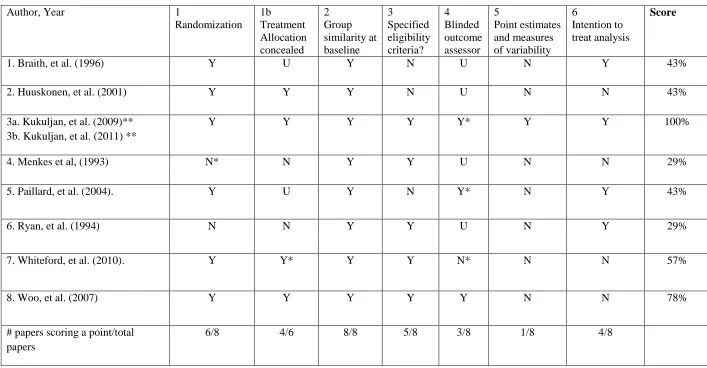
The results of the methodological quality assessment are presented in Table 1. Quality scores ranged from 29% to 100% with 3 of the 8 studies scoring over 50%. Although 6 of the included studies were RCT’s, randomisation was not concealed in two of these RCTs.
Methodological aspects that were not scored positively in most of the 8 included studies were reporting of point estimates (included in 1 study [30, 31]), blinding of the outcome assessor (included in 3 studies [28, 30, 31, 33]), and conducting an ITT analysis (included 4 studies [30-33, 36]). All of the studies scored well for group similarity at baseline [28-36] and 5 of the 8 specified eligibility criteria [28-32, 35].
Study population and exercise programs
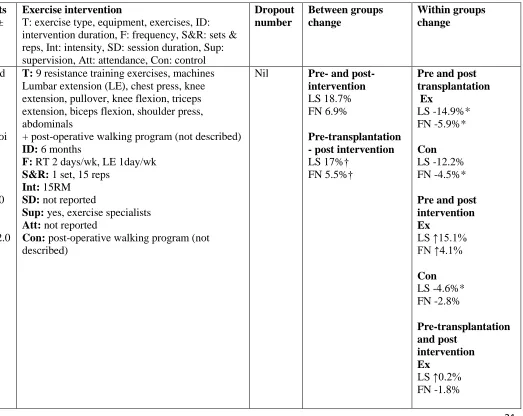
Characteristics of the study participants and exercise programs are shown in Table 2.
Participants in the studies were middle-aged and older men predominantly from non-clinical populations but one study included heart transplant patients on glucocorticoid treatment [36]. Sample sizes ranged from 11 to 147 men, with participants aged 50 to 79 years. The duration of the programs ranged from 3 months to 4 years (mean 13 months) with DXA assessments at the start and after completion of the exercise programs. In the heart transplantation study, Braith and colleagues [36] also measured the BMD of participants 2 months prior to commencing the exercise intervention to assess the impact of glucocorticoid therapy following transplantation. Changes in BMD over the initial 2 months prior to exercise are also reported in Table 2. Of the eight exercise programs 2 included walking only, 3 included resistance training only, 1 included walking and resistance training, 1 included resistance training and impact-loading activities, and 1 included resistance training and Tai Chi. The majority of the programs prescribed 3 exercise sessions a week (ranging from 2-5 each week). The prescribed intensities of the interventions varied greatly. Within the trials that included resistance exercises, intensity in all but 1 of the inventions used individualised intensities; percentage of 1-RM [30, 31] where RM or repetition maximum is the maximum amount that can be moved or lifted one time only, 8-RM [29] or 5-15-RM [35]. The
8
the participants to perform impact-loading activities with ground reaction forces (GRFs) ranging from 1.5 to 9.7 times body weight.
Four of the 8 trials were supervised and in the majority of cases this was by exercise
specialists/exercise physiologists. In addition to an exercise specialist, in the trial by Menkes and colleagues [35] registered nurses and physical therapists were the supervisors. Three of the studies did not report if the sessions were supervised [28, 32, 33] and 1 was unsupervised [34]. Machine and free weights were used in all of the resistance training protocols with the exception of the 1 trial that used elastic bands [28]. No equipment was used by the
participants in the walking interventions while the impact loading intervention used boxes and benches [30, 31]. While all of the 8 studies included control groups, only 4 described the instructions given to these participants and these were poorly detailed [28, 29, 34, 36]. Braith et al. [36] compared their intervention with a post-operative walking program, Huuskonen et al. [34] advised the control group participants to make their personal choice whether to engage in physical activity or not, Whiteford and colleagues [29] provided their control group with education and advised them to walk 30 minutes 3 days per week, and Woo et al. [28] reported that the control group was not prescribed any exercise.
Reported findings
The effects of the interventions on BMD are shown in Table 2. BMD of the lumbar spine was reported in 7 of the 8 studies [28, 29, 31, 32, 34-36]. In addition, femoral neck BMD was reported in 5 [29, 31, 32, 35, 36], total hip BMD in 3 [28, 29, 31], trochanteric BMD in 3 [29, 31, 32], both Ward’s triangle [32] and proximal femur BMD in 1 [34], while Paillard and colleagues [33] reported only that they measured hip BMD.
The greatest between group change in BMD was in the trial by Braith et al. [36] among heart transplant patients. The only study to include high-impact loading exercise or high-velocity power resistance training in their trial was Kukuljan et al. [31]. Although there were
9
Conversely, in the trial by Woo et al. [28] total hip BMD of those in the elastic band
resistance group declined more than individuals in the control group, although lumbar spine BMD of the control and exercise groups increased. Between group differences for 2 of the studies [34, 35] could not be calculated because numerical data were not reported in these papers.
Dropout, attendance and adverse events
Four of the 8 studies reported no dropouts from the control or exercise groups [32, 33, 35, 36]. Of the trials that did report dropout the average rate was 3.3% [28, 29, 31, 34]. For the 4 studies [28-31, 35] who reported dropout by group, the overall dropout rates were 6.8% and 2.1% for the exercise and control groups, respectively. Reason for drop out included personal reasons [29, 34], death of participants [34], illness [29, 31], or work and personal
commitments [29, 31]. Only 4 of the 8 studies reported attendance rates [28-31, 35]. Six of the 8 studies did not include or report any adverse events [28, 32-36]. In the 2 studies that did, Kukuljan and colleagues [30, 31] noted that although there were no serious or adverse events associated with their exercise regimen (exercise only and the exercise and milk groups), a number of medical complaints occurred. These included exacerbation of longstanding gout of the foot (n=1), aggravated knee or hip pain (n=2), lower back injury (n=2), aggravation of a long standing shoulder injury (n=2). In addition 3 men suffered an inguinal hernia. All of these men were able to continue with the program except for one man whose longstanding lower back injury caused him to withdraw from the trial. Similarly, Whiteford et al. [29] noted the following as reasons given for withdrawal from their
resistance training program: bypass surgery (n=1), fracture of a thoracic vertebra (n=1), hip replacement (n=1), depression (n=1), hip problems (n=1), chronic illness (n=1), moved (n=3), and personal reasons (n=7). These reasons were not reported as adverse events associated with or as a result of participation in the resistance training program. Five men in the trial by Whiteford et al. [29] withdrew from the control group due to depression (n=1), moved away from the study location (n=3), or for personal reasons (n=1).
DISCUSSION
10
from this review support the findings of similar reviews in pre- and post-menopausal women, that resistance training and high-impact loading activities are more likely to induce positive effects on the BMD of weight-bearing skeletal sites than walking, which is relatively low-impact. Nevertheless, the optimal exercise prescription for middle-aged and older men cannot be determined from the results of the trials in this systematic review due to variations in reported BMD changes and in the design of the exercise programs, and the relatively poor methodological quality of a number of the trials.
Five of the 8 trials achieved a quality rating score of less than 50% on the modified Delphi rating scale, and therefore caution should be taken when interpreting the results of these studies due to their methodological quality. Further, essential information regarding methodological quality was missing in all included studies, even if the trial itself was
methodologically sound, and for all but one of the studies it was necessary to request further information from the authors.
11
In addition to methodological quality and reporting, the appropriateness of the design of exercise trials must be considered when drawing conclusions from the results. Only 4 of the 8 studies [28-31, 35] recorded and reported attendance rates of the exercise groups. Further, none of the 8 studies reported adherence, which should not be confused with attendance. A participant can attend an exercise session but might not adhere to the exercises as prescribed in terms of intensity, etc. The fact that this was not consistently reported in the studies included in this review is an important limitation, which could have resulted in an
underestimation of the true effect of exercise on BMD if attendance and adherence rates were low. Consequently, we strongly suggest that both attendance and adherence rates be reported in future intervention studies examining the effect of exercise on BMD. In addition,
improvements in bone density are relatively modest with exercise and occur over a prolonged period of time due to the length of the remodelling cycle [25]. A recent review of exercise regimens [18] showed that exercise regimens that were effective in improving the BMD of women were commonly 12 months or longer in duration. In the current review, only 4 of the 8 trials [28-31, 34] were 12 months or more in duration and therefore the results from trials of shorter duration may not accurately reflect the effect these exercise modalities may have on BMD and must be interpreted with caution.
12
health issue and in light of the already low levels of physical activity participation amongst the population, the challenges associated with asking individuals to exercise daily are significant. Trials that further our understanding of the dose-response relationship between exercise and bone are certainly required, particularly in men.
In comparison to the considerably larger number of exercise studies in middle-aged and older women, the existing comparable studies in men are generally shorter in duration and have fewer participants. Furthermore, a greater number of impact-loading exercise interventions have been conducted in women than in men. Although the results from the trials examined in this systematic review are similar to the existing literature in pre and post-menopausal
women [18, 40, 41], further trials in middle-aged and older men are warranted.
Only 5 of the 8 studies included the participants’ level of exercise participation in their exclusion criteria. Ryan et al. [32] and Menkes et al. [35] stated that regular exercise
participation was part of their exclusion criteria but did not define the levels of participation that were acceptable. Woo et al. [28] stated that eligible subjects could not be participating in Tai Chi or resistance training at the time of entering the study, which does not capture past exercise participation. Similarly, Whiteford et al. [29] specified that the participants should not be participating in “brisk walking”, however, like Woo et al. [28] their inclusion criteria did not capture the participants’ level of exercise on entry into the study, nor did it exclude regular walkers exercising at lesser intensities. Given that bone adapts favourably to a novel stimuli, failing to assess and control for the participants’ current level of exercise
participation may explain different responses to a particular exercise modality. Further, only 3 of the 8 interventions reported the calcium levels of the participants [29-31, 34] and fewer still also reported vitamin D status [30, 31]. Given the important roles of calcium and vitamin D in bone metabolism [42], it would be prudent to suggest that data on calcium and vitamin D levels should be included in future exercise trials. The exclusion criteria developed by Kukuljan et al. [31] were highly specific and thus more clearly described the study population. Future studies should aim to include this level of detail when designing and reporting the details of trials.
13
combination with high-impact loading activities, has the potential to attenuate or reverse the decline of BMD in middle-aged and older men. Including resistance training would also result in improved physical function [46] and a reduction in falls risk due to increased muscle strength, therefore reducing the risk for fracture [47]. While men should engage in regular walking due to its positive effect on cardiovascular, metabolic and psychosocial health, the evidence from this review does not support the inclusion of walking alone in exercise recommendations for the targeted prevention of osteoporosis in middle-aged and older men. This finding is supported by the results of recent reviews that indicated that walking alone was not effective in increasing the bone density of older women [43, 44]. Nevertheless, a trial in peri-menopausal women indicated that bone density at the femoral neck was maintained following a program of brisk walking and jogging [45]. Further, brisk walking has been shown to have a positive effect on hip and spine BMD of post-menopausal women [46, 47]. Although it would seem prudent to suggest that men may also benefit from brisk walking, future trials are needed to confirm this recommendation. Consequently, recent guidelines for osteoporosis in men [22] that have recommended walking alone as an osteoporosis
prevention strategy are not consistent with the current evidence base on the effect of exercise on BMD in men.
14
While resistance training alone or a combination of resistance training and high-impact loading activities appear to be safe and effective in preventing or reversing age-related bone loss in middle-aged and older men, the optimal frequency, session duration, intensity and exact exercise combination cannot be determined from the results of this systematic review. In comparison to the large number of exercise trials in women, osteoporosis prevention exercise trials in older men are sparse. Accordingly, the authors of the ACSM physical activity and bone health position stand [25] have based their recommendations for older adults predominantly from the results of trials in women. We propose that before the optimal exercise prescription to prevent osteoporosis in middle-aged and older men can be prescribed, methodologically robust, long-duration randomised controlled trials in this population are required. Given that gender-specific factors influence bone metabolism, where trials recruit men and women, analysis should be conducted by gender. Trials in this area are logistically challenging due to attrition, adherence and the high costs of undertaking relatively long-duration interventions, however, given the aging of the population and the proportion of men potentially at risk for osteoporosis, efforts to address the osteogenic exercise requirements for men are urgently required.
This systematic review has several limitations which are worthy of comment. First, our analysis includes only data from published studies and the possibility exists of missing relevant unpublished trials. Second, the relatively small number of participants in a number of these studies may limit the ability to detect a statistically significant difference between the intervention and control groups, and this should be considered when interpreting the results of these studies. As a result, it is strongly suggested that statistical power calculations be included in reports of future intervention studies. Third, many of the studies included in this review did not report the post-intervention scores or post-intervention data were not
15
middle-aged and older men [31]. While there is a possibility that some studies were missed in the literature search, it is more likely that the small number of trials in this systematic review reflects the strong focus on preventing osteoporosis in women rather than in men.
Safety aspects
Although resistance training and impact-loading activities appear to be safe methods of exercise training, older adults should be carefully screened and supervised prior to and during exercise participation to ensure safety and correct technique. Where appropriate, clinicians should refer patients to appropriate health professionals, such as exercise physiologists or physiotherapists, trained to prescribe exercise for individuals with chronic disease and associated co-morbidities.
CONCLUSION
Results from this systematic review indicate that resistance training alone or in combination with impact-loading activities is safe and may assist in the prevention of osteoporosis in middle-aged and older men. However, due to the variation among studies as well as in study quality, additional high-quality randomized controlled trials in this population are required in order to establish evidence-based guidelines for the optimal exercise prescription.
Nevertheless, for those individuals willing and able to perform physical exercise, regular resistance training and impact-loading activities should be considered as an effective strategy to prevent osteoporosis in middle-aged and older men.
CONFLICT OF INTEREST
16 REFERENCES
1. Khosla S (2012) Pathogenesis of Age-Related Bone Loss in Humans. The journals of gerontology Series A, Biological sciences and medical sciences
2. Amin S, Khosla S (2012) Sex- and age-related differences in bone microarchitecture in men relative to women assessed by high-resolution peripheral quantitative computed tomography. J Osteoporos 2012:129760
3. Warming L, Hassager C, Christiansen C (2002) Changes in bone mineral density with age in men and women: a longitudinal study. Osteoporos Int 13:105-112
4. Khosla S, Riggs BL (2005) Pathophysiology of age-related bone loss and osteoporosis. Endocrinol Metabolism Clinics North Am 34:1015-1030, xi
5. Kanis JA (2002) Diagnosis of osteoporosis and assessment of fracture risk. Lancet 359:1929-1936
6. Marcus R (2002) Post-menopausal osteoporosis. Best practice & research Clinical obstetrics & gynaecology 16:309-327
7. Ryan CS, Petkov VI, Adler RA (2011) Osteoporosis in men: the value of laboratory testing. Osteoporos Int 22:1845-1853
8. Frost HM (1987) Bone "mass" and the "mechanostat": a proposal. The Anatomical record 219:1-9
9. Rubin CT, Lanyon LE (1984) Regulation of bone formation by applied dynamic loads. The Journal of bone and joint surgery American volume 66:397-402
10. Kelley GA (1998) Exercise and regional bone mineral density in postmenopausal women: a meta-analytic review of randomized trials. Am J Phys Med Rehabil 77:76-87
11. Nikander R, Sievanen H, Heinonen A, Daly RM, Uusi-Rasi K, Kannus P (2010) Targeted exercise against osteoporosis: A systematic review and meta-analysis for optimising bone strength throughout life. BMC medicine 8:47
12. Wolff I, van Croonenborg JJ, Kemper HC, Kostense PJ, Twisk JW (1999) The effect of
exercise training programs on bone mass: a meta-analysis of published controlled trials in pre- and postmenopausal women. Osteoporos Int 9:1-12
13. Berard A, Bravo G, Gauthier P (1997) Meta-analysis of the effectiveness of physical activity for the prevention of bone loss in postmenopausal women. Osteoporos Int 7:331-337
14. Kelley GA, Kelley KS (2006) Exercise and bone mineral density at the femoral neck in postmenopausal women: a meta-analysis of controlled clinical trials with individual patient data. American journal of obstetrics and gynecology 194:760-767
15. Kelley GA, Kelley KS, Tran ZV (2002) Exercise and lumbar spine bone mineral density in postmenopausal women: a meta-analysis of individual patient data. In The journals of
gerontology Series A, Biological sciences and medical sciences. M599-604
16. Borer KT (2005) Physical activity in the prevention and amelioration of osteoporosis in women : interaction of mechanical, hormonal and dietary factors. Sports Med 35:779-830 17. Schmitt NM, Schmitt J, Doren M (2009) The role of physical activity in the prevention of osteoporosis in postmenopausal women-An update. Maturitas 63:34-38
18. Gómez-Cabello A, Ara I, González-Agüero A, Casajüs JA, Vicente-Rodríguez G (2012) Effects of Training on Bone Mass in Older Adults: A Systematic Review. Sports Med 42:301-325
19. Lanyon LE (1996) Using functional loading to influence bone mass and architecture: objectives, mechanisms, and relationship with estrogen of the mechanically adaptive process in bone. Bone 18:37S-43S
20. Lee KC, Lanyon LE (2004) Mechanical loading influences bone mass through estrogen receptor alpha. Exerc Sport Sci Rev 32:64-68
17
22. Watts NB, Adler RA, Bilezikian JP, Drake MT, Eastell R, Orwoll ES, Finkelstein JS (2012) Osteoporosis in men: an endocrine society clinical practice guideline. J Clin Endorinol Met 97:1802-1822
23. Guadalupe-Grau A, Fuentes T, Guerra B, Calbet JAL (2009) Exercise and Bone Mass in Adults. Sports Med 39:439-468
24. Kelley GA, Kelley KS, Tran ZV (2000) Exercise and bone mineral density in men: A meta-analysis. J Appl Physiol 88:1730-1736
25. Kohrt WM, Bloomfield SA, Little KD, Nelson ME, Yingling VR (2004) American College of Sports Medicine Position Stand: physical activity and bone health. Med Sci Sports Exerc 36:1985-1996
26. Verhagen AP, de Vet HC, de Bie RA, Kessels AG, Boers M, Bouter LM, Knipschild PG (1998) The Delphi list: a criteria list for quality assessment of randomized clinical trials for conducting systematic reviews developed by Delphi consensus. J Clin Epidemiol 51:1235-1241
27. Verhagen AP, de Vet HC, de Bie RA, Boers M, van den Brandt PA (2001) The art of quality assessment of RCTs included in systematic reviews. J Clin Epidemiol 54:651-654
28. Woo J, Hong A, Lau E, Lynn H (2007) A randomised controlled trial of Tai Chi and resistance exercise on bone health, muscle strength and balance in community-living elderly people. In Age and ageing 262-268
29. Whiteford J, Ackland TR, Dhaliwal SS, James AP, Woodhouse JJ, Price R, Prince RL, Kerr DA (2010) Effects of a 1-year randomized controlled trial of resistance training on lower limb bone and muscle structure and function in older men. Osteoporos Int 21(9):1529-1536
30. Kukuljan S, Nowson CA, Bass SL, Sanders K, Nicholson GC, Seibel MJ, Salmon J, Daly RM (2009) Effects of a multi-component exercise program and calcium-vitamin-D3-fortified milk on bone mineral density in older men: a randomised controlled trial. Osteoporos Int 20(7):1241-1251 31. Kukuljan S, Nowson CA, Sanders KM, Nicholson GC, Seibel MJ, Salmon J, Daly RM (2011) Independent and combined effects of calcium-vitamin d3 and exercise on bone structure and strength in older men: an 18-month factorial design randomized controlled trial. J Clin Endocrinol Met 96(4):955-963
32. Ryan AS, Treuth MS, Rubin MA, Miller JP, Nicklas BJ, Landis DM, Pratley RE, Libanati CR, Gundberg CM, Hurley BF (1994) Effects of strength training on bone mineral density: hormonal and bone turnover relationships. J Appl Physiol 1678-1684
33. Paillard T, Lafont C, Costes-Salon MC, Rivière D, Dupui P (2004) Effects of brisk walking on static and dynamic balance, locomotion, body composition, and aerobic capacity in ageing healthy active men. Int J Sports Med 539-546
34. Huuskonen J, Vaisanen SB, Kroger H, Jurvelin JS, Alhava E, Rauramaa R (2001) Regular physical exercise and bone mineral density: a four-year controlled randomized trial in middle-aged men. The DNASCO study. Osteoporos Int 12(5):349-355
35. Menkes A, Mazel S, Redmond RA, Koffler K, Libanati CR, Gundberg CM, Zizic TM, Hagberg JM, Pratley RE, Hurley BF (1993) Strength training increases regional bone mineral density and bone remodeling in middle-aged and older men. J Appl Physiol 74:2478-2484
36. Braith RW, Mills RM, Welsch MA, Keller JW, Pollock ML (1996) Resistance exercise training restores bone mineral density in heart transplant recipients. J Am Col Cardiol 15;28(6):1471-1477 37. Turner CH, Robling AG (2005) Mechanisms by which exercise improves bone strength. J Bone Miner Met 23 Suppl:16-22
38. Turner CH (1998) Three rules for bone adaptation to mechanical stimuli. Bone 23:399-407 39. Bailey CA, Brooke-Wavell K (2010) Optimum frequency of exercise for bone health: randomised controlled trial of a high- impact unilateral intervention. Bone 2010 Apr;46(4):1043-1049
18
41. Martyn-St James M, Carroll S (2010) Effects of different impact exercise modalities on bone mineral density in premenopausal women: a meta-analysis. J Bone Miner Metab 28:251-267 42. Specker B, Vukovich M (2007) Evidence for an interaction between exercise and nutrition for improved bone health during growth. Medicine and sport science 51:50-63
43. Howe TE, Shea B, Dawson LJ, Downie F, Murray A, Ross C, Harbour RT, Caldwell LM, Creed G (2011) Exercise for preventing and treating osteoporosis in postmenopausal women. Cochrane database of systematic reviews (Online) CD000333
44. Martyn-St JM, Carroll S (2008) Meta-analysis of walking for preservation of bone mineral density in postmenopausal women. Bone 43:521-531
45. Martyn-St JM, Carroll S (2009) A meta-analysis of impact exercise on postmenopausal bone loss: the case for mixed loading exercise programmes. British Journal of Sports Medicine 43:898-908
46. Hunter GR, McCarthy JP, Bamman MM (2004) Effects of resistance training on older adults. Sports Medicine 34:329-348
47. Kannus P, Sievanen H, Palvanen M, Jarvinen T, Parkkari J (2005) Prevention of falls and consequent injuries in elderly people. Lancet 366:1885-1893
48. Canalis E, Mazziotti G, Giustina A, Bilezikian JP (2007) Glucocorticoid-induced osteoporosis: pathophysiology and therapy. Osteoporosis international : a journal established as result of
cooperation between the European Foundation for Osteoporosis and the National Osteoporosis Foundation of the USA 18:1319-1328
49. Galvao DA, Nosaka K, Taaffe DR, Spry N, Kristjanson LJ, McGuigan MR, Suzuki K, Yamaya K, Newton RU (2006) Resistance training and reduction of treatment side effects in prostate cancer patients. Medicine and Science in Sports and Exercise 38:2045-2052
50. Winters-Stone KM, Dobek J, Nail LM, Bennett JA, Leo MC, Torgrimson-Ojerio B, Luoh SW, Schwartz A (2012) Impact + resistance training improves bone health and body composition in prematurely menopausal breast cancer survivors: a randomized controlled trial. Osteoporosis international : a journal established as result of cooperation between the European Foundation for Osteoporosis and the National Osteoporosis Foundation of the USA
51. Saarto T, Sievanen H, Kellokumpu-Lehtinen P, et al. (2012) Effect of supervised and home exercise training on bone mineral density among breast cancer patients. A 12-month randomised controlled trial. Osteoporosis International 2012 May;23(5):1601-1612
19
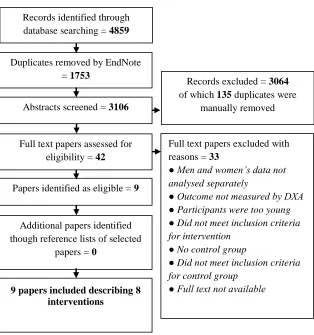
Figure 1. Search process flow chart
Records identified through database searching = 4859
Duplicates removed by EndNote = 1753
Abstracts screened = 3106
Full text papers assessed for eligibility = 42
Papers identified as eligible = 9
Additional papers identified though reference lists of selected
papers = 0
Records excluded = 3064 of which 135 duplicates were
manually removed
Full text papers excluded with reasons = 33
● Men and women’s data not analysed separately
● Outcome not measured by DXA ● Participants were too young ● Did not meet inclusion criteria for intervention
● No control group
● Did not meet inclusion criteria for control group
● Full text not available
20
Y = yes, N = no, * = quality rated after requesting and obtaining additional information from the authors, U = unclear after requesting additional information from the authors, ** same trial, but different durations and papers, point estimates and measures of variability = between groups change and either standard deviation (SD), standard error (SE) or confidence intervals (CI).
Author, Year 1
Randomization 1b
Treatment Allocation concealed
2 Group similarity at baseline
3
Specified eligibility criteria?
4 Blinded outcome assessor
5
Point estimates and measures of variability
6
Intention to treat analysis
Score
1. Braith, et al. (1996) Y U Y N U N Y 43%
2. Huuskonen, et al. (2001) Y Y Y N U N N 43%
3a. Kukuljan, et al. (2009)** 3b. Kukuljan, et al. (2011) **
Y Y Y Y Y* Y Y 100%
4. Menkes et al, (1993) N* N Y Y U N N 29%
5. Paillard, et al. (2004). Y U Y N Y* N Y 43%
6. Ryan, et al. (1994) N N Y Y U N Y 29%
7. Whiteford, et al. (2010). Y Y* Y Y N* N N 57%
8. Woo, et al. (2007) Y Y Y Y Y N N 78%
# papers scoring a point/total papers
6/8 4/6 8/8 5/8 3/8 1/8 4/8
21
Table 2. Study characteristics and outcomes
Study details Author (year) Country Study Design Participants (mean age ± SD, range (years))
Exercise intervention
T: exercise type, equipment, exercises, ID: intervention duration, F: frequency, S&R: sets & reps, Int: intensity, SD: session duration, Sup: supervision, Att: attendance, Con: control
Dropout number Between groups change Within groups change
1. Braith, R. W., et al. (1996) [36]
USA
RCT Middle-aged men heart transplant patients on glucocorticoi d treatment
n = 16
Ex = 8 (56.0 ± 6.0)
Con = 8 (52.0 ± 10)
T: 9 resistance training exercises, machines Lumbar extension (LE), chest press, knee extension, pullover, knee flexion, triceps extension, biceps flexion, shoulder press, abdominals
+ post-operative walking program (not described) ID: 6 months
F: RT 2 days/wk, LE 1day/wk S&R: 1 set, 15 reps
Int: 15RM SD: not reported
Sup: yes, exercise specialists Att: not reported
Con: post-operative walking program (not described)
Nil Pre- and post-intervention LS 18.7% FN 6.9%
Pre-transplantation - post intervention LS 17%†
FN 5.5%†
Pre and post transplantation Ex LS -14.9%* FN -5.9%* Con LS -12.2% FN -4.5%*
22
Con
LS -16.8%* FN -7.3%
2. Huuskonen, J., et al. (2001)
Finland
RCT Middle-aged men
n = 140 (53-62)
Ex = 70 (58.2 ± 2.9)
Con = 70 (58.1 ± 2.9 )
T: Brisk walking, no equipment ID: 48 months
F: 3days /wk → 5 days/wk
Int: “brisk walking” → 40- 0% of O2max
SD: 30-45 → 0 minutes Sup: not supervised Att: not reported
Con: participants were advised to make their personal choice whether to engage in physical activity or not
4 died 4 dropped out (groups not reported) LS ↔
Prox fem ↔ Ex & Condata not reported) (numerical
LS ↔ Prox fem ↔
3a. Kukuljan, S., et al. (2009)
Australia
Exercise + milk and milk alone groups not included in this review
RCT Middle-aged and older men
n = 90
Ex = 46 (60.7 ± 7.1)
Con = 44 (59.9 ± 7.4)
T: 6-8 RT exercises, machine and free weights, slow and controlled
Squats or leg press, lunges, hip abduction and adduction, lat pull down or seated row, back extension, leg extension, calf raises, bench press, shoulder press, biceps curls triceps extension and lumbo-pelvic, spine and a combination of core muscle stabilization exercises
+ 3 IL exercises, benches and boxes (15, 30cm) Single and double foot multi-directional landings, bench stepping and jumping off boxes
ID: 12 months F: 3 days/wk
S & R: RT: 3 sets, 15-20 reps → 2 sets, 8-12 reps
IL: 3 sets, 10-20 impacts → 90-180 impacts Int: RT: set 1, 2 & 3: 5 0%1RM → set 1: 0-65%1RM, set 2: 60-70% → set 1: 0-0-65%1RM,
Ex = 1 Con = 2
LS 1.5% FN 1.9% Tot hip 0.7% Tr 0.8%
Ex
LS ↑2.1%* FN ↑1.7%* Tot hip ↑1.2%* Tr ↑1. %*
23 set 2: 80-85%
IL GRF 1.5 to 9.7 x BW. Intensity increased by increasing height of jumps and/or adding more complex movement patterns
SD: 60-75 minutes
Sup: yes, qualified exercise trainers Att: 67%
Con: not described 3b. Kukuljan, S.,
et al. (2011) [31]
Australia
Continuation-study 3a
Exercise + milk and milk alone groups not included in this review
RCT Middle-aged and older men
n = 90
Ex = 46 (60.7 ± 7.1)
Con = 44 (59.9 ± 7.4)
As 12 month study,with the exception of the
following changes for month 13-18
T: high-velocity power based training (rapid concentric muscle contractions)
ID: 18 months Att: 63%
Ex = 2 Con = 2
FN 1.9%†
LS & Tot hip (unable to be calculated)
Ex LS ↑1.0% FN ↑1.1% Tot hip ↑0.3%
Con LS ↑0. % FN -0.8% Tot hip ↑0.2%
4. Menkes, A., et al. (1993) [35]
USA
CT Middle-aged and older men
n = 18
Ex = 11 (59.0 ± 2.0 SE)
Con = 7 (55.0 ± 1.0 SE)
T: 13 RT exercises, machines and free weights Upper body exercises (UB): Chest press, lat pull down, shoulder press, upper back row, seated triceps extension, seated dumbbell biceps curls Lower body exercises (LB): leg press, leg curl, leg extension, leg abduction, leg adduction, trunk extensions, modified sit-ups
ID: 4 months F: 3 days/wk
S & R: LB 2 sets, 15 reps; UB 1 set, 15 reps Int: 5RM-15RM
SD: not reported
Sup: registered nurse, physical therapist, exercise
Ex = 2 (Didn’t want to complete BMD testing)
Numerical data not reported LS ↔ FN ↔ Ex LS ↑2.0%* FN ↑3.8%*
24 specialists
Att: 95%
Con: “inactive controls” (not described)
5. Paillard, T., et al. (2004) [33]
France
RCT Middle-aged and older men
n = 21 (63-72)
Ex = 11 (66 ± 2.0)
Con = 10 (67 ± 2.0)
T: Brisk walking ID: 3 months F: 5 days/wk
Int: individualized intensity corresponding to lactate threshold
SD: 45-60 minutes Sup: not reported Att: not reported Con: not reported
Nil Hip 2.1% Ex
Hip -1.2%
Con Hip -3.3%
6. Ryan, A. S., et al. (1994) [32]
USA
CT Middle-aged and older men
n = 37
Ex = 21 (61.1 ± 1.0 SE )
Con = 16 (59.2 ± 2.0 SE)
T: 14 RT exercises, machines and free weights Leg press, chest press, leg curl, lat pull down, leg extension, shoulder press, leg adduction, leg abduction, upper back row, triceps press, lower back extension, upper abdominals, biceps curl, lower abdominals
ID: 4 months F: 3 days/wk
S & R: 1st set, 15 reps for all exercises 2nd set of 15 for leg press, leg curl and leg machine only Int: 5RM-15RM
SD: not reported Sup: not reported Att: not reported Con: not reported
Nil Ward’s 1.4%
Tr 1.5%
LS, FN ↔ (unable to calculate, numerical data not reported)
Ex LS -0.1% FN ↑2.8%* Ward’s -0. 2% Tr -0.1%
Con
LS, FN ↔ (numerical data not reported) Ward’s -1.6% Tr -1.6%
7. Whiteford, J., et al. (2010) [29]
RCT Middle-aged and older men
T: 8 RT exercises, machines and free weights Hip flexion, hip extension, hip abduction, hip adduction, calf raise, triceps pushdown, wrist
RT = 16 Con = 5
25 Australia
n = 147
Ex = 73 (64.0 ± 6.0)
Con = 74 (64.0 ± 6.0)
curl, reverse wrist curl, biceps curl, forearm pronation/ supination
ID: 12 months F: 3 days/week
S & R: 3 sets, 15 reps → 3 sets, 8 reps Int: 15RM → 8RM
SD: 60 minutes
Sup: qualified exercise physiologist Att: 71% RT group, active control not monitored
Con: Participants were provided with education and advised to walk 30 mins/3 days per week
Tot hip ↔ Tr ↑2.2%*
Tot hip ↑0.8%*
Con LS -0.1% FN -0.6% Tr ↑2.2%* Tot hip ↑0.8%*
8. Woo, J., et al. (2007) [28]
Hong Kong
RCT Middle-aged and older men
n = 90 (65-74)
RT = 30 (68.7 ± 3.0)
Tai Chi = 30 (68.2 ± 2.4)
Con = 30 (68.07 ± 2.7)
T: 6 RT exercises, elastic bands
Arm lifting, hip abduction, heel raise, hip flexion, hip extension, squatting dorsiflexion
ID: 12 months
F: 3 days/wk(RT and Tai Chi) S & R: 2 sets, 30 reps
Int: medium strength elastic band (RT), not reported (Tai Chi)
SD: not reported Sup: not reported
Att: RT 76.3%, Tai Chi 81% Tai Chi: Yang style with 24 forms Con: “no exercise prescribed”
RT = 1 Con = 1
Con v RT LS 0.8% Tot hip 1.1%‡
Con v Tai Chi LS 0.9% Tot hip 0.3%‡
RT LS ↑1.3% Tot hip -1.2%
Tai Chi LS ↑1.4 % Tot hip -0.5%
Con LS ↑0.5% Tot hip -0.2%
Abbreviations: RCT, randomised controlled trial; CT, controlled trial; Ex, exercise group; Con, control; Reps, repetitions; wk, week; RM, repetitions maximum; RT,
resistance training; →, progressing to; O2max, maximal oxygen uptake; GRF, ground reaction force; UB, upper body; LB, lower body; IL, impact-loading; BW, body
weight; BMD, bone mineral density (g/cm2); LS, lumbar spine; FN, femoral neck; Tr, trochanter; Ward’s, Ward’s triangle; Tot hip, total hip; ↑, increase; ↔, no change