775 | P a g e
ANDROID APPLICATION FOR FALL DETECTION
USING TRIAXIAL ACCELEROMETER
A.Hemantha Kumar
1,K.Aparna
21
Department oF ECE, JNTUACE, Pulivendula, AP, (India)
2
Department oF ECE, JNTUACE, Pulivendula, AP,( India)
ABSTRACT
An unintentional fall may injure elderly people. This paper aims to develop a portable and efficient device,
which monitors the fall in the elderly people, by integrating a microcontroller, a tri – axial accelerometer, a
GPS/GSM modem. The human activities can be sensed by the low-cost and low power tri - axial accelerometer.
The system is composed of data acquisition, fall detection and database for analysis. Triaxial accelerometer is
used for human position tracking and fall detection. The system is capable of monitoring patients in real time
and on the basis of results another important parameters of patient can be deducted: the quality of therapy, the
time spent on different activities, the joint movement, etc. The system, including calibration of accelerometers
and measurement is explained in detail.
Keywords: accelerometers, fall detection, GPS, GSM, LCD.
I.INTRODUCTION
One of the main medical issues in the elderly group is oblivious. Falls are one of the leading health problems in
that community. They can occur in home as well as in hospitals or in the long-term care institutions. Falls
increase risk for serious injuries, long-term disability, chronic pain,, and loss of independence ,psychological
and social limitations due to institutionalization. Nearly fifty percent of older adults hospitalized for fall-related
injuries are discharged to long-term care facilities or nursing homes. A fall can cause psychological damage
even if the person did not suffer a physical injury. Those who fall often experience decrease activities of self
care and daily living due to fear of falling again. This behaviour decrease their mobility, balance and fitness and
leads to reduced social interactions and increased depression. The mortality rate for fall increases progressively
with age. Falls caused 57% of deaths due to injuries among females and 36%of deaths among males .age 65 and
above.
Majority of falls result from an interaction between multiple long-term and short-term factors in person’s
environment. Common risk factors include problems with balance and stability, arthritis, muscle weakness,
multiple medications, therapy, cardiac disorders, stroke. Detection of a fall possibly leading to injury in timely
manner is crucial for providing adequate medical response and care. Present fall detection systems can be
categorized under one of the following groups:
User activated alarm systems (wireless tags).
776 | P a g e
Wearable sensors (contact sensors and switches, sensors for heart rate and temperature,accelerometers, gyroscopes),
Acoustic fall detection,
Visual fall detection.
The most common method for fall detection is using a tri axial accelerometers or bi-axial gyroscopes.
Accelerometer is a device for measuring acceleration, but is also used to detect free fall and shock, movement,
speed and vibration. Using the threshold algorithms while measuring changes in acceleration in each direction, it
is possible do detect falls with very high accuracy. Using two or more tri-axial accelerometers and combining
them with gyroscopes at different body locations it is possible to recognize several kinds of postures (sitting,
standing, etc.) and movements, thereby detecting falls with much better accuracy
An easy and simple method to detect fall detection of patients is using accelerometer together with ZigBee
transceiver to communicate with Monitoring System through wireless network, and in this paper a system for
monitoring and fall detection of patients using mobile MEMS accelerometers will be presented.
II. RELATED WORK
A. MEMS
Accelerometer
The MMA7260QT low cost capacitive micro machined accelerometer features signal conditioning, a
one pole low pass filter temperature compensation and g-select which allows for the selection among
four sensitivities.
Features
1. Selectable Sensitivity (1.5g/2g/4g/6g)
2. Low Current Consumption: 500 μA
3. Sleep Mode: 3 μA
4. Low Voltage Operation: 2.2 V – 3.6 V
5. Fast Turn On Time
B. Global Positioning System(GPS)
The Global Positioning System (GPS) is a U.S. space-based radio navigation system that provides reliable
positioning, navigation, and timing services to civilian users on a continuous worldwide basis freely available to
all. For anyone with a GPS receiver, the system will provide location and time. GPS provides accurate location
777 | P a g e
Fig 2.1 Global Positioning System
C. GSM
A GSM modem is a wireless modem that works with a GSM wireless network. A wireless modem behaves like
a dial-up modem. The main difference between them is that a dial-up modem sends and receives data through a
fixed telephone line while a wireless modem sends and receives data through radio waves.
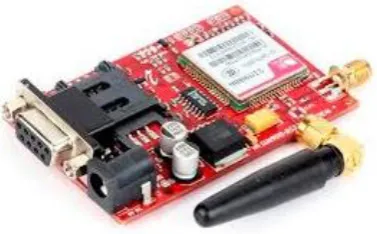
Fig 2.2: Global System for Mobile communications
III. SOFTWARE REQUIRED
A. Kiel software
B. Embedded ‘C’
C. Flash magic
We use Kiel software to write the program and execute it, program is written in the embedded ‘c’ language,
after completion of executing the program hex file program is dumped into the controller using flash magic
A. ADC Function
int read_adc(char chnl)
{
unsigned long result=0;
AD0CR = AD0CR_setup | (1<<chnl);
AD0CR |= START_NOW; //Start new Conversion
while(!(AD0GDR & 0x80000000));
778 | P a g e
result = (AD0GDR>>6) & 0x3ff;
result=3.3*result;
return (result);
}
IV. FUNCTIONAL DESCRIPTION
The purpose of this project is to design and produce a system to monitor the fall of patients and track the
position of fall using global positioning system (GPS) and global system for mobile communication (GSM)
Technology effectively. This project is also used for measuring and calibration of the joint movement, this paper
describes system for monitoring and fall detection of patients using tri axial accelerometer along with ZigBee
transceiver to detect fall of patient’s .The system is composed of data acquisition, fall detection and data base
for analysis
Tri axial accelerometer is used to track the position of human and it is also used for fall detection.. The system
is capable of monitoring patients in real time and on the basis of results another important parameters of
patients can be predicted. Those parameters includes the quality of therapy, the time spent on different activities,
the joint movement etc. Falls increase risk for serious injuries, long-term disability, chronic pain, and loss of
independence, psychological and social limitations due to institutionalization .Nearly 50% of older adults
779 | P a g e
Fig 4.1: SYSTEM OVERALL BLOCK IAGRAM
A fall can cause psychological damage even if the person did not suffer a physical injury. Those who fall often
experience decrease activities of daily living and self-care due to fear of falling
again. This behaviour decrease their mobility, fitness and balance and leads to reduced social interactions and
increased depression.
Detection of a fall possibly leading to injury in timely manner is crucial for providing adequate medical
response and care.
Present fall detection systems are categorized as follows
• Wearable sensors (contact sensors and switches) • Sensors for heart rate and temperature
• User activated alarm systems (wireless tags) • Floor vibration-based fall detection,
• Acoustic fall detection, • Visual fall detection
The most common method for fall detection is using gyroscopes or tri-axial accelerometer.
Accelerometer is a device for measuring acceleration it is also used to detect free fall and shock, speed and
vibration, movement. Using the threshold algorithms while measuring changes in acceleration in each direction,
it is possible to detect falls with very high accuracy. Using two or more tri-axial accelerometers and combining
them with gyroscopes at different body locations it is possible to recognize several kinds of positions like
sitting, standing etc. there by detecting falls with much better accuracy. A simple method to detect fall detection
of patients is using accelerometer along with ZigBee transceiver to communicate with monitoring system
through wireless network.
A. SYSTEM FOR MONITORING AND FALL DETECTION
The system consists of a set of sensors (2 or more sensors on patient, usually MEMS sensors which the patient
wears on himself, local units to collect data that are placed in patient vicinity and systems for collecting,
processing and storage of data on each patient.
Z). When the person felt down suddenly, then the voltage difference between previous state (before
fall) and present state values will change. Any one of the difference of the voltages(X, Y, Z) is more than preset
values then the microcontroller understands that the person fall down suddenly due to fits or some other
780 | P a g e
Once the microcontroller identifies the person is fell then it reads both latitude and longitude of particular place
by using GPS where person fall
down then these values are sent to the authorized person.
FALL DETECTION CIRCUITARY
III.RESULT
This project implementation provides information on patient’s fall and sends the latitude and longitude
information to the preferred persons, By using a personal computer it is possible to trace the patients location by
using latitude and longitude information received on mobile.
776 | P a g e
777 | P a g e
MESSAGE ON MOBILE DISPLAY
GPS TRACED LOCATION
IV.CONCLUSION
In this project a system is discussed, that provides information regarding patients fall using the GPS and GSM
technology. It is proposed as a reasonable cost optimized solution using GPS and GSM modem. It is also
proposed as a low cost optimized solution using MEM and GSM mobile technology. Based on this approaching
system, the health monitoring system can be implemented by using Internet of Things (IoT). In future this work
may be extended in Voice based navigation would be add charm in the functionality of system. Application
based appointment system will be another enhancement, with the help of single click. User/Patient can book an
appointment with concern doctor.
REFERENCES
1. J. Tomkun and B. Nguyen, ―Design of a Fall Detection and Prevention System for the Elderly‖, In
EE 4BI6 Electrical Engineering Biomedical Capstones, Department of Electrical and Computer
778 | P a g e
2. Li, Q., Zhou, G. and Stankovic, J. A. (2016): „Accurate, Fast Fall Detection Using Posture and Context
Information” in ACM SenSys 2016, Raleigh, NC, USA, pp. 55562
3. Fu, Z., et al (2015):An Address-Event Fall Detector for Assisted Living Applications” in IEEE
Transactions on Biomedical Circuits and Systems, June 2015, vol. 2 no 2, pp. 8896
4. C.-F. Lai, Y.-M. Huang, J.H. Park, and H.-C. Chao, ―Adaptive Body Posture Analysis for
Elderly-Falling Detection with Multi sensors‖, IEEE Intelligent Systems, vol. 25, no. 2, 2014, pp. 20-30
5. http://robotix.in/tutorials/category/mechanical/rockerbogie