Study on the Effectiveness of Incorporation of
Bacteria and Nanomaterials for Durability in
Concrete
Vineeth Viswam Dr. Elson John
PG Student Professor
Department of Civil Engineering Department of Civil Engineering Mar Athanasius College of Engineering Kothamangalam,
Kerala, India
Mar Athanasius College of Engineering Kothamangalam, Kerala, India
Abstract
The durability of cement based materials such as mortar and concrete typically suffers from water and chloride ingression, which corrodes the load-bearing steel reinforcement. Most existing strategies to increase the water resistance of cementitious materials are based on additional surface treatments of the material after the casting process. A complementary strategy could be a bulk modification of cementitious materials by altering their mineralized nanostructures, such as ettringites. Controlling mineralization processes through bio-inspired approaches or integrating nanomaterials as hydrophobic components into the bulk volume of the material improves the durability. In this paper, the bacterial content in concrete is varied for concentrations of 105, 106, 107 cells/ml of water added to the concrete mix and strength and durability tests were performed. Highest strength and durability performance was obtained for bacterial concentration of 107 cells/ml. Also, cement was partially replaced with nanosilica of percentage varying as 1%, 2% & 3% of cement by weight. Strength and durability performance has improved for nanosilica incorporated concrete when compared to normal concrete. The various durability tests performed were water absorption test, chloride attack, sulphate attack, and sorptivity test.
Keywords: Durability, Bacteria, Nanosilica, Strength, Chemical Attack
________________________________________________________________________________________________________
I. INTRODUCTION
Physical and chemical deterioration of reinforced concrete structures is often closely related to the ingress of water. Deleterious substances such as chloride and sulphate ions diffuse into concrete with water, causing corrosion of steel bars and sulphate erosion, respectively. Water itself, as an agent, can also cause chemical or physical attack to concrete. For example, in the case of alkali silica reaction, gel products swell when absorbing water, and cause expansion pressure to lead to map cracking. In freezing and thawing process, water is directly involved to cause internal stress arising from the expansion when freezed. The ability of a material to withstand the effect of its environment such as chemical attack, physical stress, and mechanical assault may be termed as Durability. In the viewpoint of durability, improvement of water tightness of concrete is an important measure for alleviating deterioration and extending the service life of structures.
II. OBJECTIVES OF THE STUDY
The present investigation is to develop bacterial concrete as well as incorporating nanomaterials into concrete to get durable concrete. Concrete mixes with different percentages of biofilm content and nanomaterials are prepared for optimization of the percentage of biofilm and nanomaterials to develop durable concrete and to study the various durability characteristics of concrete incorporating nanomaterials and bacteria.
III. SCOPE OF THE STUDY
IV. LITERATURE REVIEW
Bacterial Concrete
Muynck et al. (2008) reported the effects of bacterial CaCO3 precipitation on parameters affecting the durability of concrete and
mortar. Bacterial deposition of a layer of calcite on the surface of the specimens resulted in a decrease of capillary water uptake and permeability towards gas. [1]
Grumbein et al. (2016) studied hydrophobicity of the biofilm enriched hybrid mortar using Bacillus subtilis species. The biofilm content varied from 0.5% to 3% of the cement content to optimize the biofilm content for a workable mix for mortar. The SEM analysis, light profilometry, water absorption tests were carried out. The contact angle measurements showed that the hybrid mortar became hydrophobic due to the addition of biofilm. [2]
Nanomaterials Incorporated Concrete
Li et al. (2006) studied the abrasion resistance, at age of 28 days, of concretes modified with NT versus that modified with NS. Cement was partially replaced with either NT or NS at levels of 0%, 1%, and 3%, by weight. The enhancement in the surface index of the abrasion resistance of specimens modified with 1% and 3% NT over that modified with NS was 15.1% and 45.53%, respectively. [3]
Li et al. (2007) studied the workability and flexural strength, at age of 28 days, of concretes modified with either 1% NT or 1% NS, by weight. The specimens containing NT exhibited 5.8% higher flexural strength than that containing NS. [4]
V. MATERIALS USED
The cement used for this project work is Ordinary Portland Cement of 53 grade. The fine aggregate to be used in the study is manufactured sand. The material used to partially replace cement is Nanosilica. For the production of bacterial concrete, Bacillus subtilis is used. The recommended superplasticizer is MasterGlenium SKY 8233. Mix design was done for M35 mix.
VI. RESULTS AND DISCUSSION
Compressive Strength
Table - 1
Compressive strength of nanosilica concrete
Mix Designation Nanosilica (%) Bacterial concentration in cells/ml Compressive strength in MPa 28th day
CS0 0 0 40
NS1 1 0 42.96
NS2 2 0 44.44
NS3 3 0 45.33
NAB7 0 107 47.257
NAB6 0 106 46.22
NAB5 0 105 45.33
The compressive strength of normal concrete at 28 day is 40 MPa. From the results, it is observed that on addition of nanosilica, 28 day strength increased at all replacement level. The maximum compressive strength obtained is 45.33MPa for 3% partial replacement of cement with nanosilica. The strength of nanosilica concrete with 1% and 2% replacement level is lower than 3% replacement level. It is observed that the compressive strength of bacterial concrete with different bacteria cell concentrations are higher as compared to normal concrete. The maximum 28-day strength was obtained for the mix NAB7 with 107cell/ml. For the
Fig. 1: Comparison of compressive strength of different mix designations
Sulphate Attack test
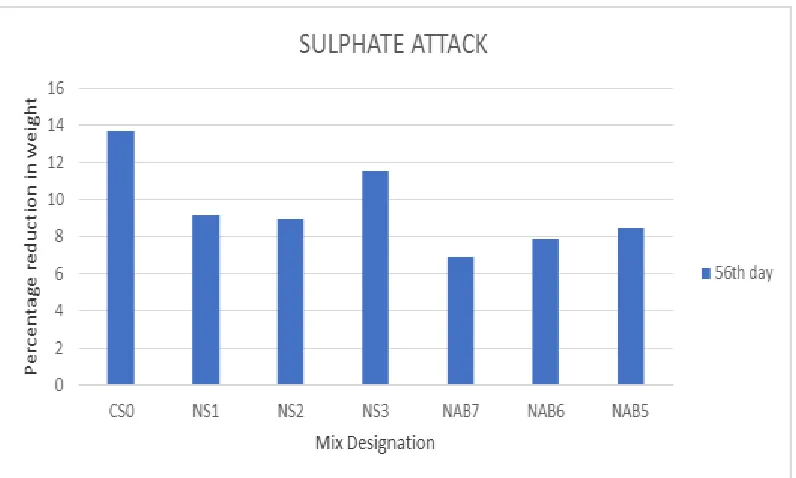
Fig. 2: Comparison of percentage reduction of strength for sulphate attack
From the test results, it is observed that the strength of all mixes decreased after 56-day immersion in 5% Magnesium Sulphate (MgSO4) solution compared to 56-day compressive strength of all mixes. The strength reduction is compared on the basis of
Chloride Attack test
Fig. 3: Comparison of percentage reduction of strength for chloride attack
From the results, it is observed that the 56-day strength of all mixes decreased after immersed in 5% Sodium Chloride (NaCl) solution. The strength reduction is compared on the basis of percentage reduction of strength. The maximum reduction of strength 8.60% is for normal concrete. For nanosilica concrete and bacterial concrete the percentage reduction of strength is lower compared to normal concrete. Increase in chloride resistance of nanosilica concrete is due to continuous reaction between nanosilica and lime liberated by hydration of cement, which continue to form additional C-S-H gel. This C-S-H gel fills the capillary pores and reduces the ingress of chloride ions. The percentage reduction of strength of bacterial concrete is also lower than nanosilica concrete. The minimum strength reduction 5.81% obtained for the mix BC5. It is clear that the addition of bacteria in concrete increases the resistance against chloride attack and it is due to the deposition of calcium carbonate in pores.
Water Absorption Test
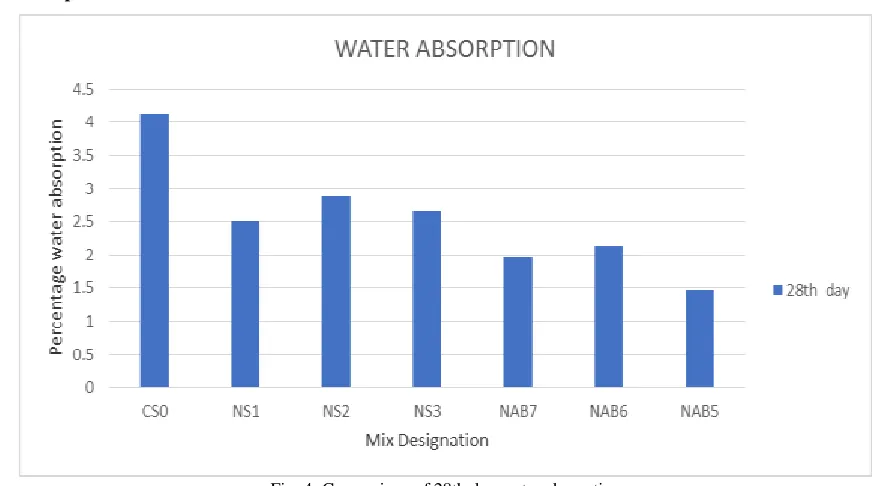
Fig. 4: Comparison of 28th day water absorption
Sorptivity Test
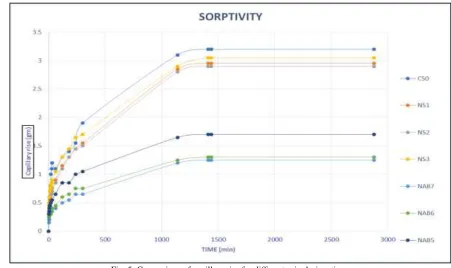
Fig. 5: Comparison of capillary rise for different mix designations
The sorptivity test was conducted on concrete cores obtained through core cutting. The cores were of 7 cm diameter and 3 cm thick. Comparing the results obtained, capillary rise of bacterial concrete with 107 cells/ml of bacterial concentration is the least.
The presence of bacteria resulted in a significant decrease in the capillary rise compared to normal and nanosilica concrete. The deposition of a layer of calcium carbonate on the surface and inside pores of the concrete specimens resulted in decrease in capillary rise for bacterial concrete. Also, the capillary rise in nanosilica concrete is lower than that of the normal concrete. This is predominantly due to the filling of the pores in the concrete due to nanoscale silica.
VII.CONCLUSIONS
Compressive strength of nanosilica concrete increased at 28 day compared to normal concrete. The maximum strength is obtained for the 3% replacement of cement with nanosilica and the strength increased by 13.325% compared to 28-day strength of normal concrete.
In bacterial concrete, the maximum strength for 28 day is obtained for the mix NAB7. For the mix NAB5 and NAB6, strength has increased compared to normal and nanosilica concrete but less than BC5. Comparing the strength of bacterial concrete, 28-day strength bacterial increased by a maximum of 18.14% with normal concrete.
The strength of all mixes decreased after 56-day immersion in Magnesium Sulphate (MgSO4) solution. The maximum
reduction of strength 13.72% is for normal concrete. The percentage reduction of strength of bacterial concrete is lower than nanosilica concrete and normal concrete. The minimum strength reduction 6.91% obtained for the mix NAB7. The resistance against sulphate attack is due to the deposition of calcium carbonate in the pores. For nanosilica concrete the minimum strength reduction for sulphate attack obtained is for NS2 mix designation and the compressive strength reduction is 8.92%.
The 56-day strength of all mixes decreased after immersed in Sodium Chloride (NaCl) solution. The maximum reduction of strength 8.60% is for normal concrete. The minimum reduction in strength was obtained for bacterial concrete of mix designation NAB7. It is clear that by the addition of bacteria in concrete increases the resistance against chloride attack. The percentage reduction of strength of bacterial concrete is also lower than nanosilica concrete. The minimum strength reduction for nanosilica concrete was obtained for NS3 mix designation and the reduction in strength is 7.23%.
The water absorption of nanosilica and bacterial concrete has decreased compared to normal concrete. The minimum water absorption was obtained for the mix NAB5 and was 1.47 %. The maximum water absorption was obtained for normal concrete and is 4.13%. The water absorption obtained for nanosilica concrete was comparatively lower than that of normal concrete but higher than bacterial concrete.
ACKNOWLEDGEMENT
It is my privilege to express sincere thanks to my project guide, Dr. Elson John, Professor, Civil Department, MACE for his advice and support throughout the project. I would also like to express my sincere gratitude to all my friends and classmates for their help and support.
REFERENCES
[1] Willem De Muynck, Dieter Debrouwer Nele De Belie, WillyVerstraete “Bacterial carbonate precipitation improves the durability of cementitious materials”
Cement and Concrete Research 38(2008) 1005-1014
[2] Stefan Grumbein, Dionis Minev, Marwa Tallawi, Kathrin Boettcher, Friedrich Prade, Franz Pfeiffer, Christian Ulrich Grosse, and Oliver Lieleg,
“Hydrophobic Properties of Biofilm-Enriched Hybrid Mortar”, Advanced Materials (2016)
[3] Li, Hui, Mao-hua Zhang, and Jin-ping Ou. "Abrasion resistance on concrete containing nanoparticles for pavement." Wear 260, no. 1112 (2006): 1262-1266.
[4] Hui-Li, Mao-hua Zhang, and Jin-Ping ou, (2007) “Flexural fatigue performance of concrete containing nano- particles for pavements”, Elseveir International