Open Access
R E S E A R C H A R T I C L E
© 2010 Bleijlevens et al; licensee BioMed Central Ltd. This is an Open Access article distributed under the terms of the Creative Com-mons Attribution License (http://creativecomCom-mons.org/licenses/by/2.0), which permits unrestricted use, distribution, and reproduc-tion in any medium, provided the original work is properly cited.
Research article
Relationship between location and activity in
injurious falls: an exploratory study
Michel HC Bleijlevens*
1,2, Joseph PM Diederiks
3, Marike RC Hendriks
2,4,5, Jolanda CM van Haastregt
1,2,
Harry FJM Crebolder
2,6and Jacques ThM van Eijk
2,7Abstract
Background: Knowledge about the circumstances under which injurious falls occur could provide healthcare workers with better tools to prevent falls and fall-related injuries. Therefore, we assessed whether older persons who sustain an injurious fall can be classified into specific fall types, based on a combination of fall location and activity up to the moment of the fall. In addition, we assessed whether specific injurious fall types are related to causes of the fall, consequences of the fall, socio-demographic characteristics, and health-related characteristics.
Methods: An exploratory, cross-sectional study design was used to identify injurious fall types. The study population comprised 333 community-dwelling Dutch elderly people aged 65 years or over who attended an accident and emergency department after a fall. All participants received a self-administered questionnaire after being discharged home. The questionnaire comprised items concerning circumstances of the injurious fall, causes of the fall,
consequences of the fall, socio-demographic characteristics and health-related characteristics. Injurious fall types were distinguished by analyzing data by means of HOMALS (homogeneity analysis by means of alternating least squares). Results: We identified 4 injurious fall types: 1) Indoor falls related to lavatory visits (hall and bathroom); 2) Indoor falls during other activities of daily living; 3) Outdoor falls near the home during instrumental activities of daily living; 4) Outdoor falls away from home, occurring during walking, cycling, and shopping for groceries. These injurious fall types were significantly related to age, cause of the fall, activity avoidance and daily functioning.
Conclusion: The face validity of the injurious fall typology is obvious. However, we found no relationship between the injurious fall types and severity of the consequences of the fall. Nevertheless, there appears to be a difference between the prevalence of fractures and the cause of the fall between the injurious fall types. Our data suggests that with regard to prevention of serious injuries, we should pay special attention to outdoor fallers and indoor fallers during lavatory visits. In addition, we should have special attention for causes of the fall. However, the conclusions reached in this exploratory analysis are tentative and need to be validated in a separate dataset.
Background
Falls and fall-related injuries in the elderly constitute a significant problem for individuals as well as for society. One out of three elderly persons aged 65 years or older falls at least once a year [1-3]. In half of all cases, a fall results in some kind of physical injury [4-6]. Approxi-mately 5% of all falls in community-dwelling elderly peo-ple result in a fracture. Another 5 to 10% of falls result in serious soft tissue injury, such as severe head injury and
joint dislocations [3,4,7-12]. In addition, falls can have considerable psychosocial consequences, like fear of fall-ing, activity avoidance, and social isolation [13,14]. How-ever, due to variations in the definitions and methods of measuring falls it is difficult to compare the outcomes of different studies [15].
Falls resulting in injuries require special attention, since these falls are responsible for increased levels of health-care utilization and consequent costs [6,16-21]. Unless we undertake effective preventive measures, the societal and economic burden of falls and fall-related injuries will increase in the coming decades as a result of the growing
* Correspondence: [email protected]
1 Department of Health Care and Nursing Science, Faculty of Health, Medicine
and Life Sciences Maastricht University, PO box 616, 6200 MD Maastricht, The Netherlands
number of aged people. It therefore seems important to develop fall prevention measures to reduce injurious falls. In recent decades, many interventions have been devel-oped to prevent falls in older persons [22]. Prevention programmes comprising multidisciplinary and multifac-torial interventions that screen for health and environ-mental risk factors and address these factors are expected to be particularly effective in preventing falls [1-3,22-25]. Nevertheless, systematic reviews provide only modest benefit of multifactorial programs in preventing falls [1-3,23-25]. Interventions to prevent fall-induced injuries, often aim to reduce the risk of fractures by taking single intervention measures like regular exercise, intake of nutritional supplements (calcium, vitamin D) or the use of hip protectors [3,23,26]. However, evidence for the effectiveness of these interventions is even more limited [3,23]. Therefore, we need to search for additional strate-gies to improve the effectiveness of these interventions. We should especially think of strategies to ensure less fall-related injuries if a fall does occur. For example, it may be useful to use energy-absorbent surfaces in high risk locations and hip protectors (injury-site protection) in order to decrease the impact of a fall. However, to be able to do this, we need insight in the circumstances of injurious falls. Knowledge about the circumstances under which injurious falls occur could provide healthcare workers with better tools to prevent falls and fall-related injuries. Several studies already reported on circum-stances under which falls occur, such as the location of the fall and the activity the person was engaged in up to the moment of the fall. However, these studies did not assess the combination of location and activity prior to the fall [9,27-33]. Therefore, the present study aims to answer the following questions:
1. Is it possible to establish a classification of injurious fall types based on fall location and activity up to the moment of the fall?
2. What is the relationship between injurious fall types on the one hand and socio-demographic char-acteristics, causes of the fall, consequences of the fall, and health-related characteristics on the other?
Methods
Design, participants, and setting
We carried out an exploratory, cross-sectional study to identify injurious fall types based on location of the fall and activity up to the moment of the fall. The population of this study was derived from a randomized controlled trial (RCT) assessing the effectiveness and cost-effective-ness of a multidisciplinary fall prevention programme [34,35]. Injurious falls were defined as falls resulting in some kind of physical injury for which persons attended the Accident & Emergency (A&E) department. The study design and protocols were approved by the Medical
Eth-ics Committee of Maastricht University and the Univer-sity Hospital Maastricht. Eligible persons were community-dwelling elderly people aged 65 years and over living in Maastricht (the Netherlands) or its sur-rounding area. All persons had visited the A&E depart-ment at the University Hospital Maastricht (which includes an out-of-hours GP service) for the conse-quences of a fall. Eligible persons were excluded if they were unable to communicate in Dutch, unable to com-plete questionnaires or interviews by telephone, cogni-tively impaired (a score of less than 4 on the Abbreviated Mental Test 4), admitted to a hospital or other institution for more than four weeks from the date of inclusion, per-manently bedridden or fully dependent on a wheelchair. A total of 333 persons were included in the present study.
Measurements
All participants received a self-administered question-naire after being discharged home (i.e. immediately after treatment of the injuries resulting from the fall or after a period of hospitalization). The mean time between the fall for which the participants visited the A&E depart-ment at the University Hospital Maastricht and complet-ing the questionnaire was 1.6 months (SD = 0.55). The questionnaire comprised the following items:
• Circumstances of the injurious fall: location of the fall and the person's activity up to the moment of the fall. Participants were asked to indicate where they were at the moment they fell and if they could indi-cate what they were doing. Participants could choose from a list of thirteen pre-defined locations and nine pre-defined activities, or describe other locations and activities up to the moment of the fall. Two research-ers (MB and JD) independently reviewed the answresearch-ers to these two questions and classified the answers into two variables, fall location (n = 10 categories) and activity (n = 9 categories). Disagreements were resolved by consensus or by consulting a third party (MH).
falling (1 item, five-point Likert scale), recuperation from the fall (1 item, five-point Likert scale); severity of the injury, defined as major or minor injury. Frac-tures, joint dislocations, and lacerations requiring sutures were considered major injuries. Lacerations without sutures, bruises, abrasions, sprains, and other minor soft tissue injuries were considered minor inju-ries. This classification is in accordance with the defi-nition of major and minor injuries reported by Nevitt and colleagues [9]. We asked a GP (HC) to assess all injuries that did not fit the definitions we used and to classify them into major or minor injury.
• Socio-demographic characteristics: age; gender; liv-ing situation (livliv-ing alone versus not livliv-ing alone); level of education (primary school or less versus more than primary school).
• Health-related characteristics: health complaints (19 items), perceived health (first item of the RAND-36) [36], daily functioning (Frenchay Activities Index, FAI). The FAI measures participation in social and instrumental daily living activities and comprises 15 items covering three dimensions: domestic chores; work/leisure; and outdoor activities. Individual item responses capture frequency of participation ranging from 0 (never or none) to 3 (daily or weekly). Sum-mary scores are derived by adding the items, with scores ranging from 0 (no activity) to 45 (very high participation) [37]; activities of daily living disability (ADL subscale of the Groningen Activity Restriction Scale, GARS). This subscale measures disability in the domain of personal care and comprises 11 items. The items refer to what respondents are able to do and not to their actual performance. The theoretical mini-mum is 11, indicating the absence of disability and the theoretical maximum 44, indicating that a person is highly disabled[38].
Statistics
SPSS statistical software (version 13) was used for analy-ses. Injurious fall types were distinguished by analyzing data about fall location and activity up to the moment of the fall by means of HOMALS (homogeneity analysis by means of alternating least squares). HOMALS quantifies the nominal variables fall location (10 answer categories) and activity (9 answer categories) by assigning numerical values to each answer category of the two variables and to each person in the study. HOMALS identifies associa-tions between fall location and activity in a two-dimen-sional plot. The outcome figure represents coordinates for every single person based on location and activity (participant scores). Coordinates of persons with differ-ent answer patterns are positioned far apart, whereas per-sons with similar answer patterns are positioned in relatively close proximity. Persons who are located closely
together in the plot constitute a homogeneous group. In this way were are able to identify injurious fall types [39].
If injurious fall types were identified we further investi-gated the relation between these injurious fall types on the one hand and socio-demographic characteristics, per-ceived cause of the fall, consequences of the fall, and health-related characteristics on the other by means of chi-square (α = 0.05) and one-way ANOVA with Tukey's criterion for post-hoc pairwise comparisons (α = 0.05).
Results
Circumstances of the falls
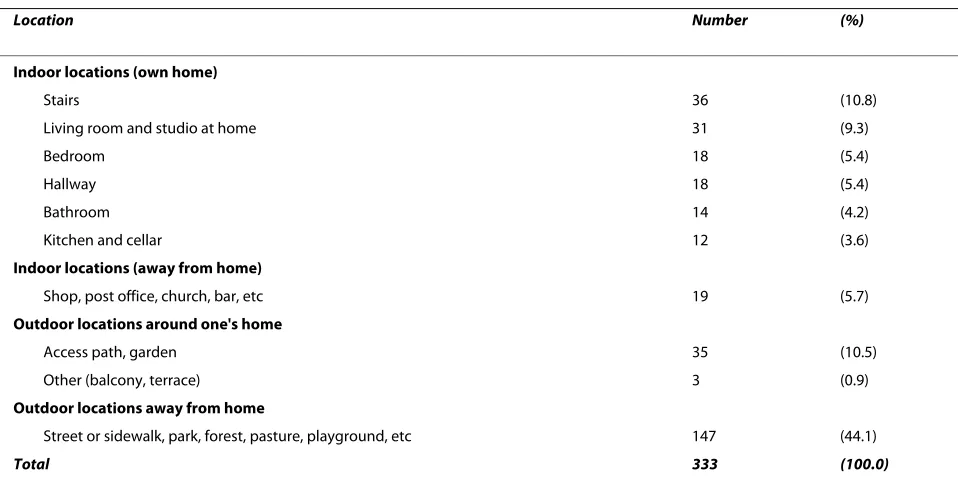
Table 1 shows the distribution of the fall locations. The majority of falls occurred outside the home. The location where most of the falls occurred was the street or side-walk (38%).
Table 2 shows the activities up to the moment of the fall. Not surprisingly, walking was the most prevalent activity up to the moment of a fall (21%). A substantial proportion of the falls was mobility-related (about 45%), while about 20% were related to household activities.
Types of injurious falls
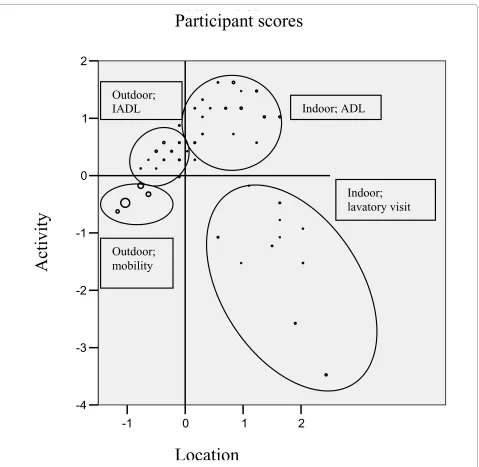
Figure 1 shows the distribution of persons within the two-dimensional HOMALS solution. It reduced the com-plexity of the available data, and yielded a two-dimen-sional solution with eigenvalues of 0.879 and 0.752 for the first and second dimension, respectively.
The first dimension represents the fall location ranging from outdoors (away from own home and around one's home) to indoors (indoor locations away from one's home and indoor in one's home (kitchen/cellar, stairs, liv-ing room/studio at home, hallway, bedroom, bathroom). The second dimension represents the activities and ranges from lavatory visit, through outdoor activities (cycling, walking, social activities) to indoor activities (IADL, ADL, catching and moving things, and ascending and descending stairs).
We identified a group of injurious falls occurring in the bathroom/hall during lavatory visit (group 1), which is opposed to a group of outdoor falls during walking, cycling, and shopping (group 4). Furthermore, we distin-guished a group of indoor falls during ADL (group 2) and a group outdoor falls around the respondents' home (gar-den) during IADL (group 3). This last group is located at the transition between outdoor locations and indoor locations. Based on these four groups of injurious falls, we defined the following four injurious fall types:
1. Indoor falls in the hall and bathroom, predomi-nantly during lavatory visit
2. Indoor falls (at other locations than the hall and bathroom), predominantly during ADL
4. Outdoor falls away from home, occurring predomi-nantly during walking, cycling, and shopping for gro-ceries
Perceived causes and consequences of the fall
The majority of the 333 respondents reported an extrin-sic cause of their fall (n = 169, 51%), whereas 112 respon-dents (34%) reported an intrinsic cause of their fall. A total of 36 respondents (11%) stated that the cause of their fall was a combination of intrinsic and extrinsic causes. One hundred and eighty respondents had sus-tained a fall resulting in a major injury (54%). Fractures had occurred in 121 of the 333 respondents who sus-tained an injurious fall (36%). About two third of the respondents experienced some fear of falling (n = 226),
and about half (n = 183) avoided activities because they were afraid to fall during these activities. Recuperation after the fall was judged reasonable to good by 236 respondents (71%).
Socio-demographic characteristics
All of the 333 participants were community-dwelling and ranged in age from 65 to 95 years, with a mean age 74.9 (SD 6.4). The majority of the study population was living with a partner at the time of the fall (77%), had higher than primary school education (72%), and was female (69%).
Health-related characteristics
The 333 respondents had an average of 6 health com-plaints (SD 4.1) and had mean scores on the FAI and Table 1: Distribution of fall locations (n = 333)
Location Number (%)
Indoor locations (own home)
Stairs 36 (10.8)
Living room and studio at home 31 (9.3)
Bedroom 18 (5.4)
Hallway 18 (5.4)
Bathroom 14 (4.2)
Kitchen and cellar 12 (3.6)
Indoor locations (away from home)
Shop, post office, church, bar, etc 19 (5.7)
Outdoor locations around one's home
Access path, garden 35 (10.5)
Other (balcony, terrace) 3 (0.9)
Outdoor locations away from home
Street or sidewalk, park, forest, pasture, playground, etc 147 (44.1)
Total 333 (100.0)
Table 2: Distribution of activities up to the moment of the fall (n = 333)
Activity Number (%)
Instrumental activities of daily living (IADL) 75 (22.5)
Walking 71 (21.3)
Catching and moving things 51 (15.3)
Activities of daily living (ADL) 33 (9.9)
Lavatory visit 22 (6.6)
Cycling 19 (5.7)
Social activities (for example: visiting friends or family or voluntary work) 16 (4.8)
Climbing stairs 9 (2.7)
Other 37 (11.1)
GARS of 23.5 (SD 8.7) and 17.2 (SD 6.7), respectively. A total of 302 (91%) persons rated their health as good to excellent.
Relationship between fall types and other characteristics
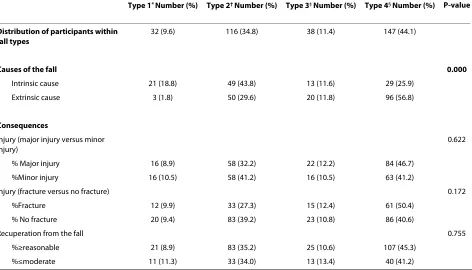
Table 3 shows that intrinsic causes of falls were signifi-cantly more frequent for indoor than for outdoor loca-tions (types 1 and 2 versus types 3 and 4). Moreover, type 4 fallers reported significantly more extrinsic causes than fallers in the other injurious fall types. We found no rela-tionship between injurious fall type and the
conse-quences of the fall, except for activity avoidance (p = 0.044). We found that persons who were younger than were predominantly involved in type 4 falls (table 4). Table 5 shows a number of significant differences in health-related characteristics between the four injurious fall types. We found a significant difference between type 3 and type 4 falls and between type 1 and type 4 falls in terms of the total number of health complaints. Type 4 fallers reported less health complaints. As regards the total FAI score, there was a significant difference between types 1 and 2 and between types 1 and 4. Type 1 fallers Figure 1 Injurious Fall Types in HOMALS Plot of Participant Scores. Figure 1 shows the optimal quantifications for both the location of the fall and the activity up to the moment of the fall, and reveals four types of injurious falls. The size of the dots represents the number of participants; the bigger a dot, the more participants it represents.
2
1
0
-1
Dimension 1
2
1
0
-1
-2
-3
-4
D
ime
ns
ion 2
Object Scores
Indoor; ADL
Outdoor;
IADL
Outdoor;
mobility
Indoor;
lavatory visit
Participant scores
Location
had less favourable scores on the FAI. Finally, the GARS score was significantly different between type 3 and type 4 falls and between type 1 and type 4 falls. Type 4 fallers had more favourable scores on the GARS.
Discussion
The circumstances under which injurious falls occur have been accurately described in previous studies [9,27-32]. Although fall location and activity were the most com-mon reported circumstances in these studies, none of the studies assessed whether persons sustaining injurious falls can be classified into specific fall types based on a combination of fall location and activity up to the moment of the fall. By doing so we identified 4 injurious fall types in the present study:
1. Indoor falls in the hall and bathroom, predomi-nantly during lavatory visits
2. Indoor falls (at other locations than the hall and bathroom), predominantly during ADL
3. Outdoor falls near the home (garden, access path), predominantly during IADL
4. Outdoor falls away from home, occurring predomi-nantly during walking, cycling, and shopping for gro-ceries
We concluded that type 1 fallers (indoor fallers in the hall and bathroom during lavatory visits) proved to belong to the most inactive group (lowest FAI score), hav-ing more problems cophav-ing with activities of daily livhav-ing (highest GARS score). Type 4 fallers (persons who experi-enced a fall away from home during mobility-related activities) predominantly were younger (aged <80), more active and have the most favourable daily functioning (GARS) scores. This group seems to consist of those elderly people who are less frail and still venture outside. A recent study confirms that persons who are less frail are engaged in productive activity [40]. We did not find a sig-nificant difference between injurious fall types in terms of the consequences of the fall, except for activity avoidance after the fall. Indoor falls, with the exception of those in the hall and bathroom during ADL (type 2 fallers) led to fewer fractures than the other fall types (approximately 10%). It has been suggested that indoor falls carry a lower risk of injury, because indoor surfaces may be more absorbing than outside ones [9], because persons who fall inside the house are more likely to fall on carpeted floors. Our data tend to support this suggestion. In addition, indoor falls may also carry a lower risk of injury because activities resulting in a fall inside the house may be less Table 3: Relationship of causes and consequences of the fall with injurious fall types
Type 1* Number (%) Type 2† Number (%) Type 3‡ Number (%) Type 4§ Number (%) P-value
Distribution of participants within fall types
32 (9.6) 116 (34.8) 38 (11.4) 147 (44.1)
Causes of the fall 0.000
Intrinsic cause 21 (18.8) 49 (43.8) 13 (11.6) 29 (25.9)
Extrinsic cause 3 (1.8) 50 (29.6) 20 (11.8) 96 (56.8)
Consequences
Injury (major injury versus minor injury)
0.622
% Major injury 16 (8.9) 58 (32.2) 22 (12.2) 84 (46.7)
%Minor injury 16 (10.5) 58 (41.2) 16 (10.5) 63 (41.2)
Injury (fracture versus no fracture) 0.172
%Fracture 12 (9.9) 33 (27.3) 15 (12.4) 61 (50.4)
% No fracture 20 (9.4) 83 (39.2) 23 (10.8) 86 (40.6)
Recuperation from the fall 0.755
%≥reasonable 21 (8.9) 83 (35.2) 25 (10.6) 107 (45.3)
%≤moderate 11 (11.3) 33 (34.0) 13 (13.4) 40 (41.2)
*Type 1: Indoor falls in the hall and bathroom, during lavatory visit
†Type 2: Indoor falls (at other locations than the hall and bathroom), during ADL ‡Type 3: Outdoor falls near the home, predominantly during IADL
vigorous than activities resulting in a fall outside the house, and therefore create less force at fall impact.
Our finding that a majority of the injurious falls took place outdoors is consistent with previous reports [5,29-31]. Walking accounted for the largest proportion of the activities respondents were engaged in, as was also reported from previous studies [5,30,31,41]. The younger age group was more often engaged in leisure activities and sustained more outdoor falls. The more frail older persons in our study tended to stay in their own house and predominantly fell during ADL and particularly dur-ing lavatory visits. These finddur-ings resemble the finddur-ings of previous studies, which found that vigorous persons
were more likely to fall outside the home during displace-ment activities such as climbing ladders or engaging in sports, while frail older persons fell during routine daily activities at home [42-44].
The present study has some limitations. First, all sub-jects in our sample sustained an injurious fall and attended the A&E department of a hospital to get treat-ment for the consequences of their injurious falls. We did not include persons who visited their GP with the conse-quences of an injurious fall. Moreover, we also did not select those persons who did not seek medical attention at all for the consequences of the injurious fall. Therefore it is likely that injuries after a fall, as represented in our Table 4: Relationship of socio-demographic characteristics and health-related characteristics with injurious fall types
Type 1* Number (%) Type 2† Number (%) Type 3‡ Number (%) Type 4§ Number (%) P-value
Distribution of participants within fall types
32 (9.6) 116 (34.8) 38 (11.4) 147 (44.1)
Socio-demographic characteristics
Age 0.036
% <80 year 22 (8.6) 82 (32.0) 28 (10.9) 124 (48.4)
% ≥80 year 10 (13.0) 34 (44.2) 10 (13.0) 23 (29.9)
Gender 0.121
% Female 21 (9.2) 80 (35.1) 20 (8.8) 107 (46.9)
% Male 11 (10.5) 36 (34.3) 18 (17.1) 40 (38.1)
Living situation 0.850
% Living alone 14 (9.7) 48 (33.3) 15 (10.4) 67 (46.5)
% Living with a partner 18 (9.6) 68 (36.2) 23 (12.2) 79 (42.0)
Level of education 0.748
% ≤primary school 10 (10.6) 33 (35.1) 13 (13.8) 38 (40.4)
% >primary school 22 (9.2) 83 (34.7) 25 (10.5) 109 (45.6)
Health-related characteristics
Fear of falling 0.981
% ≥sometimes 22 (9.7) 80 (35.4) 26 (11.5) 98 (43.4)
% ≤almost never 10 (9.3) 36 (33.6) 12 (11.2) 49 (45.8)
Activity avoidance 0.044
% ≥sometimes 20 (10.9) 71 (38.8) 24 (13.1) 68 (37.2)
% ≤almost never 12 (8.0) 45 (30.0) 14 (9.3) 79 (52.7)
Perceived health (≥good) 0.546
% ≥good 31 (10.3) 105 (34.8) 33 (10.9) 133 (44.0)
% ≤moderate 1 (3.2) 11 (35.5) 5 (16.1) 14 (45.2)
*Type 1: Indoor falls in the hall and bathroom, during lavatory visit
†Type 2: Indoor falls (at other locations than the hall and bathroom), during ADL ‡Type 3: Outdoor falls near the home, predominantly during IADL
population, are more serious compared to the injuries after a fall in a more general population of older adults. Second, all data were self-reported. Although the accu-racy of self-report data remains unclear, older people are often the only witnesses of their fall events, so self-reports remain an important source of information about falls [45]. Third, it should be noted that that the analyses are data-driven, meaning that there was no a priori hypotheses formulated. HOMALS was allowed to come up with the best partitioning between the four fall types.
Conclusion
In conclusion, we succeeded in classifying injurious falls based on fall location and activity up to the moment of the fall. The face validity of the injurious fall typology is obvious. However, we did not find any relationship between the four injurious fall types and severity of the consequences of the fall. Nevertheless, although not sig-nificant, there appears to be a difference between the prevalence of fractures between the injurious fall types. Outdoor falls and indoor falls related to lavatory visits resulted in more fractures, compared with indoor falls during ADL. This may indicate that with regard to the prevention of serious injuries, we should pay special attention to outdoor fallers and indoor fallers during lava-tory visits. In addition, there seems to be a difference in fall location and activity up to the moment of the fall between the younger and more active elderly, who still go outdoors, and the more frail older people who tend to stay indoors. Those persons who fell outdoors predomi-nantly reported an extrinsic cause of their fall, whereas those persons who fell indoors reported an intrinsic cause. Our data suggests that in case of a faller (<80 year) who has fallen outside and a faller (≥80 year) who has fallen inside we should have special attention for extrinsic causes and intrinsic causes, respectively. However, it is recognised more and more that falls are the consequence of the interaction between a number of risk factors, both intrinsic and extrinsic [10,11,32,46,47]. Therefore, the
conclusions reached in this exploratory analysis are ten-tative and need to be validated in a separate dataset.
Competing interests
The authors declare that they have no competing interests.
Authors' contributions
JD and MB developed the study design with input form all other authors. MB and MH coordinated the data collection and conducted the statistical analyses with input from JD. JH, HB and JE provided methodological input. MB drafted the manuscript with input from the other authors. All authors read and approved the final manuscript.
Acknowledgements
We would like to thank Natasja van Veen for her contribution to the data col-lection and the original idea for this manuscript. This study was funded by the Netherlands Organization for Health Research and Development (ZonMw), grant number 945-02-053.
Author Details
1Department of Health Care and Nursing Science, Faculty of Health, Medicine
and Life Sciences Maastricht University, PO box 616, 6200 MD Maastricht, The Netherlands, 2School for Public Health and Primary Care (Caphri), Faculty of
Health, Medicine and Life Sciences, Maastricht University, PO box 616, 6200 MD Maastricht, The Netherlands, 3Department of Healthcare studies, Faculty of
Health, Medicine and Life Sciences Maastricht University, PO box 616, 6200 MD Maastricht, The Netherlands, 4Department of Movement Science, Faculty of
Health, Medicine and Life Sciences Maastricht University, PO box 616, 6200 MD Maastricht, The Netherlands, 5Department of Health Organization Economics
and Policy, Faculty of Health, Medicine and Life Sciences Maastricht University, PO box 616, 6200 MD Maastricht, The Netherlands, 6Department of General
Practice, Faculty of Health, Medicine and Life Sciences, Maastricht University, Maastricht, The Netherlands and 7Department of Social Medicine, Faculty of
Health, Medicine and Life Sciences Maastricht University, PO box 616, 6200 MD Maastricht, The Netherlands
References
1. Gillespie LD, Gillespie WJ, Robertson MC, Lamb SE, Cumming RG, Rowe BH: Interventions for preventing falls in elderly people. Cochrane
Database Syst Rev 2003:CD000340.
2. Chang JT, Morton SC, Rubenstein LZ, Mojica WA, Maglione M, Suttorp MJ, Roth EA, Shekelle PG: Interventions for the prevention of falls in older adults: systematic review and meta-analysis of randomised clinical trials. Bmj 2004, 328(7441):680.
3. Kannus P, Sievanen H, Palvanen M, Jarvinen T, Parkkari J: Prevention of falls and consequent injuries in elderly people. Lancet 2005,
366(9500):1885-1893.
Received: 30 December 2009 Accepted: 18 June 2010 Published: 18 June 2010
This article is available from: http://www.biomedcentral.com/1471-2318/10/40 © 2010 Bleijlevens et al; licensee BioMed Central Ltd.
This is an Open Access article distributed under the terms of the Creative Commons Attribution License (http://creativecommons.org/licenses/by/2.0), which permits unrestricted use, distribution, and reproduction in any medium, provided the original work is properly cited. BMC Geriatrics 2010, 10:40
Table 5: ANOVA of health-related characteristics and injurious fall types
Type 1* (n = 32) Type 2† (n = 116) Type 3‡ (n = 38) Type 4§ (n = 147) P-value (ANOVA) P-value
Total health complaints
7.75 6.34 8.26 5.29 0.000 0.010 (types 1 and 4)
0.000 (types 3 and 4)
Total FAI|| score
(0-45) #
18.94 23.32 21.61 25.03 0.001 0.050 (types 1 and 2)
0.002 (types 1 and 4)
Total GARS¶ score
(11-44) #
20.16 17.36 19.58 15.90 0.001 0.010 (types 1 and 4)
0.000 (types 3 and 4)
*Type 1: Indoor falls in the hall and bathroom, during lavatory visit
†Type 2: Indoor falls (at other locations than the hall and bathroom), during ADL ‡Type 3: Outdoor falls near the home, predominantly during IADL
§Type 4: Outdoor falls away from home, occurring during mobility-related activities
4. Resnick B: Falls in a community of older adults: putting research into practice. Clin Nurs Res 1999, 8(3):251-266.
5. Yasamura S, Haga H, Niino N: Circumstances of injurious falls leading to medical care among elderly people living in a rural community. Archives of Gerontology and Geriatrics 1996, 23:95-109.
6. King MB, Tinetti ME: Falls in community-dwelling older persons. J Am Geriatr Soc 1995, 43(10):1146-1154.
7. Kannus P, Parkkari J, Koskinen S, Niemi S, Palvanen M, Jarvinen M, Vuori I:
Fall-induced injuries and deaths among older adults. JAMA 1999,
281(20):1895-1899.
8. Luukinen H, Koski K, Honkanen R, Kivela SL: Incidence of injury-causing falls among older adults by place of residence: a population-based study. J Am Geriatr Soc 1995, 43(8):871-876.
9. Nevitt MC, Cummings SR, Hudes ES: Risk factors for injurious falls: a prospective study. J Gerontol 1991, 46(5):M164-170.
10. O'Loughlin J, Robitaille Y, Bolvin JF, Suissa S: Incidence of and risk factors for falls and injurious falls among the community-dwelling elderly. Am J Epidemiol 1993, 137:342-354.
11. Tinetti ME, Speechley M, Ginter SF: Risk factors for falls among elderly persons living in the community. N Engl J Med 1988, 319(26):1701-1707. 12. Hoidrup S, Sorensen TI, Gronbaek M, Schroll M: Incidence and
characteristics of falls leading to hospital treatment: a one-year population surveillance study of the Danish population aged 45 years and over. Scand J Public Health 2003, 31(1):24-30.
13. Bloem BR, Boers I, Cramer M, Westendorp RGJ, Gerschlager W: Falls in the elderly: identification of risk factors. Wiener Klinische Wochenschrift 2001, 113:352-362.
14. Vellas BJ, Wayne SJ, Romero LJ, Baumgartner RN, Garry PJ: Fear of falling and restriction of mobility in elderly fallers. Age Ageing 1997,
26:189-193.
15. Hauer K, Lamb SE, Jorstad EC, Todd C, Becker C: Systematic review of definitions and methods of measuring falls in randomised controlled fall prevention trials. Age Ageing 2006, 35(1):5-10.
16. Scuffham P, Chaplin S, Legood R: Incidence and costs of unintentional falls in older people in the United Kingdom. J Epidemiol Community Health 2003, 57(9):740-744.
17. Newton JL, Kyle P, Liversidge P, Robinson G, Wilton K, Reeve P: The costs of falls in the community to the North East Ambulance Service. Emerg Med J 2006, 23(6):479-481.
18. Meerding WJ, Mulder S, van Beeck EF: Incidence and costs of injuries in The Netherlands. Eur J Public Health 2006, 16(3):272-278.
19. Bueno Cavanillas A, Padilla Ruiz F, Jimenez Moleon JJ, Peinado Alonso CA, Galvez Vargas R: Risk factors in falls among the elderly according to extrinsic and intrinsic precipitating causes. Eur J Epidemiol 2000,
16(9):849-859.
20. Carroll NV, Slattum PW, Cox FM: The cost of falls among the community-dwelling elderly. J Manag Care Pharm 2005, 11(4):307-316.
21. Hendriks MR, Evers SM, Bleijlevens MH, van Haastregt JC, Crebolder HF, van Eijk JT: Cost-effectiveness of a multidisciplinary fall prevention program in community-dwelling elderly people: A randomized controlled trial (ISRCTN 64716113). Int J Technol Assess Health Care 2008,
24(2):193-202.
22. Tinetti ME: Multifactorial fall-prevention strategies: time to retreat or advance. J Am Geriatr Soc 2008, 56(8):1563-1565.
23. McClure R, Turner C, Peel N, Spinks A, Eakin E, Hughes K: Population-based interventions for the prevention of fall-related injuries in older people. Cochrane Database Syst Rev 2005:CD004441.
24. Gates S, Lamb SE, Fisher JD, Cooke MW, Carter YH: Multifactorial assessment and targeted intervention for preventing falls and injuries among older people in community and emergency care settings: systematic review and meta-analysis. Bmj 2008, 336(7636):130-133. 25. Beswick AD, Rees K, Dieppe P, Ayis S, Gooberman-Hill R, Horwood J,
Ebrahim S: Complex interventions to improve physical function and maintain independent living in elderly people: a systematic review and meta-analysis. Lancet 2008, 371(9614):725-735.
26. Kannus P, Uusi-Rasi K, Palvanen M, Parkkari J: Non-pharmacological means to prevent fractures among older adults. Ann Med 2005,
37(4):303-310.
27. Nachreiner NM, Findorff MJ, Wyman JF, McCarthy TC: Circumstances and consequences of falls in community-dwelling older women. J Womens Health (Larchmt) 2007, 16(10):1437-1446.
28. Gazzola JM, Gananca FF, Aratani MC, Perracini MR, Gananca MM:
Circumstances and consequences of falls in elderly people with
vestibular disorder. Rev Bras Otorrinolaringol (Engl Ed) 2006,
72(3):388-392.
29. Mackenzie L, Byles J, Higginbotham N: A prospective community-based study of falls among older people in Australia: frequency,
circumstances, and consequences. OTJR 2002, 22(4):143-152. 30. Hill K, Schwarz J, Flicker L, Carroll S: Falls among healthy,
community-dwelling, older women: a prospective study of frequency,
circumstances, consequences, and prediction accuracy. Australian and New Zealand Journal of Public Health 1999, 23:41-48.
31. Berg WP, Alessio HM, Mills EM, Tong C: Circumstances and consequences of falls in independent community-dwelling older adults. Age Ageing 1997, 26(4):261-268.
32. Campbell AJ, Borrie MJ, Spears GF, Jackson SL, Brown JS, Fitzgerald JL:
Circumstances and consequences of falls experienced by a community population 70 years and over during a prospective study. Age Ageing 1990, 19(2):136-141.
33. Stevens JA, Thomas K, Teh L, Greenspan AI: Unintentional fall injuries associated with walkers and canes in older adults treated in U.S. emergency departments. J Am Geriatr Soc 2009, 57(8):1464-1469. 34. Hendriks MR, Bleijlevens MH, van Haastregt JC, Crebolder HF, Diederiks JP,
Evers SM, Mulder WJ, Kempen GI, van Rossum E, Ruijgrok JM, et al.: Lack of effectiveness of a multidisciplinary fall-prevention program in elderly people at risk: a randomized, controlled trial. J Am Geriatr Soc 2008,
56(8):1390-1397.
35. Hendriks MR, van Haastregt JC, Diederiks JP, Evers SM, Crebolder HF, van Eijk JT: Effectiveness and cost-effectiveness of a multidisciplinary intervention programme to prevent new falls and functional decline among elderly persons at risk: design of a replicated randomised controlled trial [ISRCTN64716113]. BMC Public Health 2005:5-6. 36. van der Zee KI, Sanderman R: Het meten van de algemene
gezondheidstoestand met de RAND-36: een handleiding [Measuring general health with the RAND-36:manual]. Groningen: Noordelijk Centrum voor Gezondheidsvraagstukken, Rijksuniversiteit Groningen; 1993.
37. Schuling J, de Haan R, Limburg M, Groenier KH: The Frenchay Activities Index. Assessment of functional status in stroke patients. Stroke 1993,
24(8):1173-1177.
38. Kempen GI, Miedema I, Ormel J, Molenaar W: The assessment of disability with the Groningen Activity Restriction Scale. Conceptual framework and psychometric properties. Soc Sci Med 1996,
43(11):1601-1610.
39. Baumert U, Golan I, Redlich M, Aknin JJ, Muessig D: Cleidocranial dysplasia: molecular genetic analysis and phenotypic-based description of a Middle European patient group. Am J Med Genet A 2005, 139(2):78-85.
40. Jung Y, Gruenewald TL, Seeman TE, Sarkisian CA: Productive activities and development of frailty in older adults. J Gerontol B Psychol Sci Soc Sci 2010, 65B(2):256-261.
41. Ryynanen OP, Kivela SL, Honkanen R: Times, places, and mechanisms of falls among the elderly. Zeitschrift fur Gerontologie 1991, 24:154-161. 42. Speechley M, Tinetti M: Falls and injuries in frail and vigorous
community elderly persons. J Am Geriatr Soc 1991, 39(1):46-52. 43. Talbot LA, Musiol RJ, Witham EK, Metter EJ: Falls in young, middle-aged
and older community dwelling adults perceived cause, environmental factors and injury. BMC Public Health 2005, 5:86.
44. Stalenhoef PA, Diederiks JP, Knottnerus JA, de Witte LP, Crebolder HF: The construction of a patient record-based risk model for recurrent falls among elderly people living in the community. Fam Pract 2000,
17(6):490-496.
45. Dickens J, Jones M, Johansen A: Falls definition--reliability of patients' own reports. Age Ageing 2006, 35(4):450-451.
46. Lord SR, Menz HB, Sherrington C: Home environment risk factors for falls in older people and the efficacy of home modifications. Age Ageing 2006, 35(Suppl 2):ii55-ii59.
47. Nevitt MC, Cummings SR, Kidd S, Black D: Risk factor for recurrent nonsyncopal falls. JAMA 1989, 261:2663-2668.
Pre-publication history
The pre-publication history for this paper can be accessed here: http://www.biomedcentral.com/1471-2318/10/40/prepub
doi: 10.1186/1471-2318-10-40