
R E S E A R C H
Open Access
Improved strategy for phylogenetic analysis of
classical swine fever virus based on full-length
E2 encoding sequences
Alexander Postel
1, Stefanie Schmeiser
1, Jennifer Bernau
1, Alexandra Meindl-Boehmer
1, Gediminas Pridotkas
2,3,
Zuzana Dirbakova
4, Miroslav Mojzis
4and Paul Becher
1*Abstract
Molecular epidemiology has proven to be an essential tool in the control of classical swine fever (CSF) and its use has significantly increased during the past two decades. Phylogenetic analysis is a prerequisite for virus tracing and thus allows implementing more effective control measures. So far, fragments of the 5´NTR (150 nucleotides, nt) and the E2 gene (190 nt) have frequently been used for phylogenetic analyses. The short sequence lengths represent a limiting factor for differentiation of closely related isolates and also for confidence levels of proposed CSFV groups and subgroups. In this study, we used a set of 33 CSFV isolates in order to determine the nucleotide sequences of a 3508–3510 nt region within the 5´ terminal third of the viral genome. Including 22 additional sequences from GenBank database different regions of the genome, comprising the formerly used short 5´NTR and E2 fragments as well as the genomic regions encoding the individual viral proteins Npro, C, Erns, E1, and E2, were compared with respect to variability and suitability for phylogenetic analysis. Full-length E2 encoding sequences (1119 nt) proved to be most suitable for reliable and statistically significant phylogeny and analyses revealed results as good as obtained with the much longer entire 5´NTR-E2 sequences. This strategy is therefore recommended by the EU and OIE Reference Laboratory for CSF as it provides a solid and improved basis for CSFV molecular epidemiology. Finally, the power of this method is illustrated by the phylogenetic analysis of closely related CSFV isolates from a recent outbreak in Lithuania.
Introduction
Classical swine fever is a devastating animal disease of great economic concern worldwide [1]. The causative agent, classical swine fever virus (CSFV), is highly conta-gious and infects domestic pigs as well as wild boar. In-fection is transmitted either by direct or indirect contact between infected pigs, by contaminated food or swill
feeding, but also by transmission via contaminated
objects and/or persons. Molecular virus tracing helps to understand sources and pathways of infection and there-fore is an important tool for disease control [2,3].
During the past two decades technical developments like real-time RT-PCR promoted a reliable and rapid CSF diagnosis [4-6]. CSFV can be divided into three
genotypes (1, 2 and 3), each comprising three or four subgenotypes (1.1-1.3; 2.1-2.3; 3.1-3.4) [7,8]. To assign a newly identified CSFV isolate to a genotype and to describe its phylogenetic relations to other known isolates, nucleotide sequencing is mandatory as other techniques like restriction enzyme analysis may allow segregation on genotype level, but resolution on subge-notype level is often insufficient [7,9-11]. Within the highly variable genusPestivirus(single stranded positive-sense RNA viruses) CSFV is the least variable member [7]. During long lasting epidemics, CSFV has been shown to be relatively stable and only few nucleotide changes can be expected [7,12,13]. For example, during an outbreak in the Netherlands in 1997–1998 sixteen CSFV isolates were genetically characterized. In a time span of more than one year only 0–3 differing nucleo-tides were observed in the variable E1/E2 encoding region (850 nt) and no nucleotide exchanges were found in a 321 nt fragment located in the 5´NTR [13].
* Correspondence:[email protected]
1EU and OIE Reference Laboratory for Classical Swine Fever, Institute of
Virology, Department of Infectious Diseases, University of Veterinary Medicine, Hannover, Germany
Full list of author information is available at the end of the article
Substitution rates between 2 × 10⁻³ and 5 × 10⁻⁴ substitu-tions/nucleotide/year were estimated for different regions of the CSFV genome [7,14,15]. These examples emphasize that a region of high variability and adequate length is required for reliable phylogenetic analyses and molecular epidemiological investigations.
Until now, genetic typing mainly relies on a short frag-ment (150 nucleotides) of the 5´ non translated region (NTR) [7,8,16]. Furthermore, two additional genome fragments of 190 nt and 409 nt length, located in the E2 [7] and NS5B [17] coding regions, respectively, were proposed for a standardized and harmonized strategy for genetic characterization of CSFV [8]. For this reason, sequences of these three regions were included in the CSFV database (CSFV-DB) of the EU Reference Labora-tory for CSF (EURL) in Hannover [18]. To date (January 1st, 2012), this web based database provides 662 5´NTR fragment, 526 E2 fragment, and 44 NS5B fragment sequences originating from 927 different CSFV isolates. Furthermore, 592 reference sequences from GenBank are included in CSFV-DB, resulting in a total of 1519 se-quence entries. The CSFV collection at the EURL and its corresponding sequence database became a valuable tool for CSFV control in Europe.
In today’s routine diagnostic, genetic typing of CSFV relies on sequences of the 5´NTR and E2 fragments to characterize individual virus isolates. However, the short sequence lengths of these fragments often hamper the ability to distinguish closely related isolates during an outbreak situation and result in phylogenetic analyses showing only low statistical significance as reflected by bootstrap values below 70% [8]. These limitations are the reason for an ongoing debate on how to best improve the strategy for molecular characterization, phylogenetic analysis and classification of CSFV isolates into defined subgenotypes.
New technologies like high throughput sequencing allow rapid determination of whole CSFV genome sequences, but are still cost extensive and only available in a few institutions. Therefore their usage is limited to special scenarios [12]. To achieve broad acceptance, a new strategy should improve the quality of generated data while still being easily practicable, robust and hav-ing a good cost-benefit relation.
The rapidly growing number of full-length E2 (1119 nt) encoding sequences in public databases like GenBank and recent publications reflect the interest in this gen-omic region [19-21]. In addition to the phylogenetic as-pect, the E2 coding sequence is of particular interest as the E2 protein is the major immunogen besides the Erns and NS3 proteins [20,22]. For that reason E2 and Erns are suitable targets for diagnostic purposes, including development and implementation of a DIVA (differenti-ating infected from vaccinated animals) strategy in
connection with a live-attenuated marker vaccine [23,24]. Full-length E2 gene sequencing may extend the know-ledge about conserved epitopes in the E2 protein suitable for the development of reliable diagnostic tools.
The aim of the present study was to establish an improved strategy for genetic typing of CSFV isolates. The results of our work demonstrate that phylogenetic analyses of either 5´NTR-E2 or full-length E2 encoding sequences allow a clear assignment of CSFV isolates to a subgenotype, being supported by reliable bootstrap values. Discrimination of highly similar virus isolates which were not distinguishable by the analysis of the previously used short, partial 5´NTR or E2 fragment sequences is also possible. Compared to the latter, the analysis of full-length E2 encoding sequences pro-vides a considerable increase of information without requiring more time or higher expenses and is therefore recommended to assist future epidemiological studies on CSF.
Materials and methods CSFV isolates and sequences
variability, but were not included in the phylogenetic ana-lyses to reduce tree sizes.
Furthermore, CSFV positive samples were obtained from a CSF outbreak in Lithuania in 2011. From each of the five pig holdings affected, two samples were chosen for determination of full-length E2 encoding sequences and subsequent phylogenetic analysis. The five cases were connected geographically and in time as they
occurred in holdings with a maximum distance of 15 km in between and within a time period of 38 days. The first case (confirmed on June, 1st), the second and the third case (June, 3rd) were connected directly to each other as the respective pig holdings belonged to the same com-pany. From the first affected holding piglets were deliv-ered to holding no.2 (on May, 10th) and holding no.3 (on May, 19th). The epidemiological link to the cases
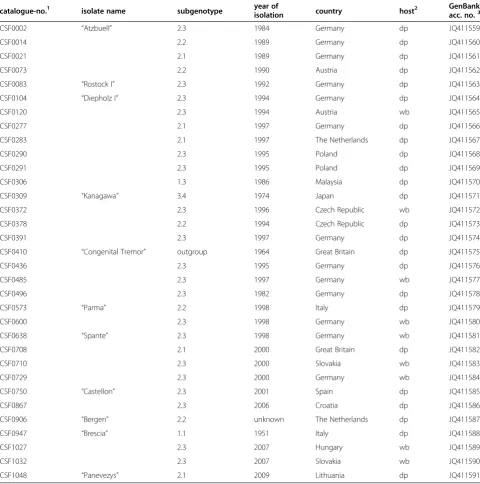
Table 1 CSFV isolates selected from EURL virus database.
catalogue-no.1 isolate name subgenotype year ofisolation country host2 GenBankacc. no.3
CSF0002 “Atzbuell” 2.3 1984 Germany dp JQ411559
CSF0014 2.2 1989 Germany dp JQ411560
CSF0021 2.1 1989 Germany dp JQ411561
CSF0073 2.2 1990 Austria dp JQ411562
CSF0083 “Rostock I” 2.3 1992 Germany dp JQ411563
CSF0104 “Diepholz I” 2.3 1994 Germany dp JQ411564
CSF0120 2.3 1994 Austria wb JQ411565
CSF0277 2.1 1997 Germany dp JQ411566
CSF0283 2.1 1997 The Netherlands dp JQ411567
CSF0290 2.3 1995 Poland dp JQ411568
CSF0291 2.3 1995 Poland dp JQ411569
CSF0306 1.3 1986 Malaysia dp JQ411570
CSF0309 “Kanagawa” 3.4 1974 Japan dp JQ411571
CSF0372 2.3 1996 Czech Republic wb JQ411572
CSF0378 2.2 1994 Czech Republic dp JQ411573
CSF0391 2.3 1997 Germany dp JQ411574
CSF0410 “Congenital Tremor” outgroup 1964 Great Britain dp JQ411575
CSF0436 2.3 1995 Germany dp JQ411576
CSF0485 2.3 1997 Germany wb JQ411577
CSF0496 2.3 1982 Germany dp JQ411578
CSF0573 “Parma” 2.2 1998 Italy dp JQ411579
CSF0600 2.3 1998 Germany wb JQ411580
CSF0638 “Spante” 2.3 1998 Germany wb JQ411581
CSF0708 2.1 2000 Great Britain dp JQ411582
CSF0710 2.3 2000 Slovakia wb JQ411583
CSF0729 2.3 2000 Germany wb JQ411584
CSF0750 “Castellon” 2.3 2001 Spain dp JQ411585
CSF0867 2.3 2006 Croatia dp JQ411586
CSF0906 “Bergen” 2.2 unknown The Netherlands dp JQ411587
CSF0947 “Brescia” 1.1 1951 Italy dp JQ411588
CSF1027 2.3 2007 Hungary wb JQ411589
CSF1032 2.3 2007 Slovakia wb JQ411590
CSF1048 “Panevezys” 2.1 2009 Lithuania dp JQ411591
1
All virus isolates were kindly provided by collaborating institutes, which are named as references in the CSF database and in the respective GenBank entries.
2
dp, domestic pig; wb, wild boar.
3
no.4 (confirmed on July, 4th) and no.5 (July, 8th) is unknown, but it was speculated that virus was trans-mitted by movement between the farms.
Isolation of viral RNA
All RNAs were isolated from cell culture supernatants derived from cells infected with CSFV isolates of the CSF virus collection located at the EURL, Hannover.
RNA was purified from 140 μL supernatant of an
infected PK15 cell culture using the ViralAmp RNA purification kit as recommended by the manufacturer (Qiagen, Hilden, Germany). RNA from samples of the recent CSF outbreak in Lithuania in 2011 was isolated from organ and serum samples using the ViralAmp and the RNeasy kit (Qiagen), respectively.
Reverse transcriptase-polymerase chain reaction (RT-PCR) Prepared RNA (6μL) was added to 26μL of the reaction mix containing 8μL 5× RT buffer (MLV-RT kit, Invitro-gen, Karlsruhe, Germany) and 2.5 mM of each dNTP (Roche, Mannheim, Germany) for pre-incubation (70°C,
5 min; 4°C). Meanwhile, 8 μL RT mastermix (MLV-RT
kit, Invitrogen) containing 0.35 pmol DTT, 400 ng
random hexamers, 5 U RNase inhibitor and 400 U M-MLV reverse transcriptase were prepared and added to the pre-incubated reaction mix. Thermocycling was per-formed under following conditions: 22°C, 5 min; 37°C, 15 min; 42°C, 30 min; 99°C, 5 min; 4°C. The obtained
cDNA (1 μL) was used as PCR template for
amplifi-cation with a high fidelity Phusion polymerase (Finn-Enzymes, Fisher Scientific, Schwerte, Germany). The
reaction mix (50 μL) contained 10 pmol of each
dNTP (Roche), 30 pmol of each primer (Sigma-Aldrich, Taufkirchen, Germany), 5 × reaction buffer (Phusion Buffer HF) and 1 U Phusion polymerase. The thermo profile was set up as follows: 98°C, 30 s; 35 × (98°C, 15 s; 54°C, 30 s; 72°C, 50 s); 72°C, 5 min; 4°C.
In case that amounts of generated amplicon were in-sufficient, a second PCR run with the same pair of pri-mers was performed using a DeepVent proofreading polymerase (New England BioLabs, Frankfurt am Main,
Germany). The PCR product from Phusion PCR (8 μL)
was added to a mastermix (92 μL) containing 30 pmol of each dNTP (Roche), 100 pmol of each primer, 10 × Thermopol reaction Buffer (New England BioLabs) and 2 U DeepVent Polymerase. The PCR program was set up as follows: 94°C, 30 s; 35 × (94°C, 30 s; 54°C, 30 s; 72°C, 1:45 min); 72°C, 5 min; 4°C.
Double stranded nucleotide sequencing
A set of CSFV reference isolates (n= 33) from the EURL virus database was used to expand the knowledge on sequence variability in the 5´-region of the CSFV ge-nome. A region of 3508–3510 nucleotides including the commonly sequenced 5´NTR fragment, the region
encoding for the N-terminal protease Npro and the
structural proteins (C, Erns, E1 and E2) was amplified by RT-PCR as described above. RT-PCR amplicons were separated by agarose gel electrophoresis (100 V, 30 min) and purified using a commercial kit according to the manufacturer’s recommendations (GeneJet Gel Extrac-tion Kit, Fermentas, St. Leon-Rot, Germany). Band elu-tion from agarose gel resulting in an amount of at least 15 ng DNA/μL was suitable to obtain sequences of good quality and length of 800–1000 nucleotides. Purified amplicons were subjected to double-stranded Sanger sequencing (Qiagen). Broad reacting sequencing primers were designed using sequences available from the Gen-Bank database (Table 2).
Sequence analysis
Sequences were analyzed, edited and trimmed using the freeware program Gentle (by M. Manske). Multiple
Sequence Alignment was performed by the “MUltiple
Sequence Comparison by Log- Expectation”tool (MUSCLE) [26]. Different parts of these sequences were used for phylogenetic analysis. Distances of sequences were
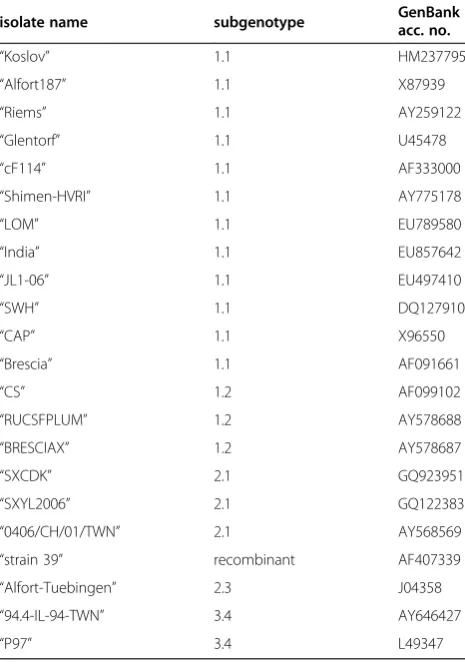
Table 2 GenBank sequences used for phylogenetic analyses.
isolate name subgenotype GenBankacc. no.
“Koslov” 1.1 HM237795
“Alfort187” 1.1 X87939
“Riems” 1.1 AY259122
“Glentorf” 1.1 U45478
“cF114” 1.1 AF333000
“Shimen-HVRI” 1.1 AY775178
“LOM” 1.1 EU789580
“India” 1.1 EU857642
“JL1-06” 1.1 EU497410
“SWH” 1.1 DQ127910
“CAP” 1.1 X96550
“Brescia” 1.1 AF091661
“CS” 1.2 AF099102
“RUCSFPLUM” 1.2 AY578688
“BRESCIAX” 1.2 AY578687
“SXCDK” 2.1 GQ923951
“SXYL2006” 2.1 GQ122383
“0406/CH/01/TWN” 2.1 AY568569
“strain 39” recombinant AF407339
“Alfort-Tuebingen” 2.3 J04358
“94.4-IL-94-TWN” 3.4 AY646427
calculated by the Kimura-2 parameter method [27] and trees were generated by Neighbor Joining using HUSAR 5.0 (DKFZ, Heidelberg, Germany) which provides the GCG [28] and PHYLIP software packages [29-31]. Alter-natively, sequence distances were analyzed by the Hasegawa-Kishino-Yano (HKY) substitution model and phylogenetic trees were generated by Maximum Likeli-hood (PHYLIP) and Bayesian analysis (MrBayes), re-spectively, using the TOPALI v2.5 software [32]. Bayesian analysis was performed in two runs, for 2 mil-lion generations, 1000 samples and 20% burn-in. Trees were rooted at strain Great Britain/1964 “Congenital Tremor”(CSF0410, [GenBank: JQ411575]) and displayed using Dendroscope 3.0 beta [33]. Similarity Blotting and Bootscanning was performed with the genotype 2.1 and 2.2 isolates using the SimPlot v3.5.1 software (RaySoft, John Hopkins University). Variability of nucleotide posi-tions was analyzed by Mega5 [34] using an extended dataset including additional available sequences (n= 85).
Results
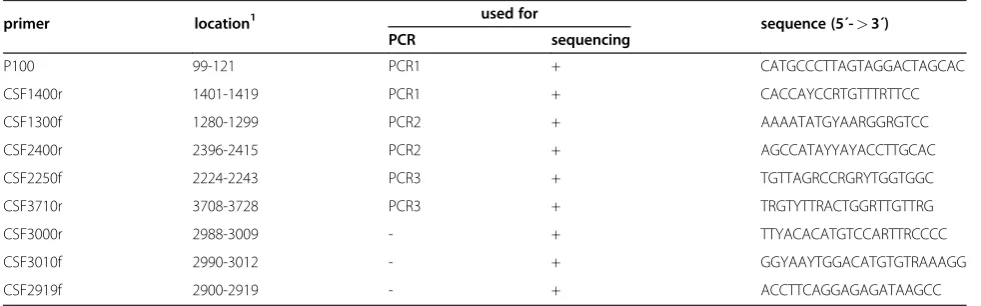
Amplification and determination of CSFV sequences The 5´-terminal part of the CSFV genome was amplified in three overlapping amplicons to determine a nucleo-tide sequence of 3508–3510 nucleotides, comprising a part of the 5´NTR and the genomic region encoding Npro, C, Erns, E1, E2, and the N-terminal two thirds of p7 (Figure 1). For this purpose, regions conserved among all CSFV genotypes were identified by multiple sequence alignment using 52 CSFV sequences available from GenBank. Three primer pairs for RT-PCR based amplification of the target sequences and two additional sequencing primers located in the E2 coding sequence were designed (Figure 1, Table 3). For all of the 33 iso-lates included in this study, independently of their geno-type, PCR products were obtained (Table 1). PCR amplicons of PCR1, PCR2, and PCR3 showed the expected calculated sizes of 1321 nt, 1136 nt, and 1505 nt, respectively. For each isolate sequences of the three PCR products were determined by double-stranded se-quencing and were then assembled to obtain sequences
of the 5´NTR-E2 region [GenBank:
JQ411559-JQ411591]. GenBank search revealed that the newly determined 5´NTR-E2 sequence of isolate CSF0277 [GenBank: JQ411566] is identical to GenBank entries of two isolates from the same region (“Paderborn”) [Gen-Bank: GQ902941, AY072924]. The sequence of isolate CSF1048 “Panevezys” [GenBank: JQ411591] is identical to the previously published complete genome sequence of this isolate [GenBank: HQ148063].
Genetic variability of CSFV
The genetic variability was calculated for all available
CSFV sequences (n= 85) including the 33 newly
determined sequences [GenBank: JQ411559- JQ411591]. Length of the 5´NTR-E2 region differs between 3508 nucleotides and 3510 nucleotides due to one or two add-itional adenine bases of a poly-adenine stretch located in the 5´NTR. The majority of 5´NTR-E2 sequences (n= 62) has a length of 3508 nucleotides, 22 sequences own a length of 3509 nucleotides, and one sequence has a length of 3510 nucleotides [GU233731]. Calculations were performed for the 5´NTR and E2 fragments as well as for the sequences coding for the non-structural pro-tein Npro and the structural proteins to determine the intrinsic discriminatory ability of the individual genomic regions (Table 4). Furthermore, variability was deter-mined for all isolates independently of their genotype or subgenotype assignment (n= 85) as well as on genotype level for genotype 2 (n= 48) and on subgenotype level for genotype 2.3 (n= 28). Genotype 2 and subgenotypes 2.3 were chosen as representatives because they include the majority of the more recently identified CSFV iso-lates from Europe and reflect the largest number of available sequences. Analysis of the entire 5´NTR-E2 sequences revealed that about 46% of the positions were variable when all genotypes were included, while 34% and 17% variability were observed within genotype 2 and subgenotype 2.3, respectively. With the exception of the more conserved 5´NTR (9% variable nucleotide posi-tions), variability in the different regions encoding the individual proteins was quite uniform (Table 4). The Npro coding sequence and the E2 fragment exhibited a slightly increased variability being about 4-7% higher than the variability of the entire 5´NTR-E2 region (Table 4).
Genetic distances on genotype, subgenotype and isolate level
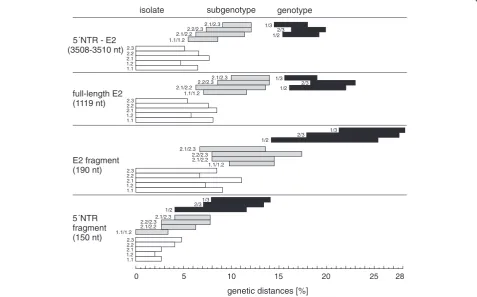
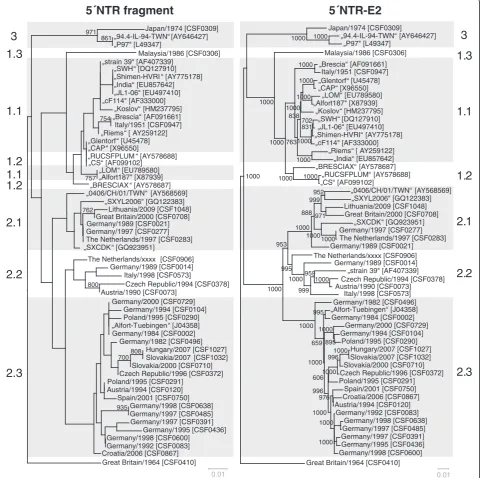
Matrices of genetic distances were generated using the 5´NTR fragment, the E2 fragment, the full-length E2 and the 5´NTR-E2 sequence to find out whether it is possible to establish breakpoints between genotype, sub-genotype and isolate level (Figure 2). Genetic distances of longer stretches like the full-length E2 and the 5´NTR-E2 sequences allowed clear segregation between genotypes and subgenotypes, respectively. Genetic
dis-tances of the 5´NTR-E2 region varied from≤7.7%
of the same subgenotype. Particularly, the observed high variability within genotype 1 as well as between subge-notypes 2.1 and 2.2 does not allow a clear assignment of CSFV isolates to defined/established subgenotypes by the level of genetic distances (Figure 2). A clear segrega-tion can be observed between subgenotypes 2.3 and sub-genotypes 2.1 or 2.2, but not between subsub-genotypes 2.1 and 2.2. To examine whether high similarity of certain sequences within 2.1 and 2.2 might be the result of re-combination events, Similarity Plotting and Boot Scan-ning analysis were performed for isolate CSF0021 (subgenotype 2.1) and isolate The Netherlands/xxxx “Bergen” (CSF0906, subgenotype 2.2) with other repre-sentatives of the subgenotypes 2.1 and 2.2. Both isolates exhibit a genetic distance of 6.3% to each other, whereas
the genetic distances among individual isolates belong-ing to subgroup 2.1 was up to 7.7% (isolates “0406/CH/ 01/TWN” and “SXCDK”). SimPlot analysis of isolate The Netherlands/xxxx “Bergen” showed that the se-quence stretch between positions 2941–3509 is more similar to 2.1 sequences than to 2.2 sequences. BootScan was not able to clarify whether this is due to recombin-ation between 2.1 and 2.2 isolates (data not shown).
The Chinese CSFV “strain 39” [GenBank: AF407339] is the only naturally emerged recombinant CSFV described so far.“Strain 39” was reported to own a sub-genotype 1.1 sequence (strain cF114-like [GenBank: AF333000]) with a replacement of positions 525 and 8398 by a subgenotype 2.1 sequence (GXWZ02-like [GenBank: AY367767]) [35]. Close relatedness between structural proteins non structural proteins
N C E E1 E2 p7
3707 PCR1
PCR2
PCR3
P100 1400r
1300f 2400r
2250f 3710r
3010f 3000r
200
1119 nt 5´NTR frag.
150 nt 190 nt
E2 frag.
N C
E1
E2 504 nt
297 nt 681 nt
585 nt
pro
rns pro rns
2919f
5´NTR 3´NTR
generated PCR amplicons
analyzed sequence
regions
5´NTR
5´NTR - E2 (3508-3510 nt) E
Figure 1Strategy for RT-PCR and nucleotide sequencing.The 5´-terminal portion of the classical swine fever virus genome encompassing parts of the 5´ nontranslated region (NTR) and the region encoding the N-terminal autoprotease Nproand the structural proteins C, Erns, E1, and E2 was amplified by RT-PCR in three overlapping amplicons (PCR1, PCR2 and PCR3). The analyzed regions include the commonly used 5´NTR fragment (150 nt) and E2 fragment (190 nt) sequences. Location of primers (indicated by arrows) and sequence length of the 5´NTR-E2 region (3508–3510 nt) correspond to the sequence of CSFV strain Alfort187 [GenBank: X87939] and can differ between the isolates due to presence or absence of nucleotides in the 5´NTR. Further information on all primers is given in Table 3.
Table 3 Primers used for RT-PCR and nucleotide sequencing.
primer location1 used for sequence (5´->3´)
PCR sequencing
P100 99-121 PCR1 + CATGCCCTTAGTAGGACTAGCAC
CSF1400r 1401-1419 PCR1 + CACCAYCCRTGTTTRTTCC
CSF1300f 1280-1299 PCR2 + AAAATATGYAARGGRGTCC
CSF2400r 2396-2415 PCR2 + AGCCATAYYAYACCTTGCAC
CSF2250f 2224-2243 PCR3 + TGTTAGRCCRGRYTGGTGGC
CSF3710r 3708-3728 PCR3 + TRGTYTTRACTGGRTTGTTRG
CSF3000r 2988-3009 - + TTYACACATGTCCARTTRCCCC
CSF3010f 2990-3012 - + GGYAAYTGGACATGTGTRAAAGG
CSF2919f 2900-2919 - + ACCTTCAGGAGAGATAAGCC
1
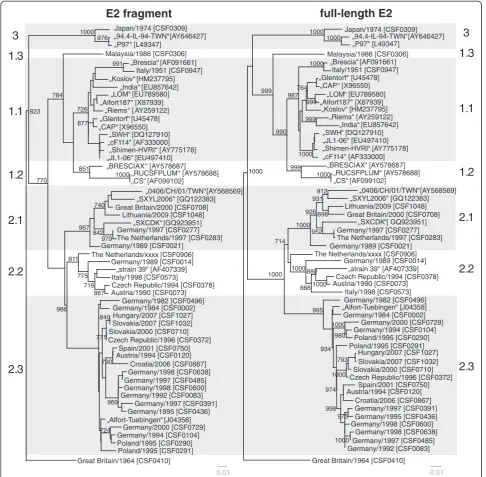
the 5´-terminal portion of“strain 39” and“cF114” (sub-genotype 1.1) is confirmed by our analysis of the 5´NTR (Figure 3), whereas the entire NTR-E2 sequence stretch of“strain 39”as well as the E2 fragment and the E2
full-length sequence showed the highest homology with various newly determined sequences of CSFV 2.2 iso-lates (CSF0014, CSF073, CSF0378, CSF0573, CSF0906) instead of CSFV 2.1 isolates (Figure 3, Figure 4). Genetic
2.12.2 1.2 2.3
1.1 1.1/1.2
2.1/2.3 1/2
2.1/2.2
2/31/3
2.2/2.3 2.1 2.2 1.2 2.3
1.1 2.12.2 1.2 2.3
1.1 2.1 2.2 1.2 2.3
1.1
1.1/1.2 2.1/2.3 2.1/2.2
2.2/2.3
1.1/1.2 2.1/2.3
2.1/2.2 2.2/2.3 1.1/1.2
2.1/2.3 2.1/2.2
2.2/2.3
1/2
2/3 1/3 1/2
2/3 1/3 1/2
2/3 1/3
isolate subgenotype genotype
5´NTR - E2 (3508-3510 nt)
full-length E2 (1119 nt)
E2 fragment (190 nt)
5´NTR fragment (150 nt)
genetic distances [%]
0 5 10 15 20 25 28
Figure 2Ranges of pairwise evolutionary distances among CSFV genotypes, subgenotypes and isolates shown for different genomic regions.Bars represent minimum and maximum values of genetic distances of the entire 5´NTR-E2 region (3508–3510 nt), the full-length E2 encoding sequence (1119 nt), the E2 fragment (190 nt), and the 5´NTR fragment (150 nt). Genetic distances are shown on isolate level (white bars), on subgenotype level (grey bars), and on genotype level (black bars). The analyzed subgenotypes or pairs of subgenotypes or genotypes are indicated by the numbers preceding the bars. With the exception of CSFV“strain 39”[GenBank: AF407339] and strain Great Britain/1964“Congenital Tremor”[GenBank: JQ411575], which are not assigned to a defined genotype, all sequences shown in the phylogenetic trees of Figure 3 and Figure 4 are included in the analysis. Genetic distances between sequences were calculated by the Kimura-2 parameter method.
Table 4 Genetic variability of different regions within the CSFV genome.
number of variable positions
analyzed region all genotypes (n= 85) genotype 2 (n= 48) subgenotype 2.3 (n= 28)
name position1 size1[nt] abs. [n] rel. [%] abs. [n] rel. [%] abs. [n] rel. [%]
5´NTR frag. 200-349 150 39 26 28 19 14 9
Npro 374-877 504 254 50 188 37 101 20
C 878-1174 297 139 47 107 36 52 18
Erns 1175-1855 681 309 45 229 34 99 15
E1 1856-2440 585 261 45 179 31 82 14
E2 2441-3361 1119 543 49 424 38 221 20
E2 frag. 2518-2707 190 95 50 78 41 41 21
5´NTR - E2 200-3707 3508 1621 46 1202 34 589 17
1
distances of these five 2.2 isolates and “strain 39” were 4.7%-8.8% in the full-length E2, whereas the genetic dis-tance between “GWZ02” (subgenotype 2.1) and “strain 39” was 12.7% and thus considerably higher (data not shown). In consequence, the results of our analysis clearly demonstrate that“strain 39” harbors the structural genes
of a subgenotype 2.2 isolate rather than of a 2.1 isolate (Figure 3, Figure 4). With the exception of “strain 39”, no other recombination events between different geno-types or subgenogeno-types could be observed when the trees based on different parts of the 5`NTR-E2 genomic regions were compared.
3
1.1
2.1
2.2
2.3
Japan/1974 [CSF0309] „94.4-IL-94-TWN“ [AY646427] „P97" [L49347] 861 971 Malaysia/1986 [CSF0306] „strain 39" [AF407339]„SWH“ [DQ127910] „Shimen-HVRI “ [AY775178] „India“ [EU857642] „JL1-06" [EU497410] „cF114" [AF333000] „Koslov“ [HM237795] „Brescia“ [AF091661] Italy/1951 [CSF0947] 754
„Riems“ [ AY259122] „Glentorf“ [U45478] „CAP“ [X96550]
„RUCSFPLUM “ [AY578688] „CS“ [AF099102]
„LOM“ [EU789580] „Alfort187" [X87939]
757
„BRESCIAX “ [AY578687] „0406/CH/01/TWN“ [AY568569]
„SXYL2006" [GQ122383] Lithuania/2009 [CSF1048] Great Britain/2000 [CSF0708]
762
Germany/1989 [CSF0021] Germany/1997 [CSF0277] The Netherlands/1997 [CSF0283] „SXCDK“ [GQ923951]
The Netherlands/xxxx [CSF0906] Germany/1989 [CSF0014] Italy/1998 [CSF0573]
Czech Republic/1994 [CSF0378] Austria/1990 [CSF0073]
800
Germany/2000 [CSF0729] Germany/1994 [CSF0104] Poland/1995 [CSF0290] „Alfort-Tuebingen “ [J04358] Germany/1984 [CSF0002] Germany/1982 [CSF0496] Hungary/2007 [CSF1027] CSF1032] Slovakia/2007 [ 808 Slovakia/2000 [CSF0710] 700
Czech Republic/1996 [CSF0372] Poland/1995 [CSF0291] Austria/1994 [CSF0120] Spain/2001 [CSF0750] Germany/1998 [CSF0638] Germany/1997 [CSF0485] 935 Germany/1997 [CSF0391] Germany/1995 [CSF0436] Germany/1998 [CSF0600] Germany/1992 [CSF0083] Croatia/2006 [CSF0867] Great Britain/1964 [CSF0410]
0.01
1.3
1.2
1.1
1.2
5´NTR fragment
3
1.1
2.1
2.2
2.3
1.3
1.2
Japan/1974 [CSF0309] „94.4-IL-94-TWN“ [AY646427] „P97" [L49347] 1000 1000 Malaysia/1986 [CSF0306] „Brescia“ [AF091661] Italy/1951 [CSF0947] 1000 „Glentorf“ [U45478] „CAP“ [X96550] 1000 „LOM“ [EU789580] „Alfort187" [X87939] 1000 „Koslov“ [HM237795] „SWH“ [DQ127910] „JL1-06" [EU497410] 702 „Shimen-HVRI“ [AY775178] 831 „cF114" [AF333000] 1000 838„Riems“ [ AY259122] „India“ [EU857642] 1000 763 1000 „BRESCIAX“ [AY578687] „RUCSFPLUM“ [AY578688] „CS“ [AF099102] 1000 1000 1000 1000 „0406/CH/01/TWN“ [AY568569] „SXYL2006" [GQ122383] 952 Lithuania/2009 [CSF1048] Great Britain/2000 [CSF0708]
971 999
„SXCDK“ [GQ923951] Germany/1997 [CSF0277] The Netherlands/1997 [CSF0283]
1000 1000 888
Germany/1989 [CSF0021]
1000
The Netherlands/xxxx [CSF0906] Germany/1989 [CSF0014] „strain 39" [AF407339] Czech Republic/1994 [CSF0378] Austria/1990 [CSF0073] 1000 959 Italy/1998 [CSF0573] 999 1000 995 953 Germany/1982 [CSF0496] „Alfort-Tuebingen“ [J04358] Germany/1984 [CSF0002] 995 Germany/2000 [CSF0729] Germany/1994 [CSF0104] Poland/1995 [CSF0290] 895 1000 Hungary/2007 [CSF1027] Slovakia/2007 [CSF1032] 1000 Slovakia/2000 [CSF0710] 996
Czech Republic/1996 [CSF0372]
1000 Poland/1995 [CSF0291] 606 Spain/2001 [CSF0750] Croatia/2006 [CSF0867] Austria/1994 [CSF0120] 976 Germany/1992 [CSF0083] Germany/1998 [CSF0638] Germany/1997 [CSF0485] 1000 Germany/1997 [CSF0391] Germany/1995 [CSF0436] 1000 Germany/1998 [CSF0600] 1000 996 1000 659 1000 1000 1000
Great Britain/1964 [CSF0410]
5´NTR-E2
0.01
Influence of the analyzed region on phylogeny
So far, phylogenetic analysis of CSFV routinely was per-formed on the basis of the 150 nt 5´NTR fragment and the 190 nt E2 fragment. To analyze the limitations of these short regions and to find a suitable improved strat-egy, the multiple sequence alignment of the 5´NTR-E2 region (3508-3510 nt) was divided into several subsets,
corresponding to the 5´NTR and E2 fragments as well as the regions encoding for the individual viral proteins Npro, C, Erns, E1, and E2 and subsequently analyzed sep-arately. To achieve better comparability, generated phylogenetic trees were rooted against the most distinct isolate“Congenital Tremor”(CSF0410). With the
excep-tion of the 5´NTR, the Npro and the E1 encoding
full-length E2
Japan/1974 [CSF0309] „P97" [L49347] 1000 1000 Malaysia/1986 [CSF0306] „Brescia“ [AF091661] Italy/1951 [CSF0947] 1000 „Glentorf“ [U45478] „CAP“ [X96550] „LOM“ [EU789580] „Alfort187" [X87939] 999 „Koslov“ [HM237795] 764 „Riems“ [AY259122] „India“ [EU857642] 999 „SWH“ [DQ127910] „JL1-06" [EU497410] „Shimen-HVRI“ [AY775178] „cF114" [AF333000] 1000 987 „BRESCIAX“ [AY578687] „RUCSFPLUM“ [AY578688] „CS“ [AF099102] 1000 999 990 999 „0406/CH/01/TWN“[AY568569] „SXYL2006" [GQ122383] 912 Lithuania/2009 [CSF1048] Great Britain/2000 [CSF0708]896 931
„SXCDK“[ GQ923951] Germany/1997 [CSF0277] The Netherlands/1997 [CSF0283]
952 926
Germany/1989 [CSF0021]
1000
The Netherlands/xxxx [CSF0906] Germany/1989 [CSF0014]
„strain 39" [AF407339] Czech Republic/1994 [CSF0378] Austria/1990 [CSF0073] 1000 880 Italy/1998 [CSF0573] 888 1000 714 Germany/1982 [CSF0496] „Alfort-Tuebingen“ [J04358] Germany/1984 [CSF0002] Germany/2000 [CSF0729] Germany/1994 [CSF0104] Poland/1995 [CSF0290] 980 1000 Poland/1995 [CSF0291] Hungary/2007 [CSF1027] Slovakia/2007 [CSF1032] Slovakia/2000 [CSF0710] 793
Czech Republic/1996 [CSF0372]
1000 Spain/2001 [CSF0750] Austria/1994 [CSF0120] Croatia/2006 [CSF0867] Germany/1997 [CSF0391] Germany/1995 [CSF0436] 975 Germany/1998 [CSF0600] Germany/1998 [CSF0638] Germany/1997 [CSF0485] 1000 Germany/1992 [CSF0083] 998 974 934 995 1000 1000
Great Britain/1964 [CSF0410]
0.01
E2 fragment
Japan/1974 [CSF0309] „94.4-IL-94-TWN“[AY646427] „P97" [L49347] 976 1000 Malaysia/1986 [CSF0306] „Brescia“ [AF091661] Italy/1951 [CSF0947] 991 „Koslov“ [HM237795] „India“ [EU857642] „LOM“ [EU789580] „Alfort187" [X87939]„Riems“ [ AY259122] „Glentorf“ [U45478] „CAP“ [X96550] 877 „SWH“ [DQ127910] „cF114" [AF333000] „Shimen-HVRI“ [AY775178] „JL1-06" [EU497410] 726 „BRESCIAX“ [AY578687] „RUCSFPLUM“ [AY578688] „CS“ [AF099102] 1000 851 784 „0406/CH/01/TWN“[AY568569] „SXYL2006" [GQ122383] Great Britain/2000 [CSF0708]
Lithuania/2009 [CSF1048]
740
„SXCDK“ [GQ923951] Germany/1997 [CSF0277] The Netherlands/1997 [CSF0283]
979 842
Germany/1989 [CSF0021]
967
The Netherlands/xxxx [CSF0906] Germany/1989 [CSF0014] „strain 39" [AF407339] Italy/1998 [CSF0573]
Czech Republic/1994 [CSF0378] Austria/1990 [CSF0073] 867 716 775 811 Germany/1982 [CSF0496] Germany/1984 [CSF0002] Hungary/2007 [CSF1027] Slovakia/2007 [CSF1032] 840 Slovakia/2000 [CSF0710] Czech Republic/1996 [CSF0372]
771 Spain/2001 [CSF0750] Austria/1994 [CSF0120] Croatia/2006 [CSF0867] 790 Germany/1998 [CSF0638] Germany/1997 [CSF0485] Germany/1998 [CSF0600] Germany/1992 [CSF0083] Germany/1997 [CSF0391] Germany/1995 [CSF0436] 969 „Alfort-Tuebingen“ [J04358] Germany/2000 [CSF0729] Germany/1994 [CSF0104] Poland/1995 [CSF0290] 724 Poland/1995 [CSF0291] 986 770 823
Great Britain/1964 [CSF0410]
0.01
3
1.1
2.1
2.2
2.3
1.3
1.2
3
1.1
2.1
2.2
2.3
1.3
1.2
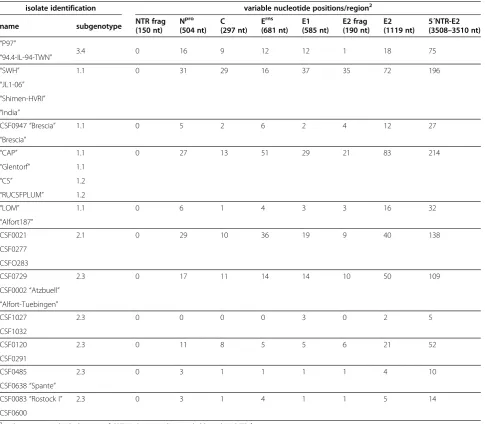
„94.4-IL-94-TWN“[AY646427]sequences all of the regions resulted in a similar phylo-genetic grouping and subgrouping independently of the used method. For these three regions, a clear distinction of isolates of subgenotypes 1.1 and 1.2 was achieved nei-ther by the commonly used Neighbor Joining method nor by other phylogenetic calculations like Maximum Likelihood or Bayesian analysis (data not shown). Neigh-bor Joining trees of the 5´NTR, the E2 fragment, the full-length E2 and the 5´NTR-E2 sequence rooted at the isolate Great Britain/1964 “Congenital Tremor” (CSF0410) are shown in Figure 3 and Figure 4. Trees based on the E2 fragment and the full-length E2 encod-ing sequences are similar with the trees applyencod-ing the complete 5´NTR-E2 sequences. The phylogenetic tree based on the 5´NTR fragment allowed a rough genotyp-ing, but failed to differentiate between the subgenotype 1.1 isolates “CAP” and “Glentorf” and the subgenotype 1.2 strains“CS” and “RUCSFPLUM” (Figure 3, Table 5). Apart from the isolates belonging to genotypes 1.1 and 1.2, the trees based on the Nproand E1 coding sequences showed a relative high resolution (data not shown), whereas in the 5´NTR fragment based tree eleven branches comprised two or more isolates, which were not distinguishable from each other (Figure 3, Table 5).
To gain more detailed insight into the discriminatory ability of the individual genomic regions, the different sequence data sets subjected to phylogenetic analyses were investigated systematically (Table 5). Some of the individual groups of isolates not distinguishable by the analysis of the 5´NTR fragment comprise strains with an overall high identity reflecting their outbreak history and geographic origin, while other groups encompass strains showing a relatively high sequence divergence with re-spect to the entire 5´NTR-E2 region (up to 214/3509 variable positions, Table 5). The latter situation was observed for isolates belonging to individual subgeno-types (1.1, 2.1, and 2.3), but also for groups of isolates of different subgenotypes (1.1 and 1.2), again illustrating the limitations of the 5´NTR fragment for discrimination of CSFV isolates. Very closely related and almost identi-cal, recently obtained 2.3 isolates from Slovakia and Hungary (CSF1027, CSF1032), German isolates from the 1990s (CSF0083 and CSF0600; CSF0485 and CSF0638), old subgenotype 1.1 reference strains like “Alfort187” and“LOM”[GenBank: X87939, EU789580] or sequences from two different passages of strain“Brescia”(CSF0947, [GenBank: AF091661]) are either not distinguishable from each other or only at low confidence levels (Figure 3, Table 5).
For most isolates best discrimination was achieved with the sequences encoding for Npro (504 nt) and E2 (1119 nt), respectively (Table 5). Although Npro and E1 coding sequences show a high degree of variability, phylogenetic analyses revealed that these regions are less
suited for clear differentiation of 1.1 and 1.2 isolates when compared to analysis of the full-length E2 genes (data not shown). A reliable differentiation of all ana-lyzed strains - even of very closely related isolates–was possible based on phylogenetic analysis of the full-length E2 encoding sequences (Figure 4, Table 5). This is also reflected by significantly higher bootstrap values sup-porting the clustering in the tree based on full-length E2 gene sequences when compared to phylogenetic ana-lyses based on the E2 fragment (Figure 4). For example, bootstrap values at the 17 nodes within subgenotype 2.3 (≤8.5% genetic distance) were significant (≥70%) in only five cases when trees were generated with the E2 fragment, whereas 11 and 13 of the 17 nodes showed values≥70% when full-length E2 and the entire 5´NTR-E2 sequences were analyzed, respectively. Accordingly, phylogenetic analysis of the entire 5´NTR-E2 region resulted in only slightly increased bootstrap values when compared to the analysis of full-length E2 encoding sequences, although the former is almost three times longer in size (Figure 3, Figure 4). Taken together, the results of the present study show that phylogenetic ana-lysis of full-length E2 encoding sequences allows differ-entiation of even closely related isolates and segregation is supported by adequate confidence levels.
Application of the established strategy during recent Lithuanian CSF outbreak
Discussion
Different regions of the CSFV genome have been pro-posed for phylogenetic analysis, namely fragments of the 5´NTR as well as partial E2 and NS5B encoding regions [7,8,16,17,36]. During the past two decades, determi-nation of 5´NTR and E2 fragment sequences became the world-wide accepted standard for characterization of CSFV isolates, although this strategy has several limita-tions which are mainly due to the short sequence lengths of these regions. Today, new technological devel-opments like next-generation sequencing allow rapid determination of full-length sequences, but due to limited access and high expenses the application of such tech-niques will be restricted to a limited number of institu-tions and a small number of selected CSFV isolates in the
near future. Against this background, rapid and reliable diagnostics in outbreak situations will still rely on analysis of adequate, shorter genomic regions on the basis of an internationally harmonized standard.
To establish an improved strategy for CSFV phyl-ogeny, the 5´NTR-E2 sequences of 33 CSFV isolates from the virus collection held at the EU and OIE Refer-ence Laboratory for CSF (EURL) were determined in this study and used for comparative sequence analyses. For all isolates, including representatives of the three major genotypes, specific amplicons could be generated by RT-PCR using conserved primers. These virus isolates include frequently requested reference strains, isolates of rare CSFV genotypes as well as isolates obtained from recent CSF outbreaks (e.g. in Slovakia, Hungary, Lithuania).
Table 5 Number of variable positions in individual genomic regions of the CSFV genome1.
isolate identification variable nucleotide positions/region2
name subgenotype NTR frag(150 nt) N
pro
(504 nt) C (297 nt)
Erns (681 nt)
E1 (585 nt)
E2 frag (190 nt)
E2 (1119 nt)
5´NTR-E2
(3508–3510 nt)
“P97”
3.4 0 16 9 12 12 1 18 75
“94.4-IL-94-TWN”
“SWH” 1.1 0 31 29 16 37 35 72 196
“JL1-06”
“Shimen-HVRI”
“India”
CSF0947“Brescia” 1.1 0 5 2 6 2 4 12 27
“Brescia”
“CAP” 1.1 0 27 13 51 29 21 83 214
“Glentorf” 1.1
“CS” 1.2
“RUCSFPLUM” 1.2
“LOM” 1.1 0 6 1 4 3 3 16 32
“Alfort187”
CSF0021 2.1 0 29 10 36 19 9 40 138
CSF0277
CSFO283
CSF0729 2.3 0 17 11 14 14 10 50 109
CSF0002“Atzbuell”
“Alfort-Tuebingen”
CSF1027 2.3 0 0 0 0 3 0 2 5
CSF1032
CSF0120 2.3 0 11 8 5 5 6 21 52
CSF0291
CSF0485 2.3 0 3 1 1 1 1 4 10
CSF0638“Spante”
CSF0083“Rostock I” 2.3 0 3 1 4 1 1 5 14
CSF0600
1
with respect to individual groups of CSFV isolates not distinguishable in the 5´NTR fragment.
2
It was not possible to include isolates of all known subgeno-types as some subgenosubgeno-types (e.g. 3.1, 3.2 and 3.3) are very difficult to obtain and are not represented in the virus collection of the EURL. For most of the sequenced iso-lates only the short 5´NTR (150 nt) and E2 fragment (190 nt) sequences were available beforehand. Therefore, the 5´NTR-E2 sequences (3508–3510 nt) reported in the present study add significant sequence information to this collection of CSFV isolates. The majority of CSF outbreaks, which occurred during the past decades in Europe, were caused by genotype 2 viruses. In conse-quence, mainly sequences of genotype 2 virus isolates were determined, comprising 19 isolates of subgenotype 2.3 and five isolates of subgenotypes 2.1 and 2.2 each.
Furthermore, 5´NTR-E2 sequences of the two distinct isolates “Congenital Tremor” (CSF0410, no assigned genotype) and “Kanagawa” (CSF0309, genotype 3.4), the reference strain “Brescia” (CSF0947, genotype 1.1) and one Malaysian isolate (CSF0306) of the rare genotype 1.3 were determined.
With regard to the entire 5´NTR-E2 sequences deter-mined in this study and 22 additional sequences obtained from GenBank, all CSFV isolates were assigned to established genotypes and subgenotypes (Figure 3). Our analyses revealed that CSFV “strain 39” [GenBank: AF407339], which has been previously described to be a natural recombinant strain of parental subgenotype 1.1 and 2.1 isolates [35], actually represents a chimera of subgenotype 1.1 and 2.2 isolates (Figure 3, Figure 4). Furthermore, it was recognized that strain The Nether-lands/xxxx “Bergen” (CSF0906, subgenotype 2.2) par-tially displayed a higher genetic similarity to some genotype 2.1 isolates, e.g. to CSFV isolate CSF0021, than to different 2.2 isolates (data not shown). This observa-tion might be a hint for a recombinaobserva-tion event between subgenotype 2.1 and 2.2 isolates and is under further investigation. In consequence, strain The Netherlands/ xxxx “Bergen” (CSF0906) might disturb segregation of 2.1 and 2.2 isolates when further 2.1 and 2.2 isolates are added in phylogenetic analysis.
Variability and length of analyzed sequences are cru-cial parameters for the reliability of phylogenetic ana-lyses. The overall variability observed for the different genomic regions is astonishingly uniform (Table 4). Excep-tions are the more conserved fragment in the 5´NTR and the slightly more variable E2 fragment. In consequence, not variability but length of the used sequence seems to be crucial to optimize resolution and confidence levels of CSFV phylogeny. Low variability of 9% (14/150 nucleotide positions) in concert with the short sequence length of 150 nt explains the intrinsic limitation of the 5´NTR for phylogenetic analyses. Due to its variability, the 190 nt E2 fragment has the greatest intrinsic discriminatory abil-ity with respect to the above mentioned 5´NTR, E2, and NS5B fragments [7]. The E2 fragment encodes for the N-terminal part of the E2 protein harbouring sev-eral neutralizing epitopes resulting in selective pressure [22,37-39]. When comparing the variability of the sequences encoding for the major immunogen E2 and the sequences of other viral proteins like Npro, E1 or C, which do not elicit a detectable immune response upon infection, it can be concluded that selection pressure mediated by specific immune reactions is not a major cause of E2 divergence since the overall sequence diver-gence in other genomic regions reaches similar levels (Table 4). Nevertheless, it can be speculated that lack of antigenic selection pressure might be a reason for the failure of Npro- and E1-based analyses to discriminate Germany/1997 [CSF0277]
Great Britain/2000 [CSF0708] Lithuania/2009 [CSF1048]
Viro919-3_case4 [JQ411598] Viro919-7_case4 [JQ411599] CSF1055_Index 2011 [JQ411592] Viro788-15_Index 2011 [JQ411593] Viro862-3_cases2&3 [JQ411594] Viro862-6_cases2&3 [JQ411595] Viro862-15_cases2&3 [JQ411596] Viro862-16_cases2&3 [JQ411597]
Viro940-6_case5 [JQ411600] Viro940-10_case5 [JQ411601]
999 905
Great Britain/1964 [CSF0410] 0.01
Germany/1997 [CSF0277] Great Britain/2000 [CSF0708]
Lithuania/2009 [CSF1048] Viro919-3_case4 [JQ411598] Viro919-7_case4 [JQ411599]
904
CSF1055_Index2011 [JQ411592] Viro940-6_case5 [JQ411600] Viro940-10_case5 [JQ411601]
769
Viro862-15_cases2&3 [JQ411597] Viro862-16_cases2&3 [JQ411596] Viro862-3_cases2&3 [JQ411595] Viro788-15_Index 2011 [JQ411593]
Viro862-6_cases2&3 [JQ411594]
997 1000 879
Great Britain/1964 [CSF0410] 0.01
E2 fragment
full-length E2
genotype 1.1 and 1.2 isolates (data not shown). Geno-type 1 represents an old and therefore highly variable CSFV genotype. Antigenic selection pressure might have been an important force for development of the 1.1 and 1.2 subgenotypes, while sequence divergence is less pronounced in genomic regions encoding for less immunogenic proteins like Npro and E1. In the present study, analysis of genetic variability in the regions encod-ing the individual viral proteins (overall 46% variable positions) did not identify regions of adequate length that are more variable than the 504 nt Npro encoding sequence and the 190 nt E2 fragment (50% variable posi-tions). Taking into account the above mentioned
limita-tions of the short 5’NTR fragment as well as the
limitations of the nucleotide sequences encoding Npro and E1 for CSFV phylogeny, extension of the short sequence of the E2 fragment to full-length E2 gene sequences is an excellent strategy to obtain data for reli-able and detailed phylogenetic analyses (Figure 4).
Calculation and analysis of genetic distances with respect to full-length E2 encoding sequences revealed that genetic distances of more than 15% define a geno-type and distances of less than 14% can be found on subgenotype and isolate level (Figure 2). These values will probably not have consistency with an increasing number of analyzed sequences. Furthermore, it was not possible to define universally valid breakpoints between isolate and subgenotype level. Discrimination of the iso-late and subgenotype categories based on previously reported ranges for the NS5B fragment (4.5% and 10.5% genetic distance, respectively) is not supported by the analyses of the presented study [8].
For phylogenetic analysis, the use of a standardized method for tree calculation is desirable to achieve a better comparability of internationally published data. In the pre-sented study, genetic distances calculated by the Kimura 2-parameter method and phylogenetic trees generated by Neighbor Joining method subsequently rooted at the strain“Congenital Tremor”(CSF0410) - representing the isolate most distinct from all other CSFV isolates known so far - led to appropriate tree topologies and reliable con-fidence levels (Figure 3, Figure 4). The phylogenetic trees either generated with full-length E2 encoding sequences or with the 5´NTR-E2 sequences showed the same segre-gation of CSFV isolates into genotypes and subgenotypes. Compared to E2 full-length sequences, the sequences derived from the 5´NTR and E2 fragments which are cur-rently used for phylogenetic analyses are considerably less suited for differentiation and tracing of CSFV isolates. In case of the 5´NTR fragment the sequence length and in-trinsic variability are too low and in case of the E2 frag-ment the short sequence length significantly limits the information content and consequently diminishes confi-dence levels of many groupings. The data presented in
To date, both fragments, 5´NTR and E2, are routinely amplified and sequenced for identification and char-acterization of novel CSFV isolates. The recent CSF out-break in Lithuania demonstrated that determination of both sequences corresponding to the 5´NTR and E2 fragments was neither able to differentiate between iso-lates obtained during outbreaks in 2009 and 2011 nor to detect differences between the isolates originating from different outbreak holdings in 2011 (Figure 5). In contrast, phylogenetic analysis of full-length E2 encoding sequences allowed the discrimination of the 2009 and 2011 Lithuanian isolates and identified signifi-cant differences between isolates of case no.4 and the isolates of the four other cases. These results suggest that the index case was the source of virus transmission for outbreaks no.2, 3, and 5, while it can be speculated that the virus isolate from case no.4 was introduced either after additional steps of (undetected) transmission or from another source. To allow a reliable interpre-tation of this finding, more full-length E2 encoding sequences from different CSF epidemics and corre-sponding epidemiological information need to be ana-lyzed. Against this background, molecular clock analyses of sequences obtained from well documented CSF epi-demics would be highly desirable and will be the aim of future studies. Such analyses need to take into account that speed of virus evolution is influenced by many fac-tors including host immunity, vaccination campaigns, presence of virus reservoirs, number of passages in hosts, and last but not least socio-economic determi-nants [41]. Nevertheless, even without detailed know-ledge about speed of molecular evolution in CSF epidemics, the analysis of full-length E2 encoding sequences provides valuable information about the ori-gin of virus introduction as this method increases the probability to identify the ancestral virus isolate. In case of the two Lithuanian outbreaks in 2009 and 2011, iden-tical isolates would have indicated an arrest of molecular clock like in infectious material being frozen (frozen meat, frozen laboratory isolate, etc.). The latter scenario could be clearly excluded by analysis of the full-length E2 encoding sequences. Accordingly, the Lithuanian ex-ample illustrates the benefit of phylogenetic analysis of full-length E2 encoding sequences with regard to mo-lecular virus tracing.
Taken together, the proposed strategy based on complete E2 coding sequences allows a clear assignment of CSFV isolates to a subgenotype, results in reliable and statistically significant bootstrap values, and even enables the discrimination of highly similar virus isolates with-out requiring more time or higher expenses.
Competing interests
The authors declare that they have no competing interests.
Acknowledgements
This study was part of the activities of the EURL and supported by DG SANCO of the European Commission. We are grateful to Alexandra Beckmann, Gabriele Müller, Benjamin Ostermann, and Karin Ruthenberg for excellent technical assistance and we thank Anastasia Wiedemann for support in the initial phase of the project.
This work is dedicated to Prof. Dr Volker Moennig, head of the EU and OIE Reference Laboratory for Classical Swine Fever. The authors acknowledge his excellent activities in the field of pestivirology, especially epidemiology and control of classical swine fever.
Author details
1EU and OIE Reference Laboratory for Classical Swine Fever, Institute of
Virology, Department of Infectious Diseases, University of Veterinary Medicine, Hannover, Germany.2National Food and Veterinary Risk
Assessment Institute, Vilnius, Lithuania.3Lithuanian University of Health Sciences, Kaunas, Lithuania.4State Veterinary Institute Zvolen, Zvolen, Slovak
Republic.
Authors’contributions
AP performed and managed RT-PCRs and sequencing, carried out sequence and phylogenetic analyses, contributed to the design of the study and drafted the manuscript. JB performed RNA isolation, RT-PCRs, Gel purification and edited the sequence data. StS and AMB selected, propagated and provided the CSFV isolates, contributed to the design of the study and drafted the manuscript. GP provided Lithuanian CSFV isolates and epidemiological data. ZB and MM characterized and provided Slovakian CSFV isolates and participated in the design of the study. PB designed the RT-PCR primers, evaluated the RT-PCRs, conceived and managed the study, and helped to critically revise the manuscript. All authors read and approved the final manuscript.
Received: 23 February 2012 Accepted: 7 June 2012 Published: 7 June 2012
References
1. Edwards S, Fukusho A, Lefevre PC, Lipowski A, Pejsak Z, Roehe P, Westergaard J:Classical swine fever: the global situation.Vet Microbiol2000,73:103–119. 2. Depner KR, Strebelow G, Staubach C, Kramer M, Teuffert J, Botcher L,
Hoffmann B, Beer M, Greiser-Wilke I, Mettenleiter T:Case report: the significance of genotyping for the epidemiological tracing of classical swine fever (CSF).Dtsch Tierarztl Wochenschr2006,113:159–162. 3. Moennig V, Floegel-Niesmann G, Greiser-Wilke I:Clinical signs and
epidemiology of classical swine fever: a review of new knowledge.Vet J 2003,165:11–20.
4. Hoffmann B, Beer M, Schelp C, Schirrmeier H, Depner K:Validation of a real-time RT-PCR assay for sensitive and specific detection of classical swine fever.J Virol Methods2005,130:36–44.
5. Vilcek S, Herring AJ, Herring JA, Nettleton PF, Lowings JP, Paton DJ: Pestiviruses isolated from pigs, cattle and sheep can be allocated into at least three genogroups using polymerase chain reaction and restriction endonuclease analysis.Arch Virol1994,136:309–323.
6. Zhao JJ, Cheng D, Li N, Sun Y, Shi Z, Zhu QH, Tu C, Tong GZ, Qiu HJ: Evaluation of a multiplex real-time RT-PCR for quantitative and differential detection of wild-type viruses and C-strain vaccine of Classical swine fever virus.Vet Microbiol2008,126:1–10. 7. Lowings P, Ibata G, Needham J, Paton D:Classical swine fever virus
diversity and evolution.J Gen Virol1996,77:1311–1321.
8. Paton DJ, McGoldrick A, Greiser-Wilke I, Parchariyanon S, Song JY, Liou PP, Stadejek T, Lowings JP, Bjorklund H, Belak S:Genetic typing of classical swine fever virus.Vet Microbiol2000,73:137–157.
9. Chen N, Li D, Yuan X, Li X, Hu H, Zhu B, Wan X, Fang W:Genetic characterization of E2 gene of classical swine fever virus by restriction fragment length polymorphism and phylogenetic analysis.Virus Genes 2010,40:389–396.
10. Harding M, Lutze-Wallace C, Prud'Homme I, Zhong X, Rola J:Reverse transcriptase-PCR assay for detection of hog cholera virus.J Clin Microbiol 1994,32:2600–2602.
12. Leifer I, Hoffmann B, Hoper D, Bruun Rasmussen T, Blome S, Strebelow G, Horeth-Bontgen D, Staubach C, Beer M:Molecular epidemiology of current classical swine fever virus isolates of wild boar in Germany.J Gen
Virol2010,91:2687–2697.
13. Widjojoatmodjo MN, van Gennip HG, de Smit AJ, Moormann RJ: Comparative sequence analysis of classical swine fever virus isolates from the epizootic in The Netherlands in 1997–1998.Vet Microbiol1999, 66:291–299.
14. Jenkins GM, Rambaut A, Pybus OG, Holmes EC:Rates of molecular evolution in RNA viruses: a quantitative phylogenetic analysis.J Mol Evol 2002,54:156–165.
15. Zhang H, Cao HW, Wu ZJ, Cui YD:Evolutionary rate of E2 genes of classical swine fever virus in China.Isr J Vet Med2011,66:161–163. 16. Greiser-Wilke I, Depner K, Fritzemeier J, Haas L, Moennig V:Application of a
computer program for genetic typing of classical swine fever virus isolates from Germany.J Virol Methods1998,75:141–150.
17. Bjorklund H, Lowings P, Stadejek T, Vilcek S, Greiser-Wilke I, Paton D, Belak S: Phylogenetic comparison and molecular epidemiology of classical swine fever virus.Virus Genes1999,19:189–195.
18. Greiser-Wilke I, Zimmermann B, Fritzemeier J, Floegel G, Moennig V: Structure and presentation of a World Wide Web database of CSF virus isolates held at the EU reference laboratory.Vet Microbiol2000,73:131–136. 19. Chen N, Tong C, Li D, Wan J, Yuan X, Li X, Peng J, Fang W:Antigenic
analysis of classical swine fever virus E2 glycoprotein using pig antibodies identifies residues contributing to antigenic variation of the vaccine C-strain and group 2 strains circulating in China.Virol J2010, 7:378.
20. Wu Z, Wang Q, Feng Q, Liu Y, Teng J, Yu AC, Chen J:Correlation of the virulence of CSFV with evolutionary patterns of E2 glycoprotein.Front
Biosci (Elite Ed)2010,2:204–220.
21. Xia H, Wahlberg N, Qiu HJ, Widen F, Belak S, Liu L:Lack of phylogenetic evidence that the Shimen strain is the parental strain of the lapinized Chinese strain (C-strain) vaccine against classical swine fever.Arch Virol 2011,156:1041–1044.
22. Peng WP, Hou Q, Xia ZH, Chen D, Li N, Sun Y, Qiu HJ:Identification of a conserved linear B-cell epitope at the N-terminus of the E2 glycoprotein of Classical swine fever virus by phage-displayed random peptide library.Virus Res2008,135:267–272.
23. Koenig P, Lange E, Reimann I, Beer M:CP7_E2alf: a safe and efficient marker vaccine strain for oral immunisation of wild boar against Classical swine fever virus (CSFV).Vaccine2007,25:3391–3399.
24. Reimann I, Depner K, Utke K, Leifer I, Lange E, Beer M:Characterization of a new chimeric marker vaccine candidate with a mutated antigenic E2-epitope.Vet Microbiol2010,142:45–50.
25. Blome S, Grotha I, Moennig V, Greiser-Wilke I:Classical swine fever virus in South-Eastern Europe–retrospective analysis of the disease situation and molecular epidemiology.Vet Microbiol2010,146:276–284.
26. The European Bioinformatics Institute Home Page. [http://www.ebi.ac.uk/
Tools/msa/muscle/].
27. Kimura M:A simple method for estimating evolutionary rates of base substitutions through comparative studies of nucleotide sequences.
J Mol Evol1980,16:111–120.
28. Devereux J, Haeberli P, Smithies O:A comprehensive set of sequence analysis programs for the VAX.Nucleic Acids Res1984,12:387–395. 29. Felsenstein J:Confidence limits on phylogenies: an approach using the
bootstrap.Evolution1985,39:783–791.
30. Felsenstein J:PHYLIP (Phylogeny Inference Package) version 3.5c. Seattle, USA: Department of Genetics, University of Washington; 1993.
31. Saitou N, Nei M:The neighbor-joining method: a new method for reconstructing phylogenetic trees.Mol Biol Evol1987,4:406–425. 32. Milne I, Lindner D, Bayer M, Husmeier D, McGuire G, Marshall DF, Wright F:
TOPALi v2: a rich graphical interface for evolutionary analyses of multiple alignments on HPC clusters and multi-core desktops.
Bioinformatics2009,25:126–127.
33. Huson DH, Richter DC, Rausch C, Dezulian T, Franz M, Rupp R: Dendroscope: An interactive viewer for large phylogenetic trees.
BMC Bioinforma2007,8:460.
34. Tamura K, Peterson D, Peterson N, Stecher G, Nei M, Kumar S:MEGA5: molecular evolutionary genetics analysis using maximum likelihood, evolutionary distance, and maximum parsimony methods.Mol Biol Evol 2011,28:2731–2739.
35. He CQ, Ding NZ, Chen JG, Li YL:Evidence of natural recombination in classical swine fever virus.Virus Res2007,126:179–185.
36. Greiser-Wilke I, Dreier S, Haas L, Zimmermann B:Genetic typing of classical swine fever viruses--a review.Dtsch Tierarztl Wochenschr2006, 113:134–138 (in German).
37. Lin M, Lin F, Mallory M, Clavijo A:Deletions of structural glycoprotein E2 of classical swine fever virus strain alfort/187 resolve a linear epitope of monoclonal antibody WH303 and the minimal N-terminal domain essential for binding immunoglobulin G antibodies of a pig hyperimmune serum.J Virol2000,74:11619–11625.
38. van Rijn PA, Miedema GK, Wensvoort G, van Gennip HG, Moormann RJ: Antigenic structure of envelope glycoprotein E1 of hog cholera virus.
J Virol1994,68:3934–3942.
39. van Rijn PA, van Gennip RG, de Meijer EJ, Moormann RJ:A preliminary map of epitopes on envelope glycoprotein E1 of HCV strain Brescia.Vet
Microbiol1992,33:221–230.
40. Greiser-Wilke I, Fritzemeier J, Koenen F, Vanderhallen H, Rutili D, De Mia GM, Romero L, Rosell R, Sanchez-Vizcaino JM, San Gabriel A:Molecular epidemiology of a large classical swine fever epidemic in the European Union in 1997–1998.Vet Microbiol2000,77:17–27.
41. Duffy S, Shackelton LA, Holmes EC:Rates of evolutionary change in viruses: patterns and determinants.Nat Rev Genet2008,9:267–276.
doi:10.1186/1297-9716-43-50
Cite this article as:Postelet al.:Improved strategy for phylogenetic analysis of classical swine fever virus based on full-length E2 encoding sequences.Veterinary Research201243:50.
Submit your next manuscript to BioMed Central and take full advantage of:
• Convenient online submission
• Thorough peer review
• No space constraints or color figure charges
• Immediate publication on acceptance
• Inclusion in PubMed, CAS, Scopus and Google Scholar
• Research which is freely available for redistribution
![Figure 5 Phylogenetic analysis of recent CSFV isolates from[GenBank: JQ411575]. Distances were calculated by the Kimura-2parameter method and used to construct the trees according to theNeighbor joining method](https://thumb-us.123doks.com/thumbv2/123dok_us/825486.1580101/12.595.57.288.89.375/phylogenetic-analysis-distances-calculated-parameter-construct-according-theneighbor.webp)
