World Maritime University
The Maritime Commons: Digital Repository of the World
Maritime University
World Maritime University Dissertations
Dissertations
2001
Risk-based approach to maritime safety
Hui Xie
World Maritime University
Follow this and additional works at:
http://commons.wmu.se/all_dissertations
Part of the
Risk Analysis Commons
This Dissertation is brought to you courtesy of Maritime Commons. Open Access items may be downloaded for non-commercial, fair use academic purposes. No items may be hosted on another server or web site without express written permission from the World Maritime University. For more information, please [email protected].
Recommended Citation
Xie, Hui, "Risk-based approach to maritime safety" (2001).World Maritime University Dissertations. 204.
WORLD MARITIME UNIVERSITY
Malmö, Sweden
RISK-BASED APPROACH
TO MARITIME SAFETY
By
XIE HUI
The People’s Republic of China
A dissertation submitted to the World Maritime University in partial fulfilment of the requirements for the award of the degree of
MASTER OF SCIENCE
in
MARITIME AFFAIRS
(MARITIME SAFETY AND ENVIRONMENTAL PROTECTION)
2001
ã ã ã
DECLARATION
I certify that all the material in this dissertation that is not my own work has been identified, and that no material is included for which a degree has previously been conferred on me.
The contents of this dissertation reflect my own personal views, and are not necessarily endorsed by the University.
Xie Hui
4 September 2001
Supervised by:
Lt. Cdr. Max Mejia, PCG
Lecturer, Maritime Safety and Environment Protection World Maritime University
Assessor:
Prof. Jan-Åke Jönsson
Associate Professor, Maritime Safety and Environment Protection
World Maritime University
Co-assessor:
Capt. Jørgen Rasmussen Chief Ship Surveyor
ACKNOWLEDGEMENTS
I would like to extend my heartfelt gratitude to the Chinese Maritime Safety Administration and the Department of International Cooperation of the Ministry of Communications, which nominated me to pursue a course of studies at the World Maritime University.
I am most grateful for Tokyo Foundation, for having awarded me a scholarship and including me in its network of WMU graduates, from which I will surely benefit a lot.
I would like to express my sincere thanks to Mr. Max Mejia, my supervisor, who has been greatly encouraging and put forward invaluable recommendations and comments on my work.
My sincere appreciation also extended to all the staff of World Maritime University, especially the staff at the library of the University, without whose great help this dissertation could not have been completed.
I would also like to thank my colleague students for inspiring me.
My particular gratitude goes to all my colleagues and friends in China for their firm support and great help to me.
ABSTRACT
Title of Dissertation: Risk-based Approach to Maritime Safety
Degree: MSc
This dissertation is a methodological study of the risk-based approach to safety and
its application to maritime industry.
The concept of safety and risk is defined and discussed as well as their relationships.
The traditional approach to safety is examined including its limitations, the
advantages and necessity of the risk-based approach to safety is identified. The
general procedure of the risk-based approach is presented, and the major limitation:
the uncertainty associated with the risk-based approach is analysed.
Various techniques of risk-based approach are presented and investigated with
regard to their advantages and disadvantages, and a comprehensive examination of
the characteristics of these techniques is made for the purpose of paving the way for
choosing appropriate techniques in the application to maritime safety.
The characteristics of maritime industry are investigated as well as their implications
to the application. Two methodological issues in the practical application, adaptation
of the general procedure and selection of suitable techniques, are examined. In
order to show how the risk-based approach will be applied to maritime safety in
depth, a model case of risk assessment of a generic ship is presented, which
illustrates how a combination of techniques should be applied in practice. An ideal
scheme of application is presented in order to show at macro level how the
risk-based approach may be applied to the maritime industry.
The current situation is examined and the future development of the risk-based
approach in maritime safety is discussed. Several major recommendations are
made concerning the future promotion of the risk-based approach.
TABLE OF CONTENT
Declaration
Acknowledgement
Abstract
Table of Contents
List of Tables
List of Figures
List of Abbreviations
1. Introduction
1.1. Background
1.2. Purpose and incentive
1.3. Objectives
1.4. Methodology and limitations
2. Risk-based approach to safety
2.1. Safety and risk
2.1.1. The interpretation of safety
2.1.2. The interpretation of risk
2.1.3. Relation between safety and risk
2.2. Traditional ways of dealing with maritime safety
2.2.1. “Learning from experiences”
2.2.2. Scientific research and development
2.2.3. The present situation of maritime safety
2.3. Risk-based approach to maritime safety
2.4. Necessity of the risk-based approach
3. The general procedure of risk-based approach to safety
3.1. Introduction
3.2. Risk assessment
3.2.1. Definition and description of the system
3.2.2. Identification of hazards
3.2.4. Risk evaluation
3.3. Risk reduction or control measure
3.4. Cost benefit (effectiveness) assessment
3.5. Recommendation for decision making
3.6. Uncertainty in risk assessment
3.6.1. Data-related uncertainty
3.6.2. Methodology-related uncertainty
3.6.3. Treatment of the uncertainty
3.6.3.1. Treatment of the uncertainty related with data
3.6.3.2. Treatment of the uncertainty related with
methodology and modeling
3.6.4. Attitude towards the uncertainty
4. Techniques of risk-based approach
4.1. Introduction
4.2. Brainstorming
4.3. What-If
4.4. Checklist Analysis
4.5. Physical inspection
4.6. Hazard and Operability Analysis (HAZOP)
4.7. Failure Mode and Effect Analysis (FMEA)
4.8. Preliminary Hazard Analysis (PHA)
4.9. Fault Tree Analysis (FTA)
4.10. Event Tree Analysis (ETA)
4.11. Cause-Consequence Analysis
4.12. Management Oversight and Risk Tree Analysis (MORTA)
4.13. Techniques for analysis of dynamic systems
4.14. Relative Ranking / Risk Indexing / Rating system
4.15. Human Reliability Analysis (HRA)
4.15.1. Technique for Human Error Rate Prediction (THERP)
4.15.2. Absolute Probability Judgement (APJ)
4.15.3. Human Error Assessment and Reduction Technique
4.15.5. Success Likelihood Index Method Using Multi Attribute Utility
Decomposition (SLIM-MAUD)
4.15.6. Evaluation of HRA techniques
4.15.7. The limitation of current HRA techniques
4.16. Generalization of the techniques of risk-based approach
4.16.1. Deductive – Inductive
4.16.2. Structure
4.16.3. Scope
4.16.4. Focuses of techniques
5. Risk-based approach to maritime safety
5.1. Introduction
5.2. Characteristics of maritime safety
5.3. The implication of maritime characteristics to the application of the
risk-based approach
5.4. Two methodological issues in the practical application of the
risk-based approach
5.4.1. Adaptation of the general procedure of the risk-based
approach
5.4.2. The principle of choosing appropriate techniques for the
application
5.5. A model case of risk assessment of a generic ship
5.5.1. Definition of ship model
5.5.2. Hazard identification
5.5.3. Risk analysis
5.6. An ideal scheme of application of risk assessment to maritime safety
6. Conclusion and recommendation
6.1. Review
6.2. The current situation and the future of application of risk assessment
to maritime safety
6.3. Recommendations
LIST OF TABLES
Table 3.1 Published ICAFs in use as acceptance criteria 26
Table 4.1 Hazard and Operability Analysis worksheet 35
Table 4.2 Failure Mode and Effect Criticality Analysis worksheet 38
Table 4.3 Preliminary Hazard Analysis worksheet 40
Table 4.4 HRA techniques evaluation criteria 52
Table 4.5 Summary of evaluations of HRA techniques 53
Table 5.1 Consequence Index 70
Table 5.2 Frequency Index 71
Table 5.3 Risk matrix 71
Table 5.4 Examples of hazard list 71
LIST OF FIGURES
Figure 2.1 The circle of “learning form experiences” 12
Figure 3.1 General procedure of the risk-based approach 19
Figure 3.2 FN curves for different tankers, shown together with
established risk acceptance curves. 24
Figure 3.3 Treatment of uncertainty related with data 30
Figure 4.1 Process of Hazard and Operability Analysis 36
Figure 4.2 Theory of Failure Mode and Effect Analysis 37
Figure 4.3 Block diagram of system subdivision 38
Figure 4.4 fault tree 41
Figure 4.5 event tree 43
Figure 4.6 Cause-consequence Analysis 44
Figure 4.7 MORTA chart displaying the injury, damage, other costs,
performance lost, or degraded event. 46
Figure 4.8
THERP event tree modelling for the failure of the task of changing from feed to circulation mode as soon as the alarm warns of an excessively low water level in the refuelling water storage tank (RWST) during a large loss-of-coolant accident.
50
Figure 4.9 Deductive procedure and inductive procedure of risk
assessment 55
Figure 4.10 General positioning of risk assessment techniques 58
Figure 5.1 The component levels of the generic model of ships 65
Figure 5.2 The generic engineering and technical system 65
Figure 5.3 Personnel subsystem 66
Figure 5.4 Organizational / managerial infrastructure 66
Figure 5.5 The generic environment of operation 67
Figure 5.6 The integration of hardware analysis and task analysis 68
LIST OF ABBREVIATIONS
APJ Absolute Probability Judgement CAF Cost of Averting a Fatality CBA Cost Benefit Analysis
CEA Cost Effectiveness Analysis
COLREG Convention on the International Regulations for Preventing Collisions at Sea, 1972
CURR Cost of Unit Risk Reduction DNV Det Norske Veritas
DOE Department of Energy
EPC Error Producing Conditions
ETA Event Tree Analysis
FMEA Failure Mode and Effect Analysis
FMECA Failure Mode and Effect Criticality Analysis FSA Formal Safety Assessment
FTA Fault Tree Analysis
HAZOP Hazard and Operability Analysis
HEART Human Error Assessment and Reduction Technique HEP Human Error Probability
HRA Human Reliability Analysis HSE Health Safety Executive
IACS International Association of Classification Societies ICAF Implied Cost of Averting a Fatality
IMO International Maritime Organization IMSRS International Maine Safety Rating System ISM Code International Safety Management Code
MORTA Management Oversight and Risk Tree Analysis MSC Maritime Safety Committee
NEA Nuclear Energy Agency NHEP Nominal Error Probability
PC Paired Comparison
PET Project Evaluation Tree PHA Preliminary Hazard Analysis
PSF Performance Shaping Factor
RCM Risk-Centered-Maintenance SLI Success Likelihood Index
SLIM-MAUD Success Likelihood Index Method Using Multi Attribute Utility Decomposition
SMORT Safety Management Organization Review Technique
STCW International Convention on Standards of Training, Certification and Watchkeeping for Seafarers, 1978
CHAPTER 1
Introduction
1.1. Background
Shipping is an old industry and from the very beginning safety has been major
concern of this industry. Throughout history people have been continuously
exploring new techniques to improving efficiency of shipping industry as well as
safety performance in order to meet the intense competition and growing demand
for safety from the society. Nowadays a whole set of approaches to safety have
been developed through accumulation of hard work of safety practitioners over the
years, and such traditional approaches have contributed greatly to maritime safety
and marine environmental protection. However drawbacks more easily draw the
attention of the society. The traditional approach is blamed as “passive” instead of
“active”, and the maritime industry is blamed as “slow to change” to improve its
safety performance. The only chance of change seems to be the occurrence of
catastrophic accidents. Nevertheless society expects actions to be taken before the
occurrence of such accidents and prevent the occurrence of them. Facing such
growing pressure for a more effective safety approach, the so-called “risk-based
approach” to safety was introduced under intense discussion and debate as a
defence against such criticism.
1.2. Purpose and incentive
The risk-based approach originated from the nuclear industry, but later saw wider
application in other sectors like chemistry, aviation, offshore and proved to be
risk-based approach to maritime safety is still at the initial stage of development, to most
of the people in the maritime industry except those risk experts and analysts, the
knowledge of the risk-based approach is quite new and remote. Some people could
not accept the idea of this approach, one reason might be the lack of understanding;
some people simply stay away from it and do not go into this area because, they
think, this approach is so difficult and complicated a subject that it is only for experts,
not for them. Even people, who want to explore this approach, have difficulty in
finding suitable materials or guidance to start with, because the information and
materials on this approach are scattered in many areas. It is very difficult to find a
comprehensive material that systematically introduces and discusses the risk-based
approach to maritime safety. Knowledge therefore becomes a major obstacle for the
promotion of the application of the risk-based approach to maritime safety. The
purpose of this dissertation is to help alleviate this problem by providing a
systematic discussion of the risk-based approach from the basic concept, procedure
and various techniques, to the application of it to maritime safety. In fact, this
dissertation aims to construct a comprehensive framework or picture of the
risk-based approach to maritime safety, which is very necessary and important for
people to understand, especially at the initial stage of development. Therefore this
dissertation can as well serve as a guideline on the risk-based approach to maritime
safety at a broad level.
1.3. Objectives
The main objectives of this dissertation are the following:
• Define the concept of safety and risk as well as their relationship • Identify the necessity of the risk-based approach to safety
• Summarize the general procedure of the risk-based approach and analyse the uncertainty associated with it
• Examine the advantages and disadvantages of various techniques of the risk-based approach
• Examine the practical procedure of the application and the principles of choosing suitable techniques
• Present a model case of risk assessment of a generic ship, and an ideal scheme of the application of the risk-based approach to the maritime
industry at macro level
1.4. Methodology and limitations
Literature research is the major method of research of this dissertation. Various
resources are utilized, such as WMU library and its partner libraries, Internet
resources, materials collected from IMO, UK Maritime Coast Guard Agency (MCA)
during field trips, materials from Lund University, and so on. Resources from
non-maritime industries are widely used for the research on the general methodology. As
previously mentioned, materials on the risk-based approach is widely scattered, and
since the application of the risk-based approach to maritime safety is only at the
initial stage, relevant materials, especially those with maritime background, are very
difficult to be located, therefore the process of material collection is quite tough and
time consuming.
This research is a study focusing on the methodology at a broad level. It is
constrained by the nature of the topic and therefore not allowed to go into details of
certain specific methods, which is the limitation of this research. Another limitation
comes from the author’s background, also because the application of the risk-based
approach is at the initial stage, only a few experts have certain practical experiences,
most of people, including the author, do not have such experiences. The author tries
to compensate for this limitation by more extended literature research on practical
CHAPTER 2
Risk-based approach to safety
As the basis of this dissertation, this chapter will introduce and discuss the basic
concepts of safety and risk as well as their relationship. The traditional approach to
safety and the present situation of maritime safety will be examined, and then the
risk-based approach will be introduced and examined with the aim of identifying its
advantages and necessity to maritime safety.
2.1. Safety and risk
2.1.1. The interpretation of safety
Safety is a popular topic that is deeply concerned by the whole human world. The
term safety is discussed widespread under different contexts, from different
perspectives; accordingly, it has various interpretations. Therefore, before going
further to the relation between safety and risk, it is essential to examine the meaning
of the term “safety” and have an accurate understanding of safety.
Typical examples of the general definition of safety are:
“Freedom from danger” (Concise Oxford Dictionary, 20), and
“freedom from unacceptable risks/personal harm” (Kuo, 1998 attributed to Fido and
Wood, 1989).
These different definitions share some common grounds, which can be regarded as
1. Safety is always used in contrast with such negative words as danger, harm,
hazard, and so on. In other words, safety is expressed by means of these
words; it is not possible to discuss safety without mentioning these negative
words.
2. There is no complete freedom from danger, which implies that absolute
safety is not available and there is always room for improvement.
There are some other definitions that go into certain details and are specific to
industrial activities. Mr. Kuo C. (1998) proposed the following definition of safety:
Safety is perceived quality that determines to what extent the management, engineering and operation of a system is free of danger to life, property and the environment.
Kuo (1998) also uses this definition to identify the basic aspects of safety and
address the interrelationship between them under the context of industrial activities.
Following is a discussion of Kuo’s nomenclature reinforced with this author’s
viewpoint:
• System: safety cannot be discussed without referring to any concrete system. The discussion of safety is always centered on some specific system, such
as a ship, a component of a ship, or the process of an operation. For
example, ship safety, nuclear safety.
• Quality: quality is an abstract word, here it can be interpreted as attribute, characteristic. To the author’s understanding safety is one of the attributes,
characteristics of the system subjected to a specified circumstance at a
specific time.
• Extent: extent implies the idea that there is no complete safety, 100% safety does not exist.
• Danger to life, property and environment: Under the context of industrial activities life, property and environment are the main victims of negative
events happened to the system, for example, fire, explosion; therefore the
aim of carrying out safety activities is to protect life, property and
Accordingly the degree of the damage, harm to life, property and
environment is taken as the indicator of safety performance.
• Management, engineering, and operation of the system: It is obvious that the safety performance of the system is determined by the internal factors within
the system and the external factors from the circumstance where the system
is situated. There are many factors within the system that directly or
indirectly affect the safety performance of it. According to their specific ways
of affecting safety these factors can be grouped into three main categories:
management, engineering and operation. Although management,
engineering and operation affect the system’s safety performance from
different perspectives and angles, they are functioning interactively rather
than independently. The interaction among them plays an equally important
role to the safety performance of the system. It is not difficult to observe the
possible performance of an incorrect operation of a carefully designed
system, and the difficulty to operate a poorly designed system. Also a high
standard performance of operation will never be expected under poor
management. It is virtually not possible to improve safety performance to a
satisfactory level by solely working on any one of these factors. Therefore,
for the purpose of enhancement of safety efforts shall not be directed at
management, engineering and operation separately and independently,
instead, attention should be paid to the mechanism that management,
engineering and operation interact with each other, and a balanced approach
should be adopted to improve management, engineering and operation
together.
• Determine: since the word “quality” in the definition is abstract, it is difficult to grasp its meaning and evaluate it directly. However the abstract “quality”
can be reflected and indicated by certain concrete parameters or
specifications. In this term of safety, the “quality” is determined by the management, engineering and operation of the system and its external
circumstance, and reflected by the extent to which the system is free from danger. Therefore, in order to avoid confusion and misunderstanding it is
• Perceived: “perceived” is a critical word in the definition and it implies the “subjectivity” of the term - safety, which means that safety is the personal
perception of the actual situation depending on people’s background,
experience, knowledge, skill, personality, and so on. Towards the same
situation individuals could have different perception of the safety level of the
same system. Now we are facing such questions as: whose perception is the
correct reflection of the actual situation? All of them are correct or none of
them is correct? What is the real level of safety, or dose the real level of
safety exist? If it does exist, is it within the capability of human beings to
know that?
To understand these questions and go further on to look for the answers to
them, it is necessary to examine the way that human beings interact with the
world. By means of “sense organs” like eyes, ears, fingers, human beings
interact with the world. For example, when you touch the surface of the table
with your fingers, you may have the judgment that “the surface of the table is
smooth”. While in fact this judgment is just your personal perception, not
necessarily the real situation of the table. To be accurate, you should say, ”I
feel that the surface of the table is smooth”. By perceiving the world human
beings learn about the outside world and accumulate knowledge about the
world. Such information and knowledge about the world perceived by human
beings becomes the basis which human beings fully rely on to make
decisions and to explore the world. Due to the limitation of human beings
there is always a difference to a certain degree between the actual situation
and human’s perception of it, therefore it would be better to have everything,
every judgment based on the actual situation, however, the problem is that
how do human beings know that? To work according to the perception is the
only way available for human beings to interact with world although it is not
perfect. Fortunately, the human society does not require anything to be
perfect, to work according to the perception is able to satisfy the needs of
human beings to a considerable degree, and the continuous development of
the human society is strong evidence that it is an acceptable and suitable
Safety is a typical example of the human beings’ perception of the actual
world. Each individual has its own sufficient reasons for his or her perception
of safety. What safety practitioners should do is not to judge whose
perception is right or wrong, instead, they should take into account the
perceptions of all people concerned and consider them holistically. Therefore
the purpose of safety activities is to enhance safety to a level that is based
on the perception of all people concerned as a whole, and the effort shall be
directed at enhancing the perceived safety level accordingly.
Based on the above discussion on the basic aspects of safety, especially about the
word “determine”, and in order to show the relevance of safety to system,
circumstance and time, the author would like to propose the following definition of
safety:
Safety is the perceived quality of a system under certain circumstance at a specific time, which is reflected by the extent to which the management, engineering and operation of a system is free of danger to life, property and the environment.
2.1.2. The interpretation of risk
Risk is not a new word to everybody and its meaning seems to be very obvious.
While in fact not everybody is able to interpret it in a correct and accurate way,
sometimes it is regarded as the synonym of “hazard”, sometimes it is interpreted as
“chance or probability”. In the “Interim Guidelines for the Application of Formal
Safety Assessment (FSA) to the IMO Rule-making Process”, the International
Maritime Organization defines risk as “the combination of the frequency and the severity of the consequence”(IMO, 1997). Sir Frederick Warner proposes a similar definition with some further elaboration: “Risk is a combination of the probability, or frequency, of occurrence of a defined hazard and the magnitude of the consequences of the occurrence” (Warner, 1992).
These definitions interpret the concept of risk concisely and precisely. In order to
meaning of those terms which are either contained in the definition of risk or closely
related with risk, such as hazard, accident, frequency, consequence and so on. In
the “Interim Guidelines for the Application of Formal Safety Assessment (FSA) to the
IMO Rule-making Process” the definitions of such terms are provided in the context
of the maritime industry: (IMO, 1997)
Hazard - a potential to threaten human life, health, property or the environment.
Accident - an unintended event involving fatality, injury, ship loss or damage, other property loss or damage, or environmental damage.
Consequence - the outcome of an accident.
Frequency - the number of occurrences per unit time (e.g. per year).
Initiating event - the first of a sequence of events leading to a hazardous situation or accident.
In IMO Maritime Safety Committee meeting document “Formal safety assessment:
basic glossary of terms”, which was submitted by the International Association of
Classification Societies, further definitions are provided:
Hazardous situation - a physical situation with a potential to threaten human life, health, property or the environment.
Incident - an unforeseen or unexpected event which has the potential to become an accident but in which injury to personnel and/or damage to ship or the environment
does not materialize; a ”near miss”.
The relation between these terms is critical for the understanding of risk and can be
exemplified by an accident taken from the casualty investigation report “Safety
Digest” (3/2000) published by Maritime Accident Investigation Branch (MAIB), Great
Britain:
Another Leak + Heat = Fire
The Luxembourg registered high-speed craft Diamant suffered an engine
room fire while on passage from Ostend to Dover during August 1998.
The fire was quickly extinguished using the drencher system. Securing
bolts on a main engine high-pressure fuel pump were found to have
fractured. This allowed the pump to move, disturbing pipework, and
resulting in fuel impinging on a hot surface, most probably an indicator
This is a typical case of engine room fire caused by leaking fuel. In this case the hot
surface is a hazard. The hazard is something in the system concerned that has just
a potential threat and does not necessarily evolve into accident unless certain
conditions are met. The hot surface itself cannot initiate a fire unless it meets fuel
and its temperature is high enough. The fracture of securing bolts is the initiating
event, which consequently allowed the pump to move, the moving pump disturbed
the pipework, and then fuel leakage on the hot surface caused fire. The fire is the
accident that is unintended and involves certain damage to the equipment in the
engine room. The damage, which is the outcome of the accident, is the
consequence. Suppose in the routine check the engineer noticed the fuel leakage,
which is a hazardous situation, and took remedial actions in time before the fire
developed, this accident would not happen and it would be called an incident, or
“near miss”. In the sequence starting from the initiating event (fracture of bolts) to
the accident (fire), since there is always the chance or probability to prevent the
accident, the happening of the accident (fire) would not be 100%. There is a
probability for it, which can also be indicated by the frequency. In this case the
combination of the frequency of the fire and the severity of the damage caused by
the fire is the risk under this specific situation and related with this specific hazard of
the “hot surface”. If the situation of the system changed, the frequency and the
severity of the accident will change, accordingly the risk will change. If under the
same situation, another hazard is considered, everything concerned will be different
including the nature of the possible accident, frequency and the severity of the
accident, accordingly the risk level will be different. Therefore risk has to be
considered under the context of a specified situation of the system concerned and
with connection to certain hazards (within the system or external to the system), or
accidents, for example, “the risk presented by this hazard under the situation …”,
“the risk of fire on board this ship taking into account all hazards…”
Risk is also subject to human perceptions. Given the same situation, individuals
could have different perceptions of the risk level. The product of the frequency and
consequence is not the only way to “combine” them; individuals have different ways
perception in society that a single accident that kills 1,000 people is worse than
1,000 accidents that kill a single person” (IMO, 1997).
2.1.3. Relation between safety and risk
Having examined the meaning of safety and risk, the relation between them would
not be difficult to understand. In short, safety concerns the extent to which the
system is free of danger to life, property and the environment. The less the danger
presented by the system, the more freedom from danger is enjoyed by human
beings, which can also be called as “safer”. Therefore the extent to which the
system presents danger, causes harm and damage to life, property and the
environment reflects the level of safety from the reversed direction. Since risk
concerns both the frequency and severity of consequence, it is adequate and
suitable to represent the extent to which the system presents danger to life, property
and the environment, and consequently the level of safety from the reversed
direction: higher risk, less safety; lower risk, more safety. So it is reasonable and
appropriate to improve safety by controlling and reducing risks. In addition “safety” is
an abstract term, while the term risk is more concrete than the term safety and can
be qualified and quantified by various means. It is therefore practical to represent
safety by means of risk and improve safety by managing risks.
2.2. Traditional ways of dealing with maritime safety
Shipping has always been regarded as a risky business and from the beginning
safety has been a very basic issue in the design, construction and operation of ships,
because no cargo owners are willing to have their cargoes carried by a ship that is
going to sink. Therefore people have been working hard continuously to improve
shipping safety throughout history in order to maintain and develop the shipping
business. By looking at the history of shipping, from the first ancient wooden canoe
to the present VLCC, container ship, cruise ship, it is not difficult to see how much
people have achieved by their continuous efforts in ship building and shipping, as
have a look at how people have been dealing with maritime safety traditionally and
what is the present situation of maritime safety.
2.2.1. “Learning from experiences”
“Learning from experiences” is the basic traditional approach that people deal with
safety, in fact this is also the basic method that people learn and accumulate
knowledge in every area. The core of this approach is “past experience” which
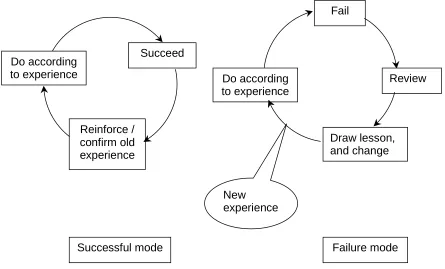
constitutes the basis of decision-making. The circles in Figure 2.1, as proposed by
this author, illustrate the basic theory of this approach.
Figure 2.1: The circle of “learning form experiences”
The starting point of the circle is that people take action according to past
experiences, the outcome of which could be success or failure. In case of success
past experiences will be confirmed and reinforced. In case of failure people will
review and investigate the subject matter in order to identify the underlying reasons. Do according
to experience
Succeed
Reinforce / confirm old experience
Successful mode Failure mode
Fail
Review
Draw lesson, and change Do according
to experience
Then people will draw lessons from the failure and make necessary changes, which
will become new experiences to guide future actions. A typical example of the failure
mode of “learning from experiences” is the Titanic accident: before the Titanic
accident, people were only concerned about intact stability, which is the past
experience, after the accident people realized the importance of damage stability,
which is the new experience. Afterwards the new experience --- damage stability
criteria were applied to ships. This approach can be summarized in the following
statement: Keep and follow past experiences until something goes wrong so that improvements have to be made.
2.2.2. Scientific research and development
The scientific research and development is the other way that people deal with
maritime safety. Scientists and experts from various sectors concerned by maritime
safety, such as shipyards, classification societies, maritime Administrations,
equipment manufactures, technical institutions and so on, have been actively
conducting research for the purpose of improving maritime safety. Scientific
researches have very wide coverage, from structural strength, engines, navigation
equipment, to operations, ship maneuvering, cargo handling, safety management
and so on. Some scientific researches and development focus on existing problems
and could provide solutions to them, some focus on the training of seafarers and
may produce more effective training facilities, and some researches may provide
guidance for the more effective and efficient administration and management of
maritime safety. In short, the scientific research and development has made a
valuable contribution to the improvement of maritime safety.
Although the above approaches are discussed separately, they are in fact closely
connected. The approach “learning from experiences” is also the underlying
principle of the scientific research and development, and the review and
investigation of the failure in “learning from experiences” would inevitably involve
2.2.3. The present situation of maritime safety
Nowadays there is a complex maritime safety framework in place internationally and
nationally, in which the main players are ship owners/operators, maritime
Administrations, classification societies, shipyards. The fundamental basis of the
framework is a regulatory regime on maritime safety and environmental protection,
which consists of international and national rules and regulations, such as IMO
Conventions, national legislations, and class rules. This regulatory regime provides
for the responsibilities and obligations of the players in maritime sector, the
standards concerning safety, environmental protection and seafarers, and so on.
The safety performance of the maritime industry largely depends on the quality of
this regulatory regime, and the effective implementation of it by all players. The
basic approach of the present regulatory regime is to provide safeguards against
identified hazards and remedies for failures. By “learning from experiences” and
scientific researches, maritime people have identified considerable hazards and
provided necessary safeguards against them and remedies for them, which are
reflected in safety rules and regulations. Through years of accumulation this
regulatory regime has already become considerably complete. For example, there
are technical requirements in IMO Conventions provided against engineering
hazards, such as structure failure, fire/explosion; there are STCW Convention
against hazards related with operations, ISM Code against hazards related with
management, COLREG Convention against hazards external to the ship, and so on.
In short, the present regulatory regime has addressed all perceived hazards and
provided safeguards and remedies (Smith, 1999).
2.3. Risk-based approach to maritime safety
The risk-based approach is a scientific method that deals with safety by controlling
risks in a systematic way. The core of this approach is “risk”, such as analysis of
risks, quantification of risks, evaluation and reduction of risks, and so on. Developed
in recent years, this approach has been widely applied in the nuclear and offshore
industry and proved to be a useful, powerful tool to deal with safety issues. Risk
Warner (1992) as “The process whereby decisions are made to accept a known or assessed risk and/or the implementation of actions to reduce the consequences or probability of occurrence.” The basis of the risk-based approach is risk assessment, which is “the integrated analysis of the risks inherent
in a product, system or plant and their significance in an appropriate context”
(Warner, 1992). Generally risk assessment comprises the following steps: (Warner,
1992)
• Hazard identification
• Risk estimation or analysis (quantification of frequency and severity of accidents)
• Risk evaluation (risk criteria, risk acceptability)
Based on the risk level obtained from risk assessment and the result of risk
evaluation, risk reduction measures will be considered and the benefit will be
evaluated against their cost, which is called cost/benefit assessment, finally based
upon the above analysis, decisions will be made to accept the risk and implement
risk reduction measures.
According to Hood et al. (1992), the advantages of the risk-based approach are the
following:
• It is a systematic process; decisions are made on the basis of scientific analysis and in a rational way.
• It is a proactive approach, which can identify new hazards and excessive risk areas, therefore risk reduction measures could be taken to prevent accidents
from happening.
• Quantification of the risk level can help people to understand and be aware of the safety situation more clearly.
• Cost/benefit assessment can keep the balance among all risk areas.
2.4. Necessity of the risk-based approach
Under the traditional approach a complete safety framework and a regulatory regime
have been established, and enormous improvements and progresses have been
safety sector for many years, or for which the traditional approach could not provide
satisfactory answers. For example, how safe is safe enough? What safety level
does the current maritime safety regulatory regime provide? Why is the maritime
safety sector so reactive that measures were always taken after major accidents
have already happened? In addition, even when measures have been taken after
accidents, people still do not know exactly how much the safety level has been
improved by such measures. There is also the dilemma that on one hand, there are
a lot of complaints from the society that the maritime industry is not safe enough,
because there are always serious accidents happening now and then, which make
people question the effectiveness of maritime safety regime; on the other hand,
there are a lot of complaints from the shipping industry that there are too many
safety rules and regulations, and the economic burden of fulfilling safety
requirements is so heavy that it is going to kill the industry.
From the discussion about the advantages of the risk-based approach in Section 1.3,
we can see that the risk-based approach can provide certain solutions to the
problems and questions mentioned above:
• Risk criteria, risk acceptability and cost/benefit assessment can help to understand the problem of “how safe is safe enough?”
• Quantified risk assessment can provide a clear picture of the safety situation; therefore people can see the risk level they are facing, and cost/benefit
assessment can make people aware of the additional cost needed to further
reduce the risk level. As a result the society will be more willing to accept the
risk, and will not complain too much on the safety level of the maritime
industry.
• The risk-based approach is a proactive approach, which can identify new hazards and excessive risk areas so that safeguards could be taken before
accidents happen, thereby reducing the number of serious accidents,
improving maritime safety, and reducing complaints from the society.
• Cost/benefit assessment can keep the balance among all risk areas and safety measures, and rationalize the regulatory regime, which will help to reduce the risk level, enhance the safety level in a rational, practicable and
• The risk-based approach can provide more transparency in the decision-making process; therefore it can promote the understanding of the industry
on the necessity of safety measures and the willingness to accept them. • When performance-based regulations are adopted by the Administration, the
risk-based approach can provide more flexibility for the industry in achieving
the safety standard set by the Administration.
• Quantification of the risk level can illustrate the extent of safety improvement achieved by the new measures implemented after accidents, which helps
people to see more clearly the effectiveness of the new measures, thereby
achieving more consensuses on them.
To provide a firm foundation for this dissertation, this chapter discussed the very
basic issues about safety and risk, the traditional and risk-based approach to safety,
and finally identified the advantages and necessity of the risk-based approach.
Based upon this, this dissertation will move on to explore in detail the risk-based
CHAPTER 3
The general procedure of risk-based approach to safety
3.1. Introduction
As a systematic process, the procedure is of the first importance to the risk-based
approach. This chapter will discuss the general procedure of risk-based approach
step by step, and then analyze the uncertainty that exists in risk assessment, which
is major limitation to this approach.
As a powerful flexible tool, risk-based approach can be applied to different cases
under different contexts, and in different ways to suit different purposes and
circumstances. The general procedure, however, is roughly the same for all cases.
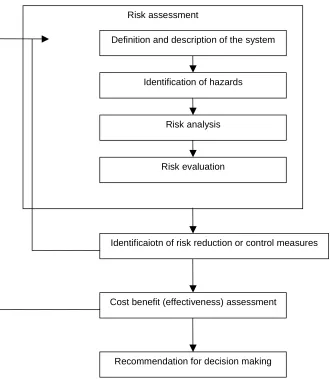
There is plenty of literature about the procedure of risk-based approach under
different contexts, which summarizes the general procedure as follows (Jenner,
1997; IMO, 1997; Warner, 1992): • Risk assessment
- Definition and description of the system
- Identification of hazards
- Risk analysis (qualitatively or quantitatively)
- Risk evaluation
• Identification of risk reduction or control measures • Cost benefit (effectiveness) assessment
• Recommendation for decision-making
Figure 3.1 General procedure of the risk-based approach
3.2. Risk assessment
3.2.1. Definition and description of the system
Risk assessment is conducted with regard to certain systems for the purpose of
solving certain safety problems. The system concerned and its boundaries should
therefore be defined clearly, the current situation of the system and the problem
existed should be described, and the purpose of the risk assessment should be Risk assessment
Definition and description of the system
Identification of hazards
Risk analysis
Risk evaluation
Identificaiotn of risk reduction or control measures
presented clearly as well. For example, the system could be a ship, a category of
ships (oil tankers, bulk carriers), the fleet of a shipping company, certain areas of a
ship (engine room, bridge), ship equipment, shipping company, maritime
Administrations.
3.2.2. Identification of hazards
This step is to “identify and generate a prioritized list of hazards, specific to the
problem under review” (IMO, 1997). The reason for this step is that we need to know
firstly what could go wrong in the system before estimating the risk and deciding on
the risk reduction action (Kuo, 1998). In this step two layers of objectives should be
achieved: (IMO, 2001a)
• The primary objectives are:
- Completeness Full list of potential hazards
- Knowledge–based Be aware of past accidents and other work
- Multi–disciplinary Allow lateral thinking from diverse experiences • The secondary objectives are:
- Auditability Possible to track the process, well documented
- Structure To ensure completeness and quality of documentation
- Efficiency Focus on immediate problem, useful for other purposes
To ensure the realization of the above-mentioned objectives, certain principles
should be followed, Kuo (1998) proposed the following principles for hazard
identification:
• Understand the mechanism the system works, the planned path of the system and the associated assumptions.
• Identify the possible deviation from the planned path, the possible cause and effect of the deviation.
• Document all the identified deviation.
To achieve the objectives mentioned above, standard techniques, analytical or
creative, should be adopted for hazard identification, such asBrainstorming, What-If
“The analytical techniques can ensure that previous experience is taken into
account properly and systematically; the creative techniques can ensure that the
process is proactive, and not confined only to hazards that have materialized in the
past” (IMO, 1997). Appropriate techniques should be chosen according to the
characteristics of the system under consideration and the types of hazards as well
(IMO, 2001b).
Hazards can be grouped into different types according to their characteristics. Kuo
(1998) believes that grouping hazards is beneficial in that it allows one to choose the
most appropriate identification techniques for that type of hazard, select suitable risk
analysis techniques, and facilitate the process of seeking suitable risk reduction
measures according to the type.
Various ways of grouping hazards can be employed for different purposes.
Considering the discussion on the term safety, the author proposes to group
hazards as follows:
• Internal hazards:
- Management hazards
- Engineering hazards
- Operational hazards
• External hazards:
- Hazards from natural environment
- Hazards from political environment
- Hazards from other systems
- Hazards from commercial environment
The identified hazards will be screened and prioritized according to the significance,
which can be undertaken by using historical statistics and professional judgment.
This ranking is just a coarse and rough screening and prioritization of hazards. This
process helps people to better understand hazards identified, focus on significant
The output of hazard identification is a prioritized list of hazards, and a preliminary
description of the development of hazards to final outcomes (IMO, 1997).
3.2.3. Risk analysis
This step is to estimate the risk level and identify the distribution of risks among
categories and sub-categories of accidents. The analysis could be qualitative or
quantitative as required by the actual situation. It involves the systematic analysis of
the developing path from hazards to final accidents, the causal chain of accidents,
the accident scenario, and so on. In short, the connection between hazards and
accidents will be carefully examined and established, this also facilitates the
understanding of the operating mechanism of the system. Various techniques are
available for risk analysis, such as Event Tree Analysis, Fault Tree Analysis, neural
network, fuzzy set, and so on. Since the demand for historical data is very heavy in
the risk analysis process, from the very beginning insufficient data has been a major
difficulty confronting risk analysts. When historical data are not sufficient and reliable,
expert judgement can be employed for the analysis.
There are two fundamental expressions of risks: individual risk and societal risk in
terms of human life. Individual risk can be regarded as “the risk of death, injury and
ill health to an individual in isolation” (IMO, 1997), such as crews, passengers, and
so on. The widely used expression is mortality rate, for example 10-3 annually. The
mortality rate can also be expressed relative to other measure units, such as
passenger-hours, passenger-miles, and so on. Loss of Life Expectancy is used to
express individual risk of injury and ill health. Quality Adjusted Life Year (QALY) can
be used as an integrated indicator for the risk of death, injury and ill health.
Societal risk can be regarded as “the risk to society of a major accident” (IMO, 1997).
Societal risk can be expressed by means of FN curve, a diagram where the
frequency (F) of “N or more fatalities” is plotted against the “N or more fatalities”
(See Figure 3.2). Using FN curve the frequency of accidents with different
(Grossland, et al. 1993). Another way to express societal risk is Potential Loss of
Life (PLL), which represents the number of annual fatalities.
Risk may also be expressed by monetary units, for example 105 US$ annually,
where the loss of human life, damage to property and environment are represented
by monetary units. Theoretically this is a perfect alternative to express risks,
however, in practice, it is very hard to have consensus on the value of human life,
and even the idea of “value of human life” could not be accepted generally.
3.2.4. Risk evaluation
Once the risk level has been estimated, it will be evaluated against the risk
acceptance / tolerance criteria with the purpose of deciding whether measures
should be taken to reduce the risk level. There are mandatory risk evaluation
criteria established by government as well as voluntary criteria set up by companies
for their own safety practices. Generally there are three risk levels: Intolerable, As
Low As Reasonably Practicable (ALARP) and Negligible (IMO, 1997).
• Intolerable – The risk is very high and cannot be justified so that measure should be taken to reduce risk level regardless of cost.
• Negligible – The risk is so small that no risk reduction is necessary.
• ALARP –The risk falls between the other two states. It is also called Tolerable level, meaning that the risk is tolerable in this region. Risk
reduction measures may or may not be taken depending upon the
cost-effectiveness of them. If the risk reduction measure is cost-effective, it should
be taken to reduce the risk as low as reasonably practicable. If the cost of
the measure outweighs the benefit, then no action needs to be taken to
reduce the risk.
The following are some examples of risk evaluation criteria for individual risk (IMO,
2000 attributes Health Safety Executive, 1999):
• Maximum tolerable risk for public ashore 10-4 annually
• Negligible risk 10-6 annually
Risk evaluation criteria for societal risk can be shown by diagrams, Figure 3.2 is an
example of the diagram:
Figure 3.2: FN curves for different tankers, shown together with established risk acceptance curves. Data from 1978-1998. (Data source: LMIS)
Source: International Maritime Organization, MSC 72/16, 2000.
3.3. Risk reduction or control measure
According to the evaluation of risk level risk reduction or control measures should be
identified. By looking at the developing path of hazards into accidents, risk control
measures can be classified into two groups: preventive measures and mitigating
measures. Preventive measures aim at reducing the likelihood of failures and
accidents, in short, controlling the frequency. Mitigating measures aim at reducing
the severity of failures and accidents, in short, controlling the escalation of failures
As there are hazards internal to the system, like management, engineering and
operation, and there are hazards external to the system, risk control measures can
be identified at where hazards exist. Therefore risk control measures can be
identified aiming at improving management, engineering and operation of the
system, and aiming at alleviating the negative environment of the system.
Once risk control measures have been identified, they should be grouped and
organized into practical control options, which will be assessed for their
cost-effectiveness at the later stage.
3.4. Cost benefit (effectiveness) assessment
Cost benefit assessment is an important feature of the risk-based approach to safety,
which would ensure the balance among the risk control options. Safety costs money,
if the cost of a risk control option outweighs its benefit: the improved safety or the
reduced risk that such “cost” could achieve, then this risk control option is not
regarded as cost-effective. There are two ways to conduct such assessment: Cost
Benefit Assessment (CBA) and Cost Effectiveness Analysis (CEA).
In Cost Benefit Assessment (CBA) all losses (life, injury, ill health, property,
environmental) are converted to monetary units, as well as all benefits. Then the
benefit is simply compared with the cost in monetary terms. This approach seems
to perfectly match the theoretical idea of such assessment, however, big difficulty
arises when it comes to the “value of life”. Although many ways are available to
estimate the “value of life”, there is no general consensus on it.
In Cost Effectiveness Analysis (CEA), a ratio of costs to benefits is presented in
order to avoid putting a value to “life”. The ratio will then be compared with the
criterion determined by decision-makers. Basically the ratio represents the amount
of resources needed to reduce per unit risk, i.e. one life annually. Accordingly the
criterion on this ratio represents the amount of resources that the society is willing to
In practice the cost effectiveness is expressed in forms of Implied Cost of Averting a
Fatality (ICAF), or Cost of Unit Risk Reduction (CURR) (IMO, 2000).
Risk Cost ICAF ∆ ∆ =
∆Cost is the marginal (additional) cost of the risk control option, whilst ∆Risk is the reduced risk in terms of fatalities averted. ICAF is also called as Gross Cost of
Averting a Fatality (Gross CAF) (IMO, 2000).
Risk nefits EconomicBe ICAF Risk nefits EconomicBe Cost CURR ∆ ∆ − = ∆ ∆ − ∆ =
In CURR the economic benefits of risk control options are accounted for, such as
risk reduction in property, environment, and so on. CURR is also called as Net Cost
of Averting a Fatality (Net CAF) (IMO, 2000).
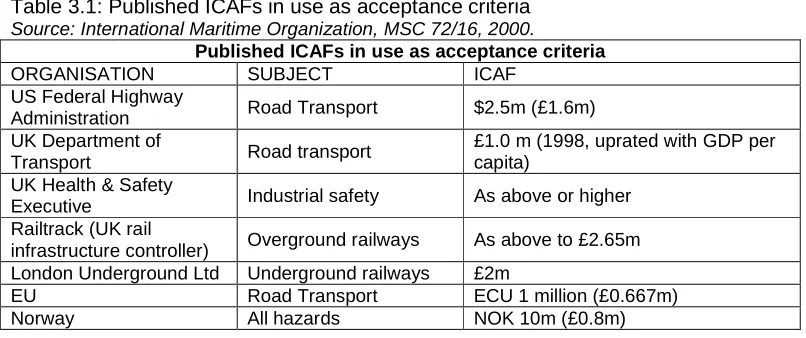
Table 3.1 below gives some examples of criteria of ICAF.
Table 3.1: Published ICAFs in use as acceptance criteria
Source: International Maritime Organization, MSC 72/16, 2000.
Published ICAFs in use as acceptance criteria
ORGANISATION SUBJECT ICAF
US Federal Highway
Administration Road Transport $2.5m (£1.6m)
UK Department of
Transport Road transport
£1.0 m (1998, uprated with GDP per capita)
UK Health & Safety
Executive Industrial safety As above or higher
Railtrack (UK rail
infrastructure controller) Overground railways As above to £2.65m London Underground Ltd Underground railways £2m
EU Road Transport ECU 1 million (£0.667m)
Norway All hazards NOK 10m (£0.8m)
3.5. Recommendation for decision making
In this step the cost-effectiveness of risk control options are compared, based on the
3.6. Uncertainty in risk assessment
Having introduced the general procedure of the risk-based approach to safety,
readers may have got deeper understanding about the advantages of this approach.
However, nothing in the world is perfect, the limitation of this approach should also
be properly identified and addressed to ensure the effective implementation in
practice. The main limitation of the risk-based approach is the uncertainty inherent in
the process, which attracts heavy criticism from those who are against this approach,
and affects people’s confidence in this approach. Nevertheless, it will not affect the
advantages if it is properly recognized and treated. In this section, types, sources of
the uncertainty, the treatment of and appropriate attitude to that will be discussed.
It is very important to distinguish two types of uncertainties (Bolsover et al., 1998):
• Variability (also called as random uncertainty, inherent uncertainty or Type A uncertainty). This is due to natural randomness, e.g. the variation in wind
speed over time. It can be defined more accurately by repeated
measurements.
• Epistemic uncertainty (also called as Type B uncertainty). This is due to lack of knowledge and information. It includes uncertainties in modeling and data
collection, and can be reduced by gathering more information and increased
knowledge.
Generally, according to the source the uncertainty can be grouped into data-related
and methodology-related uncertainties.
3.6.1. Data-related uncertainty
Using historical data is a relatively reliable way to quantify risk level compared with
others. However data could give rise to some uncertainty due to the applicability of
Historical data reflect the previous situation; when historical data are applied to the
current situation to estimate the current risk level, there is an assumption that the
situation has not changed over this period of time. However, the situation is
changing all the time, including the system itself and the external operating
environment. Therefore, the uncertainty will arise when historical data are applied to
the current situation. Fortunately such change is occurring very slowly, especially in
the shipping industry, which has a long history and is considered to be very
conservative. In addition, since the life cycle of a ship is normally over 20 years the
total “sudden step-change” is very unlikely to occur, instead, it is evolving gradually.
Therefore the uncertainty arising from the changing situation is not big.
Since it is extremely impossible for every accident to be reported and recorded, the
risk level estimated by historical data will obviously be lower than the risk in reality.
Although there are several organizations in the world that are collecting casualty
data, complete data are still impossible. However, major accidents were always
recorded, so in certain high-risk areas, data may be regarded as sufficient.
3.6.2. Methodology-related uncertainty
The uncertainty may also come from some areas related with methodology and
modeling, such as quantification of human element, the use of professional
judgement, and the existence of simplifying assumption (White, 2001).
The contribution of human elements to safety has been widely recognized, however,
the quantification of it is a very challenging task that involves considerable
uncertainty. Although the risk-based approach is considered as an objective process,
professional judgement is used everywhere in the process, especially when data are
not sufficient (Grossland, et al. 1993). To model the system assumptions have to be
made with regard to various situations, which also introduce uncertainties to the
3.6.3. Treatment of the uncertainty
It is an unchangeable fact that the uncertainty in the risk-based approach will always
exist to a certain degree, there are no ways to avoid it, and the only proper way
available is to treat the uncertainty explicitly thereby improving the confidence in the
risk-based approach. Some uncertainty are quantifiable, others are less tractable.
As recommended by Carr et al., (1995) the best way of treating uncertainty is “best
estimate with uncertainty quantified as fully as possible”. Therefore the general
principle is to quantify uncertainties that are quantifiable; for those that are not
quantifiable, qualitative analysis should be made explicitly.
3.6.3.1. Treatment of the uncertainty related with data
To handle this kind of uncertainty proper selection of data and methodology is the
key: data should be selected to reflect the actual situation of the system concerned,
and the methodology should be able to handle the variance in input data. Various
techniques are available for the quantification of the uncertainty, such as Monte
Carlo tools, Bayesian analysis, sensitivity analysis, maximum/minimum bound
estimates, and so on (Bolsover et al., 1998).
Carr et al. (1995) recommended a practical scheme for the quantitative assessment
of the overall uncertainty, which can be implemented by means of Monte Carlo
simulation technique. The theory is as follows: The process of the risk-based
approach involves data inputs, mathematics analysis and outputs, in the
conventional deterministic approach, input parameters are treated as single values
as well as output parameters (as presented in Figure 3.2). In the Monte Carlo
simulation probalistic approach, input parameters are treated as random variables
whose uncertainty is represented by probabilistic distributions, accordingly, output
parameters are in the form of probability distributions rather than single values (as
presented in Figure 3.3). Therefore the output will not only represent the “most likely
value” that can be defined in various way for different purpose, such as mean,
For example, the risk level is 10-6 annually, the probability of the risk level being 10-6
is 90%. In this way the uncertainty can be clearly and explicitly illustrated.
Figure 3.3: Treatment of uncertainty related with data
3.6.3.2. Treatment of the uncertainty related with methodology and modeling
This kind of uncertainty is more difficult to handle than the uncertainty related with
data. Bolsover et al. (1998) suggested that using a wide range of modeling
approaches could provide some insights to this kind of uncertainty. In addition
understanding and recognition of limitations of models will also help for this.
3.6.4. Attitude towards the uncertainty
The existence of uncertainties is not a shame or substantial drawback to the
risk-based approach; to avoid discussing uncertainties is of course not an honest and
convincing way to serve decision-makers and the public. In addition the human
world does not require everything to be perfect, human beings act for certain
purposes, not just for the sake of the act itself. In the context of safety, human
beings conduct risk assessment for the purpose of mitigating risks and improving
safety, therefore, the whole process of risk assessment serves this purpose. In
return, this purpose will determine how risk assessment should be carried out,
including the degree of accuracy and uncertainty of it. So the realistic goal, as deterministic
treatment
probalistic treatment Single
value
Single value
input
output
Grossland (1993) indicated, is that the accuracy should be “adequate in relation to
the needs and to enable effective mitigation of risks." It is not necessary to quantify
the uncertainty to a fixed degree under all circumstances. Sometimes the actual
situation may require the uncertainty to be quantified. Under some circumstances
qualitative assessment of uncertainties might satisfy the need. Whatever ways to
treat uncertainty, the issue of uncertainty should not be avoided; it should be
identified, highlighted, and analyzed explicitly.
This chapter summarized and discussed the general procedure of the risk-based
approach, which further illustrated the systematic feature of this approach. The
uncertainty issue related with this approach is analyzed, which help to provide a
complete recognition of the risk-based approach with regard to advantages and
limitations. Under the general framework built up in this chapter, this dissertation will
move on to discuss the various scientific techniques to reflect the scientific feature of