University of Kentucky University of Kentucky
UKnowledge
UKnowledge
University of Kentucky Doctoral Dissertations Graduate School
2007
THE DEVELOPMENT AND TEST OF AN EXCHANGE-BASED
THE DEVELOPMENT AND TEST OF AN EXCHANGE-BASED
MODEL OF INTERPERSONAL WORKPLACE EXCLUSION
MODEL OF INTERPERSONAL WORKPLACE EXCLUSION
Kristin Damato Scott
University of Kentucky, [email protected]
Right click to open a feedback form in a new tab to let us know how this document benefits you. Right click to open a feedback form in a new tab to let us know how this document benefits you.
Recommended Citation Recommended Citation
Scott, Kristin Damato, "THE DEVELOPMENT AND TEST OF AN EXCHANGE-BASED MODEL OF
INTERPERSONAL WORKPLACE EXCLUSION" (2007). University of Kentucky Doctoral Dissertations. 534. https://uknowledge.uky.edu/gradschool_diss/534
ABSTRACT OF DISSERTATION
Kristin Damato Scott
The Graduate School
University of Kentucky
THE DEVELOPMENT AND TEST OF AN EXCHANGE-BASED MODEL OF INTERPERSONAL WORKPLACE EXCLUSION
ABSTRACT OF DISSERTATION
A dissertation submitted in partial fulfillment of the requirements of the degree of Doctor of Philosophy
in the College of Business and Economics at the University of Kentucky
By
Kristin Damato Scott
Lexington, Kentucky
Director: Dr. Daniel J. Brass, J Henning Hilliard Endowed Chair in Management
Lexington, Kentucky
2007
ABSTRACT OF DISSERTATION
THE DEVELOPMENT AND TEST OF AN EXCHANGE-BASED MODEL OF INTERPERSONAL WORKPLACE EXCLUSION
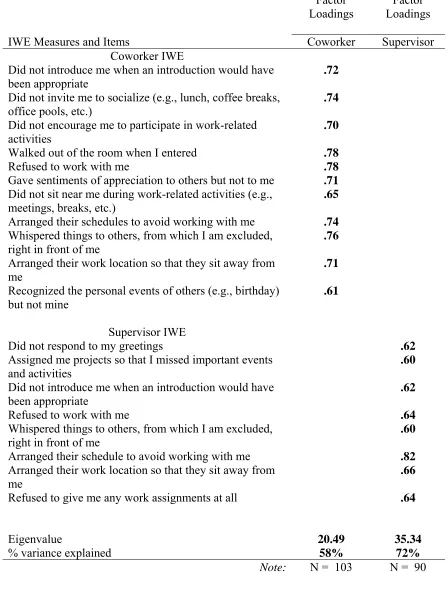
The vast majority of social exclusion research has taken place outside of the workplace (i.e., in social settings). In addition, researchers often use a myriad of terms (i.e., ostracism, exclusion, rejection) when describing and investigating exclusion-related phenomena thus contributing to widespread conceptual confusion with respect to this construct. Moreover, past studies have failed to consider the role of social exchange in determining how individuals may react to being excluded by others – particularly in a work setting. I sought to address these issues by conducting three multi-wave studies which develop and test a social-exchange based model of interpersonal workplace exclusion (IWE). Specifically, I created and validated two measures (i.e., coworker and supervisor) of IWE. In addition, I examined the discriminant, convergent and predictive validity of these scales.
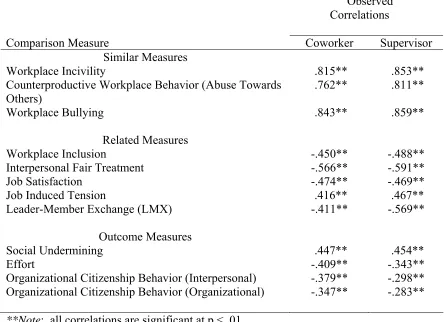
The results of these studies produced two distinct, unidimensional measures of IWE – an 8-item coworker IWE scale and an 8-item supervisor IWE scale. Additional analyses revealed that IWE is negatively related to, albeit distinct from, workplace inclusion and is part of the broader conceptual domain of antisocial workplace behavior which includes theoretically similar constructs – namely, workplace incivility,
counterproductive workplace behavior and workplace bullying. In addition, IWE was found to be negatively related to perceived interpersonal fair treatment, job satisfaction and leader-member exchange (LMX) as well as positively related to job induced tension. Lastly, results of the third study provided support for an exchange-based model of IWE such that both coworker and supervisor IWE measures were associated with employee social undermining behavior, reduced effort and lower levels of organizational
citizenship behaviors.
___________Kristin D. Scott______________
THE DEVELOPMENT AND TEST OF AN EXCHANGE-BASED MODEL OF INTERPERSONAL WORKPLACE EXCLUSION
By
Kristin Damato Scott
___________Dr._Daniel J. Brass__________ Director of Dissertation
________ Dr. __________ Merlin Hackbart_________ Director of Graduate Studies
RULES FOR THE USE OF DISSERTATIONS
Unpublished dissertations submitted for the Doctor’s degree and deposited in the
University of Kentucky Library are as a rule open for inspection, but are to be used only with due regard to the rights of the authors. Bibliographical references may be noted, but quotations or summaries of parts may be published only with the permission of the author, and with the usual scholarly acknowledgements.
Extensive copying or publication of the dissertation in whole or in part also requires the consent of the Dean of the Graduate School of the University of Kentucky.
A library that borrows this dissertation for use by its patrons is expected to secure the signature of each user.
DISSERTATION
Kristin Damato Scott
The Graduate School
University of Kentucky
THE DEVELOPMENT AND TEST OF AN EXCHANGE-BASED MODEL OF INTERPERSONAL WORKPLACE EXCLUSION
DISSERTATION
A dissertation submitted in partial fulfillment of the requirements of the degree of Doctor of Philosophy
in the College of Business and Economics at the University of Kentucky
By
Kristin Damato Scott
Lexington, Kentucky
Director: Dr. Daniel J. Brass, J Henning Hilliard Endowed Chair in Management
Lexington, Kentucky
2007
ACKNOWLEDGEMENTS
“Nothing in the world can take the place of persistence. Talent will not; nothing is more common than unsuccessful men with talent. Genius will not; unrewarded genius is almost a proverb. Education alone will not; the world is full of educated derelicts. Persistence and determination alone are omnipotent. The slogan ‘press on’ has solved and always will solve the problems of the human race.”
--- Calvin Coolidge, 30th President of the United States (1872-1933)
I stumbled upon this quotation back in high school. At the time, I possessed only a vague appreciation of the meaningfulness behind this statement. However, in recent years, the power and truth of these words really began to sink in. In the past five years I simultaneously experienced two of the most difficult, and yet most rewarding, events of my life – the pursuit of my doctoral degree and the birth of my first child. During this time, there were many days when I would have rather been playing with my daughter than working. At the same time, there were also many days when my daughter made the dissertation seem easy by comparison. These events, along with the various other life experiences leading up to them, invariably drove home the wisdom and importance of this statement. Hence, it has served to inspire, guide and ground me through life’s many endeavors.
Along the way, I have also been fortunate to share these life experiences with many individuals who, by their own example, encouraged me to persevere, both
professionally and personally. The first individual to contact me regarding the doctoral program at UK was Dr. Michelle Duffy. From day one, Michelle believed in me,
inspired me and provided me with many opportunities to learn and grow. I would like to thank Michelle for her endless patience, wisdom and understanding – and for her
successfully completing this dissertation and securing gainful employment. Thank you, Dan.
In addition to these individuals, I would like to further thank the members of my dissertation committee – Dr. Brian Dineen and Dr. Richard Smith for their time and dedication. Brian, in particular, has always been willing to lend an ear, provide sound advice and has served as an excellent role model for me during these past years. I also wish to thank Dr. Joe Labianca, Dr. Dan Lockhart and Dr. David Hardesty who have truly gone above and beyond the call of duty to assist me with certain aspects of my dissertation. Their insight, generosity and devotion have been invaluable to this project. I am sincerely grateful.
During these five years I have also had the privilege of sharing the doctoral program experience with several other outstanding individuals whose professional knowledge, friendship and ongoing support have been a magnificent source of strength for me. For this, I would like to thank Dr. Kiku Jones, Dr. Matt Seevers and Julie Seevers, Shannon and Dr. Jason Rinaldo, Dr. Jody Crosno and Jereme Schribner, Margaret Hughes, Juan Ling, and Goce Andrevski. I will always treasure our time together and look forward to future reunions.
Next, I would like to thank my family. I could never possibly begin to express my heartfelt gratitude, appreciation, love and admiration for each of you. First, I would like to recognize my mother and father, Lori and John Damato, for being amazing parents who always believed in me and encouraged me to pursue my dreams. I would also like to thank them for being wonderful role models, passing along their faith in God, and giving of themselves selflessly to their children and grandchildren. A little over two years ago, my parents were given the wondrous but daunting gift of having three grandchildren born within ten weeks of each other. As with all of life’s surprises that we have endured as a family, my parents jumped right in and showed us what it means to be persistent and determined – even on very little sleep. Without their help, I would never have made it through this program or be where I am today. Thank you!
days. She and her husband, Sean, have given me one of my most treasured gifts – my identical twin nephews, Kyle and Landon. I am in awe of these two and cannot begin to describe the love and fondness I have for them. They hold a very special place in my heart.
In addition, I would also like to thank my “soul sisters” – Jen, Julie, Mary, Hollie, Kellie, Kim and Trista. I am grateful beyond words for your friendship which is the cornerstone of my sanity! I am also blessed with a wonderful “in-law” family. I want to thank my mother-in-law, Donna, and step-father-in-law, Nick, for their on going prayers, patience, love and understanding. This has meant more to than words can express. I also want to thank Uncle Doug and Auntie Terry for their love and support as well. I consider myself very lucky to have each of you in my life.
To my “in-law” family, I also thank you for my husband, Tim Scott who means the world to me. He has never failed to support me in pursuing my dreams and has been an ongoing source of strength, comfort and love since the day we met. I want to thank him for his patience, friendship and devotion to our marriage and family. I look forward to a continued happy future together. I especially cherish our daughter, Emily. She is my ray of sunshine and guiding light. I love her with every ounce of my soul.
TABLE OF CONTENTS
Acknowledgements……….. iii
List of Tables………... viii
List of Figures……….. ix Chapter 1: Statement of the Research Problem……….. 1
The Nature of Interpersonal Exclusion at Work……….. 2
Justification for the Present Study………... 5
Chapter 2: Literature Review and Theory Development……… 9
Prior Conceptualizations of Social Exclusion………. 9
Analysis of Previous Conceptualizations………. 13
Proposed Definition of Interpersonal Workplace Exclusion……... 15 Conceptual Context of IWE………. 19
Discriminant Validity: IWE and Workplace Inclusion…….. 20
Concurrent Validity of IWE...……… 23
IWE and Workplace Incivility………. 23
IWE and Counterproductive Workplace Behavior.. 24
IWE and Workplace Bullying……….. 25
Nomological Network of IWE……….………. 28
IWE and Perceived Interpersonal Fair Treatment… 28 IWE and Job Satisfaction………. 28
IWE and Job Induced Tension………. 30
IWE and Leader-Member Exchange...………. 30
Predictive Validity of IWE………. 30
IWE and Social Undermining Behavior………….. 32
IWE and Employee Effort……… 34
OBSE and Organizational Citizenship Behavior…. 35 Chapter 3: Method………... 37
Study 1: Instrument Development………... 37
Phase 1: Item Generation……… 37
Phase 2: Item Review………. 38
Study 2: Instrument Refinement………. 38
Phase 1: Item Selection………... 39
Phase 2: Exploratory Factor Analysis………. 39
Study 3: Instrument Validation……… 41
Phase 1: Dimensionality………. 42
Phase 2: Discriminant, Concurrent Validity………... 44
Phase 3: Predictive Validity Assessment……… 47
Chapter 4: Discussion……….. 51
Theoretical Implications………. 54
Practical Implications………. 55 Limitations……….. 57
Future Research……….. 57
Conclusion……….. 59
Appendix A……….. 60
Appendix B……….. 62
Appendix C……….. 65
Appendix D……….. 69
Appendix E……….. 76
References……… 90
LIST OF TABLES
Table Page
2.1 Forms and Modes of Interpersonal Workplace Exclusion……… 19
2.2 Interpersonal Workplace Exclusion and Related Constructs……… 27
3.1 Exploratory Factor Analysis: Factor Loadings for IWE Measures…….. 40
3.2 Confirmatory Factor Analysis: Factor Loadings for IWE Measures…… 43
3.3 Correlations between IWE Measures and Related Constructs…………. 48
LIST OF FIGURES
Figure Page
2.1 Perceived Interpersonal Workplace Exclusion……….……… 17
2.2 Interpersonal Workplace Exclusion and Related Constructs……… 24
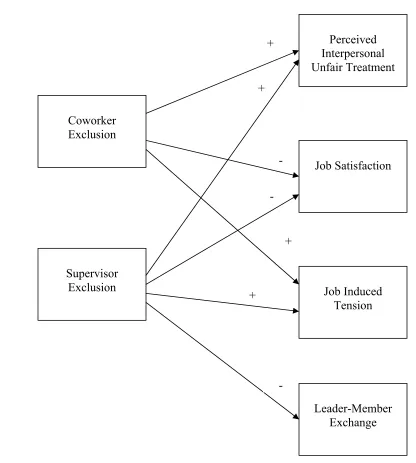
2.3 The Nomological Network of Interpersonal Workplace Exclusion…….. 29
CHAPTER ONE
STATEMENT OF THE PROBLEM
On March 5, 2007 Jose Mendez walked into Kenyon Press and began shooting at his former colleagues, seriously wounding three of them, before turning the gun on
himself (“One Dead, Three Hurt in Factory Shooting”, CBSNews online, March 6, 2007). Unfortunately, media broadcasts, such as this, reporting instances of workplace or school violence have become frighteningly commonplace in recent years. Indeed, according the Bureau of Labor Statistics from 1992 to 2004 an average of 807 workplace homicides occurred annually in the United States (Census of Fatal Occupational Injuries, 2005). Of these, approximately 7% (56) were “worker-on-worker” fatalities where the perpetrator was a current or former employee who targeted one or more current or past employees (National Institute for the Prevention of Workplace Violence, 2005). After hearing of these accounts, many of us are left to wonder why someone would want to engage in such a horrific act of violence? In searching for answers, both criminal and academic investigations of these tragic events often reveal that the shooter was a disgruntled social outcast seeking revenge for their perceived mistreatment (e.g., The Associated Press, MSNBC, 2006; Christensen, 2005; Leary, Kowalski, Smith & Phillips, 2003, Wrobleski & Hess, 2003). Thus, perpetrators of these terrible acts may generally view their violent behavior as “evening the score” or finally getting the attention he or she believes they deserve – as was the case of Jose Mendez in the Kenyon Press incident.
“No one wanted to answer my questions and everyone avoided me – even my manager. I felt hurt and began to question my loyalty to the company. I decided because this company (specifically the department) didn’t care about me, I didn’t care about helping
them look better. I essentially cut back my efforts and stopped giving my usual 150%.” –Amy K., Former Employee of MBNA
Employee retaliatory responses such as this are often the result of a “culmination of personal frustration that has built to a crescendo because of perceived injustice, humiliation, loss of dignity, shaming, or perceived loss of value and control [i.e., social exclusion]” while at work (National Institute for the Prevention of Workplace Violence, 2003: p. 21). This is particularly troublesome when one considers the prevalence and potential power of exclusionary practices (not invited to informal and formal work events, not heard or acknowledged, left out of important projects) within a work setting – both in terms of the message it conveys and the reactions it invokes. As noted by
Williams (2001), anyone can engage in exclusionary behavior; one does not need a lofty position or special authority to do it. In addition, social exclusion can be subtle or intangible and, therefore, not necessarily subject to punitive action. As a result, exclusionary tactics such as avoiding or ignoring a colleague may be a particularly appealing approach for both managers and employees because of the minimal risk or fear of being disciplined for such actions. For these reasons, social exclusion is a potentially pervasive and powerful force within an organization and, as such, is likely to
significantly influence employee retaliatory reactions in the workplace.
Despite this, there is a paucity of research devoted to studying exclusion as a work-related phenomenon and, as a result, there is limited knowledge concerning the relationship between social exclusion and employee retaliatory responses in the
workplace. Furthermore, the development and validation of a measure of interpersonal workplace exclusion (IWE) is warranted in order to facilitate empirical research in this area. Thus, I take steps to address this problem by proposing a social exchange-based model of IWE and employee retaliation and, in doing so, develop and validate two measures (i.e., coworker and supervisor) of this construct.
Overview of IWE
effects on one’s psychological well-being, satisfaction with colleagues, and propensity to engage in deviant organizational behavior (e.g., Hitlan, Cliffton, & DeSoto 2006;
Schneider, Hitlan, & Radhakrishnan, 2000; Williams, 2001; Thau, Aquino, & Poortlevet, 2007). A more substantive body of literature on general social exclusion has
accumulated outside the workplace (i.e., in social settings). The findings of these studies demonstrate that social exclusion is associated with aggression (e.g., Bourgeois & Leary, 2001; Twenge, Baumeister, Tice, & Stucke, 2001), self-defeating (e.g., unhealthy) behaviors (Twenge, Catanese & Baumeister, 2002), lowered performance on complex tasks (Baumeister, Twenge & Nuss, 2002) and impaired self-regulatory control (Baumeister, DeWall, Ciarocco, & Twenge, 2005). Considered together, these results provide ancillary evidence to support the likelihood that IWE is predictive of various retaliatory responses in the workplace.
In addition, these findings generate an important yet somewhat elusive question for researchers. Specifically, why does being excluded elicit these negative responses among individuals? In seeking to answer this question, social exclusion researchers have focused their attention on the tenets of belongingness theory (Baumeister & Leary, 1995). According to this theory, being excluded from social relationships threatens an
individual’s fundamental, or biologically-driven, need to belong (i.e., the innate desire to be accepted into positive, on-going and mutually beneficial relationships with others) considered necessary for long-term adaptation and survival within one’s environment. When this need is thwarted individuals may no longer see the need to respond in a socially responsible manner and therefore are likely to engage in negative or seemingly irrational behavior (Twenge, 2005). While this postulation adequately explains why individuals may dislike the experience of being excluded (by having this fundamental need thwarted), it offers little theoretical guidance in terms of predicting precisely why and how individuals choose to respond to social exclusion. In other words, to fully understand the implications of social exclusion in the workplace, more complex theoretical models are required.
to include principles of social exchange which I further argue are an important, yet frequently overlooked aspect of belongingness theory. As Baumeister & Leary (1995) note, in order to fulfill belongingness needs a person must “perceive that there is an interpersonal bond or relationship marked by stability or affective concern, and continuation into the foreseeable future…and must [also] believe that the other cares about his or her welfare” (p. 500). In this way, relationships that satisfy belongingness needs are characterized by regular or frequent contact and the presence of an on-going social bond – both of which serve to create an implicit obligation between these individuals to assist and support one another. The establishment of these mutually supportive relationships rests primarily on the voluntary actions undertaken by such individuals with the expectation that favorable treatment will be returned over time – otherwise known more formally as the process of social exchange (Blau, 1964). Social exchange relationships are guided by a set of implicit norms or rules that allow trusting and mutually supportive relationships to develop (Emerson, 1976). Hence, the presence of positive social exchange mechanisms facilitates the fulfillment of individual
belongingness needs. By contrast, the experience of social exclusion violates social exchange norms by preventing the establishment of mutually beneficial relationships and, as a result, sabotages one’s fundamental need to belong. In other words, the deprivation of access to important relationships and their associated resources (i.e., exclusion) hinders effective social exchange and undermines a person’s biologically driven need to develop and maintain supporting, caring relationships. For these reasons, I argue that it is
important for the social exchange component of belongingness theory to be given further theoretical and empirical attention as these principles allow for more substantive
predictions concerning employee reactions to IWE experiences.
(Gouldner, 1960). Furthermore, there is general agreement that the norm of reciprocity (viewed as a moral norm in this way) is a universal principal and – like the fundamental need for belonging – shared to varying degrees by all world cultures (see Cropanzano & Mitchell, 2005 for a review). As noted earlier, IWE violates the social exchange norm of reciprocity by preventing the establishment of mutually beneficial and supportive
relationships. Thus, excluded individuals are likely to believe that those who have
excluded him or her should be punished for violating these widely accepted social norms. In this way, retaliatory responses become acceptable, even seemingly necessary, within the eyes of excluded individuals. Extending this logic to the current study, I argue that excluded employees are likely to engage in retaliatory behavior such as social
undermining or withholding effort or citizenship behavior in response to IWE.
However, before more complex analyses of IWE may be further investigated, a measure of IWE must be developed and validated. Currently, “researchers who study rejection-related phenomena have gravitated towards different terms – such as rejection, ostracism, abandonment, and exclusion-often leaving it unclear whether various terms refer to the same general phenomenon or to different things. As a result, we have no conceptual basis for judging whether theoretical ideas or empirical findings involving any particular construct are relevant to any others” (Leary, 2005: p. 36; Williams, 2007). Consequently, in order to effectively examine IWE, it is important to further delineate this construct – both conceptually and empirically – in order to clearly understand how social exclusion both relates to and differs from other organizational behavior constructs. To this end, this research study seeks to examine and refine the conceptual definition of IWE as well as to investigate the behavioral outcomes (i.e., retaliatory behavior)
associated with the experience of being excluded in the workplace.
Justification for the Present Study
following section: (1) theoretical development/model specification; (2) the measurement of social exclusion; and (3) issues related to sampling.
Theoretical Development/Model specification.
The study of social exclusion has been approached from a variety of perspectives (e.g., anthropology, sociology, ethnography) (see Williams & Zadro, 2005 for a review). Among social psychologists, there is widespread agreement that social exclusion is rooted in belongingness theory (Baumeister & Leary, 1995) – that being excluded threatens an individual’s fundamental need to belong thereby leading, most often, to a range of negative consequences. While a number of researchers have empirically
demonstrated these negative individual reactions to social exclusion, as noted earlier, the theoretical reasons for these outcomes have not been as precise. In other words, a great deal of uncertainty remains as to why individuals respond so aversively to having belongingness needs thwarted.
I believe that one reason for the lack of theoretical precision and empirical evidence for these negative outcomes is that researchers have overlooked a critical and fundamental component of belongingness theory – specifically, the nature of social exchange that is inherent to this theoretical perspective. As stated earlier, social
exchange concerns the development and maintenance of mutually supportive, on-going relationships (Blau, 1964) which are fundamental to the fulfillment of belongingness needs (Baumeister & Leary, 1995). For these reasons, the failure to consider social exchange principals when investigating individual reactions to social exclusion is a notable omission. Consequently, I take steps in the current study to bridge this important gap.
order to effectively examine IWE it is critical that these conceptual issues be resolved and a more precise measure of this construct be created and empirically tested.
Sample. The research on social exclusion predominantly consists of experimental designs embedded in social settings external to the work environment. While this body of research has yielded an array of interesting and meaningful results, no studies have integrated a social exchange-based perspective and examined the effects of exclusion – specifically, supervisor and coworker exclusion – on employee retaliatory behavior. This is a notable omission for several reasons. First, behavioral exchange is a fundamental aspect of organizational life (Deckop, Circa, & Andersson, 2003). In a setting such as the workplace, where interpersonal relationships are more enduring, and the cost of being unsuccessful in maintaining such relationships is substantial (i.e., one’s livelihood depends on their job), the effects of social exclusion, and thus social exchange, are likely to be more pronounced. Second, gaining a more thorough understanding as to the nature of IWE offers many benefits considering the magnitude of the opportunity for and the potentially significant costs associated with social exclusion in the workplace. In addition, the work setting offers a rich opportunity to examine employee responses to supervisor and coworker exclusion. As such, empirical studies of social exclusion in an organizational setting are likely to substantially enhance our understanding of this construct by shedding further light on the role that social exchange principles play in shaping employee reactions to IWE.
Thus, this study has the following objectives:
1. To further delineate the construct of social exclusion at work by
developing and validating coworker- and supervisor-based measures of IWE.
2. To integrate theory and research on social exchange as a step toward further understanding why IWE prompts employee retaliation.
CHAPTER TWO
LITERATURE REVIEW AND THEORY DEVELOPMENT
The broad research questions were delineated in Chapter 1. The current chapter reviews the literature relevant to these research questions and formulates specific
hypotheses to be tested. More specifically, this chapter: (1) defines the construct of IWE; (2) reviews and analyzes the literature pertaining to IWE and its nomological network; and (3) generates hypotheses that predict a range of employee retaliatory responses to IWE.
Definitional Issues
To effectively investigate social exclusion in the workplace, a more consistent and accurate conceptualization of this construct is needed. This section begins with a review of how previous researchers have conceptualized interpersonal exclusion and by
highlighting several key issues and problems associated with these definitions.
Following this, a more precise definition of IWE is proposed as well as compared to and distinguished from other relevant constructs within the context of the work environment.
Prior Conceptualizations of Social Exclusion
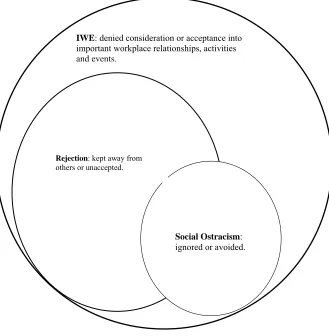
Social exclusion has been conceptualized in three primary forms – as exclusion, ostracism and rejection. Each of these, along with their common theoretical framework, will be discussed in greater detail below and is summarized in Figure 2.1 and Table 2.1.
(Buss & Kendrick, 1998; Johansen & Edgar, 1996; Lancaster, 1986). Thus, socialization with some individuals provided many benefits while socialization with certain others proved costly in terms of one’s ability to adapt, survive, and succeed (Alexander, 1974). As a result, evolutionary adaptation requirements provided the motivation for human beings to “seek out individuals who [were] good potential exchange partners…and to avoid…those who [were] not (Kurzban & Leary, 2001: p. 192). In this way, excluded individuals were at a distinct disadvantage as their chances for survival were significantly threatened due to limited social resources (Brewer, 1997; Caperael, 1997, 2001a, 2001b). Consequently, it is based on this evolutionary perspective that contemporary researchers have argued that social exclusion poses a threat to an individual’s need to belong and, therefore, is frequently associated with many detrimental reactions and outcomes (e.g, Baumeister & Leary, 1995; Leary & Baumeister, 2001; Williams & Zadro, 2005).
While the vast majority of researchers generally support the theoretical
underpinning that social exclusion threatens the fundamental need to belong, these same researchers have chosen a variety of manifestations of social exclusion (i.e., ostracism, rejection) to examine this phenomenon (Leary, 2001). Thus, the social exclusion
literature is replete with informal construct definitions that utilize the terms “exclusion”, “rejection” or “ostracism” interchangeably to describe the nature of social exclusion. Some attempts to theoretically disentangle these terms have been made (see Leary, 2001; 2005; Williams, 2007 for reviews) however no empirical investigations have ensued and, as a result, scholars continue to gravitate toward self-preferred terminology. Thus, in the section that follows, I review each of these terms and provide a brief overview of the conceptualizations and methodology that have been used to investigate social exclusion. I then develop the conceptual realm and nomological network of IWE with the intent of uniformly clarifying these terms – both theoretically and empirically.
Exclusion and rejection: The lack of definitional precision has resulted, most
recently, in a theoretical synthesis of the exclusion literature, Williams (2007) suggests that social exclusion is defined as “being kept apart from others” while rejection is an “explicit declaration that an individual or group is not wanted” (p. 427). Thus, according to these definitions, rejection appears to be a more blatant or extreme form of
exclusionary behavior.
The assessment of exclusion and rejection has typically been examined using one of two common experimental manipulations (Baumeister & DeWall, 2005; see also Williams, 2007 for a review). In the first type of experiment used to examine general social exclusion, subjects are asked to complete a personality inventory and are told that, based on their scores, they are likely to end up alone in life. In the second type, which examines rejection-oriented exclusion, subjects are typically told they have not been selected by group members to work on a dyadic task and will have to work alone. While some studies focus strictly on one approach, others use both experimental designs
simultaneously –with the terms ‘exclusion’ and ‘rejection’ used interchangeably in most cases.
Social Ostracism. A related field of study to exclusion and rejection – social
empirical analysis of social ostracism which has been conducted predominantly through experimental design.
Initial studies of social ostracism typically operationalized this construct through the use of a ball-toss experiment (e.g., Williams & Williams, 2003; Williams & Sommer, 1997) in which subjects were ignored (i.e., minimal eye contact, subject not tossed the ball) by two confederates engaged in what should be a triadic ball tossing game. The ball-toss experiment has also been extended to a more subtle form of ostracism through a game of cyberball where subjects engage in a laboratory created, mock internet ball-toss game played in the same manner (e.g., Eisenberger, Liberman, & Williams, 2003;
Gonsalkorale & Williams, 2004; Zadro, Williams & Richardson, 2004; Williams, Cheung & Choi, 2000). Social ostracism has also been conceptualized and manipulated through the use of role plays, internet chat room discussions and text messaging to create similar scenarios where individuals are ignored or excluded (e.g., Abraham, 2003; Smith & Williams, 2004; Sommer, Williams, Ciarocco, & Baumeister, 2001). Lastly, though used to a lesser extent, the Sydney Ostracism Record (SOR) (Williams, Wheeler & Harvey, 2002) has been utilized to capture social ostracism in a diary or record-keeping format in which subjects describe their encounter with or perpetration of everyday ostracism-related events.
In terms of workplace ostracism, a handful of studies have examined whistleblower and temporary employees’ reactions to being ostracized. Ostracism related to whistleblowing has been assessed in field studies (e.g., Faulkner, 1998;
Schuster, 1996; Williams, 2001) by asking respondents to report the extent to which they experienced certain types of ostracism before and after whistleblowing. Sample
ostracism items respectively included, “given the silent treatment” and “someone
In sum, researchers have adopted a myriad of terms and variety of methods to examine exclusion, rejection and ostracism. In addition, the preliminary investigation of interpersonal exclusion in the workplace has been limited to the examination of social ostracism among specific types of employees (i.e., whistleblowers and temporary
workers) indicating the need for additional conceptual and empirical work with respect to organization-based social exclusion.
Analysis of Previous Social Exclusion Conceptualizations
Although these studies have generated a considerable volume of insightful and valuable research results, several issues remain which must be addressed in order to effectively examine social exclusion in the workplace. First, as a result of the lack of an overarching conceptualization of social exclusion and related phenomena these topics are often studied in isolation of one another, or assumed to reflect the same construct (Leary, 2001). Without a common framework with which to examine interpersonal social
exclusion, there exists a great deal of variation in terms of representative definitions, labels, and measures used to assess this construct.
Second, the extant literature on social exclusion has generated some important questions that are relevant to the exploration of this construct in the workplace that have not yet been definitively resolved. Specifically, Leary (2005) identifies two key issues that underlie social exclusion research which are relevant to the current study: (1) there exist degrees of exclusion though, oftentimes, researchers treat this phenomenon as a dichotomy (one is either excluded or not) and; (2) the discrepancy between how one is treated objectively (actual exclusion) versus their perception of being excluded
(subjective exclusion) raises the question of whether exclusion should be defined “in terms of how a person is treated or how a person feels” (p. 37) they were treated. While some of these issues have been addressed with respect to social ostracism (Williams, 2001; Williams & Zadro, 2005), no researcher has comprehensively dealt with each of these issues in terms of the broader category of social exclusion. I take steps in the current study to address these questions with respect to IWE.
raises the question of whether inclusion and exclusion exist simultaneously on the same continuum and, thus, the experience of being excluded necessary implies the absence of inclusion. Or the possibility also exists that exclusion and inclusion are perhaps distinct constructs from one another and, therefore, may be experienced simultaneously. For example, a target may be given the silent treatment by another but is still able to participate with that individual in an important meeting or event. Thus, the target is excluded and included at the same time. Most research has focused specifically on whether or not a person is excluded, rejected or ostracized outright rather than consider the two simultaneously.
In summary, the examination of social exclusion has been fraught with numerous terms and various methodological techniques. In addition, many questions about the nature of this construct remain unanswered and are therefore inadequate. In the following section, these issues are addressed.
Proposed Definition of Interpersonal Workplace Exclusion
In order to gain a greater understanding of what workplace social exclusion is and what it is not, this internal validity of this construct must be assessed (i.e., the terms exclusion, rejection and ostracism theoretically and empirically evaluated in light of one another). In addition, the issue of whether exclusion occurs in degreesand should be examined objectively or subjectively must also be addressed. Furthermore, other constructs that are both similar to and different from IWE must be analyzed in order to effectively establish convergent and discriminant validity of this construct. Lastly, the relevance of IWE to the workplace must be examined. Thus, in the section that follows, a definition of IWE is developed and its nomological network presented.
utilized in the current study. In addition, this study will examine the target’s reactions to being excluded by one’s supervisor and close coworkers because these relationships are likely to be the most salient and important to employees. As a next step, to effectively delineate the construct of social exclusion in the workplace, one must consider both the forms (types) and modes (behaviors) of exclusion that are characteristic of an
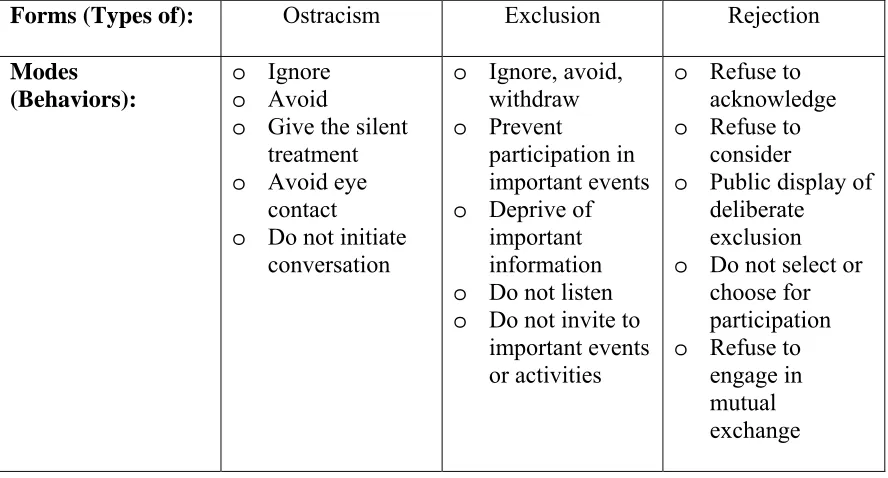
organizational setting. These are discussed in greater detail below and summarized in Figure 2.1 and Table 2.1.
Forms. Social exclusion can exist on a variety of levels ranging from
transnational (i.e., large scale geographic/national) to inter/intrapersonal (i.e., between individuals) (Abrams, Hogg & Marques, 2005). For the purposes of this study, social exclusion in the workplace is examined at the interpersonal level. To further delineate this construct, I draw upon Abrams et. al.,’s (2005) definition of interpersonal social exclusion which is “the denial of access to a relationship such that one person excludes another” (p.18). Or, as Williams (2007) noted, social (i.e., interpersonal) exclusion is “being kept apart from others” (p. 427). Building on these descriptions, the 2007 online version of Webster’s dictionary defines the term “to exclude” as “to prevent from being included, considered or accepted”. Thus, exclusion not only diminishes the relationship between the source and target of exclusion, but also has implications for the target’s ability to be considered or accepted within a larger social circle, such as the work environment. Consequently, interpersonal workplace exclusion occurs when one is
denied consideration or acceptance into meaningful workplace relationships, activities or
events.
When viewed from this perspective, alternative terminology such as social ostracism or interpersonal rejection would more logically be subsumed within the
exclusion construct because these are specific modes of exclusionary behavior (described in greater detail below) and are focused more on the prevention of meaningful
relationships (see Figure 2.1). According the Webster’s 2007 online dictionary, to reject someone is to “refuse to accept” them. Thus, one may refuse to accept another in a variety of ways that may or may not involve exclusion, i.e., pass them over for a
the use of exclusion or the deliberate prevention of another’s acceptance within the larger social context and, thus, is more limited in nature. If, however, a person rejects another individual through exclusionary behavior (i.e., refuses to acknowledge another’s
presence) then rejection is a type of exclusion.
Conversely, one may exclude another but not necessarily reject him or her. For instance, Leary (2001) states that “individuals who are not chosen as a part of one’s limited relational niches are not necessarily ‘rejected’ in the strict sense of the word; rather they are simply not among the person’s relational choices” (p. 13) thus suggesting that one can be excluded but not actually rejected. In addition, the term rejection is tinged with a sense of conclusiveness – or in other words, once one is rejected, there is little hope of being included or reconsidered. Indeed, many notable rejection-related studies “are presented with some degree of finality, and the subject is not offered any prospect of being reintegrated into the group or of gaining some prospect of future acceptance” (Baumeister et. al., 2005: p. 58). In this way, rejection that occurs through the use of exclusionary behavior appears to be a more extreme form of social exclusion. Unlike rejection, social ostracism (see also Figure 2.1) is generally regarded as a more narrow form of exclusion (Lakin & Chartrand, 2005; Leary, 2005). Thus, when one ostracizes another in the traditional sense – gives them the cold shoulder or ignores them – they are engaging in exclusionary behavior. More specifically, the terms partial and complete ostracism (Williams, 2001) are indicative of progressively more severe instances, or types, of social exclusion. However, the definition of social exclusion implies a wider range of behavior than merely ignoring or avoiding an individual – it also serves to prevent another from being considered and accepted in the wider social context (i.e. not inviting another to work-related events, not permitting one to attend important meetings, or not considering a person to participate on an important project). Therefore, that ostracism is one facet of exclusion it is subsumed within the construct of social exclusion.
Figure 2.1
PERCEIVED INTERPERSONAL WORKPLACE EXCLUSION
Modes. Consistent with the prior definition, IWE behavior involves any
individual actions that prevent an individual’s inclusion, consideration or acceptance into meaningful relationships, activities or events at work. A meaningful relationship is characterized by open communication, mutual respect, free exchange of information or resources and trust (McAllister, 1995). Behavior such as ignoring, avoiding, or
withdrawing from another prevents a meaningful relationship from developing between the source and the target of social exclusion. When such behavior is displayed publicly or is deliberately more overt, exclusion has the potential to prevent the target from being
IWE: denied consideration or acceptance into important workplace relationships, activities and events.
Rejection: kept away from others or unaccepted.
accepted into other relationships as well, i.e., this behavior may send a signal to others to also avoid or ignore the target. Furthermore, meaningful relationships may be prevented by choosing not to interact with another individual. In this way, the target is not
considered by or given the opportunity to develop a relationship with another individual(s).
Meaningful activities or events may be formal and include important work meetings, highly visible projects, promotion opportunities, valuable work assignments and company-sponsored training or social events. Informal activities or events involve the daily communication or social exchanges between employees and include work- or social-related conversations, eating lunch together, exchanging favors, or after-work social meetings. Examples of exclusionary behavior that prevent someone from being accepted into or involved in meaningful formal activities occur when the target is not acknowledged in front of others, not given the opportunity or consideration to participate in work-related activities (i.e., attend important meetings, participate on a special project) or is given useless tasks (in lieu of legitimate ones) to complete. Likewise, behaviors such as not inviting the target to lunch or other social events, stopping conversation in the presence of the target, or not allowing the target to offer work-related input or ideas serve to prevent an individual from being included into informal activities and events.
(Williams, 2001). Therefore, more explicit or violent behaviors, which are also not generally subject to punishment within an organizational setting, would not be subsumed within the IWE construct.
Table 2.1
FORMS AND MODES OF INTERPERSONAL WORKPLACE EXCLUSION
MILD EXCLUSION SEVERE EXCLUSION
Forms (Types of): Ostracism Exclusion Rejection
Modes (Behaviors):
o Ignore o Avoid
o Give the silent
treatment
o Avoid eye
contact
o Do not initiate
conversation
o Ignore, avoid,
withdraw
o Prevent
participation in important events
o Deprive of
important information
o Do not listen o Do not invite to
important events or activities
o Refuse to
acknowledge
o Refuse to
consider
o Public display of
deliberate exclusion
o Do not select or
choose for participation
o Refuse to
engage in mutual exchange
independent constructs (i.e., ostracism or rejection). Thus, I take steps in the current study to empirically validate IWE as a unitary construct. In addition, to further delineate IWE from related constructs, I also examine its discriminant, convergent and predictive validity. Each of these steps is further explicated below.
Conceptual Context of Interpersonal Workplace Exclusion
In order to fully understand IWE, it is also important to: (1) more fully delineate what interpersonal social exclusion is not; and (2) how social exclusion conceptually relates to similar constructs. Broadly speaking, IWE and related constructs fall under the category of antisocial work behavior. Rather than loosely discuss the general similarities and differences associated with IWE and related constructs – thus further contributing to the conceptual confusion associated with the many domains of antisocial work behaviors – I adopt a ‘precise definition’ approach by focusing the specific behaviors as well as behavioral consequences associated with each construct definition (O’Leary-Kelly, Duffy, & Griffin, 2000). Accordingly, in the following section I compare and contrast IWE with other variables that are purported to be both different from and similar to this construct (Nunnally, 1978). To do this, I first distinguish IWE from workplace inclusion. Next, I compare IWE with other similarly related constructs (i.e., workplace incivility, counterproductive work behavior, and bullying). Following this, I evaluate the
relationship between IWE and several other constructs to which it is presumed to be theoretically related (i.e., perceived fair treatment, job satisfaction, job-induced tension and leader-member exchange). Lastly I examine the IWE measures’ (i.e., coworker and supervisor) ability to predict theoretically relevant constructs – specifically social undermining, employee effort and OCB.
Discriminant Validity of IWE
employee or his/her work), have access to sensitive information (i.e., is informed about important company decisions or plans) (Pelled et al., 1999, O’Hara, Beehr, & Colarelli, 1994; Wayne, Shore, Bommer & Tetrick, 2002), and are involved in their work group (Mor-Barak & Cherin, 1998). In these studies, workplace inclusion is treated as a unidimensional construct and measured along a continuum. Thus, the extent to which subjects report that they “agree” with the workplace inclusion items reflects the degree to which they believe they are included in the workplace.
Outside the workplace (i.e., in social settings), only a handful of studies have conceptualized exclusion and inclusion as a continuum to represent varying degrees of inclusionary status (e.g., Kirkpatrick, Waugh, Valencia & Webster, 2002; Leary, 1990; Leary, Cottrell & Phillips, 2001; Spivey, 1990; Webster & Kirkpatrick, 2006). By contrast, the majority of previous studies in non-occupational settings have traditionally treated social exclusion and inclusion as two dichotomous variables through experimental manipulation, i.e., subjects were either excluded or included (e.g., Baumeister, et. al., 2002; Lakin & Chartrand, 2003; Lakin, Chartrand & Arkin, 2005; Twenge, Catanese & Baumeister, 2002, 2003; Williams et. al., 2000; Williams & Sommer, 1997).
Accordingly, it is proposed that interpersonal workplace inclusion and exclusion are not mutually exclusive constructs. For example, an individual with a high level position will likely be involved in important projects, decision making opportunities and have access to critical information and, according to the definition presented here, is said to be included. However, at the same time, this employee may also be shunned by his or her colleagues – not invited to participate in informal work conversations or social events – and, in this manner, is simultaneously excluded. Another example is that of the
Columbine High School shooters. These two individuals believed they were excluded by many of their peers and, according to the definition of IWE, were experiencing exclusion on an interpersonal level in their academic work environment. At the same time, the shooters also possessed a strong friendship with each other and, therefore, were simultaneously experiencing interpersonal inclusion as well. Thus, low levels of inclusion indicate low levels of positive interpersonal relationships, while exclusion indicates the presence of negative interpersonal relationships.This is consistent with previous work where negative relationships (i.e., social undermining) were found to be empirically distinct from positive relationships (i.e,. social support) (Duffy, Ganster & Pagon, 2002). Hence, conceptualizing exclusion and inclusion as separate entities is founded on the belief that being excluded does not imply the absence of inclusionary behavior (or vice versa). Failure to consider this possibility may obscure and prevent the identification of important outcomes associated with the interpersonal
exclusion-inclusion constructs.
In sum, prior examination of interpersonal exclusion and inclusion have often treated these variables as mutually exclusive and occurring at opposite ends of a continuum. In terms of the workplace, it is more likely that these constructs can exist simultaneously, in varying degrees, and as distinct constructs. As a result, the current study conceptualizes and investigates IWE and inclusion as distinct entities. Thus, I postulate:
Concurrent Validity of IWE
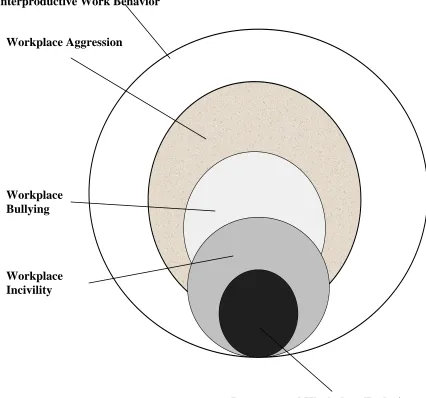
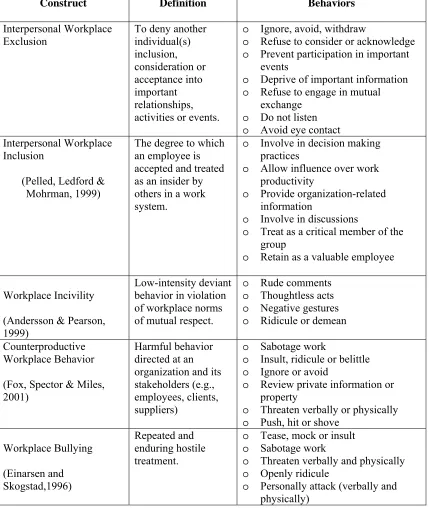
In the following section, I will discuss additional constructs that are conceptually similar to IWE to determine the extent to which these variables naturally correlate with one another (Campbell & Fiske, 1959). Specifically, I evaluate the nature of the relationship between IWE and workplace incivility, counterproductive work behavior (i.e., abuse towards others) and bullying. As will be described in greater detail below, IWE is a more narrow form of workplace incivility that is embedded in the broader construct of antisocial work behavior. Figure 2.2 and Table 2.2 illustrate the conceptual domain of IWE and these related constructs.
Interpersonal Exclusion and Workplace Incivility. Andersson & Pearson (1999) define workplace incivility as “low-intensity deviant behavior [which violates] workplace norms of mutual respect, are characteristically rude and discourteous, [and demonstrate] a lack of regard for others” (p. 457). These authors further suggest that incivility is
conspicuous (c.f., Brown & Levinson, 1987; Sapir, 1927) and has the potential to escalate into more serious acts of aggression. For individuals experiencing workplace incivility, it may be unclear whether the perpetrator of these acts intends to harm them or not. (See Pearson, Andersson & Porath, 2005; Pearson, Andersson & Wegner, 2001 for overviews of workplace incivility and related constructs).
As with incivility, employees experiencing IWE may be unsure whether the excluder’s behavior is meant to be harmful – though IWE may still be upsetting to the excluded employee regardless. Along these lines, IWE and incivility are conceptually related in that both are less severe forms of negative social interaction that violate norms of mutual respect. When an individual ignores, avoids or deprives another from
Figure 2.2
INTERPERSONAL WORKPLACE EXCLUSION AND RELATED CONSTRUCTS
workplace relationships, activities and events – such as not acknowledging another or stopping conversation in another’s presence. Thus, exclusionary behavior is more subtle than the behavior associated with workplace incivility. As described, both IWE and workplace incivility may be construed as disrespectful, however, the more serious and harmful forms of workplace incivility that include blatant coercion, verbal attacks or rude gestures are not considered part of the IWE construct. Consequently, IWE is a more specific and limited form of workplace incivility.
Workplace Aggression
Counterproductive Work Behavior
Workplace Bullying
Interpersonal Workplace Exclusion Workplace
Hypothesis 2: Supervisor and co-worker IWE is positively related to workplace incivility.
Counterproductive Workplace Behavior and IWE. As noted above, IWE is part of a larger construct known as Counterproductive Workplace Behavior (CWB) (also
sometimes referred to antisocial workplace behavior, e.g., Pearson et. al., 2001) which is defined as harmful behavior directed at an organization and its stakeholders (e.g.,
employees, clients, suppliers) (Fox, Spector & Miles, 2001; Spector & Fox, 2005). Examples of CWB can include a range of behavior directed at other individuals such as starting an argument, playing a mean prank, or even hitting or pushing another. In addition, CWB can include a variety of acts directed towards the organization such as purposefully damaging a piece of equipment, stealing something from the employer or badmouthing the organization outside of work. As such, CWB encompasses a wide range of damaging behavior that includes constructs such as workplace aggression, deviance, bullying and, as noted above, incivility (for reviews see Pearson et. al, 2005; Spector & Fox, 2005; Spector et. al., 2006).
A facet of CWB that is most similar to IWE conceptually is the dimension termed “abuse towards others” and consists of negative behaviors directed toward coworkers (or other stakeholders). Some examples include sabotaging another’s work, ignoring
another, being rude or discourteous, and making or carrying out verbal or physical threats. From this, one can reason that being ignored, avoided and excluded are types of negative behaviors that are likely to lead an excluded employee to question or believe that they are the target of harmful behavior and, in this way, IWE overlaps with this dimension of CWB. However, CWB that involves more blatant or severe antisocial behavior (e.g., making threats, insulting, stealing from or physically abusing another) fall outside the conceptual realm of IWE which, as previously noted, is a more subtle form of CWB. Furthermore, additional dimensions of CWB extend beyond the interpersonal level to include organization-directed negative behaviors (e.g., waste company materials, intentionally work slower) and are also not considered part of the IWE construct.
Interpersonal Exclusion and Bullying. The conceptual realm of CWB also includes
workplace aggression (e.g., Baron & Neuman, 1996; O’Leary-Kelly et., al., 2000; Pearson et. al., 2005). Aggression at work consists of a wide range of behaviors that injure another physically or psychologically (e.g., humiliation, harassment, emotional or physical abuse) (Neuman & Baron, 1998). One form of aggressive behavior is known as bullying (Olweus, 1999) and is frequently viewed as an exclusionary practice (e.g., Juvonen & Gross, 2005). Workplace bullying is characterized by behavior such as deliberate teasing, badgering or insulting another individual (Einarsen and
Skogstad,1996). This behavior may also include making threats or physically aggressing against another person (Björkqvist, Lagerspetz, & Kaukiainen, 1992; Crick & Grotpeter, 1995; Einarsen, 1996). Further, Zapf (1999a, 1999b) suggests that bullying may be categorized into five different types of behavior: work sabotage, social isolation, personal attacks (verbal) or ridicule, humiliating threats, and physical violence or threats of
violence. By definition, bullying and other aggressive behaviors (i.e., slander, ridicule, abusive supervision) are more direct, overt and hostile behaviors than what typically constitute exclusionary acts – which are inherently inconspicuous or ambiguous nature (Williams, 2001).
Furthermore, because targets who are exposed to workplace bullying endure repeatedly hostile treatment over time, these individuals often feel a sense of helplessness and a fear of being harmed (Einarsen, 1996; 1999). In this way, while workplace
Hypothesis 4: Supervisor and co-worker IWE is positively related to workplace bullying.
Table 2.2
INTERPERSONAL WORKPLACE EXCLUSION AND RELATED CONSTRUCTS
Construct Definition Behaviors
Interpersonal Workplace Exclusion
To deny another individual(s) inclusion, consideration or acceptance into important relationships,
activities or events.
o Ignore, avoid, withdraw
o Refuse to consider or acknowledge o Prevent participation in important
events
o Deprive of important information o Refuse to engage in mutual
exchange
o Do not listen o Avoid eye contact
Interpersonal Workplace Inclusion
(Pelled, Ledford & Mohrman, 1999)
The degree to which an employee is accepted and treated as an insider by others in a work system.
o Involve in decision making
practices
o Allow influence over work
productivity
o Provide organization-related
information
o Involve in discussions
o Treat as a critical member of the
group
o Retain as a valuable employee
Workplace Incivility
(Andersson & Pearson, 1999)
Low-intensity deviant behavior in violation of workplace norms of mutual respect.
o Rude comments o Thoughtless acts o Negative gestures o Ridicule or demean
Counterproductive Workplace Behavior
(Fox, Spector & Miles, 2001)
Harmful behavior directed at an organization and its stakeholders (e.g., employees, clients, suppliers)
o Sabotage work
o Insult, ridicule or belittle o Ignore or avoid
o Review private information or
property
o Threaten verbally or physically o Push, hit or shove
Workplace Bullying (Einarsen and Skogstad,1996) Repeated and enduring hostile treatment.
o Tease, mock or insult o Sabotage work
o Threaten verbally and physically o Openly ridicule
o Personally attack (verbally and
The Nomological Network of IWE
In the preceding section, IWE was compared to conceptually similar constructs in order to more precisely identify its conceptual domain. Next, IWE is evaluated in terms of its relationship to other theoretically relevant constructs so as to gain a deeper
understanding of its association with other work-related variables (Nunnally, 1978). In other words, IWE is expected to be moderately associated (i.e., not as strongly correlated) with these variables as compared to theoretically similar constructs such as incivility, CWB and bullying. These relationships are illustrated in Figure 2.3.
Related Constructs
Perceived Interpersonal Fair Treatment (PFIT). Recall that positive social exchange is facilitated by reciprocal gestures of mutual concern and support (i.e., reciprocity norms) (Gouldner, 1960). As noted earlier, IWE violates these norms by preventing the development of substantive relationships and their associated resources. As a result, social-exchange violations such as IWE are likely to sabotage expectations of fair treatment and adherence to social norms (Blau, 1964; Miller, 2001). Thus, within a work context, employees experiencing IWE are likely to believe that they are being treated in unfair manner by their coworkers or supervisor. Donovan, Drasgow, & Munson’s (1998) PFIT scale assesses employees' perceptions of the fairness of
interpersonal treatment in their work environment. Based on the reasoning above, scores on the coworker and supervisor IWE scales are expected to be negatively related to the scores on the measure of PFIT.
Hypothesis 5: Coworker and supervisor IWE is negatively related to perceptions of interpersonal fair treatment.
coworker and supervisor IWE, as forms of uncivil or antisocial behavior, are expected to negatively correlate with employee job satisfaction.
Hypothesis 6: Supervisor and co-worker IWE is negatively related to job satisfaction.
Figure 2.3
NOMOLOGICAL NETWORK OF IWE
Coworker Exclusion
Supervisor Exclusion
Perceived Interpersonal Unfair Treatment
Job Satisfaction
Job Induced Tension
Leader-Member Exchange
-+
+
+
Job Induced Tension. Job induced tension is the result of an employee’s general feeling of anxiety or apprehension about their work which manifests in the form of poor physical health and wellbeing (Speilberger, Gorsuch, Lushene, Vagg & Jacobs, 1983). Considerable research has shown that a negative social climate in the workplace is
associated with job-related stress (see Bheer, 1995; Khan & Byosiere, 1992 for reviews). More specifically, employees who reported being less involved in their job and work activities also reported higher levels of job-induced tension (Cohen, 1998). As such, it is expected that employees experiencing IWE (i.e., immersed in a negative social climate and less involved in work-based activities) will report higher levels of job induced tension.
Hypothesis 7: Supervisor and co-worker IWE is positively related to job induced tension.
Leader-Member Exchange (LMX). Rooted in social exchange theory, LMX reflects the quality of the relationship between an employee and his or her supervisor such that a high degree of LMX indicates the presence of a supportive and mutually beneficial rapport between the two (e.g., Graen & Scandura, 1987; Masterson, Lewis, Goldman & Taylor, 2000). LMX is comprised of behaviors such as sharing information, providing mutual support and assistance, as well as reciprocal trust and respect (e.g., Wayne, Shore & Liden, 1997). A general review of the LMX literature suggests that employees reporting high levels of LMX are treated more favorably, given more consideration and attention, and included in more work-related activity by their supervisor than those reporting low levels of LMX (e.g., Liden, Sparrow & Wayne, 1997). Consequently, as a measure of the quality of one’s relationship with their
supervisor, employee scores on the LMX scale are expected to negatively correlate with scores on the supervisor IWE scale and be unrelated to scores on the coworker IWE scale.
Hypothesis 8a: Supervisor IWE is negatively related to LMX. Hypothesis 8b: Coworker IWE is unrelated to LMX.
Predictive Validity: IWE and Retaliation
them than are other rewards they must forego for the sake of it” (Blau, 1964, p. 229).
In the following section, I explore the direct impact of IWE on employee
retaliatory behavior. Given the general agreement among researchers that, “the effects of exclusion are almost wholly negative” (Abrams, et. al., 2005: p. 14), I seek to clarify why and how IWE impacts employee retaliation and what behaviors employees are likely to exhibit as a result.
Social exchange relationships exert a powerful influence over numerous
organizational behaviors, e.g., performance, absenteeism, citizenship (see Cropanzano & Mitchell, 2005 for a review). Founded on the norm of reciprocity (Gouldner, 1960), social exchange theory postulates that individuals willingly engage in and give benefits to social relationships with the expectation of developing mutually supportive interpersonal ties such that equivalent benefits are returned over time (Blau, 1964). The underlying theoretical tenets of the norm of reciprocity suggest that individuals who perceive that they are being treated (un)favorably or with (dis)respect by other individuals will, in response, feel obligated to reciprocate in a similar manner. The vast majority of extant literature on this topic has focused on positive reciprocal relationships and has shown that high quality work relationships are positively associated with employee commitment and performance (e.g., Gerstner & Day, 1997) as well as citizenship behavior (e.g., Wayne, Shore, Bommer & Tetrick, 2002).
However, according to the norm of reciprocity, negative interactions such as IWE are also likely to prompt individuals to engage in antisocial or deviant behavior in
response to perceived negative treatment (Andersson & Pearson, 1999; Blau, 1964). Indeed, research evidence has shown that employees who perceive themselves as being treated without consideration or respect are more likely to engage in interpersonal deviance (i.e., make fun of or act rudely) towards coworkers (Colbert, Mount, Harter, Witt & Barrick, 2004) as well as engage in theft or retaliatory behaviors (e.g., Greenberg, 1990; Townsend, Phillips & Elkins, 2000). Extending this logic to the current study, I argue that IWE is a negative interaction that deprives an employee of access to
reciprocate negative treatment. As Blau (1964) noted, “if the deprivation suffered is severe, the desire to retaliate for it may well become an end-in-itself in the pursuit of which people ignore other considerations.” (p. 229). Thus, according to the principles governing social exchange, employees are likely to respond unfavorably (i.e., retaliate) to IWE by reciprocating negative interpersonal treatment.
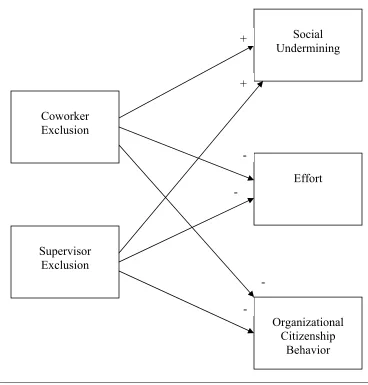
The preceding discussion addresses the reasons why employee reactions to IWE are likely to be negative. In the following section I further elaborate on how (i.e., the behaviors) employees choose to retaliate in response to IWE. According to Frijda (1994) the desire to retaliate against those who have hurt us is fundamental to human nature. Despite this innate tendency, acting on vengeful impulses is largely considered unhealthy (Jacoby, 1993) and socially unacceptable (Bagnall, 1992). Hence, individuals may choose to retaliate in a less obvious manner in response to negative treatment (Bies & Tripp, 1996). In the current study, I focus specifically on negative reciprocity, or the use of retaliatory behavior in response to a perceived negative interaction (i.e., IWE). Thus, I limit my discussion to less overt forms of organizational retaliation –specifically social undermining, reduced effort and organizational citizenship behavior. I further describe these potential responses below and depict these relationships in Figure 2.4.
IWE and Social Undermining. As noted earlier, social exclusion deprives individuals of their fundamental need to meaningfully belong and is, therefore, an unpleasant and painful experience (Williams & Zadro, 2005). Exclusion also makes salient the violation of implicit social exchange principles governing such relations – specifically reciprocity norms. Individuals deprived of the opportunity to establish and benefit from important exchange relationships are likely to reciprocate negative treatment as a form of vengeance for such behavior (e.g., Blau, 1964, Colbert et. al., 2004). Indeed, when belongingness needs are threatened by the disruption of social exchange the need for retaliation can become paramount for individuals. Therefore, I argue that that excluded individuals have a heightened need to reciprocate this negative interpersonal treatment which violates exchange-based principles.
aggressive behavior (e.g., Bourgeois & Leary, 2001; Kirkpatrick, et al., 2002; Twenge, et. al., 2001; Williams & Zadro, 2005). Furthermore, some studies show that
Figure 2.4
A MODEL OF INTERPERSONAL WORKPLACE EXCLUSION
excluded individuals are even willing to direct aggressive actions towards innocent targets not involved in the exclusion of the subject (e.g., Catanese & Tice, 2005; Twenge et. al., 2001). Extending this notion to the workplace, a recent study confirmed that excluded employees are more likely to engage in higher levels of workplace deviance
Coworker Exclusion
Supervisor Exclusion
Social Undermining
Effort
Organizational Citizenship
Behavior +
+