Open Air Intelligent Wireless Sensor Network
N. Prakash, M. Anuja
2, Ramu joga
31, 2, 3
Assistant Professor, Swathi Institue of Technology and Science
Abstract:The development of mobile internet and semiconductor technology making the people getting strong demand for the home life of the network, intelligence and energy saving. Now a days, energy saving is becoming more vital role as the energy conservation and environmental protection are taking more and more attentions. We can detect environmental condition through intelligent control using Wireless Sensor Network and adjust environmental parameter according to the demand of people’s behaviour so as to meet peoples demand and save energy. This paper aims to build intelligent lighting energy saving system. In this paper, the proposed system is intelligent lighting system , it can be implemented without destroying the original lighting system.
Keywords: Wireless Sensor Network (WSN), Intelligent Lighting System (ILS), Wireless Communication, ZigBee.
I. INTRODUCTION
As the development of mobile internet, semiconductor technology and modern living style of people showing more interest towards the use of intelligent system with energy saving. Wireless sensor networks is a combination of computing, communications and sensor technology, that has become an active field of computer science research branch now [1].
In addition to sensor nodes of the network, sensor networks can also work with the mobile communication network, Internet and other networks to achieve full integration [2].
Now a days, a smart home is a room or a space which is provided to get accustomed by itself to certain situations to make the people feel happy and comfortable.
A smart home applications can be further enhanced with new dimension of capabilities that were not available before with the recent expansion of communication networks. That means a wireless sensor technology will soon make the system with more feasible applications.
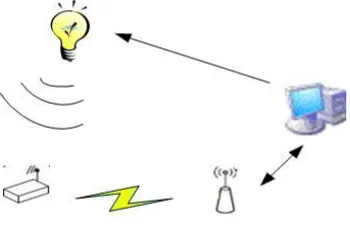
[image:2.612.216.418.453.560.2]After the concept of WSN proposed, it has a great development in application field[2].
Fig. 1: Wireless Daylight Substitution [2].
Sensor networks, also known as the Internet of things, refers to the perception of the physical world for the purpose of information processing as its main task, network information exchange carrier, to achieve things with objects, things and information exchange between the provision of perceptual information services, intelligent integrated information system. The ZigBee Alliance for wireless sensor networks in the intelligent lighting control field defines a set of very detailed protocol standard. Based on the ZigBee wireless sensor network, LED intelligent lighting system is advantageous for the expansion and promotion.[4].
II. LITERATURE SURVEY
devices and to obtain the desired goal. The architecture of the system is complex. The sensor networks are only used to detect the environment. The sink node used to collect the data and then connect with the master controller through RS232. However, the master controller communicates with the whole lighting devices. Whole lighting devices control server links to Whole lighting dimmers through the RS232. So the installation of such a system is inconvenience. Papers [6], [10]and [11] introduce light control using wireless sensors to save energy for the commercial buildings. In paper [11], a lighting control algorithm is proposed which is directed against the entire environment and adjusts all the lamps in it. If the size of this room is very large the process of calculation is difficult. In paper [12] designed a home lighting system for energy-saving, but it only control the lights on or off. So this method is also not much better for installation. In the proposed system, we have studied how the IR sensors used to detect the environmental conditions and then to control the intensity of light. Instead of IR sensor, in some papers, a zigbee protocol is used. But the use of zigbee is costly. So here, in the proposed system, zigbee is used just for the analysis purpose. Hence the proposed system is easy to install without disturbing original light system and cost less.
III. METHODOLOGY
[image:3.612.221.396.292.418.2]As per the study, the proposed system mainly based on the principle of wireless communication. The wireless sensor nodes detect environment condition automatically and adjust the light intensity. The IR sensor detect the environmental condition which send signal to the ATMEGA controller which controls the intensity of light. The transmitter communicate with the other nodes by sending signals to control the intensity of respective lights. The work process is mentioned in figure 2.
Fig 2.Work process
The communication between the main controller and the lighting devices is wired.
For example, paper [11] proposes an intelligent lighting control algorithm which is mainly directed against the entire environment and adjusts all the lamps in it. But, if the number of users in the environment small then such calculation is not necessary.
IV. IMPLEMENTATION
In this paper an intelligent lighting control algorithm is proposed which not only satisfy the people’s parameter but also the satisfies the requirement of energy saving.
A. Algorithm
The algorithm proposes the concepts of dimming zone, coverage and so on. The overview of algorithm is given as follow,
1)In the dimming process, it takes location of the user as the center according to the user’s activities and then ring out a dimming
zone. Only the lamps in the zone need lighting decision. The process is unassisted;
2)In the above-mentioned point, when multiple users enters simultaneously in the neighboring grids then it will make some grids
covered with more dimming zone. So we can further put forward concept of coverage, which is the extent of a zone covering a grids.
In the paper, we have proposed LED-dimming module of PWM modulation signal [8].
B. Flowchart
A flowchart is a type of diagram that represents an algorithm, workflow or process, showing the steps as boxes of various kinds, and their order by connecting them with arrows. This diagrammatic representation illustrates a solution model to a given problem.
for the energy saving purpose. The light intensity is adjusted as per the people’s behavior. So whenever there is need, then and at that place only light will be available.
V. BLOCK DIAGRAM OF PROPOSED SYSTEM
In the proposed system the list of main component includes ATMEGA328 controller that is dimming control circuit, IR sensor node circuit, RF transmitter and receiver. Following figure 3 shows the the block diagram of overall system.
Fig. 4 Block diagram of Lighting System
The ATmega328 controller is a low-power CMOS 8-bit microcontroller. By executing powerful instructions in a single clock cycle the ATmega328 achieves throughputs approaching 1 MIPS per MHz allowing the system designed to optimize power consumption versus processing speed.
The RF module, as the name suggests, operates at Radio Frequency. The corresponding frequency range varies between 30 kHz & 300 GHz. In this RF system, the digital data is represented as variations in the amplitude of carrier wave. This kind of modulation is known as Amplitude Shift Keying (ASK).
The RF module we used comprises of an RF Transmitter and an RF Receiver. The transmitter/receiver (Tx/Rx) pair operates at a frequency of 433 MHz and it has 4 output pins i.e. it can operate 4 peripherals remotely. [6]
The IR Sensor-Single is a general purpose proximity sensor. Here we use it for collision detection.
The output of sensor is high whenever it is of IR frequency and low otherwise. The power consumption of this module is low. It gives a digital output.
VI. CONCLUSION
So this paper proposes a system which can control and monitor the light. The proposed method has many advantages over other methods used and presented till now, such as convenient installation, suitability for large rooms due to efficient computational techniques and lighting intensity control instead of just on and off. The wireless connectivity without destroying the original system is also the main advantage of proposed method. These techniques make the proposed method to be more energy efficient and advantageous over other existing methods.
REFERENCES
[1] Chen dan, Zheng Zengwei, Li Jijun. Research on wireless sensor network [J].Computer Measurement and Control. 2004. 12 (8): 701 – 704 (chinese). [2] Jayashri Bangali, Arvind Shaligram American Journal of Engineering Research (AJER) e-ISSN : 2320-0847 p-ISSN : 2320-0936 Volume-02, Issue-12,
pp-409-413
[3] JiangWei, Lu Minglu, LiangWei. Analysis of energy-saving potential for lighting systems[J]. Energy saving, 2005 (12): 40 – 42 (chinese) [4] Nauvoo V, Gross R. Connectivity-Aware Routing (CAR) inVehicular Networks. [C]. IEEE, 2007(5):1919 -1927
[5] Microchip Technology Inc. PIC16F877A Datasheet,RevisionC,2000.
![Fig. 1: Wireless Daylight Substitution [2].](https://thumb-us.123doks.com/thumbv2/123dok_us/8299449.853937/2.612.216.418.453.560/fig-wireless-daylight-substitution.webp)