The Ideal Learner: Does Sharing Constructs
Elicited from Children at Risk of Exclusion
Alter the Perceptions of Teachers Working
with Them?
A research study submitted in partial fulfilment of the
requirements of the University of East London for the
Professional Doctorate in Education and Child Psychology
ii
Abstract
This research explores the constructs that teachers have of students at risk of exclusion from school. To date, little research has explored whether a Personal Construct Psychology (PCP) task to elicit constructs from the students about themselves has the power to alter the teachers’ constructs of said students. Five secondary students in Year 7 or 8, at risk of exclusion, completed a PCP task, Drawing the Ideal Learner (DIL). For each of the students, one teacher who knew the student well was interviewed on two separate occasions using semi-structured interviews. This qualitative social constructionist research utilises a PCP theoretical framework to ascertain whether these teachers believed DIL could provide information to inform them about how best to support the student by developing a shared understanding.
iii
Acknowledgements
Firstly, I would like to thank the students who participated in the first stage of this research. It was lovely to get to know you and I appreciate the time you spent sharing your views with me. Without your willingness to participate, the rest of the research would not have been possible. Secondly, I would like to thank the teachers who gave up their time to participate in this research and for welcoming me into their schools.
Next I would like to thank my Academic Supervisor, Dr Janet Rowley, for her encouragement and support with this project. Her enthusiasm and guidance throughout has been invaluable. I would also like to extend my thanks to my previous supervisor, Dr Laura Cockburn, who supported me in developing the initial stages of my thesis.
I would also like to thank my fieldwork supervisor, Dr Ciara Close, the senior Educational Psychologists in the team Nadia Wilkinson, and Kirsty Quinn for their ongoing support, passion and creativity in recruiting participants.
I would also like to thank Dr Rachael Green. When I worked as an Assistant Educational Psychologist, mentored by Rachael, she introduced me to a variety of tools and techniques, including the Ideal Self. Her vast expertise and experience working with students was an inspiration to me and helped me to develop my own passion in finding imaginative ways to ensure all students feel that their voice has been heard.
iv
Student Declaration
University of East London School of Psychology
Doctorate in Educational and Child Psychology
This work has not previously been accepted for any degree and it is not being concurrently submitted for any degree.
This research is being submitted in partial fulfilment of the requirements of the Doctorate in Educational and Child Psychology.
This thesis is the result of my own work and investigation, except where otherwise stated. Other sources are acknowledged by explicit references in the text. A full list is appended.
I hereby give my permission for my thesis, if accepted, to be available for photocopying and for inter-library loans, and for the title and summary to be made available to outside organisations.
v
Table of Contents
Abstract ... ii
Acknowledgements ... iii
Student Declaration ... iv
List of Figures ... x
List of Tables ... x
Abbreviations used in this Research... xi
Chapter 1 - Introduction ... 1
1.1 Overview of the Chapter... 1
1.2 Background to the Research ... 1
1.3 Factors that Influence a Student’s World ... 2
1.3.1 The Individual ... 2
1.3.2 Microsystem... 3
1.4 Defining Terminology ... 3
1.5 Researcher Perspective ... 4
1.6 Positioning of EPs as Advocates for CYP ... 5
1.7 The Local Perspective ... 6
1.8 Psychological Framework of the Current Research ... 8
1.8.1 Constructive Alternativism ... 9
1.8.2 The Ideal Self ... 10
1.9 The Current Research ... 11
1.9.1 The Rationale of the Research ... 11
1.9.2 Epistemology ... 13
1.9.3 Aims of the Research ... 13
1.9.4 Research Questions ... 13
1.9.5 Research Approach ... 14
1.10 Chapter Summary ... 15
Chapter Two - Literature Review... 16
2.1 Overview of Personal Construct Psychology... 16
2.1.1 Review Article of PCP ... 16
2.2 Research Title ... 17
2.3 Research Questions... 17
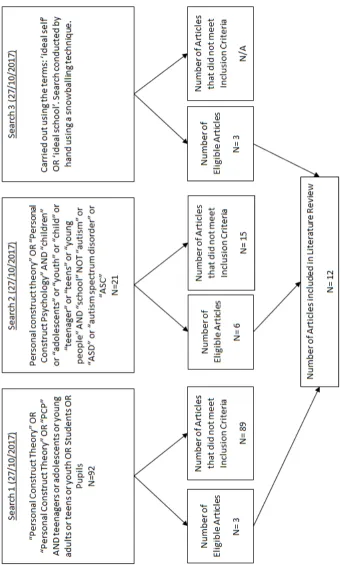
2.4 Initial Literature Search ... 17
2.4.1 Rationale for Exclusion Criteria ... 18
vi
2.5.1 Group Intervention using a CBT Model (Burton, 2006) ... 19
2.5.2 Individual Interventions for CYP at Risk of Exclusion (Hardman, 2001) ... 21
2.5.3 Constructs of Student-Teacher Relationships for Young People Excluded from School (Pomeroy, 1999) ... 22
2.6 Search Two: What Research is Available into Eliciting the Views of Lesser Heard Groups of Students?... 23
2.6.1 Secondary Age Students ... 23
2.6.2 Primary Aged Children ... 26
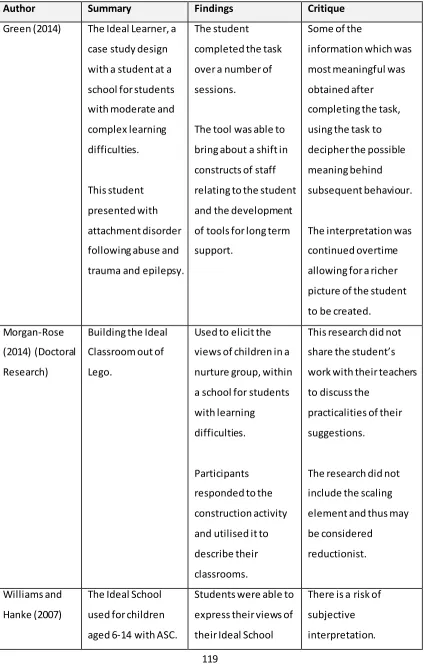
2.7 Search Three: How Effective has Previous Research Searching for the “Ideal” with Students been in Providing New Insights for the Adults Working with them?... 27
2.7.1 The Ideal Learner (Green, 2014)... 28
2.7.2 The Ideal Classroom (Morgan-Rose, 2015)... 28
2.7.3 The Ideal School with Students with ASC (Williams and Hanke, 2007) ... 29
2.8 Summary of the Research to Date ... 30
2.8.1 Themes Arising from the Review... 31
2.9 The Current Research ... 32
2.10 Chapter Summary ... 33
Chapter 3 - Methodology... 34
3.1 The Purpose of the Research ... 34
3.2 The Research Paradigm and Design ... 34
3.3 The Ontological and Epistemological Position ... 35
3.4 Real World Research – Qualitative ... 37
3.4.1 Language in Qualitative Research ... 38
3.5 Multiple Case Study Design... 38
3.6 Semi-Structured Interviews ... 39
3.7 Reliability and Validity in Qualitative Research ... 40
3.7.1 Reflexivity ... 43
3.8 Research Design... 44
3.8.1 Research Questions ... 44
3.8.2 Participant Recruitment ... 44
3.8.3 Data Collection ... 46
3.8.4 Pilot Study ... 50
3.9 Ethical Considerations ... 50
3.9.1 Consent... 50
3.9.2 Right of Withdrawal ... 51
3.9.3 Anonymity... 51
3.9.4 Protection of Participants ... 51
vii
3.10 Analysis of the Data... 52
3.10.1 Transcriptions... 52
3.10.2 Thematic Analysis ... 52
3.10.3 Recognising Themes and Developing Codes... 52
3.11 Chapter Summary ... 54
Chapter 4 – Findings ... 55
4.1 Overview ... 55
4.1.1 Research Questions ... 57
4.2 Research Question 1. What are Teachers’ Perceptions of Students at Risk of Exclusion?... 57
4.2.1 Behaviour... 57
4.2.2 Relationships ... 62
4.2.3 Strategies Already in Place ... 65
4.3 Research Question 2: What are Teachers’ Perceptions of the same Children at Risk of Exclusion after Reflecting on the Child’s DIL? ... 67
4.3.1 Changes to the Teachers’ Perceptions of the Student... 67
4.3.2 Next Steps ... 70
4.4 Research Question 3: What are Teachers’ Views on Understanding the Case Study Students’ Aspirations, both Academic and Otherwise, following the use of PCP? ... 72
4.4.1 From Interview 1 ... 73
4.4.2 From Interview 2 ... 74
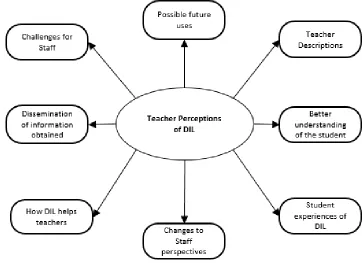
4.5 Research Question 4: What do Teachers say about how PCP Improves their Understanding of the Child? ... 76
4.5.1 Teacher Perceptions of DIL ... 76
4.5.2 Better Understanding of the Student ... 77
4.5.3 Student Experiences of Completing DIL ... 77
4.5.4 Changes to Staff Perspectives ... 77
4.5.5 How DIL has Helped the Teachers ... 78
4.5.6 Dissemination of the Information Obtained... 78
4.5.7 Challenges for Staff ... 79
4.5.8 How DIL may be used again in the Future ... 79
4.6 Chapter Summary ... 80
Chapter 5 – Discussion... 81
5.1 Overview ... 81
5.2 Discussion of the Findings... 81
5.2.1 Research Questions ... 82
viii
5.2.3 Research Question 2 - What are Teachers’ Perceptions of the same Children at
Risk of Exclusion after Reflecting on the Child’s “Drawing the Ideal Learner”? ... 86
5.2.4 Research Question 3 - What are Teachers’ Views on Understanding the Case Study Students’ Aspirations, both Academic and Otherwise, following the Use of PCP? .. 88
5.2.5 Research Question 4 - What do Teachers say about how PCP Improves their Understanding of the Child? ... 90
5.3 Links to the EP Role ... 92
5.4 Reflections on the Current Research ... 93
5.4.1 Role of the Researcher ... 94
5.4.2 Reflexivity ... 94
5.4.3 Opportunities for Further Research... 95
5.4.4 Co-formulation of Strategies... 96
5.4.5 Limitations of the Current Research ... 96
5.4.6 Strengths of the Current Research ... 98
5.5 Concluding Remarks ... 98
References ...101
Appendices ...111
Appendix A – Literature Search ...111
Appendix A1 – Initial Literature Search ...111
Appendix A2 – The First Literature Search ...113
Appendix A3 – The Second Literature Search...116
Appendix A4 – The Third Literature Search...119
Appendix B – Questions from the Ideal Self (Adapted by Green, 2014 from Moran, 2012) .121 Appendix C – Semi- Structured Interview schedule for Teachers ...122
Appendix D – Consent Forms & Information ...123
Appendix D1 – Consent for Schools...123
Appendix D2 – Parental Consent Form ...124
Appendix D3 – Information for Children ...125
Appendix D4 – Child Informed Consent Form ...126
Appendix D5 – Teacher Information...127
Appendix D6 – Teacher Consent ...129
Appendix E – Debriefing Sheets...130
Appendix E1 – Debrief for Students ...130
Appendix E2 – Debrief for Teachers ...131
Appendix F – Mind Maps of Themes Generated from Interviews ...132
Appendix F1 – Themes Generated from the First Interview with Alfie’s Teacher ...132
Appendix F2 – Themes Generated from the Second Interview with Alfie’s Teacher ...133
ix
Appendix F4 – Themes Generated from the Second Interview with Frankie’s Teacher ...135
Appendix F5 – Themes Generated from the First Interview with John’s Teacher...136
Appendix F6 – Themes Generated from the Second Interview with John’s Teacher ...137
Appendix F7 – Themes Generated from the First Interview with Sam’s Teacher ...138
Appendix F8 – Themes Generated from the Second Interview with Sam’s Teacher ...139
Appendix F9 – Themes Generated from the First Interview with Sophie’s Teacher ...140
Appendix F10 – Themes Generated from the Second Interview with Sophie’s Teacher ..141
Appendix G – Summary of Behaviours Discussed by Teachers during each of their First Interviews...142
Appendix H – Teacher perceptions of Students’ Barriers to Learning as Discussed by Teachers during each of their First Interviews ...143
Appendix I – Teacher Perceptions of Student’s Aspirations ...144
Appendix I1 – Teacher perceptions of Students’ Aspirations as Discussed by Teachers during each of their First Interviews...144
Appendix I2 – Teacher perceptions of Students’ Aspirations as Discussed by Teachers during each of their Second Interviews ...145
Appendix J – Teacher Views on Appropriate Next Steps as Discussed during each of their Second Interviews ...146
Appendix K – Changes in Construct ...147
Appendix K1 – The Changes in Constructs Elicited from Alfie’s Teachers between Interview 1 and Interview 2...147
Appendix K2 – The Changes in Constructs Elicited from Frankie’s Teachers between Interview 1 and Interview 2...148
Appendix K3 – The Changes in Constructs Elicited from John’s Teachers between Interview 1 and Interview 2...149
Appendix K4 – The Changes in Constructs Elicited from Sam’s Teachers between Interview 1 and Interview 2...150
Appendix K5 – The Changes in Constructs Elicited from Sophie’s Teachers between Interview 1 and Interview 2...151
Appendix L – Teacher Perceptions of DIL ...152
Appendix M – Example Reflexive Diary ...153
Appendix N – An Example of a Student’s DIL ...155
x
List of Figures
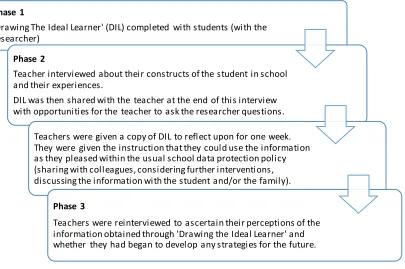
Figure 1 - Phases of the Research... 14
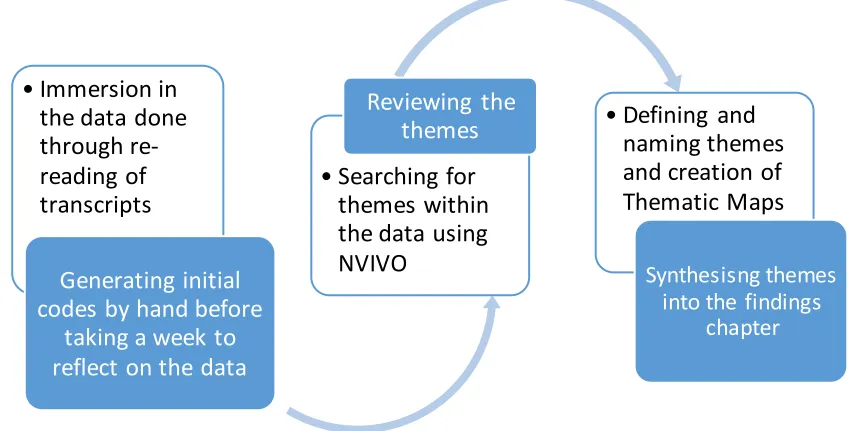
Figure 2 - Process of Thematic Analysis ... 56
Figure 3 - Thematic Map of Constructs of Students at Risk of Exclusion ... 57
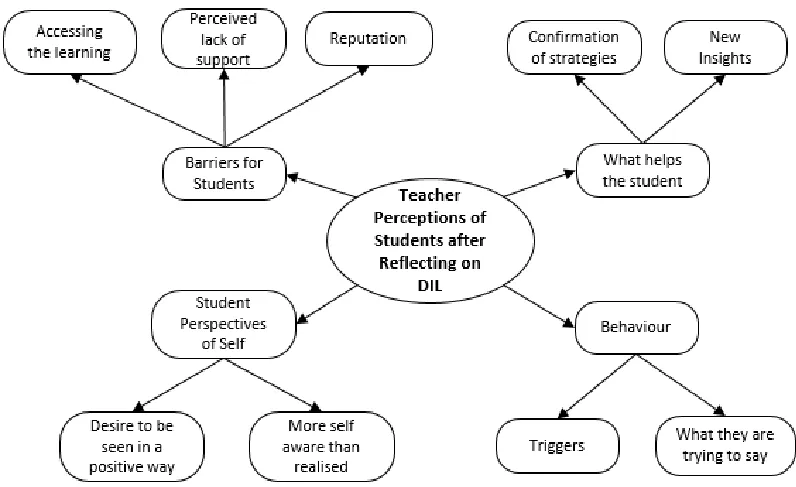
Figure 4 - Thematic Map for Research Question 2 ... 67
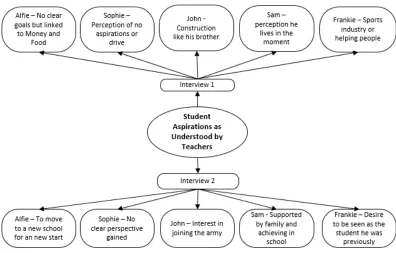
Figure 5 - Thematic Map to Answer Research Question 3 ... 73
Figure 6 - Thematic Map for Research Question 4 ... 76
List of Tables
Table 1 - Inclusion and Exclusion Criteria for Searches One to Three ... 18Table 2 - Constructivist Paradigm Specific Criteria for Qualitative Research Links to Validity ... 41
Table 3 - Participants in the Current Research... 46
xi
Abbreviations used in this Research
ADHD Attention Deficit Hyperactivity Disorder ASC Autism Spectrum Condition
BSS Behavioural Support Service BPVS British Picture Vocabulary Scale
CAMHS Child and Adolescent Mental Health Service CoP Code of Practice
CYP Children and Young People
DCSF Department for Children, Schools and Families DfE Department for Education
DIL Drawing the Ideal Learner DoH Department of Health EP Educational Psychologist
KS Key Stage
LA Local Authority
LD Learning Difficulties
MH Mental Health
MHFA Mental Health First Aid NHS National Health Service PCP Personal Construct Psychology PCT Personal Construct Theory
PE Physical Education
PRU Pupil Referral Unit PSP Pastoral Support Plan
SEBD Social, Emotional and Behavioural Difficulties SEL Social and Emotional Learning
SEMH Social, Emotional Mental Health SEN Special Educational Needs
SENCo Special Educational Needs Coordinator SILC Specialist Inclusive Learning Centre
xii
UK United Kingdom
1
Chapter 1 - Introduction
1.1
Overview of the Chapter
In this chapter the researcher will introduce the current research. This will be done through an introduction to the background to the research, during which relevant terminology used throughout this thesis will be defined. The researcher will then define her own experiences with Personal Construct Psychology (PCP) with students at risk of exclusion, and the justification for this research in light of the positioning of Educational Psychologists (EPs). The researcher will then further justify the necessity for more research into how best to support students at risk of exclusion from school, in light of the local and national exclusion statistics. The psychological framework for this research will be discussed, before the current research is introduced.
1.2
Background to the Research
EPs have a vital role in supporting all children and young people (CYP) with their education to ensure they are able to reach their full potential through the use of psychology (Farrell, Woods, Lewis, Rooney & O’Connor, 2006), be this through individual casework or more systemic working within schools and colleges (Gillham, 1978). The specific role of EPs in supporting students with mental health (MH) difficulties in school appears less well known outside of the profession and does not appear to be central in governmental publications, for example, the current Green Paper (Department of Health [DoH], Department for Education [DfE], 2017) in which EPs are only mentioned once. Unfortunately, students with MH difficulties are often the ones whose voices with regards to their academic journey are the least heard, and the ones at an increased risk of exclusion from school (Cefai & Cooper, 2010). However, when we take the time to ask and listen to these students, they can often provide us with the answers we need in order to support them socially and academically in school (Kelly, 1991).
2
1.3
Factors that Influence a Student’s World
Whilst learning is a fundamental element of the secondary school, it would be remiss to not also consider some of the other factors that influence adolescents throughout their time in secondary school, and the impact these could have on their development. When considering part of an ecological framework, the individual and the microsystem around them (Bronfenbrenner, 1979), it is evident the number of factors that could influence students and their development in secondary school.
1.3.1
The Individual
Adolescence is a time when a multitude of changes take place for all students. Each student will present with their own risk and resilience factors as well as unique interests. Individual differences which may influence activities during adolescence, including intelligence, sociability and sportiness are thought to have a genetic origin (Steinberg & Morris, 2001). Adolescence also marks a period of change for students as they enter puberty. With this comes an influx of hormonal changes and with it cognitive, social, emotional and sexual development (Sisk & Zehr, 2005). During adolescence the brain goes through a period of development in relation to decreased levels of the neurotransmitters serotonin and dopamine, which can result in mood change, impulse control and emotional regulation difficulties, all of which undoubtedly influence an individual’s desire to engage in certain activities (Arain, et.al. 2013).
Different social experiences during pubertal changes and an early onset of puberty can have a significant impact on the likelihood of individuals to develop depression and eating disorders (Sisk & Zehr, 2005), both of which will affect the school experiences of students, especially in regard to their sense of identity. Boys for whom the onset of puberty is early, show increased signs of delinquency, possibly due to socialisation with older peers. The same effects can be seen in early maturing girls, but usually when there is only a history of challenging behaviour prior to adolescence (Steinberg & Morris, 2001).
3
1.3.2
Microsystem
Parental pressure for school results and the development of autonomy during adolescence can be a cause of stress and arguments between parents and adolescents (Seiffge-Krenke, Aunola, and Nurmi, 2009). This could be due to a number of factors which include a reduction in time spent together, an increase in disagreements and the impact of the adolescents need for independence on their psychological development, as well as the mental health of their parents, and a perception of increased negativity in sibling relationships (Steinberg & Morris, 2001). Maxwell (2006) highlights the importance of social relationships over academic learning for younger students and it is possible that the social challenges presented by the transition to secondary school and of finding one’s place within a new peer group is equally, if not more, important for adolescents. Affiliation with peers during adolescence gains importance due to the increase amount of time that students spend with their peers and the positive impact that these relationships can have on their social competence (Spear, 2000). Research has shown that girls in particular report higher levels of stress in relation to their peers (Seiffge-Krenke, Aunola, and Nurmi, 2009). Peers can influence an adolescent’s behaviour in terms of their academic performance and prosocial behaviour, as well as their involvement with antisocial behaviour including smoking, drinking and other risk taking behaviour, which can often develop as a sign of admiration rather than coercion (Morris and Steinberg, 2001). In fact many adolescents who engage in risk taking behaviours report higher levels of self-esteem and are seen to be more socially competent by their peers (Spear, 2000).
1.4
Defining Terminology
In the current research, the term “at risk of exclusion” refers to students who have experienced fixed-term or permanent exclusion from one or more schools in the past, and were deemed at risk of exclusion by their current school when they participated in the research. This is based on a definition by Cole (2015).
Within this chapter the links between MH, psychological well-being and exclusion from school are discussed. In order to do this we first need to define what is meant by MH and psychological well-being. MH is defined by MentalHealth.gov (2017) as:
Our emotional, psychological, and social well-being. It affects how we think, feel, and act. It also helps determine how we handle stress, relate to others, and make choices.
4
A state of well-being in which every individual realises his or her own potential, can cope with the normal stresses of life, can work productively and fruitfully, and is able to make a contribution to her or his community.
In society we often construe problems with MH as being something to be ashamed of due to negative connotations, for example, diagnoses such as Schizophrenia. As part of an independent review which included focus groups with CYP, when asked what their understanding of MH and psychological well-being was, CYP described it as “feeling balanced” and “feeling in control” (Child, Adolescent and Family Mental Health [CAMHS] Review, 2008). Perhaps we need to consider this more positive construct of MH as a starting point to consider the needs of children at risk of exclusion.
Positive well-being is defined by the Oxford Living Dictionary as: The state of being comfortable, healthy, or happy.
Thus, one can consider that, in a school, students should have the opportunity to experience positive well-being and feel safe and content within their environment.
Psychological well-being and MH of CYP, both negative and positive, do not develop in isolation and are a product of genetics, family circumstance and the influence of individuals and communities like schools and religious groups, and we need to recognise the systemic nature of it (Bronfenbrenner, 1979; CAMHS Review, 2008; Gillham, 1978).
The purpose of this research is to explore teacher perceptions, as no prior expectations or constructs of teacher views were hypothesised. The constructs obtained in the research have been developed from qualitative analysis of the teacher interviews alone.
1.5
Researcher Perspective
My interest in eliciting the voices of students at risk of exclusion comes from six years of working in both primary mainstream and special secondary schools. In my experience, when students appeared disengaged with their learning and unresponsive to the interventions offered by the schools, they appeared to find it difficult to articulate what they were feeling or how they wanted to improve their school experience.
5
me to bring the individual student back into the process through enabling them to position themselves on a scale between the two characters, and we co-developed strategies for the school and the student to move towards the person they would like to be.
Full of enthusiasm from sessions with young people, I shared with the teachers the information co-created with the students. Most teachers were intrigued by the information obtained, although some teachers were less receptive than others, it nonetheless enabled them to understand some of the students’ behaviour by seeing different constructs of the same event generated by students and teachers based on their previous experiences (Ravenette, 1999). Through eliciting and sharing information it appeared that a shared understanding between staff and students was generated and this facilitated the co-development of a plan of action to work with the student, as a result of the views and concerns raised by the students.
The current research was developed due to my positive experience of using this tool. I also designed the current research to address the limited previous research combining teacher constructs with those of students at risk of exclusion (Cole, 2015), with the focus on teachers’ constructs of the student. This research aims to ascertain whether the PCP tool “Drawing the Ideal Learner” (DIL) (Moran, 2012, adapted by Green, 2014) when used with students who are at risk of exclusion, is an effective way for teachers to gain a greater understanding of such students and what is important to them to support their academic journey. Often teachers interpret their views of CYP based on their shared experiences, which may lead to misrepresentations of CYP’s real views (Ingram, 2013). Consequently this might be disempowering for CYP (Ingram, 2013). Pictures drawn by CYP themselves can sometimes tell more about CYP, especially when asked to draw the opposite of who they want to be, as they apply personal meanings both consciously and subconsciously (Green, 2014; Ravenette, 1999). When interventions and strategies are developed with students, and not done to them, they can improve their MH by empowering students to make change and take responsibility for their behaviour (Cefai & Cooper, 2010; Hapner & Imel, 2002).
1.6
Positioning of EPs as Advocates for CYP
6
MH and well-being in CYP is a pertinent issue due to the recent government reforms addressing the stigma surrounding MH in secondary schools (DfE, 2016) and MH reforms in all schools (DoH, DfE, 2017). These will include stronger links between schools and the National Health Service (NHS) and CAMHS, as well as the Mental Health First Aid programme (MHFA, England 2017) being offered to all secondary schools through the NHS and CAMHS as part of an investment by the Departments of Health and Education. EPs provide a vital role at the forefront of helping identify MH concerns in CYP, through their creative use of psychology and through ways of promoting inclusion (Hardman, 2001). However, the role of EPs in supporting CYP and schools with MH concerns, through early intervention, ongoing training and support for schools and families was sorely lacking from the agenda in the recent Green Paper (DoH, DfE, 2017) des pite the ideal positioning of EPs to enable these actions to be achieved.
Students with social, emotional and behavioural difficulties (SEBD), possibly as a result of MH difficulties, often feel the least empowered and listened to, and these students are also those most likely to receive exclusions (Cefai & Cooper, 2010). Furthermore, research into obtaining the views of students with Special Educational Needs (SEN) seems to be more limited, possibly due to the challenges involved with engaging these students (Sellman, 2009).If children with MH difficulties are excluded from schools, they are less likely to receive access to appropriate services to support their needs (Vincent, Harris, Thomson & Toalster, 2007). Once students have been excluded from school, they lose their ability to voice their constructs and the meaning they place on school membership (Pomeroy, 1999). Of students who are permanently excluded from schools, the long term outcomes are worse for those who do not engage with services in the community (Daniels, Cole, Sellman, Sutton, Visser, & Bedward, 2003).
EPs and their links to schools, families and communities offer an ideal relationship through which to support CYP and their SEBD and MH needs. This is done through recognising the behaviour of CYP as a part of a larger systemic process, rather than the traditional “within child” model that centres on CYP. Systematic intervention that takes place within the natural environment of the CYP enables them to generalise skills and strategies (Bronfenbrenner, 1979; Gillham, 1978).
1.7
The Local Perspective
7
through PCP prior to the meeting could have provided staff with an insight into how students make sense of their world and their behaviour within it. It could also have brought the student’s voice into the meeting with regard to selecting appropriate strategies (Hardman, 2001). Using PCP to elicit the voices of CYP may further empower CYP through consideration of their own resources, skills and aspirations and through discussion of their difficulties and barriers to learning (Harðardottir, Julıusdottir & Guðmundsson, 2015).
Within the Local Authority (LA) where the research was conducted, 800 students had received an exclusion between September and February of the academic year 2016-17, of which 15 were permanent exclusions (LA Exclusions Data). Nearly 20% (157 students) were in Year 7 or Year 8, and over 72% (578 students) were in secondary schools. In the whole of England, the number of students receiving permanent exclusions from schools has incre ased by nearly 45% since 2013, while fixed term exclusions have increased by over 25% since 2013. In the academic year 2012-2013, 4630 students received a permanent exclusion. This has continued to rise year on year to the academic year 2015-2016 (the most current data available) to 6685 students receiving a permanent exclusion, 81% of these from secondary schools (National Exclusions Data 2014, 2015, 2016, 2017). This data indicates that significant consideration is needed into how to support the transition of students to secondary school, and enabling support to continue as academic and social pressures increase throughout their school career ( Daniels et al, 2003).
The most common causes of permanent exclusion within the LA where the search was carried out are physical and verbal abuse against a student or a staff member and also persistent disruptive behaviour. However, these trends are consistent with other LAs throughout the UK (DfE, 2017).
8
enable schools to provide a holistic change for the student, recognising that in order for the student to be an effective learner we need to consider systemic change (Gillham, 1978).
1.8
Psychological Framework of the Current Research
In the past much of the research conducted with marginalised groups and in educational settings has been deficit focused, assuming that the reason a student was not achieving as expected was due to a difficulty they had. However, a positive psychology perspective has enabled a shift in how we focus on the interaction between the individual and their environment, and focus on the strengths of each individual and how these can bring about change through modifications to their environment (Mertens, 2010; Seelman, 2000).
The psychological framework of the current research is PCP, which is also known as Personal Construct Theory (PCT) (Kelly, 1955). PCP, as described by Kelly, holds that we are all constantly seeking to make sense of the world we live in, and individuals behave in a way that makes sense to them based on their experiences. In time, individuals develop theories (constructs) which enable them to predict the outcome of new or novel situations based on what has happened previously, whether they are children or adults. These constructs define our identity and how we perceive ourselves in relation to others (Moran, 2012). Kelly postulates that we are all able to choose how we interpret or construe events, even when we do not have a choice in what happens in a particular situation. The development of the PCP tool “Drawing the Ideal Self” (Moran, 2001) was devised in order to engage CYP with the therapeutic process to enable them to learn more about themselves.
Individuals often explain the behaviour of others based on their own expectations of what they should be doing. For example, our own constructs can lead to us labelling someone as “aggressive” or “difficult” if they do not react in the same way as us to the same event. We do this because we are likely interpreting the event differently based on our own constructs (Fransella & Dalton, 2000).
9
Through the use of PCP tools, we are able to gain a new understating about how a person interprets the world around them, and how they perceive their own position within the world by looking at the world through their eyes (Fransella and Dalton, 2000). We can begin to understand how a concept like “being good” can be constructed differently by students and teachers. Students may be able to articulate what they should not be doing (for example, don’t call out, don’t swear at teachers), but may find it more difficult to explain what they should do. Differences in the experiences of students and teachers, and discrepancies in understanding of constructs can lead to misinterpretations and disagreements. In turn, this may lead to some teachers placing the problem “within the child” as they cannot make se nse of the student’s behaviour as it does not align with their own internalised constructs (Moran, 2012).
1.8.1
Constructive Alternativism
As Kelly (1995) wrote, we all interpret and make sense of the world around us by developing constructions of it. Our constructions are mental representations based on our previous experiences and observations, which help us to anticipate and predict outcomes. Constructive alternativism was described by Kelly (1963) as a philosophical position in which one is open to the possibility that that our constructs of the world around us may be subject to change in light if new information.
“We assume that all of our present interpretations of the universe are subject to
revision or replacement” (Kelly, 1963, p.15)
This opposes the positivist view that there is one reality that can be captured. Kelly’s PCT describes individuals as scientists in line with social constructionism, that there is not one reality but each of us will seek to interpret our own reality, of which the possible constructive alternatives are endless. To entertain a new construct through constructive alternativism does not mean that we have to disprove our previous construct, but may adapt and adjust our constructs of a situation or event. Overtime we seek to find the most beneficial and practical constructions of our world (Kelly, 1964/1969).
10
to consider the perceived and actual power imbalances within schools and how to empower students to have a say in their academic future. Furthermore, the research recognises the challenges that teachers face to manage and understand the behaviour of their students, especially when it threatens their own constructs of themselves and their role (Moran, 2014, Ravenette, 1988). By raising the consciousness of both teachers and students, this research aimed to provide an agenda for change in line with transformative research (Mertens, 2010).
1.8.2
The Ideal Self
The Ideal Self (Moran, 2001) was developed as a PCP (Kelly, 1991) tool to elicit the views of children as the ‘experts’ in their own world, and enable new meaning and understanding to be generated from their experiences and their constructs through developing an improved understanding of themselves in a collaborative process with a therapist. The information generated can then be used to inform therapeutic intervention for the child. The technique is fundamentally flexible in its nature as it can be used as a way to learn more about students, including those at risk of exclusion (Moran, 2006b).
From the sessions a visual record is generated of what the child sees as the “Ideal” and the “Not Ideal” self, through the medium of drawings done by the children. To make the tool accessible to all children, and eliminate the need for writing, the children’s drawings are annotated verbatim by the therapist, which Moran highlights as being crucial to the efficacy of the technique, along with checking that they feel the end product is an accurate representation of their views.
The two drawings are then placed at either ends of a line, to represent the poles of the construct, and children are asked to place themselves along the line in relation to where they identify themselves now, in the past and in the future.
11
The use of PCP in this research does not carry the expectation that teachers will disregard their previous constructs of students, but that they will utili se the information obtained from the students to consider alternative constructs which could potentially be more helpful to support the students (Beaver, 1996). Constructive alternativism assumes that as all constructs are socially created, there is no one perspective that is representative of absolute reality. All interpretations should be subject to change and substitution. Consequently, in light of new information, the constructs held by an individual may be shifted to account for their new perspective created by the new information (Kelly, 1963). The purpose of this is to explore the possibilities to bring about change for both the student and the teacher through the information obtained through a PCP tool (Kelly, 1955).
1.9
The Current Research
In the current research, the voice of the student obtained through DIL provided the stimulus for the teacher to reflect upon. The students were considered experts in their interpretation of how they felt in school and their perception of aspects of their school experience, so their views were explored but not challenged.
Although some students may not be able to articulate exactly what is important for them at that moment, this tool enables a visual representation to be generated in the moment about what is and is not important for the student.
It is hoped that schools perceive DIL as a tool that could be used as a supportive method for intervention with students that have found the transition into secondary school more difficult, or to support students who have had a history of presenting challenging behaviour in school. It is hoped that if an understanding can be created between teachers and students, that this will, over time, lead to a reduction in a student’s challenging behaviour.
1.9.1
The Rationale of the Research
12
There are lifelong risks for CYP excluded from school, both for their education, and also their social and emotional development (Cole, 2015). Students that fail to engage with their learning and exhibit antisocial behaviour in school have poorer prospects for success and are at increased risk of developing problematic behaviour later in life (DCSF, 2007). If an adolescent presents with behaviour patterns that are deemed unacceptable, difficult or avoidant, relationships may never be forged between teachers and that young person within the school environment. Involving CYP in decisions about their education and their future enables them to take an active role and responsibility for change (Harding & Atkinson, 2009).
Research into the importance of seeking the voice of CYP in regard to their educational provision has increased considerably over the past fifteen to twenty years which has led to changes in legislation and the implementation of the revised SEN Code of Practice, CoP (DoH, DfE, 2014). The CoP reflects the need for individuality and responding to certain needs of individual students, including those who need support above the universal offer in schools. An environment needs to be created “to enable them to participate in discussions and decisions about their support” (DoH, DfE, 2014).
EPs and teachers must ensure that the views of all students are taken into account when considering any specialist provision and support that CYP require to ensure they are accessing the curriculum, and achieving their full academic potential (Children and Families Act, 2014; DoH, DfE, 2014).
There has been an interest within research in the use of PCP to elicit the voice of students who may otherwise find it difficult to self-advocate (Kelly, 1955). Beaver (1996) suggests that the first step in understanding the behaviour of students is to explore the model of the world, before we can understand what change can take place. The importance of ensuring that CYP are involved in decisions regarding their education and their future is widely acknowledged (Hobbs, Todd & Taylor, 2002). This involvement also provides teachers with useful feedback about what works for students, motivates them, and can improve teacher-student relations and teaching practice, as students usually feel more valued (Daniels et.al, 2003; Sellman, 2009). By improving communication between school staff and students, it can lead to students taking more responsibility for improved outcomes (Harding & Atkinson, 2009).
13
1.9.2
Epistemology
Research is a way to represent the views of young people, and to get their views heard (Kay et al. 2009). In this research, the constructs of children at risk of exclusion were sought through their participation in DIL and shared with teachers. The expectation was that teachers would be able to reframe their views of the child's behaviour. This is in line with the concept of “constructive alternativism”, in which teachers’ constructs of children can be changed in light of new information (Kelly, 1955).
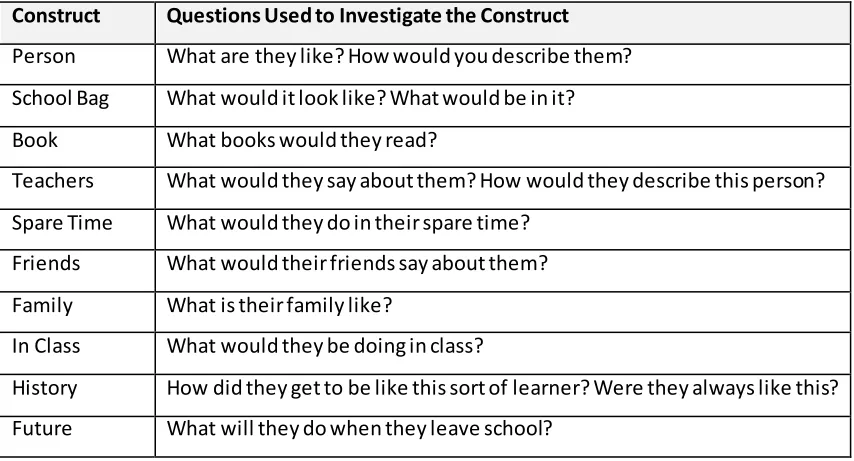
The positioning of the current research is social constructionist, as it follows the belief that there is not one reality, individuals develop subjective views of experiences through social interaction and use these to help them interpret future experiences (Creswell, 2014, Mertens, 2010). Through the use of the PCP task, DIL, students are asked open ended questions about different aspects of the learner’s experiences, in order to allow them to explore their own feelings and the meaning they place on each of the different constructs. DIL asks students to consider the constructs regarding several key relationships including teacher perception, their family and friends, and how each of these impact on the ideal or the non-ideal learner, thus enabling an exploration of pervious interactions and social experiences. How these relate to the individual student becomes more apparent during the scaling element of the task.
DIL was selected for this research as it also provides detail on the CYP’s perceptions of the constructs of what would make an ideal or non-ideal learner, based on their past experiences. Furthermore, it explores the historical and cultural experiences of the students and the impact these could have on their future (Creswell, 2014).
The current research does not involve interpretation of DIL by the researcher, but provides the stimulus for interpretation by teachers who have worked with the students. Thus, the teachers interpret what they know about their students, including their behaviour, their strengths and their needs, in the light of the constructs elicited from DIL.
1.9.3
Aims of the Research
The aim of the current research is to explore the possible changes in teacher constructs of secondary students at risk of exclusion, following the researcher sharing the students’ personal constructs with them. A secondary aim is to consider how effective teachers feel that DIL is in eliciting information about a student to inform intervention for the student.
1.9.4
Research Questions
14
2 What are teachers’ perceptions of the same children at risk of exclusion after reflecting on the child’s “Drawing the Ideal Learner”?
3 What are teachers’ views on understanding the case study students’ aspirations, both academic and otherwise, following the use of PCP?
4 What do teachers say about how PCP improves their understanding of the child?
1.9.5
Research Approach
[image:26.596.127.532.476.748.2]In order to answer the Research Questions, the research was conducted in three distinct phases (Figure 1). Phase 1, DIL, allowed for students to discuss their constructs of themselves as a learner, their challenges and their aspirations. This was not shared with teachers until after they had completed their first interviews.
During two separate interviews, in phases 2 and 3, teachers were asked open ended questions, about their constructs of the students. The epistemology aimed to utilise the personal and interactive method of interviewing teachers to inquire about their constructs of their student (Mertens, 2010). In the first interview with the teachers, the research aimed to explore the teacher’s constructs about the student based on their experiences and interactions with them, as well as the perceptions of views shared by their colleagues. During the second interview, the teacher discussed their interpretation of their student’s DIL task and their reflections and any strategies they would implement. The researcher then interpreted how the addition of the new constructs, elected from DIL, may have had an impact on the teacher’s constructs of the student.
Figure 1 - Phases of the Research
Phase 1
'Drawing The Ideal Learner' (DIL) completed with students (with the researcher)
Phase 2
Teacher interviewed about their constructs of the student in school and their experiences.
DIL was then shared with the teacher at the end of this interview with opportunities for the teacher to ask the researcher questions.
Teachers were given a copy of DIL to reflect upon for one week. They were given the instruction that they could use the information as they pleased within the usual school data protection policy (sharing with colleagues, considering further interventions, discussing the information with the student and/or the family).
Phase 3
15
By conducting the second teacher interviews after a reflection period of one week, the current research follows the transformative paradigm with the axiology that the process of research leads to empowerment and to raise consciousness. Transformative research (Mertens, 2010) has an emphasis on social justice, human rights and an agenda for change. The current research emphasises social justice in schools and the rights of all CYP to have a say in their future. It investigates whether through eliciting these views we can improve the CYP’s school experience through the use of PCT (Kelly, 1955) to challenge the perceptions that teachers have of them. In this research, the students selected represented a somewhat self-marginalized group within a school, as they may be unwilling or unable to engage with adults and express their views due to perceptions of unequal power or status (Creswell, 2014). The scaling element of DIL gives the students the opportunity to express what changes they can make and the support they need from others (Ingram, 2013). By enabling teachers to understand the needs as expressed by the student, it was hoped that this research empowered both parties and provided opportunities for the development of co-constructed strategies and further discussion through an exploration of the perception of power imbalance within the scope of a transformative paradigm (Creswell, 2014).
1.10
Chapter Summary
In this chapter the current research was introduced with reference to the background of the research and a definition of the terminology used in this thesis. The researcher’s experiences, pertinent to the direction of this research, were discussed with reference to the previous use of PCP with a student at risk of exclusion. The role of EPs in supporting CYP and schools with both MH difficulties and SEBD, to ensure that all students are given the best possible opportunities to succeed in school was discussed. The high levels of exclusion both locally and nationally were presented to justify why further research in this field is critical. The psychological framework utilised within this thesis was then discussed before the current research was introduced with reference to the rationale, epistemological positioning and the aims.
16
Chapter Two - Literature Review
In this chapter a systematic literature review of literature relevant to the current thesis was conducted, relating to the use of PCP to inform teachers about students at risk of exclusion from their school. Over the past decade most research into PCP has emphasised its use for gaining the views of CYP who have found it challenging to make their views heard, in particular those with Autism Spectrum Conditions (ASC) (Attwood, 2006; Moran, 2006; Williams & Hanke, 2007). However, while the use of PCP for students with ASC has been shown to be beneficial in gathering their views, this research is interested in students at risk of exclusion, without a diagnosis of ASC, many of whom still present as a group who find it difficult to express their views.
2.1
Overview of Personal Construct Psychology
There has been an increasing amount of literature on recognising the difficulties in hearing the voices of disaffected students whilst noting that self-advocacy within education is a human right (DfE, 2001). PCP was used in the current research as it offers a non-directive way to seek the views of children and follows the view that all children are able to express a view about what is important to them; it is about professionals using the appropriate tools, and EPs are well placed to do this. Drawings may be a way to elicit the views of children who may not be able to express them verbally (Hardman, 2001).
2.1.1
Review Article of PCP
In a small-scale review based in Malta, Cefai and Cooper (2009) put forward their concerns that students with SEBD are often the last to be heard in regard to their educational experience. Consequently, these children were identified as often left feeling victimised, stigmatised, powerless and unconnected with the learning experiences. This paper draws attention to the fact that teachers often blamed the presenting characteristics of the student, such as attention seeking behaviour, through teasing and bullying, as being the reasons that the students did not succeed in school, as this led to a lack of motivation and disruption of lessons.
17
opportunity to share their experiences about the student so that both points of view can be recognised and used to form a more healthy relationship between the two. Again this review highlights constructs such as injustice, oppression, frustration and exclusion on the behalf of the students. However, if teachers are not given the opportunity to learn about students, reflect and really understand what are the reasons behind the students’ behaviour, as well as understand their own constructions of students, they might not be able to adapt their practice accordingly (Ravenette, 2008).
The aim of this chapter is to provide an overview of the current literature available in this area of research and to provide a rationale for the current research, thus linking the previous literature specifically to students at risk of exclusion.
2.2
Research Title
The title of this research paper, “The Ideal Learner: Does Sharing Constructs Elicited from Children at Risk of Exclusion Alter the Perceptions of Teachers Working with Them?”, provides the reader with a one sentence synopsis of the participants involved and the PCP technique used to undertake this research in students at risk of exclusion.
2.3
Research Questions
As previously stated in Section 1.9.4, the current research looked at providing answers to the flowing questions:
1. What are teachers’ perceptions of students at risk of exclusion?
2. What are teachers’ perceptions of the same children at risk of exclusion after reflecting on the child’s “Drawing the Ideal Learner”?
3. What are teachers’ views on understanding the case study students’ aspirations, both academic and otherwise, following the use of PCP?
4. What do teachers say about how PCP improves their understanding of the child?
2.4
Initial Literature Search
18
criteria for each of the searches are listed in the table below. Further information on the initial literature search can be found in Appendix A1.
Table 1 - Inclusion and Exclusion Criteria for Searches One to Three
Inclusion Criteria Exclusion Criteria Search
One
Year of Publication (2000-2017)
Scholarly (Peer Reviewed) Journals
Full Text Articles Language - English
Age - School age (6-12) and Adolescents (13-17)
Articles that in which participants had a diagnosis of ASC/Autism Articles which did not include
participants at risk of exclusion or already permanently excluded from schools.
Search Two
Personal Construct Psychology or Personal Construct Theory in the title Year of Publication
(2000-2017)
Scholarly (Peer Reviewed) Journals
Language - English
Articles that Did not include PCP as an Intervention
Articles with participants above school age (18)
Articles with adult participants completing the PCP techniques
Search Three
Language - English Articles which were not adaptations of the “Ideal Self” Moran, 2001 or did not seek views on the “Ideal”.
2.4.1
Rationale for Exclusion Criteria
19
there is no clear reason for their behaviour. These students possess more of a “risk” to the confidence of teachers on both a personal and professional level (Moran, 2014, Ravenette, 1988). Furthermore, students with unknown or unrecognised needs, by definition are less likely to have their needs met than those for whom there are evidence based strategies and interventions available (DfE, 2012).
Furthermore, I excluded from Search One any research containing PCP that did not include students that were at risk of exclusion or had previously been excluded. The purpose of this was to establish the existing literature available where PCP has been used with this population, and identify gaps in the existing literature for the current research.
The rational for the inclusion and exclusion criteria in Search Two was to further identify what PCP techniques are being used in schools, and which students PCP is used with. The aim of this search was to consider the themes generated within each of the specific interventions and whether or not these could be used by school staff, or whether they required specific training and supervision. This search also aimed to identify what age groups of participants researchers utilising PCP techniques favoured.
In Search Three, the researcher aimed to explore the current research available using derivatives of “Drawing the Ideal Self” (Moran, 2012). The rationale for this search was to investigate further how this particular technique has been used with students with a range of different needs and of different ages, and to find a unique perspective for the use of the tool within research with the population selected for this study. To find this unique point of view, all research utilising PCP tools other than developments of “Drawing the Ideal Self” were excluded.
2.5
Search One: How is PCP Currently used in Schools to Support
Students at Risk of Exclusion?
Several studies investigating the use of PCP for students at risk of exclusion have been carried out (Burton, 2006, Hardman, 2001, Moran, 2006b & Pomeroy, 1999). Table A2-1 in Appendix A2 provides a summary of the three studies that will be discussed in this section of the literature review. For Further information on Search One see Appendix A2.
2.5.1
Group Intervention using a CBT Model (Burton, 2006)
20
be facilitating the group along with a co-worker (a member of school teaching staff). Participants were selected as they were frequently in trouble in school, and were all at risk of permanent exclusion.
The six week course focused on developing the student’s self-awareness and setting personal targets for themselves. At the start of the sessions the students and their teachers were asked to complete a social skills assessment form. Also included in the intervention was a homework element in which students were invited to record their feelings betwe en sessions. The assessment of social skills was repeated by students and teachers at the end of the course. In the self-assessment and teacher assessment of social skills, increases in scores were noted in expressing themselves and their feelings better, speaking in a more pleasant tone of voice, using more appropriate body language and asking for help more, with the girls making the greatest improvements. During individual interviews the students were all able to reflect on their progress towards their own targets and identify some targets for their own future development. Seven months after the intervention the school reported improvements in the behaviour of all the students that participated.
This study highlights the importance of engagement of school staff. The rapport of the member of school staff with the students was noted in this study, as was the role of the assistant head teacher due to her involvement with the students in a pastoral role. One of the students also noted the impact on receiving a group intervention stating that the group had enabled her to become more cooperative and develop a more secure friendship with one of the other participants. Furthermore, the students were able to validate each other’s positive behaviour during the group.
21
2.5.2
Individual Interventions for CYP at Risk of Exclusion (Hardman, 2001)
In a study into the impact of PCP for a student at risk of exclusion, Hardman’s (2001) research follows a single case study with a Year 10 student through an eight week intervention. The participant, Daniel, was selected for the intervention due to his behavioural difficulties, inability to follow rules, and lying to avoid responsibility for his actions. During the intervention a number of PCP tools were used including: Tree People, Drawing the Ideal Self and using a salmon line, a laddering exercise and anger management technique. Daniel completed a series of successful behaviour “experiments” during the intervention to test out whether engaging in certain behaviours, reminiscent of the “’Ideal Self” worked and whether they interfered with his desire to be seen as “cool”. This helped Daniel to tell his story and understand his behaviour and the factors maintaining them in the context of his world.
Views of staff were obtained to elicit their constructs of the child in this study ; an eight item questionnaire was sent to elicit Daniel’s positive qualities and the strategies that were already being used effectively to support him in school. The results of the questionnaire were then summarised by the researcher and a copy sent to all staff. The summary was also discussed with Daniel, who felt it was an accurate reflection of him. Previous research has demonstrated that the use of “Drawing the Ideal Self” can enable staff to develop interventions to support the student once they understand what is important to the child (Moran, 1996).
A long term intervention may be beneficial for all students, however this might not always be possible due to constraints in schools, and furthermore studies have shown that a single PCP task can be powerful enough to provide enough information about a student, to he lp a teacher understand them better and facilitate their learning and self-esteem (Moran, 1996).
22
However, the limitations of the current study were that it utilised a single case study design. Daniel appeared motivated to engage with the PCP tools within the study, although these findings would not necessarily generalise to other students at risk of exclusion. Furthermore, although the study documents that there was weekly feedback to the Special Educational Needs Coordinator (SENCo) and at the end of the study a summary was sent to relevant staff and a report to parents, there is no comment of their views within the study.
2.5.3
Constructs of Student-Teacher Relationships for Young People Excluded from
School (Pomeroy, 1999)
23
This study is not transformative for the participants, who had already been excluded from their schools. Although there are similarities in their accounts, the findings are not generalisable for all students at risk of exclusion, they could however highlight important aspects of the school experience, which could be examined in more detail for students currently still within the school system. As this research is concerned with the views of relationships in school of excluded CYP, the views of the participants for whom teacher relationships were not a salient feature o f their experience may be underrepresented in the study.
2.6
Search Two: What Research is Available into Eliciting the Views of
Lesser Heard Groups of Students?
Table A3-1 in Appendix A3 summarises the studies that will be further discussed in this section of the literature review. For further information on Search Two, see Appendix A3.
2.6.1
Secondary Age Students
2.6.1.1
Adolescents with Learning Disabilities (Thomas, 2011b)
In an investigation into the importance of realising self-constructs on the psychological well-being of adolescents with Learning Difficulties (LD), Thomas (2011b) focused on the link between poor self-image and increased risk taking behaviour, self-harm and eating disorders (Rhodes & Wood 1992). Previous research has focused more on adults and children with LD, but less with adolescents. Students with a diagnosis of ASC were excluded from this study.
Thomas’ study explored the views of 59 adolescents attending a Specialist Inclusive Learning Centre (SILC), with a chronological mean age of 15 years 4 months, and British Picture Vocabulary Scale (BPVS) equivalent mean age of 6 years 6 months. Views of the participants were elicited using four methods: asking them to describe themselves and the opposite of that, asking how others would describe them, asking them to analyse ambiguous drawings and drawing a self-portrait. The constructs obtained were analysed using Thematic Analysis. All the students managed to engage with the study and many of them produced complex and unique constructs about themselves, and students reported enjoying visual and verbal methods of PCP equally. 47% of the students that participated were able to offer constructs of themselves as viewed by others, offering further insight into the constructs these young people have of their world (Butler & Green, 2007).
self-24
esteem and self-concept are often standardised on students without LD and those who are much younger and consequently may not actively represent the population in the study. This study emphasises that adolescents with LD are often “not heard” and it is important to give them a voice, but one is able to elicit their voice through PCP, especially those which examine contrasting poles.
Although this study had 59 participants, this is still a relatively small sample size. It is also unclear whether all the students attended the same SILC. If the students did attend the same SILC, their ability to access the language used in the PCP talk may have be due to the teaching methods employed in the SILC. There is also no evidence from this study about how the constructs obtained would be fed back to the staff at the SILC.
2.6.1.2
A Personal Construct Framework within a Residential Setting (Ravenette,
2008)
In an individual case study of a 15 year old boy living in a residential setting, Ravenette (2008) describes the impact that understanding self-constructs of students and the adult carers supporting them have on the impact of intervention. Ravenette advised that when problems arise one should consider the constructs of the young person, along with those of the adult from whom the referral was made, and whether the constructs adults have of a student interfere with their own core constructs relating to their competence, skill or coping mechanisms. In order for an intervention to be effective we have to consider constructive alternativism to change the way problems are viewed, including the young person’s sense of self, through a process of increased understanding and exploration. In this article Ravenette describes how the way that constructs are elicited from individuals can be fundamentally important in facilitating the process of change, as all the constructs need to be meaningful. One of the ways in which to do this is a Pyramid Procedure (Landfield, 1971). This procedure uses the concept of contrasting descriptions to explore the language individuals use to elicit their own constructs.
In this article, specific questioning was used with the view of changing the views that carers held of themselves and their charge. In order for change to happen through constructive alternativism, it was important to recognise the importance of communication and interaction, through the content, the relationships (self and others) and the context. The carers came to the conclusion that by accepting who the child was and asking questions to gain an understanding of his constructs and the carers’ own sense of reality, carers may be able to help the child question his beliefs and ultimately bring about change.
25
is relevant to the development of tools such as “Drawing the Ideal Self” (Moran, 2012). As this research took place in a residential setting, the findings may not be generalisable to students within a day school, as there is a difference between the amount of contact time between staff and students in a residential setting, compared to a day school.
2.6.1.3
Counselling with Students with SEBD (Truneckova & Viney, 2012)
The Australian model of integrating psychology within education is with the use of school-based psychologists, which may facilitate longer term intervention within schools. Truneckova & Viney (2012) explored how using four propositions derived from PCT, within school-based counselling, could make the counselling more effective for the young people by understanding the experiences of young people, with a variety of SEBD, from their point of view. The four propositions are: 1) There are different ways of looking at any event, 2) Experiences are tested out through behaviour, which is the principle of enquiry, 3) Psychological disorder occurs when there is consistent invalidation along with the exclusive use of particular construing approaches, and 4) Professional constructs are used to assist in the organising and understanding of the personal constructs of young people.
The relationship between the counsellor and the young person is of utmost importance and is likened to that of client-centred therapy (Rogers, 1951). Four strategies can be adopted by the counsellor during sessions to enable the young person to be in control of their reconstructions. The approaches are: 1) The counsellor adopts a credulous approach, 2) The counsellor adopts the role of enquirer rather than expert, 3) Transitive diagnosis, the process conceptualising psychological disorder by gaining an understanding of “what”, not “who”, needs treating based on an individual’s experiences and constructs, which generates treatment implications for the school counsellor, and 4) The school counsellor guides the young person to reconstruction by disconfirming their unhelpful constructions while validating their selves and their construing/meaning making.
26
constructs through the use of a technique which enables the counsellor to adopt a person-centred approach to counselling.
2.6.1.4
Recognising the Voice of Disaffected Students (Wearmouth, 2004)
Wearmouth (2004) introduces Talking Stones, which is an interview tool developed from the need for interpersonal understanding and reflexivity within PCP (Kelly, 1991). Stones of different shapes, colours, sizes and textures are presented to students. Students select the stones that represent themselves and other significant people around them. They then position the stones to demonstrate relative closeness and distance between the people in their life, and the choices for each stone selection and their positioning are then discussed.
“Darren” was part of a group of 10, Year 10 students selected due to their absence from school, behaviour and disruption in class, and being identified as being disaffected. They were offered an alternative curriculum and work experience opportunities. One of the tools used to explore students’ views of themselves and attitudes to school was through the medium of Talking Stones.
This interview technique appeared effective with Darren and he selected stones that he then described physically and linked these characteristics to elements of himself and his family. Themes of “rottenness”, victimisation and boredom within his family and school were elicited. Further techniques to find exceptions and scaling were used throughout the interview with Darren.
This paper demonstrates the ability of Talking Stones to promote self-advocacy. Although it generated constructs from Darren that were helpful for others to learn more about him, the paper focuses on only 1 of 10 students selected to participate in the alternative curriculum group. This suggests that it may not be an effective tool for all students. It requires a need for imagination and an ability to attribute physical characteristic of a stone to human personalities and relationships. A risk of this technique is that it could appear simple to administer, and an adult inexperienced in PCP and counselling theories could elicit disclosures of sensitive information, and a clear way to end the technique and focus of the future in an ethically sound way is not evident in this paper. A further limitation of this paper is it is unclear what decisions were made by or for Darren relating to his future choices.
2.6.2
Primary Aged Children
2.6.2.1
Primary Age Children on the SEN Register (Maxwell, 2006)
27
used a case study design to explore the views of 13 primary aged children on the SEN register about school through the use of various PCP tools and techniques.
This research uses the paradigm of naturalistic enquiry, wherein the influence the researcher and participant have on one another is mutual. In the research, each of the participants completed four drawings of themselves in school and two PCP style interviews. The drawings build on techniques to draw the “self” and “other” (Landfield, 1971) by including two more pictures and the interviews. Themes obtained from the students included: feeling at risk during unstructured times, feeling able to be part of a peer group, friendships and flexibility in thinking. The children placed importance upon the social aspects of school, which led to the development of the SENCo of the school, with representative students with SEN, to develop strategies for break times.
The study found that the drawings obtained from students were used to facilitate the PCP interviews and provided concrete evidence of their experiences and views, thus enabling their voice to be listened to.
2.6.2.2
Drawing to Elicit Large G
roups of Children’s Constructs of
Themselves in
School (Maxwell, 2015)
Building on the previous study, Maxwell (2015) obtained the views of 72, Year 5 students, who had just started middle school, by asking them to draw a happy and an unhappy picture of themselves in school, and then to annotate it. By age 9-10, most children are able to un