Copyright © 2017, Scholarly Research Journal for Interdisciplinary Studies
EVALUATION OF TWO-YEAR B.ED. PROGRAM: STUDENTS’ PERSPECTIVE
Anita Swami, Ph. D.
Principal, Hansraj Jivandas College of Education
The following study focuses on knowing the student teachers‘perspective regarding the two-year B.Ed. program as prescribed by National Council of Teacher Education (NCTE). The major findings ofthe study revealed that the students’ find the two-year B.Ed. program to be very good with respect to the depth of the course and its applicability to real life situations. But at the same time 50% of the students’ feel that the two-year program is difficult and more time consuming in comparison to the one year B.Ed. program.
Keywords: B.Ed. program, students’ perspective
INTRODUCTION:
The course structure for the Two-year B.Ed. offered by Hansraj Jivandas college of
Education follows the University of Mumbai syllabus as per the prescribed guidelines by
NCTE curriculum framework for teacher education. The two academic years offers credit
based choice system comprising of four semesters. The B.Ed. program is designed to develop
attitude, skill and knowledge in student teachers.The Program outlines the nature of
experiences to be offered to the student-teachers to make them reflective practitioners. The
course structure offers a comprehensive coverage of themes and rigorous field engagement
with the child, school and community. The curriculum of two years B.Ed. program comprises
of the following components: Part A: Theory component includes Core courses, Elective
courses and Inter-disciplinary courses.
Part B: Practicum component includes Project Based courses, Ability courses and Audit
courses. Engagement with the Field is the curricular component that is meant to holistically
link all the courses across the program, while it also includes special courses for Enhancing
Professional Capacities (EPC) of the student teachers.
NEED OF THE STUDY:
The teacher education program prepares the students for the world of work that is the school.
The student teachers being the major stakeholders of this B.Ed.program it is imperative to
know their views regarding the current two-yearB.Ed.program offered as prescribed by
Scholarly Research Journal's is licensed Based on a work at www.srjis.com
Copyright © 2017, Scholarly Research Journal for Interdisciplinary Studies
NCTE. It will also help to make further necessary changes as per the requirements of the
student teachers.
STATEMENT OF PROBLEM:
A study of the students’ perspective towards the two-yearB. Ed program.
VARIABLES OF THE STUDY
a) Depth of course content
b) Extent of course coverage
c) Applicability of course to real life situations
d) Learning value of the course
e) Relevance to the present education system
f) Extent of effort required by students’
g) Syllabus of each course
h) Background of benefitting from course
i) Was the course easy or difficult
OBJECTIVES OF STUDY:
1. To find out the students’ perspective towards the two-year B.Ed. program with
respect to: -
j) Depth of course content
k) Extent of course coverage
l) Applicability of course to real life situations
m) Learning value of the course
n) Relevance to the present education system
o) Extent of effort required by students’
p) Syllabus of each course
q) Background of benefitting from course
r) Was the course easy or difficult
s) Overall Rating
t) Oneyear B.Ed. course is better
OPERATIONAL DEFINITION:
Two-yearB. Ed Program:For the present study, is the program offered by the University
Copyright © 2017, Scholarly Research Journal for Interdisciplinary Studies
Students’Perspective: For the present study, it is the perspective of the student-teachers
who have completed the two-yearB.Ed. program offered by Hansraj Jivandas college of
education which is affiliated to University of Mumbai.
SCOPE AND LIMITATIONS:
The study is limited to the student teachers’ perspectives of Hansraj Jivandas college of
Education.
METHODOLOGY OF STUDY:
For the present research survey method is used. The sample includes 50 student teachers of
Hansraj Jivandas College of education. Convenient sampling technique was used. To
measure the perspective of the student teachers a rating scale was developed by the
researcher.
ANALYSIS OF THE DATA:
The total score for the rating scale measuring the student teachers’ perspective was
calculated. Percentage was used to calculate the number of sample responses for every
[image:3.595.80.522.444.609.2]category.
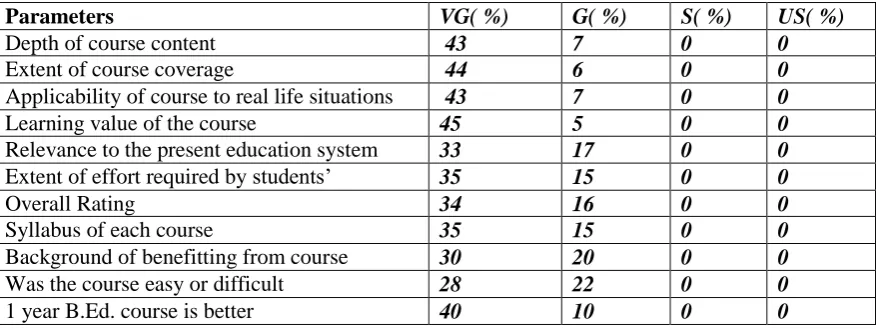
Table 1. Percentage-wise Distribution of the Student Teachers Perspective towards the
variables of the study
Parameters VG( %) G( %) S( %) US( %)
Depth of course content 43 7 0 0
Extent of course coverage 44 6 0 0
Applicability of course to real life situations 43 7 0 0
Learning value of the course 45 5 0 0
Relevance to the present education system 33 17 0 0
Extent of effort required by students’ 35 15 0 0
Overall Rating 34 16 0 0
Syllabus of each course 35 15 0 0
Background of benefitting from course 30 20 0 0
Was the course easy or difficult 28 22 0 0
1 year B.Ed. course is better 40 10 0 0
Copyright © 2017, Scholarly Research Journal for Interdisciplinary Studies Figure 1
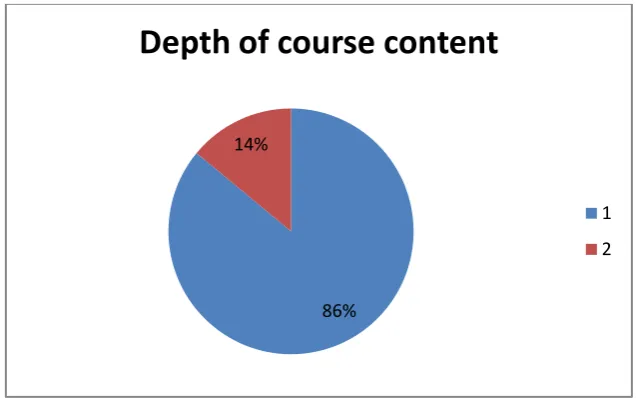
Figure 1 shows 86% of the students’ feel the depth of course content is very good whereas
[image:4.595.147.446.372.554.2]14% feel it is good.
Figure 2
Figure 2 shows 88% of the students’ feel the extent of course coverage is very good where as
12% feel it is good.
86% 14%
Depth of course content
1
2
88% 12%
Extent of course coverage
1
Copyright © 2017, Scholarly Research Journal for Interdisciplinary Studies Figure 3
Figure 3 shows 86% of the students’ feel the applicability of the course to real life situations
[image:5.595.151.444.365.564.2]is very good where as 14% feel it is good.
Figure 4
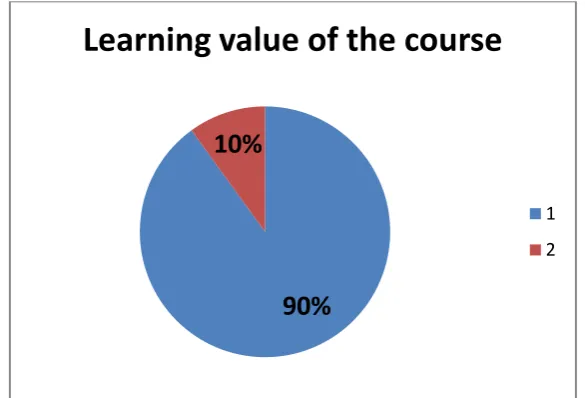
Figure 4 shows 90% of the students’ feel the learning value of the course is very good
whereas 10% feel it is good.
86% 14%
Applicability of course to real
life situations
1
2
90%
10%
Learning value of the course
1
Copyright © 2017, Scholarly Research Journal for Interdisciplinary Studies Figure 5
Figure 5 shows 66% of the students’ feel the relevance to the present education system is
[image:6.595.143.453.365.552.2]very good where as 34% feel it is good.
Figure 6
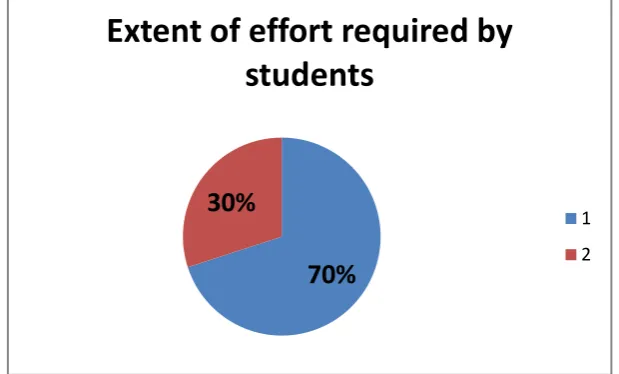
Figure 6 shows 70% of the students’ feel the extent of effort required by students’ is very
good where as 30% feel it is good.
66%
34%
Relevance to the present
education system
1
2
70%
30%
Extent of effort required by
students
1
Copyright © 2017, Scholarly Research Journal for Interdisciplinary Studies Figure 7
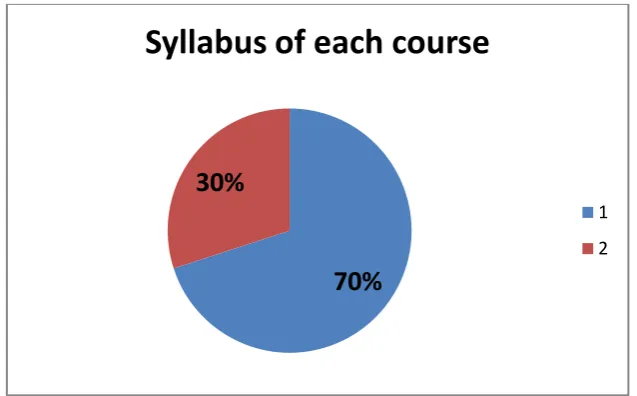
Figure 7 shows 70% of the students’ feel the syllabus of each course is very good where as
[image:7.595.147.449.378.572.2]30% feel it is good.
Figure 8
Figure 8 shows 60% of the students’ feel the background of benefitting from course is very
good whereas 40% feel it is good.
70%
30%
Syllabus of each course
1
2
60%
40%
Background of benefitting
from course
1
Copyright © 2017, Scholarly Research Journal for Interdisciplinary Studies Figure 9
Figure 9 shows 56% of the students’ feel the course is easy is very good where as 44% feel it
[image:8.595.144.446.359.541.2]is difficult.
Figure 10
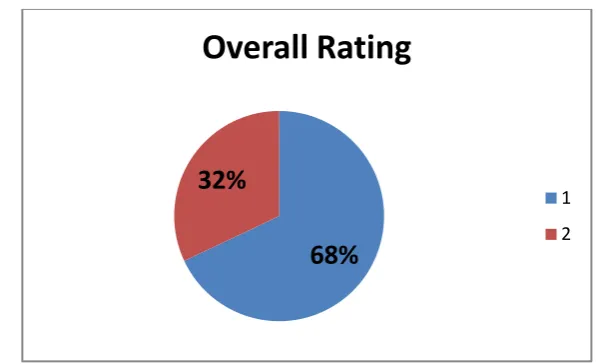
Figure 10 shows 68% of the students’ feel overall the B.Ed. program of 2 years is very good
whereas32% feel it is good.
56%
44%
Was the course easy or
difficult
1
2
68%
32%
Overall Rating
1
Copyright © 2017, Scholarly Research Journal for Interdisciplinary Studies Figure 11
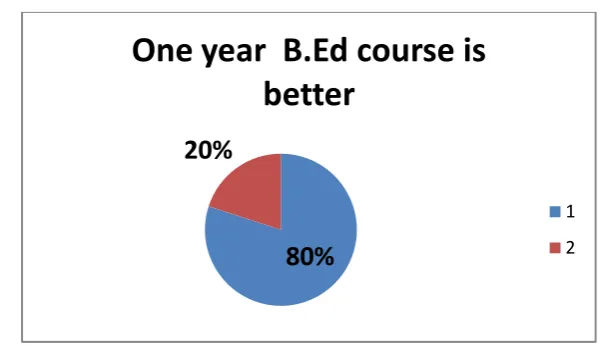
Figure 11 shows 80% of the students’ feel the one yearB.Ed. course is very good where as
20% feel it is good.
Discussion
The students are of the opinion that the courses should be realistic and not idealistic. It should
be in accordance with the current needs of the society. The long duration of internship
provides them a holistic idea of the functioning of the school and that is the best part of the
two-yearB.Ed. program. The course should have more emphasis on topics like women
empowerment, new teaching methodology and the laws and practices relevant to today’
scenario. Also, the community work activities has helped them to be aware and sensitized
towards the social issues in the society and their role as individuals and future teachers in
bringing a change for betterment of the society at large.
Implications of the Study
The two-year B.Ed. program is a comprehensive teacher training program which prepares the
students to face the challenges in the classrooms. But again investing two years for studying
is time consuming as most of the students who enroll for B.Ed program would prefer one
year B.Ed program so that they can start working as early as possible.
References
Best, J.W. & Kahn, J.V. (2006) Research in Education. New Delhi: Prentice Hall of India Private
Limited, Ninth Edition.
Best, J.W. & Kahn, J.V. (2006) Research in Education. New Delhi: Prentice Hall of India Private
Limited, tenth Edition.
Creswell (2012) Educational Research, Fourth Edition PHI Learning pvt ltd, New Delhi.
80%
20%
One year B.Ed course is
better
1