CHOLESTEROL ESTIMATION BY A PIC16F877A
MICROCONTROLLER BASED SYSTEM
Aritra Chatterjee,
Arkarag Chaudhuri, Aritra Purohit
West Bengal University of Technology, Kolkata, India.
ABSTRACT
An approach towards estimation of cholesterol was done by setting up a simple redox reaction.
The cholesterol oxidase enzyme8 breaks down the substrate into an intermediate
cholest-5-en-3-one, which is then converted to cholest-4-en-3-one15. In the present study this mechanism was
exploited. The current produced by the release of electrons from the above reaction was
determined by the Op-Amp and the pre-programmed micro-controller was used to determine the
cholesterol concentration. And the cholesterol concentration was displayed in 16x2
alphanumeric display.
Keywords: Cholesterol oxidase, Op-Amp, Microcontroller, Liquid Crystal Display (LCD Display)
Introduction:
Source of chemicals:Cholesterol extra pure was obtained from Nice Chemicals and Triton X
100 from Himedia. Cholesterol oxidase extrapure from Streptomyces sp. was obtained from SRL
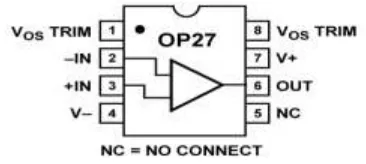
Mumbai. Op-amp IC (Op-07), microcontroller, 20MHz crystal oscillator, wires, probe and
alphanumeric 16x2LCD display was procured from the local market. All other chemicals used
were of analytical grade.
Assay of free cholesterol oxidase: Reaction mixture consisting of 1.0 ml sodium phosphate
buffer (0.05 M, pH 7.0) and 0.5 ml cholesterol oxidase was pre- incubated at 37ᴼC for 2 min.
The reaction was initiated by adding 0.5 ml cholesterol solution (500 mg/dl). After incubating at
develop the color and absorbance was read at 520 nm (A520) against control in a
spectrophotometer and the content of H2O2 generated in reaction was calculated from standard
curve between H2O2 concentration and (A520)13. The soluble protein in dissolved enzyme was
determined by Lowry method10
Preparation of substrate solution: Cholesterol (50 mg) was dissolved in 1.0 ml of triton X 100
by slowly heating and stirring until solution was clear. Sodium phosphate buffer (0.05 M, pH-
7.0) was added to it to get final concentration of 500 mg/dl. Solutions of different concentrations
ranging from 50 to 500 mg/ dl were prepared and stored at 4ᴼC.
Response measurement of the biosensor:The Op-07 ICwas used for its accuracy to measure,
amplify and convert the current produced into its proportional voltage. The probes were
immersed into 5ml sodium phosphate buffer (0.02 M, pH 7.0) in a beaker. Silver wires are used
as the probe which are connected to the op-amp. 1ml of dissolved cholesterol solution was added
to the beaker and resistance of the resultant solution was checked at 2000k with the help of the
Op-Amp.
Materials and Methods:
The resultant output of the Op-amp was fed to the microcontroller for further calculation. The
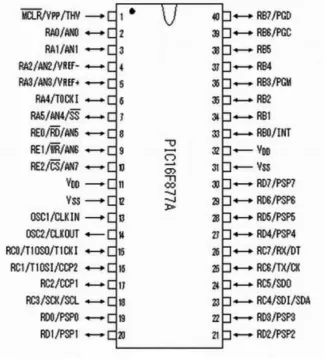
microcontroller used in this particular approach was a40pin PDIP PIC16F877A12 made by
microchip. The electrical signal (analog) which was sensed by the Op-Amp was connected to the
ADC (analog to digital convertor) module of the microcontroller. The analog signal was
converted to digital form with the analog to digital converter module which was built in the
microcontroller. The 20 MHz crystal oscillator was used as the clock.
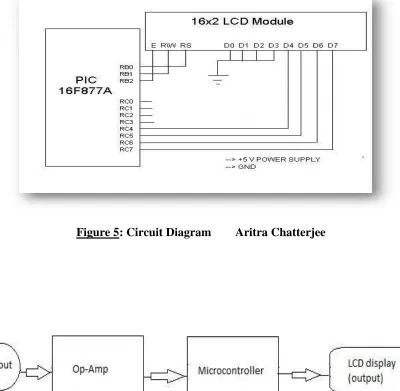
The microcontroller performs the calculation with a program encoded in it. A 16x2
alphanumericLCD display was interfaced with the microcontroller. The result was displayed in
the 16x2LCD display in mg/dl.
Two 9V voltage sources are connected with the 4th and 7th pin of the Op-Amp IC as the –Vcc and
microcontroller as its input. The 2nd and 3rdpins are used for the input. In this case the 2nd pin was
grounded and the 3rd pin attached with the probe was immersed in the solution.
The operating frequency range of the microcontroller was 0-24Mhz and the operating voltage
was 2.7-6V. The flash memory, where the main program of the microcontroller was stored was
8k. The microcontroller also consists of 10 bit analog to digital converter module built in. The
2nd pin i.e. RA0/AN0 of the microcontroller was used for the input. The 6th pin of the op-amp,
which was the output of the op-amp was connected to the 2nd pin of the microcontroller. The
analog signal was converted to digital form with the built in analog to digital converter module
of the microcontroller. After the conversion of the analog signal to its digital form the
microcontroller performs the calculation part.The programming for the calculation of the
cholesterol concentration was done in C language. The code was written and build in the
MPLAB IDE software17. The hex code of the program which was required for the
microcontroller to execute the program wasalso generatedwith MPLAB IDEsoftware4. The
generated hex code was burnt in the microcontroller with the help of burner kit (VP812). The
microcontroller was interfaced with the 16x2 LCD display which shows the cholesterol
concentration. The interfacing was done by generating a separate hex code with the help of
MPLAB IDE software and this particular hex code was also burnt in the microcontroller with the
burner kit.
Cholesterol estimation from biological samples: Blood samples were procured from Centre for
Genetic Studies (West Bengal University of Technology) and 1 ml of serum was collected by
centrifuging it at 1500xg for 10 minutes at 4ᴼC.This study protocol was approved by the
institute’s ethics committee. The serum was added to 1.0 ml of 0.02 M sodium phosphate buffer
at pH 7.0.The free cholesterol was estimated by performing the enzyme–substrate reaction and
the current (μA) was measured and concentration of cholesterol was extrapolated from the standard curve between cholesterol solution (mg/dl) Vs electrical response in μA. No sample
calculation was done.
Amperometric Detection: Cholesterol solutions ranging from 50 to 500 mg/dl were made and
amperometric measurements were made after 0.5ml of cholesterol oxidase was added. The
probes were immersed into the solutions and the displayed ampere was noted against the
concentration of the solution. The same procedure was repeated with biological sample (serum).
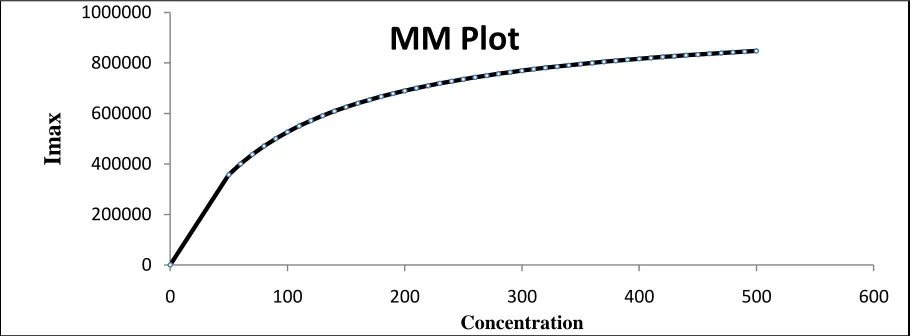
Calculation of Vmax: From the lineweaver-burk plot the Y intercept (c) was found to be 4*10-5.
Imax was thus calculated as 0.02A and Km was found to be 87.5mM.These values were used for
plotting the MichaelisMenten graph for the enzyme catalyzed reaction.
Discussions: Current approach describes a simple redox mechanism utilized to determine serum
cholesterol from blood samples with no loss of enzyme efficiency. The biosensor showed
optimum activity within 60 seconds at a pH of 6. Showed linearity with cholesterol concentration
between 2.78mM to 12.22mM and good accuracy.The resistance of the probes used were
negligible as the probes used are good conductor and so did not cause a significant alteration of
values. Though for better accuracy electrode system can be used.
Linearity: There was a linear relationship between current (μA) and cholesterol concentration
ranging from 2.78mM(50mg/dl) to 12.22mM(220mg/dl) in the reaction mixture, which is
comparable to earlier amperometric biosensors, using cholesterol oxidase, co-immobilized with
peroxidase on polyaniline film (1-12.9 mM)14, and was found higher than those immobilized on
carbon paste electrode modified with hydroxymethylferrocene and hydrogen peroxide (0.15
mM)16, pencil graphite rod (1.29to 10.3 mM)6, epoxy resin medium (1 to 8 mM)13, electro
polymerized pyrrole (8 µM)18.
Accuracy: In order to determine the accuracy of the biosensor, the values of cholesterol in serum
were determined by commercial enzymatic colorimetric method and compared with those
obtained by present methods. The values obtained by these two methods matched with each
other and showed a good correlation (r= 0.96) with the following regression equation: Y(
0.0035x + 4E-05). The values obtained by both the methods were also in agreement with the
earlier study with epoxy resin bicomposite membrane (r=0.99)1, cellulose acetate membrane
References:
1. Arora J,SNandwani ,M Bhambi ,CSPundir. Fabrication of dissolved O2metric uric acid
biosensor using uricaseepoxy resinbiocomposite membrane. AnalChimActa2009; 647: 195-201.
2. Atmega8 datasheet,http://www.atmel.in/
3. Atmel 89C51 datasheet, http://www.atmel.in/
4. Hamid B, January 2012,Vol. 1, Issue 6, Design &Implementation of Smart House Control UsingLabVIEW, International Journal of Soft Computing and Engineering (IJSCE) ISSN: 2231-2307 pp. 98-106
5. Changzhi Z, L Wan, L Jiang, QWang, KJiao. Developed a highly sensitive and selective cholesterol biosensor based on direct electron transfer of hemoglobin. Anal Biochem2008; 383 : 25-30.
6. ChauhanN, J Narang,CS Pundir.Amperometricdeterminationof serum cholesterol with pencil graphite rod. Am J Anal Chem2010; 2 : 41-6.
7. Hooda V, CS Pundir. 2008. Preparation of Pt based amperometric cholesterol biosensor using cellulose acetate membrane. J ScientIndust Res; 67 : 299-306.
8. KumariL, S. Kanwar . 2012.Cholesterol Oxidase and Its ApplicationsAdvances in Microbiology. 2: 49-65.
9. LM747 datasheet http://www.futurlec.com/
10. Lowry OH,NJRosenbrough, AL Farr , RJ Randall . Protein .measurement with thefolinphenol reagent.J BiolChem1951; 193: 265-75.
11. Op-07 datasheet, http://web.mit.edu/
12.PIC16F877A datasheet, http://www.microchip.com/
13.Pundir C.S. , J.Narang, N.Chauhan, P.Sharma, R. Sharma, 2012. Anamperometric cholesterolbiosensor based on epoxy resin membrane bound cholesterol oxidase. Indian J Med Res. 6: 633-640.
14.Sean B,NSDyer,G Anthony.2001Amperometricdetermination of cholesterol in serum using a biosensor of cholesterol oxidase contained within a polypyrrole-hydrogel membrane. AnalChmActa; 448 : 27- 36.
15.Dr. William Rodes, “Synthesis and Characterization of Metal Complexes of Novel Schiff's Base
Ligands Derived from 4-Carboxy Hydrazide-5, 6-Diphenyl-3[2-H]Pyridazone”, Scholedge International Journal of Multidisciplinary & Allied Studies (Vol.1 Issue October 2014), Scholedge Publishing; www.scholedge.org
17.Song MJ,DHYun, Jin, NK Min, SHong. Comparison of effective working electrode area on planar and porous silicon substrates for cholesterol biosensor.Jap JAppPhy2006; 45 : 7197-202.
18.Ramya V., B.Palaniappan, May 2012, Vol. 3, No. 3, Embedded system for Hazardous Gas detection and Alerting, International Journal of Distributed and Parallel Systems (IJDPS), pp. 287-300.
19.Vidal JC,E Garcia, JR Castillo; 2002 Development of a platinized and ferrocene- mediated cholesterolamperometricbiosensor based on electropolymerizationof polypyrrolein a flow system.Anal Sci; 18 : 537-41.
GRAPHS
Graph 1: Lineweaver - Burk Plot y = 0.0035x + 4E-05
R² = 0.9678
0.00000000 0.00000200 0.00000400 0.00000600 0.00000800 0.00001000 0.00001200
0.0000 0.0050 0.0100 0.0150 0.0200 0.0250
1/V
Graph 2: Michealis – Menten Plot
[image:7.612.72.528.87.255.2]Figures
Figure 1: PIC16F877A microcontroller chip Aritra Chatterjee 0
200000 400000 600000 800000 1000000
0 100 200 300 400 500 600
Im
ax
Figure 2: LCD 16x2 Display Aritra Chatterjee
[image:8.612.209.392.451.533.2]Figure 5: Circuit Diagram Aritra Chatterjee