R E S E A R C H
Open Access
A cohort examination to establish reporting
of the remit and function of Trial Steering
Committees in randomised controlled trials
Elizabeth J. Conroy
1,2*, Barbara Arch
2, Nicola L. Harman
1,2, J. Athene Lane
3, Steff C. Lewis
4, John Norrie
4,
Matthew R. Sydes
5,6and Carrol Gamble
1,2Abstract
Background:The DAMOCLES project established a widely used Data Monitoring Committee (DMC) Charter for
randomised controlled trials (RCTs). Typically, within the UK, the DMC is advisory and recommends to another executive body; the Trial Steering Committee (TSC). Despite the executive role of the TSC, the CONSORT Statement does not explicitly require reporting of TSC activity, although is included as an example of good reporting. A lack of guidance on TSC reporting can impact transparency of trial oversight, ultimately leading to a misunderstanding regarding role and, subsequently, further variation in practice. This review aimed to establish reporting practice of TSC involvement in RCTs, and thus make recommendations for reporting.
Methods:A cohort examination identifying reporting practice was undertaken. The cohort comprised RCTs
published in three leading medical journals (theBritish Medical Journal,The Lancetand theNew England Journal of Medicine) within 6 months in 2012 and the full NIHRHTA Monographseries. Details of TSC constitution and impact were extracted from main publications and published supplements.
Results:Of 415 publications, 264 were eligible. These were typical in terms of trial design. Variations in reporting between journals and monographs was notable. TSC presence was identified in approximately half of trials (n= 144), of which 109 worked alongside a DMC. No publications justified not convening a TSC. When reported, the role of the committee and examples of impact in design, conduct and analysis were summarised.
Conclusions: We present the first review of reporting TSC activity in the published academic literature. An
absence of reporting standards with regards to TSC constitution, activity and impact on trial conduct was identified which can influence transparency of reporting trial oversight. Consistent reporting is vital for the benefits and impact of the TSC role to be understood to support adoption of this oversight structure and reduce global variations in practice.
Keywords: Trials, Oversight committee, Trial Steering Committee, Executive Committee, Clinical Trial, Data
Monitoring Committee, Randomised controlled trial
* Correspondence:[email protected]
1
MRC North West Hub for Trials Methodology Research, Department of Biostatistics, University of Liverpool, Block F Waterhouse Building, 1-5 Brownlow Street, Liverpool L69 3GL, UK
2Clinical Trials Research Centre, University of Liverpool, Liverpool, UK
Full list of author information is available at the end of the article
Background
The DAMOCLES project [1] established a Data Monitoring Committee Charter [2] which has been widely used for randomised controlled trials since 2005. As established within DAMOCLES, the Data Monitoring Committee (DMC) is typically advisory and makes recommendations to another executive body; considered the Trial Steering Committee (TSC). Currently however, no evidence-based Charter exists for TSCs to establish their role and function-ality in RCTs.
The MRC Guidelines for Good Clinical Practice (1998) defined a three-committee oversight structure: the day-to-day Trial Management Group, the DMC and the executive TSC [3]. This document provided guidance and a suggested terms of reference for TSCs which has been widely adopted within the UK [4]. However, a need for redevelopment and expansion of these guidelines has been identified [4, 5]. This may have led to these guidelines recently being withdrawn, and subsequently revised, with limited changes mainly concerning responsibilities to funder. The need for the development of expanded universal guidelines re-mains [3, 6].
Both DAMOCLES [1] and the Consolidated Standards of Reporting Trials (CONSORT) Statement [7], an evidence-based minimum set of recommendations for reporting randomised trials, recommend that trial reports should include information about interim ana-lyses and the data monitoring process. The purpose of CONSORT is to facilitate the complete and transparent reporting of trials and, as such, has been widely adopted by journals to aid critical appraisal and interpretation. However, there is an absence of content focussing on the clinical trial oversight structure and responsibilities for decision-making. While reporting of DMC activity is included within CONSORT as part of reporting interim analyses, and DAMOCLES suggests reporting DMC membership, the reporting of TSC activities is not covered.
The objective of this cohort examination was to estab-lish current practice of reporting of TSC involvement in RCTs, to recommend reporting standards for TSC activ-ity and to identify impact on trial conduct.
Methods
Search strategy
EJC searched publications within a 6-month period (1 July 2012 to 31 December 2012) from four sources. Three top general medical journals (the British Medical Journal(BMJ),The Lancet(Lancet) and theNew England Journal of Medicine (NEJM)) and within the full UK National Institute for Health Research Health Technology Assessment (NIHR HTA) Monograph series. Journals were selected that are known for endorsing high standards
of reporting when publishing RCTs. The NIHR HTA Monograph series (HTA), a peer-reviewed, open-access journal that publishes full details of a single study funded by the NIHR HTA funding stream. NIHR HTA is a major UK funding body which supports policy-makers such as the National Institute for Health and Care Excellence, the National Screening Committee and the Department of Health [8]. The full NIHR HTA Monograph series was searched as opposed to those published within the set timeframe because this series has a suggested word count of 50,000 and so enables more details of the work to be included when compared to a typical peer-reviewed journal and so were considered more likely to provide a comprehensive description of TSC remit and function. Therefore, when summarising examples of reporting, results from journals and monographs are reported separately.
Published RCTs were identified by searching of titles, abstracts and keywords of primary research papers published within the timeframe using the search term
random*. When eligibility was unclear a second reviewer (CG) was consulted.
Inclusion criteria
We included all RCTs publishing main trial results. Articles presenting results of: secondary analyses; pre-liminary analyses; and additional reports of published RCTs; for example, results of long-term follow-up, were excluded.
Data extraction and analysis
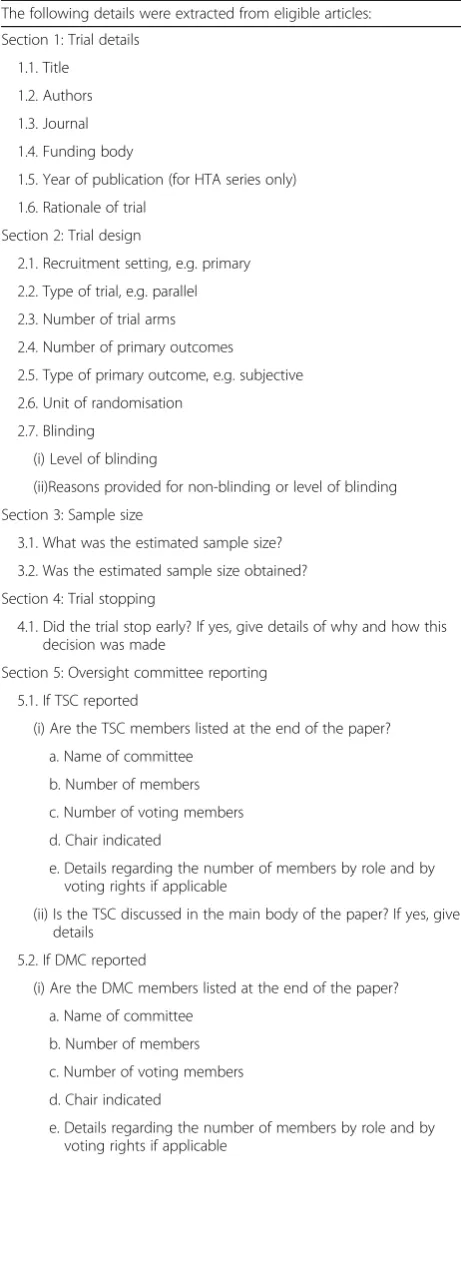
A Data Extraction Form was designed and piloted by EJC and CG. Data was extracted from all published materials (main trial report and supplementary material when applicable). EJC extracted data on trial design, trial stopping and oversight committee reporting (see Table 1) and entered into an MS Access database. BA independ-ently extracted data from a random 10%, stratified by TSC reporting and source.
Quantitative items were analysed using descriptive statistics. Standard statistical software was used throughout (Statistical Analysis Software (SAS 9.1.3; SAS Institute Inc., Cary, NC, USA)). Text extracts from articles were examined using NVivo qualitative data analysis software (QSR Inter-national Pty Ltd. Version 10, 2012). EJC and CG identified themes within text items which were used to contextualise and illuminate quantitative results. Extracts are denoted by
Results
Eligible cohort and demographics
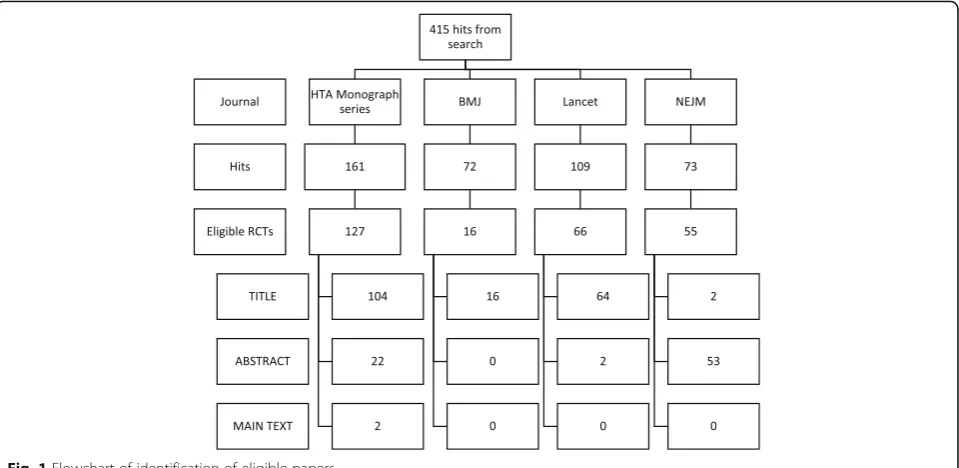
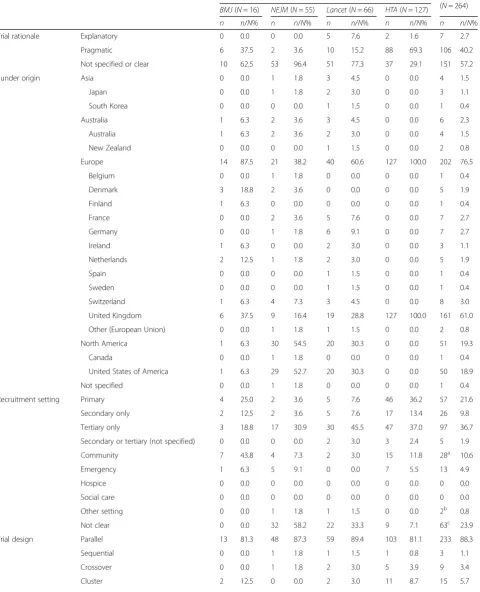
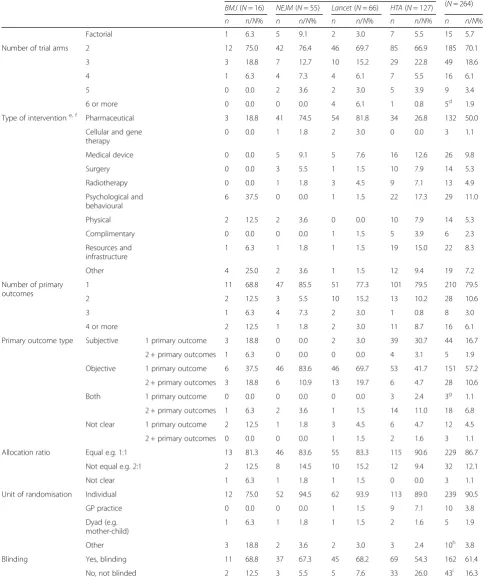
Journals were searched in May 2013. The search returned 415 hits, of which 264 (63.6%) were eligible (127HTA; 16 BMJ; 66 Lancet; 55 NEJM). Figure 1 pro-vides further details. Trial funders were geographically distributed with the majority being of UK (n= 161, 61.0%) or USA (n= 50, 18.9%) origin. Typically trials were parallel (n= 233, 88.3%), two-armed, (n= 185, 70.1%) with a pharmaceutical intervention (n= 132, 50.0%) and blinded (n= 162, 61.4%). Patients were indi-vidually randomised (n= 237, 90.5%) within the second-ary and/or tertisecond-ary setting (n= 128, 48.5%). Other design features and characteristics, overall and split by source, are summarised in Table 2.
Variations in published material
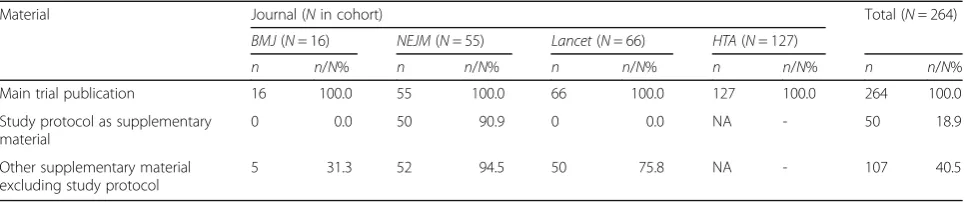
Due to variations in publishing requirements, differences were anticipated between monographs and journals. However, there were clear differences between sources, Key journals were restricted by word count though sup-plements were often published. While all three journals encouraged protocol and supplementary appendices, this appeared to be endorsed by theNEJMonly. Further de-tails are provided in Table 3.
Trial oversight committees
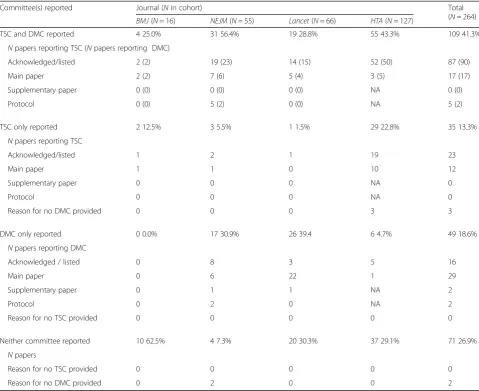
Table 4 describes level of TSC and DMC reporting split by publication source.
Publications reporting neither a TSC nor DMC (71/264, 26.9%) varied by source from 7% (NEJM, 4/55) to 63% (BMJ, 10/16). OnlyNEJMand HTA publications justified no DMC. NEJM publications justifying no DMC (n= 2) gave reason in the published protocol as a supplement stating that the DMC was not applicable (NEJM16) and:
‘A data monitoring committee for efficacy is not required for this study. Data safety monitoring will be conducted on an ongoing basis as detailed in the Safety Review Plan’. (NEJM44)
[image:3.595.56.287.99.732.2] [image:3.595.306.536.99.155.2]HTA publications justifying not having a DMC (n= 3) gave reasons: the trial examined routine therapies (HTA67); no interim analyses were planned (HTA83)
Table 1Data Extraction Form
The following details were extracted from eligible articles:
Section 1: Trial details
1.1. Title
1.2. Authors
1.3. Journal
1.4. Funding body
1.5. Year of publication (for HTA series only)
1.6. Rationale of trial
Section 2: Trial design
2.1. Recruitment setting, e.g. primary
2.2. Type of trial, e.g. parallel
2.3. Number of trial arms
2.4. Number of primary outcomes
2.5. Type of primary outcome, e.g. subjective
2.6. Unit of randomisation
2.7. Blinding
(i) Level of blinding
(ii)Reasons provided for non-blinding or level of blinding
Section 3: Sample size
3.1. What was the estimated sample size?
3.2. Was the estimated sample size obtained?
Section 4: Trial stopping
4.1. Did the trial stop early? If yes, give details of why and how this decision was made
Section 5: Oversight committee reporting
5.1. If TSC reported
(i) Are the TSC members listed at the end of the paper?
a. Name of committee
b. Number of members
c. Number of voting members
d. Chair indicated
e. Details regarding the number of members by role and by voting rights if applicable
(ii) Is the TSC discussed in the main body of the paper? If yes, give details
5.2. If DMC reported
(i) Are the DMC members listed at the end of the paper?
a. Name of committee
b. Number of members
c. Number of voting members
d. Chair indicated
e. Details regarding the number of members by role and by voting rights if applicable
Table 1Data Extraction Form(Continued)
The following details were extracted from eligible articles:
(ii) Is the DMC discussed in the main body of the paper? If yes, give details
5.3. If applicable, has the absence of committees been justified? If yes, give details
and the trial did not involve a medicinal product (HTA109).
Of the 120 trials not explicitly reporting use of a TSC, none justified its absence.
Aside from trials with cellular or gene therapy inter-ventions of which there were few, TSCs were consist-ently reported regardless of intervention type, from 48% of psychological or behavioural intervention trials (14/ 29) to 79% physical intervention trials (11/14). DMCs were reported less frequently, from 23% in resources and infrastructure trials (5/22) to 73% in pharmaceutical intervention trials (97/132) or medical device trials (19/ 26). Trials with neither committee most commonly in-volved a complimentary intervention (3/6, 50%) or psy-chological and behavioural (13/29, 45%). Further details are provided in Tables 5 and 6.
Trial steering committees
Name
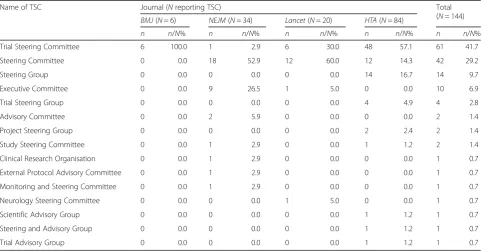
Trial Steering Committee was the most common TSC name (61/144, 42%). Other variants were Steering Committee (42/144, 29%); Steering Group (14/144, 10%) and Executive Committee (10/144, 7%). Table 7 shows other variations.
Membership
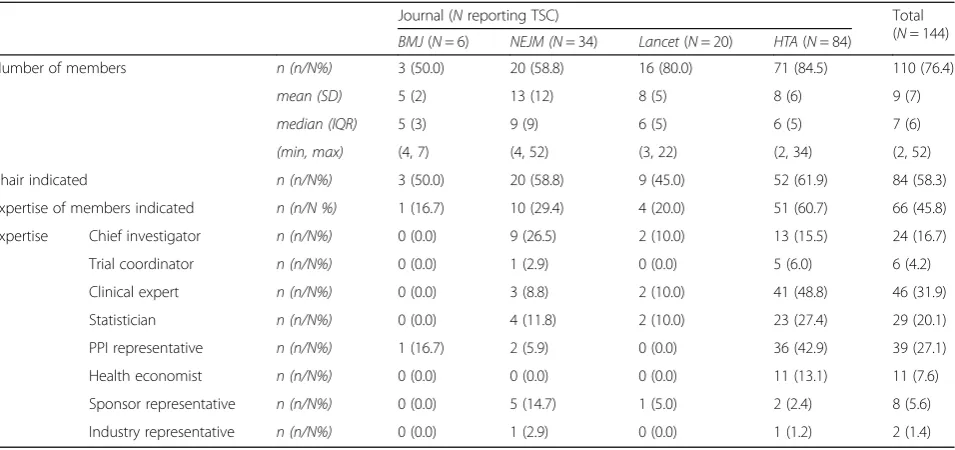
Four fifths indicated the number of committee members, varying from half (BMJ, 3/6) to 85% (HTA, 71/84). The number of members ranged from 2 to 52 with a median of 7. Details are provided in Table 8.
One hundred and ten publications listed members of which 84 specified a Chair. Other roles or fields of
expertise were detailed in almost half of trials with a TSC (66/144). Common representation were clinical (n= 46), statistical (n= 29) and patient and/or public (PPI) (n= 39).
Reporting was unclear with regards to membership and independence.
Journal manuscripts One publication specified that the funder (NIHR) appointed the TSC, stating that members were ‘researchers independent of the study funders, al-though several have served on their advisory or funding committees’. (BMJ12)
One publication indicated voting members when list-ing members (Lancet25).
TenNEJM publications gave details of TSC member-ship beyond listing members and affiliations. Half of these described sponsor representation, with one speci-fying this representation as none voting (NEJM20).
All 32 (9 Lancet, 23 NEJM) supplements reporting TSCs listed members and/or affiliations.
Thirteen NEJM protocols discussed committee membership. Protocol reporting consisted listing members by role and/or field of expertise (n= 10) or by name (n= 6), of which three reported both.
Monographs Forty-six gave details of TSC membership beyond listing members and affiliations.
Independence was discussed in 32 publications (32/ 46, 69.6%), of which 30 specified an independent Chair. Two reported funder input in selecting the Chair.
[image:4.595.59.539.88.322.2]Table 2Trial demographics by journal
Journal (Nin cohort) Total
(N= 264)
BMJ(N= 16) NEJM(N= 55) Lancet(N= 66) HTA(N= 127)
n n/N% n n/N% n n/N% n n/N% n n/N%
Trial rationale Explanatory 0 0.0 0 0.0 5 7.6 2 1.6 7 2.7
Pragmatic 6 37.5 2 3.6 10 15.2 88 69.3 106 40.2
Not specified or clear 10 62.5 53 96.4 51 77.3 37 29.1 151 57.2
Funder origin Asia 0 0.0 1 1.8 3 4.5 0 0.0 4 1.5
Japan 0 0.0 1 1.8 2 3.0 0 0.0 3 1.1
South Korea 0 0.0 0 0.0 1 1.5 0 0.0 1 0.4
Australia 1 6.3 2 3.6 3 4.5 0 0.0 6 2.3
Australia 1 6.3 2 3.6 2 3.0 0 0.0 4 1.5
New Zealand 0 0.0 0 0.0 1 1.5 0 0.0 2 0.8
Europe 14 87.5 21 38.2 40 60.6 127 100.0 202 76.5
Belgium 0 0.0 1 1.8 0 0.0 0 0.0 1 0.4
Denmark 3 18.8 2 3.6 0 0.0 0 0.0 5 1.9
Finland 1 6.3 0 0.0 0 0.0 0 0.0 1 0.4
France 0 0.0 2 3.6 5 7.6 0 0.0 7 2.7
Germany 0 0.0 1 1.8 6 9.1 0 0.0 7 2.7
Ireland 1 6.3 0 0.0 2 3.0 0 0.0 3 1.1
Netherlands 2 12.5 1 1.8 2 3.0 0 0.0 5 1.9
Spain 0 0.0 0 0.0 1 1.5 0 0.0 1 0.4
Sweden 0 0.0 0 0.0 1 1.5 0 0.0 1 0.4
Switzerland 1 6.3 4 7.3 3 4.5 0 0.0 8 3.0
United Kingdom 6 37.5 9 16.4 19 28.8 127 100.0 161 61.0
Other (European Union) 0 0.0 1 1.8 1 1.5 0 0.0 2 0.8
North America 1 6.3 30 54.5 20 30.3 0 0.0 51 19.3
Canada 0 0.0 1 1.8 0 0.0 0 0.0 1 0.4
United States of America 1 6.3 29 52.7 20 30.3 0 0.0 50 18.9
Not specified 0 0.0 1 1.8 0 0.0 0 0.0 1 0.4
Recruitment setting Primary 4 25.0 2 3.6 5 7.6 46 36.2 57 21.6
Secondary only 2 12.5 2 3.6 5 7.6 17 13.4 26 9.8
Tertiary only 3 18.8 17 30.9 30 45.5 47 37.0 97 36.7
Secondary or tertiary (not specified) 0 0.0 0 0.0 2 3.0 3 2.4 5 1.9
Community 7 43.8 4 7.3 2 3.0 15 11.8 28a 10.6
Emergency 1 6.3 5 9.1 0 0.0 7 5.5 13 4.9
Hospice 0 0.0 0 0.0 0 0.0 0 0.0 0 0.0
Social care 0 0.0 0 0.0 0 0.0 0 0.0 0 0.0
Other setting 0 0.0 1 1.8 1 1.5 0 0.0 2b 0.8
Not clear 0 0.0 32 58.2 22 33.3 9 7.1 63c 23.9
Trial design Parallel 13 81.3 48 87.3 59 89.4 103 81.1 233 88.3
Sequential 0 0.0 1 1.8 1 1.5 1 0.8 3 1.1
Crossover 0 0.0 1 1.8 2 3.0 5 3.9 9 3.4
Table 2Trial demographics by journal(Continued)
Journal (Nin cohort) Total
(N= 264)
BMJ(N= 16) NEJM(N= 55) Lancet(N= 66) HTA(N= 127)
n n/N% n n/N% n n/N% n n/N% n n/N%
Factorial 1 6.3 5 9.1 2 3.0 7 5.5 15 5.7
Number of trial arms 2 12 75.0 42 76.4 46 69.7 85 66.9 185 70.1
3 3 18.8 7 12.7 10 15.2 29 22.8 49 18.6
4 1 6.3 4 7.3 4 6.1 7 5.5 16 6.1
5 0 0.0 2 3.6 2 3.0 5 3.9 9 3.4
6 or more 0 0.0 0 0.0 4 6.1 1 0.8 5d 1.9
Type of interventione, f Pharmaceutical 3 18.8 41 74.5 54 81.8 34 26.8 132 50.0
Cellular and gene therapy
0 0.0 1 1.8 2 3.0 0 0.0 3 1.1
Medical device 0 0.0 5 9.1 5 7.6 16 12.6 26 9.8
Surgery 0 0.0 3 5.5 1 1.5 10 7.9 14 5.3
Radiotherapy 0 0.0 1 1.8 3 4.5 9 7.1 13 4.9
Psychological and behavioural
6 37.5 0 0.0 1 1.5 22 17.3 29 11.0
Physical 2 12.5 2 3.6 0 0.0 10 7.9 14 5.3
Complimentary 0 0.0 0 0.0 1 1.5 5 3.9 6 2.3
Resources and infrastructure
1 6.3 1 1.8 1 1.5 19 15.0 22 8.3
Other 4 25.0 2 3.6 1 1.5 12 9.4 19 7.2
Number of primary outcomes
1 11 68.8 47 85.5 51 77.3 101 79.5 210 79.5
2 2 12.5 3 5.5 10 15.2 13 10.2 28 10.6
3 1 6.3 4 7.3 2 3.0 1 0.8 8 3.0
4 or more 2 12.5 1 1.8 2 3.0 11 8.7 16 6.1
Primary outcome type Subjective 1 primary outcome 3 18.8 0 0.0 2 3.0 39 30.7 44 16.7
2 + primary outcomes 1 6.3 0 0.0 0 0.0 4 3.1 5 1.9
Objective 1 primary outcome 6 37.5 46 83.6 46 69.7 53 41.7 151 57.2
2 + primary outcomes 3 18.8 6 10.9 13 19.7 6 4.7 28 10.6
Both 1 primary outcome 0 0.0 0 0.0 0 0.0 3 2.4 3g
1.1
2 + primary outcomes 1 6.3 2 3.6 1 1.5 14 11.0 18 6.8
Not clear 1 primary outcome 2 12.5 1 1.8 3 4.5 6 4.7 12 4.5
2 + primary outcomes 0 0.0 0 0.0 1 1.5 2 1.6 3 1.1
Allocation ratio Equal e.g. 1:1 13 81.3 46 83.6 55 83.3 115 90.6 229 86.7
Not equal e.g. 2:1 2 12.5 8 14.5 10 15.2 12 9.4 32 12.1
Not clear 1 6.3 1 1.8 1 1.5 0 0.0 3 1.1
Unit of randomisation Individual 12 75.0 52 94.5 62 93.9 113 89.0 239 90.5
GP practice 0 0.0 0 0.0 1 1.5 9 7.1 10 3.8
Dyad (e.g. mother-child)
1 6.3 1 1.8 1 1.5 2 1.6 5 1.9
Other 3 18.8 2 3.6 2 3.0 3 2.4 10h 3.8
Blinding Yes, blinding 11 68.8 37 67.3 45 68.2 69 54.3 162 61.4
economics (n= 1). Including the Chair, the number of independents, discussed in 25 publications, ranged from two to six (most commonly three, n= 17). Non-independent members, discussed in three publications, specified statistical (n= 3) and health economics (n= 2) representation.
Thirty-one listed members without specifying inde-pendence. Represented fields were Patient and Public Involvement (PPI) (n= 21), clinical (n= 12), statistical (n= 9), health economics (n= 3) and funder (n= 2). Three allowed observers at meetings.
Meetings
Journal manuscripts One publication discussed meeting frequency (bimonthly meetings (BMJ15)). One stated
yearly reports were circulated (Lancet3) possibly indicating yearly meetings.
Seven supplementary protocols provided TSC meeting information. Four gave the frequency of these, ranging from monthly to annually. Two were unclear stating meet-ings were held periodically. Others reported that meetmeet-ings held by teleconference (n= 2) and gave insight to report contents (n= 1).
[image:7.595.54.540.99.199.2]Monographs Twenty-five publications (25/144) dis-cussed meeting frequency or timing. Timings, when specified, were biyearly (n = 12); yearly (n = 7); quar-terly (n = 2) and as required (n = 1). Three gave meeting dates and another three gave the total num-ber of meetings. One specified the length of TSC meetings as 80–100 min. Four indicated timing of Table 2Trial demographics by journal(Continued)
Journal (Nin cohort) Total
(N= 264)
BMJ(N= 16) NEJM(N= 55) Lancet(N= 66) HTA(N= 127)
n n/N% n n/N% n n/N% n n/N% n n/N% Justification
provided
Justification not provided
1 6.3 9 16.4 15 22.7 10 7.9 35 13.3
Not clear 2 12.5 6 10.9 1 1.5 15 11.8 24 9.1
BMJBritish Medical Journal,HTAHealth Technology Assessment Monograph series, NEJMNew England Journal of Medicine a
Advertisements in newsletters (n= 1); Child and Adolescent Mental Health Services (n= 1); Community mental health teams (n= 1); Community nurse services (n= 1); Community nursing services and community leg ulcers clinics (n= 1); Community old age psychiatry services (n= 1); Community sources (n= 1); Department of Veterans Affairs (n= 3); National population registrar (n= 1); Community paediatricians (n= 1); Registrar (n= 3); Schools (n= 1); Secondary schools (n= 1); University podiatry schools and podiatry clinics (n= 1); Vaccination centres in schools (n= 1); Villages (n= 1); Not specified (n= 8)
b
Other setting: Veterans Affairs Medical Centre (n= 1); From other trials (n= 1) c
Not clear: Adult mental health setting (n= 1); Antenatal clinic (n= 1); Centres (n= 29); Child and Adolescent Mental Health Services (n= 1); Child Development Centre (n= 1); Clinic site (n= 1); Clinical centres (n= 1); Clinical sites (n= 1), Clinics (n= 2); Countries (n= 2); European medical centres (n= 1); Institutes (n= 1); Institutions (n= 1); Sites (n= 13); Not described (n= 7)
d
Total arms equal to: six (n= 2); eight (n= 1); nine (n= 1); twelve (n= 1) e
Defined by UK Clinical Research Collaboration Health Research Classification System f
Categories not mutually exclusive g
Both: Composite (n= 3) (Disease improvement calculated from CHAQ, physician’global assessment of disease activity, parents’global assessment of overall well-being, number of joints with limited range of movement (ROM), number of active joints and erythrocyte sedimentation rate (n= 1)); Foot and Ankle Outcome Score (n= 1); Post-operative nausea and vomiting (n= 1)
h
Other units of randomisation: Clinic (n= 1); Family (n= 2); Hospital (n= 1); Household (n= 1); Partner (n= 1); School (n= 1); Village (n= 1); Year group (n= 1); Paediatric diabetes services (n= 1)
i
Justification for no blinding: Not possible or practical due to nature of intervention or trial design (n= 30); Not possible/practical as in practice caused difficulties for patients (n= 1); Not possible/practical as shown by other similar trials (n= 2); Not possible/practical so cluster randomisation approach used (n= 1); Not possible–no additional justification given (n= 4); Attempted to blind although were not successful (n= 1); Large sample size means that results are not compromise (n= 1); Not blinding reflects real practice (n= 2); Test for impact of not blinding post trial (n= 1)
Table 3Material reviewed by type and journal
Material Journal (Nin cohort) Total (N= 264)
BMJ(N= 16) NEJM(N= 55) Lancet(N= 66) HTA(N= 127)
n n/N% n n/N% n n/N% n n/N% n n/N%
Main trial publication 16 100.0 55 100.0 66 100.0 127 100.0 264 100.0
Study protocol as supplementary material
0 0.0 50 90.9 0 0.0 NA - 50 18.9
Other supplementary material excluding study protocol
5 31.3 52 94.5 50 75.8 NA - 107 40.5
[image:7.595.57.540.623.724.2]Table 4Level of Trial Steering Committee (TSC) and Data Management Committee (DMC) reporting split by journal
Committee(s) reported Journal (Nin cohort) Total
(N= 264)
BMJ(N= 16) NEJM(N= 55) Lancet(N= 66) HTA(N= 127)
TSC and DMC reported 4 25.0% 31 56.4% 19 28.8% 55 43.3% 109 41.3%
Npapers reporting TSC (Npapers reporting DMC)
Acknowledged/listed 2 (2) 19 (23) 14 (15) 52 (50) 87 (90)
Main paper 2 (2) 7 (6) 5 (4) 3 (5) 17 (17)
Supplementary paper 0 (0) 0 (0) 0 (0) NA 0 (0)
Protocol 0 (0) 5 (2) 0 (0) NA 5 (2)
TSC only reported 2 12.5% 3 5.5% 1 1.5% 29 22.8% 35 13.3%
Npapers reporting TSC
Acknowledged/listed 1 2 1 19 23
Main paper 1 1 0 10 12
Supplementary paper 0 0 0 NA 0
Protocol 0 0 0 NA 0
Reason for no DMC provided 0 0 0 3 3
DMC only reported 0 0.0% 17 30.9% 26 39.4 6 4.7% 49 18.6%
Npapers reporting DMC
Acknowledged / listed 0 8 3 5 16
Main paper 0 6 22 1 29
Supplementary paper 0 1 1 NA 2
Protocol 0 2 0 NA 2
Reason for no TSC provided 0 0 0 0 0
Neither committee reported 10 62.5% 4 7.3% 20 30.3% 37 29.1% 71 26.9%
Npapers
Reason for no TSC provided 0 0 0 0 0
Reason for no DMC provided 0 2 0 0 2
BMJBritish Medical Journal,HTAHealth Technology Assessment Monograph series,NAnot applicable,NEJMNew England Journal of Medicine
Table 5Oversight committee split by intervention type
Intervention type TSC reported DMC reported
Yes No Yes No
N n n/N% n n/N% n n/N% n n/N%
Pharmaceutical 132 68 51.5% 64 48.5% 97 73.5% 35 26.5%
Cellular and gene therapy 3 0 0.0% 3 100.0% 2 66.7% 1 33.3%
Medical device 26 17 65.4% 9 34.6% 19 73.1% 7 26.9%
Surgery 14 9 64.3% 5 35.7% 9 64.3% 5 35.7%
Radiotherapy 13 7 53.8% 6 46.2% 5 38.5% 8 61.5%
Psychological and behavioural 29 14 48.3% 15 51.7% 11 37.9% 18 62.1%
Physical 14 11 78.6% 3 21.4% 8 57.1% 6 42.9%
Complimentary 6 3 50.0% 3 50.0% 2 33.3% 4 66.7%
Resources and infrastructure 22 13 59.1% 9 40.9% 5 22.7% 17 77.3%
Other 19 13 68.4% 6 31.6% 7 36.8% 12 63.2%
[image:8.595.58.543.543.724.2]first meeting as prior to (n = 2) or at (n = 1) trial commencement and before recruitment (n = 1)
Role
Journal manuscriptsElevenLancetand 17NEJM publi-cations indicated role or responsibility. No BMJarticles discussed role. One supplementary appendix reporting TSCs (1/23NEJM) gave insight into TSC role.
Design and oversight
Four Lancet publications reported involvement in trial design, specifically the committee designing the study with
sponsor (2/4), under surveillance of the DMC (1/4), or supervising the design (1/4). ElevenNEJMpublications re-ported involvement in design, wherein the role encom-passed overseeing (2/11), being responsible for (3/11) and/ or involvement in (7/11) trial design, with one specifying that this was independent of the sponsor.
[image:9.595.59.540.102.278.2]Three Lancet publications reported the TSC over-see the trial, of which one stated that the TSC su-pervised operations. Of the nine NEJM publications discussing oversight and conduct, five stated that the TSC oversees the trial (5/9), of which two required that they oversee conduct specifically (2/9). A
Table 6Oversight committee split by intervention type
Intervention type Committee(s) reported
TSC and DMC TSC and no DMC DMC and no TSC No TSC and no DMC
N n n/N% n n/N% n n/N% n n/N%
Pharmaceutical 132 60 45.5% 8 6.1% 37 28.0% 27 20.5%
Cellular and gene therapy 3 0 0.0% 0 0.0% 2 66.7% 1 33.3%
Medical device 26 16 61.5% 1 3.8% 3 11.5% 6 23.1%
Surgery 14 6 42.9% 3 21.4% 3 21.4% 2 14.3%
Radiotherapy 13 4 30.8% 3 23.1% 1 7.7% 5 38.5%
Psychological and behavioural 29 9 31.0% 5 17.2% 2 6.9% 13 44.8%
Physical 14 7 50.0% 4 28.6% 1 7.1% 2 14.3%
Complimentary 6 2 33.3% 1 16.7% 0 0.0% 3 50.0%
Resources and infrastructure 22 4 18.2% 9 40.9% 1 4.5% 8 36.4%
Other 19 7 36.8% 6 31.6% 0 0.0% 6 31.6%
DMCData Management Committee,TSCTrial Steering Committee
Table 7TSC name split by journal
Name of TSC Journal (Nreporting TSC) Total
(N= 144)
BMJ(N= 6) NEJM(N= 34) Lancet(N= 20) HTA(N= 84)
n n/N% n n/N% n n/N% n n/N% n n/N%
Trial Steering Committee 6 100.0 1 2.9 6 30.0 48 57.1 61 41.7
Steering Committee 0 0.0 18 52.9 12 60.0 12 14.3 42 29.2
Steering Group 0 0.0 0 0.0 0 0.0 14 16.7 14 9.7
Executive Committee 0 0.0 9 26.5 1 5.0 0 0.0 10 6.9
Trial Steering Group 0 0.0 0 0.0 0 0.0 4 4.9 4 2.8
Advisory Committee 0 0.0 2 5.9 0 0.0 0 0.0 2 1.4
Project Steering Group 0 0.0 0 0.0 0 0.0 2 2.4 2 1.4
Study Steering Committee 0 0.0 1 2.9 0 0.0 1 1.2 2 1.4
Clinical Research Organisation 0 0.0 1 2.9 0 0.0 0 0.0 1 0.7
External Protocol Advisory Committee 0 0.0 1 2.9 0 0.0 0 0.0 1 0.7
Monitoring and Steering Committee 0 0.0 1 2.9 0 0.0 0 0.0 1 0.7
Neurology Steering Committee 0 0.0 0 0.0 1 5.0 0 0.0 1 0.7
Scientific Advisory Group 0 0.0 0 0.0 0 0.0 1 1.2 1 0.7
Steering and Advisory Group 0 0.0 0 0.0 0 0.0 1 1.2 1 0.7
Trial Advisory Group 0 0.0 0 0.0 0 0.0 1 1.2 1 0.7
[image:9.595.57.540.473.724.2]further four stated that the TSC was responsible for study conduct (4/9).
One supplementary appendix reporting TSCs (1/32, 1/9
Lancet) indicated operational oversight role, specifically:
‘The Steering Committee was responsible for
overseeing the scientific and operational aspect of the study’. (Lancet49)
Thirteen protocols discussed a role in oversight and trial design: the role encompassed monitoring (n= 5) and oversight of various aspects of the study (n= 5). The TSC had a responsibility or participated in trial conduct (n= 8) and design (n= 5). One stated that the TSC was independent.
Decision-making
Two Lancet publications reported a decision-making role, stating that the TSC could decide on study continu-ation. While noNEJMmain papers reported the decision-making role, nine protocols did. Five explicitly defined the TSC as the decision-making body, the remaining four opted to provide examples of TSC decisions, such as alter-ing sample size (n= 2), patient withdrawals (n= 1) and trial stopping (n= 1).
Contribution to trial documentation, data and analysis
Seven Lancet publications involvement in trial docu-mentation, stating that the TSC wrote or contributed to the final report (3/7), made the decision to publish (2/7), or both (1/7). The TSC coordinated and resolved doubts in interpretation in the protocol in another. Analysis and data involvement was reported in five studies, three of
these stated the TSC had full access to data (3/5), one supervised the analysis (1/5) and three interpreted the results (one stating that this was done independently). Another stated:
‘The (TSC) vouched for the completion and accuracy of the data gathering and analysis’. (Lancet6)
SevenNEJMpublications reported TSC involvement in trial documentation, in contributing to writing the manu-script (4/7) and developing the protocol (3/7), of which one developed this with the sponsor. Four reported TSC involvement in trial data, specifically the TSC had full ac-cess to data (1/4) and was involved with data collection (1/4); interpretation (1/4) and analysis (1/4). In seven, the committee made the decision to publish, one stated that the TSC vouches for integrity and completeness of the data and six stated:
‘The (TSC) vouches for the accuracy and
completeness of the data and the analysis and the fidelity of the study to the protocol’.
One supplementary appendix reporting TSCs (1/32, 1/23 NEJM) gave insight into role. Fifteen protocols discussed TSC input into trial documentation, data and analysis. The TSC was reported to have an input in publications (n= 13), the protocol (n= 7) and side studies (n= 4).
Communication
[image:10.595.61.539.98.323.2]No publications specified communication between TSC and other committees.
Table 8Membership details provided split by journal
Journal (Nreporting TSC) Total
(N= 144)
BMJ(N= 6) NEJM (N= 34) Lancet(N= 20) HTA(N= 84)
Number of members n (n/N%) 3 (50.0) 20 (58.8) 16 (80.0) 71 (84.5) 110 (76.4)
mean (SD) 5 (2) 13 (12) 8 (5) 8 (6) 9 (7)
median (IQR) 5 (3) 9 (9) 6 (5) 6 (5) 7 (6)
(min, max) (4, 7) (4, 52) (3, 22) (2, 34) (2, 52)
Chair indicated n (n/N%) 3 (50.0) 20 (58.8) 9 (45.0) 52 (61.9) 84 (58.3)
Expertise of members indicated n (n/N %) 1 (16.7) 10 (29.4) 4 (20.0) 51 (60.7) 66 (45.8)
Expertise Chief investigator n (n/N%) 0 (0.0) 9 (26.5) 2 (10.0) 13 (15.5) 24 (16.7)
Trial coordinator n (n/N%) 0 (0.0) 1 (2.9) 0 (0.0) 5 (6.0) 6 (4.2)
Clinical expert n (n/N%) 0 (0.0) 3 (8.8) 2 (10.0) 41 (48.8) 46 (31.9)
Statistician n (n/N%) 0 (0.0) 4 (11.8) 2 (10.0) 23 (27.4) 29 (20.1)
PPI representative n (n/N%) 1 (16.7) 2 (5.9) 0 (0.0) 36 (42.9) 39 (27.1)
Health economist n (n/N%) 0 (0.0) 0 (0.0) 0 (0.0) 11 (13.1) 11 (7.6)
Sponsor representative n (n/N%) 0 (0.0) 5 (14.7) 1 (5.0) 2 (2.4) 8 (5.6)
Industry representative n (n/N%) 0 (0.0) 1 (2.9) 0 (0.0) 1 (1.2) 2 (1.4)
One appendix reporting TSCs (1/32) discussed com-munication, stating:
‘(the DMC) made recommendations to the Steering Committee regarding endpoint analysis or potential safety concerns’. (Lancet49)
Eight protocols discussed the TSC communicating with the DMC (n= 7) and a Critical Event Committee (n= 1).
MonographForty monographs described role. Design and oversight
Twenty-seven monographs described an oversight role, generally (11/27) or, more specifically, overseeing progress towards interim and overall objectives (8/27) or study pro-gress as a whole (8/27). Three stated independent over-sight and two that his was on behalf of the sponsor.
Generic definitions of TSC monitoring were provided in nine monographs. This was done in accordance with the MRC guidelines (n= 6), Good Clinical Practice (n= 1) and in two:
‘The (TSC) ensured that the rights, safety and well-being of the trial participants were the most important considerations and prevailed over the interests of science and society’.
Decision-making
Role in decision-making was reported in seven mono-graphs. Examples were about how the study is run (n= 2); premature closing (n= 5); and how pilot data will inform the main trial (n= 2).
Contribution to trial documentation, data and
analysis
Twelve had the TSC review trial specific documenta-tion. Specifically, the statistical analysis plan (n= 8) and protocol (n= 5).
Ten stated that the TSC review external information and five had authority over the publication strategy. One had the TSC approve further analysis and one approved additional studies.
Communication
The committee received recommendations from the DMC in six monographs, informed funders on trial pro-gress in three, advised funders in one and liaised be-tween the DMC and the Trial Management Group (TMG) in another. One stated that TSC responsibility in resolving disputes between PIs and another had the DMC as a subgroup of the TSC.
Activities
Journal manuscripts TSC activity having impact on trial design, conduct and analysis was reported in 12
publications (3 BMJ; 7 Lancet; 2 NEJM) with a total 14 examples reported (4BMJ; 8 Lancet; 2NEJM). No activ-ities were reported in supplementary protocols.
Design
Twelve (12/14; 3/4BMJ; 7/8 Lancet; 2/2 NEJM) publi-cations reported TSC activity impacting trial design. Reported activities varied within journal.
The BMJ reported TSC involvement changing the sample size (n= 2) and primary outcome (n= 1):
‘Before the start of recruitment and data collection, we changed the primary outcome to the reported quit attempt measure, which is predictive of eventual cessation. This followed expert advice from the Trial Steering Committee on the basis of smoking cessation research and approval from the Data Monitoring Committee’. (BMJ15)
All seven Lancet decisions regarded early stopping. In five, the TSC decided to stop recruitment, of which three reported that this decision was based on DMC recommendations. Others reported the TSC de-ciding to close recruitment to a trial arm (n= 1) and make the decision to continue recruitment following an interim analysis (n= 1):
‘Without revealing any results, the DSMB recommended to the Executive Committee and sponsor that the trial continue to the original pre-planned sample size. The basis for this recommendation was that, because of the rapid enrolment at the time of the interim analysis, there was insufficient 90-day data to assess the secondary endpoints, although there were no safety concerns. The Executive Committee and sponsor accepted the DSMB recommendation to continue enrolment, but remained masked to all study results’. (Lancet36)
Within the NEJM publications reporting TSC activity relating to trial design (n= 2), the committee established when patients could have their dose tapered (NEJM42) and when crossover could be permitted:
‘The independent Data and Safety Monitoring Committee and Study Steering Committee concluded that both progression-free survival and overall survival were significantly longer in the trametinib group than in the chemotherapy group and that immediate crossover to trametinib should be permitted’. (NEJM23)
safety data (NEJM38), this was consistent with the main publication wherein the trial was prematurely stopped. Conduct
No publication reporting TSC activity related to trial conduct.
Analysis
Two (2/14; 1/4BMJ; 1/8Lancet) publications reported TSC activity impacting analysis.
One described the TSC deciding to write a new SAP (BMJ3) Another reported the TSC determining exclu-sions from analysis and imputations for deaths or drop outs (Lancet10).
Monographs Thirty-seven monographs reported 60 ex-amples of TSC activity.
Design
Thirty-four examples of TSC activity impacting trial design was reported in 23 monographs.
Activities included the TSC changing the entry criteria (n= 7); endpoints or outcomes (n= 7); sample size (n= 2); and randomisation ratio (n= 1). Another reported the TSC closing a treatment arm (n= 1). Others reported TSC impact in defining the study design (n= 6) and re-cruitment period (n= 2).
Most significantly, the TSC made the decision to close the trial in five studies, as inHTA238:
‘In a meeting of the Trial Steering Committee, it was accepted that it would not be viable to proceed with the trial and the formal procedure for closure (including notification of MHRA and MREC) was initiated in May 2005’. (HTA75)
One monograph discussed the TSC overriding the rec-ommendations of the DMC to close the trial:
‘Although the DMC recommended continuation of recruitment into FOOD following their meeting in 2002, the Steering Committee took the decision to stop recruitment on 31 July 2003’. (HTA88)
Conduct
Fifteen examples of TSC activity impacting trial con-duct was given in 14 monographs.
Examples of conduct were where the TSC: had input in determining the data collection process (4/14); considered consent issues (1/14) and input into safety issues; for ex-ample, such as reviewing death data (1/14) and determin-ing serious adverse event (SAE) data requirements (3/14).
In three (3/14) the TSCs made the decision to chan-ging treatment regimens; for example:
‘The project Steering Group determined that (a prescription) was inappropriate to a pragmatic study
of this kind. It was agreed that the outcome would be more likely to represent the likely outcome of introducing TUVP if staff were to manage patients according to existing norms’. (HTA30)
Others (3/14) changed the recruitment procedure, for example:
‘On reflection and discussion of these issues, the research team and the Trial Steering Committee members felt that some of these issues could have been addressed (…). They concluded that many of the problems encountered were a direct consequence of the changes in research governance and ethical procedures that prevent members of the research team approaching patients directly, but instead place the burden of recruiting patients on busy primary care professionals’. (HTA75)
Analysis
Ten examples of TSC activity impacting analysis was given in ten monographs.
The TSC impacted the analysis plan in seven mono-graphs (7/10). Examples were: determining variables for regression model (2/7), defining equivalence limits (1/7), removing previously planned subgroup analyses (1/7), deciding on the analysis approach to be used, e.g. intention-to-treat (2/7) or suggesting additional analysis:
‘Finally, at the request of the TSC, a further
exploratory analysis to examine the interactive effect of age on the effectiveness of MRI compared with no MRI was conducted’. (HTA111)
Other activities were the TSC determining protocol vi-olations (1/10) and making the decision to unblind the trial team (2/10), for example:
‘The identification of treatments was established by code break in the presence of the Chief Investigator, Trial Statistician and Trial Coordinator on 20 March 2007 by agreement with the TSC and DMEC’. (HTA104)
Discussion
The extent of the adoption of a TSC, the committee with a majority of independent members to whom the DMC make their recommendations, for trial oversight outside of the UK is unknown. Within the UK the establishment of a TSC is required by a number of major public fun-ders yet, despite this, there is an absence of reporting standards regarding their constitution, activities and im-pact on trial conduct.
literature from within and outside the UK. Determining the role and contribution of this executive oversight committee was limited by a lack of reporting and, in par-ticular, clear indication of whether this committee in-cluded a majority of, or even any, independent members. It was often unclear whether the TSC being referenced was in fact the TSC or the TMG, the committee with heavy intellectual and practical investment in governing the day-to-day running of the trial. In trials where no major decisions need to be made, this may seem un-important. In trials where DMC recommendations are not actioned then it is of increasing importance to understand the extent of the vested interests of the committee considering those recommendations. In the cohort reported here one such example was noted where the DMC recommended trial continuation but the TSC decided to close the trial. Arguably, this may be more concerning if this was the other way around; however, poor reporting standards will obscure this occurrence (HTA88).
When interpreting these results, it is important to consider the limitations which include a restriction of the cohort to the top medical journals and the NIHR
HTA Monograph series. While this has the advantage publishing international trials, it may also be argued that these are of higher quality. The poor standards observed within this cohort, therefore, may be lower elsewhere. The timeframe of this cohort also prevented consider-ation of changes over time; however, given the absence of attention received to this important role and its reporting standards this is unlikely. As previously discussed, the extent of the adoption of this oversight committee structure is not known for trials outside of UK and little is known about industry-funded and spon-sored trials.
For TSCs to be accepted as good practice globally, it is important that the benefits and impact of such a com-mittee are reported. This paper has highlighted the need to improve reporting of TSCs and, in particular, clarify the independence, or otherwise, of its members. Despite the academic literature search being conducted in 2012 there has been no advancement in reporting guidelines in this area and the situation remains unchanged. Current reporting recommendations for DMCs [1, 2] could be used as a starting point with focus on decisions made by the TSC.
One challenge of writing a report of a clinical trial is including pertinent information within word limits set by journals. It is often a balance of what can be left out without jeopardising quality. However, clarity of report-ing on decision-makreport-ing processes would seem essential given the potential for bias. With the availability of sup-plementary material, researchers must make this infor-mation publicly accessible. This would greatly aid the
transparency of clinical trials and allow understanding of stakeholder involvement in decisions made.
Conclusions
This cohort examination provides the first examination of reporting practice of Trial Steering Committee in-volvement in randomised controlled trials. A lack of reporting standards has been identified, resultantly un-derstanding the benefits and impact of the TSC role using the academic literature is challenging. Developing reporting guidelines is essential to aid determining the role and contribution of this executive oversight com-mittee. This would improve reporting standards, which would greatly aid the transparency of clinical trials and allow understanding of stakeholder involvement in decision-making.
Additional file
Additional file 1: Table S1.Project identification numbers of included articles. Table listing all trials in cohort. (DOCX 48 kb)
Abbreviations
BMJ:British Medical Journal; DMC: Data Monitoring Committee;NEJM:New England Journal of Medicine; NICE: National Institute for Health and Care Excellence; NIHR HTA: National Institute for Health Research Health Technology Assessment; TMG: Trial Management Group; TSC: Trial Steering Committee; UK: United Kingdom
Acknowledgements
Not applicable.
Funding
This work was supported by the Medical Research Council Hubs for Trials Methodology Research Network.
Availability of data and materials
The datasets used and/or analysed during the current study are available from the corresponding author on reasonable request.
Authors’contributions
EJC participated in the study design, drafted the manuscript, conducted the academic literature search, developed the Data Extraction Form and extracted and analysed the data. CG participated in the study design, developed the Data Extraction Form and analysed the data. BA extracted the data. NLH, AL, SL, JN and MRS participated in the study design. All authors reviewed and approved the final manuscript.
Authors’information
Not applicable.
Ethics approval and consent to participate
Not applicable, not a study involving human participants, human data, or human tissue.
Consent for publication
Not applicable, no individual personal data.
Competing interests
The authors declare that they have no competing interests.
Publisher’s Note
Author details
1MRC North West Hub for Trials Methodology Research, Department of
Biostatistics, University of Liverpool, Block F Waterhouse Building, 1-5 Brownlow Street, Liverpool L69 3GL, UK.2Clinical Trials Research Centre, University of Liverpool, Liverpool, UK.3Bristol Randomised Trials
Collaboration, University of Bristol, Bristol, UK.4Centre for Population Health
Sciences, Edinburgh University, Edinburgh, UK.5MRC Clinical Trials Unit at
UCL, Institute of Clinical Trials and Methodology, UCL, London, UK.6London MRC Hub for Trials Methodology Research, London, UK.
Received: 19 September 2017 Accepted: 20 October 2017
References
1. Grant A, Altman D, Babiker A, et al. Issues in data monitoring and interim analysis of trials. Health Technol Assess. 2005;9(7):1–238.
2. DAMOCLES Study Group. A proposed charter for clinical trial data monitoring committees: helping them to do their job well. Lancet. 2005; 365(9460):711–22.
3. MRC Guidelines for Good Clinical Practice in Clinical Trials. Online referencing.1998. Available at: https://www.mrc.ac.uk/. Accessed 15 Sept 2017.
4. Conroy EJ, Harman NL, Lane JA, et al. Trial Steering Committees in randomised controlled trials: a survey of registered clinical trials unites to establish current practice and experiences. Clin Trials. 2015;12(6):664–76. 5. Harman NL, Conroy EJ, Lewis SC, et al. Exploring the role and function of Trial
Steering Committees: results of an expert panel meeting. Trials. 2015;16:597. 6. MRC Guidelines for Management of Global Health Trials. Online referencing.
2017. Available at https://www.mrc.ac.uk/. Accessed 1 Oct 2017. 7. Schulz KF, Altman DG, Mohor D, et al. CONSORT 2010 Statement: updated
guidelines for reporting parallel group randomised trials. BMJ. 2010;340:c332. 8. Royle P, Waugh N. Bibliometrics of NIHR HTA monographs and their related
journal articles. BMJ Open. 2013;5:e006595.
• We accept pre-submission inquiries
• Our selector tool helps you to find the most relevant journal
• We provide round the clock customer support
• Convenient online submission
• Thorough peer review
• Inclusion in PubMed and all major indexing services
• Maximum visibility for your research
Submit your manuscript at www.biomedcentral.com/submit