University of Warwick institutional repository: http://go.warwick.ac.uk/wrap
This paper is made available online in accordance with
publisher policies. Please scroll down to view the document
itself. Please refer to the repository record for this item and our
policy information available from the repository home page for
further information.
To see the final version of this paper please visit the publisher’s website.
Access to the published version may require a subscription.
Author(s): Foster C, Hillsdon M, Thorogood M
Article Title: Interventions for promoting physical activity (Review)
Year of publication: 2005
Interventions for promoting physical activity (Review)
Foster C, Hillsdon M, Thorogood M
This is a reprint of a Cochrane review, prepared and maintained by The Cochrane Collaboration and published inThe Cochrane Library 2008, Issue 4
http://www.thecochranelibrary.com
T A B L E O F C O N T E N T S
1
ABSTRACT . . . .
2
PLAIN LANGUAGE SUMMARY . . . .
2
BACKGROUND . . . .
2
OBJECTIVES . . . .
2
CRITERIA FOR CONSIDERING STUDIES FOR THIS REVIEW . . . .
3
SEARCH METHODS FOR IDENTIFICATION OF STUDIES . . . .
4 METHODS OF THE REVIEW . . . .
4
DESCRIPTION OF STUDIES . . . .
6 METHODOLOGICAL QUALITY . . . .
6 RESULTS . . . .
9
DISCUSSION . . . .
10
AUTHORS’ CONCLUSIONS . . . .
11 POTENTIAL CONFLICT OF INTEREST . . . .
11
ACKNOWLEDGEMENTS . . . .
11 SOURCES OF SUPPORT . . . .
11 REFERENCES . . . .
22
TABLES . . . .
22 Characteristics of included studies . . . .
31 Characteristics of excluded studies . . . .
36 ADDITIONAL TABLES . . . .
36 Table 01. Search Strategy for EMBASE . . . .
36 Table 02. Search Strategy for CINAHL . . . .
38 Table 03. Search Startegy for PsycLIT . . . .
39 Table 04. Search Startegy SPORTSDISCUS . . . .
40 Table 05. Search Strategy SIGLE . . . .
40 Table 06. Search Strategy SCISEARCH . . . .
41 Table 07. Descriptive data for review studies . . . .
43 Table 08. Participation numbers in study recruitment, randomisation and follow up . . . .
44 Table 09. Characteristics of study type and intensity of intervention and follow up . . . .
48 Table 10. Characteristics of study control groups and number of study arms . . . .
50 Table 11. Outcome measure, SMD, 95% CI for studies with continuous self-reported PA . . . .
51 Table 12. Outcome measure, OR, 95% CI for studies with dichotomous physical activity . . . .
53 Table 13. Outcome measure, SMD, 95% CI for studies with continuous cardio-respir fitness . . . .
53
ANALYSES . . . .
53 Comparison 01. Pooled effects . . . .
54 Comparison 02. Sensitivity anaylsis . . . .
54 Comparison 03. Sub group analysis . . . .
54
INDEX TERMS . . . .
55
COVER SHEET . . . .
58
GRAPHS AND OTHER TABLES . . . .
58 Figure 01. QUOROM statement . . . .
59 Analysis 01.01. Comparison 01 Pooled effects, Outcome 01 Studies with continuous data for self-reported physical
activity . . . .
60 Analysis 01.02. Comparison 01 Pooled effects, Outcome 02 Studies with dichotomous data for self-reported physical
activity . . . .
61 Analysis 01.03. Comparison 01 Pooled effects, Outcome 03 Studies with continuous data for cardio-respiratory fitness
62 Analysis 02.01. Comparison 02 Sensitivity anaylsis, Outcome 01 Study quality - continuous data for self-reported
physical activity . . . .
63 Analysis 02.02. Comparison 02 Sensitivity anaylsis, Outcome 02 Study quality - dichotomous data for self-reported
physcial activity . . . .
64 Analysis 02.03. Comparison 02 Sensitivity anaylsis, Outcome 03 Study quality - continuous data for cardio-respiratory
fitness . . . .
65 Analysis 03.01. Comparison 03 Sub group analysis, Outcome 01 Nature of direction - self-reported physical activity
66 Analysis 03.02. Comparison 03 Sub group analysis, Outcome 02 Nature of direction - cardio-respiratory fitness . .
67 Analysis 03.03. Comparison 03 Sub group analysis, Outcome 03 Frequency of intervention occasions - self-reported
physical activity . . . .
68 Analysis 03.04. Comparison 03 Sub group analysis, Outcome 04 Frequency of intervention occasions - dichotomous
data . . . .
69 Analysis 03.05. Comparison 03 Sub group analysis, Outcome 05 Frequency of intervention occasions - cardio-respiratory
fitness . . . .
70 Analysis 03.06. Comparison 03 Sub group analysis, Outcome 06 Frequency of follow-up - self-reported physical activity
71 Analysis 03.07. Comparison 03 Sub group analysis, Outcome 07 Frequency of follow-up - cardio-respiratory fitness .
72 Analysis 03.08. Comparison 03 Sub group analysis, Outcome 08 Frequency of follow-up - dichotomous data . . .
73 Analysis 03.09. Comparison 03 Sub group analysis, Outcome 09 Degree of supervision - self-reported physical activity
74 Analysis 03.10. Comparison 03 Sub group analysis, Outcome 10 Degree of supervison - cardio-respiratory fitness .
Interventions for promoting physical activity (Review)
Foster C, Hillsdon M, Thorogood M
This record should be cited as:
Foster C, Hillsdon M, Thorogood M. Interventions for promoting physical activity.Cochrane Database of Systematic Reviews2005, Issue 1. Art. No.: CD003180. DOI: 10.1002/14651858.CD003180.pub2.
This version first published online:24 January 2005 in Issue 1, 2005.
Date of most recent substantive amendment:26 April 2005
A B S T R A C T
Background
Little is known about the effectiveness of strategies to enable people to achieve and maintain recommended levels of physical activity.
Objectives
To assess the effectiveness of interventions designed to promote physical activity in adults aged 16 years and older, not living in an institution.
Search strategy
We searchedThe Cochrane Library (issue 1 2005), MEDLINE, EMBASE, CINAHL, PsycLIT, BIDS ISI, SPORTDISCUS, SIGLE, SCISEARCH (from earliest dates available to December 2004). Reference lists of relevant articles were checked. No language restrictions were applied.
Selection criteria
Randomised controlled trials that compared different interventions to encourage sedentary adults not living in an institution to become physically active. Studies required a minimum of six months follow up from the start of the intervention to the collection of final data and either used an intention-to-treat analysis or, failing that, had no more than 20% loss to follow up.
Data collection and analysis
At least two reviewers independently assessed each study quality and extracted data. Study authors were contacted for additional information where necessary. Standardised mean differences and 95% confidence intervals were calculated for continuous measures of self-reported physical activity and cardio-respiratory fitness. For studies with dichotomous outcomes, odds ratios and 95% confidence intervals were calculated.
Main results
The effect of interventions on self-reported physical activity (19 studies; 7598 participants) was positive and moderate (pooled SMD random effects model 0.28 95% CI 0.15 to 0.41) as was the effect of interventions (11 studies; 2195 participants) on cardio-respiratory fitness (pooled SMD random effects model 0.52 95% CI 0.14 to 0.90). There was significant heterogeneity in the reported effects as well as heterogeneity in characteristics of the interventions. The heterogeneity in reported effects was reduced in higher quality studies, when physical activity was self-directed with some professional guidance and when there was on-going professional support.
Authors’ conclusions
Our review suggests that physical activity interventions have a moderate effect on self-reported physical activity, on achieving a predetermined level of physical activity and cardio-respiratory fitness. Due to the clinical and statistical heterogeneity of the studies, only limited conclusions can be drawn about the effectiveness of individual components of the interventions. Future studies should provide greater detail of the components of interventions.
P L A I N L A N G U A G E S U M M A R Y
Not taking enough physical activity leads to an increased risk of a number of chronic diseases including coronary heart disease. Regular physical activity can reduce this risk and also provide other physical and possibly mental health benefits. The majority of adults are not active at recommended levels. The findings of this review indicate that professional advice and guidance with continued support can encourage people to be more physically active in the short to mid-term. More research is needed to establish which methods of exercise promotion work best in the long-term to encourage specific groups of people to be more physically active.
B A C K G R O U N D
Regular physical activity can play an important role both in the prevention and treatment of cardiovascular disease (CVD), hyper-tension, non-insulin dependent diabetes, diabetes mellitus, obe-sity, stroke, some cancers, and osteoporosis, as well as improve the lipid profile (DOH 2004; Folsom 1997; FNB 2002; US Dept. Health 1996; WHO 2004). A meta-analysis of the relationship between physical activity and coronary heart or cardiovascular dis-ease reported a 30% lower risk for the most physically active versus the least physically activity (Williams 2001). In addition, physi-cal inactivity has been estimated to cause, globally, about 22% of ischaemic heart disease (WHO 2002).
The English Chief Medical Officer (CMO) advises that adults should undertake at least 30 minutes of ’moderate intensity’ (5.0-7.5 kcal/min) physical activity on at least 5 days of the week to benefit their health (DOH 2004). The recommendations are sim-ilar to those published in the US and by the World Health Or-ganisation (Pate 1995; US Dept. Health 1996; WHO 2004).
In England the prevalence of physical activity at recommended levels is low. The most recent data show that only 37% of men and 25% of women meet the CMO’s physical activity recommenda-tion (DOH 2005a). Local government authorities have been set a target to ’increase the number of adults who engage in at least 30 minutes of moderate intensity level sport three times a week, by 3% by 2008’ (DOH 2005b; HM Treasury 2002).
There are randomised controlled trials assessing the effects of phys-ical activity in the management of specific diseases, notably hyper-tension, hyperlipidaemia, obesity and CVD (DOH 2004). These show the effects of exercise on various physiological and biologi-cal outcomes and demonstrate the importance of exercise in the management of disease. However, because the main outcome of these trials is not physical activity, they do not help us understand the effectiveness of physical activity promotion strategies in the general population. A number of Cochrane reviews have assessed the relationship of the effects of exercise upon type 2 diabetes and as part of cardiac rehabilitation (Jolliffe 2001; Thomas 2006).
One recent published review examined the evidence for the ef-fectiveness of ’home based’ versus ’centre based’ physical activity programs on the health of older adults (Ashworth 2005). Study participants had to have either a recognised cardiovascular risk
factor, or existing cardiovascular disease, or chronic obstructive airways disease (COPD) or osteoarthritis. The authors found six trials involving 224 participants who received a ’home based’ ex-ercise program and 148 who received a ’centre based’ exex-ercise pro-gram. They concluded there was insufficient evidence to make any conclusions in support of either home or centre based physical activity programs.
O B J E C T I V E S
To compare the effectiveness of interventions for physical activity promotion in adults aged 16 and above, not living in an institution, with no intervention, minimal intervention or attention control.
If sufficient trials existed, the following secondary objectives were to be explored:
a) Are more intense interventions more effective in changing phys-ical activity than less intense interventions (e.g. a greater frequency and duration of professional contact and support v single contact)?
b) Are specific components of interventions associated with changes in physical activity behaviour (e.g. prescribed v self deter-mined physical activity, supervised v unsupervised physical activ-ity)?
c) Are short-term changes in physical activity or fitness (e.g. less than 3 months from intervention, less than 6 months from inter-vention) maintained at 12 months?
d) Is the promotion of some types of physical activity more likely to lead to change than other types of physical activity (e.g. walking versus exercise classes)?
e) Are home-based interventions more successful than facility-based interventions?
f ) Are interventions more successful with particular participant groups (e.g. women, older, minority)?
C R I T E R I A F O R C O N S I D E R I N G S T U D I E S F O R T H I S R E V I E W
Types of studies
Randomised controlled trials (RCTs) comparing different
gies to encourage sedentary, community dwelling adults to become more physically active, with a minimum of 6 months follow-up from the start of the intervention to the final results using either an intention to treat analysis or no more than 20% loss to follow up.
Types of participants
Community dwelling adults, age 16 years to any age, free from pre-existing medical condition or with no more than 10% of subjects with pre-existing medical conditions that may limit participation in physical activity. Interventions on trained athletes or sports students were excluded.
Types of intervention
One only or a combination of:
• One-to-one counselling/advice or group counselling/advice; • Self-directed or prescribed physical activity;
• Supervised or unsupervised physical activity; • Home-based or facility-based physical activity; • Ongoing face-to-face support;
• Telephone support;
• Written education/motivation support material; • Self monitoring.
The interventions were conducted by one or a combination of practitioners including a physician, nurse, health educator, coun-sellor, exercise leader or peer. Mass media interventions and mul-tiple risk factor interventions were excluded.
The interventions were compared with a no intervention control, attention control (receiving attention matched to length of inter-vention, e.g. general health check) and/or minimal intervention control group.
Types of outcome measures Primary outcome measures
• Change in self-reported physical activity between baseline and
follow-up.
• Cardio-respiratory fitness. • Adverse events.
Physical activity measures were expressed as an estimate of total energy expenditure (kcal/kg/week, kcal/week), total minutes of physical activity, proportion reporting a pre-determined thresh-old level of physical activity (e.g., meeting current public health recommendation), frequency of participation in various types of physical activity e.g. walking, moderate intensity physical activity.
Cardio-respiratory fitness was either estimated from a sub-maxi-mal fitness test or recorded directly from a maxisub-maxi-mal fitness test and
was expressed as maximal oxygen consumption (VO2 max) either in ml·kg-1·min-1 or ml·min-1. Aspects of cardio-respiratory fit-ness were also included as secondary outcome measures.
Adverse events included job-related injuries any reported muscu-loskeletal injury or cardiovascular events (and exercise-related car-diac events and injuries (fractures, sprains)).
S E A R C H M E T H O D S F O R
I D E N T I F I C A T I O N O F S T U D I E S
See: Cochrane Heart Group methods used in reviews.
We searchedThe Cochrane Library(Issue 1, 2005) , MEDLINE (January 1966 to December 2004), EMBASE (January 1980 to December 2004), CINAHL (January 1982 to December 2004), PsycLIT (1887 to December 2004), BIDS ISI (January 1973 to December 2004), SPORTDISCUS (January 1980 to December 2004), SIGLE (January 1980 to December 2004) and SCISEARCH (January 1980 to December 2004), and reference lists of articles. Hand searching was conducted on one journalMedicine and Science in Sport and Exercisefrom 1990 to December 2004. Published systematic reviews of physical activity interventions were used as a source of randomised controlled trials. Reference lists of all relevant articles, books and personal contact with authors were also used. All languages were included.
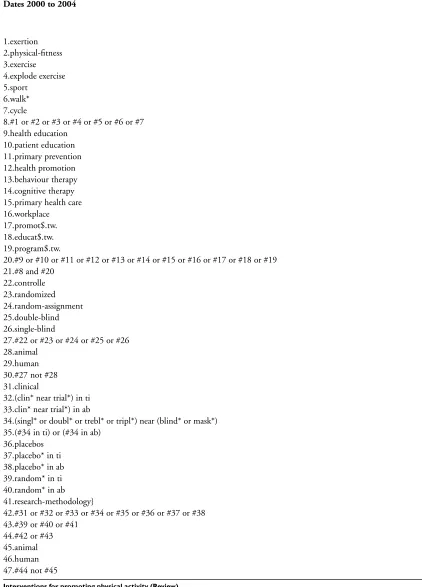
The search strategy below was used to search MEDLINE, with the addition of an RCT filter (Dickersin 1995). This strategy was modified for other databases, using an appropriate RCT filter for EMBASE (Lefebvre 1996). (see Table 01 through to Table 06).
1 exp Exertion/ 2 Physical fitness/
3 exp “Physical education and training”/ 4 exp Sports/
5 exp Dancing/ 6 exp Exercise therapy/
7 (physical$ adj5 (fit$ or train$ or activ$ or endur$)).tw. 8 (exercis$ adj5 (train$ or physical$ or activ$)).tw. 9 sport$.tw.
10 walk$.tw. 11 bicycle$.tw.
12 (exercise$ adj aerobic$).tw.
13 ((“lifestyle” or life-style) adj5 activ$).tw. 14 ((“lifestyle” or life-style) adj5 physical$).tw. 15 or/1-14
16 Health education/ 17 Patient education/ 18 Primary prevention/ 19 Health promotion/ 20 Behaviour therapy 21 Cognitive therapy 22 Primary health care
23 Workplace/ 24 promot$.tw. 25 educat$.tw. 26 program$.tw. 27 or/16-26 28 15 and 27
M E T H O D S O F T H E R E V I E W
All abstracts were reviewed independently by two investigators who applied the following criteria to determine if the full paper was needed for further investigation:
a) did the study aim to examine the effectiveness of a physical activity promotion strategy to increase physical activity behaviour? b) did the study have a control group (e.g. a no intervention control, attention control and/or minimal intervention control group)?
c) did the study allocate participants into intervention or control groups by a method of randomisation?
d) did the study include adults of 16 years or older?
e) did the study recruit adults not living in institutions and free of chronic disease?
f ) was the study’s main outcome physical activity or physical fitness?
g) were the main outcome(s) measured at least 6 months after the start of the intervention?
h) did the study analyse the results by intention-to-treat or, failing that was there less than 20% loss to follow up?
Two reviewers examined a hard copy of every paper that met the inclusion criteria on the basis of the abstract alone (or title and keywords if no abstract was available). When a final group of papers was identified all papers were reviewed again by two reviewers independently. Any disagreement at this stage was discussed between the three reviewers and resolved by consensus.
From the final set of studies that met the inclusion criteria, study details were extracted independently by two reviewers onto a standard form. Again any disagreements were discussed between three reviewers and resolved by consensus. Extracted data included date and location of study, study design variables, methodological quality, characteristics of participants (age, gender, ethnicity), intervention strategies, frequency and type of intervention and follow-up contacts, degree of physical activity supervision, study outcome measure, effectiveness of intervention and adverse events.
We wrote to and received clarification from 11 authors of the studies selected for the review. Our requests focused on data missing or unclear from the published papers and included data on study numbers at final analysis, means and standard deviations for intervention and control arms. For incomplete responses, we wrote again to authors asking for further data.
We found different types of outcome results published in two included papers for the Sendai Silver Centre Trial (SSCT 2000). Tsuji 2000 reported changes in cardiovascular fitness and Fujita 2003 reported increases in self-reported physical activity.
Outcomes were analysed both as continuous outcomes and as dichotomous outcomes (active/sedentary) wherever possible. Standard statistical approaches were adopted:
(a) For each study with continuous outcomes; a standardised mean difference (SMD) and 95% confidence intervals (95% CI) were calculated. If the study had more than two arms then the overall effects of the intervention versus control (means and standard deviations) were examined by pooling the individual effect of each intervention arm (means and standard deviations). These pooled groups means and standard deviations were weighted for overall numbers within each arm (Higgins 2005). Pooled effect sizes were calculated as standardised mean differences with 95% CI using a random-effects model.
(b) For each study with dichotomous outcomes; an odds ratio (OR) and 95% CI were calculated. Pooled effect sizes were calculated as ORs and with 95% CI using a random-effects model.
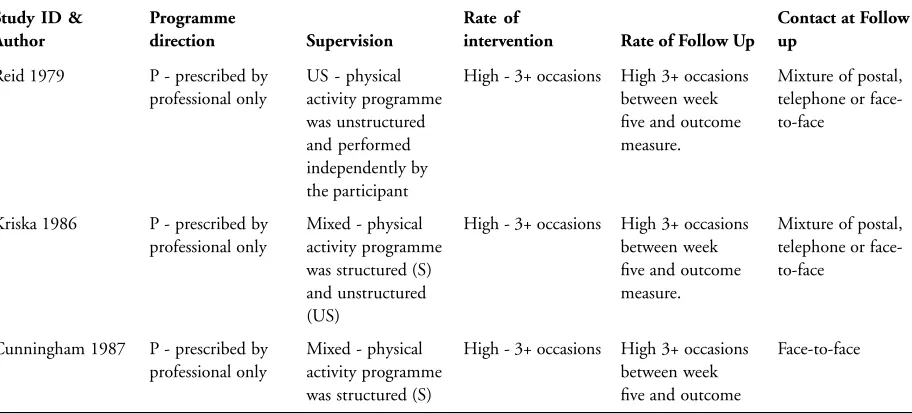
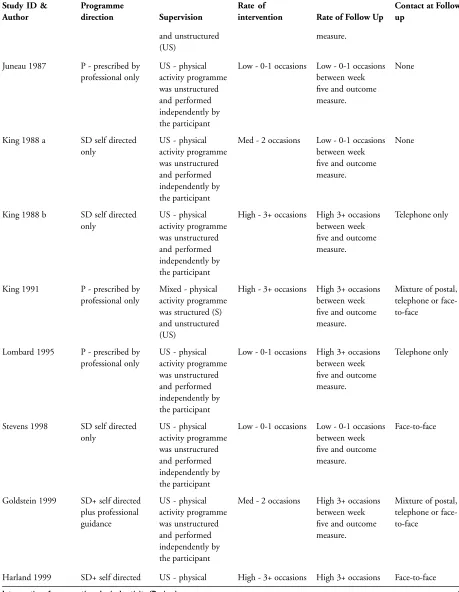
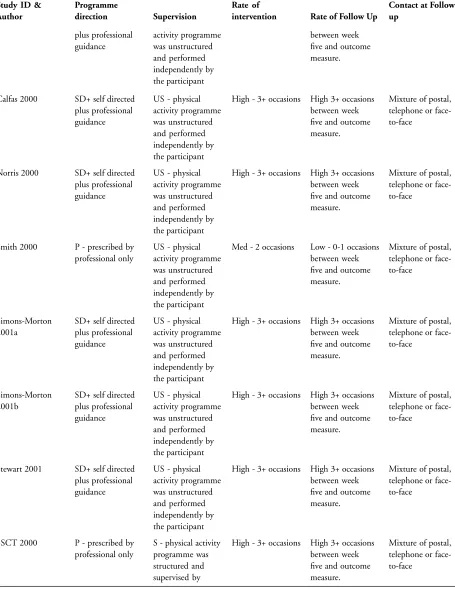
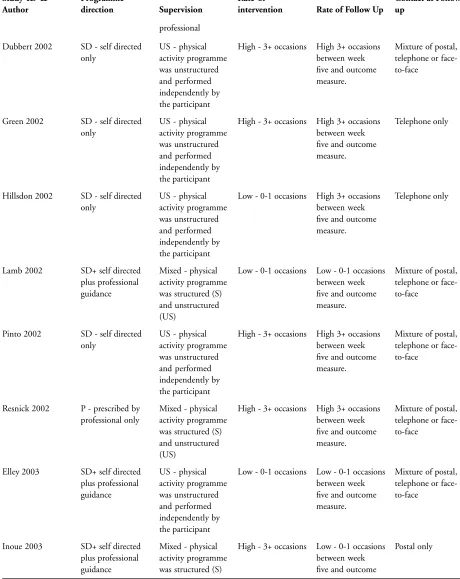
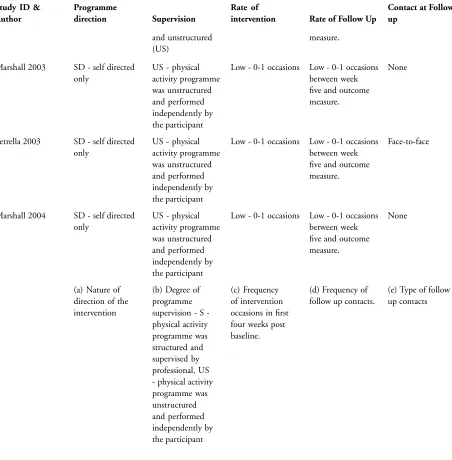
We examined five thematic characteristics of each intervention to try to assess if they modified the main effects of the interventions. These five characteristics were the nature of direction at first contact, degree of programme supervision, frequency of intervention occasions, frequency of follow-up contacts and type of follow-up contacts.
We described the nature of the initial contact between the participant and professional/researcher as “the nature of direction”. We found three types of intervention: (i) self-directed only - where the participant is not directed in their choices and thinking about which physical activities to start by the professional; (ii) self-directed plus professional guidance - where the participant can make a decision about their physical activity using a mixture of both self direction and professional advice and guidance; and (iii) prescribed by professional only - the participant receives the advice and prescription of physical activity from the professional.
We wanted to evaluate the type and supervision of physical activity adopted within studies. We developed three categories of programme supervision: (i) structured and supervised - the physical activity programme was structured and supervised by professional; (ii) unsupervised and independent - the physical activity programme was unstructured and performed independently by the participant; and (iii) mixed - the physical activity programme was both structured and supervised and unstructured and independent.
D E S C R I P T I O N O F S T U D I E S
From 35,524 hits, 287 papers were retrieved for examination
against the inclusion criteria (Figure 01). Thirty three papers de-scribing 35 studies met the inclusion criteria. We were unable to secure the requested information from five studies. Halbert 2000 was not contactable and so this study is not presented in the final results. Four studies sent data but the data was incomplete or inap-propriate for meta-analysis (Castro 2001; Lowther 2002a; Lowther 2002b; Mutrie 2002; Nies 2003). After excluding these studies with incomplete data, 29 studies remained (Calfas 2000; Cun-ningham 1987; Dubbert 2002; Elley 2003; Goldstein 1999; Green 2002; Harland 1999; Hillsdon 2002; Inoue 2003; Juneau 1987; King 1988a; King 1988b; King 1991; Kriska 1986; Lamb 2002; Lombard 1995; Marshall 2003a; Marshall 2004; Norris 2000; Pe-trella 2003; Pinto 2002; Reid 1979; Resnick 2002a; Simons-Mor-ton 2001a; Simons-MorSimons-Mor-ton 2001b; Smith 2000; Stevens 1998; Stewart 2001; SSCT 2000). All 29 studies were randomised con-trolled trials. Two papers each reported the results of two separate trials (King 1988a; King 1988b; Morton 2001a; Simons-Morton 2001b). Two papers reported different outcomes for one study (SSCT 2000).
Participants of included studies
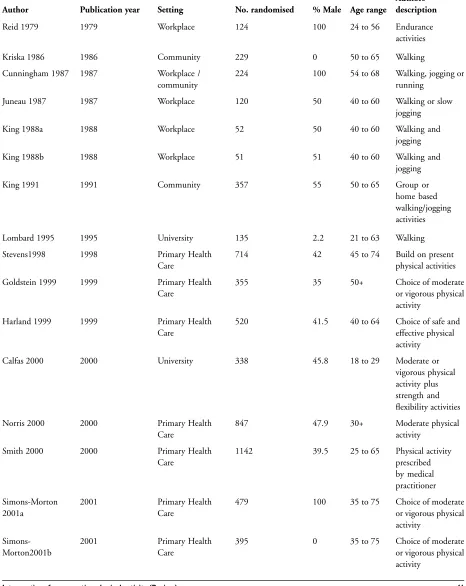
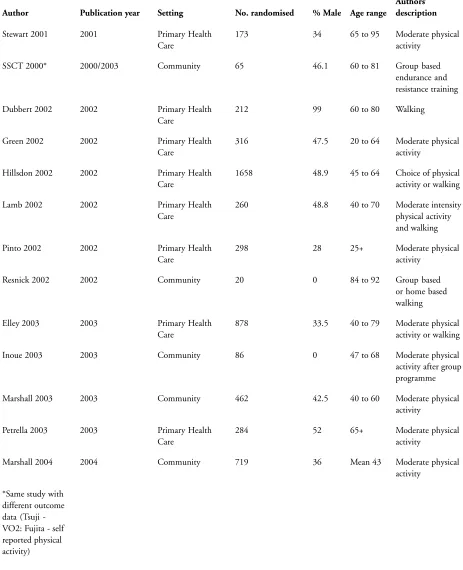
11,513 apparently healthy adults participated in the 29 included studies. The majority of studies recruited both genders with three studies recruiting men only (Cunningham 1987; Reid 1979; Si-mons-Morton 2001a) and four studies recruiting women only (In-oue 2003; Kriska 1986; Resnick 2002a; Simons-Morton 2001b). The stated age range of participants was from 18 to 95 years. De-tails on ethnic group of participants were reported in 13 studies, with proportions of participants in ethnic minorities ranging from 3% to 55%. Participants were recruited from four settings; pri-mary healthcare, workplaces, university and the community (see Table 07).
Interventions in included studies
We found a marked heterogeneity in the interventions used in each study. Studies used one, or combination of, one-to-one coun-selling/advice or group councoun-selling/advice; self-directed or pre-scribed physical activity; supervised or unsupervised physical ac-tivity; home-based or facility-based physical acac-tivity; ongoing face-to-face support; telephone support; written education/motivation material; self monitoring. The intervention was delivered by one or a number of practitioners with various professional backgrounds including physicians, nurses, health educators, counsellors, exer-cise leaders and peers.
Only one study (SSCT 2000) adopted a structured and supervised approach to their intervention, encouraging participants to cycle on a static bike for 10 to 25 minutes at a pre-determined intensity, as part of a 2-hour exercise session. The majority of studies adopted an unstructured and independently performed physical activity regime.
We found the majority of studies contacted participants on at least three or more occasions in the first 4 weeks of the intervention to support and encourage any adoption of physical activity. Studies
offered a range of support and follow up to participants between week 5 and final outcome measure (a minimum of 6 months post baseline intervention). The types of follow-up offered to partici-pants at any point ranged from postal only, telephone only, face-to-face meetings, or a mixture of postal, telephone or face-face-to-face.
We found an even distribution of studies using all three approaches as described in our explanation of ’nature of direction’ with the more recently published studies preferring self direction or self direction with professional guidance.
Design of included studies
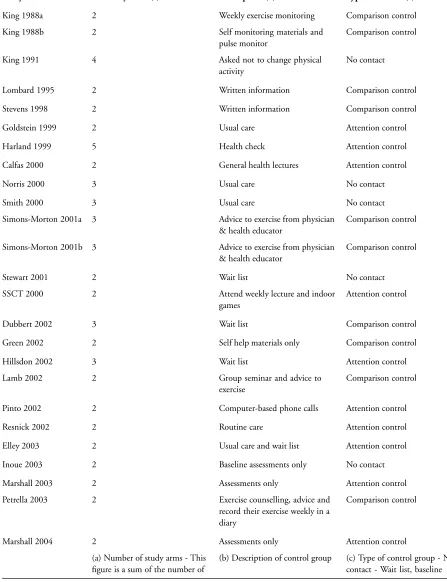
Nine studies had a no-contact control group. Five studies had at-tention control groups with control participants receiving non-exercise related health advice. The remaining studies had compar-ison control groups, where participants received advice or writ-ten information about physical activity. In Petrella 2003 the con-trol participants received exercise counselling and advice and were asked to keep a diary.
Eight studies had more than one intervention arm (Dubbert 2002; Harland 1999; Hillsdon 2002; King 1991; Norris 2000; Simons-Morton 2001a; Simons-Simons-Morton 2001b; Smith 2000). Four stud-ies conducted an analysis of any intervention vs control by com-bining intervention arms (Harland 1999; Hillsdon 2002; Norris 2000; Smith 2000). We calculated pooled results for intervention arms for three further studies (King 1991; Simons-Morton 2001a; Simons-Morton 2001b). Our analysis of effectiveness when com-bining intervention arms, differed from the original results pre-sented by two studies (King 1991; Simons-Morton 2001b). We also combined the results of two studies as the final results for con-trol and intervention groups were reported separately by gender and there was noa priorihypothesis that the effect of the interven-tion would be different for men and women (Calfas 2000; Juneau 1987).
Outcome measures
A number of secondary outcome measures, which were not the focus of this review, were also measured and included body mass index (King 1991; Kriska 1986; Petrella 2003; Stewart 2001), health status, smoking status (King 1991; Kriska 1986; Norris 2000), socio-behavioural constructs (e.g. self efficacy, reduction in barriers to physical activity), social support and ’stage of change’ (Calfas 2000; Goldstein 1999; Norris 2000), time spent in flex-ibility and strength training (Calfas 2000), weight, height, lean body mass, body fat, plasma lipids (Cunningham 1987; Juneau 1987; Kriska 1986), minute ventilation, maximal heart rate, respi-ratory exchange ratio, blood cholesterol, flexibility, grip strength, health conditions, systolic and diastolic blood pressure (Cunning-ham 1987; King 1991; Kriska 1986; Petrella 2003), and alcohol consumption (Kriska 1986).
M E T H O D O L O G I C A L Q U A L I T Y
Two of the three reviewers independently assessed the quality of each study that met the inclusion criteria. We did not rate studies on whether participants were blind to their allocation to interven-tion or control groups. This would not be appropriate for studies of this type, as it would be impossible to blind participants to a physical activity intervention. Generation of a formal quality score for each study was completed on a four point scale assigning a value of 0 or 1 to each of the factors described below.
a) Was the randomisation method described?
All studies reported using randomisation to allocate participants to intervention and control groups, but only 16 described the method of randomisation. Of these, four studies used cluster-randomisation, where the unit of randomisation was participating practices (Norris 2000; Elley 2003), matched pairs of participating practices (Goldstein 1999), or workplace shifts (Reid 1979). One study used quasi-randomisation - days of the week (Smith 2000). All other studies randomised individuals.
b) Was the outcome assessment independent and blind? Twelve studies reported independent and blind outcome assess-ments (Dubbert 2002; Goldstein 1999; Green 2002; Harland 1999; Hillsdon 2002; King 1991; Marshall 2004; Petrella 2003; Pinto 2002; Simons-Morton 2001a; Simons-Morton 2001b; Smith 2000).
c) Was the final outcome measure controlled for baseline physical activity?
Sixteen studies reported adjusting their final results for baseline values of physical activity (Calfas 2000; Green 2002; Hillsdon 2002; Inoue 2003; King 1988a; King 1988b; King 1991; Lamb 2002; Marshall 2003a; Norris 2000; Petrella 2003; Pinto 2002; Si-mons-Morton 2001a; SiSi-mons-Morton 2001b; Smith 2000; Stew-art 2001).
d) Was the analysis an intention-to-treat analysis?
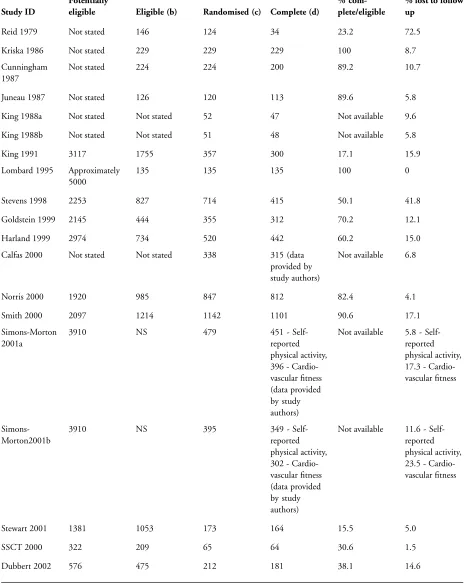
Fourteen studies reported using an intention-to-treat analysis (El-ley 2003; Hillsdon 2002; Kriska 1986; Lamb 2002; Lombard 1995; Marshall 2003a; Marshall 2004; Pinto 2002; Reid 1979; Si-mons-Morton 2001a; SiSi-mons-Morton 2001bSmith 2000; Stew-art 2001; Stevens 1998). The remaining nine studies did not use an intention-to-treat analysis but had less than 20% loss to follow up. The proportion of participants in studies that did not perform an intention-to-treat analysis who were lost to follow up ranged from 0% to 18.9% (see Table 08).
Twenty-three studies reported data for the number of those partic-ipants who completed their study and the number of particpartic-ipants eligible for the study before randomisation. We calculated the pro-portion of the eligible participants who completed the study and this percentage ranged from 15.5% to 100%. Table 08 presents the numbers of participants at different stages of each study. This data included the number of participants contacted to determine po-tential eligibility, number identified as eligible for study, number
randomised, number with complete data at final outcome mea-sure, number of participants with complete data at final outcome measure as a proportion of number identified as eligible for study and proportion of participants who were lost to follow-up.
Details of the intensity of the interventions studied, control inter-ventions used and length of follow-up are in Table 09 and Table 10.
R E S U L T S
Self-reported physical activity
Reported as a continuous measure
Nineteen studies (7,598 participants) reported their main out-come as one of several continuous measures of physical activity (Calfas 2000; Cunningham 1987; Elley 2003; Goldstein 1999; Green 2002; Hillsdon 2002; Inoue 2003; King 1988a; King 1988b; Kriska 1986; Marshall 2003a; Pinto 2002; Resnick 2002a; Simons-Morton 2001a; Simons-Morton 2001b; Smith 2000; SSCT 2000; Stevens 1998; Stewart 2001). Measures included es-timated energy expenditure (kcals/day, kcals/week of moderate physical activity), total time of physical activity (mean mins/week of moderate physical activity) and mean number of occasions of physical activity in past four weeks. The pooled effect of these stud-ies was positive but moderate (SMD 0.28, 95% CI 0.15 to 0.41) with significant heterogeneity in observed effects (I2= 83.5%). Seven studies reported positive effects (Cunningham 1987; Elley 2003; King 1988a; Kriska 1986; Stevens 1998; SSCT 2000; Stew-art 2001) (see Table 11).
Studies with positive SMDs used a range of different intervention approaches with varying effect sizes. Kriska 1986 found that en-couraging walking via an 8-week training programme, followed by a choice of group or independent walking, plus follow-up phone calls and incentives resulted in a mean increase of 479 kcal/week (95% CI 249 to 708) of physical activity of all intensities. Cun-ningham 1987 found that encouragement to attend three group exercise sessions per week and perform an additional weekly exer-cise session at home resulted in an additional mean 53.7 minutes of vigorous physical activity per day (95% CI 18.09 to 89.31).
King 1988a found a mean increase of 3.90 exercise sessions per month (95% CI 0.43 to 7.37), at 6 months, following 30 min-utes of baseline instruction (15 minmin-utes of advice and a 15 minute video about exercise training), and daily self monitoring of physi-cal activity using exercise logs returned to staff every month. These additional sessions were approximately equivalent to 101 minutes of moderate intensity physical activity per week. Stevens 1998 saw a net difference between intervention and control groups of 2.31 ’sessions’ (one session was at least 20 minutes of continuous phys-ical activity) of moderate or vigorous exercise per month (95% CI 1.91 to 2.71). At an initial meeting with a community exercise development officer intervention participants were encouraged to
extend a physical activity that they already did rather than start a new activity. A further meeting was offered ten weeks later to support and encourage any changes. Stewart 2001 reported a sig-nificant net difference of 82 kcal per day between the intervention and control arms (95% CI 73.9 to 90.1). The intervention group received face-to-face counselling based on social cognitive theory (Bandura 1986). In addition they were offered further individual follow up appointments, educational materials, phone calls and monthly workshops about physical activity.
Elley 2003 reported a between group mean difference of 2.67 kcal/kg/wk (95% CI 0.48 to 4.86). The authors estimate this was equivalent to a net difference of 247 kcals/week between groups. The intervention group received motivational counselling from their general practitioner, followed by three follow up phone calls from a local exercise specialist, plus written materials. Participants were asked to choose their own physical activity.
SSCT 2000 reported a large increase in mean self-reported phys-ical activity in their intervention group. However the physphys-ical ac-tivity regime was very prescriptive. Participants were encouraged to attend at least two from three 2-hour exercise classes per week, held at a local community centre. The class contained endurance and resistance training typically involving 10-25 minutes of static cycling at prescribed heart rate reserve, with intensity monitored by heart monitors. In addition to attending classes participants were asked to monitor their walking behaviour using pedometers.
No statistically significant effects were observed for the other 12 studies (Calfas 2000; Goldstein 1999; Green 2002; Hillsdon 2002; Inoue 2003; King 1988b; Marshall 2003a; Pinto 2002; Resnick 2002a; Simons-Morton 2001a; Simons-Morton 2001b; Smith 2000). No studies had effects that favoured controls.
Reported as a dichotomous measure
Ten studies (3595 participants) reported physical activity as a di-chotomous measure which represented achievement or not of a predetermined level of physical activity (Dubbert 2002; Harland 1999; Lamb 2002; Lombard 1995; Marshall 2004; Norris 2000; Pinto 2002; Reid 1979; Simons-Morton 2001a; Simons-Morton 2001b). The pooled odds ratio of these studies was positive but modest (OR 1.33, 95% CI 1.03 to 1.72) with significant het-erogeneity in observed effects (I2 = 53.4%). Only two studies
reported a significantly positive effect (Dubbert 2002; Lombard 1995). Lombard 1995 found that participants who received a high frequency of follow up telephone calls (10 calls over 12 weeks) were more successful at changing their walking behaviour than participants who did not receive telephone calls (OR 10.95, 95% CI 1.42 to 84.15). Dubbert 2002 found that adult participants who received a video, walking plan, weekly walking diary, financial incentive for completing diary, plus follow up phone calls were more successful at adhering to a 3 walks per week programme that participants who did not receive any phone calls (OR 2.31, 95% CI 1.15 to 4.66) (see Table 12).
No effect was found in eight studies (Harland 1999; Lamb 2002; Marshall 2004; Norris 2000; Pinto 2002; Reid 1979; Simons-Morton 2001a; Simons-Simons-Morton 2001b). No studies had effects that favoured controls.
Cardio-respiratory fitness
In addition to self-reported physical activity, 11 studies (2195 par-ticipants) examined the effect of their intervention on cardio-res-piratory fitness (Cunningham 1987; Dubbert 2002; Juneau 1987; King 1988a; King 1988b; King 1991; Lamb 2002; Petrella 2003; Simons-Morton 2001a; Simons-Morton 2001b; SSCT 2000) (see Table 13). The pooled effect was again positive and moderate with significant heterogeneity in the observed effects (SMD 0.52 95% CI 0.14 to 0.90). Five studies (1359 participants) had sig-nificant positive effects that favoured treatment (Cunningham 1987; Juneau 1987; Petrella 2003; Simons-Morton 2001b; SSCT 2000). Cunningham 1987 reported that recently retired men who were offered supervised exercise sessions increased their fitness by a greater amount than controls who continued with their usual physical activity programmes (SMD 0.44 95% CI 0.16 to 0.72). Juneau 1987 found a mean increase in fitness (SMD 1.49 95% CI 1.07 to 1.91) for participants who received a combination of a 30-minute consultation, an educational video, information on using a heart rate monitor and a daily physical activity log, com-pared to controls. Simons-Morton 2001b found that women who received an intensive mixture of behavioural counselling, support materials and telephone calls (assistance + counselling arms) were more likely to increase their fitness (SMD 0.47, 95% CI 0.23 to 0.71) than women who received a less intensive intervention (advice arm only). Petrella 2003 evaluated the effects of a fitness assessment using a step test and counselling from physician, plus a simple target heart rate goal and recording their physical activity in a diary on cardio-respiratory fitness. Controls received the same intervention without the heart rate goal setting. The standardised mean difference was 1.87 (95% CI 1.59 to 2.15).
Although King 1991 reported a significant difference in VO2 max between intervention and control group at 12-months follow-up this difference did not remain when based on the standardised mean difference of the pooled intervention arms (SMD 0.17, 95% CI -0.09 to 0.43). In one other study (King 1988b), the author reported a significant difference in the change in fitness between groups, which did not remain significant when based on standard-ised mean differences at 12 month follow up using their published data. This may be an effect of pooling study arms.
Adverse events
Eight studies reported data on adverse events. Only one study found a difference in the rate of adverse events between the inter-vention and control groups. Reid 1979 reported the rate of job-re-lated injuries was four times higher in the control group compared to the intervention group. The other seven studies reported no sig-nificant difference in rates of musculoskeletal injury (fractures and sprains), falls, illness and potential cardiovascular events between
groups (Dubbert 2002; Elley 2003; King 1991; Resnick 2002a; Simons-Morton 2001a; Simons-Morton 2001b; SSCT 2000).
Sensitivity analysis by study quality
We examined the pooled effects for the three types of outcome data (self-reported physical activity, dichotomous and cardio-res-piratory fitness outcomes) by an assessment of study quality. High quality studies scored more than 2 on the quality scale. A score of 2 or less was categorised as low quality. For the 19 studies that reported continuous outcomes for physical activity six were classi-fied as high quality (comparison 02 01). The pooled effect of these interventions was again positive with no significant heterogeneity in the observed effects; the standardised mean difference was 0.11 (95% CI 0.04 to 0.17). Lower quality studies also had a positive pooled effect but with significant heterogeneity in the observed effects; the standardised mean difference was 0.36 (95% CI 0.17 to 0.56).
We found three high quality scoring studies from the 10 studies that reported dichotomous outcome data for self-reported physical activity (comparison 02 02). The pooled odds ratio of these three studies was positive but modest (OR 1.48, 95% CI 1.07 to 2.06) with no significant heterogeneity in observed effects.
We found five high quality studies from the 11 studies that re-ported continuous outcome data for cardio-respiratory fitness (comparison 02 03). The pooled effects of these studies was not significant and there was significant heterogeneity (SMD 0.54, 95% CI -0.07 to 1.14). We noted two studies had a string effect on the pooled analysis (Juneau 1987; Petrella 2003).
Secondary objectives
a) Are more intense interventions more effective in changing physical activity than less intense interventions?
Two studies attempted to investigate the effect of increasing inter-vention intensity. In Simons-Morton 2001a and Simons-Morton 2001b the three groups received different levels of intervention. The control group (advice) received physician advice to achieve the recommended level for exercise, then referral to an on-site health educator. At this appointment the health educator provided educa-tional materials and repeated the physician advice to exercise with further follow-up appointments repeating this advice. No other follow-up activities were offered. The assistance group received the same advice from a physician and also received a 30-40 minute counselling session the health educator conducted, including a videotape and action planning. Participants then received follow-up phone calls, interactive mail, an electronic step counter, and monthly monitoring cards, which were returned to the health ed-ucator. Follow-up mail and incentives were sent to all participants. The counselling group received all of the components of the ad-vice and assistance group with additional bi-weekly telephone calls for 6 weeks and then monthly telephone calls up to 12 months. Frequency of telephone calls for the final 12 months of the study was negotiated between the participant and their health educator.
Weekly behavioural classes on skills for adopting and maintain-ing physical activity were also offered to this group. In women, the addition of behavioural counselling, follow up support and materials produced a significant difference in fitness compared to the control groups. In men addition of these components did not lead to greater change (Simons-Morton 2001a and Simons-Mor-ton 2001b).
b) Are specific components of interventions associated with changes in physical activity behaviour?
We stratified the behavioural components of the interventions, ac-cording to a number of characteristics. These characteristics were the degree of nature of direction (the extent to which physical activity was prescribed or self-directed) and the level of on-going professional support (frequency of follow up after week five of the study). Although there were insufficient studies to statistically test the difference in observed effects between these various study characteristics, the significant heterogeneity in reported effects was reduced when physical activity was self-directed with some profes-sional guidance and when there was on-going profesprofes-sional support (in studies with continuous outcome measures for self-reported physical activity).
c) Are short term changes in physical activity or fitness main-tained at 12 months?
Six studies reported outcomes more than 6 months after the initial intervention (e.g. at least a measure of the primary outcome at 6 months and 12 months post intervention). In King 1991 im-provements in physical activity and cardio-respiratory fitness at 6 months were maintained at 12 months for cardio-respiratory fit-ness only. Simons-Morton 2001a and Simons-Morton 2001b pre-sented data for cardio-respiratory fitness and self-reported phys-ical activity at 6 and 24 months. All three study arms increased their cardio respiratory fitness and self reported levels of physical activity between baseline and 6 months. However there were no significant differences between groups. At 24 months there was a significant difference in VO2 max between participants who re-ceived assistance and counselling compared to the advice group for women only (Simons-Morton 2001b). Calfas 2000 reported outcomes at 12 and 24 months with no significant effect observed at either time points. Lamb 2002 reported no significant effect in the likelihood of increasing walking at 6 and 12 months. Petrella 2003 reported a significant increase in cardio-respiratory fitness at 6 months and this effect was further increased at 12 months.
d) Is the promotion of some types of physical activity more likely to lead to change than other types of physical activity? We were unable to determine if any type of physical activity is more likely to be adopted than any other type of physical activity, (e.g. walking, jogging or running) as the studies were not designed to examine this question and as such generally did not report exactly what type of physical activity was performed.
e) Are home-based interventions more successful than facility-based interventions?
No study specifically examined this question. However King 1991 compared the difference in adherence to prescribed physical ac-tivity sessions between participants who were prescribed home-based versus facility-home-based exercise. A greater number of partic-ipants completed at least 75% of prescribed exercise sessions in both home-based arms compared to the facility-based arms (P < 0.05). This improved adherence to the home-based exercise ses-sions was not reflected in greater improvements in fitness.
f) Are interventions more successful with particular participant groups?
Nine studies examined the differential effects of the interventions within various sub-groups.
Eight studies looked at the effect of gender (Calfas 2000; El-ley 2003; Juneau 1987; King 1991; Petrella 2003; Simons-Mor-ton 2001a; Simons-MorSimons-Mor-ton 2001b; Stewart 2001). Greater ef-fects were seen for improvements in cardio-respiratory fitness for women as compared to men in King 1991 and Simons-Morton 2001a and Simons-Morton 2001b, while Juneau 1987 reported a greater increase in VO2 max in men than women. Elley 2003 reported greater increases in men compared to women in the in-tervention group in reported physical activity.
Two studies found no differential effects between high and low lev-els of baseline self-reported physical activity (Petrella 2003; Stew-art 2001). No effects were seen for age (above or below 75 years) in Stewart 2001. The same study found a greater increase in physical activity for overweight participants (BMI more than 27.0), com-pared with participants who were not overweight (Stewart 2001). Petrella 2003 examined differential effects of their intervention in four sub groups (i) gender, (ii) age (above versus below 70 years), (iii) chronic health conditions (less than two reported health con-ditions versus more two or more health concon-ditions) and (iv) BMI (<27, 27-31, >32 BMI). The intervention group showed a greater improvement in cardio-respiratory fitness compared to the con-trol group, in a between group analysis regardless of gender, age, having more than 2 chronic health conditions and BMI >32.
D I S C U S S I O N
Our updated review suggests that physical activity interventions have a positive moderate sized effect on increasing self-reported physical activity and measured cardio-respiratory fitness, at least in the short to mid-term. Any conclusions drawn from this review require some caution given the significant heterogeneity in the observed effects. Despite the heterogeneity between the studies, there is some indication that a mixture of professional guidance and self direction plus on-going professional support leads to more consistent effect estimates. The long-term effectiveness of these interventions is not established as the majority of studies stopped after 12 months.
These conclusions differ from the findings of previous system-atic reviews (Hillsdon 1996; Hillsdon 1999). Earlier reviews con-cluded that interventions that encouraged home-based activity were more effective than facility-based activity interventions. This review used more rigid inclusion criteria (for example outcome measures with at least 6 months follow-up) and subsequently ex-cluded some studies inex-cluded in these previous reviews. We were also able to collect unpublished data from study authors and this allowed us to perform a quantitative analysis using standardised mean differences for effects as opposed to just descriptions alone. The conclusions are similar to another published review (Hillsdon 2004). However this review was not a synthesis of primary studies but rather a synthesis of high-quality systematic reviews and meta-analyses of studies to increase physical activity among adults. It assessed studies in particular settings and found strong evidence of effectiveness of interventions within healthcare and commu-nity settings, particularly brief advice from a health professional, supported by written materials, which is likely to be effective in producing a modest, short-term (6-12 weeks) effect on physical activity (Hillsdon 2004).
The findings of this review are in contrast to the conclusions of a review produced by the Center for Disease Control (Kahn 2002). Kahn 2002 examined the effectiveness of individual-based behavioural interventions for the promotion of physical activity. The review calculated effects as the net percent change from base-line - the median change scores. In 10 studies (using continuous outcome measures of self-reported physical activity), the authors found a median net increase of 35.4% (interquartile range, 16.7% to 83.3%). Ten studies measured change in the time spent in phys-ical activity, with a net median increase of 64.3% (interquartile range, 1.2% to 85.5%). Four studies measured change in VO2max with a median increase of 6.3% (interquartile range, 5.1% to 9.8%). Overall the authors concluded that there was “good” ev-idence to suggest that this type of intervention was effective in increasing physical activity. However the authors included studies with shorter periods of follow up, non randomised studies (in-cluding uncontrolled before and after studies), and did not take account of loss to follow up. Only one study, King 1991, was shared by both reviews.
Quality of the evidence
The quality of the studies in this current review was limited by a lack of intention-to-treat analysis and failure to examine the in-teraction between baseline levels of physical activity and exposure to the intervention. Only six studies (Green 2002; Hillsdon 2002; Lamb 2002; Petrella 2003; Simons-Morton 2001a; Simons-Mor-ton 2001b) achieved all of the quality criteria. The observed effects were smaller but more consistent in studies with higher quality scores.
Internal validity
We found three main weaknesses to the studies in terms of their internal validity. First, none of the studies were able to blind
ticipants to their allocation to intervention at baseline. However this criterion is not appropriate to such studies. It is very difficult to blind a participant to their study group if exercise is the inter-vention. This element of quality is more appropriate to pharma-ceutical interventions where blinding for both researchers and par-ticipants reduces the risk of selection bias. Second, studies failed to state their randomisation methods. And third, the studies did not use personnel to collect main outcome measures that were in-dependent and blinded to group allocation.
Misclassification of physical activity also threatens internal valid-ity of studies. The insensitivvalid-ity of self-reported physical activvalid-ity measures leads to less precision in its measurement and increases the variance in measures of behaviour. As intervention and con-trol group participants completed the same self-report measure, any misclassification is likely to be non-differential leading to an attenuation of the effect of the intervention. This problem would not apply to measures of cardio-respiratory fitness.
External validity
Limitations in the external validity of the studies relate to recruit-ment and screening of participants and the generalisability of the interventions into everyday practice.
The majority of the studies in the review recruited volunteers, for example people replying to newspaper advertisements and the interventions may be less effective in non-volunteer populations recruited, for example, from primary care settings. Often partic-ipants had to agree to extensive screening prior to randomisa-tion and, as a consequence, the people who finally participated in the study were likely to be highly motivated. Participants who were randomised in Project ACT (Simons-Morton 2001a; Si-mons-Morton 2001b) had already undergone three screening vis-its. Participants in other studies attended pre-study promotional events plus a baseline assessment (Stewart 2001) or attended two screening interviews (Inoue 2003). By contrast, only three stud-ies, Stevens 1998, Hillsdon 2002 and Elley 2003, randomised all participants at the point of invitation to the study prior to them agreeing to participate. This method is called Zelen randomisation and is adopted to reduce non-consent rates (Zelen 1990).
The physicians in the studies based in a primary healthcare setting may have been more motivated to deliver the interventions than might be observed in a non-trial setting. We noted that studies described ’recruiting’ participating practices and physicians and reported using financial incentives to physicians and practice staff during the time of the study.
We noted a large drop out of participants between the recruitment, eligibility screening and randomisation phases of studies (data pre-sented in Table 08). This drop out would limit the possible effects of such interventions and the generalisability of the studies.
Many interventions provided components which would be diffi-cult to deliver in usual practice as they would demand large re-sources. For example studies offered a choice of physical activities
plus offered initial support in supervised programmes of physical activity, as well as letting participants choose to exercise indepen-dently of professional support.
Only four studies reported data at 2 years, with one study demon-strating maintenance of improvement in cardio-respiratory fitness (Simons-Morton 2001b). Evidence for the long-term effectiveness of interventions is urgently required.
The participants in the studies reviewed were generally white, well educated and middle aged and it is possible that the observed ef-fects may be different in the wider population. There were no studies in this review that examined the effectiveness of interven-tions in minority groups of any kind.
A U T H O R S ’ C O N C L U S I O N S
Implications for practice
There is some evidence to suggest that interventions designed to increase physical activity can lead to moderate short and mid-term increases in physical activity, at least in middle age. Due to the clinical and statistical heterogeneity of the studies, only lim-ited conclusions can be drawn about the effectiveness of individ-ual components of the interventions. Nevertheless interventions which provide people with professional guidance about starting an exercise programme and then provide on going support may be more effective in encouraging the uptake of physical activity. There is no evidence that such interventions will reduce physical activity or cause other harm. There is only very limited evidence of the long-term effectiveness of interventions.
Implications for research
Existing evidence about the effectiveness of physical activity in-terventions for sedentary adults in the general population is lim-ited by the recruitment of motivated volunteers, and the prob-lems of measuring of physical activity using self report. No studies examined the effect of interventions on participants from vary-ing socioeconomic or ethnic groups. There is also an urgent need for studies with cost-effectiveness data. In order to better under-stand the independent effect of individual programme compo-nents, longer studies with greater power are required. High quality studies are required with larger numbers, with a greater variety of participants, and with longer follow-up periods. In this review we have been able to describe the quantity of the interventions but were unable to describe the quality of the components of the in-terventions. Future reports of studies should provide greater detail on the nature of the professional who delivered the interventions, the theoretical basis of the intervention and how the theory was translated into practice.
P O T E N T I A L C O N F L I C T O F I N T E R E S T
The authors of this review are also authors of one of the included studies (Hillsdon 2002).
A C K N O W L E D G E M E N T S
Stewart 2001 provided clarification regarding the means and stan-dard deviations for the weekly caloric expenditure in all and mod-erate intensity physical activity at 12 months follow up.
Smith 2000 provided the mean change and standard deviation of the total minutes of activity for the three arms of the study at 7-8 months follow-up.
Norris 2000 was unable to provide the standard deviations for various physical activity outcomes.
Calfas 2000 confirmed the final numbers of participants at the 24-month follow-up.
Simons-Morton 2001a and Simons-Morton 2001b provided the standard errors for the physical activity and VO2max values for
men and women in all three study arms at 6-, 12- and 24- months follow-up.
Dubbert 2002 confirmed the numbers of participants in each study arm at baseline, 6 months and 12 months.
Marshall 2003a confirmed the details of the means and standard deviations of total average physical activity time (hrs/wk) for both study arms at 6 months follow-up.
S O U R C E S O F S U P P O R T
External sources of support
• CF funded by British Heart Foundation Core Grant -
2006-2011 UK
• First Cochrane Review was funded by British Heart Foundation
Project Grant - PG/2001089 UK
Internal sources of support
• No sources of support supplied
R E F E R E N C E S References to studies included in this review
Calfas 2000 {published data only}
Calfas KJ, Sallis JF, Nichols JF, Sarkin JA, Johnson MF, Caparosa S, et al.Project GRAD: two-year outcomes of a randomized controlled physical activity intervention among young adults. Graduate Ready for Activity Daily.American Journal of Preventive Medicine2000;18
(1):28–37. [MEDLINE: 2910].
Cunningham 1987 {published data only}
Cunningham DA, Rechnitzer PA, Howard JH, Donner AP. Exercise training of men at retirement: a clinical trial.Journal of Gerontology
1987;42(1):17–23. [MEDLINE: 28197].
Dubbert 2002 {published and unpublished data}
Dubbert PM, Cooper KM, Kirchner KA, Meydrech EF, Bilbrew D. Effects of nurse counseling on walking for exercise in elderly primary care patients.Journals of Gerontology Series A-Biological Sciences & Medical Sciences2002;57(11):M733–40.
Elley 2003 {published data only}
Elley CR, Kerse N, Arroll B, Robinson E. Effectiveness of counselling patients on physical activity in general practice: cluster randomised controlled trial.BMJ2003;326(7393):793–800.
Goldstein 1999 {published data only}
Goldstein MG, Pinto BM, Marcus BH. Physician based physical ac-tivity counselling for middle aged and older adults: a randomised trial.
Annals of Behavioral Medicine1999;21:40–7. [MEDLINE: 28230].
Green 2002 {published data only}
Green B, McAffee T, Hindmarsh M, Madsen L, Caplow M, Buist D. Effectiveness of telephone support in increasing physical activity
lev-els in primary care patients.American Journal of Preventive Medicine
2002;22(3):177–83.
Harland 1999 {published data only}
Harland J, White M, Drinkwater C, Chinn D, Farr L, Howel D. The Newcastle exercise project: a randomised controlled trial of methods to promote physical activity in primary care.BMJ1999;319(7213): 828–32. [MEDLINE: 3343].
Hillsdon 2002 {published data only}
Hillsdon M, Thorogood M, White IR, Foster C. Advising people to take more exercise is ineffective: a randomised controlled trial of physical activity promotion in primary care.International Journal of Epidemiology2002;31(4):808–15.
Inoue 2003 {published data only}
Inoue S, Odagiri Y, Wakui S, Katoh R, Moriguchi T, Ohya Y, et al.Randomized controlled trial to evaluate the effect of a physical activity intervention program based on behavioural medicine.Journal of Tokyo Medical University2003;61:154–65.
Juneau 1987 {published data only}
Juneau M, Rogers F, De Santos V, Yee M, Evans A, Bohn A, et al.Effectiveness of self-monitored, home-based, moderate-intensity exercise training in middle-aged men and women.American Journal of Cardiology1987;60(1):66–70.
King 1988a {published data only}
King AC, Taylor CB, Haskell WL, DeBusk RF. Strategies for increas-ing early adherence to and long-term maintenance of home-based exercise training in healthy middle-aged men and women.American Journal of Cardiology1988;61(8):628–32. [MEDLINE: 28216].
King 1988b {published data only}
King AC, Taylor CB, Haskell WL, DeBusk RF. Strategies for increas-ing early adherence to and long-term maintenance of home-based exercise training in healthy middle-aged men and women.American Journal of Cardiology1988;61(8):628–32. [MEDLINE: 28216].
King 1991 {published data only}
King AC, Haskell WL, Taylor CB, Kraemer HC, DeBusk RF. Group-vs home-based exercise training in healthy older men and women. A community-based clinical trial. JAMA1991;266(11):1535–42. [MEDLINE: 28206].
Kriska 1986 {published data only}
Kriska AM, Bayles C, Cauley JA, LaPorte RE, Sandler RB, Pam-bianco G. A randomized exercise trial in older women: increased activity over two years and the factors associated with compliance.
Medicine & Science in Sports & Exercise1986;18(5):557–62. [MED-LINE: 28207].
Lamb 2002 {published data only}
Lamb SE, Bartlett HP, Ashley A, Bird W. Can lay-led walking pro-grammes increase physical activity in middle aged adults? A ran-domised controlled trial. Journal of Epidemiology & Community Health2002;56:246–52.
Lombard 1995 {published data only}
Lombard DN, Lombard TN, Winett RA. Walking to meet health guidelines: the effect of prompting frequency and prompt structure.
Health Psychology1995;14(2):164–70. [MEDLINE: 28185].
Marshall 2003a {published and unpublished data}
Marshall AL, Bauman AE, Owen N, Booth ML, Crawford D, Marcus BH. Population-based randomized controlled trial of a stage-targeted physical activity intervention.Annals of Behavioral Medicine2003;
25(3):194–202.
Marshall 2004 {published data only}
Marshall AL, Bauman AE, Owen N, Booth ML, Crawford D, Mar-cus BH. Reaching out to promote physical activity in Australia: a statewide randomized controlled trial of a stage-targeted interven-tion.American Journal of Health Promotion2004;18:283–7.
Norris 2000 {published data only}
Norris SL, Grothaus LC, Buchner DM, Pratt M. Effectiveness of physician-based assessment and counseling for exercise in a staff model HMO.Preventive Medicine2000;30(6):513–23. [MED-LINE: 468].
Petrella 2003 {published data only}
Petrella RJ, Koval JJ, Cunningham DA, Paterson DH. Can primary care doctors prescribe exercise to improve fitness? The step test ex-ercise prescription (STEP) project.American Journal of Preventive Medicine2003;24(4):316–22.
Pinto 2002 {published data only}
Pinto BM, Friedman R, Marcus BH, Kelley H, Tennstedt S, Gillman MW. Effects of a computer-based, telephone counseling system on physical activity.American Journal of Preventive Medicine2002;23
(2):113–20.
Reid 1979 {published data only}
Reid EL, Morgan RW. Exercise prescription: a clinical trial.American Journal of Public Health1979;69(6):591–5. [MEDLINE: 516].
Resnick 2002a {published data only}
Resnick B. Testing the effect of the WALC intervention on exercise adherence in older adults.Journal of Gerontological Nursing2002;28
(6):40–9.
Simons-Morton 2001a {published data only}
Simons-Morton DG, Blair SN, King AC, Morgan TM, Applegate WB, O’ Toole M, et al.Effects of physical activity counseling in pri-mary care: The Activity Counseling Trial: A randomized controlled trial.JAMA2001;286(6):677–87. [MEDLINE: 7812].
Simons-Morton 2001b {published data only}
Simons-Morton DG, Blair SN, King AC, Morgan TM, Applegate WB, O’ Toole M, et al.Effects of physical activity counseling in pri-mary care: The Activity Counseling Trial: A randomized controlled trial.JAMA2001;286(6):677–87.
Smith 2000 {published data only}
Smith BJ, Bauman AE, Bull FC, Booth ML, Harris MF. Promoting physical activity in general practice: a controlled trial of written advice and information materials.British Journal of Sports Medicine2000;
34(4):262–7. [MEDLINE: 427].
SSCT 2000 {published data only}
Fujita K, Nagatomi R, Hozawa A, Ohkubo T, Sato K, Anzai Y, et al.Effects of exercise training on physical activity in older people: a randomized controlled trial.Journal of Epidemiology2003;13(2): 120–6.
∗Tsuji I, Tamagawa A, Nagatomi R, Irie N, Ohkubo T, Saito M,
et al.Randomized controlled trial of exercise training for older peo-ple (Sendai Silver Center Trial; SSCT): study design and primary outcome.Journal of Epidemiology2000;10(1):55–64. [MEDLINE: 2867].
Stevens 1998 {published data only}
Stevens W, Hillsdon M, Thorogood M, McArdle D. Cost-effective-ness of a primary care based physical activity intervention in 45-74 year old men and women: a randomised controlled trial.British Jour-nal of Sports Medicine1998;32(3):236–41. [MEDLINE: 3561].
Stewart 2001 {published data only}
Stewart AL, Verboncoeur CJ, McLellan BY, Gillis DE, Rush S, Mills KM, et al.Physical activity outcomes of CHAMPS II: a physical ac-tivity promotion program for older adults.Journals of Gerontology Series A-Biological Sciences & Medical Sciences2001;56(8):M465–70. [MEDLINE: 114].
References to studies excluded from this review Andersen 1999
Andersen RE, Wadden TA, Bartlett SJ, Zemel B, Verde TJ, Franck-owiak SC. Effects of lifestyle activity vs structured aerobic exercise in obese women.JAMA1999;281(4):335–40. [MEDLINE: 26884].
Andersen 2002
Andersen LB, Klausen K, Nisbeth O. One-year effect of health coun-seling on life style and risk factors of heart disease [Et ars effekt af sundhedsvejledning pa livsstil og risikofaktorer for hjertesygdom].
Ugeskrift for Laeger2002;164(13):1814–8.
Aoun 2002
Aoun S, Johnson L. Men’s health promotion by general practitioners in a workplace setting.Australian Journal of Rural Health2002;10
(6):268–72.