Proceedings of the 2019 Conference on Empirical Methods in Natural Language Processing 5853
Feature2Vec: Distributional semantic modelling of human property
knowledge
Steven Derby Paul Miller Barry Devereux
Queen’s University Belfast, Belfast, United Kingdom
{sderby02, p.miller, b.devereux}@qub.ac.uk
Abstract
Feature norm datasets of human conceptual knowledge, collected in surveys of human volunteers, yield highly interpretable models of word meaning and play an important role in neurolinguistic research on semantic cog-nition. However, these datasets are limited in size due to practical obstacles associated with exhaustively listing properties for a large number of words. In contrast, the develop-ment of distributional modelling techniques and the availability of vast text corpora have allowed researchers to construct effective vec-tor space models of word meaning over large lexicons. However, this comes at the cost of interpretable, human-like information about word meaning. We propose a method for map-ping human property knowledge onto a dis-tributional semantic space, which adapts the word2vecarchitecture to the task of modelling concept features. Our approach gives a mea-sure of concept and feature affinity in a sin-gle semantic space, which makes for easy and efficient ranking of candidate human-derived semantic properties for arbitrary words. We compare our model with a previous approach, and show that it performs better on several evaluation tasks. Finally, we discuss how our method could be used to develop efficient sampling techniques to extend existing feature norm datasets in a reliable way.
1 Introduction
Distributional semantic modelling of word mean-ing has become a popular method for buildmean-ing pretrained lexical representations for downstream Natural Language Processing (NLP) tasks (Baroni and Lenci, 2010; Mikolov et al., 2013; Penning-ton et al., 2014; Levy and Goldberg, 2014; Bo-janowski et al.,2017). In this approach, meaning is encoded in a dense vector space model, such that words (or concepts) that have vector representa-tions that are spatially close together are similar in
meaning. A criticism of these real-valued embed-ding vectors is the opaqueness of their representa-tional dimensions and their lack of cognitive plau-sibility and interpretability (Murphy et al., 2012;
S¸enel et al.,2018). In contrast, human conceptual property knowledge is often modelled in terms of relatively sparse and interpretable vectors, based on verbalizable, human-elicited features collected in property knowledge surveys (McRae et al.,
2005; Devereux et al., 2014). However, gather-ing and collatgather-ing human-elicited property knowl-edge for concepts is very labour intensive, limiting both the number of words for which a rich fea-ture set can be gathered, as well as the complete-ness of the feature listings for each word. Neural embedding models, on the other hand, learn from large corpora of text in an unsupervised fashion, allowing very detailed, high-dimensional semantic models to be constructed for a very large number of words. In this paper, we proposeFeature2Vec, a computational framework that combines infor-mation from human-elicited property knowledge and information from distributional word embed-dings, allowing us to exploit the strengths and ad-vantages of both approaches. Feature2Vec maps human property norms onto a pretrained vector space model of word meaning. The embedding of feature-based information in the pretrained em-bedding space makes it possible to rank the rele-vance of features using cosine similarity, and we demonstrate how simple composition of features can be used to approximate concept vectors.
2 Related Work
Several property-listing studies have been con-ducted with human participants in order to build
One use of feature norms is to critically exam-ine distributional semantic models on their abil-ity to encode grounded, human-elicited seman-tic knowledge. For example, Rubinstein et al.
(2015) demonstrated that state-of-the-art distribu-tional semantic models fail to predict attributive properties of concept words (e.g. the properties
is-red and is-round for the word apple) as ac-curately as taxonomic properties (e.g. is-a-fruit). Similarly,Sommerauer and Fokkens(2018) inves-tigated the types of semantic knowledge encoded within pretrained word embeddings, concluding that some properties cannot be learned by super-vised classifiers. Collell and Moens(2016) com-pared linguistic and visual representations of ob-ject concepts on their ability to represent different types of property knowledge. Research has shown that state-of-the-art distributional semantic mod-els built from text corpora fail to capture impor-tant aspects of meaning related to grounded per-ceptual information, as this kind of information is not adequately represented in the statistical regu-larities of text data (Li and Gauthier,2017;Kelly et al., 2014). Motivated by these issues, Silberer
(2017) constructed multimodal semantic models from text and image data, with the goal of ground-ing word meanground-ing usground-ing visual attributes. More recently,Derby et al. (2018) built similar models with the added constraint of sparsity, demonstrat-ing that sparse multimodal vectors provide a more faithful representation of human semantic repre-sentations. Finally, the work that most resembles ours is that of Fagarasan et al. (2015), who use Partial Least Squares Regression (PLSR) to learn a mapping from a word embedding model onto spe-cific conceptual properties. Concurrent work re-cently undertaken byLi and Summers-Stay(2019) replaces the PLSR model with a feedforward neu-ral network. In our work, we instead map prop-erty knowledge directly into vector space models of word meaning, rather than learning a supervised predictive function from concept embedding di-mensions to feature terms.
3 Method
We make primary comparison with the work of
Fagarasan et al. (2015), although their approach differs from ours in that they map from an embed-ding space onto the feature space, while we learn a mapping from the feature domain onto the em-bedding space. We outline both methods below.
3.1 Distributional Semantic Models
For our experiments, we make use of the pre-trained GloVe embeddings (Pennington et al.,
2014) provided in theSpacy1 package trained on the Common Crawl2. The GloVe model includes
685,000 tokens with embedding vectors of di-mension300, providing excellent lexical coverage with a rich set of semantic representations.
In our analyses we use both the McRae property norms (McRae et al., 2005), which contain 541
concepts and2526features, and the CSLB norms (Devereux et al.,2014) which have638concepts with2725features. For both sets of norms, a fea-ture is listed for a concept if it has been elicited by five or more participants in the property norming study. The number of participants listing a given feature for a given concept name is termed the pro-duction frequency for that concept×feature pair. This gives sparse production frequency vectors for each concept over all the features in the norms.
3.2 Partial Least Square Regression (PLSR)
Fagarasan et al.(2015) used partial least squares regression (PLSR) to map between the GloVe em-bedding space and property norm vectors. Sup-pose we have two real-valued matricesG∈Rn×m andF ∈Rn×k. In this context,GandFrepresent
GloVe embedding vectors and property norm fea-ture vectors, respectively. Fornavailable concept words, G is a matrix which consists of stacked pretrained embeddings from GloVe and F is the (sparse) matrix of production frequencies for each concept×feature pair. G and F share the same row indexing for concept words. For a new di-mension sizep∈N, a partial least squared regres-sion learns two new subspaces with dimenregres-sions
n×p, which have maximal covariance between them. The algorithm solves this problem by learn-ing a mapplearn-ing from the matrixGontoF, similar to a regression model. The fitted regression model thus provides a framework for predicting vectors in the feature space from vectors in the embedding space.
In this work, we use the PLSR approach as a baseline for our model. In implementing PLSR, we set the intermediate dimension size to50, fol-lowing Fagarasan et al. (2015). We also build a PLSR model using120dimensions, which in pre-liminary experimentation we found gave the best
1
https://spacy.io/models/en#en core web lg
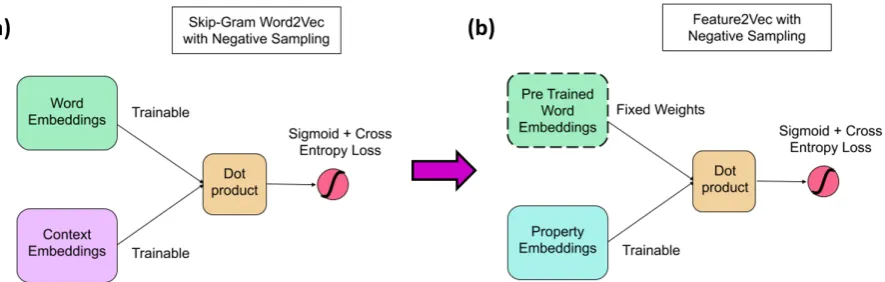
Figure 1: Diagram illustrating the relationship ofFeature2Vecto the standard Skip-Gram Word2Vec architecture.
(a)The standard Skip-Gram Word2Vec architecture with negative sampling. Word and context embeddings are randomly initialized, and both sets of embeddings are trainable. (b) Our Feature2Vec architecture, which uses pretrained word embeddings that are fixed during training. The network learns semantic feature embeddings for feature labels in property norm datasets instead of context embeddings.
performance from a range of values tested.
3.3 Skip-Gram Word2Vec
Mikolov et al.(2013) proposed learning word em-beddings using a predictive neural-network ap-proach. In particular, the skip-gram implemen-tation with negative sampling mines word co-occurrences within a text window, and the net-work must learn to predict the surrounding context from the target word. More specifically, for a vo-cabulary V, two sets of embeddings are learned through gradient decent, one for target embed-dings and one for context embedembed-dings. Given a target wordw ∈ V and a context wordc ∈ V in its window, the network calculates the dot product for the embeddings forwandvand a sigmoid ac-tivation is applied to the output (Fig. 1(a)). Nega-tive samples are also generated for training, where the context is not in the target word’s window. Let
(w, c)∈Dbe the positive word and context pairs and(w, c)∈D0 be the negative word and context pairs. Then, using binary cross entropy loss, we learn a parameterization θ of the neural network that maximizes the function
J(θ) = X
(w,c)∈D
log(σ(vc·vw))
+ X
(w,c)∈D0
log(σ(−vc·vw))
where σ is the sigmoid function and vw and vc are the corresponding real-valued embeddings for the target words and context words (Goldberg and Levy,2014).
In this work, we adapt this skip-gram approach to the task of constructing semantic representa-tions of human property norms by mapping prop-erties into an embedding space (Figure 1). We achieve this by using a neural network to predict the properties from the input word, using the skip-gram architecture with negative sampling on the properties. We replace context embeddings and windowed co-occurrence counts from the conven-tional skip-gram architecture with property em-beddings and concept-feature production frequen-cies. The loss function for training remains the same; however, there are two modifications to the learning process. The first is that the target embed-dings for the concept words are pre-trained (i.e. the GloVe embeddings), and gradients are not ap-plied to this embedding matrix. The layer for the property norms is randomly initialized, and gra-dients are applied to these vectors to learn a se-mantic representation for properties aligned to the pre-trained distributional semantic space for the words. Secondly, the negative samples are gen-erated from randomly sampled properties. We downweight negative samples by multiplying their associated loss by one over the negative sampling rate, so that the system pays more attention to real cases and less to the incorrect negative exam-ples. Due to the sparsity of word-feature produc-tion frequencies, we generate all positive instances and randomly sample negative examples after each epoch to create a new set of training samples. We name this approachFeature2Vec3. We use a
learn-3The code for the model is available at
McRae CSLB
Model Top 1 Top 5 Top 10 Top 20 Top 1 Top 5 Top 10 Top 20
PLSR 50 3.55 14.18 29.79 47.52 2.90 23.19 44.20 60.87
PLSR 120 3.55 25.53 43.26 53.90 7.25 34.78 55.80 71.74
[image:4.595.98.499.61.146.2]Feature2Vec 4.96 34.75 45.39 60.99 4.35 36.23 53.62 76.09
Table 1: Accuracy scores (percent) for retrieving the correct concept from amongst the topNmost similar nearest neighbours. For PLSR, predicted feature vectors for test concepts are compared to actual feature vectors. For Feature2Vec, predicted concept word embeddings are compared to the actual GloVe embedding vectors.
ing rate of0.001and Adam optimization to train for120epochs. We use a negative sampling rate of20for both the McRae and CLSB datasets. In contrast to the PSLR approach,Feature2Veclearns a mapping from the feature norms onto the GloVe embedding space.
4 Experiments
We train with the McRae and CSLB property norms separately and report evaluations for each dataset. For the McRae dataset we use 400 ran-domly selected concepts for training and the re-maining141for testing, and for the CSLB dataset we use500randomly selected concepts for train-ing and the remaintrain-ing138for testing4.
4.1 Predicting Feature Vectors
We first evaluate how well the baseline PLSR model performs on the feature vector reconstruc-tion task used byFagarasan et al. (2015). In this evaluation, the feature vector for a test concept is predicted and we test whether the real concept vec-tor is within the topN most similar neighbours of the predicted vector. We report results over both
50(as inFagarasan et al.(2015)) and120 dimen-sions for a range of values ofN (Table1).
4.2 Constructing Concept Representations from Feature Vectors
For Feature2Vec, we embed property norm fea-tures into the GloVe semantic space, giving a rep-resentation of properties in terms of GloVe dimen-sions. To predict a held-out concept embedding, we build a representation of the concept word by averaging the learned feature embedding vec-tors for that word using the ground truth informa-tion from the property norm dataset. This gives a method to construct embeddings for new words
4We use the Python pickle package to store the numpy
state for reproducible results in our code.
McRae CSLB Model Train Test Train Test PLSR 50 49.52 31.67 50.58 40.25 PLSR 120 68.66 32.97 65.42 40.71 Feature2Vec 90.70 35.33 90.31 44.30
Table 2: The average percentage of features that each method can predict for a given concept vector.
using property knowledge and associated produc-tion frequencies (for example, for a held-out word
unicorn, its GloVe embedding vector might be predicted from all features ofhorse, along with the features is-white, has-a-horn, and is-fantastical). We compare these predicted embeddings to the held-out Glove embeddings (Table1). However, we note that this approach is different to the PLSR models, so we do not make a direct compari-son between PLSR and Feature2vec nearest neigh-bour results. Nevertheless, the results show that the word embeddings composed from the learned
Feature2Vecfeature embeddings appear relatively frequently amongst the most similar neighbour words in the pretrained GloVe space, indicating that feature embedding composition approximates the original word embedddings reasonably well.
4.3 Predicting Property Knowledge
The evaluation task that we are most interested in is how well the models can predict feature knowl-edge for concepts, given the distributional seman-tic vectors. More specifically, for a given con-cept withK features, we wish to take the topK
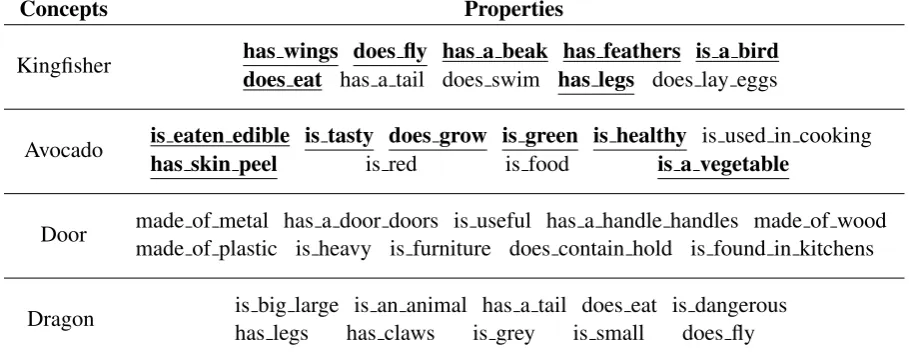
[image:4.595.308.525.210.278.2]Concepts Properties
Kingfisher has wings does fly has a beak has feathers is a bird
does eat has a tail does swim has legs does lay eggs
Avocado is eaten edible is tasty does grow is green is healthy is used in cooking
has skin peel is red is food is a vegetable
Door made of metal has a door doors is useful has a handle handles made of wood made of plastic is heavy is furniture does contain hold is found in kitchens
[image:5.595.70.525.65.246.2]Dragon is big large is an animal has a tail does eat is dangerous has legs has claws is grey is small does fly
Table 3: Top 10 predictions from CSLB-trained Feature2Vec model. The properties in bold and underlined are those that agree with the available ground truth features from the CSLB dataset. The first two concepts are from the CSLB test set, whilst the final two words were randomly sampled from the word embedding lexicon.
rank all feature embeddings by their distance to the embedding for the target word, using cosine similarity, and take the top K most similar fea-tures (Table2). The results demonstrate that Fea-ture2Vec outperforms the PLSR models on prop-erty knowledge prediction, for both training and testing datasets.
4.4 Analysis
Following previous work, we provide the top 10
feature predictions for a few sample concepts, dis-played in Table 3. Properties underlined and in bold represent features that match the available ground truth data (i.e., the concept×feature pair occurs in the norms). The first two words in Ta-ble3were sampled from the CSLB norms test set, whilst the last two words were randomly sampled from the word embedding lexicon and are not con-cept words appearing in the CSLB norms. We find that the predicted features that are not con-tained within the ground truth property set still tend to be quite reasonable, even for the two con-cepts not in the test dataset. As property norms do not represent an exhaustive listing of prop-erty knowledge, this is not surprising, and pre-dicted properties not in the norms are not nec-essarily errors (Devereux et al., 2009;Fagarasan et al., 2015). Moreover, the set of features used within the norms are dependent on the concepts that were presented to the human participants. It is therefore notable that the conceptual represen-tations predicted by our model for the two out-of-norms concept words are particularly plausible,
even though the attributes were never intended to conceptually represent these words. Our analy-sis supports the view that such supervised models could be utilised as an assistive tool for surveying much larger vocabularies of words.
5 Conclusion
We proposed a method for constructing distribu-tional semantic vectors for human property norms from a pretrained vector space model of word meaning, which outperforms previous methods for predicting concept features on two property norm datasets. As discussed by Fagarasan et al.
References
Marco Baroni and Alessandro Lenci. 2010. Dis-tributional memory: A general framework for corpus-based semantics. Computational Linguis-tics, 36(4):673–721.
Piotr Bojanowski, Edouard Grave, Armand Joulin, and Tomas Mikolov. 2017. Enriching word vectors with subword information. Transactions of the Associa-tion for ComputaAssocia-tional Linguistics, 5:135–146.
Guillem Collell and Marie-Francine Moens. 2016. Is an image worth more than a thousand words? on the fine-grain semantic differences between visual and linguistic representations. In Proceedings of COL-ING 2016, the 26th International Conference on Computational Linguistics: Technical Papers, pages 2807–2817.
Steven Derby, Paul Miller, Brian Murphy, and Barry Devereux. 2018. Using sparse semantic embed-dings learned from multimodal text and image data to model human conceptual knowledge. In Pro-ceedings of the 22nd Conference on Computational Natural Language Learning, pages 260–270, Brus-sels, Belgium. Association for Computational Lin-guistics.
Barry Devereux, Nicholas Pilkington, Thierry Poibeau, and Anna Korhonen. 2009. Towards unrestricted, large-scale acquisition of feature-based conceptual representations from corpus data. Research on Lan-guage and Computation, 7(2):137–170.
Barry J Devereux, Lorraine K Tyler, Jeroen Geertzen, and Billi Randall. 2014. The Centre for Speech, Language and the Brain (CSLB) concept property norms. Behavior Research Methods, 46(4):1119– 1127.
Luana Fagarasan, Eva Maria Vecchi, and Stephen Clark. 2015. From distributional semantics to fea-ture norms: grounding semantic models in human perceptual data. InProceedings of the 11th Inter-national Conference on Computational Semantics, pages 52–57.
Yoav Goldberg and Omer Levy. 2014. word2vec explained: deriving mikolov et al.’s negative-sampling word-embedding method. arXiv preprint arXiv:1402.3722.
Colin Kelly, Barry Devereux, and Anna Korhonen. 2012. Semi-supervised learning for automatic con-ceptual property extraction. In Proceedings of the 3rd Workshop on Cognitive Modeling and Com-putational Linguistics (CMCL 2012), pages 11–20, Montr´eal, Canada. Association for Computational Linguistics.
Colin Kelly, Barry Devereux, and Anna Korhonen. 2014. Automatic extraction of property norm-like data from large text corpora. Cognitive Science, 38(4):638–682.
Omer Levy and Yoav Goldberg. 2014. Dependency-based word embeddings. InProceedings of the 52nd Annual Meeting of the Association for Computa-tional Linguistics (Volume 2: Short Papers), vol-ume 2, pages 302–308.
Dandan Li and Douglas Summers-Stay. 2019. Map-ping distributional semantics to property norms with deep neural networks. Big Data and Cognitive Com-puting, 3(2):30.
Lucy Li and Jon Gauthier. 2017. Are distributional representations ready for the real world? Evaluat-ing word vectors for grounded perceptual meanEvaluat-ing. InProceedings of the First Workshop on Language Grounding for Robotics, pages 76–85, Vancouver, Canada. Association for Computational Linguistics.
Ken McRae, George S Cree, Mark S Seidenberg, and Chris McNorgan. 2005. Semantic feature produc-tion norms for a large set of living and nonliving things. Behavior Research Methods, 37(4):547– 559.
Tomas Mikolov, Ilya Sutskever, Kai Chen, Greg S Cor-rado, and Jeff Dean. 2013. Distributed representa-tions of words and phrases and their compositional-ity. InAdvances in Neural Information Processing Systems, pages 3111–3119.
Brian Murphy, Partha Talukdar, and Tom Mitchell. 2012. Learning effective and interpretable seman-tic models using non-negative sparse embedding. In Proceedings of COLING 2012, pages 1933– 1950, Mumbai, India. The COLING 2012 Organiz-ing Committee.
Jeffrey Pennington, Richard Socher, and Christopher Manning. 2014. Glove: Global vectors for word representation. In Proceedings of the 2014 Con-ference on Empirical Methods in Natural Language Processing (EMNLP), pages 1532–1543, Doha, Qatar. Association for Computational Linguistics.
Dana Rubinstein, Effi Levi, Roy Schwartz, and Ari Rappoport. 2015. How well do distributional mod-els capture different types of semantic knowledge? In Proceedings of the 53rd Annual Meeting of the Association for Computational Linguistics and the 7th International Joint Conference on Natural Lan-guage Processing (Volume 2: Short Papers), vol-ume 2, pages 726–730.
L. K. S¸enel, I. Utlu, V. Y¨ucesoy, A. Koc¸, and T. C¸ ukur. 2018. Semantic structure and inter-pretability of word embeddings. IEEE/ACM Trans-actions on Audio, Speech, and Language Process-ing, 26(10):1769–1779.
Carina Silberer. 2017. Grounding the meaning of words with visual attributes. In Visual Attributes, pages 331–362. Springer.