Available Online at www.ijpret.com 155
INTERNATIONAL JOURNAL OF PURE AND
APPLIED RESEARCH IN ENGINEERING AND
TECHNOLOGY
A PATH FOR HORIZING YOUR INNOVATIVE WORK
A NOVEL METHOD FOR SUPER RESOLUTION IMAGE GENERATION USING DWT
WITH EDGE EXTRACTION VIA A SPARSE REPRESENTATION
J. LALITHA1, D. DHANASEKHAR2
1. M. Tech, DECS 2nd year, MJR College of Engineering and Technology, Chittoor, Andhra Pradesh, India - 517 214 (Affiliated To J.N.T. University, Anantapur), Piler.
2. Assistant professor, MJR College of Engineering and Technology, Chittoor , Andhra Pradesh, India, (Affiliated To J.N.T. University, Anantapur),Piler .517214
Accepted Date: 24/07/2015; Published Date: 01/08/2015
\
Abstract: - This letter addresses the issue of producing a super-determination (SR) picture from a solitary low-determination (LR) information picture in the wavelet area. To accomplish a more honed picture, a transitional stage for assessing the high-recurrence (HF) sub groups has been proposed. This stage incorporates an edge conservation methodology and shared insertion between the information LR picture and the HF sub band pictures, as performed through the discrete wavelet change (DWT). Scanty blending weights are figured over pieces of coefficients in a picture, which gives a meager sign representation in the LR picture. The majority of the sub band pictures are utilized to produce the new high-determination picture utilizing the backwards DWT. Trial results demonstrated that the proposed methodology outflanks existing strategies as far as target criteria and subjective observation enhancing the picture determination.
Keywords: Edge extraction, interpolation, sparse mixing estimators, super resolution (SR), wavelet domain.
Corresponding Author: MS. T. KALPANA
Access Online On:
www.ijpret.com
How to Cite This Article:
J. Lalitha, IJPRET, 2015; Volume 3 (12): 155-163
Available Online at www.ijpret.com 156
INTRODUCTION
Available Online at www.ijpret.com 157
methodology that is like the methodology of these wavelet-based calculations, representing both spatial and unearthly wavelet pixel data to improve the determination of a solitary picture. The chief contrast of the novel SR approach in examination with existing systems comprises in the common interjection by means of Lanczos [5], [6] and closest neighbor insertion (NNI) procedures for wavelet change (WT) high-recurrence (HF) subband pictures and edge removing pictures by means of discrete wavelet change (DWT); furthermore, a versatile directional LR picture introduction is figured by evaluating meager picture blend models in a DWT picture. To get power for the SR transform in vicinity of clamor, the novel system utilizes extraordinary denoising sifting, utilizing the nonlocal means (NLM) procedure for the info LR picture [7]. At last, the greater part of the subband pictures are consolidated, recreating by means of opposite DWT (IDWT) the yield HR picture that seems to show prevalence of the outlined calculation as far as the target criteria and subjective discernment (through the human visual framework), in examination with the best existing strategies. To legitimize that the novel calculation called super determination utilizing wavelet area introduction with edge extraction and scanty representation (SR-WDIEE-SR) has genuine points of interest, we have contrasted the proposed SR strategy and other comparative systems, for example, the accompanying: Demirel - Anbarjafari Super Resolution [8], Wavelet Domain Image Resolution Enhancement Using Cycle-Spinning [9], Image Resolution Enhancement by utilizing Discrete and Stationary Wavelet Decomposition [10], Discrete Wavelet Transform-Based Satellite Image Resolution Enhancement [11], and Dual-Tree Complex Wavelet Transform [12]. To learn the viability of the proposed calculation over other wavelet space determination upgrade strategies, various LR pictures of diverse nature (feature and radar) acquired from the Web pages [13], [14] were tried. The principal database comprises of 38 pictures, and the second database contains around 20 radar pictures.
II. PRELIMINARIES:
A. NLM Filtering
The NLM calculation, which is utilized as a part of the denoising phase of this proposition, appraises a pixel ˆx(m, n) by applying the weighted mean of the encompassing commotion debased pixels y(m, n). In the calculation, the estimation of a pixel at position (m, n) is executed as takes after
Available Online at www.ijpret.com 158
B. Additions With Sparse Wavelet Mixtures
The subsampled picture ˆx(m, n) is disintegrated with onelevel DWT in the LL, LH, HL, and HH picture subbands, which are dealt with as frameworks Ψ whose segments (rough guesses and points of interest) are the vectors of a wavelet picture on a single scale {ψd,n}0≤d≤3,n∈G. The disintegration procedure is performed with a double edge framework _ψ whose sections are the double wavelet outlines { ˜ ψd,n}0≤d≤3,n∈G [15]. The wavelet coefficients are composed as takes after: z(d, n) = _ˆx, ψd,n_ = Ψˆx(m, n). wavelet coefficients of every piece of bearing θ increased by their blending weight ˜a(Bθ,q), with the distinction between the divisible Lanczos interpolator V + and a directional interpolator V + θ along θ. 1B is the marker of the rough guess set B. This general interpolator is computed with 20 edges, with pieces having a width of 2 pixels and a length.
III. PROPOSED SR-WDIEE-SR TECHNIQUE
One level of DWT that applies distinctive wavelet families is utilized to break down a data picture. DWT isolates a picture into distinctive sub band pictures, to be specific, LL, LH, HL, and HH, where last three sub bands contain the HF part of the picture. The addition procedure ought to be connected to all sub band pictures. To stifle clamor impact, the novel system applies a denoising method by utilizing the NLM procedure for the info LR picture (see step 1 in Fig. 1). In the proposed SR system, the LR picture is utilized as the info information as a part of the meager representation for the resolution enhancement prepare in the accompanying way (see step 2a in Fig. 1). The LR picture is ascertained by utilizing a 1-D introduction in a provided guidance θ and after that taking after the processings of the new specimens along the oversampled lines, sections, or diagonals. At long last, in this stride, the calculation below fig.
Available Online at www.ijpret.com 159
this distinction is performed in HF subbands by inserting every band by means of the NNI procedure (changing the estimations of pixels in concurrence with the nearest neighbor worth), including extra HF highlights into the HF pictures. To save more edge data (to acquire a more keen improved picture), we have proposed an extraction venture of the edges utilizing HF subbands HH, HL, and LH pictures; next, the edge data is utilized as a part of HF subbands utilizing the NNI procedure (see step 2c in Fig. 1). The edges removed are computed as E =√HH2 + HL2 + LH
IV. SIMULATION RESULTS AND DISCUSSION
Available Online at www.ijpret.com 160
displayed the accompanying: PSNR = 31.12 dB and SSIM = 0.672 on account of our proposition and PSNR = 28.62 dB and SSIM = 0.614 for the better system DASR [8] from the partner calculations. Last correlation of criteria values over picture databases, visual subjective discernment (see Figs. 1 and 2), and results displayed in Tables I and II have additionally affirmed the strength of the present proposition.
V. Exploratory RESULTS
One level of DWT that applies distinctive wavelet families is utilized to break down a data picture. DWT isolates a picture into distinctive sub band pictures, in particular, LL, LH, HL, and HH, where last three sub bands contain the HF segment of the picture. The insertion procedure ought to be connected to all sub band pictures. To smother commotion impact, the novel system applies a denoising method by utilizing the NLM strategy for the data LR picture (see step 1 in Fig. 1). In the proposed SR methodology, the LR picture is utilized as the information as a part of the scanty representation for the determination improvement handle in the accompanying way (see step 2a in Fig. 1). The LR picture is figured by utilizing a 1-D introduction in a provided guidance θ and after that taking after the reckonings of the new specimens along the oversampled lines, segments, or diagonals. At long last, in this stride, the calculation registers the missing specimens along the heading θ from the already figure.
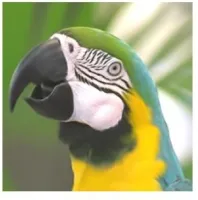
Figure 2: Visual perception results image contaminated by Gaussian additive noise
Available Online at www.ijpret.com 161
Figure 4: the objective criteria and via subjective visual perception in SR when the proposed.
Alluding to the SR picture SAR-B, one can find in Fig. 3 that the novel SR calculation seems to perform better as far as target criteria (PSNR and SSIM), and also in visual subjective observation, especially utilizing wavelet Bior1.3. This can be especially seen in the all around characterized outskirts, where the outlined system restores somewhat rather general geometrical structures and the fine subtle elements give off an impression of being protected better. The introduced examination of numerous reenactment results acquired in the SR for pictures of diverse nature (optical and radar) utilizing cutting edge strategies has demonstrated that the novel SR-WDIEE-SR structure beats different competitormethods, exhibiting better execution. Given that the surfaces and chromaticity properties of these pictures are distinctive, the execution results affirm the vigor of the present proposition. Since the clamor vicinity in LR picture is normal practically speaking, we look at the two arrangement of the novel structure when the NLM channel is utilized, or as in distinctive calculations [8]–[12], this channel is not connected (with the exception of [12]) in the debased picture. In Tables I and II, one can watch the predominance of the proposed SR-WDIEE-SR system, watching better execution in the goal criteria (PSNR, MAE, and SSIM). We performed the correlation assessment of normal target criteria values (PSNR and SSIM) all through all pictures from the said databases (Aerial and SAR) for the proposed system and contender strategies. The outcomes acquired have introduced the accompanying: PSNR = 31.12 dB and SSIM = 0.672 on account of our proposition and PSNR = 28.62 dB and SSIM = 0.614 for the better strategy DASR [8] from the partner calculations. Last correlation of criteria values over picture databases, visual subjective recognition (see Figs. 1 and 2), and results exhibited in Tables I and II have likewise affirmed the strength of the present proposition.
VI. CONCLUSION
Available Online at www.ijpret.com 162
fine elements data that is gotten in WT space, performs meager introduction over a situated square in a LR picture, and uses the NLM denoising calculation for the SR rebuilding. Exploratory results highlight the predominant execution of the proposed calculation as far as target criteria, and also in the subjective observation by means of the human visual framework, in correlation with other ordinary techniques.
REFERENCES
1. Y. V. Shkvarko, J. Tuxpan, and S. R. Santos, “l2 − l1 structured descriptive experiment design regularization based enhancement of fractional SAR imagery,” Signal Process., vol. 93, no. 12, pp. 3553–3566, Dec. 2013.
2. T. M. Lillesand, R. W. Kiefer, and J. W. Chipman, Remote Sensing and Image Interpretation. Hoboken, NJ, USA: Wiley, 2004, xiv 763 pp. Record Number: 20043080717.
3. A. Temizel and T. Vlachos, “Image resolution upscaling in the wavelet domain using directional cycle spinning,” J. Electron. Imaging, vol. 14, no. 4, p. 040501, 2005.
4. M. Elad, M. A. T. Figueiredo, and Y. Ma, “On the role of sparse and redundant representations in image processing,” Proc. IEEE, vol. 98, no. 6, pp. 972–982, Jun. 2010.
5. M. Unser, “Splines: A perfect fit for signal and image processing,” IEEE Signal Process. Mag., vol. 16, no. 6, pp. 22–38, Nov. 1999.
6. K. Turkowski, “Filters for common resampling tasks,” in Graphics Gems. New York, NY, USA: Academic, 1990.
7. M. Protter, M. Elad, H. Takeda, and P. Milanfar, “Generalizing the nonlocal-means to super-resolution reconstruction,” IEEE Trans. Image Process, vol. 18, no. 1, pp. 36–51, Jan. 2009.
8. G. Anbarjafari and H. Demirel, “Image super resolution based on interpolation of wavelet domain high frequency subbands and the spatial domain input image,” ETRI J., vol. 32, no. 3, pp. 390–394, 2010.
9. A. Temizel and T. Vlachos, “Wavelet domain image resolution enhancement using cycle-spinning,” Electron Lett., vol. 41, no. 3, pp. 119–121, Feb. 2005.
Available Online at www.ijpret.com 163
11.H. Demirel and G. Anbarjafari, “Discrete wavelet transform-based satellite image resolution enhancement,” IEEE Trans. Geosci. Remote Sens., vol. 49, no. 6, pp. 1997–2004, Jun. 2011.