An investigation into causes, effects and measures for minimising time overruns in road construction projects in Malawi: the case of Roads Authority
A dissertation submitted in partial fulfilment for the requirements of a
Master of Science Degree in Project Management
By
Aamon Monty Mukasera
ii DECLARATION
I declare that this thesis entitled “An Investigation into causes, effects and measures for minimising time overruns in road construction projects in Malawi: the case of Roads Authority” is the result of my own except as in references. The thesis has not been accepted for any degree and is not concurrently submitted in candidature of any other degree in any other university that I know of.
Aamon Monty Mukasera Date
This project report has been submitted with our approval as University Supervisors.
Duncan Grant Date
Tutor Off - Campus Division
University of Bolton
Landson Thindwa Date
Tutor
iii DEDICATION
iv ACKNOWLEDGEMENT
First and foremost I would like to thank the management of Roads Authority for giving me an opportunity to study for this Masters Degree course whilst still working and offering me a chance to use facilities; and also members of staff for the dissertation input.
Secondly I would like to express my sincere appreciation and gratitude to my supervisors, Mr. Duncan Grant (University of Bolton) and Mr. Landson Thindwa (Malawi Institute of Management) for the support and guidance rendered to me from the time of formulating the proposal, literature review, data collection and report preparation. Contributions from the supervisors immensely contributed to the successful completion of this research.
v ABSTRACT
Construction projects have a worldwide history of being completed beyond their schedule durations. Road construction is not an exception, as such client organisations end up paying huge sums of money in compensations for delayed projects while contractors on the other hand suffer losses from delayed projects.
The study aims at identifying causes, effects and measures for minimising time overruns in road construction projects in Malawi. A detailed literature review and structured questionnaire surveys were used for the study; and results revealed the presence of time overruns in road construction projects in Malawi.
Results of the study have revealed that inadequate planning, inability to pre-finance projects, delays in processing contractors’ payments, delayed mobilisation to project sites, slow decision making, delayed approvals for scope changes, workers risky behaviours, poor planning and scheduling, price fluctuations, political interference, equipment unavailability, inclement weather as causes of time overruns in projects.
Time overruns in road projects have cost overruns, extension of time, claims, disputes, contract termination, loss of profits, project abandonment, poor quality of work due to hurried execution, idling of resources, bankruptcy, arbitration, litigation and loss of employees as their effects.
vi
proper and modern equipment, conducting frequent progress meetings, construction according to drawings and use of up to date technology.
vii Table Contents
LIST OF TABLES ... xiv
LIST OF FIGURES ... xv
ACRONYMS ... xvi
CHAPTER 1: INTRODUCTION ... 1
1.0 CHAPTER INTRODUCTION ... 1
1.1 BACKGROUND ... 1
1.1.1 Construction Time Overruns ... 1
1.2 AIM OF THE STUDY ... 1
1.3 THE PROBLEM STATEMENT ... 2
1.4 OBJECTIVES OF THE STUDY ... 2
1.5 RESEARCH QUESTIONS ... 2
1.6 RATIONALE OF THE STUDY ... 3
1.7 MOTIVATION FOR THE STUDY ... 5
CHAPTER 2: LITERATURE REVIEW ... 6
2.0 CHAPTER INTRODUCTION ... 6
2.1 OVERVIEW OF THE TRANSPORT SECTOR IN MALAWI ... 6
2.2 MALAWI PUBLIC ROAD NETWORK ... 6
2.2.1 Management of Roads in Malawi ... 7
2.2.2 Road Network Coverage ... 9
2.2.3 Road Condition ... 9
viii
2.3 STAKEHOLDERS IN ROAD CONSTRUCTION IN MALAWI ... 11
2.3.1 Ministry of Transport and Public Infrastructure (MoTPI) ... 11
2.3.2 Roads Authority (RA) ... 11
2.3.3 Road Fund Administration (RFA) ... 12
2.3.4 National Construction Industry Council of Malawi (NCIC)... 12
2.3.5 Consulting Firms ... 12
2.3.6 Contractors ... 13
2.4 TIME OVERRUNS IN ROAD PROJECS IN PERSPECTIVE ... 13
2.5 CAUSES OF TIME OVERRUNS IN CONSTRUCTION PROJECTS ... 13
2.5.1 Categorisation of Time Overruns in Construction Projects ... 14
2.5.2 Causes of Time Overruns in Construction Projects ... 16
2.5.3 Effects of Time Overruns in Projects ... 24
2.5.4 Measures for Minimising Time Overruns in Projects ... 27
CHAPTER 3: RESEARCH METHODOLOGY AND DESIGN ... 31
3.0 CHAPTER INTRODUCTION ... 31
3.1 RATIONALE OF THE RESEARCH ... 31
3.2 RESEARCH APPROACH AND DESIGN ... 31
3.2.1 Research Philosophy ... 32
3.2.2 Research Strategy ... 33
3.2.3 Research Design ... 33
3.2.4 Research Time Horizon ... 34
ix
3.3 RESEARCH AREA ... 35
3.4 RESEARCH POPULATION ... 36
3.5 RESEARCH SAMPLE ... 37
3.6 DESK REVIEW ... 38
3.7 USE OF QUESTIONNAIRES ... 39
3.8 RESPONDENTS’ TO THE SURVEY ... 40
3.9 DATA COLLECTION EQUIPMENT ... 40
3.10 DATA COLLECTION ... 40
3.11 DATA COLLECTION PERIOD ... 41
3.12 RANKED DATA ... 41
3.13 ETHICAL CONSIDERATION ... 41
3.14 DATA ANALYSIS ... 42
3.15 CONSISTENCY ... 42
3.15 LIMITATIONS OF THE STUDY ... 43
CHAPTER 4: DATA COLLECTION AND ANALYSIS ... 45
4.0 CHAPTER INTRODUCTION ... 45
4.1 REVIEW OF REPORTS ON COMPLETED ROAD PROJECTS ... 45
4.1.1 Time Overruns on the Mzimba - Eswazini - Mzalangwe Road Project .... 45
4.1.2 Causes of Time Overruns on Lumbadzi – Dowa – Chezi Road Project .... 47
x
4.1.4 Causes of Time Overruns on the Chikwawa – Nchalo – Bangula Road
Project: Chikwawa – Nchalo – Ngabu Section ... 48
4.1.5 Causes of Time Overruns on the Lilongwe City West Bypass ... 49
4.1.6 Lessons Learnt ... 49
4.2 ANALYSIS OF QUANTITATIVE DATA ... 49
4.2.1 Background Information Results ... 50
4.2.2 Technical Experience of Respondents ... 52
4.2.3 Analysed Results of Time Overrun Causes in Road Projects ... 57
4.2.4 Effects of Time Overruns in Road Construction Projects ... 69
4.2.5 Measures for Mitigating Time Overruns in Road Construction Projects 71 CHAPTER 5: DISCUSSION OF RESULTS ... 73
5.0 CHAPTER INTRODUCTION ... 73
5.1 TIME OVERRUN CAUSES IN ROAD CONSTRUCTION PROJECTS ... 73
5.1.1 Inadequate Planning ... 73
5.1.2 Inadequate financial capacity to finance project ... 74
5.1.3 Delays in processing contractors’ payments ... 74
5.1.4 Delays in mobilising to projects sites ... 75
5.1.5 Slow decision making processes ... 75
5.1.6 Delayed approvals for major changes in the scope of works ... 75
5.1.7 Workers risky behaviour ... 76
5.1.8 Poor planning and scheduling of project activities ... 76
xi
5.1.10 Political interference ... 77
5.1.11 Delays in certifying contractors’ payment certificates ... 78
5.1.12 Unavailability of equipment ... 78
5.1.13 Effects of weather on road construction works ... 79
5.1.14 Unavailability of qualified workforce ... 79
5.1.15 Design changes by clients during construction ... 79
5.2 EFFECTS OF TIME OVERRUNS IN ROAD PROJECTS ... 80
5.2.1 Cost Overruns ... 80
5.2.2 Extension of Performance Period ... 80
5.2.3 Claims... 81
5.2.4 Disputes between contractual parties ... 81
5.2.5 Contract termination ... 81
5.2.6 Loss of profits by contractors ... 81
5.2.7 Project abandonment ... 82
5.2.8 Poor quality of work due to hurried execution ... 82
5.2.9 Negative social impact ... 82
5.2.10 Idling of resources ... 82
5.3 MEASURES FOR MITIGATING TIME OVERRUNS IN ROAD CONSTRUCTION PROJECTS ... 83
5.3.1 Proper project planning and scheduling... 83
5.3.2 Effective and efficient management of sites and supervision works ... 83
xii
5.3.4 Coordination between the construction team ... 84
5.3.5 Use of accurate cost estimates when formulating bills of quantities ... 84
5.3.6 Effective strategic planning ... 85
5.3.7 Adherence to construction specifications... 85
5.3.8 Employing appropriate construction methods ... 85
5.3.9 Use of proper and modern equipment ... 86
5.3.10 Conducting frequent progress meetings ... 86
CHAPTER 6: CONCLUSIONS AND RECOMMENDATIONS ... 87
6.0 CHAPTER INTRODUCTION ... 87
6.1 CONCLUSIONS ... 87
6.1.1 Factors Causing Time Overruns in Road Construction Projects ... 87
6.1.2 Effects of time Overruns in Road Construction Projects ... 92
6.1.3 Measures for minimising time overruns in road construction projects .. 95
6.2 GENERAL RESEARCH CONCLUSION ... 97
6.3 RECOMMENDATIONS ... 98
6.3.1 Secure reliable and adequate funding for the entire project duration ... 98
6.3.2 Ensure availability of complete designs at project commencement ... 98
6.3.3 Awarding contracts to technically and financially capable contractors .. 98
6.3.4 Government to revamp activities of P.V.H.O ... 98
6.3.5 Implementation of measures for minimising time overruns in projects . 99 6.3.6 Frequent holding of progress site meetings ... 99
xiii
BIBLIOGRAPHY ... 100
APPENDICES ... 112
APPENDIX 1: Letter Authorising the Research... 113
APPENDIX 2: Request to Conduct a Research within RA ... 114
APPENDIX 3: Authorisation Letter to Carry Out the Reaserch within RA ... 115
APPENDIX 4: Ranking of All the Causes of Time Overruns in Road Projects .... 116
xiv LIST OF TABLES
Table 1: Time Overruns in RA Road Construction Projects ... 4
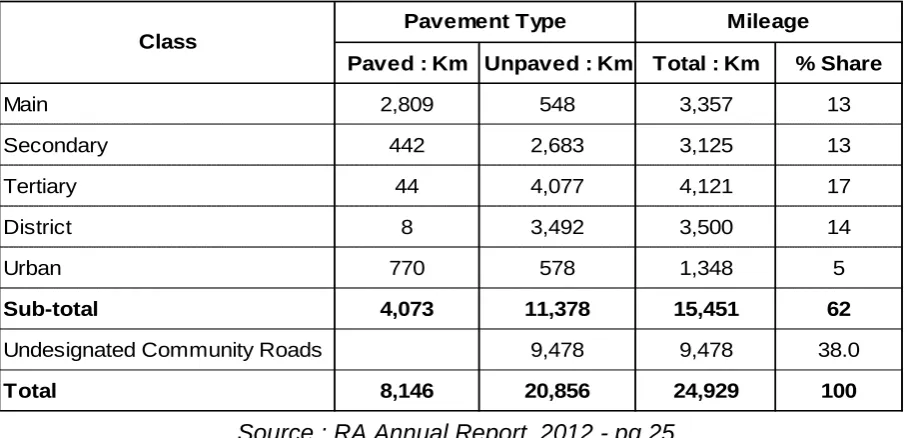
Table 2: Malawi Road Network – 2010 ... 9
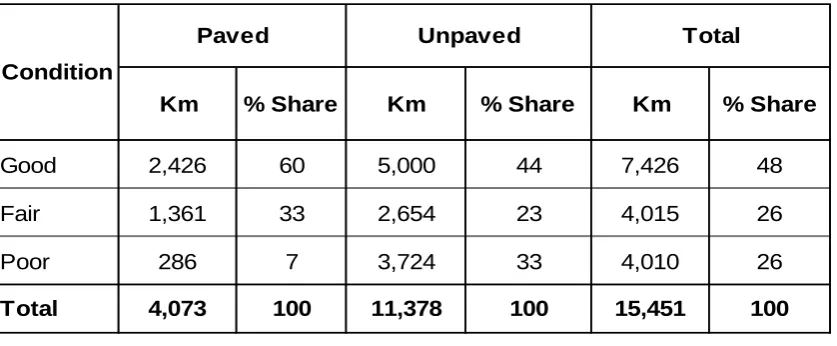
Table 3: Malawi Road Condition – 2010 ... 10
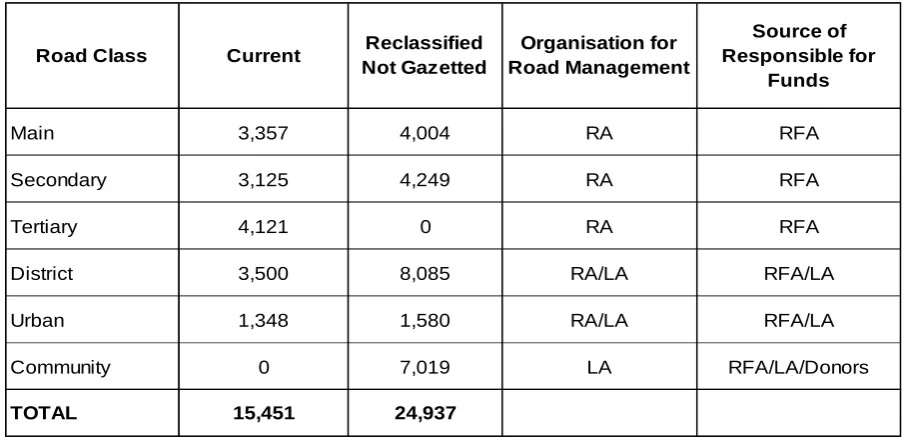
Table 4: Management Responsibility of the Road Network ... 11
Table 5: Showing questionnaire responses ... 38
Table 6: Cronbach’s Tests Consistency Results ... 43
Table 7: Project Details on Contract Durations and Budgets ... 46
Table 8: Ranking of Client Related Causes of Time Overruns ... 58
Table 9: Ranking of Consultant Related Causes of Time Overruns ... 59
Table 10: Ranking of Consultant Related Causes of Time Overruns ... 61
Table 11: Ranking of Labour Related Causes of Time Overruns ... 62
Table 12: Ranking of Material Related Causes of Time Overruns ... 63
Table 13: Ranking of Labour Related Causes of Time Overruns ... 64
Table 14: Ranking of Health and Safety Related Causes of Time Overruns ... 66
Table 15: Ranking of Consultant Related Causes of Time Overruns ... 67
Table 16 : Top 15 Frequent Causes of Time Overruns in Road Project in Malawi ... 68
Table 17 : Group Ranking of Causes of Time Overruns in Road Project ... 69
Table 18 : Effects of Time Overruns in Road Construction Projects in Malawi ... 70
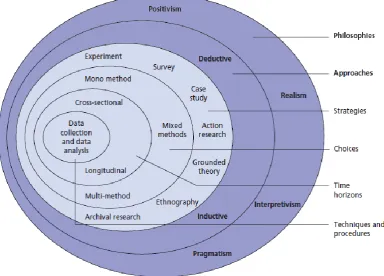
Figure I: Research Onion ... 32
Figure II: Map of Malawi ... 36
Figure III: Respondents’ Organisation ... 51
Figure IV: Respondents’ Positions ... 52
Figure V: No. of Respondents’ Years in the Road Construction Industry ... 53
Figure VI: No of projects respondents were involved in ... 54
Figure VII: Road projects completed outside duration ... 55
Figure VIII: No. of projects completed within duration ... 56
ANRP Annual National Roads Plan CPM Critical Path Method
GoM Government of Malawi MoF Ministry of Finance
MoTPI Ministry of Transport and Public Infrastructure MoW Ministry of Works and Supplies
UAE United Arab Emirates
NCIC National Construction Industry Council of Malawi PCR Project Completion Report
RA Road Authority
RFA Road Fund Administration RMI Road Maintenance Initiative SSA Sub-Saharan Africa
USA United States of America
Km Kilometre
1 CHAPTER 1: INTRODUCTION
1.0 CHAPTER INTRODUCTION
1.1 BACKGROUND
This dissertation aims at finding causes, effects and determining measures for minimise time overruns in the road construction projects in Malawi. Outlined in this introductory chapter are highlights of various components of the study and structure which the study will follow. The components of the study comprise of the aim, problem statement, objectives, research questions, purpose, rationale and motivation for the study.
1.1.1 Construction Time Overruns
Construction projects have a worldwide history of exceeding their time durations and initial budgets when completed (Farid & El-sayegh, 2006). Kaming, et al., (1997) define time overruns as delays in project implementation period beyond the contract duration. Assaf & Al-Hejji (2006) define time overruns as time slip from the initial planned time; and these are a common phenomenon in construction projects. Studies by (Assaf & Al-Hejji, 2006) on time overruns indicated that project owners suffer from revenue losses, while contractors are affected by high overhead costs due to increased working durations, high material costs due to inflation and increased labour costs if projects experience time overruns.
1.2 AIM OF THE STUDY
2 1.3 THE PROBLEM STATEMENT
Road construction projects in Malawi are rarely completed on time; as such there is a need to identify causes of time overruns, determine their effects and identify measures which can minimise the occurrence of time overruns. This compounded by quarterly report of the RA’s Construction Department report as at 31st
December, 2015 where it was indicated that road construction projects had exceeded their scheduled durations. (See Table 1).
1.4 OBJECTIVES OF THE STUDY The study objectives are as listed below:
to determine factors that cause time overruns in road construction projects in Malawi;
to analyse effects of time overruns in road construction projects in Malawi;
to recommend measures for minimising time overruns in road construction projects in Malawi.
1.5 RESEARCH QUESTIONS
The research will attempt to answer the following questions:
(i) What are the factors that causes time overruns in the road construction industry in Malawi?
(ii) What are the effects of time overruns in the road construction industry in Malawi?
3 1.6 RATIONALE OF THE STUDY
The rationale behind the study was an article which appeared in the Nation Newspaper of 30th May, 2015 (local daily) where it was reported that the Malawi Government owes construction contractors over MK 14.63 billion (US$ 32.51 million) of tax payers’ money in interests due to delayed payment and time overruns in road construction projects.
Quarterly report of RA’s Construction Department of December, 2015 highlights the time overruns experienced in road construction projects in the past 5-10 years (See Table 1)
4 No. Project Name and Description Source of
Funding Length (km) Start Date
Original Completion Date
Revised Completion Date
Time Overrun Duration
1 Mzimba - Mzalangwe road upgrading from earth to bitumen standard class 2 GoM 62 1-May-09 31-Dec-12 31-Dec-14 24 months
2 Lumbadzi - Dowa - Chezi road upgrading from earth to bitumen standard class
1+ Namitete hospital road upgrading from earth to low volume sealed road GoM 39 1-Jul-08 1-Jul-11 30-Dec-15 36 months
3 Goliati - Chiperone + Mulanje Mission Hospital Road and Thyolo Market Road
upgrading from earth to bitumen standard classs 1 GoM 21.1 8-Sep-08 7-May-10 17-Mar-12 24 months
4 Ekwendeni - Ezondweni Road Upgrading from Earth to Bitumen Standard Class
2 GoM 25 17-Apr-08 17-Apr-10 15-Dec-12 31 months
5 Nsanje - Bangula Road Upgrading from Earth to Bitumen Standard Class 1 GoM 48 17-Apr-08 24-Apr-10 17-Mar-11 9 months
6 Lilongwe - Nsipe Road: Dedza-Nsipe Section Periodic Maintenance and
Rehabilitation GoM 83.5 21-Nov-08 30-Nov-12 2-Feb-13 3 months
7 Chikwawa - Nchalo - Bangula Road: Ngabu - Bangula SectionPperiodic
Maintenance and Rehabilitation GoM 35 3-Sep-12 2-Sep-14 2-Dec-14 3 months
8 Chikhwawa -Bangula road: Chikwawa- Ngabu Section periodic maintenance and
rehabilitation EU 46 24-Nov-08 23-Nov-10 4-Aug-12 22 months
9 Mchinji - Kawere Uoad Upgrading from Earth to Low Volume Sealed oad EU 26 25-May-10 23-Nov-11 2-Nov-12 18 months
10 Lilongwe City West Bypass new construction to bitumen standard class 1 road AfDB & GoM 13.4 19-Nov-12 19-May-14 12-Nov-14 6 months
11 Blantyre - Zomba Paved Road Reconstruction AfDB & GoM 60 19-Mar-12 18-Mar-14 13-Aug-14 5 months Table 1: Time Overruns in RA Road Construction Projects
5 1.7 MOTIVATION FOR THE STUDY
6 CHAPTER 2: LITERATURE REVIEW
2.0 CHAPTER INTRODUCTION
This chapter gives a theoretical review and perceptions of construction time overruns in the construction industry worlds over. The chapter will give an overview of the transport sector in Malawi, discuss past theories of causes, effects and measures which were employed to mitigate and possibly eliminate the occurrence of time overruns in construction projects.
2.1 OVERVIEW OF THE TRANSPORT SECTOR IN MALAWI
The transport sector in Malawi comprises of road, rail, water and air (Kulemeka, 2010) and has in the last five years had its share on the national economy averaging 4.4% of the country’s GDP (Kulemeka, 2010). Being a landlocked Malawi relies on road and rail transport in handling freight and passenger traffic. However, washing away of the rail embankment at Chiromo Bridge in Nsanje District and the dilapidated 77km section of the rail line at Nacala Port has resulted in making road transport as the easily accessible and affordable means of transporting goods and passengers in Malawi (Ministry of Transport and Public Infrastructure, 2011).
2.2 MALAWI PUBLIC ROAD NETWORK
Malawi’s national policy on transport seeks to provide a safe and competitive transport environment which is commercially viable, economically sustainable and environmentally friendly (Emuze & S.Kadangwe, 2013).
cross-7
border trade and linkage of production and consuming areas at national, sub-regional and international levels (Emuze & S.Kadangwe, 2013).
Malawi’s public road network is categorised into main, secondary, tertiary, urban and district roads (Roads Authority, 2011). The five categories are defined blow:
(a) main roads: designated inter-territorial roads that provide high mobility degree by connecting provincial capitals and serving as international corridors.
(b) secondary roads: designated roads outside cities and towns that provide high mobility degree by linking populations and production centres to main road network.
(c) tertiary roads: designated roads outside cities and towns that link collector roads to arterial roads thereby providing shorter trips and feeding arterial road network
(d) district roads: roads designated in consultation with DA and found outside town and provide intermediate level of service through connection of local population, developed area and districts to the principal arterial system; and
(e) urban roads: undesignated roads in urban comprising of arterial and collector roads and provide shorter trips at low speeds in smaller communities.
2.2.1 Management of Roads in Malawi
8
hence government placing great emphasis on maintenance, rehabilitation and construction of roads in Malawi.
Prior to 1998, all road works were under Ministry of Works and Supplies (MoW) with implementation funding from Ministry of Finance (MoF). However, the country’s’ poor economic state coupled with competing demands for financial resources from other sectors, allocations for road works failed to match with maintenance requirements as a result service delivery in road infrastructure management and development deteriorated immensely as evidenced in the early 1990’s (Kulemeka, 2010). In 1995, GoM instituted the Road Maintenance Initiative (RMI) studies to effectively address management and development of road infrastructure and funding problems (Kulemeka, 2010) with an aim of ensuring sustainability on investments made on road networks through revenue generation from road users.
Successful implementation of RMI study results required the establishment of an agency outside the public service to manage the road network and account for resources in line with the set goals of maintaining and developing the road infrastructure. In 1998, National Roads Authority (NRA) through Act of Parliament was created with the following mandates:
ensuring maintenance and rehabilitation of public roads throughout the year
raising funds for maintenance and rehabilitation for all public roads advising the Minister, and where appropriate Local Government
Minister on efficient and effective preparation and implementation of ANRPs; and controlling overloaded vehicles
9
Paved : Km Unpaved : Km Total : Km % Share
Main 2,809 548 3,357 13
Secondary 442 2,683 3,125 13
Tertiary 44 4,077 4,121 17
District 8 3,492 3,500 14
Urban 770 578 1,348 5
Sub-total 4,073 11,378 15,451 62
Undesignated Community Roads 9,478 9,478 38.0
Total 8,146 20,856 24,929 100
Class
Pavement Type Mileage
Authority (RA) through an Act of Parliament No.: 3 of 2006 and Road Fund Administration (RFA) through another Act of Parliament No.: 4 of 2006 (Roads Authority, 2011).
2.2.2 Road Network Coverage
Malawi has road network of 15,451 km, of which 4,073 km are of paved surface representing 29% (Roads Authority, 2010). In 2010, Ministry of Transport and Public Infrastructure (MoTPI) carried out studies on the road network and identified an additional 9,478 km of undesignated road network which serve rural communities resulting in a total road network of 25,000 km, upon gazetting of the new road network classification.
Table 2: Malawi Road Network – 2010
Source : RA Annual Report, 2012 - pg 25 2.2.3 Road Condition
10
Km % Share Km % Share Km % Share
Good 2,426 60 5,000 44 7,426 48
Fair 1,361 33 2,654 23 4,015 26
Poor 286 7 3,724 33 4,010 26
Total 4,073 100 11,378 100 15,451 100
Condition
Paved Unpaved Total
road network had 33% of good, 38% of fair and 29% of poor condition. See table below.
Table 3: Malawi Road Condition – 2010
Source: RA Annual Report, 2012 - pg. 25
2.2.4 Responsibilities on the Road Network
The responsibility of maintaining, rehabilitation and constructing public roads in Malawi is entrusted in RA. Further, RA is entrusted with advising Minister responsible for roads; Local Government Minister on preparation, effective and efficient preparation of ANRPs as referred to in Section 22 of Roads Act. However, Public Roads Act of 1962 gave Local Assemblies (LA) the responsibility of maintain urban and district roads under their jurisdiction.
11
Main 3,357 4,004 RA RFA
Secondary 3,125 4,249 RA RFA
Tertiary 4,121 0 RA RFA
District 3,500 8,085 RA/LA RFA/LA
Urban 1,348 1,580 RA/LA RFA/LA
Community 0 7,019 LA RFA/LA/Donors
TOTAL 15,451 24,937
Source of Responsible for
Funds Reclassified
Not Gazetted
Organisation for Road Management Current
Road Class
Table 4: Management Responsibility of the Road Network
Source: RA Annual Report, 2012 - pg. 26
2.3 STAKEHOLDERS IN ROAD CONSTRUCTION IN MALAWI 2.3.1 Ministry of Transport and Public Infrastructure (MoTPI)
This is being the mother ministry, is responsible for policy formulation in the roads sector, donor fund coordination, implementation and monitoring of road construction projects. The focus of the ministry is on the provision of a well coordinated transport environment that fosters a safe and competitive operation of commercially viable, financially sustainable, and environmentally friendly transport services, enterprise for social development, provision of an all weather road network and regulation of construction and maintenance works through law enforcement policies and standards on the national road network.
2.3.2 Roads Authority (RA)
RA is a government institution which was established through Act of Parliament No.: 3 of 2006 to manage recurrent programmes funded by RFA and development
12 2.3.3 Road Fund Administration (RFA)
RFA is a government institution which was established through Act of Parliament No.: 4 of 2006 of Parliament to raise, administer and account for funds for maintenance, rehabilitation and construction of public roads in Malawi. RFA sources its funds from fuel levy, parliament appropriations, loans, transit fees, grants, road charges and donations to effect routine and periodic road maintenance, road safety activities, emergency works, feasibility studies and road traffic management studies.
Through its audit department, RFA monitor road works programmes through physical site inspections, progress tracking through desk reviews of consultants’ progress reports and review of contractors’ and consultants’ payments certificates to monitor financial progress.
2.3.4 National Construction Industry Council of Malawi (NCIC)
NCIC is a government institution which was established through an Act of Parliament of 1996 with a mandate to be regulating, developing and promoting the construction industry in Malawi. (GoM , 1996). NCIC’s construction policy ensures that there is an enabling environment for the development of a vibrant, efficient and sustainable local construction industry.
2.3.5 Consulting Firms
Consulting firms are key stakeholders in road construction projects since they are entrusted with the design, supervision of maintenance, rehabilitation and
13 2.3.6 Contractors
Contractors in a project are firms who are entrusted with provision of materials, labour, equipment and other related services in order to execute works on a project (Lock, 2007).
2.4 TIME OVERRUNS IN ROAD PROJECS IN PERSPECTIVE
The importance of roads in the socio-economic development and subsequent growth of any nation cannot be over emphasised. As such, completion of road construction in time is of paramount importance. Timely completion of road projects is influenced by several factors; time being one such important factor project management (Divakar & Subramanian, 2009); (Nkado, 1995) and (Latham, 1994).
In Malawi, time overruns are a common scenario in construction projects despite the causes being known (Kamanga & Steyn, 2013), as such the study will provide channels through which energies and resources of technocrats can be directed into in mitigating time overruns in construction projects.
2.5 CAUSES OF TIME OVERRUNS IN CONSTRUCTION PROJECTS
Success in construction projects is when projects are delivered within the planned budget, duration, and with the expected quality (Owolabi, et al., 2014) and (Frimpong, et al., 2003). Inability to complete the execution of construction works within the planned duration is referred to as time overrun (Kaming, et al., 1997) and (Alkhathami, 2004).
14
2.5.1 Categorisation of Time Overruns in Construction Projects
Wei (2010) categorised causes of time overruns in construction project based on the causal factor and the one responsible for the time overrun. As such, it is important to acquire ample knowledge on the cause of time overruns before devising strategies for mitigating and eliminating effects of time overruns (Braimah, 2008).
The study has adopted an approach by (Theodore, 2009) in categorising time overruns and the discussing them in detail as follows:
critical or non-critical
excusable or non-excusable
compensable or non-compensable
concurrent or non-concurrent
2.5.1.1 Critical and Non-critical Time Overruns
Theodore (2009) define critical time overruns as overruns that affect project completion date or milestone date and non-critical time overruns as overruns that have no effect on the project completion date or milestone date. Theodore (2009) explains time overruns concept is derived from the critical path method (CPM) in scheduling project activities. In all projects, there are activities on the critical path and any delays in execution such activities result in time overruns.
15
2.5.1.2 Excusable and Non-excusable Time Overruns
Theodore (2009) narrated that all time overruns are either excusable or non-excusable and further explained that non-excusable time overruns are caused by unforeseeable events which beyond contractors’ control while non-excusable time overruns are caused by events which are within contractors’ control and are foreseeable. Contractors are entitled to time extensions when critical project activities are affected by excusable time overruns; while an adjustment on the float time is effected when non-critical activities are affected by excusable time overruns (Alkass, et al., 1996).
Excusable time overruns are effected in the event of severe weather, floods, strikes, fire, owner related changes, differing site conditions, change in government policies and government/stakeholders interventions whilst non-excusable time overruns are a result of delayed completion of works by sub-contractors, delayed performance by suppliers, faulty workmanship by main/sub-contractors, strikes due to contractor’s unwillingness to meet labourers’ representative or unfair labour laws (Theodore, 2009).
Contractors or their suppliers are the main causes of non-excusable time overruns; as such they are entitled to any relief and the only way out is to accelerate works to make up for lost time or compensating the client
2.5.1.3 Compensable and Non-Compensable Time Overruns
16
Compensations are effected on compensable time overruns which in most cases are caused by clients’ agents. In principle compensations cannot be effected on non-compensable time overruns even though they are excusable.
2.5.1.4 Concurrent Time Overruns
Concurrent time overruns come into effect when two or more overruns occur at the same time and affect project durations (Theodore, 2009). Contractors cannot raise claims, apply for time extensions and seek compensations on all concurrent time overruns; hence the need to analyse and consider causes of time overruns, by taking note of the time, the overrun occurred, its impact on the project, its duration and the available floats in the time schedule (Theodore, 2009).
Further, analysis of concurrent time overruns by (Theodore, 2009) concluded that where there are more than two excusable delays, extension of time is granted when the time overruns are excusable and non-excusable; or the time overrun is shared between the client and the contractor or else circumstances determine the effectiveness of granting a time extension.
2.5.2 Causes of Time Overruns in Construction Projects
Construction time overruns in construction projects are found at caused by several factors. Categories of time overrun causes were compiled after an extensive literature review which was based on by (Theodore, 2009) where clients, consultants, contractors, equipment, materials, labour and external factors were identified as the cause of time overruns in projects.
2.5.2.1 Client Related Causes of Time Overruns
Literature review revealed time overruns caused by clients are one of the major
17
Assaf & Al-Hejji (2006) identified bureaucratic tendencies in decision making,
delayed design and revision approvals, delays in processing certificates for executed
works, delayed material sample approvals, delayed site handovers, poor
coordination and communication with key stakeholders, conflicts in co-sponsored
projects, suspension of works and lack of incentives for contractors who finish works
on time as factors that causes time overruns in construction projects.
Clients in Kenya were faulted on time overruns due to their unrealistic estimations on project durations. A study (Kivaa, 2000) revealed that most project durations are determined through the estimators’ intuition and is based on experience and skill. Memon (2014) in a study of contractors perspective on time overruns factors in Malaysia identified initial budget assessment errors, site hazards, insufficient project feasibility studies and multiple request on modifications as causes of time overruns in construction projects.
Alinaitwe, et al.( 2013) identified scope changes and delayed payments for completed works as cause of time overruns related to clients.
18
In Malawi, (Kamanga & Steyn, 2013) identified delays in processing payments for
contractors and clients’ financial difficulties as the causes of time overruns in
construction projects related to clients. These findings are in agreement with results
of similar studies conducted by (Akgobe, et al., 2013) in Benin, (El-Razek, et al.,
2008) in Egypt and (Le-Hoai, et al., 2008) in Vietnam.
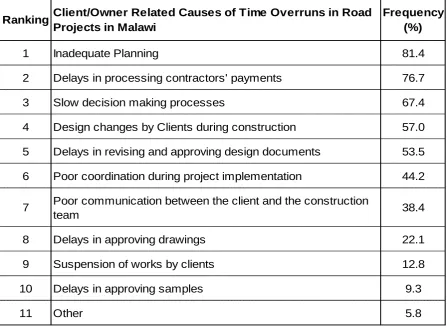
In summarising the client related causes of time overruns in construction projects, (Theodore, 2009) listed the following nine causes of time overruns: delays in processing payments for contractors, delays in furnishing and delivering sites to contractors, changes in drawings during construction by clients, delays in approving drawings and sample materials, poor communication and coordination between contractual parties, delays in decision making process, conflicts in projects which are jointly owned and suspension of works by the clients.
2.5.2.2 Consultant Related Causes of Time Overruns
Osman, et al. (2009) and Wei (2010) revealed that consultants have had their share in causing time overruns in construction projects. Delays in approving changes in the scope of works were a major cause of time overruns which was related to consultants.
Further studies by (Baloyi & Bekker, 2011) on consultants’ actions and inactions on construction projects identified issuance of incomplete drawings and delays in issuing instructions as factors causing time overruns in projects; this is supported by findings of study by Alaghbari, et al., (2007) who identified delays in deploying personnel on site and delays in issuing instructions as causes of time overruns in construction projects.
19
construction projects since contractors are made for consultants while they re-work on the designs.
Further, (Motaleb & Kishk, 2010) in UAE identified inexperience of consultants, while (Ren, et al., 2008) in Dubai had incomplete drawings, delayed approval of contract documents, incomplete contract documents, drawing and specification changes and durations taken to inspect completed works as the root causes of time overruns in construction projects.
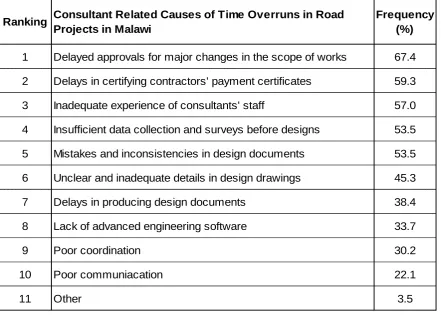
In summary (Theodore, 2009) listed delays in approving major changes in the scope of work, poor coordination and communication, consultants’ staff inadequate experience, discrepancies and mistakes in design documents, delays in the production of design documents, inadequate and unclear details in construction drawings, insufficient data collection and surveys before designs and lack of advanced engineering design software as the causes of time overruns in construction projects.
2.5.2.3 Contractor Related Causes of Time Overruns
Contractors actions and inaction in implementing construction works have also resulted in time overruns. Ren, et al. (2008) established that the non-preparing of method statements, inadequate project financing, poor communication and construction mistakes are some of the causes of time overruns related to the contractor.
20
and inexperienced technical staff and delays in mobilising to project sites as causes of time overruns related to contractors; and this is in agreement findings of studies by (Frimpong, et al., 2003) in Ghana, (SNL Financial, 2010) in USA, and (Memon, 2014) in Malaysia.
Owolabi, et al. (2014) in Nigeria identified inadequate flow of information from consultants as one cause to time overruns in construction project.
Theodore (2009) summarised the cause of time overruns related contractors in mobilisation delays to sites, difficulties in financing projects, ineffective planning and scheduling, construction errors resulting in re-works, conflicts in sub-contractors work scheduling, poor technical skills on contractors’ staff, delays in sub-contracting works, frequents change of sub-contractors, poor communication and coordination, use of improper construction methods, delayed completion of works by sub-contractors and conflicts between contractual parties.
2.5.2.4 Equipment Related Causes
21
causes of time overruns in construction projects. These findings are in agreement with findings by (Wei, 2010).
In Gaza strip, (Enshassi, et al., 2009) established that equipment unavailability, equipment ineffectiveness and allocation of equipment low skilled operators as equipment related causes of time overruns while (Sambasivan & Soon, 2007) identified availability and condition of available equipment (i.e. old age) as the cause of time overruns in construction
Further studies by (Rivas, et al., 2011) on construction companies in Chile established that time overruns are also caused low level of equipment operators’ skills and their coordination.
Theodore (2009) summarised equipment related causes of time overruns as follows: breakdown of equipment, equipment shortages, equipment operators’ low level skills, efficiency and low productivity of equipment, unavailability of high-tech mechanical equipment, use of obsolete equipment and usage of wrong equipment.
2.5.2.5 Material Related Causes
Materials play an important role in the successful implementation of construction projects. However projects experience material related time due to several factors. An internet study carried out by (Moura & Teixeira, 2006) established that poor quality materials, poor scheduling, delayed procurement and specification changes are likely to cause time overruns in construction projects. In very extreme cases material type and quality can affect the safety of individuals on site.
22
completion of projects. Further (Le-Hoai, et al., 2008) in a study of time overruns in large construction project in Vietnam identified price fluctuation as another cause of time overruns in construction projects.
Pourrostam & Ismail (2011) established that unavailability of materials and delays in delivering them to project sites contributed immensely to time overruns in Iranian construction projects while (Shaikh, et al., 2010) identified late delivery of materials as major factor contributing to time overruns in construction projects.
Theodore (2009) summarised the material related causes of time overruns in construction projects as follows: unavailability of construction materials in markets, material type changes during construction, delays in delivering materials, damage to sorted materials while they required urgently, delays in the manufacture of special building materials and delays in procuring materials
2.5.2.6 Labour Related Causes
A productive human resource plays an important role in the successful completion of construction projects.
Aigbavboa, et al. (2014), Assaf & Al-Hejji (2006) and Sambasivan & Soon (2007) in their respective studies, identified labour shortage, conflicts amongst workers, low levels of productivity and work permit processing delays as the causes of time overruns in projects related to labour.
23
personal worker conflicts as some of the labour related time overruns in construction projects.
2.5.2.7 Health and Safety Related Causes of Time Overruns
A health and secure works force plays an important role in the successful implementation of construction projects. However, inadequate health and safety measures in construction projects have resulted in loss of lives and time overruns in construction projects. Enshassi, et al. (2009) identified working in unsafe areas, accidents during construction works, failure to use safety and equipment during construction works, as causes of time overruns in construction projects. Further (Work Safe New Zealand, 2016) tired, sick or injured, making mistakes deliberately, taking minds off work issues, working in unsafe areas, pressure from bosses resulting in mistakes, short cuts on purpose (to save time) and use of faulty machinery or equipment on breakdown as risky behaviours at work places.
2.5.2.8 External Related Causes of Time Overruns
Literature review of the causes of time overruns presented in the foregone sections is mainly due to actions and inactions of the project. Construction time overruns which cannot be attributed to the project team are a result of external related factors.
24
Further, studies by (Baldwin & Manthei, 1971) in USA and (Memon, 2014) in Malaysia identified weather and unforseen ground conditions as a major external factor related causes of time overruns in construction projects.
Mahamid, et al. (2012) identified awarding of contracts to lowest bidders as the major external factor related cause of time overruns in road construction projects in West Bank, while (Shebob, et al., 2012) identified differences in global set up and technological advancements as external related causes of overruns.
Theodore (2009) summarise the external related causes of time overruns in construction projects as follow: subsurface and ground condition effects, delays in permit issuance by government agencies, effects of weather on construction activities, restrictions and traffic control on site, occurrence of accidents during construction, changes in government laws and regulations, service provider delays on utilities and delayed final inspections and certifications.
2.5.3 Effects of Time Overruns in Projects
Pourrostam & Ismail (2011) define effects of construction time overruns as outcomes of not effectively working on the identified causes of time overruns in construction projects.
A study on the effects of time overruns in Libya by (Denini, 2010) identified the following thirteen effects: cost overrun, time overrun, contractual disputes, decrease in financial commitment by owners, claims, acceleration, reduced quality, negative social impacts, reduced safety, litigation, arbitration, contract termination and complete abandonment of the project while further studies on the effects of time
25
bankruptcy, litigation, creation of stress on contractors, total project abandonment and acceleration of losses.
Similar studies in Libya by (Saleh, et al., 2009) revealed that time overruns lead to loss of interest in the project by stakeholders, loss of resources (i.e. money and time), being blacklisted by authorities and reputation declination as effects of time overruns a study by (Sunjka & Jacob, 2013) in Niger Delta identified time overruns, budget overrun, poor quality of completed projects, bad public relations, litigation, arbitration, disputes and claims; and total project abandonment
However, the study will elaborate on the following major effects of time overruns as established by a comprehensive study by (Pourrostam & Ismail, 2011).
2.5.3.1 Time Overruns
Construction projects experience time overruns when the stipulated completion time is pushed forward (Sunjka & Jacob, 2013). Time overruns in projects are due to inclement weather, resource unavailability and delays in design. Vidalis & Najafi (2002) in their study of time overruns in highway projects attributed time overruns to activities in projects which have internal or external cause and effect relationships.
2.5.3.2 Budget Overruns
Sunjka & Jacob (2013) define budget overruns as a situation where project cost at completion is higher than what was budgeted. The degree of budget overruns can be calculated by dividing the difference between the final contract amount and the original contract award amount and then present it as a percentage (Jackson, 1999).
26
extensions of time with costs), lack/inadequate planning and monitoring tools for project funds, delays in costing variations and additional works as causes of budget overruns. Chileshe & Berko (2010) identified variation orders, inflation and slippages in time as the causes of budget overruns in construction projects.
2.5.3.3 Disputes and Claims
Sunjka & Jacob (2013) established that disputes and claims in construction projects arise from in losses which either the contractor or client may incur due to time overruns. In their final report on the causes on time overruns in construction projects in Florida, (Ahmed, et al., 2002) noted that disputes arise when establishing who caused the time overruns, the magnitude of the overrun and the monetary award or compensation which can be made.
Ahmed, et al. (2002) further states that CPM can be used in addressing the magnitude of time overruns in projects and determining the compensation to be paid.
2.5.3.4 Arbitration
Sobel (1996) define as a form of dispute resolution through the process of going before a neutral person or panel whose identification/selection is agreeable to all parties concerned to hear and determine their dispute. Arbitration has an advantage over the court system through its ability to resolve construction disputes without the need to undertake the long, exasperating and expensive litigation process (Lavigne, 1993).
27
2.5.3.5 Litigation
Hasseb, et al. (2011) define litigation as a process of going to court to have problems resolved which in most cases take a lot of time. Litigation comes into being when large penalties are at stake in construction projects (Sunjka & Jacob, 2013) and is often a result of delayed or non payment for works executed or works being executed and change orders (Hasseb, et al., 2011).
2.5.3.6 Total Project Abandonment
In actions towards factors which cause time overruns result in total abandonment of construction projects (Sunjka & Jacob, 2013) while (Hasseb, et al., 2011) define total project abandonment in construction projects as the suspension or stoppage of works for a long period of time. Decisions to abandon projects are mainly arrived at as a result of changes in organisation policy, finances and payments; and natural occurring disasters (Hasseb, et al., 2011).
2.5.4 Measures for Minimising Time Overruns in Projects
Successful completion of construction projects brings joy to the project team and the client in particular and the country where the project was implemented stands to benefit economically. Clients suffer financially when time overruns occur in projects (Divya & Ramya, 2015); however recovery of lost income from the contract and minimisation of risks such as time overruns depends on how the contract document was formulated.
28
(Nguyen, et al., 2004) in large construction projects in Vietnam established that use of accurate cost estimates, determination of accurate project durations, mobilisation of a competent teams to sites, secure and reliable sources of resources as some of the significant factors that can minimise time overruns in construction projects. Odeh & Battaineh (2002) established that enforcement of liquidated damages clauses on time overruns and giving of incentives for works compleed within contract duration can minimise the occurrence of time overruns in construction projects.
Studies by (Abedi, et al., 2012) on major mitigating measures for time overruns in projects identified effective strategic planning, mobilisation of a competent project teams, use of accurate project cost and time estimates, procurement of competent consultants and contractors who have a reputation of executing works to completion, awarding contracts based on capabilities and past experience on the part of contractors, proper project planning of tasks and resources, provision of adequate resources at design stage (money and time), ensuring secure funding for project up to completion, application of contractual clauses (i.e. liquidated damages), comprehensive contractual documentation, holding of progress meetings and timely delivery of materials.
In summarising mitigating measures for time overruns (Assaf, et al., 1995) encouraged clients on the following:
ensure timely payments for contractors
minimise issuance of change orders to avoid time overruns
avoid delays in reviewing and approving design documents; and
ensure availability of resources and capabilities before contract award
29
mobilise an adequate and well motivated labour force
proper management of financial resources and utilisation of progress payments in cash flow plans; and
timely mobilisation of administrative and technical staff soon after award to avoid time overruns.
Consultants are encouraged to consider the following points: review and approve designs in time,
flexibility during evaluation of contractors’ works
timely production of design documents; and
correcting mistakes and discrepancies in design documents before submitting to contractors
Sambasivan & Soon (2007) identified and grouped the following measures to minimise time overruns in construction projects:
(a) client related:
awarding contracts based experience, technical and financial abilities; and adequate labour force and not lowest evaluated bid
non interference during implementation and avoidance of design changes
ensure secure funding for honouring of payment certificates
provision of quick decisions when the need arises
30
avoid discrepancies when drafting contracts
ensure timely approval of drawings; and
monitoring of works at appropriate intervals in order to pass proper judgements
(c) contractor related:
no to engage in works which are outside their expertise
mobilise a technically sound work force
seek approvals for work plans from project managers before implementation; and
31
CHAPTER 3: RESEARCH METHODOLOGY AND DESIGN
3.0 CHAPTER INTRODUCTION
This chapter gives the methodology which was used in carrying out this study. The chapter describes the geographical area where the study was carried, the study design and the population sample that was used. The chapter further indicates the instruments which were used in collecting data, methods used to determine causes, effects and measures for minimising overruns in road construction projects in Malawi.
3.1 RATIONALE OF THE RESEARCH
The rationale of this study is to contribute to the body of knowledge on the causes, effects and measures to be used to minimise the occurrence of time overruns in road construction projects in Malawi; and may further act as a springboard for further research in the road construction industry.
3.2 RESEARCH APPROACH AND DESIGN
Research design is defined as “an arrangement of conditions for the collection and analysis of data in a manner that aims to combine relevance to the research with economy in procedure” (Kothari & Garg, 2014).This implies that the research design has to be well thought of as it constitutes the blue print in the collection, measurement and analysis of data.
Research methods are defined as techniques which are used in the collection of data for the research (Saunders, et al., 2009).
32 Figure I: Research Onion
(Adopted from (Saunders, et al., 2009))
The stages which are followed when using the research onion are as follows:
philosophies strategies
data collection and analysis
3.2.1 Research Philosophy
33
(Saunders, et al., 2009) citing Remenyi et al. (1998) explains that in the positivism one works with an observable social reality and that the end product of such a research can be law-like generalisations similar to those produced by physical and natural scientists. In this particular study, “the causes, effects and measures for minimising the occurrence of time overruns in road construction projects” will be established.
3.2.2 Research Strategy
Research strategy is defined as a way of through which a research study can be questioned (Naoum, 1998). Research approaches exist in two categories namely quantitative (an approach which gathers data in order to study relationships; and how the gathered data and studied relationships relate to facts and relationships of previous studies) and qualitative (an approach which endeavours to gain insights into the perceptions of respondents about the world) (Fellows & Liu, 1997). The study adopted the quantitative approach which is descriptive in order to give an accurate account of facts and relationships regarding causes, effects and measures for minimising the occurrence of time overruns in road construction projects (Kikwasi, 2012). Polit & Hungler (1999) narrated that descriptive studies are carried out to observe, describe and to document the natural occurrence of situation aspects.
3.2.3 Research Design
34
overruns in road construction projects. The third phase involved a desk reviews of reports of completed road construction projects.
The fourth phase of the study involved the methodology of the study where the approach used, research technique and sampling, area, population, sample size determination, data collection tools, method of data analysis are presented.
In the fifth phase the data collected is screened and then analysed using the SPSS (Statistical Package for Social Scientists) while the sixth and seventh phases involved discussions, conclusions and recommendations.
3.2.4 Research Time Horizon
The duration of time overruns in road construction projects vary depending on the causes and project type. This study adopted the cross-sectional time horizon since the study is academic hence has time constraints.
3.2.5 Research Techniques and Sampling
This study targeted construction firms, engineers, technical auditors and project financiers who have participated in the construction and rehabilitation roads with RA as part of the population sample.
The study adopted random sampling in selecting respondents from contractors, consulting firms and RA. Kothari & Garg (2014) define random sampling which gives equal chances to all items in a population of being included in a sample.
35 3.3 RESEARCH AREA
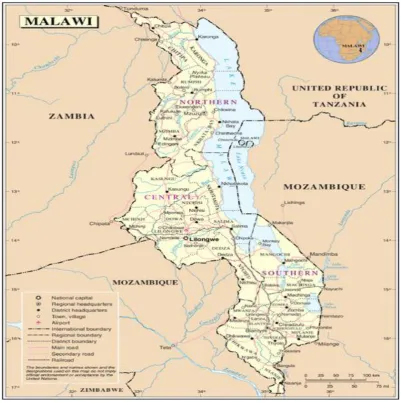
The study was conducted in three main cities of Blantyre, Lilongwe and Mzuzu Malawi where most of road construction professionals and other professionals involved with the planning, appraisal, construction, monitoring and maintenance of road construction projects are based.
36 Figure II: Map of Malawi
(Source: https://commons.wikimedia.org/wiki/File:Un-malawi.png)
3.4 RESEARCH POPULATION
37
Technocrats from consulting firms which renewed their membership with NCIC in the 2015/16 financial year and had been actively involved in road construction works in the past five years formed part of the population sample.
Further, the study considered technocrats from RA, RFA, regulatory bodies and government departments for the population sample since they are also involved in road construction works.
3.5 RESEARCH SAMPLE
Sampling is the process where representative units of the population are selected for a research study (Kothari & Garg, 2014). A population sample is proportion of the population which is selected for the purpose of observation and analysis in a research study. The sample for contractors, consultants, clients was randomly selected while that of respondents from RFA, regulatory bodies and government departments was purposively selected.
A statistical formula was used in determining the sample size for the contractors, consultants and clients. The equation below from statistical equation from Creative Research System, 2001, (www.cdb.riken.jp) below was used:
SS = Z2 * P * (1 – P) / (C2)...equation (1)
where SS : sample size
Z : Z value (i.e. 1.96 for 95% confidence level)
P : percentage picking a choice expressed as a decimal
(0.5 used for sample size needed)
38
Item
No. Organisation Population
Sample size Questionnaires Recieved Questionnaires Recieved Response Percentage (% )
1 GoM 3 3 3 2 67
2 RA 41 31 31 26 84
3 RFA 3 3 3 1 33
4 NCIC 3 3 3 2 67
5 Contractors 44 32 32 22 69
6 Consultants 48 34 34 30 88
7 Others 5 5 5 3 60
147 111 111 86 77
Total
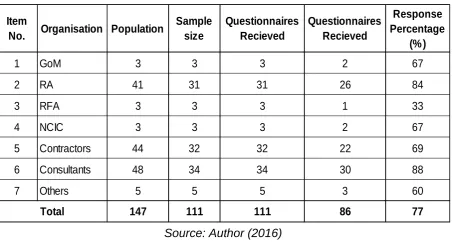
The total sample population was 147 comprising of directors, engineers and technicians from clients; the purposively selected respondents from RFA (3), GoM (3), NCIC (3) and others (5).
Using the correction finite population formula below:
SS (new) = SS / ( 1 + ( SS – 1 ) / (Pop))... equation (2)
where SS : sample size
Pop : sample population
Population samples and questionnaires response rates were calculated and are presented in the table below:
Table 5: Showing questionnaire responses
Source: Author (2016) 3.6 DESK REVIEW
39
road construction projects in Malawi. The reviewed documentation from completed projects comprised draft reports, final acceptance reports and project completion reports for the following road projects:
NCIC List of Registered Contractors for the 2015/2016 Financial Year Provisional Acceptance Report for the Multinational Nacala Road Corridor
Phase 1 Project : Lilongwe Western By Pass – November, 2014
Project Completion Report : Mchinji – Kasungu - Msulira Road Project – October, 2005
Final Report: Maintenance and Rehabilitation of Chikwawa – Nchalo – Bangula Road : Chikwawa – Ngabu Road Section – January, 2012 Final Report: Maintenance and Rehabilitation of Chikwawa – Nchalo –
Bangula Road : Ngabu - Bangula Road Section – January, 2015 Final Report : Lumbadzi – Dowa – Chezi Road Project: March, 201
3.7 USE OF QUESTIONNAIRES
A well structured questionnaire was used to collect data and it was divided into five major sections.
40 3.8 RESPONDENTS’ TO THE SURVEY
Respondents to the survey were technocrats in the road construction industry comprising of engineers, technicians, auditors, from government departments, RA, RFA, Consultants, Contractors and other who are pursuing further studies but are practitioners.
3.9 DATA COLLECTION EQUIPMENT
Self-administered questionnaires were used for collecting data for the research.
The questionnaire had five (5) sections namely A, B, C, D and E. Section A of the questionnaire was aimed at collecting background information of the respondents such as their employer, position; whereas section B was aimed at collecting data related to the technical experiences of the respondents in the form of years of experience, number of projects worked on and the proportion of projects completed outside time and the length of the time overrun. Section C of questionnaire was aimed at determining the causes of time overruns in road construction projects where as section D and E explored the effects of time overruns and methods of minimising overruns in road construction projects respectively.
3.10 DATA COLLECTION
41 3.11 DATA COLLECTION PERIOD
Data for the research was collected in a four (4) week period and respondents were not in any way coerced to fill the questionnaire, and on average it required about twenty minutes to complete the questionnaire. Of the 111 questionnaires which were circulated, a total of 86 responsive questionnaires were returned representing a 77% response rate.
3.12 RANKED DATA
Respondents to the study were requested to rank the causes, effects and measures for minimising time overruns in road construction projects from 1 – 5 (where 5 represented a strong cause, effect or measure while 1 represented weaker cause, effect or measure). This type of rating is called ordered categorical (Coe, 2007) and statistical package for social scientists (SPSS) version 20 was used to analyse the data.
3.13 ETHICAL CONSIDERATION
The researcher assured participants in the research that use of their input was confidential was to be used for the academic purposes only. Further the research acknowledged and cited contributions from professional which were used in the literature for the study.
42 3.14 DATA ANALYSIS
The data which was collected from the respondents through questionnaires was cleaned to detect and correct errors and then screened to check for its accuracy before being analysed. Raw data was screened and cleaned before being entered into SPSS version 20 for analysis of frequencies.
Frequencies and percentages of the responses were used in the presentation of data in the form of bar graphs, pie charts and tables.
Results from the analysed data were used in the discovery of new information about time overruns in road construction projects, suggesting solutions and making recommendations which can mitigate tome overruns in road construction projects.
3.15 CONSISTENCY
43
Item No. Category of Results Cronbach's
Alpha
1 Client related causes of time overruns 0.886
2 Consultant related causes of time overruns 0.837
3 Equipment related causes of time overruns 0.794
4 Health and Safety related causes of time overruns 0.731
5 Labour related causes of time overruns 0.791
6 External related causes of time overruns 0.756
7 Contractor related causes of time overruns 0.823
8 Material related causes of time overruns 0.743
9 Effects of time overruns 0.841
10 Measures for minimising time overruns 0.813
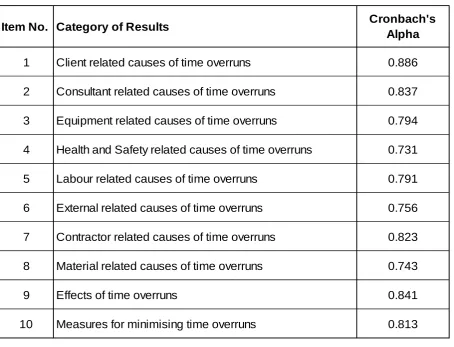
Table 6: Cronbach’s Tests Consistency Results
Source: Author (2012)
The consistency results by Cronbach’s test of the study were above 0.7 which according to (George & Mallery, 2003) are considered acceptable.
3.15 LIMITATIONS OF THE STUDY
The study focussed on technocrats who are involved with the construction of roads from contractors, consulting firms, key public institutions and co-operating partners within Malawi.
44
45
CHAPTER 4: DATA COLLECTION AND ANALYSIS
4.0 CHAPTER INTRODUCTION
The chapter presents the processes which were used for data collection and the methods for analysis. A well-structured questionnaire was sent out to respondents through e-mails and hand delivery.
Data analysis and interpretation of the results from the questionnaire presented the basis for this quantitative questionnaire which led to the conclusions, recommendations and reporting of the study.
4.1 REVIEW OF REPORTS ON COMPLETED ROAD PROJECTS
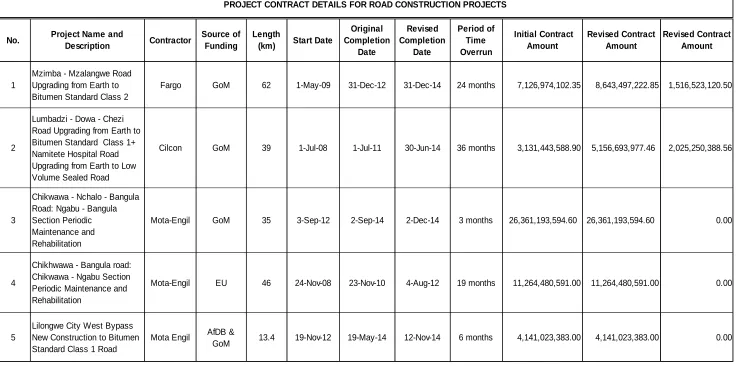
A review of the project documents listed above revealed that time overruns were experienced in all the projects (See Table 7).
Causes of the time overruns in the projects selected are reviewed in the following sections.
4.1.1 Time Overruns on the Mzimba - Eswazini - Mzalangwe Road Project
A review of the PCR for the Mzimba – Eswazini - Mzalangwe road project revealed that the project experienced time overruns of 24 months. The works on the contract were scheduled for completion within a period of 68 months.
The total value of works at project closure was MKW 8,643,497,222.85 implying that project had cost overruns amounting to MKW 1,516,523,120.50.
Time overruns experienced during the project implementation were attributed to the following factors: