Control of Non-Performing Loans in Retail Banking by Raising Financial and
Consumer Awareness of Clients
Kamile Taujanskaite
1, Eugenijus Milcius
2, Simonas Saltenis
31Vilnius Gediminas Technical University
Sauletekio av. 11, 10223, Vilnius, Lithuania E-mail. [email protected]
2Kaunas University of Technology
K. Donelaicio st. 73, 44029, Kaunas, Lithuania E-mail. [email protected]
3Aalborg University
Selma Lagerlofs Vej300, DK-9220 Aalborg, Denmark E-mail. [email protected]
http://dx.doi.org/10.5755/j01.ee.27.4.16511
Non-performing loan (NPL) problems remain urgent, or even threatening in some countries, despite relatively long-lasting macroeconomic recovery since the 2008–2010 crisis. NPL handling tools and methods currently used by the banks are not efficient enough to significantly reduce the NPL ratio and keep it within safe and sustainable limits.
This paper analyses the current state and causes of NPLs in retail banking and the ways of improving their handling efficiency.
An idea that retail banks should not only focus on administrative handling methods, but also actively promote financial awareness and especially rational consumer behaviour of clients as measures preventing the NPL, is presented. The idea is based on a synthesis of research results performed within three segments, which shape the background of the problem: first, the current NPL situation in retail banking, theoretical framework and methods of their control, second, the budgetary and borrower performance of households and contemporary trends within consumer behaviour and, third, the NPL determinants, evaluation and comparison of their impact.
Recommendations for retail banks to invest into preventive NPL reducing measures and run them parallel to the currently used “follow-up” type NPL handling tools are developed. The recommendations are supported by simulation of payback potential of investment by using specially developed algorithm.
Research methods used: comparative analysis, processing of statistical data, expert evaluation, mathematical analysis.
Keywords: Commercial Banks, Non-Performing Loans, Financial and Consumer Awareness, Borrower Performance, Consumption Patterns, Determinants of Non-Performing Loans.
Introduction
Numerous scientific investigations have been performed within the field of household economics since the first publications in the beginning of the 18th century (Richarme, 2007). Various aspects of financial and consumer behaviour affecting the household itself as well as consumer and financial markets, have been analysed, with links and interrelations between them highlighted. Despite of this and the numerous relevant theories developed, even the simplest task of maintaining a balanced budget still remains a challenging task for many households, not to mention the optimal allocation of a household’s resources between current and future consumption. This means that expenditure attributed to the current consumption equals or even exceeds the budget limits in a significant number of households, forcing them to borrow from financial institutions in order to compensate for the deficit.
Borrowing is common when households implement their long-term plans related to dwellings, vehicles and other
valuable purchases. However, indebtedness of households in many cases is not related to the implementation of such plans at all, but rather with ordinary everyday consumption. This raises a number of questions, for example, why there is such a large number of households that suffer from this problem, what the reasons are and whether there are any efficient ways to help improve the situation. If an irresponsible consumer who is not accustomed to following basic resource management rules becomes a client of the bank, a high probability exists that this will lead to an increased share of bad loans1.
The study analyses the influence of financial and consumer behaviour on budgetary and borrower performance of individuals and the impact on the volume of bad loans in commercial banks relative to other relevant factors. A hypothesis that a close correlation between budgetary and borrower performance of households exists,
1Bad loans or non–performing loans include depreciated loans and those
with possible strong link of both with the pattern of consumer behaviour, is raised. Some preventive measures, which commercial banks could undertake for the improvement of financial and consumer awareness of their clients, were identified. The planning principles of these measures, based on economic criteria and the estimated payback potential of investment into them, are presented. The following methods were used in the research: the statistical data processing, comparative and logical analysis methods were used to analyse the household-related monetary flows, the state of household budget management and the ratio of non- performing loans; the process of financial decision-making in households is analysed by using scientific literature; determinants of non-performing loans are identified by experts using the Delphi method; payback analysis of investment into the measures aimed at reducing the volume of non-performing loans is based on the use of mathematical analyses and differential mathematics techniques.
Budgetary and Borrower Performance of
Households: the Effect on Retail Banking
Households are an integral part of the economic system of every country, and therefore, processes related to household finances are a significant focus of numerous scientists (Abreu & Mendes, 2010; Almenberg & Gerdes, 2012; Altfest, 2009; Bosshardt & Walstad, 2014; Carlin & Robinson, 2012; Campbell, 2006; Finke & Smith, 2012; Hite et al., 2011; Vahidov & He, 2009) and institutions, such as the Consumer Federation of America (2012), Certified Financial Planner Board of Standards (2012), Members Equity Bank (2013), International Monetary Fund (2013), Wealth Management Institute (2015), and the Princeton Survey Research Associates International (2015). Expenditure or consumption planning and management is one of the key elements in household economics (Medova et al., 2008). Efficient planning and managing of expenditure allows the household to achieve maximum utility and successfully implement life-long wealth building plans.
Table 1 shows that the flow of household-related expenditure in Lithuania accounts for approximately 2/3 of the country’s GDP, and therefore, its influence on economics is huge, both on micro and macro levels.
Table 1
Relationship between Consumption Expenditure of Households and GDP in Lithuania (Created by Authors According to Eurostat 2016)
Year Level, million EUR (current prices)
2008 2009 2010 2011 2012 2013 2014 2015
Real GDP 32696 26935 28028 31263 33335 34962 36444 37190
Household Consumption Expenditure 20858 18076 17892 19658 20950 21968 22854 23997
Percentage of GDP, % 64 67 64 63 63 63 63 65
Figure 1 shows that the total earnings of commercial banks from retail and corporate bankingare approximately 0,6 billion EUR per year, while private consumption expenditure is about 21 billion EUR. Thus, the aggregate value of the financial services market is less than 3 % of the consumer market, while the share of this market related to individuals and households is only 1–2 %.
Figure 1. Revenue and profit (loss) of commercial banks and foreign bank branches in Lithuania (created by authors according to the Central Bank of the Republic of Lithuania 2015 and Association of
Lithuanian Banks 2015)
Compared to other EU countries, the relative volume of commercial bank earnings in Lithuania is several times lower both if measured as a percentage of GDP (Lithuania 2 %, UK 7,5 %, Germany 4,6 %, Nordic countries 4 %, Italy 5 %) and as a per capita revenue (Lithuania 200 EUR/year, UK & Ireland 2.300 EUR, Germany 1.500 EUR, Nordic countries 1.900 EUR, Greece 800 EUR and Eastern Europe 400 EUR) (Wyman, 2013).
Figure 2. The volume of non–performing* loans in commercial
banks in Lithuania
(Source: Central Bank of the Republic of Lithuania 2014)
Analysis of the volume of non-performing loans issued to individual clients in Lithuania has revealed the existence of a sharply worsening borrower performance during the 2008–2010 crisis and relatively slow improvement during the post-crisis period. Significant differences exist in mortgage and consumer loan segments, with the situation close to threatening in the latter, where the level of bad loans had reached 25 %. The situation has been improving since 2012, but the volume of non-performing loans (NPL) still remained above 10 % in 2014 (Figure 2). This had a strong negative impact on profitability of financial institutions. Currently, the profitability of banks has recovered, with profits reaching almost 250 million EUR per year, but all of the profitable years, starting from 2011, have hardly compensated for the loss suffered in 2009– 2010 (Figure 1).
Non-performing loans are a painful problem, not only in Lithuania, but in other countries as well. Figure 3 illustrates the NPL dynamics based on data from the World Bank during the period 2008–2015 in nine countries. In 2009, the highest level was registered in Lithuania. Starting from 2011, a sharp NPL growth was observed in Cyprus and Greece. By the end of 2015, it reached 45% in Cyprus and 34% in Greece, while countries like Sweden or Norway have never had the NPL level higher than 2% during this period.
The average NPL ratio in Europe steadily increased from ~5 % to ~7,6 % during the 2009–2014 period despite the improving macroeconomic situation (European Parliament, 2016), which shows that there is no clear correlation between the NPLs and basic macroeconomic indicators. This raises questions about the efficiency of strategies used to tackle the NPL problem. The currently used measures are mainly focused on tightening bank supervision, structural bankruptcy reforms, and the development of markets for distressed assets (Aiyar et al., 2015; IMF, 2015). This shows that the issue is viewed by banks as solely a banking problem with no in-depth analysis of reasons causing it. The measures used are predominantly passive – the “follow-up” type – while the use of active measures preventing the problem is rather limited.
Figure 3. Bank Non-Performing Loans to Total Gross Loans in
Different Countries in 2008–2015
(Source: World Bank 2016)
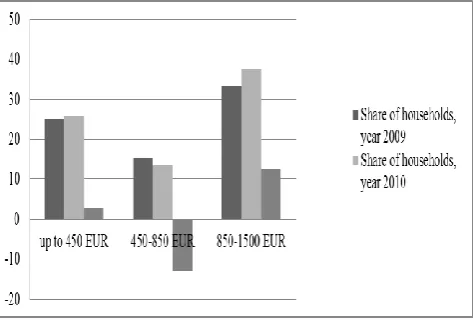
Borrower performance of bank clients correlates with managing efficiency of one’s own budgets. Research on Lithuanian households (Taujanskaite & Milcius, 2012) has shown that up to 30 % of them experience difficulties with maintaining balanced budgets (Figure 4). According to the Central Bank of Lithuania, this ratio is even higher and reaches almost 40 % (The Central Bank of the Republic of Lithuania, 2014).
Figure 4. Households with a Budget Deficit in 2009–2010 in Lithuania
(Source: Taujanskaite & Milcius, 2012)
Issues of Financial and Consumer Awareness
Theoretical framework of consumer behaviour. Issues related to consumer decision-making in households have been investigated for centuries. The beginning of research within the area of household consumption can be linked to Nicholas Bernoulli, John von Neumann and Oskar Morgenstern’s work, "The basis of consumer decision making theory," published in 1715 (Richarme, 2007), which contained the first formal explanation of consumer decision-making. Later, in 1738, Daniel Bernoulli extended this concept and formulated the "utility theory", which proposed that “consumers make choices based on the expected outcomes of their decisions. Consumers are viewed as rational decision makers who are only concerned with self-interest” (Schiffman & Kanuk, 2007; Zinkhman, 1992). Utility theory views the consumer as a “rational economic man” (Bray, 2008), although perception of the rationality appears to be quite flexible as consumer behaviour can be influenced by numerous intrinsic and extrinsic factors.
Consumption issues and consumer behaviour were investigated by John Rae (1834), Ernst Engel (1857), Frank P. Ramsey (1928), Irving Fisher (1930), Margaret Reid (1934), John M. Keynes (1936), Abraham Maslow (1943), Herbert Simon (1947), Simon Kuznets (1950), Franco Modigliani, Richard Brumberg, Albert Ando (1950), Milton Friedman (1957), Garry Becker (1965), John F. Muth (1966), Kelvin J. Lancaster (1966), Daniel Kahneman, Amos Tversky (1979), Paul Samuelson (1970), R. E. Hall (1978), Michael Dempster (1982), Angus Deaton (1992), Elena Medova (2008), Jeff Bray (2008), Mark Dean (2009), Gabriela Gheorghiu (2011), the Consumer Voice Organization (2012), the Consumer Federation of America (2012), B. Brohmann and D. Quack (2015), Euromonitor International (2015), the Bureau of Economics Analysis (2016) and others.
The literature highlights several motivation contexts for research within the area of consumer behaviour:
First, there is consumer behaviour as a determinant of market demand. Both theory and practical activities within marketing are predominantly based on data derived from an analysis of consumer behaviour;
Second, there is an analysis of macroeconomic processes to produce data needed for national accounts, evaluation of the performance of a country’s economy in general and decision-making whether or not interference from government or central bank side is needed to change the situation;
Third, there are considerations for households (individuals) and their financial performance.
The first two have triggered the development of numerous macroeconomic theories (e.g. Keynesian), which have clearly dominated in the area of consumer behaviour research so far. The third is predominantly related to microeconomics and theories developed by Becker (1965), Lancaster (1966), etc. The volume of the latter research is limited compared to previous research, even though its significance is huge, not only for separate households, but also for suppliers of financial services to them, such as commercial banks and leasing companies, etc., as well as for the economic performance of entire countries.
Both approaches analyse consumer behaviour in a slightly different way. While the macroeconomic approach applies an aggregate view and does not go deep enough to analyse processes inside the household, the microeconomic approach and the related theories, in contrast, focus on an analysis of processes inside the household as an autonomous and isolated unit, without taking into account their overall financial cooperation with credit institutions participating in their wealth building. Both approaches and theories thereof leave aside this cooperation and actually ignore the problem of non-performing loans as a result. A simultaneous integral view on consumer behaviour from the standpoint of macro- and microeconomics might highlight this problem, which is not clearly seen from either of them alone.
The above mentioned imbalance between the volume of research based on the two approaches and the lack of integration between them results in poor theoretical support and guidance of consumers acting in a very dynamic, sophisticated and permanently changing consumer market. This might be one of the reasons for the poor financial performance of households.
The 2015 Nobel Prize was awarded to Angus Deaton for his research and emphasis on “the links between individual consumption decisions and outcomes for the whole economy,” supporting the importance of integration of both approaches (The Prize in Economic Sciences, 2015).
Patterns and types of consumer behaviour. A number of approaches have been developed to characterise and understand the behaviour of an individual consumer. The traditional social class approach (Smith, 1964) has been used for many years to analyse the habits of households, which differ by income and position in society. Consumer types by social classes consist of the following:
Upper-upper (0,5 %). These are the old established families in a community. Their goals can be characterised in the following terms: gracious living, family reputation, and community responsibility. The individual has to be born into this group or can achieve it through a successful career.
Lower-upper (2 %). These are those that are new top executives of large corporations, entrepreneurs of large businesses, successful doctors and lawyers. Their family goals are a blend of the upper-upper (gracious living) and the upper-middle (drive for success).
Upper-middle (10 %). These are mostly professionals, such as businessmen, junior executives, etc. The goal here is mainly a successful career. Sociability and wide interests are characteristic in this group.
Lower-middle (35 %). This is the top of the average class: the white collar, salaried class of the small businessman and office workers. The goal here is respectability. They like nice homes, nice clothes and good neighbourhoods.
Upper-lower (40 %). This is the ordinary working man who is a wage earner and skilled worker. The orientation here is towards enjoying life. They want to be modern.
characterised by apathy, fatalism and the idea of “getting your kicks when you can” (Smith, 1964).
The social class approach presumes that the pattern of consumer behaviour is, first of all, subject to the resources available for the household.
During the last decades, a number of other approaches have been adopted in the study of consumer-related decision making, drawing upon differing traditions of psychology (Bray, 2008). Writers suggest different typological classifications of these works, with five major approaches emerging. Each of them posit alternate models of man and emphasise the need to examine quite different variables (Foxall, 1990):
Economic Man (Homo economicus). Early research regarded man as entirely rational and self-interested, making decisions based upon the ability to maximise utility whilst expending the minimum amount of effort. In order to behave rationally, a consumer would have to be aware of all the available consumption options, be capable of correctly rating each alternative and be able to select the optimum course of action (Schiffman & Kanuk, 2007). These steps are no longer seen as a realistic account of human decision-making, as consumers rarely have adequate information, motivation or time to make such a “perfect” decision and are often acted upon by less rational influences, such as social relationships and values (Simon, 1997).
Psychodynamic. The psychodynamic tradition within psychology is widely attributed to the work of Sigmund Freud (Stewart, 1994). The key tenet of the psychodynamic approach is that behaviour is determined by biological drives, rather than by individual cognition or environmental stimuli (Bray, 2008).
Behaviourist. Essentially, behaviourism is a family of philosophies stating that behaviour is explained by external events, and that all things that organisms do, including actions, thoughts and feelings, can be regarded as behaviours. The causation of behaviour is attributed to factors external to the individual (Bray, 2008).
Cognitive. In stark contrast to the foundations of classical behaviourism, the cognitive approach ascribes observed actions (behaviour) to intrapersonal cognition. The individual is viewed as an “information processor” (Ribeaux & Poppleton, 1978).
Humanistic. This approach uses behaviour motives, which are beyond those seen in the theory of the economic man, which is on purely egoistic motives.
Yet another classification of various consumer types has been recently presented by Euromonitor International (2015):
Undaunted Striver. Looks for new and innovative products, wants to dominate in society and be unique. Likes luxury and exclusivity things.
Impulsive Spender. Makes buying decisions based on emotions and is advertising sensitive. Enjoys comfort, brands, beautiful packages, etc.
Conservative Homebody. Pays attention to well-known products, but rarely buys novelties. Does not want to dominate in society.
Aspiring Struggler. Searches for something that could make him or her unique and idiosyncratic. Likes prestige and well-known brands.
Independent Skeptic. Makes buying decisions according to his or her own opinions and is not advertising sensitive. Likes high quality purchases, and before buying, he or she analyses all product features.
Secure Traditionalist. Buys tested items, and does not pay attention to new products. Likes stability and traditions.
Balanced Optimist. Makes buying decisions rationally and likes tested items, but does not exclude innovations.
Additionally, a number of new consumption types have recently emerged, which have not been presented in the above classifications. Among them are as following:
Sustainable consumption: refers to ways of reducing environmental stress and meeting the basic needs of humanity in the areas of mobility, housing, clothing, and nutrition. Characteristics: eco-efficiency & changing lifestyle of humans in order to reduce the emission of CO2 (Hertwich et al., 2015).
Green consumption: a concept that ascribes to the consumers’ responsibility or co-responsibility for addressing environmental problems through adoption of environmentally friendly behaviours, such as the use of organic products, clean and renewable energy and the research of goods produced by companies with zero, or almost zero, impact (Connoly & Prothero, 2008; Elliott, 2013).
Smart consumption: the idea of consumption creating a prosperous world while using fewer resources or buying something with the view of sustainable benefits (Brohmann & Quack, 2015).
Connected consumers: the idea of evolving consumer behaviour in light of smartphones, tablets and PC growth as new channels (such as e-stores). Here, new devices are more and more important for consuming decisions. Consumers are modern deal seekers, and IT devices are a shopper’s arsenal as the individuals usually shop online (Oracle, 2012).
Figure 5. Factors that Affect Consumption Decisions
(Source: Euromonitor International 2015)
The survey of consumption patterns shows that consumption-related financial decision-making in households is a very complex and diverse process that is affected by numerous factors, the first of which is psychological, which often compromises economic logic and leads to irrational consumption and full or partial ignorance of budget constraints. As newly emerged consumption patterns are even more liberal in this sense, a number of bank clients who follow certain consumer ideas without paying due attention to availability of resources can increase. So far, the consumer behaviour is usually ignored by commercial banks as a factor, which influences borrower performance. The banks typically evaluate consumption by only subtracting certain amounts from total income when assessing the borrower prior to lending. It is remarkable that even the latest guiding documents, prepared by the International Monetary Fund (International Monetary Fund, 2015) and the European Parliament (European Parliament, 2016), which specifically address the NPL problem, also ignore it and emphasise the administrative methods of their handling.
Determinants of Non-Performing Loans: Listing
and Quantitative Evaluation by Experts
In order to identify and compare the main reasons that determine insolvency of bank clients, an empirical analysis by expert evaluation method was done June–July 2015. The expert evaluation method was used in the research because it allows for getting specific information, which could not be derived from the literature or general statistics, exploiting expert knowledge accumulated by professionals in this specific area.
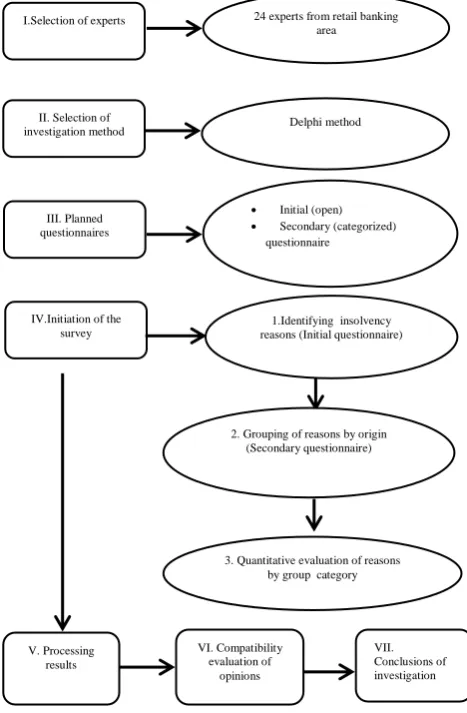
The setup of expertise procedures is displayed in Figure 6.
The research was conducted in seven stages: I. Selection of appropriate experts.
The experts with specific knowledge were selected from Lithuanian retail banking and financial sectors to match the topic of investigation. All of them have work experience with non-performing loans and deal with insolvency issues of personal clients. The reliability of expert evaluation depends on the number of interviewed experts.
Figure 6. Main Steps of Expert Evaluation Procedure
Figure 7. The Dependence of the Standard Deviation of Expert Evaluation Upon the Number of Experts
(Source: Rudzkiene 2014)
The diagram in Figure 7 indicates that if the number of experts is equal to 12 or higher, it guarantees a level of reliability of more than 90 %, but further increase in the number of experts increases it only marginally. With the aim to have this level above 95 %, 24 experts were interviewed:
19 experts from five commercial banks;
3 experts from debt collection companies;
2 independent experts: a business consultant from the finance sector and a personal finance management consultant.
Values
Personality traits Current consumption
trends
Lifestyle habits
I.Selection of experts
II. Selection of investigation method
III. Planned questionnaires
24 experts from retail banking area
Delphi method
Initial (open)
Secondary (categorized) questionnaire
IV.Initiation of the survey
1.Identifying insolvency reasons (Initial questionnaire)
2. Grouping of reasons by origin (Secondary questionnaire)
3. Quantitative evaluation of reasons by group category
V. Processing results
VI. Compatibility evaluation of
opinions
Additional information on experts:
Areas of expertise. The 19 experts representing commercial banks work in specific departments that are responsible for debt management of individual clients (Debt Collection and Litigation, Credit Administration, Credit Risk Management, Pre-Trial Debt Collection, Debt Administration and Recovery Departments); Three experts specialise in banking customer service and sales and two work individually with finance management issues.
Positions. The six top managers are heads of Debt Collection and Litigation, Pre-Trial Debt Collection, Litigation departments, Credit Risk Management, Debt Administration, Customer Service and Sales departments; Three experts are senior managers: senior credit administrator, senior credit risk specialist, senior analyst; three lawyers; 12 other specialists: two loan consultants, one debt consultant, one credit administrator, six managers, one business consultant, one personal finance manager.
Experience. All experts have 1 to 23 years of professional experience in appropriate sectors.
Experts were interviewed separately in order to avoid any mutual and overall influence (e.g. by authorities).
II. Selection of Delphi method.
The Delphi technique, mainly developed by Dalkey and Helmer (1963) in the 1950s, is a widely used and accepted method for achieving convergence of opinion concerning real-world knowledge solicited from experts from within certain topic areas (Hsu & Sandford, 2007). According to Landeta (2006), it is time-tested and is one of the most accurate techniques used in social sciences for assessing opinion, forecasting and making decisions on lacking information problems. Delphi, in contrast to other data gathering and analysis techniques, employs multiple iterations designed to develop a consensus of opinion concerning a specific topic. Dalkey (1972), Ludlow (1975), and Hsu and Sandford (2007) point out a number of other advantages of this technique: the ability to provide anonymity to respondents, a controlled feedback process, and the suitability of a variety of statistical analysis techniques to interpret the data. As the Delphi technique perfectly conforms to the aim of this research to produce a coherent final opinion of expertise, it was selected as its working tool.
III–IV–V. Modelling of inquiries, survey initiation and processing results.
Theoretically, the Delphi process can be continuously iterated until a consensus is achieved (Hsu & Sandford, 2007). Usually, there are two to four iterations. However, Cyphert and Gant (1971), Brooks (1979), Ludwig (1997), and Custer, Scarcella, and Stewart (1999) point out that no more than three iterations are needed to collect the required information and to reach a consensus in most cases.
This investigation was organised with two rounds of iterations. In the first round, the Delphi process begins with an open-ended questionnaire (Hsu & Sandford, 2007). Experts were asked to list all reasons, according to their practical knowledge, that affect personal solvency. After receiving experts’ responses, the collected information was converted into a well-structured questionnaire, which was used as the survey instrument for the next step of data collection.
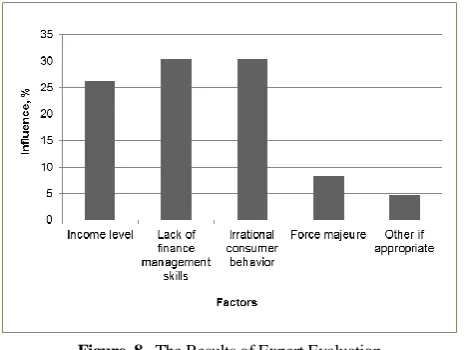
In the second round, each Delphi participant received a second questionnaire and was asked to review the items summarised by the investigators based on the information produced in the first round. All reasons were put into five main groups by their origin. Accordingly, Delphi panellists were asked to rank-order and quantitatively evaluate each group. Evaluation was done by distributing the total weight of influence, worth 100 %, between the groups according to their influence on personal solvency. The statistically processed results are presented in Figure 8.
VI. Compatibility evaluation of opinions
Credibility of the performed evaluation was verified by analysing dispersion of expert opinions and estimating concordance by using Kendall’s method. For calculation of the Kendall’s concordance coefficient, all results were ranked from 1 to 5, so that maximum score would rank 1 and the minimum would be 5. The concordance coefficient was calculated by using the formula:
) ( 12 3 2 2 k k m S W
(1)
2
1 1
2
k j m i ij a x
S (2)
where: W – Kendall’s concordance coefficient; S2 – the
sum of squared deviations; m – number of experts; k – number of factors; a – mean value, xij – total rank.
In our case, m=24, k=5. Two outcomes of analysis are possible: H0 – contradictory expert assessments (concordance coefficient W = 0) and HA – expert assessments are similar (concordance coefficient W ≠ 0).
Calculation of the Kendall concordance coefficient by using data from interviews gives that W=0,65. The significance of the concordance coefficient can be checked by applying χ2 criterion. Dimension W * m * (k-1) has a χ2 distribution with f = k – 1 degrees of freedom and is 62,4, f=4.
According to the χ2 distribution with α level of critical values table, when f=4 and α = 0,05, the critical value is 9,488 (if α = 0,025, the critical value is 11,143; if α = 0,01, critical value is 13,277).
The calculated statistics W × m × (k-1) value for the selected significance level α and the number of degrees of freedom f exceeds the critical value (in our case W × m × (k-1)=62,4 > χ2 (critical value)= 9,488), so hypothesis H0 can be rejected, suggesting that the performed evaluation is reliable.
VII. Results of investigation
and have higher income than average are still facing difficulties fulfilling their obligations”.
Figure. 8. The Results of Expert Evaluation
The interviewed experts have clearly linked borrower performance with the personal features of bank clients – finance management skills (30,42 %) and the way they behave as consumers (30,46 %) – suggesting that an individual’s solvency depends on these two factors by more than 60 %. This closely correlates with the initial hypothesis of the research and supports it. Both factors can be influenced and controlled by means of education and training that is targeted at financial awareness raising and development of rational consumption skills. Relevant specific education could shape the pattern of consumer behaviour, adding to its rationality and making it more favourable to both the households and the retail banks.
Financial and Consumer Awareness Raising as
a Tool for NPL Reduction
As up to 60 % of non-performing loans and the related loss in retail banking are caused by reasons that are directly linked to financial and consumer awareness of clients, its increase might reduce the loss and positively affect the performance of banks. The implementation of relevant measures, on the other hand, would have their own cost, which would boost the total loss. The following analysis aims to determine whether or not investment into such measures could be beneficial for commercial banks and what volume of investment would be appropriate.
The effect of increased economic and consumer awareness of bank clients can be calculated by simultaneously solving the following system of equations:
max
ln 1 ln
h h L k h G
h C h E
const L
BL E BL
(3)
where:
LBL – constant variable expresses loss of commercial
banks caused by non-performing loans when no investment is made in the training of bank clients;
E(h) – cost of financial and psychological education, EUR; h – { 0 ÷ hmax}duration of training courses in hours;
Total training cost per hour CE = Ccl * W / ncl , where Ccl – cost of training per class per hour; W – total number of trainees; ncl – number of trainees per class;
G(h) – gain from investment in education; k – { 0 ÷ 1}coefficient, indicating the share of education-sensitive losses; ln(h) – denotes law, which expresses the speed of knowledge perception by trainees; ln(hmax) – a constant, which transforms absolute numbers into relative.
An aggregate loss of banks after investment in education can be expressed as follows:
max
ln 1 ln
h h L k h C L h G h E L
L BL BL E BL (4)
Real values of LΣ calculated for various LBL (10, 20, 30 and 40 million EUR), Ccl = 60 EUR, ncl – 30, W – 50000 and k = 0,7 with reference to duration h of education of bank clients are presented in Fig.9, while Fig.10 displays them with reference to estimated education cost.
Figure 9. Effect of Education on Aggregate Loss of Banks Caused by Non-Performing Loans
LBL=10, 20, 30 and 40 million EUR
Figure 10. Effect of Investment in Education on Bank Losses Caused by Non–Performing Loans
0 ln 1 0 ln ln max
max
h L k h C h h h L k h h C h L h L BL E BL E
BL ,
(5)
max
ln
max
ln C W h
n L k h C L k h Cl Cl BL E BL
(6)
max
ln h
L k
E BL
(7) By inserting the appropriate values of k, LBL, ncl, Ccl,W
and hmax, an optimal duration of training can be calculated,
in addition to the related cost.
Figure 11. Profitability and Risk Provisions of Commercial Banks in East and West Europe (Pratz et al., 2015)
in commercial banks is urgent not only in Lithuania but in other EU countries as well. The dynamics of risk provision in the commercial banks of Western and Eastern Europe in the years 2007–2014 indicate that its level has been changing in the range of 10–23 % (Figure 11), meaning that significant assets are set aside to safeguard credit institutions. Risk provision is a passive, follow-up type instrument. It should be beneficial for commercial banks to use the discussed active preventive measures instead.
Significant reserves definitely exist in the disposition of banks, which could be used for this purpose. Relevant restructuring of resources and using them for the improvement of their clients’ performance might be one of the efficient steps.
Conclusions
1. The problem of non-performing loans (NPL) became a major issue in the retail banks of many countries, including Lithuania, during the financial crisis of 2008– 2010. The NPL ratio further increased in the EU during the years 2009–2014 (from ~5,6 % in 2009 to ~7,6 % in 2014) despite the macroeconomic recovery. NPLs are not only determined by macroeconomic fluctuations, but are also sensitive to other causes, including:
The existing gaps in theoretical framework;
Shortfalls of tools and methods used by retail banks to control the NPLs;
Irrational financial and consumer behaviour of retail bank clients.
2. Macro- and microeconomic approaches used to analyse household economics do not specifically target their borrower performance and the NPL problem. Consumers lack adequate theoretical support and efficient resource allocation tools, which should be considered one of the major reasons for the high share of households performing poorly in terms of finances.
3. Modern consumer behaviour patterns typically pursue ideas that are irrelevant to economic logics and boost the share of households with poorly managed budgets, and consequently, the volume of non-performing retail loans.
4. The permanently growing NPL ratio indicates that control methods and tools currently used by the banks lack efficiency. Even the latest guiding documents focus on administrative methods and tools, which are passive – the “follow-up” type – having no preventive effect.
5. Evaluation performed by experts – the professionals within NPL handling – indicates that up to 60% of non-performing loans and the related retail banking losses are caused by reasons directly linked to the financial and consumer awareness of borrowers. Awareness raising could be used as a tool to reduce the related loss and positively affect the performance of both the banks and the households.
6. Retail banks should revise and modify the existing NPL handling strategies by integrating the use of financial and consumer awareness-raising measures, preventing the NPLs. Banks are encouraged to invest in them. A model for the evaluation of payback potential of investment into awareness-raising activities and specific education of bank clients was developed. Modelling results based on real data from the retail banking market indicate good payback possibilities of the investment.
References
Abreu, M., & Mendes, V. (2010). Financial literacy and portfolio diversification. Quantitative Finance, 10(5), 515–528. http://dx.doi.org/10.1080/14697680902878105
Aiyar, S., Ilyina, A., & Jobst, A. (2015). How to tackle Europe's non-performing loan problem. Available from Internet: Almenberg, J., & Gerdes, Ch. (2012). Exponential growth bias and financial literacy. Applied Economics Letters, 19(17).
http://dx.doi.org/10.1080/13504851.2011.652772
Altfest, L. (2009). Personal financial planning: origins, developments and a plan for future direction. The American Economist, 48(2), 53–60. http://dx.doi.org/10.1177/056943450404800204
Anglin, G. L. (1991). Instructional technology past, present and future. Englewood, CO: Libraries Unlimited Inc. Association of Lithuanian Banks. (2015). Statistics [online], [cited 22 October 2015]. Available from Internet:
http://www.lba.lt/go.php/eng/Statistics/339/4.
Becker, G. S. (1965). A theory of the allocation of time. Economic Journal, 75(299), 493–517. http://dx.doi.org/10. 2307/2228949
Bosshardt, W., & Walstad, W. B. (2014). National Standards for Financial Literacy: Rationale and Content. The Journal of Economic Education, 45(1), 63–70. http://dx.doi.org/10.1080/00220485.2014.859963
Bray, J. (2008). Consumer behaviour theory: approaches and models. Available from Internet: http://eprints.bournemouth.ac.uk/10107/1/Consumer_Behaviour_Theory_-_Approaches_%26_Models.pdf.
Brohmann, B., & Quack, D. (2015). Smart consumption: buying with a view to sustainable benefits. Institute for Applied Ecology. Available from Internet: http://www.oeko.de/en/research-consultancy/issues/sustainable-consumption/ smart-consumption.
Brooks, K. W. (1979). Delphi technique: Expanding applications. North Central Association Quarterly, 54(3), 377–385. Burreau of Economics Analysis (2016). Chapter 5: Personal Consumption Expenditures. Available from Internet:
https://www.bea.gov/national/pdf/nipahandbookch5.pdf.
Campbell, J. Y. (2006). Household Finance. Journal of Finance, 61(4), 1553–1604. http://dx.doi.org/10.1111/j.1540-6261.2006.00883.x
Carlin, B. I., & Robinson, D. T. (2012). What does financial literacy training teach us? The Journal of Economic Education, 43(3), 235–247. http://dx.doi.org/10.1080/00220485.2012.686385
Certified Financial Planner Board of Standards. (2012). Household financial planning survey summary. Available from Internet: http://www.cfp.net/docs/for-cfp-pros---public-awareness-campaign-toolkit/2012-household-financial-plan ning-surveysummary.pdf?sfvrsn=0.
Christelis, D., Jappelli, T., Paccagnella, O., & Weber, G. (2010). Income, wealth and financial fragility in Europe. Journal of European Social Policy, 19(4), 359–376. http://dx.doi.org/10.1177/1350506809341516
Connoly, J., & Prothero, A. (2008). Green consumption: life-politics, risk and contradictions. Journal of consumer culture, 8, 117–145. http://dx.doi.org/10.1177/1469540507086422
Consumer Federation of America (2012). Household financial planning survey. Available from Internet: http://www.consumerfed.org/pdfs/Studies.CFA-CFPBoardReport7.23.12.pdf.
Consumer Voice Organization (2012). Factors influencing consumer behavior. Available from Internet: https://consumervoiceblog.wordpress.com/2012/08/03/factors-influencing-consumer-behaviour/.
Custer, R. L., Scarcella, J. A., & Stewart, B. R. (1999). The modified Delphi technique: A rotational modification. Journal of Vocational and Technical Education, 15(2), 1–10. http://dx.doi.org/10.21061/jcte.v15i2.702
Cyphert, F. R., & Gant, W. L. (1971). The Delphi technique: A case study. Phi Delta Kappan, 52, 272-273.
Dalkey, N. C. (1972). The Delphi method: An experimental study of group opinion. In N. C. Dalkey, D. L. Rourke, R. Lewis, & D. Snyder (Eds.). Studies in the quality of life: Delphi and decision-making (pp. 13–54). Lexington, MA: Lexington Books.
Dalkey, N. C., & Helmer, O. (1963). An experimental application of the Delphi method to the use of experts. Management Science, 9(3), 458–467. http://dx.doi.org/10.1287/mnsc.9.3.458
Dalkey, N. C., & Rourke, D. L. (1972). Experimental assessment of Delphi procedures with group value judgments. In N. C. Dalkey, D. L. Rourke, R. Lewis, & D. Snyder (Eds.). Studies in the quality of life: Delphi and decision-making (pp. 55-83). Lexington, MA: Lexington Books.
Dean, M. (2009). Consumer Theory. In: Lecture Notes for Fall 2009 Introductory Microeconomics. Brown University. Deaton, A. Understanding Consumption. Oxford University Press.
Delbecq, A. L., Van de Ven, A. H., & Gustafson, D. H. 1975. Group techniques for program planning. Glenview, IL: Scott, Foresman, and Co.
Dempster, M. A. H., & Wildavsky, A. B. (1982). Modelling the US federal spending process: overview and implications. In: R C O Matthews & G B Stafford,eds. The Grants Economy and the Financing of Collective Consumption. International Economic Association Proceedings. Macmillan, London 1:267–309. http://dx.doi.org/10.1007/978-1-349-05377-3_13
Engel, E. (1857). Die produktions und consumtionsverhaltnisse des konigreichs sachsen. Anlage, 1, 1-54.
Euromonitor International. (2015). 7 consumer types for successful targeted marketing. Available from Internet: http://go.euromonitor.com/white-paper-7-consumer-types-for-successful-targeted-marketing.html.
European Parliament (2016). Non-performing loans in the Banking Union: stocktaking and challenges. Available from Internet: http://www.europarl.europa.eu/RegData/etudes/BRIE/2016/574400/IPOL_BRI(2016)574400_EN.pdf Eurostat. (2016). GDP and main components. Available from Internet: http://appsso.eurostat.ec.europa.eu/nui/show.do. Finke, M. S., & Smith, H. (2012). A financial sophistication proxy for the Survey of Consumer Finances. Applied
Economics Letters, 19(13). Doi: 0.1080/13504851.2011.619485.
Fisher, I. (1930). The theory of interest, as determined by impatience to spend income and opportunity to invest it .The online library of liberty. Available from Internet: http://files.libertyfund.org/files/1416/Fisher_0219.pdf.
Foxall, G. (1990). Consumer Psychology in Behavioural Perspective. London: Routledge.
Friedman, M. A. (1957). Theory of the consumption function. EconPapers. Available from Internet: http://econpapers.repec.org/bookchap/nbrnberbk/frie57-1.htm.
Gheorghiu G. (2011). Irational Consumer Behavior and Its Importance for Real and Simulated Business Environment. Ovidius University Annals, Economic Science Series, Volume XI, Issue 2.
Hall, R, E. (1978). Stochastic implications of the life cycle permanent income hypothesis: theory and evidence. Journal of Political Economy, 86(1), 971–987. http://dx.doi.org/10.1086/260724
Hertwich, E. G., Gibon, T., Bouman, E., Arvesen, A., Suh, S., Heath, G., Bergesen, J., Ramirez, A., Vega, M., & Shi, L. (2015). Integrated life-cycle assessment of electricity-supply scenarios confirms global environmental benefit of low-carbon technologies. Proceedings of the National Academy of Sciences of the United States of America, 112(20). http://dx.doi.org/10.1073/pnas.1312753111
Hite, N. G., Slocombe, T. E., Railsback, B., & Miller, D. (2011). Personal Finance Education in Recessionary Times. Journal of Education for Business, 86(5), 253–257. http://dx.doi.org/10. 1080/08832323.2010.511304
Hsu, C. C., & Sandford, B. A. 2007. The Delphi Technique. Making Sense of Consensus. Practical Assesment, Research & Evaluation, 12(10), 1–8.
IMF- International Monetary Fund. (2013). Technical note on the financial situation of Italian households and non-financial corporations and risks to the banking system. Available from Internet: www.imf.org/external/pubs/ ft/scr/2013/cr13348.pdf.
IMF- International Monetary Fund. (2015). Euro Area Policies. IMF Country Report No.15/205. Available from Internet: http://ec.europa.eu/justice/civil/files/insolvency/05b_imf_ea_art_iv_sip_en.pdf.
Kahneman, D., & Tversky, A. (1979). Prospect theory: an analysis of decision under risk. Econometrica, 47(2), 263– 291. http://dx.doi.org/10.2307/1914185
Keynes, J. M. (1936). The general theory of employment, interest and money. London: Palgrave Macmillan.
Keese M. (2009). Triggers and determinants of severe household indebtedness in Germany. Ruhr economic papers, 1, 150.http://dx.doi.org/10.2139/ssrn.1518373
Kuznets, S. (1951). Long-term changes in the national income of the United States of America since 1870. In: Income and wealth of the United States: trends and structure, International association for research in income and wealth, series II, Bowes & Bowes, Cambridge.
Landeta, J. (2006). Current validity of the Delphi method in social sciences. Technological Forecasting and Social Change, 73(5), 467–482, http://dx.doi.org/10.1016/j.techfore.2005.09.002
Ludlow, J. (1975). Delphi inquiries and knowledge utilization. In H. A. Linstone, & M. Turoff (Eds.). The Delphi method: Techniques and applications (pp. 102–123). Reading, MA: Addison-Wesley Publishing Company.
Ludwig, B. (1997). Predicting the future: Have you considered using the Delphi methodology? Journal of Extension, 35(5), 1–4.
Maslow, A.H. (1943). A theory of human motivation. Psychological Review, 50(4), 370–96. Available from Internet: http://psychclassics.yorku.ca/Maslow/motivation.htm.http://dx.doi.org/10.1037/h0054346
Members Equity Bank. (2013). The financial psychology of Australian households: insights from national research. Available from Internet: https://www.mebank.com.au/media/1233682/household_financial_comfort_ report_dec_ 2012.pdf.
Modigliani, F., & Brumberg, R. (1954). Utility analysis and the consumption function: an interpretation of cross-section data. In: Kurihara, K.K (ed.): Post-Keynesian Economics.
Muth, Richard F. (1966). Household production and consumer demand functions. Econometrica, 34 (3), 699–708. http://dx.doi.org/10.2307/1909778
Oracle. (2012). The connected consumer: evolving behavior patterns. A consumer research study. Available from Internet: www.oracle.com/us/.../retail/research-connected-consumer-1736894.pdf.
Pratz, A., Chikova, D., Freddi, R., Castro, P., & Hewlett, P. (2015). The 2015 Retail Banking Radar. Available from Internet: https://www.atkearney. com/documents/10192/5903614/Time+to+Reinvent+Your+Banking+Model.pdf/ ec08fb0d-44e8-4c83-9b58-37d731515bf5.
Princeton Survey Research Associates International. (2015). Only a minority of Americans keep close track of their spending. Available from Internet: http://www.psra.com/news.aspx?titleId=905&archive=true.
Rae, J. (1834). The sociological theory of capital. London: MacMillan. Available from Internet: https://archive.org/stream/sociologicaltheo00raejuoft/sociologicaltheo00raejuoft_djvu.txt.
Ramsey, F. P. (1928). A mathematical theory of saving. Economic Journal, 38(152), 543–559. http://dx.doi.org/ 10.2307/2224098
Reid, M. (1934). The economics of household production. New York: Wiley, p. 426.
Ribeaux, P., & Poppleton, S. E. (1978). Psychology and work. London: Macmillan Education. Rudzkiene, V. (2014). Research methods. Lecture material. Mykolas Romeris University.
Samuelson P. (1970). What makes for a beautiful problem in science? Journal of Political Economy, 78(6), 1372–1377. http://dx.doi.org/10.1086/259716
Schiffman, L. G., Kanuk, L. L. (2007). Consumer behavior. 9th ed. New Jersey: Prentice Hall.
Simon, H. (1997). Administrative behavior: a study of decision–making processes in administrative organizations. 4th ed. ed. New York: The Free Press.
Smith, N. R. (1964). Consumer behavior patterns. Journal of Extension, 2(1), 45–53.
Taujanskaite, K., & Milcius, E. (2012). Impact of financial crisis on Lithuanian households' ability to manage budgets. In 7th International Scientific Conference "Business and Management 2012". http://dx.doi.org/10.3846/bm.2012.031 The Central Bank of the Republic of Lithuania. (2014). Banks activities overview. Available from Internet:
https://www.lb.lt/banku_apzvalga_2014_m.
The Central Bank of the Republic of Lithuania. (2015). Profit and loss report of commercial banks and foreign bank branches in Lithuania. Available from Internet: https://www.lb.lt/stat_pub/Graph/GraphForm.aspx?group =8014&form_id=BX2_B.S1&lang=lt&dtstart=2013%2c03%2c31&dtend=2014%2c06%2c30.
The Central Bank of the Republic of Lithuania. (2014). The review of households survey on financial behavior. Available from Internet: https://www.lb.lt/namu_ukiu_finansines_elgsenos_apklausos_apzvalga_2014_nr_1. The Prize in Economic Sciences (2015). Consumption, great and small. The Royal Swedish Academy of Sciences.
http://kva.se
The Wolrd Bank. (2016). World development indicators: level of non-performing loans in different countries [cited 25 January 2016]. Available from Internet: http://databank.worldbank.org/data/
Vahidov, R., & He, X. (2009). Situated DSS for personal finance management: Design and evaluation. Information & Management, 46(8), 453–462. http://dx.doi.org/10.1016/j.im.2009.06.007
Wealth Management Institute. (2015). Why financial planning works? Available from Internet: http://www.wealthmanagementpro.com/new/wealthmanagementinstitute/content.asp?contentid=2017891741. Weaver, W. T. (1971). The Delphi forecasting method. Phi Delta Kappan, 52(5), 267–273.
Wyman, O. (2013). European Retail Banking. An Opportunity for a Renaissance. Marsh & McLennan Companies. 22 p. Zinkhman, G. M. (1992). Human nature and models of consumer decision making, Journal of Advertising, 21(4), 2–3.