World Maritime University
The Maritime Commons: Digital Repository of the World
Maritime University
World Maritime University Dissertations Dissertations
2001
Tanker accidents : double hull is not the only viable
alternative
Mukkadayil Paily John World Maritime University
Follow this and additional works at:http://commons.wmu.se/all_dissertations Part of theEnvironmental Studies Commons
This Dissertation is brought to you courtesy of Maritime Commons. Open Access items may be downloaded for non-commercial, fair use academic purposes. No items may be hosted on another server or web site without express written permission from the World Maritime University. For more
Recommended Citation
John, Mukkadayil Paily, "Tanker accidents : double hull is not the only viable alternative" (2001).World Maritime University Dissertations. 257.
WORLD MARITIME UNIVERSITY
Malmö, Sweden
TANKER ACCIDENTS: DOUBL HULL IS NOT
THE ONLY VIABLE ALTERNATIVE
By
MUKKADAYIL PAILY JOHN
India
A dissertation submitted to the World Maritime University in partial fulfilment of the requirements for the award of the degree of
MASTER OF SCIENCE
In
MARITIME AFFAIRS
(Maritime Safety and Environmental Protection)
2001
Declaration
I certify that all the material in this dissertation that is not my own work has been identified, and that no material is included for which a degree has previously been conferred on me.
The contents of this dissertation reflect my own personal views, and are not necessarily endorsed by the University.
(Signature) ………..
(Date) ………..
Supervised by:
Professor Jan-Åke Jönsson World Maritime University
Assessor:
Professor Rajendra Prasad World Maritime University
Co-assessor:
Captain Kjell Grahn Visiting professor
Dedicated to
my mother who passed away on
Acknowledgements
This dissertation was developed as part of my post-graduate studies at the World Maritime University. These studies would not have been possible without the kind support of a number of people and organisations, to which I am deeply indebted.
First of all, I am grateful to the Almighty God, for giving me an opportunity and courage to pursue the course and complete the studies at the World Maritime University. My sincere thanks to Mr. D.T.Joseph, Director General of Shipping, India, Mr. B.K.Biswas, Chief Surveyor with the Government of India, and Mr. Subimal Chakroborthy, Principal Officer, Mercantile Marine Department, Chennai, India, who encouraged and sponsored me for attending the course at the World Maritime University.
I wish to express my gratitude and sincere thanks to the Swedish International Development Cooperation Agency for the fellowship provided to facilitate my studies. My sincere thanks are extended to my dissertation supervisor, Professor Jan-Åke Jönsson and Dr. P.K. Mukherjee, Faculty Professor for their guidance and advice in overcoming the difficulties encountered during the preparation of this dissertation. My special thanks go to Ms Susan Wangeci-Eklöw and Ms Cecillia Denne of WMU Library for their sincere support.
Abstract
Title of Dissertation: Tanker accidents: Double Hull is not the only viablealternative
Degree: MSc
This dissertation is a study of the international maritime regime relating to the mitigation of pollution from oil tankers in the event of collision or stranding. The study focuses on issues that have evolved as a result of various amendments to relevant Conventions adopted in the recent years.
A brief review of the development of maritime regulations for prevention of pollution of sea from ships is undertaken. The backgrounds to the enactment of the US OPA 90 and the adoption of regulations I/13G and I/13F to MARPOL 73/78 are discussed, and the phase out programmes of existing single hull tankers in both cases are examined.
Regulatory features of the double hull tanker are discussed, and the potential design, construction, operation problems and the risks involved are analysed. Alternative double hull designs to overcome some of the problems and risks have been discussed.
Accidental outflow of oil from tankers can be reduced by the use of double hull, reduced tank size, and the use of outflow prevention measures inside a tank. Whether the Mid-deck and Coulombi Egg concepts are superior to the double hull solution to limit the total amount of oil spilled, are examined.
The concluding chapter evaluates the findings of the research on double hull tanker and alternative design concepts, and makes certain recommendations and suggestions aimed at relevant authorities.
TABLE OF CONTENTS
Declaration ii
Acknowledgements iv
Abstract v
Table of Contents vi
List of Figures ix
List of Abbreviations xii
1 Introduction
1 Objective of the research 1
2 Research methodology 2
2 Tanker accidents: its influence in developing international regulations
1 Introduction 3
2 Marine pollution 4
3 MARPOL 73/78 6
4 The Exxon Valdez disaster 10 5 The Oil Pollution Act 1990 (OPA 90) 12
5.1 Emergency response plans 13 5.2 Double hull tank vessels & single hull phase out 13
5.3 Liability 13
5.4 OSLT fund 13
5.5 Navigational measures & state pre-emption 14 6 MARPOL regulations 13G & 13F 14
3 The Erika disaster and its aftermath
1 Introduction 20
2 The Erika disaster 20
3 Fact or fiction 23
3.1 Shipowners 24
3.2 Classification societies 24
3.3 Flag States 25
3.4 Port States 26
3.5 Charterers 27
4.1 The French action 27 4.2 The European Commission directives 28
4.2.1 Erika I-package 28
4.2.2 Erika II-package 29
5 Single hull phase out - revised timetable 30 5.1 Three categories of tankers 30
5.2 Exemptions 31
5.3 Condition Assessment Scheme (CAS) 31 6 Other post-Erika amendments 31
4 Design characteristics of double hull tankers
1 Introduction 33
2 Regulatory features 33
3 Design & construction problems 35 4 Alternative double hull designs 38 4.1 Alternatives A1 and A2 39 4.2 Alternatives B1 and B2 40 4.3 Alternatives C1 and C2 42
4.4 Alternatives D1 andD2 42
4.5 Alternatives E1 and E2 43
5 Double hull tanker concerns
1 Introduction 46
2 Potential operational problems 47 2.1 Problems relating to ballast space 47 2.2 Free surface effect & angle of loll 48
2.3 Sloshing 51
3 Corrosion risks 51
3.1 Pitting 52
3.2 Bacterial corrosion 53
3.3 Coating 55
4 Fatigue risks 56
4.1 Environmental loads & corrosion 59
4.2 Steel types 59
4.3 Trade routes 59
4.4 Relative deflection 60
4.5 Hot spot stresses 61
5 Structural failures in double hull tankers 61
6 Alternatives to double hull tanker
2 Mid-deck tanker design 72
2.1 Principal features 73
2.2 Oil outflow containment 74
2.3 Safety aspects 75
2.4 Collision & grounding 76
3 Coulombi Egg design 78
3.1 Basic features 78
3.2 Transverse web frames & transverse bulkheads 79
3.3 Fabrication 81
3.4 Grounding & collision 82 3.5 Cracks & factures 86 3.6 Ballasting & cargo handling 86
3.7 Construction cost 87
3.8 Observations 87
4 COBO proposal 89
4.1 Oil outflow prevention 89 4.2 Salvage & tank cleaning 90
4.3 Building cost 90
5 Other alternative concepts 93
7 Summary, conclusion and recommendations
1 Summary & conclusion 97
2 Recommendations 99
LIST OF FIGURES
Fig. 1 99.996% of world oil transported safely 4 Fig. 2 Phasing out of single hull tankers 17 Fig. 3 Hydrostatically Balanced Loading 19 Fig. 4 Typical double hull midship section nomenclature 36 Fig. 5 Alternative A1 39
Fig. 6 Alternative A2 39
Fig. 7 Alternative B1 40
Fig. 8 Alternative B2 40
Fig. 9 Alternative C1 41
Fig. 10 Alternative C2 41
Fig. 11 Alternative D1 42
Fig. 12 Alternative D2 42
Fig. 13 Alternative E1 43
Fig. 14 Alternative E2 43
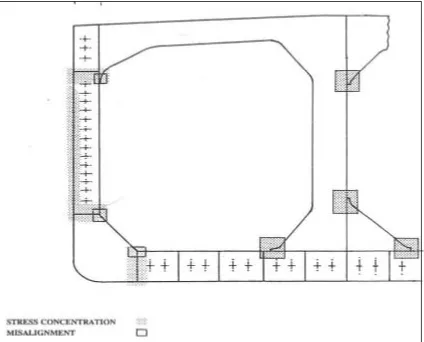
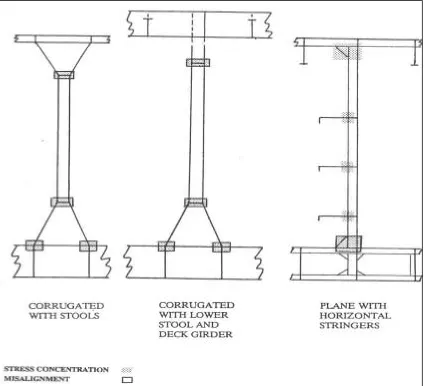
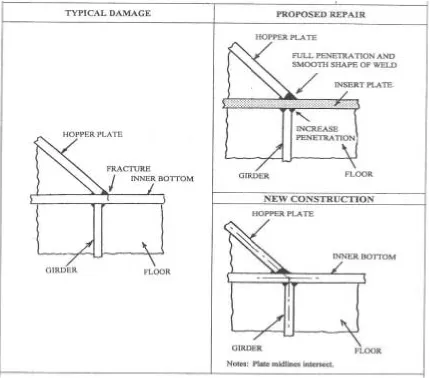
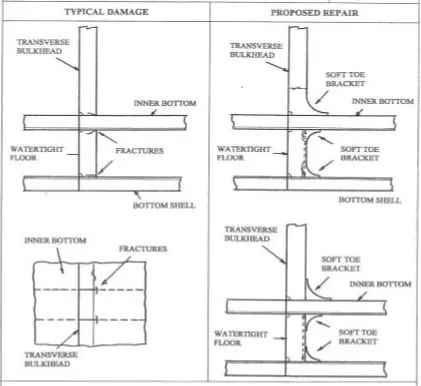
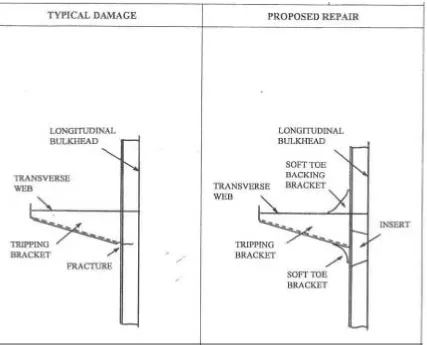
Fig. 22 Coating is the best solution when pitting occurs 57 Fig. 23 Fractures/ Cracks statistics 58 Fig. 24 Forced deflection 60 Fig. 25 Areas susceptible to stress concentration on midship 62 Fig. 26 Areas susceptible to stress concentration on transverse bulkheads 63 Fig. 27 Bilge hopper: Connection of hopper plate to inner bottom 64 Fig. 28 Wing ballast tank: Connection of longitudinals to transverse webs 65 Fig. 29 Connection of transverse bulkhead 66 Fig. 30 Web frame in cargo tank: Tripping brackets 67 Fig. 31 Connection of longitudinals to horizontal stringers 68 Fig. 32 Vertically corrugated transverse bulkhead stools 69 Fig. 33 General tank layout of a mid-deck tanker 72 Fig. 34 Hull section of a Mitsubishi mid-deck tanker 74 Fig. 35 An emergency suction line below the mid-deck on MHI’s design 75 Fig. 36 General layout of a Coulombi Egg Tanker 80 Fig. 37 Midship section of a Coulombi Egg design 80 Fig. 38 Transverse web frame construction of a Coulombi Egg design 81 Fig. 39 A Coulombi Egg tanker proposal for building block fabrication 82 Fig. 40 Midship section showing partial bulkhead 84 Fig. 41 Breach of wing cargo tank forces oil to the ballast tank 85 Fig. 42 Breach of lower center tank forces oil to both wing tanks 85 Fig. 43 Objective of tank size and location 90 Fig. 44 Small outflow after side and bottom damage in the COBO design 91 Fig. 45 The COBO midship section in three dimensions 92 Fig. 46 Small structural loads of COBO in laden conditions 92 Fig. 47 An economical and ecological comparison 93
Fig. 48 MARC GUARDIAN 94
Fig. 50 Intertanko middeck 94
Fig. 51 Under pressure 94
Fig. 52 Imaginary double bottom 94
Fig. 53 SCOL 94
Fig. 54 POLIS 95
Fig. 55 POLMIS(under pressare) 95 Fig. 56 POLMIS ballast bag 95
Fig. 57 DIATANK 95
Fig. 58 HONYCOMB 95
LIST OF ABBREVIATIONS
ABS American Bureau of Shipping AUPS American under pressure system BM Bending moment
BMER French marine accident investigation bureau BV Bureau Veritas
CAS Condition Assessment Scheme
CLC 1969 International Convention on Civil Liability for Oil Pollution Damage, 1969
COBO design Combination of basic objectives design COW Crude Oil Washing
DB Double bottom DNV Det Norske Veritas dwt Deadweight
EC European Commission ERS Emergency rescue system ERTS Emergency rapid transfer system ESP Enhanced Survey Program EU European Union
FUND 1971 International Convention on the Establishment of an International Fund for Compensation for Oil Pollution Damage, 1971
GM Metracentric height GT Gross tons
GZ Righting lever
HBL Hydrostatically balanced loading HTS High tensile steel
ICM Increased corrosion margin ICS International Chamber of Shipping IDB Imaginary double bottom IGS Inert Gas System
IMCO Intergovernmental Maritime Consultative Organization IMO International Maritime Organization
INTERTANKO The International Association of Independent Tanker Owners INTERVENTION 1969 International Convention Relating to Intervention on the High Seas on Cases of Oil Pollution Casualties, 1969
IOPC Fund The International Oil Pollution Compensation Fund ITOPF The International Tanker Owners Pollution Federation L/D Length/draught
LR Lloyd’s Register
LSC Liner Shipping Conference
MARPOL 1973 The International Convention for the Prevention of Pollution from Ships, 1973
MARPOL 73/78 International Convention for the Prevention of Pollution from Ships 1973, as modified by the Protocol of 1978 relating thereto MEPC Marine Environmental Protection Committee
MHI Mitsubishi Heavy Industries MIC Microbial induced corrosion
NRC National Research Council
OCIMF Oil Companies International Marine Forum
OILPOL 1954 The International Convention for the Prevention of Pollution of the Sea by Oil 1954
OPA 90 Oil Pollution Act of 1990 OSLTF Oil Spill Liability Trust Fund PL Protective location
POLIS Pollution limitation system PSC Port State Control
Regulation I/13 Regulation 13 of Annex I RINA Registro Italiano Navale SBT Segregated ballast tank SCF Stress concentration factor SCOL System for controlled oil leakage SOB Sulphur oxidising bacteria
SOLAS 74 International Convention for the Safety of Life at Sea, 1974 SOPEP Shipboard Oil Pollution Emergency Plan
SRB Sulphate reducing bacteria TSCF Tanker Structure Co-operative Forum
CHAPTER 1
Introduction
In the wake of the Exxon Valdez tanker disaster in 1989, which polluted the environmentally sensitive coastal areas of Alaska, the social and political climate in the United States at that time demanded action and the US Congress introduced the Oil Pollution Act 1990 (OPA 90) requiring double hull for new tank vessels and specifying a phasing out schedule for existing single hull tank vessels operating in US waters. Further, the International Maritime Organisation (IMO) adopted amendments to the MARPOL 73/78 to put an end to catastrophic oil spills caused by tanker accidents as a result of the worldwide political pressure.
Following the Erika disaster and with the mounting concerns, the phasing out schedule of single hull tankers was revised by the IMO in April 2001.
1. Objective of the Research
2. Research Methodology
In this dissertation the development of international regime for control of marine pollution is examined. The requirements emanated out of the unilateral decision by the United States to implement the OPA 90 and the international regime by the MARPOL 73/78 are critically analysed. Literature research on the subject including conceptual design has been carried out. Information was also collected from the Internet sources. Interviews were held; contacts were established with the people related to the design, construction and operation of various types of tankers and information collected. The effectiveness of the present regulations regarding the design, construction and operation of double hull tankers are addressed with respect to problems faced and some alternative tanker designs are suggested. Opinions of many critics regarding numerous potential operational problems are critically analysed. Advantages and disadvantages of various designs have been examined.
CHAPTER 2
Tanker Accidents: its Influence in Developing
International Regulations
1. Introduction
Between 1970 and 1984 oil tankers spilled about 3,824,000 tons of oil worldwide. During the next 14-year period, from 1985 to 1998, the quantity of oil spilled was reduced to 1,535,000 tons; a 60% reduction despite an 80% increase in tanker activity (‘Strong improvement’, 1999, p.5). (See Fig.1). The main causes for tanker accidents that have led to large oil spills include groundings on reefs, collisions with other vessels, and fires and explosions emanating from cargo. Statistics from ITOPF (2001, pp.1-3) show that the number of oil spills per year during the periods 1970-’79, 1980-’89 and 1990-’99 were 24.1, 8.8 and 7.3, respectively, and that the maximum of 34 spills were in the year 1979. Patin (1999, p.2) states that the quantity of oil spilled by tanker accidents in 1989 and 1990 were 114,000 and 45,000 tons, respectively, whereas the average volume of oil pollution caused by marine oil transportation was 500,000 tons per year.
environment from shipboard operations. The Convention prohibited discharge of oily wastes within a certain distance from land and in designated ‘special areas’, and required the provision of reception facilities for oil waste from ships in ports and terminals (IMO, 1997a, p.1).
This chapter focuses on the background that led to the adoption and implementation of international conventions for the control of oil pollution from ships. It will also touch on the development of the international regime following some of the major oil spills from tankers, namely, the Torrey Canyon, the Amoco Cadiz and the Exxon Valdez.
Fig.1. 99.996% of world oil transported safely (Source: Intertanko Houston Tanker Event, April 1999, p.5)
2. Marine Pollution
When the Inter-governmental Maritime Consultative Organization (IMCO)1 became operational in 1959, marine pollution was regarded as a relatively minor problem.
1 An International Conference held by United Nations adopted the Convention establishing IMCO on 6
OILPOL 1954 was amended in 1962 to include ships of lesser gross tonnage and to enlarge the prohibited zones. In 1967, however, the scenario changed when the supertanker Torrey Canyon ran aground on Seven Stones Reef while entering the English Channel and spilled2 95,000 tons of crude oil. This caused massive oil pollution affecting the French and British shores with major ecological consequences (Patin, 1999, pp. 2-3). It was the biggest marine pollution disaster in history at the time.
The Torrey Canyon incident revealed that deficiencies prevailed in the existing system for mitigating oil spills from ships, and providing compensation to victims of pollution damage. Also, there was inadequacy of shipping traffic lanes. It was primarily this incident that led to the adoption of the following International Conventions:
• International Convention for the Prevention of Pollution from Ships, 1973 (MARPOL 1973);
• The International Convention Relating to Intervention on the High Seas in Cases of Oil Pollution Casualties (INTERVENTION), 1969;
• The International Convention on Civil Liabilities for Oil Pollution Damage (CLC), 1969; and
• The International Convention on the Establishment of an International Fund for Compensation for Oil Pollution Damage (FUND), 1971. (IMO, 1998, p.3)
Although tanker accidents caused significant oil spills and environmental pollution, it was recognized that most of the oil entering the sea resulted from routine tanker operations. OILPOL 1954 was further amended in 1969, which entered into force in 1978. The amendment introduced the ‘load on top’ procedure. After discharging cargo, a tanker needs to take seawater as ballast in some of its tanks to maintain the minimum
International Maritime Organization (IMO) by amending the original Convention in 1975,which entered into force in 1982.
2 IMO document shows the quantity of oil spilled as 120,000 tons, whereas, ITOPF statistics shows the
seagoing draft condition during the ballast voyage. When seawater is taken into some empty cargo tanks it mixes with oil residues in the tank and becomes ‘dirty ballast’, which is unsuitable for discharging to sea at the loading terminal. The load on top method involves the following procedure (Marton, 1984, pp. 194-195).
1. During the ballast voyage some empty cargo tanks are cleaned at sea and filled with clean ballast water, which can be pumped back to the sea without risk of pollution when the tanker reaches the loading terminal. The oily washings from the tank cleaning are pumped into a designated tank called the ‘slop tank’. 2. In the ‘dirty ballast’ tanks, the oil floats to the top and the clean water under the
oil is discharged to the sea and the oily layer on top is transferred to the slop tank.
3. In the slop tank, the dirty washings and the oil from dirty ballast settle into a layer of oil floating on clean seawater. This clean water under the oil is carefully pumped back into sea and the oily waste is left on board. The next cargo is loaded on top of the remaining oil and all of it is discharged when the tanker berths at the discharge terminal.
The load on top procedure has the advantages of reducing operational pollution and saving oil cargo (IMO, 2000, p.3; IMO, 2001b, FAQs)
3. MARPOL 73/78
Prevention of Pollution from Ships, 1973 (MARPOL 1973) was adopted, covering various ship-generated sources of pollution contained in the five annexes3 as below: Annex I Regulations for the prevention of pollution by oil
Annex II Regulations for the control of pollution by noxious liquid substances in bulk
Annex III Regulations for the prevention of pollution by harmful substances carried by sea in packaged form
Annex IV Regulations for the prevention of pollution by sewage from ships Annex V Regulations for the prevention of pollution by garbage from ships.
Most of OILPOL 1954 together with its amendments are incorporated in Annex I. The Convention requires continuous monitoring of oily water discharges from oil cargo spaces and machinery spaces. State Parties are required to provide reception and treatment facilities for slops and oily water from ships at oil terminals and ports. A number of additional ‘special areas’ are also established. Regulation 13 of Annex I requires segregated ballast tanks (SBT)4 on new tankers over 70,000 tons dwt. A proposal by the United States for a requirement for double bottoms was not accepted by the Convention (IMO, 2000, p.4).
A State could become party to the MARPOL 1973 only by ratifying Annexes I and II. Annexes III to V were optional. The Convention required ratification by 15 States with a combined merchant fleet of not less than 50% of the world shipping gross tonnage, to enter into force. The prerequisite to comply with the provisions of Annex II along with Annex 1 made it difficult for many States to ratify the MARPOL 1973 Convention. This became a major concern. A series of tanker accidents occurred in 1976-1977,
3 The International Conference of Parties to MARPOL 73/78 held at London in September 1997 adopted
the Protocol of 1997 to amend MARPOL 73/78, which sets out in its annex the new Annex VI - Regulation for prevention of air pollution from ships.
mostly in and around the United States waters. For example, in December 1976 an oil tanker Argo Merchant ran aground and broke apart southwest of Nantucket Island, spilling her entire cargo of 7.6 million gallon fuel oil (Fact Monster, 2001). Other major oil spills were 100,000 tons from the Urquiola at La Coruna, Spain and 95,000 tons from the Hawaiian Patriot 300 nautical miles off Honolulu (ITOPF, 2001, p.4)
The increasing awareness of the disastrous effects of oil pollution on the coastal ecology, coupled with dramatic media coverage, led to an enormous public outcry in the United States. With mounting pressure from maritime states affected by the oil pollution and at the initiative of the United States, IMO convened the Conference on Tanker Safety and Pollution Prevention (TSPP) in 1978 and adopted Protocols to MARPOL 1973 and SOLAS 1974. The Protocol to MARPOL 1973 includes the following requirements:
• New crude oil tankers of 20,000 tons dwt and above and new product carriers of 30,000 tons dwt and above are to be constructed with segregated ballast tanks in protectively located5 areas.
• New crude oil tankers of 20,000 tons dwt and above are to be fitted with crude oil washing6 (COW) system.
• Existing tankers of 40,000 tons dwt and above are to be fitted with either SBT or COW systems.
The Protocol provides for an interim period and for certain type of tankers to use dedicated clean ballast tanks7. MARPOL 73/78, which includes the protocol of 1978, entered into force on October 2, 1983 (IMO, 2000, p.5).
5 Protective location means that the ballast tanks of the ship are positioned where the impact of collision or
grounding is likely to be greatest. In this way the amount of cargo spilled after such an accident will be greatly reduced.
6
Crude Oil Washing is the cleaning or washing of cargo tanks with high-pressure jets of crude oil. By the use of this system, the quantity of oil remaining on board after discharge is reduced.
Additional safety measures for tankers were incorporated in the TSPP 1978 Protocol to the International Convention for the Safety of Life at Sea, 1974 (SOLAS 74). It includes the requirement for an Inert Gas System8(IGS) for tankers of 20,000 tons dwt and above. (IMO, 1997a, p.3). The 1978 TSPP Protocol relating to SOLAS 1974 entered into force in May 1981.
The world did not have to wait long to witness another major oil spill from a tanker. On March 16, 1978, just one month after the TSPP Conference, the supertanker Amoco Cadiz ran aground and broke into two, off the north- west coast of France, near Portsall, and spilled its entire 230,000 tons of crude oil cargo that resulted in a major environmental disaster between the coastal towns of Port Bano and Le Conquet (Cheeseman, 2001, p.1). Another oil spill from a tanker occurred in 1978 in the Shetland basin. The tanker Esso Bernica was holed while mooring and spilled 1,100 tons of heavy oil into the coastal waters (Patin, 1999, p.3).
While operational oil pollution from ships has been reduced considerably, accidental pollution continued, requiring continuous review of the provisions of MARPOL 73/78 and its amendments. The 1983 amendments to the Convention banned the carriage of oil in forepeak tanks (IMO, 1997a, p.5). The 1984 amendments mainly dealt with subdivision and stability of oil tankers and the 1991 amendments introduced a new chapter requiring ships to carry shipboard oil pollution emergency plan (SOPEP) (IMO, 2000, p.7)
Some of the major oil spills from tankers during the period 1979 to 1989 are as below. Ship name Year Location Oil lost in tons Atlantic Empress 1979 off Tobago, West Indies 287,000
8 The inert gas system- In this system the flammable gases in tanks are replaced by cleaned exhaust boiler
Independenta 1979 Bosphorus, Turkey 95,000 Castillo de Bellver 1983 off Saldanha Bay, South Africa 252,000 Assimi 1983 55 NM off Muscat, Oman 53,000 Odyssey 1988 700 NM off Nova Scotia, Canada 132,000 Khark 5 1989 120 NM off Atlantic coast of Morocco 80,000 Exxon Valdez 1989 Prince William Sound, Alaska, USA 37,000 Aragon 1989 on transit from Mexico to Spain 25,000
(Source: ITOPF, 2001, p.4) In the wake of the Exxon Valdez disaster, the social and political climate in the United States at the time demanded action and the US Congress introduced a new Act in 1990. This event also led to some of the most important changes in MARPOL 73/ 78.
4. The Exxon Valdez Disaster
On March 24, 1989 the U.S. flag tanker Exxon Valdez ran aground at Bligh Reef in Prince William Sound, Alaska. After receiving 53 million gallons of crude oil cargo, the vessel sailed from Valdez pipeline terminal on 23rd March at 2126 hours for Long Beach, California. The weather that night was conducive for sailing although some growlers had drifted from the Columbia glacier. While manoeuvring through Prince William Sound, the vessel did not turn sharply enough and on 24th March at 0004 hours it grounded on Bligh Reef. The Exxon Valdez was one of the largest oil tankers at the time, built in 1986 and operating at a speed of 15 knots per hour (TED, 2000, pp. 1-2).
470 miles Southwest from Bligh Reef. The oil coated the coastline of Alaska contaminating a national forest, four national wild life refuges, three national parks, five state parks, five state critical habitant areas, and a state game sanctuary (McFarland, 2000, p.2).
According to the oil response plan submitted by Alyeska, one of the conditions for the construction of the Trans Alaska Pipeline was that they would be at the site with response equipment within five hours of the spill. However, at the time of the Exxon Valdez spill the oil-containment equipment was not ready. It took ten hours for the clean up crew to reach the site and by that time oil slick had spread for miles (TED, 2000).
The clean up operations were carried out under the co-ordination of the ship owner and the US Coast Guard. The oil spill response consisted of the booming of environmentally sensitive areas, skimming corralled oil, cleaning up oil-laden beaches, wildlife rescue, and waste management. The oil spill response, salvage, and clean up efforts were extensive, time consuming and costly. It was conducted over a period of three years from 1989 to 1992 as a result of northern climatic conditions (McFarland, 2000, p.2).
Disasters like the Exxon Valdez grounding are news worthy and accessible to the media. Television and newspapers regularly provide the public with minute information (Griffin, 1999, p.1). The pictures of blackened beaches and oil soaked birds galvanize the minds of viewers of the harm done to the ecosystem. As a result, the public put pressure on national governments to take stronger measures to prevent future spills.
and the press. The battle was over the responsibility for the accident as well as on the future of the region, the future of oil transportation and the oil spill response readiness.
A settlement was reached between the state of Alaska, the federal government, and Exxon Corporation in 1991. It was agreed that Exxon would pay the state of Alaska and the United States USD 900 million over a ten-year period in response to civil damage claims and USD 250 million in relation to criminal charges. Exxon had already spent over USD 2.1 billion on clean up costs. However, in October 2000, the US Supreme Court refused to release Exxon from the obligation to pay USD 5 million in punitive damages (Artic/ North Culture, 1999, pp. 1-2).
5. The Oil Pollution Act 1990 (OPA 90)
In the wake of the Exxon Valdez oil spill the US Congress passed the Oil Pollution Act 1990 (OPA 90). It was signed into law on August 18, 1990. With regard to the Exxon Valdez oil spill, and the subsequent legislation and implementation of OPA 90, Pang and Williams (2001, p.1) state-
The Exxon Valdez spill caused legislators to act because of the size of the spill, its remote location, and its ecological impact. This legislation brought stricter regulations to the shipping and oil industries and led to the implementation of new regulations, for example the double-hulled tanker requirement.
5.1. Emergency response plans
Owners of vessels are required to develop plans detailing the steps that they will take to respond to an oil spill. These plans must include contractual arrangements with the US based oil spill clean up organizations. Foreign ship owners must have their qualified designated persons based in USA. The vessel must be in possession of an emergency response plan approved by the US Coast Guard.
5.2. Double hull for tank vessels & single hull phase out
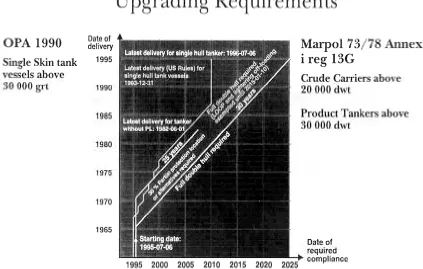
Section 4115 of OPA 90 contains the double hull requirements and a phase out schedule for single hull tank vessels operating in US waters. According to this provision, all newly constructed tank ships must meet the double hull requirements. The phase-out dates for single hull tank ships of 5,000 GT and above are specified as a function of two variables with different dates. They are size groups with either double bottom or double hull construction. The size groups are: 5,000 – 15,000 GT, 15,000 – 30,000 GT, and 30,000 GT and above. In the present phase-out period single hull vessels up to 40 years of age are permitted for the two small sizes, with an additional five years for either double-hull or double-bottom. But a single hull vessel may not operate in US waters after January 1, 2010 and a vessel with only double bottom or double sides after January 1, 2015. (See Fig. 2). The double hull requirements do not apply to foreign vessels engaged in innocent passage.
5.3. Liability
OPA 90 does not hold cargo owners liable for oil spills. Ship owners are subject to liability limits of USD 1,200 per gross ton of oil spill. The operators of such vessel are also rendered liable for oil pollution damage. The use of the term “operator” is very significant in that it could cover a whole host of potential defendants, including a pilot, a ship-management company and a mortgagee in possession.
5.4. OSLT fund
victims of an oil spill can submit claims against the fund. The US Coast Guard has access to the fund for distribution in case it is unable to locate the party responsible for the spill.
5.5. Navigational measures & State pre-emption
The Act requires a study of navigational measures undertaken by the US Coast Guard with the object of reducing oil spills. This may require prohibition of tanker movements in certain areas. The provisions of OPA 90 allow states in the U.S. to legislate and implement more stringent laws than the federal government, to protect their territories from oil pollution, to prevent occurrences and to deal with them in cases of oil pollution, in addition to imposing heavier penalties. Accordingly, many states have enacted more stringent laws in their jurisdictions.
6. MARPOL Regulations 13G AND 13F
After several spectacular tanker accidents, such as the Exxon Valdez, the Khark 5, the
Mega Borg, political pressure started building up worldwide to put an end to
catastrophic oil spills. Some of the major oil spills from tankers occurring during 1989 to 1992, which have influenced IMO to amend MARPOL 73/78 are noted below:
Ship name Date Location Oil lost in million gallons Khark 5 December 19, 1989 Atlantic ocean 185 KM 20
away from Moroccan coast
Cibro Savannah March 6, 1990 Linden, New Jersey not known Mega Borg June 8, 1990 86 KM south west of 5.1 Galveston, Texas
Under the circumstances, the double hull amendments proposed by the United States in 1990 were accepted into MARPOL 73/78 with certain modifications. Alternative methods of design and construction ensuring the same level of protection against pollution in a collision or stranding were also incorporated (Griffin, 1999, pp. 12-14).
On March 6, 1992 amendments to MARPOL 73/78 were adopted, which added regulations 13F and 13G concerning the design and construction of both new9 and existing tankers to Annex 1. The amendments came into force in July 1993. The essence of Regulation 13F is as follows:
• New oil tankers of 600 tons dwt and above are to be fitted with double hull, mid-deck or an other approved10alternative method of design and construction at least equivalent to double hull to prevent oil spills in the event of collision or stranding.
• Double hull tankers of 5,000 dwt and above, must be fitted with double bottoms and wing ballast tanks or spaces other than cargo and fuel oil tanks extending the full depth of the ship’s side and the entire cargo tank length for the protection of cargo tanks.
• For mid-deck tankers, in addition to providing wing tanks as non-cargo spaces, the cargo and vapour pressure exerted on the inside of the bottom shell plating, forming a single boundary between the cargo and the sea, does not exceed the external hydrostatic water pressure.
• Oil tankers of 20,000 tons dwt and above have to comply with the damage assumptions prescribed to meet the assumed bottom raking damage.
• Oil tankers of less than 5,000 tons dwt must be fitted with double bottom tanks and the capacity of each cargo tank is limited to 700 cubic meters, unless they are fitted with double hulls.
9 New oil tanker means a tanker for which the building contract was placed on or after July 6, 1993, or the
keel was laid on or after January 6, 1994 or the delivery of which was on or after July 6, 1996.
10 Approved means approved by Marine Environment Protection Committee (MEPC) based on the
Regulation 13G, containing the IMO phase-out requirements for existing crude oil tankers of 20,000 tons dwt and above and product carriers of 30,000 tons dwt and above, took effect from July 6, 1995. It does not apply to tankers complying with regulation 13F. (See Fig. 2). The main provisions of regulation 13G are as follows:
• Existing oil tankers must be subject to an enhanced program of inspection (EPI), which must at least comply with the guidelines in IMO resolution A.744 (18), as amended.
• An oil tanker not meeting the TSPP 1978 requirements, must not operate later than 25 years after the date of delivery, unless it complies with the requirements of regulation 13F. However, an additional life of five years is possible, provided the tanker adopts either approved alternative operational arrangements, such as ‘hydrostatic balance loading’ (HBL), or meets the protective location requirements of paragraph 4 of the regulation.
• An oil tanker meeting the TSPP 1978 requirements, must not operate later than 30 years after the date of delivery, unless it complies with the requirements of regulation 13F.
Gray (1997, p.2) states that -
Regulation 13G, and its companion 13F requiring double hull, mid-deck or equivalent for new-building tankers, were developed in a group of feverish sessions at IMO which sought to reconcile the unilateral demands of the United States to impose OPA chapter and verse on the international fleet, and at the same time to deal with tanker design and construction features, both new and existing, on more rational and technically-based grounds that existed during U.S. Development of OPA.
implementation of OPA 90 as well as the National Research Council’s (NRC) study “Tanker Spills: Prevention by Design”. The MEPC also conducted a comprehensive study on oil tanker design, which had participants from among the world’s leading tanker design experts, shipyards and major classification societies.
Fig. 2. Phasing out of single hull tankers under OPA 90 and MARPOL 73/78
(Source: DNV Paper series No. 97-P003, 1997)
societies with records of results maintained on board and available to interested parties such as Port State Control officers, charterers etc.
Although conversion of pre-TSPP 1978 single hull tankers to meet the protective location requirement of regulation 13G(4) can increase the life of a tanker to 30 years, it may require retrofitting partial bulkheads in cargo tanks, which can involve huge expenditure. Operation of such tankers without retrofitting and keeping large volumes of wing tanks empty or exclusively for ballast to meet the rule requirements may not be economically viable. As a result, ship owners may opt to scrap such single hull tankers rather than converting them, or adapting them to any other acceptable measures.
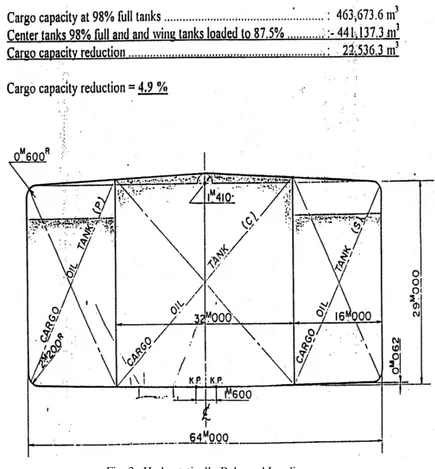
HBL is based on the principle that the hydrostatic pressure at the cargo tank bottom of the cargo oil column plus the ullage space inert gas overpressure remains equal to or less than the hydrostatic pressure of the outside water column, thereby mitigating the outflow of the oil in case of bottom damage. When grounded, the high pressure of the seawater pushes it into the tank forcing the cargo upwards and forming a seawater layer in the lower part of the tank. (See Fig. 3). Acceptance of this method by the administrations is based on the guidelines of IMO resolution MEPC 64(36). According to Gray (1997, p.4), the National Research Council report “ Tanker Spills: Prevention by design” speaks in a guarded way about HBL and expresses cautions. The report states that -
The effectiveness of hydrostatic control depends on operator’s strict adherence to rules, rather than on a permanent feature of vessel design and construction; and
Hydrostatic control does not provide complete protection against oil outflow due to tidal variations or wave action following a grounding.
The Exxon Valdez disaster, OPA 90 and Annex 1 regulations 13F and 13G of MARPOL 73/78 have altered the attention more towards tanker operational measures. It has brought in awareness in the shipping industry of the importance of safer ships and environment friendly ship performance.
CHAPTER 3
The Erika Disaster and its Aftermath
1. Introduction
Elimination of sub-standard ships and protection of the marine environment are issues, which have been discussed seriously by the shipping world in the past three decades. While operational and accidental pollution from ships have been reduced, with the increase in size and number of ships, the accidental pollution continues to occur. The international community creates hue and cry over any accidental oil pollution, which causes misery to the local population or affects the coastal ecosystem, and demands
higher level of protection and preservation of the environment. The Erika disaster has
caused such reverberations. The causes of the sinking of the Erika, the main players
who contributed to the disaster, the reaction by the French authorities, the proposed European Commission directives and finally the changes adopted in the IMO single hull tanker phase-out schedule will be discussed in this chapter.
2. The Erika Disaster
The 37,238 tons dwt tanker Erika broke into two in heavy seas, off the coast of Brittany,
river Loire. The spilled oil cargo was blown towards the French coast and polluted a 400 km long coastline, from Brittany to La Rochelle (‘The Erika accident’, 2000, p.2)
The 24-year old tanker Erika sailed under the Maltese flag. It was owned by the
Savarese family of Sorrento in Italy through Teverse Shipping Company based at Valletta and Panship Management & Services, an Italian company, operated it. The
Erika was classed with Registro Italiano Navale (RINA). The vessel was in possession
of valid statutory and classification certificates issued by RINA after it carried out the five-year special survey in June 1998 and annual survey two weeks before the disaster. Prior to carrying out the special survey, the classification society of the ship was changed from Bureau Veritas (BV) following a change of ownership. On the fateful
voyage, the Erika was under charter to TotalFinaElf carrying a cargo of heavy fuel oil
from Dunkirk in northern France to Livorno in Italy. It was inspected under Port State Control (PSC) in Porto Torres in May 1999 and no deficiencies were reported. Also, PSC authorities in the port of Novorossiysk, Russia inspected it in November 1999 and a few deficiencies were noted (‘Erika- principal’, 2000, p.2).
The Malta’s Maritime Authority (MMA) and the French Marine Accident Investigation
Bureau (BMER) conducted separate official investigations into the cause of the Erika
From this part of the report, it can be seen that the MMA had identified local structural problems resulting from corrosion as the most probable cause of the sinking. Further, they criticized the shipyard repair in 1998 as minimal and in all probability insufficient. The shipyard’s poor quality could have contributed to the initial local failure, leading to a final collapse (‘French say’, 2001, p.2).
The BMER investigation report has described the discovery of a serious loss of thickness of up to 30 % in hull plating and the replacement of 16mm plate with 12mm when the ship was repaired in the Bijela yard in Montenegro in August 1998. The repair work played a determining role in the chain of events that led to the accident. General rusting was widespread, and there were many patches of deep corrosion (‘French say’, 2001, p.2). The report states –
The Erika resembled a patchwork of metal sheets of different thickness and varied quality. The vessel would not have fallen apart if it had been as seaworthy as it was claimed to be by the classification society as late as 20 days before it broke up on December 12, 1999. There was excessive corrosion, beyond norms that are considered acceptable by classification societies.
Sub-standard welding was also noted on the ship. The existing state of the ship is summarized in the report as “In short, the state of the ship and its rapid deterioration in the final hours were such that there was no possibility of avoiding the catastrophe” (‘Tanker so corroded’, 2001, p.1; Parry, 2000, p.1).
reports of MMA and BMER, it can be concluded that the causes for the Erika
catastrophe were corrosion and botched repairs, aggravated by rough sea conditions.
Many consider the Erika disaster to be the catalyst for a lookout to newer tankers to
carry the world's oil production to the market. Older ships, of age 15-20 and more, are generally considered to be a liability for companies to charter them.
3. Fact or fiction
The Erika spilled 15,000 tons of cargo oil when she broke into two, which was only
6.5% of the oil spill caused by the Amoco Cadiz in 1978 when it ran aground and broke
into two in the same region. But the Erika disaster has stirred media interest and
shipping industry repercussions more than that caused by the spill 22 years ago, as it broke apart while underway at sea. The French authorities have taken up the issue with IMO as well as with the European Union for immediate stringent measures to avoid recurrence of such incidents (‘Erika provokes’, 2000, p.2). The adequacy of the safety regime and the role of the main players responsible for the disaster are discussed below.
The quantity of oil spilled by the tanker Erika was not so large. But the disaster raises
the question whether the present international maritime regime is adequate, or there exists weaknesses in the maritime safety rules that have contributed to the loss of the
Erika. Intertanko is of the opinion that the provisions governing the design, equipment
and operation of tankers are amongst the most rigorous of all IMO requirements (‘Erika provokes’, 2000, p.2; ‘The Erika accident’, 2000, p.3). Existing IMO conventions cover
all the design and operation aspects of the Erika that could have contributed to the ship’s
sinking. The investigation reports of MMA and BMER point to the fact that the Erika
regime properly. The vessel was allowed to deteriorate to the point of break up. In the opinion of this writer, the responsibilities for the mishap lies firstly with the ship owners, followed by the classification society, flag state, and the charterer, which is discussed in the following paragraphs.
3.1. Shipowners
Shipowners are responsible to maintain and operate ships in such a way that their ships are at least in compliance with the relevant IMO requirements and without diluting their obligations regarding safety, and protection of marine environment. Investigation
reports of the Erika reveal that these norms have not been strictly adhered to. Renewing
the hull plating by 12mm instead of 16mm thick plates, allowing wasting of hull plates to the extent of 30%, doing patchwork at plating areas of deep corrosion, etc. confirms the irresponsibility of the shipowners.
3.2. Classification societies
Classification societies develop and administer the technical standards for the design, construction, and periodical surveys of ships, which are called the ‘Rules’. The Rules are developed and updated on the basis of many years of experience from thousands of ships in service and on advanced research, theoretical and practical knowledge gained from experiments, and reflect the views of the whole industry (Abe, 1990, pp. 3-4).
defect, the classification society of the ship issues condition of class to be dealt with in a short period, after the ship has carried out temporary repairs, which enables the ship to continue its operation. This may be a practical solution. But there is no reason for such a major deficiency to occur when the entire ship structure is subject to a systematic inspection at scheduled intervals. Secondly, in any case of a major deficiency, it has to be dealt with immediately.
Another factual observation is that some of the classification societies have dual standards even though they do not admit, as their rules are the same for all. Their standards vary from ship to ship depending on the owners, the flag of the ship, the area of operation of the ship, etc. This writer believes that often these factors contribute to the occurrence of disasters.
A third observation is about the regional standards of some of the classification societies. Classification society surveyors, sometimes, follow regional standards and practices, which may be below the standards set up by their rules. Finally, shortage of experienced, trained and qualified surveyors may also be a contributing factor.
3.3. Flag States
to others, for example to classification societies, to carry out statutory surveys but it cannot delegate nor absolve the responsibility for shouldering it (Jönsson, 2000, pp.1-4).
3.4. Port States
In the past two decades, PSC inspections have helped to eradicate the operation of substandard ships to some extent. Under various regional Memoranda of understanding (MOU) covering all the oceans and sea, PSC has created a sense of awareness among shipowners and operators that they have to properly maintain their ships to avoid being detained in ports. But PSC inspections have their limitations. As a normal inspection under port state control takes only two to four hours, it may not reveal a serious structural defect when the ship’s records and classification listings do not reveal it. The ship may appear good superficially, and it may not be practicable to inspect all the ballast or cargo spaces, unless the Port State Control Officer (PSCO) suspects a defect or receives such information. Co-operation of the crew is essential for a successful PSC inspection, which may not be easily available due to various constraints. In the condition and circumstances explained, it is this writer’s opinion that a PSC inspection
of the Erika might also not have revealed its serious structural deficiencies.
To substantiate this writer’s view on the above, a specific PSC inspection is narrated
below. In 1994, a gas carrier named Coral Star of Panama flag called at Port of Cochin
during the voyage, had exhausted the supply of drinking water and provisions, and had therefore called into the port.
The PSCO observed that the classification surveyor had carried out a safety equipment survey about two weeks earlier and the vessel had undergone dry-docking repairs recently. However, just by sheer coincidence, the PSCO inspected the void space in the cargo area. To his dismay, the ship’s double bottom ballast tank tops were found corroded and transversally cracked at a few places. The collision bulkhead was also corroded and leaking. If the cracks on the tank tops, which were adjacent to the hull plating, had travelled to the hull with the stresses induced by rough seas, it could have ended up in a disaster.
3.5. Charterers
The charterers have an obligation to recognize and support quality shipping by doing everything in their power to identify substandard ships and avoid any association with them (‘Erika provokes’, 2000, pp.2-3; ‘The Erika accident’, 2000, p.4). Charterers can effect improvements to the current safety regime by tightening their vetting and approval procedures during selection of ships for chartering.
Therefore, in order to eradicate substandard ships, shipowners, classification societies, flag states, port states, charterers, and ship’s crew must all cooperate.
4. Aftermath in Europe
4.1. The French action
checks on tankers over 15 years of age and to cease using single hull tankers by 2008. A number of other French shippers’ organizations, Ship owner’s Central Committee and
BureauVeritas have also signed (IRI, 2000. p.1).
4.2. The European Commission directives
The public outcry over the pollution damage caused by the Erika disaster has provoked a
massive and radical reaction from the European Commission (EC), the French
Government, classification societies, environmental campaigners and others. The
reaction was so strong that it was felt that nearly every aspect of pollution law might undergo radical change within few years. Many felt that the reaction was abrupt and hasty. Following the energetic representation of the French Government, the EC proposed legislation, which was described as ‘more wide ranging and more draconian than the US OPA 90’ and hence dubbed as ‘Eur OPA 2000’ (Leech, 2000, pp. 1-3).
4.2.1. Erika I-package
The post-Erika package labelled as ‘Erika I-package’ was presented by the EC in March 2000. It contains amendments to the existing EC directives on Port State Control, classification societies, and new scheme for faster phasing out of single hull tankers in European trades (‘The Erika accident’, 2000, pp. 5-6).
The proposal for accelerated phasing out of single hull tankers in European waters, based on OPA 90, basically contains the following elements:
● Phasing-out of single hull non-TSPP 1978 tankers by 2005, single hull TSPP
1978 tankers by 2010, and single hull tankers below 20,000 tons dwt by 2015;
● Removal of the provision for HBL made under the MARPOL Convention; and
● Introduction of financial incentives for operating double hull tankers or tankers
exhibiting similar safety characteristics.
Many issues on this list of amendments are creating difficulties for the EU Commission, the Council and the Parliament to reach a common view. As regards the proposal for the accelerated phasing-out of single hull tankers, the IMO has gone a long way to
accommodate the EU’s positions. In view of the decisions emanating from the 46th
session of the MEPC in April 2001, it seems highly likely that the regional rules in Europe will be avoided (The Indian Mariner’s News Desk, 2000a, p.1; The Indian Mariner’s News Desk, 2000b, p.1; ‘In the wake’ 2000, p.1; ‘The Erika accident’, 2000, pp. 5-6).
4.2.2. Erika II-package
The second package presented by the Commission on 6th December 2000, contains the
following new far reaching proposals:
● Improved VTS1 in European waters
● Establishment of European Maritime Safety Agency
● International oil compensation regime
● Increased transparency (EQUASIS2)
1 Vessel Traffic Services contribute to the safety of life at sea, safety and efficiency of navigation and
These proposals will have to undergo the decision making process of the Council as well as the Parliament, as in the case of the ‘Erika I-package’. The Erika II-package is also bound to confront the tanker industry with far reaching practical and tactical challenges (The Indian Mariner’s News Desk, 2000b, p.1; EU – EP, 2001, pp. 1-2).
5. Single-hull phase out – Revised timetable
At the 46th session of the MEPC held in April 2001, IMO agreed to a revised timetable
for elimination of single-hull tankers by 2015 or earlier. The new phase-out timetable will be included by amending regulation 13G of Annex 1 of MARPOL 73/78 and will enter into force in September 2002. The content of the revised timetable is as follows (IMO, 2001b, pp. 1-2; True, 2001, pp. 68-69):
5.1. Three categories of tankers
The new regulation identifies three categories of tankers as below:
Category 1 - oil tankers of 20,000 tons dwt and above carrying crude oil, fuel oil, heavy diesel oil or lubricating oil as cargo, and of 30,000 tons dwt and above carrying other oils as cargo, which do not comply with the PL/ SBT requirements.
Category 2 - oil tankers of 20,000 tons dwt and above carrying crude oil, fuel oil, heavy diesel oil or lubricating oil as cargo, and 30,000 tons dwt and above carrying other oils, which comply with the PL/ SBT requirements.
Category 3 - oil tankers of 5,000 tons dwt and above but less than the tonnage specified for Categories 1 and 2.
2 On January 28, 2000, the maritime administrations of France, United Kingdom, Spain, Singapore, US
5.2. Exemption
With the revised regulation I/13G of MARPOL, although 2015 is set as the new cut-off date for phasing-out single hull tankers, the flag administration may allow some newer single hull ships registered with them and conformed to certain technical specifications,
to continue trading until the 25th anniversary of their delivery. However, any port state
can deny entry of such single hull tankers to their ports or offshore terminals, but they must communicate their intention to IMO (IMO, 2001b, p.2).
5.3. Condition Assessment Scheme (CAS)
MEPC in its 46th session adopted a resolution on the Condition Assessment Scheme,
which will be applied to all Category 1 vessels continuing to trade after 2005 and all Category 2 vessels after 2010. The requirements of the CAS include enhanced and transparent verification of the reported structural condition of the ship and verification that documentary and survey procedures have been properly carried out and completed. Further, the scheme requires that compliance of CAS be addressed during the ESP concurrent with intermediate or renewal surveys as required by resolution A.744 (18), as amended (IMO, 2001b, p.2).
6. Other Post-Erika Amendments
In October 2000, the IMO adopted amendments to the CLC and the IOPC Fund Convention and raised the limits of compensation by 50%, payable to victims of pollution by oil from tankers. In December 2000, amendments to the guidelines on the
EPI3 during surveys of bulk carriers and oil tankers in relation to the evaluation of the
longitudinal strength of the hull girder of oil tankers were also adopted. In response to
3 Amendments to resolution A.744 (18) Guidelines on the enhanced program of inspection during surveys
the Erika incident, the IMO has taken action on several other operational matters aimed at enhancing safety and minimizing the risk of oil pollution (IMO, 2001b, p.2).
To summarise, even though the international maritime regime does cover the entire spectrum of safety in design, construction and operation of ships, safety of people and environment, the accidents still occur mainly because some responsible parties are not
properly implementing the safety regime. Accidents, like the sinking of the Erika, occur
due to the casual and irresponsible attitude of some ship owners, operators, classification societies, flag states, charterers, etc. Most of the accidents pave way to public outcry and become a whip in the hands of the lawmakers to adopt and implement the new laws, mostly to satisfy the aroused public. This indeed becomes punishment to the innocent and responsible shipowners and operators.
CHAPTER 4
Design Characteristics of Double Hull Tankers
1. Introduction
Since June 1990 the OPA 90 has required all new tankers trading in USA to have double hull, and since July 1993 the IMO has set out a phased program requiring all new tankers trading worldwide to have double hull or equivalent design. Magelssen (1997, p.2) states-
By introducing these Rules it is concluded by the Rule-makers that a possible oil spill after a collision or grounding will be reduced for a double hull tanker.
With the introduction of these rules, the world tanker fleet has been changing slowly to double hull in the beginning and then gathering momentum gradually. The statistics published by Intertanko (‘Tanker transport’, 1999, p.4) show that the majority of the world tanker fleet is still made up of single hull, but the proportion of the double hull tankers has increased from 4% in 1990, to 10% in 1994, and some 27% in 1999. They have estimated that by 2002 double hull tankers will account for 50% of the world tanker fleet.
construction will be discussed, and finally, some of the alternative double hull tanker designs will be briefly presented.
2. Regulatory features
We have seen in Chapter 2 that the OPA 90 and the regulation 13F of Annex I
[I/13F(3)]1 of MARPOL 73/78 require construction of all new oil tankers of 5,000 tons
dwt and above to be double hull. Regulation I/13F(3) requires that the entire cargo tank length is to be protected by ballast tanks or spaces other than cargo and fuel oil tanks, in addition to stipulating the minimum height, depth and width of these tanks and spaces. The requirements are summarized as follows:
● the wing tanks or spaces are to be extending either for full depth of the ship’s
side or from the top of the double bottoms to the uppermost deck;
● the minimum width at any point of the wing tanks or spaces shall not be less than
calculated from the formula given in the regulation or two meters which ever is less, but not less than the minimum value of one meter;
● the double bottom tanks or spaces are to be extending either from side shell to
side shell, or from side tank or space to side tank or space;
● the minimum depth at any cross-section of the double bottom tanks or spaces
shall not be less than B/15 (meter) or 2 m which ever is less, but not less than one meter;
● if the side tanks are common to the double bottom or a portion of it, the tanks are
generally J or L tanks in order to comply with the regulation I/25A.
Regulation I/25A, which came into force on February 1, 1999, practically requires longitudinal central bulkheads in order to comply with the intact stability criteria.
Regulation 13F(3) also deals with other details such as turn of the bilge area, aggregate capacity of ballast tanks, suction wells in cargo tanks, and ballast and cargo piping. Oil tankers of less than 5,000 tons dwt must at least be fitted with double bottom tanks or spaces having a depth of B/15 (meter) with a minimum value of 0.76 m. The regulations do not mention the requirement of side tanks or space for oil tankers of this size
category. However, the capacity of cargo tanks cannot exceed 700 m3 unless fitted with
wing tanks or space complying with the requirements stated earlier.
3. Design & Construction problems
The double hull concept simply means that the cargo oil tanks are separated from the outer hull by means of a space large enough to absorb low-speed impacts. Fig 4 shows midship section with nomenclature of a typical double hull tanker. Björkman (1992, p.321) says that the most obvious structural solution to this requirement is to build the double hull of sandwich panels. The sandwich panels mean that the webs and stiffeners of inner and outer shells will be inside the double hull.
With the implementation of double hull regulations, the geometrical structure of oil tankers has undergone changes. According to Magelssen (1996, p.2), the change in length/draught (L/D) is from approximately 11.5 to 10, with considerable reduction in scantling. Particularly with the use of high tensile steel (HTS), the critical buckling stresses will often exceed the acceptable corrosion limit applicable to pre-MARPOL designs. A double hull ship built with HTS in deck and bottom area will have a ratio of 30-40 % between HTS and mild steel.
Fig. 4. Typical double hull midship section nomenclature
(Source: Tanker Structure Co-operative Forum)
for ships of 80- 100,000 tons dwt, there may not be any difference. But the area exposed for ballast will be between 2-3 times more in double hull tankers than in single hull tankers of the same size. This means that more area is exposed to possible corrosion requiring protection by coating and access to the structure, involving additional expenditure.
tankers designed without longitudinal bulkheads and built before regulation 25A entered into force, stability will be another area requiring attention.
In a conventional double hull tanker, because of the mandatory even distribution of cargo oil tanks and ballast water tanks, hull girder bending moments are higher than for single hull tankers in both the loaded and ballast conditions (Hah and Akiba, 1994, p.268). This results in high hull girder bending stresses throughout the ship’s life.
Björkman (1992, p.321) explains the difficulties associated with the design of a double hull tanker with a small distance between inner and outer shell plates, which houses the webs and stiffeners as follow:
● complex task to calculate the combined stresses and buckling strength as static
and dynamic loads stress the shell plates longitudinally, transversally and laterally;
● cumbersome to carry out the manual welding due to the restricted access for
welding stiffeners to webs inside the double hull space;
● corrosion protection by coating and anodes for the double hull space, used to
carry ballast water, becomes a major concern due to the maximum structure inside the space;
● easy access and ventilation are to be incorporated to facilitate removal of ballast
water sediments, for general cleaning, maintenance and inspection, and for monitoring presence of gas leak within the sandwiched double hull space.
fatigued soon. All these factors can result in poor workmanship and welding quality. Another factor requiring consideration is the amount of welding to be carried out in the congested double skin space. As there is an additional hull compared to a single hull tanker, the welding length in the double hull space is almost double. The amount of work for the yard quality control department, statutory surveyors and classification surveyors carrying out welding inspection will also increase considerably. Also, the possibility of human error while carrying out tedious inspections in congested space cannot be ignored.
4. Alternative Double Hull designs
In order to overcome some of the major design and construction difficulties, Björkman (1992, pp. 321-328) describes the following five pairs of alternative designs complying with the double hull regime. To demonstrate the alternatives, he has used 280,000 tons dwt VLCC with the following approximate particulars: Length: 320 m, Breadth: 57.5 m,
Depth: 30.3 m, Draught: 21 m, Cargo capacity: 330,000 m3, Ballast capacity including
peak tanks: 105,000 m3, cargo tank body length: 255 m and web spacing: 5.32 m.
4.1. Alternatives A1 and A2
Figs. 5 and 6 are two alternatives A1 and A2, where the double hull spaces at sides and bottom have a uniform distance between inner and outer skins of 3.5 m. There are four pairs of side and double bottom ballast tanks. The main difference between A1 and A2 is in the web fitting of the longitudinal bulkhead separating centre and side cargo tanks. In A1, the web is fitted at the centre cargo tank side, whereas in A2 it is at the side cargo tank side. The access to the double bottom tank is via trunks incorporated in a vertical web on the transverse bulkhead and a longitudinal bulkhead web. The inner and outer side shell stiffeners are located inside the double skin space. These designs incorporate all the four problems, described earlier.
Fig. 5. Alternative A1 Fig. 6. Alternative A2
4.2. Alternatives B1 and B2
Figs. 7 and 8 show alternatives B1 and B2, which have 2 m deep double bottom tanks and 5 m wide side tanks. The inner bottom longitudinals are fitted in the cargo tanks. As the double bottom is not a sandwich construction, carrying out assembly welding in this space is easier. Further, welding inside the space is limited to upside welding of the web and vertical stiffeners to the inner bottom shell. The inner bottom plate is subject to less transverse stresses because its position is close to the neutral axis of the bottom web. The bottom web flanges take the maximum stresses. Access to the double bottom space is similar to A1 and A2.
Fig. 7. Alternative B1 Fig. 8. Alternative B2