Linear
The Report
Published by the Linear consortium (Eandis, EDF Luminus, EnergyVille (KU Leuven, VITO & imec), fifthplay, iMinds, INFRAX, Laborelec, Miele Belgium, Proximus, Siemens, Telenet, Viessmann) 2014 www.linear-smartgrid.be [email protected] EnergyVille Thor Park 8300-8490 3600 Genk Belgium
To receive a hardcopy of this booklet, please send an e-mail to [email protected].
All rights reserved. No part of this publication may be reproduced, stored in a retrieval system or transmitted in any form or by any means, whether electronic or mechanical, or by photocopying, recording or otherwise, without the prior consent of the project steering board (to be contacted via [email protected]).
Editors in chief: Wim Cardinaels, Isabelle Borremans Lay-out & graphics: Nathalie Belmans
Authors:
Ronnie Belmans, Bart Beusen, Bart Boesmans, Wim Cardinaels, Bert Claessens, Sven Claessens, Paul Coomans, Reinhilde D’hulst, Wim De Meyer, Jan Degraeve, Chris Develder, Benjamin Dupont, Wim Foubert, Jan Gordebeke, Felix Hoornaert, Sandro Iacovella, Johannes Jargstorf, Rafaël Jahn, Kris Kessels, Wouter Labeeuw, Philippe Muyters, Sven Penninck, Raf Ponnette, Daan Six, Steve Stoffels, Jeroen Stragier, Matthias Strobbe, Kris Van Daele, Philippe Van Dievel, Philippe Van Poppel, Donald Vanbeveren, Chris Vangrunderbeek, Koen Vanthournout,
?
0101001 101101 011011 funding9,5 M€
460
smart appliances1.5 Gb
data per family1500
questionnaires240
home energy management systems400 kWp
PV for 94 houses7
electrical vehicles2000
sub-metering plugs5,000,000
readings per day75
smart grid controller prototypes for standard appliances2,500
support tickets1000
on-site interventionsalmost
2000
families involved15
smart boiler prototypes55
man time of use110
smart meters185
smart homes5.5
year: May 2009 – Dec. 201420
partners€30 M
contributed by partnersPhilippe Muyters
Flemish minister for Work, Economics, Innovation and Sports
Linear in Numbers >
I want to congratulate the Linear team for their excellent work. Better use of energy is one of the biggest challenges our society faces today and in the years to come. This challenge requires the activation of all our knowledge and innovation power.
The Linear project is a guiding example on how to tackle these kind of overwhelming problems. In fact it did far more: it converted a societal challenge into a business opportunity.
The daily news shows the relevance of the niche on which Linear worked: make families adapt their electricity consumption to the availability of solar and wind energy, in such a way that their comfort is protected. Linear implemented solutions that help to get a robust energy system and in the same time contribute to achieve our targets concerning CO2.
The realization of the Linear system was only possible because of the intense cooperation between research institutes and industry: Research explores unmarked routes, the industry knows the practical problems and constraints related to their activities.
The fact that ISGAN (International Smart Grid Action Network) nominated Linear as finalist out of more than 40 projects worldwide, confirms that in Flanders we are among the world leaders in this area.
Let us continue to valorize this excellent work to give a boast to Flanders and strengthen our economy.
Philippe Muyters
We are very proud to present our Linear results. When we started in 2009, there were doubts about the relevance of investigating automated demand response systems for families. Logically, since we were preparing answers to the changing situations expected by 2020 and beyond. In 2009, the boom of PV panels had not yet started, issues in low voltage grids were rare, we had a surplus of power plants, and gas plants were expected to be the answer to balance the variation in wind and solar energy.
Today, however, we are concerned about our energy supply for the coming winter. Half of our nuclear plants are out of order; natural gas plants have been closing en masse in recent years because their costs are not competitive in the current market design; coal-fired plants have been closed due to their high age; and, together with the renewables, the mix does not match the higher electricity demands during winter.
While the relevance of demand response for families was questionable in 2009, it is more relevant now than ever. The government and the electricity sector hope that families will reduce their consumption at the critical moments in the coming months in order to avoid the scenario in which we need to cut regions off from the grid.
Linear proved that automated residential demand response can mitigate the complications of the newly developing energy landscape. On the other hand, Linear also showed that technology and policy are not yet ready for a mass introduction of demand response business models toward families. Conclusion: the Linear research project has proven its value, but the end of the project is not the end of the smart grid challenges we’re facing. It is only the beginning of new products and services that are going to change the energy landscape fundamentally.
Ronnie Belmans,
Chairman Linear Consortium CEO EnergyVille
Executive Director Global Smart Grid Federation Professor at the KU Leuven
Honorary chairman ELIA
Twenty partners have joined hands to support Linear >
Linear: Research Moving Forward
Linear is a Flemish Smart Grid project focusing on solutions to match residential electricity consumption with available wind and solar energy, an approach referred to as demand response.
Demand response is seen as an important smart grid technology which can help mitigate the effects of:
• the increasing share of intermittent renewable energy production in the mix;
• the increased electrical load due to the shift from fossil-fuel to electrical equipment;
• decreasing investments in directly-controllable (fossil-fuel) plants.
Although demand response is being increasingly deployed in the industry, the large potential of the residential sector has remained hitherto untapped since other criteria apply: comfort safeguards are a basic requirement to enable sustained participation of families in demand response schemes and the sources for flexibility are small as regards the quantity of energy but there are many of them. As such, the technology needed for residential demand response is fundamentally different from what is needed at the industrial level.
For Linear, partners from the research and industrial sectors joined forces in close collaboration with the government to develop, implement and evaluate demand response technology. Because of the comfort requirements, Linear selected and deployed 2 types of smart appliances that offer substantial flexibility and can be automated for a minimal impact on comfort. The first type consists of postponable appliances, such as dishwashers, washing machines and tumble dryers, 445 of which were deployed in the Linear pilot initiative. The second type consists of buffered appliances, of which Linear included 15 domestic hot water buffers and 7 electrical vehicles.
In the field test, 110 houses were equipped with smart meters. The other houses involved had standard energy meters for overall consumption and production. We installed approximately 2,000 sub-metering plugs, and 94 houses had photovoltaic panels accounting for a total of 400 kWp.
The Linear architecture supported different Home Energy Management Systems and Balancing Responsible Parties, thereby taking into account the complex European deregulated energy market. With standardized interfaces, appliances can exchange information and constraints in order to optimize system operation and user comfort.
The Linear system is a research platform designed and deployed by the partners to investigate user behavior and acceptance. For 4 business cases, Linear also identified the technical and economic challenges and opportunities in facilitating an increased share of renewable energy sources.
Linear in Short
The 4 business cases selected were:
1. Portfolio Management: can we make customers shift their energy consumption based on the day-ahead market and nominations?
2. Wind Balancing: can we reduce unbalance costs for the retailer that are caused by discrepancies between the wind energy that is predicted and then actually produced?
3. Transformer Aging: can load spreading over time prevent the accelerated aging of transformers?
4. Line Voltage Management: can we prevent voltage deviation issues in local grids?
The Linear technology can be easily adopted by families and supports the operation of local distribution grids and energy markets. There were 240 families participating in the demonstration project, evaluating 2 different consumer interaction models:
Variable Time of Use
We asked 55 families to alter their energy consumption based on different energy tariffs during the day (prices communicated the day before). We supported them with a Home Energy Monitoring System so as to give an insight into their consumption, and provided a display showing the market-priced tariffs scaled-up to the targeted wind and solar predictions in 2020.
Automated Demand-Side Management
Linear equipped 185 families with a Home Energy Management System and smart appliances, such as washing machine, dishwasher, tumble dryer, electric heating application and electrical vehicle, turning on the machines when more energy consumption was needed, or turning them off when less energy had to be used. All systems were of course equipped with features to manage the comfort of the users as well as ensure that the families could always take a hot shower and that the dishes would be ready when needed. For each one, Linear investigated to what extent residential Demand Response could offer a technical and economical solution to mitigate the effects of the increasing share of intermittent renewable energy production, while still bearing in mind user behavior and comfort.
The response to the variable Time of Use tariff scheme was weak while the Linear tariff scheme turned out to be too complex. The acceptance of the smart-start functionality, however, was much better. After 18 months of testing there was still no indication of user fatigue, and the participants that stopped using the system did so because of technical issues.
The Linear field test demonstrated that automated demand response with household appliances is technical feasible. For each of the business cases Linear could improve the parameters controlled by the different algorithms. At the same time Linear showed that in-house communication should need further development and standardization in order to keep the operational cost affordable.
• iMinds the Conference 2013, Brussel
• iMinds the Conference 2012, Brussel
• European Utility Week 2013, Amsterdam
• S3C Midterm Conference 2013, Evora
• SGParis 2014, Ghent
• IERE – GDF Suez Brussels Workshop, 2014
• Eurelectric Power Distribution Conference 2013, Brussels
• iSup 2012, Brugge
• ADDRESS 2nd Regional Belgian Workshop 2012, Brugge
• IEEE – PES ISGT 2012, Berlin
• IEEE - Smart Grid World Forum 2012, Geneva
• Symposium on Microgrids 2012, Evora
• IEEE Power & Energy Society General Meeting 2012, San Diego
• IECON 2013, Vienna
• IECON 2014, Dallas
• Innogrid 2012, Brussel
• ISGT 2013, Kopenhagen
• Grid+ interaction event, Rome 2014
• EEM2011, Zagreb
• EEM2013, Stockholm
• CIRED 2011, Luik
• IRES2012, Berlin
• Sandia 2011
• SMIs 2nd annual distributed energy storage conference
• ICST conference on E-Energy 2010, Athens
• KIC InnoEnergy Scientist Conference 2012, Leuven
• PSCC 2014, Wroclaw
• ISGT Europe 2014, Istanbul
• IM 2013, Gent
• SmartGridComm 2011, Brussel
• 2nd IEEE ICC International Workshop on Smart Grid Communications 2011, Kyoto
• NOMS 2010, Osaka
• Smart Grid Communications 2013, Vancouver • EEDAL2011, Kopenhagen • SG Paris, 2014
Linear
in the world
Conferences
Awards
Education
Documentaries
• BEST Summer School 2012, Leuven
• BEST Summer School 2013, Mol
• SGF Smart Grid School 2013, Brussel
• SGF Smart Grid School 2014, Brussel
• BEST Summer School 2014, Mol
• Alles kan schoner, 2013 ISGAN Award S3C partner
Public Events
Publications
Press
• SGF user group 2011 • SGF user group 2012• Day for SMEs at Siemens, Huizingen 2013
• SGF PowerMatchingCity – Linear, 2013
• SGF Neighbors coming over 2014, Mollem
• Leuven city of ideas, 2014 Leuven
• SGF Grid Intelligence: Demand response 2014, Brussel
• EDF Sustainability Report 2012
• EDF Sustainability Report 2013
• Elektrovisie, Oct 2013
• VITO Vision, Sep 2013
• Milieu Direct, Dec 2013
• Bits & Chips, May 2014
• Power Pro
• Engineeringnet
• VTM
• De Redactie
• TV Limburg
• Het Belang van Limburg
• Gazet van Antwerpen
• Het Nieuwsblad • De Morgen • Metro • RTV • Q-Music • Radio 2
Table of contents
Transition towards a Decentralized Energy Supply 18
In the Past: Centrally Managed 18
Today: Decentralized Power Generation 18
Preparation 22
Families’ Concerns About and Willingness to Adapt to Smart Appliances 22
Electricity consumption of families 24
Where to Find Flexibility? 25
The Role of Energy Storage in Smart Grids 26
Electrical Energy Storage 27 Thermal Energy Storage 28 Combined Heat and Power Systems as a Bridge between Gas and Electricity Networks 29
Changing Conditions for Low-voltage Distribution Networks 30
Integration of Renewable Energy into the Low-voltage Network 30
Possibilities of Electric Vehicles for Smart Grids 33
Driving Behavior Profiles 33 Charging Electric Vehicles at Home 34 Where Do We Go from Here? 35
Simulations versus Real-life Tests 36
Balancing 37 Voltage Control 38 A Combination of Business Cases? 39
Wide-bandgap Power Technologies 40
Real-life Deployment 46
Technical Developments 46
Smart Appliances 48 Smart White Good Appliances 49 Smart electric Domestic Hot Water Buffer 50 Coordinated charging of electric vehicles 51 ICT Architecture 52 Measurements 56 In-house equipment 60 Test Families 63 Recruitment 63 Installation 67 Remuneration Models 69 Capacity Fee 69 Dynamic tariffs 70
Families: Lessons Learned 74
Participant’s concerns 74
Flexibility offered by the participants 76
Washing Machines, Dishwashers, Tumble Dryers 76
Impact on Security of Supply 85
User Fatigue 86
User Acceptance 88
Business Cases 94
Portfolio Management 94
Linear Dynamic Tariff Scheme 95 Manual Demand Response and Dynamic Tariffs 96 Automated Demand Response and Dynamic Tariffs 97
Wind Balancing 103
Potential of Residential Demand Response for Intraday Balancing 104 Linear Base Line Methodology 105 Intraday Balancing Control 107
Pilot Results 108
Impact of Wind Balancing on the Low-voltage Grid 113
Transformer Aging 114
Setup and Control 115
Pilot Results 117
Line Voltage Control 120
Regulatory Aspects 126 Introduction 126 Regulatory Framework 126 Regulatory Challenges 127 Market Roles 127 Market Entry 127
Regulation of Prices and Tariffs 128 Remuneration of Grid Operators 128 Privacy and Consumer Protection 129 Standardization 129 Scientific Publications 130 Thank you 134 Partners Eandis 66 EDF Luminus 19 EnergyVille 47 fifthplay 59 iMinds 23 INFRAX 55 Laborelec 91 Miele Belgium 58 Proximus 62
Transition towards
In the Past: Centrally Managed
In the previous century, electricity always flowed from a power plant to a substation via a transmission and distribution network, and then proceeded to houses and companies. Since traffic was one-way, it was fairly easy for transmission operators to maintain the network’s balance using a centrally managed system.
Today: Decentralized Power Generation
In the last decade, we started installing wind turbines and photovoltaic systems throughout the country. Our target is to increase their share in the transition towards a CO2-neutral energy system. These systems are set up in a decentralized manner, and they generate energy that is subject to the right weather conditions and regardless of the amount of power used on the network. As long as the proportion of these sources of renewable energy is not too high, conventional power stations can absorb the variations in generation due to changes in sun and wind. But to integrate ever more renewable energy, solutions with regard to demand are needed. These could involve, for instance, removing surplus energy from the network and storing it in buffers, or matching power use with the available generation.
Today, Belgium has over 200,000 electricity generation systems, as opposed to just a few dozen a decade ago. As a result, electricity suppliers and network operators will have to work differently. The challenge is to completely redesign and adapt the electricity system, preferably in a way that will enable everyone to have access to power at all times and at a reasonable price.
Transmission operators are designing new products to be able to control the balance of their grids in these changing market conditions. Flexibility has become more important, and aggregators now generate business by harvesting flexibility in small and medium enterprises such as cold storage warehouses. These facilities can cool to lower temperatures when there is plenty of cheap energy, and then switch off their energy consumption for a few hours when energy is less readily available without affecting the shelf-life of the products stored.
In the Linear project, we researched the potential of demand response at household level.
Transition towards a Decentralized Energy Supply
2000 2014
x 2000
Electricity generation systems in Belgium
EDF Luminus
Philippe Van Poppel, Director Strategy and Innovation
On the one hand, we see growing interest from a wider audience in changing behavior with regard to energy usage. On the other hand, we have learned that there is still a long road ahead in explaining active demand to a wider audience.
EDF Luminus can play an important educational role in improving the knowledge and interest of consumers. Broad interest in current energy topics, such as possible winter black outs, is a significant opportunity for making a link with active demand management.
The development of demand response services is encountering certain legal and regulatory hurdles, but it is mostly a matter of mindset and entrepreneurship. A clear ambition should be shared among stakeholders: Do we want customers and “prosumers” to actively participate in a competitive and “greening” energy market by empowering them to make their own choices regarding their comfort requirements, energy costs and privacy?
Only a commercially sound market model can live up to such expectations. Commercial parties should be able to offer their demand response solutions on a level playing field to consumers, energy companies and grid operators. Regulation, on the other hand, should incentivize and foster this new market, while nevertheless not creating new hurdles or market distortions. A (smart) grid connects all stakeholders in such demand response solutions, and it is clear that no party can take single-sided action or decisions without impacting others. Only by involving and challenging each other in a good atmosphere of cooperation and competition can practical and well-balanced solutions be found to the benefit of everyone.
Families’ Concerns About and Willingness to Adapt to Smart
Appliances
1In 2010, at the start of Linear, a face-to-face survey was carried out with 500 representative families in Flanders which were part of the Synthetic Load Profile2 reference group. Part of this
survey concerned the acceptance of, and expectations with regard to, smart appliances in a residential environment. Detailed explanations were given on the use and benefits of these appliances. Based on 9 dimensions (Figure 1) the respondents were categorized into 4 segments according to their attitude towards smart appliances. The segments were labeled ‘Advocates’ (36%), ‘Supporters’ (27%), ‘Skeptics’ (25%) and ‘Refusers’ (12%).
Figure 1: Attitude towards smart appliances among 500 Flemish Synthetic Load Profile families
The results of the segmentation showed diverging perceptions of smart household appliances in Flanders. Further profiling revealed a strong age difference between Advocates on the one hand, and Refusers on the other. Although it would be wrong to consider age as a determining factor for a negative perception of smart appliances, it can certainly be considered an important element. Although the expected cost is a barrier, it is clear that a reasonable base of support exists for the use of smart appliances, as could be derived from dimensions measuring Perceived Usefulness, Attitude towards Using and Intention to Use. However, aspects such as control and safety revealed certain reservations. Even within the Supporters segment, which shows on average a positive perception, these two aspects seem to raise concerns.
1 Stragier, J., Hauttekeete, L., De Marez, L., & Claessens, S. 2013. Towards More Energy Efficient Domestic Appliances?
Measuring the Perception of Households on Smart Appliances. Energy & Environment, 24(5), 689-700.
2 A curve or rating table per quarter or per hour of a full year that reflects the relative consumption for a certain
Preparation
iMinds
Prof. Dr. Ir. Chris Develder
Current transitions in the energy landscape are a first step towards a (nearly) 100% sustainable society by 2050. Attaining that goal requires a substantial increase in the amount of renewable energy sources and storage facilities available on the grid, the further electrification of transport, industry and heating, as well as the more efficient use of available energy. Different solutions and technologies will be needed both to ensure security of supply with highly variable (and not directly controllable) energy production, and to upgrade the power grid in a cost-efficient manner. iMinds aims to contribute to the development of the ICT technology that will be an essential part of these solutions.
Within Linear, iMinds focused on the interconnection of a wide range of different systems and the real-time processing of the data received, and it also investigated user acceptance of residential demand-response services. Both subjects are essential to making this technology a successful part of solutions enabling a sustainable society.
The user studies showed that there is a great desire on the part of users to be truly involved, at least if they receive clear feedback on how their flexibility is used (along with the related financial rewards), and also that the user-friendly configuration of the appliances is key to including these services into people’s daily routines.
Based on experiences within Linear, iMinds decided to build an actual house, rather than an artificial lab, to allow for the easy setup of truly realistic experiments with residential technology (communication, sensors, appliances and services). This home lab will be used for further research into automating the configuration of smart appliances while taking users’ contexts into account, as well as in efforts to improve the reliability of in-home communication.
Furthermore, iMinds will continue its research into network and backend technology. The goal here is to transfer and process all generated data (consumption, production, flexibility, grid monitoring, etc.) so as to fully enable the optimal control of loads, production units, storage facilities and grid assets, as well as predict production, consumption and available flexibility.
Eandis and INFRAX delivered Linear electricity consumption data for analysis based on the energy consumption of 1,326 Flemish families and small businesses in 2008. A family’s total electricity consumption on an annual basis varies from household to household. Most families have an electricity demand of between 2.8 and 3.3 MWh annually while median electricity demand is 3.6 MWh. On average demand is 4.9 MWh, which is high because a small group of households consumes a lot of electricity. (Figure 2)
Figure 2: most prevalent electricity consumption of flemish families and small businesses. Graph cut off at 14 MWh (maximum is around 200 MWh).
Electricity demand also varies during the day. Between 3 and 4 a.m. electricity demand is at its lowest, and there is a peak around noon and in the evening. To illustrate this, electricity demand during an average day of the year for households with median electricity demand (3.6 MWh) is presented in Figure 3, together with an estimation of how these households use wet appliances, i.e. washing machine, tumble dryer and dishwasher. Wet appliances are started at periods of high general electricity demand, showing potential to shift them to periods with lower demand.
Electricity consumption of families
Figure 3: electricity demand during an average day of the year for a household with median electricity demand (3.6 MWh), together with an estimation of how the household uses wet appliances. such appliances are started at
periods of high general electricity demand, showing potential to shift them to periods with lower demand.
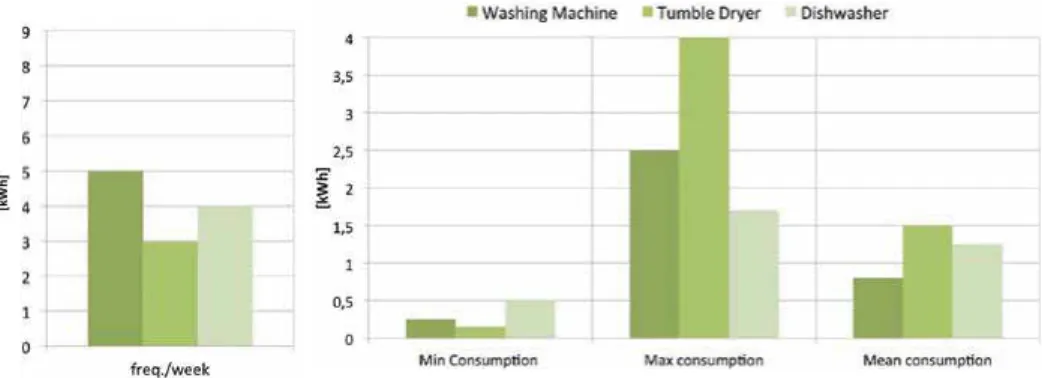
Figure 4: Usage and electricity consumption of household appliances per week
Where to find flexibility?
Demand response implies that the electricity consumption of several appliances is shifted to a more beneficial moment in time. The appliances need a certain amount of demand flexibility to change their energy use over time, and several options for offering such flexibility exist:
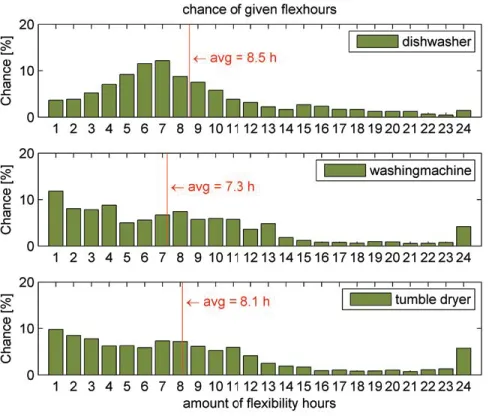
1. a washing machine, dishwasher or tumble dryer can delay starting as long as it finishes its cycle before a deadline defined by the user;
2. a domestic electric hot water buffer with thermal energy storage can decouple hot water demand from electric power demand through its thermal energy storage tank;
3. an electric vehicle can delay or interrupt its charging as long as the vehicle is fully charged before a deadline defined by the user.
Electric Energy Storage
Two key parameters determine the attractiveness of battery concepts: charging/discharging efficiency and depreciation cost per cycle.
Today, batteries and power electronics are still too expensive to be economically viable in smart grid applications. Whether or not a profitable situation can be attained depends primarily on two key parameters: charging/discharging efficiency and depreciation cost per cycle. In this connection, manufacturers expect energy density and sales volumes to increase by 2020, the result being significantly lower costs per kWh. On top of this, inverters and battery management systems still require further development and cost reductions. To improve the value of electrical energy storage for smart grid functionalities there is a need for more and better functionalities, such as reactive power control, islanding operation, interphase power exchange (balancing) capabilities, and state-of-health control. Before this type of storage can become a real business case, it needs to have these functionalities on the one hand, and a longer life span for the investment on the other.
The Role of Energy Storage in Smart Grids
Energy storage can play an important role in matching power generation with demand-side requirements at all times. Energy can be stored in different ways, and in this context Linear investigated the possibilities of storage applications for smart grids. Two main storage concepts served as the starting point for the analysis: storing electricity in batteries and storing heat in thermal buffers. For both main concepts we modelled, simulated and evaluated various potential practical implementations at both district and household level that involved centralized and decentralized variants (Figure 5). In the decentralized variant houses were assumed to be equipped with a battery system or an individual thermal buffer, while in the centralized variant the storage facility was not located in the house but rather in a separate, dedicated location in the district and operated by a utility company. For the thermal energy concept, the approach presupposed the presence of a heating network.
Figure 5: conceptual overview of the six different energy storage concepts for domestic and small commercial applications, investigated in the Linear project
Electric energy storage Thermal energy storage Decentralized electric energy storage with distributed control Centralized electric energy storage with central control Decentralized thermal energy storage Centralized District CHP* with decentralized storage Centralized District CHP* with centralized storage Micro-CHP* Individual heat pumps with buffers
Combined Heat and Power Systems as a Bridge between Gas and Electricity Networks
What is the effect of Combined Heat and Power on the gas network? Research in the context of Linear presumed that all 300 injection nodes in a region in Hombeek-Leest would install a CHP system. As a result, we were able to observe a cost and CO2 emission reduction of up to 30%. In simulations the pressure in the pipes was found to drop by up to 15 mbar, but the minimum pressure requirement of 23 mbar continued to be satisfied at all times. We can conclude that the massive integration of CHP presents no major concerns for the gas network.
Figure 6: temperature-flow diagram for the Hombeek-Leest region In February 2012 Flanders was facing the coldest weather conditions in decades
Thermal Energy Storage
The thermal energy storage concept disconnects heat production from its use by storing energy in thermal buffers. Using a thermal buffer enables a heat pump to produce heat (and so consume electricity) at moments when there is a surplus of renewable electricity, either for immediate use for space heating and/or domestic hot water or for storage for later use in buildings or buffers. Furthermore, Combined Heat and Power units (CHP) implemented alongside a thermal buffer can generate electricity based on demand while either storing the heat or supplying it for direct use A centralized CHP for an entire district with centralized thermal energy storage offers the greatest flexibility potential, despite the fact that individual micro CHPs perform similarly (but are highly dependent on the specific heat profile of the house). Centralized CHPs for an entire district with decentralized buffers have the inherent disadvantage of a “weakest link situation” because the operation of the CHP is steered by the customer with the highest heat demand.
For the future massive implementation and continued operation of thermal energy storage concepts it will be crucial to have low-cost control systems, standard communication protocols and interfaces available commercially. Today, a thermal buffer is often a passive component integrated into the control system of the boiler, CHP or Heat Pump. In future scenarios, it is likely that a smart control device will steer the heating system and thermal buffer and decide which heat source is most appropriate based on current market conditions.
It should be noted that, next to purely technical developments, a modification of the regulatory and market framework will be important in creating the conditions necessary to stimulate the implementation and operation of smart energy storage concepts.
Changing Conditions for Low-voltage Distribution Networks
The increasing penetration of renewable energy, mainly generated by solar panels, is putting current low-voltage networks under stress and prompting distribution system operators to invest in costly upgrades of assets such as cables and transformers. For Linear, we carried out an investigation into the limits of these networks. First, four real-life networks were obtained from the partner distribution system operators to represent the low-voltage grid in Flanders. In a second step we investigated the limits of these networks with respect to increased loads and photovoltaic panels. In addition, the integration of Combined Heat and Power (CHP) systems and the relationship between electricity and gas networks were also studied.
Integration of Renewable Energy into the Low-voltage Network
Selection of the Most Relevant Networks
The Flemish distribution system operators INFRAX and Eandis made more than 30 different electricity distribution feeders available to Linear in the regions of Ghent, Diepenbeek and Hombeek-Leest. We categorized them into four representative groups: Rural, Semi-Urban, Urban and City. To represent each category we did not select the average feeder but instead the one most likely to face upgrades in the near future.
Semi Urban
Rural Urban
Integration of Renewables into Low-voltage Networks
For this research, we simulated the effect of photovoltaic power and increasing loads on the available networks. A Matlab load flow code was developed within Linear as it performed faster than commercially available software such as Neplan. More than 300 different scenarios were considered with different load profiles, different amounts of solar penetration, winter/summer day, distribution of PV panels/load among the phases, etc. For each of these scenarios we determined when the grid would need to be upgraded.
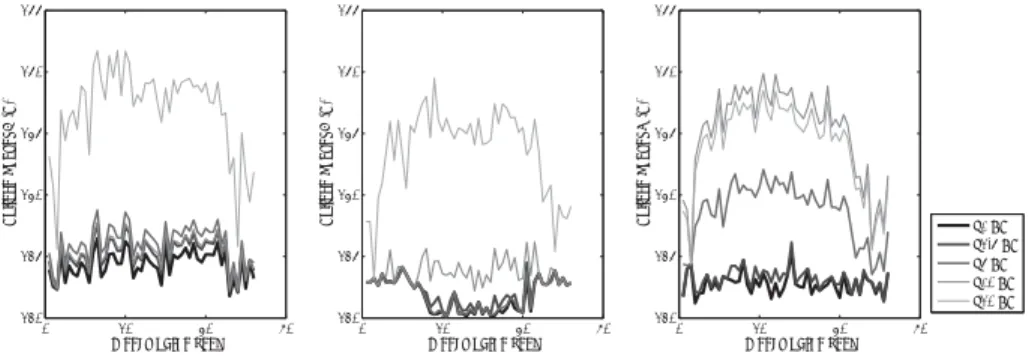
Figure 7: voltage/unbalance for the 3 phases of the urban feeder as a function of photovoltaic penetration
Figure 8: min/max voltage that can be set on the transformer to keep the feeder voltage within allowed limits. Grid upgrades become necessary at the crossover point.
0 20 40 60 230 235 240 245 250 255 Voltage phase−A (V)
Weeks of the year
0 20 40 60 230 235 240 245 250 255 Voltage phase−B (V)
Weeks of the year
0 20 40 60 230 235 240 245 250 255 Voltage phase−C (V)
Weeks of the year
x1 PV x2,5 PV x5 PV x10 PV x20 PV 100 110 120 130 140 150 230 232 234 236 238 240 242 244 246 248 250
Load Level (%, based on load in 2010)
Voltage at the secondary side
of the transformer (V)
City feeder, no PV
Min voltage Max voltage
V
oltage at the sec
ondar
y
of the transf
ormer
Suitable passive
operation Maximum voltage
to avoid over-voltage Minimum voltage to avoid under-voltage Active counter-measures needed Penetration Level Critical Penetration Level
Possibilities of Electric Vehicles for Smart Grids
Driving Behavior Profiles
In order to research the influence and interaction between a residential building and an electric vehicle, it is first necessary to have good insight into electric vehicles and their energy and capacity requirements in a distribution network under realistic conditions. This is why in Linear we set up a statistical vehicle availability model based on data from research into travel behavior in Flanders, vehicle segmentation in Flanders and an energy consumption model. We determined that on average fewer than 10% of all passenger cars are on the road at any given moment. Likewise,
vehicles remain parked for longer (approximately 90% of the time) than the time that is necessary to recharge their battery. In fact, nearly all vehicles are parked at home overnight;
during the day, approximately 25% of cars are parked at home at any given moment. The possibility of charging at home is therefore an important element for electric vehicle users, and it lends relevance to research into minimizing the impact on the distribution network of numerous cars charging at home. We used this vehicle availability model to establish a realistic translation of the current mobility behavior into demand profiles for electric vehicles.
Charging Electric Vehicles at Home
With Linear we went in search of techniques that could reduce the undesired side effects of the charging process, such as a strong increase in peak capacity and voltage problems. These side effects were demonstrated beforehand using an extension of the distribution network simulations from Linear with the consumption profiles of electric vehicles.
This allows us to shift the charging processes over time in a coordinated manner so that the total demand on capacity from all charging processes and other loads is levelled off. If desired, the demand on capacity per building or per household can be levelled off. A benchmark and a multi-agent system were developed for charging coordination. The benchmark technique requires and has available all possible status information while the multi-agent technique only requires knowledge of the battery’s charging status and the departure time indicated by the user. Both coordination techniques succeed in reducing the capacity peak. Although charging coordination does have a positive impact on voltage and imbalance issues on the three-phase distribution network, it cannot be guaranteed that such problems will be entirely prevented by these techniques.
This is why we researched the possibilities for a capacity reduction technique such as voltage droop control, which can be implemented on the chargers present in the vehicle. It manages to reduce the undervoltage problem, but cannot prevent the imbalance issue.
The combination of a multi-agent-based charging coordination system with a voltage droop control technique appears to be the most promising because not only are the capacity peaks levelled off, but the voltage issues are also solved, all with an extremely limited extension of the charging time per vehicle.
Where Do We Go from Here?
Linear can recommend that network operators determine whether electric vehicles are present in residential neighborhoods due to the strong local impact a few vehicles can have on certain distribution networks. A general and uniform approach for preventing potential problems is not recommended at this time because of the uncertainties that still exist concerning electric vehicle characteristics and the diversity of distribution network characteristics. We instead recommend setting up a “menu” from which the most effective solution can be selected depending on the context. Further follow-up on the evolution of the electric vehicle market and further research into changes in driver behavior (e.g. due to range anxiety) and into charging solutions are recommended in order to develop this menu of solutions.
Simulations versus Real-life Tests
Simulations offer the possibility to investigate new concepts via mathematical models. The only tools needed are a computer, software and a clever researcher, which means that the overall costs and risks are acceptable. On the other hand, the fact that a simulation environment only considers those aspects which have been modelled by the researcher is a shortcoming. As a result, when concepts are turned into real-life products a large number of unexpected interactions can ultimately influence performance.
For this reason, in Linear we decided to draw on both research techniques: we developed accurate models and sophisticated algorithms to investigate the impact of new control concepts, and then tested these concepts via prototypes in the Linear field test while subsequently using the findings to refine our models.
Flexibility provided by end-consumers can be used in several ways. For instance, it can provide an alternative to gas-fired power plants for correcting wind energy forecasting errors. Another possibility is deferring costly grid upgrades by controlling the voltage level on the grid. Simulations are a key instrument in assessing the potential of these concepts.
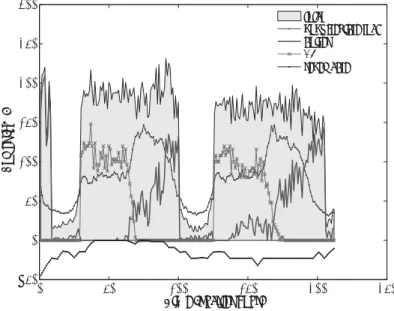
0 50 100 150 200 250 −50 0 50 100 150 200 250 300
Time [quarter hour]
Power [kW] total non−flexible load boiler EV renewable Balancing
Figure 10: balancing using flexibility of smart appliances
Due to the unpredictability of solar and wind energy, production/consumption imbalances occur on the market. Traditionally, these imbalances have been removed by ramping up or down the electricity generation of gas-fired power plants.
Within the Linear project, a simulation code was developed to assess the potential of residential demand response as an alternative to gas-fired power plants. In Figure 10, the results show that activating or delaying consumption of smart appliances effectively reduces dependence on gas-fired power plants.
0 10 20 30 40 50 60 70 80 90 100 0 100 200 300 400 power gasplants Time [0.25 h] Power [MW] 0 10 20 30 40 50 60 70 80 90 100 0 2000 4000 6000 8000 flexibility Time [0.25 h] Energy [MWh]
Figure 9: an algorithm with the objective to control the charging of an electric hot water boiler and electric vehicle to match the available renewable sources, taking the consumption of non-flexible loads into account.
Voltage Control
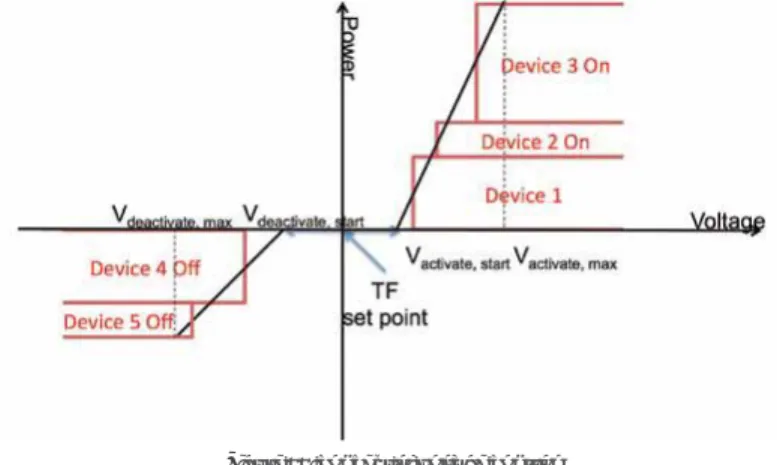
The basic idea behind voltage control is simple: when voltage levels approach an upper limit additional consumption is activated, and when voltage levels approach a lower limit consumption it is either switched off or delayed.
Figure 11: concept of voltage control
By configuring the entire low-voltage distribution network connected to a Linear transformer - including the smart appliances in the Linear houses - we were able to test our voltage control algorithm and optimize the parameters prior to activating this algorithm in real life in the field test. More than 150 scenarios were investigated: different feeders, summer/winter days, load profiles, smart appliances, voltage settings, etc. A maximum reduction of voltage problems in the field test compared to the reference case without voltage control was expected to be 30%.
Figure 12: potential of voltage control during field trials for a summer and winter day
We developed a simulation environment using a Linear distribution feeder with the same load profiles, households, photovoltaic injection, etc. (p.30 Changing Conditions for Low-voltage Distribution Networks) and combined the portfolio management and voltage control business cases. In a first scenario the objective of the households was to optimize their consumption by responding to Time-of-Use prices. In a second scenario the flexibility of household appliances was used to perform voltage control, while in a third scenario the constraints of both cases were taken into account to optimize both cost and line voltage. Figure 13 shows the different objectives during the day for 15 households.
When simulations were performed over two months, it was possible to calculate the economic benefits for the households and the extent of voltage problems for the distribution system operator in each of the three scenarios.
OBJECTIVE
No control Consumer Distributed System Operator
Consumer + Distributed System Operator Cost 230.6 208.5 225.7 209.1
#Voltage problems 942 633 593 588
Figure 14: cost vs. voltage problems for 15 smart households with smart appliances
Clearly, it can be concluded that voltage control has very little impact on cost reduction for consumers reacting to Use prices. This means that, potentially, a combination of Time-of-Use and voltage control could be implemented without negative interference.
A Combination of Business Cases?
Linear considered it important to investigate how a distribution system operator can interact with the market when a retailer is steering flexibility.
Figure 15 - example of a gallium-nitride based switching power converter prototype and (right) a gallium-nitride power transistor produced by imec in a prototype to-220-like package.
Wide-bandgap Power Technologies
In the electrical grid and residential networks of the future, increasing emphasis will be placed on the efficient management of electrical energy production, distribution and use. This will lead to the emergence of a smart grid, where electrical energy is intelligently controlled through a dynamic demand/supply model (e.g. by allowing household appliances to be controlled remotely) and distributed energy sources such as renewables can be seamlessly integrated into the network. Breakthroughs in this field are driven by developments in power electronics that relate to the efficient conversion, control and conditioning of electric energy from the source to the load. With respect to energy savings, using more efficient power electronics shows huge potential. Specifically, the quoted potential for energy savings is around 30%, which translates into a reduction of 11% of the EU’s total energy usage . Within the framework of the Linear project, imec has carried out a study and established a roadmap for the development of future (wide-bandgap) power technologies.
Switching power convertors and inverters are key components in power electronics. They allow the efficient conversion of electrical energy from one form into another, e.g. they step up the voltage for energy distribution, step in between supply voltage and operational voltage in a consumer device, convert AC to DC from the socket to an appliance, convert DC to AC to deliver energy from solar panels to the grid, etc.
1 Catrene Scientific Committee Working Group: Integrated power & energy efficiency, “Integrated power &
energy efficiency: Power device technologies, simulations, assembly and circuit topographies enabling high energy efficiency applications”. Catrene, April 2013
2 McDonald, 2009. GaN Based Power Technology Stimulates revolution in Conversion Electronics (International
Rectifier).
At the heart of these power convertors one can find a switching semiconductor component which is in large part responsible for determining their characteristics. An ideal switching device should have zero resistance when turned on and infinite resistance when turned off (without failing), and also ideally should switch instantaneously between the on and off mode. A real-world device of course does not exhibit these perfect characteristics, and research in the field has focused on improving them so as to develop better switches which can handle higher blocking voltages, as well as higher currents, and which can switch at higher frequencies.
As such, these power semiconductor devices place limits on achievable power efficiency, switching speed and size limit for various power conversion topologies. Accordingly, it is important to have a critical look at these power components, their historical development and future evolution.
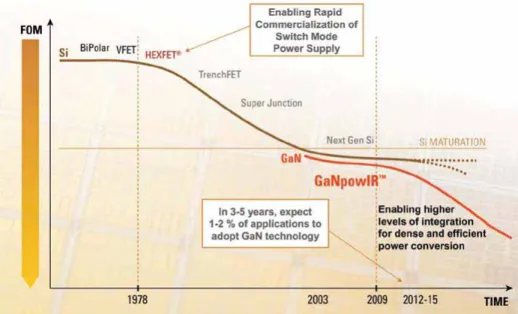
Figure 16 - evolution of power transistor figures of merit over the past 30 years along with the projected evolution of gallium-nitride (GaN) power devices2.
For the past fifty years silicon has been the material of choice for fabricating power devices, and incredible gains have been made in power transistor figures of merit through technology optimization, improved manufacturing techniques and novel architectures. However, in the past decade progress has slowed as silicon reaches a high level of technology maturation, meaning that it is becoming very costly to only marginally improve the technology’s performance. In fact, figures of merit have reached values close to the limits dictated by the material. For this reason, researchers have started turning to novel materials. The main contenders to follow up silicon-based materials as the dominant power technology are silicon-carbide-based power components and gallium-nitride-based transistors. These materials have much-improved intrinsic properties and associated figures of merit for use in power switching devices. In this connection it is worthwhile to note that first-generation devices already show figures of merit exceeding those for state-of-the-art silicon devices, with moreover the promise of rapid evolution in fabrication technology and therefore figures of merit.
With regard to residential networks, these novel wide-bandgap materials are going to have a big impact on how efficiently energy is used. Gallium-nitride technology can as such play a critical role in the smart grids and smart homes of the future. It is a breakthrough technology allowing for a significant reduction in energy losses in power switching convertors as compared to established silicon technologies. Initially, the target market will be that of medium-power devices found in residential settings, so for example power supplies for home appliances, computers, television sets, tablet computers, chargers for electrical vehicles, etc. The distribution side of the smart grid requires voltages of several kV and above, and currently silicon-carbide technology is more suited to these ranges. However, developments in high-voltage gallium-nitride vertical devices are on-going, with the promise of outperforming silicon-carbide with respect to achievable figures of merit.
Telenet
Jan Degraeve, VP Sustainability & Corporate Office
Energy consumption in Flanders continues to rise every day, and increasingly a portion of the required energy is being generated locally. Solar panels, wind power and heat pumps provide the means for generating renewable energy, part of which can be injected back into the network by smaller, domestic players.
Telenet is working together with Distribution Network Operator Eandis on a pilot project involving smart meters in the area around
Mechelen. In this context 3,000 households have been equipped with smart meters, including a few participants in the Linear field tests.
Smart grids, or smart energy networks, go yet a step further than smart meters. Smart networks are necessary because there are large-scale, renewable but fluctuating energy sources that need to be linked to them, and new developments, like electric cars, need them to function efficiently. This is why Telenet is taking part in Linear and focusing, through the Smart E Project, on the smart data flows that are necessary to the implementation of the system and that are made possible through an intricate and high-performance communication network.
Participation in Linear and the Eandis smart meter project fits in with the many initiatives Telenet takes to reduce energy consumption among its consumers, such as the set-top box and more efficient internet modems.
Technical Developments
Real-life Deployment
Right from the start, the Linear pilot had high technical ambitions. The Linear infrastructure supported multiple business/control cases as well as different types of smart appliances from multiple vendors. Moreover, detailed measurements were carried out to support the various analyses. As smart appliances are not yet widely available, in addition to integrating appliances with onboard smart grid functionality Linear converted standard appliances, such as domestic hot water buffers and white good items, to smart devices.
On the electricity grid side, the Linear system incorporated two types of smart meters. In Hombeek and Leest, and in Bret-Gelieren, so those areas with strong Linear participant concentrations (9.2.1. Recruitment), Linear also collected transformer measurements.
Figure 17: EnergyVille Home Lab
Figure 18: Laborelec Smart Home Energy Lab (shel)
To support the development and testing of the prototypes and to test
the integration of all components into the Linear infrastructure,
several labs were constructed, among which the EnergyVille Home
Lab and the Laborelec Smart Home Energy Lab.
EnergyVille
Peter Verboven, Business Developer
Research & Development centers such as EnergyVille tend to operate several years ahead of the market. We are continuously developing concepts, technologies, solutions and systems that will subsequently have to find their way into our everyday lives. A lot of this work is done through simulations, in labs or in other controlled settings. This leads to valuable results, but it does not guarantee that any of them will be taken up and introduced on the market.
That is where large-scale pilot projects like Linear come in. They are far more complex to set up than an average lab test, but the unique mix of commercial parties and R&D players is exactly what is needed to give state-of-the-art research results that little extra boost that makes the difference between lingering forever on the shelf or moving on to become part of widely-used products.
Linear has been a major success in this respect. We are very proud of this project that turned out to be one of the largest, most advanced and most productive pilots in Europe. The sheer size of Linear, which included 240 actively-participating households over three years, is impressive for this kind of initiative. There have been other projects that included a higher number of participants, but never with the same level of involvement - and complexity - as what we achieved here. Moreover, Linear has not only given us a clearer understanding of how end users react to our technology, it has also led to new products and services that are on the market today. It has been the single best investment we could have made in shaping the energy landscape of the future.
Smart Appliances
Figure 19: prototype testing in EnergyVille Home Lab
Minimizing the impact on the comfort of residential users participating in demand response schemes was an important requirement in the Linear project. One of the means used to achieve this involved extensive use of automated ‘smart’ appliances. Such appliances are remotely controlled, which means that interaction with users can be limited while still respecting their comfort settings.
Smart appliances cover a wide range of technology, from electric domestic hot water buffers and buffered heat pumps to washing machines, dishwashers and other postponable white good appliances, including electric vehicles. Any smart appliance brought on to the market by any one of the major manufacturers and industries involved should allow for easy integration into any home energy management system. As a result, in Linear much effort was devoted to the matter of ‘device abstraction’, i.e. designing and using smart appliance interfaces that are as technology and vendor-independent as possible. For instance, the parameters used to control washing machines, dishwashers and tumble dryers were identical for all three types of devices and for both white good manufacturers participating in Linear.
Figure 20: electric vehicle charging in front of participant’s house
Smart White Good Appliances
The Linear pilot used white good appliances from two manufacturers. Miele supplied smart-grid-ready washing machines, dishwashers and tumble dryers. These appliances communicated via PLC technology with a Miele Gateway1 that in turn was connected to the Linear Home Gateway. BSH
(Siemens) supplied Linear with ‘traditional’ non-remotely controllable washing machines and dishwashers. Remote control was through VITO white good smart grid controllers, designed and built for the Linear project and placed between the appliance and the wall plug. The controller technology can be applied to all postponable appliances that store program information regardless of power interruptions, and it requires no modifications to the controlled appliance2.
While the communication technology used differed, the data supported by the interfaces was identical for all 5 models of white good appliances. When a user configured the appliance, he or she set a deadline as far as possible in the future. The appliance then sent the configuration time and start deadline, as well as an estimate of the power consumption based on the time, to the Linear demand response control server. At the best start time, the server sent the start signal to the appliance. If the Linear infrastructure failed to send the start signal before the start deadline, then local control of the appliances ensured that the program was started at the deadline, thereby safeguarding user comfort.
Figure 21: EnergyVille white good controller Figure 22: temperature scan of the energyville white good controller,
ensuring that these controllers don’t give cause to fire.
1 The Miele GW supports an XML over HTTP/Ethernet smart grid interface.
Smart Electric Domestic Hot Water Buffer
In Linear, the technology was developed to convert regular electric Domestic Hot Water (DHW) buffers to smart, remotely controllable ones1. The buffers are equipped
with a generic thermal buffer interface2, which hides all buffer model specific details,
such as dimensions, volume, etc. Instead, the interface expresses the available flexibility in terms of state of charge, power, the minimum state of charge that must be retained to cover the user’s peak demands, etc.3
1 Vanthournout, K.; D’hulst, R.; Geysen, D.; Jacobs, G., “A Smart Domestic Hot Water Buffer,” Smart Grid, IEEE
Transactions on , vol.3, no.4, pp.2121,2127, Dec. 2012
2
Coordinated Charging of Electric Vehicles
The charging of electric vehicles in the Linear pilot used the switching capabilities of the submetering plugs. When a user arrived home with his or her electric car, the car was plugged into the submetering plug in the garage. Then the user opened his/her Linear portal on a smart phone or tablet, and entered the departure time and the charging time as indicated on the vehicle’s dashboard. Based on this data, the algorithms controlled the charging by switching the plug on and off.
1Matthias Strobbe, Koen Vanthournout, Tom Verschueren, Wim Cardinaels and Chris Develder, “Deploying the
ICT Architecture of a Residential Demand Response Pilot,” in IM 2015 – ExpSession
Both scalability and interoperability proved to be crucial properties.
The centralized approach in Linear was the correct choice for a pilot since it facilitated data collection and analysis while providing the flexibility to easily set up and change experiments. However, the limits of the servers were pushed at all levels in terms of both number of transactions and amount of data. We managed, but a full scale roll-out should build on mature cloud/big data technology and/or distributed methodologies.
The attention given to and effort spent in Linear on proper interfacing and device abstraction proved to be a valuable investment and a key factor in the pilot’s success. A wide array of technology from an equally vast range of sectors and industries comes together in residential demand response and only proper care for the interoperability can ensure that the puzzle is operational.
ICT Architecture1
A scalable, reliable and interoperable ICT architecture was designed, implemented and deployed for Linear (Figure 24). In each Linear household we installed a home gateway, i.e. the core local component of our system. This gateway communicated with the measurement devices and smart appliances and sent all collected data in real-time to the backend of the gateway provider. The data was then forwarded to the Linear pilot backend.
The backend integrated multiple gateway providers and supported multiple clusters per provider, with different business/control cases running for the various clusters. The pilot backend also received all control set points for the Balancing Responsible Party and Distribution System Operator control cases, for example wind imbalance set points, variable prices, real-time transformer measurements, etc. Based on this, and on the status data received from the households, the control logic generated appliance control signals which were sent via the pilot backend and gateway provider backend to the home gateways of the end users, and from there to the smart appliances.
Linear Pilot Backend
Distribution
System
Operator
Distribution
System
Operator
Balance
Responsible
Party
Balance
Responsible
Party
Home
Gateway
Home
Gateway
Home
Gateway
...
Backend Gateway
Provider
Elec
tric
v
ehicle
T
umble dr
y
e
r
Domestic hot
wat
er buff
er
Dish
washer
Smar
t met
er
Ener
gy
measur
ements
Touch displa
y
Sub
-met
ering
plugs
W
ashing
machine
Backend Gateway
Provider
Transformer measurementsControl and data acquisition level
INTERNET
HOME Smart appliances
& measurement equipment level Gateway Provider Level
Control signals
Measurements + flex status information Dynamic Prices + wind imbalance data
Researcher
Data Server
All data
Validation & analysis scripts
Data storage Data Warehousing Development & analysis Server Aggregated data & backup of Live Server
Data visualisation tool Development Live Server backup
Live Server Data of last 2 weeks Control Server Backend flex aggregator
User & Device Registration Consumption/ flexibility Info Dynamic Prices Device Control Imbalance Data Experiment Info Data Upload Bonus Calculations Transformer Measurements Server
Energy Service Provider Server
Energy Service Provider
Voltage Control Portfolio Management Transformer Aging Wind Balancing
Linear’s backend was a complex ensemble of multiple servers (Figure 25), with the Live and Control Servers, managed by iMinds and Laborelec, being responsible for all tasks required for the day-to-day operations of the pilot. Linear used standard web service technology for communication with the backends of the different players. There was also a direct communication link via GPRS from the Live Server to the 5 transformers in the field. All data was replicated in real-time to the Data Server, where it was validated via scripts and where computationally-demanding experiment analyses were executed. Aggregated data was forwarded to the Development & Analysis Server for visualization via a dashboard tool that allowed for monitoring and follow-up of the ongoing experiments as well as fast detection of problems within the deployed installations. The same server also acted as a mirror for the Live Server so as to take over in case of serious malfunctions and to serve as test server for new features before deployment in the field.
All communication to the backend, and between the backend servers, was secured using state-of-the-art encryption and authentication technology. Access to the data was restricted on a need-to-know basis.
Figure 25: backend - a complex ensemble of multiple servers
INFRAX
Paul Coomans, Director Asset Management
INFRAX participated in Linear to investigate, under real-life conditions, to what extend residential flexibility could help in increasing the hosting capacity of renewables and defer congestion and voltage problems. Within Linear, we focused on two aspects that might become points of concern in the future electricity grid:
Grid constraints are local problems and need flexibility at the right place and in the right amount. These conditions are not always met. So the valorization of flexibility is more complex for a grid operator than for balancing service providers where the locational component of flexibility is not relevant.
Electric vehicles pose both a threat and an opportunity. With uncoordinated charging, they tend to significantly increase the load peak in distribution grids, while coordination mechanisms can shift charging to more favorable timeslots, e.g. during periods of low consumption (night) or high photovoltaic production (noon). Heating applications, such as heat pumps and electric boilers, also show great potential for load flexibility and local energy buffering, without loss of comfort for the end consumers.
To investigate these two issues of concern for the future, INFRAX installed a new transformer in Bret-Gelieren (Genk), equipped with the required measurements, including oil temperature, in order to obtain full integration into Linear and also made electric vehicles available for the participating families.
Based on the Linear experience, INFRAX drew three main conclusions:
1. Linear succeeded in making the various technology providers’ components work smoothly together. This realization required major efforts from all partners involved and pinpointed
the value of standardization and interoperability.
2. INFRAX advocates a gradual roll-out of smart meters for specific consumer groups. Based on the Linear experience, smart meters should preferably be placed in installations with local electricity production (photovoltaics) and/or with a certain flexibility potential (heat pumps, electric boilers, electric vehicles).
3. To obtain the engagement of the citizens, appropriate tariffs that impose the actual costs of reserved capacity and generated energy need to be developed. Regulation and legislation have to be adopted. Zones subject to limited regulations could be helpful.
We still need some more demonstration projects like Linear to gradually learn and optimize the energy system.
1 The P1 protocols employed are DSMR 4.0, customized to include voltage measurements, and a proprietary
Measurements
Figure 26: Linear installation including an Eandis smart meter
Each Linear household was equipped with tools to measure total electrical energy consumption. For the geographically dispersed families that did not participate in the distribution system operator grid constraint management cases, this was measured using custom-installed measurement devices. For families in the Hombeek-Leest and Bret-Gelieren districts, total measurements were provided by two types of smart meters. Communication between the smart meter and the gateway was organized via the so-called P1 port1, and included power and voltage
measurements. If a photovoltaic installation was present, local solar production was measured separately.
Each household was also equipped with a set of sub-metering plugs. These plugs measured the individual energy consumption of the smart appliances and of the main electricity consumers in the household.
Figure 28: consumption of a single household during one day, as visualized by the Linear cockpit tool
The Linear pilot deployed 5 transformers: 4 in the Hombeek-Leest district and one in Bret-Gelieren. These transformers were equipped for current, voltage, phase and temperature measurements, which were communicated in real time to the Linear backend and used for the transformer aging business case. All Linear measurements were quarter-hour based.
Figure 27: the transformer in Bret-Gelieren was replaced by a new transformer with oil temperature measurement equipment.
Miele Belgium
Chris Vangrunderbeek, Marketing Director Miele Belux
Miele, which was established in 1899, is a family business for which sus-tainable trading has formed part of the corporate philosophy since the very beginning.
An important part of sustainability of course involves dealing with energy consumption issues and the related problems we face today and will face in the future.
In the (near) future, smart energy networks will make it possible to align energy demand and supply.
However, we can also contribute in our capacity as a manufacturer of domestic appliances. In this context, over the past few years we have seen the energy consumption of domestic appliances decrease spectacularly, among other things thanks to new developments in heat pump technology. Nevertheless, despite the fact that domestic appliances are becoming increasingly efficient they continue to account for a significant portion of household energy consumption. For this reason, smart domestic appliances are sure to contribute to the even more efficient use of available energy in the future.
That is why the Linear project was an excellent opportunity for Miele to take part in field research and discover the extent to which users of domestic appliances are willing to offer flexibility to the network without their comfort being affected. By indicating a period with an end time by which a particular program has to be completed, the “smart current network” will be able to determine when that program is started.
The decision to make our smart domestic appliances part of the project was taken quickly, certainly in view of this technology (Smart Grid) already being a standard feature of certain Miele domestic appliances, namely automatic washing machines, automatic clothes dryers and dishwashers. As a manufacturer, we also believed that users would be most willing to offer flexibility through these appliances.
Together with Miele’s head office in Gutersloh, we will undoubtedly extract new and interesting insights from the Linear results. The significance of smart domestic appliances will only increase as the role played by smart meters and smart networks expands further. Participation in Linear strengthened our conviction that we are ready for this new challenge and that Miele’s smart domestic appliances will contribute to more efficient energy consumption going forward.
fifthplay
Kris van Daele, Managing Director
The world of energy is changing and is set to change a lot more in the near future. At fifthplay we are aware of these challenges and are working hard to develop appropriate solutions. This is why we played an active role in the Linear project, the goal not only being to study and learn, but also create.
An energy landscape with multiple renewable energy sources is good for the environment, but it also challenges people to use their home appliances differently. For example, we will have to learn to make maximum use of electricity when it is available from solar or wind sources. The technology developed by fifthplay makes it possible to
communicate with home appliances, boilers, heat pumps, electric vehicles and other devices, meaning that they become ‘connected’. By connecting devices to the fifthplay cloud platform, we can use additional information such as real-time energy prices, weather forecasts, etc. to make these devices intelligent and automate them. People will not have to do the calculations and control operations on their own, and instead connected devices will operate in the most efficient manner and use renewable energy when it is available.
Our role in Linear proved that the technology is ready, and the families that participated in the project showed that people are willing to use it. Now, it is up to policymakers to lay out a regulatory framework that enables energy companies, service providers and manufacturers to bring these solutions to the market.
Linear was not only a project where we learned a lot, but also a delightful opportunity to work with several professional partners, leading to new partnerships and ideas. We would also like to thank everyone who participated in Linear in one way or another for the constructive teamwork; this project is definitely a new step towards a more sustainable future.
In-house Equipment
To the greatest extent possible, Linear decided to make use of its partners’ existing products for integration into the Linear system. The fifthplay Home Gateway was the central building block between the Linear servers and the devices in the house. For data communication, the Linear system used the participants’ existing high-speed internet connection. Together with the gateway, energy meters with pulse output were installed to measure energy from photovoltaic panels, total consumption and heat pumps. Via sub-metering plugs, we measured the energy consumption of the household appliances.
‘Some families were so excited about the possibilities of the Home
Energy Management System that they started moving plugs to