IJEDR1501058
International Journal of Engineering Development and Research (www.ijedr.org)308
The Role/Importance of Engineering Materials
Utilization in Present Day World
Engr. Obassi Ettu
Chief Scientific Officer (CSO)Raw Materials Research and Development Council (RMRDC), Maitama District; PMB 232 Garki Abuja-FCT, Nigeria.
________________________________________________________________________________________________________
Abstract - Materials had been in use since time immemorial. Our world is all about materials, which is why Materials Science and Engineering are taking prominence and centre-stage position in many developed and developing countries. Over the years there have been changes in man’s choice of materials for his engineering activities. The ages and times/period of man’s activities on earth are sometimes usually referred to by age and period when such materials were in vogue like the Stone Age, the Iron Age and the current Silicon age, etc. But the challenges of current world are constantly fuelling the discovery and development of new kinds of materials with the desired properties and the right cost to meet the challenges of the current day world. This article is, therefore, aimed at reviewing the advances made in engineering materials, their classification and the role/importance engineering materials in current day world vis-a-vis their properties and areas of application.
________________________________________________________________________________________________________
I.INTRODUCTION
Materials are probably more deep-seated in our culture than most of us realize. Transportation, housing, clothing communication, reaction and food production and virtually every segment of our daily lives is influenced to one degree or another by materials. Materials have contributed to the advancement of a number of technologies, including medicine and health, information and communication, national security and space, transportation, structural materials, arts and literature, textiles, personal hygiene, agriculture and food science and the environment. The excitement of Materials Science and Engineering is amplified by its intimate connections with other disciplines and its impact on daily life. These inter-disciplinary interactions between the Material sciences and other fields in the development of new materials and their applications also require close interaction and clear communication between scientists working in diverse areas.
As the contribution of materials science and engineering to other disciplines increases, it will become necessary for scientists of all backgrounds to better understand how to undertake collaborative activities with other disciplines. Although it is not feasible for scientists to master a vast body of scientific knowledge over many disciplines, scientists must gain the skills that will allow them to master specific topics.
This presentation represents an attempt to present a relatively brief overview of Materials Science and Materials Engineering and their roles in the present day world. Emphasis is thus, placed on the relationship between structure and properties of materials, starting with the concept of ‗structure‘ at three levels – crystal structure, microstructure, and molecular structure. It will also attempt to examine the four components that make up the whole gamut of the discipline of materials science and engineering and their inter-relationship. Furthermore, the presentation will try to decipher why the need to study Materials Science and Engineering as well as take a look at classification of Engineering Materials and their importance in various live endeavours.
II.HISTORICALPERSPECTIVE
Historically, the development and advancement of societies have been intimately tied to the members‘ ability to produce and manipulate materials to fill their need. In fact, early civilizations have been designated by the level of their materials development (e.g Stone Age, Bronze Age, Iron Age, New and Advanced Materials Age, etc.).
The earliest humans had access to only a very limited number of materials, those that occur naturally: stone, wood, clay, hides and skins, etc. With time they discovered techniques for producing materials that had properties superior to those of the natural the natural ones; these new materials included pottery and various metals. Furthermore, it was discovered that the properties of a material could be altered by heat treatments and by the addition of other substances. At this point, materials utilization was totally a selection process that involves deciding from a given, rather limited set of materials the one best suited for an application by virtue of its characteristics. It was not until recent times that scientists came to understand the relationships between the structural elements of materials and their properties. This knowledge acquired over approximately, the past 100years, has empowered them to fashion, to a large extent, the characteristics of materials. Thus, tens of thousands of different materials have evolved with rather specialised characteristics that meet the needs of our modern and complex society; these include metals, plastics, ceramics, glasses, fibres.
IJEDR1501058
International Journal of Engineering Development and Research (www.ijedr.org)309
contemporary era, sophisticated ‗high tech‘ electronics or gadgets/devices rely on components that are made from what are called semi-conduction materials.III.MATERIALSSCIENCEANDENGINEERING
Sometimes the discipline of Materials Science and Engineering can be sub-divided into materials science and materials engineering sub disciplines. Strictly speaking, ―materials science‖ involves investigating the relationships that exist between the structures and properties of materials. Conversely, ―materials engineering‖ is based on the application of this structure-property correlations, in designing or engineering the structure of a material to produce a pre-determined set of properties
From a functional perspective, the role of a materials scientist is to develop or synthesise new materials, whereas a materials engineer is called upon to create new products or systems using existing materials and/or to develop techniques for processing materials. Most graduates in materials programmes are trained to be both materials scientists and materials engineers.
3.1 Why Study Materials Science and Engineering?
Why do we study materials? Many an applied scientist or engineer, whether mechanical, civil, chemical, or electrical, will at one time or another be exposed to a design problem involving materials. Materials selection is one key problem that will always face engineers that must work with materials. Examples might include a transmission gear, the superstructure for a building, an oil refinery component, or an integrated circuit chip. Of course, materials scientists and engineers are specialists who are totally involved in the investigation and design of materials.
Many times, a materials problem is one of selecting the right material from the many thousands that are available. There are several criteria on which the final decision is normally based. First of all, the in-service conditions must be characterised, for these will dictate the properties required of the material. On only rare occasions does a material possess the maximum or ideal combination of properties. Thus, it may be necessary to trade-off one characteristic for another. The classic example involves strength and ductility; normally, a material having a high strength will have only a limited ductility. In such cases a reasonable compromise between two or more properties may be necessary.
A second selection consideration is any deterioration of material properties that may occur during service operation. For example, significant reductions in mechanical strength may result from exposure to elevated temperatures or corrosive environments.
Finally, probably the overriding consideration is that of economics: What will the finished product cost? A material may be found that has the ideal set of properties but is prohibitively expensive. Here again, some compromise is inevitable. The cost of a finished piece also includes any expense incurred during fabrication to produce the desired shape.
The more familiar an engineer or scientist is with the various characteristics and structure–property relationships as well as processing techniques of materials, the more proficient and confident he or she will be to make judicious materials choices based on these criteria.
3.2 Elements of Materials Science and Engineering
There are four essential elements in materials science and engineering (Fig. 1). (i) processing/synthesis;
(ii) structure/composition; (iii) properties; and
(iv) performance/application.
There is a growing realisation among scientists and engineers that in order to develop new materials and provide materials efficiently for society, all four elements need to be considered. This gives materials science and engineering its inter-disciplinary nature. Nowadays, it is common (and indeed preferred in many cases) for people with different backgrounds (materials, physics, chemistry, metallurgy, ceramics, electronics, etc.) to work together to solve materials problems and to make important contributions to this field. These four elements of Materials Science and Engineering is primarily concerned with the study of the basic knowledge of materials: the relationships between the composition/structure, properties and processing of materials. Materials engineering is mainly concerned with the use of this fundamental knowledge to design and to produce materials with properties that will meet the requirements of society.
IJEDR1501058
International Journal of Engineering Development and Research (www.ijedr.org)310
Fig.1: Four elements of materials science and engineering.3.2.1 ―Structure‖ is at this point a nebulous term that deserves some explanation.In brief, the structure of a material usually
relates to the arrangement of its internal components. Subatomic structure involves electrons within the individual atoms and interactions with their nuclei. On an atomic level, structure encompasses the organisation of atoms or molecules relative to one another.
The next larger structural realm, which contains large groups of atoms that are normally agglomerated together, is termed ―microscopic,‖ meaning that which is subject to direct observation using some type of microscope. Finally, structural elements
that may be viewed with the naked eye are termed ―macroscopic.‖
In recent years, the number and variety of materials, which are of particular interest to an engineer have increased tremendously. Each type of material has a specific composition possessing specific properties for a specific use. It is not possible for one to explain the properties of all types of these materials. A knowledge of the structure of the material helps students and engineers to study the properties of the material. Material structure can be classified as: macrostructure, microstructure, substructure, crystal structure, electronic structure and nuclear structure.
(a) Macro structure - The macrostructure of a material is examined by low-power magnification or naked eye. It deals with the shape, size and atomic arrangement in a crystalline material. In case of some crystals, e.g., quartz, external form of the crystal may reflect the internal symmetry of atoms. Macrostructure may be observed directly on a fracture surface or on a forging specimen. The individual crystals of a crystalline material can be visible, e.g. in a brass doorknob by the constant polishing and etching action of a human hand and sweat. Macrostructure can reveal flaws, segregations; cracks etc. by using proper techniques and one can save much expenses by rejecting defective materials at an early stage.
(b) Micro structure - This generally refers to the structure of the material observed under optical microscope. Optical microscopes can magnify a structure about 1500 to 3000 times linear, without loss of resolution of details of the material structure. We may note that optical microscopes can resolve two lines separately when their difference of separation is 10–7 m (= 0.1 _m). Cracks, porosity, non-metallic inclusions within materials can be revealed by examining them under powerful optical microscope.
(c) Sub structure - When crystal imperfections such as dislocation in a structure are to be examined, a special microscope having higher magnification and resolution than the optical microscope is used. Electron microscope with magnifications 105 are used for this purpose. Another important modern microscope is field ion microscope, which can produce images of individual atoms as well as defects in atomic arrangements.
(d) Crystal structure - This reveals the atomic arrangement within a crystal. X-ray diffraction techniques and electron diffraction method are commonly used for studying crystal structure. It is usually sufficient to study the arrangement of atoms within a unit cell. The crystal is formed by a very large number of unit cells forming regularly repeating patterns in space.
(e) Electronic structure - This refers to the electrons in the outermost shells of individual atoms that form the solid. Spectroscopic techniques are commonly used for determining the electronic structure.
(f) Nuclear structure - This is studied by nuclear spectroscopic techniques, e.g., nuclear magnetic resonance (NMR) and Mössbauer spectroscopy.
3.2.2 Properties of Materials
The notion of ―property‖ deserves elaboration. While in service use, all materials are exposed to external stimuli that evoke some type of response. For example, a specimen subjected to forces will experience deformation, or a polished metal surface will reflect light. A property is a material trait in terms of the kind and magnitude of response to a specific imposed stimulus. Generally, definitions of properties are made independent of material shape and size. The properties of engineering materials can be classified into two main groups: physical and chemical.
IJEDR1501058
International Journal of Engineering Development and Research (www.ijedr.org)311
electronic devices in the control systems of a car, for instance, are built with semi-conductors, an important type of functional material.For each, there is a characteristic type of stimulus capable of provoking different responses.
I. Mechanical properties relate deformation to an applied load or force; examples include: elastic modulus or Young's modulus and strength; tensile and shear strengths, hardness, toughness, ductility, deformation and fracture behaviours, fatigue and creep strengths, wear resistance, etc. The important mechanical properties affecting the selection of a material are:
a. Tensile Strength: This enables the material to resist the application of a tensile force. To withstand the tensile force, the internal structure of the material provides the internal resistance.
b. Hardness: It is the degree of resistance to indentation or scratching, abrasion and wear. Alloying techniques and heat treatment help to achieve the same.
c. Ductility: This is the property of a metal by virtue of which it can be drawn into wires or elongated before rupture takes place. It depends upon the grain size of the metal crystals.
d. Impact Strength: It is the energy required per unit cross-sectional area to fracture a specimen, i.e., it is a measure of the response of a material to shock loading.
e. Wear Resistance: The ability of a material to resist friction wear under particular conditions, i.e. to maintain its physical dimensions when in sliding or rolling contact with a second member.
f. Corrosion Resistance: Those metals and alloys which can withstand the corrosive action of a medium, i.e. corrosion processes proceed in them at a relatively low rate are termed corrosion-resistant.
g. Density: This is an important factor of a material where weight and thus, the mass is critical, i.e. aircraft components.
II. Thermal properties/behaviour of solids can be represented in terms of heat capacity and thermal conductivity; the characteristics of a material, which are functions of the temperature, are termed its thermal properties. One can predict the performance of machine components during normal operation, if he has the knowledge of thermal properties. Specific heat, latent heat, thermal conductivity, thermal expansion, thermal stresses, thermal fatigue, etc., are few important thermal properties of materials. These properties play a vital role in selection of material for engineering applications, e.g. when materials are considered for high temperature service. Now, we briefly discuss few of these properties:
(i) Specific Heat (c): It is the heat capacity of a unit mass of a homogeneous substance. For a homogeneous body, c = C/M, where C is the heat capacity and M is the mass of the body. One can also define it as the quantity of heat required to raise the temperature of a unit mass of the substance through 1°C. Its units are cal/g/°C.
(ii) Thermal Conductivity (K): This represents the amount of heat conducted per unit time through a unit area perpendicular to the direction of heat conduction when the temperature gradient across the heat conducting element is one unit.
Truly speaking the capability of the material to transmit heat through it is termed as the thermal conductivity. The higher the value of thermal conductivity, the greater is the rate at which heat will be transferred through a piece of given size. Copper and aluminum are good conductors of heat and therefore, extensively used whenever transfer of heat is desired. Bakelite is a poor conductor of heat and hence used as heat insulator.
The heat flow through an area A which is perpendicular to the direction of flow is directly proportional to the area (A) and thermal gradient (dt/dx). Thermal conductivity (K) is given by:
IJEDR1501058
International Journal of Engineering Development and Research (www.ijedr.org)312
(iii) Thermal Expansion: All solids expand on heating and contract on cooling. Thermal expansion may take place as linear, circumferential or cubical. A solid which expands equally in three mutually orthogonal directions is termed as thermally isotropic. The increase in any linear dimension of a solid, e.g. length, width, height on heating is termed as linear expansion. The coefficient of linear expansion is the increase in length per unit length per degree rise in temperature. The increase in volume of a solid on heating is called cubical expansion. The thermal expansion of solids has its origin in the lattice vibration and lattice vibrations increases with the rise in temperature. Obviously, the thermal conductivity (K) and electrical conductivity (σ) vary in the same fashion from one material to another.(iv) Thermal Resistance (RT): It is the resistance offered by the conductor when heat flow due to temperature difference between two points of a conductor. It is given by:
where H _ rate of heat flow and ᶿ1 and ᶿ2 are temperatures at two points (°C).
(v) Thermal Diffusivity (h): It is given by:
A material having high heat requirement per unit volume possesses a low thermal diffusivity because, more heat must be added to or removed from the material for effecting a temperature change.
(vi) Thermal Fatigue: This is the mechanical effect of repeated thermal stresses caused by repeated heating and cooling. The thermal stresses can be very large, involving considerable plastic flow. We can see that fatigue failures can occur after relatively few cycles. The effect of the high part of the temperature cycle on the strength of material plays an important factor in red ucing its life under thermal fatigue.
IJEDR1501058
International Journal of Engineering Development and Research (www.ijedr.org)313
IV. Electrical Properties - Electrical conductivity, resistivity, dielectric strength, the stimulus is an electric field are few important electrical properties of a material. A material which offers little resistance to the passage of an electric current is said to be a good conductor of electricity. The electrical resistance of a material depends on its dimensions and is given by:Usually resistivity of a material is quoted in the literature. Unit of resistivity is Ohm-metre.
On the basis of electrical resistivity materials are divided as: (i) Conductors (ii) Semiconductors and (iii) Insulators. In general metals are good conductors. Insulators have very high resistivity. Ceramic insulators are most common examples and are used on automobile spark plugs, Bakelite handles for electric iron, plastic coverings on cables in domestic wiring.
V. Optical properties - The optical properties of materials, e.g. refractive index, reflectivity and absorption coefficient etc. affect the light reflection and transmission the stimulus is electromagnetic or light radiation
VI. Chemical Properties -These properties includes atomic weight, molecular weight, atomic number, valency, chemical composition, acidity, alkalinity, etc. These properties govern the selection of materials particularly in Chemical plant. Deteriorative characteristics relate to the chemical reactivity of materials.
In addition to structure and properties, two other important components are involved in the science and engineering of materials— namely, ―processing‖ and ―performance.‖With regard to the relationships of these four components, the structure of a material will depend on how it is processed. Furthermore, a material‘s performance will be a function of its properties. Thus, the interrelationship between processing, structure, properties, and performance is as depicted in the schematic illustration shown in Figure 1.
IV.CLASSIFICATIONOFMATERIALSINENGINEERING
Engineering materials are classified using different methods. The traditional method is to classify them according to their nature into metals, ceramics, polymers and composites. The factors which form the basis of various systems of classifications of materials in material science and engineering are:
1. the chemical composition of the material,
2. the mode of the occurrence of the material in the nature,
3. the refining and the manufacturing process to which the material is subjected to prior to acquiring the required properties,
4. the atomic and crystalline structure of material and 5. the industrial and technical use of the material.
Common engineering materials that fall within the scope of material science and engineering may be classified into one of the following six groups:
1. Metals (ferrous and non-ferrous) and alloys 2. Ceramics
3. Organic Polymers
4. Composites including Wood materials 5. Semi-conductors
6. Biomaterials 7. Advanced Materials
IJEDR1501058
International Journal of Engineering Development and Research (www.ijedr.org)314
(a) metals are usually good electrical and thermal conductors,(b) at ordinary temperature metals are usually solid, (c) to some extent metals are malleable and ductile, (d) the freshly cut surfaces of metals are lustrous, (e) when struck metal produce typical sound, and
(f) most of the metals form alloys - When two or more pure metals are melted together to form a new metal whose properties are quite different from those of original metals, it is called an alloy.
Metals usually have a crystalline structure and are good thermal and electrical conductors. Many metals are strong and ductile at room temperature and maintain good strength at high and low temperatures. Metallic materials possess specific properties like plasticity and strength. Few favourable characteristics of metallic materials are high lustre, hardness, resistance to corrosion, good thermal and electrical conductivity, malleability, stiffness, the property of magnetism, etc. Metals may be magnetic, non-magnetic in nature. These properties of metallic materials are due to: (i) the atoms of which these metallic materials are composed and (ii) the way in which these atoms are arranged in the space lattice.
Fig. 2 : Materials made from metal and metallic alloys
Metallic materials are typically classified according to their use in engineering as under:
(i) Pure Metals: Generally it is very difficult to obtain pure metal. Usually, they are obtained by refining the ore. Mostly,
pure metals are not of any use to the engineers. However, by specialised and very expensive techniques, one can obtain pure metals (purity ~ 99.99 %), e.g. aluminum, copper, etc.
(ii) Alloyed Metals: Alloys can be formed by blending two or more metals or at least one being metal. The properties of an
alloy can be totally different from its constituent substances, e.g. 18-8 stainless steel, which contains 18 %, chromium and 8 % nickel, in low carbon steel, carbon is less than 0.15 % and this is extremely tough, exceedingly ductile and highly resistant to corrosion. We must note that these properties are quite different from the behaviour of original carbon steel.
(iii) Ferrous Metals: Iron is the principal constituent of these ferrous metals. Ferrous alloys contain significant amount of non-ferrous metals. Ferrous alloys are extremely important for engineering purposes. On the basis of the percentage of carbon and their alloying elements present, these can be classified into following groups:
(a) Mild Steels: The percentage of carbon in these materials range from 0.15 % to 0.25 %. These are moderately strong and have good weldability. The production cost of these materials is also low.
(b) Medium Carbon Steels: These contains carbon between 0.3 % to 0.6 %. The strength of these materials is high but their weldability is comparatively less.
(c) High Carbon Steels: These contains carbon varying from 0.65 % to 1.5 %. These materials get hard and tough by heat treatment and their weldability is poor. The steel formed in which carbon content is up to 1.5 %, silica up to 0.5%, and manganese up to 1.5 % along with traces of other elements is called plain carbon steel.
(d) Cast Irons: The carbon content in these substances vary between 2 % to 4%. The cost of production of these substances is quite low and these are used as ferrous casting alloys.
(iv) Non-Ferrous Metals: These substances are composed of metals other than iron. However, these may contain iron in small proportion. Out of several non-ferrous metals only seven are available in sufficient quantity reasonably at low cost and used as common engineering metals. These are aluminum, tin, copper, nickel, zinc and magnesium. Some other non-ferrous metals, about fourteen in number, are produced in relatively small quantities but these are of vital importance in modern industry. These include chromium, mercury, cobalt, tungsten, vanadium, molybdenum, antimony, cadmium, zirconium, beryllium, niobium, titanium, tantalum and manganese.
IJEDR1501058
International Journal of Engineering Development and Research (www.ijedr.org)315
obtained in powered form and then mixed in right calculated proportions. After mixing properly, they are put in the die of desired shape and then processed with certain pressure. Finally, one gets them sintered in the furnace. We must note that the mixture so produced is not the true alloy but it possesses some of the properties of typical alloys.(vi) Clad Metals: A ‗sandwich‘ of two materials is prepared in order to avail the advantage of the properties of both the materials. This technique is termed as cladding. Using this technique stainless steel is mostly embedded with a thick layer of mild steel, by rolling the two metals together while they are red hot. This technique will not allow corrosion of one surface. Another example of the use of this technique is cladding of duralumin with thin sheets of pure aluminum. The surface layers, i.e. outside layers of aluminum resist corrosion, whereas inner layer of duralumin imparts high strength. This technique is relatively cheap to manufacture.
4.2 Ceramics are inorganic materials consisting of both metallic and non-metallic elements bonded together chemically. Ceramics can be crystalline, non-crystalline or a mixture of both. Generally, they have high melting points and high chemical stabilities. They also have high hardness and high temperature strength but tend to be brittle. Ceramics are usually poor electrical conductors.
Fig.3: Some items of Ceramic materials
4.3 Polymers are organic materials which consist of long molecular chains or networks containing carbon. Most polymers are non-crystalline, but some consist of mixtures of both crystalline and non-crystalline regions. They typically have low densities and are mechanically flexible. Their mechanical properties may vary considerably. Most polymers are poor electric conductors due to the nature of the atomic bonding.
Fig.4: Some wears of polymeric materials
4.4 Composites are mixtures of two or more types of materials. The constituent elements in a composite retain their identities (they do not dissolve or merge completely into each other) while acting in concert to provide a host of benefits such as light weight,
high strength, corrosion resistant, high strength-to-weight ratio, directional strength - tailor mechanical properties, high impact strength, high electric strength (insulator), radar transparent, non-magnetic, low maintenance, long-term durability, parts consolidation, dimensional stability, small to large part geometry – styling/design – sculptural form, customized surface finish, rapid installation.
IJEDR1501058
International Journal of Engineering Development and Research (www.ijedr.org)316
A cloth of woven carbon fiber filaments, a common element in composite materials
Plywood is a common composite
material that many people encounter in their everyday lives
Application of composites
Fig.5: Some Composite materials
The most primitive composite materials: straw and mud in the form of bricks for building construction ( e.g. the Biblical book of Exodus speaks of the Israelites being oppressed by Pharaoh, by being forced to make bricks without straw being provided
The most advanced examples : spacecraft parts in demanding environments.
The most visible applications: steel and aggregate reinforced portland cement or asphalt concrete. Composites closest to our personal hygiene: shower stalls and bath tubs made of fiberglass
4.4.1 Wood Materials - Wood has been an important construction material since humans began building shelters, houses and boats. Nearly all boats were made out of wood till the late 1800s, and wood remains in common use Wood unsuitable for construction in its native form may be broken down mechanically (into fibres or chips) or chemically (into cellulose) and used as a raw material for other building materials such as chipboard, engineered wood, hardboard, medium-density fiberboard (MDF), oriented strand board (OSB). Wood fibers are an important component of most paper, and cellulose is used as a component of some synthetic materials. Wood derivatives can also be used for kinds of flooring, for example, laminate flooring today in boat construction. Wood is also used for cutlery, such as chopsticks, toothpicks, and other utensils, like the wooden spoon
Fig.6 Some wood and wood products
The bike is made from Bamboo that has been smoked and heat treated to prevent splitting.
IJEDR1501058
International Journal of Engineering Development and Research (www.ijedr.org)317
has totally revolutionized the electronics and computer industries. They affect all walks of life whether it is communications, computers, biomedical, power, aviation, defence, entertainment, etc. The field of semi-conductors is rapidly changing and expected to continue in the next decade. Organic semi-conductors are expected to play prominent role during this decade. Diamond as semiconductor will also be important. Optoelectronic devices will provide three dimensional integration of circuits, and optical computing.Fig.7: Semi-conductor in application
4.6 Biomaterials - "A biomaterial is any material, natural or man-made, that comprises whole or part of a living structure or biomedical device which performs, augments, or replaces a natural function" These are employed in components implanted into the human body for replacement of diseased or damaged body parts. Biomaterials must not produce toxic substances and must be compatible with body tissues (i.e., these materials must not cause adverse biological reactions). All the above materials, i.e., metals, ceramics, polymers, composites, and semiconductors—may be used as biomaterials. They are used in medicine for Dental applications, Surgery, Drug delivery, Joint replacements, Bone plates, Bone cement, Artificial ligaments and tendons, Dental implants for tooth fixation, Blood vessel prostheses, Heart valves, Skin repair devices, Cochlear replacements, Contact lenses, etc. (Ayo, 2006).
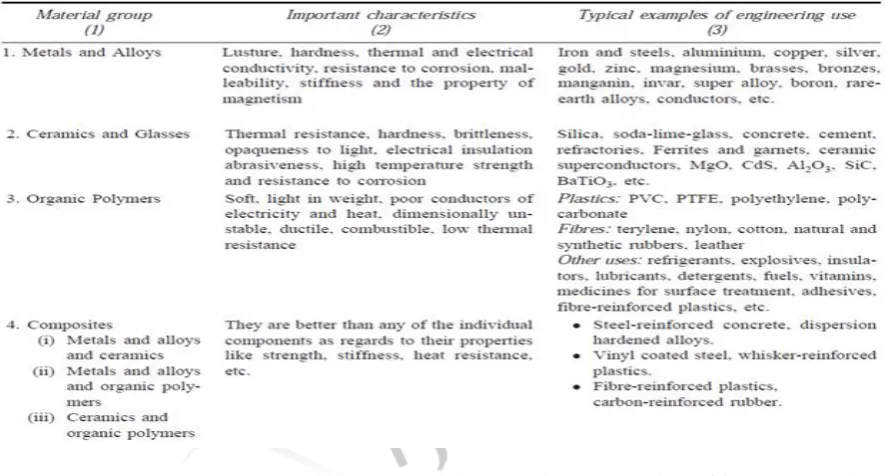
Table 3: Material Grouping and their Engineering Use
It is important to remember that mechanical properties are always important in the applications of functional materials. This text emphasizes the performance and applications of functional materials in modern industries. Table 3 shows the material group their importance and typical engineering use
V.THEROLE/IMPORTANCEOFENGINEERINGMATERIALSINOURPRESENTWORLD
Development of new materials has followed a number of different pathways, depending on both the nature of the problem being pursued and the means of investigation. Breakthroughs in the discovery of new materials have ranged from pure serendipity, to trial-and-error approaches, to design by analogy to existing systems. These methodologies will remain important in the development of materials but as the challenges and requirements for new materials become more complex, the need to design and develop new materials from the molecular scale through the macroscopic final product will become increasingly important. The use of molecular modeling and the engineering of new materials into useable forms or devices are of particular importance.
5.1 Current Trends and Advances in Materials
Timber, steel and cement are the materials which are widely used for engineering applications in huge quantities. The consumption of steel in any country is considered as an indicator of its economic well being. For high temperature applications, e.g. steam and gas turbines the design engineers keep creating the demand for various high steel alloy. However, alloys of chromium,
IJEDR1501058
International Journal of Engineering Development and Research (www.ijedr.org)318
nickel, molybdenum and tungsten along with iron are better suited for the said applications. Newer materials for combined resistance to high temperature and corrosion are increasing rapidly and material scientists and engineers are busy in developing such materials. Different kinds of ceramics, though difficult to shape and machine, are finding demand for their use at high temperatures.Recently prepared new metallic materials in conjunction with new processing techniques as isostatic pressing and isothermal forging are capable of imparting better fatigue properties to aircraft components.
Powder metallurgy technique while producing finished surfaces and cutting down metal cutting cost is much capable of imparting improved mechanical properties under different loading conditions. Surprisingly, rapid cooling technology achieving cooling rates in the vicinity of one million degree celcius per second and this is being used to produce metal powders which can be used in such product producing techniques as powder metallurgy and hot isostatic pressing to obtain temperature resistant parts. Nowadays, metallurgists have produced several molybdenum and aluminium alloys as well as alloys of titanium and nickel to meet anticorrosion properties at elevated temperatures.
Polymeric materials are growing at annual rate of 9% and have grown in volume more than any other material. In several applications plastics have replaced metals, wood, glass and paper. A new trend in plastic technology is the production of synergistic plastic alloys which have better properties than individual members producing the alloy. Recent discovery of plastic conductors may have wider impact in near future.
Fig. 8: Gears made from advanced plastics : Source: High performance polymers Website
Ceramics are mainly used as high temperature low load carrying materials. The major drawback of ceramics is the brittleness and difficulty in cutting and shaping. When mixed with metal powder like molybdenum, ceramic produce cerments, which are expected to be useful cutting materials. Tool bits of cerments are expected to find various applications in attaining high cutting speeds and producing better surface finish. Alumina, a well known ceramic is expected to be successfully reinforced with fibres of molybdenum. Due to microcracking of molybdenum fibres, the attempts to achieve better strength in such composite ceramics have not been successful yet. However, such composites have been found to exhibit better impact and thermal shock resistance.
The advent of solar cells, electronic digital circuits and computers in factory automation and use of robots in several industrial applications is adding to the enormous demand of silicon chips and of such material as silicon. Today, semi-conductors form the backbone of electronics and they affect all types of instruments/industries related to e.g. communications, computers, biomedical, power, aviation, defense, entertainment, etc.
5.2 Further Advances in Materials Development from View Point of New and Advanced Materials – Recent development especially from the view point of new and advanced materials could be classified into: Advanced Materials, Smart Materials, Nano structured Materials/ Nanotechnology, Quantom Dots (QDs), Spintronics and fermionic condensate matter.
IJEDR1501058
International Journal of Engineering Development and Research (www.ijedr.org)319
Oscar Pistorius had both his two legs amputated as a child…yet he took thesilver medal over 400 meters in the 2007 South African National
Championships competing against able-bodied runners. Today he has his eyes on the Beijing the Olympics… intending to compete alongside able-bodied athletes.
Thanks to Advanced materials (Ossur’s Cheetah® Flex Foot )!
Fig.9: Advanced materials uses in artificial limbs
5.2.2 Smart Materials (Materials of the Future) - Smart or intelligent materials form a group of new and state-of-the art materials now being developed that will have a significant influence on many of our technologies. The adjective ―smart‖ implies that these materials are able to sense changes in their environments and then respond to these changes in pre-determined manners—traits that are also found in living organisms. In addition, the concept of smart materials is being extended to rather sophisticated systems that consist of both smart and traditional materials. The field of smart materials attempts to combine the sensor (that detects an input signal), actuator (that performs a responsive and adaptive function) and the control circuit on as one integrated unit. Actuators may be called upon to change shape, position, natural frequency, or mechanical characteristics in response to changes in temperature, electric fields, and/or magnetic fields.
Usually, four types of materials are commonly used for actuators: shape memory alloys, piezoelectric ceramics, magnetostrictive materials, and electrorheological /magnetorheological fluids. Shape memory alloys are metals that, after having been deformed, revert back to their original shapes when temperature is changed. Piezoelectric ceramics expand and contract in response to an applied electric field (or voltage); conversely, these materials also generate an electric field when their dimensions are altered. The behaviour of magnetostrictive materials is analogous to that of the piezoelectric ceramic materials, except that they are responsive to magnetic fields. Also, electrorheological and magnetorheological fluids are liquids that experience dramatic changes in viscosity upon the application of electric and magnetic fields, respectively.
The combined system of sensor, actuator and control circuit on as one IC unit, emulates a biological system and is depicted in Figure 10.
Fig. 10: Integrated Sensor-actuators System
These are known as smart sensors, microsystem technology (MST) or microelectromechanical systems (MEMS). Materials/devices employed as sensors include optical fibers, piezoelectric materials (including some polymers), and MEMS.
For example, one type of smart system is used in helicopters to reduce aero-dynamic cockpit noise that is created by the rotating rotor blades. Piezoelectric sensors inserted into the blades, monitor blade stresses and deformations; feedback signals from these sensors are fed into a computer controlled adaptive device, which generates noise cancelling antidose.
IJEDR1501058
International Journal of Engineering Development and Research (www.ijedr.org)320
5.2.3 Nano-Structured Materials and Nanotechnology
Nanotechnology is a field that deals with control of structures and devices at atomic, molecular and supra-molecular levels as well as the efficient use and manufacture of these devices (Babatope, 2006). Key areas in Nanotechnology are:
1. Nano-medicine for disease detection and treatment 2. Nano-engineered materials for improved agriculture 3. Nanotechnology for energy
4. Nanoporous materials for water filtration
Nanostructured materials are those materials whose structural elements—clusters, crystallites or molecules—have dimensions in the range of 1-100 nm. These small groups of atoms, in general, go by different names such as nanoparticles, nanocrystals, quantum dots and quantum boxes. Substantial work is being carried out in the domain of nanostructured materials and nanotubes during the past decade since they were found to have potential for high technology engineering applications. One finds a remarkable variations in fundamental electrical, optical and magnetic properties that occur as one progresses from an ‗infinitely extended‘ solid to a particle of material consisting of a countable number of atoms. The various types of nanostructured materials which has been considered for applications in opto-electronic devices and quantum- optic devices are nano-sized powders of silicon, silicon-nitride (SiN), silicon-carbide (SiC) and their thin films. Some of these are also used as advanced ceramics with controlled micro structures because, their strength and toughness increase when the grain size diminishes. Carbon-based nanomaterials and nanostructures including fullerenes and nanotube plays an increasingly pervasive role in nanoscale science and technology. Today, nanotechnology is being heralded as the next enabling technology that will redesign the future of several technologies, products and markets. Fig 11 below are carbon nanotubes, products of nanotechnology.
Fig. 11: Carbon nanotubes (Courtesy NASA CNT Centre for Nanotechnology)
5.2.4 Quantom Dots (QDS)
Rapid progress in the fabrication of semiconductor structures has resulted into the reduction of three dimensional bulk systems to two-dimensional, one-dimensional, and ultimately to zero dimensional systems. These reduced dimensional systems are used in future applications like semiconductor lasers and microelectronics. Quantum dots represent the ultimate reduction in the dimensionality of semiconductor devices. These are three dimensional semiconductor structures only nanometer in size confining electrons and holes. QDs operate at the level of single electron which is certainly the ultimate limit for an electronic device and are used as the gain material in lasers. QDs are used in quantum dot lasers, QD memory devices, QD photodetectors and even quantum cryptography. The emission wavelength of a quantum dot is a function of its size. So by making dots of different sizes, one can create light of different colours.
5.2.5 Spintronics
A revolutionary new class of semiconductor electronics based on the spin degree of freedom could be created. The study of electron spin in materials is called spintronics. Spintronics is based on the direction of spin- and spin-coupling. Every appliance ranging from electric bulb to laptop computer works on the principle of transport of electric charge carriers-electrons, which cause electric current to flow through the wires. The electrons have both charge and spin. The spin of the electrons could greatly enhance the particles‘ usefulness. Presently, the semiconductor technology is based on the number of charges and their energy. The electronic devices, e.g. transistors work due to flow of charge. The electron can be assumed as tiny rotating bar magnet with two possible orientations: spin-up or spin-down. An applied magnetic field can flip electrons from one state to another. Obviously, spin can be measured and manipulated to represent the 0‘s and 1‘s of digital programming analogous to the ―current on and current off‖ states in a conventional silicon chip.
The performance of conventional devices is limited in speed and dissipation, whereas, spintronics devices are capable of much higher speed at very low power. Spintronics transistors may work at a faster speed, are also smaller in size and will consume less power.
IJEDR1501058
International Journal of Engineering Development and Research (www.ijedr.org)321
generation of microelectronic devices which may be more versatile and robust than silicon chips and circuit elements. Spins appear to be remarkably robust and move effectively easily between semi-conductors. In case of electron transport from one material to another, the spins do not lose its orientation or scatter from impurities or structural effects.5.2.6 Fermionic Condensate Matter
Very recently scientists had created a new form of matter called a fermionic condensate matter and predicted it could lead to the next generation of superconductors for use in electricity generation more efficient trains and countless other applications. The new matter form is the sixth known form of the matter—after solids, liquids, gases, plasma and Bose-Einstein condensate, created only in 1995.
Fermionic condensate matter is a scientific breakthrough in providing a new type of quantum mechanical behaviour. It is related to Bose-Einstein condensate. However, new state is not a superconductor but it is really something in between these two states that may help us in science link these two interesting behaviours. New state of matter uses fermions—the building blocks of matter.
VI. BREAKTHROUGHSINMATERIALSDEVELOPMENT
The Material Sciences have made great strides over the past several decades in the development of novel and useful materials. Although the following is not meant to be an exhaustive list of such breakthroughs, these examples point to the range of materials and their applications.
6.1 POLYMERS
Examples such as Teflon serve to show how the chemical sciences have contributed indispensable materials to everyday use. More recently, the development of thermoplastics and/or structural polymers has had an increasing influence on applications ranging from construction to national defense. New paints and coatings, clothing fibers, and photographic films have all benefited from the development of new materials.
There are newer polymeric materials whose commercial impact has yet to be realized. Work on semi-conductive and conductive polymers have made great strides, but further work is necessary. Synthesis of amphiphilic dendritic block copolymers that are designed to form ultrathin organic films have also had major advances, but these materials also need further development. Other promising materials, from polymers for drug delivery to tissue engineering, have the potential to benefit the biomedical field but are still in a relatively early stage of development.
6.2 Catalysis
Advances in new materials for catalysis cover a wide range of applications Zeolites and pillared clays have had a huge impact on the petroleum industry. New zeolites with specified properties continue to be developed with various utilities. Ziegler-Natta catalysts allow the preparation of billions of pounds per year of organic polymers with controlled molecular structures and useful material properties. This method is also useful because it allows the synthesis of polymers that cannot be produced in a practical manner by any other method. Some examples of these are linear unbranched polyethylene and isostactic polypropylene.
In the energy and transportation sector, catalysis has been an especially fruitful area of research. As a result, supported gold catalysts have been developed. In addition, selective oxidation of carbon monoxide has been achieved and a goldtransition- metal oxide has been developed that provides very active NOx reduction as well as hydrocarbon oxidation. Perhaps no more ubiquitous an example of novel catalysis exists than the catalytic converter, which contains a porous ceramic coating embedded with palladium and rhodium. The platinum particles serve to complete the oxidation of hydrocarbons and carbon monoxide to carbon dioxide, while rhodium converts nitrogen oxides to nitrogen and oxygen.
Another important breakthrough in this field includes the development of metallocene catalysts, which are expected to revolutionize the polyethylene and polypropylene markets. The use of supramolecular organic templates containing appropriate surface functionalities to regulate the nucleation and growth of inorganic magnets, semiconductors, and catalysts is significant as well.
6.3Electronics
This broad category has benefited from many breakthroughs in the development of new materials. Perhaps no recent advance has had a greater impact in this area than the creation of chemically amplified photoresist. Photoresist, resins containing photochemically active polymers, can be coated on a wafer and irradiated using photons (photolithography), electrons (electron-beam lithography), or Xrays (X-ray lithography). These developments have had considerable impact on computer chip production.
In the field of telecommunications, high-temperature superconductors and ceramic materials containing copper-oxide planes have potential uses in communications shielding. However, the commercial impact of these materials has yet to be demonstrated.
6.4 Instrumentation
IJEDR1501058
International Journal of Engineering Development and Research (www.ijedr.org)322
community. Likewise, induction by coupled plasma mass spectroscopy has become a pervasive tool for analysis at materials interfaces.6.5 Composites – Composites have recently found wide application in various area of life such as Aircraft/Military : Commercial, pleasure and military aircrafts, including components for aerospace and related applications; Appliance/Business:
Composite applications for the household and office including appliances, power tools, business equipment, etc.; Automotive/Transportation :The largest of the markets, products include parts for automobiles, trucks, rail and farm applications; Civil Infrastructure: A relatively new market for composites, these applications include the repair and replacement of civil infrastructure including buildings, roads, bridges, piling, etc.
Construction: Includes materials for the building of homes, offices, and architectural components. Products include swimming pools, bathroom fixtures, wall panels, roofing, architectural cladding; Consumer products : sports and recreational equipment such as golf clubs, tennis rackets, snowmobiles, mobile campers, furniture, microwave cookware;
Corrosion-Resistant and Chemical-Resistant Equipment : tanks, ducts and hoods, pumps, fans, grating, chemical processing, pulp and paper, oil and gas and water / wastewater treatment markets; Electrical: Components for both electrical and electronic applications such as pole line hardware, substation equipment, microwave antennas, printed wiring boards, etc; Marine: Products for commercial, pleasure and naval boats and ships.
Fig12 : Composite materials used on a modern aircraft (Boeing 767) Source: Polymer Journal, 1985.
VII. MODERNMATERIALSNEEDSANDCHALLENGES
In spite of the tremendous progress that has been made in the field of materials science within the past few years, there still remain technological challenges, including the development of more sophisticated and specialized materials, as well as the impact of materials production on environment.
Nuclear (fission as well as fusion) energy holds some promise, but the solutions to the many key problems that remain will, necessarily, involve materials from fuels to containment structures to facilities for the disposal of radioactive waste. Fusion is the process that powers the sun and stars, has the potential to provide large-scale, safe energy production, without adding to the global warming and without the longterm radioactive waste associated with conventional fission power stations. Progress in fusion research has been incredibly rapid in recent years. There has been major progress in fusion materials and technology, with prototypes of the key components of a fusion power plant built and successfully tested.
Significant quantities of energy are involved in transportation vehicles (aircrafts, trains, automobiles, etc.), as well as increasing engine operating temperatures, will enhance fuel efficiency. Obviously, new high strength, low density structural materials remain to be developed, as well as materials that have higher temperature capabilities, for use in engine components.
Furthermore, there is an urgent need to find new, economical sources of energy and to make use of present energy resources more economically. Hydrogen seems to be the fuel of the future. Hydrogen offers the greatest potential environment and energy supply benefits. Like electricity, hydrogen is a versatile energy carrier that can be made from a variety of widely available primary (i.e., naturally occurring) energy sources including natural gas, coal, biomass (agricultural or forestry residues or energy crops), wastes, sunlight, wind, and nuclear power. Available hydrogen technologies can dramatically reduce pollution and greenhouse emission. Although hydrogen production techniques do exist, further optimization is desirable for use in energy systems with zero carbon emissions. Side issues associated with various primary energy sources will be important. Materials will undoubtedly play a significant role in these developments, e.g., the direct conversion of solar energy into electrical energy has been demonstrated. Solar cells employ some rater complex and expensive materials. To ensure a viable technology, materials that are highly efficient in this conversion process yet less costly have to be developed.
We know that environment quality depends on our ability to control air and water pollution. Pollution control techniques employ various materials. There is a need to improve material processing and refinement methods so that they produce less environmental degradation i.e., less pollution and less spoilage of landscape from the mining of raw materials. Toxic substances are produced during manufacturing processes of some materials and therefore we have to consider the ecological impact of their disposal.
IJEDR1501058
International Journal of Engineering Development and Research (www.ijedr.org)323
comparable properties with less adverse environmental impact, and/or (iii) increased recycling efforts and the development of new recycling technologies.Obviously, as a consequence of the economics of not only production but also environmental impact and ecological factors, it is becoming more important to consider ‗cradle to grave‘ life cycle of materials relative to overall manufacturing process.
VIII.CONCLUSION
Engineering materials will continue to play even more significant role in the current and future world. The factors that will influence this are found in economic/cost, environmental requirements, development trends, depletion of traditional materials, advances in research and market drives, etc. The importance of engineering materials in every aspect of life endeavour can, therefore, not be over emphasised. We ourselves are materials and so also is everything around us; to stop talking of and working with materials is to foreclose the essence of life existence. So a bright future is that of even more sophisticated, better and cost effective materials.
Materials Science, Technology and Engineering of Materials has the capability of solving problems in different sectors of the economy and smart nations are quickly creating niche areas for themselves by developing materials of both comparative and competitive advantage.
REFERENCES
[1] Askeland, D. R. and P. P. Phulé(2006). The Science and Engineering of Materials, 5th edition, Nelson (a division of Thomson Canada), Toronto.
[2] Ashby, M. F. and D. R. H. Jones(2005). Engineering Materials 1: An Introduction to Their Properties and Applications, 3rd edition, Butterworth- Heinemann,Woburn, UK.
[3] Ashby, M. F. and D. R. H. Jones, Engineering Materials 2: An Introduction to Microstructures, Processing and Design, 3rd edition, Butterworth- Heinemann,Woburn, UK, 2005.
[4] Babaniyi Babatope (2006). ( Director and Chief Executive, Engineering Materials Development Institute (EMDI), Ondo Road, Akure).. A presentation made at the Advanced Manufacturing Workshop organised by National Agency Science and Engineering Infrastructure, Abuja. April 12-14.
[5] Baillie, C. and L.Vanasupa (2003). Navigating the Materials World, Academic Press, San Diego, CA.
[6] Daniel B. Ayo (2006) – (Director, Industrial Plants and Equipment Department Raw Materials Research and Development Council, Abuja) General Concepts, Prospects and Challenges of Industrial Application of Advanced Materials . A presentation made at the Advanced Manufacturing Workshop organised by National Agency Science and Engineering Infrastructure, Abuja. April 12-14, 2006
[7] Flinn, R. A. and P. K. Trojan (1994). Engineering Materials and Their Applications, 4th edition, John Wiley & Sons, New York.
[8] Jacobs, J. A. and T. F. Kilduff (2005). Engineering Materials Technology, 5th edition, Prentice Hall PTR, Paramus, NJ. [9] K. M. Ralls, T. H. Courtney, and J.Wulff, Introduction to Materials Science and Engineering, p. 22. Copyright 1976 by
John Wiley & Sons, New York. Reprinted by permission of John Wiley & Sons, Inc.)
[10] Mangonon, P. L.(1999). The Principles of Materials Selection for Engineering Design, Prentice Hall PTR, Paramus, NJ. [11] McMahon, C. J., Jr.(2004). Structural Materials, Merion Books, Philadelphia.
[12] Murray, G. T. (1993) Introduction to Engineering Materials— Behavior, Properties, and Selection, Marcel Dekker, Inc., New York.
[13] Ralls, K. M., T. H. Courtney, and J. Wulff (1976). Introduction to Materials Science and Engineering, John Wiley & Sons, New York.
[14] Organising Committee for the Workshop on Materials and Manufacturing, Committee on Challenges for the Chemical Sciences in the 21st Century, National Research Council. .Materials Science and Technology: Challenges for the Chemical Sciences in the 21st Century by ISBN: 0-309-51684-6, 98 pages, 6 x 9, (2003) Free PDF downloaded from: http://www.nap.edu/catalog/10694.html
[15] Schaffer, J. P., A. Saxena, S. D. Antolovich, T. H. Sanders, Jr., and S. B. Warner (1999). The Science and Design of Engineering Materials, 2nd edition, WCB/McGraw-Hill, New York.
[16] Science Master (2010), ―Advanced Composite Materials: Overview, available at: http://www.sciencemaster.com/columns/renneboog_composite_two.php. Accessed on January 6, 2010.
[17] Shackelford, J. F. (2005). .Introduction to Materials Science for Engineers, 6th edition, Prentice Hall PTR, Paramus, NJ. [18] Sigma-Aldrich (2007). ―Advanced Metals and Alloys‖ Material Matter, Vol. 2, No. 4.
[19] Smith, W. F. and J. Hashemi (2006). Principles of Materials Science and Engineering, 4th edition, McGraw-Hill Book Company, New York..
[20] Van Vlack, L. H. (1989). Elements of Materials Science and Engineering, 6th edition, Addison-Wesley Longman, Boston, MA.
[21] White, M. A.(1999). Properties of Materials, Oxford University Press, New York
[22] http://www.worldscibooks.com/materialsci/3794.html - An Introduction to Electronic And Ionic Materials, © World
Scientific Publishing Co. Pte. Ltd.
[23] William D. Callister, Jr. (2007). Department of Metallurgical Engineering, The University of Utah with special contributions by David G. Rethwisch The University of Iowa - Materials Science and Engineering -An Introduction to Materials Science and Engineering.—7th ed.