Article
A compact 2-DOF piezoelectric-driven platform based
on “Z-shaped” flexure hinges
Jianping Li1,2, Hui Liu1, Hongwei Zhao1,*
1 School of Mechanical Science and Engineering, Jilin University, China;
[email protected]; [email protected]; [email protected]
2 Graduate school of engineering, Chiba University, Japan;
* Correspondence: [email protected]; Tel: +86-431-85094594
Abstract:
A compact 2-DOF (two degrees of freedom) piezoelectric-driven platform for 3Dcellular bio-assembly systems has been proposed based on “Z-shaped” flexure hinges. Multiple linear motions with high resolution both in x and y directions are achieved. The “Z-shaped” flexure hinges and the parallel-six-connecting-rods structure are utilized to obtain the lowest working stress while compared with other types of flexure hinges. In order to achieve the optimized structure, matrix-based compliance modeling (MCM) method and finite element method (FEM) are used to evaluate both the static and dynamic performances of the proposed 2-DOF piezoelectric-driven platform. Experimental results indicate that the maximum motion displacements for x stage and y stage are lx=17.65 μm and ly=15.45 μm, respectively. The step
response time for x stage and y stage are tx=1.7 ms and ty =1.6 ms, respectively.
Keywords: piezoelectric; actuator; nano-positioning; flexure hinge; FEM
1. Introduction
The 3D cellular bio-assembly system has become a hot research topic during these years. In order to manipulate cells and biological tissues in 3D space, micro/nano-positioning systems with high resolution and multi-DOF (multiple degrees of freedom) should be utilized in 3D cellular bio-assembly systems [1].
Piezoelectric-driven multi-DOF platforms are widely utilized in 3D cellular bio-assembly systems for their own advantages: high speed, simple control, high resolution, and multiple degrees of freedom [2-3]. Up to now, several kinds of piezoelectric-driven multi-DOF platforms have been developed, and they are mainly divided into two types: parallel type and serial type. In the parallel type piezoelectric-driven multi-DOF platform, all piezoelectric elements drive only one moving platform to obtain multi-DOF motions, which reduces the whole size and the inertia simultaneously [4-7]. Additionally, the dynamic performance and orthogonality are generally better than serial type ones. However, in order to reap the merits of parallel type piezoelectric-driven platforms, direct drivetrain-output metrology in all the motion directions with high resolution should be carried out carefully. Some corporations, such as PI, Attocube and SMartAct, have already developed the commercial parallel type piezoelectric-driven multi-DOF platforms [8-10], they utilize several positioning sensors to monitor all the motions to reduce the coupling errors, which greatly brings much high cost and complicated control systems. Compared with the parallel type, serial type piezoelectric-driven platforms can realize small coupling errors even with open-loop control systems. The dynamic performance of serial type platforms is not as good as the parallel type platforms, but serial type platforms are quite suitable for the application with low cost, easy control systems and high reliability, where the requirement for dynamic performance is not so high. Generally, serial type piezoelectric-driven platforms are divided into two forms: stacked form and nested form. In the stacked form platforms, one layer only achieves one degree of freedom. Several
motion principles have been applied to obtain this only one motion degree of freedom, for instance stick-slip principle [11-13], inchworm principle [14-17] and ultrasonic principle [18-20]. Afterwards, several layers should be stacked together to obtain the multi-DOF motion, which causes the challenge of reliability because of abrasion and complicated structures. Meanwhile, it also greatly limits the application in 3D cellular bio-assembly systems [8, 21-23]. To overcome these shortcomings, one or more motion degrees of freedom are nested inside one basic motion to achieve the nested form platforms [24-26]. Nevertheless, most of the previous nested form piezoelectric-driven platforms utilize the basic right-angle and right-circle flexure hinges, which causes great structural stress and influences the whole working lifetime.
In 3D cellular bio-assembly systems, the size of tissue cells is almost around 10 μm, which means that the positioning platform with submicron accuracy and multiple degrees of freedom is enough for the cell manipulation. The working frequency needs not to be too high. Additionally, high reliability is also required, since the 3D cellular bio-sssembly process always takes a long time for thousands of cells or more. Hence, the nested form serial type piezoelectric-driven platform is quite suitable for 3D cellular bio-assembly systems to achieve the submicron accuracy, simple structure and control system, low cost. In order to achieve high reliability and long service lifetime, the used flexure hinges for piezoelectric platforms should have low working stress. However, the most utilized right-angle and right-circle flexure hinges always have high working stress, which greatly influences the working lifetime and the reliability. Therefore, it is of great significance to develop the piezoelectric-driven platforms with lower stress on the flexure hinges.
In this study, in order to reduce the working stress of flexure hinges and obtain multiple degrees of freedom motions for 3D cellular bio-assembly systems with high reliability, a compact serial type piezoelectric-driven platform based on “Z-shaped’’ flexure hinges is proposed and manufactured. The “Z-shaped’’ flexure hinge is compared with right-angle and right-circle flexure hinges by matrix-based compliance modeling (MCM) method and finite element method (FEM) to confirm it has the lowest working stress under the same condition. The parallel-six-connecting-rods structure is optimized by FEM method to enhance platform stiffness and make platform stable. The experimental system is established to test the performance of the proposed 2-DOF piezoelectric-driven platform. Additionally, the open-loop control method with respect to the coupling error is developed to achieve high positioning resolution.
2. Materials and Methods
2.1. Calculation of the “Z-shaped” flexure hinge
Flexure hinges are widely exploited in piezoelectric-driven platforms, due to their unique superiorities: high resolution, compact size, no friction and simple structure. Several kinds of flexure hinges have been developed for different applications. Among them, the right-angle flexure hinge and right-circle flexure hinge are the most used ones. However, during the application of right-angle and right-circle flexure hinges, the working stress is always high, which greatly influence the working lifetime of the whole piezoelectric-driven platform. Compared with other kinds of flexure hinges, the “Z-shaped” flexure hinge achieves larger output displacement with smallest working stress, which is ideally qualified for the piezoelectric - driven platform with long working lifetime.
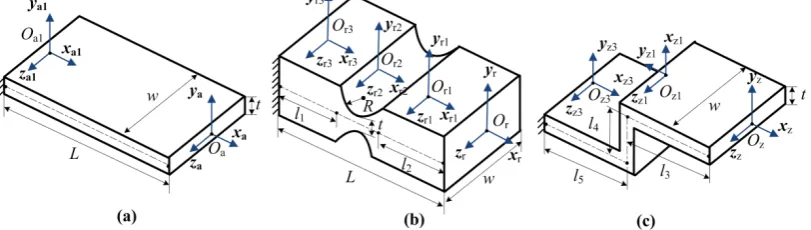
In order to compare the working stress of right-angle, right-circle and “Z-shaped” flexure hinges under the same condition, matrix-based compliance modeling (MCM) method is applied for the theoretical calculation. Figure 1 shows the basic structure parameters of the right-angle, right-circle and “Z-shaped” flexure hinges, and they are treated as the integration of basic flexure hinges (right-angle and right-circle). As is shown in Figure 1 (a), the right-angle flexure hinge is a basic flexure hinge, which is only made up by one part OaOa1; the structure is L= 16 mm, w=6 mm and
t=1 mm. Figure 1(b) illustrates the right-circle flexure hinge, and it is divided into three parts: part OrOr1 (basic right-angle), part Or1Or2 (basic right-circle) and part Or2Or3 (basic right-angle); the
structure is l1=l2=5 mm, R=3 mm. The “Z-shaped” flexure hinge is shown in Figure 1(c), and it
l3=l5=8 mm, l4=6 mm. According to the references [27-28], the widely utilized compliance matrix CRA
for the right-angle flexure hinge is gotten by the following:
3 2 3 3 3 2 3 3 RA 3 2 3 3 2 3 3
0 0 0 0 0
4 6
0 0 0 0
4 6
0 0 0 0
0 0 0 0 0
6 12
0 0 0 0
6 12
0 0 0 0
L Ewt
L L L
Gwt
Ewt Ewt
L L L
Gwt Ewt Ewt C L Gkwt L L Ewt Ewt L L Ewt Ewt
(1)
where E is the elastic module of the applied material; G is the shear module; L, w, t is the structural parameters of the basic right-angle flexure hinge.
For the basic right-circle flexure hinge, the compliance matrix CRC is shown in the following [29]:
x
y y
z z
RC
0 0 0 0 0
0 0 0 0
0 0 0 0
0 0 0 0 0
0 0 0 0
0 0 0 0
x y z z y x x y y z y z z y z du dF du du dF dM du du dF dM C d dM d d dF dM d d dF dM
(2)
Define g=R/t:
xx
2 2 1 1
arctan 4 1 2
4 1
g du
g
dF Ew g
(3)
y y y
y y σ y τ
du du du
dF dF dF
(4)
4 3 2
2 y
4 3 2
y σ
2.5
24 24 22 8 1
2 2 1 4 1 12
=
2 1 24 8 14 8 1
arctan 4 1
2(4 1) 8
g g g g g
du g g
dF Ew g g g g g
g g
(5)
y
y τ
2 2 1 1
arctan 4 1 2 4 1
du g
g
dF Gw g
(6)
z z z
z z σ z τ
du du du
dF dF dF
(7) 2 2 2 z 3 2 z σ 2
2 1 (2 1)(4 4 1)
arctan 4 1
2 2 4 1
12
2 4 1
8
g g g g
g
g g g
du R
dF Ew g g
g
(8)
z
z τ
2 2 1 1
arctan 4 1 2
4 1
g du
g
dF Gw g
(9)
3 2 4
y
2 2.5
z
2 6 4 1 12 2 1
12
=- arctan 4 1
(4 1)
2 1 4 1
g g g
du g g
g
dM EwR g g g
where ux, uy, uz, are the linear deformation along the x, y and z directions; θx, θy and θz are the
rotational angles around the x, y and z directions; Fx, Fy, Fz, Mx, My and Mz are the applied forces and
torques in the x, y and z directions.
Figure 1. Structure of three kinds of flexure hinges: (a) right-angle; (b) right-circle; (c) “Z-shaped”
Since the right-angle flexure hinge shown in Figure 1(a) is a basic flexure hinge, the total compliance matrix CfRA of it is as the following:
f RA RA
C C (11)
The right-circle flexure hinge is divided into three parts (Figure 1(b)), and it is treated as the series structure of three basic flexure hinges according to the MCM method. Hence, the total compliance matrix CfRC is obtained by:
T
Tf f f f f f f f
RC Or Or1 Or2 RA Or1 RC Or1 Or2 RA Or2
C C C C C T C T T C T
(12) where TfOr1 and TfOr2 are the transform matrixes of point Ori with respect to point Or, which are
achieved by:
Ori Ori Ori Ori Ori f
Ori
Ori Ori
( ) ( )
( 1, 2)
0 ( )
R S R
T i R
, (13)
Ori Ori
Ori Ori Ori Ori
cos sin 0
( )= sin cos 0 ( 1, 2)
0 0 1
R i , (14) zri yri
Ori zri xri
yri xri
0
0 , ( 1,2)
0
r r
S r r i
r r
(15)
where ROri(Ori) and SOri are the rotation matrix and position matrix of point Ori with respect to point Or, respectively; αOri is the rotation angle of point Ori relative to point Or; rxri, ryri and rzri are the
relative positions between point Ori and point Or.
The developed “Z-shaped” consists of three basic right-angle flexure hinges (Figure 1(c)), and the total compliance matrix CfZ is obtained by the following:
T
Tf f f f f f f f
Z Oz Oz1 Oz2 RA Oz1 RA Oz1 Oz2 RA Oz2
C C C C C T C T T C T
(16)
Ozi Ozi Ozi Ozi Ozi f
Ozi
Ozi Ozi
( ) ( )
( 1, 2)
0 ( )
R S R
T i R
, (17)
Ozi Ozi
Ozi Ozi Ozi Ozi
cos sin 0
( )= sin cos 0 ( 1, 2)
0 0 1
R i , (18) zzi yzi
Ozi zzi xzi
yzi xzi
0
0 , ( 1,2) 0
r r
S r r i
r r
where TfOz1 and TfOr2 are the transform matrixes of point Ozi with respect to point Oz; ROzi(Ozi) and
Ozi
S are the rotation matrix and position matrix of point Ozi to point Oz, respectively.
Therefore, the total compliance matrixes of the right-angle, right-circle and “Z-shaped” flexure hinge are achieved by the equation (11), (12) and (16), respectively.
In order to confirm the theoretical calculation by MCM method, FEM has been applied to simulate the deformation of these three flexure hinges. Three kinds of flexure hinge (right-angle, right-circle and “Z-shaped”) have been calculated by FEM, and the material of them is steel. The elastic module is set as E=206 GPa, and the Poisson ratio is μ=0.288 during the FEM simulation. The structural parameters are the same with those shown in Figure 1. During the FEM calculation, the left end of each flexure hinge is fixed to the ground without freedom. An input force F=20N along y direction is applied at the right end surface of each flexure hinge. The FEM mesh size is 0.1mm for these three flexure hinges.
The deformation results both from the MCM and FEM methods are shown in Table 1. The maximum deformation of the “Z-shaped” flexure hinge along y direction is Dz=323.5 μm by the
MCM method, while that from the FEM method is Dz’=340.1 μm; the error between the MCM and
FEM methods is ez=4.9% based on equation (20), which confirms the application feasibility of the
MCM method. The maximum deformation for the right-angle flexure hinge is DRA=265.8 μm with an
error of era=1.7%. The error of the right circle flexure hinge is erc=2.2%, considering the influence of
the torque induced by input force F in Equation (10). The comparison of FEM and MCM methods under other forces can be obtained in Fig. 2, which shows the great agreement. Figure 3 illustrates the working stress of these three flexure hinges by FEM method in the case that a displacement Dy
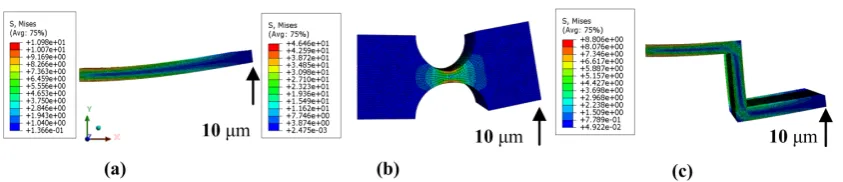
along y direction is applied on the right end surface of each flexure hinge. The left end of each flexure hinge is fixed to the ground without freedom. The FEM mesh size is 0.1mm for these three flexure hinges. Since the working stroke of the utilized piezo stack is around 10 μm while the driving voltage is 100 V, the applied displacement is chosen as Dy=10 μm. It is shown that the
maximum working stress of these three flexure hinges are σRA=10.9 MPa, σRC=46.5 MPa and σZ=8.8
MPa. The working stress of the “Z-shaped” flexure hinge is the smallest among them, which is of great significance to extend the working lifetime of piezoelectric-driven platforms. Hence, the “Z-shaped” flexure hinge is utilized for the design of the proposed 2-DOF nano-positioning platform.
z z' z
z'
100%
D D e
D
(20)
Figure 2. Comparison of FEM and MCM results for three kinds of flexure hinges
Table 1. Deformation calculation results of three flexure hinges
Method Right-angle Right-circular Z-shaped
MCM 265.8 μm 28.0 μm 323.5 μm
FEM 261.4 μm 27.4 μm 340.1 μm
Figure 3. FEM results of different flexure hinges: (a) right-angle; (b) right-circle; (c) “Z-shaped”
2.2. Platform Design
Based on “Z-shaped” flexure hinges, a 2-DOF piezoelectric-driven platform has been proposed and manufactured. The parallel-six-connecting-rods structure is applied both in x-stage and y-stage instead of the generally used parallel-four-connecting-rods, and it is helpful to enhance the output stiffness of the whole platform. Additionally, it makes the platform more stable and the coupling error smaller, since the stiffness of x- and y-stages is enhanced to reduce coupling deformation of reaction forces. FEM method is also used to calculate the performance of the proposed 2-DOF piezoelectric-driven platform. During the FEM calculation, the four holes on the base corners are fixed to the ground without motion degrees of freedom; an input force F=50N was applied on x-stage in the surface where to nest the piezoelectric stack; meanwhile, the reaction force Fr=50N
was also applied on the surface to nest the piezoelectric stack on y-stage. Figure 4 illustrates the results of FEM calculation. In the case that all the six-connecting-rods for y-stage are “Z-shaped” flexure hinges, the deformation of area A in y-stage is about 3 μm, as shown in Figure 4(a). Since the piezoelectric stack for x direction is nested inside y-stage, the reaction force makes the y-stage generate this unwanted deformation, which should be avoided. Meanwhile, in the case that two right-angle flexure hinges are utilized to replace “Z-shaped” flexure hinges for y-stage, the unwanted deformation of area A is rather small since the stiffness of right-angle flexure hinge along x direction is higher than the “Z-shaped” flexure hinge. Additionally, the output force of the used piezoelectric stacks is around Fstack=800 N, which is large enough to reduce the influence of the
increased stress for y-stage motion stroke. Therefore, both “Z-shaped” flexure hinges and right-angle flexure hinges are utilized in the 2-DOF piezoelectric-driven platform.
Figure 4. FEM static results of the platform: (a) only “Z-shaped” flexure hinges; (b) with
right-angle flexure hinges
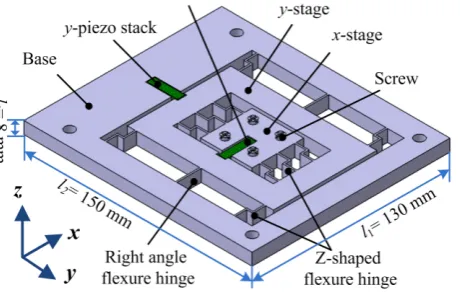
Figure 5 shows the proposed 2-DOF piezoelectric-driven platform which consists of two
piezoelectric stacks (x-piezo stack and y-piezo stack), x-stage, y-stage, screws, “Z-shaped” flexure
hinges, right-angle flexure hinges and the base. The x-piezo stack is used to drive x-stage; y-piezo
stack is applied for y-stage. These two piezo stacks (AE0505D16, 5mm×5mm×20mm) are from NEC
COMPANY; the maximum output force of them is around Fstack=800N, and the motion stroke is
value is d33=720×10-12 m/V. The x-stage is nested inside of y-stage, which means the proposed
nano-positioning platform is in serial type. This serial structure can make the proposed platform in a
compact size and with small coupling errors. Two kinds of flexure hinges (“Z-shaped” and
right-angle) are exploited to form a parallel-six-connecting-rods structure for y-stage; the flexure
hinges in x-stage are all “Z-shaped” flexure hinges. The material of the proposed 2-DOF
piezoelectric-driven platform is structural steel. Wire electrical discharge machining (WEDM) was
utilized to manufacture the platform, so as to make the whole platform in an integrated structure.
The size of the proposed 2-DOF piezoelectric-driven platform is l1×l2×l3=130mm×150mm×8mm.
Figure 5. Structure of the proposed 2-DOF piezoelectric-driven platform 2.3. Dynamic calculation
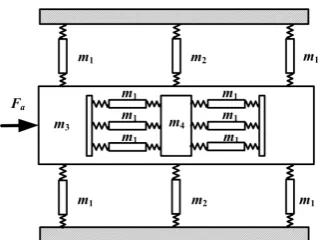
Figure 6 illustrates the dynamic model of the proposed 2-DOF piezoelectric-driven platform. To
simplify the calculation, all parts of the platform are treated as rigid bodies, except the flexure hinges. According to the law of energy conservation, the total energy value of kinetic energy EK and
potential energy ET keeps the same during the motion. In the case that force Fa is applied on y-stage,
the platform moves a distance s. Kinetic energy EK of the proposed platform is divided into two
parts: kinetic energy EK1 induced by the linear motion, kinetic energy EK2 induced by the rotation
motion of flexure hinges. Kinetic energy EK is achieved by the following equation [27]:
2
K 1 3 4 1
1
( 6 )
2
E m m m s
(21)
2 2 2 2
K2 Z r Z r
1 1
4 +2 =2
2 2
E J J J J
(22)
2 2 2
K K 1 K 2 3 4 1 Z r
1
= ( 6 ) 2
2
E E E m m m s J J
(23) where m1 is the mass of the “Z-shaped” flexure hinge; m2 is the mass of the right-angle flexure hinge;
m3 is the mass of y stage; m4 is the mass of x stage; s is the motion displacement of y stage;
θ=arctan(s/L)≈s/L is the rotation angular displacement of flexure hinge; Jz is the inertia moment of
the “Z-shaped” flexure hinge; Jr is the inertia moment of the right-angle flexure hinge.
Potential energy ET is mainly inducedby the six flexure hinges for y-stage, and it is obtained by the
following equation:
2 T 0 (4 θz 2 θr) (2 θz θr)
E
k k xdx k k (24) where kθz is the rotational stiffness of the “Z-shaped” flexure hinge; kθr is the rotational stiffness of the
right-angle flexure hinge.
Therefore, the total energy E0 keeps the same and it can be achieved by the following equation:
2 2 2 2
0 K T 3 4 1 Z r θz θr
1
= ( 6 ) 2 (2 )
2
E E E m m m s J J k k
Figure 6. Dynamic model of the proposed 2-DOF piezoelectric-driven platform
However, it is difficult to get the accurate solution of equation (25). Hence, FEM method is applied
to analyze the dynamic performance of the proposed 2-DOF piezoelectric-driven platform. FEM dynamic analysis results are obtained in Table 2. The resonance frequencies from the first dynamic
modal to the sixth dynamic modal are f1=678 Hz, f2=965Hz, f3=1297 Hz, f4=1553 Hz, f5=1832 Hz and
f6=2002 Hz. It can be seen that the undesired transverse motion (z and θx) is introduced in high
frequency since the use of “Z-shaped” flexure hinges, which is not good for the 2-DOF nano-positioning platform. Generally, the proposed 2-DOF nano-positioning platform works under several dozens of Hertz; hence, the resonance phenomenon could be avoided. We are still working
on this platform, and hope to overcome this disadvantage in the future work. Table 2 FEM dynamic modal simulations
Modal number Frequency (Hz) Resonance direction
First 678 y
Second 965 z
Third 1297 θx
Fourth 1553 x
Fifth 1832 θz
Sixth 2002 θy
3. Results and Discussions
3.1 Experimental system
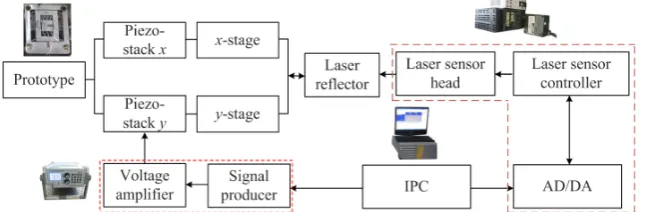
Figure 7 shows the experimental system for the proposed 2-DOF piezoelectric-driven platform. It
is composed by one signal producer with the inserted voltage amplifier, one laser sensor with laser head and controller, the laser reflector, the prototype with piezo-stacks (x, y) and one industrial
personal computer (IPC). The signal producer (HPV, BOSHI COMPANY) generates the needed voltage signal for the piezo-stacks, and the voltage signal is amplified by the voltage amplifier (integrated inside of HPV, BOSHI COMPANY) to a high value to drive the piezo-stacks in x and y
stages. The maximum output voltage of this HPV is UHPV=±150V with a voltage resolution of
eHPV=1%; the maximum output current is IHPV=0.5A. The laser reflectors are attached to the x and y
stages to reflect the laser signal. Laser sensor LK-G10 (KEYENCE COMPANY) is utilized to generate the laser signal to record the motion of the laser reflector. The laser head is placed in line with the
motion direction of x/y stage which has the attached laser reflector. The measurement range of LK-G10 is LLK=±1mm with a resolution of eLK=10 nm which is high enough for the proposed
piezoelectric-driven platform. All data is processed and changed by the AD/DA card which is integrated inside the laser sensor LK-G10, and then saved by the IPC. The commercial software
sampling time of tsa=0.1ms. The software from BOSHI COMPANY is exploited to control the signal
producer. All these equipment are placed on the air-floating vibration isolation platform to isolate the vibration out of the experimental system.
Figure 7. Experimental system for the proposed 2-DOF piezoelectric-driven platform
3.2 Output performance
In the real application, the proposed piezoelectric-driven platform is fixed to a motor-driven 3-DOF platform to obtain enough motion strokes. This motor-driven platform is composed by three
motors, three ball screws and linear guiders to obtain large working stroke in x, y and z directions (80mm×80mm×120mm). However, the 3-DOF motor-driven platform is traditional one, not the
originality of our paper, and the resolution is not high enough for cell manipulation; hence, it is not mentioned in our paper. Here, the shown experiments are for the proposed 2-DOF
piezoelectric-driven platform. (a) Motion performance in x direction
The motion performance of x stage under different input voltage Vx is illustrated in Figure 8(a).
The input voltage Vx goes up from Vx=0V to Vx=150V, and then falls down to Vx=0V. The motion
displacement lx of x stage increases to lx=17.65μm in the case of input voltage Vx=150V. This
experiment is repeated for three times, and the repeatability is found excellent. The maximum displacement error between the loading (up) and unloading (down) curves is ex=0.36μm, which is
thought to be induced by the hysteresis and system errors. Compared with the maximum motion displacement, the maximum relative displacement error is exr=2.03%. Many researchers have paid
attention to reduce the hysteresis of piezoelectric actuators by close-loop control systems and compensation algorithms. However, these methods make the whole system complicated and much
costly. The requirement of the resolution in 3D cellular bio-assembly systems is not so high, since the size of cells is almost around 10 μm. Therefore, the influence of hysteresis is not discussed deeply here.
(b) Motion performance in y direction
Figure 8(b) shows the motion performance of y-stage under different input voltage Vy. The input
voltage Vy also increasesfrom Vy=0V to Vy=150V, and then decreases to Vy=0V. The maximum motion
displacement of y-stage is ly=15.45μm in the case that the input voltage Vy=150V. This experiment is
also repeated three times, and the maximum displacement error between the loading (up) and unloading (down) curves is ey=0.56μm, which is also thought to be induced by the hysteresis and
system errors. Hence, the maximum relative displacement error is about eyr=3.62%, which is a little
larger than that in x-stage. The difference between the repeated three groups is thought to be caused
Figure 8. Motion performance: (a) x stage; (b) y stage
(c) Displacement coupling error
The displacement coupling errors ecy and ecx are achieved from Figure 9. In the case that the input
voltage Vx is applied to the x piezo stack, the laser sensor is utilized to measure the displacement of y
stage in y direction. Hence, the displacement coupling error ecy is shown in Figure 9(a). It can be seen
that the displacement coupling error ecy increases with input voltage Vx. The maximum displacement
coupling error for y-stage is ecy=0.76μm, in the case that the input voltage Vx=138V. The relationship
between the input voltage Vx and the displacement coupling error ecy is simplified by the following
equation with a correlation coefficient of R2=0.95:
cy 0.0045 x 0.0627
e V (26)
Similarly, the displacement coupling error ecx for x stage is obtained in the case that input voltage
Vy is applied for y-piezo stack (Figure 9(b)). The maximum displacement error ecx for x-stage is
ecx=0.51μm, in the case of input voltage Vy=150V. The relationship between ecx andVy is nonlinear by
the polynomial equation:
10 5 8 4 6 3 2
cx 10 x 4 10 x 6 10 x 0.0004 x 0.0078 x 0.0983
e V V V V V
(27)
Figure 9. Displacement coupling errors: (a) coupling error for y stage; (b) coupling error for x stage
(d) Output force
measurement. The motion displacement ly of y stage keeps almost the same, in the case that stand
weight increases from m=0g to m=1000g, which indicates that the proposed 2-DOF piezoelectric-driven platform works stably with high output force.
Figure 10. Performance of proposed 2-DOF platform under different output force (e) Step response
Figure 11 illustrates the step response of the proposed 2-DOF piezoelectric-driven platform. A plus voltage signal with the amplitude of 100V is applied for both x-piezo stack and y-piezo stack.
The sampling time of the laser sensor is about 0.1ms. The step response time for x stage is tx=1.7ms;
the stable displacement is about lx=12.84μm; therefore, the response velocity is vx=7.84×10⁻³m/s. The
step response time for y stage is around ty=1.6ms; the stable displacement is about ly=10μm;
therefore, the response velocity is vy=6.25×10⁻³m/s.
Figure 11. Step response of the proposed 2-DOF platform: (a) x stage; (b) y stage 3.3 Discussion
Since the designed platform is a 2-DOF platform, which means that there are coupling errors in both x and y stages. Generally, if the closed-loop control method is utilized, it is easy to avoid these
coupling errors ecx and ecy. However, displacement sensors are needed for the closed-loop control
system, which makes the whole system complicated and expensive. In order to get high positioning
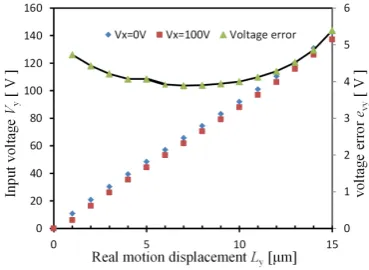
accuracy with open-loop control system, we have to analyze the motion displacement and the coupling error. For example, the real motion displacement Ly of y stage contains two parts: one is the
displacement ly caused by input voltage Vy, the other part is the coupling error ecy induced by input
voltage Vx. Therefore, the real motion displacement Ly is achieved by the following:
6 3 2
y y cy -2 10 y +0.0004 y +0.0889 -0.0689 0.0045y x 0.0627
where the relationship between ly and Vy is obtained from Figure 8(a).
In this open-loop control method, three steps are needed to achieve the real motion displacement Ly: firstly, the input voltage Vx should be known to calculate the error ecy; next, wanted ly
is got by using wanted Ly subtracts the error ecy; finally, the need Vy is obtained by equation (28).
Figure 12 shows the needed input voltage Vy under different input voltage Vx. It is illustrated that, in
order to get high accuracy, different Vy should be given under different Vx. The largest voltage error
of the applied Vy is evy=5.39V, in the case that Vx=0 V and 100V. By applying the needed Vy from the
equation (19), the wanted real motion displacement Ly is obtained by this open-loop method.
Figure 12. Relationship between the real motion displacement Ly and the needed input voltage Vy
4. Conclusions
A compact 2-DOF piezoelectric-driven platform based on “Z-shaped” flexure hinges has been
proposed; the experimental system was established to test the performance of it. Different types of flexure hinges are calculated and compared; and “Z-shaped” flexure hinge was confirmed to have the smallest working stress under the same deformation. MCM and FEM methods were utilized for
the optimization of the proposed 2-DOF piezoelectric-driven platform. The maximum motion displacement for x stage is lx=17.65μm in the case of input voltage Vx=150V; the maximum motion
displacement of y-stage is ly=15.45μm in the case of input voltage Vy=150V. The step response time
for x stage is about tx=1.7ms, while that for y stage is ty=1.6ms. All the experimental data indicate that
“Z-shaped” flexure hinges are quite suitable for the design of piezoelectric-driven platforms to obtain submicron accuracy and microsecond response time. This study is meaningful for the
application of piezoelectric-driven platform in 3D cellular bio-assembly system.
Acknowledgments
This research is funded by the National Natural Science Foundation of China (Grant No. 51422503), Special Projects for Development of National Major Scientific Instruments and
Equipment (Grant No. 2012YQ030075), Special Fund for Industrial Innovation of Jilin Province (Grant No. 2016C030), and Major Scientific and Technological Project of Jilin Province (Grant No.
20150203014GX).
Author Contributions:
Hongwei Zhao and Jianping Li conceived and designed the structureand experiments; Hui liu performed the experiments and analyzed the data; Jianping Li wrote this
paper based on the data.
References
1. Kim, D.H.; Lee, M.G.; Kim, B.; Sun, Y. A superelastic alloy microgripper with embedded
electromagnetic actuators and piezoelectric force sensors: a numerical and experimental study. Smart Mater. Struct. 2005, 14, 1265. DOI: https://doi.org/10.1088/0964-1726/14/6/019.
2. Tanikawa, T.; Arai, T. Development of a micro-manipulation system having a two-fingered micro-hand. IEEE T. Robot. Autom. 2012, 15, 152-162. DOI: 10.1109/70.744610.
3. Xu, Q. Robust impedance control of a compliant microgripper for high-speed position/force regulation. IEEE Trans. Ind. Electron. 2015, 62, 1201-1209. DOI: 10.1109/TIE.2014.2352605.
4. Hao, G.; Kong, X. A novel large-range XY compliant parallel manipulator with enhanced
out-of-plane stiffness. J. Mech. Des, 2012, 134(6), 061009. DOI:10.1115/1.4006653.
5. Awtar, S.; Slocum, A. H. Constraint-based design of parallel kinematic XY flexure
mechanisms. J. Mech. Des, 2007, 129(8), 816-830. DOI: 10.1115/1.2735342.
6. Hao, G., & Li, H. Conceptual designs of multi-degree of freedom compliant parallel
manipulators composed of wire-beam based compliant mechanisms. P. I. MECH. ENG. C-J. MEC., 2015, 229(3), 538-555.DOI: https://doi.org/10.1177/0954406214535925.
7. Chen, X.; Li, Y. Design and Analysis of a New High Precision Decoupled XY Compact Parallel Micromanipulator. Micromachines 2017, 8(3), 82. DOI:10.3390/mi8030082.
8. PI Company, http: http://www.pi-usa.us/piezo_motion_tutorial/.
9. Attocube Company, http://www.attocube.com/attomotion/. 10. SmarACT Company, http://www.smaract.com/products/.
11. Zhou, M.; Fan, Z.; Ma, Z.; Zhao, H.; Guo, Y.; Hong, K.; Wu, D. Design and Experimental Research of a Novel Stick-Slip Type Piezoelectric Actuator. Micromachines, 2017, 8(5), 150.
DOI:10.3390/mi8050150.
12. Nomura, Y.; Aoyama, H. Development of inertia driven microrobot with nano tilting stage for
SEM operation. Microsyst. Technol. 2007, 13, 1347–1352. DOI: 10.1007/s00542-006-0360-3. 13. Li, J.; Zhou, X.; Zhao, H.; Shao, M.; Hou, P.; Xu, X. Design and experimental performances of a
piezoelectric linear actuator by means of lateral motion. Smart Mater. Struct. 2015, 24, 065007. DOI: https://doi.org/10.1088/0964-1726/24/6/065007.
14. Shimizu, Y.; Peng, Y.; Kaneko, J.; Azuma, T.; Ito, S.; Gao, W.; Lu, T.F. Design and construction of
the motion mechanism of an XY micro-stage for precision positioning. Sensor Actuat. A-Phys. 2013, 201, 395-406. DOI: https://doi.org/10.1016/j.sna.2013.08.012.
15. Li, J.; Zhao, H.; Qu, H.; Cui, T.; Fu, L.; Huang, H.; et al A piezoelectric-driven rotary actuator by means of inchworm motion. Sensor Actuat. A-Phys. 2013, 194: 269-276. DOI:
https://doi.org/10.1016/j.sna.2013.02.020.
16. Kim, S.C.; Soo, H.K. Precise rotary motor by inchworm motion using dual wrap belts. Rev. Sci.
Instrum. 1999, 70, 2546-2550. DOI: http://dx.doi.org/10.1063/1.1149789.
17. Heijer, M.; Fokkema, V.; Saedi, A.; Schakel, P.; Rost, M.J. Improving the accuracy of walking piezo motors. Rev. Sci. Instrum. 2014, 85, 055007. DOI: http://dx.doi.org/10.1063/1.4878624.
18. Shi, Y.; Zhao, C. A new standing-wave-type linear ultrasonic motor based on in-plane modes. Ultrasonics 2011, 51: 397-404. DOI: https://doi.org/10.1016/j.ultras.2010.11.006.
19. Morita, T., Kurosawa, M.K.; Higuchi, T. A cylindrical micro ultrasonic motor using PZT thin film deposited by single process hydrothermal method (/spl phi/2.4 mm, L= 10 mm stator
20. Uchino, K. Piezoelectric ultrasonic motors: overview. Smart Mater. Struct. 1998, 7, 273. DOI: https://doi.org/10.1088/0964-1726/7/3/002.
21. Rong, W.; Zhang, S.; Yu, M.; Sun, L. A 3D stick-slip nanopositioner for nanomanipulation.
In Mechatronics and Automation (ICMA), 2011 International Conference on (pp. 195-199). IEEE. DOI:10.1109/ICMA.2011.5985655.
22. Matsunami, G.; Kawamata, A.; Hosaka, H.; Morita, T. Multilayered LiNbO 3 actuator for XY-stage using a shear piezoelectric effect. Sensor Actuat. A-Phys., 2008, 144(2), 337-340. DOI:
https://doi.org/10.1016/j.sna.2008.02.006.
23. Li, J., Zhao, H., Qu, X., Qu, H., Zhou, X., Fan, Z.... Fu, H. Development of a compact 2-DOF
precision piezoelectric positioning platform based on inchworm principle. Sensor Actuat. A-Phys., 2015, 222, 87-95. DOI: 10.1109/TMECH.2016.2604242.
24. Kim, H.; Gweon, D. G. Development of a compact and long range XYθz nano-positioning stage. Rev. Sci. Instrum., 2012, 83(8), 085102. DOI: 10.1063/1.4740254.
25. Min, K. S., Choi, W. C., Song, S. H., & Hwang, E. J. Static and dynamic analysis of a nanopositioning flexure-hinge stage with a flexible lever mechanism. P. I. MECH. ENG. B-J. ENG., 2005, 219(6), 447-454. DOI: https://doi.org/10.1243/095440505X32355.
26. Gao, P.; Swei, S. M.; Yuan, Z. A new piezodriven precision micropositioning stage utilizing
flexure hinges. Nanotechnology, 1999, 10(4), 394. DOI:
https://doi.org/10.1088/0957-4484/10/4/306.
27. Tian, Y.; Zhang, D.; Shirinzadeh, B. Dynamic modelling of a flexure-based mechanism for
ultra-precision grinding operation. Precision Engineering 35: 554-565. DOI: https://doi.org/10.1016/j.precisioneng.2011.03.001.
28. Lobontiu, N.; Paine, J.S.N.; Design of Circular Cross-Section Corner-Filleted Flexure Hinges for
Three-Dimensional Compliant Mechanisms. Mech. Design., 2002, 124, 479.
DOI:10.1115/1.1480022.