University of South Carolina
Scholar Commons
Theses and Dissertations
Fall 2018
Implementing a Rite of Passage Intervention
Through School-Based Extracurricular Activities:
Instilling a Sense of Belonging
ShaRon Spry Dukes
Follow this and additional works at:https://scholarcommons.sc.edu/etd Part of theCurriculum and Instruction Commons
This Open Access Dissertation is brought to you by Scholar Commons. It has been accepted for inclusion in Theses and Dissertations by an authorized administrator of Scholar Commons. For more information, please [email protected].
Recommended Citation
IMPLEMENTING
A
RITE
OF
PASSAGE
INTERVENTION
THROUGH
SCHOOL-BASED
EXTRACURRICULAR
ACTIVITIES:
INSTILLING
A
SENSE
OF
BELONGING
by
ShaRon Spry Dukes
Bachelor of Arts Paine College, 2008
Master of Education
University of South Carolina, 2010
Submitted in Partial Fulfillment of the Requirements
For the Degree of Doctor of Education in
Curriculum and Instruction
College of Education
University of South Carolina
2018
Accepted by:
Todd Lilly, Major Professor
Chris Bogiages, Committee Member
James Kirylo, Committee Member
Toni Williams, Committee Member
ii
iii
DEDICATION
This work is dedicated to my mother and father, Audrey and Ronnie, who
instilled the importance of being a change of agent for the younger generation. To my
husband, Melvin, and my daughter, Shaelynn for the late nights, early mornings and
limitless patience during this journey. To my family, close friends and work crew who
stood in the gaps to offer encouragement and advice. And lastly, to each student I had the
pleasure to advise through RSG, RCL, the BACKS, Student Council, Royal Court,
Fashion Club, Gospel Choir, Homeroom Reps, Talented Tenth and the amazing
iv
ACKNOWLEDGEMENTS
The first educator I would like to acknowledge is Dr. Todd Lilly. Your ability to
offer a critique while igniting excitement is a testament to your sincerity for helping
students. You made this process enjoyable and a moment I will never forget as I use your
guidance to influence others. I would also like to thank Dr. Bogiages, Dr. Kirylo and Dr.
v
ABSTRACT
This study explores the impact implementing a rite of passage through
school-based extracurricular activity has on a students’ sense of belonging. The students
participating in the rite of passage are members of a school-based club known as the
Orientation Team. The team consists of 24 students at an urban high school facing
discipline challenges and a strained school climate. The intervention’s relationship with
the theory of liminality will be explored.
Key terms: action research, belonging, extracurricular activities, liminality, rite of
vi
TABLE OF CONTENTS
DEDICATION ... iii
ACKNOWLEDGEMENTS ... iv
ABSTRACT ...v
LIST OF TABLES ... viii
CHAPTER ONE: INTRODUCTION ...1
PROBLEMOFPRACTICE ...2
THEORETICALFOUNDATION ...4
PURPOSEOFTHESTUDY ...5
RESEARCHQUESTION ...7
ACTIONRESEARCHMETHODOLOGY ...7
CONCLUSION ...9
KEYTERMSGLOSSARY ...10
CHAPTER TWO: LITERATURE REVIEW ...11
OVERVIEWOFTHEORETICALFOUNDATION ...13
RITEOFPASSAGE ...17
SENSEOFBELONGING ...25
OVERVIEWOFEXTRACURRICULARACTIVITIES ...30
BARRIERS TO EXTRACURRICULAR ACTIVITIES ...34
METHODLOGIES ...41
vii
CHAPTER THREE: METHODOLOGY ...43
GOALS ...44
RESEARCHAPPROACH ...44
RESEARCHDESIGN ...45
ETHICALCONSIDERATIONS ...67
LIMITATIONS ...67
CONCLUSION ...68
CHAPTER FOUR: FINDINGS FROM THE DATA ANALYSIS ...69
RESEARCHQUESTION ...71
FINDINGSOFSTUDY ...71
INTERPRETATIONOFFINDINGS ...90
CHAPTER FIVE: DICUSSION, IMPLICATIONS, AND RECOMMENDATIONS ...92
OVERVIEWANDSUMMARYOFTHESTUDY ...93
SUGGESTEDADDITIONALRESEARCH ...94
ACTIONPLAN ...96
CONCLUSION ...97
REFERENCES ...99
APPENDIX A: Extracurricular Activities Survey ...107
APPENDIX B: Orientation Team Survey ...108
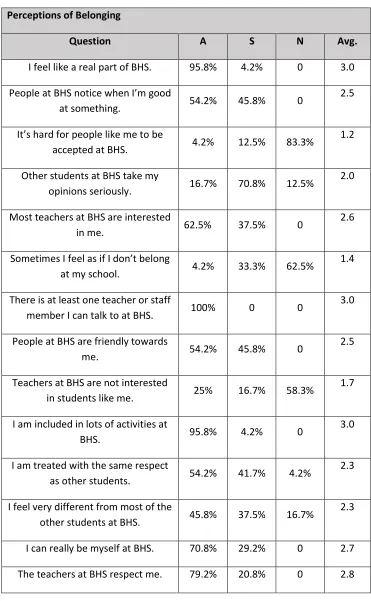
APPENDIX C: Student Sense of Belonging Survey ...111
APPENDIX D: Focus Group Questions ...113
APPENDIX E: Parent Consent Form ...114
viii
LIST OF TABLES
Table 2.1 20 Elements of a Rite of Passage ...24
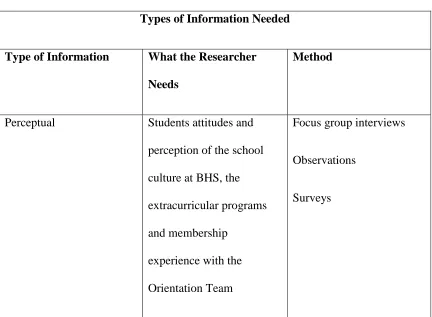
Table 3.1 Types of Information Needed ...49
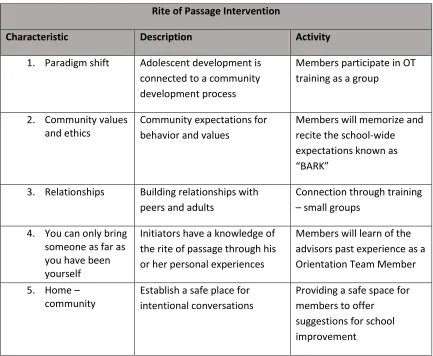
Table 3.2 Rite of Passage Intervention ...63
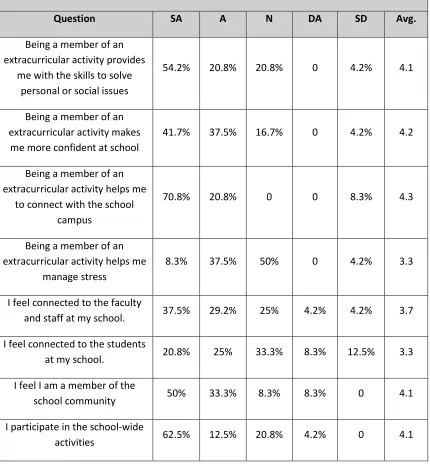
Table 4.1 Student Perception of Participating in Extracurricular Activities ...73
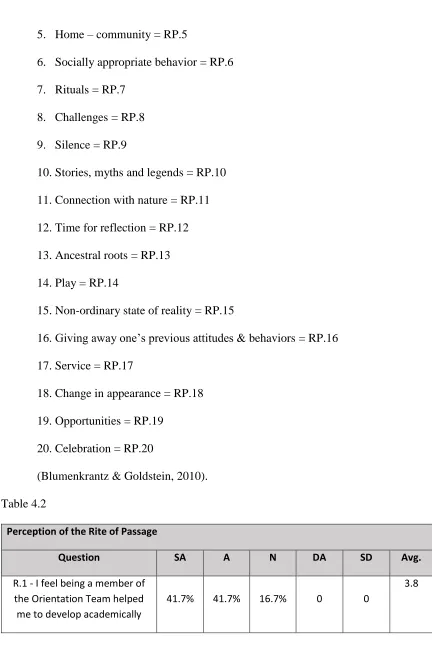
Table 4.2 Student Perception of Participating in Rite of Passage ...80
1
CHAPTER
ONE
INTRODUCTION
As inspiring educators, we have the opportunity to see representations of
inner-city schools plagued with poverty and gangs through the arts of television and film.
From films such as Dangerous Minds and Lean on Me, a person’s perception of an
inner-city school can come from a perfectly written script, credible actors and the glitz of
Hollywood magic. Hollywood allows outsiders to dig into a culture without being
uncomfortable. However, for some educators, these films speak to an inner truth. The
high school in this study has fought against several of the issues the characters in these
films face. From deaths due to gun violence, gang fights, substance abuse, teenage
pregnancy, low academic performances and high volumes of truancy, the school is
constantly at war with barriers to graduation. Unlike the one-hour quick fix of
Hollywood, this school is continuously striving to help students navigate through the
troubling years of adolescence.
Managing an assessment-driven environment while increasing attention on
non-academic activities has left Benjamin High School scrambling to juggle test scores,
curriculum maps, school operations, and student interest. As the Intervention Specialist, I
have observed students become disengaged with the school community and ultimately
participate in risk behavior. Students who were members of clubs, organizations and
sports teams continue to engage in delinquent behavior such as gangs and substance
2
violence after engaging in criminal behavior with local gang members. This bedlam has
increased my attention on how to help students navigate through the turbulence of
adolescence while providing them with an opportunity to gain a greater sense of
belonging to the school campus.
Problem of Practice
For this study, the research site will be referred to as Benjamin High School.
Benjamin High School serves a high minority and high poverty student population. As
the Intervention Specialist at BHS, I was tasked with assisting students in removing
barriers to graduation. With a strong background in student affairs, I used extracurricular
activities as an intervention strategy to encourage student involvement and prevent
dropouts. According to research, students who participate in extracurricular activities are
more academically motivated and are less likely to participate in delinquent behavior,
join a gang, or engage in substance abuse (Masaoni, 2011; Marsh and Kleitman, 2003;
Holloway, 2002). Also, students who participate in extracurricular activities have an
increased sense of belonging to the school community (Arslan, 2016). With this
knowledge, I began to work on expanding the opportunities for students to participate in
extracurricular activities within our campus by increasing the number of clubs on
campus. Students were surveyed on what clubs they would like to join, and faculty
members volunteered to serve as club advisors. The school increased the number of
clubs and organizations from one to seventeen.
As the years progressed, BHS saw an increase in graduation rate, but no impactful
changes in the number of discipline referrals. BHS is seeking to improve the high
3
years, the school averages over 1,500 discipline referrals per year. The high volume of
discipline referrals has a negative impact on the extracurricular activities program. In
fact, I have experienced the struggle of recruiting and maintaining student members due
to low grades, delinquent behavior and a lack of student engagement. Currently, there are
students who participate in clubs and sports who also affiliate with the local community
gangs. The students’ confusion on whether to resist participation in risk behavior or
follow the negative behavior of other peers speaks to the students’ liminal period of
adolescence. Liminality is a concept elaborated on by Arnold Van Gennep and later
continued by Victor Turner (Atkinson & Robinson, 2012). The word“liminal” stems
from the Latin root limen, which means “threshold” (Turner, 1934). Liminality is defined
as a structurally and physically invisible space where an individual is a transitional being,
in the process of being initiated into a different status in life (Gibbons, Ross, & Bevans,
2014). Research indicates that the liminal period in adolescence is turbulent and
confusing as youth seek to find their new identity (Marshall et al., 2018; Turner, 1934).
Youth left in the liminal period can experience a negative psychological consequence
while others who lack a caring adult to guide them through the period may seek
assistance from self-proclaimed leaders such as older gang members who are incapable of
leading them to an environment of positive cultural values and ethics (Beech, 2011;
Blumenkrantz & Goldstein, 2010; Thomassen, 2009).
Though faculty and support staff serve as club advisors and coaches, there are
minimal instructional strategies to ensure extracurricular activities serve the purpose of
preventing students from dropping out of school or engaging in delinquent behavior.
4
(PoP) has been identified: Instructional strategies used in extracurricular activities rarely
help students through the liminal period of adolescence.
Theoretical Foundation
This research study will explore the theory of liminality within the adolescent
years of youth and the need to guide adolescents through this period. Liminality is a
concept elaborated on by Arnold Van Gennep and later continued by Victor Turner
(Atkinson & Robinson, 2012). “During the intervening liminal period, the characteristics
of the ritual subject (the passenger) are ambiguous; he passes through a cultural realm
that has few or none of the attributes of the past or coming state” (Turner, 1969, p. 94).
Turner (1969) describes this period as “betwist and between” where the individual may
feel stuck in an invisible space. The individual is at the door, shedding his or her former
identity, but has not yet entered through the new door to establish his or her new identity
(Gibbons, Ross, & Bevans, 2014).
The temporal dimensions of liminality can be identified in periods (i.e. weeks,
months and years) (Thomassen 2009). The years of adolescence are identified as the
years between the ages of 10 – 19 (Marci, 1966). Youth can experience phases of
liminality within these years. The period of adolescence is characterized by the struggle
of establishing an identity, securing a sense of self, and the confusion or reluctance to
commit to a certain identity of self (Marci, 1966). As youth navigate the years of
adolescence, schooling is a part of the liminal experience. Liminality is ritualistic and can
be initiated by a triggering event (Beech, 2011). Youth can experience liminality when
transitioning from elementary school to middle school or when transitioning from middle
5
organization to join, a group of peers to start a friendship with or a career field after
graduation. Through this research study, I will explore the theory of liminality within the
adolescent years and the need to guide adolescents through this period.
Purpose of the Study
The purpose of this research study is to investigate the use of a rite of passage
theoretical framework to assist students in navigating the liminal period of adolescence
and moving toward a greater sense of belonging within the school community. The study
will explore the impact a rite of passage intervention implemented through a
school-based extracurricular activity has on a student’s sense of belonging with the school
community. Researchers suggest, “There is a need to measure social, emotional, ethical
and cognitive dimensions of school life” (Cohen, McCabe, Michelli & Pickeral, 2009, p.
196). In the article, Developing the Whole Child in an age of Academic Measurement
(2015), the authors shared the results of a survey, given to 100 teachers across33
secondary schools. The survey revealed how most teachers recognized a significant role
in developing the whole child through character education. Several teachers showed
concern for “preparing them for life” versus limiting student success merely to academic
achievement (Sanderse, Walker, & Jones, 2015, p. 199).
Like the teachers in this article, the faculty and staff at BHS recognize the
importance of offering opportunities for students to develop socially, emotionally and
ethically. Faculty and staff showed their support by agreeing to serve as advisors for the
clubs and organizations that students showed interest in. As BHS used extracurricular
activities as the glue to connect students to the school, the need to investigate effective
6
monthly meetings to review school data, the expectations of the extracurricular activity
programs were not being met. According to research, students who participate in
extracurricular activities are less likely to dropout of school or engage in criminal
behavior (Masaoni, 2011; Marsh & Kleithman, 2003; Mahoney, 2000). Also,
extracurricular activities can serve as an academic motivator for students who may not
recognize the value of a formal education (Mahoney, 2000). Students who participated in
extracurricular activities at BHS were still participating in risk behavior and earning 1 or
more discipline referrals. Students appeared to struggle in resisting the negative pressures
of adolescence and finding their identity within the school community.
This action research study will investigate the use of a rite of passage to help
student navigate through the liminality of adolescence. In conjunction with helping
students through the liminal period of adolescence, this study will explore the impact of
belonging after the implementation of a rite of passage intervention. The study will
provide educators with the knowledge on the benefits of the rite of passage intervention
in relation to satisfying the need for belonging among adolescents. The term rite of
passage was coined by Arnold Van Gennep and defined as community-created or
community-directed experiences that cultivate cultural value and knowledge to an
individual or a group (Blumenkratz & Goldstein, 2010). The rite of passage facilitates
the transformation of the individual and celebrates the accomplishments of the individual.
He asserts that all rites of passage have three phases: (1) separation, (2) transition, and (3)
incorporation (Blumenkrantz & Goldstein, 2010; Van Gennep, 1960). Blumenkrantz and
Goldstein (2010) describe the rite of passage as “one of the most powerful ecological
7
advocate the use of rites of passage as a conceptual framework for positive youth and
community development and revealed the downside of youth or communities lacking
structured rites of passage. “In the absence of meaningful community-based rituals,
youth will define and create their own marker events based on peer or media values,
many of which may be destructive both individually and communally” (Blumenkrantz &
Goldstein, 2010, p. 43). Students lacking a structured, positive rite of passage can
potentially engage in negative social behaviors including violence, crime and substance
abuse (Lee, 2005). Whereas the current practices for extracurricular activities at BHS are
less intentional, the rite of passage intervention could facilitate a more positive and
healthy high school experience for students. This study could lead to other clubs,
organizations and schools creating structured rites of passage for students to transition
through liminal stages towards adulthood.
Research Question
The following question will guide this research study:
1. As students struggle to navigate the liminal state of adolescence, can students can a
stronger sense of belonging to the school community by participating in an
extracurricular organization that institutes elements of a rite of passage and
culminates a symbolic ritual?
Action Research Methodology
Action research provides the teacher-researcher the opportunity to apply an
intentional solution to an educational situation with the focus on pursuing further action
8
are removed from the educational issues, action research works directly with the
education professionals who have identified the problem. In action research, the role of
the teacher-researcher is to immerse into the educational setting (Efron & Ravid, 2013).
For this study, I will use a mixed-method approach to observe the impact the rite of
passage intervention has on a student’s sense of belonging within the school community.
I will select one school-based club to participate in the study. Members of the club will
participate in a rite of passage intervention over an eight-week period. The rite of
passage intervention will consist of 20 elements provided by Blumenkrantz and Goldstein
(2010). I will develop activities to align with the 20 elements and embed them within the
club’s training and meetings spanning the course of 8-weeks. The beginning of the rite of
passage process will be signified by the acceptance of the members into the club and the
ending will be signified by a celebration of the members’ new statuses.
Before starting the process, the students will participate in focus group interviews
to determine the students’ perception of navigating high school and their perceptions of
participating in school-based extracurricular activities. The students will also complete
an online survey to review their perception of the benefits of participating in
extracurricular activities. After completing the rite of passage, the students will complete
two additional online surveys to observe their perception of the rite of passage
intervention activities and their sense of school belonging. Qualitative data collected
from focus group interviews and observations will be analyzed along with quantitative
data from the online surveys. The final phase in Mertler’s (2014) action research plan is
9
improve the extracurricular activity programs at BHS to encourage an environment to
promote school belonging.
Conclusion
As stated, the purpose of the action research is to investigate the use of a rite of
passage to assist students in navigating the liminal period of adolescence and moving
toward a greater sense of belonging within the school community. The problem of
practice stems from the need for instructional strategies for extracurricular activities to
encourage students to develop a sense of belonging within the school culture and
therefore disrupt the pattern of risk behavior. Through the action research process, I will
implement a rite of passage intervention through a school-based extracurricular activity
and explore the impact it has the participants’ sense of belonging within the school
community.
Chapter Two will offer an in-depth review of the literature regarding the theory of
liminality in adolescence and the concept of using a rite of passage to guide students
through the liminal space. Chapter Two will also review research-based evidence on
belonging and the need for belonging within the school community. Finally, Chapter
Two will provide an overview of the literature regarding the efficacy of extracurricular
activities, their capacity to influence student identities, and posit how the research aligns
with or offers hope for the participants in my study at Benjamin High School.
Chapter Three will detail the action research methodology for this study. I will
extensively detail the steps of the action research study in implementing a rite of passage
10
during and after the implementation. I will use Mertler’s (2014) cyclical process of
action research: (1) planning, (2) acting, (3) developing, and (4) reflecting. Chapter Four
will present the data from the study and a critical analysis of the findings. Chapter Five
will discuss the findings and provide implications for future research studies.
Key Terms Glossary
Action Research: A cyclical research methodology conducted by the educator in their own setting focuses on a problem and helps to make a decision on how to improve that
practice (Efron & Ravid, 2013; Mertler, 2014).
Belonging: The significant affiliations between individuals and their surroundings such as places and groups (Arslan, 2018)
Extracurricular Activities: School-related academic or non-academic activities that occur outside of normal class hours and do not involve a grade or academic credit; students
participate on a voluntary basis (Bartkus, Nemelka, Nemelka & Gardner, 2012)
Liminality: a space between in which membership and identity with the former is suspended and membership in and identity with the next has not yet been established (Van
Gennep, 1960)
Rite of Passage: community-created or community-directed experiences that cultivate cultural value and knowledge to an individual or a group (Blumenkratz & Goldstein, 2010).
11
CHAPTER TWO
LITERATURE REVIEW
The purpose of this study is to investigate the use of a rite of passage to assist
students in navigating the liminal period of adolescence and moving toward a greater
sense of belonging within the school community. I will implement a rite of passage
through a school-based extracurricular activity to encourage a sense of belonging among
the student participants. Chapter 2 will begin with an overview of the theoretical
framework for this study. I will provide the transitional period of liminality, an overview
on rites of passage, and its implications on adolescence. For this study, the rite of
passage will be used to encourage a sense of belonging. Therefore, I will provide
research on belonging and the concept of belonging within the school community. As the
rite of passage will serve as the driver, the vehicle moving the student towards a greater
sense of belonging is a school-based extracurricular activity. I will provide a historical
overview of school-based extracurricular activities, a description of the extracurricular
activities offered at the research site and a description of the club chosen to participate in
rite of passage intervention for this research study.
Problem of practice. The following Problem of Practice (PoP) has been
identified: Instructional strategies used in extracurricular activities rarely assist in
navigating students through the liminal period of adolescence. Benjamin High is in
12
participation in school-based extracurricular activities and move students through the
liminal period of adolescence towards adulthood.
Rationale. The purpose of this research study is to investigate the use of a rite of
passage to assist students in navigating the liminal period of adolescence and moving
toward a greater sense of belonging within the school community. The study will explore
the impact a rite of passage intervention implemented through a school-based
extracurricular activity has on a student’s sense of belonging with the school community.
The student participants in this study are mostly African-American and identify as
economically disadvantaged.
Research question. The following question will guide this research study: As
students struggle to navigate the liminal state of adolescence, can students can a stronger
sense of belonging to the school community by participating in an extracurricular
organization that institutes elements of a rite of passage and culminates a symbolic ritual?
Literature search. For the literature review, the theory of liminality and its
relation to adolescents will be researched to provide a theoretical framework. From the
theory of liminality, an overview of the rite of passage and the practice of utilizing a rite
of passage as an intervention strategy will be researched to provide an understanding of
the intervention. As the rite of passage guides the student through the liminal period, the
goal is to provide the student with a greater sense of belonging through participation in
extracurricular activities. Therefore, research on belonging, the need for belonging
within the school community and an overview of extracurricular activities will be
13
Cooper Library at the University of South Carolina, which includes journal articles,
books, and dissertations/thesis.
Purpose of the review. According to Mertler (2009), the purpose of the literature
review is to “use the insights and discoveries of others whose research came before yours
in order to make your research more efficient and effective” (p.51). The literature review
is used to: (1) select research relevant to the study, (2) outline existing knowledge in the
field, (3) position the student in the context of previous research, and (4) indicate how the
topic is to be investigated (Costello, 2011). For this study, I aim to research the topic
liminality, rites of passage and the usage of rites of passage as an intervention within
other studies. To further express the significance of the study in potentially offering
strategies to assist students in navigating the liminal period of adolescence while
encouraging a sense of belonging within the school community, I will highlight the
challenges of combating gang culture and poverty within an extracurricular activities
program.
Overview of Theoretical Foundation
Van Gennep (1960) and Turner (1994) expand on the concept of the liminal space
within the transition phase in a rite of passage. Turner (1994) describes liminality as a
threshold or margin when an individual loses his or her identity and begins the process of
reconstructing a new meaningful identity. The term liminality is frequently used in
anthropological studies (Gibbons, Ross, & Bevans, 2014). In anthropology, liminality
represents the experience during initiation rites where the tribal members present an
initiate who is beginning a social transition (Gibbons et al., 2014; Turner, 1994). Though
14
(Gibbons et al., 2014). During the liminal period, the individual may have feelings of
being stuck or as Turner (1994) describes “betwist and between”. The individual is at the
door, shedding his or her old identities, but has not entered through the new door where
his or her new way of being exist (Gibbons et al., 2014). “During the liminal time, the
individual exists in a state in which the past is left behind but the future state has yet to
emerge” (Gibbons et al., 2014, p. 424).
The concept of liminality can be identified based on subject area, temporal
dimension and spatial dimension (Thomassen, 2009). The subject areas of liminality are
divided into three different areas: (1) single individual, (2) social groups such as cohorts
or minorities, and (3) whole societies such as entire populations or centuries (Thomassen,
2009). The temporal dimensions of liminality are also divided into three different areas:
(1) moments, (2) periods, and (3) epochs (Thomassen 2009). First, there are moments or
sudden events such as death or the diagnosis of a life-changing illness (Thomassen,
2009). Second, there are periods such weeks, months or even years (Thomassen, 2009).
Lastly, there are epochs such as decades or generations of liminality (Thomassen, 2009).
The spatial dimensions of liminality are related to: (1) a specific place or threshold, (2)
areas or zones such monasteries, prisons or the border between two countries, and (3)
countries or continents (Thomassen, 2011).
Liminality and adolescents. The liminal period is ritualistic and often initiated
by a triggering event (Beech, 2011). For an adolescent, a triggering event can be entering
high school, earning a driver’s license or starting his or her first job. From the triggering
event, the liminal period is conducted in a specific place for a specific time period
15
assigned a temporary social status exempting them from normal duties and activities
(Marshall, Grinyer, & Limmer, 2018). This is an important period because it enables the
individual to proceed through the transition phase and reenter society at a higher social
status (Marshall et al, 2018; Turner, 1994). As individuals look to find their new status,
this temporary status can cause individuals to experience communicative alienation
(Marshall et al., 2018). Communicative alienation is described as “a feeling of
disassociation from others and an inability to relate to anyone not in the liminal stage”
(Marshall et al., 2018, p. 1).
For adolescents, this can be a disturbing time period. The years of adolescence
are depicted as a period when key developmental tasks such as forming a clear identity or
separating from parents/guardians must be fulfilled within the journey from childhood to
adulthood (Marshall et al., 2018). Adolescence is a developmental period identified by
the complex physical, socioemotional, and cognitive changes, which can push
adolescents to engross in more self-exploratory processes (Stone, Duffy, Holland, &
Bowers, 2018). Individuals spanning the ages of 10–21 years old, begin to pursue more
autonomy and decision-making power to participate in more activities independent of the
adults in their lives (Stone et al., 2018). The adolescence urge for independence is also a
time where one’s identity becomes a primary objective and identity exploration and
commitment to activities and groups begins (Marcia, 1966; Meeus, 2011). The period of
adolescence is characterized by the struggle of establishing an identity, securing a sense
of self, and the confusion or reluctance to commit to a certain identity of self (Marci,
1966). Marcia (1966) posits two criteria to establish identity status: (1) crisis and (2)
16
meaningful alternatives; commitment refers to the degree of personal investment the
individual exhibits” (Marcia, 1966, p. 110). Depending on the amount of crisis and
commitment, Marcia (1966) categorizes adolescents into four identity statues: (1) identity
diffusion, (2) foreclosure, (3) moratorium, and (4) identity achievement. Identify
diffusion indicates the adolescent has not committed to a specific developmental task and
may not have explored alternatives (Meeus, 2011). Foreclosure indicates the adolescent
has committed to a specific developmental task without prior exploration (Meeus, 2011).
Moratorium indicates the adolescent is actively searching but has yet to make a
commitment (Meeus, 2011). And lastly, identity achievement indicates the adolescent
has completed active exploration and has made a clear commitment (Meeus, 2011).
The navigation of this liminal period can be turbulent (Marshall et al., 2018). The
adolescent searches for a way to move out of liminality in order to return to society with
a new identity, new power and new responsibilities (Marshall et al., 2018). Though
confusing and turbulent, this period must be navigated in order to achieve adulthood
(Marshall et al, 2018). The liminal period is temporary; however, adolescents can
become trapped (Beech, 2011; Marshall et al., 2018; Turner, 1994). Adolescents who
extend the period of liminality can experience negative psychological consequences
(Beech, 2011). Research highlights the need for an adult to guide the adolescent through
the liminal period (Blumenkrantz & Goldstein, 2011; Thomassen, 2009). By
participating in a rite of passage, adolescents recognize the liminal period and know they
will soon transition through the period with the assistance of an adult or ‘ceremony
master’ (Blumenkrantz & Goldstein, 2010; Thomassen, 2009). However, those who are
17
Goldstein, 2011; Thomassen, 2009). Individuals may allow a self-proclaimed ‘ceremony
master’ assume a leadership position and attempt to navigate the adolescent out of
liminality, which can lead to adolescent to a negative environment filled with delinquent
behavior and a lack of cultural values and ethics (Thomassen, 2009).
Rite of Passage
For a member of any society, life is earmarked by transitions. Many people may
view earning a driver’s license or graduating from high school as one of those moments.
The impulse to transition to the next level happens either individually or socially
(Karianjahi, 2015). Social calls for a transition are considered a rite of passage
(Karianjahi, 2015). A French ethnographer named Arnold Van Gennep coined the term
rites of passage and defined it as transition points from one stage to another stage or one
role to another (Karianjahi, 2015; Van Gennep, 1960). The rite of passage signified a
new social status for the individual and created a public celebration to reaffirm the
transition and community values (Blumenkrantz & Goldstein, 2010).
Van Gennep identified three phases of a rite of passage: (1) separation, (2)
transition (liminality), and (3) incorporation (Karianjahi, 2015; Blumenkrantz &
Goldstein, 2010). Separation is initiated by a change in environment or the normal
routine of everyday life (Blumenkrantz & Goldstein, 2010). It facilitates the end of the
individual’s former status (Karianjahi, 2015). For those transitioning to adulthood, this
signifies a separation from childish things and the movement towards an adulthood filled
with betterment (Blumenkrantz & Goldstein, 2010).
From separation, the individual moves to the transition phase. Van Gennep
18
with moments of uncertainty and mystery, resembling a student’s entrance into high
school from middle school (Van Gennep, 1960). During this phase, the individual
undergoes “precise training in values and ethics that inform and guide behavior”
(Blumenkrantz & Goldstein, 2010, p. 43). Though the individual can experience stress
during the transition phase, a strong bond between the individual and instructor is forged
(Karianjahi, 2015). The instructor teaches the roles, responsibilities and privileges
pertaining to the new status (Karianjahi, 2015).
The final phase is the incorporation phase. The incorporation phase signifies the
individual’s growth and maturity, which is celebrated through a community event
(Blumenkrantz & Goldstein, 2010; Karianjahi, 2015; Van Gennep, 1960). In some
traditions, individuals are adorned with a symbol such as a badge or special cloth to
acknowledge their new status to the public (Blumenkrantz & Goldstein, 2010). This
creates accountability for the individual, which strengthens their commitment to his or
her new status (Karianjahi, 2015).
An example of a rite of passage is the Latino tradition of a Quinceanero. At the
age of 15, a Latina girl participates in a ceremony that begins with a church service
followed by an elaborate celebration (Larson & Martin, 2012). The honoree wears a
large, formal gown with a tiara then publicly given a pair of high heels (Larson & Martin,
2012). The ceremony, like others, marks a milestone in the person’s journey towards
adulthood.
Rite of passage as an intervention. Blumenkrantz and Goldstein (2010)
advocate for the use of a rite of passage as the conceptual framework to promote positive
19
liminal period. Research shows a need for a structured rite of passage for adolescent age
students (Karianjahi, 2015; Blumenkrantz & Goldstein, 2010). The absence of a clearly
defined rite of passage can lead to youth creating their own rite of passage (Karianjahi,
2015; Blumenkrantz & Goldstein). For example, initiation into a gang becomes more
appealing for a young male who does not recognize a different path to adulthood
(Karianjahi, 2015). Youth will create their own milestones to include teenage pregnancy,
drug use, binge drinking or other risk behaviors (Blumenkrantz & Goldstein, 2010).
As an adolescent enters the liminal period, a well-developed rite of passage must
be put in place to create belonging, master skills, and exercise independent choices
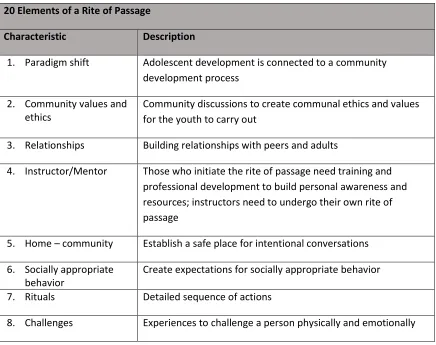
(Larson & Martin, 2012). Blumenkrantz and Goldstein (2010) provide 20 elements that
contribute to an effective of a rite of passage. Table 2.1 provides a description of each
element.
The first element is the paradigm shift. The paradigm shift is identified by the
connection of the adolescent development to the community development process rather
than an individual process (Blumenkrantz & Goldstein, 2010). The overall intervention
is ecological rather than individualized to each adolescent (Blumenkrantz & Goldstein,
2010). During the paradigm shift the adolescent is encouraged to accept the possibility
that changing views is necessary (Blumenkrantz & Goldstein, 2010).
The second element is community values and ethics. The must consist of
community expectations for behavior and values (Blumenkrantz & Goldstein, 2010).
The value and expectations must be clear to the adolescent and align with the goal of
20
The third element is that the program success relies on relationship. The adults
involved in the intervention must be intimately connected to the cultivation and
adaptation of the strategy (Blumenkrantz & Goldstein, 2010). The adults must be
dedicated to fostering quality relationships between themselves and all youth
(Blumenkrantz & Goldstein, 2010).
The fourth element is “you can only bring someone as far as you have been
yourself” (Blumenkrantz & Goldstein, 2010, p. 44). Blumenkrantz and Goldstein (2011)
highlight the need for the adults who are responsible for initiating the intervention to
participate in training and professional development to build personal awareness. The
adults must participate in their own initiatory experience and rite of passage to assist in
their own progression towards maturity to be an effective leader for the adolescent
(Blumenkrantz & Goldstein, 2010).
The fifth element is that the intervention must happen in the home community.
The connection to the geographical place is imperative to the adolescent’s sense of self
and security (Blumenkrantz & Goldstein, 2010). To ensure an effective rite of passage, a
safe place must be created to offer adolescents a space to have intentional conversations
with adults and each other (Blumenkrantz & Goldstein, 2010).
The sixth element is the expectation for socially appropriate behavior. The rite of
passage experience must involve the transmission of essential values and ethics
(Blumenkrantz & Goldstein, 2010). These values and ethics must guide and inform the
adolescent of the expectations for socially appropriate behavior (Blumenkrantz &
21
The seventh element is rituals. Rituals can empower and add depth to the overall
rite of passage experience. Rituals can impact the atmosphere and provide a powerful
context for participants (Blumenkrantz & Goldstein, 2010). Rituals allow for the learning
and interactions to become rooted within the participant (Blumenkrantz & Goldstein,
2010).
The eighth element is challenge or adversity. Blumenkrantz and Goldstein (2010)
posit that adversity introduces us to ourselves. The challenges in a rite of passage should
emotionally and/or physically present opportunities for the adolescent to learn values
and/or skills to increase self-awareness (Blumenkrantz & Goldstein, 2010). The
challenges should also encourage the adolescent to build more healthful connections
(Blumenkrantz & Goldstein, 2010).
The ninth element is silence. Adolescents can develop in a deafening
environment with minimal moments of silence (Blumenkrantz & Goldstein, 2010). This
cacophony of sound and the increased focus on cellular technology may make it difficult
for adolescents to recognize the internal alarm clock of the coming of age process
(Blumenkrantz & Goldstein, 2010). Moments of silence within the rite of passage can
help adolescents create an internal dialogue for making sense of the environment around
them (Blumenkrantz & Goldstein, 2010).
The tenth element is stories, myths and legends. The passing down of stories or
myths from previous generations can convey values and ethics (Blumenkrantz &
Goldstein, 2010). Stories from the past generation coupled with the stories of the
adolescents can inform the adolescents of their worldview or paradigm and guide their
22
The 11th element is connection to nature. Blumenkrantz & Goldstein (2010)
encourage the use of outdoor activities. In element eleven, they advocate for the use of
experiences that can help the adolescent to realize and appreciate their connection to the
natural environment (Blumenkrantz & Goldstein, 2010).
The 12th element is time for reflection. Reflection creates the opportunity to
balance our connection and relationships (Blumenkrantz & Goldstein, 2010). In a rite of
passage, the adult should provide the adolescent with intentional time to reflect on his or
her personal values, beliefs and actions (Blumenkrantz & Goldstein, 2010).
The 13th element is connection with ancestral roots. The rite of passage
experience should give adolescents the opportunity to learn, value and appreciate those
who went before (Blumenkrantz & Goldstein, 2010). This develops appreciation for the
values and ethics of their heritage, which is essential to human development
(Blumenkrantz & Goldstein, 2010). This is also a significant part of culturally centered
rite of passage intervention (Washington, Caldwell, Watson & Lindsey, 2017). Adding
cultural aspects to intervention programs encourages positive ethnic and racial identities
among youth (Washington et al., 2017).
The 14th element is play. Blumenkrantz and Goldstein (2010) define play as a
“secular spirituality and a primal, organic way for essential learning, laughter, love and
sense of community” (p.44). The rite of passage should also help individuals find their
bliss (Blumenkrantz & Goldstein, 2010). The rite of passage should consist of activities
adolescents can immerse themselves in and receive joy (Blumenkrantz & Goldstein,
23
The fifteenth element is non-ordinary states of reality. This element aligns with
the liminal concept of finding alternative behaviors. During the adolescent years,
individuals may experiment with alcohol, drugs or tobacco as an attempt to satisfy primal
curiosity (Blumenkrantz & Goldstein, 2010). This element encourages the use of
sanctioned behaviors such as meditation, yoga, dance or sports to assist adolescents in
satisfying this need (Blumenkrantz & Goldstein, 2010).
The 16th element is giving away previous attitudes or behaviors. In order to
progress through a rite a passage, one must give up previous senses of behavior or
attitude that identified their former status (Blumenkrantz & Goldstein, 2010). Leaving
something behind signifies the reality of change within the transition process
(Blumenkrantz & Goldstein, 2010).
The 17th element is service to the larger community. The idea of service is
embedded in a community-based rite of passage (Blumenkrantz & Goldstein, 2010).
Adolescents are taught the importance of serving the community as they transition into
becoming adults in society (Blumenkrantz & Goldstein, 2010).
The 18th element is change in appearance/ reflect new status. This element
signifies the adolescent’s new status (Blumenkrantz & Goldstein, 2010). To recognize
his or her transition to this new status, adolescents may be adorned with an external
symbol to signify this accomplishment (Blumenkrantz & Goldstein, 2010). This symbol
may be a special cloth, badge or adornment (Blumenkrantz & Goldstein, 2010). Initiates
can be awarded this external symbol during a public rite of passage (Blumenkrantz &
24
The 19th element is the demonstration of new competencies and change of status.
The adolescent must be given the opportunity with his or her family, school, or
community to showcase his or her new skills (Blumenkrantz & Goldstein, 2010). This
also publicly affirm his or her achievement and new status (Blumenkrantz & Goldstein,
2010).
The final element is celebration. The community comes together to celebrate the
new status of the adolescent (Blumenkrantz & Goldstein, 2010). The adolescent is
recognized and acclaimed for their commitment to the rite of passage (Blumenkrantz &
Goldstein, 2010).
Table 2.1
20 Elements of a Rite of Passage
Characteristic Description
1. Paradigm shift Adolescent development is connected to a community development process
2. Community values and ethics
Community discussions to create communal ethics and values for the youth to carry out
3. Relationships Building relationships with peers and adults
4. Instructor/Mentor Those who initiate the rite of passage need training and professional development to build personal awareness and resources; instructors need to undergo their own rite of passage
5. Home – community Establish a safe place for intentional conversations
6. Socially appropriate behavior
Create expectations for socially appropriate behavior
7. Rituals Detailed sequence of actions
25
9. Silence Opportunity to develop internal dialogue and figure out what is going on around them
10. Ancestral Roots Opportunity to learn, value and appreciate one’s connection to
those who went before
11. Stories, myths or legends
Stories from previous generations are passed down to convey morals and cultural values
12. Connection with nature Experiences are created to help individuals recognize and appreciate their natural environment
13. Time for reflection Time set aside to reflect on individual values, actions and beliefs
14. Play Participate in activities to bring the person joy
15. Giving away previous attitudes
The process of giving up some aspect of their former status to convey a reality of change
16. Non-ordinary states of reality
The use of sanctioned behaviors such as meditation, movement or play with sports to experience non-ordinary states of reality
17. Service Opportunity to serve the community
18. Change in appearance Adorn the person with an external symbol
19. Opportunities Demonstrate publicly new acquired skills
20. Celebration Community celebrates person’s new status
(Blumenkrantz & Goldstein, 2010)
Sense of Belonging
The study examines the impact a rite of passage intervention implemented
through a school-based extracurricular activity has on a student’s sense of belonging.
Belonging means “The significant affiliations between individuals and their surroundings
such as places and groups” (Arslan, 2018, p.23). To understand the concept of
belonging, one must begin with Maslow’s Hierarchy of Needs. Maslow (1943)
26
another need. Maslow’s (1934) first level of needs are psychological needs.
Psychological needs are the most important and are the biggest motivating factor for any
individual (Burleson & Thoron, 2017). Psychological needs include shelter, food, drink,
sleep and clothing (Burleson & Thoron, 2017). If sleep is needed, the individual will
suppress all other needs until that need is met (Burleson & Theron, 2017). In the realm
of education, this can cause a student to act out because the student’s first concern is
getting sleep rather than learning (Burleson & Thoron, 2017).
The second need is safety and security (Maslow, 1934). Safety and security can
include any environment the individual comes in contact with including home, school,
church or anywhere else (Burleson & Thoron, 2017). A student experiencing an unsafe
home life due to parents who fight, or a drug addicted sibling may have trouble focusing
at school (Burleson & Thoron, 2017). If the student feels unsafe at school due to
bullying, the student will once again struggle with focusing on school work due to the
need to feel safe (Burleson & Thoron, 2017).
The third need is love and belongingness. Love and belongingness includes the
need for friendship and family relations (Burleson & Thoron, 2017). A sense of
belonging can be developed through participation in clubs, churches or other areas
(Burleson & Thoron, 2017). After the third need is satisfied, the individual will move to
the fourth need of self-esteem. Self-esteem is divided into two groups (Burleson &
Thoron, 2017). First, the individual will desire confidence, strength and achievement
(Burleson & Thoron, 2017). Second, the individual will desire recognition, appreciation
27
self-esteem, the individual will foster feelings of strength and adequacy but if the needs
are not meet, the individual will feel weak and/or helpless (Burleson & Thoron, 2017).
The first four needs are categorized as deprivation needs where the lack of these
needs can produce deficiencies in the individual (Burleson & Thoron, 2017). The final
need is self-actualization, which is the desire for self-fulfillment (Burleson & Thoron,
2017). Motivated by a desire for personal growth, this need reinforces an individual’s
desire to becoming everything one envisions for his or her life (Burleson & Thoron,
2017). Maslow (1970) describes self-actualization as:
“It may be loosely described as the full use and exploitation of talents, capacities,
potentialities, and other factors. Such people seem to be fulfilling themselves and
to be doing the best they are capable of doing, reminding us of Neitzche’s
exhortation ‘become what thou art.’ They are people who have developed or are
developing to the full stature of which they are capable (p.150)”
For students to fulfill the need of self-actualization, the other needs must be met
(Burleson & Thoron, 2017; Maslow, 1934). Maslow’s (1934) suggest that educators
begin to satisfy a deficiency in order to motivate the growth needs. Given the high
number of students who experience a needs deficiency, educators need a working
knowledge of the relationship between each need (Noltemeyer, Bus, Patton & Berger,
2012). This knowledge can give educators the prerequisites for creating environments to
maximize learning outcomes (Noltemeyer et al., 2012). Unfortunately, a high number of
students across the United States experience a high level of deficiencies (Noltemeyer et
28
an environment to satisfy student needs within the school environment (Burleson &
Thoron, 2017; Noltemeyer et al., 2012).
Furthermore, Baumeister and Leary (1995) posit that the need to belong has two
distinct features. The first feature is the need to have frequent and personal interactions
with other persons (Baumeister & Leary, 1995). The second feature is the need to
perceive the interaction as an interpersonal bond marked by stability and concern
(Baumeister & Leary, 1995). These two features coupled together gives the individual a
sense of belonging due to the care the other individual shows for his or her welfare
(Baumeister & Leary, 1995). In these terms, one may recognize that belonging is more
than a need for affiliation (Baumeister & Leary, 1995). If the individual engages into
frequent contact with non-supportive or indifferent individuals, this will not satisfy the
individual’s need for belonging (Baumeister & Leary, 1995). On the other side of the
spectrum, in the individual is in a relationship characterized by a strong sense of
attachment or commitment but lacks consistent engagement, it will also be unable to
satisfy that individual’s need for belonging (Baumeister & Leary, 1995). Also, being
aware that a bond exist with an individual or a group of individuals yet the relationship
lacks any engagement will also fail to meet the need for belonging (Baumeister & Leary,
1995).
School Belonging. In this study, I will use the rite of passage to help students
navigate the liminal period of adolescence and gain a greater sense of belonging within
the school environment. The concept of belonging reveals four defining attributes (St.
Amand, Girard, & Smith, 2017). The first is positive emotions, which includes feelings
29
attribute is positive relations with peers and teachers. The relationship between peer and
teachers must be associated with encouragement, acceptance, respect and warmth (St.
Amand et al., 2017). The third attribute is the student’s ability to demonstrate energy and
a willingness to be involved with a group (St. Amand et al., 2017). The final attribute is
harmonization, which encourages the student be able to adapt to any situation or person
(St. Amand et al., 2017).
School belonging is associated with the student’s subjective perception of being
included, accepted, respected, and supported by other individuals within their school
environment (Arslan, 2018). School belonging is grounded in the student’s perception of
value and support received in the school environment (Arslan & Duru, 2016). A student’s
sense of belonging also stems from acceptance (Arslan & Duru, 2016). As student’s
search for belonging or membership, they assume that joining will result in strong social
bonds with others in the group (St. Amand, Girard, & Smith, 2017). The sense of
membership influences a student’s commitment to school and educational values
(Goodenow & Grady, 1993). The feeling of acceptance and value is associated with
positive emotions (Arslan & Duru, 2016).
The enhancement of school belonging has contributed to academic achievement,
school engagement and investment in extracurricular activities (St. Amand, Girard, &
Smith, 2017). A lack of school belonging can have an adverse effect. Students lacking a
sense of belonging lack educational purpose and have lower levels of academic
achievement (Arslan, 2016). Research also identifies the lack of school belonging as a
30
belonging can also lead to a negative social outcome such as depression, violence,
alcohol and drug use, and loneliness (Arslan & Duru, 2016).
Overview of Extracurricular Activities
During the 19th century, extracurricular activities began to emerge in the
United States (Massoni, 2011). Extracurricular activities were to serve as a supplement
and extend from the experiences of a formal classroom setting (Millard, 1930). Harvard
and Yale hosted the first extracurricular activities known as literacy clubs consisting of
Greek letter fraternities and sororities and a variety of debate clubs (Massoni, 2011).
Early on, educators were unsure of extracurricular activities because they believed school
was reserved only for academics (Millard, 1930). Current educational systems recognize
the benefits of extracurricular activities and the positive effects on life skills and
academic performance (Marsh & Kleitman, 2002). Though researchers agree that
participation in extracurricular activities has a positive outcome, the cause of the outcome
is unclear (Shulruf, 2011). Shulruf (2011) recognized the relationships between
extracurricular activities and educational outcomes, but could not attest to evidence of
causal effects.
Research is filled with information regarding the benefits of students participating
in extracurricular activities. However, some researchers recognized a clear definition of
extracurricular activities is needed in order to move forward in further studies. The
authors of Clarifying the Meaning of Extracurricular Activity: A Literature Review of
Definitions (2012), began by examining the root term “curricular” and the prefix “extra”.
Curricular is defined as of or relating to academics (Bartkus et al, 2012). Extra is defined
31
two terms mean outside the normal curriculum or academics of a school. Bartkus et al.
(2012) defined extracurricular activities as “academic or non-academic activities that are
conducted under the auspices of the school but occur outside of normal classroom time
and are not part of the curriculum” (p.698). Additionally, extracurricular activities do not
involve a grade or academic credit and participation is optional on the part of the student”
(Bartkus et al., 2012).
Though activities occur outside of the normal classroom hours, activities can be
closely tied to the academic curriculum. Extracurricular activities can directly or
indirectly align with academic subject areas. A direct extracurricular activity is defined as
“one that is more closely associated with a student’s major or curriculum” (Bartkus, et
al., p. 699). An indirect extracurricular activity is defined as “one that is relatively
unrelated to the student’s major or curriculum” (Bartkus et al., p.699). A student
interested in a career in science may join the forensic science club, which is considered a
direct extracurricular activity as it directly ties to an academic subject area. The same
student may play an instrument and decide to join the marching band, which is
considered an indirect extracurricular activity as the student is engaged in an activity not
tied into his or her academic subject area. Bartkus et al. (2012) provide a detailed table to
identify the variety of extracurricular activities that researchers examine in academic
studies. For the purpose of this research, Marsh (2002) provides the most concise listing
of extracurricular activities that pertain to secondary education. Marsh (2002) includes
the following activities:
Varsity athletic teams, Other athletic teams—in or out of school, Cheerleading,
32
Band or orchestra, Dance/chorus, Chorus or dance, Hobby clubs, Hobby clubs
such as photography, model building, hot rod, electronics, craft, School subject
clubs, School subject matter clubs such as science, history, languages, business,
art, Vocational education clubs, Vocational education clubs such as Future
Homemakers, Teachers, Farmers of America, DECA, FBLA, or VICA,
Community youth clubs, Youth organizations in the community such as scouts, Y,
Church activities, Church activities including youth groups, Junior achievement,
Junior achievement Publications, School newspaper, magazine, yearbook annual,
Student government, Student council, student government, political club, Service
clubs, Service clubs or other community service activities, Honor societies,
Honorary clubs, such as Beta Club or National Honor Society, Fraternity/sorority
(Bartkus et al, p. 696).
As stated earlier, students who participate in extracurricular activities are less
likely to dropout of school or engage in criminal behavior (Mahoney, 2000). Participation
in extracurricular activities can have a positive effect on students well into adulthood and
serve as an academic motivator for students who may not recognize the value of a formal
education (Mahoney, 2000). In particular, at-risk students who participate in school
athletics made the connection between participating in school-related activities and the
value of academic success (Marsh and Kleitman, 2003). Students begin to associate a
need to take responsibility of their academics in order to participate in the activities they
enjoyed.
Extracurricular activities positively affect behavior revealing that students who
33
Students involved in extracurricular activities are responsible for performing tasks and
are rewarded when those task are performed properly (Massoni, 2011). According to
Massoni (2011), this reward system builds self-respect, self-confidence and pride in
students. Between the hours of three o’clock in the afternoon and seven o’clock in the
evening, children are at the greatest risk of committing a crime or a violent act (U.S.
Department of Justice, 1998). Children who participate in extracurricular activities are
under the supervision of an adult and engaged in the activity, decreasing chances of
participating in delinquent behavior. Being actively involved can empower students to
reject the temptation to join gangs, use drugs or alcohol and commit crimes (Massoni,
2011).
Students who participate in extracurricular activities are more connected to the
school. Participating in extracurricular activities builds self-esteem and creates a positive
and voluntary connection to the school (Massoni 2011). Participation also positively
effects student motivation, teacher perception, and adult relationships within the school
(Holloway, 2002; Massoni, 2011). It gives the student an opportunity to meet new
people and build stronger relationships (Massoni, 2011).
John Holloway’s (2002) article Extracurricular Activities and Student Motivation
discusses the benefits of extracurricular activities for student motivation in academics.
Holloway (2002) suggests that educators utilize extracurricular programs as a means to
improve school climate and motivate all students school-wide. The benefits are listed as:
1. Activities appeal to student interest
2. Activities encourage student to interact with peers
34
4. Activities assist in building healthy student-adult relationships
5. Activities provide students with structure and challenges
6. Activities keep students connected to the school
7. Activities increase student interest in the field of science (Holloway, 2002).
Barriers to Extracurricular Activities
Poverty. Poverty is a chronic and severe barrier to graduation. BHS is a high
poverty school with 91% of the student body identified as economically disadvantaged.
Due to the extreme challenges of living in poverty, a student is more likely to fall victim
to the impact (Baydu, Kaplan, & Bayar, 2013). The challenges of poverty include lack of
parental and societal support, increased pressure to become a financial contributor for the
family, less opportunities to build trust and fewer examples of positive role models
(Baydu et al, 2013). Author Eric Jensen (2013) discusses how these challenges often
cause students to be less engaged in the school environment. A web of these factors can
make it challenging to influence students to participate in school related activities. A
student may be unable to meet the financial requirements for club membership, work a
part-time job, which causes him or her to miss club meetings, or does not see the benefits
of joining a club.
Schools serving students of poverty face unique challenges. Poverty is a chronic
and severe barrier to education and can create a disconnect between the school and the
student. Due to the extreme hardships of living in poverty, a student is more likely to fall
victim to the impact (Baydu, Kaplan, & Bayar, 2013). Children living in poverty often
suffer through a variety of challenges making it difficult to focus on academics or the
35
become a financial contributor to the household, less opportunities to build trust in adults
and fewer examples of positive role models are a few examples of the challenges students
living in poverty face (Baydu et al., 2013). A student facing the challenges may feel out
of place in a traditional school environment. As educators adjust to the shift towards
non-cognitive development, the effects of poverty must be taken into account.
Poverty plays a significant role in preventing students from successfully
completing school. Students of color who live in poverty see a major increase in their
chances of dropping out of high school. According to a 2008 report in the Alliance for
Excellent Education, 50 percent of all students of color, living in poverty, dropout of
school (Alliance for Excellent Education, 2008). The article Facing the Influence of
Poverty on Graduation Rates in Public High Schools (2013)discusses a study the effect
poverty had on the graduation rate of public high schools for the 2007 – 2008 school
year. The authors obtained poverty data from the Current Population Survey to learn the
the percentage of households in poverty and utilized the Common Core Data to obtain the
graduation rates for all 50 states in order to answer the research question (Baydu et al.,
2013). The quantitative method revealed a statistically significant relationship between
poverty and graduation rates (Baydu et al., 2013). The study concluded the graduation
rate increased across the United States as the poverty rate decreased (Baydu et al., 2013).
Research shows marriage rates drop significantly among low socio-economic
status populations and nearly three-fourths of parents living in poverty are unmarried
(Bishaw & Renwick, 2009; Fields, 2004; Jensen, 2013). This statistic puts students
at-risk of having an absent or stressed caregiver (Jensen, 2013). Building a positive
36
in supportive and caring environments learn how to respond appropriately to everyday
situations (Jensen, 2013). Jensen (2013) discusses the effect of a chaotic experience can
have or the absence of at least one parent can have on a child’s development. This
unfortunate experience can effect brain development and cause a child to become
insecure and stressed (Jensen, 2013). Students with poor emotional regulations, as early
as prekindergarten, can be predicted to have academic difficulties (Trentacosta & Izard,
2007). The absence of emotional regulation can lead to inappropriate school behavior
and the student’s inability to work well with others (Jensen, 2013).
Schools of poverty face high teacher turnover rates, inadequate funding, large
class sizes, and unsafe environments (Jensen, 2013). Individuals living in lower
socioeconomic status can envision a negative perspective of the future (Jensen, 2013). A
student’s mindset plays an important role in motivation towards academic success.
Mindset is essential to the student’s attitude toward teachers, academic work and future
goals (Jensen, 2013). Studies show that students perform better when they believe they
have the ability to be academically successful (Claro, Paunesku, & Dweck, 2016).
Students with a fixed mindset may prefer to avoid situations that will test their academic
capabilities (Claro et al, 2016). Educators must think creatively on how to combat the
barrier of fixed mindset and highlight the dimmed potential in every student.
Poverty and Extracurricular Activities. Poverty can also affect participation in
extracurricular activities. Extracurricular activities can offer students living in poverty
the opportunity to participate in a structured, adult-supervised activity. According to
research, the number of children left unsupervised after-school increases among