Page | i
THE
IDENTIFICATION
OF
KEY PROCESSES TO CONTROL
INFRASTRUCTURAL MAINTENANCE STRATEGIES
Increasing the maintenance performance of DBFM-contracts by
identification of key performance processes, based on an evaluation of the
N31 and A59
J.P. (Jeroen) van der Meer BSc
University of Twente
Department of Construction Management and Engineering
Place and date : Enschede, 10 November 2011
Original report : 105 pages
Public report : 88 pages
Appendixes : 8 appendixes (A-H)
Status : Final public report
Author : J.P. (Jeroen) van der Meer BSc
Construction Management and Engineering
Contact : [email protected]
Principal : BAM Infraconsult B.V.
H.J. Nederhorststraat 1 2801 SC Gouda
Company supervisor : Ing. A.H.F. (Arjen) Vos
(Sr. Advisor Inspection, Operation and Maintenance) University supervisors : Prof. dr. G.P.M.R. (Geert) Dewulf
(Professor of Planning and Development) Dr. A. (Andreas) Hartmann
Page | ii Voor u ligt de definitieve publieke1
Deze studie gaat in op een nieuwe ontwikkeling in de infrastructuur, het gebruik van geïntegreerde contracten. Meer specifiek gaat het in op DBFM-contracten, een contractvorm waarin de aannemer verantwoordelijk is voor het ontwerp, de bouw, de financiering en het onderhoud van een project voor een lange periode. Er zijn op dit moment twee van dit soort projecten in Nederland waarvan de onderhoudsfase al enige jaren loopt, de N31-Wâldwei en de PPS-A59. De Koninklijke BAM Groep is in beide projecten mede verantwoordelijk voor het onderhoud waardoor er mogelijkheden zijn om te leren van beide projecten en daarmee de concurrentiepositie te verbeteren.
versie van mijn afstudeerrapport met de titel “The identification of key processes to control infrastructure maintenance strategies”. Dit rapport vormt de afsluiting van mijn Master Construction Management & Engineering binnen de afdeling Bouw/Infra aan de Universiteit Twente. Het onderzoek is uitgevoerd in samenwerking met BAM Infraconsult.
Dit rapport begint met een theoretische beschrijving van prestatiemeting, onderhoudstrategieën en onderhoudsprocessen op basis van beschikbare literatuur. Aan de hand hiervan is een model beschreven waarin uitgelegd wordt waar de studie zich specifiek op richt. Vervolgens zijn de beide projecten beschreven aan de hand van dit model en wordt er een koppeling gemaakt met welke processen belangrijk gevonden worden voor een goede uitvoering van het onderhoud. Het resultaat van deze studie is voorgelegd in een bijeenkomst met experts op het gebied van onderhoud binnen de Koninklijke BAM Groep.
Deze studie is uiteraard niet tot stand gekomen zonder de bijdrage van verschillende personen. Mijn dank gaat uit naar mijn directe begeleider vanuit de BAM, Arjen Vos. Zijn ervaring, vragen om concreet te worden, en contacten hebben mij ondersteund in de uitvoering van deze opdracht. Daarnaast gaat mijn dank uit naar mijn begeleiders vanuit de Universiteit, Geert Dewulf en Andreas Hartmann, voor hun inzet en kritische blik op deze opdracht. Tot slot de medewerkers van de afdeling beheer en instandhouding bij de A12 voor hun gezelligheid en natuurlijk de geïnterviewde personsen voor hun openheid en medewerking
Verder wil ik graag mijn ouders, familie en vrienden bedanken voor hun belangstelling en betrokkenheid. Dit heeft mij altijd gesteund en gemotiveerd. Daarnaast waren de vele koffie-uurtjes op de Universiteit waarin we onze frustraties en successen op tafel konden gooien erg fijn; het besef dat iedereen dezelfde ‘beren’ tegenkomt werkt geruststellend. Tot slot natuurlijk Denise, je enthousiasme en vertouwen in een goede afronding heeft mij altijd gesteund en gemotiveerd. Met deze afstudeeropdracht is er een einde gekomen aan een leerzame periode binnen de BAM en de Universiteit. Daarnaast betekent dit het einde van een mooie studententijd. Met veel plezier kijk ik terug op deze periode, maar met net zoveel interesse kijk in naar de ontwikkelingen die de toekomst zal brengen.
Odijk, november 2011
Jeroen van der Meer
Page | iii The BAM is (as consortium partner) until 2020 responsible for the design, construction, finance and maintenance of the PPS-A59 and N31-Wâldwei, two integrated contracts (DBFM). The complex nature of construction projects and the cyclical process of maintenance makes that the BAM struggles with understanding of what processes need to be controlled to increase the maintenance performance. Knowledge about how the maintenance stage performs and what processes influence the performance can be help to improve the efficiency of assts. This makes maintenance a strategic issue for the Royal BAM Group.
This study examines which important processes have to be controlled to improve the maintenance performance for two infrastructural DBFM-projects, the A59 and N31. By studying literature about performance measurement, maintenance strategy and –processes a framework is developed using a holistic view, based on ‘input-process-output-outcome’. With this framework important processes for supporting the maintenance performance can be identified. In order to map these processes interviews are held with the operator and the project director of both projects. By successively comparing the planned and realized process goals and maintenance costs, is the relation between the process- and outcome goals studied. For validation reasons the results are evaluated in an expert meeting.
Based on literature performance is defined as: ‘the relation between the needed (financial) means and the required quality of a system, to attain the company objectives and targets’. The strategic aim for maintenance is to keep the condition of the infrastructure at the required level by executing maintenance or not. Performance measurement is needed for checking purposes and is defined as the process by which a company manages its (desired) performance by the quantification of the efficiency and effectiveness of actions. In literature no suitable indicators for performance measurement are available due to the complex nature of maintenance. Furthermore, no suitable project data is available that can be used to formulate indicators.
In order to gain an insight into the relevant processes for performance improvements at the BAM, the output goals are firstly analysed by means of the financial result. The process goals are furthermore analyzed by using the PAS55. This is a general accepted structure to optimally manage assets and asset systems. The utilization of the framework has resulted in the identification of four important processes to improve the maintenance stage. These are, 1) structure for the exchange of knowledge and information, 2) Research maintenance related risks and method for identifying risks, 3) Mapping the desired performance and condition in time, and 4) Criteria for prioritizing goals and plan.
Page | iv De BAM (als consortium partner) is tot 2022 verantwoordelijk voor de projecten PPS-A59 en N31-Wâldwei, twee geïntegreerde contracten (DFBM) met betrekking tot het ontwerp, de bouw, financiering en onderhoud. De complexiteit van bouwprojecten en de cyclische vorm van onderhoud maken dat de BAM worstelt met de vraag welke processen gecontroleerd moeten worden om de prestatie van het onderhoud te verbeteren. Kennis over hoe het onderhoud presteert en welke processen de prestatie beïnvloeden kunnen helpen de efficiëntie van objecten te verbeteren. Hierdoor wordt onderhoud voor de Koninklijke BAM Groep van strategisch belang. Deze studie onderzoekt welke processen gecontroleerd moeten worden om de prestatie van onderhoud voor twee infrastructurele DBFM-projecten, de A59 en N31, te verbeteren. Aan de hand van literatuuronderzoek over prestatiemeting, onderhoudsstrategieën, en -processen is een framewerk ontwikkeld met een holistisch perspectief, gebaseerd op ‘input-proces-output-outcome’. Hiermee kunnen de belangrijke processen ter ondersteuning van de onderhoudsprestatie geïdentificeerd worden. Om deze processen in kaart te brengen, zijn interviews uitgevoerd met de onderhoudsmanager en de projectdirecteur van beide projecten. Door achtereenvolgens de geplande en gerealiseerde procesdoelen en onderhoudskosten te vergelijken, is de relatie tussen proces- en outputdoelen bestudeerd. Ter validatie zijn de uitkomsten geëvalueerd in een expert bijeenkomst.
Aan de hand van literatuur is prestatie gedefinieerd als: ‘de relatie tussen de benodigde (financiële) middelen en de te leveren kwaliteit van een systeem, om de bedrijfsdoelen te bereiken’. Het strategische doel voor onderhoud is om de conditie van de infrastructuur op het afgesproken niveau te houden door het wel of niet uitvoeren van onderhoud. Prestatiemeting is nodig ter controle en is gedefinieerd als het proces waarin het bedrijf de (gewenste) prestatie controleert door het kwantificeren van de effectiviteit en efficiëntie van acties. Vanuit de literatuur zijn geen geschikte indicatoren beschikbaar om de prestatie te meten vanwege de complexiteit van onderhoud. Bovendien is er geen geschikte data aanwezig vanuit de projecten zelf die kunnen leiden tot het opstellen van indicatoren.
Om toch inzicht te krijgen in de relevante processen voor prestatieverbetering bij de BAM, zijn in dit onderzoek allereerst de outputdoelen geanalyseerd door middel van het financiële resultaat. Daarnaast zijn de procesdoelen geanalyseerd door gebruik te maken van de PAS55. Dit laatste is een algemeen geaccepteerde structuur voor het optimaal beheren van objecten en systemen. De toepassing van het framewerk heeft uiteindelijk geleid tot de identificatie van 4 belangrijke processen ter verbetering van het onderhoudsproces. Dit zijn, 1) het gestructureerd uitwisselen van kennis en informatie, 2) het onderzoeken en identificeren van onderhoud gerelateerde risico’s volgens een vaste methode, 3) het vastleggen van de gewenste prestatie en conditie in de tijd, en 4) het vaststellen van criteria voor het prioriteren van doelen en plannen.
Beide projecten zijn succesvol gezien het feit dat de eerste vijf jaar binnen budget en planning blijven. Een kanttekening is dat het groot onderhoud nog uitgevoerd moet worden. Dit succes wordt bereikt door toegewijde werknemers met veel kennis en ervaring, en door een goede relatie met de opdrachtgever. De keuzes betreffende het uit te voeren onderhoud worden bepaald aan de hand van een financieel model waarbij het financiële resultaat centraal staat. Als gevolg is het onderhoud voornamelijk budget georiënteerd waardoor de invloeden van onderhoudsacties op de kwaliteit niet helder in beeld zijn en het lastig is om de noodzaak van onderhoudsacties kwalitatief te onderbouwen. Daarnaast worden de beschreven processen uit de PAS55 veelal uitgevoerd maar
de genomen stappen (subprocessen) zijn niet helder traceerbaar. Dit maakt dat de
Page | v PREFACE ... II
SUMMARY ... III
SAMENVATTING ... IV
CONTENTS ... V
LIST OF TABLES & FIGURES ... VI
LIST OF FIGURES... VII
LIST OF ABBREVIATIONS ... VIII
1 INTRODUCTION ... 1
1.1 Current change in the construction market ... 1
1.2 Motive for research ...2
1.3 Structure of thesis ... 3
2 RESEARCH DESIGN ... 4
2.1 Conceptual research framework ... 4
2.2 Technical research framework ... 8
3 THEORETICAL FRAMEWORK ... 12
3.1 Performance measurement ... 12
3.2 Maintenance strategy ... 15
3.3 Maintenance as a cyclical process ... 20
3.4 Process measurement framework for maintenance ... 23
4 INTEGRATED PROJECTS OF THE ROYAL BAMGROUP ... 29
4.1 General description of case studies ... 29
4.2 Case description based on project plans ... 31
4.3 Case description based on project results ... 35
5 IMPORTANT PROCESSES AND IMPROVEMENTS ... 41
5.1 Influence on the maintenance costs ... 41
5.2 Influence on the project goals and objectives ...43
5.3 Factors to be controlled ...43
6 DISCUSSION ... 44
6.1 Maintenance budget ... 44
6.2 Maintenance goals ... 45
6.3 Improvements ... 46
7 CONCLUSIONS AND RECOMMENDATIONS ... 48
7.1 Conclusion ... 48
7.2 Recommendations ... 50
8 LIMITATIONS ... 53
REFERENCES ... 55
Page | vi
Table 1: Difference between unforeseen situation and failures ... 17
Table 2: The highway system, objects and activities ... 25
Table 3: Cost control items ... 25
Table 4: Framework for evaluating maintenance cost ... 25
Table 5: Relation between PAS55 and performance. ... 28
Table 6: Explanation score for present in project (Based on Haponava (2009)) ... 28
Table 7: Explanation of relative weight... 28
Table 8: Explanation of company objectives ... 28
Table 9: General project information of the N31 – Wâldwei ... 29
Table 10: General project information of the PPS-A59 ... 30
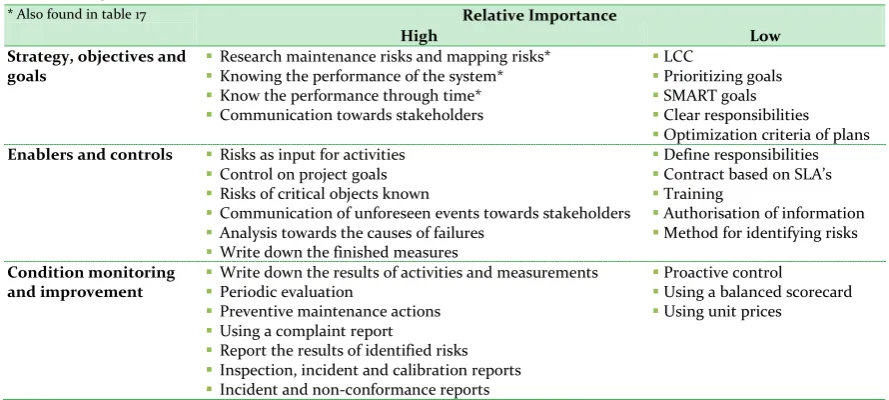
Table 11: Interview results of strategy and objective related aspects based on PASS55 ... 35
Table 12: Interview results of enablers and controls related aspects based on PASS55 ... 36
Table 13: Interview results of Monitoring and performance related aspects of PAS55 ... 38
Table 15: Relative importance towards influencing maintenance costs ... 42
Table 16: Relative importance towards influencing maintenance goals...43
Table 18: Aspects that are perceived to influence the maintenance costs and project goals ... 50
Table 19: Company Objectives ... 60
Table 20: Characteristics of DBFM- and Traditional contracts (Based on Hobma (2009)) ... 61
Table 21: General project information of N31 – Wâldwei ... 67
Table 22: Allocation of risk... 69
Table 23: General project information of A59 ... 72
Page | vii
Figure 1: Research Model, methodology of Verschuren and Doorewaard (2007) ... 3
Figure 2: Influence on project cost over various stages (Winch, 2002) ...5
Figure 3: Different roles for infrastructure asset management (van der Velde, 2010) ...7
Figure 4: Research boundary (The institute of Asset Management (IAM), 2008) ... 8
Figure 5: The scope of maintenance (Based on (Vonk, 2006)) ... 16
Figure 6: Regular and Large Maintenance (Vonk, 2006) ... 16
Figure 7: Maintenance strategy (Bouwcombinatie Waldwei, 2008) ... 17
Figure 8: Classification of maintenance. (Schneider et al., 2006) ... 17
Figure 9: Quadrant Analysis Maintenance activities (Anderson, 2006) ... 19
Figure 10: Life Cycle Costs for maintenance of an object ... 20
Figure 11: Cost of different Maintenance Strategies (Woodward, 1997) ... 20
Figure 12: Simple representation of the Maintenance stage ... 20
Figure 13: Addition of Maintenance Process in Maintenance stage ... 21
Figure 14: Complete model (based on Baird & Stammer (2000)) ... 24
Figure 15: The structure for the management of assets based on the PAS 55 (The institute of Asset Management (IAM), 2008). ... 26
Figure 16: Relation between PAs55 and Framework ... 27
Figure 17: Consortium Wâldwei.com (Waldwei.com, 2011) ... 30
Figure 18: Consortium ‘Poort van Den Bosch’ ... 30
Figure 19: Project organization of the N31 – Wâldwei ... 32
Figure 20: Project organization of PPS-A59 ... 32
Figure 21: The decoupling point of different integrated contracts (Favié, 2010) ... 63
Figure 22: Stages in DBFM-contract ... 63
Figure 23: Schematic presentation of SPC ((Rijksgebouwendienst, 2008) ... 65
Figure 24: Different payments regimes (PPS Kennispool Rijkswaterstaat, 2010) ... 66
Figure 25: Life cycle of a road... 66
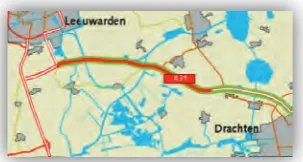
Figure 26: Section of N31 - Wâldwei ... 67
Figure 27: Payment Diagram ... 68
Figure 28: Schematic representation of contract stakeholders ... 69
Figure 29: Section A59 (Provincie Noord-Brabant & Poort van Den Bosch, 2005) ... 72
Figure 30: Payment Diagram (Zachariasse & Slot, december 2003) ... 72
Page | viii
BAM Bataafsche Aanneming Mij
BCWW BouwCombinatie Wâldwei (Build Combination Wâldwei)
EPCM Engineering, Procurement, Construction Management
CBM Condition Based Maintenance
CM Corrective Maintenance
DBFM Design – Build – Finance - Maintain
DG Director-general
FBM Failure Based Maintenance
KPI Key Performance Indicator
MTC Measured Term Contract
PAS55 Public Available Specification
PPS Publiek Private Samenwerking (Public Private Partnership)
PvDB Poort van Den Bosch
RAW Rationalisering Automatisering Water en wegenbouw
RWS Rijkswaterstaat
SG Secretary - general
SLA Service Level Agreement
SMART Specifiek, Meetbaar, Acceptabel, Realistisch, Tijdsgebonden
SPC Special Purpose Company
TBM Time Based Maintenance
RCM Reliability Centered Maintenance
ZOAB Zeer Open Asfalt Beton
1 | Page
1
I
NTRODUCTION
The goal of this introduction is to give a rough sketch of the how this study is established. Therefore, the current change in the construction market and the consequences for the construction companies are shortly described. Thereafter, their immediate cause and the structure of this thesis are given.
1.1
C
URRENT CHANGE IN THE CONSTRUCTION MARKETIn this paragraph the change of the infrastructure market is discussed.
THE NEW MARKET APPROACH OF RIJKSWATERSTAAT
In the last few years, a change has taken place in the infrastructure market. Rijkswaterstaat (RWS) started a transformation process from being an infrastructure oriented management organization towards a public oriented network manager. RWS is the main contracting authority in the Netherlands for infrastructural projects. They are responsible for the Dutch national network of roads and waterways. Their activity program consists of maintenance, repair, renovation and new construction to keep road infrastructure in optimal condition. They work under the authority of the Minister and the State Secretary of Transport and Public Works. Due to the parliamentary inquiry in 2002/2003 the government became aware that the relationship with the market had to be changed. For RWS this meant that their policy had to change towards a more frequently and early use of the market.
This transformation has implications on the infrastructure market because more and more integrated contracts enter the market. The result is that private parties (e.g. contractors) become responsible for the design, construction, operation, maintenance, and sometimes also financing a project for 20 to 30 years. This change needs new ways of working for both RWS and the construction companies.
According to the business plan of RWS, is “The market, unless...” the basic principle for the new market approach (Rijkswaterstaat, 2004). RWS will act as a professional principal. This means that work that can be (or better be) done by the market, will be left to the market. They will concentrate on the front of the design- and build-process. The market gets the opportunity to call forth all their skills and creativity. Besides this, RWS will focus towards price and quality. A suitable option for this new approach is the use of innovative procurement because it gives abundance on the market for new knowledge and experiences.
CONSEQUENCES FOR THE CONSTRUCTION MARKET
One of the methods to achieve this goal is using a DBFM-contract (Design, Build, Finance and Maintain). The constructor will become responsible for all the mentioned phases for a long period of time. All the included risks are allocated by the principle of ‘the party that can control the risk best will bear the risk’. Besides the risk allocation, the contractor will also be responsible for the proof of meeting the performance levels stated in the contract. As a result, the workload for RWS will decrease during the executing of the contract because they have fewer responsibilities. But on the other hand, RWS will need to change their specification of requirements (e.g. into performance levels) which needs a different way of thinking and takes a lot of effort.
Page | 2 service. In order to obtain all this information, inspections are needed before and during the operational phase, and some sort of performance measurement system is required. Also the implications on investment costs and maintenance costs need to be clear. All these changes can be summarized as the need for Asset Management knowledge.
Asset Management is a process that is recognized by many fields, for example financial services, information technology and electronic services. Many definitions exist for Asset Management but they all have the same common view. According to Tywoniak, Rosqvist, Mardiasmo, and Kivits (2008) Asset Management can been seen as the process in which assets are ‘put through’ in order to create a product or provide a service at optimal level. The maintenance phase should be included for optimizing the whole construction process. The overarching goal is to increase the efficiency of assets, which comprises enhancing asset productivity, maximizing asset value through the life-cycle, and minimizing the total cost of ownership. For construction companies this means that they need to (Tywoniak, et al., 2008):
Understand business costs and performance drivers;
Determine investments to optimize performance and operational costs;
Manage the delivery of network performance and investments programs;
Monitor asset conditions;
Devise appropriate maintenance policies.
The complex nature of construction projects makes this a difficult task. The projects are dynamic and take a long time to develop and construct. Especially the development of a strategy for the maintenance stage is a difficult task. This stage is the longest stage of an integrated project, with many factors that can influence the project. Therefore the developed maintenance strategy should be flexible to be able to react on changes. This study will contribute to the identification of important aspects that need to be controlled to influence the maintenance strategy during the maintenance stage. Understanding of these key aspects is the first step towards optimizing the maintenance performance. BAM Infraconsult has commissioned this study (Appendix A).
1.2
M
OTIVE FOR RESEARCHConstruction companies have little experience with DBFM-contracts, as only a few projects are executed today. The Wâldwei–N31 is the first DBFM-contract in the Netherlands put out to tender by RWS. This project consists of the construction of an additional lane in both directions including
15 years of maintenance. The construction phase of the project has been completed in October 2007 which means that the maintenance phase has commenced. The BAM is one of the consortia members in this project. Another DBFM-project in which the BAM is a consortium member is the PPS-A59. This project is the very first DBFM-contract in the Netherlands. This project is not put out to tender by RWS but by the province, which is an unusual situation. The project consists of the construction of a new highway (A59) including 15 years of maintenance.
During an initial consultation with BAM Infraconsult the two DBFM-projects were discussed. An evaluation of both projects was made directly after the construction phase by the involved parties. Many lessons were learned and recommendations about the maintenance phase have been made. One recommendation is the need to invest in the development of maintenance management to keep the lead over the competition (Infraprovider, 2007). This recommendation is supported by the following recommendation: in order to learn from the experiences it is necessary to cluster the information of the projects, hence there is a need to invest in knowledge management (Rijkswaterstaat, 2008).
3 | Page
1.3
S
TRUCTURE OF THESISAt the start of this study a literature study is carried out in order to obtain proper understanding of the subject matter. Besides the literature study several consultations with BAM Infraconsult have resulted in the problem definition. This report discusses the problem and gives an answer to the research question (see chapter 2). The following research model (Figure 1) represents the schematic overview of the most important steps that are taken in this study. Related chapters are given in the clarification of the model and are described below.
Chapter 1 Introduction – discusses the establishment of this research by introducing the current
situation in the construction market and gives the motive and structure for this study.
Chapter 2 Research Design – discusses the conceptual and technical framework of the study. These
two topics will provide insight into what the study is about. The problem context, the objectives, the research questions and boundaries are given. The choices for using case study research, the execution and selection of the cases are also discussed.
Chapter 3 Theoretical Framework - gives an overview of the theory and background information for
this study. The knowledge gathered in the literature helps to find relations between the different topics and gives the theoretical foundations that are used for understanding the maintenance stage and the cases. First of all the literature about performance measurement is discussed. The second section of this chapter discusses the different maintenance strategies and their effect on the maintenance cost. Thereafter an overview of what processes can be found in the maintenance stage is given. This will altogether result in the design of the research framework that is discussed in the last section.
Chapter 4 Integrated project of the Royal BAM Group - discusses the case studies. The case N31 –
Wâldwei and the PPS-A59 are both studied. This chapter gives an overview of the projects based on conversational interviews with the operators and the project plans. Thereafter, a more descriptive perspective is used by more structured interviews with both the operators and project directors. This information makes it possible to check what aspects described in the framework are present in the cases. The goal of this chapter is to evaluate the projects based on the aspects described in the framework.
Chapter 5 Important processes and Improvements – discusses the aspects of the maintenance stage
that need to be controlled based on the results of the case studies. Where chapter 4 discusses the presence of processes, this chapter discusses what processes are important in the maintenance stage. The aspects that are already under control in the projects as well as the aspects that need to be controlled are given. The result of the analysis is discussed with experts to find the most important/relevant processes of the maintenance stage.
Chapter 6 Discussion – gives the discussion of this study and the discussion of the results.
Chapter 7 Conclusions and recommendations – provides the conclusion of this study and some
recommendations for the BAM as well as for future research are given.
Chapter 8 Limitations – discusses the limitations of this study.
The Appendices give information about BAM Infraconsult, DBFM-contracts, the case studies, the
interview protocol, the expert meeting protocol and the PAS55 questions.
FIGURE 1:RESEARCH MODEL, METHODOLOGY OF VERSCHUREN AND DOOREWAARD (2007)
(Chapter 6/7) (Chapter 3) (Chapter 4) (Chapter 5)
Performance Measurement
Conceptual research framework Case studies
Differences between plan and result
Define Key control factors
Conclusion & Recommendations
DBFM-contract Maintenance processes
Expert Interview
Theory
Practical Maintenance strategies
Page | 4
2
R
ESEARCH DESIGN
The following chapter discusses the conceptual framework and the technical framework. The current situation in the construction market is translated into a problem formulation, objectives and research questions. The strategies and methods used for this study are explained in the technical framework. The goal of this chapter is to make clear what is included in this study, which perspective is used and what methods and strategies are used to find a solution of the described problem.
2.1
C
ONCEPTUAL RESEARCH FRAMEWORKThe focus of the conceptual framework is the presentation of the research concepts and to clarify the research questions and objectives. Hence, this section determines what, why and how much is studied. It consists of the problem context, the problem statement, the objectives, the research boundaries, research questions and the research model.
The conceptual research framework is designed based on the concept of business problem-solving (van Aken, Berends, & van der Bij, 2007). This means that a problem can be defined as a certain situation in the real world with which one or more stakeholders are dissatisfied. That is, the problem statement is a choice made by the researcher together with the stakeholders, in this case the BAM. In order to count as a problem, stakeholders should believe that the situation can be solved within a reasonable amount of time, spending a reasonable amount of resources. To put it differently, the problem could be solved within half a year of work by the researcher.
PROBLEM CONTEXT
Infrastructural projects are more often being put out to tender as integrated contracts instead of RAW-contracts2
In the Dutch building industry little information is available to make a cost-estimate for those integrated contracts. The difficulty is to make an estimate about the cost for the upcoming 20 years of construction and maintenance. Many firms make assumptions based on their RAW-contract experience, in which every technical aspect is prescribed. Next to this, the RAW-contract is designed for a specific construction phase. Due to this situation there was no incentive to be innovative or gather knowledge about the life cycle of projects. By contrast, the current change towards integrated contracts makes it necessary to obtain this information. As a result construction companies could increase profit if they improve their performance by developing new technologies, understanding of the processes that influence the project, or by improving their accuracy of cost estimates.
. During the tender, construction companies come up with a high variety in costs. This is a rather strange situation because the profit margins are narrow in the construction industry. It alludes to a situation where construction companies do not have a clear idea about the expected costs and the way the costs can be controlled. They are forced to make a rough estimation about the life cycle costs based on no past experience.
Performance can be defined as to meet one’s commitment. The required performance in a project is established in a performance contract that usually is a part of integrated contracts. A performance based contract is a contract in which the principal describes the required situation, is rather reserved with prescribing activities, gives the contractor freedom in the design and execution of activities, and creates a link between the (delivered) performance and payments in a predetermined period (Schoenmaker, 2011). This changes the commitments of the contractors, and the way in which they can improve their project activities. In contrast to other industries, just a
2 The standard RAW-provisions are a comprehensive set of legal, administrative and technical provisions . These provisions
5 | Page
few studies have been conducted to improve the performance of construction projects. The studies all agree on the usefulness of performance measurement, but they differ in the way they approach performance measurement. The performance can be approached in relation to the product as a facility or in relation to the creation of the product. The latter one has been the prime performance measurement of construction projects (Kagioglou, Cooper, & Aouad, 2001). This means that the focus is on time and cost. A more balanced view can be achieved by using other techniques such as Total Quality Management (TQM) that shifts the focus from ‘lagging’ indicators towards ‘leading’ indicators. Some studies propose Key Performance Indicators (KPIs) to benchmark projects (Bakens, Vries, & Courtney, 2005) which leads to the possibility of finding the best in class.
The influence of the construction stages on performance in a project is recently studied by Haponava (2009). She has indicated process-based KPIs for the pre-project stage, design stage and construction stage. However, the maintenance stage is not specifically considered because of the traditional separation of the construction stages. The use of integrated contracts creates an incentive to identify the main aspects within the maintenance stage for performance measurement.
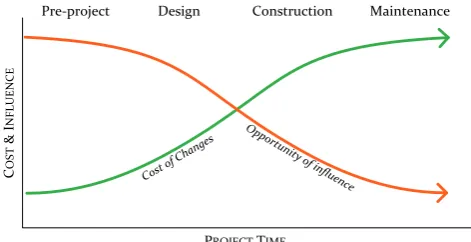
Figure 2 indicates the project stages and the opportunity to influence the costs. It illustrates that the influence on the outcome of the project is much easier in the beginning of the project. This makes the processes in the early project stages critical for the performance of the maintenance phase. However, the length of the maintenance stage and the high costs for changes make it critical to have a sound maintenance strategy. The maintenance stage of an integrated project is the stage where payments are received if the required performance is delivered. However, unforeseen circumstances can call for a change in the developed strategy because it is almost impossible to predict the future.
FIGURE 2:INFLUENCE ON PROJECT COST OVER VARIOUS STAGES (WINCH,2002)
PROBLEM STATEMENT
It is difficult to design a maintenance strategy that predicts or handles all influences for the upcoming years (>15 years) of maintenance. The ever changing environment makes it necessary to design a flexible maintenance strategy. Moreover, the more frequently use of integrated contracts makes this situation a strategic issue for construction companies. Therefore, the aspects that need to be controlled to steer the maintenance stage for integrated projects are proposed as the central problem of this study project. The focus is on infrastructural projects.
Problem Statement
“The design of a maintenance strategy for an integrated contract is difficult because of the future influences on the project and the inexperience of which aspects need to be controlled to influence the maintenance stage in such a way that the performance of the project will improve.”
OBJECTIVES
As stated above, there is a need for insight into the effects of maintenance strategies on the performance and the way the strategies can be influenced to improve the value of an infrastructure
Opportunity of influence
Cost of C hanges
PROJECT TIME
C
OST
& I
NFLUENCE
[image:14.595.191.427.389.510.2]Page | 6 system. By summarizing these factors, insight in the relation between the maintenance strategy and the maintenance situation of the system can be given. This will improve the efficiency and effectiveness of work packages and work processes.
The current situation at the BAM (and the whole construction industry) is that the aspects that influence the maintenance performance and their degree of influence are not known for integrated contracts. The first objective is to list aspects that can control the maintenance performance during the maintenance stage according to literature. Based on this knowledge measures to influence these aspects and how to control maintenance performance can be attained. For the BAM the costs for maintenance are an important aspect of projects. Therefore the objectives of this study are to identify the aspects that influence the maintenance costs of integrated contracts and which measures can be taken to optimize the maintenance strategy. This can eventually lead to the identification of process-based Key Performance Indicators (KPIs) for the BAM that need to be controlled to optimize the performance-cost relation of the maintenance stage.
The relevance of this study can be described scientifically and practically. The practical relevance of this study is the learning effects of future improvement programs for the BAM. It will contribute to the development of maintenance management which is one of the recommendations made by Infraspeed (2007). Improved knowledge about how to optimize the maintenance strategy gives the BAM an advantage in keeping the lead over the competition. Knowing what aspects are important to control (when unforeseen situations occur) will increase the appearance towards the client as well as the end users. It also fits in with the recent developments in the construction market. Creating a link between literature and the practical situation gives the scientific relevance of this study. It gives a practical contribution to literature by indicating process based KPIs of the maintenance stage. The results can also lead to improved understanding of how the integrated contracts affect the maintenance stage.
RESEARCH QUESTIONS
The research questions to accomplish the objective are divided into one main research question supported by sub-questions.
Research Question
What processes does the BAM need to control in the maintenance stage of an integrated infrastructural system to improve the performance of the maintenance stage?
In order to find answers to this research question the current practice at the BAM will be studied to find important learning experiences and aspects that need to be controlled. Before the cases can be studied it is necessary to understand what maintenance and performance measurement means. Therefore the following sub-questions are stated below with an explanation of the purpose of each question.
1. What is performance and how can it be measured?
This sub-question will give a definition of performance that is used in this study. It will give an overview of the indicators or Key Performance Indicators (KPIs) that are currently given in literature to define the performance of a system. Furthermore the possibility of how these can be used to decide on the execution of maintenance is studied. The knowledge gathered in literature will be translated into knowledge that can be used for the BAM.
2. Which maintenance strategies can be found in literature and what are the effects on the performance of an infrastructure system?
This sub-question will discuss the different maintenance strategies that can be used for maintaining a highway system and the effects on the quality and costs of the maintenance.
Objective
“Study the processes that the BAM needs to control in the maintenance stage to influence the maintenance strategy for an integrated infrastructure system, and to improve the
7 | Page
3.Which processes that influence the performance of an infrastructure system can be controlled? In the literature different aspects can be found to influence the performance of maintenance. Listing these factors and relate them to an infrastructure system will provide a framework that can be used to find important aspects that can be controlled.
4. What measures can be taken to improve the performance of the maintenance stage at the BAM? Once the most influential factors are know, they need to be controlled. This sub-question will provide measures that can be used to control the factors for the Royal BAM.
RESEARCH BOUNDARIES
Many stakeholders are involved in infrastructural projects, each with different possibilities of influence. The perspective and the possibilities of influence are therefore discussed first. Based on this information the research boundaries are discussed.
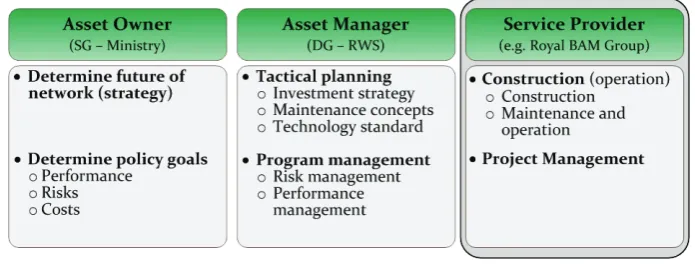
An infrastructural project is influenced by different stakeholders who all have another interest in the project. This means that each actor has different opportunities to influence the project. Asset management defines three important roles, asset owner, asset manager and service provider (
Perspective
Figure 3). The asset owner is in this case the Dutch government (read: Secretary-general). His objective is to determine the future of the whole infrastructural network by determining the policy goals. The objective of the asset manager – RWS (Director-general) – is to optimize the functioning of the infrastructure by determining the tactical planning and program management. The service provider – Contractor (e.g. Royal BAM Group) – is the private party (mostly a consortium) that executes the construction and maintenance of the project. Between the three parties agreements are made about the performance of the asset. Figure 3 gives a simple overview of the relation. The ministry and RWS make agreements based on Service Level Agreements (SLAs). RWS makes in turn agreements with the service provider based on a performance based contract (e.g. DBFM). The service provider has to perform as agreed, that is by meeting the performance, efficient planning and defining budgets. The mission of the service provider can be generally defined as optimal execution of the realizations and maintenance of the project.
FIGURE 3:DIFFERENT ROLES FOR INFRASTRUCTURE ASSET MANAGEMENT (VAN DER VELDE,2010)
This study is executed based on the perspective of the service provider, more specifically from the perspective of the project management. The maintenance department is responsible for maintaining the infrastructural asset but the project leader is responsible for the whole project. Project Management will be the actor that will benefit the most because the involvement throughout the project.
An integrated contract is a complex contract which is explained in detail in appendix B. For the purpose of this study the agreements made between the Special Purpose Company (SPC) and the maintenance contractor are taken as research boundary.
The maintenance phase in construction projects is becoming more important for construction companies due to the new market approach of RWS.
Single Infrastructural project
[image:16.595.118.466.433.565.2]Page | 8 combination of tasks can be optimized (e.g. various life cycle activities for the same asset of activities on various components of an asset), and the activity program delivery, such as work bundling and resource levelling, can be optimized. In this study the life cycle of a single infrastructural project is analyzed, the optimization of the activity program of the service provider is not considered. That is, only the activities related to the project are considered, and not the optimization of similar activities of other projects. The specific maintenance processes for the project are analyzed by first designing a framework, with a focus on the maintenance phase.
FIGURE 4:RESEARCH BOUNDARY (THE INSTITUTE OF ASSET MANAGEMENT (IAM),2008)
2.2
T
ECHNICAL RESEARCH FRAMEWORKThe technical framework is described to give the methods that are used to realize the goals of the conceptual framework. Hence, this chapter answers the question of how the study is executed. This is done by first describing the research strategy. Thereafter the research methods are discussed.
The design of this study is a combination of a development- and design oriented approach (van Aken, et al., 2007). A development oriented approach is described as a step-by-step learning approach, each step is based on what is learned in the previous step. A design oriented approach can be described as a learning-before-doing approach. A dialogue with the BAM is used to get information on the problem, to get feedback on the proposed solutions and to develop acceptance. It was not possible to design a valid model of the future system and expected performance, therefore the use of a development oriented approach is used. The design of the first step is easier than producing the complete and final design, and thereafter the subsequent steps on the basis of experiences gained in the process. In this study a combination is used by designing a pilot implementation of the N31–Wâldwei to design the first step, followed by up-scaling the step to the PPS-A59 on the basis of the lessons learnt at the N31-Wâldwei. Another important dimension for this choice is the availability of data. It was reasonable to expect that data could not be made available because the little experience with integrated contracts and little availability of historic data. A development approach is therefore preferable.
RESEARCH STRATEGY
The research strategy defines the related decisions at large about the way the study is executed. The five most important strategies are according to Verschuren en Doorewaard (2007): survey, experiment, case study, a well-founded theory approach, and a desk research. In this study the case study and desk research are used. Literature is used as framework for studying the cases. For the gathering of data the principal of open data collection is used. The framework is developed
Life Cycle Activities
Portofolio of Assets & Systems (Types, projects)
Design
Construct
Maintain & Operate (current phase)
Dispose/renew
Specific maintenance interventions (cost/benefit/risk/timing) Asset life cycle
optimization (cost/performance/risk)
Activity programme optimization (cost/benefit/risk/timing) Acquire
Pilot Project Other
Project ProjectOther
9 | Page
based on the experiences during the study. First an open-ended interview method is used for gathering information followed by a more structured interview for analyzing the data.
Desk research is firstly used to examine literature on performance measurement, maintenance strategies and other related topics to understand the current available knowledge and to create understanding for the situation of the cases. The desk research is also used to study the project documentation available at the BAM about the cases. The employees involved in the maintenance stage of the cases are limited which makes the desk research important to study the projects. Both the literature based knowledge and the practical knowledge are used to develop the framework for analyzing the cases.
Desk Research
A case study is used to get a profound and complete understanding of objects and processes of “real world” events. It is labour-intensive because often interviews with open ended questions are used, but it is an appropriate method because it is feasible within the available time (6 months). It is not necessary to have a high level of preliminary structure and it gives an interesting view on the case for a junior researcher. According to McCutcheon (
Case study
1993) it is “an objective, in-depth examination of a contemporary phenomenon where the investigator has little control over events”. In this study the main focus is not to describe the maintenance situation but more on identifying decisions; why where they taken, how are they implemented and what is the result of the decisions. Using the terminology of Yin (1989) the cases in this study can be considered as “descriptive” as well as “explanatory”. The potential output for “descriptive” case studies is the description of events and outcomes to understand the processes and environment. This is achieved based on conversational interviews with the operator. The research goals for explanatory case studies focus on the identification of factors that appear to influence a particular process, which is comparing the theory with the actual values. The more standardized open-ended interviews are used for this.
Case selection: N31–Wâldwei & PPS-A59
An important condition for selection of cases is that the project is an infrastructural DBFM-project in the maintenance stage. Furthermore, the availability of project documentation and the possibility of interviewing employees are important conditions. The selection of the cases is based on the following selection criteria.
Infrastructural DBMF-project; Project is in the maintenance stage; Possibility to interview employees; Availability of project documentation.
For this study two cases are analyzed, N31-Wâldwei and PPS-A59. This is a small number, but these are the only two projects currently available based on the conditions mentioned above. Case interviews
Relevant information is studied by using project documentation and by interviewing project employees of the project N31 and A59. In order to prevent “bias” it is chosen to interview employees of different management levels. This means that interviews are held with project directors and maintenance managers or operators (these names are used alternately).
There are different types of interviews that can be used to gather the desired information. The informal, conversational interview has no predetermined questions and should be as open and adaptable as possible. This type of interview is used to get a preliminary view of both cases. It can be seen as an incremental improvement strategy, with the next step based on the lessons learned in the previous step. An interview with the operator of the N31 and the A59 has been used to get a preliminary overview of the projects.
Page | 10 of the employees “in the field” with the view of the management. The management is involved in the design of the plans, whereas the employees “in de field” are involved in the execution.
For the analysis of the cases there are according to Verschuren and Doorewaard ( Data analyses
2007) two possibilities: the hierarchical method and the sequential method. In this study the hierarchical method is used. First the separate cases are studied as if it is a singular case. The study of the cases is done based on a fixed pattern, this makes it possible to compare the two cases. In this comparison the similarities and differences are mapped and an explanation is searched. The results are discussed in expert meeting for validation of the results. Some aspects of the sequential method are also present in this study. First the project N31 is studied. Based on these results it is chosen to study the A59 also.
A disadvantage of this analysis is that the external validity is subjected to pressure. The use of two cases makes it difficult to explain the result in general terms. However, because this study is executed for just one organisation, the Royal BAM Group, it is not explicitly necessary to explain the results in general terms.
RESEARCH METHODS
The findings and conclusions in this study are based on different projects in a particular situation; it is therefore difficult to generate a general theory. The analysis of the cases will develop relevant problems, causes and consequences. That is, uncovering the causes of the problem (van Aken, et al., 2007). However, to justify the causes and the appraisal it is important to discuss the most important quality criteria: controllability, reliability and validity (van Aken, et al., 2007).
The controllability is the description of how the study is executed to enable others to judge the reliability and validity of the study. The research strategy discusses how the data is collected. The employees selected for the interviews are selected based on their function in the projects as described in the research strategy. The questions that were used during these interviews can be found in the appendix. Based on these descriptions it is possible to check how this study is executed. Furthermore, this study can be controlled by the structure of the report. This makes it possible to trace the steps that are taken. The results and the literature can also be traced back to its source.
Controllability
Reliability is the consistency of measurements derived from repeated observations of the same subject under the same circumstances. Using multiple sources and writing down the sources of information will increase the reliability of the study. The usage of a tape recorder helped to make the information collected with interviews more reliable. For the interview a list of specific questions that must be kept in mind is used to collect the data. These questions can be found in the interview protocol (Appendix E).
Reliability
Validity determines whether the research measures that what it was intended to measure. This is called construct validity. In other words, it is concerned with the study’s success at measuring what is set out to be measured. Internal validity concerns conclusions about the relationship between aspects. By using multiple sources, e.g. interviews and documentation, the validity (construct and internal) can be increased. Review of draft versions of the case study information will also help to increase the validity. This is done in collaboration with the BAM and the university.
Validity
11 | Page
The external validity is based on just two cases and the perception of four experts. The results and conclusions have therefore little external validity. To increase the external validity it is chosen to arrange an expert meeting to validate the results and to discuss the opportunities for usage at other related projects.
Expert Meeting
To increase the empirical relevance of this study the results are presented and discussed with experts during an expert meeting. Different methods can be used to elicit insights and experiences of experts. For example, everyone in the same room compared to ‘on the phone’ or ‘written’, experts that are familiar with each other or do not know each other, or strive to consensus or not (swanborn, 1991). In this study an expert meeting is used where the participants will be in one room. The participants know each other and all work at departments of the Royal BAM Group. The results of this study are first presented by the researcher, followed by a point-by-point discussion. This is first of all done for validation reasons. Next to this, it creates the possibility to make additional comments and to discuss the possibilities for usage at other projects.
Page | 12
3
T
HEORETICAL FRAMEWORK
In this chapter the literature that is used for developing a framework to analyse the cases is discussed. First of all the topic “Performance management” (3.1) is discussed. This section gives an answer to the first research question which discusses the definition and necessity of performance management. Furthermore the current (Key) Performance Indicators (KPIs) found in literature are discussed. This gives an overview of the current level of performance measurement according to literature. Section 3.2 discusses what maintenance is about and discusses the different maintenance strategies and their effects on the performance of maintenance. This section gives an answer to the second research question. Section 3.3 discusses what processes can be found in the maintenance stage and how this can be modelled to measure performance. The last section (3.4) discusses which choices have been made for the development of a research framework that is used in this study.
3.1
P
ERFORMANCE MEASUREMENT“The performance management process is the process by which a company manages its performance in line with its corporate and functional strategies and objectives” (Bititci, Carrie, & McDevitt, 1997). The process by which a company manages its performance can be defined as the quantification of the efficiency and effectiveness of actions (Neely, Gregory, & Platts, 1995). It determines how successful an organization is in attaining their objectives by monitoring and diagnosing (Atkinson, Waterhouse, & Wells, 1997). This means that the basis of performance measurement is that unless a score is kept, it is difficult to know whether you are winning or losing (Kutucuoglu, Hamali, Irani, & Sharp, 2001). It is the comparison of results against expectations with the objective to learn and do better (Paul Rouse & Putterill, 2003).
Performance, in this study, is defined as the choices that are made between the quality of a system and the needed (financial) means to attain the company objectives and targets. The performance of a system is primary defined in the contract and secondly in the corporate and functional strategies and objectives. A tight condition is that the contractual agreements are met at all times. According to Dell’Isola (1997) it is impossible to define maximal performance, only an optimal performance can be reached by minimizing costs and maximizing functionality and quality. The three parameters are derived from definitions of Dell’Isola (1997):
Functionality: The specific function that fits the requirements of the contract. These are the tight conditions defined in the contract that need to be met.
Quality: The expectations and requirements of the (end) users.
Cost: The total maintenance cost
Quality can be seen from different perspectives, for example from the (end) users, the client, the environment, or the contractor. In this study the perspective of the contractor is used. What quality is and how it is controlled is defined in the maintenance strategy of the contractor. The two situations that lead to an optimal performance in this situation are reducing the cost or/while increasing the quality. In section 3.2 the strategies that can be used to reach this situation are discussed.
13 | Page
align the company mission, strategy and the objectives by linking these throughout the organization and to make them measurable by reporting the critical success factors and other indicators. Nevertheless, performance measurement is valuable for various reasons that are discussed next.
VALUE OF PERFORMANCE MEASUREMENT
Tracking the performance of maintenance is a key management issue for organizations that spend a significant amount on the operating budget, like infrastructural assets. During a study of the APQC (American Productivity & Quality Centre) in 1996 two observations about performance management have been made which shows that companies that measure performance have lower maintenance cost and lower proportions of reactive maintenance (Tsang, Jardine, & Kolodny, 1999). The performance measurement makes them more aware about the influences on the maintenance phase. This example shows the importance of performance measurement. However, companies that do measure performance rely according to Nudurupati et al. (2007) mostly on traditional performance measures. The characteristics of the measures are dominated by financial or other backward-looking indicators such as profitability, return on investment, and utilization. Relying on these indictors makes that factors that created value are difficult to consider, and that little notion is taken about the asset creating, growth and maintenance. As a result, they have poor measurements of innovation, learning and changes, and they concentrate on immediate rather than long-term goals, which are important for the maintenance of assets.
According to Kutucuoglu (2001) is performance measurement about determining how successful an organization is in attaining their objective. Drongelen & Cook (1997) enlarge this definition by also including the acquisition and analysis of information. They also mention that the factors that influence that attainment can be included as well. That is, measurement is needed if a process needs to be evaluated based on what you want to achieve. If you want productive maintenance, then measurement of maintenance productivity is needed. If you want to achieve strategic maintenance, then constantly review of the strategic objectives is needed. If you want to get continuously improvement, then you need to compare the maintenance with peers and learn from the most successful peer. Comparing the actual cost to a ‘static’ standard cost is not compatible with the philosophy of continuous improvement. That is, setting a budget and try to stay within the budget is not an example of continuous improvement. Trends as well as deviations from the ‘standard’ could be identified. If a ‘standard’ is established, then it should be based on the best-in-class instead of the organizations historical performance level. The difficulty in the construction industry is that the best-in-class needs to be established first. This can be done by continuously improving the historical performance.
For integrated projects there is little information about the historical performance since only a few projects are on the market. The ‘standard’ could be to be set by determining deviations from the predetermined budget and considering the deviations in the expenditures for maintenance.
PERFORMANCE MANAGEMENT FRAMEWORKS
The simplest form of performance measurement is the Deming circle (Deming, 1994). This circle describes the four phases ‘plan’, ‘do’, ‘check’, ‘act’ which are needed for continuous improvement. There is not a general framework that measures performance as can be seen by the development of many frameworks by different authors in the past. A general aspect of all frameworks is that they try to integrate different factors that are critical to success of a business. The traditional financial perspective does not integrate all factors; therefore also non-financial factors are often included. Performance measurement frameworks that do include other factors are the Balanced Scorecard (Kaplan & Norton, 1996, 1998), Performance Pyramid SMART (Strategic measurement analysis and reporting technique) (Cross & Lynch, 1988), input-output framework (Brown, 1996), and Performance Measurement matrix (Keegan, 1989).
Page | 14 interrelationships between measures. This makes performance measurement difficult. For example, the output of maintenance activities has to meet different requirements. The question is which requirement is more important, the economic requirements or the environmental requirements? Furthermore, the measurement of quality needs more than only quantitative measures. The time before a maintenance activity is executed after reporting is not telling anything about the quality of the activity itself.
Before a suitable framework can be given, the maintenance stage should be analyzed first. The complexity of the framework depends on the number of inputs and outputs that are used. For single-input and output cases, the operational performance can be analyzed as the ratio of output to input. A complex case of different units of measures can occur with multiple inputs situations (or output situations). An example is comparing maintenance performance of highway systems. The inputs can include available kilometres or trips per day, traffic conditions, geometry of the highway or even contract conditions. Outputs could be maintenance cost per car or costs for routine maintenance activities. This example shows that the units of measures are diverse and complex. Tsang (1999) defines performance analysis as the measurement and comparison of levels of achievement of specific objectives. Before the framework used in this study is given, the measures and indictors available in literature are discussed.
MAINTENANCE KPIS FOUND IN LITERATURE
Many companies in the construction industry rely on traditional performance measures based on the ‘iron triangle’ such as profitability, return on investment (ROI), utilization, etc (Nudurupati, et al., 2007). Today indicators that consider client satisfaction, health and safety are also becoming important (Bakens, et al., 2005). Techniques such as Total Quality Management (TQM), benchmarking, business process re-engineering (BRP) and process management have shifted the focus from ‘lagging’ to ‘leading’ indicators (e.g. health and safety) (Kagioglou, et al., 2001). In the construction industry the use of Key Performance Indicators (KPIs) has been proposed to give benchmark information for finding the best in class. The result is that there are different programs in several countries that try to develop performance indicators.
The Construction Best Practice Programme (CBPP) launched 12 headline KPIs. These were broken down into KPIs at operational and diagnostic levels. The headline KPIs are used to measure the overall business state while the operational KPIs are used to measure specific activities that enable management to identify and focus on areas of improvement (Nudurupati, et al., 2007). Some authors criticize these KPIs because they are all lagging indicators that do not provide opportunities for change. The continuous process of maintenance makes these lagging indicators less useful in the maintenance stage.
In manufacturing industry literature an outline of common performance indicators is provided which usually represents the operational view of maintenance according to Kutucuogulu (2001). Maintenance is generally measured by the impact on flexibility, quality, costs, environmental and employee safety. Some other examples of performance ratios include availability, mean time to failure, manpower utilization and overall maintenance cost effectiveness. These measures can provide a balanced view of the maintenance system but are likely limited for the operational and tactical aspects of infrastructure maintenance. Next to this, the information needed for these indicators is not available. Other types of indicators consider the maintenance efficiency (e.g. total production time), task efficiency (e.g. number of completed tasks), organizational efficiency (e.g. time planned for scheduled tasks) or profit/cost efficiency (e.g. total maintenance cost) (Kutucuoglu, et al., 2001). Sharp et al. (1997) identified critical success factors associated with maintenance. They showed that improved maintenance performance can be achieved by the use of total productive maintenance. Total productive maintenance is about the overall equipment effectiveness (OEE) which is defined as a function of equipment reliability, quality rate and equipment performance efficiency (Kutucuoglu, et al., 2001).
15 | Page
and support responsiveness. This makes that an operator will need other indicators than the management of infrastructural projects.
PERFORMANCE MEASUREMENT AND MAINTENANCE
The development of performance measurement and related indicators is not simple as is seen in the previous section. A short preview into the characteristics of maintenance is described here to make clear that the performance measurement for maintenance is complex. These characteristics are the degree of complexity, the degree of independency, and the degree of recognisability (Schoenmaker, 2011). The complexity is caused by the choices that have to be made between alternative measures. The independency is influenced by the dependency of other parties in the project, for example for information and authorisation. The degree of recognisability is influenced by retrieving the sources of failures, the time and costs that are needed to repair the failures, and the probability of the necessity of future planned maintenance. Furthermore, the effects of maintenance activities are not always visible during the project. These characteristics will be further discussed in section 3.2 and 3.3. The development of performance indicators is difficult due to the multiple objectives, the objectivity, the measurability and transparency of maintenance. The short outline above about the maintenance phase provides some KPIs that could be used for maintenance but none are about maintenance as a process. It is therefore difficult to point out how processes contribute to the performance of the maintenance stage. Nonetheless, the performance of processes is seen as one of the main contributors to the performance of maintenance projects. A simple analogy is the result of a football game. If only the score of the game is measured than this does not tell anything about how the game is played. The performance of the team is known but if the game needs improvement than it is difficult to optimize. The result (score) does not give any information about the used ‘process’ during the game (Kagioglou, et al., 2001). Research into the important processes of maintenance can therefore help to indentify maintenance related KPIs. Some construction companies do use process measures but they face difficulties in measuring the diverse and complex processes in construction and engineering activities (Herbert S. Robinson, Chimay J. Anumba, Patricia M. Carrillo, & Al-Ghassani, 2005). Difficulties for measuring performance of maintenance will follow in the next sections.
3.2
M
AINTENANCE STRATEGYIn the previous section it is mentioned that performance measurement about determining how successful an organization is in attaining their objectives. In this section the second research question is discussed. First of all the objective of maintenance is described. This is done by first discussing what maintenance is. Thereafter different maintenance strategies are discussed together with their intended effects on the performance. The discussion shows what strategies can be used to reach an optimal performance of maintenance.
OBJECTIVE OF THE MAINTENANCE STRATEGY
The maintenance stage is a primary function of infrastructure management and is generally the longest phase of integrated construction projects. It is required from the moment the asset has been constructed and is ready for use. The maintenance stage is about ensuring that the assets are adequately maintained and protected to deliver the required level of service, condition and performance (Too, 2008). Maintenance is needed to compensate the effects of general use and external influences. External influences can be described as the ageing, the penetration of substances in materials by the use of salt, chloride or ultraviolet rays. The effects of general use can be seen by the wearing of parts, failures, and the decrease of performance (Schoenmaker, 2011). The predictability of these effects is difficult which makes the predictability of maintenance activities even more difficult.
Page | 16 Maintenance can be divided in regular and large maintenance activities on an operational level. On a strategic level choices about the maintenance strategy are made. This is described in the section about ‘Maintenance strategy’. Regular maintenance activities are based on the repair of low severity defects, are carried out to reduce the speed of deterioration, and are necessary to keep the asset at the agreed functionality. These activities are performed on a daily basis. Example: the cleaning of the road and small repairs. For all these activities there is a yearly budget, and can also be called fixed maintenance. Large maintenance activities are aimed to repair the high-severity defects, are carried out on a regular basis (e.g. yearly) to restore the quality, and can be seen as an independent project. Example: resurfacing asphalt. These activities do not occur every year, in other words the activities are variable. These activities are mostly planned.
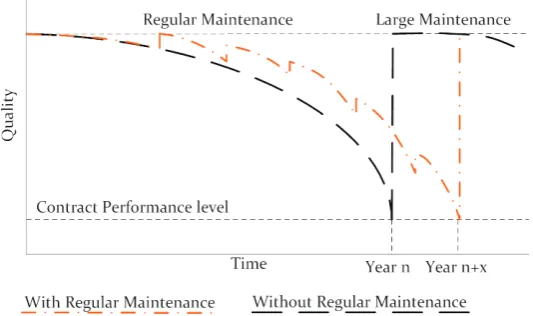
Figure 6 shows the interaction between regular and large maintenance on the quality of a road. The relation with maintenance costs is described next. A short interval of regular maintenance leads to high costs; an object is replaced while it could be repaired with little costs. The constant
execution of regular maintenance is only possible if the total maintenance cost of regular and large maintenance is minimal. If this is not the case, than the cost of regular maintenance is increasing faster than the cost of the replacement of the object. Therefore, the essence of maintenance can be described as: “The essence is influencing the objectives that a company tries to reach with the system by executing maintenance or not, during the user phase of a system”. The strategic aim is to perform the right maintenance activities on the right time as to optimize the total benefit-cost relationships of a system over its lifetime.
MAINTENANCE STRATEGIES
The strategic choices that are needed by the planning of the different maintenance activities are based on different approaches. Traditionally, there are two primary approaches to achieve the maintenance objectives. Preventive maintenance is used to reduce the probability of failure in the time period after maintenance has been applied. Corrective maintenance strives to reduce the severity of equipment failures once they occur (Löfsten, 1998). The PASS 55 (The institute of Asset Management (IAM), 2008) describes corrective actions as actions that are used to eliminate the cause of a detected nonconformity or other undesirable situations. Preventive actions are used to eliminate the cause of a potential nonconformity or other undesirable potential situation.
FIGURE 6:REGULAR AND LARGE MAINTENANCE (VONK,2006)
[image:25.595.161.434.79.156.2] [image:25.595.166.433.362.520.2]17 | Page
FIGURE 8:CLASSIFICATION OF MAINTENANCE.(SCHNEIDER ET AL.,2006)
The maintenance activities described above can be performed based on different strategies in order to reduce the possibility of a particular failure mode. They can be divided into different approaches which have great impact on the maintenance cost and asset availability. A variety of diagnost