Review
Chaperoning the Mononegavirales: Current
Knowledge and Future Directions
Victor Latorre 1#, Florian Mattenberger 1# and Ron Geller 1,*
1 Institute for Integrative Systems Biology (I2SysBio), Universitat de Valencia-CSIC, 46980 Valencia, Spain;
[email protected]; [email protected] # Equally contributing authors
* Correspondence: [email protected]; Tel.: +34-963-543-187
Abstract: The order Mononegavirales harbors numerous viruses of significant relevance for human health, including both established and emerging infections. Currently, vaccines are only available for a small subset of these viruses and antiviral therapies remain limited. Being obligate cellular parasites, viruses must utilize the cellular machinery for their replication and spread. Therefore, targeting cellular pathways used by viruses can provide novel therapeutic approaches. One of the key challenges confronted by both hosts and viruses alike is the successful folding and maturation of proteins. In cells, this task is faced by cellular molecular chaperones, a group of conserved and abundant proteins that oversee protein folding and help maintain protein homeostasis. In this review, we summarize the current knowledge of how the mononegavirales interact with cellular chaperones, highlight key gaps in our knowledge, and discuss the potential of chaperone inhibitors as antivirals.
Keywords: Mononegavirales; Chaperones; Antivirals; Hsp70; Hsp90; CCT; Respiratory syncytial virus; Measles virus; Mumps Virus; Rabies virus; Ebola virus.
1. The Mononegavirales:
The viral order Mononegavirales is comprised of 8 families, of which 4 regularly cause human disease: the Filoviridae, which includes the highly lethal Ebola (EBOV) and Marburg (MARV) viruses; the Paramyxoviridae, which includes measles virus (MeV), mumps virus (MuV) and parainfluenza virus (PIV); the Pneumoviridae, which includes the common respiratory pathogens respiratory syncytial virus (RSV) and metapneumovirus (MPV); and Rhabodoviridae, which includes rabies virus (RABV) that can cause fatal encephalitis in > 95% of untreated cases [1]. Viruses from this order impose significant global morbidity and mortality, and include some of the most infectious viruses (MeV), the most lethal (EBOV and RABV), and the most common viruses (RSV). In addition to causing well-established infections in human populations, emerging pathogens, such as Nipah and Hendra viruses [2], as well as viruses causing reoccurring outbreaks, such as EBOV [3], illustrate the relevance of this virus order to human health. While effective vaccines are licensed for some Mononegavirales (e.g. MeV, MuV, RABV), most lack vaccines and no effective antiviral therapeutics are available. Hence, there is a pressing need for a better understanding of the biology underlying the replication of the Mononegavirales in order to develop novel therapeutics.
While highly diverse, the Mononegavirales share many common features. The genome of all members is comprised of a non-segmented, linear negative-strand RNA of up to ~19Kb [4,5]. It is non-infectious and lacks a cap structure, linked proteins, or polyadenylation. A 3’ leader (le) sequence and a 5’ trailer (tr) sequence flank the genome and regulate transcription and replication. The genomes encode 5-10 genes, arranged in individual transcription units, and transcribed viral mRNAs are both capped and polyadenylated [4]. As transcription initiates exclusively at the 3’ end of the genome and is sequential, a 3’-to-5’ expression gradient is observed. Gene order is well conserved
among the Mononegavirales, reflecting a need for stoichiometric expression of particular proteins. While most genes give rise to a single product, up to 3 proteins can be produced from some genes depending on the viral family [4].
All Mononegavirales encode a set core of structural genes: a nucleocapsid protein (N or NP in the Filoviridae), an RNA dependent RNA polymerase (L), an essential polymerase cofactor (P or VP35 in the Filoviridae), a matrix protein (M or VP40 in the Filoviridae), and envelope glycoproteins [5]. N/NP is an RNA binding protein that encapsidates the viral RNA, each subunit binding to several RNA bases (6-15 depending on the virus), resulting in thousands of N proteins encapsidating each genome and protecting it from degradation [6]. L is a unique protein among both viruses and hosts, being a large (>2000 amino acids), multi-domain protein that performs RNA dependent RNA polymerization, 5’ capping, and 3’ polyadenylation of viral mRNAs [7]. The P/VP35 proteins act as essential polymerase cofactors that bridge the interactions between the L and N proteins, and also as chaperones for monomeric N/NP, preventing self-association and non-specific binding to cellular RNA [6,8]. Together with viral RNA, these three proteins (N, P, and L) form the nucleocapsid (NC), a ribonucleoprotein complex that mediates RNA transcription and replication, and forms the core of the virion. The M/VP40 protein lines the inside of the viral envelope and coordinates binding of the glycoproteins with the NC in the virion [9]. Finally, the membrane glycoproteins encoded by Mononegavirales mediate binding to cellular receptors and fusion of the viral envelope with cellular membranes to deliver the NC into the cytoplasm [5]. Depending on the viral family, these functions can be encoded by a single glycoprotein (G; filoviruses and rhabdoviruses), or can be split between 2 different proteins, a receptor binding glycoprotein [termed glycosylated (G), hemagglutinin (H), or hemagglutinin/neuraminidase (HN) depending on the virus family] and a fusion (F) glycoprotein [5].
Aside from these common core proteins, several additional structural and non-structural proteins are encoded by some Mononegavirales. The different structural proteins include essential transcription enhancers (M2-1 in pneumoviruses and VP30 in filoviruses), a minor matrix protein in filoviruses (VP24), and an integral membrane protein in pneumoviruses and some paramyxoviruses (SH) [5]. As all viruses must combat cellular antiviral defenses, some Mononegavirales further encode dedicated non-structural proteins that interfere with antiviral mechanisms, such as the NS1 and NS2 proteins of RSV, and the C and V proteins present in certain paramyxoviruses. However, it is important to note that viral proteins are multi-functional, and even structural proteins can play a role in modulating host responses [10]. Hence, with these 5-11 proteins, Mononegavirales succeed in usurping the host cell to replicate their genomes, disarm host immune mechanisms, and successfully transmit from host to host.
Devising novel antiviral approaches requires a detailed understanding of viruses and their interaction with the host. Due to the paucity of proteins encoded by the Mononegavirales (and RNA viruses in general), it is not surprising to find that these viruses utilize a great number of host cell processes for successful replication. Moreover, studies have shown a selective interaction with cellular proteins that comprise central hubs within pathways, allowing for the few viral proteins to coordinate large changes in cells [11,12].
2. Protein folding, a common challenge for viral and hosts
may be delayed until full domains are synthesized or, for oligomeric proteins, until the assembly of protein complexes. All of these events take place in a highly crowded environment [14], further favoring aggregation and misfolding. Finally, cellular stress conditions, such as elevated temperatures or oxidation, can promote misfolding and aggregation [15].
Not only is protein folding complex, but errors in this process can have grave consequences for cells, resulting in loss of function of the misfolded protein and the formation of toxic aggregates in cells [15]. In addition, as ~10% of energy in cells is consumed by translation [16], errors in protein folding can be energetically costly. To avoid potentially dangerous and costly errors in protein folding, cells are equipped with an extensive network of cellular proteins that oversee protein folding and maintain protein homeostasis (proteostasis), collectively termed molecular chaperones. The chaperone network (chaperome) is estimated to comprise >340 proteins in human cells [17] and constitute ~10% of total cellular protein mass under normal conditions [18].
Several features of RNA viruses may render them particularly likely to depend on chaperones for successful replication. First, limited by their genetic coding capacity, RNA viruses encode few proteins that coordinate an astounding array of functions; this likely necessitates unique and complex structural features. Indeed, viral proteins have been shown to have unique biochemical properties [19]. Second, RNA viruses hijack the cellular machinery to rapidly produce high-levels of very few viral proteins, which may saturate particular folding pathways required to fold these. Third, viruses rely heavily on the formation of multimeric complexes comprised of thousands of proteins, such as the NC of the Mononegavirales or the virion matrix network. Finally, RNA viruses replication is extremely error-prone and thus generates an array of mutant proteins [20]; as most mutations are destabilizing for folding [21], a hyper-dependence on chaperones for maintaining functionality of proteins is likely. Hence, it is not surprising to find that viruses have evolved to universally employ chaperones for the folding of their proteins. However, despite the numerous studies carried out to date on virus-chaperone interactions, the role of a relatively small fraction of the chaperome has been investigated. In this review, we provide a brief summary of the human chaperome and the current state of the knowledge of how members of human Mononegavirales interact with these key cellular factors, highlighting gaps in our knowledge. Finally, we discuss the potential of chaperone inhibitors as antiviral drugs.
3. The human chaperome
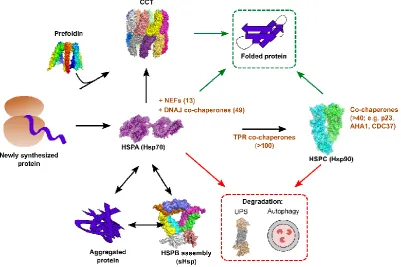
The task of the chaperome is to oversee the correct folding of newly synthesized proteins, attempt to refold misfolded or aggregated proteins, and interface with cellular degradation pathways to maintain proteostasis, including the ubiquitin-proteasome system (UPS) and autophagy [15,22– 24]. This is accomplished by a set of relatively few ATP dependent core chaperones, together with a large network of co-chaperones that provide client specificity, regulate chaperone activity, and provide links to different proteostasis components. Many chaperones are upregulated under conditions of stress to help maintain proteostasis, and failure to do so can result in apoptosis, directly linking chaperone function to cell viability [25–28]. Below is a brief summary of the human chaperome (Figure 1).
3.1. The HSPA chaperone family
stressed induced (Hsp70s) or constitutively expressed (Hsc70). These share a similar domain organization, with an N-terminal ATP binding and hydrolyzing domain and a C-terminal substrate binding domain which are connected by a hydrophobic linker [28]. In addition, HSPAs can have N-terminal localization motifs, as well as variable C-N-terminal sequences that mediate co-chaperone binding. HSPAs recognize short protein stretches enriched in hydrophobic residues that are typically buried in protein cores [32]. The chaperone cycle of HSPAs is dependent upon interaction with co-chaperones, nucleotide exchange factors (NEFs), and ATP [28,29]. In the ATP-bound state, HSPAs show low affinity and fast exchange rates of clients; in contrast, in the ADP bound state, HSPAs show high affinity and slow exchange rates. Client protein delivery is mediated by DNAJ domain containing co-chaperones (DNAJs or Hsp40s), which transfer the client to ATP-bound HSPA and stimulate ATP hydrolysis [33]. This yields a stable complex of ADP-bound HSPA with the client protein. Completion of the cycle is facilitated by specific NEFs, which stimulate the exchange of ADP for ATP, resulting in client release [34].
The complexity of the HSPA chaperone system stems from the large number of co-chaperones that regulate its ATPase activity, client binding, and which provide a link to other cellular proteostasis systems. For example, there are 49 DNAJ co-chaperones in humans. These share a conserved J domain that binds HSPAs and stimulates ATP hydrolysis [33], but are otherwise divergent, allowing for binding and delivery of a wide range of clients; networking with distinct chaperone systems (e.g. HSPB/small heat shock proteins and HSPC/Hsp90; see below), ribosomes, clathrin-coated vesicles, the UPS, as well as autophagy; facilitating HSPA disaggregation activity; and participation in the process of protein import into organelles and export of misfolded proteins from the ER [23,24,30,33]. In addition to DNAJs, >100 co-chaperones with tetratricopeptide repeat (TPR) domains interact with both HSPAs and Hsp90, providing a link between these systems [17,35].
As with the DNAJ co-chaperones, NEFs also confer specialized functions to this chaperone system. Four divergent families of HSPA NEFs can be found in human cells: the bacterial homologues of GrpE (two in the mitochondria); the Hsp110 NEF family (three cytoplasmic and one in the ER), the armadillo repeats containing NEFs (one cytoplasmic and one in the ER); and five BAG domain containing NEFs in the cytoplasm and nucleus [34]. While all stimulate the exchange of ADP for ATP, specialized functions have been attributed to specific NEFs. For example, Hsp110 NEFs have been implicated in protein disaggregation [24], and BAG domain NEFs have been shown to play a role in protein degradation by both the proteasome and autophagy [23,36].
3.2. The HSPB chaperone family
There are a total of 10 HSPBs (small heat shock proteins; sHsps) in humans [37], which are exclusively cytoplasmic and nuclear. These are characterized by their small size (12-42kDa) and by the presence of a conserved alpha-crystallin domain [38]. sHSPs form dynamic structures ranging from monomer to homo- and hetero-oligomeric complexes of up to 50 subunits. The assembly of sHSPs is important for their function and is regulated by post-translational modifications [37,38]. sHSPs do not utilize ATP and are thought to act as “holdases”, binding and assembling around misfolded proteins in order to maintain them in a conformation that is competent for refolding, disaggregation, or degradation by other chaperone systems [37].
3.3. The HSPC chaperone family
client binding occurs, and a C-terminal domain responsible for dimerization and where numerous co-chaperones bind [39].
As with the HSPAs, the chaperone cycle of HSPCs is regulated by ATP and a large array of co-chaperones [27,39]. In the nucleotide-free state, the chaperone adopts an open V conformation, with the C-terminal domains dimerized and the N-terminal domains open, allowing for interaction with client proteins. ATP binding induces structural rearrangements that result in the association of the N-terminal domains, adopting a closed structure that stimulates ATP hydrolysis. Subsequently, ADP release results in the return to the open conformation.
The cytoplasmic HSPCs (hereafter referred to as Hsp90) act post-translationally to facilitate the folding and stabilization of client-proteins. These include many key kinases, transcription factors,
and steroid hormone receptors (for an updated list see
https://www.picard.ch/downloads/Hsp90interactors.pdf), and tend to be metastable, being rapidly
degraded upon Hsp90 inhibition. Hsp90 binds client proteins downstream of the Hsp70 system, with co-chaperones harboring a TPR domain providing a link between these two systems [35,39]. Interestingly, Hsp90 was recently shown to play a key role in supporting protein folding of Hsp70 client proteins, breaking the Hsp70-client cycle to allow for subsequent folding [40]. In addition to TPR domain co-chaperones, numerous other co-chaperones regulate Hsp90 activity. These include proteins that stabilize the open conformation, favoring client loading, such as STIP1 and CDC37; AHA1, which stimulates ATP hydrolysis; and p23, which stabilizes the closed state [39]. Finally, the co-chaperone CHIP links Hsp90, Hsp70, and the UPS [39].
Of all the chaperones, the role of Hsp90 in viral replication is best studied [41,42]. This is largely due to the availability of highly specific inhibitors [26,43], which facilitate testing whether this chaperone system is involved in the replication cycle (Table 1). In addition, the identification of viral proteins that interact with Hsp90 is aided by the fact that many client proteins are degraded upon Hsp90 inhibition, helping unmask the relevant viral client protein, as well as the ability to isolate Hsp90 in complex with client proteins. To date, Hsp90 seems to be universally employed by viruses for their replication, with the exception of the picornavirus hepatitis A [44].
3.4. The chaperonin CCT
Two different chaperonins exist in human cells. The type I chaperonin (Hsp60) is found in the mitochondria together with its co-chaperone Hsp10. The type II chaperonin, the chaperonin containing tailless complex polypeptide 1 [CCT; also known as TCP-1 Ring Complex (TRiC)], is found in the cytoplasm. CCT is a 1MDa complex comprised of two back-to-back rings, each comprised of 8 different subunits, which form a cavity in which folding can occur in isolation from the cytoplasmic environment [45]. Each subunit contains three domains, an equatorial domain that mediates inter-ring interactions, a middle domain that binds and hydrolyzes ATP together with the equatorial domain, and an apical domain that binds client proteins. The apical domain harbors helical protrusions that form an iris upon ATP hydrolysis, isolating client proteins or individual domains within the chaperonin cavity. CCT is essential for viability and is estimated to help the folding of ~5-10% of proteins [46], including the key structural proteins tubulin and actin. Client-protein delivery to CCT can be mediated by interaction with Hsp70s or the co-chaperone prefoldin [15]. In addition, CCT can also support the formation of protein complexes. Despite its essential nature and unique chaperoning mechanism, CCT has been shown to be involved in the life cycle of relatively few viruses to date.
3.5. Folding in the endoplasmic reticulum (ER)
chaperone systems. Moreover, as ER stress resulting from the accumulation of misfolded proteins can lead to the suppression of cellular translation and cell death [25], viruses must carefully regulate their interaction with the ER folding machinery.
Nascent proteins enter the ER cotranslationally via the translocon, where they encounter a unique folding environment characterized by increased oxidative conditions and high calcium concentrations, helping to mimic the extracellular environment [47]. As in the cytosol, proteostasis is maintained by a set of chaperones; however, the ER lacks degradation capabilities and therefore misfolded proteins must be retro-translocated into the cytoplasm in a process termed ER-associated degradation (ERAD) [47,48]. Analogous systems to the cytoplasmic HSPA/Hsp70 and HSPC/Hsp90 are present in the ER to facilitate both protein folding and quality control. The ER Hsp70 system is composed of the Hsp70 BiP, 5 DNAJ co-chaperones, and two dedicated NEFs. It is an essential aspect of folding of all ER proteins, from their translocation into the ER, until their final maturation or their exit from the ER for degradation. The ER Hsp90 system is composed of Grp94 (HSPC4), which represents the major glycoprotein of the ER. Unlike cytoplasmic Hsp90, co-chaperones of Grp94 are poorly defined, and relatively few client proteins have been identified to depend on this chaperone for folding [47]. In addition to folding, Grp94 also plays a key role in quality control and ERAD [49].
The ER includes an additional chaperone system that acts in concert with the Hsp70 and Hsp90 systems to fold glycoproteins, the lectin-binding chaperone system [47]. It consists of the chaperones calreticulin and calnexin, N-glycan processing enzymes that prevent aggregation and premature export from the ER, and a UDP-glucose:glycoprotein glucosyltransferase involved in quality control. Additional factors, such as peptidyl-propyl isomerases and protein disulfide isomerases help in the folding and maturation of ER proteins. As in the cytoplasm, the ER proteostasis system is composed of an interconnected network that cooperates to regulate proteostasis [50].
co-chaperones help bridge these two chaperone systems. As for Hsp70, Hsp90 function is critically dependent on a large number of co-chaperones. The chaperonin CCT can either act downstream of Hsp70 to fold proteins or can receive client proteins from its co-chaperone prefoldin. Under conditions of aberrant folding or cellular stress, protein aggregates can form in the cell, and these are refolded by Hsp70 together with small heat shock proteins (HSPB/sHsps). Finally, both Hsp70 and Hsp90 can direct proteins towards cellular degradation machinery for their disposal (red arrows). Structures were produced using PyMol version 3.5.2 and are: Hsp70 (PDB: 2KHO), Hsp90 (PDB: 2O1V), CCT (PDB: 3IYF), sHSP (PDB: 1SHS), Proteasome (PDB: 5GJR).
4. Chaperone-Mononegavirales interaction
Numerous studies have investigated the role of chaperones in the life cycle of the Mononegavirales. Below is an up-to-date summary of known chaperone-Mononegavirales interactions.
4.1. Hsp70s in the life cycle of the Mononegavirales
A general indication for a role of Hsp70 and Hsc70 in the replication of the Mononegavirales is provided by the observation that these chaperones relocalized to sites of viral replication (cytoplasmic inclusion bodies) in cells infected with RSV [51,52], RABV [53,54] and MuV [55]. Early studies showed that pretreatment of cells with acute heat stress, which upregulates numerous chaperones, including Hsp70, increased polymerase transcription of NC purified from cells infected with either MeV or the related canine distemper virus (CDV) [56–59]. In addition, heat shock also stimulated virus production and resulted in the appearance of large plaques [59,60], supporting a role for chaperones in the virus life cycle. For MeV, this stimulation of transcription was shown to be directly mediated by the interaction of Hsp70 with the NC [57,61,62]. Specifically, the addition of blocking antibodies to Hsp70 reduced transcription from purified NC, while the addition of exogenous Hsp70 stimulated it [57]. Hsc70 was also shown to co-purify with isolated NC from infected cells. However, blocking antibodies to this chaperone or its addition to isolated NC had no effect on transcription, suggesting Hsc70 does not play a direct role in NC transcription [57]. Finally, overexpression of Hsp70 in cells increased MeV and CDV virus production [59–61,63]. Interestingly, NC that co-purified with Hsp70 from infected cells had higher transcriptional activity than those which did not co-purify with the chaperone, even if exogenous Hsp70 was added following purification, implicating additional cellular players [57].
The stimulatory effect of Hsp70 on MeV NC was shown to stem from its interaction with the N protein [62]. The interaction was localized to the unstructured C-terminal domain of N [62–64], where the polymerase cofactor also P binds N [64]. Biochemical analysis using purified proteins showed that Hsp70 alone has low affinity for the C-terminal domain of N but the addition of the DNAJ co-chaperone DNAJB1 was sufficient to stimulate Hsp70 ATPase activity and increase its affinity for N [65]. DNAJB1 itself did not interact directly with N, but a ternary complex could be isolated in the presence of Hsp70 [65]. It is important to note that the relevant DNAJ protein in the context of infection has not been identified. Interestingly, a naturally occurring mutation in the C-terminal domain of the MeV N protein significantly reduces its interaction with Hsp70 as well as the ability of this chaperone to stimulate NC transcription [62,64–66] and this virus has lower fitness [66]. Hence, for MeV and CDV, Hsp70 seems to play a role in transcription by interacting with the N protein, potentially regulating its interaction with P.
Nevertheless, inhibition of Hsp70 using a pharmacological inhibitor was shown to reduce EBOV replication in the context of a mini-genome system, where cells are transfected with a reporter genome together with the proteins required to form the NC (NP, P, and L), providing evidence for a role for Hsp70 in EBOV replication [67,68]. In addition to interacting with NP, Hsp70 was shown to co-purify with EBOV L and P complexes purified from insect cells [69].
A role for Hsp70 in RSV transcription has also been directly demonstrated. Inhibition of Hsp70 with either pharmacological inhibitors [70] or antibodies [51] was shown to reduce RSV transcription in cell lysates. Interestingly, despite the different strategies employed, both studies demonstrated that low levels of Hsp70 inhibition actually stimulated transcription, while higher levels were inhibitory, suggesting a complex interaction with this chaperone. For individual NC components, the RSV L protein was shown to bind two different Hsp70 isoforms (HSPA1 and HSPA4) in a proteomic study [70], and to co-purify with RSV L and P complexes isolated from insect cells [70]. In addition, Hsp70 was found to interact with both N and P in RSV infected cells [71]. Interestingly, unlike what is observed with NC from infected cell lysates, transcription mediated by RSV P:L complexes isolated from insect cells, which co-purify with Hsp70, is not sensitive to Hsp70 inhibition, suggesting a requirement for the complete NC or additional cellular factors [70].
For MuV, co-expression of N and P in cells is sufficient to localize Hsp70 to sites of RNA replication (inclusion bodies) [55], and a direct interaction between the MuV L protein and Hsp70 has been reported when L is expressed by itself in cells [72]. However, in contrast to MeV and RSV, MuV replication is not directly influenced by Hsp70, as either the knockdown of Hsp70 [55] or pharmacological inhibition of this chaperone [72] did not reduce viral replication significantly. Rather, it was shown that Hsp70 knockdown increased apoptosis of infected cells, and resulted in the accumulation of ubiquitinated P protein [55]. Hence, in MuV, Hsp70 seems to regulate P levels, which could potentially aid in preventing apoptosis. Of note, pharmacological inhibition of Hsp70 was shown to potentiate the antiviral effects of Hsp90 inhibition during MuV replication (see Section 5. Chaperone inhibitors as antivirals), and enhanced the degradation of L, indicating that Hsp70 can play a role in MuV replication under stress conditions [72].
Not only have members of the Hsp70 family been demonstrated to bind viral proteins, but an interaction with viral RNA has also been described. For RABV, Hsc70 was shown to bind the 3’ leader RNA (le) [73]. Le RNA is the first RNA produced during infection and is suggested to regulate replication, although its function is not well elucidated. Le RNA overexpression was shown to be antiviral and reduces the binding of N to viral genomic RNA [73]. Interestingly, Hsc70 knockdown resulted in increased le expression in infected cells and was accompanied by a reduction in viral RNA levels and virus production [73]. In addition, for EBOV, Hsc70 was shown to bind an AUUUA motif in the 5’ trailer RNA, and knockdown of Hsc70 reduced virus replication [74].
4.1.1 Hsp70 co-chaperones in the life cycle of the Mononegavirales
containing the autophagosomal marker LC3, a function that is in agreement with the established role of BAG3 in autophagy [36]. While the relevance of BAG3 in the context of replication of EBOV was not investigated, grafting the late domain of VP40 onto the matrix protein of a model rhabdovirus, vesicular stomatitis virus (VSV), was used to show that BAG3 overexpression can reduce virus production. Since BAG3 mediated autophagic degradation occurs via a multi-chaperone complex containing Hsp70, Hsp40, sHsps, and CHIP [36], it is of interest to examine whether this canonical degradation pathway is relevant for filovirus replication. In sum, much work lies ahead for understanding the role of the Hsp70 system, including its numerous co-chaperones, in the replication of the Mononegavirales.
4.2. Hsp90s in the life cycle of the Mononegavirales
A key role for Hsp90 has been demonstrated in the replication of numerous Mononegavirales, largely aided by the availability of specific Hsp90 inhibitors (see Section 5. Chaperone inhibitors as antivirals and Table 1). In general, Hsp90 has been shown to be required for chaperoning the L protein. The Mononegavirales L protein is a large, multi-domain, metastable protein [7,78]. To mediate transcription and replication, L must form a complex with the P and the N proteins, and for some viruses, additional transcription enhancers (M2-1 or VP30). The complex structure and need for further assembly with additional factors likely render L critically dependent on Hsp90 for folding and generation of functional replication complexes.
Perhaps the best-described mechanism for the interaction of the replication complex with chaperones stems from work with the paramyxoviruses MeV [79] and MuV [80] (see Figure 2). These studies have shown that Hsp90 is essential during early steps of L maturation. Specifically, L has been shown to directly bind Hsp90, with the interaction being mediated by the N-terminal domain of L in the case of MeV [79]. Interestingly, this is where P also binds L [79]. When Hsp90 is inhibited during the synthesis of L, the polymerase misfolds and is degraded [79,80]. However, if Hsp90 is present, L can fold and assemble with P, at which point the complex is rendered Hsp90 independent as evidenced by the fact that L is no longer degraded upon Hsp90 inhibition. Furthermore, transcription by mature polymerase complexes was shown to be insensitive to Hsp90 inhibition, unlike Hsp90 inhibition during de novo polymerase synthesis [79]. Hence, Hsp90 is an essential chaperone required for the folding and maturation of the polymerase but is dispensable following assembly of L and P or within assembled NC.
The fate of L in cells following Hsp90 inhibition has also been investigated in these studies. L expressed in isolation is nearly completely insoluble and co-expression of P is required to increase its solubility [79,80]. When Hsp90 activity is blocked by pharmacological inhibitors, L that is expressed together with P (soluble L) is degraded in a manner independent of the proteasome [79], likely via autophagy. In contrast, L that is expressed in the absence of P (insoluble L) is ubiquitinated and degraded by the UPS [79,80], via interaction with Hsp90, Hsc70, Hsp70 and CHIP [80]. These results indicate that both the folding of L and its fate upon Hsp90 inhibition are dependent on the expression of P. As P is more abundant than L in infected cells, the relevance of L degradation by the UPS when expressed in isolation is not clear. Moreover, these results highlight the fact that care must be taken when examining the interaction of viral proteins in isolation or as fusion proteins that may increase their solubility and potentially alter their folding and/or degradation. It is important to note the UPS has been shown to be involved in the degradation of L following Hsp90 inhibition in the context of infection for other Mononegavirales, including RSV [81] and VSV [82], suggesting the fate of Hsp90 dependent viral client proteins following Hsp90 inhibition can differ from virus to virus.
As for the Hsp70s, no information is available for the majority of Hsp90 co-chaperones regarding their role in the replication of the Mononegavirales. The only exception is for RABV, where the kinase-specific Hsp90 co-chaperone CDC37 [39] has been demonstrated to play a role in P protein maturation [83]. Specifically, this work showed that both CDC37 and Hsp90 bind the P protein independently, as mutants of CDC37 that do not bind Hsp90 could still bind the P protein. Overexpression of both Hsp90 and CDC37 increased P levels in cells by stabilizing the protein post-translationally, while their depletion by RNA interference resulted in its degradation by autophagy. Whether Hsp90 and CDC37 play a role in the formation of the P and L complex remains to be shown. By analogy to other Mononegavirales, the L protein of RABV may bind Hsp90, but this has not yet been demonstrated. Moreover, while the P protein of RABV binds both Hsp90 and CDC37, it is not clear if this is a general mechanism, as the MuV P protein was shown to not bind Hsp90 [72]. It is therefore of interest to investigate whether CDC37 plays a role in the replication of additional Mononegavirales and to further define the role of Hsp90 co-chaperones in the life cycle of these viruses.
Figure 2. Model for the role of chaperones in the formation of the replication and transcription complex in Mononegavirales. Hsp70 has been shown to be part of the nucleocapsid (NC; demonstrated for RSV, RABV, and MeV) and to individually bind different proteins that comprise the NC: N (RSV, MeV, EBOV, and RABV), P (MuV, and RSV) and L (MuV) (see text for references). As the function of Hsp70 is dependent on DNAJ proteins and NEFs, these are assumed to form part of the complex but remain unknown (indicated by a question mark). Hence, it is likely that Hsp70, together with its co-chaperones, is required for the folding and/or assembly of N, P, and L. An intermediate complex between N, P, Hsp70, and co-chaperones prior to NC incorporation is possible. On the other hand, Hsp90 was shown to bind the viral polymerase (L; demonstrated for RSV, MeV, and MuV). Overall, Hsp90 co-chaperones remain largely undefined, with the exception of CDC37, which was shown to bind P from RABV. As Hsp90 works downstream of Hsp70, it is assumed that L binds Hsp70 prior to interacting with Hsp90. Finally, following the assembly of L with P, Hsp90 was shown to no longer be required.
4.3. The chaperonin CCT in the life cycle of the Mononegavirales
replication, implicating CCT as a proviral factor. Furthermore, CCT and CCT were shown to localize to sites of viral replication (Negri bodies) in cells cotransfected with RABV N and P proteins [84,85]. Surprisingly, CCT was shown to not colocalize with N or P in Negri bodies [85], despite the fact that CCT subunits are largely found as part of the CCT chaperone complex. Such a role for individual CCT subunits has been appreciated only in few cases and indeed CCT and CCT but not CCT, have been identified as microtubule-associated proteins in vitro [86], suggesting a possible explanation for their recruitment to Negri bodies, whose dynamics are known to be altered by microtubules [53]. Attempts to co-immunoprecipitate the viral N or P proteins with the CCT subunits CCT or CCT were unsuccessful [84,85]. Hence, the mechanisms underlying the interaction of the CCT chaperone or individual subunits with RABV proteins remain to be fully elucidated. For other Mononegavirales, proteomic studies have identified individual CCT subunits to interact with the RSV L protein [70] and both the EBOV VP24 [87] and NP proteins [67], while multiple subunits were identified to interact with the MeV V protein [11]. However, as further validation was not carried out in these studies, the relevance of these associations remains unclear.
4.4. Folding the glycoproteins of the Mononegavirales in the ER
The generation of infectious particles by the Mononegavirales is critically dependent on successful folding of the envelope glycoproteins within the ER. Hence, it is not surprising to find that viruses needing to rapidly produce large amounts of glycoproteins employ mechanisms to increase the ER folding capacity. For the Mononegavirales, induction of chaperones during infection has been documented for Sendai Virus [88], Simian virus 5 (SV5) [89], RSV [90], MeV [91] and EBOV [92]. Interestingly, further overexpression of the ER Hsp70 BiP was shown to increase the replication of EBOV, MeV, MuV, and MARV [93,94], suggesting that the way these viruses interact with ER chaperones is not fully optimized, at least in the employed cell culture models.
Physical interaction of viral proteins with chaperone components has been demonstrated by co-immunoprecipitation of BiP with the glycoproteins of the paramyxoviruses SV5 (HN protein) [89,95,96], Sendai virus (HN and F proteins) [88], and MuV (H and F proteins)[91], as well as the RSV F protein [97] and RABV G protein [98]. Direct proof for a role of BiP in the replication cycle of EBOV, MeV, MuV, and RABV was provided by studies showing reduced replication following knockdown of the chaperone [93,94,99,100].
In addition to BiP, members of the lectin-binding chaperone system were also shown to bind the glycoproteins of different Mononegavirales, including EBOV [101], MeV [91], RSV [91], RABV [98], and VSV [102,103]. In contrast, interactions with the ER Hsp90, Grp94, the most abundant glycoprotein in the ER, have not been reported for any member of the Mononegavirales. However, this chaperone has been implicated in the life cycle of VSV due to its role in the folding Toll-like receptors that are required for infection [104].
5. Chaperone inhibitors as antivirals
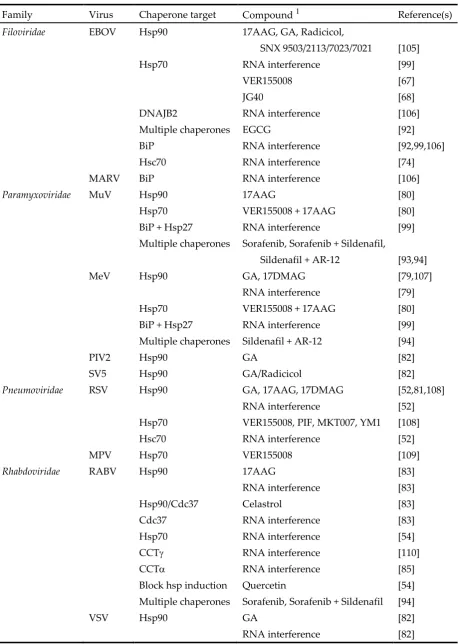
Table 1. Summary of compounds with antiviral activity tested on different Mononegavirales.
Family Virus Chaperone target Compound 1 Reference(s)
Filoviridae EBOV Hsp90 17AAG, GA, Radicicol,
SNX 9503/2113/7023/7021 [105]
Hsp70 RNA interference [99]
VER155008 [67]
JG40 [68]
DNAJB2 RNA interference [106]
Multiple chaperones EGCG [92]
BiP RNA interference [92,99,106]
Hsc70 RNA interference [74]
MARV BiP RNA interference [106]
Paramyxoviridae MuV Hsp90 17AAG [80]
Hsp70 VER155008 + 17AAG [80]
BiP + Hsp27 RNA interference [99]
Multiple chaperones Sorafenib, Sorafenib + Sildenafil,
Sildenafil + AR-12 [93,94]
MeV Hsp90 GA, 17DMAG [79,107]
RNA interference [79]
Hsp70 VER155008 + 17AAG [80]
BiP + Hsp27 RNA interference [99]
Multiple chaperones Sildenafil + AR-12 [94]
PIV2 Hsp90 GA [82]
SV5 Hsp90 GA/Radicicol [82]
Pneumoviridae RSV Hsp90 GA, 17AAG, 17DMAG [52,81,108]
RNA interference [52]
Hsp70 VER155008, PIF, MKT007, YM1 [108]
Hsc70 RNA interference [52]
MPV Hsp70 VER155008 [109]
Rhabdoviridae RABV Hsp90 17AAG [83]
RNA interference [83]
Hsp90/Cdc37 Celastrol [83]
Cdc37 RNA interference [83]
Hsp70 RNA interference [54]
CCT RNA interference [110]
CCT RNA interference [85]
Block hsp induction Quercetin [54]
Multiple chaperones Sorafenib, Sorafenib + Sildenafil [94]
VSV Hsp90 GA [82]
RNA interference [82]
17DMAG: 17-desmethoxy-17-N,N-dimethylaminoethylaminogeldanamycin; EGCG: (-)-Epigallocatechin gallate; AR-12: OSU-0312. PIF: pifithrin-
Due to the general use of chaperones by viruses, chaperone modulation represents an attractive antiviral strategy (see Table 1). To date, the most druggable chaperone has been Hsp90. Work using various Hsp90 inhibitors has shown that non-toxic concentrations display antiviral activity against numerous Mononegavirales, including the filovirus EBOV [105]; the paramyxoviruses PIV2 [82], MeV [79,111], MuV [72], and SV5 [82]; the pneumovirus RSV [52,70,81,112]; and the rhabdoviruses RABV [83] and VSV [82]. The successful inhibition of Hsp90 in humans for the treatment of cancer [26,43] highlights the feasibility of antiviral approaches targeting chaperones. Moreover, Hsp90 inhibitors have thus far not been shown to not elicit drug resistance [81,113], suggesting these may not suffer from one of the major limitations of current antiviral approaches targeting RNA viruses.
Several different Hsp70 inhibitors have been described that target ATP binding domain (e.g. VER155008, as well as MKT007 and its derivatives YM1 and JG40) and the substrate binding domain (pifithrin-). While these have shown to reduce replication in the context of mini-genomes or other surrogates of viral replication for EBOV [67,68], RSV [70], and MPV [109], the potency of these inhibitors appears to be less than that of Hsp90 inhibitors. Indeed, for MeV and MuV, Hsp70 inhibitors did not influence replication [72]. However, despite not showing antiviral effect on its own, the Hsp70 inhibitor VER155008 was shown to strongly potentiate the antiviral activity of Hsp90 inhibitors for MeV and MuV [72], suggesting that combinatorial chaperone inhibition may be a promising antiviral approach.
As in the cytoplasm, inhibiting protein folding in the ER is likely to have broad antiviral activity against the Mononegavirales due to their general use of this compartment for generation of essential glycoproteins. Indeed, non-specific interference with protein folding in the ER by altering calcium levels or by blocking key glycosylation enzymes that prevent folding have been reported to block the maturation of VSV [102,114], SV5 [115], MeV [91], and EBOV [116]. In addition, compounds that inhibit multiple chaperones, including those present in the ER, such as Sorafenib, OSU-0312, or (-)- epigallocatechin gallate, can reduce the replication of EBOV, MeV, and MuV infection [92,93,117,118]. Hence, targeting ER folding machinery is likely to represent a broad-spectrum antiviral approach, but specific antivirals are largely unavailable [118].
As new compounds targeting the chaperome are discovered, the possibility of targeting less central nodes in the chaperome may arise. Such antivirals may show improved toxicity profiles as the range of non-specific effects is likely to be drastically reduced compared to inhibition of Hsp90 or Hsp70. For this, an in-depth knowledge of the relevant chaperones and co-chaperones that are involved in viral replication will be of great importance. In sum, the broad-spectrum antiviral activity of chaperone inhibitors and their apparent low rate of drug resistance makes antiviral approaches focused on chaperone inhibition of interest for the treatment of both current and emerging infections.
5. Conclusion
the generality of this finding for other Mononegavirales is not clear. Similarly, Hsp90 has been shown to be involved in the folding of L from numerous viruses. However, Hsp90 works downstream of Hsp70/Hsc70, and thus far an interaction between the latter and L has only been formally shown for MuV [80]. As for Hsp70, our knowledge of Hsp90 co-chaperones involved in the folding of L remains limited. Thus far, of the numerous Hsp90 co-chaperones, the only one identified to date to play a role in the replication of any of these viruses is CDC37 for chaperoning the RABV P protein [83]. Due to the large number of co-chaperones of both Hsp70 and Hsp90, it is possible that functional redundancies exist that may hinder the identification of individual co-chaperones. In favor of this argument, a study with RSV found that knocking down two co-chaperones identified in their proteomic study to bind L, STIP1, and DNAJA2, had no effect on viral replication [108]. However, in contrary to this argument, a recent study investigating the role DNAJ proteins in the replication of dengue virus was able to identify a role for several DNAJ proteins in distinct stages of the viral replication cycle [120]. Finally, it is important to note that the role of key chaperone systems in the cells, such as the sHsps and CCT remain largely undefined for nearly all Mononegavirales.
While much can be learned about viral biology from studying chaperones, the opposite may be true as well. In particular, recent works have appreciated the fact that chaperones exist in dynamic multi-chaperone complexes that are likely to confer specific functions required to meet cellular proteostasis demands [121]. In this regard, viral infection may provide a valuable tool for the reproducible induction of alterations in chaperone complex composition that can help to decipher both the basis and the functional importance of such changes to the chaperome.
Funding: This research was funded by a grant from the Conselleria de Educación, Investigación, Cultura y Deporte (SEJI/2017/006) and by a 2017 Research Grant by the European Society of Clinical Microbiology and Infectious Diseases (ESCMID) to RG. FM is supported by a predoctoral fellowship from the Spanish Ministerio de Ciencia, Innovación y Universidades (BES-2016-076677). RG is supported by the Ramon y Cajal fellowship from the Spanish Ministry of Economy and Competitiveness (RYC-2015-17517).
Acknowledgments: We thank Dr. Jose Manuel Cuevas for helpful comments and suggestions.
Conflicts of Interest: The authors declare no conflict of interest. The funders had no role in the design of the study; in the collection, analyses, or interpretation of data; in the writing of the manuscript, or in the decision to publish the results.
References
1. Amarasinghe, G.K.; Aréchiga Ceballos, N.G.; Banyard, A.C.; Basler, C.F.; Bavari, S.; Bennett, A.J.;
Blasdell, K.R.; Briese, T.; Bukreyev, A.; Caì, Y.; Calisher, C.H.; Campos Lawson, C.; Chandran, K.;
Chapman, C.A.; Chiu, C.Y.; Choi, K.S.; Collins, P.L.; Dietzgen, R.G.; Dolja, V. V.; Dolnik, O.; Domier,
L.L.; Dürrwald, R.; Dye, J.M.; Easton, A.J.; Ebihara, H.; Echevarría, J.E.; Fooks, A.R.; Formenty, P.B.H.;
Fouchier, R.A.M.; Freuling, C.M.; Ghedin, E.; Goldberg, T.L.; Hewson, R.; Horie, M.; Hyndman, T.H.;
Jiāng, D.; Kityo, R.; Kobinger, G.P.; Kondō, H.; Koonin, E. V.; Krupovic, M.; Kurath, G.; Lamb, R.A.; Lee,
B.; Leroy, E.M.; Maes, P.; Maisner, A.; Marston, D.A.; Mor, S.K.; Müller, T.; Mühlberger, E.; Ramírez,
V.M.N.; Netesov, S. V.; Ng, T.F.F.; Nowotny, N.; Palacios, G.; Patterson, J.L.; Pawęska, J.T.; Payne, S.L.;
Prieto, K.; Rima, B.K.; Rota, P.; Rubbenstroth, D.; Schwemmle, M.; Siddell, S.; Smither, S.J.; Song, Q.;
Song, T.; Stenglein, M.D.; Stone, D.M.; Takada, A.; Tesh, R.B.; Thomazelli, L.M.; Tomonaga, K.; Tordo,
N.; Towner, J.S.; Vasilakis, N.; Vázquez-Morón, S.; Verdugo, C.; Volchkov, V.E.; Wahl, V.; Walker, P.J.;
Wang, D.; Wang, L.F.; Wellehan, J.F.X.; Wiley, M.R.; Whitfield, A.E.; Wolf, Y.I.; Yè, G.; Zhāng, Y.Z.;
Kuhn, J.H. Taxonomy of the order Mononegavirales: update 2018. Arch. Virol.2018, 163, 2283–2294, doi:10.1007/s00705-018-3814-x.
Paramyxoviruses: Knowns and Unknowns. Adv. Virus Res. 2017, 98, 1–55, doi:10.1016/bs.aivir.2016.12.001.
3. Coltart, C.E.M.; Lindsey, B.; Ghinai, I.; Johnson, A.M.; Heymann, D.L. The Ebola outbreak, 2013-2016:
old lessons for new epidemics. Philos. Trans. R. Soc. Lond. B. Biol. Sci. 2017, 372, doi:10.1098/rstb.2016.0297.
4. Whelan, S.P.J.; Barr, J.N.; Wertz, G.W. Transcription and replication of nonsegmented negative-strand
RNA viruses. Curr. Top. Microbiol. Immunol. 2004, 283, 61–119, doi:10.1007/978-3-662-06099-5.
5. Lamb, R.A. Mononegavirales. In Fields Virology; Knipe, D.M., Howley, P.M., Eds.; Wolters Kluwer
Health/Lippincott Williams & Wilkins: Philadelphia, 2013; pp. 880–884 ISBN 9781451105636.
6. Longhi, S. Nucleocapsid structure and function. Curr. Top. Microbiol. Immunol. 2009, 329, 103–128.
7. Morin, B.; Kranzusch, P.J.; Rahmeh, A.A.; Whelan, S.P.J. The polymerase of negative-stranded RNA
viruses. Curr. Opin. Virol. 2013, 3, 103–10, doi:10.1016/j.coviro.2013.03.008.
8. Longhi, S.; Bloyet, L.-M.; Gianni, S.; Gerlier, D. How order and disorder within paramyxoviral
nucleoproteins and phosphoproteins orchestrate the molecular interplay of transcription and
replication. Cell. Mol. Life Sci. 2017, 74, 3091–3118, doi:10.1007/s00018-017-2556-3.
9. Liljeroos, L.; Butcher, S.J. Matrix proteins as centralized organizers of negative-sense RNA virions. Front.
Biosci. (Landmark Ed. 2013, 18, 696–715.
10. Cantoni, D.; Rossman, J.S. Ebolaviruses: New roles for old proteins. PLoS Negl. Trop. Dis. 2018, 12, 1–17,
doi:10.1371/journal.pntd.0006349.
11. Komarova, A. V.; Combredet, C.; Meyniel-Schicklin, L.; Chapelle, M.; Caignard, G.; Camadro, J.-M.;
Lotteau, V.; Vidalain, P.-O.; Tangy, F. Proteomic analysis of virus-host interactions in an infectious
context using recombinant viruses. Mol. Cell. Proteomics 2011, 10, M110.007443, doi:10.1074/mcp.M110.007443.
12. de Chassey, B.; Meyniel-Schicklin, L.; Vonderscher, J.; André, P.; Lotteau, V. Virus-host interactomics:
New insights and opportunities for antiviral drug discovery. Genome Med. 2014, 6, 1–14, doi:10.1186/s13073-014-0115-1.
13. Wu, B.; Eliscovich, C.; Yoon, Y.J.; Singer, R.H. Translation dynamics of single mRNAs in live cells and
neurons. Science 2016, 352, 1430–5, doi:10.1126/science.aaf1084.
14. Ellis, R.J. Macromolecular crowding: obvious but underappreciated. Trends Biochem. Sci. 2001, 26, 597–
604, doi:10.1016/S0968-0004(01)01938-7.
15. Balchin, D.; Hayer-Hartl, M.; Hartl, F.U. In vivo aspects of protein folding and quality control. Science
2016, 353, aac4354, doi:10.1126/science.aac4354.
16. Schwanhüusser, B.; Busse, D.; Li, N.; Dittmar, G.; Schuchhardt, J.; Wolf, J.; Chen, W.; Selbach, M. Global
quantification of mammalian gene expression control. Nature 2011, 473, 337–342, doi:10.1038/nature10098.
17. Brehme, M.; Voisine, C.; Rolland, T.; Wachi, S.; Soper, J.H.; Zhu, Y.; Orton, K.; Villella, A.; Garza, D.;
Vidal, M.; Ge, H.; Morimoto, R.I. A chaperome subnetwork safeguards proteostasis in aging and
neurodegenerative disease. Cell Rep. 2014, 9, 1135–1150, doi:10.1016/j.celrep.2014.09.042.
18. Finka, A.; Goloubinoff, P. Proteomic data from human cell cultures refine mechanisms of
chaperone-mediated protein homeostasis. Cell Stress Chaperones 2013, 18, 591–605, doi:10.1007/s12192-013-0413-3.
19. Tokuriki, N.; Oldfield, C.J.; Uversky, V.N.; Berezovsky, I.N.; Tawfik, D.S. Do viral proteins possess
unique biophysical features? Trends Biochem. Sci. 2009, 34, 53–59, doi:10.1016/j.tibs.2008.10.009.
20. Sanjuan, R.; Domingo-Calap, P. Mechanisms of viral mutation. Cell. Mol. Life Sci. 2016, 73, 4433–4448,
21. Tokuriki, N.; Tawfik, D.S. Stability effects of mutations and protein evolvability. Curr. Opin. Struct. Biol.
2009, 19, 596–604, doi:10.1016/j.sbi.2009.08.003.
22. Kim, Y.E.; Hipp, M.S.; Bracher, A.; Hayer-Hartl, M.; Hartl, F.U. Molecular chaperone functions in protein
folding and proteostasis.; 2013; Vol. 82; ISBN 0602080924.
23. Ciechanover, A.; Kwon, Y.T. Protein quality control by molecular chaperones in neurodegeneration.
Front. Neurosci. 2017, 11, 1–18, doi:10.3389/fnins.2017.00185.
24. Mogk, A.; Bukau, B.; Kampinga, H.H. Cellular Handling of Protein Aggregates by Disaggregation
Machines. Mol. Cell 2018, 69, 214–226, doi:10.1016/j.molcel.2018.01.004.
25. Frakes, A.E.; Dillin, A. The UPRER: Sensor and Coordinator of Organismal Homeostasis. Mol. Cell 2017,
66, 761–771, doi:10.1016/j.molcel.2017.05.031.
26. Chatterjee, S.; Burns, T.F. Targeting heat shock proteins in cancer: A promising therapeutic approach.
Int. J. Mol. Sci. 2017, 18, doi:10.3390/ijms18091978.
27. Radons, J. The Hsp90 Chaperone Machinery: An Important Hub in Protein Interaction Networks. Br. J.
Med. Med. Res. 2016, 14, 1–32, doi:10.9734/BJMMR/2016/24631.
28. Radons, J. The human HSP70 family of chaperones: where do we stand? Cell Stress Chaperones 2016, 21,
379–404, doi:10.1007/s12192-016-0676-6.
29. Mayer, M.P.; Bukau, B. Hsp70 chaperones: Cellular functions and molecular mechanism. Cell. Mol. Life
Sci. 2005, 62, 670–684, doi:10.1007/s00018-004-4464-6.
30. Sousa, R.; Lafer, E.M. The role of molecular chaperones in clathrin mediated vesicular trafficking. Front.
Mol. Biosci. 2015, 2, 26, doi:10.3389/fmolb.2015.00026.
31. Craig, E.A. Hsp70 at the membrane: Driving protein translocation. BMC Biol. 2018, 16, 1–11, doi:10.1186/s12915-017-0474-3.
32. Clerico, E.M.; Tilitsky, J.M.; Meng, W.; Gierasch, L.M. How hsp70 molecular machines interact with their
substrates to mediate diverse physiological functions. J. Mol. Biol. 2015, 427, 1575–88, doi:10.1016/j.jmb.2015.02.004.
33. Kampinga, H.H.; Craig, E.A. The HSP70 chaperone machinery: J proteins as drivers of functional
specificity. Nat. Rev. Mol. Cell Biol. 2010, 11, 579–92, doi:10.1038/nrm2941.
34. Bracher, A.; Verghese, J. GrpE, Hsp110/Grp170, HspBP1/Sil1 and BAG domain proteins: nucleotide
exchange factors for Hsp70 molecular chaperones. Subcell. Biochem. 2015, 78, 1–33,
doi:10.1007/978-3-319-11731-7_1.
35. Allan, R.K.; Ratajczak, T. Versatile TPR domains accommodate different modes of target protein
recognition and function. Cell Stress Chaperones 2011, 16, 353–67, doi:10.1007/s12192-010-0248-0.
36. Stürner, E.; Behl, C. The Role of the Multifunctional BAG3 Protein in Cellular Protein Quality Control
and in Disease. Front. Mol. Neurosci. 2017, 10, 177, doi:10.3389/fnmol.2017.00177.
37. Kampinga, H.H.; de Boer, R.; Beerstra, N. The Multicolored World of the Human HSPB Family. In The
Big Book on Small Heat Shock Proteins; Tanguay, R.M., Hightower, L.E., Eds.; Springer International
Publishing: Cham, 2015; pp. 3–26 ISBN 978-3-319-16077-1.
38. Haslbeck, M.; Vierling, E. A first line of stress defense: Small heat shock proteins and their function in
protein homeostasis. J. Mol. Biol. 2015, 427, 1537–1548, doi:10.1016/j.jmb.2015.02.002.
39. Schopf, F.H.; Biebl, M.M.; Buchner, J. The HSP90 chaperone machinery. Nat. Rev. Mol. Cell Biol. 2017, 18,
345–360, doi:10.1038/nrm.2017.20.
40. Morán Luengo, T.; Kityk, R.; Mayer, M.P.; Rüdiger, S.G.D. Hsp90 Breaks the Deadlock of the Hsp70
41. Wang, Y.; Jin, F.; Wang, R.; Li, F.; Wu, Y.; Kitazato, K.; Wang, Y. HSP90: a promising broad-spectrum
antiviral drug target. Arch. Virol. 2017, 162, 3269–3282, doi:10.1007/s00705-017-3511-1.
42. Geller, R.; Taguwa, S.; Frydman, J. Broad action of Hsp90 as a host chaperone required for viral
replication. Biochim. Biophys. Acta 2012, 1823, 698–706, doi:10.1016/j.bbamcr.2011.11.007.
43. Yuno, A.; Lee, M.-J.; Lee, S.; Tomita, Y.; Rekhtman, D.; Moore, B.; Trepel, J.B. Clinical Evaluation and
Biomarker Profiling of Hsp90 Inhibitors. In Chaperones: Methods and Protocols; Calderwood, S.K., Prince,
T.L., Eds.; Springer New York: New York, NY, 2018; pp. 423–441 ISBN 978-1-4939-7477-1.
44. Aragonès, L.; Guix, S.; Ribes, E.; Bosch, A.; Pintó, R.M. Fine-tuning translation kinetics selection as the
driving force of codon usage bias in the hepatitis A virus capsid. PLoS Pathog. 2010, 6, e1000797, doi:10.1371/journal.ppat.1000797.
45. Lopez, T.; Dalton, K.; Frydman, J. The Mechanism and Function of Group II Chaperonins. J. Mol. Biol.
2015, 427, 2919–30, doi:10.1016/j.jmb.2015.04.013.
46. Yam, A.Y.; Xia, Y.; Lin, H.-T.J.; Burlingame, A.; Gerstein, M.; Frydman, J. Defining the TRiC/CCT
interactome links chaperonin function to stabilization of newly made proteins with complex topologies.
Nat. Struct. Mol. Biol. 2008, 15, 1255–62, doi:10.1038/nsmb.1515.
47. Hebert, D.N.; Molinari, M. In and out of the ER: protein folding, quality control, degradation, and related
human diseases. Physiol. Rev. 2007, 87, 1377–408, doi:10.1152/physrev.00050.2006.
48. Hegde, R.S.; Ploegh, H.L. Quality and quantity control at the endoplasmic reticulum. Curr. Opin. Cell
Biol. 2010, 22, 437–446, doi:10.1016/j.ceb.2010.05.005.
49. Araki, K.; Nagata, K. SUP: Protein folding and quality control in the ER. Cold Spring Harb. Perspect. Biol.
2012, 4, a015438, doi:10.1101/cshperspect.a015438.
50. Jansen, G.; Maattanen, P.; Denisov, a. Y.; Scarffe, L.; Schade, B.; Balghi, H.; Dejgaard, K.; Chen, L.Y.;
Muller, W.J.; Gehring, K.; Thomas, D.Y. An Interaction Map of Endoplasmic Reticulum Chaperones and
Foldases. Mol. Cell. Proteomics 2012, 11, 710–723, doi:10.1074/mcp.M111.016550.
51. Brown, G.; Rixon, H.W.M.; Steel, J.; McDonald, T.P.; Pitt, A.R.; Graham, S.; Sugrue, R.J. Evidence for an
association between heat shock protein 70 and the respiratory syncytial virus polymerase complex
within lipid-raft membranes during virus infection. Virology 2005, 338, 69–80, doi:10.1016/j.virol.2005.05.004.
52. Radhakrishnan, A.; Yeo, D.; Brown, G.; Myaing, M.Z.; Iyer, L.R.; Fleck, R.; Tan, B.-H.; Aitken, J.; Sanmun,
D.; Tang, K.; Yarwood, A.; Brink, J.; Sugrue, R.J. Protein analysis of purified respiratory syncytial virus
particles reveals an important role for heat shock protein 90 in virus particle assembly. Mol. Cell.
Proteomics 2010, 9, 1829–48, doi:10.1074/mcp.M110.001651.
53. Lahaye, X.; Vidy, A.; Pomier, C.; Obiang, L.; Harper, F.; Gaudin, Y.; Blondel, D. Functional
Characterization of Negri Bodies (NBs) in Rabies Virus-Infected Cells: Evidence that NBs Are Sites of
Viral Transcription and Replication. J. Virol. 2009, 83, 7948–7958, doi:10.1128/JVI.00554-09.
54. Lahaye, X.; Vidy, A.; Fouquet, B.; Blondel, D. Hsp70 Protein Positively Regulates Rabies Virus Infection.
J. Virol. 2012, 86, 4743–4751, doi:10.1128/JVI.06501-11.
55. Katoh, H.; Kubota, T.; Kita, S.; Nakatsu, Y.; Aoki, N.; Mori, Y.; Maenaka, K.; Takeda, M.; Kidokoro, M.
Heat shock protein 70 regulates degradation of the mumps virus phosphoprotein via the
ubiquitin-proteasome pathway. J. Virol. 2015, 89, 3188–99, doi:10.1128/JVI.03343-14.
56. Oglesbee, M.J.; Kenney, H.; Kenney, T.; Krakowka, S. Enhanced production of morbillivirus
gene-specific RNAs following induction of the cellular stress response in stable persistent infection. Virology
57. Oglesbee, M.J.; Liu, Z.; Kenney, H.; Brooks, C.L. The highly inducible member of the 70 kDa family of heat
shock proteins increases canine distemper virus polymerase activity; 1996; Vol. 77;.
58. Vasconcelos, D.; Norrby, E.; Oglesbee, M. The cellular stress response increases measles virus-induced
cytopathic effect. J. Gen. Virol. 1998, 79 ( Pt 7), 1769–73, doi:10.1099/0022-1317-79-7-1769.
59. Parks, C.L.; Lerch, R.A.; Walpita, P.; Sidhu, M.S.; Udem, S.A. Enhanced measles virus cDNA rescue and
gene expression after heat shock. J. Virol. 1999, 73, 3560–6.
60. Heller, M.; Vasconcelos, D.; Cummins, J.; Oglesbee, M. Interferon-alpha inhibits the emergence of
cellular stress response-dependent morbillivirus large plaque variants. Antiviral Res. 1998, 38, 195–207,
doi:10.1016/S0166-3542(98)00017-5.
61. Vasconcelos, D.Y.; Cai, X.H.; Oglesbee, M.J. Constitutive overexpression of the major inducible 70 kDa
heat shock protein mediates large plaque formation by measles virus. J. Gen. Virol. 1998, 79 ( Pt 9), 2239–
47, doi:10.1099/0022-1317-79-9-2239.
62. Zhang, X.; Glendening, C.; Linke, H.; Parks, C.L.; Brooks, C.; Udem, S.A.; Oglesbee, M. Identification
and characterization of a regulatory domain on the carboxyl terminus of the measles virus nucleocapsid
protein. J. Virol. 2002, 76, 8737–46, doi:10.1128/JVI.76.17.8737.
63. Carsillo, T.; Traylor, Z.; Choi, C.; Niewiesk, S.; Oglesbee, M. hsp72, a host determinant of measles virus
neurovirulence. J. Virol. 2006, 80, 11031–9, doi:10.1128/JVI.01438-06.
64. Zhang, X.; Bourhis, J.M.; Longhi, S.; Carsillo, T.; Buccellato, M.; Morin, B.; Canard, B.; Oglesbee, M.
Hsp72 recognizes a P binding motif in the measles virus N protein C-terminus. Virology 2005, 337, 162–
174, doi:10.1016/j.virol.2005.03.035.
65. Couturier, M.; Buccellato, M.; Costanzo, S.; Bourhis, J.-M.; Shu, Y.; Nicaise, M.; Desmadril, M.; Flaudrops,
C.; Longhi, S.; Oglesbee, M. High affinity binding between Hsp70 and the C-terminal domain of the
measles virus nucleoprotein requires an Hsp40 co-chaperone. J. Mol. Recognit. 2010, 23, 301–15, doi:10.1002/jmr.982.
66. Carsillo, T.; Zhang, X.; Vasconcelos, D.; Niewiesk, S.; Oglesbee, M. A single codon in the nucleocapsid
protein C terminus contributes to in vitro and in vivo fitness of Edmonston measles virus. J. Virol. 2006,
80, 2904–12, doi:10.1128/JVI.80.6.2904-2912.2006.
67. García-Dorival, I.; Wu, W.; Armstrong, S.D.; Barr, J.N.; Carroll, M.W.; Hewson, R.; Hiscox, J.A.
Elucidation of the Cellular Interactome of Ebola Virus Nucleoprotein and Identification of Therapeutic
Targets. J. Proteome Res. 2016, 15, 4290–4303, doi:10.1021/acs.jproteome.6b00337.
68. Nelson, E. V.; Pacheco, J.R.; Hume, A.J.; Cressey, T.N.; Deflubé, L.R.; Ruedas, J.B.; Connor, J.H.; Ebihara,
H.; Mühlberger, E. An RNA polymerase II-driven Ebola virus minigenome system as an advanced tool
for antiviral drug screening. Antiviral Res. 2017, 146, 21–27, doi:10.1016/j.antiviral.2017.08.005.
69. Tchesnokov, E.P.; Raeisimakiani, P.; Ngure, M.; Marchant, D.; Götte, M. Recombinant RNA-Dependent
RNA Polymerase Complex of Ebola Virus. Sci. Rep. 2018, 8, 1–9, doi:10.1038/s41598-018-22328-3.
70. Munday, D.C.; Wu, W.; Smith, N.; Fix, J.; Noton, S.L.; Galloux, M.; Touzelet, O.; Armstrong, S.D.;
Dawson, J.M.; Aljabr, W.; Easton, A.J.; Rameix-Welti, M.-A.; de Oliveira, A.P.; Simabuco, F.M.; Ventura,
A.M.; Hughes, D.J.; Barr, J.N.; Fearns, R.; Digard, P.; Eléouët, J.-F.; Hiscox, J.A. Interactome Analysis of
the Human Respiratory Syncytial Virus RNA Polymerase Complex Identifies Protein Chaperones as
Important Cofactors That Promote L-Protein Stability and RNA Synthesis. J. Virol.2015, 89, 917–930, doi:10.1128/JVI.01783-14.
71. Oliveira, A.P.; Simabuco, F.M.; Tamura, R.E.; Guerrero, M.C.; Ribeiro, P.G.G.; Libermann, T.A.; Zerbini,
cells. Virus Res. 2013, 177, 108–12, doi:10.1016/j.virusres.2013.07.010.
72. Katoh, H.; Kubota, T.; Nakatsu, Y.; Tahara, M.; Kidokoro, M.; Takeda, M. Heat Shock Protein 90 Ensures
Efficient Mumps Virus Replication by Assisting with Viral Polymerase Complex Formation. J. Virol.
2017, 91, e02220-16, doi:10.1128/JVI.02220-16.
73. Zhang, R.; Liu, C.; Cao, Y.; Jamal, M.; Chen, X.; Zheng, J.; Li, L.; You, J.; Zhu, Q.; Liu, S.; Dai, J.; Cui, M.;
Fu, Z.F.; Cao, G. Rabies viruses leader RNA interacts with host Hsc70 and inhibits virus replication.
Oncotarget 2017, 8, 43822–43837, doi:10.18632/oncotarget.16517.
74. Sztuba-Solinska, J.; Diaz, L.; Kumar, M.R.; Kolb, G.; Wiley, M.R.; Jozwick, L.; Kuhn, J.H.; Palacios, G.;
Radoshitzky, S.R.; Le Grice, S.F.J.; Johnson, R.F. A small stem-loop structure of the Ebola virus trailer is
essential for replication and interacts with heat-shock protein A8. Nucleic Acids Res. 2016, 44, 9831–9846,
doi:10.1093/nar/gkw825.
75. Wu, W.; Tran, K.C.; Teng, M.N.; Heesom, K.J.; Matthews, D.A.; Barr, J.N.; Hiscox, J.A. The interactome
of the human respiratory syncytial virus NS1 protein highlights multiple effects on host cell biology. J.
Virol. 2012, 86, 7777–89, doi:10.1128/JVI.00460-12.
76. Spurgers, K.B.; Alefantis, T.; Peyser, B.D.; Ruthel, G.T.; Bergeron, A.A.; Costantino, J.A.; Enterlein, S.;
Kota, K.P.; Boltz, R.C.D.; Aman, M.J.; Delvecchio, V.G.; Bavari, S. Identification of essential
filovirion-associated host factors by serial proteomic analysis and RNAi screen. Mol. Cell. Proteomics 2010, 9, 2690–
703, doi:10.1074/mcp.M110.003418.
77. Liang, J.; Sagum, C.A.; Bedford, M.T.; Sidhu, S.S.; Sudol, M.; Han, Z.; Harty, R.N. Chaperone-Mediated
Autophagy Protein BAG3 Negatively Regulates Ebola and Marburg VP40-Mediated Egress. PLoS
Pathog. 2017, 13, e1006132, doi:10.1371/journal.ppat.1006132.
78. Liang, B.; Li, Z.; Jenni, S.; Rahmeh, A.A.; Morin, B.M.; Grant, T.; Grigorieff, N.; Harrison, S.C.; Whelan,
S.P.J. Structure of the L Protein of Vesicular Stomatitis Virus from Electron Cryomicroscopy. Cell 2015,
162, 314–327, doi:10.1016/j.cell.2015.06.018.
79. Bloyet, L.-M.; Welsch, J.; Enchery, F.; Mathieu, C.; de Breyne, S.; Horvat, B.; Grigorov, B.; Gerlier, D.
HSP90 Chaperoning in Addition to Phosphoprotein Required for Folding but Not for Supporting
Enzymatic Activities of Measles and Nipah Virus L Polymerases. J. Virol. 2016, 90, 6642–6656, doi:10.1128/JVI.00602-16.
80. Katoh, H.; Kubota, T.; Nakatsu, Y.; Tahara, M.; Kidokoro, M.; Takeda, M. Heat Shock Protein 90 Ensures
Efficient Mumps Virus Replication by Assisting with Viral Polymerase Complex Formation. J. Virol.
2017, 91, e02220-16, doi:10.1128/JVI.02220-16.
81. Geller, R.; Andino, R.; Frydman, J. Hsp90 inhibitors exhibit resistance-free antiviral activity against
respiratory syncytial virus. PLoS One 2013, 8, e56762, doi:10.1371/journal.pone.0056762.
82. Connor, J.H.; McKenzie, M.O.; Parks, G.D.; Lyles, D.S. Antiviral activity and RNA polymerase
degradation following Hsp90 inhibition in a range of negative strand viruses. Virology 2007, 362, 109–19,
doi:10.1016/j.virol.2006.12.026.
83. Xu, Y.; Liu, F.; Liu, J.; Wang, D.; Yan, Y.; Ji, S.; Zan, J.; Zhou, J. The co-chaperone Cdc37 regulates the
rabies virus phosphoprotein stability by targeting to Hsp90AA1 machinery. Sci. Rep.2016, 6, 27123, doi:10.1038/srep27123.
84. Zhang, J.; Wu, X.; Zan, J.; Wu, Y.; Ye, C.; Ruan, X.; Zhou, J. Cellular Chaperonin CCT Contributes to
Rabies Virus Replication during Infection. J. Virol. 2013, 87, 7608–7621, doi:10.1128/JVI.03186-12.
85. Zhang, J.; Ye, C.; Ruan, X.; Zan, J.; Xu, Y.; Liao, M.; Zhou, J. The chaperonin CCTα is required for efficient
doi:10.1111/1348-0421.12186.
86. Roobol, A.; Sahyoun, Z.P.; Carden, M.J. Selected subunits of the cytosolic chaperonin associate with
microtubules assembled in vitro. J. Biol. Chem. 1999, 274, 2408–2415, doi:10.1074/jbc.274.4.2408.
87. García-Dorival, I.; Wu, W.; Dowall, S.; Armstrong, S.; Touzelet, O.; Wastling, J.; Barr, J.N.; Matthews, D.;
Carroll, M.; Hewson, R.; Hiscox, J.A. Elucidation of the Ebola virus VP24 cellular interactome and
disruption of virus biology through targeted inhibition of host-cell protein function. J. Proteome Res. 2014,
13, 5120–35, doi:10.1021/pr500556d.
88. Roux, L. Selective and transient association of Sendai virus HN glycoprotein with BiP. Virology 1990, 175,
161–6, doi:10.1016/0042-6822(90)90196-X.
89. Watowich, S.S.; Morimoto, R.I.; Lamb, R. a Flux of the paramyxovirus hemagglutinin-neuraminidase
glycoprotein through the endoplasmic reticulum activates transcription of the GRP78-BiP gene. J. Virol.
1991, 65, 3590–7.
90. Bitko, V.; Barik, S. An endoplasmic reticulum-specific stress-activated caspase (caspase-12) is implicated
in the apoptosis of A549 epithelial cells by respiratory syncytial virus. J. Cell. Biochem. 2001, 80, 441–54,
doi:10.1002/1097-4644(20010301)80:3<441::AID-JCB170>3.0.CO;2-C.
91. Bolt, G. The measles virus (MV) glycoproteins interact with cellular chaperones in the endoplasmic
reticulum and MV infection upregulates chaperone expression. Arch. Virol. 2001, 146, 2055–2068, doi:10.1007/s007050170020.
92. Patrick Reid, S.; Shurtleff, A.C.; Costantino, J.A.; Tritsch, S.R.; Retterer, C.; Spurgers, K.B.; Bavari, S.
HSPA5 is an essential host factor for Ebola virus infection. Antiviral Res. 2014, 109, 171–174, doi:10.1016/j.antiviral.2014.07.004.
93. Roberts, J.L.; Tavallai, M.; Nourbakhsh, A.; Fidanza, A.; Cruz-Luna, T.; Smith, E.; Siembida, P.;
Plamondon, P.; Cycon, K.A.; Doern, C.D.; Booth, L.; Dent, P. GRP78/Dna K Is a Target for
Nexavar/Stivarga/Votrient in the Treatment of Human Malignancies, Viral Infections and Bacterial
Diseases. J. Cell. Physiol. 2015, 230, 2552–78, doi:10.1002/jcp.25014.
94. Booth, L.; Roberts, J.L.; Cash, D.R.; Tavallai, S.; Jean, S.; Fidanza, A.; Cruz-Luna, T.; Siembiba, P.; Cycon,
K.A.; Cornelissen, C.N.; Dent, P. GRP78/BiP/HSPA5/Dna K is a universal therapeutic target for human
disease. J. Cell. Physiol. 2015, 230, 1661–76, doi:10.1002/jcp.24919.
95. Ng, D.T.; Randall, R.E.; Lamb, R.A. Intracellular maturation and transport of the SV5 type II glycoprotein
hemagglutinin-neuraminidase: specific and transient association with GRP78-BiP in the endoplasmic
reticulum and extensive internalization from the cell surface. J. Cell Biol. 1989, 109, 3273–89.
96. Ng, D.T.; Hiebert, S.W.; Lamb, R.A. Different roles of individual N-linked oligosaccharide chains in
folding, assembly, and transport of the simian virus 5 hemagglutinin-neuraminidase. Mol.Cell Biol. 1990,
10, 1989–2001, doi:10.1128/MCB.10.5.1989.Updated.
97. Anderson, K.; Stott, E.J.; Wertz, G.W. Intracellular processing of the human respiratory syncytial virus
fusion glycoprotein: amino acid substitutions affecting folding, transport and cleavage. J. Gen. Virol.
1992, 73 ( Pt 5), 1177–88, doi:10.1099/0022-1317-73-5-1177.
98. Gaudin, Y. Folding of rabies virus glycoprotein: epitope acquisition and interaction with endoplasmic
reticulum chaperones. J. Virol. 1997, 71, 3742–3750.
99. Booth, L.; Roberts, J.L.; Ecroyd, H.; Tritsch, S.R.; Bavari, S.; Reid, S.P.; Proniuk, S.; Zukiwski, A.; Jacob,
A.; Sepúlveda, C.S.; Giovannoni, F.; García, C.C.; Damonte, E.; González-Gallego, J.; Tuñón, M.J.; Dent,
P. AR-12 Inhibits Multiple Chaperones Concomitant With Stimulating Autophagosome Formation