Mini-PROTEAN
®
Precast Gels
Instruction Manual
and
Table of Contents
Section 1 General Information ...1
1.1 Introduction ...1
1.2 Mini-PROTEAN Precast Gel Specifications...2
1.3 Important Notes ...3
1.4 Mini-PROTEAN Comb Configurations...3
Section 2 Setup and Basic Operation ...3
2.1 Required Materials ...3
2.2 Mini-PROTEAN Precast Gel Set-Up Overview ...4
2.3 Assembling the Mini-PROTEAN Tetra Cell Electrophoresis Module ...5
Section 3 SDS-PAGE ...6
3.1 Introduction ...6
3.2 Mini-PROTEAN TGX Gel Composition...7
3.3 Mini-PROTEAN TGX Gel Selection Guide ...7
3.4 SDS-PAGE Buffers ...8
3.5 Sample Preparation ...8
3.6 Running Conditions...8
Section 4 Native PAGE ...8
4.1 Introduction ...8
4.2 Native PAGE Buffers...8
4.3 Sample Preparation ...8
4.4 Running Conditions...8
Section 5 Buffers...9
Section 6 Total Protein Gel Stains for SDS-PAGE and Native PAGE Detection ...10
Section 7 Troubleshooting...11
Appendix A Stock Solutions...13
Appendix B Total Protein Blot Stains...14
Appendix C Related Literature ...14
Appendix D Ordering Information ...15
D.1 Mini-PROTEAN TGX Precast Gels ...15
D.2 Premixed Running and Sample Buffers ...15
D.3 Individual Reagents ...15
D.4 Total Protein Gel and Blot Stains ...16
D.5 Immunoblot Detection...17
D.6 Immunoblot Detection Reagents...17
D.7 Blotting Membranes...18
D.8 Protein Standards ...18
Section 1
General Information
1.1 Introduction
Mini-PROTEAN®precast gels greatly simplify polyacrylamide gel electrophoresis. They are
specifically designed for use with the Mini-PROTEAN Systems (Mini-PROTEAN Tetra, Mini-PROTEAN 3, and Mini-PROTEAN Dodeca™Cells).
Mini-PROTEAN precast gels come ready to use with pre-formed sample wells and a stacking layer. Each Mini-PROTEAN cassette is 8.5 cm x 10 cm (H x W) and 4.0 mm thick. Gel dimension is 7.2 cm x 8.6 cm (H x W) and 1.0 mm thick. Each gel is individually packaged in a leak proof storage pouch with gel buffer containing 0.02% sodium azide.
The migration pattern of proteins on Mini-PROTEAN TGX™ precast gels is similar to that observed with standard Laemmli Tris-HCl gels. Mini-PROTEAN TGX precast gels are run using standard Laemmli sample buffer and Tris-Glycine-SDS running buffer. The precast gels contain no sodium dodecyl sulfate (SDS) and can therefore be used for either sodium dodecyl sulfate polyacrylamide gel electrophoresis (SDS-PAGE) or native gel electrophoresis depending upon the sample buffer and the running buffer used.
Advantages of Mini-PROTEAN TGX precast gels: • Increased stability and long shelf life up to 12 months • Laemmli-like separation pattern
• Exceptionally straight lanes and sharp bands • No need for special, expensive buffers • Superior staining quality
• No gel foot to remove prior to blotting
• Bottom open cassette that unlocks with four easy clicks
The Mini-PROTEAN Tetra cell runs both hand cast gels and Mini-PROTEAN TGX precast gels interchangeably. The cell can run from one to four gels, and the mini tank is compatible with other Bio-Rad electrode modules for tank blotting.
The Mini-PROTEAN 3 cell runs both hand-cast and Mini-PROTEAN TGX precast gels. The cell can run one or two gels, and the mini tank is compatible with other Bio-Rad electrode modules for tank blotting, 2-D electrophoresis and electroelution.
The Mini-PROTEAN 3 Dodeca cell is a multi-cell for high through-put system gel
electrophoresis. It can run up to 12 identical polyacrylamide gels simultaneously. The Dodeca cell includes clamping frames, buffer dams, and a drain line.
1.2 Mini-PROTEAN Precast Gel Specifications
Gel material Polyacrylamide
Gel dimensions 7.2 x 8.6 cm (H x W)
Gel thickness 1.0 mm
Resolving gel height 6.2 cm
Cassette dimensions 8.5 x 10 cm (H x W)
Cassette material Styrene copolymer
Comb material Polycarbonate
Total running buffer volume 700 ml for 2 gels, 1,000 ml for 4 gels
(Mini-PROTEAN Tetra Cell & Mini-PROTEAN 3) Storage conditions Store flat between 2°C and 8°C; DO NOT FREEZE
Mini-PROTEAN Tetra Cell Specifications
Casting stand Polycarbonate
Pin, retaining ring and spring Stainless steel
Casting frames Polysulfone
Gray gaskets Thermoplastic rubber (gray)
Electrode assembly Glass filled polybutylene terephthalate
Electrodes Platinum wire, 0.010” diameter
Gasket, electrode inner core Silicone rubber (green)
Tank and lid Polycarbonate
Sample loading guides Delrin
Combs Polycarbonate
Mini-PROTEAN 3 Cell Specifications
Electrode assembly Glass-filled liquid crystal polymer
Electrodes Platinum wire, 0.010” diameter
Gasket, electrode inner core Silicone rubber (green)
Tank and lid Molded polycarbonate
Sample loading guides Delrin
Combs Polycarbonate
Mini-PROTEAN 3 Dodeca Cell Specifications
Tank and lid Acrylic
Clamping frame Polycarbonate and liquid crystal polymer Upper electrode holder Polycarbonate with 109 mm (4.3”) platinum wire Lower electrode assembly Polycarbonate with 89 mm (3.5”) platinum wire
Drain line Tygon tubing
Drain line connectors Delrin
Cooling coil Acrylic
Cooling coil connector tubing Tygon
Maximum buffer volume 4.4 L
Minimum buffer volume 3.4 L
Overall size 41.5 x 15 x 16.2 cm (L x W x H)
Safety limits 300 V, 150 W
1.3 Important Notes (See Appendix C for Related Literature)
• Mini-PROTEAN Tetra and Dodeca cell components are not compatible with acetone or ethanol. Use of organic solvents voids all warranties.
• Each Mini-PROTEAN precast gel should be used shortly after it is removed from the storage pouch.
• It is not advisable to run more than one gel type in the same apparatus at the same time. The different gel percentages will have different conductivity and therefore different run rates.
• When running 1 or 2 gels in the Tetra cell, use the electrode assembly (with the banana plugs), not the companion running module (without the banana plugs). When running 3 or 4 gels, both the electrode assembly and the companion running module must be used.
• When running 1 or 2 gels only, DO NOT place the companion running module in the tank. Doing so will cause excessive heat generation and degrade the quality of the electrophoretic separation.
• Improper storage of Mini-PROTEAN precast gels can produce numerous artifacts. Gels should be stored flat between 2°C and 8°C. Avoid freezing or prolonged storage above 8°C. If you suspect your gels have been stored improperly, THEY SHOULD BE DISCARDED.
• Do not attempt to lock the green arms of the electrode assembly without first ensuring that the gel cassettes are correctly aligned against the notches on the green gaskets of the module. To prevent the gels from shifting during the locking step, firmly and evenly grip them in place against the core of the module (see Figure 2c and 2e).
1.4 Mini-PROTEAN Comb Configurations
Mini-PROTEAN TGX Gel
Comb type Well volume
10 well 30 µl
15 well 15 µl
IPG 7 cm ReadyStrip™ IPG strip
Section 2
Setup and Basic Operation
2.1 Required Materials
• Clean Mini-PROTEAN®Tetra cell tank
• Electrophoresis module: to run 1 or 2 gels, use the electrode module. To run 3 or 4 gels, use the electrode module and companion module
• PowerPac™ power supply or equivalent • Sample buffer
• Running buffer (700 ml for 2 gels; 1,000 ml for 4 gels) • Mini-PROTEAN precast gels
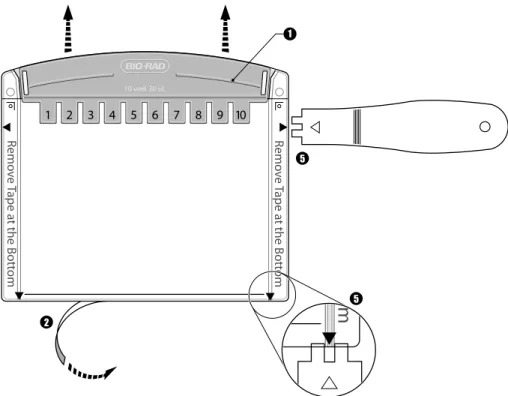
Fig. 1. Mini-PROTEAN Precast Gel Cassette.
2.2 Mini-PROTEAN Precast Gel Set Up Overview
1. Remove Comb: Position both thumbs on the ridges of the comb. Remove the comb by pushing upward in one smooth continuous motion.
2. Remove Tape: Pull gently to remove the green tape from the bottom of the cassette. 3. Rinse Wells: Use a syringe wash bottle or a disposable transfer pipette to rinse the wells
with running buffer. Straighten the sides of the wells, if necessary.
4. Run Gel: Assemble the cassette into the running module of the Mini-PROTEAN system. Add running buffer to the inner and outer chambers. Prepare the samples in sample buffer and load the samples into the wells. Run the gel at 200 V until the dye front reaches the line on the bottom of the gel cassette (approximately 30–40 min). At the completion of the run, disconnect the cell and remove the cassette.
5. Open Cassette: Align the arrow on the opening key with the arrows marked on the cassette. Insert the key between the cassette plates at all 4 locations and apply downward pressure to break each seal. Do not twist the lever. Gently pull apart the two plates beginning from the top of the cassette.
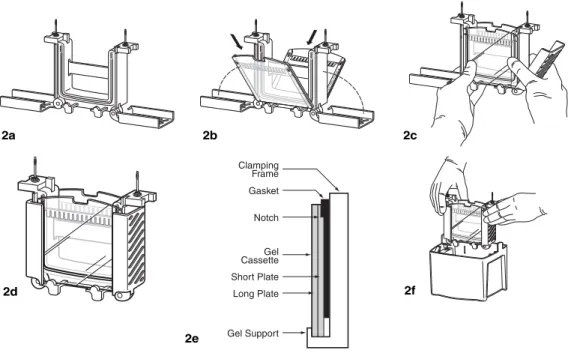
Fig. 2. Assembling the Mini-PROTEAN Tetra Cell Electrphoresis Module.
2.3 Assembling the Mini-PROTEAN Tetra Cell Electrophoresis Module
1. Set the electrode assembly to the open position on a clean flat surface (see Figure 2a) 2. Place the first gel cassette (with the short plate facing inward) onto the gel supports; gel supports are molded into the bottom of the electrode assembly. There are two supports on each side of the electrode assembly. Note that the gel will now rest at a 30° angle, tilting away from the center of the electrode assembly. Use caution when placing the first gel, making sure that the electrode assembly remains balanced and does not tip over. Place the second gel or buffer dam on the other side of the electrode assembly, again by resting the gel on the supports. At this point there will be two gels resting at a 30° angle, one on either side of the electrode assembly, tilting away from the center of the frame (see Figure 2b). It is critical that gel cassettes be placed into the electrode assembly with the short plate facing inward to form the inner buffer chamber. The elec-trode assembly requires two gels to create a functioning assembly; if an odd number of gels (1 or 3) is being run, you must use the buffer dam to complete the assembly (see Figure 2b).
3. Using one hand, gently push both gels toward each other, making sure that they rest firmly and squarely against the green gasket that is built into the electrode assembly. Align the short plates to ensure the edge sits just below the notch at the top of the green gasket (Figure 2e).
4. While gently squeezing the gel cassettes or a gel cassette and a buffer dam against the green gaskets with one hand (keeping constant pressure and both gels firmly held in place), slide the green arms of the clamping frame over the gels, locking them into place (see Figure 2c).
2a 2b 2c 2d 2f 2e Notch Gel Cassette Short Plate Long Plate Gel Support Gasket Clamping Frame
5. The wing clamps of the electrode assembly lift each gel cassette up against the notch in the green gasket, forming a seal (Figure 2d). Check again to make certain that the short plates sit just below the notch at the top of the green gasket (Figure 2e). Place the assembled electrophoresis module into the tank (Figure 2f) and fill the buffer chambers. At this point, the sample wells can be washed out with running buffer, if this was not done earlier, and the sample can be loaded. If running more than 2 gels, repeat steps 2a–2d with the companion running module.
Section 3
SDS-PAGE
3.1 Introduction
Mini-PROTEAN®TGX™precast gels provide a versatile system for sodium dodecyl
sulfate polyacrylamide gel electrophoresis (SDS-PAGE), a gel electrophoretic technique that separates proteins according to their molecular weight.
SDS-PAGE relies on a discontinuous buffer system. Two ions of differing electrophoretic mobility (glycinate and chloride) form a moving boundary when voltage is applied. Proteins have an intermediate mobility, causing them to concentrate, or stack, into a narrow zone at the beginning of electrophoresis. As the boundary moves through the gel, the sieving effect of the polyacrylamide gel matrix causes different proteins to move at different rates. The stacking effect is responsible for the high resolving power of SDS-PAGE. The sample is loaded in a relatively broad zone, and the moving boundary concentrates the proteins into sharp bands prior to separation.
Protein samples for SDS-PAGE are prepared using SDS and a thiol reductant, usually 2-mercaptoethanol or dithiothreitol (DTT). SDS forms complexes with proteins giving them a rod like shape and similar charge to mass ratio. The reductant cleaves disulfide bonds between and within proteins allowing complete denaturation and dissociation. Heat treatment in the presence of SDS and reductant effectively eliminates the effects of 2° and 3° protein structure and native charge on electrophoretic mobility, so the migration distance depends primarily on molecular weight. Molecular mass is determined by plotting the logarithm of protein molecular mass vs. the relative mobility (Rf) of the protein (Rf= dis-tance migrated by protein/disdis-tance relative to the dye front of the protein). Refer to tech notes 3133 and 3144.
Mini-PROTEAN TGX precast gels are prepared without SDS. Although gels for SDS-PAGE have historically been cast with SDS in the gel, high quality SDS-PAGE separations are obtained in gels lacking SDS, provided that the sample buffer and running buffer contain sufficient SDS to maintain SDS saturation during electrophoresis. The recommended concentrations of SDS are >1% in the sample buffer and 0.1% in the running buffer. The absence of SDS in the gel itself provides additional flexibility, as the gels may also be used for native electrophoresis (see Section 4).
Mini-PROTEAN TGX precast gels differ from the standard Laemmli system (Tris-HCl SDS-PAGE) gels due to a proprietary modification to their formulations that provides the gels with extended shelf life and improved separation characteristics. They are designed to be run using standard Laemmli sample and running buffers. No additional special buffers or reagents are required.
3.2 Mini-PROTEAN TGX Precast Gel Composition
Mini-PROTEAN TGX gels are comprised of polyacrylamide with a bisacrylamide cross linker. Each gel has a 4% polyacrylamide stacking layer extending approximately 5 mm from the bottom of the loading well to the top of the resolving gel. The proprietary gel formulation provides a shelf life of 12 months and improved separation characteristics.
The gel is packaged with storage buffer of the same composition with additional 0.02% sodium azide as a preservative.
3.3 Mini-PROTEAN TGX Precast Gel Selection Guide
Mini-PROTEAN TGX gels are available in a wide selection of single percentages and gradients for the separation of proteins by SDS-PAGE.
Gel Selection Guide
Gel % Optimal Sample Running Run Conditions* Run
Type Separation Range Buffer Buffer Voltage/Current** Time***
TGX 7.5 40–200 kD SDS-PAGE SDS-PAGE 200 V constant 38 min sample buffer running Starting current
buffer (per gel): 37 mA Final current (per gel): 23 mA
TGX 10 30–150 kD SDS-PAGE SDS-PAGE 200 V constant 38 min sample running Starting current buffer buffer (per gel): 37 mA
Final current (per gel): 23 mA
TGX 12 20–120 kD SDS-PAGE SDS-PAGE 200 V constant 38 min sample running Starting current buffer buffer (per gel): 37 mA
Final current (per gel): 23 mA
TGX 4–15 20–250 kD SDS-PAGE SDS-PAGE 200 V constant 30 min sample running Starting current buffer buffer (per gel): 50 mA
Final current (per gel): 33 mA
TGX 4–20 10–200 kD SDS-PAGE SDS-PAGE 200 V constant 30 min sample running Starting current buffer buffer (per gel): 50 mA
Final current (per gel): 33 mA
TGX Any kD****10–200 kD SDS-PAGE SDS-PAGE 200 V constant 28 min sample running Starting current buffer buffer (per gel): 50 mA
Final current (per gel): 33 mA *This may vary depending on water and buffer conductivity, which may vary from one lab setting to the next. **Current should be multiplied by the number of gels being run.
***Approximate time required for dye front to reach the line at the bottom of the cassette.
3.4 SDS-PAGE Buffers
See Section 5 for buffer recipes.
3.5 Sample Preparation
The appropriate concentration of sample depends on the load volume and the detection method used. (See Section 6 for approximate stain sensitivities). Add 50 µl 2-mercaptoethanol per 950 µl of sample buffer for a final concentration of 5% 2-mercaptoethanol, or 710 mM. As an alternative, DTT may be used at a final concentration of 350 mM (54 mg/ml). Dilute 1 part sample with at least 1 part sample buffer with added reductant. Heat the mixture at 95°C for 5 min.
3.6 Running Conditions
Run gels at 200 V constant voltage until the dye front reaches the line near the bottom edge of the gel cassette. Approximate run times will vary between 28 and 38 min depending on the gel type (see Section 3.3).
Section 4
Native PAGE
4.1 Introduction
Mini-PROTEAN®TGX™gels are made without SDS, allowing native separations using
SDS- and reductant-free sample and running buffers. The nonreducing and nondenaturing environment of native PAGE allows protein separation with retention of biological activity. Native PAGE can also be used to resolve multiple protein bands when molecular mass separation by SDS-PAGE would reveal only one.
Native PAGE uses the same moving boundary described in Section 3.1. Proteins are prepared in nonreducing nondenaturing sample buffer, which maintains the proteins’ secondary structure and native charge density. Protein mobility depends on the size and shape of the protein as well as its molecular weight and net charge. Native PAGE is therefore not suitable for molecular weight determination.
4.2 Native PAGE Buffers
See Section 5 for buffer recipes.
4.3 Sample Preparation
Determine the desired protein concentration and load volume of your sample based on the detection method used. (See Section 6 for approximate stain sensitivities). Proteins can be separated using a standard protocol, following dilution of the sample with an equal volume of Native Sample Buffer (see Section 5, DO NOT HEAT SAMPLES). Strongly basic proteins (pl >8.5) will have a net positive charge and will not enter a native PAGE TGX gel.
4.4 Running Conditions
Section 5
Buffers (see Appendix A for Stock Solutions)
Name Working Concentration Notes Pre-Mixed Alternative
SDS-Page running buffer 1X 25 mM Tris base 192 mM glycine 0.1% (w/v) SDS Running buffer should be ~ pH 8.3. Do not adjust the pH 10x Tris/Glycine/SDS, 1 L, 161-0732 10x Tris/Glycine/SDS, 5 L cube, 161-0772 SDS-PAGE sample buffer 2X 62.5 mM TrisHCl, pH 6.8 2% (w/v) SDS 25% (v/v) glycerol 0.01% (w/v) Bromophenol Blue 5% (v/v) 2-mercaptoethanol or 350 mM DTT (added fresh)
Dilute 1 part sample with 1 part sample buffer. More sample buffer can be added if necessary. 1 part sample to 2 parts sample buffer dilution also works. Dry samples can be dissolved directly into the sample buffer
Laemmli sample buffer, 30 ml, 161-0737 Native PAGE running buffer working concentration 25 mM Tris Base 192 mM glycine Running buffer should be ~ pH 8.3. Do not adjust the pH 10x Tris/Glycine, 1 L, 10x Tris/Glycine, 5L cube, 161-0771 Native PAGE sample buffer 62.5 mM Tris-HCl, pH 6.8 40% glycerol 0.01% Bromophenol Blue
Native sample buffer, 30 ml, 161-0738 -161-0734 Dilute 1 part sample with 1 part sample buffer. More sample buffer can be added if necessary. 1 part sample to 2 parts sample buffer dilution also works. Dry samples can be dissolved directly into the sample buffer
Section 6
Total Protein Gel Stains for SDS-PAGE and Native
PAGE Detection
Method Sensitivity Optimal Protein Load
Advantages Disadvantages Imaging Instruction Manual Number Coomassie Blue R-250 36–47 ng ~0.5 µg/band Laboratory standard
Requires MeOH Photography with white light or transmission densitometry (Gel Doc™ or GS-800™) Consult scientific literature Bio-Safe™ Coomassie stain 8–28 ng ~0.5 µg/band
Nonhazardous Photography with white light or transmission densitometry (Gel Doc or GS-800) 4307051 Zinc stain 6–12 ng ~0.2 µg/band High-contrast, fast, reversible stain
Negative stain, must be photographed, SDS-PAGE only
Photography with white light or transmission densitometry (Gel Doc or GS -800) 4006082 Silver Stain™ Plus kit 0.6–1.2 ng ~0.01 µg/band Simple, robust, mass spectrometry compatible Does not stain Glycoproteins well Photography with white light or transmission densitometry (Gel Doc or GS-800) LIT442 Silver stain 0.6–1.2 ng ~0.01 µg/band Stains complex proteins, i.e., glycoproteins, and lipoproteins Not mass spectrometry compatible Photography with white light or transmission densitometry (Gel Doc or GS-800) LIT34 Dodeca™ Silver Stain Kit 0.5–1.2 ng ~0.1 µg/band Convenient staining for a large number of gels Photography
with white light or transmission densitometry (Gel Doc or GS -800) 4110150 SYPRO™ Ruby protein gel stain 1–10 ng ~0.2 µg/band Broad dynamic range, simple robust protocol Requires imaging instrument for maximum sensitivity Fluorescence visualization with UV trans -illumination or laser scanning 4006173 Flamingo™ Fluorescent 0.25–0.5 ng ~0.01 µg/band Broad dynamic range, mass spec compatible Requires imaging instrument for maximum sensitivity Fluorescence visualization with UV trans -illumination or laser scanning (best option) 10003321 Oriole Fluorescent protein gel stain 0.5 ng ~0.2 µg/band High sensitivity Broad dynamic range
Will not work with visible excitation
Fluorescence visualization with UV trans il-lumination (Gel Doc, Chemi Doc)
Section 7
Troubleshooting
Problem Cause Solution
Current is zero or less than • Tape at the bottom of • Remove tape expected and samples do not the cassette not
migrate into gel removed
• Insufficient buffer in inner • Fill buffer chamber with buffer chamber 700 ml running buffer • Insufficient buffer • Make sure the inner
in outer buffer and outer buffer
chamber chambers are
sufficiently filled to ensure that the wells of the gel are completely covered
• Electrical disconnection • Check electrodes and connections
Bands “smile” across gel, • Excess heating of gel • Check buffer composition
band pattern curves upward • Do not exceed
at both sides of the gel recommended running
conditions
• Insufficient buffer • Make sure the inner and outer buffer chambers are sufficiently filled to ensure that the wells of the gel are completely covered
Smiling or frowning bands • Overloaded proteins • Load less protein
within the gel lane • Sample • Consider minimizing
preparation/buffer salts, detergents and
issues solvents in sample
preparation and sample buffer
• Running speed • Check to make sure the correct voltage has been set
Skewed or distorted bands, • Excess salt in samples • Remove salts from
lateral band spreading sample by dialysis or
desalting column prior to sample preparation • Insufficient sample • Check buffer
buffer or wrong composition and formulation dilution instructions Vertical streaking • Overloaded samples • Dilute sample
Problem Cause Solution
Vertical streaking • Sample precipitation • Selectively remove predominant protein in the sample
• Dilute sample in more sample buffer
• Insoluble materials • Centrifuge samples to in the samples remove particulates (e.g., membranes) prior to sample loading Gels run faster than • Running buffer is too • Check buffer
expected concentrated and gel composition
temperature is too high • Incorrect running buffer
type is used
Artifact bands at ~60–70 kD • Possible skin keratin • Thoroughly clean all contamination dishware and wear
gloves while handling and loading gel • Filter all solutions
through 0.2 µm or 0.45 µm filter Leaking from inner • Incomplete gasket seal • Wet the gasket with
buffer chamber running buffer before
use
• Improper assembly of • Check that the top edge the gel into the of the short plate fits electrode/companion under the notch at the
assembly top of the gasket
• Make sure that the top of the short plate is touching the green gasket
Poor resolution • High sample volume • If possible, load a more
or fuzzy bands concentrated sample
in a lower volume of sample buffer • Diffuse sample loading • Load sample with
zone syringe or gel loading
pipette tips • Sample diffusion during • Fix gel with 40%
staining with Coomassie methanol, 10% acetic
stain acid for 80 min prior to
staining
• Incompatible sample • Consider minimizing
components salts, detergents, and
solvents in sample preparation and sample buffer
Bands are not present • Proteins have • Use a smaller pore or are missing from the transferred through the size membrane
blotting membrane* membrane • Decrease the transfer
time
• Decrease the voltage *For more Western blot troubleshooting suggestions, see the Mini Trans-blot®Electrophoretic Transfer Cell Instruction Manual
Appendix A
Stock Solutions
Buffer Notes
SDS-PAGE running 10x Stock Running buffer should
buffer Tris base 15.0 g be ~pH 8.3. Do not adjust
Glycine 72.0 g the pH
SDS 5.0 g
To 500 ml with DI H2O
SDS-PAGE sample 2x Stock
buffer 0.5M Tris-HCl, pH 6.8 1.0 ml 10% (w/v) SDS 1.6 ml Glycerol 2.0 ml 1.0% Bromophenol Blue 0.08 ml 2-Mercaptoethanol 0.4 ml DI H2O 2.92 ml Total Volume 8.0 ml
Native PAGE running 10x Stock Running buffer should
buffer Tris base 15.0 g be ~pH 8.3. Do not adjust
Glycine 72.0 g the pH
To 500 ml with DI H2O
Native PAGE sample 2x Stock
buffer 0.5M Tris-HCl, pH 6.8 1.0 ml
Glycerol 2.2 ml
1% Bromophenol Blue 0.08 ml
DI H2O 3.72 ml
Total Volume 8.0 ml
0.5 M Tris-HCl Tris base 6.06 g Adjust to pH 6.8 with HCl.
DI H2O ~60 ml Make to 100 ml with
Total Volume 100 ml DI H2O. Store at 4°C
10% SDS SDS 1.0 g Stir gently
To 10 ml with DI H2O
1% Bromophenol Blue Bromophenol Blue 100 mg Stir gently
To 10 ml with DI H2O
Coomassie Blue R-250 Methanol (40%) 400 ml Dissolve Coomassie R-250
staining solution (0.1%) Acetic Acid (10%) 100 ml in methanol/acetic acid.
Coomassie Blue R-250 (0.1%) 1.0 g Add DI H2O to a final To 1,000 ml with DI H2O volume of 1,000 ml
Coomassie Blue R-250 Methanol 400 ml
destaining solution Acetic acid 100 ml
Appendix B
Total Protein Blot Stains
Appendix C
Related Literature
Name
Bulletin Number
Mini-PROTEAN®Tetra Cell Instruction Manual 10007296
Mini-PROTEAN 3 Instruction Manual 4006157
Mini-PROTEAN 3 Dodeca Cell Instruction Manual 4006191 Mini Trans-Blot®Instruction Manual M1703930
Criterion™Blotter Instruction Manual 4006190
Trans-Blot®Cell Instruction Manual 1703910
Trans-Blot SD Cell Quick Reference Guide 4006066 Trans-Blot SD Semi-Dry Transfer Cell Instruction Manual 1703940
Blotting Membrane Brochure 1939
Western Blotting Detection Reagent Brochure 2032 Ready-to-Run Buffers and Solutions Brochure 2317
Little Book of Standards 2414
Model 583 Gel Dryer Instruction Manual M1651740 GelAir™ Drying System Instruction Manual 4006040
Method Sensitivity Optimal Protein Load
Advantages Disadvantages Imaging
Number SYPRO Ruby protein blot stain 2–8 ng ~0.2 µg/band Compatible with mass spectrometry, Edman-based sequencing, and standard immunological procedures Multiple step protocol; requires imaging instrument for maximum sensitivity Fluorescence visualization with UV epi-illumination or laser scanning 4006173 Colloidal Gold stain 1 ng ~0.1 µg/band Sensitive, one step Not compatible with nylon membranes Photography with white light or reflectance densitometry LIT294 Amido Black 10B 100–1,000 ng ~5.0 µg/band Standard membrane, economical Low sensitivity stain Photography with white light or reflectance densitometry 9130 Instruction Manual
Appendix D
Ordering Information
D.1 Mini-PROTEAN
®TGX™ Precast Gels
10 Gels per box 2 Gels per box
10-Well 15-Well IPG Comb 10-Well
30 µl/well 15 µl/well 7 cm IPG Strip 30 µl
7.5% 456-1023 456-1026 456-1021 456-1023S 10% 456-1033 456-1036 456-1031 456-1033S 12% 456-1043 456-1046 456-1041 456-1043S 4–15% 456-1083 456-1086 456-1081 456-1083S 4–20% 456-1093 456-1096 456-1091 456-1093S Any kD ™ 456-9033 456-9036 456-9031 456-9033S
D.2 Premixed Running and Sample Buffers
Catalog
Number Product Description
161-0732 10x Tris/Glycine/SDS, 1 L 161-0772 10x Tris/Glycine/SDS, 5 L cube 161-0737 Laemmli Sample Buffer, 30 ml 161-0738 Native Sample Buffer, 30 ml 161-0734 10x Tris/Glycine, 1 L
161-0771 10x Tris/Glycine, 5 L cube 161-0778 10x Tris/CAPS, 1 L
161-0780 10x Phosphate Buffered Saline, 1 L 170-6435 10x Tris Buffered Saline, 1 L
161-0783 1x Phosphate Buffered Saline With 1% Casein, 1 L 161-0782 1x Tris Buffered Saline With 1% Casein, 1 L
D.3 Individual Reagents
Catalog
Number Product Description
161-0719 Tris, 1 kg 161-0716 Tris, 500 g 161-0717 Glycine, 250 g 161-0718 Glycine, 1 kg 161-0724 Glycine, 2 kg 161-0301 SDS, 100 g 161-0302 SDS, 1 kg 161-0416 SDS Solution, 10% (w/v), 250 ml 161-0418 SDS Solution, 20% (w/v), 1 L 170-6404 Blotting-Grade Blocker, 300 g 161-0710 2-Mercaptoethanol, 25 ml 161-0610 Dithiothreitol, 1 g
D.4 Total Protein Gel and Blot Stains
Catalog
Number Product Description
161-0786 Bio-Safe Coomassie Stain, 1 L 161-0400 Coomassie Brilliant Blue R-250, 10 g 161-0436 Coomassie Blue R-250 Stain Solution, 1 L 161-0438 Coomassie Blue R-250 Destain Solution, 1 L 161-0443 Silver Stain Kit
161-0449 Silver Stain Plus Kit
161-0481 Dodeca Silver Stain Kit
170-6527 Colloidal Gold Total Protein Stain, 500 ml 161-0440 Zinc Stain and Destain Kit
170-3127 SYPRO Ruby Protein Blot Stain, 200 ml 170-3125 SYPRO Ruby Protein Gel Stain, 1 L
161-0490 Flamingo Fluorescent Gel Stain (10 x), 20 ml 161-0491 Flamingo Fluorescent Gel Stain (10 x), 100 ml 161-0492 Flamingo Fluorescent Gel Stain (10 x), 500 ml 161-0495 Oriole Fluorescent Protein Gel Stain (1 x), 200 ml 161-0496 Oriole Fluorescent Protein Gel Stain (1 x), 1 L 161-0497 Oriole Fluorescent Protein Gel Stain Kit, 5 L
D.5 Immunoblot Detection
See related literature in Appendix C for information on Western blotting and gel drying.
D.6 Immunoblot Detection Reagents
Catalog
Number Product Description
170-5070 Immun-Star WesternC Chemiluminescent Kit, 100 ml 170-6431 HRP Conjugate Substrate Kit, 4CN
170-6535 HRP Color Development Reagent, DAB, 5 g 170-8238 Amplified Opti-4CN Substrate Kit
170-8235 Opti-4CN Substrate Kit
170-6432 AP Conjugate Substrate Kit
170-5012 Immun-Star Substrate Pack
Method Sensitivity Optimal
Protein Load
Advantages Disadvantages Imaging
4CN colorimetric (HRP) 500 pg ~0.25 µg/band Fast detection Results may fade
Photography with white light or reflectance densitometry DAB colorimetric (HRP) 500 pg ~0.25 µg/band
Fast detection Contains toxic chemicals
Photography with white light or reflectance densitometry Opti-4CN™ colorimetric (HRP) 100 pg ~0.05 µg/band Color does not fade More expensive than 4CN
Photography with white light or reflectance densitometry Amplified Opti-4CN colorimetric (HRP) 10 pg ~0.005 µg/band High sensitivity, low background Amplification requires additional steps
Photography with white light or reflectance densitometry BCIP/NBT colorimetric 100 pg ~0.05 µg/band Sensitive, multiple antigen May detect endogenous (AP) enzyme activity
Photography with white light or reflectance densitometry Immun-Star™
chemiluminescent (AP) 10 pg ~0.005 µg/band Long-lasting signal, short and multiple exposures possible Requires visualization on film or instrumentation
Chemiluminescent visualization with film or imager
Immun-Star chemiluminescent HRP 1–3 pg ~0.005 µg/band Intensifies signal output, very sensitive Requires visualization on film or instrumentation
Chemiluminescent visualization with film or imager Immun-Star WesternC™ (HRP) 10 fg ~0.005 µg/band Long-lasting signal, short and multiple exposures possible Requires visualzation on film or instrumentation
Chemiluminescent visualization with film or imager
D.7 Blotting Membranes
Catalog
Number Product Description
162-0232 0.2 µm Nitrocellulose/Filter Paper Sandwich, 8.5 x 13.5 cm, 20 pack 162-0233 0.2 µm Nitrocellulose/Filter Paper Sandwich, 8.5 x 13.5 cm, 50 pack 162-0234 0.45 µm Nitrocellulose/Filter Paper Sandwich, 8.5 x 13.5 cm, 20 pack 162-0235 0.45 µm Nitrocellulose/Filter Paper Sandwich, 8.5 x 13.5 cm, 50 pack 162-0236 Sequi-Blot™ PVDF/Filter Paper Sandwich, 8.5 x 13.5 cm, 20 pack 162-0237 Sequi-Blot PVDF/Filter Paper Sandwich, 8.5 x 13.5 cm, 50 pack
D.8 Protein Standards
Catalog
Number Product Description
161-0363 Precision Plus Protein™ Unstained Standards (10–250 kD), 1,500 µl, 150 applications
161-0373 Precision Plus Protein All Blue Prestained Standards (10–250 kD), 500 µl, 50 applications
161-0374 Precision Plus Protein Dual Color Standards (10–250kD), 500 µl, 50 applications
161-0375 Precision Plus Protein Kaleidoscope™ Standards (10–250 kD), 500 µl, 50 applications
161-0376 Precision Plus Protein WesternC™ Standards (10–250kD), 250 µl, 50 applications
161-0385 Precision Plus Protein WesternC Pack (10–250kD), 50 applications each of standard and StrepTactin-HRP
161-0317 SDS-PAGE Standards, broad range, 200 µl 161-0320 2-D SDS-PAGE Standards, Unstained, 500 µl
D.9 Equipment
Catalog
Number Product Description
165-8004 Mini-PROTEAN Tetra Cell
165-4100 Mini-PROTEAN 3 Dodeca™ Cell
170-3930 Mini Trans-Blot®Electrophoretic Transfer Cell 170-3940 Trans-Blot SD Semi-Dry Electrophoretic Transfer Cell
164-5050 PowerPac™ Basic Power Supply
164-5052 PowerPac HC High-Current Power Supply
164-5070 PowerPac Universal Power Supply
164-5056 PowerPac HV Power Supply
165-1789 Hydrotech™ Gel Drying System, 100/120V 165-1790 Hydrotech Gel Drying System, 220/240V 165-1771 GelAir™ Drying System, 115V, 60Hz 165-1772 GelAir Drying System, 230V, 50Hz
SYPRO is a trademark of Molecular Probes, Inc. Bio-Rad is licensed to sell SYPRO products for research use only, under US Patent 5,616,502.
Life Science Group
Bio-Rad
Laboratories, Inc.
Web site www.bio-rad.com USA 800 4BIORAD Australia 61 02 9914 2800 Austria 01 877 89 01 Belgium 09 385 55 11 Brazil 55 21 3237 9400 Canada 905 364 3435 China 86 21 6426 0808 Czech Republic 420 241 430 532 Denmark 44 52 10 00 Finland 09 804 22 00 France 01 47 95 69 65 Germany 089 318 84 0 Greece 30 210 777 4396 Hong Kong 852 2789 3300 Hungary 36 1 455 8800 India 91 124 4029300 Israel 03 963 6050 Italy 39 02 216091 Japan 03 6361 7000 Korea 82 2 3473 4460 Mexico 52 555 488 7670 The Netherlands 0318 540666 New Zealand 0508 805 500 Norway 23 38 41 30 Poland 48 22 331 99 99 Portugal 351 21 472 7700 Russia 7 495 721 14 04 Singapore 65 6415 3188 South Africa 27 861 246 723