Development and Progress of Pharmacoinformatics in
Pharmaceutical and Health Sciences
Chin Fen Neoh
1,3, Imas Nur Amelia Zainal
1, Mohammed Abdul Hameed
1, Tahir
Mehmood Khan
2and Long Chiau Ming
1,3*1Faculty of Pharmacy, Universiti Teknologi MARA, 42300 Puncak Alam, Selangor, Malaysia
2School of Pharmacy, Monash University Malaysia, 47500 Sunway City, Selangor, Malaysia
3Brain Degeneration and Therapeutics Group and Collaborative Drug Discovery Research (CDDR) Group
Pharmaceutical and Life Sciences CoRe, Universiti Teknologi MARA, Shah Alam, Selangor, Malaysia.
ABSTRACT
The aim of this study is to identify and review literature that presented information about development and application of pharmacoinformatics in pharmaceutical and health sciences. The quality assessment tool for quantitative studies suggested by Cochrane Collaboration was adopted in this review. Independent assessment was conducted to evaluate the quality of the included studies. A databases used for this study and review was PubMed and Science Direct. Both databases search was conducted using the English key words, “pharmacoinformatics”, “pharmacy informatics”, “medical informatics”, “health informatics” and etc. The search strategy resulted in the inclusion of sources, the majority of which expert opinion and examines the pharmacoinformatics relevance from a theoretical point of view (PubMed, n=72). Based from the keyword of “informatics” and “pharmacy” on PubMed databases using advanced search, 59 articles was obtained with particular fields which is title and abstract. The articles are then being filtered by article type, publication dates and languages of articles. The article type which is clinical trial (n=2) and in review articles (n=7). The articles has the range of publication dates which is 10 years (n=34) and 15 years (n=72). The rapid development of internet has led to the pharmacoinformatics technologies to assist the pharmaceutical care and health-related outcomes. Based on the study, it can be concluded that pharmacoinformatics has a lot of advantages and uses especially in pharmaceutical and health sciences.
Key words: Computer, Health informatics, Internet, Information system, Medical informatics, Pharmacy informatics.
*Address for correspondence:
Dr. Long Chiau Ming, Faculty of Pharmacy, Universiti Teknologi MARA Puncak Alam, 42300 Puncak Alam, Selangor, Malaysia, E-mail: [email protected]
Access this article online Journal Sponsor
Website:
www.jyoungpharm.org
DOI:
10.5530.jyp.2015.3.4
(in French 1962) and informatika (in Russian 1966). These words denote the study of the design, application, function and effect of information and communication technology.1,2 Studies in informatics are connected with the information concept.3 Pharmacoinformatics is equivalent to medical informatics in which the information and communication technology relates any aspect of drug delivery, from the basic sciences to the clinical use of medications.4,5
Generally, pharmacoinformatics can be defined as the combination of drug information and pharmacy
INTRODUCTION
information systems.6 It is also included in the scope of medical informatics and drug discovery which related with the drug’s properties and management of the drug’s properties.7 There is another new information technologies instead of pharmacoinformatics such as toxico-informatics, neuroinformatics, immunoinformatics, cancer informatics, chemo-informatics, bioinformatics, metabolomics, genome informatics, proteome informatics and biomedical
informatics.8 The study of pharmacoinformatics is
categorized into two aspects which are scientific aspect and service aspect. Firstly, the scientific aspect involves the
management of the drug discovery and drug development activities. Secondly, the service aspectincludes patient-centered care.8 To meet the future need, it is expected
that improvement in the reliability and diversification of
information technology be carried out which may propel pharmacoinformatics as a vital element of pharmaceutical science.8
Pharmacy and informatics
Nowadays, the roles of pharmacist in delivering care have been assisted by integrating many technologies for pharmacy practice.9,10 A new specialty within the pharmacy practice which is pharmacy informatics provides a new career path for the pharmacist who has an interest for
computers and information technology in order to support pharmacy activities.11,12 Information technology which
increases efficiency may reduce the time for the pharmacist
to prepare and dispense medication, as well as more time for the pharmacist to handle the clinical activities.13 The
pharmacy system includes patient-specific clinical data to
support the relevance of medication review, conduct real-time inventory management, and cooperate with other systems.11,14
Pharmacy informatics for pharmacist profession
Pharmacists denote pharmacy informatics as “A scientific
scope that apply a system approach to medication-related data information including its acquisition, storage, analysis and dissemination in the delivery of optimal medication-related patient care and health outcomes”.15 Pharmacists have been regularly applying computers and automation since 1980s to complete many tasks in providing care to patients. Pharmacists have been routinely utilizing computers and automation since the 1980s to complete many tasks in providing care to patients.15 All graduate pharmacy students should possess the knowledge and skills of pharmacy informatics for the medication use process.16 Pharmacist must use the technology effectively and possess a variety of computer skills for the improvement of patient care.13,17
The pharmacist profession generally caters for the needs of accurate information and knowledge, for instances the knowledge about medications, patient and disease status as well as the medication use process. In order to have strong clinical skills, pharmacist must arm with the skills of utilizing information resources effectively to provide quick and optimal patient care.18 Pharmacists must also highly computer and information technology literate to manage the high volume of information.17 As a result, many pharmacists practice pharmacoinformatics on a daily basis. Some technologies which is currently used in their practice are clinical decision support system (CDSS), computerized prescriber order entry, bar code systems and electronic prescriptions which have tremendously enhanced
the pharmacist’s work efficiency and performance.15
Pharmacoinformatics in pharmacy practice
Development and application of pharmacoinformatics within the drug delivery for the purpose of research and clinical use of medication may improve the drug utilization for individuals and for the society.1,19 This involves invention and implementation of technology related to the drug delivery, from the basic sciences to the clinical use of medication in individuals and populations. In the health care delivery system, there is preparation, delivery and management of medication use which is also included as pharmacy technologies.8 Pharmacoinformatics may be used in the purpose of study about the development of the electronic prescribing and dispensing processes of drugs whether in medical practice, follow up or research.20 Some studies are applying pharmacoinformatics to assess the risk of prescribing errors for e-Prescriptions compared to non-electronic prescription.21,22 Pharmacoinformatics used to analyze the changes and co-variation between polypharmacy and potential drug interaction over a few decades and to assess the related risk for actual drug combination.1 In a new national pharmacy for clinical medical practice, follow up and pharmacoepidemiologic research, pharmacoinformatics is used to describe the information content.23,24 Pharmacoinformatics is also used to study a regional, individual-based prescription database by investigating the frequency, distribution and determinations of potential drug interactions.1,25 Medical informatics such as pharmacoinformatics concerned with modeling, controlling and simulation of the drug properties to achieve explicitly therapeutic requirements towards each patient.7 Information technology has promoted the pharmacy advance, the progress of pharmacoinformatics technology leads to model changes of medical productivity and pharmacy practice, improve the ability of health-care workers to apply the medical information and promote the development of medical information economics.10,26 For the
past 15 years, tremendous progress and development had been achieved. Thus, the objective of this study is to identify and review the literature that presented information about development and application of pharmacoinformatics in pharmaceutical and health sciences.
METHODS
Criteria used to consider reviews for inclusion
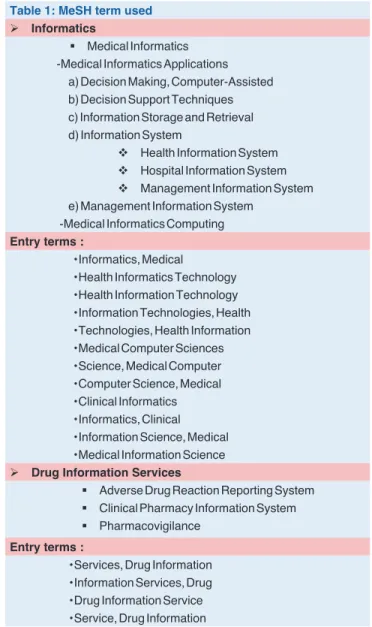
Pharmacoinformatics is a very broad and general terms thus a comprehensive search of medical subject heading using PubMed was performed. The subject headings included in this study is represented in (Table 1).
Other requirements for the studies are as following:
• The study should be written in English language • Primary source, such as research, project report,
Table 1: MeSH term used
Informatics
Medical Informatics -Medical Informatics Applications a) Decision Making, Computer-Assisted b) Decision Support Techniques c) Information Storage and Retrieval d) Information System
Health Information System Hospital Information System Management Information System e) Management Information System
-Medical Informatics Computing
Entry terms :
• Informatics, Medical
• Health Informatics Technology • Health Information Technology • Information Technologies, Health • Technologies, Health Information • Medical Computer Sciences • Science, Medical Computer • Computer Science, Medical • Clinical Informatics • Informatics, Clinical • Information Science, Medical • Medical Information Science Drug Information Services
Adverse Drug Reaction Reporting System Clinical Pharmacy Information System Pharmacovigilance
Entry terms :
author(s), country, year, objective(s), the statistical methods used to assess the importance of pharmacoinformatics study in pharmaceutical and health sciences, the results, and the authors’ conclusions.
Assessment of the methodological qual ity of the included reviews
The quality assessment tool for quantitative studies suggested by Cochrane Collaboration was adopted in this review. Independent assessment was conducted to evaluate the quality of the included studies.
Data synthesis
This review used the narrative synthesis. Meta-analysis was considered to be inappropriate and unsuitable because of the heterogeneity of the studies in terms of methods, participants, settings and outcomes. The synthesis step began with the organization of the extracted data by the author. A narrative description of the most common
factors identified from the review were reported and
discussed in the results and discussion sections.
Data sources
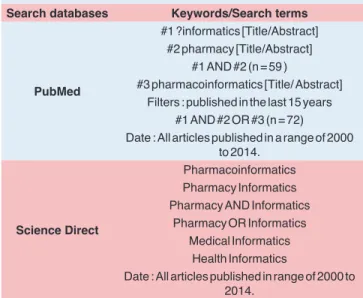
A databases used for this study was PubMed and Science Direct. Both databases search was conducted using the English key words, “pharmacoinformatics”, “pharmacy informatics”, “medical informatics”, “health informatics” and etc. as presented in (Table 2).
RESULTS
Descri ption of the included reviews
The search strategy resulted in the inclusion of sources, the majority of which expert opinion and examines the pharmacoinformatics relevance from a theoretical point of view, (PubMed, n=72) and a few articles from Science Direct based on the searching keywords in (Table 2) (pharmacoinformatics, pharmacy informatics, medical informatics etc). Based from the key word of “informatics” and “pharmacy” on PubMed databases using advanced
search, 59 articles is obtained with particular fields which is title and abstract. The articles were then being filtered
by article type, publication dates and languages of articles. The article type which is clinical trial (n=2) and in review articles (n=7). The articles has the range of publication dates which is 10 years (n=34) and 15 years (n=72).
Characteristics of the included reviews
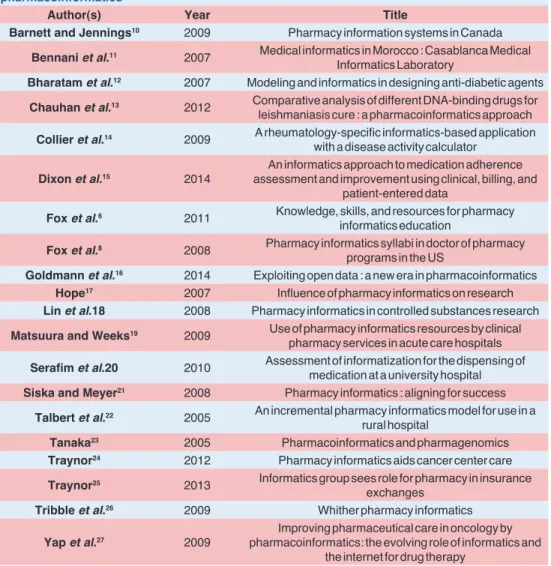
(Table 3) shows some of the available articles assessed for this review to identify and determine the study that presented information about development and application and the use of pharmacoinformatics in pharmaceutical and health sciences.
literature review, theoretical analysis, discussion paper, textbook, etc.
• Non-primary research articles that were published only as an abstract, review, commentary or letter were excluded from the review.
• The study is determining the importance of pharmacoinformatics topics in pharmaceutical and health sciences.
Search methods for the identification of reviews
Major widely used electronic databases were selected for the search, including PubMed and Science Direct (from 2000 to December 2014).
The search method depends on the selected year which is last 15 years from now as the requirement for this review. Last 15 years articles are believe as the most latest and updated information about pharmacoinformatics and its development as well as application. It is also depends on the availability to access to the electronic databases from the Universiti Teknologi MARA computer laboratory in which the searches were performed. A search strategy was designed using a particular search terms. For PubMed, the medical subject headings (MeSH) ‘informatics’, drug information’, and ‘pharmacoinformatics’ were used (Supplementary File 1).
Data extraction and management
Potential articles obtained from the searching strategy based on a few keywords were independently assessed on its titles and abstract for eligibility. Differences in decisions about inclusion and exclusion were resolved through consensus and a few considerations. A pre-developed data abstraction form was used to extract the following information from the included studies: the study title,
Table 2:Search databases and search terms used
Search databases Keywords/Search terms
PubMed
#1 ?informatics [Title/Abstract] #2 pharmacy [Title/Abstract]
#1 AND #2 (n = 59 )
#3 pharmacoinformatics [Title/ Abstract] Filters : published in the last 15 years
#1 AND #2 OR #3 (n = 72) Date : All articles published in a range of 2000
to 2014.
Science Direct
Pharmacoinformatics Pharmacy Informatics Pharmacy AND Informatics
Pharmacy OR Informatics Medical Informatics
Health Informatics
DISCUSSIONS
The objective of this review is to identify the studies that had presented information about application and the use of pharmacoinformatics in pharmaceutical and health sciences. Studies were included if their main objective were to explore and study the pharmacoinformatics. Pharmacoinformatics is a very broad and some general terms which include medical informatics, health informatics or pharmacy informatics.
Pharmacoinformatics cl inical appl ications
Diabetes mellitus which indicate the overproduction of glucose and glucose underutilization is a chronic metabolic disorder. Insulin injection is injected subcutaneously for the treatment of Type I diabetes mellitus.27 Delivery method of injected seems quite disturbing for a diabetic patients since it can causes pain and hurt. Therefore, pharmaceutical researcher still in progress to work on other delivery method which is oral delivery of insulin in tablet
form by using pharmacoinformatics approach.28 Molecular modeling and informatics studies on drugs associated with Type II diabetes mellitus such as virtual screening, quantum chemical studies and pharmacoinformatics were also used.19 Pharmacoinformatics techniques somehow is used for the comparative analysis of different DNA-binding drugs for leishmaniasis cure.29 Besides, pharmacoinformatics may include the use of informatics, the internet and interactive technologies to solve drug related problem which highlight on providing optimum pharmaceutical care and improved the safety of the patient. In addition,
pharmacoinformatics may increase the efficiency and
improve the pharmaceutical care of patients with cancer. The evolving role of informatics and the internet for drug therapy may improve pharmaceutical care in oncology by pharmacoinformatics.30 Health-care has increasingly
evolved with the informatics revolution applied the
opportunity of integrating pharmacoinformatics in the practice of clinical oncology to solve drug related problems. Some study describes an integrated informatics approach to
Table 3:Included articles that presented information about development and application of pharmacoinformatics
Author(s) Year Title
Barnett and Jennings10 2009 Pharmacy information systems in Canada
Bennani et al.11 2007 Medical informatics in Morocco : Casablanca Medical Informatics Laboratory
Bharatam et al.12 2007 Modeling and informatics in designing anti-diabetic agents
Chauhan et al.13 2012 Comparative analysis of different DNA-binding drugs for leishmaniasis cure : a pharmacoinformatics approach
Collier et al.14 2009 A rheumatology-specific informatics-based application with a disease activity calculator
Dixon et al.15 2014
An informatics approach to medication adherence assessment and improvement using clinical, billing, and
patient-entered data
Fox et al.6 2011 Knowledge, skills, and resources for pharmacy informatics education
Fox et al.8 2008 Pharmacy informatics syllabi in doctor of pharmacy programs in the US
Goldmann et al.16 2014 Exploiting open data : a new era in pharmacoinformatics
Hope17 2007 Influence of pharmacy informatics on research
Lin et al.18 2008 Pharmacy informatics in controlled substances research
Matsuura and Weeks19 2009 Use of pharmacy informatics resources by clinical pharmacy services in acute care hospitals
Serafim et al.20 2010 Assessment of informatization for the dispensing of medication at a university hospital
Siska and Meyer21 2008 Pharmacy informatics : aligning for success
Talbert et al.22 2005 An incremental pharmacy informatics model for use in a rural hospital
Tanaka23 2005 Pharmacoinformatics and pharmagenomics
Traynor24 2012 Pharmacy informatics aids cancer center care
Traynor25 2013 Informatics group sees role for pharmacy in insurance exchanges
Tribble et al.26 2009 Whither pharmacy informatics
Yap et al.27 2009
Improving pharmaceutical care in oncology by pharmacoinformatics: the evolving role of informatics and
identify problems with medication adherence and facilitate the communication strategies between patient and provider about the medication use.12
It is noteworthy, the role of pharmacy informatics specialist had emerged in acute care hospital.31 The use of clinical pharmacy informatics in patient care in acute care hospitals
is significantly more likely when a pharmacy informatics
specialist is present in the pharmacy.32 There is also an incremental pharmacy informatics model for use in a rural hospital.33 The next generation of medical informatics for patient safety which is hospital rules-based system enhances
the identification of drug related problem.34
Pharmacy education and research
Professional pharmacy programs providing formal pharmacy informatics education is crucial to train pharmacy student and practicing pharmacist on this area35,15,36 Doctor of pharmacy programs and all graduating pharmacy students should possess knowledge and skills in the informatics education as following requirement in the 2007 Accreditation Council for Pharmacy Education Standards and Guidelines.16 Doctor of pharmacy programs in the US has implemented the pharmacy informatics syllabi which helps the students to be able to utilize information technologies in practice to improve medication-related outcomes.15 Instead of pharmacy informatics, clinical informatics is also important for the pharmacy students. Effective teaching of clinical informatics in undergraduate teaching of health informatics should be highly interactive.37,38 Before developing an interactive approach in teaching pharmacy informatics or medical informatics, the study of the existing medical informatics course offered for students is being conducted.39 Pharmacies have become an important component in support of clinical research. Application of informatics in clinical research will result
in more efficient operation of research.32
Meanwhile, in an attempt to provide safe and efficient
supply chain management, the U.S. Food and Drug Administration has introduced the usage of drug
pedigree.40 The reason behind the introduction of
drug pedigree is that to clarify the drug originality in the supply chain.41 However, only 22.5% of the Unites
States hospitals get the verification of drug pedigree
from their primary wholesaler.41 Drug pedigree can be an important tool used to prevent the counterfeit drugs from entering the supply chain.42 Chemical and physical
identifications like the composition of excipients and impurities, morphology and thermal identification, can
serve as a ‘marker’ in identifying counterfeit drugs.43 Usage of near-infrared spectroscopy technology in
detecting counterfeit drugs also may provide a very quick screening.44 The effort in detecting counterfeit drugs is
somehow difficult due to complicated and non-uniform
nature across the world distribution system.45,46
Pharmacy informatics in hospital
The rapid development of information technology also leads to the benefits of electronic prescribing and inventory control used in hospital.47 e-prescribing or electronic prescribing is a method in which the prescription is undergoing the process of generation, transmission and receiving of the prescription from the prescriber to the dispenser by using electronic access.48 The usage of e-prescription in the outpatient setting has enabled uninterrupted transmission of prescription to the pharmacies and hence avoiding dispensing error and
enhances safety and efficacy.30,41 E-prescription also allows information such as patient’s medical history to be shared among the clinicians.49
A brief history about e-prescriptions is that they
came out in two generations. The first generation of
E-prescription includes a paper based prescription which also includes a barcode on that paper.48 This kind of prescription was started on February 2005 and starting from that time, 99% of the prescribers are able to produce e-prescription and 86% of the pharmacies are able to receive the prescription with the utilization of the software. The second generation of e-prescription is a prescription that depends solely on electronic transmission, in which they avoid the traditional use of paper based prescription and link
to the specified prescriber was also provided on the
prescription.48 The application of second e-prescription was started on 2009, and it is used widely throughout
the pharmacies in England on August 2012.48 From
Asia perspective, for example in Malaysia, e-prescription system were used on 21 facilities of government health clinics and all hospitals starting from March 2013.50,51 In a study done to evaluate the adoption and use of pharmacy informatics in all hospitals in the United States on 2007, it was found that among the hospitals with e-prescription system, 44.0% of the hospital had
implemented CDSS to enhance prescribing process.41
The CDSS provide supportive information likes drug
choices and patient medical records,41 and pop-up
the data to help them in handling medication therapy, but only 56.7% of the hospitals enabled the pharmacist
to report in the EMR.41 Meanwhile, 15% and 81% of
hospitals in Riyadh region of Saudi Arabia implement total and partial EMR systems, respectively where the pharmacists monitorpatients’ medication therapy constantly.36 In some developing countries, however, the implementation of total Hospital Information System (HIS) possessed some problems due to poor information
technology facilities, insufficient hard work as well as
challenges in providing an acceptable software and hardware.50,53 By any means, the HIS provided in the hospital setting should conform to criteria like it should have an acceptable security control of the data supplied, it is also should be usable in all branch of the health system.20,54 The vendors which supply those software and hardware also should possess standardization in terms of its accumulation, coding of data and the method involved in transferring the data.55,56
Information technology also makes the inventory control becomes easier. Wise management of drug inventory is very crucial so that drug shortage problem could be prevented. For example, in a study done on 2007 in the United States, it is found that 95.6% from all hospitals in the United States ordering drugs from the primary wholesaler through the use of internet, while 34% of them also made the ordering of schedule II items online.41
Meanwhile, problems in drug shortage may affect patient care and lead to disruption of medication order process.25,57 The use of the technology-operated system
such as radio frequency identification and bar codes
offers advantages on the pharmacist’s role in controlling inventory. On 2007, a study done in United States found that 29.9% of the hospitals use bar codes technology and 2.0% of the hospitals uses radio frequency
identification.41 The bar codes can be generated on
numbers of items by using the pharmacy information system.58,59 This is beneficial so that all items can be scanned by the medication storage and distribution
devices.60 With the advancement in technology, new
efficient technology could replace the existing one
and hence helping pharmacist towards better work performance.58,59 For example, most of the hospitals in United States used decentralized distribution system with a percentage of 52.7%.41 This type of distribution
system use automated dispensing cabinet that was interfaced with the pharmacy information system.41 The decentralized system is also characterized with the use of satellite pharmacies so that drug distribution process can be done smoothly.61
CONCLUSION
The rapid development of internet has led to the pharmacoinformatics technologies to assist the pharmaceutical care and health-related outcomes. Based on the study, it can be conclude that pharmacoinformatics has a lot of advantages and uses especially in pharmaceutical and health sciences. Pharmacoinformatics has a purpose
which maximizing the benefits from the use of information
systems and technologies. Pharmacoinformatics also has the purpose related with the properties of the drug and management of the drug properties. Pharmacoinformatics may enhance the pharmacoeconomics context of decision-making. In addition, pharmacoinformatics is a basic tool for the purpose of drug discovery. In the needs of future, there will be more improvement in the information technology scope, thus pharmacoinformatics may become a vital and basic element of pharmaceutical science.
CONFLICTS OF INTEREST
All authors have no financial or competing interest.
ACKNOWLEDGEMENT
This work was supported by Research Acculturation Grant Scheme (RAGS), Malaysia (RAGS/2013/UITM/ SKK02/2). The authors would like to express their gratitude to Ministry of Education, Malaysia and Universiti Teknologi MARA, Malaysia for financial support for this research. We thank Nur Amirah Abd Karim for her preliminary literature review.
ABBREVIATION
CDSS: Clinical decision support system
MeSH: Medical subject headings
U.S.: United States
REFERENCES
1. Astrand B. ePrescribing: studies in pharmacoinformatics. PhD thesis. School of Pure and Applied Natural Sciences, University of Kalmar, Sweden. Available online: http://www.diva-portal.org/ smash/record.jsf?pid=diva2:1874. Accessed 25 Dec 2014. 2007. 2. Jadad AR, Gagliardi A. Rating health information on the Internet.
JAMA: the journal of the American Medical Association 1998; 279(8): 611-4.
3. Mantas J, Ammenwerth E, Demiris G, Hasman A, Haux R, Hersh
W, et al. Recommendations of the International Medical Informatics Association (IMIA) on Education in Biomedical and Health Informatics. First Revision. Methods Inf Med. 2010; 49(2): 105-20. 4. Dasta JF, Greer ML, Speedie SM. Computers in healthcare:
overview and bibliography. Ann Pharmacother. 1992; 26(1): 109-17.
5. Goldmann D, Montanari F, Richter L, Zdrazil B, Ecker GF. Exploiting open data: a new era in pharmacoinformatics. Future Med Chem. 2014; 6(5): 503-14.
6. Ibrahim MIM, Bahari MB, Mohamed MHN, Awang R. Design and evaluation of the pharmacoinformatics course at a pharmacy school in Malaysia. Drug Info J. 2002; 36(4): 783-9.
7. Jelliffe RW, Tahani B. Pharmacoinformatics: equations for serum drug assay error patterns; implications for therapeutic drug monitoring and dosage. Proc Annu Symp Comput Appl Med Care. 1993; 517-21.
8. Nyola N, Jeyablan G, Kumawat M, Sharma R, Singh G, Kalra N. Pharmacoinformatics: A tool for drug discovery. Am J Pharm Tech Res. 2012; 2(3).
9. Zeind CS, Blagg JD, Jr, Amato MG, Jacobson S. Incorporation of Institute of Medicine competency recommendations within doctor of pharmacy curricula. Am J Pharm Educ. 2012; 76(5): 83. 10. Kushwaha K, Kushwaha N, Rai A. Recent trends on the future of
graduate education in the pharmaceutical sciences and research. J Young Pharm. 2010; 2(2): 206-12.
11. Boggie DT, Howard JJ, Simonian AI. Pharmacy information systems. In: Anderson PO, McGuinness SM, Bourne PE, editors. Pharmacy Informatics. Boca Raton: CRC Press; 2010. P.93-105. 12. Dixon BE, Jabour AM, Phillips EO, Marrero DG. An informatics
approach to medication adherence assessment and improvement using clinical, billing, and patient-entered data. J Am Med Inform Assoc. 2014; 21(3): 517-21.
13. Ming LC, Mei YS, Muhammad AM, Hussain M, Manan MM. Outcome base approach for a new pharmacoinformatics course
for bachelor of pharmacy programme. Taylor’s 7th Teaching and Learning Conference 2014 Proceedings- Holistic Education: Enacting Change; 2015.
14. Albadr Y, Bohassan AK, Ming LC, Khan TM. An exploratory study investigating the potential drug–drug interactions in internal medicine department, Alahsa, Saudi Arabia. J Pharm Health Serv Res. 2014; 5(4): 237-41.
15. Fox BI, Karcher RB, Flynn A, Mitchell S. Pharmacy informatics syllabi in doctor of pharmacy programs in the US. Am J Pharm Educ. 2008; 72(4): 89.
16. Fox BI, Flynn AJ, Fortier CR, Clauson KA. Knowledge, skills, and
resources for pharmacy informatics education. Am J Pharm Educ. 2011; 75(5): 93.
17. Balen RM, Jewesson PJ. Pharmacist computer skills and needs
assessment survey. J Med Internet Res. 2004; 6(1): e11.
18. Manan MM, Rusli RA, Ang WC, Al‐Worafi Y, Ming LC. Assessing
the pharmaceutical care issues of antiepileptic drug therapy in hospitalised epileptic patients. J Pharm Pract Res. 2014; 44(3): 83-8.
19. Bharatam PV, Patel DS, Adane L, Mittal A, Sundriyal S. Modeling
and informatics in designing anti-diabetic agents. Curr Pharm Des. 2007; 13(34): 3518-30.
20. Barnett J, Jennings H. Pharmacy information systems in Canada.
Stud Health Technol Inform. 2009; 143: 131-5.
21. Lapane KL, Cameron K, Feinberg J. Technology for Improving
Medication Monitoring in Nursing Homes. Advances in Patient Safety: From Research to Implementation (Volume 4: Programs, Tools, and Products). Rockville MD; 2005.
22. Feldstein A, Simon SR, Schneider J, Krall M, Laferriere D, Smith DH, et al. How to design computerized alerts to safe prescribing practices. Jt Comm J Qual Saf. 2004; 30(11): 602-13.
23. Bernknopf AC, Karpinski JP, McKeever AL, Peak AS, Smith KM,
Smith WD, et al. Drug information: from education to practice.
Pharmacotherapy 2009; 29(3): 331-46.
24. Sweet BV, Tamer HR, Siden R, McCreadie SR, McGregory ME,
Benner T, et al. Improving investigational drug service operations
through development of an innovative computer system. Am J Health Syst Pharm. 2008; 65(10): 969-73.
25. Phansalkar S, van der Sijs H, Tucker AD, Desai AA, Bell DS, Teich
JM, et al. Drug-drug interactions that should be non-interruptive in order to reduce alert fatigue in electronic health records. J Am Med Inform Assoc. 2013; 20(3): 489-93.
Highlights of Paper
• The rapid development of internet has led to the pharmacoinformatics technologies to assist the pharmaceutical care and health-related outcomes.
• Pharmacoinformatics optimize the benefits from the use of information systems and technologies.
• Pharmacoinformatics may enhance the pharmacoeconomics context of decision-making.
• With improvement in the information technology scope, pharmacoinformatics may become a vital and basic element of pharmaceutical science.
Author Profile
• Dr Long Chiau Ming: He obtained his BPharmand M(ClinPharm) from Universiti Sains Malaysia in 2005 and 2009 respectively. His master dissertation is on heart failure medications and disease state management. Then, he underwent PhD training in University of Bath, UK. He teaches research methodology, pharmacoinformatics and clinical pharmacy subjects since 2017. He has a special interest in pharmacy education and pharmacoinformatics and holds a Postgraduate Certification in Education from UiTM.
26. Tang R, Zhang Y, Yi T. Pharmacoinformatics technology. Pharm Care Res. 2003; 3(4): 210-13.
27. Manan MM, Husin AR, Alkhoshaiban AS, AlWorafi YMA, Ming LC.
Interplay between oral hypoglycemic medication adherence and quality of life among elderly type 2 diabetes mellitus patients. J Clin Diagn Res. 2014; 8(12): JC05-9.
28. Seenivasagam R, Hemavathi K, Sivakumar G, Niranjan
V. Discovering novel carriers for oral insulin tablets: a pharmacoinformatics approach. Int J Bioinform Res Appl. 2013; 9(2): 184-206.
29. Chauhan N, Vidyarthi AS, Poddar R. Comparative analysis
of different DNA-binding drugs for leishmaniasis cure: a pharmacoinformatics approach. Chem Biol Drug Des. 2012; 80(1): 54-63.
30. Yap KY-L, Chan A, Chui WK. Improving pharmaceutical care in
oncology by pharmacoinformatics: the evolving role of informatics and the internet for drug therapy. Lancet Oncol. 2009; 10(10): 1011-9.
31. Matsuura GT, Weeks DL. Use of pharmacy informatics resources
by clinical pharmacy services in acute care hospitals. Am J Health Syst Pharm. 2009; 66(21): 1934-8.
32. Lawrence D. Clinical Tech Trends: Clinical informaticists. Health
Inform. 2010; 27(2): 34,36.
33. Talbert DA, Roush E, Velazco L, White C. An incremental pharmacy
informatics model for use in a rural hospital. AMIA Annu Symp Proc. 2005; 1131.
34. Wilson JW, Oyen LJ, Ou NN, McMahon MM, Thompson RL,
Manahan JM, et al. Hospital rules-based system: the next
generation of medical informatics for patient safety. Am J Health Syst Pharm. 2005; 62(5): 499-505.
35. Phillips JA, Gabay MP, Ficzere C, Ward KE. Curriculum and
instructional methods for drug information, literature evaluation, and biostatistics: survey of US pharmacy schools. Ann Pharmacother. 2012; 46(6): 793-801.
36. Alsultan MS, Mayet AY, Khurshid F, Al-jedai AH. Hospital pharmacy practice in Saudi Arabia: Drug monitoring and patient education in the Riyadh region. Saudi Pharm J. 2013; 21(4): 361-70. 37. Sullivan F. What is health informatics? J Health Serv Res Policy.
2001; 6(4): 251-4.
38. Pantazi SV, Pantazi F, Daly K. Clinical informatics in undergraduate teaching of health informatics. Stud Health Technol Inform. 2011; 164(1): 58-63.
39. Lungeanu D, Tractenberg RE, Mihalas GI. Developing an interactive approach in teaching medical informatics. Stud Health Technol Inform. 2006; 124: 885-90.
40. Administration USFaD. Prescription drug marketing Act- pedigree requirements. Available from: U.S. http://www.fda.gov/ICECI/ ComplianceManuals/CompliancePolicyGuidanceManual/ ucm073857.htm. Accessed 28 Dec; 2014. 2012.
41. Pedersen CA, Gumpper KF. ASHP national survey on informatics: assessment of the adoption and use of pharmacy informatics in U.S. hospitals. Am J Health Syst Pharm. 2008; 65(23): 2244-64. 42. Watson MC, Bond CM, Grimshaw J, Johnston M. Factors
predicting the guideline compliant supply (or supply) of non-prescription medicines in the community pharmacy setting. Qual Saf Health Care. 2006; 15(1): 53-7.
43. Olsen BA, Borer MW, Perry FM, Forbes RA. Screening for counterfeit drugs using near-infrared spectroscopy. Pharmaceutical
technology 2002; 26(6): 62-71.
44. Chen H, Tan C, Wu T, Wang L, Zhu W. Discrimination between authentic and adulterated liquors by near-infrared spectroscopy and ensemble classification. Spectrochim Acta A Mol Biomol Spectrosc. 2014; 130: 245-9.
45. Jackson G, Patel S, Khan S. Assessing the problem of counterfeit medications in the United Kingdom. Int J Clin Pract. 2012; 66(3): 241-50.
46. Garuba HA, Kohler JC, Huisman AM. Transparency in Nigeria’s public pharmaceutical sector: perceptions from policy makers. Global Health 2009; 5: 14.
47. Domitru D. The Pharmacy Informatics Primer: American Health System Pharmacists; 2008.
48. Petrakaki D, Barber N, Waring J. The possibilities of technology
in shaping healthcare professionals:(Re/De-) Professionalisation of pharmacists in England. Soc Sci Med. 2012; 75(2): 429-37. 49. Motulsky A, Sicotte C, Lamothe L, Winslade N, Tamblyn R.
Electronic prescriptions and disruptions to the jurisdiction of community pharmacists. Soc Sci Med. 2011; 73(1): 121-8. 50. Ismail NI, Abdullah NH, Shamsudin A, Ariffin NAN. Implementation
differences of hospital information system (HIS) in Malaysian public hospitals. Int J Soc Sci Human. 2013; 3(2): 115-20.
51. Health Informatics Standard MoHM. Pharmacy information system: Business function model. Available online: http://www.moh.gov.my/ images/gallery/publications/hi/Pharmacy_Information_System.pdf. Accessed 15 Dec 2014. 2006.
52. Lin JL, Vahabzadeh M, Mezghanni M, Na PJ, Leff M, Contoreggi C. Pharmacy informatics in controlled substances research. AMIA Annu Symp Proc 2008; 1025.
53. Ismail A, Jamil AT, Rahman AFA, Bakar JMA, Saad NM, Saadi H. The implementation of Hospital Information System (HIS) in tertiary hospitals in Malaysia: a qualitative study. Malaysian J Public Health Med. 2010; 10(2): 16-24.
54. Ekeland AG, Bowes A, Flottorp S. Effectiveness of telemedicine: a systematic review of reviews. Int J Med Informatics. 2010; 79(11): 736-71.
55. Yunus NM, Latiff DSA, Mulud ZA, Ma’on SN. Acceptance of Total Hospital Information System (THIS). Available online: http://www. ijfcc.org/papers/143-K00004.pdf. Accessed 12 Dec 2014. Int J Future Comput Comm. 2013; 2(3): 160-3.
56. Blumenthal D. Stimulating the adoption of health information technology. New England J Med. 2009; 360(15): 1477-9. 57. Levy MA, Giuse DA, Eck C, Holder G, Lippard G, Cartwright J, et
al. Integrated information systems for electronic chemotherapy medication administration. J Oncol Pract. 2011; 7(4): 226-30. 58. ASHP statement on bar-code-enabled medication administration
technology. Am J Health Syst Pharm 2009; 66(6): 588-90. 59. American Society of Health-System Pharmacists. ASHP Policy
Positions 2009–2014 (with Rationale): Automation and IT. Available online: http://www.ashp.org/DocLibrary/BestPractices/ AutoITPositions.aspx. Accessed 10 Dec 2014.
60. Dexter PR, Perkins S, Overhage JM, Maharry K, Kohler RB, McDonald CJ. A computerized reminder system to increase the use of preventive care for hospitalized patients. New England J Med. 2001; 345(13): 965-70.