1
Assessment of Surgeons' Attitudes Toward Intraoperative Coaching
at The University of North Carolina at Chapel Hill
By
Omar M. Alhudaib, MD
A Master‟s Paper submitted to the faculty at the University of North Carolina at Chapel Hill
in partial fulfillment of the requirements for the degree of Master of Public Health in
the Public Health Leadership Program
Chapel Hill
Fall 2015
_____________________________________
_____________________________________
_____________________________________
2
Table of Contents
Abstract ……….. 4
Introduction ……….……… 5
Methods ………. 6
Results ………. 8
Subgroup Question 6 “Very Worthwhile” Analysis………... 16
Discussion ………... 17
Pilot Program & Global Application ………. 17
Conclusion ………. 21
References ………. 22
Appendix 1 ...………..….. 23
Appendix 2 ...……….. 27
3
List of Figures
Figure 1. Demographics of Respondents by Sex ………... 8
Figure 2. Demographics of Respondents by Administrative Division ……….. 9
Figure 3. Demographics of Respondents by Faculty Rank ………... 10
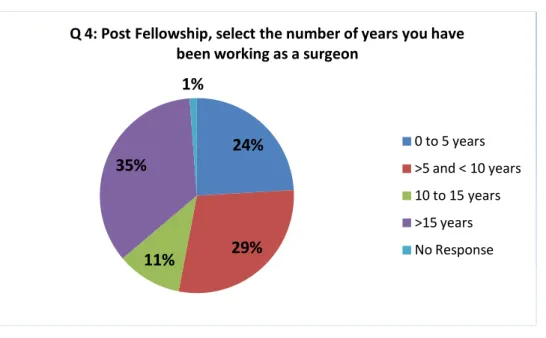
Figure 4. Respondents by Surgical Experience ………. 11
Figure 5. Respondents by Academic Experience ………... 11
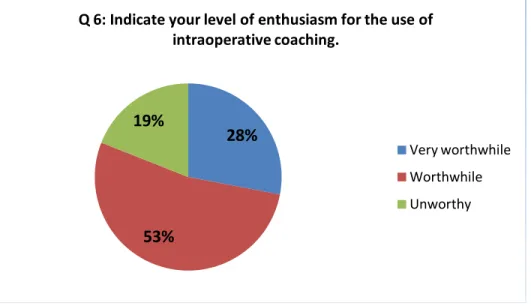
Figure 6. Surgeons’ Support of Intraoperative Coaching ………... 12
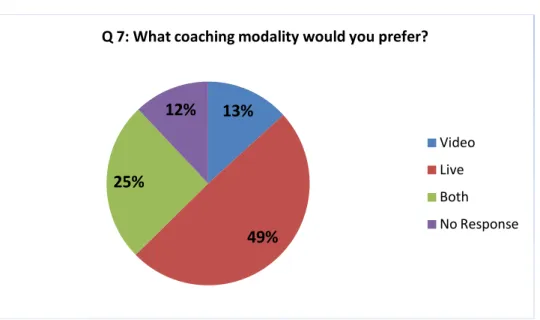
Figure 7. Surgeons’ Preference of Coaching Modality ………. 13
Figure 8. Surgeons’ Experience Receiving Surgical Coaching ………. 13
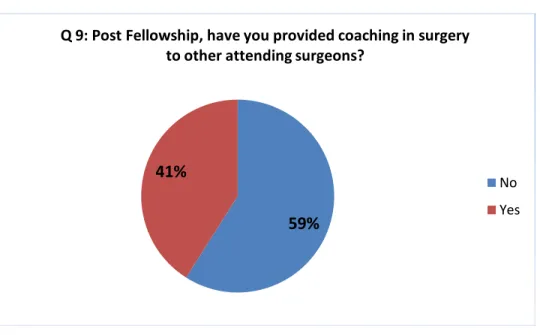
Figure 9. Surgeons’ Experience Providing Surgical Coaching ………. 14
Figure 10. Respondents Average Length of Surgery: An Indicator for Coaching ……….. 15
4
Assessment of Surgeons' Attitudes Toward Intraoperative Coaching at
The University of North Carolina at Chapel Hill
Abstract
Purpose: Studying the feasibility of improving surgeon performance using an intraoperative coaching model at the University of North Carolina at Chapel Hill (UNC).
Methods: This is an observational study where barriers to acceptance and participation have been evaluated through an electronic questionnaire offered to senior faculty surgeons operating at UNC.
Results: A total of 83 senior faculty surgeons responded. The highest number for a question response was 83 and the lowest number for a question response was 73. There was a statistically significantly level of enthusiasm for the use of intraoperative coaching, 44 surgeons (53%) found it to be worthwhile and 23 (28%) found it to be very worthwhile. The highest preference for a coaching modality was live with a total of 41 surgeons (56%).
5
Introduction:
Hospitals and more specifically operating rooms (OR), are like any other organization
and work environments that continuously demand improvement. In the OR, we can
observe the crew, led by the surgeon, working together to accomplish the goals of the
procedure. This collaborative process that is observed includes many activities in the
form of skills, teaching, communication, and teamwork. The surgeon in the OR is
expected to be able to perform and orchestrate this process in order to overcome the
challenges he/she is facing with their crew.
The question which arises here is whether there is an opportunity for more learning,
development and improvement at this level? Surgeons, similar to many other professions,
reach a plateau in their performance during their career where at some point it starts to
decrease and becomes self-evident (Guawande, 2011). In other industries (e.g. music and
sports), coaches are found to continuously teach, observe, and evaluate in order to
maintain and improve an individual or team performance (Guawande, 2011).
Whether through live in-person or video-recording, this principal of providing
coaching to surgeons in the OR, could change the post graduate training concept by
creating an evolving professional rather than an end product (Hu, 2012). A structured
approach to life long learning in the operating room this could ultimately be a key factor
for future surgical education and training. (Alken, 2015). The first step in this process
requires an assessment of the attitudes that attending surgeons have toward ongoing
6
Methods:
We conducted a literature search in PubMed/MEDLINE, first in March 2015 and then
again in September 2015 with no change in the results. The terms and key words used in
the search strategy were (intraoperative OR team) (coaching) (surgery OR surgical) (live
OR video) NOT (simulation). Using these search terms, three articles matching the
search criteria were found in the PubMed/MEDLINE database. Other resources were
explored in the grey literature (Web Resource, TV & Magazine); three articles matching
our search were found in Medscape, CNN and The New Yorker.
In order to conduct the assessment, questions of interest were formed and a survey
instrument was designed with the use of Qualtrics through the Odum Institute at The
University of North Carolina at Chapel Hill. Various elements were contained in the
assessment questionnaire including: basic demographics (gender, official administrative
division, faculty ranking), years of experience post-fellowship working as a surgeon,
years of experience working in academia, level of enthusiasm for the use of
intraoperative coaching, preference of coaching modality, have they provided any
coaching fellowship to other attending, have they received any coaching
post-fellowship from other attending, average length of surgery, and have they previously
participated in collegiate competitions and activities e.g. sports, music, performance,
7
The electronic assessment questionnaire was discussed and approved by the
Committee of Perioperative Leaders (CoPL) at UNC hospitals in Chapel Hill.
Application was then submitted to the Institutional Review Board (IRB) and Office of
Human Research Ethics at UNC for approval. Which determined it to be exempt from
further review according to under policy 45 CFR 46.101(b). Exemption Category:
2.Survey, interview, public observation. (Appendix-2).
An electronic link with access to the questionnaire was provided to the chairmen of
nine surgical departments at UNC Hospital in Chapel Hill, and was distributed by them
via email to only their senior faculty attending in their respective departments. Junior
faculty (residents & fellows) were excluded. The nine departments that took part in the
survey were: Surgery, Obstetrics & Gynecology, Orthopedics, Urology, Ophthalmology,
Neurosurgery, Adult Dental, Otolaryngology/Head and Neck, and Oral & Maxillofacial.
Under the department of Surgery, nine divisions were included: Abdominal Transplant,
Burn Center, Gastrointestinal, General and Acute Care, Pediatric, Plastic and
Reconstructive, Oncology, and Vascular. A reminder was sent a week after
administrating the link by their chairmen and was closed 20 days later from the initial
start day.
The estimated size of senior attending population was more than 100, with 50
participants being considered acceptable response and greater than 75 participants
considered an excellent response. The survey results were described through descriptive
statistics (number and percentage) by survey question using Excel to also generate
8
Results:
A total of 83 senior faculty surgeons responded. The highest number for a question
response occurred was 83 and the lowest number for a question response occurred was
73.
Question number one: a total of 81 from 83 answered for sex selection; 51 (61%) are
male, 30 (36%) are female, and 2 did not respond.
Figure 1. Demographics of Respondents by Sex.
Question number two: a total of 83 answered for selecting official administrative
division, 24 (29%) from Surgery, 23 (28%) from Obstetrics & Gynecology, 12 (14%)
from Orthopedics, 10 (12%) from Urology, 4 (5%) from Ophthalmology, 3 (4%) from
Neurosurgery, 2 (2%) from Adult Dental, and 1 (1%) from Otolaryngology/Head and
Neck Surgery. No answers came from Oral & Maxillofacial Surgery. The 24 answers for
the Department of Surgery came from 9 sub- divisions as follow: 5 (6%) from
61% 36%
2%
Q 1: Select your sex
9
Cardiothoracic, 4 (5%) from General & Acute Care, 4 (5%) from Pediatric, 4 (5%) from
Gastrointestinal, 3 (4%) from Plastic & Reconstructive, 2 (2%) from Vascular, 1 (1%)
from Abdominal Transplant, 1 (1%) from Oncology, and no answers came from Burn
Center.
Figure 2. Demographics of Respondents by Administrative Division.
* Nine divisions included in the Dept of Surgery.
29%
28% 14%
12% 5% 4%
2% 1%
0% 5%
Q 2: Select your official administrative division
Dept of Surgery*
Obstetrics & Gynecology
Orthopedics
Urology Surgery
Ophthalmology
Neurosurgery
Adult Dental
Otolaryngology/Head and Neck Surgery
10
Question number three: a total of 83 selected for faculty rank, 31 (37%) for assistant
professor, 29 (35%) for professor, 20 (24%) for associate professor, and 3 (4%) selected
other (one distinguished professor, one clinical instructor, and one did not specify).
Figure 3. Demographics of Respondents by Faculty Rank.
Question number four: a total of 82 from 83 answered the number of years they have
been working as a surgeon post fellowship, 29 (35%) more than 15 years, 24 (29%) more
than 5 and less than 10 years, 20 (24%) from 0 to 5 years, 9 (11%) from 10 to 15 years,
and 1 (1%) did not respond.
37%
24% 35%
4%
Q 3: Select your faculty rank
Assistant Professor Associate Professor Professor
11
Figure 4. Respondents by Surgical Experience.
Question number five: a total of 83 answered the number of years they have been
working in academia, 27 (33%) more than 15 years, 27 (33%) more than 5 and less than
10 years, 21 (25%) from 0 to 5 years, and 8 (10%) from 10 to 15 years.
Figure 5. Respondents by Academic Experience.
24%
29% 11%
35%
1%
Q 4: Post Fellowship, select the number of years you have been working as a surgeon
0 to 5 years >5 and < 10 years 10 to 15 years
>15 years No Response
25%
33% 10%
33%
Q 5: Select the number of years you have been working in academia
0 to 5 years > 5 and < 10 years
12
Question number six: a total of 83 answered for their level of enthusiasm for the use
of intraoperative coaching, 44 (53%) thought it to be worthwhile, 23 (28%) thought it to
be very worthwhile. Only 16 (19%) found it to be unworthy.
Figure 6. Surgeons’ Support of Intraoperative Coaching.
Question number seven: a total of 73 from 83 answered for their preferred coaching
modality, 41 (49%) selected live coaching, 21 (25%) selected both types of coaching, 11
(13%) selected video coaching, and 10 did not respond.
28%
53% 19%
Q 6: Indicate your level of enthusiasm for the use of intraoperative coaching.
13
Figure 7. Surgeons’ Preference of Coaching Modality.
Question number eight: a total of 82 from 83 answered whether they had received
coaching in surgery post fellowship, 62 (75%) said no, 20 (24%) said yes, and 1 did not
respond.
Figure 8. Surgeons’ Experience Receiving Surgical Coaching.
13%
49% 25%
12%
Q 7: What coaching modality would you prefer?
Video Live Both No Response
75% 24%
1%
Q 8: Post Fellowship, have you received coaching in surgery?
No Yes
14
Question number nine: a total of 83 answered if they had provided coaching in surgery
to other attending surgeons post fellowship, 49 (59%) said no, and 34 (41%) said yes.
Figure 9. Surgeons’ Experience Providing Surgical Coaching.
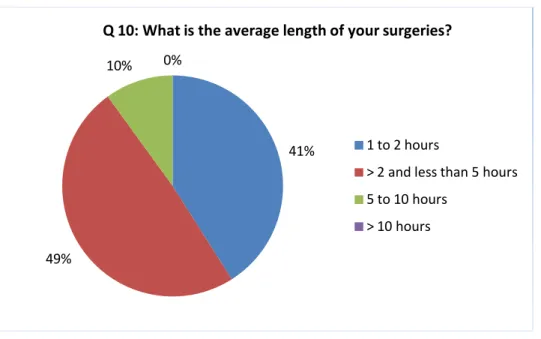
Question number ten: a total of 83 answered the average length of their surgeries, 41
(49%) more than 2 and less than 5 hours, 34 (41%) one to two hours, 8 (10%) from 5 to
ten hours, and non selected more than 10 hours.
59% 41%
Q 9: Post Fellowship, have you provided coaching in surgery to other attending surgeons?
15
Figure 10. Respondents Average Length of Surgery: An Indicator for Coaching.
Question number eleven: a total of 83 answered if they had participated in collegiate
competition and activities (e.g. sports, music, performance and debate.. etc), 48 (58%)
answered yes and 35 (42%) answered no.
Figure 11. Respondents Other Collegiate Coaching Experience.
41%
49%
10% 0%
Q 10: What is the average length of your surgeries?
1 to 2 hours
> 2 and less than 5 hours 5 to 10 hours
> 10 hours
42% 58%
Q 11: Have you participated in collegiate competitions and activities (e.g. sports, music, performance, debate .. etc)?
No
16 Subgroup Question 6 “Very Worthwhile” Analysis:
We decided to review the subgroup respondents based on the answer “very
worthwhile”, question number six, in relation to the other questions and formed a full
statistical report (Appendix-3). We found 10 (43%) were female which was one third of
the total 30 female respondents, while 13 (57%) were male which was a quarter of the
total 51 male respondents. The majority were from the department of Surgery 8 (35%)
and Obstetrics & Gynecology 7 (30%). Based on faculty rank, eleven (48%) were at the
level of assistance professor. When it comes to the number of years of surgical
experience, we found 8 (35%) had 0 to five years, and also 8 (35%) had more than 5 and
less than 10 years experience. For the number of years experience in academia, eleven
(48%) had more than 5 and less than 10 years experience. When looking at the preference
type for coaching, thirteen (57%) selected live as their preference of choice. We also
found that 17 (74%) did not receive any coaching, and 14 (61%) did not provide it to
other attending surgeons. Finally, fourteen (61%) had past coaching experience in
17
Discussion:
Although to our knowledge, no previous studies were found to assess the concept of
live intraoperative coaching, where a surgeon is observed and critiqued by another
surgical expert in the field for the purpose of working together to improve intraoperative
performance, this attitude questionnaire was able to provide us with the necessary
information that is needed to proceed for further phases in our research. The level of
enthusiasm, background and expertise, previous participation in coaching whether during
their professional or college years are all positive indicators for launching a multi-phase
pilot program with the intention of further expanding it abroad.
Pilot Program & Global Application:
We will establish a platform by which selected surgeons will be observed in the
operating room by experts to evaluate their surgical technique, teaching effectiveness,
and crew resource management. The purposed first phase for this live coaching program
will involve pairing three experienced surgical professionals as coaches one on one with
three chairmen from different specialties. It is felt that having chairmen participate in the
initial phase of the trial will lead to greater acceptability of the training by other members
of their departments and assist the program in adapting to the environment and culture of
ongoing improvement in the workplace. It will also show organizational commitment to
concept.
Three separate dates will be assigned for three pilot coaching sessions in the hospital.
The coach will observe the surgeon throughout the selected procedure in the OR. After
18
that was observed in regards to all aspects of the procedure; quality of the surgery,
efficiency of the surgery, communication and crew resource management during the
procedure, and teaching. The surgeon will also be provided the opportunity to respond to
these inputs. These two settings will occur during a limited time frame. The process of
exchanging feedback between both, the surgeon and the coach, will be observed and
evaluated by a third person, external evaluator, who is an expert in communication and
continuous quality improvement. When the coaching session is over, both the coach and
surgeon will be provided with the same electronic questionnaire that would include
evaluation of each other’s performance, and their own self assessment. This type of
assessment will enable us to engage both the coach and the surgeon in the rating process,
and provide us with a broader perspective by comparing the differences in perception
throughout the session. On the other hand, the external evaluator will be provided a
separate questionnaire to evaluate both feedback processes of the participants.
Further expansion of the program to potentially widespread use in the institution and
elsewhere will require proceeding to other phases and developing an outcome measures.
The next purposed phase for video based recording coaching in the OR, will provide
more convenience and mitigate any deficiencies associated with the live method (Hu,
2012). Our aim is to utilize each of these program strategies for contemporary training
that could lead to well balanced results (Łaski, 2013).
The live in-person coach will provide us with the flexibility between levels of
observing to engagement, which we can expect to produce immediate results. The coach
will always have the ability of free movement and improved view in the OR for more
19
different locations would require hefty investments in travelling and time, even with
facing the obstacle of being present on time to carry out last minute sessions. Also, the
surgical coach is expected to assess without interruption; the surgeons’ surgical technique
and approach, quality of teaching provided to the fellows, residents and students, and
leading and communicating with the rest of the team throughout the operation. This is
where we expect video based coaching to complement the next phase of this educational
and training method.
Video based recording could produce improvement in quality and learning (Haelle,
2015). We can see from our own personal use of videos, how it provides a versatile
method of learning especially with the ability of controlling the timeline of review at the
convenience of both the coach and the surgeon. This transportable value enables the
coach to provide his expertise anywhere in the world. We can expect video based
coaching to be a potent visual educational tool for a predominantly visual learning field
in the form of surgery. Although, this technique is lacking for the immediate effect and
intervention, the crucial drawback comes mainly in the cost, equipments and privacy
issues (Haelle, 2015).
To prevent mistakes in the OR, researchers utilized video recordings with other
variables, like data about the patient and team, to analyze the procedure by a surgical
black box (Sathya, 2014). The intended use of this device is to have a system that would
analyze data in similar fashion to airplanes devices. This method of electronic monitoring
could provide us with valuable information in the case of adverse situations in the OR
20
components, where computers replace human experts to carry out the monitoring that is
important to comprehend all the necessary information during an OR procedure.
Some of the concerns we have that may emerge and needs to be addressed are due to
the nature of coaching and affect on the surgical participant. For example, will this
change in the surgeons’ practical environment lead them to become more dependent on
their surrounding, either from the in-person coaching or video recording, for their training
and improvement? How much affect will it have on the surgeons own ability and
self-confidence? Those concerns will be assessed and the coach has to be experienced
enough to be able to identify these issues, and prevent any damage this may cause to the
surgeons own ability.
This coaching modality we are initiating seems in theory to be more applicable in well
developed areas, but with the advanced telecommunications we have today, less
developed ones will still stand a better chance. We believe this program can be beneficial
in regions where surgical providers lack resources. For instance, if there is a shortage of
surgeons in an area where each practitioner is required to perform surgery for multiple
specialties, the coaching program will probably augment the skills and performance to
ensure decreasing the gap of the surgical care provided. This can also be applied to other
members of the healthcare team to learn and perform basic surgical procedures to further
develop the limited workforce and increase task shifting. Although, many factors like
facilities and infrastructure would play a role in the quality of services provided, the main
focus of this technology will be on teaching skills to the surgeons, nurses and community
health workers to expand their roles and peer coaching in order to help sustain the work
21
Overall, we suggest evaluating the impact of the coaching program over an extended
period of time for certain outcome measures with a larger number of participants. We
also need to acquire a baseline for the measures we identify in our hospital. This will
allow us to initiate comparisons and enable the recognition of areas that require more
intervention and development. These measures include clinical and personal outcomes in
our assessment for quality improvement. Clinical outcomes that could be assessed
includes: cost-effectiveness, recovery and discharge time, complication and readmission
rates, number of follow-ups, duration of operations, and mortality. For personal
outcomes, we expect to monitor the surgeons’ improvements in the approach and
technique, self confidence, time and resource management, communication, teaching, and
team effectiveness. By the use of this program, hospitals will ultimately benefit from
measuring these outcomes, and demonstrate to their faculties’ commitment toward their
personal and professional development.
Conclusion:
Faculty members at the University of North Carolina at Chapel Hill are generally in
favor of the concept of intraopertaive coaching. An effective intraoperative coaching
methodology will therefore be developed where selected surgeons will be observed in the
operating room by experts to evaluate their surgical technique, teaching effectiveness,
and team leadership and management leading to quality improvement. This will lead to a
22
References:
Alken, A., Tan, E., Luursema, J., Fluit, C., & Goor, H. (2015). Coaching during a trauma surgery team training: Perceptions versus structured observations. The American Journal of Surgery, 209(1), 163-169.
Guawande, Atul (2011). Personal Best. Top athletes and singers have coaches. Should you? Retrieved from http://www.newyorker.com/magazine/2011/10/03/personal-best. Accessed 10/1,2014.
Haelle, Tara (2015). Would Video Recording Build Physician Accountability? Retrieved from http://www.medscape.com/viewarticle/853048#vp_1. Accessed 11/10, 2015.
Hu, Y., Peyre, S., Arriaga, A., et al. (2012). Postgame Analysis: Using Video-Based Coaching for Continuous Professional Development. Journal of the American College of Surgeons, 214(1), 115-124.
Łaski, D., Stefaniak, T., Makarewicz, W., Proczko, M., Gruca, Z., & Śledziński, Z. (2013). New comprehensive surgical curriculum of pre-graduate surgical education. Videosurgery and Other Miniinvasive Techniques Wiitm, 8(3), 200-210.
Sathya, Chethan (2014). Surgical 'black box' could reduce errors. Retrieved from
http://www.cnn.com/2014/08/22/health/black-box-surgery/index.html?hpt=he_c2.
23
Appendix 1.
Electronic Questionnaire:
Surgeon's Attitudes Toward Intraoperative Coaching - UNC-CH
-Thank you for participating in this short survey to collect surgeon's attitudes towards
intraoperative coaching. -This survey will take 2 minutes to complete and has been
approved by the Committee of Perioperative Leaders (CoPL) at UNC-Chapel
Hill.-Intraoperative coaching is where a surgeon is observed and critiqued by another surgical
expert in the field for the purpose of working together to improve intra-operative
performance. -No personally identifying information will be collected.-We appreciate
your honest responses to each of the following questions. -If you have any questions or
concerns about this survey please contact Dr. Omar Alhudaib
([email protected]) or Dr. Richard Feins ([email protected]).
Thank you.
Q1 1- Select your sex:
Male
24
Q2 2- Select your official administrative division:
General and Acute Care Surgery
Abdominal Transplant Surgery
Burn Center
Cardiothoracic Surgery
Gastrointestinal Surgery
Pediatric Surgery
Plastic and Reconstructive Surgery
Surgical Oncology
Vascular Surgery
Urology Surgery
Otolaryngology/Head and Neck Surgery
Obstetrics & Gynecology
Oral & Maxillofacial Surgery
Neurosurgery
Orthopedics
Ophthalmology
Adult Dental
Q3 3- Select your faculty rank:
Assistant Professor
Associate Professor
Professor
Other (please specify) ____________________
Q4 4- Post Fellowship, select the number of years you have been working as a surgeon:
0 to 5 years
>5 and less than 10 years
10 to 15 years
25
Q5 5- Select the number of years you have been working in academia:
0 to 5 years
> 5 and less than 10 years
10 to 15 years
> 15 years
Q6 6- Indicate your level of enthusiasm for the use of intraoperative coaching.
Very worthwhile
Worthwhile
Unworthy
Q7 7- What coaching modality would you prefer?
Video
Live
Both
Q8 8- Post Fellowship, have you received coaching in surgery?
No
Yes
Q9 9- Post Fellowship, have you provided coaching in surgery to other attending surgeons?
No
Yes
Q10 10- What is the average length of your surgeries?
1 to 2 hours
> 2 and less than 5 hours
5 to 10 hours
26
Q11 11- Have you participated in collegiate competitions and activities (e.g. sports, music, performance, debate .. etc)?
No
Yes
27
Appendix 2.
IRB Exemption:
To: Omar Alhudaib Public Health Leadership
From: Office of Human Research Ethics
Date: 7/27/2015
RE: Notice of IRB Exemption
Exemption Category: 2.Survey, interview, public observation
Study #: 15-1886
Study Title: Assessment of Surgeon's Attitudes Toward Intraoperative Coaching at The University of North Carolina at Chapel Hill.
This submission has been reviewed by the Office of Human Research Ethics and was
determined to be exempt from further review according to the regulatory category cited
above under 45 CFR 46.101(b).
Study Description:
Purpose: Studying the feasibility of improving surgeon performance using an
intraoperative coaching model at the University of North Carolina at Chapel Hill.
Participants: Senior faculty surgeons operating at the University of North Carolina at
Chapel Hill.
Procedures (methods): This is an observational study where barriers to acceptance and
28
Investigator’s Responsibilities:
If your study protocol changes in such a way that exempt status would no longer apply,
you should contact the above IRB before making the changes. There is no need to inform
the IRB about changes in study personnel. However, be aware that you are responsible
for ensuring that all members of the research team who interact with subjects or their
identifiable data complete the required human subjects training, typically completing the
relevant CITI modules.
The IRB will maintain records for this study for 3 years, at which time you will be
contacted about the status of the study.
The current data security level determination is Level I. Any changes in the data security
level need to be discussed with the relevant IT official. If data security level II and III,
consult with your IT official to develop a data security plan. Data security is ultimately
the responsibility of the Principal Investigator.
Please be aware that approval may still be required from other relevant authorities or
"gatekeepers" (e.g., school principals, facility directors, custodians of records), even
though the project has determined to be exempt. .
CC:
Anthony Viera, Public Health LeadershipIRB Informational Message - please do not use
29
Appendix 3.
Subgroup on Question 6 “VERY WORTHWHILE” Report:
1. 1- Select your sex:
# Answer Response %
1 Male 13 57%
2 Female 10 43%
Total 23 100%
Statistic Value
Min Value 1
Max Value 2
Mean 1.43
Variance 0.26
Standard Deviation 0.51
30
2. 2- Select your official administrative division:
# Answer Response %
12 Obstetrics &
Gynecology 7 30%
10 Urology Surgery 3 13%
1 General and Acute
Care Surgery 2 9%
14 Neurosurgery 2 9%
15 Orthopedics 2 9%
6 Pediatric Surgery 2 9%
4 Cardiothoracic
Surgery 2 9%
16 Ophthalmology 1 4%
5 Gastrointestinal
Surgery 1 4%
8 Surgical Oncology 1 4%
17 Adult Dental 0 0%
13 Oral & Maxillofacial
Surgery 0 0%
9 Vascular Surgery 0 0%
2 Abdominal
Transplant Surgery 0 0%
3 Burn Center 0 0%
7
Plastic and Reconstructive Surgery
0 0%
11 Otolaryngology/Head
and Neck Surgery 0 0%
Total 23 100%
Statistic Value
Min Value 1
Max Value 16
Mean 9.70
Variance 19.95
Standard Deviation 4.47
31
3. 3- Select your faculty rank:
# Answer Response %
1 Assistant
Professor 11 48%
2 Associate
Professor 6 26%
3 Professor 5 22%
4 Other (please
specify) 1 4%
Total 23 100%
Other (please specify) Clinical instructor
Statistic Value
Min Value 1
Max Value 4
Mean 1.83
Variance 0.88
Standard Deviation 0.94
Total Responses 23
4. 4- Post Fellowship, select the number of years you have been
working as a surgeon:
# Answer Response %
1 0 to 5 years 8 35%
2
>5 and less than 10 years
8 35%
3 10 to 15
years 1 4%
4 >15 years 6 26%
Statistic Value
Min Value 1
Max Value 4
32
5. 5- Select the number of years you have been working in
academia:
# Answer Response %
1 0 to 5 years 7 30%
2
> 5 and less than 10 years
11 48%
3 10 to 15
years 1 4%
4 > 15 years 4 17%
Total 23 100%
Statistic Value
Min Value 1
Max Value 4
Mean 2.09
Variance 1.08
Standard Deviation 1.04
Total Responses 23
6. 6- Indicate your level of enthusiasm for the use of
intraoperative coaching.
# Answer Response %
1 Very
worthwhile 23 100%
2 Worthwhile 0 0%
3 Unworthy 0 0%
Total 23 100%
Statistic Value
Min Value 1
Max Value 1
Mean 1.00
Variance 0.00
Standard Deviation 0.00
33
7. 7- What coaching modality would you prefer?
# Answer Response %
1 Video 2 9%
2 Live 13 57%
3 Both 8 35%
Total 23 100%
Statistic Value
Min Value 1
Max Value 3
Mean 2.26
Variance 0.38
Standard Deviation 0.62
Total Responses 23
8. 8- Post Fellowship, have you received coaching in surgery?
# Answer Response %
1 No 17 74%
2 Yes 6 26%
Total 23 100%
Statistic Value
Min Value 1
Max Value 2
Mean 1.26
Variance 0.20
Standard Deviation 0.45
Total Responses 23
9. 9- Post Fellowship, have you provided coaching in surgery to
other attending surgeons?
# Answer Response %
1 No 14 61%
2 Yes 9 39%
34
Statistic Value
Min Value 1
Max Value 2
Mean 1.39
Variance 0.25
Standard Deviation 0.50
Total Responses 23
10. 10- What is the average length of your surgeries?
# Answer Response %
1 1 to 2 hours 11 48%
2 > 2 and less
than 5 hours 8 35%
3 5 to 10
hours 4 17%
4 > 10 hours 0 0%
Total 23 100%
Statistic Value
Min Value 1
Max Value 3
Mean 1.70
Variance 0.58
Standard Deviation 0.76
Total Responses 23
11. 11- Have you participated in collegiate competitions and
activities (e.g. sports, music, performance, debate .. etc)?
# Answer Response %
1 No 9 39%
2 Yes 14 61%
Total 23 100%
Statistic Value
Min Value 1
Max Value 2
Mean 1.61
Variance 0.25
Standard Deviation 0.50