The evolution of genomic imprinting: costs,
benefits and long-term consequences
Luke Holman
∗and Hanna Kokko
Centre of Excellence in Biological Interactions, Division of Ecology, Evolution & Genetics, Research School of Biology, Australian National University, Daley Road, Canberra, Australian Capital Territory 0200, Australia
ABSTRACT
Genomic imprinting refers to a pattern of gene expression in which a specific parent’s allele is either under-expressed or completely silenced. Imprinting is an evolutionary conundrum because it appears to incur the costs of diploidy (e.g. presenting a larger target than haploidy to mutations) while foregoing its benefits (protection from harmful recessive mutations). Here, we critically evaluate previously proposed evolutionary benefits of imprinting and suggest some additional ones. We discuss whether each benefit is capable of explaining both the origin and maintenance of imprinting, and examine how the different benefits interact. We then outline the many costs of imprinting. Simple models show that circulating deleterious recessives can prevent the initial spread of imprinting, even if imprinting would be evolutionarily stable if it could persist long enough to purge these. We also show that imprinting can raise or lower the mutation load, depending on the selective regime and the degree of dominance. We finish by discussing the population-level consequences of imprinting, which can be both positive and negative. Imprinting offers many insights into evolutionary conflict, the interaction between individual- and population-level fitness effects, and the ‘gene’s-eye view’ of evolution.
Key words: evolvability, genetic conflict, mutation load, ploidy, population fitness.
CONTENTS
I. Introduction . . . . 2
II. Evolutionary theories of imprinting . . . . 2
(1) Imprinting could be a non-adaptive by-product of other functions . . . . 3
(2) Imprinting may reflect intra-genomic conflict arising from relatedness asymmetries . . . . 3
(3) Imprinting may make organisms better adapted . . . . 5
(a) Reducing migration load and gender load . . . . 5
(b) Co-adaptation among epistatically interacting loci . . . . 6
(c) Without genetic variation, adaptation-based hypotheses do not work . . . . 7
(4) Imprinting as a parental manipulation or defence . . . . 8
(5) Imprinting as a means to increase evolvability . . . . 9
(6) Insights from the benefits of imprinting . . . . 9
(a) Multiple mechanisms might be acting simultaneously to maintain imprinting . . . . 9
(b) Mutually beneficial information transfer or parental manipulation? . . . . 9
(c) Imprinting provides a fresh take on evolutionary metaphors . . . . 10
III. Evolutionary costs of imprinting . . . . 10
(1) The cost of de novo recessive mutations . . . . 10
(2) The cost and ‘evolutionary hurdle’ of circulating deleterious recessives . . . . 12
(3) The hurdle of switching to monoallelic expression . . . . 12
(4) Costs associated with the imprinting machinery . . . . 14
IV. Evolutionary consequences of imprinting . . . . 14
(1) Imprinting, selection efficacy and the mutation load . . . . 14
(a) Consequences of mutation load at imprinted loci . . . . 16
(2) Imprinting, conflict and the tragedy of the commons . . . . 17
V. Conclusions . . . . 18 VI. Acknowledgements . . . . 18 VII. References . . . . 18
I. INTRODUCTION
A defining feature of sexually reproducing organisms is the alternation between ploidy levels, usually haploidy and diploidy. Although most familiar organisms have a brief haploid phase (e.g. sperm/pollen and ova) and a longer diploid phase, there is no ‘law of nature’ that forces organisms to spend most of their lifespan in the phase with the highest ploidy level. Indeed, many fungi spend much of their time as haploids (Nieuwenhuis & Aanen, 2012), and higher ploidy has costs: diploidy doubles the mutation rate relative to haploidy, all else being equal, by doubling the number of mutational targets (Otto & Gerstein, 2008). Still, a longer diploid/polyploid phase is common enough for us to conclude that it may carry evolutionary advantages, such as providing a back-up when one gene copy becomes defective (Orr, 1995; Otto & Gerstein, 2008). It is therefore an evolutionary puzzle why many diploid and polyploid organisms express only a single allele at specific loci, or silence entire chromosomes: they appear to be paying the costs of higher ploidy without reaping the benefits.
The term ‘genomic imprinting’ was first used to refer to selective elimination of paternal chromosomes (Crouse, 1960), and later to the inactivation of paternal X chromosomes in extra-embryonic tissue (Lyon & Rastan, 1984). Subsequent discoveries led to a change in definition to the differential expression of any genetic material (mostly commonly a gene or a cluster of neighbouring genes) depending on parent of origin. Imprinting makes use of epigenetic mechanisms such as DNA methylation, histone modifications or silencing by small RNAs, which inhibit transcription or translation of the target genomic region (Ideraabdullah, Vigneau & Bartolomei, 2008; Kaneda, 2011). Many imprints are applied in a sex-specific manner during gametogenesis; that is, fathers methylate a particular set of genes when producing sperm, and mothers a different set when producing eggs (Kelsey & Feil, 2013). Imprinting is also complex. For example, imprinting is sometimes polymorphic, such that some individuals show parent-of-origin-specific expression at a particular locus and others show biallelic expression (Hager, Cheverud & Wolf, 2009). Some imprinted alleles are completely silent, while others simply show lower expression levels than the allele from the other parent (Khatib, 2007). A locus or chromosome may be imprinted in specific tissues or the whole body, or imprinted during some life stages but not others (Frost & Moore, 2010). In this review, an ‘imprinted locus’ is defined as one at which the alleles show parent-of-origin-specific expression, while an ‘imprinted allele’ is one that is silent (or has reduced gene expression) depending on its parental origin.
Imprinting can strongly affect how genotype maps to phe-notype, and has important implications for adaptation (Day
& Bonduriansky, 2004; Spencer & Clark, 2006; Revardel, Franc & Petit, 2010), post-zygotic isolation (Varmuza, 1993), selective breeding (Patten & Haig, 2008), the artificial creation of clones (Leeet al., 2002) and human health (Hall, 1990; Haig, 1993; Nicholls, 1993; Cuiet al., 2003; Crespi, 2008). Imprinted genes are regularly discovered, and the rate of discovery might increase given the increasing use of transcriptome-wide studies that can screen for imprinted genes across different species, tissues and life stages; nevertheless is it clear that non-imprinted genes are more common (see review and critique in Deveale, van der Kooy & Babak, 2012). Imprinting has mostly been documented in therian (i.e. non-monotreme) mammals (Renfree, Suzuki & Kaneko-Ishino, 2013) and angiosperms (Jullien & Berger, 2009; K¨ohler & Kradolfer, 2011), but there are also reports of imprinting in insects (Bonduriansky & Rowe, 2005; Mac-donaldet al., 2010; Verhulst, Beukeboom & van de Zande, 2010), flatworms (Sha & Fire, 2005) and fish (McGowan & Martin, 1997); however, imprinting appears to be absent in chickens (Liet al., 2011). The full taxonomic distribution of imprinting appears incompletely documented, although a number of imprinted genes have been intensively studied in mice and humans (Ideraabdullahet al., 2008; Kaneda, 2011). Here, our aim is not to review all documented cases of imprinting, or to provide a comprehensive description of its mechanistic underpinnings. Instead, we review the evolutionary costs and benefits of imprinting, and focus on the conceptual insights to be gained from them. When evolutionary hypotheses of imprinting have been presented, authors have typically spent more effort elucidating the benefits than evaluating the costs. While this is understandable given that the benefits are the novel feature of each new hypothesis, our aim is to provide a complementary viewpoint. To explain why imprinting can evolve but is not ubiquitous, its costs must be properly understood. We therefore give an introduction to new and old hypothesised benefits of imprinting, followed by a thorough treatment of its costs. We finish by considering the long-term consequences of imprinting for populations.
II. EVOLUTIONARY THEORIES OF IMPRINTING
Imprinting is present in distantly related lineages such as therian mammals and angiosperms, and has yet to be found in many taxonomic intermediates, implying that it has evolved multiple times. The imprinting status of some genes varies among mammal species, suggesting that imprints can be gained and lost over evolutionary time (Morison & Reeve, 1998). Imprinting also has a number of putative costs (reviewed in Section III). These lines of evidence suggest that imprinting carries an adaptive function.
Several hypothesised benefits of imprinting have been proposed (Table 1). Ours is not the first review of the potential benefits of imprinting (Haig & Trivers, 1995; Bartolomei & Tilghman, 1997; Hurst, 1997; Wilkins & Haig, 2003; Ashbrook & Hager, 2013), so we will avoid retreading old ground. We give particular focus to determining whether each of the hypothesised benefits is capable of explaining the origin of imprinting (i.e. whether they could cause a new mutation causing imprinting to spread through a population when initially rare), or whether they only apply after imprinting has already become established in the population.
(1) Imprinting could be a non-adaptive by-product of other functions
In addition to a number of adaptive hypotheses (Table 1), imprinting has been proposed to be a non-adaptive by-product of other processes. Silencing an allele often involves DNA methylation, and methylation is also used to protect the genome from genomic parasites such as retroviruses and transposable elements (Barlow, 1993; Suzuki et al., 2007). Consequently, some loci may become imprinted as a side effect of these other important processes; indeed, genomic defence via methylation has been suggested to be a pre-adaptation that allowed imprinting to arise in the first place (Barlow, 1993). Two other mechanisms that can mediate imprinting, namely production of small RNAs and histone modification, are also involved in defence against trans-posable elements (Yang & Kazazian, 2006; Brunmeiret al., 2010). A similar idea is that some genes (that do not benefit from imprinting) are imprinted as a side-effect of imprinting at neighbouring sites, at which imprinting is beneficial; this has been called the ‘innocent bystander’ hypothesis (Var-muza & Mann, 1994). Obviously, imprinting need not be selectively neutral even if it first arose as a by-product of some other process: it could still have costs and population-level consequences as described in Sections III and IV.
Another non-adaptive explanation for imprinting is that it used to have an adaptive function that has since disappeared. Genomic imprinting can lose its advantage in many ways: for example, if a promiscuous species becomes monogamous, evolutionary conflict between maternally and paternally derived alleles is reduced (see Section II.2). Imprinted sites may be relics of former selection for imprinting whenever the costs of imprinting are low. Here, evolutionary feedback whereby imprinting lowers its own costs may be important. Imprinted loci are expected to harbour fewer deleterious recessives than loci with biallelic expression, and to carry alleles adapted to monoallelic expression (Moore & Mills, 1999). Therefore, it is possible that selection to abandon atavistic imprinting is weak; however, selection fromde novo mutations might remain strong (Section III).
The non-adaptive hypothesis highlights that it is important to remember that genomic imprinting should not be assumed a priori to be adaptive even though it has apparent costs. Ultimately, determining whether genomic imprinting is adaptive is an empirical question that must be settled on a per-locus basis.
(2) Imprinting may reflect intra-genomic conflict arising from relatedness asymmetries
An idea referred to variously as the ‘kinship’ or ‘genomic conflict’ theory has received the most empirical attention, and (potentially as a consequence) the most support. The hypothesis notes that maternally and paternally inherited alleles are differentially related to the kin of the focal individual. For example, under random mating, paternally derived alleles are unrelated to the focal individual’s mother and its maternal half-siblings; that is, a copy of the paternally derived allele has as much chance of being present in these relatives as in a randomly chosen member of the population. On the other hand, maternally derived alleles are always present in the mother, and have a 50% probability of being present in matrilineal siblings. Relatedness asymmetries such as these led Haig and colleagues (Haig & Graham, 1991; Moore & Haig, 1991; Haig, 1993, 2000) to suggest that imprinting might reflect conflict between alleles within individuals over resource allocation, for example during gestation, lactation or behavioural interactions among siblings. Paternally derived alleles are predicted to favour taking more resources from the mother than are maternal alleles, because this resource drain comes at a cost to the female’s other offspring whose paternally derived alleles may be inherited from a different male. Therefore, an individual’s paternally derived alleles at loci that inhibit offspring growth benefit from becoming silenced, assuming that this lowers gene expression at the locus in question. Maternally derived alleles are, in turn, predicted to compensate for coexisting with ‘greedy’ paternally derived alleles by becoming imprinted at loci that positively affect the amount of resources from the mother.
Recent developments have extended the kinship theory beyond its original scope (polyandry-related conflicts over placentation and lactation) to other types of relatedness asymmetry, such as those created by sex differences in life-history traits, and to social traits expressed in adults (e.g. Van Cleve, Feldman & Lehmann, 2010; Brandvainet al., 2011;
´
Ubeda & Gardner, 2012). Imprinting was also hypothesised to evolve in response to intra-genomic conflict over caste determination (queen versus worker) caused by relatedness asymmetries in social insect colonies (Dobata & Tsuji, 2012). The conflict hypothesis has two key strengths. First, it can explain both the origin and maintenance of imprinting, since imprinting should be advantageous even when it is rare (Mochizuki, Takeda & Iwasa, 1996; Spencer, Feldman & Clark, 1998; Haig, 2000). Second, it makes clear predictions about the direction of the effect of imprinting on traits such as placentation and offspring food solicitation, depending on which parent’s allele is imprinted. This prediction is supported by substantial correlational evidence for many imprinted loci, but not all. This evidence has been reviewed elsewhere (Hurst, 1997; Haig, 2000, 2004; Wilkins & Haig, 2003; Burt & Trivers, 2006), so we will present only a few examples here.
Imprinted genes that appear to fit neatly the prediction of the kinship theory includeIgf2, which is paternally expressed
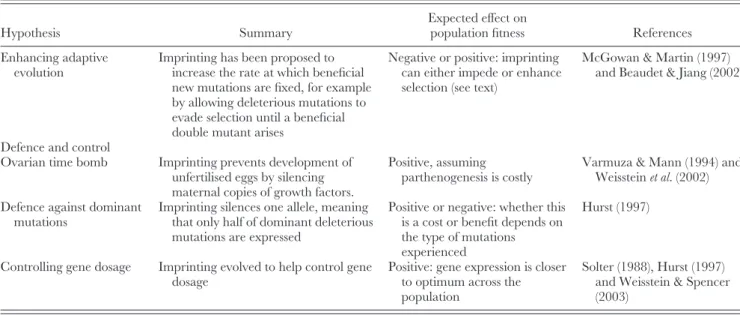
Table 1. Evolutionary theories for the origin and maintenance of imprinting, and their predicted effect on population fitness. Because usage of the term ‘population fitness’ varies in the literature, the population-level phenomenon that is categorised as a population fitness effect varies among hypotheses, with details given in the table
Hypothesis Summary
Expected effect on
population fitness References
Non-adaptive
Non-adaptive by-product of other processes
Imprinting is a by-product of another advantageous process, such as the silencing of selfish genetic elements, and is not itself advantageous
Negative: imprinting has costs but no benefits
Barlow (1993) and Suzuki
et al.(2007) Conflict
Kinship theory Imprinting arises from evolutionary
conflicts introduced by relatedness asymmetries. For example, male-derived alleles might benefit from sequestering more resources from the mother during development in polyandrous species
Negative: creates harmful conflict over limiting resources
Moore & Haig (1991), Haig (1993, 2000), Van Cleve
et al.(2010), Brandvainet al.
(2011), Dobata & Tsuji (2012) and ´Ubeda & Gardner (2012) Parental manipulation Imprinting is an adaptation of the parent,
rather than the offspring that bears the imprint. Parents transmitting imprinted alleles might be advantaged in parent–offspring conflict over offspring traits such as growth
Positive: moves the offspring phenotype closer to the parental optimum, which is typically that which maximises the number of surviving descendants
Burt & Trivers (1998, 2006)
Adaptation Increasing local
adaptation
Individuals silence the allele from the parent that tends to be less well adapted. For example, if males are the more dispersive sex, it might pay to silence the paternally derived allele and use only the locally adapted maternally derived allele
Positive: imprinting should help to mitigate migration load
Spencer & Clark (2006) and Revardelet al.(2010)
Mitigating intra-locus sexual conflict
Imprinting evolved in response to sex-specific selection. For example, males might evolve to silence their maternally derived allele, which tends to be further from the male optimum than the paternally derived allele
Negative or positive: reduced sexual conflict may improve demographic parameters, but allowing males to approach their phenotypic optimum can sometimes lower population fitness
Iwasa & Pomiankowski (1999, 2001) and Day &
Bonduriansky (2004)
Promoting favourable interactions with parental effect loci
Whenever a parental locus (e.g. a gene mediating maternal care) affects offspring in a manner dependent on offspring genotype, it may pay to silence the allele from the parent not expressing the parental effect
Positive: imprinting should increase levels of co-adaptation
Wolf & Hager (2006, 2009)
Promoting favourable epistatic interactions between nuclear and cytoplasmic loci
In species with uniparentally inherited cytoplasmic elements such as mitochondria, imprinting the allele inherited from the parent that does not provide cytoplasmic DNA is beneficial whenever there is a cyto-nuclear epistatic interaction
Positive: imprinting should increase levels of co-adaptation
Wolf (2009)
Promoting favourable epistatic interactions between autosomal and sex-linked loci
Sex chromosomes are more likely to be inherited from one parent.
Coadaptation between autosomal and sex-linked loci could therefore be increased by imprinting the allele inherited from the heterogametic parent
Positive: imprinting should increase levels of co-adaptation
This paper
Imprinting begets imprinting – co-adaptation among nuclear genes
When one locus in a set of interacting loci becomes imprinted, the others can maximise their co-adaptation with the imprinted locus by acquiring the same imprint
Positive: imprinting should increase levels of co-adaptation
Table 1. Continued
Hypothesis Summary
Expected effect on
population fitness References
Enhancing adaptive evolution
Imprinting has been proposed to increase the rate at which beneficial new mutations are fixed, for example by allowing deleterious mutations to evade selection until a beneficial double mutant arises
Negative or positive: imprinting can either impede or enhance selection (see text)
McGowan & Martin (1997) and Beaudet & Jiang (2002)
Defence and control
Ovarian time bomb Imprinting prevents development of
unfertilised eggs by silencing maternal copies of growth factors.
Positive, assuming parthenogenesis is costly
Varmuza & Mann (1994) and Weissteinet al.(2002) Defence against dominant
mutations
Imprinting silences one allele, meaning that only half of dominant deleterious mutations are expressed
Positive or negative: whether this is a cost or benefit depends on the type of mutations experienced
Hurst (1997)
Controlling gene dosage Imprinting evolved to help control gene dosage
Positive: gene expression is closer to optimum across the population
Solter (1988), Hurst (1997) and Weisstein & Spencer (2003)
and has a positive effect on growth in juveniles, and H19, which is maternally expressed and encodes an RNA that inhibits Igf2 (Haig, 2004). Fascinating experiments with chimeric mouse brains have revealed imprinting effects on brain development (reviewed in Badcock & Crespi, 2006). Though far from conclusive, the data are tantalisingly consistent with the kinship theory: maternally expressed loci are particularly active in the cortex, which affects language (in humans), social reciprocity, planning and behavioural inhibition, and paternally expressed loci in the limbic system, which controls more basic drives such as hunger, fear and aggression. Imprinting might thereby influence behaviour in a manner benefiting one parent, for example by influencing offspring begging rate or tolerance of siblings.
A gene that apparently does not fit the prediction isMash2, which is required for normal placental development in mice. One might expect this gene to be paternally expressed since it is involved in sequestering resources, yet it is maternally expressed. Iwasa, Mochizuki & Takeda (1999) argue that seemingly backwards forms of imprinting like Mash2 are actually consistent with the kinship theory provided that the expression level of the gene positively affects abortion rate as well as growth. Maternal genes might sometimes favour gene expression levels that occasionally cause embryos to fail early in development, yet to be of higher fitness when they do not fail, while paternal genes will place a high premium on avoiding embryo failure even at the cost of offspring quality (because the male may not get to mate with this female again). However, the crucial data appear to be lacking (Iwasaet al., 1999). This argument highlights that the kinship theory is harder to falsify than one might expect from its superficially clear predictions.
The apparent over-abundance of imprinted genes in therian mammals and angiosperms is also often suggested as evidence for the kinship theory, since these taxa have maternal provisioning that is partly controlled by paternally
derived alleles. However, the extent to which this represents a sampling bias resulting from more intensive research on these important taxa is not clear. Moreover, there are many taxa that have relatedness asymmetries and extensive post-fertilisation provisioning, such as birds and placental sharks, which apparently do not possess imprinting (Chapmanet al., 2007; Liet al., 2011). Several authors have also postulated strong selection for genomic imprinting in eusocial insects (Queller, 2003; Kronauer, 2008; Wild & West, 2009; Dobata & Tsuji, 2012), where (to our knowledge) imprinting has yet to be found despite substantial research on social insect methylation (Weiner & Toth, 2012).
Despite some limitations, the kinship theory appears to have the most empirical support (although it has received more attention than the other theories). It makes a compar-atively clear and specific set of predictions, and there appear to be few observations that are irreconcilable with it (Haig, 2000). However as with all theories, we should be wary of ‘affirming the consequent’, since other hypotheses often make overlapping predictions. Also as we discuss below, many of the hypotheses are not mutually exclusive. More direct tests appear warranted, for example manipulating imprinting sta-tus or gene expression levels and measuring the fitness conse-quences for symmetric and asymmetric kin (sensuHaig, 2000).
(3) Imprinting may make organisms better adapted
(a) Reducing migration load and gender load
Several hypotheses suggest that imprinting provides a fitness benefit by making organisms better adapted. Firstly, imprinting has been proposed to improve local adaptation in cases where one parent tends to be better adapted to the local environment. For example, if males tend to disperse further than females, fathers will tend to be less locally adapted than mothers, and individuals may benefit
by silencing the paternally derived allele at loci affecting local adaptation (Spencer & Clark, 2006; Revardel et al., 2010). Imprinting is therefore one way to mitigate ‘migration load’, i.e. the loss of fitness that results from gene flow when fitness depends on gene-by-environment interactions, under sex-biased dispersal.
A large and consistent difference in parental ages (as might be found in harem-holding species, or sequential hermaphrodites) might similarly provide a benefit of imprinting. If the environment changes sufficiently rapidly with time, the younger parent is more likely to be well adapted to current conditions. Conversely, older parents might be better adapted, since they have survived viability selection for longer. A systematic difference in the mean age of mothers and fathers could, in principle, select for obligate silencing of either maternally or paternally derived alleles. Age-dependent imprinting (in which young and old parents differentially imprint their alleles) might also be beneficial, although we are unaware of any evidence that it occurs. For example, if young fathers tend to be more locally adapted than old fathers, males might begin imprinting alleles affecting local adaptation as they age.
Sex-limited and sexually antagonistic selection, the lat-ter of which can impose a ‘gender load’ (Bonduriansky & Chenoweth, 2009), have also been argued to select for imprinting. The idea that imprinting might represent an adaptation to sex-specific selection was first proposed by Iwasa & Pomiankowski (1999, 2001). They noted that the imprinting of loci on the X chromosome could produce sexu-ally dimorphic gene expression, potentisexu-ally reducing gender load. Males have a maternally derived X chromosome active in all of their cells, while females are a mosaic of cells contain-ing either an active paternal or maternal X chromosome (in eutherians) or express only their maternally derived X chro-mosome (in marsupials). Therefore, in eutherians, silencing loci on the paternally derived X will lower gene expression in females, while silencing maternally derived X-linked loci will lower expression in both sexes; imprinting will create sexually dimorphic gene expression in both cases (Iwasa & Pomiankowski, 1999). However, this theory probably cannot explain imprinting on marsupial sex chromosomes, because paternal X imprinting would have no effect (since the pater-nally inherited X is already silenced) and maternal X imprint-ing would not cause sexually dimorphic gene expression (assuming males are hemizygous for the locus in question).
Interestingly, the random X inactivation displayed by eutherians has been proposed to increase the resilience of offspring to X-linked mutations (Ahn & Lee, 2008). In mar-supials, individuals inheriting X-linked mutations from their mother suffer the full cost, while eutherian females express both paternal and maternal X chromosomes in different cells, which could minimise the effects of mutations that are only present on one X chromosome. This theory of random X inactivation illustrates one of the principal costs of imprinting, namely that it increases exposure to recessive mutations.
Day & Bonduriansky (2004) also hypothesised that sex-specific selection could lead to the evolution of imprinting,
via a rather different mechanism. Their model considered imprinting at an autosomal locus under sexually antagonistic selection. At such loci, fathers tend to transmit alleles for relatively high son fitness and low daughter fitness, andvice versafor mothers. In this situation, the gender load imposed by intralocus sexual conflict could be reduced if males silence maternally derived alleles while females silence paternally derived alleles. This form of imprinting, however, might not readily evolve because of its complex sex-specificity. In that case, the simpler versions of silencing maternal alleles in males only, or paternal alleles in females only, could also be selectively advantageous. Although undocumented at the time the hypothesis was proposed, evidence for both of these forms of ‘sex-dependent imprinting’ was subsequently discovered in mice (Hageret al., 2008).
Day & Bonduriansky (2004) also showed that sexually antagonistic selection can favour imprinting even when sex-dependent imprinting cannot evolve, provided that selection is stronger on one sex. For example, if a trait is strongly positively selected in males and weakly negatively selected in females, a modifier allele that silences maternally inherited loci affecting the trait in both male and female offspring might go to fixation, despite the fact that biallelic expression provides higher fitness in females. In this case, both the imprinting locus and the locus that it affects could be called sexually antagonistic.
Lastly, Day & Bonduriansky’s (2004) model also implies that loci that are selectively neutral in one sex but under selection in the other may become imprinted. This is because alleles provided by the unselected parent are likely to be of lower fitness than alleles from the selected parent.
(b) Co-adaptation among epistatically interacting loci
Imprinting has also been proposed to evolve in order to foster favourable epistatic interactions among loci. Firstly, Wolf & Hager (2006) argued that imprinting confers benefits whenever offspring genes interact with genes in the mother to affect fitness during mother–offspring interactions (e.g. placentation, lactation). This is because paternally derived genes in the offspring are less likely to have recently undergone selection in combination with maternal-effect genes in the mother. One can make a mirror-image argument involving paternal-effect genes and maternal imprinting. Since paternal effects are less common and have weaker effects on fitness than maternal effects in many taxa, this hypothesis predicts that paternal imprinting should be more common than maternal imprinting. Early reports suggested that all genes showing placenta-specific imprinting were paternally imprinted in mice (Wagschal & Feil, 2006), supporting this hypothesis over e.g. the kinship theory (see Wolf & Hager, 2006), although subsequent work discovered a similar number of maternally imprinted genes (Wang, Soloway & Clark, 2011).
Wolf & Hager (2009) describe a similar co-adaptation hypothesis involving a single locus. They argued that selection for matching or mismatching of alleles at a locus that is expressed in both mothers and offspring could generate
selection for imprinting. For example when offspring do best by expressing the same allele as the mother, they benefit by imprinting their paternally derived allele. Selection for a mismatch with the mother could generate selection for maternal imprinting. Such matching and mismatching could help minimise the risk of incompatibility between the mother and foetus (Wolf & Hager, 2009).
Possible support for the mother–offspring co-adaptation hypothesis is provided by studies of the maternally imprinted genePeg3in mice (Curleyet al., 2004). Knockout experiments suggest thatPeg3positively influences maternal weight gain during pregnancy, lactation, and maternal care behaviours such as nest-building and pup retrieval. Furthermore,Peg3 appears to be important in offspring resource acquisition behaviours including suckling. These results imply a role for imprinting in co-adaptation, because it might be advantageous for mothers and offspring to coordinate provisioning and solicitation behaviours (Moore, 2004). Specifically, the observed pattern of maternal imprinting implies that it is optimal for mothers and offspring to have mismatched Peg3 expression levels, and hence that provisioning and solicitation should negatively co-vary for optimal fitness (as predicted by theory; Wolf & Brodie, 1998). However, these data are also consistent with the kinship theory. Because maternally derived alleles in the offspring should favour lower solicitation than paternally derived alleles, the kinship theory also predicts maternal imprinting at Peg3. Of course, these hypotheses are not mutually exclusive: imprinting might have evolved both to increase the fitness of maternally derived alleles in offspring, and to promote co-adaptation betweenPeg3loci in mothers and offspring. Yet another complication is that Peg3 also affects sexual behaviour in adult males (Swaneyet al., 2007), implying that Peg3 might be under sexually antagonistic selection and that imprinting might affect the gender load.
Another co-adaptation hypothesis was proposed by Wolf (2009). He noted that nuclear genes derived from the mother should tend to be more co-adapted with maternally inherited cytoplasmic genes (e.g. mitochondrial genes) than paternally inherited nuclear genes, because the maternal and cytoplas-mic genes underwent selection together in the previous gen-eration (again,vice versafor paternally inherited cytoplasmic elements). Using a model, he argued that imprinting confers a benefit whenever there is a cyto-nuclear interaction for fitness combined with uniparental inheritance of cytoplasmic genes. This hypothesis suggests to us a fourth route by which epistasis could select for imprinting. Sex chromosomes have parent-specific inheritance patterns that are somewhat similar to cytoplasmic DNA. For example, in XY systems, all Y chromosomes are inherited from fathers, and two-thirds of X chromosomes are inherited from mothers. Therefore, imprinting of autosomal loci that are involved in an epistatic interaction with a locus on a sex chromosome might improve co-adaptation between these loci. Using the same logic as in the other hypotheses, an autosome-Y interaction would select for maternal imprinting, and an autosome-X interaction for paternal imprinting. Because the X chromosome in males
is always maternally derived but females have one from each parent, it is possible that only males might silence the paternal allele at the X-interacting autosomal locus, and females would maintain biallelic expression. All of these predictions could be adjusted for ZW systems.
Finally, Wolf (2013) proposed the intriguing hypothesis that imprinting begets more imprinting. When two loci (which we here call L1 and L2) interact to affect fitness, some combinations of alleles will be better than others. If L1 evolves an imprint for any reason, L2 will potentially benefit from acquiring a matching imprint. This benefit arises because L2 now ‘knows’ that L1 will always express either its maternal or paternal allele, so L2’s best bet for producing a phenotype that is co-adapted with that of L1 is to express the allele from the same parent. Expressing only maternal or only paternal alleles at L1 and L2 might yield higher average fitness than expressing a combination of maternal and paternal alleles, because the co-inherited pairs of alleles have recently survived correlated selection. This hypothesis is interesting because it suggests that many imprinted loci might have become imprinted simply because their ‘epistatic partner’ loci did so, rather than because imprinting was beneficial for them in any other way. This means that finding imprinting at loci with no apparent role in e.g. offspring provisioning or sexual antagonism does not refute involvement of the kinship or gender load hypotheses, respectively (Wolf, 2013).
These co-adaptation hypotheses appear plausible, but are currently understudied. Testing them will require more empirical data than are available at present. It is unknown how many imprinted loci are involved in epistatic interactions with maternal effect, cytoplasmic, sex-linked or imprinted loci, although epistasis is thought to be very common. Though some imprinted genes are known to be part of gene networks (Wolf, 2013), it is unclear whether imprinted genes are more connected than non-imprinted genes. Below we discuss whether selection for imprintingviaepistatic fitness effects could be strong relative to imprinting’s costs, which is a requirement for these hypotheses to explain the origin of imprinting without requiring additional benefitsviasome other mechanism.
(c) Without genetic variation, adaptation-based hypotheses do not work For all of the adaptation hypotheses, the selective benefits of imprinting diminish when there is little genetic variation at the imprinted loci. When variation is low, non-imprinters will be almost as well adapted as imprinters, and the costs of imprinting might typically exceed its meagre benefits. This strengthens the plausibility of some hypotheses relative to others. The idea that sex differences in local adaptation underlie imprinting (Spencer & Clark, 2006) fares well, since gene flow between environments favouring different alleles is both a requirement for the hypothesis and a potent maintainer of genetic variation. The hypothesis that imprinting improves adaptation in response to either sex-limited selection or sexually antagonistic selection is also credible in this regard, because sex-limited selection doubles
the mutation load relative to selection acting on both sexes (Van Dyken & Wade, 2010), while sexually antagonistic selection can protect genetic polymorphism under some conditions (Arnqvist, 2011).
By contrast, the five hypotheses involving co-adaptation (Table 1) appear to require that extrinsic factors maintain genetic variation at one or both of the epistatically interacting loci. Genetic variation could be maintained by e.g. negative frequency-dependent selection, high mutation rates or a dependence of epistatic fitness effects on the environment (‘G× G ×E’), but this lack of parsimony could be seen as a weakness of the co-adaptation hypotheses. If nothing prevents selection from raising the fittest co-adapted allele pairs to a high frequency, the benefits of imprinting might be low.
Future theoretical models could address the magnitude of the benefits provided by the various adaptation hypotheses of imprinting, and determine whether extrinsic sources of genetic variation are required for imprinting to generate appreciable benefits. Also of interest is how the benefits of imprinting change before and after imprinting has invaded. The prospects for imprinting depend on genetic variation, but imprinting itself affects genetic diversity at the imprinted loci as it alters the efficacy of selection and, possibly, the mutation rate, as explained below. This will feed back to impact the magnitude of the adaptive benefits provided by imprinting.
(4) Imprinting as a parental manipulation or defence
The ‘ovarian time bomb’ hypothesis suggests that mothers use imprinting to prevent development of their unfertilised eggs. By imprinting loci that are essential for growth, ova can be programmed to develop only once they receive a functional gene copy from the male gamete (Varmuza & Mann, 1994; Weisstein, Feldman & Spencer, 2002). This hypothesis assumes that development of unfertilised eggs is costly, either because it directly harms the mother (e.g. by producing ovarian tumours) or because asexually produced offspring are inviable or have low fitness. Therefore, the hypothesis might partially explain imprinting in mammals, in which parthenogenesis is absent and presumably costly, but not in other taxa (such as angiosperms) that can benefit from reproducing asexually (Lehtonen, Jennions & Kokko, 2012). The ovarian time bomb also cannot readily explain the large number of imprinted genes, because presumably only one or a few loci would need to be imprinted to prevent parthenogenesis (Solter, 1994).
Imprinting in the part of the placenta produced by the foetus has also been proposed to reflect maternal efforts to prevent excessive growth and sequestration of resources by this ‘foreign’ organ (Hall, 1990). Although previously categorised as a form of defence (Hurst, 1997), we suggest that this hypothesis is best understood in terms of two forms of conflict: conflict between the maternal and paternal alleles in the offspring, and parent–offspring conflict.
Firstly, when females mate multiply, paternally derived alleles in the foetal placenta may favour higher growth than is optimal from the perspective of the accompanying maternally derived alleles, leading respectively to the maternal and paternal imprinting of loci that stimulate or inhibit placental growth (a classic prediction of the kinship theory; Moore & Haig, 1991). Secondly, even when both sets of alleles in the foetus favour extracting the same amount of resources from the mother (as under monogamy), parent–offspring conflict over placentation exists because an allele in the foetus has only a 50% chance of being present in the mother’s other offspring (Trivers, 1974; Burt & Trivers 1998, 2006). Hypothetically, mothers and/or fathers might attempt to limit the growth of their offspring using imprinting, for example by transmitting methylated alleles at loci involved in placental development. However, such a situation might be evolutionarily unstable, because any alleles that resisted the imprint or allowed the foetus to remove it would be selectively favoured. Moreover, mothers have other means of controlling placentation that would be harder for offspring to resist. Therefore, intra-genomic conflict may be a more likely explanation for imprinting in the placenta than parent–offspring conflict.
In a twist on one of the main putative costs of imprinting, namely that it removes the protection offered by diploidy against recessive mutations (Section III), imprinting has been proposed to defend against dominant deleterious mutations (both inherited mutations and those occurring in the soma) (Hurst, 1997). This benefit occurs because heterozygous non-imprinters express all dominant mutations but non-imprinters only express them with 50% probability (assuming mutations are equally likely in the active and silent alleles). Conversely, imprinters’ fitness is reduced when deleterious mutations are recessive; a non-imprinter is partly protected against recessive mutations, as they are only deleterious in homozygotes. Therefore, whether deleterious mutations confer a benefit or a cost to imprinting depends on the proportion of mutations that are dominant, and the relative fitness effects of dominant and recessive mutations. Imprinting should only provide a net benefit in this regard when the frequency of dominant mutations outweighs the frequency of recessive mutations, weighted by their mean fitness effects. While the average dominance of new mutations is unknown in most taxa, it is likely that they are recessive or partially recessive (because loss-of-function mutations are expected to be the most common type of non-neutral mutation), which argues against this hypothesis.
Imprinting has also been hypothesised to provide a means of adjusting gene dosage (Solter, 1988; Hurst, 1997; Weisstein & Spencer, 2003). For example, if it is necessary to reduce gene expression to 25% of normal in some tissues, it may be easier to silence one allele and halve the expression of the other than to reduce the expression of both alleles by 75% (Hurst, 1997). This hypothesis is considered relatively unconvincing for a number of reasons, primarily because it cannot explain the apparently limited taxonomic distribution of imprinting, its necessity given the availability of alternative
gene regulatory mechanisms (Hurst, 1997; Weisstein & Spencer, 2003), and the need for a specific parent’s allele to be inactivated as opposed to a random allele (Chess, 2012).
(5) Imprinting as a means to increase evolvability
Another hypothesis proposes that imprinting evolved in response to selection for greater evolvability, i.e. the capacity of a population to adapt to environmental change (McGowan & Martin, 1997; Beaudet & Jiang, 2002). Confusingly, these verbal models correctly stated that imprinting might affect evolvability via two mechanisms with opposing effects, but emphasised the first mechanism more strongly.
Firstly, imprinting weakens selection by making half of the alleles invisible to selection. This allows more deleterious genetic variation to be maintained, which can potentially become advantageous following a second mutation or a change in the genetic background or environment. This mechanism recalls the more general hypothesis that all forms of conditional expression promote evolvability by elevating genetic variation (West-Eberhard, 1989; Leichty et al., 2012). Secondly, imprinting makes selection more efficient by ‘unmasking’ recessive alleles, as in haploids. Selection might therefore be able to fix new adaptive recessive alleles more rapidly, and purge harmful recessives.
We believe it is likely that imprinting does affect genetic variation and evolvability, as discussed in Section IV. However, the situation is more complex than implied by these verbal arguments, and there are three issues that together make it implausible that imprinting first evolved in response to selection for greater evolvability. The first problem is that evolvability is a property of populations. Although evolvability itself can evolve (Wagner & Altenberg, 1996), one must use special caution with arguments that identify a population-level trait as the target of selection. Most theory suggests that traits that increase evolvability but carry immediate costs to individuals (e.g. an elevated mutation rate) should generally be selected against (Sniegowskiet al., 2000; Lynch, 2010), because lineages with improved evolvability usually do not immediately overtake slowly evolving lineages. It is unclear whether imprinting could evolve solelyvia long-term benefits given its many costs, especially when the imprinted locus and the one applying the imprint recombine freely; recombination would then hinder the imprinting locus in hitchhiking to fixation with the adaptive variants it creates.
Secondly, imprinting might sometimes reduce evolvability rather than increase it. Imprinting weakens selection by silencing half of the alleles, but it also strengthens selection by exposing recessive alleles. As we show in Section IV, the balance of these two effects depends on the dominance spectrum of mutations. When the majority of deleterious mutations are partially recessive, imprinting increases the efficacy of selection and negatively affects the amount of genetic variation at equilibrium. As stated above, new mutations appear to be recessive more often than not, meaning that imprinting will tend to decrease genetic variation, not increase it.
Thirdly, the evolvability hypothesis must explain why genetic diversity need be promoted via imprinting, rather than the simpler mechanism of an elevated genome-wide mutation rate (which could apparently evolve very easily; Lynch, 2010). One possibility is that imprinted loci have a different optimum variability to the genome as a whole, and imprinting allows them to achieve this without affecting other loci. While intriguing, there seems to be little evidence for this.
(6) Insights from the benefits of imprinting
(a) Multiple mechanisms might be acting simultaneously to maintain imprinting
Most of the imprinting hypotheses are not mutually exclusive, both in the sense that different mechanisms may maintain imprinting at different loci, and that multiple mechanisms may be at work at any given locus. For example, imprinting might first evolve in response to genomic conflict or sexual antagonism, which would consequently affect the evolvability of the locus. Some loci might affect interactions among kin as well as local adaptation, and/or be involved in epistatic interactions with cytoplasmic loci. The potential for pluralism is illustrated by the above description of the imprinted gene Peg3, which has pleiotropic effects on offspring solicitation, maternal provisioning and male sexual behaviour.
Selection from different sources might also lead to antagonism between the different benefits of imprinting. For example, consider a locus that promotes foetal growth that is involved in an epistatic interaction with a maternal-effect locus, in which matching the mother is beneficial. One might expect maternal imprinting to evolve via the kinship theory, but this would result in the paternal gene being expressed, which has not been co-selected with the maternal-effect locus. The cost imposed by the lower degree of co-adaptation might prevent imprinting from evolving in spite of the advantage it provides in intra-genomic conflict.
(b) Mutually beneficial information transfer or parental manipulation? A relatively unexplored question is whether parents and offspring are ever in conflict over the imprinting status of the offspring. This omission is surprising, given that the epimarks used for imprinting are often created during gametogenesis inside the parents of the individual affected by the imprint (Kelsey & Feil, 2013). Above, we discussed the hypothesis that parents might sometimes benefit from imprinting alleles transmitted to their offspring at loci whose expression increases sequestration of resources, in order to hinder offspring taking more than is optimal for the parent to give (Burt & Trivers 1998, 2006). This scenario casts imprinting as a parental adaptation to an inter-genomic conflict (not intra-genomic), because the locus controlling imprinting in the parent is in conflict with the locus that it silences, i.e. a locus in the offspring that sequesters resources from the parent (such loci are discussed in Haig, 1993).
We consider imprints that evolved to allow parents to manipulate offspring resource sequestration to be distinct
from the standard version of the kinship theory, because their evolution does not require any conflict among alleles within the same individual. This means that the ‘imprinting as a parental manipulation’ hypothesis does not require polyandry or sex differences in ecology that produce relatedness asymmetries between maternally and paternally derived alleles (see Brandvainet al., 2011). Another distinction is that in the original kinship theory, there is no conflict between the locus that performs imprinting and the one that is imprinted, while this is not true of the parent–offspring conflict version. Nevertheless, imprinting as a form of parental manipulation is clearly a part of the kinship theory, since it derives from a relatedness asymmetry (viz. the offspring being more related to itself than to its siblings).
Here, we will briefly digress to introduce some terminology. Wolf & Wade (2009) argue that imprinting should be considered a parental effect when an individual’s imprint is the result of a gene acting in its parent. Additionally, Marshall & Uller (2007) distinguish between ‘anticipatory parental effects’ and ‘selfish parental effects’. The former are mutually beneficial for parent and offspring, while the latter benefit the parent at the expense of the inclusive fitness of individual offspring (e.g. by resulting in a larger number of lower fitness offspring). The term ‘anticipatory’ was chosen because parents sometimes adjust offspring phenotype to the anticipated future environment, in a way that increases both offspring and parental fitness. Unfortunately, this terminology does not capture the most salient distinction, namely whether the parental effect improves the fitness of both parent and offspring, or just the parent. This is because anticipating future environments does not preclude the option that a parent manipulates offspring phenotypes in a non-ideal fashion for the offspring. Although frequent changes in scientific terminology are undesirable, we suggest that referring to them as ‘mutualistic’ and ‘manipulative’ parental effects would be clearer: these names highlight that offspring do not benefit from the latter and may be selected to evolve resistance.
Most previous theoretical models of imprinting seek either to identify conditions under which imprinters have higher fitness than non-imprinters, or to investigate the invasion criteria of alleles that cause imprinting at another locus in the same individual (e.g. Wilkins & Haig, 2001; Day & Bonduriansky, 2004; Spencer & Clark, 2006; Wolf, 2013). The former kind does not distinguish between imprinting as a mutualistic parental effect or control by the imprinter itself, while the latter assumes the imprinter controls its own imprinting. An alternative approach is to ask whether an allele that causes offspring genes to be imprinted can spread, and then check whether there is a parent–offspring conflict (e.g. is the evolutionary outcome affected if offspring are given control over their imprinting status). This approach, which we hope to see employed in future studies, more accurately captures the proximate mechanism by which imprinting often operates, and also allows for precise evaluation of our prediction that ‘parental manipulation’ imprinting may be evolutionarily unstable and thus less common than
‘mutualistic’ forms of imprinting, in which the locus applying the imprint and the one that is imprinted are not in conflict.
(c) Imprinting provides a fresh take on evolutionary metaphors The evolutionary hypotheses of imprinting raise an interesting point about selection in general. Common metaphors used in evolutionary biology, such as the ‘selfish gene’ and the idea that individuals or genes have ‘evolutionary interests’, sometimes give aid to the misconception that genes compete to determine the phenotype. For how can a gene be said to serve its own interests selfishly if it defers control to another allele? Many of the imprinting hypotheses, however, illustrate that alleles can actively benefit from remaining facultatively silent, allowing the other allele to determine the phenotype. The local adaptation scenario offers a clear example. The imprinted allele ‘knows’ that its partner is likely to produce a better-adapted phenotype, so its successful transmission is best accomplished by ceding control to the other allele. It is thus more helpful to imagine alleles competing to be successfully replicated, rather than to control the phenotypeper se.
III. EVOLUTIONARY COSTS OF IMPRINTING
Given the plethora of potential benefits of imprinting, why do imprinted loci appear to be rare within and across species? A number of putative costs of imprinting exist, and a general explanation of imprinting should contrast each hypothesis’ benefits against the likely costs (Table 2), taking into account that the benefits and costs that apply at the origin of imprinting can differ in magnitude to those that apply once imprinting is established.
(1) The cost ofde novorecessive mutations
The most commonly encountered hypothesis for the rarity of imprinted loci (e.g. Mochizukiet al., 1996; Hurst, 1997; Wilkins & Haig, 2003) is related to the main putative advantage of diploidy over haploidy. Monoallelic expression exposes the locus to newly arisen deleterious recessive mutations, both mutations that occurred in the parental germline, and mutations arising during somatic cell division, which have immediate, individual-level costs (Orr, 1995; Otto & Gerstein, 2008). Monoallelic expression also increases susceptibility to mutations that occurred in more distant ancestors, but this latter situation is complicated by the fact that these older mutations have been subject to selection, and are thus a non-random sample of the possible range of mutations (in terms of fitness effects and dominance).
De novomutations (both germline and somatic) have not previously been subject to selection, and hence represent the normal spectrum of new mutations, at least in animals (plants do not have a distinct germline, so mutations occurring in the parental soma potentially undergo selection before being inherited). Because selection preferentially weeds out strongly
Table 2. Some putative costs of imprinting. The costs are classified as those that are only present at the origin of imprinting, and those that persist in perpetuity after imprinting has evolved
Costs impacting the origin of imprinting Description
The ‘hurdle’ of circulating deleterious recessives Non-imprinted diploid loci are predicted to harbour relatively many deleterious recessives. New imprinting mutants may therefore fail to invade, even though imprinting would purge deleterious recessives and thus remain stable if it could spread.
Temporarily suboptimal gene dosage Some alleles may function poorly under monoallelic expression. Imprinting
should purge these, but they present an obstacle to the origin of imprinting. Imprecision of new imprinting mutants Imprinted sites often cover a large genomic region containing several genes.
This may prevent new imprinting mutants from spreading if some of the affected loci confer lower fitness when imprinted.
Costs impacting the origin and maintenance of imprinting
Increased exposureto de novodeleterious mutations Unlike non-imprinters, imprinters express half of theirde novorecessive mutations. Imprinting can also increase the mutation rate.
Potentially elevated mutation load Depending on the selective regime and dominance spectrum, imprinting
populations can have a higher or lower mutation load (see Figs 2 and 3)
Reduced evolvability When mutations are mostly recessive, imprinting reduces genetic variation. This
might impact the long-term persistence of lineages by reducing evolvability.
Risk of imprinting errors Imprinting may sometimes be applied to the wrong genes, or epimarks may fail
to be removed during epigenetic reprogramming in the primordial germ cells. Imprinting has been implicated in a number of human diseases.
Costs of imprinting machinery Imprinting requires time and resources, such as the enzyme DNA
methyltransferase. However, these costs may be trivial in large multi-cellular organisms.
deleterious alleles, especially those that are dominant (for non-imprinted loci), these types of mutations will be more common among new than old mutations. As we will see, this difference has implications for the origin and maintenance of imprinting.
The cost of de novo mutation for imprinting individuals is easiest to visualize if we assume that all mutations are completely recessive. Under imprinting, half of the mutant heterozygotes express the defective phenotype, in addition to any mutant homozygotes. In the absence of imprinting, both alleles must mutate before any fitness is lost. For de novomutations, double mutants are presumably rare, so non-imprinters are largely immune tode novorecessive mutations. The fitness cost imposed byde novomutations on imprinters is equal to the product of the following variables: (i) the probability that a mutation occurs at the locus of interest, and (ii) the average fitness difference between imprinters and non-imprinters that carry a single copy of the mutation. The second factor is an average because a portion (perhaps half) of imprinters will receive the mutation in their imprinted allele, while the other portion will express it. The second factor also implies that the cost gets smaller as the average dominance of mutations (h) approaches 0.5 (since incompletely recessive mutations also impact non-imprinters), and becomes a benefit when h>0.5 (i.e. when mutations are mostly dominant; see Section II.4).
Therefore, de novo mutations will impose a large cost to imprinters when mutation is common, and when many of them are costly and recessive. There is reason to believe that mutations are predominantly recessive (e.g. Charlesworth
& Charlesworth, 1999; García-Dorado & Caballero, 2000), andde novo mutations are expected to have more strongly deleterious effects than mutations that are circulating in the population (because the latter have been subject to selection while the former have not). However, many imprinted loci are only imprinted in specific tissues or developmental stages (while showing non-imprinted expression in other tissues). Because this effectively reduces the size of the ‘target’ of imprinted loci, the effectivede novo mutation rate is lower than that of loci that are imprinted in all tissues. This reduces the cost of imprinting. For example, many mammalian imprinted genes are only imprinted in the brain or placenta; recessive somatic mutations occurring at the focal locus but not in these specific tissues will not impose a cost of imprinting. By contrast, a gene that shows imprinted expression in many/all tissues will be exposed to somatic mutations more often (all else being equal) simply because it presents a larger target, such that somatic mutation will have a stronger negative effect on the fitness of alleles coding for imprinting. Indeed, the restriction of imprinting to certain tissues or life stages might have evolved from an ancestral state in which the locus was always imprinted throughout the body, in order to minimise the cost of recessive somatic mutations to imprinters. If correct, this hypothesis suggests that the costs of imprinting fromde novomutation might be greater at the origin of imprinting, relative to later when refinements such as tissue-specific imprinting have evolved.
Note that genomic imprinting is not the only widespread form of monoallelic expression. Recent evidence suggests that genomes contain many autosomal loci (c. 5–10%
in humans) showing ‘random monoallelic expression’, in which a randomly selected allele is inactive in different cells throughout the body (Chess, 2012). Harmful recessive de novomutations should also select against random monoallelic expression, although the costs may often be lower than for imprinted loci, because some cells will continue to express the unmutated allele. Moreover, de novo mutations should present no barrier to the evolution of imprinting at loci that already show random monoallelic expression.
(2) The cost and ‘evolutionary hurdle’ of circulating deleterious recessives
Populations are expected to harbour deleterious alleles that have yet to be purged by selection, which impose a fitness cost termed the mutation load (Burger, 2000). Strongly harmful and dominant mutations are expected to be purged rapidly, and so should be present at lower frequencies than weak and recessive mutations. This has ramifications for the evolution of new imprints.
Population genetic theory predicts that the frequency of deleterious mutations in an infinite panmictic population of non-imprinting diploids at mutation–selection balance is√(u/s) for completely recessive alleles or approximately u/(hs) for partially recessive alleles, whereuis the mutation rate, h is the coefficient of dominance and s is the fitness cost of the mutation (Burger, 2000). These frequencies can be non-trivial, because deleterious recessives are hidden from selection when in heterozygotes. Silencing one allele makes all non-silenced alleles effectively dominant (we can therefore useh=1) but it also hides alleles from selection half the time. Imprinting therefore purges deleterious recessives to an equilibrium frequency ofu/(hs/2) with h=1, which simplifies to 2u/s (Spencer, 1997). Note that imprinting does not limit a recessive deleterious allele to an equally low frequency as a dominant deleterious allele in a non-imprinting population, namelyu/s. This discrepancy arises because although imprinting ‘unmasks’ recessives, half of the deleterious alleles are shielded from selection by imprinting at any given time, doubling their expected frequency (Van Dyken & Wade, 2010).
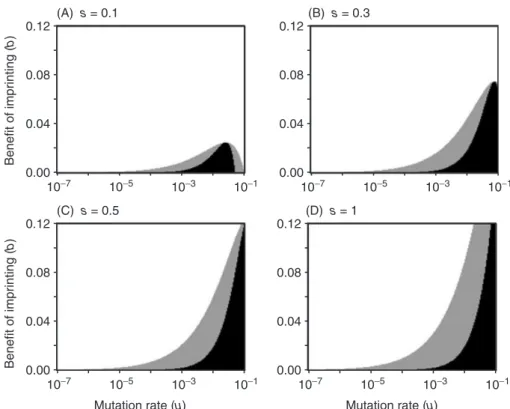
New imprinting mutants are therefore predicted to encounter a gene pool with a high frequency of circulating deleterious recessives. Imprinting may consequently be unable to invade, even under circumstances in which it would be stable to invasion by non-imprinting if first established. This can be illustrated using a simple model (Fig. 1), which calculates the mean fitness of a population performing imprinting at a locus with two alleles, A and a relative to non-imprinting. The deleteriousaallele is recessive, such that half of imprinting heterozygotes and allaahomozygotes (both imprinting and non-imprinting) have fitness 1−s. All other genotypes have fitness 1. It is instructive to compare the population mean fitness of imprinters and non-imprinters assuming the frequency of the aallele is either p=√(u/s) orp=2u/s, which are the expected frequencies before the evolution of imprinting and after imprinting has become fixed, respectively.
To make the model broadly applicable to different theories of imprinting, we simply assume that the mean fitness of imprinters is elevated by an additive amount b because of one or more of imprinting’s hypothesised benefits (Table 1). Unsurprisingly, high b favours the evolution of imprinting (white regions of Fig. 1; imprinting can invade from rare and remain stable, as imprinting has higher fitness under both values ofp). More interestingly, lower values ofbcan produce two different outcomes. In the black regions of Fig. 1, imprinting yields lower fitness than non-imprinting at either value of p; this means imprinting can neither spread when rare nor be maintained when common. In the grey region, imprinting has higher fitness than non-imprinting when p=2u/sbut not whenp=√(u/s). Here, imprinting would be evolutionarily stable if it could somehow persist long enough to purge deleterious recessives down to a frequency of 2u/s, but it is selectively disfavoured in the predicted initial conditions, which feature a higher frequency of recessive mutations.
The model illustrates that there is a substantial parameter space in which imprinting cannot invade, because imprinters are vulnerable to the deleterious recessives that are present in considerable frequencies in diploid populations, yet imprinting would be evolutionarily stable if it could persist long enough to purge deleterious recessives. This ‘hurdle’ may prevent imprinting from evolving unless its selective benefits are large. A similar hurdle might also hinder the evolution of random monoallelic expression, although the hurdle might be less severe than for imprinting, because heterozygous individuals with random monoalleleic expression have a functional allele in half of the cells.
The model in Fig. 1 assumes infinite population size, panmixis, constant selection, and no influx of maladapted immigrants. Adding factors like genetic drift, fluctuating selection or dispersal typically results in a substantially higher frequency of deleterious alleles at equilibrium, as well as a higher average fitness cost of these alleles (Burger, 2000). Population structure coupled with soft selection can also greatly increase the frequency of deleterious alleles (Agrawal, 2010). The replacement of non-imprinting by imprinting becomes progressively more unlikely as recessive alleles become more common and more harmful, so Fig. 1 might substantially underestimate the barrier imposed by circulating deleterious recessives.
(3) The hurdle of switching to monoallelic expression
Some models of imprinting have assumed that monoallelic expression of any given allele is equivalent to biallelic expression in a homozygote (Day & Bonduriansky, 2004; Spencer & Clark, 2006; Wolf & Hager, 2006; Wolf, 2009), while others explicitly assume that biallelic expression results in a stronger phenotype because the gene is expressed more (e.g. the kinship theory). In the latter cases, the benefits of imprinting arise from its hypothesised effect on gene dosage. However, for other theories (e.g. the adaptation and
0.00 0.04 0.08 0.12
10−7 10−5 10−3 10−1
Benefit of imprinting (
b
)
(A) s = 0.1
0.00 0.04 0.08 0.12
(B) s = 0.3
0.00 0.04 0.08 0.12
Mutation rate (u)
Benefit of imprinting (
b
)
(C) s = 0.5
0.00 0.04 0.08 0.12
Mutation rate (u) (D) s = 1
10−7 10−5 10−3 10−1 10−7 10−5 10−3 10−1 10−7 10−5 10−3 10−1
Fig. 1. Imprinting can be prevented from evolving by circulating deleterious recessives, even in parameter spaces in which it would be stable if it could persist long enough to purge them (grey region). The expected fitness of an imprinter or a non-imprinter is the sum of the genotypic fitness values (see main text) weighted by their frequencies:f(AA)=p2,f(Aa)=2p(1−p) andf(aa)=(1−p)2.
The black region shows parameter spaces in which imprinting provides lower fitness than non-imprinting for bothp=2u/s and p=√(u/s) whereuis mutation rate andsis the fitness cost of mutations. In the grey region, imprinting is evolutionarily stable (i.e. it has higher fitness than non-imprinting whenp=2u/s), but cannot invade from rare because of circulating deleterious recessives [imprinting has lower fitness whenp=√(u/s)]. In the white region, imprinting can invade and remain stable. Thex-axis shows the rate at which deleterious alleles arise by mutation (u; back mutation is ignored), while they-axis shows the magnitude of the fitness benefit provided by imprinting (b).
evolvability hypotheses) imprinting carries benefits that do not necessarily arise from gene-dosage effects.
The origin of imprinting causes a sudden switch to monoallelic expression, which may lead to developmental problems if the expression of the two alleles has previously been additive or near-additive. For example, consider the local adaptation hypothesis (Spencer & Clark, 2006) under the assumption that alleles contribute additively to gene dosage and the resulting phenotype. Assume that the locally optimal phenotypic value is x, but the population receives regular male migrants from a population in which the optimum is y, where x<y. If local adaptation is strong enough, alleles with values of around x/2 will be locally common, although male migrants will continually introduce maladapted alleles with values of around y/2. Females will then tend to carry better adapted alleles than males, which could select for imprinting of the paternal allele (Spencer & Clark, 2006). However, under additivity, an imprinter will have an average phenotype of a little over x/2. The phenotype x/2 might often be more maladapted than the average non-imprinter’s phenotype, which is a little over x. Once imprinting has been present for many generations, alleles that function well under monoallelic expression will
have become commonvia selection (in our example, such alleles would produce a phenotype ofxwhen expressed by an imprinter). However, imprinting mutants may be unable to persist long enough for such evolution to occur. This argu-ment again highlights that the relative fitness of imprinters can be different at the origin of imprinting relative to later.
The existence of this putative barrier could be seen as an argument in favour of hypotheses that consider the switch to monoallelic expression a benefit rather than a constraint, such as the kinship theory (Haig, 2000) and X-linked sexual antagonism hypothesis (Iwasa & Pomiankowski, 1999). We also count the intralocus sexual conflict hypothesis in this category, even though the model associated with it assumed that monoallelic expression was equivalent to homozygotic expression (Day & Bonduriansky, 2004). For example, if males are under selection to decrease gene product and females to increase it, males might evolve to silence the maternally derived allele at the relevant locus. This silencing might simultaneously lower overall gene product level in males (assuming some additivity of alleles) and lower the probability of expressing a highly active allele (which should be more commonly inherited from mothers, because of sex-specific selection).