Gendered Climate Justice: Identifying Vulnerability in
Tanzanian Waterscapes
By
Emma Elizabeth Seagle
Honors Essay Department of Geography University of North Carolina
April 7, 2014
Approved:
2
Table of Contents
I. INTRODUCTION ... 4
This Study ... 5
Tanzania ... 7
II. BACKGROUND ... 10
Water and Women’s Health ... 10
Water-Gender and Society Relations ... 16
The Built Environment and Water Infrastructure ... 24
Climate Change ... 31
Water History and Policy in Tanzania ... 38
III. METHODS ... 43
Women’s Health ... 43
Women’s Empowerment ... 46
Water Infrastructure ... 47
Climate Change ... 48
Index Analysis and Case Study ... 50
IV. RESULTS AND ANALYSIS ... 53
Index Analysis ... 53
Individual Regression ... 57
Analysis of Larger Geographic Areas ... 58
Rural Urban Analysis ... 59
Poverty Analysis ... 60
Ranking by Region ... 61
Ranking with Urban and Rural Differentiation ... 62
Climate Change Data Compilation and Analysis... 62
Identification of Vulnerable Regions ... 63
Case Study Comparison ... 67
V. DISCUSSION ... 72
VI. WORKS CITED ... 82
VII. APPENDIX ... 86
A. Sample Calculation for Arusha ... 86
3
C. Analysis ... 100
Acknowledgements:
4
I. INTRODUCTION
Water access is a critical issue on the global scale. The World Health Organization estimates that 780 billion people lack access to proper water and sanitation facilities worldwide (West, Hirsch, and El-Sadr, 2013). Access to safe drinking water and proper sanitation is a basic universal need and human right. Yet, inadequate water supply and water contamination account for one third of all deaths in developing countries and pose a serious threat to the achievement of the Millennium Development Goals (MDG), a set of targets established by the U.N. for 2015 (Kiongo, 2005). Water access is key to building capacity, creating markets, adapting to changing environments, promoting education, and improving health and overall human development (Bour, 2004). Adequate water supply also contributes to food security and positive social development. According to the U.N, in 2012, sub-Saharan women spent roughly 200 million hours per day collecting water, summing to 40 billion hours in one year (United Nations, 2012).
The issue of water security is particularly prominent in Africa where, in 2005, a mere 38% of countries were on track to achieve water related MDGs. Specifically goals to reduce the proportion of people living without access to safe drinking water by 50% have not been met (Kiongo, 2005). Tanzania has achieved minor progress towards these goals; however, is not expected to attain the originally established U.N. criteria by the 2015 deadline (Tanzania, 2011). This study investigates the impact of water infrastructure and women’s empowerment on
women’s health and well-being, and identifies vulnerability through combining these relationships with climate change predictions.
5
historical, spatial, and ecological factors that produce a self-sustaining and reinforcing system of inequality and social order (Sultana, 2009). The lack of proper infrastructure and monitoring systems throughout the country also prevents equal and regular access to clean water within reasonable walking distance (Baumann et al, 2005). Recent concerns regarding water access and security are increasing in intensity due to rapid population growth, land use shifts, and climate change (Dessu and Melesse, 2012). This change, paired with environmental degradation, leads to potential water catchment deterioration and a decrease in water quality (Kiongo 2005). The interaction among political, historical, social, and ecological systems also leads to questions regarding who bears the burden of unwanted climate change: the global north or south, and women or men. Together these factors interact to dramatically impact women’s health and well-being, in Tanzania, as well as, many countries around the world (Bour, 2004).
This Study
6
procurement rests (Arora-Jonsson, 2011). Yet the potential effects of future climate change on women’s health have not been adequately assessed.
Previous literature has assessed the ecological outcomes of climate change, including its impact on species distribution, ecosystem function, and temporal variability in weather systems; however, there is a lack of analysis that directly examines the effects of climate on women’s health from the lens of water availability, procurement, and the built environment. The IPCC acknowledges this and admits to academia’s shortcomings in its claim:
Disasters affect men and women differently on a number of levels, including economically, socially, psychologically, and in terms of exposure to risk and risk perception. However, there remains a general lack of research on sex and gender differences in vulnerability to, and impacts of climate change especially health-related impacts (WHO, 2011).
The IPCC is echoed by the Indian Government’s National Action Plan on Climate Change (NAPCC, 2008) that acknowledges general impacts of climate change on health, yet fails to explain the gendered complexity of the crisis and generate a plan to solve this global issue that drastically influences the livelihoods of women across the world. The NAPCC states,
The impacts of climate change could prove particularly severe for women. With climate change there would be increasing scarcity of water, reductions in yields of forest
biomass, and increased risks to human health with children, women, and the elderly in a household becoming the most vulnerable…special attention should be paid to the aspects of gender (NAPCC, 2008).
Unfortunately, these blanket statements produced by national governments, the World Health Organization, and many others do little to highlight and dissect issues of social structures, governance, and infrastructure; and certainly lack the initiative to solve such problems.
7
require deeper investigations into how, when, where, and who is influenced. Our world, our waterscapes, and our societal relations are rapidly changing as we speak, and therefore, the answers to these questions require immediacy before human health is detrimentally impacted.
In turn, this study quantitatively integrates women’s empowerment and the built
environment in order to analytically examine the effect of climate change and water accessibility on women’s health. This research examines and highlights regional disparities within Tanzania that can be used to create locally tailored solutions, as well as, provides a framework for gender climate justice within Tanzania. I also examine how the urban-rural dichotomy, poverty, and the environment interplay and act to reinforce inequality, gendered divisions of labor, and poor water management policies and practices. Understanding the interaction of these factors allows for identification of discrepancies, as well as, systems that produce ideal model examples. Ultimately, my aim is to assess the linkage between these variables and geographically locate vulnerable areas where water and gender equality policies and programs should be targeted in order mitigate the effects of climate change on women’s health and wellbeing.
This relationship also builds upon new theories of gender climate justice. Men and women are disproportionally affected by climate change, yet the differential impacts are poorly understood. In light of climate change, women are faced with unique challenges and difficult choices in order to adapt, improvise, and survive. However, these tactics have been traditionally overlooked due to severe marginalization and high gender and social inequality. Therefore, this study adds to a greater understanding of gender differences and provides evidence for the need for greater gender climate justice.
Tanzania
8
(Ponzetti and Dhanani, 2013). This East African country borders Kenya, Uganda, Rwanda, Burundi, The Democratic Republic of Congo, Zambia, Malawi, and Mozambique, as well as, the Indian Ocean in the east. The country is administratively divided into twenty-six regions, with roughly 23% of the population living in urban areas and 77% in rural areas (Marobhe, 2007). Germany initially colonized the region in the late 1800’s, but it was later controlled by Britain following World War I. Independence was achieved in 1961, and the country was ruled under a socialist regime until the mid-1980’s (Rowhani et al. 2010). As will be noted later, the history of Tanzania plays a key role in water policy and gender issues throughout the country.
The diverse landscape of Tanzania includes coastal lowlands, volcanic highlands, and the Great Rift Valley, which is home to Africa’s highest peak: Mount Kilimanjaro. This landscape is divided into nine water catchment basins, which are important to water policy divisions and understanding regional differences and conflicts (Lein and Tagseth, 2009). Today, the country relies heavily upon subsistence agriculture, with all agricultural and livestock practices
accounting for roughly half the country’s gross domestic product (DHS, 2010). These
agricultural practices are also highly dependent on water and irrigation systems (DHS, 2010), and therefore, there exists ties into gender institutions within the country.
I focus specifically on Tanzania as a place where issues of health, climate change, infrastructure, and women’s empowerment remain at the forefront of both the social and
9
10
II. BACKGROUND
Water and Women’s Health
Water procurement places significant physical, mental, and social pressure on those responsible, particularly when water is scarce, and can detrimentally affect individual health and wellbeing (Dufaut, 2012). In Tanzania, the gendered nature of water collection places a
disproportional burden on women, which can result in severe health consequences, not only on the water collectors, but their families and communities as well (Noel, Soussan, and Barron, 2007). As managers of water procurement, women interact with this natural resource beginning from the time where it is extracted from the ground or collected from the surface to the time of use and consumption. Throughout this interval, their bodies and immune systems are bombarded by the numerous physical, chemical, and psychological insults that tarnish their health and, in doing so; produce significant societal and human development challenges (Geere, 2010). It is important to note that although the health impacts from water procurement have been
qualitatively evaluated and speculated upon, there are few studies that directly and quantitatively examine the impact of walking distance and water collection on health. This lack of analysis displays the relevance of my study and analysis.
The easiest and most apparent health insult to identify is the physical burden. The
11
completed by Geere et al. (2010) who examined the health impacts of carrying water in Limpopo Province, South Africa. Geere et al. (2010) found that 69% of participants, women who were identified as the main water collector for their home, reported neck pain, while 38% noted significant back pain on a regular basis. This research group also found a strong positive correlation between the distance walked and the severity of the pain, concluding that water carrying methods using the back and head can cause detrimental musculoskeletal disorders and disabilities (Geere et al, 2010). Catastrophic injuries to the spine can also occur, killing women or leaving them permanently paralyzed. The risk of these events increases in young and elderly women (Dufaut, 2012).
On average, this head loading technique is acquired by the age of nine, when bones are still growing and substantial muscle has not yet developed (Dufaut, 2012). Incidence of pediatric deformities and spinal structure complications in young girls are in many instances attributable to this water collecting method. Pelvic and neck damage is also common in children who struggle to distribute the jug’s weight evenly upon their backs and those who lack proper instruction from older women regarding lifting and carrying techniques (Buckel and Devereux, 2002).
In Tanzania, a head strap made of strong cloth or hemp is worn to more easily balance the water, yet this strap does little to relieve neck and back strain or decrease the risk of injury
12
translates to early degenerative complications in bones, joints, and soft tissues, particularly when combined with a poor diet lacking sufficient minerals and nutrients that promote bone and muscle stability (Buckel and Devereux, 2002).
Additionally, environmental hazards including bumpy roads, raised roots, unpaved paths, and slippery slopes make carrying water both challenging and exponentially more dangerous (Dufaut, 2012). During the rainy season, some women must traverse slick and uneven pathways, particularly in rural areas that lack paving. In contrast, exposure to high temperatures during the warmer months, paired with long walking distances, causes numerous heat-related illnesses such as heat stroke, exhaustion, and rash (West, Hirsch, and El-Sadr, 2013). Young, pregnant, and ill women are particularly affected by the strain of these environmental hazards, walking long distances, waiting in long lines, and lifting heavy pump handles and jugs (Zakar, Zakar, and Fischer, 2012). Nonetheless water is essential to household function and regardless of the conditions, distance, or health implications, women generally remain the sole procurers.
13
Additionally, it is important to note that the issue surrounding water access and health is not always water shortage, but rather time shortage (Allen, Qaim, and Temu, 2013). Large families or agricultural practices that necessitate large amounts of water require women to make choices between thirst and household needs, between hunger and sanitation. Increased time collecting water translates to less time completing other essential chores and agricultural duties, and in turn, sleep and energy are compromised (Blackden and Wodon, 2006). This issue has led many women to choose closer water sources, compromising hygiene and sanitation, and
therefore, threatening the health status of the entire family and surrounding community
(Thompson et al. 2000). This choice has unfortunately become a common livelihood strategy for women across much of Africa.
14
Common water related diseases in Tanzania include schistosomiasis, typhoid, diarrhea, and trachoma. A Tanzanian study conducted by McCauly and Lynch (1992) discovered 60% of preschool children had active trachoma in 1992. Although this number has changed since the release of this study, it is important to note that the majority of cases traced the disease’s source to unsanitary and parasitized water used to wash their faces (McCauly and Lynch, 1992). Additionally, a more recent analysis conducted by Baggeley et al (2006) revealed a positive correlation between distance to water source and trachoma prevalence in the Rombo district. Contraction of schistosomiasis is directly related to gender-assigned tasks including water collection, child bathing, washing clothes, cooking, and agricultural activities (Dufaut, 2012). Repeated episodes of diarrheal or parasitic diseases, particularly in children, may result in significant dehydration and malnutrition leading to compromised growth and immunity (Tumwine, 2002).
15
HIV/AIDS care is also strictly dependent on access to sanitary water sources. This interaction between HIV/AIDS and water is an important issue in Tanzania where HIV infection prevalence ranges from 1% in Pemba to 14.8% in Iringa (National Bureau of Statistics, 2013). Lack of clean water leads to higher morbidity and mortality rates in general, but particularly for people living with HIV/AIDS due to poor immune response and high susceptibility to diarrheal and skin diseases (Tumwine, 2002). People living with HIV/AIDS require roughly 20-80 additional liters of clean water per day due to episodes of diarrhea and other sanitation purposes (West, Hirsch, and El-Sadr, 2013). However, when very high volumes of water are required, many caregivers choose location over sanitation, further exacerbating illness (West, Hirsch, and El-Sadr, 2013). Lack of adequate access also complicates medication adherence and increases the chance of secondary infections (West, Hirsch, and El-Sadr, 2013).
However, the health burden of water collection is not limited to physical encumbrances and disease. Psychological and social problems also develop due to isolation and high household expectations (Blackden and Wodon, 2006). Due to a system framed by historical gender patterns and social institutions, some women ensure all others have been fed, bathed, and cared for before caring for themselves (West, Hirsch, and El-Sadr, 2013). This translates to women not receiving enough water to properly bathe, wash clothes, or drink and eat. In turn, fewer calories are
consumed leading to less energy for women to repeatedly procure water, and a vicious cycle based in societal constructs and poor infrastructure develops. Additionally, stress revolved around adequately supplying for a family also breeds poor health habits regarding eating and sleeping (Bour, 2004).
16
collecting water, procurement particularly in rural areas where there are fewer companions and longer walking distances can cause severe social isolation, producing emotional problems such as depression and personal devaluation (Blackden and Wodon, 2006). Social networks also provide a buffer for disease with the spread of knowledge and health assistance. Instead of these networks, the isolating patterns of water collection increase the risk of rape or violence against women (West, Hirsch, and El-Sadr, 2013).
The health issues centered on water collection do not stop at the individual level, or even at the household. The scope of the problem lies at the national level as advancement in
education, economic development, and the creation of infrastructure is dependent upon the health of a nation. However, the World Health Organization also notes the importance of the reverse relationship: health is dependent upon development policies and programs that prioritize issues of equality and poverty reduction (WHO). Increasing the health status of a nation equates to fewer children missing school, parents missing fewer work days, and fewer children dying from preventable infectious diseases. The ability to free populations from debilitating diseases and public health problems marks extraordinary progress and provides dividends for both individuals and communities. Although some progress has been made, Tanzania remains in a water-related public health crisis, with severe impacts on women’s health and wellbeing.
Water-Gender and Society Relations
17
intertwined with and engulfed by understandings of normality (West, Hirsch, and El-Sadr, 2013). Such patterns are interwoven in all aspects of life including jobs, economic activity, politics, and family. This uneven view form society breeds psychosocial problems and greatly impacts
women’s wellbeing (Blackden and Wodon, 2006). Yet, similar to many other institutions, the manner in which these gendered identities and patterns manifest differs according to context and culture across the globe (Sultana, Mohanty, and Miraglia, 2013).
In Tanzania, and across much of the world, gender presents itself within the landscape of water collection and household activity (Sultana, 2009). Policy and historical discourse situate economic and social decisions regarding water within the male domain. However, women are expected to be the sole providers and managers (Arora-Jonsson, 2011). This gender disconnect creates an unjust system of marginalization due to the lack of voice women have in regards to control over a resource that is primarily secured and used by women. Consideration of these practices as a gendered institution brings questions of power, division of labor, and patriarchal structures to the realm of waterscapes. According to Crow and Sultana (2002), there exist key gendered differences in experiences with water, which have led to a system plagued by injustice and inequality. This gendered division of labor within the household is reinforced by established barriers that promote systematic subordination and female exclusion from water related decision-making processes (West, Hirsch, and El-Sadr, 2013).
18
their vulnerability stems from the institutional framework that silences their voice in such decision making processes (Figueiredo and Perkins, 2012). Women are not victims of their bodies, abilities, or knowledge, but rather the institution of gender and the stigmas and social constructs that surround it (Arora-Jonnson, 2011).
19
Additionally, current environmental struggles relating to drought and water scarcity reinforce gender inequalities and power relations throughout the world, including places within Tanzania (Figueiredo, 2013). In this case, social and ecological factors align within the realm of waterscapes that prevent women from market participation or wage work (Aroroa-Jonsson, 2011). For instance, drought, or simply the onset of the annual dry season, forces women to walk farther to boreholes and limits their opportunity to start a small business selling crafts, as well as, spend time with their families (Baggeley, 2006). These water-society relations combined with high demand create a system of inequality, social exclusion, and injustice, leading to what Sultana labels as an overlooked “struggle for the full rights of citizenship” (Sultana et al. 2013). However, Sultana et al. (2013) also argue that knowledge around climate and water, as well as, climate change solutions lie in the silenced voices of women. Their knowledge is virtuous yet trapped by societal barriers and an outdated and historical notion of gendered-institutions (Arora-Jonsson, 2011).
20
and husband overcome the gendered system of water procurement. This leads to an interesting contradiction to the normal water collection system. For instance, in households rooted in deep poverty, the strength of the gendered division of labor weakens, as both men and women collect water as a means of survival. However, this pattern is only seen in a small portion of the
population, where the need for survival outweighs established gender hierarchies (Blackden and Wodon, 2006).
In addition, if older women are unable to supply sufficient amounts of water, societal and familial pressures may force young girls to drop out of school and aid in supplying for their family (Garriga, 2007). Roughly 72% of school-aged girls are involved in water collection, sometimes sacrificing their education which holds the key to women’s empowerment and is the central tool that aids in breaking traditional gender norms (Fontana and Natali, 2008). In order to adequately supply for their families and remain in alignment with gender normality and
expectations, many girls begin collecting water by the age of nine. If kiosk or borehole lines are long or the distance to water is far, classroom time is lost and girls fall behind in school (Fontana and Natali, 2008). Although water procurement is not the sole cause of school dropout rates, the combination of this responsibility with other socio-economic, cultural, and religious factors drastically increases the rate of female dropout, particularly in poor and rural areas. Education is considered the cornerstone to economic and social development, yet gender disparities
complicate this pathway to development (Garriga, 2007). Widening gaps in equality due to water security create an unbalanced education system, which has serious implications for future social progress.
21
the rural-urban divide. Societal injustices and marginalization manifest themselves not only within gendered institutions, but also according to race and class (Crow and Sultana, 2002). Due to the intersection of water asymmetry and societal heterogeneity, water-society relations have developed into unequal systems based on hierarchy and discrimination against lower social classes. In Tanzania, the Chaga, Haya, Nyamwezi, Sambaa, and Zaramo have been classified as the most marginalized ethnic groups according to Elu and Loubert (2013). Unequal and
insufficient amounts of water prove challenging to societal relations and have led to unequal hydrological and economic feedbacks that harm these marginalized groups. Collective action in both cities and villages has emerged to combat issues of management, yet these systems are plagued by asymmetric access, voice, and quality of community organization (Arora-Jonsson, 2011).
22
women are doubly disadvantaged: first by the lack of water access, and secondly, by the low priority of women’s health and devaluation of their work and knowledge of water (Crow and Sultana, 2002).
Part of this asymmetry evolves from the unidirectional flow of water. This issue is particularly pertinent in communities that lack adequate boreholes, and therefore, must retrieve water from natural sources, such as lakes or rivers (Blackden and Wodon, 2006). Settlements downstream of any particular area have limited ability to control how water is used and what substances reenter the water system from communities upstream. These substances may include chemicals, fertilizers, and fecal matter. This pattern drives the price of upstream land upwards, creating a reinforcing system of inequality that severely impacts the health of poor women who collect the water and the community members that consume it (van Koppen et al, 2004). Due to the unidirectional flow of water and lack of government monitoring and intervention this system of inequality continues. Biophysical heterogeneity also generates patterns of inequality as geology, climate, rain, and catchment areas are not uniform across the country (Dessu and Melesse, 2012).
23
women are almost always excluded from collective action and receive few benefits from these efforts (Bardham and Dayton-Johnson, 2001).
Geographic location, specifically the rural-urban divide, also differentiates access to water. Disregarding sanitation for the time being, rural boreholes are more sporadically placed and monitored less frequently than boreholes in urban areas (Baumann et al. 2005). Urbanized regions also contain more resources and incentives for government action, leading to more frequent borehole placement (Elliott, 2011). Electric boreholes are less common in rural areas, forcing women to resort to less sanitary water sources (de Palencia, Jimenez, and Perez-Foguet, 2012). Although the distance urban women travel for water is shorter, urban pollution and close living quarters breed diseases that can enter the water system through either fecal contamination or water system runoff (McMichael, Woodruff, and Hales, 2006). Additionally, women from urban households that lack piping spend up to two hours per day collecting water from kiosks, and are exposed to many of the physical health burdens of water collection (Thompson et al, 2000). Piped water systems are also poorly maintained leading to frequent system failures in urban regions. As seen here, both rural and urban women are victims of the gendered nature of water procurement.
Understanding the intersection of water, gender, social class, and poverty is crucial to development. In a survey conducted by Makonu, Manase, and Ndamba (2004), women ranked reducing distance to water sources as a top priority in development, while men simply ranked the need for clean water, with no comment on source or distance. This discrepancy of thought
24
marginalization of women, particularly around the realm of water collection and consumption, leads to fundamental health and educational issues that compromise societal cooperation and action in efforts of development.
The Built Environment and Water Infrastructure
In this study, the built environment refers to water infrastructure built for the purpose of water collection and transport. Adequate water supply and proper sanitation throughout Tanzania depend on the quality and spatial distribution of this built environment (Baumann et al, 2005). A study completed by the United Nations, discovered that only 24% of households have a direct water connection in Africa, meaning the other 76% travel to procure water (Mukheibir, 2010). More focused studies from Tanzania report that some women travel beyond 10 kilometers to secure water, taking the whole day and leaving little time to care for children, complete other housework duties, or secure additional sources of income outside the home (Madulu, 2003). These issues of time and distance are directly correlated to adequate and appropriate water infrastructure. Geographic location, capital, wealth, weather, and sustainability of infrastructure interact to determine how far women must walk to procure water. There exist four main sources that Tanzanian citizens utilize to collect or purchase water: boreholes, piping, the natural
environment, or stores/kiosks (Elliott et al, 2011). These water sources vary tremendously in cost, sanitation, and ability to withstand natural disasters (Elliott et al, 2011), and therefore, differential and unequal access play a significant role in determining the health of women and communities (Crow and Sultana, 2002).
25
concerns of contamination and spread of disease (McMichael, Woodruff, and Hales, 2006). For example, the rise in private water development in Dar es Salaam has led to an increase in shallow wells; however, many of these are contaminated with fecal matter due to poor city infrastructure and sanitation management (Kjellen, 2006). Some of those who are able to afford well
construction in this city have now begun to sell their water as a means of income, further spreading these disease pathogens across communities and the city (Kashaigili, 2010). Piped water is reserved for those wealthy enough to own land and resources in order to build piping systems, as well as, pay the source’s owner for the water (Thompson et al. 2000).
Similar to piped water, the ability to purchase water from vendors is limited to those with sufficient monetary capital. Both piping and store-bought sources are more common in urban areas due to resource availability and locational proximity to markets and infrastructure development (Kashaigili, 2010). However, those who live in peri-urban regions and slums normally lack piping systems or monetary means to purchase water, and therefore, women have no choice but to resort to sources of standing water or shallow boreholes in these areas (Blackden and Wodon, 2006).
In rural areas, water collectors continue to heavily rely on natural resources including streams, lakes, ponds, rivers, and canals. These sources mark a complete lack of infrastructure and are most likely to harvest harmful disease organisms, pollution, and fecal contamination. Geographic location relative to these sources influences walking distances for women. However, the location of these sources also varies between wet and dry seasons (de Palencia, Jimenez, and Perez-Foguet, 2012), and is drastically influenced by natural disasters, such as drought or
26
change according to season and climate place a heavy burden on women, particularly during unpredicted events.
In contrast, boreholes encompass a broad spectrum of systems that mechanically extract groundwater, and are the most common man-made sources of water in Tanzania (Baumann et al, 2005). Yet their effectiveness depends on consistent and adequate government or private
maintenance, sufficient groundwater supply and flow, appropriate geologic composition and recharge capability, and weather and climate conditions (Garriga, 2007). Unfortunately, missing pieces to understanding this interaction, within Tanzania specifically, complicate efforts for water infrastructure improvement and sustainable development. For instance, little is known in regards to Tanzanian hydrology, a key concept that would speed the development of efficient and sustainable borehole construction and water extraction (Kashaigili, 2010).
As of 2005, for Tanzania to reach the 2015 Millennium Development Goals, the country needs to drill 14,000 hand pump boreholes and an additional 1,500 boreholes that utilize
27
Ministry of Water and Irrigation in Dodoma contains a national borehole database; however, many boreholes are not recorded, and others are incomplete and missing locational coordinates (Kashaigili, 2010).
Current policy in Tanzania defines adequate access to water as 1 water point per 250 people within a radius of 400 meters (Brokonsult, 1978). However, the service of each water point depends on three significant factors: type, functionality, and seasonality – variables that range significantly between regions, and even villages. Official governmental counts estimate 16,124 boreholes throughout the country; however, this is a rough approximation due to poor monitoring and tracking systems (Baumann et al, 2005). Additionally, only, 1,497 of those, a mere 9.3%, are classified as electric or diesel piped systems (Tanzania, 2011), which, according to Mark Elliott et al (2011), are the only fully reliable sources during dry conditions and drought. This aggregate number is also not fully representative due to the incorrect assumption that all of these boreholes are functioning properly. Rather many have been broken for years, or their function is reduced to periods of consistent rainfall during the wet season(s) (Fernandez de Palencia and Perez-Fogurt, 2012).
Weather and climate are also key factors in determining how far women must walk to procure water. Boreholes are dependent upon consistent rain that enters the ground to recharge the hydrologic system. However, drought may leave many boreholes unusable for long periods. According to Madulu (2003), nearly half of the water sources in villages run dry for as much as a quarter of the year, leaving women no option but to travel greater distances to provide for
28
accessible due to a lack of infrastructure, capital, and government implementation (Fernandez de Palencia and Fogurt, 2012). In a study completed by Fernandez de Palencia and Perez-Fogurt (2012), the availability of clean water in Tanzania dropped by 40% once quality and seasonality data was overlaid with water point data.
Borehole sustainability is a product of adequate depth, groundwater availability, recharge ability, and weather (Baumann et al, 2005). In general, the deeper the borehole is drilled, the longer it will remain an adequate water source. However, hydrogeological factors including recharge and rock formation complicate Earth’s ability to store water. The total ground water recharge per year is estimated at 3,725 MCM (0.4%), a very low rate compared to other regions of the world (Kashiagili, 2010). However, the factors above vary across space and interact to create diverse rain catchment areas and aquifer types, leading to spatial distinctions in
groundwater levels across the country. Nonetheless, this low recharge, combined with limited research and knowledge of the Tanzanian underground hydrologic system, prevents adequate building strategies, as well as, the ability to cater style and depth of a borehole to a specific area (Kashiagili, 2010). Many boreholes and wells run dry quickly because they were initially built too shallow or upon rock formations not conducive for water extraction. These problems and lack of knowledge create unsustainable systems that do little to reduce the burden of water collection and further marginalize women.
The drilling industry is also plagued by insufficient human capacity, lack of equipment, and too few private sector consultants (Baumann et al. 2005). These fundamental problems further exacerbate issues related to borehole functionality, weather, and human health and development. The operation of the Drilling and Dam Construction Agency (DDCA)
29
the industry would benefit from turning these employees into private contractors. However, a lack of equipment and purchasing capital would still result in poor borehole development. Current equipment is old and unreliable, slowing, or even halting, construction projects
(Kashiagili, 2010). Additionally, private consulting firms are relatively new to the country and lack human and monetary capacity to build and grow upon. At the moment and DDCA controls 60% of the market, leaving little room for small private firms to take root (Kashiagili, 2010).
Further problems arise in government drilling regulations. Drilling permits are required, yet the professional assessments of drilling companies lack consistency and no renewal process exists, which ultimately harms the quality and performance of boreholes (Kashiagili, 2010). Additionally, locational drilling guidelines are rarely enforced, leading to unsustainable construction that negatively impacts the environment, and in turn, human health. Due to this instability, many boreholes are decommissioned after just one year due to this unsustainable activity and lack of proper maintenance following these drillings, placing a heavy burden once again on women (Kashiagili, 2010).
30
security and water access have become tools of power and control. A study by Peter Gleick (1993) found that per capita water availability in 1990 was 2,780 cubic meters per year, yet predicts that per capita water availability in 2025 will be reduced to 900 cubic meters per year. This 68% decrease will undoubtedly generate water conflict and friction in the future (Gleick, 1993). Whether this friction is rooted in policy or economics, women become the victims. Such conflict inhibits water collection and a woman’s ability to take care of herself and her family. Loss of water sources due to conflict equate to increasing isolation and marginalization due to an inability to meet gender expectations.
Lack of water infrastructure creates significant public health challenges. In her
ethnographic narrative “To Open Oneself is a Poor Woman’s Trouble,” Sydney Spangler (2011) recalls her experience in a Tanzanian childbirth center. She writes how the birthing attendant was gone for hours collecting water for the center, while a line of women in labor waited for her return. One woman even moved to the floor because she was scared the attendant would not be back in time to catch her baby. Yet her choice of moving to the floor presents questions of sanitation and indicates how a lack of proper water infrastructures leads to numerous public health problems (Spangler, 2011). Unfortunately, in this case, the birthing attendant had little choice. Water, particularly uncontaminated water, is vital in medical settings such as hospitals and birthing clinics, and although the narrative says little about where the woman retrieved the water, she most likely walked considerably far. This example illustrates how crucial water, particularly uncontaminated water, is to the health and wellbeing of Tanzanians. Water sustains life and proper and effective water infrastructure improves social, health, and economic
31
Climate Change
The current climate in Tanzania manifests in significant temporal and spatial variation attributable to the country’s complex land, water, and atmospheric systems. Spatially, the country ranges from a tropical climate on the eastern coast to a temperate climate in the
highlands. In northern regions, bi-modal rainfall regimes present long rains between March and May, with shorter rains from October to December. In contrast, the southern regions witness a uni-modal regime with rainfall occurring between December and May (Aryeetey-Attoh et al, 2010). Average annual rainfall ranges from 600-800 mm. In regards to temperature, the coastal regions are the warmest between January and June, with temperatures averaging above 23C. In contrast, cooler regions of the country include the eastern and western mountain ranges of the Great Rift Valley (Paavola, 2008). The Tanzanian climate is also shaped by two major climate events: the El Nino-Southern Oscillation (ENSO) and the North Atlantic Oscillation (Rowhani et al. 2010).
32
measurements. Satellite rainfall estimates (REFs) and general circulation models (GCMs) are increasingly used to simulate past and future climate patterns. GCMs are typically used in
hydrological studies; however, their performance in Africa is relatively less investigated and data proves to be scarce and permeated with scale errors. As described below, broad and complex issues arise with changing climate, and therefore it is necessary to examine particular regions at a smaller scale in order to understand the local impact of this change on humans (Paavola, 2008).
Nonetheless, these tools have provided evidence of oceanic and atmospheric temperature increases, snow and ice cap melting, and sea level rise. Studies indicate that eleven out of the last twelve years have been classified as the warmest years on the Earth’s surface (Bulkeley, 2013). This warming resulted in an average sea level rise of 3.1 (2.4 to 3.8) mm per year globally between the years 1961 and 2003, due to thermal expansion and ice cap melting (Alley et al, 2007). Additionally, although precipitation patterns have proven highly variable at the global scale, generally rainfall increased for North and South America, northern Europe, and central Asia and decreased in the Sahel, Mediterranean, and parts of southern and eastern Africa
(Mukheiber, 2010). Climate change has also resulted in the increased intensity of weather events, such as tropical storms and droughts (Zakar, Zakar, and Fischer, 2012).
Tanzania has witnessed similar patterns of change compared to those at the global scale, with the most recent decades marked by increasing temperatures and large variability in
33
stress has significant repercussions for health and development within the country. Below I outline the scientific perspectives of climate change within the country, the limitations to these studies, and how climate change, water procurement, and gender interact in Tanzania.
Since 1960, the mean annual temperature in Tanzania has increased by an average of 1C (McSweeney, New, and Lizcano, 2010) and future predictions indicate that this pattern will continue to increase with exponential gains within the country (Dessu and Melesse, 2012). For instance, studies predict a 1.5C-2C increase within the first half of the century, with this figure doubling to 2C-4C by 2100 (Noel, 2007). The severity of these warming patterns is predicted to be higher during the dry season and in the interior regions (Rawhani et al. 2010). Additionally, future rainfall projections display a complex seasonal pattern in the future, with significant increases in January and February for the south, and increases in March, April, and May for the north. Studies also project an increase in the aggregate number of heavy and infrequent rainfall events (McSweeney, New, and Lizcano, 2010). Interior regions are predicted to experienced prolonged dry seasons and drought, with a 20% reduction in precipitation (Rawhani et al. 2010). Annual runoff from the three major rivers (Ruvu, Pangani, and Rufiji) is also expected to
decrease by 6-10% by 2100 (Argrawala et al, 2003). These climate change patterns contribute to changes in ecological landscapes and the hydrologic system, significantly impacting water availability (Dessu and Melesse, 2012). One study revealed that a 10% increase in temperature correlated to a 30% decrease in hydrologic output (Legesse, Vallet-Coulomb, and Gasse, 2003). This exponential pattern of increasing water insecurity poses significant questions for future generations and development.
34
rainfall is expected to increase in some areas, the amount is not consistent throughout the year, yielding significant shocks during the dry season and a decrease in aquifer recharge ability during the wet system (Taylor et al. 2013). This is explained by the inability for soil to uptake large amounts of water at one time, particularly following long dry periods. In turn, the water leaves via runoff rather than reentering the ground and aquifer system. Additionally, the Mount Kilimanjaro water catchment region will lose its glacier and ice caps, a key source of water, in the coming century leading to detrimental consequences to water availability. Sea level rise will also limit freshwater sources due to the inward intrusion of salt water, and in turn, an overall decrease in water availability on the eastern coast (McMichael, Woodruff, and Hales, 2006). This climate change is expected to produce, and already has, significant destabilizing health effects on poor and marginalized populations (Mukheibir, 2010). By 2025, all of Tanzania is predicted to be classified as either “high water scarcity” or “beyond the water barrier” (Falkenmark, 2011).
Scholars argue sustaining a state of good health within a population ultimately depends on the stability of the factors that control it, one being a stable environment (Zakar, Zakar, and Fischer, 2012). Yet, climate change, including change in the atmospheric and biophysical conditions that support human life, has led to significant environmental imbalances that impact health (McMichael, Woodruff, and Hales, 2006). Specifically, one of the main factors in this imbalance is increased water insecurity, which directly impacts the health of women, as well as, whole communities. Below, I outline three aspects of climate change that will potentially influence women’s health and wellbeing.
35
levels, and in turn, limit the number of viable water sources, as well as, decrease the total amount of water within each catchment region (Dessu and Melesse, 2012). This lack of water equates to longer lines in the heat and decreased water availability (Zakar, Zakar, and Fischer 2012). Additionally, large storms and heavy, but quick, downpours produce high volumes of runoff which can transport fecal and waste water to unwanted areas, such as freshwater basins (McMichael, Woodruff, and Hales, 2006). Climate change also produces a higher variance in ENSO events, bringing high variability between excessive rainfall now and significant drought, and therefore, producing harmful and unpredictable shocks (Paavola, 2008).
Microbial and vector proliferation in response to climate change also works to negatively impact human health. Significant climactic changes may tip the fragile ecological balance and trigger an increase in vector related epidemics, such as malaria or cholera (McMichael,
Woodruff, and Hales, 2006). For instance, cholera bacteria multiply at a more rapid pace in high water temperatures, increasing the chance of consumption from contaminated warm water sources. New rainfall patterns also influence vector dispersal patterns, while warning average temperatures increase the spatial survival ranges of many disease agents, sometimes introducing them into areas that are not normally endemic to a particular vector (McMichael, Woodruff, and Hales, 2006). Additionally, in areas of increasing temperatures, the diversity and quantity of birds, frogs, and other mosquito predators decreases, increasing the range and population of mosquitos. This increases the potential that malaria infected mosquitos will come into contact with humans as an increasing number of water sources are shared by both populations (WHO, 2013).
36
changes have brought significant challenges to people across the globe, particularly those that lack resources for adaptation and mitigation processes (Paavola, 2008). Mitigation requires an understanding of the technological, economic, and social aspects of this change, as well as, resources and capital to instigate adaptation efforts. However, climate change mitigation adaptation strategies vary across region, socio-economic class, culture, and gender, and
therefore, many livelihood strategies exist to combat and mitigate the effects of climate change throughout the country (Zakar, Zakar, Fischer, 2012). For instance, income diversification is a common solution for agricultural farmers (Paavola, 2008). For farms where women procure water for agricultural purposes, this livelihood strategy provides some alleviation for women and the burden of carrying water (Aryeetey-Attoh et al, 2010). However, water still remains essential for other household activities. Farmers have also responded by employing intensification and cultivation extension techniques, yet with more crops, a larger system of irrigation and water is needed (Paavola, 2008). Additional factors including social status and poverty also influence access and ability to diversify; therefore significant burdens are placed on rural poor women as climate systems change (Blackden and Wodon, 2006).
Human actions have amplified climate change, yet the imbalanced distribution of the causative sources poses questions related to responsibility, in addition to, health and
37
effects drastically impact the livelihoods of people in the Global South who have emitted only a small fraction of these gases (Hayward, 2007). In turn, climate justice platforms call for a greater focus on social approaches at the global scale, as well as, action to reduce harmful effects on marginalized and poor groups of society (Terry, 2009). Yet, climate justice also brings controversial development questions such as the right of developing nations to grow through similar industrial patterns as the Global North in order to achieve equivalent economic and human development gains, yet at the same time, further sacrifice the natural environment (Hayward, 2007).
Issues of climate justice also introduce a new and underdeveloped concept: gender climate justice. Under this concept, there can be no climate justice without gender justice (Terry, 2009). Women, particularly those who are poor and severely marginalized, face numerous barriers that limit their ability to adapt, including the near complete exclusion from the discourse surrounding climate change (Sultana, Mohanty, and Miraglia, 2013). For instance, The UN Framework Convention and the Kyoto Protocol barely mention any interaction between the changing environment and its effect on women’s livelihoods (Arora-Jonsson, 2011). However, in many places throughout Tanzania, women and their means of collecting water are the first to be impacted by climate stress and change.
38
2006). However, recent shifts in the focus of academia have led to a greater concentration on broader social and demographic factors. This study will add to this emerging and undeveloped discourse.
Water History and Policy in Tanzania
Water is crucial to life, however economic limitations and spatial disparities in
distribution lead to the abuse and misuse of this vulnerable resource (Bour, 2004). Therefore, the need for effective water supply, distribution management, and efficient control is vital. An important facet to the problem of unequal and inadequate water access lies within policy breakdowns and poor distribution practices, which stem from clear institutional gaps both the local and national level in Tanzania (Garriga, 2007). Tanzanian institutions lack cohesion and crucial coordination, which continue to create barriers to efficient and effective management. Therefore policy enforcement varies significantly across time and space, and is embedded within unequal economic, cultural, and administrative systems (Figueiredo and Perkins, 2012).
Prior to colonial rule, resource management policies varied according to leadership regimes, and in many cases, water disputes were settled with conflict leading to a change-sensitive system of organization. During this period, the highest level of management rested at the community, and therefore, conflict revolved around ethnic groups and conquests (Sokile, Kashaigili, and Kadigi, 2003). The arrival of the first colonists brought Tanzania under German rule, yet little change was instated to the informal water sector (Sokile and van Koppen, 2004). However, the demand for water and the aspirations of the colonists increased in the early 1900s under British rule, and the first constitutional water law was established: the 1923 Water
39
time period, water laws and any form of man-made water extraction tools were confined to urban areas and limited to the colonists’ use (Sokile, Kashaigili, and Kadigi, 2003).
Unfortunately, post-colonization brought few changes to this system plagued with favoritism and inequality. However, over time this open, yet unequal, policy morphed into a more restrictive practice with the launch of the Arusha Declaration in 1967 (Lein and Tagseth, 2009). This law declared natural resources to be collectively owned and abolished any existing water use fees (Sokile, Kashaigili, and Kadigi, 2003). Five years following the Arusha
Declaration, local governments were abolished, stealing any lasting control local communities retained over water access and consumption. With a national government marked by male dominance and corruption, women had little say in water use and management, particularly following the destruction of local administrations (Lein and Tagseth, 2009).
In the 1970s, Tanzania adopted the Rural Water Supply Program that aimed to provide safe and accessible drinking water to every citizen within 400 meters of their residence (Madulu, 2002). Water was provided for free, nonetheless, the proportion of the rural population with access to piped water decreased from 28% to 19% between 1978 and 1988. Much of this decline is attributed to land use changes, poor governance, and implementation of unsustainable
extraction techniques (Garriga, 2007). In 1974, the Water Utilization Act was signed, which replaced the Water ordinance and shifted focus to regulation and control (Lein and Tagseth, 2009). This law and its framework, with minor amendments, are still used today (Sokile, Kashaigili, and Kadigi, 2003).
40
(Sokile and van Koppen, 2004). Sound in theory, this law divided the land in catchment regions to more accurately control and monitor resources. Then in the 1990s, policy shifted to focus more heavily on gender norms, with the new National Water Policy passed in 1991 (Lein and Tagseth, 2009). The goal was to provide safe drinking water to 95% of the population by 2002; however, 2002 estimates by the Ministry of Water and Livestock Development indicate that only 50% of rural and 73% of urban residents had access to safe water sources (United Republic of Tanzania, 2002). Unfortunately, the focus of this new policy was too narrow and lacked a comprehensive analysis of gender norms. Additionally, women became seen as the solution in the stakeholder’s eye, and the goal of improving larger societal constructs such as women’s marginalization was lost, leading to severe social and gender gaps in understanding who uses water (Lein and Tagseth, 2009). Politicians used women as a symbol to improve the water system, however, implementation of this policy and strategies, still largely excluded women’s voice and understandings.
A new water policy document, signed in 2002, emphasized the river basins as water administration boundaries and prioritized basic necessity use for individuals (Sokile and van Koppen, 2004). However, other livelihood social and economic uses outside the realm of
41
Tagseth, 2009). However, Tanzania has struggled to move past this rhetoric and tangibly implement practical and efficient systems of water management. Unfortunately, this statement also lacks clarification for who participates: men, women, or both?
Today, water belongs to the state and therefore, those that wish to extract water must have a license, called a “water right,” from a water officer. However, traditional water rights based on inheritance and local customs are also acknowledged within this system, leading to legal pluralism plagued by controversy and unstable coexistence (Sokile and van Koppen, 2004). Small farmers suffer most from these laws that favor the formal and estate sector over small subsistence agriculture. Further problems arise from license distribution barriers and competing demands between irrigation, traditional norms, and growing economic sectors (Sokile and van Koppen, 2004).
Recent policy also steers toward “decentralization by devolution,” with a shift in water control to local levels of government (Garriga, 2007). However, inadequate coordination, lack of capacity, and poor management framework plague the water sector and prevent efficient solution implementation (Sokile and van Koppen, 2004). Recent reforms aim for equity, efficiency, and environmental conservation with the ultimate objective to achieve the MDGs.
This study intends to integrate these variables and previous analysis to understand the interaction among women’s health, climate change, water infrastructure, and women’s
42
43
III. METHODS
As outlined in the introduction, four core variables were assessed in this study: women’s health, women’s empowerment, water infrastructure, and both historical climate patterns and future climate change. This study quantitatively integrates women’s empowerment and the built environment in order to analytically examine the effect of climate change and water accessibility on women’s health. A composite index for the first of these three variables was created, lending to a quantitative assessment of the correlation between water infrastructure and health, as well as, women’s empowerment and health. These index values and correlation analyses were then overlapped with climate data and used to identify vulnerable areas in need of focused policy and increased intervention.
Women’s Health
44
(Tanzania DHS, 2011). The NBS is a nationally representative survey database where
information is compiled from censuses, personal interviews, randomized surveys of households and institutions, and GIS projects (National Bureau of Statistics, 2013). The Population and Housing Census (PHC) published in 2012 by the NBS was used for health data as well.
Three variables that pertain to women’s health were selected to include in this study from the surveys mentioned above: life expectancy (NBS), percent of women with no anemia (DHS), and percent of women above 145cm (DHS). Life expectancy is calculated as the number of years a newborn infant would live if mortality patterns at the time of birth continued throughout his or her life (World Bank). Stunting is defined for women as measuring shorter than 145cm
45
Anemia and stunting data were aggregated to the regional level, as well as, urban and rural areas within each region. This data was extracted from the DHS as a percentage using STATA, and a survey weight was applied using DHS recommendations. This weighting prevents misrepresentations in the data due to the potential that some sub-groups are over or
under-represented, therefore, correcting for disproportionate sampling. Life expectancy data was only available at the regional level, but was applied to both urban and rural areas.
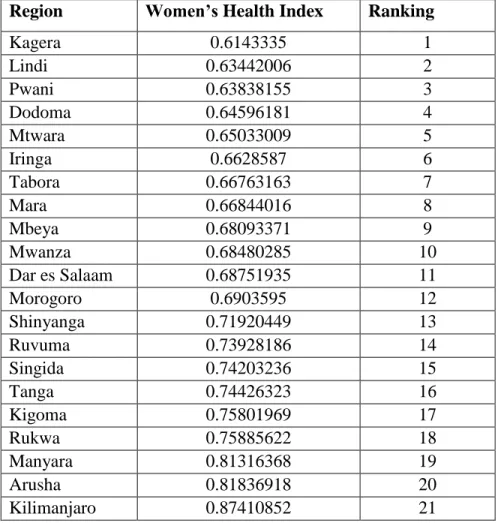
The three health variables were then individually regressed with one another to determine their relationship. This linear regression analysis before index calculation is crucial to properly identify any potential bias that strong correlations may add to the index. For example, if two variables show a strong association with one another, the final index score may be inflated. When the life expectancy of each region and stunting in each region were compared, the correlation coefficient value ranged from 0.1302 for the entire region, 0.0283 for rural, and 0.0049 for urban. A regression analysis between anemia and stunting revealed a correlation value of .00005 for the entire region, 0.1589 for rural areas, and 0.0039 for urban areas. Finally, the comparison between life expectancy and anemia produced values of 0.0097 for the entire region, 0.0004 for rural areas, and 0.0259 for urban areas. These significantly low correlation coefficient values indicate no relationship, concluding that there is no data bias that may produce overstated index scores.
46
Percent values for lack of anemia and no stunting were converted into decimal form (by dividing by 100). Life expectancy was compared to the life expectancy of the entire country (57.4). These individual variable scores were then multiplied and the cube root was taken to produce a
comprehensive women’s health index score per region. Final index scores range from 0 to 1. Life expectancy data for Pemba South and Zanzibar North were available, and therefore, index scores were not calculated for these two regions.
Women’s Empowerment
Similar index scores were created for women’s empowerment. These scores included three variables which were also obtained from the 2010 Demographic and Health Survey: percent of women with some secondary education, percent of women who participate in health decisions for their household, and percent of women who participate in purchasing decisions for their household. These variables were chosen as a strong representation of the degree of
women’s empowerment. The amount of secondary education also relates to water procurement, one of the many reasons young girls miss school. Again linear regression analysis was performed between these variables. Correlation values for the regression analysis of participation in
purchasing and education were 0.0677 for the entire region, 0.045 for rural areas, and 0.0929 for urban areas. Regression analysis correlating participation in health and education produced r2 values of 0.0019 for the entire region, 0.0015 in rural areas, and 0.0091 in urban areas. These values indicate no correlation between variables. However, as expected, when participation in health decisions and participation in household purchasing were compared, a stronger correlation was witnessed (r2=0.4007). Nonetheless, this association is only moderately positive and,
47
Women’s education levels and the degree of female input in household decision making were then weighted equally and an index value was calculated for each region, as well as urban and rural areas within each region. Although the Human Development Report does not produce this particular type of index, as it does the health index, a similar formula model was used for study consistency (sample calculation included in the Appendix, Part A). To calculate the final index score, percentages for each variable were converted into decimal values, and these values were than multiplied and the product was raised to the 1/3 power.
Water Infrastructure
To create the water infrastructure (built environment) index, the number and type of boreholes was examined, in addition to, the percent of the population that is within 15 minutes of walking distance to the nearest water source and water production versus demand for drinking water. The number and type of boreholes for each region was obtained from a research study conducted by Baumann et al. (2005) that examined the NRWSSP Investment Plan Budget for Tanzania. This data source is not as recent as other sources used in this study; however, data related to water infrastructure is poorly collected and maintained, as mentioned in the introduction, and in turn, this was the most recent and reliable source. Therefore, later in the study, this index is broken down to examine the effect of the individual variables as well. The ratio of drinking water production versus demand in 2010 was obtained from the National Bureau of Statistics (NBS, 2013), while walking distance was obtained from a collaborative study conducted by the Ministry of Water and Livestock Development, WaterAid, and the NBS (NBS. 2013).
48
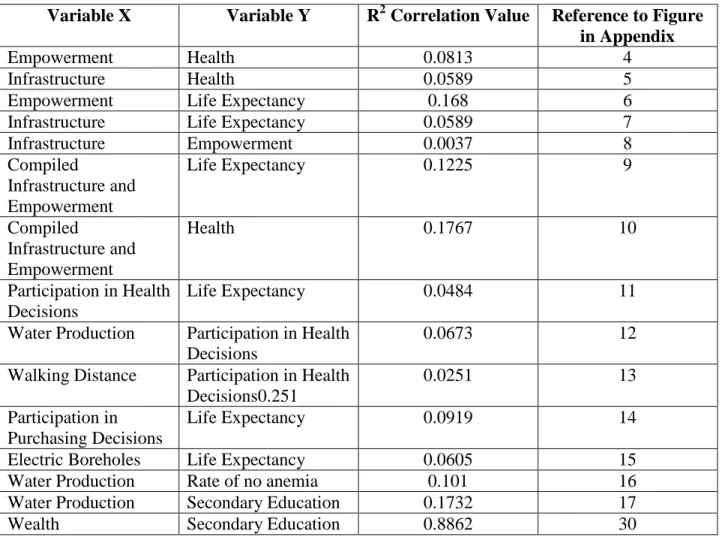
water sources are the only type of boreholes that retain a high guarantee of positive output when faced with significant drought or water scarcity (Elliott et al, 2011). Therefore, the second variable, “adaptive capacity,” was calculated for by dividing the number of electric boreholes by the total population in each region. The final two variables did not require further computation. Similar to the other index scores, the variables within the water infrastructure score were regressed with one another to determine potential index score bias. A comparison of boreholes per capita and adaptive capacity yielded a mild correlation (r2
=0.3545), while the comparisons of boreholes per capita to walking distances and to water production ratios yielded no significant correlations (r2 = 0.0396 and 0.0678 respectively). When adaptive capacity was regressed with walking distance and water production ratios, no association was observed (r2 = 0.0825 and 0.0213 respectively). Finally, an r2 value of 0.0045 was recorded when walking distance was compared to production ratios. These insignificant correlation values indicate no index calculation bias in this portion of the study.
Percentages were converted to decimals and these four variables were weighted equally to create an index value for each region. Again, similar to women’s empowerment scores, the HDI does not calculate water infrastructure or built environment index scores; however, the formulas used are easily applicable to this index and their use ensures consistency within the study. The four variables were multiplied with one another and then raised to the ¼ power. It is important to note here that multiple regions were excluded from the built environment index due to the lack of available data in the study.
Climate Change
49
even the most recent models to adequately and accurately aggregate to a regional level. Various types of data and models were used due to these uncertainty patterns and a general lack of data specific to Tanzania.
Past drought data was obtained from the Center of Hazards and Risk Research (CHRR) at Columbia University (2005). The CHRR data is a 2.5 degree resolution raster dataset from the International Research Institute for Climate Predictions (IRI) Weighted Anomaly of
Standardized Precipitation (WASP). Calculations for this data set accounted for average monthly precipitation patterns from 1980 to 2000. Drought events were identified as a deficit of 50% of the median value for three consecutive months.
Data regarding future average total rainfall predictions for the years 2046-2065 was obtained from the Climate Change Model Portal of the World Bank (2013). The General Circulation Model (GCM) utilized by the World Bank employed a CNRM-CM3 A2 emissions scenario (World Bank Group, 2013). This coupled general circulation model is the third version of the ocean-atmosphere model initially developed at the Centre National de Recherches
Meteorologiques in Meteo, France. Although more recent models (CM4 and CM5) have been produced, drought analysis has not been conducted using these. Additionally, although resolution has improved with more recent versions, CM3 models include the same past data variables as the more recent versions and significant bias in this model is found to reside only in oceanic
temperatures, therefore producing little bias in this study of Tanzania (Voldoire et al, 2013). The A2 emissions scenario also provides greater information from an impacts and adaptation
50
Additionally, previously analyzed datasets from the UNDP Climate Change Country Profile were also used in order to examine temperature, number of hot days, annual rainfall, and number of heavy rainfall predictions (McSweeney, New, and Lizcano, 2010). The UNDP dataset employed a General Circulation Model under the SRES A2 scenario (McSweeney, New, and Lizcano, 2010), similar to the World Bank model cited above. This datasets is not a primary source and, is therefore, prone to author bias. However, this bias is minimized through comparison of other models used in this study and verification with literature.
Index Analysis and Case Study
Linear regression was performed on the calculated index scores to determine the separate effect of water infrastructure and women’s empowerment on the health and wellbeing of women at the regional level. A combined (added) empowerment and infrastructure score was also regressed with the women’s health index score. Additionally, each individual variable score was regressed with each health score variable. This individual analysis ensured that the index scores did not dilute the effects of individual variables.
51
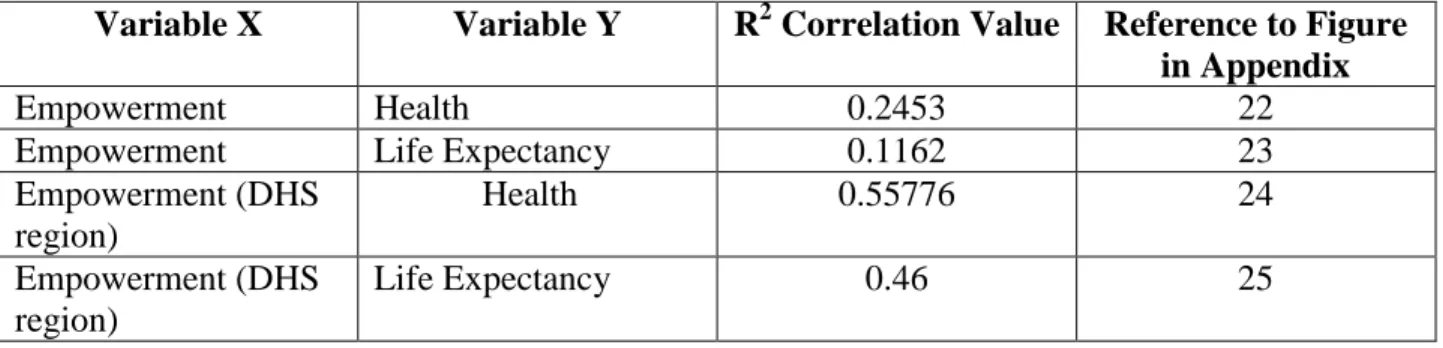
Similar linear regression analysis was also performed to determine the correlation between empowerment and health in both urban and rural areas. The built environment was excluded from this regression due to the inability to aggregate data smaller than the regional level. Again, regional data was averaged to determine any larger district effect. Urban and rural data was also compared in order to examine differences related to water procurement.
Each variable was also ranked and the rankings were qualitatively evaluated to determine regions where women are most vulnerable due to significant climate change, marginalization, and lack of infrastructure. A threshold, established as the bottom 15%, was set to determine the four regions with the lowest index scores for each respective variable. This threshold was established to eliminate any error from the identification of a single region. Finally, the index scores were overlaid with past and future climate data to determine patterns and identify
potential vulnerable regions. Areas with low scores in one or more indexes, and that are expected to experiences significant climate change, were marked as vulnerable regions.
Finally, two differing regions were chosen to analyze these patterns and the complexity of the interaction observed in this study: Dodoma and Singida. These regions were chosen because both are facing significant climate change as shown by the World Bank Group (2013), CHRR (2005), and the study conducted by McSweeney, New, and Lizcano (2010). Yet, women’s empowerment, water infrastructure, and health varied drastically between the two regions. Therefore, a case study was performed that compared these two areas to determine differences in policy, as well as, explain differences in coping with climate change. All results were then applied to the theory of gender climate justice.
52
53
IV. RESULTS AND ANALYSIS
This section will first examine index score results and correlations, noting particular patterns and associations at the regional level, as well as, differences between urban and rural areas within Tanzania. These correlations and patterns will then be overlapped with climate change data to identify vulnerable regions. Vulnerable regions are defined as areas where climate change has the potential to negatively impact the health and wellbeing of women. It was
predicted that positive associations exist between women’s empowerment and health, as well as, the degree of water infrastructure and women’s health. This hypothesis is likely true, however, the data displays weak trends after analysis. Therefore, this investigation will conclude with a case study to display the importance of scale within these relationships. The case study compares two contrasting regions, Mara and Dodoma, to dissect scale specific local issues that both hinder and aid improvements to women’s health. In turn, this case study is crucial to revealing spatial differences past the quantitative regional analysis of this study.
Index Analysis