Review Article Open Access
Pinning Down HELLP: A Review
Hafizur Rahman*
Institutional affiliations of author, Professor of Obstetrics and Gynecology, Sikkim Manipal Institute of Medical Sciences, India Received: August 04, 2017; Published: August 10, 2017
*Corresponding author: Hafizur Rahman, Professor of Obstetrics & Gynecology, Sikkim Manipal Institute of Medical Sciences, 5th Mile, Tadong, Gangtok, Sikkim-737102, India
Introduction
Hypertensive disorders of pregnancy are a dreaded disease for both the mother and the fetus. Preeclampsia and HELLP syndrome, both disorders unique to pregnancy, remain a major cause of maternal and neonatal mortality and morbidity worldwide. It is the most common medical disorder complicating pregnancy, affecting 7 to 15% of all women. As high as 22% perinatal deaths and 30% of maternal deaths in developed countries are because of preeclampsia. The situation is far by worse in developing countries because of low antenatal turn up, delayed reporting and inefficient management in most of the heath setups [1]. Credit for formally consolidating the concept and creating the acronym of HELLP (H = hemolysis, EL = elevated liver enzymes and LP = low platelets) goes to Louis Weinstein who in 1982 reported a group of 29 pregnant patients he considered to have a distinct subset of severe preeclampsia/eclampsia. There is considerable disagreement in the medical literature regarding the terminology, incidence, diagnosis, and management of the HELLP syndrome. During the past 15 years, numerous retrospective and observational studies as well as few randomized trials have been published in an attempt to refine the diagnostic criteria for this syndrome, to identify risk factors for adverse pregnancy outcome, and to reduce maternal and perinatal outcomes in women with this syndrome. Despite
this recent literature, the diagnosis, management, and pregnancy outcome of HELLP syndrome remain controversial [2].
Pathogenesis
HELLP syndrome usually develops suddenly during pregnancy (27-37 weeks’ gestation) or in the immediate puerperium [3-7]. As a form of severe preeclampsia, it likely has its origins in aberrant placental development, function, and ischemia-producing oxidative stress, which triggers the release of factor(s) that systematically injure the endothelium via activation of platelets, vasoconstrictors, and loss of normal pregnancy vascular relaxation. Although most patients with HELLP syndrome eventually exhibit hypertension and proteinuria, these 2 major signs of severe preeclampsia bear no consistent relationship with laboratory parameters of the underlying vasculopathy. A variety of symptoms can be elicited that are ambiguous, subtle, and focused primarily on the gastrointestinal-hepatic systems [4-7].
The central place that the liver occupies in the disorder of HELLP syndrome is an important clue to pathogenesis. The similarity between HELLP syndrome and systemic inflammatory response syndrome (SIRS) has been emphasized by several researchers. The perturbations present in patients who have Abstract
Preeclampsia and HELLP syndrome, both disorders unique to pregnancy, remain a major cause of maternal and neonatal mortality and morbidity worldwide. It is the most common medical disorder complicating pregnancy. In both of these disorders, the liver is a major target with often devastating consequences. The pathogenesis of hepatic damage in cases of severe preeclampsia and HELLP syndrome is not well understood. Diagnosis of HELLP syndrome is heavily relied upon laboratory investigation. In the management, first priority is to assess and stabilize the maternal condition, particularly coagulation abnormalities followed by evaluation of fetal well-being and finally, a decision must be made as to whether or not immediate delivery is indicated. Women with a prior history of HELLP syndrome carry an increased risk of at least 20% (range 16%-52%) risk of recurrence of some form of hypertension, so future pregnancy counseling and follow up is essential.
Keywords: Preeclampsia; HELLP Syndrome; Eclampsia; Corticosteroids
Abbreviations: Hemolysis; EL: Elevated Liver Enzymes, LP: Low Platelets; SIRS: Systemic Inflammatory Response Syndrome; LDH: Lactate DeHydrogenase; DIC: Disseminated Intravascular Coagulation; TTP: Thrombotic Thrombocytopenic Purpura; HUS: Hemolytic Uremic Syndrome; AFLP: Acute Fatty Liver of Pregnancy
Hafizur Rahman. Biomed J Sci & Tech Res
HELLP syndrome develop may be additive to, or altered by, the path physiology leading to preeclampsia in general [3].
Clinical Presentations
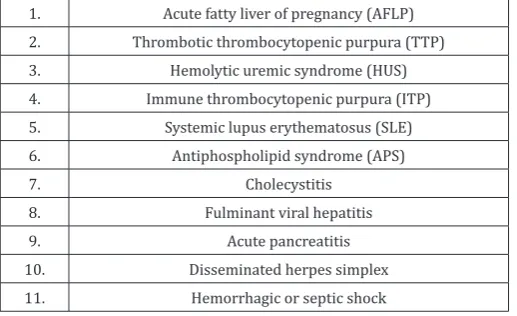
Patients with preeclampsia-eclampsia and HELLP syndrome may present with various signs and symptoms, none of which are diagnostic. Pregnant women usually present in their third trimester with complaints of malaise (90%), epigastric or right upper quadrant pain (90%), nausea or vomiting (50%), or nonspecific viral like symptoms. Although, majority of these patients present in the third trimester, it is not uncommon to see these cases in the later part of second trimester, or in the postpartum period [1]. However, these clinical features are also common presentation for several other benign and serious pregnancy and non pregnancy related conditions (Table 1) [8]. For this reason, pregnant women with any concerning symptoms should undergo a diagnostic work-up including a complete blood count, platelet count, liver evaluation, and urine dipstick for protein irrespective of their blood pressure. Presence of abnormal urine dipstick for protein should be followed by quantitative evaluation for protein in a 24 hour urine specimen [1].
Table 1: Differential diagnosis in women with HELLP Syndrome.
1. Acute fatty liver of pregnancy (AFLP)
2. Thrombotic thrombocytopenic purpura (TTP)
3. Hemolytic uremic syndrome (HUS)
4. Immune thrombocytopenic purpura (ITP)
5. Systemic lupus erythematosus (SLE)
6. Antiphospholipid syndrome (APS)
7. Cholecystitis
8. Fulminant viral hepatitis
9. Acute pancreatitis
10. Disseminated herpes simplex
11. Hemorrhagic or septic shock
Pregnant women usually present in their third trimester with systemic hypertension, proteinuria, and peripheral edema. Patients may present with increased weight gain, headache and visual disturbances, and gastric complaints of nausea and vomiting. The severity of preeclampsia is based on the presence of cerebral disturbances, proteinuria more than 5 gram/24 hours, or evidence of thrombocytopenia or hemolysis. Hepatic involvement occurs in approximately 10% of severe preeclampsia cases. It is not uncommon that these women may have transient liver enzyme elevations without clinical signs of pain [1].
Abdominal pain is common and may be present in about 50% of the patients. Abdominal pain is usually encountered in the right upper quadrant, epigastric or substernal region and often associated with laboratory abnormalities defining HELLP syndrome. Abdominal pain is generally absent in other disorders unique to pregnancy such as cholestasis of pregnancy and hyperemesis of pregnancy; however it is frequently encountered in HELLP and AFLP. Although HELLP syndrome may have symptoms
severe preeclampsia, it can develop in women who might not have any other signs or symptoms of preeclampsia. Preeclampsia is not a prerequisite for HELLP syndrome and hypertension, if present, does not have to be severe. Severe hypertension defined as systolic blood pressure ≥160 mm Hg and diastolic blood pressure ≥110 mm Hg, is not a constant or even a frequent finding in HELLP syndrome [1,3].
Hemolysis, defined as the presence of microangiopathic hemolytic anemia, is the hallmark of the triad of HELLP syndrome [9]. The classical findings of microangiopathic hemolysis include significant drop in hemoglobin levels, elevated serum indirect bilirubin, low serum haptoglobin levels, elevated lactate dehydrogenase (LDH) levels and abnormal peripheral smear (schistocytes, burr cells, echinocytes). The same ambiguity exists with the use of abnormal liver function tests for defining HELLP syndrome. There is no consensus regarding the degree of liver enzyme elevation that is used for diagnosing HELLP syndrome [10]. Low platelet count is another abnormality required to make a diagnosis of HELLP syndrome. However, there are no defining criteria for low platelet count. Adding to this confusion, HELLP syndrome shares many clinical and laboratory characteristics with equally serious conditions like systemic inflammatory response syndrome (SIRS) disseminated intravascular coagulation (DIC), thrombotic thrombocytopenic purpura (TTP), hemolytic uremic syndrome (HUS) and acute fatty liver of pregnancy (AFLP) and can be easily confused with these conditions [1].
Diagnosis and Classification
Table 2: Main diagnostic criteria and classification systems of
HELLP Syndrome.
HELLP Class ClassificationMississippi ClassificationTennessee
1
Platelet count ≤50,000/µL AST or ALT ≥70 IU/L
LDH ≥ 600 IU/L
Platelet count ≤100,000/uL AST ≥ 70 IU/L LDH ≥ 600 IU/
2
50,000/µL ≤Platelet count ≤100,000/µL AST or ALT ≥70 IU/L LDH ≥ 600 IU/L
N/A
3
100,000/µL ≤ Platelet count ≤ 150,000/µL AST or ALT ≥40 IU/L LDH ≥ 600 IU/L
Partial HELLP/ incomplete HELLP
N/A + one of the following: (Severe preeclampsia ELLP, EL, LP)*
*ELLP-Absence of hemolysis; EL-elevated liver functions; LP-low platelets.
this condition should include a varying consideration including hepatic, hematological and other systemic conditions. In trying to differentiate it from acute fatty liver of pregnancy which occurs in the third trimester of pregnancy, a common clinical observation is that the liver dysfunction is more pronounced in the later with coagulopathy, hypoglycemia and renal failure are present. The coagulopathy in AFLP is due to acute liver failure, whereas in HELLP syndrome coagulopathy develops as a part of the DIC syndrome with microangiopathic hemolytic anemia [1]. Two major diagnostic classification systems are currently used for the classification of HELLP syndrome (Table 2) [11,12]. In the Tennessee classification system; a diagnosis of the complete form of HELLP syndrome requires the presence of all three major components, whereas partial or incomplete HELLP syndrome consists of only one or two elements of the triad. The presence of an abnormal peripheral smear (e.g., microangioplastic anemia with schistocytosis), thrombocytopenia, and elevated levels of AST, ALT, bilirubin, and lactate dehydrogenase (LDH) is diagnostic. The Mississippi classification system has been proposed for assessment of the severity of the pathologic process, with class 1 HELLP syndrome having a worse prognosis and longer hospital stay than either class 2 or class 3. This classification system is based on the degree of
thrombocytopenia and the extent of elevation in transaminase and LDH levels, as shown in (Table 2). The platelet count and serum LDH levels are found not only to be moderately predictive of the severity of the disease but also to indicate the speed of recovery [11,12].
Maternal and perinatal morbidity and mortality
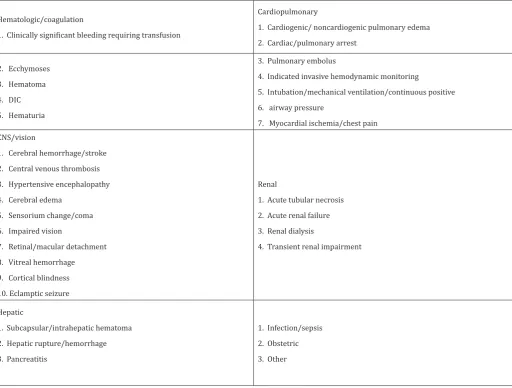
The development of HELLP syndrome places the pregnant patient at significant risk for morbidity and mortality. Morbidity (Table 3) is categorized by major organ system(s) affected and is stratified by extent of disease using the Mississippi classification system [3]. Cesarean delivery has been performed more often for patients with class 1 HELLP syndrome (61%) than class 2 (57%), class 3 (53%), or non-HELLP severe preeclampsia (48%).Mode of delivery is strongly influenced by gestational age, maternal-fetal status, class of disease, and corticosteroid utilization. Overall abdominal delivery is associated with a doubling of maternal morbidity (cardiopulmonary, hematologic-coagulation, and infectious) compared with vaginal delivery. Most deaths in patients with HELLP syndrome occur with class 1 disease (60%), and neurologic abnormality due mostly to cerebral hemorrhage/stroke is the most common system involved [13].
Table 3: Significant maternal morbidity in HELLP Syndrome.
Hematologic/coagulation
1. Clinically significant bleeding requiring transfusion
Cardiopulmonary
1. Cardiogenic/ noncardiogenic pulmonary edema 2. Cardiac/pulmonary arrest
2. Ecchymoses 3. Hematoma 4. DIC 5. Hematuria
3. Pulmonary embolus
4. Indicated invasive hemodynamic monitoring
5. Intubation/mechanical ventilation/continuous positive 6. airway pressure
7. Myocardial ischemia/chest pain CNS/vision
1. Cerebral hemorrhage/stroke 2. Central venous thrombosis 3. Hypertensive encephalopathy 4. Cerebral edema
5. Sensorium change/coma 6. Impaired vision
7. Retinal/macular detachment 8. Vitreal hemorrhage 9. Cortical blindness 10. Eclamptic seizure
Renal
1. Acute tubular necrosis 2. Acute renal failure 3. Renal dialysis
4. Transient renal impairment
Hepatic
1. Subcapsular/intrahepatic hematoma 2. Hepatic rupture/hemorrhage 3. Pancreatitis
Perinatal morbidity and mortality are substantially higher in pregnancies with severe preeclampsia complicated by HELLP syndrome, primarily because of required preterm delivery. Fetal growth restriction and fetal distress after 32 weeks also may be more frequent. Although neonatal deaths and perinatal mortality rates tend to be progressively higher in parallel with increasingly severity of disease, outcomes are primarily related to gestational age at delivery and not to disease status. Continuation of HELLP syndrome pregnancy beyond 26 weeks and the time necessary for steroid enhancement of fetal lung maturation increases the risk of stillbirth substantially. Long term prognosis for the children of mothers with HELLP syndrome is comparable to controls matched for gestational age [3,13].
Management
Patients who are remote from term should be referred to a tertiary care center [1]. The first priority is to assess and stabilize the maternal condition, particularly coagulation abnormalities. The next step is in the evaluation of fetal well-being and gestational age. Finally, a decision must be made as to whether or not immediate delivery is indicated. There is a consensus of opinion that prompt delivery is indicated if the syndrome develops after 34 weeks of gestation or earlier if there is multi-organ dysfunction, DIC, liver infarction or hemorrhage, renal failure, suspected abruption of placenta, or non reassuring fetal status [1,14].
There is significant disagreement regarding management of women with HELLP syndrome before 34 weeks of gestation. Fetal lung maturity is not achieved by this time. Some authors recommend prolonging pregnancy until 34 weeks of gestation or until the development of maternal or fetal indications for delivery. Although it appears that expectant management may be beneficial, the overall perinatal outcome did not seem to improve when compared with cases of similar gestational age who were delivered within 48 hours after the diagnosis of HELLP syndrome [1].
The clinical course of HELLP is one of progressive deterioration of the maternal and fetal conditions, and the selection of cases to delay delivery should be rigorous. Patients selected for delayed delivery will require administration of magnesium sulfate, steroids (Betamethasone 12mg IM two doses 24 hour or 12 hour apart) for prevention of IVH and RDH. Delivery should be accomplished within 24 hours following the last dose of steroids [15]. The use of corticosteroids in the management of HELLP syndrome remains controversial. In a Cochran review of randomized controlled trials comparing any corticosteroid with placebo, no treatment, or other drug; or comparing one corticosteroid with another corticosteroid or dosage in women with HELLP syndrome. There was no difference in the risk of maternal death or severe maternal morbidity or perinatal/infant death. The only clear effect of treatment on individual outcomes was improved platelet count. Authors concluded that there was no clear evidence of any effect of corticosteroids on substantive clinical outcomes [16]. The National institute of Clinical excellence (NICE) and Royal college of Obstetricians and Gynaecologists (RCOG) guidelines recommends
Prevention of severe systolic hypertension (>160 mm Hg) is paramount; recommendations to maintain systolic pressures under 150 mm Hg and diastolic pressures under 100 mm Hg are reasonable goals. Labetolol, hydralazine, or nifedipine are the preferred agents for treatment of acute hypertension [1]. Maternal-fetal status, gestational age, presence of labor, cervical Bishop Score, prior maternal obstetric history, and response to aggressive corticosteroids all impact management of the patient with a preterm viable fetus and HELLP syndrome. Immediate cesarean delivery is not generally indicated or recommended; vaginal or cesarean delivery after 24 to 48 hours of corticosteroids are better options to achieve maximal maternal and fetal benefit. Nevertheless, because vaginal delivery rates with HELLP syndrome are below 50% for gestations less than 30 weeks, some authors advocates elective cesarean delivery for all women diagnosed with HELLP syndrome at a gestation age less than 30 weeks when spontaneous labor is not present and the Bishop score is less than 5. A patient with a low Bishop score in association with fetal growth restriction and/ or oligohydramnios may not be a good candidate for trial of labor. Otherwise, vaginal delivery is attempted in patients in active labor less than 30 weeks with ruptured membranes or with a Bishop score 5 or more in the absence of obstetric contraindications. Once the 30-week gestational age threshold is reached, an attempt at vaginal delivery is usually recommended. Epidural or spinal anesthesia is the preferred anesthetic for patients with preeclampsia. Approximately 50% of patients with HELLP syndrome can be candidates for regional anesthesia during a trial of labor using a threshold of 100,000/µL platelets. In these circumstances, the decision of abdominal versus vaginal delivery becomes more of an obstetric issue rather than a response to a rapidly worsening maternal-fetal condition [3].
Patient Counseling: Future Pregnancy
Women with a prior history of HELLP syndrome carry an increased risk of at least 20% (range 16%-52%) that some form of gestational hypertension will recur in a subsequent gestation. The rate of recurrent HELLP syndrome itself varies between 2% and 19% depending on the population studied, gestational age at onset, whether there is concurrent vascular disease of any type, and very likely the unique genetic profile of the individual patient, her partner, and her progeny. To date, anything other than close monitoring of subsequent pregnancies for problems of prematurity and preeclampsia (preterm labor, bleeding, fetal growth restriction) has not been superceded by specific testing or augmented by effective preventative measures [3].
References
1. Bearelly D, Hammoud GM, Koontz G, Merrill DC, Ibdah JA (2012) Preeclampsia-Induced Liver Disease and HELLP Syndrome. Maternal Liver Disease 74-91.
2. Baha M. Sibai (2005) A practical plan to detect and manage HELLP Syndrome. OBG Manag 17(4): 52-68.
4. Martin JN, Magan EF, Blake PG (1993) Analysis of 454 pregnancies with severe preeclampsia/eclampsia/HELLP syndrome using the 3-class system of classification. Am J Obstet Gynecol 168(1): 386.
5. Sibai BM, Ramadan MK, Usta I, Salama M, Mercer BM, et al. (1993) Maternal morbidity and mortality in 442 pregnancies with HELLP syndrome. Am J Obstet Gynecol 169(4): 1000-1006.
6. Martin JN, Magann EF (1996) Understanding and managing HELLP syndrome: current principles and recommended practices. Curr Obstet Med 195(4): 914-934.
7. Martin JN, Rinehart K, May WL, Magann EF, Terrone DA, et al. (1999) The spectrum of severe preeclampsia: comparative analysis by HELLP syndrome classification. Am J Obstet Gynecol 180(6 pt 1): 1373-1384. 8. Sibai BM (2004) Diagnosis, Controversies, and Management of the
Syndrome of Hemolysis, Elevated Liver Enzymes, and Low Platelet Count. Obstet Gynecol 103(5 pt 1): 981-991.
9. Sibai BM (1990) The HELLP syndrome (hemolysis, elevated liver enzymes, and low platelets): much ado about nothing? Am J Obstet Gynecol 162(2): 311316.
10. Goodlin RC, Holdt D (1981) Impending gestosis. Obstet Gynecol 58(6): 743745.
11. Audibert F, Friedman SA, Frangieh AY, Sibai BM (1996) Clinical utility of strict diagnostic criteria for the HELLP (hemolysis, elevated liver enzymes, and low platelets) syndrome. Am J Obstet Gynecol 175(2): 460464.
12. Martin JN, Rinehart BK, May WL, Blake PG, Terrone DA, et al. (1999) The spectrum of severe preeclampsia: comparative analysis by HELLP (hemolysis, elevated liver enzyme levels, and low platelet count) syndrome classification. Am J Obstet Gynecol 180(6 Pt 1): 13731384. 13. Martin JN, Magan EF, Blake PG (1993) Analysis of 454 pregnancies with
severe preeclampsia/eclampsia/HELLP syndrome using the 3-class system of classification. Am J Obstet Gynecol 168(1): 386.
14. National Institute for Health and Clinical Excellence (2010) Hypertension in pregnancy: The management of hypertensive disorders during pregnancy. NICE clinical guideline.
15. Fernando arias (2008) Practical guide to high risk pregnancy and delivery: A south Asian perspective.
16. Effect of corticosteroids for fetal maturation on perinatal outcomes. NIH Consensus Develop ment Panel on the Effect of Corticosteroids for Fetal Maturation on Perinatal Outcomes (1995) JAMA 273(5): 413418.
Assets of Publishing with us
• Global archiving of articles
• Immediate, unrestricted online access
• Rigorous Peer Review Process
• Authors Retain Copyrights
• Unique DOI for all articles