University of South Carolina
Scholar Commons
Theses and Dissertations
2017
The ACT KeyTrain Program and the ACT
WorkKeys Test Performance: An Action Research
Study
Matthew T. Thompson University of South Carolina
Follow this and additional works at:https://scholarcommons.sc.edu/etd Part of theCurriculum and Instruction Commons
This Open Access Dissertation is brought to you by Scholar Commons. It has been accepted for inclusion in Theses and Dissertations by an authorized administrator of Scholar Commons. For more information, please [email protected].
Recommended Citation
The ACT KeyTrain Program and the ACT WorkKeys Test Performance: An Action Research Study
by
Matthew T. Thompson Bachelor of Science College of Charleston, 2002
Master of Education
University of Massachusetts at Lowell, 2007
_________________________________________________
Submitted in Partial Fulfillment of the Requirements For the Degree of Doctor of Education in
Curriculum and Instruction College of Education University of South Carolina
2017 Accepted by:
Susan Schramm-Pate, Major Professor Kenneth Vogler, Committee Member
Suha Tamin, Committee Member Vic Oglan, Committee Member
Dedication
Acknowledgments
I would like to thank Dr. Susan Schramm-Pate, Dr. Kenneth Vogler, and Dr. Richard Lussier for their guidance in completing this study. I would like to thank Dr. Randy Reagan and the South Carolina Department of Corrections Research Division for allowing me to complete the research and study.
Abstract
The purpose of this quantitative action research study was to describe the effectiveness of the American College Testing (ACT) KeyTrain program in the South Carolina Department of Corrections (SCDC), conducted with 50 inmate-student-participants who were enrolled in the Palmetto Unified School District’s Tyger River High School’s (TyRCI) adult education program. The identified problem of practice for this dissertation in practice (DiP) was an evaluation of the effectiveness of this program for one group of low socioeconomic status Black male inmate-student-participants. This evaluation was of vital importance to the Palmetto Unified School District (PUSD) and SCDC because ACT WorkKeys is one of the educational opportunities offered to inmate-students in an effort to improve the reintegration of inmates into society through reduced recidivism. Surveys, questionnaires, ACT KeyTrain curricula, and official ACT
WorkKeys scores constituted the data for this research. Inmate-student-participant performance and patterns were described using a statistical t test. A correlation test was employed to describe the predictive ability of the ACT KeyTrain program. The primary research question “How effective is the ACT KeyTrain program at predicting and improving ACT WorkKeys performance for 50 low socioeconomic-status, Black, male
Preface
The following research study was conducted entirely at the Tyger River
Table of Contents
Dedication ... ii
Acknowledgments... iii
Abstract ... iv
Preface... vi
List of Tables ... ix
List of Figures ...x
List of Abbreviations ... xii
CHAPTER 1: RESEARCH OVERVIEW ...1
Introduction ...1
Methodology ...5
Dissertation Overview ...9
Conclusion ...18
CHAPTER 2: LITERATURE REVIEW ...19
Introduction ...19
Purpose of the Literature Review ...23
Review of the Literature ...24
Conclusion ...54
CHAPTER 3: METHODOLOGY ...55
Introduction ...55
Conclusion ...74
CHAPTER 4 FINDINGS AND INTERPRETATION OF RESULTS...75
Introduction ...75
Findings of the Study ...78
Interpretation of the Results of the Study ...110
Conclusion ...115
CHAPTER 5: SUMMARY AND DISCUSSION ...118
Introduction ...118
Focus of the Study ...121
Overview/Summary of the Study...121
Action Plan: Implications of the Findings ...124
Suggestions for Future Research ...140
Conclusion ...142
References ...145
Appendix A – Informed Consent Form ...154
Appendix B – Research Participation Demographics Survey ...156
Appendix C – Data Collection Work Sheet ...159
Appendix D – Work Ethic Survey ...161
Appendix E – Attitude Survey ...162
Appendix F – Inmate Satisfaction Survey ...163
List of Tables
Table 3.1 Participant Demographic Data ... 59
Table 3.2 The Adaptive KeyTrain Pretest ... 67
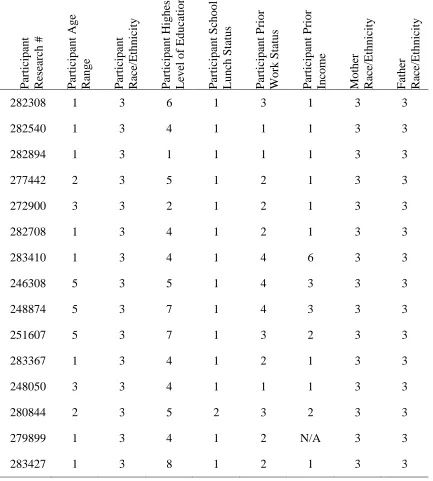
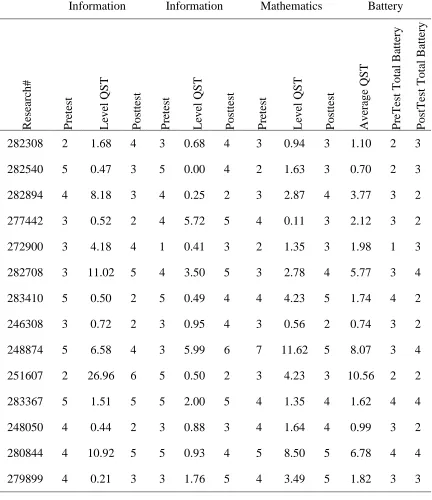
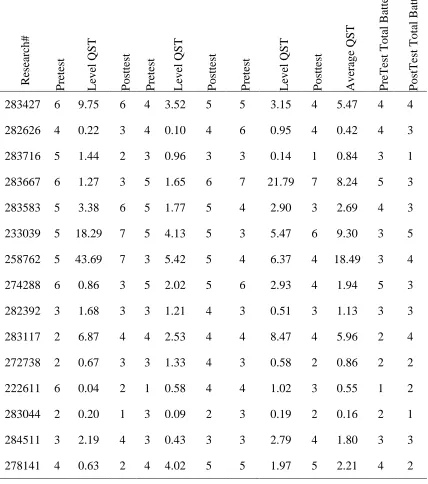
Table 4.1 Participant ACT KeyTrain Results ... 75
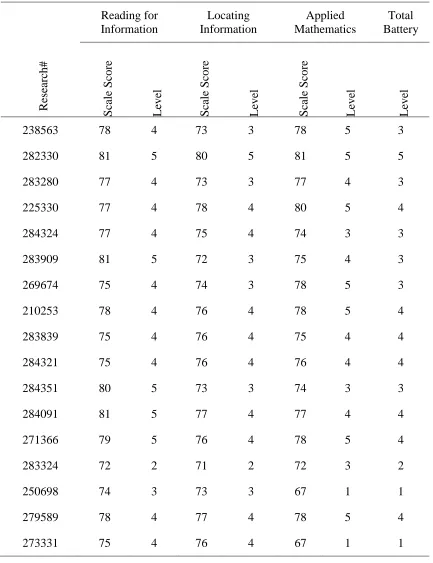
Table 4.2 Participant ACT WorkKeys Results ... 83
Table 4.3 Teacher-Participant Work Ethic Responses ... 88
List of Figures
Figure 4.1. XY scatterplot of Reading for Information with complete data set ... 92
Figure 4.2. XY scatterplot of Locating Information Data with complete data set ... 94
Figure 4.3. XY scatterplot of Applied Mathematics with complete data set ... 95
Figure 4.4. XY scatterplot of Total Battery with complete data set. ... 97
Figure 4.5. XY scatterplot of Reading for Information data with top 50% of QST. ... 98
Figure 4.6. XY scatterplot of Locating Information data with top 50% of QST. ... 100
Figure 4.7. XY scatterplot of Applied Mathematics data with top 50% of QST. ... 101
Figure 4.8. XY scatterplot of Total Battery data with top 50% of QST. ... 102
Figure 4.9. XY scatterplot of Reading for Information data with top 50% of work ethic. ... 104
Figure 4.10. XY scatterplot of Locating Information data with top 50% of work ethic. ... 105
Figure 4.11. XY scatterplot of Applied Mathematics data with top 50% of work ethic. ... 107
Figure 4.12. XY scatterplot of Total Battery data with top 50% of work ethic. ... 108
Figure 5.1. Attitude Survey Question 1 regarding ACT KeyTrain Reading for Information helpfulness. ... 128
Figure 5.2. Attitude Survey Question 2 regarding effort in ACT KeyTrain Reading for Information. ... 129
Figure 5.3. Attitude Survey Question 3 regarding ACT KeyTrain Locating Information helpfulness. ... 130
List of Abbreviations
CHAPTER 1:
RESEARCH OVERVIEW
Introduction
education to inmates is important for the SCDC and the State of South Carolina (SC). Chapter 2 discusses the importance of education for marginalized populations, such as low SES Black male inmates, as demonstrated in the literature.
At the time of this study, teachers in the prison (including the researcher-participant) used an assortment of educational resources intended to maximize SC inmate-students’ test scores. However, the many educational resources and materials available created inconsistency for inmate-students as they prepared for the examination. Having SC inmate-students take the WorkKeys assessments before they are “ready” can cost the State financially and may cost the inmate-student future employment
opportunities. In order to increase readiness to take the test, the SCDC has invested money in the ACT KeyTrain program by purchasing site licenses for the various institutions.
Philosophical position of the researcher-participant. This study focuses on the demographics and composition of prison populations across the United States (US) and SC. Various demographic groups within the population of the US have unearned
advantages in many areas of society. “In each case, there is a group considered dominant (systematically advantaged by the society because of group membership) and a group considered subordinate or targeted (systematically disadvantaged)” (Tatum, 2013, p. 7). This unearned advantage is called “white privilege” (Johnson, 2013, p. 17). Paul Gorski (2013) states “privilege begets privilege” (p. 16). People without privilege are often victims of social injustices. Maurianne Adams (2013) states,
is characterized by unequal relationships between those who are privileged or advantaged by the social system, relative to those who are targeted or
disadvantaged. (p. xxvii)
effort to improve their lives when they are released and free to seek gainful employment in our capitalist system.
Statement of the problem of practice. The identified problem of practice for this dissertation in practice was to determine the effectiveness of the ACT KeyTrain program for 50 low-SES Black male inmate-student-participants in improving and predicting performance on the ACT WorkKeys examination. This goal was of vital importance to the PUSD and the SCDC because ACT WorkKeys is one of the educational opportunities offered to inmate-students in an effort to improve the reintegration of inmates into society through reduced recidivism.
Background of the problem of practice. Because of myriad social injustices, including inadequate access and equity in public schooling, low-SES Black males have been overrepresented in the inmate population in SC. Approximately 61% of the inmate population in the SCDC is Black while the approximately 28% of the total state
take the WorkKeys assessment, SCDC leaders tried to enable inmate-students to
maximize their score on this assessment because those scores equated to increased state funding for the SCDC and afforded future employment opportunities for more inmates upon their release. Thus, SC taxpayer dollars were spent on publications that offered study materials, curricula, and resources aimed at improving WorkKeys performance for this particular population of inmate-student-participants.
Methodology
Research objectives. The goal of this action research study was to evaluate the effectiveness of the KeyTrain program for identifying inmate-student readiness and improving low-SES Black male inmate-student performance on the ACT WorkKeys assessments. The first objective was to describe or predict inmate-student readiness for the ACT WorkKeys assessments as measured using the Adaptive KeyTrain pretests and the Adaptive KeyTrain posttests as a part of the instructional process. The second objective was to describe the effectiveness of the instructional materials in improving ACT WorkKeys performance.
Research question. The primary research question guiding this particular action research study emerged from reflection on the aforementioned issues. The research question was “How effective is the ACT KeyTrain program at predicting and improving ACT WorkKeys performance for 50 low socioeconomic-status Black male inmate-students in South Carolina?”
H10: There will be no difference between the Adaptive KeyTrain Pretest
scores and the Adaptive KeyTrain Posttest scores for low-SES Black male inmate-student-participants at TyRCI as a result of completing the KeyTrain program.
H1a: There will be a statistically significant increase between Adaptive
KeyTrain Pretest scores and Adaptive KeyTrain Posttest scores for low-SES Black male inmate-student-participants at TyRCI as a result of completing the KeyTrain program.
H20: There will be no relationship between the Adaptive KeyTrain Posttest
scores and the official WorkKeys scores for low-SES Black male inmate-student-participants of TyRCI.
H2a: There will be a positive correlation between the Adaptive KeyTrain
Posttest scores and the official ACT WorkKeys scores for low-SES Black male inmate-student-participants of TyRCI.
Purpose of the study. The purpose of this research study was to determine the effectiveness of the ACT KeyTrain program in improving and predicting inmate-student performance on the ACT WorkKeys examination. For this study, effectiveness was defined in terms of improved performance as the average improvement between the pretest and posttest on the ACT Adaptive KeyTrain test. Regarding predictability, effectiveness was the strength of the correlation between the ACT Adaptive KeyTrain posttest and the results from the ACT WorkKeys examination as determined by a statistical t test. Therefore, the aim was to improve and predict inmate-student performance on ACT WorkKeys through the completion of a specified amount of the ACT KeyTrain program. The program was available through Title I at Tyger River Correctional Institution (TyRCI). With systematic use of this program, the WorkKeys scores of the 50 low socioeconomic-status (SES) Black male inmate-students who participated in the study were maximized. By eliminating the uncertainty and
maximizing test scores, TyRCI worked toward the mission of the SCDC. One prong of the three-pronged mission of SCDC was stewardship: “Stewardship–We will promote professional excellence, fiscal responsibility, and self-sufficiency” (South Carolina Department of Corrections, 2015b, para. 1). By properly preparing inmate-students for the WorkKeys examination, TyRCI and PUSD demonstrated fiscal responsibility and self-sufficiency.
educational opportunities for segments of the population who experience social injustices may have alleviated some of the oppression they experienced once released. The
ultimate educational goal of inmate-students in SCDC was to obtain a high school
diploma or General Educational Development (GED) diploma. In the process of working toward a GED, the inmate-students in SCDC followed federal adult education
regulations. They were pretested using TABE, given a minimum number of hours of instruction, and then tested again using TABE. Once inmate-students changed their educational functioning level (EFL), or showed gains, they received additional
assessments, provided their TABE scores were high enough. The assessments inmate-students began preparing for included WorkKeys and the GED. As a part of the SCDC process, inmate-students were encouraged to take WorkKeys and earn a Silver NCRC prior to progressing toward the GED.
Depending upon inmate-student performance on WorkKeys, PUSD received funding from the federal government. PUSD received $11.37 for a Bronze NCRC, $42.33 for a Silver NCRC, and $103.58 for a Gold NCRC or a Platinum NCRC. The funding data indicate why improving WorkKeys performance was of the utmost importance to PUSD and SCDC. The funding generated through credentials earned by inmate-students is critical to sustaining academic programs in the agency. It was a goal of PUSD to assess only those inmate-students who had a strong possibility of earning a Silver NCRC or better.
place that accurately predicted WorkKeys success for low-SES Black male inmate-students, as well as a curriculum or program to improve WorkKeys skills once teachers identified viable candidates.
Summary of the findings. The data collected in this study indicated that the ACT KeyTrain program was not effective in improving ACT WorkKeys performance for 50 low-SES Black male student-participants at TyRCI. A slight decrease in inmate-student-participant performance was found between pretest and posttest scores in ACT KeyTrain in each Reading for Information, Applied Mathematics, and Total Battery. However, a slight increase in inmate-student-participant performance between the pretest and the posttest was found in ACT KeyTrain in Locating Information. Additionally, the data collected in this study showed that the ACT Adaptive KeyTrain posttest
performance was positively correlated to ACT WorkKeys performance for the sample of 50 low-SES Black male inmate-student-participants at TyRCI. Therefore, the ACT KeyTrain program was judged effective in predicting ACT WorkKeys performance for the sample of 50 low-SES Black male inmate-student-participants at TyRCI. For Reading for Information, a weak positive correlation between the ACT Adaptive KeyTrain posttest and the ACT WorkKeys test was found. In Locating Information, Applied Mathematics, and Total Battery, a weak to moderate positive correlation was found between the ACT Adaptive KeyTrain posttest and the ACT WorkKeys test.
Dissertation Overview
themes for ACT WorkKeys found throughout the literature involved implications for prospective employers, prospective employees, and schools and/or educational institutions. In the literature concerning the importance of education for inmates, common themes involved recidivism and making inmates’ sentences more productive. Each of the themes in the current literature was evaluated in terms of the historical context, current trends, and the way theory has informed practice. This review is critical to understanding the themes and their relevance to the purpose of this study.
In Chapter 3, information about the methods used to carry out the research study is presented. The research questions, research design, and hypotheses are presented and discussed. Included in this chapter is a discussion of the implementations for data collection, data analysis, data reflection and interpretation, and the action plan. In the data collection section, a comprehensive list of the data collected is presented. In the data analysis section, how the collected data were analyzed to test the null hypotheses is explained.
In Chapter 4, a summary of the findings of the research study is presented, followed by an interpretation of the results of the study. In Chapter 5, a summary of the findings of the study is presented, followed by a discussion of the major points from the findings. Further, an action plan based on the findings of the study is included. Finally, potential future research and questions that arose from this study are presented.
Significance of the study. This study was of importance because it aimed to help the educational staff of Tyger River Correctional Institution to determine the
KeyTrain to predict performance and to improve performance of low SES Black male inmate-student-participants on ACT WorkKeys. Improving performance can have an impact on the ability of a former inmate-student to find gainful employment upon release from prison. Gainful employment can reduce recidivism and improve the success of an inmates return to society. By determining its effectiveness, the school could make a decision about future implementation, use, or purchase of this resource.
Many incarcerated people come from marginalized populations. This marginalization often has been a factor in their incarceration and/or participation in criminal activity. A marginalized population that is overrepresented in correctional facilities is low SES Black males. Furthermore, once low SES Black male inmates leave prison, society oppresses them based on their classification as a convict. When the SCDC provides low SES Black male inmates with educational credentials, they improve their chances of a successful return to society.
Potential Weaknesses. A limitation of this study was that the research classified some of the research participants that as low SES based on their lunch status from high school. However, some of the research participants were older and had not been in high school in quite some time. Research participants’ employment status may have changed their SES status after leaving high school. Furthermore, there was evidence to indicate some of them did not reliably know what their yearly salary was prior to incarceration to make an accurate judgement on their SES. This data was not available from the SCDC.
abilities through a course of study. For the purposes of this action research, the researcher-participant quantified and measured work ethic using QST and a teacher-participant completed Likert-scale survey. As stated previously, white privilege has led to a system of injustices for Black males and they are overrepresented in prison
populations due to the lack of privilege. As a result of their current setting and life events that have led to that condition, inmate-students are many times not engaged in academic work or motivated to engage in academic work. The idea of intrinsic motivation and work ethic is rooted in a system of meritocracy. As Spring (2014) states, “meritocracy mean creating an administrative structure in which the positions held by professionals depended on their training and abilities as opposed to their political influence and power” (p. 271). The idea is that the harder one works, the more they deserve in terms of wealth, status, and/or power regardless of other factors associated with privilege. Parents,
educators, and society instill this idea in people at an early age as they chase the “American Dream.” The intrinsic motivation necessary to display a successful (i.e., white, middle-class) work ethic is difficult for some of these Black inmate-student-participants to develop because they have not internalized this belief system nor been taught the skills associated with it. Although the researcher-participant took measures to account for this variable, it is still possible some student-participants that did not display a normalized work ethic were included in some of the data sets.
based on their performances on a preliminary assessment. The ACT KeyTrain program was based on the concept of differentiated instruction. In addition, the KeyTrain program applied Lev Vygotsky’s theory of the zone of proximal development (ZPD). Scaffolding was another concept essential to the KeyTrain program.
Differentiation of instruction is a powerful concept in education encouraged in most school systems. “Teachers who understand the centrality of high-quality curriculum in differentiation know that students can become powerful learners only if what they are asked to learn is powerful” (Tomlinson, Brimijoin, & Narvaez, 2008, p. 7). In order to provide adequate instruction to all students, the teacher must facilitate and tailor instruction specific to each student’s needs. This method of instruction is called
differentiation. Tomlinson and Moon (2013) state, “Indeed, instruction is at the core of
differentiation because the ultimate goal of differentiation is to ensure that each student has the best possible learning experiences in order to maximize academic growth” (p. 9).
The ZPD is a theory introduced by Lev Vygotsky. The theory of the ZPD holds that in order for students to learn, they must be given instructional tasks at a level of difficulty that is just beyond what they can do by themselves (Vygotsky, 1978, p. 86). Students only advance if they receive difficult instructional materials. However, students may need help completing assignments. This is where new learning is initiated.
Scaffolding is another concept central to the implementation of the ACT
within the course of the ACT KeyTrain program, the skills built on each other and became progressively more difficult.
Key Words/Glossary.
Adult basic education (ABE) – Adult basic education refers to the classification for students who turn 21 before September 1 of an academic year. These inmate-students generate funding from sources different from those of the Education Finance Act (EFA) students. The educational plan for these inmate-students must follow federal regulations and assessment guidelines for adult education.
ACT Career Ready 101 – ACT Career Ready 101 is an online program produced by ACT Inc. that prepares students for the various ACT assessments. The program includes mini-courses designed for the specific assessments. In addition to the courses to prepare students for assessments, the program also includes career exploration features.
ACT KeyTrain – ACT KeyTrain is an instructional suite within ACT Career Ready 101 that prepares students for the ACT WorkKeys assessments.
ACT WorkKeys – ACT WorkKeys is a battery of tests that assesses a person’s skills in three areas. The three subtests are Reading for Information, Locating
difficult and complex than others. There are 38 questions on this subtest. On the Applied Mathematics subtest, examinees solve word problems of varying degrees of difficulty. There are 33 questions on this subtest. Examinees have 45 minutes to complete each subtest. The data from the subtests may be used as feedback so show if someone possesses the skills to be successful in various jobs and/or careers.
Differentiation of instruction – Differentiating instruction means developing an educational plan for students based on their unique needs, strengths, and/or weaknesses (Tomlinson, 2001, p. 3). In practice, students typically work individually or in small groups (as opposed to traditional whole group instruction) on skills that were identified as a weakness through a pre-assessment (Tomlinson & Moon, 2013, p. 29).
Education Finance Act (EFA) – Education Finance Act refers to the funding source for inmate-students who are under 21 or who turn 21 after September 1 of an academic year. The acronym for the funding source is then used to classify the inmate-students who fall into this category. The educational plan for these inmate-inmate-students is different from that of the ABE inmate-students. EFA inmate-students are referred to as high school students.
General Educational Development (GED) – A General Educational
Development (GED) diploma is a certificate that represents the equivalency of a high school diploma (Brinkley-Etzkorn & Ishitani, 2016, p. 28).
Inmate – An inmate is a convicted felon incarcerated at one of the 24 institutions in the state of South Carolina.
areas such as reading comprehension, mathematical ability, and the ability to use logic (ACT, 2016, para. 1).
Palmetto Unified School District (PUSD) – Palmetto Unified is a statewide school district that targets the inmates in the South Carolina Department of Corrections. At this time, there are approximately 21,000 inmates. Inmate-students who are between 17 and 21 years old are served at one of 9 high schools in the district. Inmate-students who are 22 years old and older are served in adult education programs within the
institutions (South Carolina Department of Corrections, Palmetto Unified School District 1, 2015, para. 10).
Quality Study Time (QST) – Quality study time is a statistic derived to quantify inmate-student-participant work ethic for this particular research project. The researcher-participant calculated QST by the following equation: grade percent earned on a level multiplied by the score the inmate-student-participant earned on the posttest multiplied by hours spent in study for that level multiplied by hours spent on the posttest.
Recidivism – Recidivism is the return of a person to a life of crime as represented by new arrests, convictions, and/or incarcerations within three years of release from prison due to a previous sentence (National Institute of Justice, 2014, para. 1).
Scaffolding – Scaffolding is a method of instruction in which the teacher provides just enough assistance so that a student can complete an assigned task. As the student becomes increasingly competent at the task, the teacher gradually releases control until the student can complete the task independently (Tomlinson, 2001, p. 22).
measured as a combination of education, income, and occupation” (American Psychological Association, 2015, para. 1).
South Carolina Department of Corrections (SCDC) – The South Carolina Department of Corrections is the state agency responsible for securely housing inmates convicted of crimes by the judiciary systems of South Carolina. There are currently 24 institutions housing approximately 21,000 inmates (South Carolina Department of Corrections, Palmetto Unified School District 1, 2015, para. 10).
Test of Adult Basic Education (TABE) – “Educators use TABE testing to provide a solid foundation for effectively assessing the skills and knowledge of adult learners” (Data Recognition Corporation, 2015, para. 1). The subtests for TABE are Reading, Language, Mathematic Computation, and Applied Mathematics.
Tyger River Correctional Institution (TyRCI) – One of 24 institutions or prisons in the state of South Carolina. TyRCI is located in Enoree, South Carolina. Enoree is a small, rural community located in southern Spartanburg County along SC Highway 56.
Work Ethic – Work ethic is the amount and the quality of effort through intrinsic motivation an inmate-student-participant puts into improving their skills or abilities through some course of study. For the purposes of this action research, the researcher-participant quantified and measured work ethic using QST and a teacher-researcher-participant completed Likert-scale survey.
the help of tasks solved by the child under the guidance of adults or in
cooperation with more intelligent peers.” (Vygotsky & Kozulin, 2011, p. 208)
Conclusion
Throughout the history of the United States, groups of people have been marginalized and oppressed. The effects of the oppression and the marginalization persist even today and are evident in the legal system, housing market, career pursuit, education, and access to healthcare. The injustices from the legal system have led to the overrepresentation of low SES Black males in prisons across the United States, but particularly South Carolina. In effort to improve an inmate’s return to society, the SCDC offers educational opportunities. The opportunity to earn a NCRC through ACT
WorkKeys is one of those educational opportunities. The goal of this study was to determine if the use of the ACT KeyTrain curriculum improved or predicted an inmate-student-participant’s score on ACT WorkKeys. The primary research question “How effective is the ACT KeyTrain program at predicting and improving ACT WorkKeys
performance for 50 low socioeconomic-status, Black, male inmate-students in South
CHAPTER 2:
LITERATURE REVIEW
Introduction
The State of South Carolina has charged the SCDC with rehabilitating this group in addition to protecting the public and the inmates. Socioeconomic (SES) status
intersects with race/ethnicity in the State of South Carolina, similar to the situation found in many states in the United States (Gorski, 2013, p. 46). As a result, low-SES Black male inmates often populate U.S. penal institutions (Vogel & Porter, 2016, p. 515). A solution to the excessive incarceration of individuals is correctional education.
According to RAND Foundation experts’ meta-analysis of correctional educational studies, “Prison education programs are cost effective, with a $1 investment in prison education reducing incarceration costs by $4 to $5 during the first three years post-release” (Davis, Bozick, Steel, Saunders, & Miles, 2013, para. 2). Ninety percent of all inmates return to society (South Carolina Department of Corrections, 2016b).
Correctional education can be a valuable intervention for low-SES Black male inmates. “Several evaluations have demonstrated that correctional education programs increase employment rates and wages of parolees, both factors correlated with reduced
recidivism” (Brown, 2008, para. 8).
Within the theoretical base, the value of correctional education is presented in terms of recidivism, a reentry tool, and controlling prison populations. Furthermore, the value of ACT WorkKeys is considered in terms of historical context, current trends, and how the theory has informed the practice. Finally, the historical context of correctional education is discussed in regards to the common school movement, the education of the oppressed, and the value of human capital.
Statement of the problem of practice. The identified problem of practice for this dissertation in practice was to determine the effectiveness of the ACT KeyTrain program for 50 low-SES Black male inmate-student-participants in improving and predicting performance on the ACT WorkKeys examination. This goal was of vital importance to the PUSD and the SCDC because ACT WorkKeys is one of the
educational opportunities offered to inmates in an effort to improve the reintegration of inmates into society through reduced recidivism.
Background of the problem of practice. Because of myriad social injustices, including inadequate access and equity in public schooling, low-SES Black males have been overrepresented in the inmate population in SC. Approximately 61% of the inmate population in the SCDC is Black while the approximately 28% of the total state
point in their course of study, it was not always easy for those who taught in the prison to determine who among the inmate-students was ready to take the WorkKeys assessment. Determining readiness was important for fiscal responsibility to offset the cost to the state to administer the examination. Additionally, once an inmate-student showed readiness to take the WorkKeys assessment, SCDC leaders tried to enable inmate-students to
maximize their score on this assessment because those scores equated to increased state funding for the SCDC and afforded future employment opportunities for more inmates upon their release. Thus, SC taxpayer dollars were spent on publications that offered study materials, curricula, and resources aimed at improving WorkKeys performance for this particular population of inmates.
Research question. The primary research question guiding this particular action research study emerged from reflection on the aforementioned issues. The research question was “How effective is the ACT KeyTrain program at predicting and improving ACT WorkKeys performance for 50 low socioeconomic-status Black male inmate-student-participants in South Carolina?”
inmate-student-participant performance on ACT WorkKeys through the completion of a specified amount of the ACT KeyTrain program. The program was available through Title I at Tyger River Correctional Institution (TyRCI). With systematic use of this program, the WorkKeys scores of the 50 low socioeconomic-status (SES) Black male inmate-students who participated in the study were maximized. By eliminating the uncertainty and maximizing test scores, TyRCI worked toward the mission of the SCDC. One prong of the three-pronged mission of SCDC was stewardship: “Stewardship–We will promote professional excellence, fiscal responsibility, and self-sufficiency” (South Carolina Department of Corrections, 2015b, para. 1). By properly preparing inmate-students for the WorkKeys examination, TyRCI and PUSD demonstrated fiscal responsibility and self-sufficiency.
Rationale for the study. A major component of rehabilitation of inmates SCDC was education. In providing educational opportunities for inmates, a goal of the SCDC is to help reduce recidivism rates. The reduced recidivism rate is evidence that inmates may have experienced a more successful return to society. Providing additional
educational opportunities for segments of the population who experience social injustices may have alleviated some of the oppression they experienced once released. The
scores were high enough. The assessments inmate-students began preparing for included WorkKeys and the GED. As a part of the SCDC process, inmate-students were
encouraged to take WorkKeys and earn a Silver NCRC prior to progressing toward the GED.
Depending upon inmate-student performance on WorkKeys, PUSD received funding from the federal government. PUSD received $11.37 for a Bronze NCRC, $42.33 for a Silver NCRC, and $103.58 for a Gold NCRC or a Platinum NCRC. The funding data indicate why improving WorkKeys performance was of the utmost importance to PUSD and SCDC. The funding generated through credentials earned by inmate-students is critical to sustaining academic programs in the agency. It was a goal of PUSD to assess only those inmate-students who had a strong possibility of earning a Silver NCRC or better.
To determine inmate-student readiness, PUSD used TABE scores and teacher opinions based on classroom performance. The latter of these current methods was a subjective measure at best. Therefore, it was beneficial to have a pre-assessment in place that accurately predicted WorkKeys success for low-SES Black male inmate-students, as well as a curriculum or program to improve WorkKeys skills once teachers identified viable candidates.
Purpose of the Literature Review
importance of education for inmates, common themes involved recidivism and making inmate-students’ sentences more productive. The premise upon which PUSD operated within SCDC was that education improves inmate-students’ ability to make a successful return to society. This ultimately saves money for the State of South Carolina and thus is a vital part of fulfilling SCDC’s mission of rehabilitating people. In this chapter, each theme in the current literature is evaluated in regards to the historical context, the current trends, and the way theory has informed practice. This study of the literature through time concerning the aforementioned themes is critical to understanding the themes and their relevance to this study.
Review of the Literature
Theoretical foundation. Many researchers have studied correctional education, recidivism, and post incarceration benefits (Borden, Richardson, & Meyer, 2012, p. 6). Because of oppressive factors woven into the historical fabric of the United States, low-SES Black males have been overrepresented in correctional facilities throughout the nation (Vogel & Porter, 2016, p. 515). This population comprises a large portion of people served by correctional education. Additionally, much research has been
conducted regarding the value and use of ACT WorkKeys and the subsequent National Career Readiness Certificate (NCRC) used to obtain employment. However, limited research has assessed the value of ACT WorkKeys and the NCRC to correctional
education. The principles and theories gleaned from these previous studies were valuable in creating the foundation for this study.
previous generations has led to disproportionate incarceration of low-SES Black males in the United States. “Black/white incarceration disparities are the most pronounced, with black males being incarcerated at nearly seven times the rate of white males” (Vogel & Porter, 2016, p. 516). Correctional education can have tremendous value in combating this social injustice and stopping the cycle of recidivism. Correctional education can help these individuals prosper in society by providing them with valuable and profitable skills. “Inmates who regularly attend and complete classes while incarcerated have the potential to acquire skills that prepare them for employment, to gain a sense of accomplishment and success, to become lifelong learners, and to avoid committing further crime” (Borden, Richardson, & Meyer, 2012, p. 7). By reducing recidivism, more low-SES Black males have the opportunity to positively influence their families. “Beyond the social and public cost benefits associated with reduced recidivism, correctional education has great potential to improve the social and economic situations of inmates and their families” (Borden, Richardson, & Meyer, 2012, p. 7). This involvement can help stop the cycle of incarceration and social injustice among this population. “Offenders who enroll in educational programming have an opportunity to demonstrate positive behaviors to their families and to serve as positive role models to family and children.” (Borden, Richardson, & Meyer, 2012, p. 7). Common themes emerging from the research have included the ideas that (a) correctional education is beneficial in reducing recidivism, (b) education is an excellent reentry tool, and (c) education is effective in controlling prison populations. These elements are described in the following paragraphs.
The effect on recidivism. The most common theme found in existing research
Recidivism is the rate at which inmates return to the custody of a correctional entity within some specified period (National Institute of Justice, 2014, para. 1). The period of time in which recidivism is measured can vary. Most correctional agencies collect recidivism data.
A foundational goal of correctional agencies is to rehabilitate the inmates placed in their care. “Frustrated by a lack of marketable skills, burdened with a criminal record, and released into the community without transitional services or support, many [inmates] return to illegal activities” (Klein & Tolbert, 2007, p. 284). Education is a valuable part of rehabilitation. United States Supreme Court Justice Warren Burger said, “We must accept the reality that to confine offenders behind walls without trying to change them is an expensive folly with short-term benefits—winning battles while losing the war” (as quoted in Steurer, Linton, Nally, & Lockwood, 2010, p. 43).
Further, the recidivism data are usually divided into categories such as age, race, gender, type of offense, and programs completed. The programs that agencies offer can be expensive; as a result, there are accountability measures. The effectiveness of correctional education programs is often measured through recidivism data. “The
education that inmates receive in prison can mean the difference between the doorway of freedom with a productive future and the revolving door of recidivism” (Cantrell, 2013, p. 2).
educational program participation while incarcerated. Correctional agencies track this data as an effort to assess the effectiveness of their education programs.
Reentry to society. Another theme that emerged in existing research about the importance of correctional education was the institution’s ability to assist inmates in reentry into society. This assistance can take many different forms, but primarily results in inmate-students earning credentials and/or learning a skill or trade. Consequently, helping inmate-students return to society can lead to a reduction in recidivism (Borden, Richardson, & Meyer, 2012, p. 7). Additionally, inmates have an increased likelihood to recidivate if they are not given some sort of intervention during incarceration.
Involvement in correctional education leads to increased employment upon release and consequently a smoother return to society. Not only is there an increase in the likelihood of employment, but former inmates who were involved in education also earn higher wages on average (Nally, Lockwood, Knutson, & Ho, 2012, p. 80). Lichtenberger and Ogle (2006) identified areas for which data should be collected to measure inmate success upon return to society: “Much of this literature mentions including the post-release outcomes of employment/earnings, educational attainment, or attitudes or satisfaction towards participation, in addition to the standard evaluative measure of recidivism” (p. 231). Although recidivism is an important measure of success, it is not the only measure that should be used. According to Nally, Lockwood, Knutson, and Ho (2012), “Even though this study has clearly indicated that the effect of correctional education on recidivism is significant, a longitudinal study is needed to accurately assess the effect of correctional education on post-release employment among released
Controlling prison populations. A final theme found in existing research about the importance of correctional education was the benefits of education in controlling the prison population. Overcrowding is a huge issue within prisons in most states (Pitts, Griffin, & Johnson, 2014, p. 124). As previously mentioned, in 2016, the average sentence length for an inmate in the SCDC was approximately 14 years (South Carolina Department of Corrections, 2016b). However, like South Carolina, many states have developed systems by which inmates can earn bonus credits through participation in education. For example, the Indiana Department of Corrections has implemented an effective bonus-credit program (Steurer et al., 2010, p. 42). This mechanism has helped to offset the cost of the educational program. “Through this mechanism, the costs of the educational program are more than covered by immediate and easily quantified “bed day” reductions” (Steurer et al., 2010, p. 42). By releasing inmates sooner, inmates are a financial burden on the state for a shorter time. “The planning division of the Indiana DOC estimated that those credit days and early releases generated $68 million in averted costs” (Steurer et al., 2010, p. 42). Depending upon the nature of the crime the inmates committed, the credits can deduct a substantial percentage of inmates’ sentences and earn their releases sooner than if they had not participated in the educational program.
Under Indiana Code 35-50-6-3.3, an offender in Credit Class I who has
demonstrated a pattern consistent with rehabilitation and successfully completes requirements in several education programs may obtain credit time that is applied directly to the actual time served, as related to the individual’s earliest possible release date. (Steurer et al., 2010, p. 42)
more time from their sentences than if they were convicted of violent crimes. This incentive, along with the ability to earn educational credentials, was a great motivator for inmate-students to perform in the correctional classroom.
Value of ACT WorkKeys. Among the existing literature concerning ACT WorkKeys, definitive themes were abundantly clear. Past literature covering three main areas supported the objective of this research project to improve inmate-student
performance on ACT WorkKeys assessments: (a) the historical context of ACT
WorkKeys, (b) current trends regarding use of ACT WorkKeys, and (c) the way theory has informed the use of ACT WorkKeys.
Historical context. In reference to the historical context of ACT WorkKeys, the existing literature has shown a common theme. ACT WorkKeys was developed to inform employers of the skills that students possessed in relation to job functions needed after leaving school. Brown and Rios (2014) point out that ACT was one company that seized the initiative by creating an assessment program that awards credentials to help employers determine which candidates would be a good match for a job or occupation based on their skill set (p. 63). ACT WorkKeys also helps students know which occupations are a good match for their skills.
As Work Keys communicates to educators what are the job specific required skills for different employers, it would also be providing students with a realistic preview of the skills needed for jobs and an assessment of their standing on these skills. (Hater, 1992, p. 3)
available jobs (Schultz & Stern, 2013, p. 157). Competition from other countries has magnified this concern as foreign students have entered the workforce better equipped and prepared to compete. “This looming crisis was fueled by the rapid growth in
education and economic development in India and China, and by the continued decline in the academic performance of students in the West” (Bolin, 2011, p. 27).
Because of oppressive factors perpetuated throughout U.S. history, impoverished minorities are disadvantaged in today’s society. The disadvantages have led many people to incarceration. Outside of incarceration, the disadvantages have made prospering in today’s economy and job market more difficult. Although there are rags-to-riches stories, those are anomalies rather than the norm. Providing quality instruction to this oppressed population may give them an equal chance to succeed upon release from prison. The ACT WorkKeys is part of this quality instruction because it offers a platform to show employers inmate-students’ skills and talents.
Current trends. In reference to current trends for the use of ACT WorkKeys, the existing literature has shown a common theme. In the age of educational accountability, schools must use assessments to show students are gaining skills necessary to be
state leaders have begun to recognize the need for a more skilled workforce and started requiring students to take ACT WorkKeys in an effort to address this need.
In Indiana, the CRC has been used as an exit credential for high school students for several years. In Alaska, since 2010 all 11th- and 12th-graders have been required to take three CRC assessments, so many students there have received the certificate. (Bolin, 2011, p. 27)
South Carolina has required all 11th-grade students to take the ACT WorkKeys,
beginning in the 2014–2015 academic school year (South Carolina Department of Education, 2016, para. 1).
How theory has informed practice. In reference to the way theory has informed practice in regards to ACT WorkKeys, the existing literature has highlighted a common theme. School leaders are considering student career interests, and as a result, educators are more aware of the skills students need in order to be successful in the workplace. Educators can assess where their students are at the beginning of an instructional sequence. Armed with the knowledge from the assessment, teachers can pinpoint the deficiencies and gaps between students’ skill sets and career interests.
Educators follow the lead of companies in implementing strategies for growing the skills of their employees. “Employees who need to raise their competency levels to match those identified during the profiling process will be provided with the necessary instruction” (Arnett, 1998, p. 14). With South Carolina’s use of ACT WorkKeys for accountability purposes, improving student achievement on ACT WorkKeys is a goal for many schools and districts (South Carolina Department of Education, 2016). For
Using the results of this assessment, school officials created a curriculum to address the skill deficiencies of their students. Students were then tested again as seniors (Arnett, 1998, p. 4). The support students received when a skill deficiency was noted was a primary determining factor in how much they improved their skills and performed on subsequent assessments. “The Instructional Support component provides a series of guides to supplement existing curricula and training” (Reimer, 1996, p. 3). States have been creating incentives for student performance and one such effect is “development of supports for students at risk of falling short of career-readiness” (Zinth, 2013, p. 1).
Curricula taught to low-SES Black inmate-students should be purpose-driven to improve chances of employment (Nally, Lockwood, Knutson, & Ho, 2012, p. 71). The goal of education is to produce students who can be productive and functioning members of society. The curricula taught in schools determine the skills and knowledge students gain from completing a course of study. Curricula should include skills expected of students as they move into the workforce and society. In The Paideia Proposal, Adler (1982) proposed that students learn skills that are essential to their participation in society. This is critical so that they can be productive in a competitive world.
The twelve years of basic schooling must prepare them for this task, not by training them for one or another particular job in our industrial economy, but by giving them the basic skills that are common to all work in a society such as ours. (Adler, 1982, p. 17)
In conclusion, companies and businesses have indicated to educational
organizations a great need for a more skilled workforce to enable them to be competitive in a global economy. States have begun to respond by implementing the use of ACT WorkKeys in adult education programs and more recently in state high schools. Brown and Rios (2014) stated, “Except for two doctoral dissertations, neither of which was conducted in a correctional environment (Bowles, 2004; Stone, 2007), little scholarly research on the effectiveness of workplace credentialing programs exists” (p. 63). With more states requiring students to take ACT WorkKeys, the program is now used in federal accountability calculations. As a result, schools need to improve student achievement on ACT WorkKeys to improve the scores and grades given at state- and federal-level departments of education.
As with any other instructional objective, the instructional sequence is important. First, students should be assessed to identify areas of weakness. Second, educators should provide strategic instruction as an intervention to address the deficiencies. Third, students should be reassessed to determine skill growth.
Historical context. Many researchers have studied the importance of education for incarcerated people in relation to WorkKeys. Common themes for ACT WorkKeys throughout the literature include implications for prospective employers, prospective employees, and schools and/or educational institutions. In the literature concerning the importance of education for inmates, common themes involved recidivism and making inmates’ sentences more productive.
money for the State of South Carolina and thus was a vital part of fulfilling SCDC’s mission of rehabilitating people. Each theme in the current literature was evaluated in regards to the historical context, the current trends, and the way theory has informed practice. This review is critical to understanding the themes and their relevance to the purpose of this study. These themes can be seen in the common school movement, the education of the oppressed, and realizing individual and collective human capital.
The ideology of the common school movement. As a part of the rehabilitation of the inmates in SCDC, educational opportunities are offered to inmates who seek to make changes in their lives. These opportunities are offered in an effort to give inmates an increased chance of successfully integrating into society upon their release from prison. Inmates who are incarcerated within SCDC return to society within a relatively short time—in 2016, the average sentence in SCDC was approximately 14 years (South Carolina Department of Corrections, 2016b). If inmates do not receive an opportunity to change or a new outlook on life, the chances are higher they will return to prison within three years. However, when inmates are afforded opportunities to improve themselves, the recidivism rates are drastically reduced (Nally, Lockwood, Knutson, & Ho, 2012, p. 82). Obtaining a National Career Readiness Certificate (NCRC) is a way for inmate-students to show prospective employers the skills they possess and the changes they have made in their lives.
The potential of education to reduce crime and provide an avenue for being a productive part of society can be seen in the history of educational curricula and the common school movement. “The second important aspect of the common school
provide equal opportunity” (Spring, 2014, p. 79). These benefits of the common school movement were believed to be a function of an educated person’s ability to obtain wealth. Horace Mann (1952), the father of the common school movement, said,
But if education be equably diffused, it will draw property after it, by the strongest of all attractions; for such a thing never did happen, and never can happen, as that an intelligent and practical body of men should be permanently poor. (p. 59)
Researchers have considered the common school movement a means to assimilate various cultures into the Protestant Anglo-American culture. The belief was that
eliminating the different cultures would reduce tensions between different groups of people. Ellwood Cubberley (1868–1941) was an educator who believed in the common school ideal. Arguments Cubberley (2015) lists in support of the common school movement include the prevention of pauperism and crime, the reduction of poverty, an increase in production, dispelling myths about the distribution of wealth, and the prevention of class distinctions (p. 120).
The ideals and rationale behind the common school movement underpin the goals and mission of the education division of the South Carolina Department of Corrections. Improving inmates who return to society will in effect improve society as a whole. If these inmates become productive members of society, they can support themselves and work for the collective good of others. The founders of the common school movement and later scholars who subscribed to the common school ideal clearly identified a link between improving education and reducing crime (Mann, 1952, p. 96). Improving ACT WorkKeys is a vehicle to improving inmate-students’ ability to gain employment and thereby reduce crime.
This attempt to assimilate various cultures into the Protestant Anglo-American culture worked to marginalize and oppress specific demographic groups that resisted the movement. “The dehumanization resulting from an unjust order is not a cause for despair but for hope, leading to the incessant pursuit of the humanity denied by injustice” (Freire, 2013, p. 159). One such marginalized demographic group was the poor (Weber, 2010, p. 109).
Another goal of the common school ideal was a reduction in crime. However, this reduction has not occurred:
In the countries where the social discrimination factor isn’t very strong, results have shown that less education meant more criminal offenses ranging from property crime to “casual” theft and drug-related offenses (again, mostly theft). But not violence. It appears that in fact, poverty itself is more tied with violence, criminal damage and also drug use – as a catalyst for violence. (Berrebi, 2011, para. 12)
The disproportionate number of crimes being committed by the poor has led to a
measure, students from poor families, the ones most desperate to find truth in the ‘great equalizer’ promise, appear to pay a great price for their poverty, even at school” (p. 1). However, if the oppressed are able to understand their oppression, they may be able to change their circumstance:
In order for the oppressed to be able to wage the struggle for their liberation, they must perceive the reality of oppression not as a closed world from which there is no exit, but as a limiting situation which they can transform. (Freire, 2000, p. 49) In addition to the tendency of the impoverished to commit crimes at a higher rate, compared to those who are not impoverished, oppression in the current criminal justice system has led to issues. “Poor people, especially people of color, face a far greater risk of being fined, arrested, and even incarcerated for minor offenses than other Americans” (Dolan & Carr, 2015, p. 6). However, injustice within the so-called justice system is the instrument of oppression to many. For example, “The U.S. Department of Justice investigation into the Ferguson Police Department revealed a deeply flawed criminal justice system that disproportionately affects people of color and low-income people” (Dolan & Carr, 2015, p. 30). In addition, many of the incarcerated committed nonviolent crimes that made the experienced oppression even greater. “Barriers to employment are increasingly affecting a larger sector of the U.S. population due to increasing numbers of arrests and convictions” (Dolan & Carr, 2015, p. 12).
culture. Far too often, these marginalized populations have not succeeded in educational settings that were not developed to capitalize on their strengths. “One cannot expect positive results from an educational or political action program which fails to respect the particular view of the world held by the people” (Freire, 2013, p. 161). This lack of respect has led to an increased attrition rate of Black children in traditional school settings. Adler (1982/2013) said,
We are all the victims of a school system that has only gone halfway along the road to realize the promise of democracy. At the beginning of this century, fewer than 10 percent of those of age eligible for high school entered such schools. Today, almost 100 percent of our children enter, but not all complete such secondary schooling; many drop out for many reasons, some of them understandable. (p. 183)
these inmate-students. Inmate-students learn the benefits of a NCRC when they are job hunting and learn how to use it in their favor.
Freire (2000) and Adler (1982) offered valid arguments. They were searching for equality for all. In Pedagogy of the Oppressed, Freire (2000) explained how the
marginalization of certain populations occurred. In ThePaideia Proposal, Adler (1982) explained that all students needed a rigid curriculum and instructional plan. All students would follow this same plan with few deviations. Adler (1982) said, “Individual
differences are always and only differences in degree, never differences in kind” (p.43). This fight for equality failed to take into account a valuable educational ideal. Noddings (2013b) said,
I will argue that ‘equality of quality’ in education cannot be achieved by forcing all students to take exactly the same course of study, nor can the ideal of a democratic classless society be actualized by establishing only one model of excellence. (p. 187)
Noddings (2013b) noted that giving each student an identical experience did not equate to equality in education. Different students needed different accommodations to be
successful and to receive a quality education. Noddings (2013b) in essence advocated that differentiating instruction was vital to student success. Noddings (2013b) deduced how the Paideia would further marginalize populations: “The Paideia selects a form of education traditionally associated with an academically privileged class…” (p. 191). Differentiation of instruction is a vitally important to the educational process in correctional facilities. Inmates enter corrections with a wide range of educational
an equal, quality, and fair education, educators must take into account the needs of each inmate-student.
The South Carolina Department of Corrections is in many ways a microcosm of how society functions. There are rules and laws that inmates must follow. Inmates may engage in certain activities. All inmates have assigned jobs. There are consequences for not completing their assigned jobs satisfactorily. Cultures that are prevalent in society are also present in the Department of Corrections.
During the so-called “culture wars,” there was an attempt to assimilate people from other cultures into the American culture. “The attempt to make Anglo-American culture the dominant culture of the United States came from that sense of superiority, which was challenged by the civil rights movement and the new
immigration” (Spring, 2014, p. 410). The members of the minority populations wanted their children to have access to equality in education, and they wanted an end to
segregation. The European Americans who held the power in the school systems saw this as an opportunity to assimilate these cultures into what had been defined as the “American culture.” This forced assimilation was an attempt to destroy the deeply held cultures of various populations. This action led to many legal issues. The abuses of power by European Americans during the civil rights movement are prime examples of the “legal issues” that arose. Even today, tensions and even some legal issues surface from Anglo-American policies.
cannot be applied using the methods used in public schools to assimilate these cultures into the Anglo-American culture. Just as any other student in a traditional school, inmate-students must be educated without experiencing attacks on their backgrounds. “Opponents of multiculturalism argued that the public schools should emphasize a single culture—traditional Anglo-American culture” (Spring, 2014, p. 407). This approach has been ineffective for members of various cultures when they were not incarcerated and is not likely to be successful while they are incarcerated. Educators must be conscious of multicultural education because students come from many different backgrounds and beliefs. Schramm-Pate, Lussier, and Jeffries (2008) state,
Our task is to not only include the perspectives of “others” so that students understand the felt needs and realities of our nation’s peoples but also to enable students to examine the origins and assumptions that underlie the mainstream framework that divides the nation into “North” and “South,” “us” and “them,” “rich” and “poor,” “black” and “white” and to analyze alternative frameworks for understanding people and the planet-past, present, and future. (p. 2)
While there are similarities in the backgrounds of inmates, they also come from diverse backgrounds making multicultural education essential to reach them.
changes they have made in their lives. The education of inmate-students can be analyzed using the frame of human capital. “Simply stated, human capital refers to the role of education in growing the economy and helping graduates find jobs” (Spring, 2014, p. 236).
When inmates are released from prison, they may find it difficult to obtain gainful employment. This inability to find employment may lead them back to the lifestyle that initially landed them in prison. However, the longer inmates spend in prison, the greater financial burden they place on the state and taxpayers. For example, “In Fiscal Year 2012 (July 1, 2011 – June 30, 2012), SCDC expended $348.8 million in state
appropriated funds, for a per inmate cost of $15,316 per year ($41.85 per day)” (South Carolina Department of Corrections, 2015a, para. 3). When the inmates find gainful employment, they are more likely to be able to support themselves and their families by utilizing their human capital. Education increases the ability of people to find jobs and enhances the amount of money they can earn while employed (Nally, Lockwood, Knutson, & Ho, 2012, p. 80). Statistics published by the United States Department of Labor’s Bureau of Labor Statistics (2014) have indicated a positive correlation between education level and average yearly salary. Additionally, these statistics have shown a negative correlation between education level and unemployment rates (United States Department of Labor, Bureau of Labor Statistics, 2014, Table 1).
(Zimmer, 2012, para. 6). Additionally, there was a positive correlation between ACT WorkKeys achievement and subsequent wages. “The wage after test results also showed a strong relationship between scoring well and higher wages” (Zimmer, 2012, para. 7).
Developing human capital through education is essential to U.S. society. Horace Mann recognized this early in the formation of the common school. Horace Mann (1952) said,
Under the Providence of God, our means of education are the grand machinery by which the “raw material” of human nature can be worked up into inventors and discoverers, into skilled artisans and scientific farmers, into scholars and jurists, into the founder of the benevolent institutions, and the great expounders of ethical and theological science. (p. 37)
The concern for developing human talent and human capital continued to persist in the history of our education system. “In its 1912 report, the Committee on Industrial Education directly related concerns about developing human capital to concerns about global competition” (as cited in Spring, 2014, p. 245). In order for the United States to compete with other countries in the modern global economy, the nation must develop its talent. The development of the nation’s talent occurs through education. Merle Curti (1966) stated, “To promote the efficiency of business at home and to enable it to compete with foreign rivals for markets, commercial and other special types of education were advocated and gradually developed” (p. 223).
Achieving at a high performance level on ACT WorkKeys may aid inmates in finding profitable employment that adds to the United States’ collective human capital.
Low-SES Black males are overrepresented in prisons and underrepresented in higher education. This inequity has led to an inability among this population to realize their individual human capital. The oppressive factors that created this discrepancy are still functioning in today’s economy and society. A conscious effort must be made to fight against and eliminate these factors.
In the last 40 years, many changes have occurred in the United States and world economies. The United States competes economically with countries such as China, Japan, and Germany. Companies from various countries manufacture goods and render services and compete for business in the same markets. Some of the aforementioned countries have been rapidly gaining on the United States in business and technological innovation. Many educators believe complacency in U.S. schools and citizens is a reason that U.S. advancement on these fronts has remained relatively stagnant, compared to the performance of other countries. Many politicians have expressed the belief that the focus on curricula in education is a cause. Students from these rapidly developing countries have been outperforming U.S. students, particularly in science and mathematics. These observations have led to many changes in U.S. education. Almost every U.S. president in the past 40 years has made this issue a point of contention and set out to leave a legacy on the education system. These educational policies have spilled over into correctional education and influenced the goals and missions of educators in the prison environment.