University of South Carolina
Scholar Commons
Theses and Dissertations
2018
Global Problem-Based Learning In Math
Dora Fletcher
University of South Carolina - Columbia
Follow this and additional works at:https://scholarcommons.sc.edu/etd Part of theCurriculum and Instruction Commons
This Open Access Dissertation is brought to you by Scholar Commons. It has been accepted for inclusion in Theses and Dissertations by an authorized administrator of Scholar Commons. For more information, please [email protected].
Recommended Citation
GLOBAL PROBLEM-BASED LEARNING IN MATH
by
Dora Fletcher
Bachelor of Science
Stephen F. Austin State University, 1992
Master of Education Converse College, 2007
Master of Education
University of South Carolina, 2012
Submitted in Partial Fulfillment of the Requirements
For the Degree of Doctor of Education in
Curriculum and Instruction
College of Education
University of South Carolina
2018
Accepted by:
Leigh D’Amico, Major Professor
Debra Geddings, Committee Member
Jin Liu, Committee Member
Sahu Tamim, Committee Member
ii
iii DEDICATION
For my loving husband who has been by my side since a day long ago when I
made the decision to become a teacher. You have been my partner, my helper, my
cheerleader, my thesaurus, my encourager, my sounding board, and my comforter. Thank
iv
ACKNOWLEDGEMENTS
I greatly appreciate the guidance and support of my dissertation mentor Dr. Leigh
D’Amico. Her insights and genuine enthusiasm for research helped fuel this doctorial
pursuit.
I appreciate the advice and suggestions of my sons David James Fletcher and
Andrew Fletcher. Their patience and perspectives of my journey as a teacher helped
frame and sustain this endeavor.
I appreciate the professional comradery and generous friendship of an amazing
group of women: Bebe Cifaldi, Megan DeWeese, LaWanda Dixon, Chris Gray, Molly
Lloyd, and Sarah Owen. These educators and fellow doctoral candidates have elevated
the idea of professional learning community. Through discussions and debates, drafts and
redrafts, celebrations and loss, we have each grown both personally and professionally. I
v ABSTRACT
In the high school of focus in this study, mathematics students struggle to transfer
and apply skills to unfamiliar contexts. Also, minority students are underrepresented in
advanced mathematics course enrollments. This two-part study consists of a longitudinal
analysis of enrollment trends in mathematics courses as well as an action research study
of the impact of Global Problem-Based Learning on achievement and attitudes in
advanced mathematics classes. The study was conducted at a southern U.S. International
Baccalaureate (IB) high school with an annual enrollment of approximately 1300
students. The longitudinal study examined three cohorts of high school graduates, 797
students, beginning with their enrollment in advanced Algebra 1. The sample used in the
action research study was comprised of 25 IB Mathematical Studies students. A
mixed-method structure including summative assessment scores, observations, questionnaires,
discussion boards, and focus group interviews generated both quantitative and qualitative
data. Enrollment data revealed a disproportional number of minority students do not
sustain an advanced level of mathematics courses. The action research results indicate the
use of Global Problem-Based Learning had positive impacts on both student achievement
and attitudes. These findings suggest that incorporating Global Problem-Based Learning
could improve access to advanced mathematics for all students as well as motivate
vi
TABLE OF CONTENTS
DEDICATION ... iii
ACKNOWLEDGEMENTS ... iv
ABSTRACT ...v
LIST OF TABLES ... viii
CHAPTER 1: INTRODUCTION ...1
PROBLEM IN MATHEMATICS CLASSES ...2
PURPOSE OF THIS STUDY ...5
OVERVIEW OF RELATED LITERATURE ...7
SUMMARY ...10
CHAPTER 2: LITERATURE REVIEW ...12
CURRENT REALITY OF MATHEMATICS CLASSROOMS ...14
ASSESSMENT STRUCTURE ...22
DEPTH OF UNDERSTANDING ...25
NEED FOR A NEW INSTRUCTIONAL MODEL ...37
SUMMARY ...43
CHAPTER 3: METHODOLOGY ...44
ACTION RESEARCH AND THE RESEARCHER ROLE ...44
SITE AND PARTICIPANTS ...47
vii
DATA ANALYSIS METHODS ...53
FINDINGS AND RESULTS ...56
SUMMARY ...56
CHAPTER 4: DATA ANALYSIS AND FINDINGS ...57
OVERVIEW OF STUDY ...58
IMPLEMENTATION OF GPBL ...59
RESULTS ...59
SUMMARY ...73
CHAPTER 5: DISCUSSION, REFLECTIONS, AND IMPLICATIONS ...75
SYNOPSIS OF THIS STUDY ...75
FINDINGS RELATED TO EXISTING LITERATURE ...77
IMPLICATIONS FOR TEACHING AND PLAN FOR ACTION ...79
REFLECTION ON LIMITATIONS...80
IMPLICATIONS FOR FURTHER RESEARCH AND PLAN FOR ACTION ...81
SUMMARY ...82
REFERENCES ...84
APPENDIX A: GLOBAL ISSUES BY UNIT ...92
APPENDIX B: GEOMETRY AND TRIGONOMETRY UNIT PLAN ...93
APPENDIX C: FUNCTIONS AND MODELING UNIT PLAN...94
APPENDIX D: ENGAGEMENT QUESTIONNAIRE ...95
APPENDIX E: FOCUS GROUP QUESTIONS ...96
viii
LIST OF TABLES
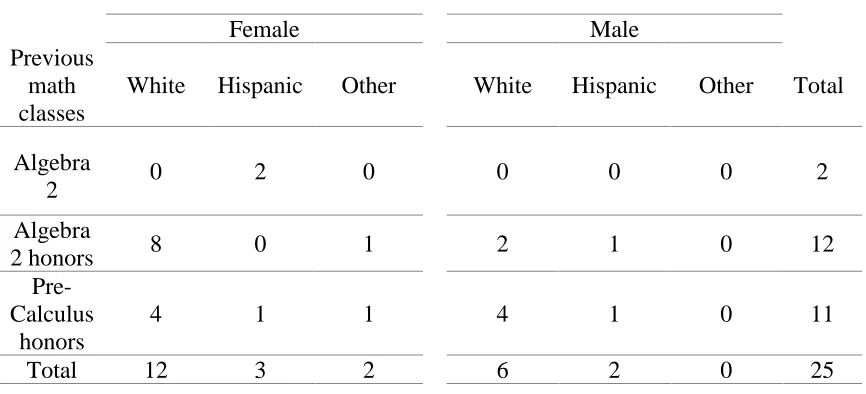
Table 3.1 Sample demographic information ...48
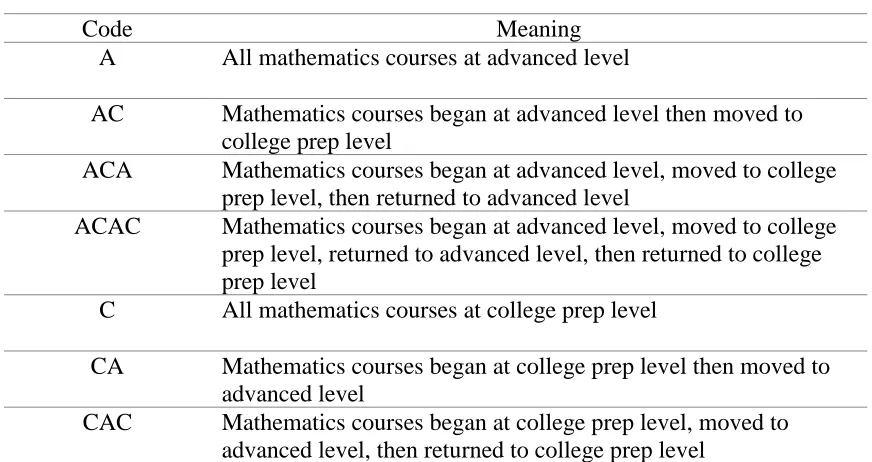
Table 4.1 Coding scheme ...61
Table 4.2 Frequency of levels of mathematics classes ...61
Table 4.3 Level sequences percentages ...62
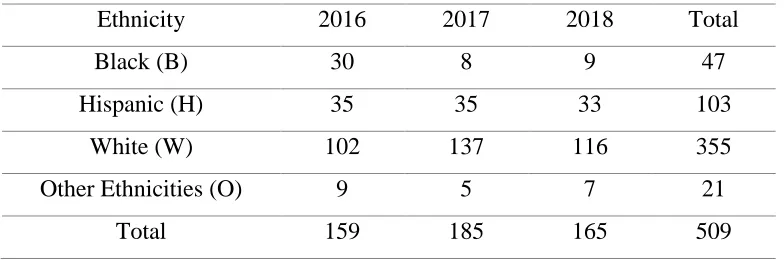
Table 4.4 Ethnicity distribution of sample ...62
Table 4.5 Ethnicity and gender for level sequences ...63
Table 4.6 Percentages of level sequences by ethnicity and gender ...64
Table 4.7 Descriptive statistics for summative assessment ...65
Table 4.8 Summative assessment by ethnicity and gender ...66
Table 4.9 Mastery by ethnicity and gender ...66
Table 4.10 Engagement questionnaire response frequencies ...67
Table 4.11 Discussion board: Global issues and mathematics ...69
1
CHAPTER 1
INTRODUCTION
Mathematics is often considered to be a challenge, not because of students’ lack of
ability, but because the study of mathematics is often deemed boring or irrelevant, which
lends to insufficient focus and limited engagement. One reason studying mathematics is
perceived as such by students is that the language of mathematics takes years to develop,
and even then, mathematics is difficult to discuss as a narrative, unlike nearly all other
academic subjects (Medoff, 2013). Students (and adults) often quickly develop a
self-assigned weakness in mathematical ability, and this attitude is socially acceptable. It is
not uncommon to hear students and adults admit their self-perceived weak abilities in
math, even that they hate mathematics (Soni & Kumari, 2017). Furthermore, there is little
motivation to excel in mathematics; the social respect given a mathematician is not
comparable to that given a doctor or lawyer, even though the scholarly pursuits are
comparable (Larkin & Jorgensen, 2016). The result is an education system that focuses
on individual skills delineated by state and national standards, which lends to a lack of
access to deep mathematical understanding. Another significant problem in mathematics
classrooms is the ethnically disproportionate enrollment in advanced mathematics
classes. With the rapidly changing demographics of communities and schools within the
United States, students need strategies to know, appreciate, understand, and work with
2
experience the strength of diversity they begin to value others in new ways” (Hutchings
& Standley, 2000, p. 113).
Theorist John Dewey (1938) detailed how children learn by working through
real-world problems. Problem-Based Learning (PBL) is a methodology anchored in
progressive theory that facilitates access to the relevance and application of mathematics;
Global Problem-Based Learning (GPBL) extends that access to all students and
simultaneously engages them to become global citizens (Mansilla, 2011; Moses & Cobb,
2001; Rosa, 2011; Strayhor, 2010). GPBL opens the contexts of mathematics to a
worldwide view while building upon established, research-based strategies. It leads
students of all cultures to engage with contemporary global issues, thereby reinforcing
the relevance of mathematics. This research will seek to better understand enrollment
trends in mathematics classes in terms of gender and race. This research will also explore
the utilization of GPBL to stimulate all mathematics students to make connections and
transfer skills among topics, global contexts, and applications.
Problem in Mathematics Classes
In the high school of interest to this study, students do not appear able to transfer
and apply their understanding of mathematics skills they are learning to other
mathematics skills, topics, and application contexts. This inability is evidenced by the
daily requirement to review and reteach, student resistance to persevere with application
problems, and by inconsistent achievement. The school of interest in this study is an
International Baccalaureate® (IB) “world school” that is committed to teaching with
specific emphasis on global issues. This commitment is affirmed in the IB Mission
3
and caring young people who help to create a better and more peaceful world through
intercultural understanding and respect” (IBO Mission, 2016). However, integration of
global issues in mathematics classrooms is at best inconsistent. Furthermore, enrollment
in IB mathematics classes, the most rigorous courses available, does not reflect the
demographic identity of the school. A review of enrollment for the last two years
revealed 80% Caucasian, 5% African-American, 10% Hispanic and 5% represented by
students of other ethnicities. Meanwhile the overall school demographics for this same
time period was 53%, 10%, 33%, and 4% respectively. Because students choose their
mathematics courses, it is not clear if the discrepancy is due to student choice or student
preparation for rigorous mathematics courses. Regardless of the reason, this discrepancy
is inconsistent with the IB philosophy (IBO Mission, 2016). The superficial depth of
mastery, a persistent lack of student diversity, and artificial contexts within advanced
mathematics classes demand a need for globally linked instructional practices facilitating
a deeper understanding of and connections among mathematical topics for all students.
Thinking is learning, and teachers have a unique opportunity to influence
long-term effects on the future. Experiential learning, such as that at the core of progressivism,
is a means for this teacher-researcher to compete for the attention of
immediate-gratification seeking, technology-habituated teenagers. The current emphasis on
assessment results and grade point averages and even community service (logs), too often
results in students (and parents) focusing on resume building, rather than building
thinkers. John Dewey (1938) closes his book Experience and Education with his thoughts
on education itself by challenging the reader to consider what is worthy of the name
4
Objectives
GPBL is a method by which to challenge teachers to focus content in a way that
empowers students to think deeply and considerately, to recognize the strengths and
contributions of all peoples, and to persevere with a purpose. Not only will these students
be best prepared for further education and the global job market, but they will also be
best prepared to be global citizens (Mansilla & Jackson, 2011; Martin, 2010). The
following research questions will be used to guide the exploration of the stated problem
of practice. 1) What are historical enrollment trends in mathematics classes at the high
school of focus? And 2) What impact does focusing mathematics lessons on specific,
authentic global problems have on achievement and attitudes in advanced mathematics
classes?
This study has four goals: (a) to reconsider the obsolete instructional model
typical in mathematics classrooms of fact – example – practice; (b) to examine the
necessity of teaching mathematics with relevance, connections, and applicability; (c) to
understand and act on current realities regarding limited access to advanced mathematics
for minorities; and (d) to reframe the study of mathematics as an accessible structure for
understanding our global society and its challenges.
Glossary of Key Terms
In conducting this study, there is terminology specific to the context of this study.
Global Competency refers to the development of an understanding of international issues
and the ability to work with people from various cultural backgrounds (Mansilla &
5
Global Citizenship refers to a person’s recognition of their relationship to the world equal
to national or local relationships (Martin, 2010).
Problem-Based Learning refers to a student-centered approach to education in which
students learn a subject through solving open-ended problems (Scott, 2014).
Social Justice refers to an expectation for all people to have equal access to the
distribution of economic, political, and social rights (Garii & Rule, 2009).
Cultural Relevance refers to acknowledgement and integration of the home community
culture of students, including cultural experiences, values, and understandings
(Brown-Jeffy & Cooper, 2011).
Purpose of this Study
Experts widely accept the benefits of PBL in the field of education; the research
supporting PBL is extensive (Barrows, 1985; Delisle, 1997; Scott, 2014). In her book
Creating Standards-Based Integrated Curriculum, Susan Drake (2012) states “PBL is
superior to traditional education for long-term retention of knowledge, skills
development, and the satisfaction of students” (p. 23). In Chapter 2 the findings related to
the strengths of PBL by multiple researchers are discussed, as are the challenges of
implementing PBL. “Today’s employers are looking for candidates who know how to
work as a team, adapt to change, access and analyze information, and think creatively to
solve problems” (Boss & Krauss, 2014, p. 16) “PBL is based on the constructivist finding
that students gain a deeper understanding of material when they actively construct their
understanding by working with and using ideas” (Krajcik & Blumenfeld, 2006, p. 317).
The quickly changing demographics of the global job market as well as within
6
Multicultural education refers to establishing and maintaining a classroom
climate or culture in which students appreciate diversity and allow
themselves to be enriched by the opportunity to work with students from
many cultural backgrounds, including differences in ethnicity, political
affiliation, socioeconomic status, ability level, and religion. (Henson,
2015, p. xvi)
The U.S. Department of Education published A Blueprint for R.E.S.P.E.C.T.
(Recognizing Educational Success, Professional Excellence, and Collaborative Teaching)
in April 2013. This report states: “Every child in America deserves a high-quality
education that prepares her or him for college, a career, and responsibilities of
citizenship” (p. 1). Moreover, “…students are confronting unprecedented challenges and
heightened competition in an increasingly knowledge-based, global job market” (p. 1).
The urgent message of this report specifies that “…to productively engage in our
democracy and compete in our global economy, students will need strong, well-rounded
academic foundations; cultural and global competencies; the ability to collaborate,
communicate, and solve problems; and strong digital literacy skills” (p. 19).
The purpose of the present action research study is to explore the impact of GPBL
in mathematics classes. In addition to focusing on relevant contexts to address the
observed struggles of mathematics students to make connections and transfer skills, this
study also addresses the inconsistent integration of global issues that contribute to a
limited perception of mathematics as a tool to find the correct answer. GPBL offers
students a method of modeling “through replicable and empirical demonstrations, the
7
comprehend” (Bond & Chernoff, 2015, p. 29). Also, with a goal to improve the
accessibility of advanced mathematics courses for all students through better
understanding the current environment, this study includes exploring and describing the
enrollment trends of minority students in advanced mathematics classes.
Overview of Related Literature
PBL is a constructivist-based instructional strategy intended to promote engaged
learning (Larrier, Y. I., Hall, K., Linton, J. M., Bakerson, M., Larrier, I. M., & Shirley, T.
S., 2016). This curricular approach develops problem-solving as well as interdisciplinary
knowledge, and inquiry skills (Aufdenspring, 2003). There are several benefits of PBL,
including increases in motivation for learning, retention of information, and the ability to
apply knowledge across academic disciplines and life situations (Larrier, et al., 2016).
Students learn to “integrate multiple perspectives and discover that in the real world,
‘right answers’ are rare to nonexistent” (Aufdenspring, 2003, p. 19). PBL helps to
connect students to the learning. Aufdenspring concludes that students develop respect
for various points of view while developing the ability to defend their points of view.
Widyatiningtyas, Kusumah, Sumarmo, and Sabandar (2015) studied the impact of
PBL on the critical thinking ability of high school mathematics students. They found that
within the parameters of their study, students taught using a PBL approach had better
mathematical critical thinking ability than students who learned in a conventional
approach. Comparably, in a presentation at the 2008 International Conference on
Learning, German Pliego presented results of a similar study. Pliego concludes that the
problem-based approach is well-suited for studying introductory statistics. “[PBL]
8
students in the driver seat to learn statistics by attempting to solve problems” (para. 2). A
detailed discussion of research related to PBL is included in Chapter 2.
Regarding the integration of a more global perspective into the mathematics
classroom, research by Fox, Finer, Khourey-Bowers, and Heaphy (2016) emphasizes the
importance of courses that “can add to the students’ understanding diverse worldviews,
even when those students are place-bound” (p. 54). The expectations for students to be
knowledgeable about issues beyond their community is being articulated by employers,
politicians, and educators (Fox, et al., 2016). This topic is reviewed further in Chapter 2.
Social justice is fairness regarding the distribution of wealth, opportunities, and
privileges within a society (Oxford Dictionaries, 2016). The civil rights activist and
mathematics teacher Bob Moses (Moses B. , 1995), led the country to consider
mathematics literacy and economic access as essential to “give hope to the young
generation” (p. 56). Moses’ focus was to build a curriculum based on concrete yet
complex events as a pathway for African American students to master algebra, and
through algebra, college preparatory mathematics. “Education [of African American
students] has to produce graduates who can think in a critical way with quantitative data”
(p. 58). Bond and Chernoff (2015), writing on the topic of social justice integrated into
content classrooms, name social justice as a unique challenge for all teachers because of
the dynamic and on-going process it represents. “It requires the maintenance of extensive
and constantly evolving understandings of every student in a given classroom” (p. 29).
There is an urgency to face the truths of diversity and work toward social justice,
9
social inequality, an uncritical pedagogy serves only to enforce existing systems of
dominance and inequity” (p. 27).
At the school of interest to this teacher-researcher, the enrollment in advanced
(IB) mathematics classes does not reflect the demographic identity of the school. For
minority students, this results in a restriction of access to the most rigorous program of
study available at this school. Such restriction of access is a foundational element of
oppression (Adams, et al., 2013).
Limitations and Significance
Although the goals of this study are broad, the nature of the study presents some
limitations; action research does not produce results that are generalizable. The student
population at the high school under study has unique characteristics including a
somewhat transient population, and the school is a school of choice within the district of
six high schools. Although a student’s home school zone is not a variable of this study,
this could have an influence on enrollment in IB courses. The teacher-researcher is
assuming that all students enrolled in the course understand and accept the expectation of
independent work more rigorous than that of previous mathematics courses. Also, it is
notable that the mathematics course progression of minority students, particularly those
who did not attend elementary and middle schools in the United States, may be
considerably different among themselves and from their American-educated peers.
However, these potential limitations and assumptions do not diminish the potential
insights of this study. The field of mathematics education is experiencing a continuing
deficit of applicants to the number of teaching positions. In-service and pre-service
10
teacher shortages that often result in large class sizes. An updated teaching model is
desperately needed to improve the buy-in of all students to the necessity and empowering
nature of mathematics.
Summary
The demographic profile of students enrolled in advanced mathematics classes
skews toward the white male majority (Atuahene & Russell, 2016; Useem, 1991).
However, even for those students who take advanced mathematics in high school, the
level of proficiency is low (The College Board, 2016). Topics and contexts typical in
mathematics classes are not engaging. GPBL is an instructional model that frames the
study of mathematics within real-world global issues. This increased relevancy may lead
to greater access for all students.
The first chapter of this dissertation in practice introduced the reader to the
identified key elements framing this action research study. These elements include the
problem of practice with an overview of the context of the study, the research questions
that will guide the study, a purpose statement that justifies the study, a brief overview of
related literature as well as the action research design, and a discussion of ethical
considerations related to this study. The second chapter will examine and review the
related literature relevant to GPBL and this study. The discussion will include research on
assessment, gaps in achievement, the importance of global competencies and social
justice, and PBL, as well as the theory undergirding this strategy. The third chapter will
detail the specific methodology used to collect and analyze the data gathered as part of
this study. The fourth chapter will consist of reporting the findings, a discussion of these
11
conclusions and implications of the study. The discussion will include a summary of
major points, conclusions based on the findings and implications for both teaching and
12
CHAPTER 2
LITERATURE REVIEW
The proposed adaptation of PBL into a new GPBL is intended to focus content in
a way that empowers students to persevere and think deeply, and to embrace the benefits
of collaboration among a diverse group of students. It is the expectation that such a focus
will result in students who are not only prepared for further education and the global job
market but also prepared global citizens. The braiding of Problem Based Learning along
with Cultural Relevance Pedagogy (CRP) and Social Justice Pedagogy (SJP) creates a
structure for learning mathematics that is known as GPBL. The combining of these
instructional frameworks and strategies is necessary because none alone “fully address
major shortcomings in the mathematics classroom” (Leonard, Brooks, Barnes-Johnson, &
Berry, 2010).
A review of current literature related to mathematical achievement, the
disproportional demographics represented by students who pursue advanced mathematics
in high school, and the PBL approach resulted in the emergence of four inter-related
themes. This chapter is therefore organized into four parts, based on these major themes.
To document the need for this study, the literature review’s first two parts are comprised
of research on the current reality of mathematics classrooms and assessment expectations.
Next, it includes a summary of findings from research on the depth of understanding
demonstrated on mathematics assessments, including identified gaps in achievement.
13
instruction in the form of summaries of current research on the importance of global
competencies, internationalism, global citizenship, and social justice. Finally, to articulate
and support the need for a change in instructional strategies, PBL research includes
foundations and strengths, as well as the challenges of implementing PBL; a necessary
basis for the proposed adaptation to GPBL. Current peer-reviewed research represents the
majority of the sources for this literature review, also included are foundational and
seminal works, these being of essential value for theoretical and historical perspectives.
Most of the literature review is built upon primary sources in the form of current,
peer-reviewed research in U.S. and international academic journals. Other sources used in
this chapter include textbooks on curriculum theory and studies. These secondary sources
are current textbooks authored by practitioners established in the field and reflect the
current understanding of topics relevant to this study. In addition to the textbooks, the
literature is composed of government documents that detail educational policy, a key
component of both content and assessments. International Baccalaureate documents are
also used, relevant as the school in this study’s setting is an IB World School and
therefore guided by the International Baccalaureate Organization. These sources
represent the previous and current literature on the problem of practice addressed in the
current study. Although there exists a growing body of research on teaching mathematics
using social justice, this study serves to add the perspective of integrating CRP, SJP, and
PBL into GPBL. The research is within the most recent five years, except in the case
where there was no research on a specific topic found within that time frame. The
university library was invaluable for conducting this research, drawing on ERIC
14
Current Reality of Mathematics Classrooms
A thorough understanding of the root causes of the problem of practice requires
an honest look at the current reality of today’s mathematics classrooms. This reflection
bears out a need for research in areas including the focus of skills, quantitative literacy,
the perception of mathematics, and textbooks. The following summarizes research for
each of these features of the mathematics classroom in more detail.
Skills Focus
In 1983 A Nation at Risk was published by the National Commission on
Excellence in Education. This set into motion the standards movement, which remains at
the core of American education. This came at a time when the Learner-Centered
ideology, with a goal of self-actualized growth, teachers as facilitators, and authentic
assessment, as well as the Social Reconstruction ideology with its goal to attend to our
society’s problems and reveal the influences of the hidden curriculum were both actively
influencing American education (Schiro, 2013). However, for decades following the turn
to a standards-based curriculum these progressive ideologies have lost momentum. In
today’s classrooms, the emphasis is on accountability and testing. Teaching strategies
follow a transmittal pedagogy, even to the extent of teaching to the test. The transmittal
pedagogy is nowhere more evident than in the mathematics classroom where students
“associate mathematics with memorizing techniques out of context, completing long lists
of mindless exercises, and being judged on the number of right answers” (Allen, 2011, p.
4). Although there has been a push for an increase in reasoning to complement the
15
One of the boldest movements towards the goal of changing the measurement of
mathematics competency has been the Common Core State Standard Initiative, a state-led
effort to design a new framework for educators. Led by the Council of Chief State School
Officers (CCSO) and the National Governors Association (NGA) Center, common core
state standards were “based on rigorous content and application of knowledge through
higher-order thinking skills” (About the standards, 2017, p. 1). But although many states
initially garnered support for these new standards, several did not see it through. As with
most features of public education, political factors have a strong influence (Supovitz,
Daly, & del Fresno, 2015).
Lack of Quantitative Literacy
In 1989, the Mathematics Association of America formed the Quantitative
Literacy Subcommittee of the Committee on the Undergraduate Program in Mathematics
(MAA, 1994). This subcommittee issued guidelines for quantitative literacy programs
that brought into clear focus the desired outcome of a mathematical education; an ability
for mathematical skills to be applied to real world problems. What followed was a surge
in the constructivist-based curriculum. The constructivist approach is anchored in the
works of theorist John Dewey (1910) who said “The origin of thinking is some
perplexity, confusion, or doubt. Thinking is not a case of spontaneous combustion; it does
not occur on ‘general principals.’ There is something specific which occasions and
evokes it” (p. 12). There is a clear and supportive connection between constructivism and
the Principles and Standards for School Mathematics published by the National Council
of Teachers of Mathematics in 2000 (Stemhagen, 2011). However, as Allen (2011) points
16
teacher greatly. “If the teacher does not make use of a variety of strategies to meet the
range of students’ needs, constructivist practices can perpetuate bias and exacerbate
problems of inequity rather than reduce them” (p. 4).
To explore this idea of the impact that teachers bring to implementation of teaching
strategies, Allen (2011) composed the following list based on the previous studies led by
Benilower and by St. John, of common challenges teachers encounter:
• They did not learn mathematics themselves using these strategies.
• They have not seen strong models for using these strategies in real classrooms.
• They feel a lack of confidence in and control over the lesson.
• They fear the questions that students may ask if the mathematics becomes too
open-ended.
• They have trouble tolerating the noise associated with constructivist instructional
practice.
• They question the effectiveness of small groups of engaging all learners. (p. 4)
Quantitativeliteracy, as detailed by Boersma, Diefenderfer, Dingman, and Madison
(2011) is based on a set of core competencies that include interpretation, representation,
calculation, analysis/synthesis, assumptions, and communication. Writing Across the
Curriculum, one of the longest-running educational reform movements holds as the
driving tenant that writing should be an integral part of the learning process in all
subjects. Furthermore, although students arrive with varied experiences and at varied
literacy levels “all students can learn to become more proficient writers” (Cox, et al.,
2014, p. 1). Similar to Writing Across the Curriculum, there is a movement to incorporate
17
education, also known as quantitative literacy, and the Writing Across the Curriculum
movement was conducted by Hillyard (2012) who found that there are many similarities
in the challenges of both endeavors. She draws upon the successes of Writing Across the
Curriculum for suggestions to offer to schools and teachers. First, it is essential to
document that numeracy education increases students’ critical thinking and
decision-making skills. Also, resources are needed for teachers to integrate numeracy education
into their disciplines, an electronic compilation is a good starting point.
Mathematics is Perceived as Too Hard
Seemingly unaware that innumeracy, the inability to do basic mathematics – the
equivalent to mathematical illiteracy (Innumerate, 2017), is a limiting factor in the pursuit
of life goals, many people, adults as well as children, readily admit to their poor
mathematics skills (Allen, 2011). It has become socially acceptable to laugh at one’s
inabilities in math. According to the findings of Beilock, Gunderson, Ramirez, and
Levine (2010) teachers, especially female teachers, frequently experience mathematics
anxiety at such a level that the anxiety transfers to their students. Nearly all elementary
school teachers are female, more than 90% of them. Beilock et al. conducted a study with
elementary teachers and their students who were pre- and post-tested to measure
achievement. The students were also given the task at the beginning of the year and again
at the end, to draw characters described in gender-neutral stories, these drawings were
used to measure gender stereotypes. The study revealed that although at the beginning of
the school year there was no relation between a teacher’s mathematics anxiety and her
students’ mathematics achievement, that at the end of the year, the more anxious teachers
18
endorsed the commonly held stereotype that “boys are good at math, and girls are good at
reading” (Beilock et al., 2010, p. 1860). Elementary teachers are certainly not the cause
of all low mathematics achievement among female students, but these findings are
significant and contribute the overall understanding of the lack of motivation.
Motivation, which can be related to perceptions of the difficulty of math, has also
been documented in other studies relevant to low performance in mathematics. Hardre
(2012) conducted studies on motivating and retaining rural high school students over a
15-year period then synthesized her findings into what she refers to as strategic principles
to help rural teachers. She found “their [rural students’] lack of motivation leads to
disengagement and dropout from school and educational pursuits” (p. 11). Her 15 years
of research on motivating rural secondary students revealed that motivation in
mathematics was among the lowest. Mark Russo (2015), to combat poor motivation
among his students, conducted action research to explore the impact of co-construction
on students’ quantitative literacy and attitudes towards math. A constant comparative
method was used to analyze data on assessment and teacher-researcher class observations
and reflections. He documented a lack of interest and lack of relevance common among
his mathematics students. Even with the opportunity to plan what mathematics topics and
contexts to cover in the course, his students were not familiar with mathematics topics
relevant to their lives and therefore could not provide much input about what they wanted
to study (Russo, 2015).
Problems with Textbooks
Textbook publishing is a fourteen-billion-dollar industry divided into two
19
of textbooks over the last 30 years more than that of medical expenses, new homes or the
Consumer Price Index, a whopping 800% (Band, 2013). Before 2008 publishers released
to the National Association of College Stores a breakdown of the costs that revealed that
approximately 77.4 cents of every dollar went to the publishers. This money was
distributed among marketing, authors, materials, and of course, profit (Kurtzleben, 2012).
With the K-12 market dominated by three publishers (Pearson, McGraw-Hill, and
Houghton Mifflin Harcourt) and mathematics being a core subject area in each of the US
states, it follows to reason that the textbooks available would be contextually stimulating
and culturally neutral, but that is not the case as described in the following research
reviews.
In 2016 Booth, Begolli, and McCann conducted a lengthy study to test the effects
of changing textbooks by adding a variety of worked examples in algebra textbooks.
They tested conceptual understanding, procedural skills, and error anticipation. The
original form of a textbook was used to teach two classes, and another two classes with
the same textbook augmented with “approximately 26% of the problems replaced with
correct, incorrect, or partial solutions to that problem” (Booth, Begolli, & McCann,
2016). Pre- and post-tests were used, and the findings revealed that with the use of the
augmented textbook the procedural problem-solving skills increased as did the error
anticipation. This study suggests that textbooks are lacking in powerful error analysis
examples, which have been shown effective.
In 2011 the National Council for Teachers of Mathematics held its first ever
Interactive Institute: Infusing Classrooms with Reasoning and Sense-Making
20
of incorporating tasks into the curriculum. Tasks were meant to be an extended,
context-rich scenario requiring modeling and multiple problem-solving skills as well as
contextual communication of the possible solutions. Following this, some mathematics
textbooks began to include tasks.
Xiong Wang (2016) conducted a study of the predominant textbook, analyzing the
textbook tasks, the practice and homework sets, and the teacher resource guide. She used
coding to establish the knowledge level of the tasks, the cognitive demand of the practice
and the appropriateness and usefulness of the teacher guide. Her results revealed that the
tasks were at sub-medium knowledge level, the cognitive demands were at a
medium-level while communication was higher-medium-level and that a major factor in the supportive
strategies provided for teachers was scaffolding students’ thinking and reasoning. Overall
Wang found that problem solving and understanding were lacking. “For instance,
‘Investigate’ in each lesson is designed for doing mathematics. However, the tasks
involved lower levels of knowledge, and their cognitive demands failed to achieve the
curriculum goal” (Wang, 2016, p. 18).
With the current availability of digital resources including the Internet and wide
variety of devices, it follows that textbooks could be enhanced digitally to meet the needs
of students better. There is a growing trend of using digital or etextbooks, supplemented
with auxiliary materials provided by the publishers intended to contextualize further and
otherwise enhance the content. To measure the effectiveness of using such resources
Nagra, Eng, and Karrass (2013) conducted a study of the effectiveness of etextbooks,
traditional textbooks and a bundled approach of both traditional plus online resources.
21
mathematics as a result of the form of resource. Three sources of data were used to
triangulate their findings: pre- and post-surveys of the students, a follow-up focus group,
and an interview of the mathematics teacher upon completion of the course. Their
findings revealed that the strongest results were for the bundled traditional text with
online resources, followed by the etextbook and then the traditional textbook as a singular
resource. In all three forms, there was an increase of time spent in solving mathematics
problems due to the increase in interest in learning mathematics, though the results were
proportional to the overall improvement by method (Nagra, Eng, & Karrass, 2013). The
last place finish of the traditional textbooks further emphasizes that the resources
available are lacking. Add to that the common practice of states adopting textbooks on a
five to ten-year cycle and the result is a stuck curriculum, confined by budgetary
limitations. Add to that the still pervasive occurrence of teachers who rely heavily on the
textbook as the curriculum and the result is an often decade-long slow march hobbled by
limited resources for mathematics classrooms (Whitman, 2004).
But the mathematical content and rigor of the examples, tasks and support
resources is the not the total picture of what is wrong with textbooks. The very contexts
used in the textbooks is a measurable encumbrance to progress toward social justice. A
recent study by a university professor of Mathematical Methods for Elementary Teachers
harnessed the force of 58 pre-service teachers to examine the content of mathematics
books critically. Anita Bright (2016) used two methods: collaborative analysis of the text
and individual identification of “troubling” mathematics problems. With each method,
the participants looked to identify two features: what is valued in the problems and
22
frequently exploit peoples and disregard the environment. However, it is important to
note that a few of the 58 pre-service teachers involved in this study did not describe their
experience as eye-opening. Instead, they felt the experience one of hyper-sensitivity
equivalent to looking for insult in every problem. That mathematics is just math. Perhaps,
but in a subject such as mathematics where the end goal and in fact the students’ grade is
directly related to being “right”, there is due consideration that contexts can and likely are
interpreted by students as being “the ‘right’ way of being, the ‘right’ kind of home, the
‘right’ kind of vacation, the ‘right’ kind of leisure activity” (Bright, 2016, p. 18).
Assessment Structure
Since 1900, when the College Entrance Examination Board was established in
response to the call for a more uniform method of assessing college applicants,
standardized testing has increased steadily (U.S. Congress, 1992). DuringWorld War I
the US Army used standardized tests in the form of aptitude quizzes for servicemen to be
assigned to tasks. Shortly following the war, the first SAT was administered. But the
momentum was boosted even more by the 1965 landmark legislation known as the
Elementary and Secondary Education Act (ESEA) that set in motion new and increased
use of standardized tests for the purpose of the evaluation of schools and educational
programs (U.S. Congress, 1992). In 2001 the ESEA was renewed and given a new call
sign: No Child Left Behind, and with this renewal came heightened accountability and
sanctions for states based on predetermined achievement levels known as Adequate
Yearly Progress (AYP). Since No Child Left Behind was enacted, the emphasis on tests
and standards increased, at the expense of thinking and competence (Smith & Szymanski,
23
American education has been greatly influenced by four curriculum philosophies
known as the Scholar Academic, Social Efficiency, Learner-Centered, and Social
Reconstruction ideologies. These ideologies advocated different purposes and methods of
achieving those respective purposes for schooling (Schiro, 2013). In brief, the Scholar
Academic ideology views school-based education as a process to prepare students to
become good citizens. The Social Efficiency ideology propounds that education should
prepare students for life by preparing them for the performance of specific tasks through
carefully sequenced learning experiences representing the behavior to be learned. The
Learner-Centered ideology, as the name suggests, focuses on the learner with schools
organized around the needs and interests of the students. Finally, the Social
Reconstruction ideology proposes that education is to facilitate the necessary changes for
a more just society, one that offers maximum opportunities for all of its members (Schiro,
2013).
Similarly, assessment and evaluation have been shaped through these four distinct
lenses. As stated by Green and Johnson (2010), assessment is “the variety of methods
used to determine what students know and can do before, during, and after instruction”
(p. 14). The Scholar Academic ideology uses norm-referenced assessments for the
purpose of ranking the students, whereas the Social Efficiency ideology employs
criterion-referenced assessments to certify for groups of stakeholders including parents,
administration, and society, that students have specific skills. These two views are known
as an assessment of the learning, the purpose is assigned to the outcome or result, after
instruction (Stiggins, 2002). The Learner-Centered and Social Reconstruction have
24
abilities to facilitate growth and to measure progress on those abilities, respectively. Both
use informal subjective diagnosis (Schiro, 2013), this being an example of assessment for
learning, meant to inform instruction in progress (Stiggins, 2002).
Assessment of learning, typically used to evaluate schools, attempts to measure
achievement. Academic achievement represents performance outcomes that indicate the
extent to which students accomplish specific goals that were the focus of instruction and
should be considered a “multifaceted construct that comprises different domains of
learning” (Steinmayr, MeiBner, Weidinger, & Wirthwein, 2014, p. 1). There exists,
however, a concern that achievement is not equal to fulfilling potential; there is a gap
between potential and actual achievement. Hardre (2012) argues that “even high
achievers may be doing well but not achieving at full ability” (p. 12).
Achievement in mathematics has garnered the attention of academic leaders,
politicians, and citizens who refer to assessments to compare the performance of
American schools both locally and internationally. The Programme for International
Student Assessment (PISA) results were analyzed and summarized by Hanushek (2010)
who stated “The percentage of students scoring at the advanced level varies considerably
among the 50 states, but none does well in international comparison…shockingly below
those of many of the world’s leading industrialized nations” (p. 4). Even though
Hanushek stipulates that following the passage of NCLB legislation the percentage of
students performing at a high level in mathematics steadily climbed, he claims the
“incapacity of American schools to bring students up to the highest level of
accomplishment in mathematics” (p. 5) is more significant than challenges associated
25
points out three significant limitations to the interpretation of the PISA results. The
international sample was composed by age, not by grade and there was great variability
in the proportion of students in the study who were included in the comparison. Also, the
method of reporting masks clustering of scores and exaggerates small differences in
scores. Finally, different tests were used internationally, and these tests tested different
domains of mathematics. Furthermore, internationally tests contained relatively few test
items (Kilpatrick, 2011).
Depth of Understanding
Daniel Willingham (2010) is a leader in the field of cognitive science, an
interdisciplinary field of researchers who seek to understand the mind. Based on his 20
years of research in this field he professes an innate connection between numbers and
space (a) multiple cultures use a spatial representation of numbers; (b) numbers and space
are represented in overlapping areas of the brain, verified through documentation of
damage to this area (intraparietal sulcus) resulting in an inability to process numbers and
difficulties with spatial relations; and (c) there is documented success predicting
mathematics operations based on brain data related to eye movement. He draws upon his
expertise to offer “While it is true that some people are better at math than others – just
like some are better than others at writing or building cabinets or anything else – it is also
true that the vast majority of people are fully capable of learning K-12 mathematics” (p.
14).
Gaps Among Student Groups
As measured by standardized tests, there exist achievement gaps among multiple
26
relevant to groups including English language learners, Black/African American, gender,
rural location, and socio-economic level.
English language learner (ELL). The NCLB Act requires that all demographic
groups of students perform at a proficient level (Domina & Saldana, 2012). However,
ELL students score lower than other groups on standardized tests of mathematics,
propelling school leaders to seek a different approach to mathematics instruction (Rosa,
2011). Rosa (2011) found that for nearly 85% of school leaders, the gaps in performance
on standardized mathematics assessments of ELL students in his study attributable to
language, they attributed the heavy reliance on English language skills in most
mathematics classes as the base for instruction as a barrier for these hard working
students. One of the purposes of this study was to determine how the perceptions of
principals and vice-principals concerning the challenges faced by ELL students can be
influenced by an understanding of the influences of the diverse linguistic and cultural
backgrounds of ELL students on their academic performance in mathematics.
Improvements in achievement for these students is likely going to be based on
changes in understanding and strategies used by content teachers. Recently, a
programmatic restructuring that implemented course work specifically designed to
prepare pre-service and in-service mathematics, science, and English speakers of other
languages (ESL) teachers to work with ELLs in their content areas was studied and found
to have promising results. The study made use of a mixed-methods approach that
included both quantitative and qualitative data collection and analysis. Data came from
several different sources. Proficiencies related to the effective instruction of ELLs in the
27
obtained from a pre- and post-survey. Qualitative data were obtained from reflective
writing, position papers, journals and assignments (DelliCarpini & Alonso, 2014).
Results indicated that content teachers showed positive growth in skills related to
working with English language acquisition. All teacher candidates developed a deeper
understanding of collaborative partnerships between ESL and content teachers.
Black/African-American. In a 2010 study of the role of schools, families, and
psychological variables on mathematics achievement of black high school students,
Terrell Strayhorn referenced data from the U.S. Department of Education. The data
indicate that achievement disparities between white and black students have resisted the
decades of school reform efforts and federal influence aimed at reducing the black-white
achievement gap. In fact, the black-white achievement gaps in mathematics were
reported as 23 percentage points for age nine students, 26 percentage points for age 13
students, and 31 percentage points for all public school students (U.S. Department of
Education, 2015). Strayhorn’s study employed hierarchical linear regression analyses,
with a nested design and sought to estimate the influence of affective variables including
parent involvement, teacher perceptions, and school environments, on black students’
mathematics achievement in grade ten. He found that all three systems affect black
students’ mathematics achievement, accounting for approximately 20% of the variance in
scores (Strayhorn, 2010).
Gender. There has been a lingering presumption that boys are better at
mathematics than are girls. However, the data does not bear that out. In 2010, Scafidi and
Bui attempted to replicate the findings of Hyde, Lindberg, Linn, Ellis, and Williams’
28
on standardized mathematics tests. Scafidi and Bui (2010) used national data and
extended the previous study by examining whether gender similarities in mathematics
performance are moderated by race, socioeconomic status, or mathematics ability in
grades eight, 10, and 12. They used data from the National Education Longitudinal Study
that began in 1988 and conducted follow-up assessments of the original participants in
1990, 1992, 1994, and 2000. Using a significance level at 0.001, the researchers
conducted a multivariate analysis of variance to examine the overall effect of gender on
the mathematics test scores. They found that although the average score for girls was
slightly lower than that of boys, the difference was not significant. The results showed
that gender did not have an overall effect on students’ test scores. Follow-through
analyses showed that race or mathematics ability did not moderate gender similarities in
mathematics performance. A 2008 study by Frank, Muller, Schiller, Riegle-Crumb,
Mueller, Crosnoe, and Person, focused on the social dynamics of mathematics course
taking in high school. The researchers found that girls are highly responsive to the social
norms in their local positions, which contributes to homogeneity within and heterogeneity
between local positions. Furthermore, they found that girls had slightly higher college
aspirations than boys’ and girls’ parents and boys’ parents expressed nearly equal
disappointment over their children’s failure to attend college. Interestingly, they found
that girls’ friends had slightly higher levels of mathematics course taking than did boys’
friends. These studies reveal a similarity in gender mathematics achievement but a
possible influence on mathematics course taking by members of students’ social contexts.
Rural location. The achievement gap between rural schools, when compared to
29
In 2012, Edward Reeves conducted a study of the effects of opportunity to learn, family
socioeconomic status, and friends on the rural mathematics achievement gap in high
school. Using the database of the Educational Longitudinal Study of 2002-2004, he
explored the achievement gap present during the last two years of high school. His
approach focused on the geographic disparities in the opportunity to learn advanced
mathematics. Reeves used a survey regression in three phases. Phase one was
multi-variable: frequency of enrollment in advanced mathematics courses, a family legacy of
enrollment in advanced mathematics courses, and quality of instruction as measured by
the percentage of advanced mathematics credits earned. Phase two focused on the
efficiency of models used to predict student success. And phase three on the assignment
of specific model based on the predictor variables. The findings showed that geographic
variation in high school resources and practices, (operationalized as the availability of
advanced mathematics courses, evidence for track assignment by family background, and
the quality of instruction) do not account for the rural mathematics achievement gap.
However, geographic variations in the opportunity to learn that result from differences in
family socioeconomic status and the influence of friends’ academic commitments and
aspirations do help to explain why rural high school students learn less mathematics than
their non-rural counterparts (Reeves, 2012).
In a more recent study, Harmon and Wilborn (2016) explored the need for
preparing STEM technicians for the new rural economy. They used seven high schools
and seven middle schools, deemed representative of typical rural areas in the U. S. that
seek to grow a new economy consistent with changing realities of global competition and
30
mathematics competencies used by technicians in the workplace compared to standards
of learning required in the public school curriculum. The project mathematics specialist
and the team of teachers identified four types of learning gaps: (a) mathematics
competencies not included in state standards; (b) mathematics competencies included in
state standards taught prior to Algebra I, Algebra II, Geometry, and Algebra Functions
and Data Analysis courses; (c) mathematics competencies included in high school state
standards that students struggle to learn; and (d) mathematics competencies community
college students struggle to learn (Harmon & Wilborn, 2016). The consequences of the
mathematics achievement gap among rural students are evident in their communities
where technology has replaced the manual work often dominant in these mostly
agricultural and mining regions of the country.
Socio-economic level. Students from low socio-economic environments score
significantly lower than their peers (U.S. Department of Education, 2015). This
deficiency in mathematics skills serves as a hindrance to competitiveness in today’s
technological world. According to Galindo and Sonnenschein (2015) who used data from
the Early Childhood Longitudinal Study-Kindergarten Class of 1998–99 that included a
nationally representative sample of about 21,000 kindergarteners in over 1,000 schools.
The researchers tested mediation using the KHB-method to examine the associations of
multiple mediators simultaneously when control variables are also included in the model.
The results of the study were clear and the implications strong, “Starting kindergarten
proficient in math and experiencing a supportive home learning environment significantly
31
accounted for the greatest decrease in the SES-math achievement gap” (Galindo &
Sonnenschein, 2015, p. 25).
Change of Scope Needed
The modern movement to change access and scope of mathematics education is
anchored in the work of Robert Moses and The Algebra Project (Silva, Moses, Rivers, &
Johnson, 1990). The goal of The Algebra Project was to make college preparatory
mathematics accessible to minority students. Moses, a civil rights activist and
mathematics educator, acknowledged the emerging need for “mathematical literacy” (p.
376), and the necessity for all students to achieve such literacy in the form of reasoning,
inference, and problem solving in order to find “a meaningful place in the changing
political and economic institutions” (p. 388). Similarly, the construct of Culturally
Relevant Pedagogy acknowledges the power of harnessing cultural norms in the
mathematics classroom as a means to develop academic success, cultural competence,
and the development of critical consciousness (Leonard, Brooks, Barnes-Johnson, &
Berry, 2010).
The Social Justice Pedagogy builds on the theoretical constructs of Paulo Freire,
(Apple, 2011) who avows we need to “see the world through the eyes of the dispossessed
and act against the ideological and institutional processes and forms that reproduce
oppressive conditions” (p. 229). The driving force for teaching mathematics for social
justice must be informed citizenship (Moses & Cobb, 2001) and self-empowerment
(Leonard, et al., 2010), not only increasing participation in advanced mathematics
courses and access to higher education. The problem with the depth of understanding in
32
specific challenges to achieve. The problem can also be seen in the limited perspective of
applications and contexts, focused on a time before the Internet connected the world,
creating the need for a new definition of neighbor.
Global competencies and citizenship. An understanding of what is meant by
global competencies is necessary; according to Veronica Mansilla (2011), “Globally
competent students understand the Earth as a system, they understand multiple local
contexts well, and they are familiar with the pressing issues defining our times” (p. 4).
Martin (2010) expands on this, “Technological advances in communications,
transportation, and information processing have deepened and broadened connections on
multiple levels, local through global, thickening the webs of interactivity that bind us to
each other economically, politically, militarily, socially, culturally, environmentally, and
ethically” (p. 70). Mansilla focuses on the substantive foundation of global competence
and posits that students must develop this competence while they are gaining
fundamental disciplinary knowledge and skills, not afterward. She goes on to describe the
core of educating for global competence as creating a school culture where inquiring
about the world through consideration of cultural, religious, class, and regional
perspectives. As stated by Martin (2010), “Many problems in our world – extensive
poverty, pandemics, economic or political instability, environmental degradation,
fanatical ideologies, or terrorism, to name but a few – easily spill over borders and
generate transnational challenges that cannot be ignored nor effectively redressed
unilaterally” (p. 70). Mansilla describes four distinct global competence capacities:
33
Martin (2010) justifies the importance and urgency of global competencies and
global citizenship.
In a global context this means preparing students for the myriad
opportunities and challenges that they will face in their adult lives and
help them to grasp the ongoing changes in our world; teaching them to be
flexible and adaptive, reflective and imaginative, forward-looking and
growth-oriented; and instilling in them a healthy respect for themselves
and others, given how often they will need to work with others to solve
common problems or realize shared objectives. (p. 70)
However, teachers and schools struggle to embrace this need for global competence
while governed by prescribed standards and high-stakes testing. Klein (2013) presents a
research-based comparison and synthesis of strategies to “argue that for education to be
meaningful and transformative, and for global citizenship to flourish deeply and
authentically, we need to integrate content knowledge with student-driven inquiry” (p.
482). She goes on to state that the skills garnered from global experiences have a positive
impact on student understanding in the form of increasing flexibility, resiliency,
creativity, critical thinking, and collaboration. Furthermore, she calls for “strong
assessments that tie global competencies to core knowledge and 21st-century skills in
legitimate, quantifiable terms” (p. 488). The ethical and educational implications of our
continuously re-connecting world could hardly be more important (Martin, 2010).
Research suggests schools transform the curriculum and approach to teaching to
answer the call for global competencies and the potential for revised high-stakes testing.
34
and perspectives into teaching and learning through their guide A Model for Taking
Classrooms Global available through the online charitable organization Taking IT
Global. They offer a variety of resources for teachers to enhance their understanding of
global awareness and citizenship, and the connections to teaching and learning for the
21st century (Hassan, Gatto, & Walraven, 2012). In 2011, Morais and Ogden reported on
the initial development of a theoretically grounded and empirically validated scale to
measure global citizenship. They employed a multi-faceted methodology that included
two expert face validity trials, extensive exploratory and confirmatory factor analyses
with multiple data sets, and a series of three small-group interviews utilizing nominal
group technique to verify the scope of the global citizenship construct (Morais & Ogden,
2011). The results of their study provide support for a three-dimensional Global
Citizenship Scale that encompasses social responsibility, global competence, and global
civic engagement. Each with three reliable sub-dimensions that add to refine the
construct further. Global competence and global civic engagement are both strong
dimensions of global citizenship. Social responsibility was less clearly defined, leading
Morais and Ogden to conclude that additional work is needed to operationalize better this
dimension.
In their 2016 study on fostering global citizenship across the content areas,
Tichnor-Wagner, Parkhouse, Glazier, and Cain explored the signature pedagogies of ten North
Carolina K-12 teachers who teach for global competence in math, music, science,
English, social studies and language. This qualitative multiple case study purposefully
chose cases to represent varying contexts in which the phenomenon of globally
35
results of the Tichnor-Wagner et al. study revealed globally competent teaching practices
in the form of three signature pedagogies:
• intentional integration of global topics and multiple perspectives into and across
the standard curriculum;
• ongoing authentic engagement with global issues; and
• connecting teachers’ global experiences, students’ global experiences, and the
curriculum. (p. 2)
These findings suggest pedagogies for global competencies should be open and flexible,
allowing for adjustments by teachers in response to the needs and experiences of their
students.
In addition to incorporating global competencies into the K-12 curriculum, it is
also crucial, according to Appe, Rubaii, and Stamp (2016), to promote and facilitate
international service learning. These researchers collected quantitative data through a
survey and followed up with interviews that produced qualitative data. They thematically
coded responses to reflect the “richness and range of responses” (p. 73). A measure of
interrater reliability was provided by all three authors’ independent evaluations. The
findings show a lack of clear understanding of international service learning and that the
current international service learning programs lack a systematic assessment, specifically
lacking is a method for evaluating their contributions to global cultural competencies.
Whether it is in the K-12 classroom or international service learning, there is strong
evidence in support of global competencies and citizenship.
Social justice. Adolescent and young adult students are at a transitional age