University of South Carolina
Scholar Commons
Theses and Dissertations
2017
Improving Leadership Communication In
Nurse-Physician Dyad Teams
Lisa James
University of South Carolina
Follow this and additional works at:https://scholarcommons.sc.edu/etd
Part of theFamily Practice Nursing Commons
This Open Access Dissertation is brought to you by Scholar Commons. It has been accepted for inclusion in Theses and Dissertations by an authorized
administrator of Scholar Commons. For more information, please [email protected].
Recommended Citation
IMPROVING LEADERSHIP COMMUNICATION IN NURSE-PHYSICIAN DYAD TEAMS
by
Lisa James
Bachelor of Science Alcorn State University, 1987
Master of Health Administration Webster University, 2008
Master of Business Administration Webster University, 2008
Submitted in Partial Fulfillment of the Requirements
For the Degree of Doctor of Nursing Practice in
Nursing Practice
College of Nursing
University of South Carolina
2017
Accepted by:
Ronda Hughes, Major Professor
Karen McDonnell, Committee Member
Veronica Deas, Committee Member
ii
iii
DEDICATION
To Jesus Christ who is the head of my life whom I depend on for everything and I
am nothing without. To my husband Larry, who has consistently been flexible to do
whatever it takes to make this a reality for me every step of the way. I am thankful for
you from the bottom of my heart. To my princess Lydia, this is especially for you as a
reminder that you can accomplish anything you set your mind to. Don’t ever give up or
compromise your values. To my family, thank you for being there and encouraging me
along this journey. Your support and love has made the difference. To my church family,
thank you for your prayers and support. You are my inspiration. To my work family, you
iv
ACKNOWLEDGEMENTS
I would like to express my sincere gratitude for my dissertation committee. Dr.
Ronda Hughes, thank you for your time, wisdom, guidance, and patience with me. Your
fearless mentality and belief that any and everything is possible is what got me here
today. Dr. Karen McDonnell, thank you for sharing your wisdom and guidance. You are
an expert in what you do each and every day. Dr. Veronica Deas is my steady rock and
constant. What an unbelievable mentor who stayed with me and guided me along this
journey. You played a big part in the completion of this project. Thank you all so much
from the bottom of my heart.
I am also very thankful to the nursing and physician leaders over these
outstanding units. Specifically, Teshieka Curtis-Pugh, RN, NM and Dr. Charles Lamar,
Alfreda Oree, RN, NM and Dr. Tobin Moss, and Jaycelyn Morant, RN, NM and Dr.
Christopher Goodman. I could not ask for a better team. Their sacrifices, commitment,
and feedback have led to outstanding and valuable interventions for the future of
v
ABSTRACT
Background: Changes in the delivery of healthcare services in the United States
have been driven by cost containment over the last 20 years. To have a thriving
organization within the current healthcare environment, nurses and physicians need to
closely collaborate. As healthcare organizations prepare for the value-based era, new
leadership models need to be implemented. This project addressed collaboration between
nurse and physician leaders with a focused communication strategy to improve team
performance, engagement, and quality outcomes in the acute care setting.
Method: A quality improvement project was designed to improve
communication between front line team members and the dyad leadership team. The
dyad leaders conducted weekly rounds with front line staff using a standardized lean
quality improvement tool that supported leaders in improving engagement, coaching, and
accountability, thereby improving patient outcomes. Pre- and post-intervention leadership
capabilities self-assessment was completed by the dyad leaders. Team members
completed a post-intervention engagement question. Data were analyzed using
descriptive statistics and control charts.
Results: The results indicated that the physician leaders performed some
independent coaching but required increased nurse leader support due to underdeveloped
relationships with team members and inexperience with coaching. Physician leaders
vi
culture compared to nurse leaders. Despite necessary interdependence, both physicians
and nurses have limited insight into one another’s unique roles. All team members in all
three unit reported either strongly agree or always with dyad leader engagement. Team
members reported an increased awareness of expectations, self-confidence, and skill
level.
Conclusion: Dyad leaders need ongoing concurrent professional development to
lead and build high performing teams and improve patient outcomes. Dyad leadership
models can be instrumental in improving collaboration, communication, and clinical
outcomes.
Implications: Joint (dyad) leader rounding should include: concurrent
standardized education, weekly rounding, real-time coaching, standardized change
process, and empowerment to hold individuals accountable. Dyad leaders must
effectively communicate goals and expectations to promote engagement and
accountability. Dyad leaders should continuously collaborate, build relationships with
key stake holders, and facilitate interprofessional communication to improved outcomes
vii
TABLE OF CONTENTS
Dedication ... iii
Acknowledgements ... iv
Abstract ...v
List of Tables ... viii
List of Figures ... ix
List of Abbreviations ...x
Chapter 1 Introduction ...1
Chapter 2 Improving Leadership Communication in Nurse-Physician Dyad Teams ...31
Chapter 3 Results and Conclusions...42
References ...57
Appendix A: Search Results with Keywords Table And Evidence Table ...65
Appendix B: Focus Group Questions ...91
Appendix C: IHI Improvement Capability Self-Assessment Tool ...92
Appendix D: Johns Hopkins Nursing Evidence-Based Practice Evidence Level and Quality Guide ...97
Appendix E: Letter from USC Office of Research Compliance ...99
Appendix F: Letter from Palmetto Health Institution Review Board ...101
viii
LIST OF TABLES
Table 3.1 Capability Self-Assessment Tool ...42
Table 3.2 Family Medicine (Unit 1) Bundle Compliance ...45
Table 3.3 Geriatric (Unit 2) Bundle Compliance ...46
ix
LIST OF FIGURES
Figure G.1 Family Medicine (Unit 1) Coaching by Leader Type ...37
Figure G.2 Geriatric Medicine (Unit 2) Coaching by Leader Type ...38
Figure G.3 Internal Medicine (Unit 3) Coaching by Leader Type ...39
Figure G.4 Family Medicine (Unit 1) Harms Rate ...103
Figure G.5 Family Medicine (Unit 1) Harms Correlation ...104
Figure G.6 Family Medicine (Unit 1) Pressure Ulcers ...105
Figure G.7 Family Medicine (Unit 1) Falls Rate ...106
Figure G.8 Geriatrics (Unit 2) Harms Rate ...107
Figure G.9 Geriatrics (Unit 2) Harms Correlation ...108
Figure G.10 Geriatrics (Unit 2) Pressure Ulcers ...109
Figure G.11 Geriatrics (Unit 2) Falls Rate...110
Figure G.12 Internal Medicine (Unit 3) Harms Rate ...111
Figure G.13 Internal Medicine (Unit 3) Harms Correlation ...112
Figure G.14 Internal Medicine (Unit 3) Pressure Ulcers ...113
x
LIST OF ABBREVIATIONS
ACE... Acute Care for the Elderly
ACU ... Accountable Care Unit
CAUTI ... Catheter Associated Urinary Tract Infection
CLABSI ... Central Line Associated Blood Stream Infection
EBP ... Evidence Base Practice
FTE ... Full Time Equivalent
FY ... Fiscal Year
HIM ... Hospital Internal Medicine
IHI ... Institute for Healthcare Improvement
IRB ... Institutional Review Board
K-Card... Kamishibai Card
MeSH ... Medical Subject Headings
MSS... Medical Surgical Specialties
NICHE ... Nursing Improving Care for Health System Elderly
PDSA ... Plan-Do-Study-Act
PU ... Pressure Ulcer
QI ... Quality Improvement
SIBR ... Structured Interdisciplinary Bedside Report
1
CHAPTER
1
INTRODUCTION
The United States healthcare industry is experiencing significant changes with the
shift in payment models from fee for service to a model based upon payment for
improving quality outcomes. This value-based pay-for-performance model is continually
driving healthcare to a higher level of performance for patients (Galles & Handmaker,
2016). Transitioning an organization to a care model with a focus on quality requires an
assessment of those who provide and manage the care of patients; physicians and nurses.
Healthcare organizations are complex dynamic structures that are constantly
working to improve the quality of care and meet regulatory demands. Due to declining
reimbursements for healthcare services, service directory methodology is in need of
fundamental change (Flicek, 2012). To maximize value and eliminate waste, health care
leaders must work together and evaluate processes by accurately assessing the value
desired by the end user, typically the patient (Perreault, Vaillancourt, Filion, & Hadj,
2014). Previously, physicians and nurses have not worked side by side in an integrated
manner. This integrated collaboration is required to implement evidence-based strategies
and identify both challenges and opportunities for improvement (Garber, Madigan, Click,
& Fitzpatrick, 2009).
To have a striving organization with the current changes in healthcare, physicians
2
organizations are preparing for the value-based era, the implementation of new
management models must involve physicians and nurses. When the two leaders, such as
physician and nurse leader, are assigned to leading together, each bring their own
abilities, talents and skills. This model of leadership transforms delivery of care and
improves outcomes for all patients (Zismer & Brueggemann, 2010). To reach the desired
outcomes as a result of this change, however, can be challenging.
Health care leadership continues to be a challenge for both nurses and physicians.
According to (Orlando & Haytaian, 2012), “Physician leadership is necessary to develop
high-performance health-care teams that can deliver top -quality care at a reasonable
cost.” Historically, interactions between physicians and nurses were hierarchical.
Traditional relationships between both physicians and nurses were largely characterized
by medical dominance and nursing subservience (Tang, Chan, Zhou, & Liaw, 2013).The
nurse and physician relationship has been found to be fragmented. Both professions work
in silos with the delivery of patient care and leadership within organizations
(Stein-Parbury & Liaschenko, 2007).
A new culture of collaborative behavior among nurses and physicians is needed to
merge the unique strengths of both professions into opportunities to improve patient
outcomes (Nair, Fitzpatrick, McNulty, Click, & Glembocki, 2012). To improve care and
address the numerous challenges of the modern health care system, hospital organizations
nationwide are reorganizing the clinical leadership structure as a dyad model. This model
involves not only the clinical side of healthcare delivery but also the leadership required
to oversee and manage the unit (Koethe & Kroft, 2013). Data is used to drive decision
3
for unit success with each partner accountable to the other. Shared leadership provides
opportunity to influence improvement in care through a trustful partnership (Rosengren
& Bondas, 2010). The physician and nurse leader dyad is a critical model needed in
improving leadership, collaboration, and clinical outcomes for the future.
The lean six sigma approach is a popular concept used in manufacturing
industries to improve service quality and customer satisfaction by reducing the cost of
operation and increasing business revenue (Perreault et al., 2014). Over the last decade,
this approach has migrated into the healthcare industry. The customers in healthcare are
our patients. They participate in the entire process rather than enjoying the fruits of the
end- product like in the manufacturing industry. Therefore, it is important for leaders to
implement a tool to improve the efficiency of a workflow process and quality care. This
tool can improve patient experience during hospitalization and lead to a greater customer
satisfaction (Agarwal et al., 2016).
Description of Clinical Problem
Clinicians that become health care leaders need to understand both the clinical
practice and the organizational strategic plan. In many instances, there is not a
standardized process for the development of clinician leaders, let alone a dyad leadership
model. Under traditional model within hospitals and throughout healthcare, there is a
difference in education and training for the nurse and physician with limited knowledge
of each other disciplines and responsibilities (Robbins, Bradley, & Spicer, 2001).
Physician and nurse leaders often possess differing leadership skills that are
4
concentrating on communication skills, trust, and respect (Sanford, 2015). These are the
same characteristics of any successful relationship. The dyad model of shared ownership
and accountability serves as a strong impetus to this kind of relationship building.
Allowing unit and organizational alignment along with movement toward shared goals. It
is imperative to success that the dyad model close collaboration and teamwork as they set
high expectations for the unit they serve. By modeling this behavior and setting clear
expectations, these leaders are promoting a healthy work environment which increases
the satisfaction of team members (Ulrich, 2017). When team satisfaction is strong, staff
retention increases and creates a high degree of team engagement. This is the desired
outcome with a high performing team (Gittell, Beswick, Goldmann, & Wallack, 2015).
This is the reason why a change is needed.
Scope of the Clinical Problem
An Accountable Care Unit (ACU) is a geographic care area consistently
responsible for the clinical, service, and cost outcomes it produces (Rosengren & Bondas,
2010). The nurse leaders are established on the clinical units and are usually selected
based on clinical experience and previous experience of being a charge nurse and/or
assistant nurse manager. Physician leaders are recruited and selected by the medical staff.
Leadership training and/or classes are not a requirement in the selection process. The
nurse leader may have some leadership training from within the organization, but
physicians often do not. Lack of structured leadership training for both can lead to
5
New processes and best practice initiatives are often implemented with a trained
nurse leader, but with an untrained physician leader. Often the success of new processes
is facilitated by the nurse leader. Physicians are trained to deliver and manage patient
care, while nurse leaders are trained and expected to manage the operational aspects of
the unit such as staff performance, education, patient satisfaction, schedules and pay roll
with a broad oversight of patient care and service. Both leaders lack the business acumen
needed to be participatory in budget, productivity, goal setting, data analysis and other
parts of the organization’s strategic planning. The obvious difference in training
highlights the need for shared training, shared knowledge, and an understanding of each
other’s competencies that supports the success of the dyad team but also the outcomes of
patients on the units (Sanford, 2015).
The leadership dyad model is an effective strategy to facilitate change in today’s
health care environment (St. Fleur & McKeever, 2014). The excellence, success, and
effectiveness of the ACU is dependent on the appropriate leadership and guidance for all
members of the team including staff nurses and other physicians working on the unit.
One study found that the competencies set for leaders of small units and teams are
significantly lower than those set by all other leaders both in nursing and administration
(Kvas, Seljak, & Stare, 2013). This points to the fact that leaders at the lowest leadership
level are torn between the actual provision of nursing care and leadership, and are not
prepared to fully accept the role of the leaders. A new and different approach is needed in
terms of the selection and training of nurse and physician leaders prepared to take on the
6
The hospital system invested in the ACU evidence-based model of care. Within
the ACU, dyad leaders, two people with complementary skill sets, were paired by senior
leadership of the hospital. Their responsibilities included balancing resources with what
the organization needed for current and future success with operational outcomes
(Sanford, 2015). There are six ACUs in the hospital system. At one of the Midland’s
hospitals there are three of these units in a medical surgical department. The Geriatric
Unit focuses on senior primary care patients, the medical telemetry unit focuses on family
medicine patients, and the medical telemetry unit focuses on internal medicine patients.
The majority of the medical director’s patients within each ACU are assigned to their
designated unit helping prevent fragmented patient care which occurs in traditional
hospital units.
On ACU units, there are standard processes and tools such as collaborative
cross-checking, quality safety checklist, situational awareness and a shared model of teamwork
creating a resilient and consistent model of care (Stein, 2015). There are also structured
communication that occur on each unit, including: change of shift huddle, charge nurse
report, bedside shift report, nurse/tech rounds, and Structured Interdisciplinary Bedside
Rounding (SIBR). Unit leaders are accountable to senior leaders for their teams and their
outcomes. The cohesive team works on areas of improvement to reduce unwarranted
variation and sustain improved clinical outcomes.
For this project, the three units in the Medical Surgical Specialties (MSS)
Department at this hospital are in discussion. The first designated unit was the Acute
Care for the Elderly (ACE) Unit. The primary physician teams on the unit are Senior
7
of experience and been a nurse manager for 16 months. The medical director had three
years of experience in the role, and had been a physician for eight years. The unit had two
nurse practitioners and opened as an ACU in April 2014.
Accomplishments within the Geriatric (Unit 1) included: First Nurses Improving
Care for Health System Elderly (NICHE) Designation in 2014, 797 days since last
CAUTI, decrease length of stay (LOS) by four days, 481 days since last CLABSI, and
was the first to achieve SIBR certification. Six months pre-ACU go-live data indicated a
total of 14 falls and 9pressure ulcers. After 6 months after the establishment of this ACU
indicated similar results (14 falls and 9 pressure ulcers). This indicated that processes
were not done consistently. Given time to standardize changes in processes, fiscal year
(FY) 15 data indicated 42 falls and 18 pressure ulcers compared to FY 16 data which
indicated 27 falls and 13 pressure ulcers. Within one year, there was a 36% reduction in
falls and a 28% reduction in pressure ulcers.
The family medicine (unit 2) was established as an ACU in the MSS Department.
The primary physician team is a family medicine group. The current nurse leader has four
years nursing experience and has been the unit manager for four months. The medical
director has 26 years of experience as a physician and has been in the role since it became
an ACU. This partnership started in August 2015. Accomplishments in this unit include:
first teaching team with residents on an ACU, implemented telemetry monitoring for
their patients, decreased CLABSI, no CAUTI for greater than 490 days and revised the
supply system that led to saving $23,000 in the first year. Six months pre-ACU go live
data indicated a total of nine falls and four pressure ulcers. ACU data after go-live for the
8
considered significant. Data for FY 16 indicated 14 falls and seven PU, and FY 17 data
for the first two quarters indicated four falls and three PU.
The last unit established as an ACU in the MSS Department was the Internal
Medical Surgical (Unit 3). The primary physician team on the unit was the internal
medicine group. The nurse leader had 16 years nursing experience and has been a unit
manager for 20 months. She had been a manager on the unit when it went live as an
ACU. The medical director had been a physician for three years and in this role since the
beginning of the ACU. This partnership started in November 2015. Accomplishments
included: decreased CLABSI and readmission rates, no CAUTIs to date since opening as
an ACU, and successfully piloted an accelerated admission process for patient flow. Six
months pre-ACU go live data indicated a total of 13 falls and 9 PU. ACU data after
go-live in FY16 indicated 41 falls and 10 PU. For the first two quarters of FY 17 there were
16 falls and 9 PU.
Discussion of Practice Innovation
Healthcare has undergone rapid changes in the last decade. As demand outpaces
supply, quality improvement initiatives and tools are beneficial to enhance safe, effective,
efficient, and timely care (Berwick & Hackbarth, 2012). Lean methodology is chosen to
improve processes and outcomes on the ACUs. Lean management is a continuous
improvement process that engages staff, improves patient and employee satisfaction, and
increases collaboration among teams to achieve better unit performance (Perreault et al.,
2014). These principles were used effectively in manufacturing companies for decades,
9
of thinking and problem solving for leaders. It is critically important that health care
leaders use the primary customer to define the value of a service. A perfect process
creates precisely the right value for the customer. Every step generates value for the
customer, produces an optimal result every time, mitigates delay, is flexible, and links by
continuous flow. Failure in any of these dimensions produces some type of waste (IHI,
2016). Leaders can no longer act individually, but need to work collaboratively. In doing
so, these leaders will grow and become strong together. As a result of great teamwork,
the goals the leaders set will be achieved together (Patel et al., 2015).
Statement of Purpose
The purpose of this project was to support leadership development, through
improved communication, of a nurse leader and medical director on three ACUs by using
a leader rounding process with a lean quality improvement process tool called
Kamishibai Cards (K-Cards) to decrease falls, decrease pressure ulcers, and increase
team engagement. Implementing this leader rounding process is intended to assist leaders
to gain confidence in rounding, observing, coaching, analyzing data in real-time and in
collaborating on a quick Plan-Do-Study-Act (PDSA) process to improve quality
outcomes and realize high-performing effective teams.
The K-Cards were recently implemented on the units and help leaders meet their
goals by focusing the energy of the team toward the improvement of these bundle
indicators. A gap with knowledge of scope and role responsibilities, shared knowledge
dimension of relationship development, relationship with team members, and leader
10
wanting to become better team players. Team work is achieved by engaging in
interventions that enable all to understand their interdependence and sustain team work
by redesigning organizational structure to support the new behavior (Gittell et al., 2015).
(Hill, 2003) stated, “The development of leadership competencies has been cited as a key
strategy in dealing with future complex leadership challenges.” Usually the developments
of leaders take time and culture and is not influenced quickly. Leaders must have
consistent positive change, diligence and persistence is needed in focusing on the goal.
PICOT
The PICOT question for this project is: “within the clinical leadership team of a
nurse leader and a medical director in a new model of care on three inpatient units at a
Midlands hospital (P), does the implementation of a leader rounding process, using a
lean-quality improvement tool that supports the leadership development of both the nurse
leader and medical director (I), compared to current leadership training (C) improve
falls, pressure ulcers, and team engagement (0) from July 10, 2017, to September 30,
2017 (T).”
Definition of Terms:
Accountable Care Unit (ACU) – is that shared mental model for teamwork. At the heart
of the ACU is team-based rounding model-Structured Interdisciplinary Bedside Rounds
(SIBR) – that makes great team out of great professional (Stein et al., 2015).
Leadership - The actions of guiding or conducting by showing the way, route, course;
commanding, governing, directing; initiating and guiding for the purpose of achieving a
11
Leadership dyad model – is defined as a working relationship between practicing
clinicians from different disciplines that integrates blends and complements the skills of
each leader.
Best care team model – an intentional interdisciplinary team selected to come together
with resources and knowledge to support the needs of the dyad leaders on a unit.
Competency - an ability or skill
Engagement - an agreement to be present at a specified time and place
Teams – a group of people linked in a common purpose.
Teamwork – the combined action of a group of people, especially when effective and
efficient.
Evidence Based – denoting disciplines of health care that proceed empirically with regard
to the patient and reject more traditional protocols.
Lean methodology – involves elimination of inefficiencies (also called waste) by
eliminating non-value added activities from a customer perspective.
Kamishibai – is a process of quick observations to audit processes and standards in a
planned/or random routine.
Evidence Based Practice Literature Review
The U.S. healthcare industry is experiencing significant changes with the shift in
payment models to those that are value-based (Galles & Handmaker, 2016).
12
assessment of the physicians and nurses who provide and manage the care of patients. In
the past, these two disciplines have worked side by side but not in an integrated manner.
Now is the time for a new model that will allow leaders to assume accountability for a
clinical service, department, strategic initiative or operations within a healthcare
organization (Sanford, 2015).
The purposes of the literature review is to gather a better understanding of the
research related to the PICOT question and knowledge of relevant literature. The PICOT
question was used as a guide and keywords were selected. In preparing for the search, the
question was considered as the strategy for next steps. The goal of the literature search is
to find peer reviewed evidence-based articles pertaining to the nurse-physician
relationship. Collaboration, communication, engagement, building effective teams and
accountability leads to the leadership skills and allowing each leader to complement the
other in managing complex systems. It is only when the two partners learn to nurture
their relationship through respect and growth that the two will be successful and lead
together. Development of leadership teams of two requires three major attributes that
form the foundation of the partnership. These are communication, trust, and respect
(Sanford, 2015).
Each article selected that supported the PICOT question was appraised using the
Johns Hopkins Nursing Evidence-Based Practice: Model and Guidelines, Appendix E &
F: Research and Non-Research Evidence Appraisal Tool (Dearholt & Dang, 2012). The
evaluation is done to find strong evidence of high quality that represents best practice of
the PICOT question. The evidence table in Appendix A will reflect articles of both
13
Search Process
The Web of Science, CINHAL, Joanna Briggs Institute, and PubMed were used.
Each abstract was reviewed for content that could help answer the evidence-based
practice (EBP) question. Search results included literature reviews, case studies, pilot
cohort studies, quasi-experimental studies, and a descriptive prospective study.
Due to the large volume of articles identified in each database, a filter was used to
limit the range of dates, scholarly articles, systemic review, experimental, random control
trial, meta-analysis, and clinical pilots. Reference lists from selected articles were
examined for additional references. All articles with a focus on leadership development
through communication with high performing teams and/or dyad leadership were further
investigated.
Search Terms
The following terms were used in searching the literature, “dyad leadership*”,
“best care team model*”, “best care team model”, “physician and nurse manager
partnership”, “nurse and physician teamwork”, “nurse and physician engagement”,
“nurse and physician collaboration”, “nurse and physician leadership development”, and
“accountable care units.” Included articles were published from 2001-2013. I used the
rating schemes used in Johns Hopkins Nursing Evidence-based Practice (JHNEBP)
process to evaluate the strength and quality of research evidence (Dearholt & Dang,
2012). There are five levels of strength, Levels I – IV, with I being the strongest and there
14
Inclusion and Exclusion Criteria
Inclusion criteria included evidence based articles shows studies of partnership
and relationships between physicians and nurses. Reviewed articles found discussed
nurse models of care and team building by leaders who have accepted the challenge of
producing outcomes for their units. Articles included from the literature search were
evidence based and were published from 2001 to 2016. Exclusion included those articles
not supporting the PICOT question and key terms. There was limited research that
addressed “dyad leadership.” The search terms were changed to “physician-nurse
partnership.”
Summary of the Evidence
Data was collected in various ways to elicit insight and reflect what the literature
supports as to improving communication amongst dyad leaders and collaboration. To
start, there was an analysis of data using an IHI self-assessment tool which allowed the
leaders to discuss their understanding of the hospital’s capability in six key areas as well
as their perception of what was needed to be successful (IHI, 2010). There was also a
recording of interviews with each set of the dyad leaders together to discuss focus group
questions. The focus was on one question in particular, “How did the interprofessional
education (K-card) and intervention improve communication amongst your partnership
resulting in improving quality care and patient safety?” This will speak to the leaders’
perception of the relationship, trust, and respect which ultimately will lead to improving
communication. Data was also collected during weekly leader rounding with K-cards
15
was collected on the number of team members that were rounded on and coached, and
which leader(s) conducted the rounds. Data was also collected on the number of pressure
ulcer and falls for each of the three months during the project period. Lastly, data was
collected on team engagement. A baseline engagement score was available for each unit
to compare. Team members were randomly surveyed on the teamwork driver statement
of “I receive the necessary support from the employees in my unit/department to help me
succeed in my work.” The results were compared to baseline for improvement.
To be successful as co-leaders, there must be a shared understanding of what
interdisciplinary leadership is and how joint leadership will be most effective. There must
be a clear agreement regarding areas in which shared accountability must be enforced and
maintained (Clark & Greenawald, 2013). This model creates a shared vision for care that
is evident throughout the unit and it establishes mechanisms that can be used to help in
promoting quality care (McComb & Simpson, 2014). A competency model of leaders in
nursing was used to define competency profiles for several leadership levels and
interrelated professional groups. The results show that the level of competency for
leaders at the third leadership level in nursing (leaders of small units and teams) are
significantly lower than those set by all other leaders, both in nursing and in state
administration (Kvas et al., 2013). Another competency tool in a study was to facilitate
the development of future health care leaders using an integrated approach that crosses
the continuum of academic graduate education and practitioner training programs. This
tool was a result of concern about the lack of preparation of graduates to assume senior
16
Communication between nurses and physicians is vital to patient care outcomes.
All is responsible to improve communication as an interdisciplinary team member
(Flicek, 2012). Teamwork among health care professionals is important to providing safe
and effective patient care. According to the Joint Commission, nearly two-thirds of
sentinel events reported in 2011 had their root cause in communication failures (Weaver,
Callaghan, Cooper, Brandman, & O’Leary, 2015). A program was implemented for
nurses and medical residents to improve communication and collaboration. Overall
improvements in communication, collaboration, patient outcomes, and job satisfaction
were noted from the focus group data. The educational program proved to be successful
in improving collaboration and communication between nurses and medical residents,
which in turn improved patient care (McCaffrey et al., 2010). A Qualitative research
technique called focus group methodology was conducted to explore nurse and physician
perceptions of effective and ineffective communication between the two professions.
There were themes identified that may be useful in designing learning activities to
promote effective interprofessional communication (Robinson, Gorman, Slimmer, &
Yudkowsky, 2010).
One study indicated that a new model of care which involved changes to how
providers delivered care and skill mix changes to support the new processes on a medical
unit in a large urban acute care hospital, that models like this one could improve the
organization’s ability to deliver sustainable, high-quality, patient, and family centered
care without compromising quality (Hastings, Suter, Bloom, & Sharma, 2016). In another
study there were two models of care on nurses’ perception of interdisciplinary
17
programs to assist nurses in working together within a nursing team and an
interdisciplinary ward team (Fernandez, Tran, Johnson, & Jones, 2010).
Another review was done to identify themes characterizing collaboration from the
perspectives of nurses and physicians who play complementary leadership roles. This
study supports the evidence that indicates nurses and physicians have limited knowledge
of the practices, responsibilities, and values of the other and that often differ in beliefs
about possible solutions and barriers to progress (Caricati, Guberti, & etal., 2015).
Nurse-Physician leadership dyads have the potential to model effective collaboration and
influence the professional practice environment. The findings of this study confirm for
interprofessional collaboration to be effective and transformational there needs to be the
development of deliberate, structured, and articulate interactions (Clark & Greenawald,
2013).
An integrated literature review on collaboration between hospital physicians and
nurses was done because of ineffective collaboration has caused work dissatisfaction and
compromised quality of patient care. The review sought to explore attitudes of physicians
and nurses toward physician-nurse collaboration, factors affecting physician-nurse
collaboration, and strategies to improve physician-nurse collaboration. (Tang et al.,
2013). At the individual level, job satisfaction and team effective commitment are
important factors for retaining staff at the group level. Also, good work collaboration
with physicians is instrumental in developing nurses’ increased identification with the
team (Galletta, Portoghese, Carta, D'Aloja, & Campagna, 2016). Collaboration remains a
18
but also for professional identity. Collaboration is a matter of knowledge and a matter of
morality (Stein-Parbury & Liaschenko, 2007).
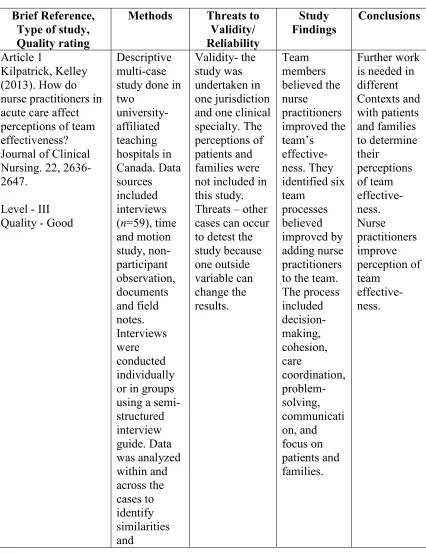
In a descriptive multiple-case study it was shown how nurse practitioners affect
perceptions of team effectiveness. Their role was believed to be important in improving
team communication and care coordination. This added value to their role on the team.
They also contribute to patient-centered care and can improve quality and safety of the
care provided to patients and families. They identified six team processes that included
decision-making, communication, cohesiveness, care coordination, problem-solving and
focus on patients and families (Kilpatrick, 2013).
Another article describes the Geriatric Floating Interdisciplinary Transition Team
works together to deliver transitional care to post-acute settings. Hospitals have a duty to
provide patient care until the handoff is complete. It is also important to facilitate the
handoff to the primary care provider in a prompt seamless manner and to ensure that
there is communication of key information. These factors have the potential to positively
affect hospital reimbursement if the model can be shown to reduce avoidable
readmissions. The results indicate the team showed slightly higher quality care transitions
and greater patient satisfaction with inpatient care (Arbaje et al., 2010).
The literature shows the need for managers to foster a work environment that
allows for stronger reciprocal relationships (Wiggins, 2008). The better unit work
environments were associated with higher quality of care when controlling various
hospital and units and this association persisted among units of different types (Ma, Olds,
19
result in a higher possibility of errors and omissions in patients’ care. Nurses and
physicians do not share the same views concerning effectiveness of their communication
and nurses’ role in the decision-making process of the patients’ care. Also, the physician
did not recognize the nurses’ professional role (Matziou et al., 2014).
Another study described the attitudes of nurses and physicians regarding
nurse-physician collaboration in a general medical-surgical patient care setting. The Jefferson
Scale of Attitudes toward Physician-Nurse Collaboration was used to compare responses.
The total scores indicated nurses have more positive attitudes toward nurse-physician
collaboration than physicians. The more positive attitude scores on the tool demonstrates
nurses’ desire for a more collaborative nurse-physician relationship than physicians. It is
clear from the literature that professional fulfillment, autonomy, control over practice,
and interdisciplinary collaboration help to attract and retain nurses. The results highlight
the need for continued efforts to improve nurse-physician collaboration (Thomas, 2007).
Improving the quality of patient care is a priority for healthcare today and the
future. There is an increase in the use of lean methodology to stream line processes to
improve quality and reduce waste from the system. This will allow value to be added to
the customer and cost reduction. In addition, patient satisfaction is expected to rise and
staff satisfaction (D’Andreamatteo, Ianni, Lega, & Sargiacomo, 2015). There are several
comprehensive literature reviews related to lean methodology.
One review reported competencies and skills on lean health could be introduced
in executive management training initiatives dedicated to health professionals, in study
20
administrators and managers (D’Andreamatteo et al., 2015). The study reported quality
improvement methodologies from the manufacturing industry could be the key to
improving quality of care in surgery and at the same time reducing cost (Nicolay et al.,
2012). There was a study done with all elective and urgent cardiac catheterization
procedures as a quality improvement initiative where there was significant improvement
with the selected measures using lean six sigma processes (Agarwal et al., 2016).
Synthesis of Literature
The synthesis of the nursing literature overwhelmingly support that a healthy
work environment leads to engaged team members, improved communication and
collaboration and improved patient care outcomes (Shirey, 2017). There is a need for a
model of health care leadership that is authentic and transformational. There must be
shared understanding of each leaders’ role and the complex ways in which effective
leadership alliances promote care at its best (Sanford, 2015). So this model presents both
opportunities and challenges for improve communication and collaboration. Different
models of care can improve an organization’s ability to deliver sustainable, high quality,
patient, and family centered care. Leaders must view team member engagement as an
ongoing journey that requires intentional actions to build high performing teams
(Sherman, 2017). Effective organizations need effective leadership and leaders who are
committed to the improvements necessary to enhance team member engagement.
(Lamont, L. 2015). Utilizing a standard process to drive outcome by the leaders has the
potential to promote positive work environments and commitment of front-line staff
(Ulrich, 2017). This could result in high-quality, safe practices, and outstanding patient
21
Communication and collaboration is key between nurses and physicians. All
providers of healthcare have a responsibility to improve communication as a vital
component of professional practice (Flicek, 2012). It is important that the dynamics of a
team built by strong leaders would demonstrate collaboration and innovation that delivers
outstanding results. High performing leaders are focused on their goals and can enable its
team members to overcome barriers in achieving those goals (Stott, 2017).
Recommendations for Practice Innovation
Based on previous research, organization strategic goals, and challenges with
quality outcomes, the proposed strategic innovation plan includes dyad leader rounding
with the K-Cards would benefit both the change and leadership frameworks described
above. Healthcare leaders need to implement Kotter’s eight-stage process of creating
major change not only to survive but to thrive in this new environment. It is imperative to
create sustainable and effective performance through a lean process. The eight steps in
the process of leading change are: (a) establish a sense of urgency; (b) create a guiding
coalition; (c) develop a vision and strategy; (d) communicate the vision of change; (e)
empower employees for broad based action; (f) generate short term wins (g) consolidate
the gains and produce more change; and (h) anchor new approaches in the culture
(Kotter, 2007).
Conceptual/Theoretical Framework
Healthcare need leaders with the ability to utilize their influence for a greater
purpose rather than themselves. These leaders need to be intentional and deliberate in
22
to meet the best clinical outcomes for patients. These leaders must possess skill sets that
complement one another and with the ability to grow together. Expertise is needed in
knowing how to accomplish goals in the organization. This is achieved through
relationship building with key stake holders, understanding the workings of bureaucracy,
but with a persistent and determined approach. In other words, this partnership requires
authentic leadership.
In leadership development for dyad leaders, there is a model that fits this work
called the four “Ps” of partnership that both leaders need to understand. These are Power,
Persuasion, Politics, and Perception (Sanford, 2015). This model is used in discussing the
authentic leader. For dyad leaders wanting to transform healthcare an important attribute
to have is authenticity. Authentic leaders are true to self and honest with others about
who they are. These are leaders who have potential and purpose. They can identify and
admit weaknesses and be transparent with a trusted partner that supports them. They will
take what they have learned together in partnership for self-development and growth as
leaders (Sanford, 2015).
The first “P” is POWER. Great power is in operation when two dyad leaders unite
their skills and abilities. By uniting, the leaders have power to influence their team
members. This power may be known or unknown, but the ability to influence is amazing.
Leaders need to discern what their team members’ value and discover ways to help them
maintain or attain what’s needed to achieve desired outcomes. For the dyad leader, it is
not about utilizing their position or title of power, but is an eagerness to share the power
23
The second “P” is PERSUASION. The leaders need this skill to help the team
agree with the vision and understand the importance and why change is needed for
improvement. The leaders should present the facts and data to establish relationships and
bonds. They have influence because of the respect from others and they are known to be
authentic and owners of their units (Sanford, 2015).
The third “P” is POLITICS. Politics is a very positive and influential tool in the
organization. Politics should not invoke negative connotation or backlash. Dyad leaders
know the right thing to do, but consistently strive to get it done the first time. Their
decisions are not for personal gain but is to accomplish goals in support of the units. To
be successful in the organization, the leaders should possess knowledge of politics, which
allows them to maneuver throughout the organization when needed (Sanford, 2015).
The final “P” is PERCEPTION. Perceptions are what people believe about
something or someone based on their observations or on other people’s reported
observations and opinions (Sanford, 2015). Dyad leaders should desire others to perceive
them as being true partners that possess all four “Ps.” The dyad leader should be attentive
and learn the organizational culture. Leaders at times need coaching to learn from past
experiences and leadership roles, and know that creating relationships and the
establishing of trust should be the first objective to be successful (Sanford, 2015).
Leadership in any health care organization is not about one individual (St. Fleur &
McKeever, 2014). It is important for the dyad leaders learn the four “Ps” before making
change. No matter how high performing and commanding a leader is, health care
24
partner with one another and their patients. Developing leaders who can produce and
excel at this level is the goal for the future. Committing to the growth and development of
the nurse-physician leader team in an accountable care unit is the single, best way to
engage talent and groom successful high-performance teams (Zismer & Brueggemann,
2010).
One of the most difficult tasks to confront as leaders is to identify a need for
change and leading the way to make that change a reality. Nurse and physician leaders,
must share the mental model of knowledge and a focusing of efforts on the improvement
of care provided that is both engaging and sustainable.
The importance of leadership in the driving process of leading change is described
in an eight step process (Kotter, 2007). Each stage is associated with the eight
fundamental errors that undermine transformation efforts. These common errors include:
allowing too much complacency, failing to create a powerful guide coalition,
underestimating the power of vision, under communicating the vision, permitting
obstacles to block the new vision, failing to create short-term wins, declaring victory too
soon, and neglecting to anchor changes firmly in the organization culture. The eight steps
in the process of leading change are: (a) establish a sense of urgency, (b) create a guiding
coalition, (c) develop a vision and strategy, (d) communicate the vision of change, (e)
empower employees for broad based action, (f) generate short term wins (g) consolidate
the gains and produce more change, and (h) Anchor new approaches in the culture
25
The focus of this framework is to change underlying behavior and build
empowerment of teams. The idea focusing on a vision while building a strong consistent
team to improve patient care. According to, (Kotter, 2007), change requires creating a
new system or process which in turn always demand leadership.
Study Design
The project was deemed exempt by both the University and hospital Institutional
Review Boards (IRB) and the hospital’s Nursing Research Council.
Qualitative data was obtained using the Institute for HealthCare Improvement
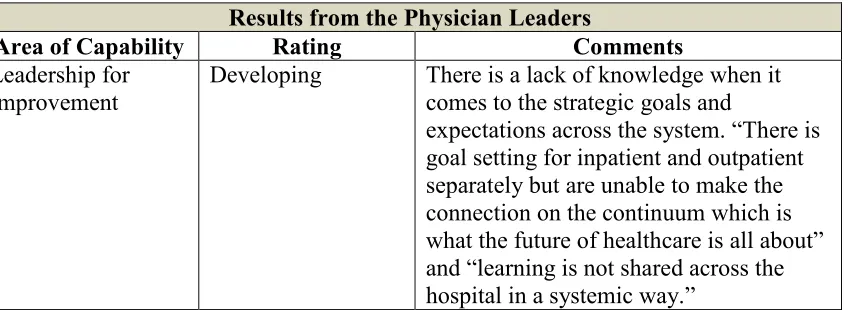
(IHI) capability self-assessment tool was used pre-intervention by all six leaders. It
assessed the leaders understanding of their hospital’s capability in six key areas:
• Leadership for improvement – is the capability of the leadership of the hospital to
set clear improvement goals, expectations, priorities, and accountability and to
integrate and support the necessary improvement activities within the
organization.
• Results – is the capability of a hospital to demonstrate measurable improvement
across all departments and areas.
• Resources – is the capability of a hospital to provide sufficient resources to
establish improvement teams and to support their ongoing work and success.
• Workforce & Human Resources – is the capability of a hospital to organize its
workforce to encourage and reward active participation in improvement work,
clearly define and establish improvement leadership roles, and ensure that job
26
• Data Infrastructure & Management – is the capability of a hospital to establish,
manage, and analyze data for improvement in a timely and routine manner to
meet the objectives and expected results of the hospital’s improvement plan.
• Improvement, Knowledge and Competence – is the capability of a hospital to
obtain and execute on the skills and competencies required to undertake
improvement throughout the hospital.
For each of these six areas, the tool provided a brief description of levels of
capability ranging from just beginning, developing, making progress, significant impact,
and exemplary. See Appendix C for the meaning of each level. The levels are intended to
provide a basic indication of the improvement capability of this organization in several
domains that are associated with overall improvement success. This tool will help
identify the steps leaders need to take to close the current gap and the desired future
outcomes.
A leader rounding process to engage team members in continuous quality
improvement using a lean methodology tool to engage team members called Kamishibai
(K-Cards) to help in improving communication, collaboration, and engagement. It is a
process of quick observations to audit processes and standards in a planned and/or
random routine (Perreault et al., 2014). A power point presentation was shown to
physician leaders to view before the start of the interventions. The nursing leaders
assisted the physicians in answering any questions and demonstrated each portion of the
bundle for compliance. This took on average 1-2 hours because physician leaders had not
seen this level of detail of quality bundles before. The same education was required of
27
The K-cards were in place before they were rolled out and used on the units. One
side of the card is red with the bundles listed and the other side of the card is green with
the bundles listed. Team members were validated through observations and
documentation checks. If the staff performs all interventions listed in the bundle
correctly, recognition is given immediately by the dyad team and the staff receive a green
dot on the board for compliance. If team members missed any part of the bundle
intervention, immediate feedback and coaching is provided and a red dot is received on
the board for opportunities. This is a non-punitive process and as leaders there is a need
to continuously communicate this with staff.
Team members were asked to identify any barriers that prevented them from
achieving specific step of the intervention. These barriers were also placed on the board
and were annotated with follow-up by specific individuals or departments. The
Kamishibai process helps sustain improvement by illustrating whether they are still in
place and whether the solution brought to each problem is done right (Perreault et al.,
2014). The tool will help with the leaders to coach and provide feedback to their teams on
the evidence-based bundles required to improve outcomes.
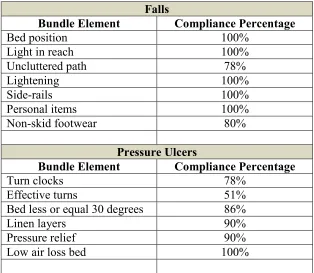
Data was collected on rounds to show compliance with the bundles, coaching
done by the leader, the number of staff members coached, and whether there was harm or
not with falls and pressure ulcers. This data will help in demonstrating the collaboration
of leaders with team members as it relates to improving harm outcomes.
In addition, there was audio recorded interviews with the nurse leaders and
28
communication as a team. The interviews were transcribed by the primary investigator.
For the five standard questions guiding the interviews see Appendix B.
Sample
This organization is one of the largest healthcare resources in the southeast U.S.
There are more than 15,000 team members and volunteers, and more than 1,000
physicians throughout the system. There are seven acute care hospitals in the system to
include Midlands Hospital East (413 beds), Midlands Hospital West (76 beds), Midlands
Hospital Children’s (163 beds at PHR), Midlands Hospital North (124 beds at PHR),
Midlands Hospital South (649 beds), Midlands Hospital Northwest (301 beds), and
Midlands Hospital Southeast (109 beds, joint venture with another regional hospital
System).The chosen hospital for this project is a teaching hospital. This facility is where
physicians throughout the 23 residency and fellowship programs affiliated with the
University School of Medicine.
The participants included the nurse leader and physician leader of each ACU. The
three ACUs in the sample had dyad leaders on each which gives a total of six leaders.
The number of team members on each unit that needed to be rounded on differs. The
Acute Care of the Elderly ACU has approximately 36.2 FTEs of RNs and PSTs. The
Medical Surgical ACU has approximately 28.3 FTEs of RNs and PSTs. The Medical
Surgical ACU has approximately 34.2 FTEs of RNs and PSTs.
There are six Accountable Care Units (ACU) in the organization; three in Medical
29
Unit, and one on 5th Long Medical Telemetry. Each unit has a nurse leader and medical
director assigned commonly referred to the Leadership Dyad Team.
Data Analysis
Analysis of the data was collected in four parts: (1) Institute for Healthcare
Improvement (IHI) pre-intervention leadership capabilities self-assessment completed by
dyad leadership teams (IHI, 2010), (2) standardized leadership weekly rounding using
k-card methodology performed by dyad leadership team, (3) a five question audio recorded
focus group to assess the results of the intervention on leadership communication within
each dyad leadership team, and (4) post intervention survey question for team members
to assess level of engagement compared to baseline and benchmark. Descriptive
statistics will be used for each dyad team and unit. Run charts will be used to develop
statistical process control charts to show possible changes in dyad leadership rounding
with team members over time.
Outcomes Measured
The outcomes measured in this study were: a) team engagement by the leaders on
rounding, b) compliance with the fall and pressure ulcer bundles, and c) quality
outcomes.
Feasibility
Potential barriers were identified prior to project implementation that may limit
the feasibility of the project were: medical director not committed to their allotted time,
30
completion of the study within a defined time frame, lack of authority to change
procedures or implement new ideas, lack of knowledge and understanding of the lean
methodology, and a lack of understanding of the data needed to achieve outcomes.
Factors that promote feasibility were: support from the research department on evidence
base practice, education on lean methodology, support for change, and ready team
members to put change in practice.
The nurse leader and the medical director have a lack of knowledge about
research utilization and evidence based practice. The education empowers both parties
about their practice and each are receptive to the interventions from the research results.
This increases the perception of organizational support (Grant, Stuhlmacher, &
Bonte-Eley, 2012). The added advantage is the project is implemented in an academic teaching
organization.
Conclusion
The nurse-physician leadership dyad is a model that can be used to transform
leadership, evidence-based practice, and patient outcomes. This leadership model, with
development, can improve collaboration and communication within teams. Leadership
teams need the proper support and resources for success. Through innovation and team
work, lean management has proven to be a sustainable method to ensure a high level of
patient care. It is important to engage front-line team members in sustainable continuous
quality improvement. Dyad leaders can be further developed with additional knowledge
31
CHAPTER 2
IMPROVING LEADERSHIP COMMUNICATION IN
NURSE -PHYSICIAN DYAD TEAMS
_________________
32
Abstract
Evidence-based practice (EBP) initiatives can be enhanced with application of
quality improvement techniques. Within a hospital, the impact of several EBP protocols
were enhanced with a focused quality improvement initiative using a dyad leadership
team model, rounding with front line staff, and standardized tools. The effectiveness of
nurse and physician leaders improves with engagement and increased awareness of
expectations, self-confidence, and skill level.
Key Words: Communication, dyad leader, rounding, leadership, coaching
The Need for Change
In a climate of cost containment and improved outcomes within healthcare, there
must be a leader model of care that has passion for driving change. There is value in
leaders’ ownership of change and their possession of the abilities and skills to model the
behavior to the team. The responsibility of overseeing the implementation of change
should rest with both leaders but not without effective communication and collaboration
among its team members.
Within acute care settings, accountability for best practice and evidence-based
practice implementation usually lies with nursing. The lack of interprofessional
collaboration has a negative effect on outcomes and implementation of decisions or goals
(Nair, 2012).
Interprofessional training processes and expectations are not standardized.
33
performance expectations for these roles to ensure systemic implementation and
maintenance. The baseline skills for nurse and physician leaders varies but it’s assumed
that the physician is the identified leader (Clark, 2013).
Team members must be coached, recognized, and rewarded sincerely by their
leaders. Team members must feel valued by their leaders and organization. Building that
relationship is what keeps them engaged, gives them courage, gives them motivation, and
makes them want to come in and give their best (Macauley, 2015).
Team engagement, improved collaboration, and quality outcomes should be
priorities for every health care organization (Lamont, 2015). Nurse-physician disciplines
work together, but not in an integrated manner. Given the current changes and challenges
in healthcare, physicians and nurses realize the need to work as a team and not in silos
(Ulrich, 2017).
Collaborative communication and teamwork are essential elements for improving
quality care and patient safety (Matziou et al., 2014). Yet, there are challenges in
achieving the desired quality outcomes even on nursing units with formal nurse-physician
leader teams working together to achieve mutually agreed upon unit goals.
Improving the Impact of Evidence-based Practice with Quality Improvement Tools
In three such units, a lean tool called Kamishibai (hereafter referred to as
K-Cards) was implemented to assist the nursing staff in providing care consistent with a
best practice evidence bundle to prevent harm. Upon implementation, the nurse leader
34
communication. However, there was an opportunity to further improve upon the current
quality outcomes efforts by actively engaging physicians (McCaffrey et al., 2010).
A hospital within the Midlands of South Carolina, part of a six-hospital health
system in the southeast region of the United States, afforded a unique opportunity to
improve upon the effect of K-care implementation. The health system is a non-profit
organization with a long-standing reputation in the community.
In the summer of 2017, nurse and physician leaders on three of five accountable
care units identified an opportunity to improve communication through quality
improvement. These were established ACUs where the leaders wanted to take their
performance to the next level and were also trying to build high performing teams that
are needed to achieve the expected quality outcomes.
Improving the Use of Evidence in Practice
The nurse and physician leaders conducted rounding together and utilized the
resources of the K-cards to specifically focus on improving pressure ulcers and falls. A
couple months before pilot, nurse leaders attended a four-hour training session on
K-cards. As is typical with any other educational roll-out or best practice, the physicians
were not included. As part of this initiative, the physicians were given the same education
as were the nurses via a power point presentation view before the start of the 12-week
pilot interventions. As part of the training, nursing leaders answered questions and
demonstrated each part of the bundle for compliance. The training took longer for
35
Upon completion of the training by the physicians, the nurse and physician
leaders began conducting weekly rounds, including data-based metrics, to validate the
usage of the K-card bundle to prevent pressure ulcers and falls. This process allowed the
leaders to engage in a meaningful discussion on metrics including team performance and
root cause analysis data, as well as identified opportunities, and identified what could be
done to remove the barriers or change processes. They had real time perspective with the
data and adjustments needed weekly using a rapid cycle of PDSA to improve outcomes.
The K-cards had previously been rolled out and used successfully in the
children’s hospital within the organization when they were rolled out to each of the ACU
units. This was the first time that the organization was using the K-card concept as a best
practice in the adult world (Satyadi, 2013).
The healthcare system used a controlled, timed, and intentional roll-out process.
All nursing team members and patient support techs were trained during the roll-out.
Support team members from the Nursing Excellence Department conducted a power
point slide presentation to the team. One side of the card is red with the bundles listed and
the other side of the card is green with the bundles listed. Team members were observed
on the bundle through observations and documentation checks.
The organization’s process for using the K-cards involved several steps. To begin,
information boards were located in the nurse’s station for quick observations and
discussions. if the team members completed all interventions listed in the bundle
correctly, recognition was done immediately and they would receive a green dot on the
36
intervention, feedback and coaching was provided immediately and they received a red
dot on the board for opportunities.
Team members were asked if there were any barriers that prevented them from
achieving a specific step of intervention. Barriers were also placed on the board
annotating follow-up by specific individuals or departments. K-card compliance was
monitored for each bundle.
The Kamishibai process helped to sustain improvement by illustrating whether
they were still in place and whether the solution brought to each problem was done right
(Perreault et al., 2014). The tool helped the leaders to coach and provide feedback to their
teams on the evidence base bundles required to improve outcomes.
Results of Leader Rounding and Coaching
A month after implementation of the K-cards, several quality improvement
strategies were implemented. Weekly rounds were conducted by leaders using the
K-cards allowing coaching of team members. Initially, physicians were not comfortable
with coaching team members independently. The physician leader depended on the nurse
leader for not only the k-card bundle process but also for coaching, providing feedback,
and accountability. Physician leaders performed some independent coaching but required
increase nurse leader support due to underdeveloped relationships with team members
and inexperience with the coaching process and this aspect of leadership training.
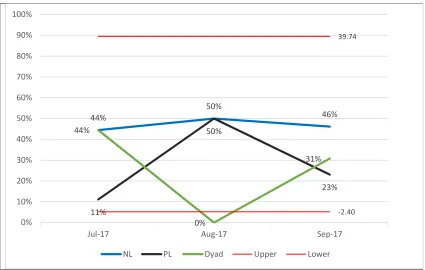
Figure G.1 below shows Family Medicine (Unit 1) Leader Coaching by Type.
Nursing initially did the majority of the coaching. The physician coaching was delayed