International Journal of Scientific Research in Computer Science, Engineering and Information Technology © 2018 IJSRCSEIT | Volume 3 | Issue 4 | ISSN : 2456-3307
Providing Less Cost for Data Sharing in the Cloud
A. M. Rangaraj1, N. Madhu2, V. Hemalatha2
1Assoc. Professor Department of Computer Applications SVCET, Chittoor, Andhra Pradesh, India 2PG scholar Department of Computer Applications SVCET, Chittoor, Andhra Pradesh, India
ABSTRACT
Distributed computing empowers exceptionally pliant administrations to be effectively eaten over the web on an as required premise. A motivating part of the cloud administrations is that shoppers' data is often handled remotely in obscure machines that clients do not possess or work. whereas obtaining a charge out of the comfort brought by this new rising innovation, clients' feelings of apprehensiveness of losing management of their own data (especially, cash connected and successfulness information) will become a essential hindrance to the wide appropriation of cloud administrations. To handle this issue, during this paper, we tend to propose a unique abundant redistributed knowledge responsibility system to observe the real use of the clients' data within the cloud. Specifically, we tend to propose a matter targeted approach that empowers encasing our work system along side clients' data what is a lot of, arrangements? we tend to use the JAR programmable capacities to each create a the dynamic and voyaging object, and to ensure that any entrance to clients' data can trigger verification and robotized work neighborhood to the JARs. To fortify client's management, we tend to boot provide sent evaluating instruments. We tend to provide broad trial is concerned that show the productivity and adequacy of the projected approaches.
Keywords: Access Control, Distributed Databases, Authentication, Monitoring, Cryptography, Privacy.
I.
INTRODUCTION
Cloud computing presents a new way to supplement the present consumption and delivery model for IT services supported the web, by providing for dynamically scalable and sometimes virtualized resources as a service over the web. To date, there are variety of notable business and individual cloud computing services, as well as Amazon, Google, Microsoft, Yahoo, and Sales force. Details of the services provided area unit abstracted from the users World Health Organization not have to be compelled to be specialists of technology infrastructure. Moreover, users might not understand the machines that truly method and host their knowledge. Whereas enjoying the convenience brought by this new technology, users additionally begin worrying regarding losing management of their own
knowledge. The info processed on clouds area unit usually outsourced, resulting in variety of problems associated with answerableness, as well as the handling of in person identifiable info. Such fears are getting a big barrier to the wide adoption of cloud services.
optimum resource reservation algorithmic rule to cut back the value of every storage datacenter. we tend to additionally planned many improvement strategies for DAR to additional scale back the payment price and repair latency as well as i) constant based mostly knowledge reallocation, ii) multicast based mostly knowledge transferring, and iii) request redirection based mostly congestion management. DAR additionally incorporates an infrastructure to conduct the algorithms. Our trace-driven experiments on a testbed and real CSPs show the superior performance of DAR for SLO secure services and payment price reduction in comparison with different systems. Since a lot of replicas of a lot of widespread knowledge item will facilitate relieve a lot of masses from overladen datacenters, in our future work, we are going to study a way to change the quantity of replicas of every knowledge item to additional improve the performance of SLO conformity. Further, we are going to conduct experiments against varied work conditions and exploitation different traces.
II.
SYSTEM ARCHITECTURE
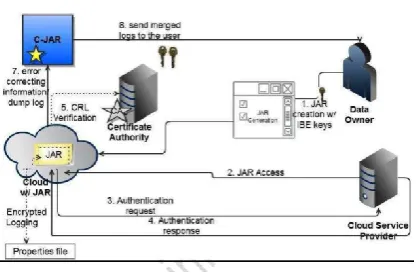
Figure 1. Overview of the cloud information accountability framework
MODULES:
The modules are as follows:
Admin
Customer Admin:
Admin is the user who doesn’t have registration directly logins into the system and add the data servers with certain limit of resources and cost if
client requests for the data storage then admin has to accept or reject that data storage request.
Customer:
Customer who Requests for the data storage capacity initially customer has to register into the system after that login and send request for the required data storage to the admin when admin accept the request then customer can upload the data into the cloud .
Log retrieval Algorithm
Algorithm 1
scale and time threshold for a dump area unit given by the information owner at the time of creation of the JAR. The rule additionally checks whether or not the information owner has requested a dump of the log files. If none of those events has occurred, it return to inscribe the record and write the error-correction data to the harmonizer. The communication with the harmonizer begins with an easy shake. If no response is received, the log file records a blunder. The information owner is then alerted through e-mails, if the JAR is designed to send error notifications. Once the shake is completed, the communication with the harmonizer returns, employing a TCP/IP protocol. If any of the same events (i.e., there's request of the log file, or the scale or time exceeds the threshold) has occurred, the JAR merely dumps the log files and resets all the variables, to form house for brand spanking new records. A novel extremely decentralized data answerability framework to stay track of the particular usage of the users’ information within the cloud. Particularly, we have a tendency to propose associate object-centered approach that permits enclosure our
Logging mechanism along with users’ information and policies. We have a tendency to leverage the JAR programmable capabilities to each produce a dynamic and traveling object, and to confirm that any access to users’ information can trigger authentication and automatic work native to the JARs. To strengthen user’s management, we have a tendency to additionally offer distributed auditing mechanisms. We offer in depth experimental studies that demonstrate the potency and effectiveness of the projected approaches with the subsequent constraints.
1. The work ought to be decentralized so as to adapt to the dynamic nature of the cloud. A lot of specifically, log files ought to be tightly delimited with the corresponding information being controlled, and need stripped-down infrastructural support from any server.
2. Each access to the user’s information ought to be properly and mechanically logged.
1. This requires integrated techniques to certify the entity World Health Organization accesses the information, verify, and record the particular operations on the information furthermore because the time that the information have been accessed.
2. Log files ought to be reliable and tamper proof to avoid black insertion, deletion, and modification by malicious parties. Recovery mechanisms also are fascinating to restore broken log files caused by technical issues. 3. Log files ought to be sent back to their
information house owners sporadically to tell them of this usage of their information. A lot of significantly, log files ought to be recoverable anytime by their information house owners once required regardless the placement wherever the files are stored.
4. The projected technique mustn't intrusively monitor information recipients’ systems, nor it ought to Introduce serious communication and computation overhead, that otherwise can hinder its practicableness and adoption in follow.
III.
CONCLUSION
We projected inventive methodologies for consequently work any entrance to the knowledge within the cloud in conjunction with a reviewing system. Our approach permits the knowledge owner to review his substance moreover as implement solid back-end assurance if necessary. Additionally, one among the basic highlights of our work is that it empowers owner to review even those duplicates of its information that were created while not his insight.
IV.
REFERENCES
[1]. P. Ammann, S. Jajodia, "Distributed Timestamp Generation in Planar Lattice Networks", ACM Trans. Computer Systems, vol. 11, pp. 205-225, Aug. 1993.
Possession at Untrusted Stores", Proc. ACM Conf. Computer and Comm. Security, pp. 598-609, 2007.
[3]. E. Barka, A. Lakas, "Integrating Usage Control with SIP-Based Communications", J. Computer Systems Networks and Comm., vol. 2008, pp. 1-8, 2008.
[4]. D. Boneh, M. K. Franklin, "Identity-Based Encryption from the Weil Pairing", Proc. Int'l Cryptology Conf. Advances in Cryptology, pp. 213-229, 2001.
[5]. R. Bose, J. Frew, "Lineage Retrieval for Scientific Data Processing: A Survey", ACM Computing Surveys, vol. 37, pp. 1-28, Mar. 2005.
[6]. P. Buneman, A. Chapman, J. Cheney, "Provenance Management in Curated Databases", Proc. ACM SIGMOD Int'l Conf. Management of Data (SIGMOD '06), pp. 539-550, 2006.
[7]. B. Chun, A. C. Bavier, "Decentralized Trust Management and Accountability in Federated Systems", Proc. Ann. Hawaii lni'l Conf. System Sciences (HICSS), 2004.
[8]. "Security Assertion Markup Language (saml) 2.0", 2012, onlineAvailable: http://www.oasis-open.org/committees/tchome.php?wgabbrev=se curity.
[9]. R. Corin, S. Etalle, J. I. den Hartog, G. Lenzini, I. Staicu, "A Logic for Auditing Accountability in Decentralized Systems", Proc. IFIP TC1 WG1.7 Workshop Formal Aspects in Security and Trust, pp. 187-201, 2005.
[10]. B. Crispo, G. Ruffo, "Reasoning about Accountability within Delegation", Proc. Third Int'l Conf. Information and Comm. Security (ICICS), pp. 251-260, 2001.
[11]. Y. Chen, F. Petitcolas et al., "Oblivious Hashing: A Stealthy Software Integrity Verification Primitive", Proc. Int'l Workshop Information Hiding, pp. 400-414, 2003.
[12]. S. Etalle, W. H. Winsborough, "A Posteriori Compliance Control", SACMAT '07: Proc. 12th
ACM Symp. Access Control Models and Technologies, pp. 11-20, 2007.
[13]. X. Feng, Z. Ni, Z. Shao, Y. Guo, "An Open Framework for Foundational Proof-Carrying Code", Proc. ACM SIGPLAN Int'l Workshop Types in Languages Design and Implementation, pp. 67-78, 2007.
[14]. 2012, onlineAvailable: http://www.flickr.com/. [15]. R. Hasan, R. Sion, M. Winslett, "The Case of
the Fake Picasso: Preventing History Forgery with Secure Provenance", Proc. Seventh Conf. File and Storage Technologies, pp. 1-14, 2009. [16]. J. Hightower, G. Borriello, "Location Systems
for Ubiquitous Computing", Computer, vol. 34, no. 8, pp. 57-66, Aug. 2001.
[17]. J. W. Holford, W. J. Caelli, A. W. Rhodes, "Using Self-Defending Objects to Develop Security Aware Applications in Java", Proc. 27th Australasian Conf. Computer Science, vol. 26, pp. 341-349, 2004.
[18]. Trusted Java Virtual Machine IBM, 2012, onlineAvailable:
http://www.almaden.ibm.com/cs/projects/jvm/. [19]. P. T. Jaeger, J. Lin, J. M. Grimes, "Cloud Computing and Information Policy: Computing in a Policy Cloud?", J. Information Technology and Politics, vol. 5, no. 3, pp. 269-283, 2009. [20]. R. Jagadeesan, A. Jeffrey, C. Pitcher, J. Riely,
"Towards a Theory of Accountability and Audit", Proc. 14th European Conf. Research in Computer Security (ESORICS), pp. 152-167, 2009.
Author’s Profile:
N. Madhu received the PG degree from Sri Venkateswara College of Engineering & Technology, Chittoor, A.P.