Open Access
S T U D Y P R O T O C O L
© 2010 Thomas et al; licensee BioMed Central Ltd. This is an Open Access article distributed under the terms of the Creative Commons Attribution License (http://creativecommons.org/licenses/by/2.0), which permits unrestricted use, distribution, and reproduction in any medium, provided the original work is properly cited.
Study protocol
Multi-centre parallel arm randomised controlled
trial to assess the effectiveness and
cost-effectiveness of a group-based cognitive
behavioural approach to managing fatigue in
people with multiple sclerosis
Peter W Thomas
1,2, Sarah Thomas*
1, Paula Kersten
3, Rosemary Jones
4, Alison Nock
5, Vicky Slingsby
5, Colin Green
6,
Roger Baker
1,2,7, Kate Galvin
2and Charles Hillier
5Abstract
Background: Fatigue is one of the most commonly reported and debilitating symptoms of multiple sclerosis (MS); approximately two-thirds of people with MS consider it to be one of their three most troubling symptoms. It may limit or prevent participation in everyday activities, work, leisure, and social pursuits, reduce psychological well-being and is one of the key precipitants of early retirement. Energy effectiveness approaches have been shown to be effective in reducing MS-fatigue, increasing self-efficacy and improving quality of life. Cognitive behavioural approaches have been found to be effective for managing fatigue in other conditions, such as chronic fatigue syndrome, and more recently, in MS. The aim of this pragmatic trial is to evaluate the clinical and cost-effectiveness of a recently developed group-based fatigue management intervention (that blends cognitive behavioural and energy effectiveness
approaches) compared with current local practice.
Methods/Design: This is a multi-centre parallel arm block-randomised controlled trial (RCT) of a six session group-based fatigue management intervention, delivered by health professionals, compared with current local practice. 180 consenting adults with a confirmed diagnosis of MS and significant fatigue levels, recruited via secondary/primary care or newsletters/websites, will be randomised to receive the fatigue management intervention or current local practice. An economic evaluation will be undertaken alongside the trial. Primary outcomes are fatigue severity, self-efficacy and disease-specific quality of life. Secondary outcomes include fatigue impact, general quality of life, mood, activity patterns, and cost-effectiveness. Outcomes in those receiving the fatigue management intervention will be measured 1 week prior to, and 1, 4, and 12 months after the intervention (and at equivalent times in those receiving current local practice). A qualitative component will examine what aspects of the fatigue management intervention participants found helpful/unhelpful and barriers to change.
Discussion: This trial is the fourth stage of a research programme that has followed the Medical Research Council guidance for developing and evaluating complex interventions. What makes the intervention unique is that it blends cognitive behavioural and energy effectiveness approaches. A potential strength of the intervention is that it could be integrated into existing service delivery models as it has been designed to be delivered by staff already working with people with MS. Service users will be involved throughout this research.
Trial registration: Current Controlled Trials ISRCTN76517470
* Correspondence: [email protected]
1 Dorset Research and Development Support Unit, Poole Hospital NHS
Foundation Trust, Poole, Dorset, UK
Background
Multiple sclerosis (MS) is a chronic, unpredictable, incur-able, demyelinating disease of the central nervous system affecting approximately 2.5 million people [1-3]. It is more common in women and onset peaks between 20 and 40 years. The causes and early development of the disease are not fully understood but probably involve immune, genetic, and environmental factors [2,3]. Fatigue is one of the most commonly reported and dis-abling symptoms of MS, often occurring daily [4] and with a variable course [5,6]. Up to 86% of individuals with MS experience fatigue at any one time; 65% consider it to be one of their three most troubling symptoms [4].
Fatigue has been defined as a 'subjective lack of physical and/or mental energy that is perceived by the individual or caregiver to interfere with usual or desired activities', p. 2 [7]. The pathophysiology of fatigue is unclear [8] but likely to be multi-factorial [9,10]. Findings on the rela-tionships between fatigue and other clinical variables (such as age, gender, disease duration, and clinical activ-ity) have been equivocal [11].
Researchers have distinguished between primary and secondary fatigue [12]. 'Primary' fatigue relates to aspects of fatigue deemed to be directly related to the disease process such as lassitude or asthenia (an overwhelming sense of tiredness not directly related to participation in activity or exercise), 'short-circuiting' fatigue (when mus-cular performance deteriorates during sustained activity but recovers after a short rest break) and heat sensitive fatigue (where fatigue is triggered or worsened by heat).
'Secondary' fatigue refers to fatigue that is not unique to MS and is related to factors common to a range of chronic and disabling conditions (e.g. sleep disturbance, medication side effects, infection, physical exertion, depression, anxiety, stressful life events, characteristics of the local environment - such as lighting and temperature within a work setting). The relationship between these dimensions is complex; various symptoms of MS may act as predisposing factors for secondary fatigue.
Fatigue may limit or prevent participation in everyday activities, work, leisure and social pursuits, restrict role fulfilment and reduce psychological well-being [12,13] and is one of the key precipitants of early retirement [14,15]. Its 'invisible' nature may lead to difficulties in per-sonal and work relationships [16,17].
Fatigue is highly related to an individual's sense of con-trol over MS and psychological well-being [13,18,19]. Sense of control has been found to predict lower levels of fatigue [20], suggesting that increasing self-efficacy related to fatigue could improve quality of life.
Pharmacological and non-pharmacological treatments are available for MS-related fatigue, but evidence on effectiveness is mostly inconclusive or non-existent [4,21,22]. Non-pharmacological studies exploring the
effectiveness of energy conservation programmes for MS-fatigue have tended to be small and uncontrolled [23-27]. Two fatigue management initiatives have been devel-oped in the UK [28,29]. Only the former has been evalu-ated and numbers were small. In the USA, a randomised controlled trial (RCT) [30] of an energy conservation course [31] found evidence for its effectiveness in reduc-ing fatigue impact, increasreduc-ing self-efficacy and aspects of quality of life; benefits were maintained at 1 year [32]. Results from a German adaptation were also promising [33]. A RCT that evaluated a multi-disciplinary fatigue management programme [34] demonstrated no reduc-tion in fatigue impact compared with a placebo interven-tion.
Although the important relationships between physical and psychological aspects of MS-fatigue are recognised [35], high quality RCTs of psychological interventions are rare [36]. In Chronic Fatigue Syndrome (CFS) individual Cognitive Behavioural Therapy (CBT) is effective in treating fatigue [37,38]. A systematic review [39] of psy-chological interventions for MS identified just one RCT that used a cognitive behavioural approach to manage MS-fatigue [40]. The intervention consisted of individual CBT conducted by a clinical psychologist and was shown to be effective in reducing fatigue. However, in the UK National Health Service (NHS), and elsewhere, psycholo-gists working with people with MS are scarce, thus this approach may prove impractical [39].
A number of pilot studies have used group-based cog-nitive behavioural approaches, either in the context of coping with MS [41-43], or specifically with MS-fatigue [44]. Group-based approaches are potentially more cost effective than one-to-one and offer opportunities for peer support. Recently, we have developed a group-based manualised fatigue intervention for the management of MS-fatigue that incorporates energy effectiveness and cognitive behavioural approaches [45]. This intervention involves health professionals routinely involved in the management of MS, supported by clinical psychologists, and is thus compatible with a wide range of existing health service structures (such as the UK National Health Service (NHS)). Pilot work has been encouraging and this trial is a formal evaluation of the effectiveness of the intervention [45].
Aims
Patient population: Adults with multiple sclerosis experi-encing significant fatigue that is impacting on daily life.
Primary aim
Secondary aims
2. To test whether those allocated to a group-based cogni-tive behavioural fatigue management intervention differ (in terms of fatigue impact, mood, general quality of life, and activity patterns) from those allocated to current local practice.
3. To assess how the group-based cognitive behavioural intervention and current local practice differ in terms of cost-effectiveness.
4. For those who attend the group-based programme, to gather feedback about experiences of attending the programme, any changes made and barriers to change encountered, and helpful or unhelpful aspects.
Methods/Design Trial design
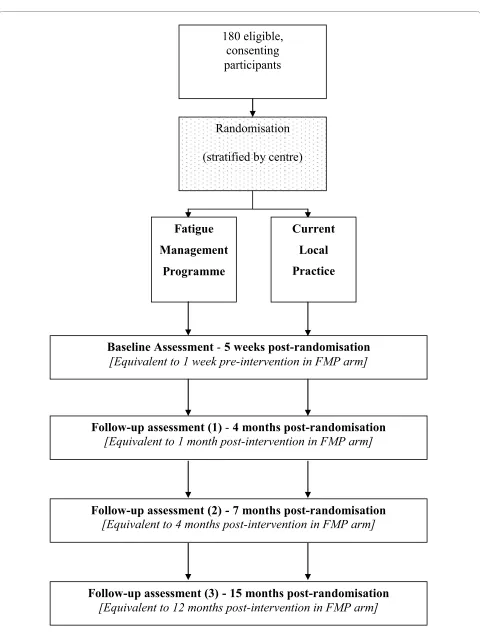
This is a parallel arm randomised controlled trial com-paring a group-based cognitive behavioural approach to managing fatigue (Fatigue Management Programme (FMP)) with current local practice. The trial design is summarised in Figure 1.
This RCT is the fourth stage of a research programme that has followed the Medical Research Council (MRC) guidance for developing and evaluating complex inter-ventions [46]. The pilot work has been published [45].
Participants will be randomised to receive the fatigue management intervention or current local practice. A placebo arm to the trial was considered but rejected because (a) the fatigue management programme is a "complex intervention" (incorporating group, educa-tional, cognitive, behavioural, and energy effectiveness components and the attendance of supportive others) making it difficult to know which "active ingredients" to control for in the placebo; (b) of the difficulties inherent in designing a placebo intervention that is credible to par-ticipants and facilitators, and that maintains participant masking, and (c) in clinical practice, the costs of deliver-ing the fatigue management programme and the sham intervention would be equivalent.
The pilot research (multi-centre pilot) undertaken identified practical difficulties involved in running a three centre randomised trial. The multi-centre approach for the randomised trial will help to ensure sufficient num-bers of participants are recruited and that results are gen-eralisable outside Poole, where the intervention was developed.
Setting
The trial is taking place in three centres (Poole, Bristol, Southampton/Portsmouth) and each centre has a team of trained facilitators to deliver the fatigue management programme.
Ethical, governance and management considerations
This trial has been reviewed and given a favourable opin-ion by the North Somerset and South Bristol
Multi-Cen-tre Research Ethics Committee (ref: 08/H0106/2). Poole Hospital NHS Foundation Trust is acting as sponsor. The study is funded by a project grant awarded by the Multi-ple Sclerosis Society of Great Britain and Northern Ire-land. The study is included in the National Institute of Health Research Clinical Research Network (NIHR CRN) portfolio (ID 4843).
As the trial involves people with MS and fatigue, careful consideration will be given to the location of the inter-vention (e.g. public transportation, car parking, walking distances), and the comfort of the participants (room temperature, refreshment breaks, cushioned chairs etc.). Because participants will have fatigue, the length of ses-sions in the fatigue management programme has been kept reasonably short, and the number and length of out-come measures have been kept to a minimum. Two facili-tators will run each session. If someone becomes emotionally upset or unwell during a session, one of the facilitators can take that person aside, and provide infor-mation regarding help and support available from local MS services (such as a MS Specialist Nurse), the MS Society and MS Trust, and primary care (General Prac-tice, counselling services etc.).
A trial steering group will meet at regular intervals throughout the trial.
Service user support
There has been service user involvement in all stages of the research so far, including the development of this pro-tocol. Service users will be represented on the trial steer-ing group.
Data protection
All information that is collected will be kept strictly con-fidential and any information that leaves Poole Hospital will not contain any personal details. Questionnaires will be allocated a participant identification number; they will not contain any names or identifying details. Only the authorised members of the research team will have access to the trial data.
Participants Sample size
System-Figure 1 Flowchart of trial design.
180 eligible,
consenting
participants
Randomisation
(stratified by centre)
Baseline Assessment
-
5 weeks post-randomisation
[Equivalent to 1 week pre-intervention in FMP arm]
Follow-up assessment (2)
-
7 months post-randomisation
[Equivalent to 4 months post-intervention in FMP arm]
Follow-up assessment (1)
-
4 months post-randomisation
[Equivalent to 1 month post-intervention in FMP arm]
Fatigue
Management
Programme
Current
Local
Practice
Follow-up assessment (3)
-
15 months post-randomisation
atic Review of Amantadine for fatigue in MS found effect sizes of between 0.3 and 1.4 for the three studies that measured fatigue on a continuous scale [21]. Thus, our choice of an effect size seems reasonable in the context of (a) how well cognitive behavioural approaches work in another chronic disease where fatigue is a major symp-tom, and (b) how well another treatment for fatigue works in MS. For 85% power, the sample size requirement (using a two-tailed 5% significance level) is 73 people per arm of the trial; 146 in total. Inevitably, there will be some participants who withdraw from the trial during its course, or more generally, do not complete outcome mea-sures. To allow for this, we will aim to enrol 180 partici-pants; 90 in each arm of the trial. Thus, if 20% of participants do not provide data on the primary outcome measures, the study would maintain statistical power. This figure of 20% will be reviewed during the study and sample size adjusted up or down accordingly.
Eligibility criteria Inclusion criteria
1. Providing written informed consent. 2. Over the age of 18.
3. Clinical diagnosis of relapsing-remitting or pro-gressive multiple sclerosis (Poser/McDonald criteria [48-50].
4. Score on the Fatigue Severity Scale (FSS) [51] greater than 4. The FSS is a uni-dimensional self-report measure consisting of 9 items that ask about severity of fatigue related to daily activities (such as physical functioning, exercise, work, family, and social life). Responses are made on a 7-point Likert-type scale.
5. Ambulatory (score on the Adapted Patient Deter-mined Disease Steps (APDDS) Scale [52] < 8). This self-administered instrument is based on the Patient-Determined Disease Steps (PDDS) scale and the tele-phone Expanded Disability Status Scale (EDSS). The programme content will be most relevant for those who are ambulatory. Individuals who are non-ambu-latory will continue to receive standard care.
6. Able to attend the intervention sessions. 7. English speaking.
Exclusion criteria
1. Attended a specific fatigue management programme within the last year.
2. Received a substantive, specific, fatigue intervention from an Occupational Therapist (OT) or other health professional, consisting of more than general advice, within the previous 3 months (such as the guidance pro-duced by the National Association of Neurological Occu-pational Therapists (NANOT) [53] (now known as the College of Occupational Therapists Specialist Section -Neurological Practice) [29].
3. Already involved in another research study.
4. Individuals who have cognitive deficits such that they would not be able to engage in the group format or bene-fit from the programme. If individuals have substantial cognitive deficits much of the content of the fatigue man-agement programme would not be appropriate. This will be based on the judgement of health professionals/local investigators.
5. Individuals who have had a relapse within the previ-ous three months. This would be a potential confound since a change in fatigue could be the result of treatment or improvement after a recent relapse.
6. Individuals who have been on a disease-modifying drug (such as Beta-Interferon, Glatiramer Acetate) or an anti-depressant for fewer than 3 months. One of the pos-sible initial side effects of these drugs is fatigue and thus this could be a confounder.
7. Individuals who are known to be currently under the care of a psychiatrist or under the care of addiction ser-vices will be excluded. Ongoing psychiatric disorders or addiction problems would compromise the potential to benefit from the programme.
Individuals excluded from the research project will continue to be seen as per usual care.
Source of participants
The recruitment target for each of the three centres will be 60 people, of whom 30 will receive the group-based intervention. In each centre this will require running three successive iterations of the programme, recruiting in blocks of around 20. The fatigue management pro-gramme has been designed for groups of between 6-12 participants.
Participants will be recruited using a variety of meth-ods; via MS Services/Neurology Departments, MS Soci-ety newsletters and website, other relevant newsletters, MS Research database, MS support groups, General Practitioners.
Recruitment and consent
Potential participants (identified via secondary or pri-mary care or self-referred) will be sent a trial information pack (Key Facts sheet, a set of Participant Information Sheets, two screening measures (FSS & APDDS), response slips (interested to hear more/decline to partici-pate, plus reasons why) and a prepaid envelope. They will be asked to return a reply slip and the two completed screening measures in a prepaid envelope to the Local Investigator (LI) if they wish to find out more about the trial, or a decline slip, if they would prefer not to receive any further information. Individuals who have not responded will be sent a second trial information pack two weeks later and a final invitation to participate one month later.
oppor-tunity to ask questions. If, after this discussion, the indi-vidual still wishes to take part, the LI will undertake a screening using a checklist. After screening, participants will be notified via the telephone whether they are eligible or ineligible. Participants who are currently ineligible (e.g. due to medication recently started, a planned holiday, having received fatigue advice etc.) but who may fulfil eli-gibility criteria at a later date will be held over to be rescreened (if another iteration is scheduled in the cen-tre). Individuals who are ineligible will be sent a letter notifying them of this, along with a booklet produced by the MS Society about MS-fatigue [54].
Randomisation
To ensure good allocation concealment, random alloca-tion will be e-mail-based and administered at Poole Hos-pital by the statistician who will be blinded to the identity of participants. Once a block of participants from a cen-tre have provided informed consent they will be formally entered onto the trial database and an anonymised list of their identification numbers will be sent to the statistician who will randomly allocate half to the FMP group and half to the current local practice group. This method implies stratification by centre.
Outcome Measures
The following demographic information will be collected before the start of the trial: age, sex, educational attain-ment, marital status, number of children, length of time since diagnosis, disease course, relapse history, employ-ment status, prescribed drugs currently taken, co-morbid medical conditions, disability level.
For those randomised to the FMP, outcomes will be measured 1 week prior to the start of the programme and 1 month, 4 months and 12 months after the end of the programme. For those randomised to current local prac-tice, outcomes will be sent on the same dates as those randomised to the FMP.
Primary Outcome Measures
These are all self-reported questionnaire measures and specified a priori.
There are three primary outcomes:
1. Self-reported fatigue severity
The Fatigue Assessment Instrument (FAI) [55] is an expanded version of the uni-dimensional Fatigue Severity Scale (FSS) [51]. The FSS is one of the best known and most used fatigue scales. It principally measures the impact of fatigue on specific types of functioning. The FAI has four subscales: fatigue severity, situation specific-ity, consequences of fatigue, and responsiveness to rest/ sleep. Responses are made on a 7-point Likert-type scale. The fatigue severity subscale of the FAI corresponds almost exactly to the Fatigue Severity Scale, sharing eight of the original nine items along with three additional
items. Scores on this subscale are a primary outcome. The other subscales are secondary outcomes.
2. Self-reported MS-specific quality of life
The Multiple Sclerosis Impact Scale (MSIS-29) [56,57] measures the physical (20 items) and psychological impact (9 items) of MS on day-to-day life. It uses 5-point Likert-type scales ranging from 'not at all' to 'extremely' and is based on quality of life in the last two weeks. The total score for the MSIS-29 is a primary outcome mea-sure. The physical and psychological subscales will be secondary outcomes.
3. Self-reported self-efficacy for managing fatigue
The Multiple Sclerosis-Fatigue Self-Efficacy (MS-FSE) scale is adapted from the Control subscale of the MS Self-Efficacy (MSSE) Scale developed by Schwartz [58]. This adapted scale has undergone a preliminary validation in our pilot research.
Secondary Outcome Measures Self-reported fatigue
Three of the subscales from the FAI [55] (namely, situa-tion specificity, consequences of fatigue and responsive-ness to rest/sleep) along with the total score of the FAI.
Self-reported MS-specific quality of life
The subscale scores of the MSIS-29 [56,57] for the physi-cal and psychologiphysi-cal impact of MS.
Self-reported general quality of life
1. The Medical Outcomes Short-Form Survey version 2 (SF-36v2) [59,60] measures eight dimensions: physical functioning, role limitations because of physical health problems, bodily pain, general health perceptions, vital-ity, social functioning, role limitations because of emo-tional problems, and mental health. It generates scores for the eight dimensions as well as two summary mea-sures (physical health and mental health). It uses Likert-type response scales. This measure will also be used to calculate Quality Adjusted Life Years (QALYs) for the economic analysis.
Self-reported mood
The Hospital Anxiety and Depression Scale (HADS) [62] is a self-report measure consisting of an anxiety and a depression subscale. Each subscale consists of 7 items with a 4-point Likert-type response scale.
Self-reported fatigue severity
The Fatigue Symptom Inventory (FSI) [63,64] is a 14-item self-administered multi-dimensional questionnaire which measures the severity, frequency, and diurnal variation of fatigue and its perceived interference on quality of life. Severity is measured using four separate items that assess most, least, and average fatigue in the past week, as well as current fatigue. Frequency is measured using two sepa-rate items that assess the number of days in the past week that respondents felt fatigued, as well as the portion of the day on average they felt fatigued. Diurnal variation is measured using a single item that provides descriptive information about daily patterns of fatigue. Perceived interference is measured using seven separate items.
Self-reported sleep quality
These questions have been modified from the MS Clini-cal Practice Guidelines sleep questionnaire [7]. Questions include duration and quality of night-time sleep, factors that may prevent or interrupt sleep, and daytime sleeping and sleepiness.
Self-reported resource utilisation
A resource utilisation questionnaire will be administered at 4- and 12-month follow-up. It is adapted from one util-ised in a large randomutil-ised controlled trial in Parkinson's disease [65], and includes questions about health and social service contacts in the preceding 3 months.
Self-reported fatigue management strategies
To gain deeper insights into the results of the trial, at the 4-month follow-up we will administer a semi-structured questionnaire to participants randomised to the FMP. In the questionnaire (which draws upon an existing ques-tionnaire [66]) they will be asked to describe whether they have tried to make any changes to their lifestyle, behaviour, or thinking, as a result of the intervention; whether these changes have been made successfully or unsuccessfully, and the reasons why. The information they provide will be analysed both quantitatively (for example, number of lifestyle changes, number of suc-cesses) and qualitatively (identifying emergent themes in the responses given [67,68]). In this way, we will be able to look closely at "adherence" to the key principles of the intervention, which will help in the interpretation of the trial results.
Objective measure of physical activity
The activ PAL™ accelerometer classifies an individual's free-living activity into periods spent lying/sitting, stand-ing and walkstand-ing [69]. This information can be used to estimate daily energy expenditure, and time spent resting. Data will be collected at baseline and at 1- and 4-month
follow-up. A postal method of administration was tested during an earlier research phase.
Self-reported satisfaction
Participants in the intervention arm will be asked to com-plete a brief semi-structured evaluation questionnaire at the end of each session of the fatigue management pro-gramme. This questionnaire was used in the pilot phases of the research [45].
Intervention
The group-based fatigue management intervention [45] is based upon a conceptual framework that integrates ele-ments from cognitive behavioural [70], social-cognitive [71], energy effectiveness, management [72] and self-efficacy [73] theories.
The intervention focuses on the management of fatigue, the most common symptom of MS, and is likely to be relevant to many people. However, it is expected that it will also provide a framework to help people man-age their MS more generally. A cognitive behavioural approach that focuses on one symptom is likely to be clearer and less overwhelming than one encompassing many aspects, can be achieved in a smaller number of sessions, and will be easier to integrate within existing services.
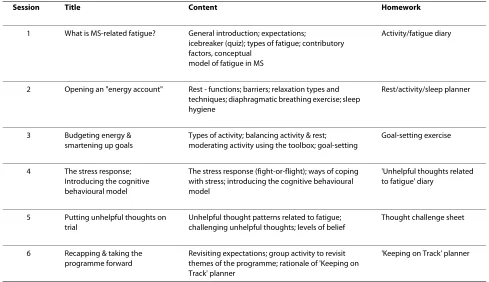
The intervention consists of six sessions held on a weekly basis; the first, 2 hours' duration, and subsequent sessions, 1.75 hours' duration (each with a 15 minute refreshment break halfway through). It is designed to be run by two health professionals with experience of work-ing with people with MS and of group-work (such as occupational therapists, nurses, or physiotherapists). This latter feature enables the intervention to be incorpo-rated into existing health service structures. The inter-vention will be delivered to groups of 6-12 people.
Participants are encouraged to bring along a "support-ive other" to the first session. Since the intervention entails participants making lifestyle changes, the involve-ment of a "supportive other" could help to encourage and support them in making such changes. Contact between members of the group outside the formal group setting will be encouraged, as an additional source of support.
The aim of the intervention is to help people manage their fatigue by:
1. Normalising the experience of fatigue 2. Using their available energy more effectively 3. Developing "helpful thinking styles" about fatigue
Missed sessions
If participants do not attend a session they will be sent the materials they missed and, where possible, the session will be held over the telephone. Participants receiving the intervention will continue to have access to services avail-able as part of their usual local care.
Control group
Participants randomised to this arm of the trial will receive current local practice. Inevitably, there will be minor variations in the exact composition of what is usu-ally provided, both within and between centres; depend-ing on local resources and patient need. We consider this minor variation in current local practice to be a strength of the trial as it will increase the applicability of the find-ings to a wider range of centres. Individuals who have recently received substantive fatigue management are not eligible for the trial (see exclusion criteria).
Results
Statistical analysis
We will conduct two sets of statistical analyses. The pri-mary analysis will be an intention-to-treat analysis,
whereby participants are analysed in the arm of the trial they were randomised to, regardless of how many ses-sions of the programme they attend. In order for an intention-to-treat analysis to be conducted, we will endeavour to collect outcome measures for everyone (while recognising the right of participants to withdraw from the trial at any stage). The secondary analysis will be conducted on a "per protocol" basis. This analysis will exclude participants who attend fewer than four sessions of the fatigue management programme.
Data will be analysed primarily using SPSS for Win-dows. A 5% significance level will be used. Outcome mea-sures will be assumed to be interval scaled, and the analysis will initially be focused on absolute change in outcome post-intervention relative to baseline, and abso-lute change in outcome at 4- and 12-month follow-up, relative to baseline. These change scores, presented sepa-rately for the three follow-up periods, are being used because we think they are the most clinically useful. They are likely to be normally distributed (this assumption will be checked). Change scores will be compared between the two groups using the independent samples t-test.
Additional analyses will be conducted to address the following issues:
1. We will adjust for baseline variability/baseline differ-ences between treatment arms. For each outcome vari-able analysed, these would include the baseline measurement for that outcome, baseline primary
out-Table 1: Summary of content of the Fatigue Management Programme
Session Title Content Homework
1 What is MS-related fatigue? General introduction; expectations;
icebreaker (quiz); types of fatigue; contributory factors, conceptual
model of fatigue in MS
Activity/fatigue diary
2 Opening an "energy account" Rest - functions; barriers; relaxation types and techniques; diaphragmatic breathing exercise; sleep hygiene
Rest/activity/sleep planner
3 Budgeting energy & smartening up goals
Types of activity; balancing activity & rest; moderating activity using the toolbox; goal-setting
Goal-setting exercise
4 The stress response; Introducing the cognitive behavioural model
The stress response (fight-or-flight); ways of coping with stress; introducing the cognitive behavioural model
'Unhelpful thoughts related to fatigue' diary
5 Putting unhelpful thoughts on trial
Unhelpful thought patterns related to fatigue; challenging unhelpful thoughts; levels of belief
Thought challenge sheet
6 Recapping & taking the programme forward
Revisiting expectations; group activity to revisit themes of the programme; rationale of 'Keeping on Track' planner
come measures, gender, age, marital status, education level, type of MS, time since diagnosis, and level of dis-ability.
2. Although participants in the trial have been ran-domised individually, for those ranran-domised to the fatigue management intervention, it is possible that the group-based nature of the intervention will result in observa-tions that are clustered. This could result in misleading statistical tests [74]. We will assess the extent to which this occurs by incorporating clustering into the analysis.
3. It is likely that outcome data will be missing for some participants. In the main analysis such individuals will be excluded. However, the implied assumption that the data are "Missing Completely At Random" might not be cor-rect, potentially leading to biased estimates of the effect of the intervention [75]. Two methods will be used to assess the extent to which this occurs: Firstly, we will use the "Last Observation Carried Forward" imputation method (which assumes no change in outcome when a data point is missing). Secondly, we will use a mixed model for repeated measurements.
4. Analysing the change in outcome from baseline to each time point will, we believe, result in the most clini-cally useful presentation of results. However, to gain a deeper understanding of how outcome measures change over the course of follow-up, we will also model all mea-surement occasions together for each outcome.
5. It is possible that the fatigue management pro-gramme might be more effective in certain sub-groups of individuals. We will examine these potential effect modi-fiers by testing the relevant "treatment x effect modifier" interaction terms. However, we acknowledge that these statistical tests are likely to be underpowered, since this was not a specific aim of the study. In these analyses, we will consider study centre, baseline fatigue, gender, age, marital status, type of MS, time since diagnosis, and level of disability.
These additional analyses will involve the use of a vari-ety of techniques including multi-level/mixed models. In addition to these pre-specified analyses, we will also con-duct further exploratory analyses as suggested by the data.
Presentation of the results will follow the Consolidated Standards of Reporting Trials (CONSORT) [76,77] guide-lines, in such a way that they can be meaningfully incor-porated into systematic reviews. The design of the trial will help ensure that it is graded as high quality in system-atic reviews.
Economics evaluation
The economic burden of MS on the health services, on people with MS, their families (and/or carers) and society is high [78]. We recognise this as an important issue, and one that should be considered in the context of clinical
trials. This is especially relevant in the United Kingdom NHS, where health policy decision makers (e.g. National Institute for Health and Clinical Excellence (NICE)) are interested in both the clinical value and cost-effectiveness of interventions. Therefore, alongside the proposed clini-cal trial, an economic evaluation will be undertaken to assess the incremental costs, incremental benefits, and the resulting cost-effectiveness of introducing a group-based cognitive behavioural approach to managing fatigue in people with MS, compared with current local practice (excluding the intervention).
It is anticipated that the primary economic endpoint will involve a clinically significant improvement in fatigue (e.g. cost per unit change in the fatigue outcome mea-sure). Thereafter, the economic evaluation will estimate the cost per unit change in quality of life (e.g. MSIS-29, SF-36), and it will estimate the cost per Quality Adjusted Life Year (QALY) associated with the introduction of the group-based cognitive behavioural approach, as a more meaningful and policy relevant outcome. QALY esti-mates will be based on individual patient level data col-lected in the trial using the SF-36 and the EQ-5D. The economic assessment will explore the longer term conse-quences of improvements identified (expected) in fatigue and quality of life, modelling outcomes over time, where possible and appropriate, on the basis of the findings from the proposed trial. Where modelling of costs and consequences is undertaken, it will follow guidelines for good practice reported by Phillips and colleagues [79].
Perspective
A broad perspective to the measurement of costs and outcomes will be adopted, and results will be presented separately from the perspective of the NHS and personal social services (i.e. Third Party Payer), and from a broader societal perspective.
Data Collection
Trial data will be used to consider the relative effective-ness of the intervention versus comparator, and primary and secondary outcome measures have been described above. Patient level data will be collected within the trial both pre- and post-intervention, and at 4- and 12-month follow-up for those in the fatigue management arm of the trial and equivalent time points post-randomisation for those receiving current local practice. The primary eco-nomic analysis of outcomes will be between baseline and 4-month follow-up, although analysis using the shorter time horizon, and other longer term modelled outcomes will also be presented.
staff time used, and the main categories of staff time (e.g. delivery of sessions, preparation, setting-up) and semi-structured interviews will be held with each of the Service Providers (centres) to estimate the broader resource use associated with delivery of the intervention.
Further data on NHS and personal social services resource use (e.g. related hospitalisation, Accident and Emergency Department visits, and General Practitioner visits) and information on carer time will be gathered using a simple patient self-completion questionnaire (completed at 4- and 12- month follow-up), and differ-ences between groups will be investigated and reported as part of the economic analysis.
Cost Analysis
Cost analysis will estimate direct costs (i.e. those costs directly associated with the delivery of the intervention and the related follow-up of patients), using resource use data collected within the RCT, and staff and unit cost data from credible sources (national statistics and data from participating centres e.g. salary scales). Other costs will be determined using the data from the patient ques-tionnaire and appropriate sources for unit cost data (e.g. Personal Social Services Research Unit (PSSRU), Univer-sity of Kent at Canterbury, NHS Reference costs, local NHS Trust cost data). A mean net cost per patient in each arm of the trial and an incremental cost per patient, with associated measures of variance, will be calculated. Statis-tical analysis will characterise any uncertainty, and sub-group analysis (e.g. by disease severity) will be presented. All sources of cost data will be specified and all estimates will be transparent. Sensitivity analyses will be under-taken to address uncertainty within the unit cost esti-mates.
Where costs and benefits are considered beyond a 12-month time period, the evaluation will follow the present National Health Service (NHS)/Department of Health convention and discount future costs and future benefits at 3.5% per year. Analysis will also report non-discounted findings and findings where costs and benefits are subject to a range of discounted rates.
Sensitivity Analyses
Uncertainty in data estimates/assumptions will be subject to detailed sensitivity analysis, using plausible data ranges, where results indicate this to be appropriate (e.g. variations in staff grades and staff costs, variations in the estimates for NHS resource use and the relevant unit costs). Where data point estimates are not subject to sen-sitivity analysis, reasons for this will be given. Where undertaken, and as appropriate, sensitivity analysis will comprise one-way analysis, multi-way analysis, scenario analysis, and where modelling is undertaken, it will include probabilistic sensitivity analysis.
Serious adverse events
Adverse events will be defined according to standard clinical trial definitions and serious adverse events will be
reported to the Multi-centre Research Ethics Committee (MREC) within 15 days by the Chief Investigator.
Data management
The trial data will be entered onto an SPSS spreadsheet by an administrator. A random 10% sample of the data will be checked for accuracy.
Participant withdrawal of consent to research follow-up
If a participant withdraws consent to be included in research follow-up during the trial, the local investigator (LI) will be informed and will contact the participant. Provided the participant is willing to give a reason, the LI will find out why (s)he wishes to withdraw from the research follow-up. The LI will also determine whether the participant has given permission to retain data col-lected before withdrawal for use at final analysis, or whether this information should be destroyed. No data will be used in the analysis without a participant's con-sent.
Discussion
This is a pragmatic trial aimed at answering the question of whether introducing the intervention into a service has a significant impact on fatigue, self-efficacy, and quality of life, and whether it represents value for money to the NHS. These are the most important questions from a health service and patient perspective.
A strength of this trial is the fact that the mixed meth-odology pilot work (intervention development and pro-cess and preliminary evaluation) underpinning the trial has been rigorously conducted and documented follow-ing the Medical Research Council guidance for the devel-opment of a complex intervention [46]. The intervention is fully manualised and supported by training and Power-Point materials meaning that it can be easily replicated in a standardised form. The multi-centre nature of the trial gives the opportunity to test whether the intervention transfers successfully to other geographic areas. The intervention has been developed so that it can be deliv-ered by those already routinely involved in the care of people with MS. Thus, if found to be beneficial, it could be readily incorporated into existing services, facilitating the integration of psychology-based approaches into patient care. The 12-month follow-up period offers the opportunity to explore and assess longer term effects.
Competing interests
The authors declare that they have no competing interests.
Authors' contributions
PT and ST were involved in the conception and design of the study. PT is the Chief Investigator and wrote the initial grant application and protocol. ST is the Trial Coordinator and had significant input into the trial design, initial grant application and protocol development/writing. ST and PT developed the semi-structured questionnaire for the qualitative component. PK and RJ are the Prin-cipal Investigators for the Southampton/Portsmouth and Bristol sites, respec-tively. They have advised on methodological issues and local aspects for the grant application and trial protocol. CH, AN & VS advised on clinical aspects related to the grant application/trial protocol. CG designed the economic eval-uation, contributed to the grant application/protocol and has advised on gen-eral aspects of trial/study design. RB advised on psychological debriefing for facilitators. KG advised on the qualitative aspects of the trial. All authors read and approved the final manuscript.
Acknowledgements
This trial has been funded by the Multiple Sclerosis Society of Great Britain and Northern Ireland.
Thank you to Geoff Linder and Tim Worner for advising on aspects of the pro-tocol and reviewing trial documents from a service user perspective.
Author Details
1Dorset Research and Development Support Unit, Poole Hospital NHS
Foundation Trust, Poole, Dorset, UK, 2The School of Health and Social Care,
Bournemouth University, Bournemouth, Dorset, UK, 3School of Health
Sciences, University of Southampton, Hampshire, UK, 4Joint Clinical Research
Unit, BrAMS Building, University Hospitals and Frenchay Hospital Bristol, UK,
5Dorset MS Service, Poole Hospital NHS Foundation Trust, Poole, Dorset, UK, 6Peninsula Medical School, University of Exeter, Devon, UK and 7Dorset
Healthcare NHS Foundation Trust, Bournemouth, Dorset, UK
References
1. Compston A, McDonald IR, Noseworthy J, Lassman H, Miller DH, Smith KJ, Wekerle H, Confavreux C: McAlpine's multiple sclerosis. 4th edition. Philadelphia: Churchill Livingstone Elsevier Inc; 2006.
2. Neild C: What is MS? 3rd edition. :UK: Multiple Sclerosis Society; 2008. 3. Compston A, Coles A: Multiple sclerosis. Lancet 2002, 359:1221-31. 4. Branas P, Jordan RE, Fry-Smith A, Burls A, Hyde CJ: Treatments for fatigue
in multiple sclerosis: a rapid and systematic review. Health Technol Assess 2000, 4:27.
5. Johansson S, Ytterberg C, Hillert J, Widén Holmqvist L, von Koch L: A longitudinal study of variations in and predictors of fatigue in multiple sclerosis. J Neurol Neurosurg Psychiatry 2008, 79:454-7.
6. Lerdal A, Gulowsen Celius E, Krupp L, Dahl A: A prospective study of patterns of fatigue in multiple sclerosis. Eur J Neurol 2007, 14:1338-43. 7. MS Council for Clinical Practice Guidelines: Fatigue and multiple
sclerosis: evidence-based management strategies for fatigue in multiple sclerosis. Washington, DC: Paralyzed Veterans of America; 1998. 8. Schwid SR, Covington M, Segal BM, Goodman AD: Fatigue in multiple
sclerosis: current understanding and future directions. J Rehabil Res Dev
2002, 39:211-24.
9. Racke M, Hawker K, Frohman EM: Fatigue in MS: is the picture getting simpler or more complex? Arch Neurol 2004, 61:176-7.
10. Bakshi R, Shaikh ZA, Miletich RS, Czarnecki D, Dmochowski J, Henschel K, Janardhan V, Dubey N, Kinkel PR: Fatigue in multiple sclerosis and its relationship to depression and neurologic disability. Mult Scler 2000,
6:181-5.
11. Kos D, Kerckhofs E, Nagels G, D'hooghe MB, Ilsbroukx S: Origin of fatigue in multiple sclerosis: review of the literature. Neurorehabil Neural Repair
2008, 22:91-100.
12. Costello K, Harris C: Differential diagnosis and management of fatigue in multiple sclerosis:considerations for the nurse. J Neurosci Nurs 2003,
35:139-148.
13. Monks J: Experiencing symptoms in chronic illness: fatigue in multiple sclerosis. Int Disabil Stud 1989, 11:78-83.
14. Edgley K, Sullivan M, Dehoux E: A survey of multiple sclerosis. ii: Determinants of employment status. Can J Rehabil 1991, 4:127-32. 15. Grima DT, Torrance GW, Francis G, Rice G, Rosner AJ, Lafortune L: Cost and
health related quality of life consequences of multiple sclerosis. Mult Scler 2000, 6:91-98.
16. Burgess M: Multiple sclerosis: theory and practice for nurses. London: Whurr; 2002.
17. White CP, White MB, Russell CS: Invisible and visible symptoms of multiple sclerosis: which are more predictive of health distress? J Neurosci Nurs 2008, 40:85-95.
18. Ritvo PG, Fisk JD, Archibald CJ, Murray TJ, Field C: Psychosocial and neurological predictors of mental health in multiple sclerosis. J Clin Epidemiol 1996, 49:467-72.
19. Schwartz CE, Coulthard-Morris L, Zeng Q: Psychosocial correlates of fatigue in multiple sclerosis. Arch Phys Med Rehabil 1996, 77:165-70. 20. Vercoulen JHMM, Swanink CMA, Galama JMD, Fennis JFM, Jongen PJH,
Hommes OR, van der Meer JWM, Bleijenberg G: The persistence of fatigue in chronic fatigue syndrome and multiple sclerosis: development of a model. J Psychosom Res 1998, 45:507-17.
21. Pucci E, Brañas Tato P, D'Amico R, Giuliani G, Solari A, Taus C: Amantadine for fatigue in multiple sclerosis. Cochrane Database of Systematic Reviews
2007. Art. No.: CD002818. DOI: 10.1002/14651858.CD002818.pub2 22. Tejani AM, Wasdell M, Spiwak R, Rowell G, Nathwani S: Carnitine for
fatigue in multiple sclerosis. Cochrane Database of Systematic Reviews
2010. Art. No.: CD007280. DOI: 10.1002/14651858.CD007280.pub2 23. Stapleton T, Mulholland L: Assessment of a fatigue management
programme for people with multiple sclerosis. Int J Ther Rehabil 2004,
11:547-53.
24. Bowcher H, May M: Occupational therapy for the management of fatigue in multiple sclerosis. Br J Occup Ther 1998, 16:488-92. 25. Mathiowetz V, Matuska KM, Murphy ME: Efficacy of an energy
conservation course for persons with multiple sclerosis. Arch Phys Med Rehabil 2001, 82:449-56.
26. Vanage SM, Gilbertson KK, Mathiowetz V: Effects of an energy conservation course on fatigue impact for persons with progressive multiple sclerosis. Am J Occup Ther 2003, 57:315-23.
27. Steultjens EMJ, Dekker J, Bouter LM, Cardol M, Van de Nes JCM, Van den Ende CHM: Occupational therapy for multiple sclerosis. Cochrane Database of Systematic Reviews . Art. No.: CD003608; 2003. doi:10.1002/ 14651858.CD003608
28. Ward N, Winters S: Results of a fatigue management programme in multiple sclerosis. Br J Nurs 2003, 12:1075-80.
29. Harrison S: Fatigue management for people with multiple sclerosis. 2nd edition. London: College of Occupational Therapists; 2007. 30. Mathiowetz VG, Finlayson ML, Matuska KM, Chen HY, Luo P: Randomized
controlled trial of an energy conservation course for persons with multiple sclerosis. Mult Scler 2005, 11:592-601.
31. Packer TL, Brink N, Sauriol A: Managing fatigue: a six-week course for energy conservation. Tucson: Therapy Skill Builders; 1995. 32. Mathiowetz VG, Matuska KM, Finlayson ML, Luo P, Chen HY: One-year
follow-up to a randomized controlled trial of an energy conservation course for persons with multiple sclerosis. Int J Rehabil Res 2007,
30:305-13.
33. Sauter C, Zebenholzer K, Hisakawa J, Zeitlhofer J, Vass K: A longitudinal study on effects of a six-week course for energy conservation for multiple sclerosis patients. Mult Scler 2008, 14:500-5.
34. Kos D, Duportail M, D'hooghe MB, Nagels G, Kerckhofs E: Multi-disciplinary fatigue management programme in multiple sclerosis: a randomised clinical trial. Mult Scler 2007, 13:996-1003.
35. van Kessel K, Moss-Morris R: Understanding multiple sclerosis fatigue: a synthesis of biological and psychological factors. J Psychosom Res 2006,
61:583-5.
36. Lee D, Newell R, Ziegler L, Topping A: Treatment of fatigue in multiple sclerosis: a systematic review of the literature. Int J Nurs Pract 2008,
14:81-93.
37. Whiting P, Bagnall AM, Sowden AJ, Cornell JE, Mulrow CD, Ramirez G:
Interventions for the treatment and management of chronic fatigue syndrome: a systematic review. J Amer Med Assoc 2001, 286:1360-8. 38. Price JR, Couper J: Cognitive behaviour therapy for chronic fatigue syndrome in adults. Cochrane Database of Systematic Reviews . Art. No.:CD001027; 1998. doi:10.1002/14651858.CD001027
Received: 28 March 2010 Accepted: 16 June 2010 Published: 16 June 2010
This article is available from: http://www.biomedcentral.com/1471-2377/10/43 © 2010 Thomas et al; licensee BioMed Central Ltd.
This is an Open Access article distributed under the terms of the Creative Commons Attribution License (http://creativecommons.org/licenses/by/2.0), which permits unrestricted use, distribution, and reproduction in any medium, provided the original work is properly cited.
39. Thomas PW, Thomas S, Hillier C, Galvin K, Baker R: Psychological interventions for multiple sclerosis. Cochrane Database of Systematic Reviews . Art. No.: CD004431; 2006. doi:10.1002/14651858.CD004431.pub2 40. van Kessel K, Moss-Morris R, Willoughby E, Chalder T, Johnson MH,
Robinson E: A Randomized controlled trial of cognitive behavior therapy for multiple sclerosis fatigue. Psychosom Med 2008, 70:205-13. 41. Sinclair VG, Scroggie J: Effects of a cognitive-behavioral program for
women with multiple sclerosis. J Neurosci Nurs 2005, 37:249-57. 42. Visschedijk MAJ, Collette EH, Polan CH, Pfennings LEMA, Van der Ploeg
HM: Development of a cognitive behavioral group intervention programme for patients with multiple sclerosis: an exploratory study.
Psychol Rep 2004, 95:735-46.
43. Tesar N, Baumhackl U, Kopp M, Günther V: Effects of psychological group therapy in patients with multiple sclerosis. Acta Neurol Scand 2003,
107:394-9.
44. Sutherland JK, Cowan P: Using special interest sessions to design and implement a fatigue management group for people with multiple sclerosis. Psychol Bull 2005, 29:388-91.
45. Thomas S, Thomas PW, Nock A, Slingsby V, Glavin K, Baker R, Moffat N, Hillier C: Development and preliminary evaluation of a cognitive behavioural approach to fatigue management in people with multiple sclerosis. Patient Educ Couns 2009. doi:10.1016/j.pec2009.07.001 46. Craig P, Dieppe P, Macintyre S, Michie S, Nazareth I, Petticrew M:
Developing and evaluating complex interventions: the new Medical Research Council guidance. Brit Med J 2008, 337:a1655.
47. Jacob Cohen: Statistical Power Analysis for the Behavioral Sciences. 2nd edition. Hillsdale: NJ Lawrence Erlbaum Associates; 1988. 48. Poser CM, Paty DW, Scheinberg L, McDonald WI, Davis FA, Ebers GC,
Johnson KP, Sibley WA, Silberberg DH, Tourtellotte WW: New diagnostic criteria for multiple sclerosis: guidelines for research proposals. Ann Neurol 1983, 13:227-31.
49. McDonald WI, Compston A, Edan G, Goodkin D, Hartung H-P, Lublin FD, McFarland HF, Paty DW, Polman CH, Reingold SC, Sandberg-Wollheim M, Sibley W, Thompson A, Van Den Noort S, Weinshenker BY, Wolinsky JS:
Recommended diagnostic criteria for multiple sclerosis: guidelines from the international panel on the diagnosis of multiple sclerosis.
Ann Neurol 2001, 50:121-7.
50. Polman CH, Reingold SC, Edan G, Filippi M, Hartung H-P, Kappos L, Kappos L, Lublin FD, Metz LM, McFarland HF, O'Connor PW, Sandberg-Wollheim M, Thompson AJ, Weinshenker BG, Wolinsky JS: Diagnostic criteria for multiple sclerosis: 2005 revisions to the ''McDonald Criteria''. Ann Neurol 2005, 58:840-6.
51. Krupp LB, LaRocca NG, Muir-Nash J, Steinberg AD: The fatigue severity scale. Application to patients with multiple sclerosis and systemic lupus erythematosus. Arch Neurol 1989, 10:1121-3.
52. Orme M, Kerrigan J, Tyas D, Russell N, Nixon R: The effect of disease, disability and relapses on the utility of people with multiple sclerosis in the UK. Value Health 2007, 10:54-60.
53. National Association of Neurological Occupational Therapists:
Occupational Therapy Fatigue Management Pack. London: National Association of Neurological Occupational Therapists; 2004.
54. MS Essentials 14 2009 [http://www.mssociety.org.uk/
support_and_services/free_publications/ms_essentials_14.html]. Fatigue. MS Society
55. Schwartz JE, Jandorf L, Krupp L: The measurement of fatigue: a new instrument. J Psychosom Res 1993, 37:753-62.
56. Hobart J, Lamping D, Riazi A: The multiple sclerosis impact scale (MSIS-29): a new patient-based outcome measure. Brain 2001, 124:962-73. 57. Hobart JC, Riazi A, Lamping D, Fitzpatrick R, Thompson A: Improving the
evaluation of therapeutic interventions in multiple sclerosis: development of a patient-based measure of outcome. Health Technol Assess 2004, 8:1-60.
58. Schwartz CE, Coulthard-Morris L, Zeng Q, Retzlaff P: Measuring self-efficacy in people with multiple sclerosis: a validation study. Arch Phys Med Rehabil 1996, 77:394-8.
59. Ware JE, Sherbourne CD: The MOS 36-item Short-Form health survey (SF-36):I. Conceptual framework and item selection. Med Care 1992,
30:473-83.
60. Freeman JA, Hobart JC, Langdon DW, Thompson AJ: Clinical appropriateness:a key factor in outcome measure selection: the 36 item short form health survey in multiple sclerosis. J Neurol Neurosurg Psychiatry 1999, 68:150-156.
61. The EuroQol Group: EuroQol - a new facility for the measurement of health-related quality of life. Health Policy 1990, 16:199-208. 62. Zigmond AS, Snaith RP: The Hospital Anxiety and Depression Scale.
Acta Neurol Scand 1983, 67:361-70.
63. Hann D, Jacobsen P, Azzarello L, Martin SC, Curran SL, Fields KK, Greenberg H, Lyman G: Measurement of fatigue in cancer patients: Development and validation of the Fatigue Symptom Inventory. Qual Life Res 1998, 7:301-310.
64. Hann D, Denniston M, Baker F: Measurement of fatigue in cancer patients: Further: validation of the Fatigue Symptom Inventory. Qual Life Res 2000, 9:847-54.
65. The PDMed Trial Website [http://www.pdmed.bham.ac.uk/ investigators/PD_MED_Protocol_Version_7.1.pdf]
66. Mallik PS, Finlayson M, Mathiowetz V, Fogg L: Psychometric evaluation of the energy conservation strategies survey. Clin Rehabil 2005,
19:538-543.
67. Strauss A, Corbin J: Basics of qualitative research: techniques and procedures for developing grounded theory. 2nd edition. Thousand Oaks, CA: Sage; 1998.
68. Galvin K: Navigating a qualitative course in programme evaluation. In
Qualitative Research in Health Care Edited by: Holloway, I. Maidenhead: Open University Press; 2005.
69. Ryan CG, Grant PM, Tigbe WW, Granat MH: The validity and reliability of a novel activity monitor as a measure of walking. Br J Sports Med 2006,
40:779-784 [http://www.paltechnologies.com].
70. Beck A: Cognitive therapy: a thirty years retrospective. Am Psychol 1991,
466:368-75.
71. Bandura A: Social learning theory. New York: General Learning Press; 1971.
72. Kanfer FHGaelick-Buys L: Self-management methods. In Helping people change: a textbook of methods 4th edition. Edited by: Kanfer FH, Goldstein AP. NY: Pergamon Press; 1991:305-360.
73. Bandura A: Self-efficacy: toward a unifying theory of behavioural change. Psychol Rev 1977, 84:191-215.
74. Bauer DJ, Sterba SK, Hallford DD: Evaluating group based interventions when control participants are ungrouped. Multivar Behav Res 2008,
43:210-236.
75. Lane P: Handling drop-out in longitudinal clinical trials: a comparison of the LOCF and MMRM approaches. Pharm Stat 2008, 7:93-106. 76. Schulz KF, Altman DG, Moher D, CONSORT Group: CONSORT 2010
Statement: updated guidelines for reporting parallel group randomised trials. Ann Int Med 2010, 152:. Epub 24 March
77. Moher D, Hopewell S, Schulz KF, Montori V, Gøtzsche PC, Devereaux PJ, Elbourne D, Egger M, Altman DG, CONSORT Group: CONSORT 2010 Explanation and Elaboration: updated guidelines for reporting parallel group randomised trials. BMJ 2010, 340:c869.
78. Kobelt G, Lindgren P, Parkin D, et al.: Costs and quality of life in multiple sclerosis. A cross sectional observational study in the United Kingdom. EFI. Stockholm School of Economics, Stockholm, Sweden; 2000. Research Report 398
79. Phillips Z, Ginnelly L, Sculpher M, Claxton K, Golder S, Riemsma R, et al.:
Review of guidelines for good practice in decision-analytic modelling in health technology assessment. Health Technol Assess 2004, 8:1-172.
Pre-publication history
The pre-publication history for this paper can be accessed here: http://www.biomedcentral.com/1471-2377/10/43/prepub
doi: 10.1186/1471-2377-10-43