Alien aquatic plants in Slovakia over 130 years:
historical overview, current distribution
and future perspectives
Richard Hrivnák1, Jana Medvecká1, Peter Baláži2,
Kateřina Bubíková2, Helena Oťaheľová3, Marek Svitok4,5
1 Institute of Botany, Plant Science and Biodiversity Center, Slovak Academy of Sciences, Dúbravská cesta 9, SK-845 23 Bratislava, Slovakia 2 Water Research Institute, Nábrežie arm. gen. L. Svobodu 5, SK-812 49 Bratislava, Slovakia 3 A. Gwerkovej 4, SK-85 104 Bratislava, Slovakia 4 Department of Biology and General Ecology, Technical University in Zvolen, T. G. Masaryka 24, SK-960 53 Zvolen, Slovakia 5 Department of Ecosystem Biology, Faculty of Science, University of South Bohemia, Branišovská 1760, CZ-370 05 České Budějovice, Czech Republic
Corresponding author:Marek Svitok ([email protected])
Academic editor:S.M. Thomaz | Received 5 March 2019 | Accepted 15 July 2019 | Published 26 July 2019
Citation: Hrivnák R, Medvecká J, Baláži P, Bubíková K, Oťaheľová H, Svitok M (2019) Alien aquatic plants in Slovakia over 130 years: historical overview, current distribution and future perspectives. NeoBiota 49: 37–56. https://doi. org/10.3897/neobiota.49.34318
Abstract
Alien aquatic plants rank amongst the major threats to aquatic biodiversity and, since ongoing climate change is expected to facilitate their further spread, there is an urgent need for sound knowledge of their distribution and ecology. We collected published and unpublished data spanning the last ~130 years and performed the first comprehensive assessment of alien aquatic vascular plants in Slovakia with the follow-ing aims: (i) to prepare a national inventory, (ii) to assess the effects of climate and landscape on species di-versity and (iii) to evaluate the habitat preferences of the species. The historical overview showed a strongly increasing trend in the number of alien species related to an increased amount of intensive research of aquatic vegetation over the last 30 years. Altogether, 20 neophyte alien aquatic plant taxa were recorded from 479 sampling sites. However, the species inventory seems to be far from complete and approximately 14 species are expected to remain undetected. Elodea canadensis and E. nuttallii are the most frequently occurring alien aquatic plants, while eight other species have been found at a single site only. The majority of alien plants were deliberately introduced as aquarium ornamentals or released through pond waste. The fragmented information on local habitat conditions did not allow us to draw firm conclusions about the habitat preferences of alien aquatic plants. However, artificial water bodies are more frequently colonised by alien species than natural habitats (95% of aliens were found in artificial water bodies and 60% of them
Copyright Richard Hrivnák et al. This is an open access article distributed under the terms of the Creative Commons Attribution License (CC BY 4.0), which permits unrestricted use, distribution, and reproduction in any medium, provided the original author and source are credited.
were recorded exclusively in these habitats) and many species have broad environmental tolerances (abil-ity to colonise both standing and running waters, tolerances to a wide range of temperatures and water chemistry). Our results reaffirm the major role of increased temperatures and landscape modification in the distribution of alien aquatic plants and we can expect enhanced invasiveness and spreading of alien species into new habitats driven by climate change and land use intensification. Filling a main gap in the recognition of alien aquatic plant environmental preferences is a challenge for future research with the ultimate goal of maintaining natural aquatic plant diversity and ecosystem functioning.
Keywords
invasive species, macrophytes, aquatic weeds, distribution, climate change, land use
Introduction
Biological invasions by alien plants are generally recognised as an important compo-nent of human-induced environmental changes and they have a direct effect on the species diversity of various habitats (Manchester and Bullock 2000; Hulme 2003). Although water bodies have a relatively low level of invasion in Europe (Chytrý et al. 2009), these freshwater habitats are substantially influenced by alien plant species. Currently, almost 100 alien aquatic plants are recognised in Europe. However, the distribution pattern of this species in Europe is uneven; western, northern and central European countries, such as France, Italy, Germany or Hungary, are the most invaded, while some south-eastern European countries have a relatively low number of alien plants (Hussner 2012).
According to the Propagule, Abiotic, Biotic (PAB) framework (Catford et al. 2009), propagule pressure (e.g. the number of introduced individuals, seeds or propagules), abiotic (e.g. climatic or soil characteristics) and biotic (mutual relationships amongst species) variables are generally considered reasons for the presence, survival and success of alien species (Colangelo et al. 2017). While climate is important in setting the global range of alien species, factors related to human influence are of greater importance at regional scale (Kelly et al. 2014). Especially in the case of aquatic plants, trade and cul-tivation of aquatic ornamental plants are considered to be the main introduction routes for alien species (Duggan 2010; Hussner 2012). Moreover, the presence of alien aquatic species is usually positively correlated with shipping activity, tourism and human popu-lation size (Leuven et al. 2009; Panov et al. 2009; Hussner et al. 2010; O’Malia et al. 2018). Nunes et al. (2015) found that geographical patterns are related to some pathways of introduction of freshwater alien organisms in Europe: introductions through inland canals were concentrated in Central/North-eastern Europe, while introductions through pet/terrarium/aquarium trade were mainly observed in Central/Western Europe. In ad-dition, thermal waters are key habitats for the establishment and survival of many alien aquatic plants. For example, approximately 80% of all detected non-indigenous aquatic plants in Hungary were found in thermal waters (Lukács et al. 2016).
King & H. Rob. from Slovakia. The list was incomplete and information about the occurrence of C. helmsii was probably incorrect (Medvecká et al. 2012, http://dass. sav.sk/en/). Lukács et al. (2016) identified 48 alien aquatic plants from the Pannon-ian ecoregion including mainly Hungary and some parts of neighbouring countries, including Slovakia. The most recently published list of alien flora of Slovakia included the presence of 13 species (Medvecká et al. 2012). In addition to the species reported by Hussner (2012) and except for C. helmsii, eight additional species were included in the list (Egeria densa Planch., Eichhornia crassipes (Mart.) Solms, Hydrilla verticillata (L. f.) Royle, Limnophila sessiliflora Blume, Najas guadalupensis (Spreng.) Magnus, Pistia stratiotes L., Sagittaria subulata (L.) Buchenau and Utricularia gibba L.). Both sources pointed to a relatively low number of alien aquatic plants in freshwater habitats of Slo-vakia, which was also confirmed by a later study (Medvecká et al. 2014). During recent intensive limnological research, several new alien species were recorded and the volume of data on the distribution and ecology of alien aquatic plants in Slovakia increased substantially (e.g. Bubíková et al. 2016; Nobis et al. 2019). However, an exhaustive study on alien aquatic plants, their distribution and ecology was missing and the exist-ing information remained scattered in various sources, many of them still unpublished. Alien aquatic plants rank amongst the major threats to aquatic biodiversity (e.g. Strayer et al. 2010; Havel et al. 2015) and, since ongoing climate change is expected to facilitate the spread of these species (Lukács et al. 2016), there is an urgent need for sound knowledge of the distribution and ecology of alien aquatic species. Therefore, the aim of our study is to provide the first comprehensive examination of alien aquatic vascular plants in Slovakia, based on a critical review of all available data sources (pub-lished and unpub(pub-lished). Our specific aims were to (i) prepare a national inventory of alien aquatic plants, (ii) assess the effect of climatic and landscape characteristics on alien species diversity and (iii) evaluate the habitat preferences of alien aquatic species. Subsequently, we discuss further trends in the distribution of alien aquatic plants and focus on the identification of research gaps.
Methods
Study area
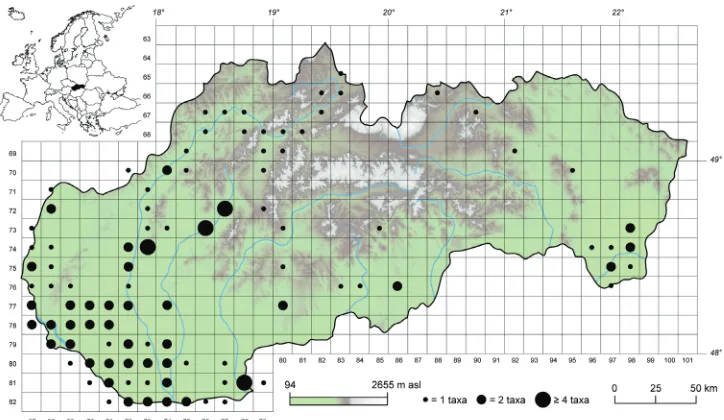
Figure 1. Spatial distribution of alien aquatic plants in Slovakia at the scale of the Central European Flora Mapping System.
The majority of water bodies in Slovakia belong to the catchment basin of the Danube River (Black Sea drainage area), while a small part (the Poprad River) flows to the catchment basin of the Vistula River (Baltic Sea drainage area). The majority of lotic water bodies in Slovakia have been heavily modified in the last century (Čiliak et al. 2014) and artificial canals and man-made lentic water bodies (e.g. gravel or sand ponds, water reservoir used for irrigation or recreation) have been constructed fre-quently. Therefore, together with thermal waters (small ponds or canals), artificial or human-modified water bodies create numerous habitats, potentially suitable for alien aquatic plants.
Data sources
We focused on alien aquatic vascular plant species using the definitions of alien species by Pyšek et al. (2004) and Blackburn et al. (2011). Aquatic plants were identified as those species that grow submerged or floating on the water surface for at least a part of their life history (Hussner 2012) and these included true aquatic plants (hydrophytes) and am-phibious plants, adapted to both aquatic and terrestrial modes of life (cf. Janauer 2003, Janauer and Dokulil 2006). However, typical helophytes were excluded from the dataset.
We established a database of alien aquatic plants, based on data from the Database of non-native plant species of Slovakia (http://dass.sav.sk/en/) and a checklist of alien flora of Slovakia (Medvecká et al. 2012). After critical review, we added data from the Central database of phytocenological relevés of Slovakia (http://ibot.sav.sk/cdf/) up to 2016, scientific articles (Suppl. material 1), nature-based web sites (https://fotonet.
PMK, WU; for acronyms, see http://sweetgum.nybg.org/science/ih/ and Vozárová and Sútorý 2001). Last but not least, a large unpublished dataset, gathered by the authors during the intensive research of all types of water bodies from 2011–2017, was included in the database. We performed extensive floristic, phytosociological and ecological surveys of aquatic habitats in understudied parts of Slovakia (cf. Baláži et al. 2011). Besides native species, a large amount of data on alien aquatic plants was gathered during the research (e.g. Kochjarová et al. 2013, Bubíková et al. 2016, Nobis et al. 2019). Altogether, the database of alien aquatic plants in Slovakia contained 599 records. Collected data were further processed and multiple records for the same spe-cies in the same site over several years were reduced to a single oldest record. The data-base covered 512 unique records from 479 sampling sites. The records were arranged into grid cells according to the Central European Flora Mapping System (CEFMS, Niklfeld 1971). Whenever available, the plant data were supplemented by informa-tion on climate, landscape composiinforma-tion, habitat type and local physical and chemical conditions of water bodies.
Climate data (mean annual air temperature, January and July mean air tempera-tures and total annual precipitation) were calculated as mean values for the period 1981–2010. The data were extracted from raster layers provided by the Slovak Hy-drometeorological Institute using the GRASS geographic information system (Grass Development Team 2010).
Composition of landscape was derived from CORINE Land Cover maps (Büttner and Kosztra 2017). We specifically focused on the coverage of road networks (thereaf-ter also road networks), coverage of urban areas (urban areas) and on the proportion of forests, natural and semi-natural areas (natural areas) representing proxies for human-mediated vectors of dispersal, permanent human presence and intensity of land use, respectively, which are known to drive distribution of alien aquatic plants (e.g. Kelly et al. 2014; Tamayo and Olden 2014; Rodríguez-Merino et al. 2018). Land cover of those categories was calculated for each grid cell of the CEFMS in QGIS v. 3.6 (QGIS Development Team 2019).
Water bodies were classified according to their habitat type (lentic, lotic) and origin (natural: rivers, streams, river oxbows, watered terrain depression; artificial: drainage and irrigation canals, water reservoirs, sand or gravel pits). Local characteristics of wa-ter bodies, known to affect aquatic plant communities (Lacoul and Freedman 2006), were measured in the field as follows: the mean depth of water was calculated from 10 random measurements at each site; and water temperature, pH and conductivity were measured using a EUTECH Cyber Scan series 600 instrument. These local parameters were available only for 117 sites (103 sites with water depth, 68 with temperature, 75 with pH and 74 sites with conductivity values).
Data analysis
We constructed an analytical sample-based rarefaction curve with unconditional con-fidence intervals (Colwell et al. 2004) to assess the completeness of the inventory of alien aquatic plant species in Slovakia. The bias-corrected asymptotic species richness estimator Chao2-bc (Chao 2005) was used to estimate the total number of alien spe-cies, including those unobserved.
We evaluated the effects of climatic characteristics (mean annual air temperature, January and July mean air temperatures and total annual precipitation) and land-scape characteristics (cover of road networks, urban areas and natural areas) on the diversity of alien aquatic plants using generalised linear models (GLMs, McCullagh and Nelder 1989). Prior to the analysis, we imposed a grid of the CEFMS over the studied area and pooled site-specific records for each grid cell. The grid cells were treated as sampling units in the GLMs to overcome possible problems with non-independence (e.g. sampling of several sites over a relatively short stretch of the same stream) and uncertainty in exact georeferencing of some historical records. Floristic records from thermal waters were excluded from this analysis since the occurrence of those species of (sub)tropical origin with higher temperature optima is mainly driven by locally-specific temperature regimes of water bodies without a direct link to regional climate or landscape features (cf. Vojtkó et al. 2017). Due to strong cor-relations amongst variables, we fitted separate GLMs for each predictor. The number of sampling sites in each grid cell was included as a covariate in the GLMs to ac-count for differences in sampling effort amongst grids. Since the alien species ac-counts showed lower variation than expected under the mean-variance relationship of the Poisson distribution (dispersion parameters of the Poisson GLMs φ ~ 0.2), we fitted GLMs with a Conway-Maxwell-Poisson distribution, a two-parameter generalised form of the Poisson distribution that is sufficiently flexible to describe count data with a wide range of dispersion levels (Shmueli et al. 2005). Diagnostic plots of residuals were inspected to assess the quality of the models and no violation of the assumptions was observed. The residuals were also screened for spatial autocorre-lation using non-parametric spatial correlograms (Bjørnstad and Falck 2001) and any significant autocorrelation patterns were detected. Finally, a leave-one-out cross-validation procedure was employed to assess the predictive performance of the GLMs based on median absolute errors (MdAE).
Since the majority of records in the database stem from unstructured, opportunis-tic (presence-only) sampling lacking site-specific environmental information and since many species were found in only a few sites, we did not use inferential statistics to estimate species habitat preferences. Instead, we relied on exploratory data analysis and used a series of bar plots and boxplots to examine the environmental tolerances of alien aquatic plants in Slovakia. In particular, we focused on optima (median) and ranges (min-max) of species with a sufficient number of records.
Results
Inventory of alien aquatic plant species in Slovakia
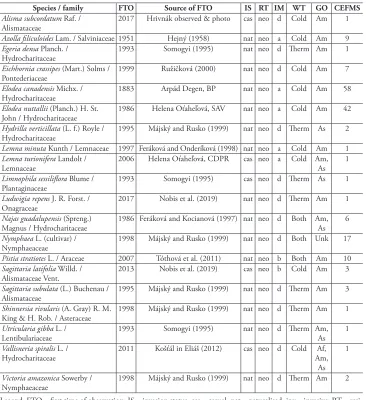
Altogether, twenty alien aquatic plant taxa were recorded in Slovakia (Table 1). The historical overview showed a strong increasing trend in the number of alien species over the last 30 years (Figure 2A). Indeed, the trend is parallel to the degree of scientific interest in alien plants mirrored in a number of published studies. However, the spe-cies inventory seems to be far from complete, as is apparent from the non-asymptotic rarefaction curve (Figure 2B). The expected total number of alien aquatic species calcu-lated by the Chao2-bc estimator is 34 (95% conf. interval: 23–87), which means that 14 species are expected to remain undetected.
All of the recorded aliens belong to neophytes and a substantial proportion has naturalised invasion status (70%) and a deliberate introduction mode (60%) (Table 1). Elodea canadensis and E. nuttallii were the most widespread (55 and 41 grid cells, respectively) followed by a Nymphaea cultivar, Pistia stratiotes, Azolla filiculoides, Eich-hornia crassipes and Najas guadalupensis (> 6 grid cells), while the remaining 65% of species occurred infrequently (≤ 3 cells).
The effect of climate and landscape characteristics on the diversity of aliens Alien aquatic plants were recorded in 98 grid cells of the CEFMS (~23% of all cells), mainly in the lowlands and valleys of large rivers (Figure 1). This geographic pattern corresponds well with the results of GLMs. All studied climatic variables were sig-nificantly related to the number of alien species after accounting for sampling effort (Table 2). The diversity of alien species increased with temperature and decreased with precipitation. In addition, the number of aliens significantly increased with decreasing cover of natural and semi-natural areas. When we combined best climatic (mean an-nual temperature) and landscape (natural areas) predictors in a single model, predictive performance improved over those simple GLMs (MdAE = 0.30). However, there is still a lot of unexplained variance in the data (Figure 3).
Habitat preferences of aliens
exam-Table 1. List of the alien aquatic plants in Slovakia.
Species / family FTO Source of FTO IS RT IM WT GO CEFMS
Alisma subcordatum Raf. /
Alismataceae 2017 Hrivnák observed & photo cas neo d Cold Am 1 Azolla filiculoides Lam. / Salviniaceae 1951 Hejný (1958) nat neo a Cold Am 9 Egeria densa Planch. /
Hydrocharitaceae 1993 Somogyi (1995) nat neo d Therm Am 1
Eichhornia crassipes (Mart.) Solms /
Pontederiaceae 1999 Ružičková (2000) nat neo d Cold Am 7
Elodea canadensis Michx. /
Hydrocharitaceae 1883 Arpád Degen, BP nat neo a Cold Am 58
Elodea nuttallii (Planch.) H. St.
John / Hydrocharitaceae 1986 Helena Oťaheľová, SAV nat neo a Cold Am 42 Hydrilla verticillata (L. f.) Royle /
Hydrocharitaceae 1995 Májský and Rusko (1999) nat neo d Therm As 2 Lemna minuta Kunth / Lemnaceae 1997 Feráková and Onderíková (1998) nat neo a Cold Am 1 Lemna turionifera Landolt /
Lemnaceae 2006 Helena Oťaheľová, CDPR cas neo a Cold Am, As 1
Limnophila sessiliflora Blume /
Plantaginaceae 1993 Somogyi (1995) cas neo d Therm As 1
Ludwigia repens J. R. Forst. /
Onagraceae 2017 Nobis et al. (2019) nat neo d Therm Am 1
Najas guadalupensis (Spreng.)
Magnus / Hydrocharitaceae 1986 Feráková and Kocianová (1997) nat neo d Both Am, As 6 Nymphaea L. (cultivar) /
Nymphaeaceae 1998 Májský and Rusko (1999) nat neo d Both Unk 17
Pistia stratiotes L. / Araceae 2007 Tóthová et al. (2011) nat neo b Both Am 10 Sagittaria latifolia Willd. /
Alismataceae Vent. 2013 Nobis et al. (2019) cas neo b Cold Am 3
Sagittaria subulata (L.) Buchenau /
Alismataceae 1995 Májský and Rusko (1999) nat neo d Therm Am 3
Shinnersia rivularis (A. Gray) R. M.
King & H. Rob. / Asteraceae 1998 Májský and Rusko (1999) nat neo d Therm Am 1 Utricularia gibba L. /
Lentibulariaceae 1993 Somogyi (1995) nat neo d Therm Am, As 1
Vallisneria spiralis L. /
Hydrocharitaceae 2011 Košťál in Eliáš (2012) cas neo d Cold Am, Af, As
1
Victoria amazonica Sowerby /
Nymphaeaceae 1998 Májský and Rusko (1999) nat neo d Therm Am 2
Figure 2.A Temporal trend in the number of studies involving alien aquatic plants (grey histogram) and cumulative number of alien aquatic plants recorded in Slovakia B Sample-based rarefaction curve of the number of alien aquatic plant species in Slovakia. The grey area represents the 95% confidence band of the diversity estimate. Full list of studies is given in Suppl. material 1.
(A) (B)
Number of publications (
) 0 5 10 15 20 0 5 10 15 20
1880 1900 1920 1940 1960 1980 2000 2020
Year
Cumulati
ve
number of species (
)
0 10 20 30
0 100 200 300 400 500
Number of sampling sites
Cumulati
ve
number of specie
s ● ● ● ● ● ● ● ● ● ● ● ● ● ● ● ● ● ● ● ● ● ● ● ● ● ● ● ● ● ● ● ● ● ● ● ● ● ● ● ● ● ● ● ● ● ● ● ● ● ● ● ● ● ● ● ● ● ● ● ● ● ● ● ● ● ● ● ● ● ● ● ● ● ● ● ● ● ● ● ● ● ● ● ● ● ● ● ● ● ● ● ● ● ● ● ● ● ● ● ● ● ● ● ● ● ● ● ● ● ● ● ● ● ● ● ●
Figure 3. Conwell-Maxwell-Poisson GLM showing a partial relationship between mean annual air temperature, coverage of natural and semi-natural areas and the number of alien aquatic plant species recorded at the scale of the Central European Flora Mapping System with the sampling effort constant at a mean of 4.9 sites. The predicted number of species (line), 95% bootstrap confidence intervals (grey polygon) and partial residuals (points) are displayed.
0 1 2 3 4
6 7 8 9 10
Mean annual temperature (°C)
Number of alien species
0 20 40 60 80
Table 2. Results of Conway-Maxwell-Poisson GLMs for the effect of climatic and landscape characteris-tics on the number of alien aquatic plants in the grid cells of the Central European Flora Mapping System. Standardised regression coefficients (β) and dispersion parameters (ν) are displayed along with their 95% bootstrap confidence intervals (95%CI), test statistics (z, χ2) and probabilities (p). The cross-validated
median absolute error of prediction (MdAE) is shown for each model.
Environmental variables Model coefficients Dispersion parameters MdAE
β (95%CI) z p ν (95%CI) χ2
(1) p
Climate
Mean annual temperature 0.83 (0.39–1.49) 3.22 0.0013 6.47 (5.12–9.17) 83.79 < 0.0001 0.332 Mean July temperature 0.81 (0.36–1.42) 3.19 0.0014 6.44 (5.02–9.03) 83.56 < 0.0001 0.333 Mean January temperature 0.81 (0.37–1.41) 3.17 0.0015 6.41 (5.10–9.08) 83.26 < 0.0001 0.337 Annual precipitation -0.88 (-1.59– -0.45) -3.32 0.0009 6.63 (5.29–9.49) 84.97 < 0.0001 0.381 Landscape
Road networks -0.25 (-0.57–0.19) -0.62 0.5360 5.57 (4.45–7.92) 73.86 < 0.0001 0.421 Urban areas 0.44 (-0.10–0.70) 1.41 0.1579 5.68 (4.43–7.96) 75.15 < 0.0001 0.371 Natural areas -0.79 (-1.34– -0.39) -3.32 0.0009 6.48 (4.79–9.43) 84.51 < 0.0001 0.371 Figure 4. Environmental preferences of alien aquatic plants observed in Slovakia. Bar plots display the relative occupancy of water bodies according to the origin (artificial, natural) and habitat type (lotic, lentic). Boxplots show the occurrence of alien aquatic plants along environmental gradients of water tem-perature, conductivity, pH and water depth. Only species with at least 3 environmental measurements are plotted. Boxplots display median (line), interquartile range (box), range (whiskers) and observed values (jittered points). Full names of taxa are presented in Table 1.
V. spiralis V. amazonicaU. gibba S. subulataS. rivularis N. guadalupensisL. sessiliflora L. repens L. minuta H. verticillataE. densa A. subcordatumNymphaea sp. S. latifolia E. canadensisA. filiculoides E. nuttallii P. stratiotes E. crassipes L. turionifera
0.00 0.25 0.50 0.75 1.00 artificial
natural Water body origin
V. spiralis V. amazonicaU. gibba L. turionifera L. sessilifloraL. repens A. subcordatumNymphaea sp. S. latifoliaL. minuta A. filiculoides E. canadensisE. nuttallii N. guadalupensisS. subulata P. stratiotes E. crassipesS. rivularis H. verticillataE. densa
0.00 0.25 0.50 0.75 1.00 lentic lotic Habitat type P. stratoides E. canadensis E. nuttallii Nymphaea sp. S. subulata H. verticillata N. guadalupensis
15 20 25 30
(°C) Water temperature E. nuttallii Nymphaea sp. E. canadensis P. stratiotes H. verticillata N. guadalupensis S. subulata
0 1000 2000 3000
(μS/cm)
Conductivity
H. verticillata N. guadalupensis S. subulata Nymphaea sp. E. canadensis E. nuttallii P. stratiotes
6 7 8 9 10
pH
S. subulata E. canadensis Nymphaea sp. P. stratiotes E. nuttallii
0 100 200 300
(cm)
Discussion
Inventory of alien aquatic plant species in Slovakia
Our review of published and unpublished data revealed the presence of 20 alien aquat-ic plant species in Slovakia. The number of recorded species has steeply increased with scientific interest in recent decades (Figure 2). The spatial distribution of alien aquatic plants in Europe shows an uneven pattern (Hussner 2012), which does not fully corre-spond to the general picture of the climate-driven distribution of alien plants in Europe (Chytrý et al. 2009). Specifically, the highest number of species is known from Italy, France, Germany, Belgium, Hungary, Greece and the Netherlands (Hussner 2012; Brundu et al. 2013; Lansdown et al. 2016). This irregular pattern apparently relates to the intensity of aquatic vegetation research. For example, some southern European countries with Mediterranean climates, such as Albania, Bosnia or Montenegro, lack alien aquatic plant studies, which results in a seemingly low diversity of aliens in the waters (Hussner 2012; Lansdown et al. 2016). In contrast, comprehensive research can reveal surprising results. For example, Hungary hosts 48 species, which represents almost half of the known alien aquatic plants in Europe (Lukács et al. 2016). The high importance of sampling effort is obvious in the case of Slovakia. Intensive research in recent years has led to a steep increase in the number of alien aquatic plants on the national checklist and the last published inventories (Hussner 2012; Medvecká et al. 2012) are therefore outdated. In a broad context, high regional differences in the state of knowledge and research intensity may obscure or even preclude large-scale syntheses on the distribution of alien aquatic plants in Europe.
Given the occurrence of many rare species (singletons and doubletons) in Slovakia, the total number of alien aquatic plants is expected to be much higher (Chao2-bc = 34 species) than observed. We may reasonably assume the presence of several aliens, such as Cabomba carolinianaA. Gray, Elodea callitrichoides(Rich.) Casp., Hydrocotyle ranunculoidesL. f., Lagarosiphon major (Ridl.) moss or Pontederia cordata L., reported from neighbouring countries. For example, C. caroliniana has been established for a long time in the Pannonian lowlands (Lukács et al. 2016) occurring along the main river course of the Danube River and along several canals in central Hungary (Király et al. 2008) as well as in a few isolated sites, including the Danube River at the Slovak-Hungary border (Bartha and Király 2015). Similarly, L. major and P. cordata are known from Hungary and the Czech Republic in the regions bordering Slovakia (Bartha and Király 2015; Kaplan et al. 2016). Other species that are frequent in Europe (e.g. Cras-sula helmsii, Myriophyllum aquaticum(Vell.) Verdc.) might also be overlooked or their presence may be limited by specific habitat requirements, which are rarely found in Slovakia (Dawson and Warman 1987; (https://www.cabi.org/ISC/datasheet/16463); (https://www.cabi.org/isc/datasheet/34939); Kasper and Krausch 2008).
waste. The list of these species depends on trade by aquarium and gardening shops. Generally, the pet/aquarium/terrarium trade is responsible for the introduction of numerous alien plants (Padilla and Williams 2004; Brunel 2009). This introduction mode is responsible for the spread of a substantial portion of alien aquatic plants in Europe and America (Maki and Galatovitsch 2004; Hussner et al. 2010; Peres et al. 2018) and was also a main mode of introduction in our study. Therefore, raising aware-ness about the harmful effects of dumping alien plant species to natural habitats is an important message to the public with the aim of preventing these activities.
Finally, it should be noted that some alien aquatic plants found in Slovakia are considered as invasive alien species of European Union concern (e.g. Eichhornia cras-sipes, Elodea nuttallii) and they require legislative attention and adequate prevention and management of their introduction and spread on a national level, as stated in EU Regulation no. 1143/2014.
The effect of climate and landscape characteristics on the diversity of aliens We have shown that the diversity of alien aquatic plants is significantly linked with climatic conditions. In particular, the number of species increases along gradients of in-creasing air temperatures and dein-creasing precipitations. The geographic ranges of many alien aquatic plant species are strongly associated with climatic tolerances set by air temperatures (Kelly et al. 2014; Rodríguez-Merino et al. 2018) and a large number of studies have predicted alien species range shifts and expansions related to climate change (Bellard et al. 2018). In addition, the establishment of viable populations may be lim-ited by temperature-controlled seed production and germination (Vojtkó et al. 2017).
The role of precipitation is less obvious since temperature characteristics and pre-cipitation were strongly correlated in the studied area (Pearson r = -0.78 – -0.87). However, if we combined temperatures and precipitation in a single model or if we used some compound measures, such as climatic moisture index (Willmott and Fed-dema 1992), predictive performance would be comparable or even worse than in the case of simple temperature models. In other words, beside temperatures, precipitation did not contribute any additional information useful for predictions of alien species diversity. Since a vast majority of the investigated water bodies are permanent with a relatively stable water level, we believe that precipitation does not constrain distribu-tion of alien aquatic plants in the region, as suggested from the grid-level data.
facili-tate dispersal and establishment of alien aquatic plant populations (Téllez et al. 2008; Rodríguez-Merino et al. 2018). Similarly, Kelly et al. (2014) identified land use, nu-trient levels and natural landscape as the most important factors associated with alien aquatic species ranges at the regional level. Tamayo and Olden (2014) also found that the probability of lake invasion by noxious submerged macrophytes is positively linked with the intensity of land use in the surrounding habitats. Apparently, the areas at greatest risk of invasions by aquatic plants in Europe are those experiencing consider-able human pressure (Rodríguez-Merino et al. 2018).
In conclusion, our results reaffirmed the major role of climate and landscape modi-fication in the distribution of alien aquatic plants. We may reasonably expect further increases in alien numbers under ongoing global climate change and land use intensi-fication, especially in the lowlands of southern and eastern Slovakia. Moreover, since elevated temperatures and CO2 levels are assumed to increase the performance of alien plants more steeply than that of native species (Sorte et al. 2013), aquatic systems may be particularly vulnerable to invasion as climate change proceeds and alien plant spe-cies may exert a stronger pressure on native biodiversity and ecosystem functioning than previously thought.
Habitat preferences of aliens
The lack of detailed information on local environmental conditions hampered our ability to draw broad conclusions about the habitat preferences of alien aquatic plant species in Slovakia. However, a few consistent patterns emerged. First, artificial water bodies were more often colonised by alien species than natural habitats and the ma-jority of the species were found exclusively in man-made water bodies. Indeed, this seemingly higher preference of alien species for artificial habitats may partly stem from the fact that many (sub)tropical species are inevitably present only in artificial water bodies with thermal water (e.g. wastewater canals from thermal spas). However, our observations are in agreement with the patterns recorded in the terrestrial realm, where heavily modified and man-made habitats rank amongst the most invaded biotopes in Europe (Chytrý et al. 2009; Medvecká et al. 2014). Disturbed systems are gener-ally more susceptible to invasions due to elevated fluctuations in resource availability (Davis et al. 2000; Hussner et al. 2017). Lower competition by native species in arti-ficial habitats might also play a role (biotic resistance hypothesis, Levine et al. 2004), although evidence for this mechanism is rather weak in freshwaters (Alofs and Jackson 2014; Svitok et al. 2018).
have broad niches, while invaded aquatic environments may not possess environmen-tal constraints that are strong enough to filter alien macrophytes. Consequently, the presence and diversity of aliens may be difficult to predict using habitat properties.
Finally, our research revealed a serious gap in knowledge of alien aquatic plant habitat requirements; only a few species have sufficient records of local habitat quality necessary for sound examination of environmental niches. Therefore, further research should focus on estimating environmental niche breadths and subsequently identify-ing the potential invasiveness of alien aquatic plants.
Conclusions
Based on a thorough review of published and unpublished resources, 20 alien aquatic species were recorded in Slovakia. However, the presence of many other alien species might be reasonably expected considering (i) a high proportion of rare species (low de-tectability), (ii) the deliberate introduction of aquarium and ornamental plants and (iii) the positive effect of rising temperatures and intensively modified landscape on alien species diversity. Given ongoing climate change and land use intensification, one can rea-sonably assume enhanced invasiveness and spreading of alien species into new habitats.
Filling a gap in the recognition of alien aquatic plant environmental tolerances is a challenge for future research. There is also an urgent need for studies on population dynamics, reproductive output, seed-bank characteristics and functional traits of alien aquatic vascular plants, as well as their competitive ability and their interactions with native biota in freshwaters. Finally, raising public awareness and developing adequate management strategies are ultimate conservation goals for maintaining natural aquatic plant diversity and ecosystem functioning.
Acknowledgements
We would like to thank D. Senko for preparing the climatic data and J. Kochjarová for help in the field. This work was supported by the Slovak Research and Develop-ment Agency under Contract No. APVV-16-0236 (RH, MS). MS was also supported by the European Regional Development Fund-Project “Mechanisms and dynamics of macromolecular complexes: from single molecules to cells” (No. CZ.02.1.01/0.0/0.0/ 15_003/0000441).
References
Baláži P, Tóthová L, Oťaheľová H, Hrivnák R, Mišíková K (2011) Zoznam zistených taxónov na monitorovaných lokalitách vodných útvarov povrchových vôd Slovenska. Časť 3: Vodné mak-rofyty (Checklist of taxa examined at localities monitored in the Slovak surface water bodies. Part 3: Aquatic Macrophytes). Acta Environmentalica Universitatis Comenianae 19: 5–89. Bartha D, Király G (2015) Atlas Florae Hungaria. Distribution atlas of vascular plants of
Hun-gary. University of West Hungary Press, Sopron, 330 pp.
Bellard C, Jeschke JM, Leroy B, Mace GM (2018) Insights from modeling studies on how cli-mate change affects invasive alien species geography. Ecology and Evolution 8: 5688–5700. https://doi.org/10.1002/ece3.4098
Bjørnstad ON, Falck W (2001) Nonparametric spatial covariance functions: estimation and testing. Environmental and Ecological Statistics 8: 53–70. https://doi.org/10.1023/A:1009601932481 Bjørnstad ON (2018) ncf: spatial nonparametric covariance functions. R package version 1:
2–5. https://doi.org/10.1016/j.tree.2011.03.023
Blackburn TM, Pyšek P, Bacher S, Carlton JT, Duncan RP, Jarošík V, Wilson JRU, Richardson DM (2011) A proposed unified framework for biological invasions. Trends in Ecology and Evolution 26: 333–339. https://doi.org/10.1016/j.tree.2011.03.023
Brundu G, Azzella MM, Blasi C, Camarda I, Iberite M, Celesti-Grapow L (2013) The silent in-vasion of Eichhornia crassipes (Mart.) Solms. in Italy. Plant Biosystems – An International Journal Dealing with all Aspects of Plant Biology: Official Journal of the Societa Botanica
Italiana 147: 1120–1127. https://doi.org/10.1080/11263504.2013.861536
Brunel S (2009) Pathway analysis: aquatic plants imported in 10 EPPO countries. EPPO Bul-letin 39: 201–213. https://doi.org/10.1111/j.1365-2338.2009.02291.x
Bubíková K, Hrivnák R, Slezák M (2016) Zajímavé nálezy vodních a mokřadních rostlin z území Slovenska (Interesting findings of aquatic and marsh plants from Slovakia). Bulletin Slovenskej Botanickej Spoločnosti 38: 47–62.
Büttner G, Kosztra B (2017) CLC2018 technical guidelines. European Environment Agency, Wien. Catford JA, Jansson R, Nilsson C (2009) Reducing redundancy in invasion ecology by integrat-ing hypotheses into a sintegrat-ingle theoretical framework. Diversity and Distribution 15: 22–40. https://doi.org/10.1111/j.1472-4642.2008.00521.x
Chao A (2005) Species estimation and applications. In: Kotz S, Balakrishnan N, Read CB, Vidakovic B (Eds) Encyclopedia of Statistical Sciences vol. 12, 2nd edition. Wiley, New
York, 7907–7916. https://doi.org/10.1890/13-0133.1
Chao A, Gotelli NJ, Hsieh TC, Sander EL, Ma KH, Colwell RK, Ellison AM (2014) Rarefaction and extrapolation with Hill numbers: a framework for sampling and estimation in species diversity studies. Ecological Monographs 84: 45–67. https://doi.org/10.1890/13-0133.1 Chao A, Shen T-J (2010) Program SPADE (Species Prediction And Diversity Estimation).
Pro-gram and User's Guide. http://chao.stat.nthu.edu.tw [Accessed 11 Dec. 2015]
Chytrý M, Pyšek P, Wild J, Pino J, Maskell LC, Vilá M (2009) European map of alien plant invasions based on the quantitative assessment across habitats. Diversity and Distribution
15: 98–107. https://doi.org/10.1111/j.1472-4642.2008.00515.x
Čiliak M, Novikmec M, Svitok M (2014) Biological zonation of the last unbound big river in the West Carpathians: reference scheme based on caddisfly communities. Knowledge and
Colangelo P, Fontaneto D, Marchetto A, Ludovisi A, Basset A, Bartolozzi L, Bertani I, Cam-panaro A, Cattaneo A, Cianferoni F, Corriero G, Ficetola GF, Nonnis-Marzano F, Pierri C, Rossetti G, Rosati I, Boggero A (2017) Alien species in Italian freshwater ecosystems: a macroecological assessment of invasion drivers. Aquatic Invasions 12: 299–309. https:// doi.org/10.3391/ai.2017.12.3.04
Colwell RK, Mao CX, Chang J (2004) Interpolating, extrapolating, and comparing incidence-based species accumulation curves. Ecology 85: 2717–2727. https://doi.org/10.1890/03-0557 Davis MA, Grime JP, Thompson K (2000) Fluctuating resources in plant communities: a
general theory of invasibility. Journal of Ecology 88: 528–534. https://doi.org/10.1046/ j.1365-2745.2000.00473.x
Dawson FH, Warman EA (1987) Crassula helmsii (T. Kirk) Cockayne: Is it an aggressive al-ien aquatic plant in Britain? Biodiversity and Conservation 42: 247–272. https://doi. org/10.1016/0006-3207(87)90071-1
Duggan IC (2010) The freshwater aquarium trade as a vector for incidental invertebrate fauna. Biological Invasions 12: 3757–3770. https://doi.org/10.1007/s10530-010-9768-x Eliáš P jun (2012) Zaujímavejšie floristické nálezy (Interesting floristic findings). Bulletin
Slov-enskej Botanickej Spoločnosti 34: 103–113.
European and Mediterranean Plant Protection Organization (2017) Pistia stratiotes L. OEPP/
EPPO Bulletin 47: 537–543. https://doi.org/10.1111/epp.12429
Feráková V, Kocianová E (1997) Flóra, geológia a paleontológia Devínskej kobyly (Flora, ge-ology and paleontge-ology of the Devínska kobyla). Asociácia priemyslu a ochrany prírody, Bratislava, 1–193.
Feráková V, Onderíková V (1998) Lemna minuta Kunth, nový adventívny hydrofyt vo flóre
Slovenska (Lemna minuta Kunth, a new adventive hydrophyte in the flora of Slovakia). Bulletin Slovenskej Botanickej Spoločnosti 20: 98–99.
GRASS Development Team (2010) Geographic Resources Analysis Support System (GRASS) Software, ver. 6.4.0. Open Source Geospatial Foundation.
Havel JE, Kovalenko KE, Thomaz SM, Amalfitano S, Kats LB (2015) Aquatic invasive species: challenges for the future. Hydrobiologia 750: 147–170. https://doi.org/10.1007/s10750-014-2166-0
Hejný S (1958) K výskytu Azolla filiculoides Lam. na jižním Slovensku (Occurrence of Azolla filiculoides Lam. in southern Slovakia). Preslia 30: 391.
Hulme PE (2003) Biological invasions: Winning the science battles but losing the conservation
war? Oryx 37: 178–193. https://doi.org/10.1017/S003060530300036X
Hulme PE, Bacher S, Kenis M, Klotz S, Kühn I, Minchin D, Nentwig W, Olenin S, Panov V, Pergl J, Pyšek P, Roques A, Sol D, Solarz W, Vilà M (2008) Grasping at the routes of biological invasions: a framework for integrating pathways into policy. Journal of Applied
Ecology 45: 403–414. https://doi.org/10.1111/j.1365-2664.2007.01442.x
Hussner A (2012) Alien aquatic plant species in European countries. Weed Research 52: 297– 306. https://doi.org/10.1111/j.1365-3180.2012.00926.x
Hussner A, van de Weyer K, Gross EM, Hilt S (2010) Comments on increasing number and abundance of non-indigenous aquatic macrophyte species in Germany. Weed Research 50:
Hussner A, Stiers I, Verhofstad MJJM, Bakker ES, Grutters BMC, Haury J, van Valkenburg JLCH, Brundu G, Newman J, Clayton JS, Anderson LWJ, Hofstra D (2017) Management and control methods of invasive alien freshwater aquatic plants: a review. Aquatic Botany 136: 112–137. https://doi.org/10.1016/j.aquabot.2016.08.002
Janauer GA (2003) Methods. In: Janauer GA, Hale P, Sweeting R (Eds) Macrophyte inventory of the river Danube. A pilot study. Archiv fur Hydrobiologie, Suppl. 147: 195–203. Janauer GA, Dokulil M (2006) Macrophytes and algae in running waters. In: Ziglio G,
Sili-gardi M, Flaim G (Eds) Biological monitoring of rivers: applications and perspectives. Wiley, Chichester, 1–109. https://doi.org/10.1002/0470863781.ch6
Kaplan Z, Danihelka J, Lepší M, Lepší P, Ekrt L, Chrtek J jun, Kocián J, Prančl J, Kobrlová L, Hroneš M, Šulc V (2016) Distributions of vascular plants in the Czech Republic. Part 3. Preslia 88: 459–544. http://www.preslia.cz/P164Kaplan_highres.pdf
Kasper SJ, Krausch H-D (2008) Süßwasserflora von Mittelauropa Freshwater Flora of Central Europe. Pteridophyta und Anthophyta. 2. Teil/Part 2: Saururaceae bis Asteraraceae. Spek-trum Akademischer Verlag, Heidelberg, 1–942.
Kelly R, Leach K, Cameron A, Maggs CA, Reid N (2014) Combining global climate and regional landscape models to improve prediction of invasion risk. Diversity and Distribu-tions 20: 884–894. https://doi.org/10.1111/ddi.12194
Király G, Steták D, Bányász Á (2008) Spread of invasive macrophytes in Hungary. Neobiota 7: 123–130.
Kochjarová J, Hrivnák R, Oťaheľová H, Dúbravková D, Paľove-Balang P, Novikmec M, Ha-merlík L, Svitok M (2013) Aktuálne údaje o výskyte niektorých vodných a močiarnych rastlín na Slovensku (Actual data on occurrence of some aquatic and marsh plants on the territory of Slovakia). Bulletin Slovenskej botanickej spoločnosti 35: 107–118.
Lacoul P, Freedman B (2006) Environmental influences on aquatic plants in freshwater
ecosys-tems. Environmental Review 14: 89–136. https://doi.org/10.1139/A06-001
Lansdown RV, Anastasiu P, Barina Z, Bazos I, Çakan H, Caković D, Delipetrou P, Matevski V, Mitić B, Ruprecht E, Tomović G, Tosheva A, Király G (2016) Review of alien freshwater vascular plants in South-east Europe. In: Rat M, Trichkova T, Scalera R, Tomov R, Uludag A (Eds) ESENIAS Scientific Reports 1. State of the Art of Alien Species in South-Eastern Europe. University of Novi Sad (Serbia), IBER-BAS (Bulgaria), 137–154.
Levine JM, Adler PB, Yelenik SG (2004) A meta-analysis of biotic resistance to
ex-otic plant invasions. Ecology Letters 7: 975–989.
https://doi.org/10.1111/j.1461-0248.2004.00657.x
Leuven RSEW, van der Velde G, Baijens I, Snijders J, van der Zwart C, Lenders HJR, bij de Vaate A (2009) The river Rhine: A global highway for dispersal of aquatic invasive
species. Biological Invasions 11: 1989–2008.
https://doi.org/10.1007/s10530-009-9491-7
Lukács BA, Mesterházy A, Vidéki R, Király G (2016) Alien aquatic vascular plants in Hun-gary (Pannonian ecoregion): Historical aspects, data set and trends. Plant Biosystems 150:
388–395. https://doi.org/10.1080/11263504.2014.987846
Maki K, Galatovitsch S (2004) Movement of invasive aquatic plants into Minnesota (USA)
through horticultural trade. Biological Conservation 118: 389–396. https://doi.
org/10.1016/j.biocon.2003.09.015
Manchester SJ, Bullock JM (2000) The impacts of non-native species on UK biodiversity and the effectiveness of control. Journal of Applied Ecology 37: 845–864. https://doi. org/10.1046/j.1365-2664.2000.00538.x
McCullagh P, Nelder JA (1989) Generalized linear models, 2nd edition. Chapman & Hall,
London, 1–511. https://doi.org/10.1007/978-1-4899-3242-6
Medvecká J, Jarolímek I, Senko D, Svitok M (2014) Fifty years of plant invasion dynamics in Slovakia along a 2,500 m altitudinal gradient. Biological Invasions 16: 1627–1638. https://doi.org/10.1007/s10530-013-0596-7
Medvecká J, Kliment J, Májeková J, Halada Ľ, Zaliberová M, Gojdičová E, Feráková V, Jarolímek I (2012) Inventory of alien species of Slovakia. Preslia 84: 257–309. http://www. preslia.cz/P122Medvecka.pdf
Miklós L (2002) Landscape Atlas of the Slovak Republic. Ed. 1. Ministry of Environment of the Slovak Republic, Bratislava & Slovak Environmental Agency (Banská Bystrica): 1–344. Niklfeld H (1971) Berichts über die Kartierung der Flora Mitteleuropas. Taxon 20: 545–571.
https://doi.org/10.2307/1218258
Nobis M, Klichowska E, Terlević A, Wróbel A, Erst A, Hrivnák R, Ebel AL, Tikhomirov VN, Byalt VV, Gudkova PD, Király G, Kipriyanova LM, Olonova M, Piwowarczyk R, Pliszko A, Rosadziński S, Seregin AP, Honcharenko V, Marciniuk J, Marciniuk P, Oklejewicz K, Wolanin M, Batlai O, Bubíková K, Choi HJ, Dzus MA, Kochjarová J, Molnár AV, Nobis A, Nowak A, Oťaheľová H, Óvári M, Shimko II, Shukherdorj B, Sramkó G, Troshkina VI, Verkhozina AV, Wang W, Xiang K, Zykova EY (2019) Contribution to the flora of Asian and European countries: new national and regional vascular plant records, 8. Botany Let-ters. https://doi.org/10.1080/23818107.2019.1600165
Nunes AL, Tricarico E, Panov VE, Cardoso AC, Katsanevakis S (2015) Pathways and gate-ways of freshwater invasions in Europe. Aquatic Invasions 10: 359–370. https://doi. org/10.3391/ai.2015.10.4.01
O’Malia EM, Johnson LB, Hoffman JC (2018) Pathways and places associated with nonin-digenous aquatic species introductions in the Laurentian Great Lakes. Hydrobiologia 817:
23–40. https://doi.org/10.1007/s10750-018-3551-x
Padilla DK, Williams SL (2004) Beyond ballast water: aquarium and ornamental trades as sources of invasive species in aquatic ecosystems. Frontiers in Ecology and the Environment
2: 131–138. https://doi.org/10.1890/1540-9295(2004)002[0131:BBWAAO]2.0.CO;2
Panov AE, Alexandrov B, Arbačiauskas K, Binimelis R, Copp GH, Grabowski M, Lucy F, Leu-ven RS, Nehring S, Paunović M, Semenchenko V, Son MO (2009) Assessing the risks of aquatic species invasions via European inland waterways: From concepts to environmental indicators. Integrated Environmental Assessment and Management 5: 110–126. https:// doi.org/10.1897/IEAM_2008-034.1
Pyšek P, Richardson DM, Rejmánek M, Webster GL, Williamson M, Kirschner J (2004) Alien plants in checklists and floras: towards better communication between taxonomists and ecologists. Taxon 53: 131–143. https://doi.org/10.2307/4135498
QGIS Development Team (2019) QGIS Geographic Information System, ver. 3.6.0. Open Source Geospatial Foundation Project.
R Development Core Team (2018) R: A language and environment for statistical computing. R Foundation for Statistical Computing, Vienna, Austria.
Richardson DM, Pyšek P, Rejmánek M, Barbour MG, Panetta FD, West CJ (2000) Naturaliza-tion and invasion of alien plants: concepts and definiNaturaliza-tion. Diversity and DistribuNaturaliza-tions 6:
93–107. https://doi.org/10.1046/j.1472-4642.2000.00083.x
Rodríguez-Merino A, García-Murillo P, Cirujano S, Fernández-Zamudio R (2018) Predicting the risk of aquatic plant invasions in Europe: How climatic factors and anthropogenic ac-tivity influence potential species distributions. Journal for Nature Conservation 45: 58–71. https://doi.org/10.1016/j.jnc.2018.08.007
Ružičková J (2000) Druhová diverzita vyšších rastlín Martinského lesa pri Senci z historického aspektu poznania flóry (Species diversity of the vascular plants of the Martinský les Forest in the vicinity of the town Senec from the historical point of view of the knowledge on flora). Acta Environmentalistica Universitatis Comenianae 10: 277–285.
Sellers K, Lotze T, Raim A (2017) COMPoissonReg: Conway-Maxwell Poisson (COM-Pois-son) regression. R package version 0.4.1.
Shmueli G, Minka TP, Kadane JB, Borle S, Boatwright P (2005) A useful distribution for fit-ting discrete data: revival of the Conway-Maxwell-Poisson distribution. Journal of the Roy-al StatisticRoy-al Society: Series C (Applied Statistics) 54: 127–142. https://doi.org/10.1111/ j.1467-9876.2005.00474.x
Somogyi J (1995) Päť zaujímavých druhov flóry Slovenska (Five interesting species of the flora of Slovakia). Bulletin Slovenskej Botanickej Spoločnosti 17: 158–160.
Sorte CJ, Ibáñez I, Blumenthal DM, Molinari NA, Miller LP, Grosholz ED, Diez JM, D’Antonio CM, Olden JD, Jones SJ, Dukes JS (2013) Poised to prosper? A cross-system comparison of climate change effects on native and non-native species performance. Ecol-ogy Letters 16: 261–270. https://doi.org/10.1111/ele.12017
Strayer DL (2010) Alien species in fresh waters: ecological effects, interactions with other stressors, and prospects for the future. Freshwater Biology 55: 152–174. https://doi. org/10.1111/j.1365-2427.2009.02380.x
Svitok M, Novikmec M, Hamerlík L, Kochjarová J, Oťaheľová H, Paľove-Balang P, Senko D, Matúšová Z, Hrivnák R (2018) Test of the efficiency of environmental surrogates for the conservation prioritization of ponds based on macrophytes. Ecological Indicators 95: 606–614. https://doi.org/10.1016/j.ecolind.2018.08.006
Tamayo M, Olden JD (2014) Forecasting the vulnerability of lakes to aquatic plant invasions.
Invasive Plant Science and Management 7(1): 32–45.
https://doi.org/10.1614/IPSM-D-13-00036.1
Tóthová L, Ružičková J, Baláži P (2011) Nový rastlinný druh na Slovensku – má potenciál byť invázny? (New plant species in Slovakia – potentially invasive?). Vodohospodársky spra-vodajca 11–12: 33.
van Kleunen M, Dawson W, Maurel N (2015) Characteristics of successful alien plants. Mo-lecular Ecology 24: 1954–1968. https://doi.org/10.1111/mec.13013
Vojtkó AE, Mesterházy A, Süveges K, Valkó O, Lukács BA (2017) Changes in sediment seed-bank composition of invaded macrophyte communities in a thermal river. Freshwater
Biol-ogy 62: 1024–1035. https://doi.org/10.1111/fwb.12922
Vozárová M, Sútorý K (2001) Index herbariorum Republicae bohemicae et Republicae slova-cae. Bulletin Slovenskej Botanickej Spoločnosti suppl. 7: 1–95.
Wickham H (2016) ggplot2: Elegant graphics for data analysis, 2nd edition. Springer-Verlag,
New York, 260 pp.
Willmott CJ, Feddema JJ (1992) A more rational climatic moisture index. The Professional
Geographer 44: 84–88. https://doi.org/10.1111/j.0033-0124.1992.00084.x
Supplementary material 1
List of references used for the preparation of a database of alien aquatic plants in Slovakia
Authors: Richard Hrivnák, Jana Medvecká, Peter Baláži, Kateřina Bubíková, Helena Oťaheľová, Marek Svitok
Data type: references data
Copyright notice: This dataset is made available under the Open Database License
(http://opendatacommons.org/licenses/odbl/1.0/). The Open Database License
(ODbL) is a license agreement intended to allow users to freely share, modify, and use this Dataset while maintaining this same freedom for others, provided that the original source and author(s) are credited.