*For correspondence:sdnibley@ gmail.com
Competing interests:The authors declare that no competing interests exist.
Received:25 November 2016 Accepted:08 December 2016 Published:26 July 2017
Author Keywords:ultrasound, general practitioner, GP, pocket, tendon
CopyrightsBJGP Open 2017; DOI:10.3399/
bjgpopen17X100893
GP-confirmed complete Achilles tendon
rupture using pocket-sized ultrasound: a
case report
SJ Davis,
MBChB1*, A Lott,
MBBS2, E Besada,
MD31
GP & University Lecturer, Department of General Practice, Institute of Community
Medicine, University of Tromsø, Tromsø, Norway;
2Junior Radiologist, Department
of Radiology, Institute of Clinical Medicine, University of Tromsø (UiT) The Arctic
University of Norway, Tromsø, Norway;
3Rheumatologist & University Lecturer,
Department of Rheumatology, Institute of Clinical Medicine, University of Tromsø
(UiT) The Arctic University of Norway, Tromsø, Norway
Introduction
The incidence of complete Achilles tendon rupture is 18 per 100 000 patient-years1
and is usually diagnosed clinically by GPs. The extent of clinical misdiagnosis is unknown in Norway, but may be high.2This is important as delayed treatment has unfavourable consequences.1,3We report how a GP, with no clinical ultrasound experience, recorded images with a pocket-sized ultrasound device (PSUD) under supervision to confirm a complete Achilles tendon rupture. This could present a new indication for GP ultrasound.
Case report
A 36-year-old man experienced acute pain above the right heel accompanied by an audible snap while sprinting. He immediately had difficulty walking and 3 hours later consulted an on-call GP. Pos-terior ankle swelling with a tender depression 3 cm proximal to the calcaneum was found. Active plantar flexion against resistance was weak and Simmonds–Thompson test was ‘partially positive’ on applying a strong calf-squeeze. Based on these findings, calf muscle rupture was diagnosed as the Achilles tendon was thought to be intact. The patient was advised to elevate the foot and wait 2 weeks for improvement. Two days later a second GP, who was aware of a history of an audible snap, considered complete tendon rupture and reexamined the patient. Findings included an absent right heel raise due to weakness, minimal active plantar flexion against gravity and lying prone, significant right ankle swelling without bruising, and an altered angle of declination. Palpation elicited no ankle bony tenderness, yet a painful gap was identified 6 cm proximal from the calcaneal attachment, along the line of the Achilles tendon. Simmonds–Thompson’s test was clearly positive. The positive Simmond’s triad indicated a clinical diagnosis of complete rupture of the Achilles tendon.
A 3.4–8 MHz linear array probe PSUD (VScan dual probe, GE Healthcare), set at a depth of 3.5 cm, was used under the supervision of a rheumatologist experienced in ultrasound. The tendon was enlarged from 1 cm to 6 cm above the calcaneal insertion, where a clear gap was seen (Figure 1). Two hours later a radiologist-performed ultrasound (LOGIQ E9, GE Healthcare) and reported an enlarged distal tendon and a complete rupture at 5–6 cm from the calcaneal attach-ment, creating a 2.7 cm blood-filled gap (Figure 2). Surgical exploration 8 days post-injury found a complete Achilles tendon rupture ‘5–10 cm above the ankle joint’.
Discussion
Tromsø Hospital serves a large area with a population of approximately 160 000. Between 2010– 2014 an average of 21 patients per year were referred by their GP for suspected Achilles rupture.
PRACTICE & POLICY
*For correspondence:sdnibley@ gmail.com
Competing interests:The authors declare that no competing interests exist.
Received:25 November 2016 Accepted:08 December 2016 Published:26 July 2017
Author Keywords:ultrasound, general practitioner, GP, pocket, tendon
CopyrightsBJGP Open 2017; DOI:10.3399/
bjgpopen17X100893
*For correspondence:sdnibley@ gmail.com
Competing interests:The authors declare that no competing interests exist.
Received:25 November 2016 Accepted:08 December 2016 Published:26 July 2017
Author Keywords:ultrasound, general practitioner, GP, pocket, tendon
CopyrightsBJGP Open 2017; DOI:10.3399/
bjgpopen17X100893
GP-confirmed complete Achilles tendon
rupture using pocket-sized ultrasound: a
case report
SJ Davis,
MBChB1*, A Lott,
MBBS2, E Besada,
MD31
GP & University Lecturer, Department of General Practice, Institute of Community
Medicine, University of Tromsø, Tromsø, Norway;
2Junior Radiologist, Department
of Radiology, Institute of Clinical Medicine, University of Tromsø (UiT) The Arctic
University of Norway, Tromsø, Norway;
3Rheumatologist & University Lecturer,
Department of Rheumatology, Institute of Clinical Medicine, University of Tromsø
(UiT) The Arctic University of Norway, Tromsø, Norway
Introduction
The incidence of complete Achilles tendon rupture is 18 per 100 000 patient-years1
and is usually diagnosed clinically by GPs. The extent of clinical misdiagnosis is unknown in Norway, but may be high.2This is important as delayed treatment has unfavourable consequences.1,3We report how a GP, with no clinical ultrasound experience, recorded images with a pocket-sized ultrasound device (PSUD) under supervision to confirm a complete Achilles tendon rupture. This could present a new indication for GP ultrasound.
Case report
A 36-year-old man experienced acute pain above the right heel accompanied by an audible snap while sprinting. He immediately had difficulty walking and 3 hours later consulted an on-call GP. Pos-terior ankle swelling with a tender depression 3 cm proximal to the calcaneum was found. Active plantar flexion against resistance was weak and Simmonds–Thompson test was ‘partially positive’ on applying a strong calf-squeeze. Based on these findings, calf muscle rupture was diagnosed as the Achilles tendon was thought to be intact. The patient was advised to elevate the foot and wait 2 weeks for improvement. Two days later a second GP, who was aware of a history of an audible snap, considered complete tendon rupture and reexamined the patient. Findings included an absent right heel raise due to weakness, minimal active plantar flexion against gravity and lying prone, significant right ankle swelling without bruising, and an altered angle of declination. Palpation elicited no ankle bony tenderness, yet a painful gap was identified 6 cm proximal from the calcaneal attachment, along the line of the Achilles tendon. Simmonds–Thompson’s test was clearly positive. The positive Simmond’s triad indicated a clinical diagnosis of complete rupture of the Achilles tendon.
A 3.4–8 MHz linear array probe PSUD (VScan dual probe, GE Healthcare), set at a depth of 3.5 cm, was used under the supervision of a rheumatologist experienced in ultrasound. The tendon was enlarged from 1 cm to 6 cm above the calcaneal insertion, where a clear gap was seen (Figure 1). Two hours later a radiologist-performed ultrasound (LOGIQ E9, GE Healthcare) and reported an enlarged distal tendon and a complete rupture at 5–6 cm from the calcaneal attach-ment, creating a 2.7 cm blood-filled gap (Figure 2). Surgical exploration 8 days post-injury found a complete Achilles tendon rupture ‘5–10 cm above the ankle joint’.
Discussion
Tromsø Hospital serves a large area with a population of approximately 160 000. Between 2010– 2014 an average of 21 patients per year were referred by their GP for suspected Achilles rupture.
PRACTICE & POLICY
*For correspondence:sdnibley@ gmail.com
Competing interests:The authors declare that no competing interests exist.
Received:25 November 2016 Accepted:08 December 2016 Published:26 July 2017
GP-confirmed complete Achilles tendon
rupture using pocket-sized ultrasound: a
case report
SJ Davis,
MBChB1*, A Lott,
MBBS2, E Besada,
MD31
GP & University Lecturer, Department of General Practice, Institute of Community
Medicine, University of Tromsø, Tromsø, Norway;
2Junior Radiologist, Department
of Radiology, Institute of Clinical Medicine, University of Tromsø (UiT) The Arctic
University of Norway, Tromsø, Norway;
3Rheumatologist & University Lecturer,
Department of Rheumatology, Institute of Clinical Medicine, University of Tromsø
(UiT) The Arctic University of Norway, Tromsø, Norway
Introduction
The incidence of complete Achilles tendon rupture is 18 per 100 000 patient-years1
and is usually diagnosed clinically by GPs. The extent of clinical misdiagnosis is unknown in Norway, but may be high.2This is important as delayed treatment has unfavourable consequences.1,3We report how a GP, with no clinical ultrasound experience, recorded images with a pocket-sized ultrasound device (PSUD) under supervision to confirm a complete Achilles tendon rupture. This could present a new indication for GP ultrasound.
Case report
A 36-year-old man experienced acute pain above the right heel accompanied by an audible snap while sprinting. He immediately had difficulty walking and 3 hours later consulted an on-call GP. Pos-terior ankle swelling with a tender depression 3 cm proximal to the calcaneum was found. Active plantar flexion against resistance was weak and Simmonds–Thompson test was ‘partially positive’ on applying a strong calf-squeeze. Based on these findings, calf muscle rupture was diagnosed as the Achilles tendon was thought to be intact. The patient was advised to elevate the foot and wait 2 weeks for improvement. Two days later a second GP, who was aware of a history of an audible snap, considered complete tendon rupture and reexamined the patient. Findings included an absent right heel raise due to weakness, minimal active plantar flexion against gravity and lying prone, significant right ankle swelling without bruising, and an altered angle of declination. Palpation elicited no ankle bony tenderness, yet a painful gap was identified 6 cm proximal from the calcaneal attachment, along the line of the Achilles tendon. Simmonds–Thompson’s test was clearly positive. The positive Simmond’s triad indicated a clinical diagnosis of complete rupture of the Achilles tendon.
A 3.4–8 MHz linear array probe PSUD (VScan dual probe, GE Healthcare), set at a depth of 3.5 cm, was used under the supervision of a rheumatologist experienced in ultrasound. The tendon was enlarged from 1 cm to 6 cm above the calcaneal insertion, where a clear gap was seen (Figure 1). Two hours later a radiologist-performed ultrasound (LOGIQ E9, GE Healthcare) and reported an enlarged distal tendon and a complete rupture at 5–6 cm from the calcaneal attach-ment, creating a 2.7 cm blood-filled gap (Figure 2). Surgical exploration 8 days post-injury found a complete Achilles tendon rupture ‘5–10 cm above the ankle joint’.
Discussion
Tromsø Hospital serves a large area with a population of approximately 160 000. Between 2010– 2014 an average of 21 patients per year were referred by their GP for suspected Achilles rupture.
PRACTICE & POLICY
Author Keywords:ultrasound, general practitioner, GP, pocket, tendon
CopyrightsBJGP Open 2017; DOI:10.3399/
bjgpopen17X100893
GP-confirmed complete Achilles tendon
rupture using pocket-sized ultrasound: a
case report
SJ Davis,
MBChB1*, A Lott,
MBBS2, E Besada,
MD31
GP & University Lecturer, Department of General Practice, Institute of Community
Medicine, University of Tromsø, Tromsø, Norway;
2Junior Radiologist, Department
of Radiology, Institute of Clinical Medicine, University of Tromsø (UiT) The Arctic
University of Norway, Tromsø, Norway;
3Rheumatologist & University Lecturer,
Department of Rheumatology, Institute of Clinical Medicine, University of Tromsø
(UiT) The Arctic University of Norway, Tromsø, Norway
Introduction
The incidence of complete Achilles tendon rupture is 18 per 100 000 patient-years1
and is usually diagnosed clinically by GPs. The extent of clinical misdiagnosis is unknown in Norway, but may be high.2This is important as delayed treatment has unfavourable consequences.1,3We report how a GP, with no clinical ultrasound experience, recorded images with a pocket-sized ultrasound device (PSUD) under supervision to confirm a complete Achilles tendon rupture. This could present a new indication for GP ultrasound.
Case report
A 36-year-old man experienced acute pain above the right heel accompanied by an audible snap while sprinting. He immediately had difficulty walking and 3 hours later consulted an on-call GP. Pos-terior ankle swelling with a tender depression 3 cm proximal to the calcaneum was found. Active plantar flexion against resistance was weak and Simmonds–Thompson test was ‘partially positive’ on applying a strong calf-squeeze. Based on these findings, calf muscle rupture was diagnosed as the Achilles tendon was thought to be intact. The patient was advised to elevate the foot and wait 2 weeks for improvement. Two days later a second GP, who was aware of a history of an audible snap, considered complete tendon rupture and reexamined the patient. Findings included an absent right heel raise due to weakness, minimal active plantar flexion against gravity and lying prone, significant right ankle swelling without bruising, and an altered angle of declination. Palpation elicited no ankle bony tenderness, yet a painful gap was identified 6 cm proximal from the calcaneal attachment, along the line of the Achilles tendon. Simmonds–Thompson’s test was clearly positive. The positive Simmond’s triad indicated a clinical diagnosis of complete rupture of the Achilles tendon.
A 3.4–8 MHz linear array probe PSUD (VScan dual probe, GE Healthcare), set at a depth of 3.5 cm, was used under the supervision of a rheumatologist experienced in ultrasound. The tendon was enlarged from 1 cm to 6 cm above the calcaneal insertion, where a clear gap was seen (Figure 1). Two hours later a radiologist-performed ultrasound (LOGIQ E9, GE Healthcare) and reported an enlarged distal tendon and a complete rupture at 5–6 cm from the calcaneal attach-ment, creating a 2.7 cm blood-filled gap (Figure 2). Surgical exploration 8 days post-injury found a complete Achilles tendon rupture ‘5–10 cm above the ankle joint’.
Discussion
Tromsø Hospital serves a large area with a population of approximately 160 000. Between 2010– 2014 an average of 21 patients per year were referred by their GP for suspected Achilles rupture.
Davis Set al. BJGP Open 2017;DOI: 10.3399/bjgpopen17X100893 1 of 3
*For correspondence:gc.island@ gmail.com pollybrandon@mac. com
Competing interests:The authors declare that no competing interests exist.
Received:14 August 2016 Accepted:16 August 2016 Published:09 January 2017
This article is Open Access: https:// creativecommons.org/licenses/ by/4.0/)
sBJGP Open 2017; DOI:10.3399/ bjgpopen17X100557
Primary care in the Calais Jungle
Gerry Clare,
BSc, MSc, PhD, FRCOphth1*, Polly Nyiri,
MBBChir, DTM&H, MA International Health2*
1
Consultant ophthalmologist, Western Eye Hospital, London, UK;
2GP, Health
Inclusion Clinic, Guy’s and St Thomas’ Hospital NHS Foundation Trust, London, UK
Introduction
Last summer our small medical team visited the Calais ’Jungle’. Since that time much has changed and the camp is being demolished and by the time this article is read, it will probably be long gone. Some youngsters are finally being brought to the UK under the ’Dubs’ amendment. However, once this camp is cleared it will not solve the ongoing flight of refugees from war torn areas: other camps are already appearing.
July 2016
A young Afghan man caught his finger on a sharp point while trying to cross a barbed wire fence. The finger was partially degloved. He attended the local hospital, where they placed a few sutures, but now, 2 weeks later, the skin is necrotic and the underlying tissue looks infected. He is in danger of losing his finger.
A middle-aged Sudanese man has been having rigors and is generally unwell. He says it is similar to when he last had malaria.
A young Ukrainian woman complains of lower back pain and urinary frequency.
The paths of these three people may never have crossed; yet here they are, denizens of the Calais Jungle. They turn up to a makeshift primary care ‘clinic’ that we set up in the heart of the unofficial refugee camp one weekend in July 2016.
With only basic medical supplies, we are immediately challenged by what we see. How can we arrange secondary care for the young Afghan in danger of losing his finger? We try to persuade him to return to the original local hospital, but he is reluctant. It was not a good experience for him the first time round.
With the other two patients, it is easier. They can attend the Salam clinic run by a local association during weekdays. Later, we receive word that malaria has been confirmed in our Sudanese patient.
More people arrive, presenting with scabies, rat bites, tinea, chest infections, and wheezing from inhaling smoke from fires lit to cook and keep warm in their tents at night. We examine a severely malnourished 2-year-old boy. We meet several of the camp’s 600 unaccompanied children, at grave risk of sexual exploitation. We learn that there is inadequate safeguarding in place to protect them. A young Eritrean man comes in worried about his eye. He has sustained direct ocular trauma from a rubber bullet, and will never see normally again out of that eye. We see haematomas from police batons, and hear about children being exposed to tear gas again and again (Figure 1).
The reality
These are no ordinary patients. They have travelled far from home to escape war, poverty, and mis-ery. They have endured personal odysseys to get here, experienced untold hardships, and suffered unimaginable privations. Many have survived the loss of their families, torture, and rape. Their jour-neys over, for the moment at least, they must make their homes in the Calais Jungle. Their new shel-ters are in many cases mere tarpaulin covers, and their new beds just rugs on the ground. They own next to nothing. There is little for them to do, besides use their ingenuity to cross the English Chan-nel in search of a better life. They are vulnerable to exploitation, crime, injury, and disease. Poten-tially violent clashes with local police, with other ethnic groups resident in the Jungle, or local far
Clare G and Nyiri P. BJGP Open 2017;DOI: 10.3399/bjgpopen17X100557 1 of 5
PRACTICE & POLICY
CC BY license (
The Authors;
*For correspondence:
Competing interests:The author declares that no competing interests exist.
Received:21 September 2017
Accepted:30 November 2017
Published:18 April 2018
Author Keywords:general practice, cardiovascular disease, physical activity, diet
Copyrights2018,
DOI:10.3399/ bjgpopen18X101517
Shared decision-making (SHARE-D) for
healthy behaviour change: a feasibility
study in general practice
Margaret E Cupples,
MD, FRCGP1,2,3*, Judith A Cole,
PhD4,5,
Nigel D Hart,
MD, FRCGP6,7, Neil Heron,
MRCGP, FFSEM8,9,10,
Michelle C McKinley,
PhD11,12, Mark A Tully,
PhD13,141
Professor, Department of General Practice, Queen’s University Belfast, Dunluce
Health Centre, Belfast, UK;
2Professor, Centre for Public Health, Queen’s University
Belfast, Belfast, UK;
3Professor, UKCRC Centre of Excellence for Public Health
(Northern Ireland), Queen’s University, Belfast, Belfast, UK;
4Research Fellow,
Department of General Practice, Queen’s University Belfast, Dunluce Health Centre,
Belfast, UK;
5Research Fellow, Centre for Public Health, Queen’s University Belfast,
Belfast, UK;
6Senior Lecturer, Centre for Medical Education, Queen’s University
Belfast, Belfast, UK;
7Senior Lecturer, Department of General Practice, Queen’s
University Belfast, Dunluce Health Centre, Belfast, UK;
8Research Fellow,
Department of General Practice, Queen’s University Belfast, Dunluce Health Centre,
Belfast, UK;
9Research Fellow, Centre for Public Health, Queen’s University Belfast,
Belfast, UK;
10Research Fellow, UKCRC Centre of Excellence for Public Health
(Northern Ireland), Queen’s University, Belfast, Belfast, UK;
11Reader, Centre for
Public Health, Queen’s University Belfast, Belfast, UK;
12Reader, UKCRC Centre of
Excellence for Public Health (Northern Ireland), Queen’s University, Belfast, Belfast,
UK;
13Senior Lecturer, Centre for Public Health, Queen’s University Belfast, Belfast,
UK;
14Senior Lecturer, UKCRC Centre of Excellence for Public Health (Northern
Ireland), Queen’s University, Belfast, Belfast, UK
Abstract
Background: Effective interventions are needed to support health behaviour change for cardiovascular disease (CVD) prevention. Decision tools encourage behaviour change but their effectiveness when used in shared decision-making with health professionals (HPs) is unknown. Aim: To test the feasibility of using a novel, paper-based tool for shared decision-making in initiating behaviour change.
Design & setting:A feasibility study in five general practices in Northern Ireland.
Method:Adults with, or at high risk of, CVD were invited to discuss their diet and physical activity (PA) with an HP. Using a paper-based decision aid in shared decision-making about behaviour change, their capabilities, opportunities, and motivation were considered. Diet and PA were assessed at baseline, 1, and 3 months using the Dietary Instrument for Nutritional Education (DINE) and the Recent Physical Activity Questionnaire (RPAQ); accelerometers measured PA at baseline and 3 months. Semi-structured interviews, analysed thematically, explored participants’ and HPs’ views of the process.
Results:The positive response rate to study invitation was 28% (45/162); 23 were recruited (aged 43–74 years; 50% male; <40% met diet or PA recommendations); and 87% (20/23) completed the study. All interviewees valued the tool’s structure, succinct content, and facilitation of discussion.
HPs’ sharing of relevant personal experience encouraged behaviour change; social responsibilities, health conditions, and beliefs restricted change. HPs’ workloads prohibited the tool’s routine use.
Conclusion: Recruitment and completion rates suggest that using a novel, paper-based tool in shared decision-making for behaviour change is feasible. HPs’ workloads constrain its use in practice, but qualitative findings indicate its potential value. Cross-sector collaborative exploration of sustainable models to promote behaviour change is needed.
How this fits in
Healthy behaviours are important for CVD prevention, but more effective interventions to help patients change their behaviours are needed. Shared decision-making is important in chronic disease management, but the effectiveness of using a decision tool in a consultation, to help initiate behav-iour change, is not known.
This study found that a novel, paper-based tool which considers patients’ capabilities, opportuni-ties, and motivation for diet and PA behaviour change is valued by patients and HPs, but its routine use in general practice is constrained by time limitations. Use of a shared decision-making tool in general practice to promote health behaviour change has limited feasibility, but potential impor-tance: cross-sector collaboration between external sources and HPs in primary care is warranted, to explore the design of an effective, sustainable model to support change.
Introduction
Lifestyle factors, including PA and a healthy diet, are important in the prevention of CVD and other chronic conditions.1,2
However, across Europe, more than half of adults with CVD do not achieve lifestyle targets for secondary prevention.3
Effective interventions to help people change their behaviour require an understanding of their motivations, opportunities, capabilities, and social and physical environment.4Planning for behaviour change interventions should thus be based on knowledge of their target audience and people’s social context.5
However, a qualitative study6
of participants in a trial of a personally tailored inter-vention to promote secondary CVD preinter-vention in general practice7
found that many did not think seriously about changing their behaviour, or made only brief attempts to do so. Studies have shown that motivational interviewing, using patient-centred counselling to guide people towards practical solutions for behaviour change, has limited effectiveness and levels of participation and engagement in intervention programmes tend to be low.8 In contrast to motivational interviewing, in which patients are encouraged to set the agenda, the approach of shared decision-making uses ’team talk’, whereby clinicians help patients understand management options and elicit their informed preferences relating to these, often using decision aids to consider risks and benefits of each.9
A feasibility study of an internet-based decision aid to encourage lifestyle change among people at moderate or high risk of coronary heart disease (CHD)10
was found to increase participants’ ability to make clear decisions about making changes.11 However, it was suggested that further impact may have been achieved if professional support had been available during navigation of the decision aid, or if it had considered individuals’ social circumstances. Many tools that support decision-mak-ing in lifestyle change are internet-based, and do not provide direct professional consultation or con-sider individuals’ circumstances. Paper-based tools used in direct consultations may allow sharing of more personal information, but evidence of their potential utility is lacking.
The concept of shared decision-making12is important in general practice13but challenges remain in devising effective ways for its delivery in clinical practice.14Studies of decision aids have focused mainly on decision-making about treatment or health screening,15and little is known of their use in promoting behaviour change.
Method
Setting and participants
The study took place in five general practices of differing size (3–7 GP principals), in a range of urban and rural locations across Northern Ireland. Patients aged18 years with, or at risk of, CHD were identified by GPs, either opportunistically or by searching electronic records, and invited to participate, either verbally or by letter. Those whose physical or mental limitations would render them unable to answer questionnaires or make lifestyle changes were excluded from invitation. Those who accepted were given an appointment at their own practice with an HP (GP or practice nurse) and the researcher. Consultations were scheduled during usual surgery hours. The HPs received no special training but, prior to their first consultation, each spent approximately 10 minutes with the researcher, reviewing the tool’s questions and potential responses.
Study procedure
At their initial meeting (occurring between July–October 2016), the researcher asked participants to complete questionnaires regarding their diet (DINE)16and PA (RPAQ)17and, with consent, recorded their age, sex, history of CHD or CVD risk, medication, and body mass index (BMI).
Participants then, in a consultation with the HP lasting approximately 15 minutes, used the paper-based tool, an 8-page, A5-sized booklet. It provided information about CVD risk, diet, and PA. Its design, based on social support and self-determination theories of behaviour change, prompted consideration of patients’ beliefs, attitudes, and values, as well as their social and physical environ-ments, to identify factors supporting or hindering changes in diet and PA. Questions prompted self-reflection regarding these issues and blank spaces were provided for written responses. The main behaviour change techniques (BCTs) used were goals and planning (goal-setting, problem-solving, and action planning), and social support (practical and emotional). In recognition of HPs’ limited time availability, participants’ DINE and RPAQ responses, which were intended as outcome meas-ures rather than intervention components, were not reviewed at the consultation.
When the consultation was completed, the researcher explained how to use an accelerometer (Actigraph GT3X) and asked participants to wear one for 7 days, recording ’wear time’ in a diary, for objective PA measurement.
One and 3 months later, the researcher met participants to repeat the DINE and RPAQ, discuss progress, and record comments relating to diet or PA. At the 3-month review, participants repeated a 7-day accelerometer measure of their PA.
After completing the 3-month reviews, patients’ and HPs’ views of the decision-making tool and its use in practice were sought, in semi-structured one-to-one interviews with the researcher, lasting approximately 30 minutes and conducted in their own GP practice premises. With consent, patients’ interviews were recorded in writing: audiotapes were not used, in order to minimise possible embar-rassment and inhibition of responses for those who had failed in making changes. The HPs’ inter-views were audiotaped, with consent, and took place after completion of patients’ interinter-views, to ensure a focus on patients’ views.
Sample size
As this was a feasibility study, no sample size calculation was undertaken. The authors aimed to include five different practices, and asked each practice to recruit five patients, to allow inclusion of participants with varying characteristics and experiences.
Data analysis
Rates of return of positive responses to invitations to participate and rates of study completion were reported. Descriptive statistics were used to report questionnaire responses and accelerometer data (analysed using proprietary software, Actilife [version 6.13.3]) at different time points.
followed an iterative process, so that issues emerging from earlier interviews were explored in greater depth in later interviews. The initial analyses were then reviewed by both researchers together, to refine and ensure clear definition of themes, and to identify sub-themes which were dis-cussed and agreed with the research team.
Results
Overall, 28% (45/162) of those invited agreed to participate. Response rates varied between practi-ces: one achieved 83% (5/6) with a single mailing and one verbal invitation. Four practices offered no verbal invitations, but mailed a second sample of patients and received more positive responses than required, varying from 21% (8/38) to 29% (19/65). Difficulty finding mutually convenient times for patient, HP, and researcher — as well as available practice space — constrained recruitment.
Twenty-three patients completed baseline assessments and the decision tool; 20 completed all three assessments and interviews. The three defaulters were from one practice; one because their health deteriorated; one was too busy and prioritised stress reduction; a third said the study lacked personal relevance.
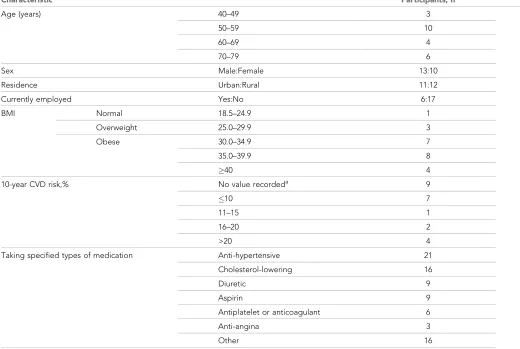
Participants’ ages ranged from 43–74 years (Table 1), with approximately equal numbers of males and females, and of urban and rural residency. Based on BMI, three were overweight and 19 obese. All were prescribed medication.
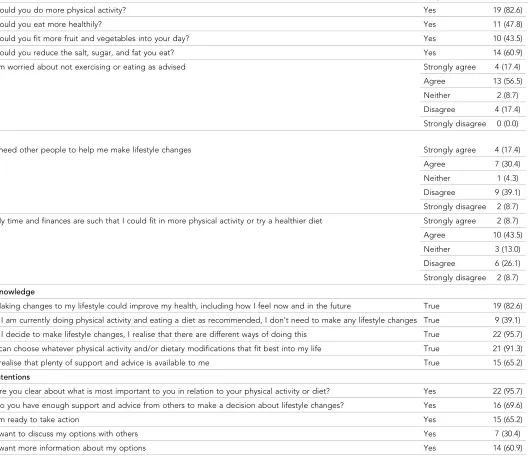
Decision tool records showed that 19 participants (83%) considered they could do more PA, and 11 (48%) thought they could eat more healthily (Table 2). Sixteen (70%) thought they had enough
Table 1.Demographic characteristics and baseline data of recruited participants
Characteristic Participants, n
Age (years) 40–49 3
50–59 10
60–69 4
70–79 6
Sex Male:Female 13:10
Residence Urban:Rural 11:12
Currently employed Yes:No 6:17
BMI Normal 18.5–24.9 1
Overweight 25.0–29.9 3
Obese 30.0–34.9 7
35.0–39.9 8
40 4
10-year CVD risk,% No value recordeda 9
10 7
11–15 1
16–20 2
>20 4
Taking specified types of medication Anti-hypertensive 21
Cholesterol-lowering 16
Diuretic 9
Aspirin 9
Antiplatelet or anticoagulant 6
Anti-angina 3
Other 16
aOf these, 8 had established CHD; one had hypertension but no recorded risk score.
advice and support to make a decision about change, but half of these (n= 8) were not ready for action. Fourteen (61%) wanted more information about practical options for change.
Diet (DINE), physical activity (RPAQ), and accelerometer data
At baseline, 39% (9/23) of participants reported a high fibre diet, 35% (8/23) a low saturated fat intake, and none a high unsaturated fat intake. All three defaulters had sub-optimal diet scores. Mean DINE scores changed little; many positive changes at 1-month review were not maintained. The impact of personal circumstances was often reflected in diet scores: two participants who lived alone ate few vegetables or fruit, but increased their fibre intake when they began visiting other people. Other records reflected negative effects of Christmas foodstuffs, and positive effects of a partner’s diet change.
Four participants, two of whom defaulted, thought that they could not increase their PA. The RPAQ’s format did not provide total weekly PA time, but responses indicated that 10 participants Table 2.Participant responses to decision tool questions
Beliefs Response n(%)
Could you do more physical activity? Yes 19 (82.6)
Could you eat more healthily? Yes 11 (47.8)
Could you fit more fruit and vegetables into your day? Yes 10 (43.5)
Could you reduce the salt, sugar, and fat you eat? Yes 14 (60.9)
I’m worried about not exercising or eating as advised Strongly agree 4 (17.4)
Agree 13 (56.5)
Neither 2 (8.7)
Disagree 4 (17.4)
Strongly disagree 0 (0.0)
I need other people to help me make lifestyle changes Strongly agree 4 (17.4)
Agree 7 (30.4)
Neither 1 (4.3)
Disagree 9 (39.1)
Strongly disagree 2 (8.7)
My time and finances are such that I could fit in more physical activity or try a healthier diet Strongly agree 2 (8.7)
Agree 10 (43.5)
Neither 3 (13.0)
Disagree 6 (26.1)
Strongly disagree 2 (8.7)
Knowledge
Making changes to my lifestyle could improve my health, including how I feel now and in the future True 19 (82.6)
If I am currently doing physical activity and eating a diet as recommended, I don’t need to make any lifestyle changes True 9 (39.1)
If I decide to make lifestyle changes, I realise that there are different ways of doing this True 22 (95.7)
I can choose whatever physical activity and/or dietary modifications that fit best into my life True 21 (91.3)
I realise that plenty of support and advice is available to me True 15 (65.2)
Intentions
Are you clear about what is most important to you in relation to your physical activity or diet? Yes 22 (95.7)
Do you have enough support and advice from others to make a decision about lifestyle changes? Yes 16 (69.6)
I’m ready to take action Yes 15 (65.2)
I want to discuss my options with others Yes 7 (30.4)
(43%) did150 minutes of moderate or vigorous PA (MVPA) at baseline, and 11/20 (55%) did so at 3 months. At 1-month review some participants reported new activities but, for various reasons, did not sustain these: for example, one began swimming regularly but depended on a companion who did not continue her support.
RPAQ baseline data also indicated that, combining daytime and evening television viewing, as an indicator of sedentary behaviour, 14/23 (61%) watched2 hours on weekdays; 16/23 (70%) did so at weekends. Of those who completed the study, 45% (9/20) watched <1 hour’s daytime television either on weekdays or weekends. Viewing time was higher in evenings, on both weekdays and week-ends, and changed little during the study.
For 16 participants (80%), accelerometer data was valid for analysis. Overall, PA level was low, although six individuals (38%) did30 minutes of MVPA daily at baseline. Sedentary behaviour fell over the 3 months, but there were also small reductions in mean MVPA and daily step counts. Indi-vidual variability was noted: six participants (38%) increased their steps (range 250– 3400/day). While 11 participants (69%) were less sedentary at 3-month review, five (31%) were more so, having ceased gardening in winter.
Qualitative analysis
All 20 participants who attended 3-month reviews were interviewed, as well as three HPs (two GPs; one nurse). The three refined themes (decision tool; consultation; barriers to change) are reported below as well as the sub-themes identified within each, with supporting quotes labelled with HP number or, for participating patients, study number and sex (M/F).
The decision tool
Format and content
The tool’s format, A5 size, content, and brevity were welcomed unanimously. Only one HP thought that more details about heart disease should be provided. The HPs considered that its structured framework helped focus consultations on relevant issues. The convenience of a paper-based tool was highlighted, but a need for alternative, electronic formats was recognised, particularly for patients with limited reading capability:
’I like the book format. . .It’s a nice size; I don’t like too many pages.’(Patient 1, F)
’. . . nice to have something to work from . . . a structure, because patients can go off on a tangent. . .you[the HP]realise when the consultation’s over.’(HP 1)
’. . .a facility to listen to it[an audiotape or web recording]and answer the questions. . .could get it emailed?’(HP 2)
Impact
The decision tool encouraged self-examination and consideration of specific personal goals and sup-port. Several participants reported how it broadened their range of options for change; one regret-ted not having had such information previously:
’When you read something like this it brings it back to you that you need to do physical activity.’
(Patient 10, M)
’Very good information and good tips.’(Patient 17, F)
’. . .kickstarted me into action to reach 18 stone, and when I do that, the next target will be 17 stone. . .one stone at a time.’(Patient 16, M)
The consultation
Value of interaction
’The biggest and most important thing was interaction with the doctors, the conversation, discussion.’(Patient 4, F)
’. . .led me to tell things I might not have otherwise.’(Patient 6, F)
’She was an inspiration; she’d lost a couple of stones herself and understood.’(Patient 18, F)
Comments reflected how participants derived support from direct interaction with HPs in the con-sultation; they would have welcomed further appointments, and also recalled previous helpful encounters with other nurses, GPs, and dieticians:
’. . .an incentive to show her respect by making an effort because she is trying to help me.’
(Patient 11, M)
’. . .useful to chat to a nurse regularly; I live on my own, so you get set in your ways.’(Patient 12,
F)
HPs, however, lacked confidence regarding their knowledge of lifestyle advice:
’I felt I was a bit under-educated in exactly what I should be telling them.’(HP 1)
Translation to practice
HPs did not appear to recognise how much patients valued using the shared decision tool: they con-sidered it impossible to use in everyday practice, given current time constraints and workloads. GPs suggested that other staff could use it, or it could be given to patients, with responses reviewed in a later consultation:
’Unfortunately, I think at the minute it’s not feasible. . .would be lovely to have that luxury, the proper time. But. . .general practice at the minute is just pressure.’(HP 1)
’It takes a while to read, digest, and sink in . . . not “yes” or “no” answers . . . within a [GP] consultation it wouldn’t[be possible].’(HP 2)
Interviewees considered that no qualifications were needed to use the tool but interviewing skills were required and that someone, outside the practice team, could conduct consultations. However, it was perceived that this would not allow opportunistic interventions, sharing of personal knowl-edge, or ongoing contact with a trusted professional, which were considered to be important factors in encouraging behaviour change:
’Somebody could come into the practice from outside and hold clinics. . .who had an interest, a bit of skill. . .but then you might miss on the opportunistic stuff, which would be a shame.’(HP
1)
’You have to get the right moment, the right time. . .you can’t just address it blankly.’(HP 2) ’. . .they come back and say "remember you saying that?” Patients like familiarity and trust.’
(HP 2)
Patients did not appear to recognise HPs’ time limitations, but suggested that more feedback on their progress might increase their motivation for changes:
’I thought the doctor would take some measurements and compare them on subsequent visits. For people to be interested. . .’(Patient 4, F)
Barriers to change
Social circumstances
Some participants reported how social and family circumstances restricted their ability to follow life-style advice as they prioritised concerns about others:
’The conversation with the nurse was good, but when I went home I had that much to do. Prior to my wife’s diagnosis I did a lot of walking, but this year has been so hard.’(Patient 16, M)
’I look after my dad, so everything fits in around him. So I try not to join things because then you’re committed to a certain day and time to be somewhere.’(Patient 18, F)
However, it was also recognised that pleasurable social experiences encouraged healthier behaviours:
’. . .you go out for a walk to please them but also to please yourself.’(Patient 18, F)
Health conditions
Having discussed CVD and the risks and benefits of lifestyle behaviours, some participants said that, despite wishing to put advice into practice, health conditions prevented them from doing so:
’My health is the main barrier to doing more exercise. I am prone to chest infections in the winter.’(Patient 6, F)
’I can’t walk because of pain in my legs.’(Patient 14, M)
’I don’t want to change my diet and maybe irritate the IBS [irritable bowel syndrome].’
(Patient 21, M)
One participant had been encouraged by his improved walking capacity after smoking cessation, but was discouraged when diet changes failed to reduce his blood sugar. Disappointments hindered change; positive experiences encouraged healthy behaviour:
’When you’re putting in an effort and you feel you’re doing everything right, and it goes the wrong way, it is discouraging.’(Patient 9, M)
’I have started to go to line dancing and I’m doing more around the house. I feel a bit fitter. . . I’m not as breathless.’(Patient 12, F)
Health beliefs
Some participants attributed ill health to previous behaviour changes. The strength of their beliefs based on personal experience appeared to outweigh any belief in the value of advice about benefits of healthy lifestyle behaviour. Comments also indicated that motivation derived from positive experi-ence was diminished by belief of inevitability of poor outcomes:
’It was only when I stopped smoking that all my problems started.’(Patient 2, F)
’I used to walk every day but now very seldom. I blame the weather and all sorts of things. A good walk cleared my head when I was working. . .But bad hearts are in my family; it’s not to say I haven’t been warned.’(Patient 10, M)
Discussion
Summary
This study tested the feasibility of using a decision tool in primary care to help initiate lifestyle change among patients with or at risk of CHD. The 28% response rate to invitation, relatively low drop-out rate of 13%, and engagement of participants indicate that its use is feasible. Its structured format, convenient size, and succinct content encouraged practical personal application of advice and were welcomed by patients and HPs. Patients appreciated the opportunity of consulting with an HP, especially when they shared relevant personal experiences, but HPs considered that, with cur-rent workloads, using the tool in everyday practice was not feasible. Participants’ beliefs regarding adverse health effects of previous lifestyle changes countered the impact of advice about the bene-fits of healthy behaviours.
Strengths and limitations
positive response rates, while one achieved a much higher rate. Other recent research has reported that specific GP surgery variables have a substantial influence on rates of participation in PA trials.18
The defaulters’ reasons for non-participation concur with other recent findings.19
Since this is a feasibility study, statistical analysis of changes over time was not undertaken. How-ever, the choice of measures to assess diet and PA may not have been optimal. Several participants considered that many activities listed in RPAQ were inappropriate for them. Accelerometers pro-vided objective measurement of PA and of change. However, initial data, gathered after the consul-tation, did not provide a true baseline: for a definitive study baseline, measures should be completed prior to using the tool. The DINE questionnaire required detailed responses, and partici-pants had difficulty remembering what they had eaten in the previous week. The questionnaires were not integral components of the SHARE-D tool, but were intended as outcome measures only. While their use may have encouraged self-reflection on diet and PA, their complexity may have impacted adversely on participants’ readiness to engage in realistic goal-setting for behaviour change. In future work to determine the effectiveness of a shared decision-making tool in supporting behaviour change, the outcome measures used and their potential contribution as intervention com-ponents would need careful consideration.
This tool was designed as a brief intervention to support the initiation of behaviour change. While the estimated duration of each consultation was 15 minutes, the time taken was not recorded. Also, the tool did not include important BCTs for maintaining change, such as feedback and monitoring.20
A systematic review21
of care in CHD prevention concluded that effective care should incorporate frequent review, with follow-up visits and telephone contact. The authors suggest that this decision tool may help people to engage in the continuum of change, and signpost them to fur-ther interventions that include the BCTs necessary to support maintenance of change.20
Qualitative methods are a strength of this study, allowing exploration of both patients’ and pro-fessionals’ views. However, selection of participants was at the discretion of GPs, so that those selected may have been biased towards positive reports of their experience. Also, the HPs who par-ticipated may have been sympathetic to promoting healthy behaviours. Nevertheless, their com-ments illustrated how they considered that the tool offered a new approach and facilitated consultations.
The researcher was not involved in the shared decision-making process, so that interviewees’ comments regarding their consultation were not constrained by her presence. She is a biomedical scientist with experience of health behaviour research, and was able to show a non-judgmental understanding of participants’ experiences, which facilitated the interview process. The decision to avoid using audiotapes for patients’ interviews enabled their reporting of difficulties experienced in changing their behaviour. Data saturation was achieved. Also, written notes at 1- and 3-month reviews and contemporaneous changes in DINE and RPAQ scores verified comments made by indi-viduals during interviews, thus strengthening the validity of this data.
Comparison with existing literature
Recruitment to research is challenging: recently reported recruitment rates in different general prac-tices ranged from 11.4–24.2%, for participation in PA research.18 A previous primary care trial of CVD secondary prevention, including behaviour change, recruited 50.3%22
with 7.2% drop-out.7
This study took place approximately a decade later, with much smaller numbers, so that com-parisons may be inappropriate. A more recent primary care trial of a web-based cardiac rehabilita-tion programme23
reported higher attrition (22%). The present authors suggest that, since 28% of this study’s sample responded positively to a single invitation with 13% drop-out, further study of this tool is feasible. Reasons given by defaulters for dropping out, including perceived irrelevance, will inform development of the tool’s design.
At baseline, fewer than half of the participants, most of whom were obese, reported following dietary advice regarding fibre or fat consumption. Similarly, less than half of patients with CVD in Europe followed dietary recommendations: only 40% reported 20 minutes’ vigorous PA at least once weekly.3
change. The qualitative findings reflected the relevance of considering their capabilities, opportuni-ties, and motivation, concurring with the COM-B model of behaviour change.4
Patients enjoyed the opportunity to talk directly with an HP about lifestyle behaviours, and were receptive to implementing ideas for improved diet and/or exercise habits. Seasonal effects, such as winter and Christmas, and personal circumstances, such as the loss of a friend’s support, need to be considered in planning for sustained changes. For successful behaviour change, positive social sup-port is imsup-portant,6,24 as are other BCTs, including goals and planning, and feedback and monitoring.20
This decision tool targeted goal-setting, planning, and social support in initiating change but, as interviewees highlighted, provided no feedback to encourage sustained change.
While patients valued HPs’ time and expertise, and HPs valued the tool’s structured format in guiding consultations, HPs thought there was insufficient time for its use in everyday general practice given current workloads, and admitted a lack of confidence in their knowledge of appropriate life-style advice. This concurs with previous reports of GPs’ reported time constraints in implementing interventions promoting PA,25 and recent work showing GPs’ lack of familiarity with national PA guidance.26
Many GPs have not undertaken any training in promoting PA and are unfamiliar with PA assessment tools.26HPs’ comments suggested that the use of this decision aid may help overcome these difficulties. It is of note that patients identified HPs’ sharing of personal experience of relevant behaviour change as a key influence, concurring with previous reports.3,27
Implications for research
This study describes a novel approach to helping patients with, or at risk of, CVD to initiate behav-iour change, testing the feasibility of using a paper-based decision aid in general practice. These findings show its potential utility, with encouraging rates of study recruitment and completion, and reported appreciation of shared decision-making between HPs and patients in preparing to imple-ment lifestyle advice for secondary prevention.
While digital health technologies may support CVD secondary prevention,28
the perceived value of personal interaction with a trusted professional and of paper-based tools, allowing easy access to information, must not be overlooked. Current general practice workloads suggest a need to involve external expertise in helping to support patients in behaviour change. However, the importance of allowing people opportunity for personal shared discussion with someone with professional exper-tise, as well as access to social support for sustained behaviour change, should be recognised.
Further research is needed to determine the optimal approach to developing cross-sector and multidisciplinary collaborative strategies, at individual and population levels, to support behaviour change in CVD prevention.1
The authors suggest that a study of the effectiveness and cost-effective-ness of a refined design of a shared decision-making tool to promote behaviour change for CVD prevention in primary care is feasible and should be explored.
Funding
This study was funded by Northern Ireland Chest, Heart and Stroke (reference number: NICHS: 2015_04).
Ethical approval
Ethical approval was granted by London–Camden and Kings Cross Research Ethics Committee (reference number: 16/LO/0655) on 18 April 2016.
Provenance
Freely submitted; externally peer reviewed.
Acknowledgements
The authors wish to acknowledge the support of all participating general practices, practitioners, and patients, and of Claire Leathem and Marina Maxwell, through the Northern Ireland Clinical Research Network (Primary Care).
References
1. Piepoli MF, Hoes AW, Agewall S, et al. ESC Scientific Document Group. 2016 European guidelines on
representatives of 10 societies and by invited experts). Developed with the special contribution of the
European Association for Cardiovascular Prevention & Rehabilitation (EACPR).Eur Heart J2016;37(29):
2315–2381.doi: 10.1093/eurheartj/ehw106
2. National Institute for Health and Care Excellence. Cardiovascular disease prevention [PH25]. 2010.https://
www.nice.org.uk/guidance/ph25(accessed 26 Mar 2018).
3. Kotseva K, Wood D, De Bacquer D,et al. EUROASPIRE IV: a European society of cardiology survey on the
lifestyle, risk factor and therapeutic management of coronary patients from 24 European countries.Eur J
Prev Cardiol2016;23(6):636–648.doi: 10.1177/2047487315569401
4. Michie S, van Stralen MM, West R. The behaviour change wheel: a new method for characterising and
designing behaviour change interventions.Implement Sci2011;6:42.doi: 10.1186/1748-5908-6-42
5. National Institute for Health and Care Excellence. Behaviour change: general approaches. Public health
guideline [PH6]. 2007.https://www.nice.org.uk/guidance/ph6/chapter/3-Recommendations#planning
(accessed 26 Mar 2018).
6. Cole JA, Smith SM, Hart N,et al. Do practitioners and friends support patients with coronary heart disease
in lifestyle change? a qualitative study.BMC Fam Pract2013;14:126.doi: 10.1186/1471-2296-14-126
7. Murphy AW, Cupples ME, Smith SM,et al. Effect of tailored practice and patient care plans on secondary
prevention of heart disease in general practice: cluster randomised controlled trial.BMJ2009;339:b4220.
doi: 10.1136/bmj.b4220
8. Hardcastle SJ, Taylor AH, Bailey MP, et al. Effectiveness of a motivational interviewing intervention on
weight loss, physical activity and cardiovascular disease risk factors: a randomised controlled trial with a
12-month post-intervention follow-up.Int J Behav Nutr Phys Act2013;10:40.doi: 10.1186/1479-5868-10-40
9. Elwyn G, Dehlendorf C, Epstein RM,et al. Shared decision making and motivational interviewing: achieving
patient-centered care across the spectrum of health care problems.Ann Fam Med2014;12(3):270–275. .
doi: 10.1370/afm.1615
10. Sheridan SL, Draeger LB, Pignone MP,et al. A randomized trial of an intervention to improve use and
adherence to effective coronary heart disease prevention strategies.BMC Health Serv Res2011;11:331–10.
doi: 10.1186/1472-6963-11-331
11. Sheridan SL, Draeger LB, Pignone MP,et al. The effect of a decision aid intervention on decision making
about coronary heart disease risk reduction: secondary analyses of a randomized trial.BMC Med Inform
Decis Mak2014;14(1):14.doi: 10.1186/1472-6947-14-14
12. Charles C, Gafni A, Whelan T. Shared decision-making in the medical encounter: what does it mean? (or it
takes at least two to tango).Soc Sci Med1997;44(5):681–692.doi: 10.1016/S0277-9536(96)00221-3
13. Murray E, Charles C, Gafni A. Shared decision-making in primary care: tailoring the Charles et al. model to
fit the context of general practice.Patient Educ Couns2006;62(2):205–211.doi: 10.1016/j.pec.2005.07.003
14. Coulter A, Collins A. Making shared decision-making a reality. No decision about me, without me. [The
King’s Fund. Foundation for informed medical decision making]. 2011.https://www.kingsfund.org.uk/sites/
default/files/Making-shared-decision-making-a-reality-paper-Angela-Coulter-Alf-Collins-July-2011_0.pdf (accessed 26 Mar 2018).
15. Stacey D, Le´gare´ F, Lewis K, et al, Cochrane Consumers and Communication Group. Decision aids for
people facing health treatment or screening decisions.Cochrane Database Syst Rev2017;19(9):CD001431.
doi: 10.1002/14651858.CD001431.pub5
16. Roe L, Strong C, Whiteside C,et al. Dietary intervention in primary care: validity of the DINE method for
diet assessment.Fam Pract1994;11(4):375–381.doi: 10.1093/fampra/11.4.375
17. Besson H, Brage S, Jakes RW,et al. Estimating physical activity energy expenditure, sedentary time, and
physical activity intensity by self-report in adults.Am J Clin Nutr2010;91(1):106–114.doi: 10.3945/ajcn.
2009.28432
18. Attwood S, Morton K, Sutton S. Exploring equity in uptake of the NHS Health Check and a nested physical
activity intervention trial.J Public Health (Oxf)2016;38(3):560–568.doi: 10.1093/pubmed/fdv070
19. Attwood S, Morton KL, Mitchell J, et al. Reasons for non-participation in a primary care-based physical
activity trial: a qualitative study.BMJ Open2016;6(5):e011577.doi: 10.1136/bmjopen-2016-011577
20. National Institute for Health and Care Excellence. Behaviour change: individual approaches public health
guideline [PH49]. 2014.https://www.nice.org.uk/Guidance/PH49(accessed 26 Mar 2018).
21. Snaterse M, Dobber J, Jepma P,et al. Effective components of nurse-coordinated care to prevent recurrent
coronary events: a systematic review and meta-analysis.Heart2016;102(1):50–56.doi:
10.1136/heartjnl-2015-308050
22. Leathem CS, Cupples ME, Byrne MC,et al. Identifying strategies to maximise recruitment and retention of
practices and patients in a multicentre randomised controlled trial of an intervention to optimise secondary
prevention for coronary heart disease in primary care.BMC Med Res Methodol2009;9:40.doi: 10.1186/
1471-2288-9-40
23. Devi R, Powell J, Singh S. A web-based program improves physical activity outcomes in a primary care
angina population: randomized controlled trial.J Med Internet Res2014;16(9):e186.doi: 10.2196/jmir.3340
24. Murray J, Craigs CL, Hill KM,et al. A systematic review of patient reported factors associated with uptake
and completion of cardiovascular lifestyle behaviour change.BMC Cardiovasc Disord2012;12(1):120.doi:
10.1186/1471-2261-12-120
25. Heron N, Tully MA, McKinley MC,et al. Physical activity assessment in practice: a mixed methods study of
26. Chatterjee R, Chapman T, Brannan MG,et al. GPs’ knowledge, use, and confidence in national physical
activity and health guidelines and tools: a questionnaire-based survey of general practice in England.Br J
Gen Pract2017;67(663):e668–e675.doi: 10.3399/bjgp17X692513
27. Lobelo F, Duperly J, Frank E. Physical activity habits of doctors and medical students influence their
counselling practices.Br J Sports Med2009;43(2):89–92.doi: 10.1136/bjsm.2008.055426
28. Salisbury C, O’Cathain A, Thomas C,et al. Telehealth for patients at high risk of cardiovascular disease: