Information Technology and Control 2018/1/47 140
H∞ Control of Network
Control System for
Singular Plant
ITC 1/47Journal of Information Technology and Control
Vol. 47 / No. 1 / 2018 pp. 140-150
DOI 10.5755/j01.itc.47.1.19982 © Kaunas University of Technology
H∞ Control of Network Control System for Singular Plant
Received 2018/01/19 Accepted after revision 2018/02/05
http://dx.doi.org/10.5755/j01.itc.47.1.19982
Wei Wei
School of Computer Science and Engineering, Xi’an University of Technology, Xi’an 710048, China; Qilu University of Technology (Shandong Academy of Sciences); Shandong provincial Key Laboratory of Computer Network; e-mail: [email protected]
Xunli Fan
School of Information Science & Technology, Northwest University, Xi’an 710127, China; e-mail: [email protected]
Marcin Woźniak
Institute of Mathematics, Silesian University of Technology, Kaszubska 23, 44-100 Gliwice, Poland; e-mail: [email protected]
Houbing Song
Department of Electrical, Computer, Software, and Systems Engineering, Embry-Riddle Aeronautical University, Daytona Beach, FL 32114-3900, USA; e-mail: [email protected]
Wei-Li
The Center for Distributed and High Performance Computing, School of Information Technologies, The University of Sydney, Sydney, Australia; e-mail: [email protected]
Ye Li
School of Computer Science and Engineering, Xi’an University of Technology, Xi’an 710048, China; Qilu University of Technology (Shandong Academy of Sciences); Shandong provincial Key Laboratory of Computer Network
Peiyi Shen
National school of Software, Xidian University, Xi’an 710071, P.R.China, China; e-mail: [email protected]
141 Information Technology and Control 2018/1/47
This paper investigates H∞ control method for a class of Singular Network Control Systems (SNCS) based on
singular plant. Considering the network delay, external disturbance, impulse behavior and structural
instabil-ity of singular plant, the H∞ control of SNCS with state feedback and dynamic output feedback are investigated
respectively by approach of Linear Matrix Inequality (LMI). The existence of the H∞ control law, the solving of
the H∞ control law and the disturbance degree are discussed in the following sections of the paper. Simulation
results illustrate the effectiveness and feasibility of the given approach.
KEYWORDS:Singular Network Controls, H∞ control, Linear Matrix Inequality, Network delay.
1. Introduction
Network Control System (NCS) is a distributed and a real-time feedback control system where the sys-tem node situated at different geographical position exchanges state information and control informa-tion with the controller through a communicainforma-tion network [20]. Network bandwidth and restraint of communication mechanism such as network delay and data packet loss exist typically in network com-munication channel, which makes NCS loses invari-ability, integrality, causality and certainty [18], and due to this fact the study of NCS is more complicated and challenging.
The traditional control theories and methods are not suitable for NCS, which makes rapid development over the past few years. Since the end of the last centu-ry, the research of NCS experiences the process from simple to complex, from single to comprehensive and from special to general. A large number of results have been reported, for instance, system complexity analy-sis [23], quantized dynamic output feedback control [3], observer-based controller design [25], state
esti-mation and stabilization [6], H∞ control method [24],
fault-tolerant control [4], guaranteed cost control [8], co-design [10].
The results in the existing literature are focused on linear system. However, the study of SNCS based on singular system has not been addressed intensively. The dynamics of singular system is quite different from normal linear system and have many character-istics such as no causality, no solution, no uniqueness and structure instability, etc. [22]. In fact, the research on SNCS is still in the primary stage, and the existing results are limited to system modeling, stability anal-ysis and control method [1-2, 5, 11-12, 14-17].
This paper aims to study the stabilization and H∞
con-trol method for a class of SNCS subject to the double characteristics of a singular systems and NCS.
Net-work delay, input disturbance of limited energy, and impulse behavior are taken into consideration. The
H∞ control method of SNCS with state feedback and
dynamic output feedback are presented respectively
by means of LMI. The existence H∞ control law, H∞
control law approach and disturbance attenuation degree in different feedback are presented. Finally, a simulation is given to illustrate the effectiveness of the proposed method [7, 9, 13, 19, 21].
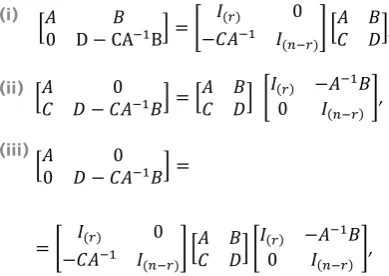
Schur Formula and Schur Complement Lemma Let
Let A∈Rr×r,B∈Rr×(n−r),C∈R(n−r)×r,D∈R(n−r)×(n−r),and
A
be an invertible matrix. The Schur formula has thefollowing three forms:
(i) �𝐴𝐴𝐴𝐴0 D−CA𝐵𝐵𝐵𝐵−1B�=�−𝐶𝐶𝐶𝐶𝐴𝐴𝐴𝐴𝐼𝐼𝐼𝐼(𝑟𝑟𝑟𝑟)−1 𝐼𝐼𝐼𝐼 0
(𝑛𝑛𝑛𝑛−𝑟𝑟𝑟𝑟)� �𝐴𝐴𝐴𝐴 𝐵𝐵𝐵𝐵𝐶𝐶𝐶𝐶 𝐷𝐷𝐷𝐷�, (ii) �𝐴𝐴𝐴𝐴𝐶𝐶𝐶𝐶 𝐷𝐷𝐷𝐷 − 𝐶𝐶𝐶𝐶𝐴𝐴𝐴𝐴0 −1𝐵𝐵𝐵𝐵�=�𝐴𝐴𝐴𝐴 𝐵𝐵𝐵𝐵𝐶𝐶𝐶𝐶 𝐷𝐷𝐷𝐷� �𝐼𝐼𝐼𝐼(𝑟𝑟𝑟𝑟) −𝐴𝐴𝐴𝐴
−1𝐵𝐵𝐵𝐵 0 𝐼𝐼𝐼𝐼(𝑛𝑛𝑛𝑛−𝑟𝑟𝑟𝑟)�,
, and A be an invertible matrix. The Schur formula has the following three forms:
(i)
Let
A
∈
R
r×r,
B
∈
R
r×(n−r),
C
∈
R
(n−r)×r,
D
∈
R
(n−r)×(n−r),and
A
be an invertible matrix. The Schur formula has the following three forms:(i) �𝐴𝐴𝐴𝐴0 D−CA𝐵𝐵𝐵𝐵 −1B�=�
𝐼𝐼𝐼𝐼(𝑟𝑟𝑟𝑟) 0
−𝐶𝐶𝐶𝐶𝐴𝐴𝐴𝐴−1 𝐼𝐼𝐼𝐼
(𝑛𝑛𝑛𝑛−𝑟𝑟𝑟𝑟)� �𝐴𝐴𝐴𝐴 𝐵𝐵𝐵𝐵𝐶𝐶𝐶𝐶 𝐷𝐷𝐷𝐷�,
(ii) �𝐴𝐴𝐴𝐴𝐶𝐶𝐶𝐶 𝐷𝐷𝐷𝐷 − 𝐶𝐶𝐶𝐶𝐴𝐴𝐴𝐴0 −1𝐵𝐵𝐵𝐵�=�𝐴𝐴𝐴𝐴 𝐵𝐵𝐵𝐵𝐶𝐶𝐶𝐶 𝐷𝐷𝐷𝐷� �𝐼𝐼𝐼𝐼(𝑟𝑟𝑟𝑟) −𝐴𝐴𝐴𝐴 −1𝐵𝐵𝐵𝐵 0 𝐼𝐼𝐼𝐼(𝑛𝑛𝑛𝑛−𝑟𝑟𝑟𝑟) �, (ii)
Let
A
∈
R
r×r,
B
∈
R
r×(n−r),
C
∈
R
(n−r)×r,
D
∈
R
(n−r)×(n−r),and
A
be an invertible matrix. The Schur formula has the following three forms:(i) �𝐴𝐴𝐴𝐴0 D−CA𝐵𝐵𝐵𝐵 −1B�=�
𝐼𝐼𝐼𝐼(𝑟𝑟𝑟𝑟) 0 −𝐶𝐶𝐶𝐶𝐴𝐴𝐴𝐴−1 𝐼𝐼𝐼𝐼
(𝑛𝑛𝑛𝑛−𝑟𝑟𝑟𝑟)� �𝐴𝐴𝐴𝐴 𝐵𝐵𝐵𝐵𝐶𝐶𝐶𝐶 𝐷𝐷𝐷𝐷�, (ii) �𝐴𝐴𝐴𝐴𝐶𝐶𝐶𝐶 𝐷𝐷𝐷𝐷 − 𝐶𝐶𝐶𝐶𝐴𝐴𝐴𝐴0 −1𝐵𝐵𝐵𝐵�=�𝐴𝐴𝐴𝐴 𝐵𝐵𝐵𝐵𝐶𝐶𝐶𝐶 𝐷𝐷𝐷𝐷� �𝐼𝐼𝐼𝐼(𝑟𝑟𝑟𝑟) −𝐴𝐴𝐴𝐴
−1𝐵𝐵𝐵𝐵
0 𝐼𝐼𝐼𝐼(𝑛𝑛𝑛𝑛−𝑟𝑟𝑟𝑟)�, (iii)
(iii) �𝐴𝐴𝐴𝐴0 𝐷𝐷𝐷𝐷 − 𝐶𝐶𝐶𝐶𝐴𝐴𝐴𝐴0 −1𝐵𝐵𝐵𝐵�=�
𝐼𝐼𝐼𝐼(𝑟𝑟𝑟𝑟) 0
−𝐶𝐶𝐶𝐶𝐴𝐴𝐴𝐴−1 𝐼𝐼𝐼𝐼
(𝑛𝑛𝑛𝑛−𝑟𝑟𝑟𝑟)� �𝐴𝐴𝐴𝐴 𝐵𝐵𝐵𝐵𝐶𝐶𝐶𝐶 𝐷𝐷𝐷𝐷� �
𝐼𝐼𝐼𝐼(𝑟𝑟𝑟𝑟) −𝐴𝐴𝐴𝐴−1𝐵𝐵𝐵𝐵 0 𝐼𝐼𝐼𝐼(𝑛𝑛𝑛𝑛−𝑟𝑟𝑟𝑟) �,
in which, e.g., 𝐼𝐼𝐼𝐼(𝑟𝑟𝑟𝑟) denotes identity matrix of the size 𝑟𝑟𝑟𝑟×𝑟𝑟𝑟𝑟. The other identity matrices are of sizes that fit the Schur
lemma.
Schur Complement Lemma:
Let Q∈𝑅𝑅𝑅𝑅𝑟𝑟𝑟𝑟×𝑟𝑟𝑟𝑟, S∈ 𝑅𝑅𝑅𝑅𝑟𝑟𝑟𝑟×(𝑛𝑛𝑛𝑛−𝑟𝑟𝑟𝑟), R∈ 𝑅𝑅𝑅𝑅(𝑛𝑛𝑛𝑛−𝑟𝑟𝑟𝑟)×(𝑛𝑛𝑛𝑛−𝑟𝑟𝑟𝑟)and� 𝑄𝑄𝑄𝑄 𝑆𝑆𝑆𝑆
𝑆𝑆𝑆𝑆𝑇𝑇𝑇𝑇 𝑅𝑅𝑅𝑅�<0. Then if and only if
(i) R<0
,Q-𝑆𝑆𝑆𝑆𝑅𝑅𝑅𝑅−1𝑆𝑆𝑆𝑆𝑇𝑇𝑇𝑇<0or
(ii) Q<0
,R-𝑆𝑆𝑆𝑆𝑇𝑇𝑇𝑇𝑄𝑄𝑄𝑄−1𝑆𝑆𝑆𝑆<0.Proof:Since the contract transform does not change the matrix positive definition, we first prove that � 𝑄𝑄𝑄𝑄 𝑆𝑆𝑆𝑆
𝑆𝑆𝑆𝑆𝑇𝑇𝑇𝑇 𝑅𝑅𝑅𝑅� <0 is
equivalent to R<0,Q-𝑆𝑆𝑆𝑆𝑅𝑅𝑅𝑅−1𝑆𝑆𝑆𝑆𝑇𝑇𝑇𝑇.
If Q<0, through the Schur formula, we have the following: �𝐼𝐼𝐼𝐼(0𝑟𝑟𝑟𝑟) −𝑆𝑆𝑆𝑆𝑅𝑅𝑅𝑅𝐼𝐼𝐼𝐼 −1
(𝑛𝑛𝑛𝑛−𝑟𝑟𝑟𝑟)� � 𝑄𝑄𝑄𝑄 𝑆𝑆𝑆𝑆𝑆𝑆𝑆𝑆𝑇𝑇𝑇𝑇 𝑅𝑅𝑅𝑅� �
𝐼𝐼𝐼𝐼(𝑟𝑟𝑟𝑟) 0
−𝑅𝑅𝑅𝑅−1𝑆𝑆𝑆𝑆𝑇𝑇𝑇𝑇 𝐼𝐼𝐼𝐼
(𝑛𝑛𝑛𝑛−𝑟𝑟𝑟𝑟)�=�
Q− 𝑆𝑆𝑆𝑆𝑅𝑅𝑅𝑅−1𝑆𝑆𝑆𝑆𝑇𝑇𝑇𝑇 0
0 𝑅𝑅𝑅𝑅�.
Correspondingly, � 𝑄𝑄𝑄𝑄 𝑆𝑆𝑆𝑆𝑆𝑆𝑆𝑆𝑇𝑇𝑇𝑇 𝑅𝑅𝑅𝑅� <0 is equivalent to R<0,Q-𝑆𝑆𝑆𝑆𝑅𝑅𝑅𝑅−1𝑆𝑆𝑆𝑆𝑇𝑇𝑇𝑇< 0.
[End of Proof]
Notes: Q-𝑆𝑆𝑆𝑆𝑅𝑅𝑅𝑅−1𝑆𝑆𝑆𝑆𝑇𝑇𝑇𝑇is the Schur complement of Q.
PROBLEM DESCRIPTION
The singular sample of the network control system is described as presented in [1].
Figure 1 General Structure of SNCS
In Figure 1, u, w and z are control input, measurement state or measurement output, input external disturbance and
expectation output, and τ is network-induced delay. The aim of positioning is to guarantee stable running of the system
independently of any external disturbances so that the expected output of the system is not affected.
For singular plant, its state response contains not only the exponential term as normal systems, but also the pulse term and input derivative item, which will make the whole system has a pulse behavior. The pulse behavior decreases not (iii) �𝐴𝐴𝐴𝐴0 𝐷𝐷𝐷𝐷 − 𝐶𝐶𝐶𝐶𝐴𝐴𝐴𝐴0 −1𝐵𝐵𝐵𝐵�=�
𝐼𝐼𝐼𝐼(𝑟𝑟𝑟𝑟) 0
−𝐶𝐶𝐶𝐶𝐴𝐴𝐴𝐴−1 𝐼𝐼𝐼𝐼
(𝑛𝑛𝑛𝑛−𝑟𝑟𝑟𝑟)� �𝐴𝐴𝐴𝐴 𝐵𝐵𝐵𝐵𝐶𝐶𝐶𝐶 𝐷𝐷𝐷𝐷� �
𝐼𝐼𝐼𝐼(𝑟𝑟𝑟𝑟) −𝐴𝐴𝐴𝐴−1𝐵𝐵𝐵𝐵 0 𝐼𝐼𝐼𝐼(𝑛𝑛𝑛𝑛−𝑟𝑟𝑟𝑟) �,
in which, e.g., 𝐼𝐼𝐼𝐼(𝑟𝑟𝑟𝑟) denotes identity matrix of the size 𝑟𝑟𝑟𝑟×𝑟𝑟𝑟𝑟. The other identity matrices are of sizes that fit the Schur
lemma.
Schur Complement Lemma:
Let Q∈𝑅𝑅𝑅𝑅𝑟𝑟𝑟𝑟×𝑟𝑟𝑟𝑟, S∈ 𝑅𝑅𝑅𝑅𝑟𝑟𝑟𝑟×(𝑛𝑛𝑛𝑛−𝑟𝑟𝑟𝑟), R∈ 𝑅𝑅𝑅𝑅(𝑛𝑛𝑛𝑛−𝑟𝑟𝑟𝑟)×(𝑛𝑛𝑛𝑛−𝑟𝑟𝑟𝑟)and� 𝑄𝑄𝑄𝑄 𝑆𝑆𝑆𝑆
𝑆𝑆𝑆𝑆𝑇𝑇𝑇𝑇 𝑅𝑅𝑅𝑅�<0. Then if and only if
(i) R<0
,Q-𝑆𝑆𝑆𝑆𝑅𝑅𝑅𝑅−1𝑆𝑆𝑆𝑆𝑇𝑇𝑇𝑇<0or
(ii) Q<0
,R-𝑆𝑆𝑆𝑆𝑇𝑇𝑇𝑇𝑄𝑄𝑄𝑄−1𝑆𝑆𝑆𝑆<0.Proof:Since the contract transform does not change the matrix positive definition, we first prove that � 𝑄𝑄𝑄𝑄 𝑆𝑆𝑆𝑆
𝑆𝑆𝑆𝑆𝑇𝑇𝑇𝑇 𝑅𝑅𝑅𝑅� <0 is
equivalent to R<0,Q-𝑆𝑆𝑆𝑆𝑅𝑅𝑅𝑅−1𝑆𝑆𝑆𝑆𝑇𝑇𝑇𝑇.
If Q<0, through the Schur formula, we have the following: �𝐼𝐼𝐼𝐼(0𝑟𝑟𝑟𝑟) −𝑆𝑆𝑆𝑆𝑅𝑅𝑅𝑅𝐼𝐼𝐼𝐼 −1
(𝑛𝑛𝑛𝑛−𝑟𝑟𝑟𝑟)� � 𝑄𝑄𝑄𝑄 𝑆𝑆𝑆𝑆𝑆𝑆𝑆𝑆𝑇𝑇𝑇𝑇 𝑅𝑅𝑅𝑅� �
𝐼𝐼𝐼𝐼(𝑟𝑟𝑟𝑟) 0
−𝑅𝑅𝑅𝑅−1𝑆𝑆𝑆𝑆𝑇𝑇𝑇𝑇 𝐼𝐼𝐼𝐼
(𝑛𝑛𝑛𝑛−𝑟𝑟𝑟𝑟)�=�
Q− 𝑆𝑆𝑆𝑆𝑅𝑅𝑅𝑅−1𝑆𝑆𝑆𝑆𝑇𝑇𝑇𝑇 0
0 𝑅𝑅𝑅𝑅�.
Correspondingly, � 𝑄𝑄𝑄𝑄 𝑆𝑆𝑆𝑆𝑆𝑆𝑆𝑆𝑇𝑇𝑇𝑇 𝑅𝑅𝑅𝑅� <0 is equivalent to R<0,Q-𝑆𝑆𝑆𝑆𝑅𝑅𝑅𝑅−1𝑆𝑆𝑆𝑆𝑇𝑇𝑇𝑇< 0.
[End of Proof]
Notes: Q-𝑆𝑆𝑆𝑆𝑅𝑅𝑅𝑅−1𝑆𝑆𝑆𝑆𝑇𝑇𝑇𝑇is the Schur complement of Q.
PROBLEM DESCRIPTION
The singular sample of the network control system is described as presented in [1].
Figure 1 General Structure of SNCS
In Figure 1, u, w and z are control input, measurement state or measurement output, input external disturbance and
expectation output, and τ is network-induced delay. The aim of positioning is to guarantee stable running of the system
independently of any external disturbances so that the expected output of the system is not affected.
For singular plant, its state response contains not only the exponential term as normal systems, but also the pulse term and input derivative item, which will make the whole system has a pulse behavior. The pulse behavior decreases not
in which, e.g., I(r)denotes identity matrix of the size
r × r. The other identity matrices are of sizes that fit the Schur lemma.
Schur Complement Lemma:
Let Q∈ Rr × r, S ∈ Rr × (n–r) , R ∈ R (n–r) × (n–r) and� 𝑄𝑄𝑄𝑄 𝑆𝑆𝑆𝑆 𝑆𝑆𝑆𝑆𝑇𝑇𝑇𝑇 𝑅𝑅𝑅𝑅�<0.
(i)
R<0,Q-𝑆𝑆𝑆𝑆𝑅𝑅𝑅𝑅−1𝑆𝑆𝑆𝑆𝑇𝑇𝑇𝑇<0or
(ii)
Q<0,R-𝑆𝑆𝑆𝑆𝑇𝑇𝑇𝑇𝑄𝑄𝑄𝑄−1𝑆𝑆𝑆𝑆<0.Proof:Since the contract transform does not change the matrix positive definition, we first prove that � 𝑄𝑄𝑄𝑄 𝑆𝑆𝑆𝑆 𝑆𝑆𝑆𝑆𝑇𝑇𝑇𝑇 𝑅𝑅𝑅𝑅� <0 is
equivalent to R<0,Q-𝑆𝑆𝑆𝑆𝑅𝑅𝑅𝑅−1𝑆𝑆𝑆𝑆𝑇𝑇𝑇𝑇.
IfQ<0, through the Schur formula, we have the following: �𝐼𝐼𝐼𝐼(0𝑟𝑟𝑟𝑟) −𝑆𝑆𝑆𝑆𝑅𝑅𝑅𝑅𝐼𝐼𝐼𝐼( −1
𝑛𝑛𝑛𝑛−𝑟𝑟𝑟𝑟)� � 𝑄𝑄𝑄𝑄 𝑆𝑆𝑆𝑆𝑆𝑆𝑆𝑆𝑇𝑇𝑇𝑇 𝑅𝑅𝑅𝑅� �
𝐼𝐼𝐼𝐼(𝑟𝑟𝑟𝑟) 0 −𝑅𝑅𝑅𝑅−1𝑆𝑆𝑆𝑆𝑇𝑇𝑇𝑇 𝐼𝐼𝐼𝐼
(𝑛𝑛𝑛𝑛−𝑟𝑟𝑟𝑟)�=�
Q− 𝑆𝑆𝑆𝑆𝑅𝑅𝑅𝑅−1𝑆𝑆𝑆𝑆𝑇𝑇𝑇𝑇 0
0 𝑅𝑅𝑅𝑅�.
Correspondingly, � 𝑄𝑄𝑄𝑄 𝑆𝑆𝑆𝑆
𝑆𝑆𝑆𝑆𝑇𝑇𝑇𝑇 𝑅𝑅𝑅𝑅� <0 is equivalent to R<0,Q-𝑆𝑆𝑆𝑆𝑅𝑅𝑅𝑅−1𝑆𝑆𝑆𝑆𝑇𝑇𝑇𝑇 < 0.
[End of Proof]
Notes: Q-𝑆𝑆𝑆𝑆𝑅𝑅𝑅𝑅−1𝑆𝑆𝑆𝑆𝑇𝑇𝑇𝑇is the Schur complement of Q.
PROBLEM DESCRIPTION
The singular sample of the network control system is described as presented in [1].
Figure 1 General Structure of SNCS
In Figure 1, u, w and z are control input, measurement state or measurement output, input external disturbance and
expectation output, and τ is network-induced delay. The aim of positioning is to guarantee stable running of the system
independently of any external disturbances so that the expected output of the system is not affected.
For singular plant, its state response contains not only the exponential term as normal systems, but also the pulse term
and input derivative item, which will make the whole system has a pulse behavior. The pulse behavior decreases not
Then if and only if (i) R<0, Q-SR–1ST<0
or
Information Technology and Control 2018/1/47 142
Proof: Since the contract transform does not change the matrix positive definition, we first prove that � 𝑄𝑄𝑄𝑄 𝑆𝑆𝑆𝑆𝑆𝑆𝑆𝑆𝑇𝑇𝑇𝑇 𝑅𝑅𝑅𝑅�<0.
(i)
R<0,Q-𝑆𝑆𝑆𝑆𝑅𝑅𝑅𝑅−1𝑆𝑆𝑆𝑆𝑇𝑇𝑇𝑇<0or
(ii)
Q<0,R-𝑆𝑆𝑆𝑆𝑇𝑇𝑇𝑇𝑄𝑄𝑄𝑄−1𝑆𝑆𝑆𝑆<0.Proof:Since the contract transform does not change the matrix positive definition, we first prove that � 𝑄𝑄𝑄𝑄 𝑆𝑆𝑆𝑆 𝑆𝑆𝑆𝑆𝑇𝑇𝑇𝑇 𝑅𝑅𝑅𝑅� <0 is
equivalent to R<0,Q-𝑆𝑆𝑆𝑆𝑅𝑅𝑅𝑅−1𝑆𝑆𝑆𝑆𝑇𝑇𝑇𝑇.
IfQ<0, through the Schur formula, we have the following: �𝐼𝐼𝐼𝐼(0𝑟𝑟𝑟𝑟) −𝑆𝑆𝑆𝑆𝑅𝑅𝑅𝑅𝐼𝐼𝐼𝐼( −1
𝑛𝑛𝑛𝑛−𝑟𝑟𝑟𝑟)� � 𝑄𝑄𝑄𝑄 𝑆𝑆𝑆𝑆𝑆𝑆𝑆𝑆𝑇𝑇𝑇𝑇 𝑅𝑅𝑅𝑅� �
𝐼𝐼𝐼𝐼(𝑟𝑟𝑟𝑟) 0 −𝑅𝑅𝑅𝑅−1𝑆𝑆𝑆𝑆𝑇𝑇𝑇𝑇 𝐼𝐼𝐼𝐼
(𝑛𝑛𝑛𝑛−𝑟𝑟𝑟𝑟)�=�
Q− 𝑆𝑆𝑆𝑆𝑅𝑅𝑅𝑅−1𝑆𝑆𝑆𝑆𝑇𝑇𝑇𝑇 0
0 𝑅𝑅𝑅𝑅�.
Correspondingly, � 𝑄𝑄𝑄𝑄 𝑆𝑆𝑆𝑆
𝑆𝑆𝑆𝑆𝑇𝑇𝑇𝑇 𝑅𝑅𝑅𝑅� <0 is equivalent to R<0,Q-𝑆𝑆𝑆𝑆𝑅𝑅𝑅𝑅−1𝑆𝑆𝑆𝑆𝑇𝑇𝑇𝑇< 0.
[End of Proof]
Notes: Q-𝑆𝑆𝑆𝑆𝑅𝑅𝑅𝑅−1𝑆𝑆𝑆𝑆𝑇𝑇𝑇𝑇is the Schur complement of Q.
PROBLEM DESCRIPTION
The singular sample of the network control system is described as presented in [1].
Figure 1 General Structure of SNCS
In Figure 1, u, w and z are control input, measurement state or measurement output, input external disturbance and
expectation output, and τ is network-induced delay. The aim of positioning is to guarantee stable running of the system
independently of any external disturbances so that the expected output of the system is not affected.
For singular plant, its state response contains not only the exponential term as normal systems, but also the pulse term
and input derivative item, which will make the whole system has a pulse behavior. The pulse behavior decreases not
is equivalent to R<0, Q-SR–1ST.
If Q<0, through the Schur formula, we have the fol-lowing:
�𝐼𝐼𝐼𝐼(0𝑟𝑟𝑟𝑟) −𝑆𝑆𝑆𝑆𝑅𝑅𝑅𝑅𝐼𝐼𝐼𝐼 −1
(𝑛𝑛𝑛𝑛−𝑟𝑟𝑟𝑟)� � 𝑄𝑄𝑄𝑄 𝑆𝑆𝑆𝑆𝑆𝑆𝑆𝑆𝑇𝑇𝑇𝑇 𝑅𝑅𝑅𝑅� �
𝐼𝐼𝐼𝐼(𝑟𝑟𝑟𝑟) 0
−𝑅𝑅𝑅𝑅−1𝑆𝑆𝑆𝑆𝑇𝑇𝑇𝑇 𝐼𝐼𝐼𝐼
(𝑛𝑛𝑛𝑛−𝑟𝑟𝑟𝑟)�=�
Q− 𝑆𝑆𝑆𝑆𝑅𝑅𝑅𝑅−1𝑆𝑆𝑆𝑆𝑇𝑇𝑇𝑇 0
0 𝑅𝑅𝑅𝑅�.
Correspondingly, � 𝑄𝑄𝑄𝑄 𝑆𝑆𝑆𝑆𝑆𝑆𝑆𝑆𝑇𝑇𝑇𝑇 𝑅𝑅𝑅𝑅� <0 is equivalent to R<0,Q-𝑆𝑆𝑆𝑆𝑅𝑅𝑅𝑅−1𝑆𝑆𝑆𝑆𝑇𝑇𝑇𝑇 < 0.
[End of Proof]
Notes: Q-𝑆𝑆𝑆𝑆𝑅𝑅𝑅𝑅−1𝑆𝑆𝑆𝑆𝑇𝑇𝑇𝑇is the Schur complement of Q.
PROBLEM DESCRIPTION
The singular sample of the network control system is described as presented in [1].
Figure 1 General Structure of SNCS
In Figure 1, u, w and z are control input, measurement state or measurement output, input external disturbance and expectation output, and τ is network-induced delay. The aim of positioning is to guarantee stable running of the system independently of any external disturbances so that the expected output of the system is not affected.
For singular plant, its state response contains not only the exponential term as normal systems, but also the pulse term and input derivative item, which will make the whole system has a pulse behavior. The pulse behavior decreases not
�𝐼𝐼𝐼𝐼(0𝑟𝑟𝑟𝑟) −𝑆𝑆𝑆𝑆𝑅𝑅𝑅𝑅𝐼𝐼𝐼𝐼 −1
(𝑛𝑛𝑛𝑛−𝑟𝑟𝑟𝑟)� � 𝑄𝑄𝑄𝑄 𝑆𝑆𝑆𝑆𝑆𝑆𝑆𝑆𝑇𝑇𝑇𝑇 𝑅𝑅𝑅𝑅� �
𝐼𝐼𝐼𝐼(𝑟𝑟𝑟𝑟) 0
−𝑅𝑅𝑅𝑅−1𝑆𝑆𝑆𝑆𝑇𝑇𝑇𝑇 𝐼𝐼𝐼𝐼
(𝑛𝑛𝑛𝑛−𝑟𝑟𝑟𝑟)�=�
Q− 𝑆𝑆𝑆𝑆𝑅𝑅𝑅𝑅−1𝑆𝑆𝑆𝑆𝑇𝑇𝑇𝑇 0
0 𝑅𝑅𝑅𝑅�.
Correspondingly, � 𝑄𝑄𝑄𝑄 𝑆𝑆𝑆𝑆𝑆𝑆𝑆𝑆𝑇𝑇𝑇𝑇 𝑅𝑅𝑅𝑅� <0 is equivalent to R<0,Q-𝑆𝑆𝑆𝑆𝑅𝑅𝑅𝑅−1𝑆𝑆𝑆𝑆𝑇𝑇𝑇𝑇 < 0.
[End of Proof]
Notes: Q-𝑆𝑆𝑆𝑆𝑅𝑅𝑅𝑅−1𝑆𝑆𝑆𝑆𝑇𝑇𝑇𝑇is the Schur complement of Q.
PROBLEM DESCRIPTION
The singular sample of the network control system is described as presented in [1].
Figure 1 General Structure of SNCS
In Figure 1, u, w and z are control input, measurement state or measurement output, input external disturbance and expectation output, and τ is network-induced delay. The aim of positioning is to guarantee stable running of the system independently of any external disturbances so that the expected output of the system is not affected.
For singular plant, its state response contains not only the exponential term as normal systems, but also the pulse term and input derivative item, which will make the whole system has a pulse behavior. The pulse behavior decreases not
Correspondingly, � 𝑄𝑄𝑄𝑄 𝑆𝑆𝑆𝑆
𝑆𝑆𝑆𝑆𝑇𝑇𝑇𝑇 𝑅𝑅𝑅𝑅�<0.
(i)
R<0,Q-𝑆𝑆𝑆𝑆𝑅𝑅𝑅𝑅−1𝑆𝑆𝑆𝑆𝑇𝑇𝑇𝑇<0or
(ii)
Q<0,R-𝑆𝑆𝑆𝑆𝑇𝑇𝑇𝑇𝑄𝑄𝑄𝑄−1𝑆𝑆𝑆𝑆<0.Proof:Since the contract transform does not change the matrix positive definition, we first prove that � 𝑄𝑄𝑄𝑄 𝑆𝑆𝑆𝑆 𝑆𝑆𝑆𝑆𝑇𝑇𝑇𝑇 𝑅𝑅𝑅𝑅� <0 is
equivalent to R<0,Q-𝑆𝑆𝑆𝑆𝑅𝑅𝑅𝑅−1𝑆𝑆𝑆𝑆𝑇𝑇𝑇𝑇.
IfQ<0, through the Schur formula, we have the following: �𝐼𝐼𝐼𝐼(0𝑟𝑟𝑟𝑟) −𝑆𝑆𝑆𝑆𝑅𝑅𝑅𝑅𝐼𝐼𝐼𝐼 −1
(𝑛𝑛𝑛𝑛−𝑟𝑟𝑟𝑟)� � 𝑄𝑄𝑄𝑄 𝑆𝑆𝑆𝑆𝑆𝑆𝑆𝑆𝑇𝑇𝑇𝑇 𝑅𝑅𝑅𝑅� �
𝐼𝐼𝐼𝐼(𝑟𝑟𝑟𝑟) 0 −𝑅𝑅𝑅𝑅−1𝑆𝑆𝑆𝑆𝑇𝑇𝑇𝑇 𝐼𝐼𝐼𝐼
(𝑛𝑛𝑛𝑛−𝑟𝑟𝑟𝑟)�=�
Q− 𝑆𝑆𝑆𝑆𝑅𝑅𝑅𝑅−1𝑆𝑆𝑆𝑆𝑇𝑇𝑇𝑇 0
0 𝑅𝑅𝑅𝑅�.
Correspondingly, � 𝑄𝑄𝑄𝑄 𝑆𝑆𝑆𝑆
𝑆𝑆𝑆𝑆𝑇𝑇𝑇𝑇 𝑅𝑅𝑅𝑅� <0 is equivalent to R<0,Q-𝑆𝑆𝑆𝑆𝑅𝑅𝑅𝑅−1𝑆𝑆𝑆𝑆𝑇𝑇𝑇𝑇< 0.
[End of Proof]
Notes: Q-𝑆𝑆𝑆𝑆𝑅𝑅𝑅𝑅−1𝑆𝑆𝑆𝑆𝑇𝑇𝑇𝑇is the Schur complement of Q.
PROBLEM DESCRIPTION
The singular sample of the network control system is described as presented in [1].
Figure 1 General Structure of SNCS
In Figure 1, u, w and z are control input, measurement state or measurement output, input external disturbance and
expectation output, and τ is network-induced delay. The aim of positioning is to guarantee stable running of the system
independently of any external disturbances so that the expected output of the system is not affected.
For singular plant, its state response contains not only the exponential term as normal systems, but also the pulse term
and input derivative item, which will make the whole system has a pulse behavior. The pulse behavior decreases not
is equivalent to R<0, Q-SR–1ST <0.
[End of Proof]
Notes: Q- SR–1ST is the Schur complement of Q.
Problem Description
The singular sample of the network control system is described as presented in [1].
In Figure 1, u, w and z are control input, measurement state or measurement output, input external distur-bance and expectation output, and τ is network-in-duced delay. The aim of positioning is to guarantee stable running of the system independently of any ex-ternal disturbances so that the expected output of the system is not affected.
Figure 1
General Structure of SNCS
For singular plant, its state response contains not only the exponential term as normal systems, but also the pulse term and input derivative item, which will make the whole system has a pulse behavior. The pulse be-havior decreases not only the system performance and even leads to the unstable state, which is a fatal destructiveness to the system. For network communi-cation, due to the limited network bandwidth and the restraint of communication mechanism, the network communication obtains uncertainty and complexity.
The presented model shows a singular system state:
+ = + = + − + = ) ( ) ( ) ( ) ( ) ( ) ( )) ( ( ) ( ) ( & 2 2 1 1 0 t w H t x C t z t w H t X C t y t w H l t Bu t Ax t Ex
, (1)
where x(t)∈𝑅𝑅𝑅𝑅𝑛𝑛𝑛𝑛,u(t)∈𝑅𝑅𝑅𝑅𝑚𝑚𝑚𝑚, y(t)∈ 𝑅𝑅𝑅𝑅𝑙𝑙𝑙𝑙 and z(t) ∈ 𝑅𝑅𝑅𝑅𝑙𝑙𝑙𝑙 are state vector, control input vector, output vector and expectation output vector, respectively. A∈ 𝑅𝑅𝑅𝑅𝑛𝑛𝑛𝑛×𝑛𝑛𝑛𝑛, B∈ 𝑅𝑅𝑅𝑅𝑛𝑛𝑛𝑛×𝑚𝑚𝑚𝑚 and𝐶𝐶𝐶𝐶
1,𝐶𝐶𝐶𝐶2∈ 𝑅𝑅𝑅𝑅𝑛𝑛𝑛𝑛×𝑙𝑙𝑙𝑙are constant matrices, E∈ 𝑅𝑅𝑅𝑅𝑛𝑛𝑛𝑛×𝑛𝑛𝑛𝑛is a singular matrix; w(t) is finite energy external disturbance, and 𝐻𝐻𝐻𝐻0,𝐻𝐻𝐻𝐻1,𝐻𝐻𝐻𝐻2are constant matrices.
When the singular plant is regular and impulse free, the equation (1) can be equivalently transformed as:
1 1 1 1 1
2 2 2 2
11 1 12 2 1
21 1 22 2 2
& ( ) ( ) ( ) ( ) & ( ) ( ) ( 1) ( )
. ( ) ( ) ( ) ( )
( ) ( ) ( ) ( )
x t A x t B u t l W w t
x t x t B t W w t
y t C x t C x t H w t
z t C x t C x t H w t
= + − + = + − + = + + = + +
The state feedback control is
[
]
= ) ( ) ( ) ( 2 1 2 1 K xx kkK k
u .
Let 𝑥𝑥𝑥𝑥�=[ x1𝑇𝑇𝑇𝑇(𝑘𝑘𝑘𝑘) 𝑢𝑢𝑢𝑢𝑇𝑇𝑇𝑇(𝑘𝑘𝑘𝑘 −1)]T , the state feedback SNCS close-loop model is
𝑥𝑥𝑥𝑥�(k+1)=�(𝐴𝐴𝐴𝐴𝑑𝑑𝑑𝑑+𝐵𝐵𝐵𝐵10(𝑙𝑙𝑙𝑙) 𝐾𝐾𝐾𝐾1) (𝐵𝐵𝐵𝐵11(𝐿𝐿𝐿𝐿)− 𝐵𝐵𝐵𝐵10(𝑙𝑙𝑙𝑙) 𝐾𝐾𝐾𝐾2𝐵𝐵𝐵𝐵2
𝐾𝐾𝐾𝐾1 − 𝐾𝐾𝐾𝐾2𝐵𝐵𝐵𝐵2 � 𝑥𝑥𝑥𝑥�+�𝑊𝑊𝑊𝑊
0− 𝐵𝐵𝐵𝐵10(𝑙𝑙𝑙𝑙) 𝐾𝐾𝐾𝐾2 𝑊𝑊𝑊𝑊2 − 𝐾𝐾𝐾𝐾2𝑊𝑊𝑊𝑊 �w(k).
The dynamic output feedback controller is
�𝑥𝑥𝑥𝑥𝑐𝑐𝑐𝑐(𝑘𝑘𝑘𝑘+ 1) =𝐴𝐴𝐴𝐴𝑐𝑐𝑐𝑐𝑥𝑥𝑥𝑥𝑐𝑐𝑐𝑐(𝑘𝑘𝑘𝑘) +𝐵𝐵𝐵𝐵𝑐𝑐𝑐𝑐𝑦𝑦𝑦𝑦(𝑘𝑘𝑘𝑘) 𝑢𝑢𝑢𝑢(𝑘𝑘𝑘𝑘) =𝐶𝐶𝐶𝐶𝑐𝑐𝑐𝑐𝑥𝑥𝑥𝑥𝑐𝑐𝑐𝑐(𝑘𝑘𝑘𝑘) .
Let 𝑥𝑥𝑥𝑥̅=[ x1𝑇𝑇𝑇𝑇 x𝑐𝑐𝑐𝑐𝑇𝑇𝑇𝑇 𝑢𝑢𝑢𝑢𝑇𝑇𝑇𝑇]T, the SNCS close-loop model is as follows:
) ( 0 ) ( 0 0 ) ( ) ( ) 1
( 1 12 2
0 2 12 11 10 k w W BcC H B W k x C B C B A B l b C l B A k x c c c c c c d − + − =
+ . (2)
Whether the system uses state feedback and output feedback or not, the SNCS close-loop system model is a linear
normal system depending on time delay τ.
H∞CONTROL
1. State feedback H∞ control
Theorem 1: If there exist positive definite matrices 𝑆𝑆𝑆𝑆̅, 𝑅𝑅𝑅𝑅�, such that
(1)
where x(t) ∈ Rn
, u(t) ∈ Rm, , y(t) ∈ Rl and z(t) ∈ Rl are state vector, control input vector, output vector and
expectation output vector, respectively. A ∈ Rn×n, B
∈Rn×m and C
1, C2∈Rn×l are constant matrices, E ∈
Rn×n is a singular matrix; w(t) is finite energy external
disturbance, and H0, H1, H2 are constant matrices.
When the singular plant is regular and impulse free, the equation (1) can be equivalently transformed as:
+ = + = + − + = ) ( ) ( ) ( ) ( ) ( ) ( )) ( ( ) ( ) ( & 2 2 1 1 0 t w H t x C t z t w H t X C t y t w H l t Bu t Ax t Ex
, (1)
where x(t)∈𝑅𝑅𝑅𝑅𝑛𝑛𝑛𝑛,u(t)∈𝑅𝑅𝑅𝑅𝑚𝑚𝑚𝑚, y(t)∈ 𝑅𝑅𝑅𝑅𝑙𝑙𝑙𝑙 and z(t) ∈ 𝑅𝑅𝑅𝑅𝑙𝑙𝑙𝑙 are state vector, control input vector, output vector and expectation
output vector, respectively. A∈ 𝑅𝑅𝑅𝑅𝑛𝑛𝑛𝑛×𝑛𝑛𝑛𝑛, B∈ 𝑅𝑅𝑅𝑅𝑛𝑛𝑛𝑛×𝑚𝑚𝑚𝑚 and𝐶𝐶𝐶𝐶
1,𝐶𝐶𝐶𝐶2∈ 𝑅𝑅𝑅𝑅𝑛𝑛𝑛𝑛×𝑙𝑙𝑙𝑙are constant matrices, E∈ 𝑅𝑅𝑅𝑅𝑛𝑛𝑛𝑛×𝑛𝑛𝑛𝑛is a singular matrix; w(t)
is finite energy external disturbance, and 𝐻𝐻𝐻𝐻0,𝐻𝐻𝐻𝐻1,𝐻𝐻𝐻𝐻2are constant matrices.
When the singular plant is regular and impulse free, the equation (1) can be equivalently transformed as:
1 1 1 1 1
2 2 2 2
11 1 12 2 1
21 1 22 2 2
& ( ) ( ) ( ) ( ) & ( ) ( ) ( 1) ( )
. ( ) ( ) ( ) ( )
( ) ( ) ( ) ( )
x t A x t B u t l W w t
x t x t B t W w t
y t C x t C x t H w t
z t C x t C x t H w t
= + − + = + − + = + + = + +
The state feedback control is
[
]
= ) ( ) ( ) ( 2 1 21 x k
k x K K k u .
Let 𝑥𝑥𝑥𝑥�=[ x1𝑇𝑇𝑇𝑇(𝑘𝑘𝑘𝑘) 𝑢𝑢𝑢𝑢𝑇𝑇𝑇𝑇(𝑘𝑘𝑘𝑘 −1)]T, the state feedback SNCS close-loop model is
𝑥𝑥𝑥𝑥�(k+1)=�(𝐴𝐴𝐴𝐴𝑑𝑑𝑑𝑑+𝐵𝐵𝐵𝐵10(𝑙𝑙𝑙𝑙) 𝐾𝐾𝐾𝐾1) (𝐵𝐵𝐵𝐵11(𝐿𝐿𝐿𝐿)− 𝐵𝐵𝐵𝐵10(𝑙𝑙𝑙𝑙) 𝐾𝐾𝐾𝐾2𝐵𝐵𝐵𝐵2
𝐾𝐾𝐾𝐾1 − 𝐾𝐾𝐾𝐾2𝐵𝐵𝐵𝐵2 � 𝑥𝑥𝑥𝑥�+�𝑊𝑊𝑊𝑊
0− 𝐵𝐵𝐵𝐵10(𝑙𝑙𝑙𝑙) 𝐾𝐾𝐾𝐾2 𝑊𝑊𝑊𝑊2
− 𝐾𝐾𝐾𝐾2𝑊𝑊𝑊𝑊 �w(k).
The dynamic output feedback controller is
�𝑥𝑥𝑥𝑥𝑐𝑐𝑐𝑐(𝑘𝑘𝑘𝑘+ 1) =𝐴𝐴𝐴𝐴𝑐𝑐𝑐𝑐𝑥𝑥𝑥𝑥𝑐𝑐𝑐𝑐(𝑘𝑘𝑘𝑘) +𝐵𝐵𝐵𝐵𝑐𝑐𝑐𝑐𝑦𝑦𝑦𝑦(𝑘𝑘𝑘𝑘) 𝑢𝑢𝑢𝑢(𝑘𝑘𝑘𝑘) =𝐶𝐶𝐶𝐶𝑐𝑐𝑐𝑐𝑥𝑥𝑥𝑥𝑐𝑐𝑐𝑐(𝑘𝑘𝑘𝑘) .
Let 𝑥𝑥𝑥𝑥̅=[ x1𝑇𝑇𝑇𝑇 x𝑐𝑐𝑐𝑐𝑇𝑇𝑇𝑇 𝑢𝑢𝑢𝑢𝑇𝑇𝑇𝑇]T, the SNCS close-loop model is as follows:
) ( 0 ) ( 0 0 ) ( ) ( ) 1
( 1 12 2
0 2 12 11 10 k w W BcC H B W k x C B C B A B l b C l B A k x c c c c c c d − + − =
+ . (2)
Whether the system uses state feedback and output feedback or not, the SNCS close-loop system model is a linear
normal system depending on time delay τ.
H∞CONTROL
1. State feedback H∞ control
Theorem 1: If there exist positive definite matrices 𝑆𝑆𝑆𝑆̅, 𝑅𝑅𝑅𝑅�, such that
The state feedback control is + = + = + − + = ) ( ) ( ) ( ) ( ) ( ) ( )) ( ( ) ( ) ( & 2 2 1 1 0 t w H t x C t z t w H t X C t y t w H l t Bu t Ax t Ex
, (1)
where x(t)∈𝑅𝑅𝑅𝑅𝑛𝑛𝑛𝑛,u(t)∈𝑅𝑅𝑅𝑅𝑚𝑚𝑚𝑚, y(t)∈ 𝑅𝑅𝑅𝑅𝑙𝑙𝑙𝑙 and z(t) ∈ 𝑅𝑅𝑅𝑅𝑙𝑙𝑙𝑙 are state vector, control input vector, output vector and expectation
output vector, respectively. A∈ 𝑅𝑅𝑅𝑅𝑛𝑛𝑛𝑛×𝑛𝑛𝑛𝑛, B∈ 𝑅𝑅𝑅𝑅𝑛𝑛𝑛𝑛×𝑚𝑚𝑚𝑚 and𝐶𝐶𝐶𝐶
1,𝐶𝐶𝐶𝐶2∈ 𝑅𝑅𝑅𝑅𝑛𝑛𝑛𝑛×𝑙𝑙𝑙𝑙are constant matrices, E∈ 𝑅𝑅𝑅𝑅𝑛𝑛𝑛𝑛×𝑛𝑛𝑛𝑛is a singular matrix; w(t)
is finite energy external disturbance, and 𝐻𝐻𝐻𝐻0,𝐻𝐻𝐻𝐻1,𝐻𝐻𝐻𝐻2are constant matrices.
When the singular plant is regular and impulse free, the equation (1) can be equivalently transformed as:
1 1 1 1 1
2 2 2 2
11 1 12 2 1
21 1 22 2 2
& ( ) ( ) ( ) ( ) & ( ) ( ) ( 1) ( )
. ( ) ( ) ( ) ( )
( ) ( ) ( ) ( )
x t A x t B u t l W w t
x t x t B t W w t
y t C x t C x t H w t
z t C x t C x t H w t
= + − + = + − + = + + = + +
The state feedback control is
[
]
= ) ( ) ( ) ( 2 1 21 x k
k x K K k u .
Let 𝑥𝑥𝑥𝑥�=[ x1𝑇𝑇𝑇𝑇(𝑘𝑘𝑘𝑘) 𝑢𝑢𝑢𝑢𝑇𝑇𝑇𝑇(𝑘𝑘𝑘𝑘 −1)]T, the state feedback SNCS close-loop model is
𝑥𝑥𝑥𝑥�(k+1)=�(𝐴𝐴𝐴𝐴𝑑𝑑𝑑𝑑+𝐵𝐵𝐵𝐵10𝐾𝐾𝐾𝐾1(𝑙𝑙𝑙𝑙) 𝐾𝐾𝐾𝐾1) (𝐵𝐵𝐵𝐵11(𝐿𝐿𝐿𝐿)−− 𝐵𝐵𝐵𝐵10𝐾𝐾𝐾𝐾2𝐵𝐵𝐵𝐵2(𝑙𝑙𝑙𝑙) 𝐾𝐾𝐾𝐾2𝐵𝐵𝐵𝐵2� 𝑥𝑥𝑥𝑥�+�𝑊𝑊𝑊𝑊0− 𝐵𝐵𝐵𝐵10(𝑙𝑙𝑙𝑙) 𝐾𝐾𝐾𝐾2 𝑊𝑊𝑊𝑊2
− 𝐾𝐾𝐾𝐾2𝑊𝑊𝑊𝑊 �w(k).
The dynamic output feedback controller is
�𝑥𝑥𝑥𝑥𝑐𝑐𝑐𝑐(𝑘𝑘𝑘𝑘+ 1) =𝐴𝐴𝐴𝐴𝑐𝑐𝑐𝑐𝑥𝑥𝑥𝑥𝑐𝑐𝑐𝑐(𝑘𝑘𝑘𝑘) +𝐵𝐵𝐵𝐵𝑐𝑐𝑐𝑐𝑦𝑦𝑦𝑦(𝑘𝑘𝑘𝑘) 𝑢𝑢𝑢𝑢(𝑘𝑘𝑘𝑘) =𝐶𝐶𝐶𝐶𝑐𝑐𝑐𝑐𝑥𝑥𝑥𝑥𝑐𝑐𝑐𝑐(𝑘𝑘𝑘𝑘) .
Let 𝑥𝑥𝑥𝑥̅=[ x1𝑇𝑇𝑇𝑇 x𝑇𝑇𝑇𝑇𝑐𝑐𝑐𝑐 𝑢𝑢𝑢𝑢𝑇𝑇𝑇𝑇]T, the SNCS close-loop model is as follows:
) ( 0 ) ( 0 0 ) ( ) ( ) 1
( 1 12 2
0 2 12 11 10 k w W BcC H B W k x C B C B A B l b C l B A k x c c c c c c d − + − =
+ . (2)
Whether the system uses state feedback and output feedback or not, the SNCS close-loop system model is a linear
normal system depending on time delay τ.
H∞CONTROL
1. State feedback H∞ control
Theorem 1: If there exist positive definite matrices 𝑆𝑆𝑆𝑆̅, 𝑅𝑅𝑅𝑅�, such that
Let
only the system performance and even leads to the unstable state, which is a fatal destructiveness to the system. For
network communication, due to the limited network bandwidth and the restraint of communication mechanism, the
network communication obtains uncertainty and complexity.
The presented model shows a singular system state:
+
=
+
=
+
−
+
=
)
(
)
(
)
(
)
(
)
(
)
(
))
(
(
)
(
)
(
&
2 2 1 1 0t
w
H
t
x
C
t
z
t
w
H
t
X
C
t
y
t
w
H
l
t
Bu
t
Ax
t
E
x, (1)
where x(t)∈𝑅𝑅𝑅𝑅𝑛𝑛𝑛𝑛,u(t)∈𝑅𝑅𝑅𝑅𝑚𝑚𝑚𝑚, y(t)∈ 𝑅𝑅𝑅𝑅𝑙𝑙𝑙𝑙 and z(t) ∈ 𝑅𝑅𝑅𝑅𝑙𝑙𝑙𝑙 are state vector, control input vector, output vector and expectation output vector, respectively. A∈ 𝑅𝑅𝑅𝑅𝑛𝑛𝑛𝑛×𝑛𝑛𝑛𝑛, B∈ 𝑅𝑅𝑅𝑅𝑛𝑛𝑛𝑛×𝑚𝑚𝑚𝑚 and𝐶𝐶𝐶𝐶1,𝐶𝐶𝐶𝐶2∈ 𝑅𝑅𝑅𝑅𝑛𝑛𝑛𝑛×𝑙𝑙𝑙𝑙are constant matrices, E∈ 𝑅𝑅𝑅𝑅𝑛𝑛𝑛𝑛×𝑛𝑛𝑛𝑛is a singular matrix; w(t)
is finite energy external disturbance, and 𝐻𝐻𝐻𝐻0,𝐻𝐻𝐻𝐻1,𝐻𝐻𝐻𝐻2are constant matrices.
When the singular plant is regular and impulse free, the equation (1) can be equivalently transformed as:
1 1 1 1 1
2 2 2 2
11 1 12 2 1
21 1 22 2 2
& ( )
( )
(
)
( )
& ( )
( )
( 1)
( )
.
( )
( )
( )
( )
( )
( )
( )
( )
x
t
A x t B u t l W w t
x
t
x t B t
W w t
y t
C x t C x t H w t
z t
C x t C x t H w t
=
+
− +
=
+
− +
=
+
+
=
+
+
The state feedback control is
[
]
=
)
(
)
(
)
(
2 1 21
x
k
k
x
K
K
k
u
.Let 𝑥𝑥𝑥𝑥�=[ x1𝑇𝑇𝑇𝑇(𝑘𝑘𝑘𝑘) 𝑢𝑢𝑢𝑢𝑇𝑇𝑇𝑇(𝑘𝑘𝑘𝑘 −1)]T, the state feedback SNCS close-loop model is
𝑥𝑥𝑥𝑥�(k+1)=�(𝐴𝐴𝐴𝐴𝑑𝑑𝑑𝑑+𝐵𝐵𝐵𝐵10(𝑙𝑙𝑙𝑙) 𝐾𝐾𝐾𝐾 𝐾𝐾𝐾𝐾1) (𝐵𝐵𝐵𝐵11(𝐿𝐿𝐿𝐿)− 𝐵𝐵𝐵𝐵10(𝑙𝑙𝑙𝑙) 𝐾𝐾𝐾𝐾2𝐵𝐵𝐵𝐵2
1 − 𝐾𝐾𝐾𝐾2𝐵𝐵𝐵𝐵2 � 𝑥𝑥𝑥𝑥�+�𝑊𝑊𝑊𝑊
0− 𝐵𝐵𝐵𝐵10(𝑙𝑙𝑙𝑙) 𝐾𝐾𝐾𝐾2 𝑊𝑊𝑊𝑊2
− 𝐾𝐾𝐾𝐾2𝑊𝑊𝑊𝑊 �w(k).
The dynamic output feedback controller is
�𝑥𝑥𝑥𝑥𝑐𝑐𝑐𝑐(𝑘𝑘𝑘𝑘+ 1) =𝑢𝑢𝑢𝑢(𝑘𝑘𝑘𝑘) =𝐴𝐴𝐴𝐴𝑐𝑐𝑐𝑐𝑥𝑥𝑥𝑥𝑐𝑐𝑐𝑐𝐶𝐶𝐶𝐶𝑐𝑐𝑐𝑐𝑥𝑥𝑥𝑥𝑐𝑐𝑐𝑐(𝑘𝑘𝑘𝑘) +(𝑘𝑘𝑘𝑘)𝐵𝐵𝐵𝐵𝑐𝑐𝑐𝑐𝑦𝑦𝑦𝑦(𝑘𝑘𝑘𝑘).
Let 𝑥𝑥𝑥𝑥̅=[ x1𝑇𝑇𝑇𝑇 x𝑐𝑐𝑐𝑐𝑇𝑇𝑇𝑇 𝑢𝑢𝑢𝑢𝑇𝑇𝑇𝑇]T, the SNCS close-loop model is as follows:
)
(
0
)
(
0
0
)
(
)
(
)
1
(
1 12 20 2 12 11 10
k
w
W
BcC
H
B
W
k
x
C
B
C
B
A
B
l
b
C
l
B
A
k
x
c c c c c c d
−
+
−
=
+
. (2)Whether the system uses state feedback and output feedback or not, the SNCS close-loop system model is a linear normal system depending on time delay τ.
H∞CONTROL
1. State feedbackH∞ control
Theorem 1: If there exist positive definite matrices 𝑆𝑆𝑆𝑆̅, 𝑅𝑅𝑅𝑅�, such that
only the system performance and even leads to the unstable state, which is a fatal destructiveness to the system. For network communication, due to the limited network bandwidth and the restraint of communication mechanism, the network communication obtains uncertainty and complexity.
The presented model shows a singular system state:
+
=
+
=
+
−
+
=
)
(
)
(
)
(
)
(
)
(
)
(
))
(
(
)
(
)
(
&
2 2 1 1 0t
w
H
t
x
C
t
z
t
w
H
t
X
C
t
y
t
w
H
l
t
Bu
t
Ax
t
E
x, (1)
where x(t)∈𝑅𝑅𝑅𝑅𝑛𝑛𝑛𝑛,u(t)∈𝑅𝑅𝑅𝑅𝑚𝑚𝑚𝑚, y(t)∈ 𝑅𝑅𝑅𝑅𝑙𝑙𝑙𝑙 and z(t) ∈ 𝑅𝑅𝑅𝑅𝑙𝑙𝑙𝑙 are state vector, control input vector, output vector and expectation
output vector, respectively. A∈ 𝑅𝑅𝑅𝑅𝑛𝑛𝑛𝑛×𝑛𝑛𝑛𝑛, B∈ 𝑅𝑅𝑅𝑅𝑛𝑛𝑛𝑛×𝑚𝑚𝑚𝑚 and𝐶𝐶𝐶𝐶1,𝐶𝐶𝐶𝐶2∈ 𝑅𝑅𝑅𝑅𝑛𝑛𝑛𝑛×𝑙𝑙𝑙𝑙are constant matrices, E∈ 𝑅𝑅𝑅𝑅𝑛𝑛𝑛𝑛×𝑛𝑛𝑛𝑛is a singular matrix; w(t)
is finite energy external disturbance, and 𝐻𝐻𝐻𝐻0,𝐻𝐻𝐻𝐻1,𝐻𝐻𝐻𝐻2are constant matrices.
When the singular plant is regular and impulse free, the equation (1) can be equivalently transformed as:
1 1 1 1 1
2 2 2 2
11 1 12 2 1
21 1 22 2 2
& ( )
( )
(
)
( )
& ( )
( )
( 1)
( )
.
( )
( )
( )
( )
( )
( )
( )
( )
x
t
A x t B u t l W w t
x
t
x t B t
W w t
y t
C x t C x t H w t
z t
C x t C x t H w t
=
+
− +
=
+
− +
=
+
+
=
+
+
The state feedback control is
[
]
=
)
(
)
(
)
(
2 1 21
x
k
k
x
K
K
k
u
.Let 𝑥𝑥𝑥𝑥�=[ x1𝑇𝑇𝑇𝑇(𝑘𝑘𝑘𝑘) 𝑢𝑢𝑢𝑢𝑇𝑇𝑇𝑇(𝑘𝑘𝑘𝑘 −1)]T , the state feedback SNCS close-loop model is
𝑥𝑥𝑥𝑥�(k+1)=�(𝐴𝐴𝐴𝐴𝑑𝑑𝑑𝑑+𝐵𝐵𝐵𝐵10𝐾𝐾𝐾𝐾1(𝑙𝑙𝑙𝑙) 𝐾𝐾𝐾𝐾1) (𝐵𝐵𝐵𝐵11(𝐿𝐿𝐿𝐿)−− 𝐵𝐵𝐵𝐵10𝐾𝐾𝐾𝐾2𝐵𝐵𝐵𝐵2(𝑙𝑙𝑙𝑙) 𝐾𝐾𝐾𝐾2𝐵𝐵𝐵𝐵2� 𝑥𝑥𝑥𝑥�+�𝑊𝑊𝑊𝑊0− 𝐵𝐵𝐵𝐵10(𝑙𝑙𝑙𝑙) 𝐾𝐾𝐾𝐾2 𝑊𝑊𝑊𝑊2
− 𝐾𝐾𝐾𝐾2𝑊𝑊𝑊𝑊 �w(k).
The dynamic output feedback controller is
�𝑥𝑥𝑥𝑥𝑐𝑐𝑐𝑐(𝑘𝑘𝑘𝑘+ 1) =𝐴𝐴𝐴𝐴𝑐𝑐𝑐𝑐𝑥𝑥𝑥𝑥𝑐𝑐𝑐𝑐(𝑘𝑘𝑘𝑘) +𝐵𝐵𝐵𝐵𝑐𝑐𝑐𝑐𝑦𝑦𝑦𝑦(𝑘𝑘𝑘𝑘) 𝑢𝑢𝑢𝑢(𝑘𝑘𝑘𝑘) =𝐶𝐶𝐶𝐶𝑐𝑐𝑐𝑐𝑥𝑥𝑥𝑥𝑐𝑐𝑐𝑐(𝑘𝑘𝑘𝑘) .
Let 𝑥𝑥𝑥𝑥̅=[ x1𝑇𝑇𝑇𝑇 x𝑐𝑐𝑐𝑐𝑇𝑇𝑇𝑇 𝑢𝑢𝑢𝑢𝑇𝑇𝑇𝑇]T, the SNCS close-loop model is as follows:
)
(
0
)
(
0
0
)
(
)
(
)
1
(
1 12 20 2 12 11 10
k
w
W
BcC
H
B
W
k
x
C
B
C
B
A
B
l
b
C
l
B
A
k
x
c c c c c c d
−
+
−
=
+
. (2)Whether the system uses state feedback and output feedback or not, the SNCS close-loop system model is a linear normal system depending on time delay τ.
H∞CONTROL
1. State feedback H∞ control
Theorem 1: If there exist positive definite matrices 𝑆𝑆𝑆𝑆̅, 𝑅𝑅𝑅𝑅�, such that , the state feedback SNCS
close-loop model is
only the system performance and even leads to the unstable state, which is a fatal destructiveness to the system. For
network communication, due to the limited network bandwidth and the restraint of communication mechanism, the
network communication obtains uncertainty and complexity.
The presented model shows a singular system state:
+
=
+
=
+
−
+
=
)
(
)
(
)
(
)
(
)
(
)
(
))
(
(
)
(
)
(
&
2 2 1 1 0t
w
H
t
x
C
t
z
t
w
H
t
X
C
t
y
t
w
H
l
t
Bu
t
Ax
t
E
x, (1)
where x(t)∈𝑅𝑅𝑅𝑅𝑛𝑛𝑛𝑛,u(t)∈𝑅𝑅𝑅𝑅𝑚𝑚𝑚𝑚, y(t)∈ 𝑅𝑅𝑅𝑅𝑙𝑙𝑙𝑙 and z(t) ∈ 𝑅𝑅𝑅𝑅𝑙𝑙𝑙𝑙 are state vector, control input vector, output vector and expectation output vector, respectively. A∈ 𝑅𝑅𝑅𝑅𝑛𝑛𝑛𝑛×𝑛𝑛𝑛𝑛, B∈ 𝑅𝑅𝑅𝑅𝑛𝑛𝑛𝑛×𝑚𝑚𝑚𝑚 and𝐶𝐶𝐶𝐶
1,𝐶𝐶𝐶𝐶2∈ 𝑅𝑅𝑅𝑅𝑛𝑛𝑛𝑛×𝑙𝑙𝑙𝑙are constant matrices, E∈ 𝑅𝑅𝑅𝑅𝑛𝑛𝑛𝑛×𝑛𝑛𝑛𝑛is a singular matrix; w(t)
is finite energy external disturbance, and 𝐻𝐻𝐻𝐻0,𝐻𝐻𝐻𝐻1,𝐻𝐻𝐻𝐻2are constant matrices.
When the singular plant is regular and impulse free, the equation (1) can be equivalently transformed as:
1 1 1 1 1
2 2 2 2
11 1 12 2 1
21 1 22 2 2
& ( )
( )
(
)
( )
& ( )
( )
( 1)
( )
.
( )
( )
( )
( )
( )
( )
( )
( )
x
t
A x t B u t l W w t
x
t
x t B t
W w t
y t
C x t C x t H w t
z t
C x t C x t H w t
=
+
− +
=
+
− +
=
+
+
=
+
+
The state feedback control is
[
]
=
)
(
)
(
)
(
2 1 21
x
k
k
x
K
K
k
u
.Let 𝑥𝑥𝑥𝑥�=[ x1𝑇𝑇𝑇𝑇(𝑘𝑘𝑘𝑘) 𝑢𝑢𝑢𝑢𝑇𝑇𝑇𝑇(𝑘𝑘𝑘𝑘 −1)]T, the state feedback SNCS close-loop model is
𝑥𝑥𝑥𝑥�(k+1)=�(𝐴𝐴𝐴𝐴𝑑𝑑𝑑𝑑+𝐵𝐵𝐵𝐵10(𝑙𝑙𝑙𝑙) 𝐾𝐾𝐾𝐾1) (𝐵𝐵𝐵𝐵11(𝐿𝐿𝐿𝐿)− 𝐵𝐵𝐵𝐵10(𝑙𝑙𝑙𝑙) 𝐾𝐾𝐾𝐾2𝐵𝐵𝐵𝐵2 𝐾𝐾𝐾𝐾1 − 𝐾𝐾𝐾𝐾2𝐵𝐵𝐵𝐵2 �
𝑥𝑥𝑥𝑥�+�𝑊𝑊𝑊𝑊0− 𝐵𝐵𝐵𝐵10(𝑙𝑙𝑙𝑙) 𝐾𝐾𝐾𝐾2 𝑊𝑊𝑊𝑊2 − 𝐾𝐾𝐾𝐾2𝑊𝑊𝑊𝑊 �w(k).
)
(
0
)
(
0
0
)
(
)
(
)
1
(
1 12 20 2 12 11 10
k
w
W
BcC
H
B
W
k
x
C
B
C
B
A
B
l
b
C
l
B
A
k
x
c c c c c c d
−
+
−
=
+
. (2)Whether the system uses state feedback and output feedback or not, the SNCS close-loop system model is a linear normal system depending on time delay τ.
H∞CONTROL
1. State feedbackH∞ control
Theorem 1: If there exist positive definite matrices 𝑆𝑆𝑆𝑆̅, 𝑅𝑅𝑅𝑅�, such that The dynamic output feedback controller is
�𝑥𝑥𝑥𝑥𝑐𝑐𝑐𝑐(𝑘𝑘𝑘𝑘+ 1) =𝑢𝑢𝑢𝑢(𝑘𝑘𝑘𝑘) =𝐴𝐴𝐴𝐴𝑐𝑐𝑐𝑐𝐶𝐶𝐶𝐶𝑥𝑥𝑥𝑥𝑐𝑐𝑐𝑐(𝑘𝑘𝑘𝑘) +𝐵𝐵𝐵𝐵𝑐𝑐𝑐𝑐𝑦𝑦𝑦𝑦(𝑘𝑘𝑘𝑘)
𝑐𝑐𝑐𝑐𝑥𝑥𝑥𝑥𝑐𝑐𝑐𝑐(𝑘𝑘𝑘𝑘) .
Let 𝑥𝑥𝑥𝑥̅=[ x1𝑇𝑇𝑇𝑇 x𝑇𝑇𝑇𝑇𝑐𝑐𝑐𝑐 𝑢𝑢𝑢𝑢𝑇𝑇𝑇𝑇]T, the SNCS close-loop model is as follows:
)
(
0
)
(
0
0
)
(
)
(
)
1
(
1 12 20 2 12 11 10
k
w
W
BcC
H
B
W
k
x
C
B
C
B
A
B
l
b
C
l
B
A
k
x
c c c c c c d
−
+
−
=
+
. (2)Whether the system uses state feedback and output feedback or not, the SNCS close-loop system model is a linear normal system depending on time delay τ.
H∞CONTROL
1. State feedbackH∞ control
Theorem 1: If there exist positive definite matrices 𝑆𝑆𝑆𝑆̅, 𝑅𝑅𝑅𝑅�, such that Let
�𝑥𝑥𝑥𝑥𝑐𝑐𝑐𝑐(𝑘𝑘𝑘𝑘+ 1) =𝑢𝑢𝑢𝑢(𝑘𝑘𝑘𝑘) =𝐴𝐴𝐴𝐴𝑐𝑐𝑐𝑐𝐶𝐶𝐶𝐶𝑥𝑥𝑥𝑥𝑐𝑐𝑐𝑐(𝑘𝑘𝑘𝑘) +𝐵𝐵𝐵𝐵𝑐𝑐𝑐𝑐𝑦𝑦𝑦𝑦(𝑘𝑘𝑘𝑘) 𝑐𝑐𝑐𝑐𝑥𝑥𝑥𝑥𝑐𝑐𝑐𝑐(𝑘𝑘𝑘𝑘) .
Let 𝑥𝑥𝑥𝑥̅=[ x1𝑇𝑇𝑇𝑇 x 𝑐𝑐𝑐𝑐
𝑇𝑇𝑇𝑇 𝑢𝑢𝑢𝑢𝑇𝑇𝑇𝑇]T the SNCS close-loop model is as follows:
)
(
0
)
(
0
0
)
(
)
(
)
1
(
1 12 20 2 12 11 10
k
w
W
BcC
H
B
W
k
x
C
B
C
B
A
B
l
b
C
l
B
A
k
x
c c c c c c d
−
+
−
=
+
. (2)Whether the system uses state feedback and output feedback or not, the SNCS close-loop system model is a linear normal system depending on time delay τ.
H∞CONTROL
1. State feedback H∞ control
Theorem 1: If there exist positive definite matrices 𝑆𝑆𝑆𝑆̅, 𝑅𝑅𝑅𝑅�, such that , the SNCS close-loop model is