University of New Orleans University of New Orleans
ScholarWorks@UNO
ScholarWorks@UNO
University of New Orleans Theses and
Dissertations Dissertations and Theses
5-20-2005
Counselor Educators' Perceptions of the Gatekeeping Process
Counselor Educators' Perceptions of the Gatekeeping Process
Jolie Ziomek Daigle University of New Orleans
Follow this and additional works at: https://scholarworks.uno.edu/td
Recommended Citation Recommended Citation
Daigle, Jolie Ziomek, "Counselor Educators' Perceptions of the Gatekeeping Process" (2005). University of New Orleans Theses and Dissertations. 258.
https://scholarworks.uno.edu/td/258
COUNSELOR EDUCATORS’ PERCEPTIONS OF THE GATEKEEPING PROCESS
A Dissertation
Submitted to the Graduate Faculty of the University of New Orleans in partial fulfillment of the requirements for the degree of
Doctor of Philosophy in
The Counselor Education Program
by
Jolie Ziomek Daigle
B.A., University of South Florida, 1995 M.S., Loyola University- New Orleans, 1997
DEDICATION
This dissertation is dedicated to my father-in-law, Ken, who didn’t quite understand
ACKNOWLEDGEMENTS
I would like to begin by thanking the entire faculty at the University of New Orleans for giving me a chance and believing in me. I would like to offer my deepest appreciation to Dr. Terry Christensen who gave me the gift of “play” and supported me during my darkest moments. Thank you for all the times that you believed in me when I didn’t believe in myself. You have pushed me to be better in so many areas and I am truly grateful. I also want to acknowledge Dr. Barbara Herlihy who has been a source of inspiration for many years. Dr. Herlihy, who was my first professor during my master’s program, has remained a remarkable mentor throughout the years. Thank you for being a real person and someone I could count on.
I also want to extend my appreciation to Dr. Louis Paradise for his comic relief and assistance with my dissertation and career decisions. Additionally, a special thank you to Dr. Vivian McCollum for her invaluable feedback regarding my dissertation and school counseling issues. Finally, I would be remiss if I didn’t include Dr. Remley for his support and
encouragement in all facets of my professional life. I have a tremendous amount of respect for you and everything you have done for counselor education. Thanks for being a “papa bear” to so many of us!
I am indebted to my family and friends for their unending support and encouragement. A very special thank you to Kristi and Kathleen who always found the time to listen. To my
TABLE OF CONTENTS
ABSTRACT... xi
CHAPTER ONE: INTRODUCTION...1
Overview...1
Rationale for the Study ...2
Summary of Relevant Literature...3
Gatekeeping ...3
Student Impairment and Incompetence ...5
Legal and Ethical Issues...6
Conceptual Framework...7
Research Questions...8
Overview of Methodology...9
Grounded Theory...9
Role of the Researcher ...9
Participant Selection ...10
Data Collection ...10
Data Analysis ...11
Definition of Terms...12
Summary ...14
CHAPTER TWO: LITERATURE REVIEW...15
Introduction...15
History of Gatekeeping...15
Student Impairment and Incompetence ...16
Multicultural Sensitivity ...18
The Relationship in Counseling...19
Accreditation Standards ...21
Ethical Considerations ...22
Legal Issues… ...23
Supervision… ...25
Gatekeeping Models ...27
Evaluation ... ...31
Summary ...32
CHAPTER THREE: METHODOLOGY ...33
Introduction ...33
Rationale for Using Qualitative Methodology...33
Grounded Theory...35
Research Question ...36
Researcher Assumptions...37
Bracketing Researcher Biases...39
Member Checks ...40
Peer Debriefer ...40
Reflective Journal ...40
Research Plan...41
Purposeful Sampling...42
Participant Selection ...42
Gaining Entry...42
Measures to Ensure Participant Confidentiality ...43
Data Collection Procedures...43
Individual Interviews ...44
Initial Interview Questions...44
Personal Observations...45
Document Reviews ...45
Focus Group Interview ...46
Data Analysis ...46
Data Reduction...47
Coding Procedures...47
Open Coding ...47
Axial Coding...48
Selective Coding ...48
Data Display...49
Conclusion Drawing ...49
Verification Procedures ...49
Credibility ...50
Transferability...50
Dependability...50
Confirmability...50
Summary ...51
CHAPTER FOUR: DATA ANALYSIS AND RESULTS...52
Introduction...53
Participant Profiles...53
Group Profile ...53
Individual Profiles...54
Summary of Participant Profiles...61
Data Collection and Analysis Procedures...62
First Round of Individual Interviews...62
Results of Initial Interviews ...63
Pre-admission Screening Phase ...63
Post-admission Screening Phase...68
Remediation Plan Phase...71
Second Round of Individual Interviews ...81
Results of Second Round Interviews ...83
Pre-admissions Screening Phase...83
Post-admission Screening Phase...84
Remediation Plan Phase...88
Related Themes...90
Summary of Round Two Interviews...94
Third Round of Individual Interviews ...94
Results of Third Round Interviews ...96
Pre-admission Screening Phase ...96
Post-admission Screening Phase...96
Remediation Plan...97
Remediation Outcome ...97
Related Themes...101
Summary of Round Three Interviews...105
Conclusion Drawing and Verification ...106
Rival Explanations...106
Triangulation Procedures ...107
Member Checks ...107
Document Reviews ...107
Expert Consultation ...108
Summary …... ...108
CHAPTER FIVE: DISCUSSION...110
Introduction...110
Purpose of the Study ...110
Methodology ...110
Summary of Findings...112
Pre-admissions Screening Phase...113
Post-admissions Screening Phase ...114
Remediation Phase...114
Remediation Outcome Phase ...116
Related Themes...116
Limitations … ...118
Implications...119
Suggestions for Further Research ...121
Conclusion … ...122
REFERENCES ……. . . ... 123
APPENDICES ………... 127
Appendix A: Human Subjects Committee Formal Protocol ...127
Appendix B: Introduction Letter...129
LIST OF TABLES
LIST OF FIGURES
Figure 1 Pre-admissions Screening Performance Criteria ... 75
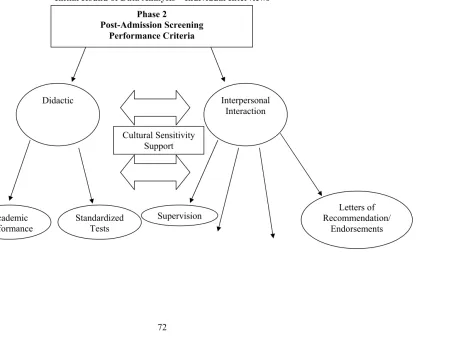
Figure 2 Post-admissions Screening Performance Criteria ... 80
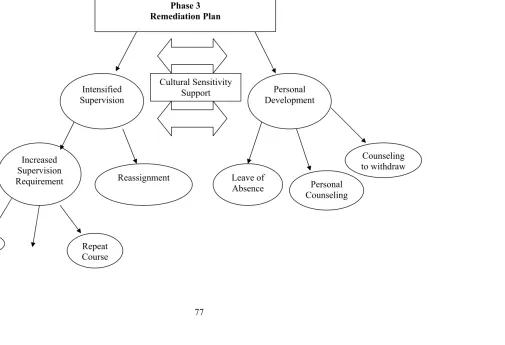
Figure 3 Remediation Plan...85
Figure 4 Pre-admissions Screening Performance Criteria ...94
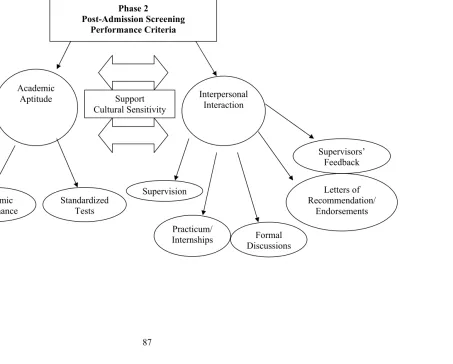
Figure 5 Post-admissions Screening Performance Criteria ...96
Figure 6 Remediation Plan...98
Figure 7 Post-admissions Screening Performance Criteria ...107
ABSTRACT
The purpose of this research was to examine counselor educators’ perceptions of the gatekeeping process. To fulfill this purpose, a qualitative methodology using grounded theory procedures was utilized. Eight counselor educators participated in three rounds of individual interviews. These counselor educators were located in the south-east region of the United States and had five or more years of experience teaching in CACREP-accredited graduate programs.
Initial interviews occurred face-to-face and follow-up interviews were conducted via electronic mail. Initial face-to-face interviews were audio taped and transcribed for the purpose of data analysis. Electronic mail interviews were printed for analysis purposes. For each round of individual interviews, coding procedures were utilized to identify emergent themes. Emergent themes were organized in four general categories: pre-admission screening phase,
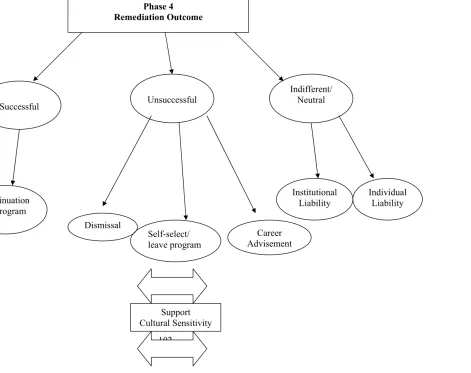
post-admission screening phase, remediation plan phase, and remediation outcome phase.
Additionally, two interwoven themes emerged related to each gatekeeping phase: support and cultural sensitivity.
CHAPTER ONE
INTRODUCTION
Overview
After I completed my master’s degree, I began looking for a school counseling position
in the greater New Orleans area. I had great difficulty because I did not possess a teaching certificate and at that time, Louisiana law required that school counselors have a valid teaching certificate. For eight months, I worked tirelessly with a group of professionals to persuade the
local school boards and the State Board of Education to waive this requirement. School systems that were considered “at need” were granted hiring privileges and began employing individuals
without prior teaching experience as school counselors. I was then hired by New Orleans Public Schools and became one of the first school counselors in the state who did not possess teaching certification.
I began my professional journey excited and eager but encountered a great deal of resentment from some faculty members because they coveted and desired school counseling positions. The culture of the school system seemed to be that these positions were saved for
teachers when they wanted to leave the classroom. I began working harder to promote school counseling and joined several professional organizations. I also began
working under supervision toward state licensure and enrolled at the University of New Orleans as a doctoral student.
As a doctoral student, I enrolled in a clinical supervision class and became more familiar
I began to feel a great commitment to providing quality supervision and a responsibility to the counseling profession and the community at large.
This detailed account of my personal experiences in counselor education and supervision
is provided as the foundation that stimulated my interest in the proposed study. The following sections include a rationale for this study and a summary of relevant research regarding
gatekeeping. A conceptual framework for this investigation is then offered. The research methodology is introduced. Finally, definitions of pertinent terms related to this study are provided.
Rationale for the Study
Professional standards and ethics codes require that counselor educators adhere to gatekeeping policies. The Council for the Accreditation of Counseling and Related Educational Programs (CACREP) is an affiliate organization of the American Counseling Association. This
organization standardizes counselor education programs including program training and
internship requirements. CACREP also presents standards that outline program development and student monitoring and retention. The “2001 Standards,” specifically Section II.F., state that
“when evaluations indicate that a student is not appropriate for the program, counseling faculty should assist in facilitating the student’s transition out of the program, and if possible, into a
more appropriate area of study” (CACREP, 2000). Furthermore, in the ACA Code of Ethics and Standards of Practice (ACA, 1995) counselors are encouraged to be aware of the academic and personal limitations of students and supervisees, offer remedial assistance when needed, and to
Despite these ethical and professional mandates, not all counselor education programs conduct annual evaluations of student performance in the programs (Bernard, 1975; Bradley & Post, 1991; Forrest, Elman, Gizara, & Haase, 1999; Olkin & Gaughen, 1991;
Vacha-Haase, 1995). Counselor educators may want to avoid confrontations with their students that will lead to unwanted legal challenges. Research pertaining to the gatekeeping process is limited.
Studies that focus on the process of gatekeeping among counselor educators can provide the counseling profession with recommendations for supervision and teaching practices. Given that there is a lack of research on the process of gatekeeping and its accompanying ethical and legal
challenges, exploratory research is needed. The following summary of relevant literature and the conceptual framework will provide a thorough rationale for proposed study and its chosen
methodology.
Summary of Relevant Literature
To provide a foundation for the proposed research, relevant literature pertaining to gatekeeping was presented. This summary illustrates that inquiry-based research into the process of gatekeeping was imperative and may contribute to the current knowledge.
Gatekeeping
For most of the past century, the social work profession has viewed faculty members as
gatekeepers. The profession has increased its emphasis on higher entrance standards and possible dismissal for incompetent students (Feldstein, 1972; Moore & Urwin, 1991). During the 1960s, counselor educators began exploring selection and retention standards for school counselors
characteristics that students should demonstrate before graduation. A decade later, gatekeeping procedures (Olkin & Gaughen, 1991) and gatekeeping models (Baldo, Softas-Nall, & Shaw, 1997; Frame & Stevens-Smith, 1995; Lumadue & Duffey, 1999) were introduced in the
counselor education literature.
Oklin and Gaughen (1991) reported that programs surveyed had, on average, 3.3%
problem students. Problem students were identified as having academic deficits, lack of clinical skills, interpersonal problems, and problems in supervision. They suggested a process for
identifying and evaluating problem students that included: (a) formulating operational definitions
of expected student behaviors; (b) possessing written policies and procedures that include information on evaluation and remediation and providing them to students upon entry into the
program; and (c) routinely examining students on both academic and nonacademic criteria. They further recommended that programs allow for due process and dismiss students who are not evaluated as competent.
Frame and Stevens-Smith (1995) devised a gatekeeping model that included nine essential characteristics of ethical and competent students. These included being: (a)
pen; (b) flexible; (c) positive; (d) cooperative; (e) willing to use and accept feedback; (f) aware
of impact on others; (g) able to deal with conflict; (h) able to accept personal responsibility; and (i) able to express feelings effectively and appropriately. They developed the Personal
Characteristics Evaluation Form to evaluate students on these nine characteristics at mid-term and at the end of the semester. The evaluation form is included in the student handbook and on each course syllabus.
through which faculty members may identify and report a particular student’s progress without becoming the target of the student’s reaction to a possible dismissal from the program. Their review and retention policy entails a more extensive and detailed due process for both the student
and faculty that includes a consistent check on the student’s progress.
Lumadue and Duffey (1999) incorporated the advantages of the two previous models and
added an additional step by offering a behavior specific student evaluation instrument. The faculty at Southwest Texas State University devised the Professional Competencies and Performance Evaluation(Southwest Texas, 1996). This instrument is based on competencies
stated in the ACA Code of Ethics and Standards of Practice (ACA, 1995) rather than on subjective characteristics. The PCPE is included in the admissions packet so students are made
aware of the instrument prior to being admitted into the program.
Student Impairment and Incompetence
Counselor educators began exploring gatekeeping models and procedures when the issues
of student impairment and incompetence arose. Impairment is defined as situationally diminished functioning after reaching an adequate level, whereas incompetence is having never reached the baseline of skill development (Forrest et al., 1999). Such definitions are important not only for
identification, but perhaps more importantly, for determining appropriate interventions (Forrest et al.).
Several disciplines, including counselor education and counseling psychology, have identified similar types of impairment among their students including academic and clinical deficiency, depression, emotional problems, ethical violations, fatigue, burnout, interpersonal
Olkin & Gaughen, 1991; Vacha-Haase, 1995). Forrest et al. (1999) offered several recommendations to counselor educators that include: being able to differentiate among incompetent, unethical, and impaired student performance; correlating evaluation criteria with
different types of impairment; and tracking the progress of identified students.
Legal and Ethical Issues
A review of the literature regarding the legal aspects of gatekeeping including evaluation, due process, remediation, and dismissal, indicates overwhelming support for educational
institutions’ decisions based on assessment and evaluation. In academic dismissal cases, the
courts have demonstrated their belief that school faculty, as compared to judiciary entities, are better qualified to evaluate a student’s performance (Board of Curators of Univ. of Missouri v.
Horowitz, 1976; Regents of Univ. of Michigan v. Ewing, 1985). The courts consistently have confirmed their “reluctance to overturn professional decisions made by qualified faculty in specialization programs” (Knoff & Prout, 1985, p. 791).
When considering the merits of cases, the courts recognize and have an expectation that procedures are in place. Due process procedures assume that: (a) students are notified, in writing, of their impending failure prior to dismissal and they have opportunities to appeal the allegations
(Gaspar v. Bruton, 1975; Greenhill v. Bailey, 1975), (b) faculty may require additional or remedial work as long as the work is related to the deficient area (Shuffer v. Trustees of
California State Universities and Colleges, 1977), (c) interpersonal skills, personal hygiene, and attitudes are considered evaluative in academic terms (Board of Curators of the University of Missouri v. Horowitz, 1978), and (d) graduation may be delayed so that remediation can occur
When students who do not exhibit personal and professional competencies graduate and work in the field, the graduating university becomes vulnerable to lawsuits from employers and clients. A suit filed against Louisiana Tech University (Custer, 1994) argued that the university
allowed a student to graduate without sufficient training and that the program had an obligation to the public to ensure the person graduating was competent in the area in which the degree is
bestowed.
In the ACA Code of Ethics and Standards of Practice (ACA, 1995), Section F details ethical standards for the training and supervision of student counselors. Counselor
educators are to assist incompetent students in obtaining remedial assistance and pursue
dismissal procedures when efforts have failed. The specific standard pertaining to this obligation
states:
Counselors, through on-going evaluation and appraisal, are aware of the academic and personal limitations of students and supervisees that might impede performance.
Counselors assist students and supervisees in securing remedial assistance when needed, and dismiss from the training program supervisees who are unable to provide competent services due to academic or personal limitations. Counselors seek professional
consultation and document their decision to dismiss or refer students or supervisees for assistance. Counselors assure that students and supervisees have recourse to address decisions made to require them to seek assistance or to dismiss them (Standard F.3.a.,). In summary, the gatekeeping responsibilities of counselor educators require them to be aware of
students’ inadequacies, facilitate due process when necessary, and assist students through remediation procedures.
Conceptual Framework
“A conceptual framework explains, either graphically or in narrative form, the main ideas
counselor educators’ perceptions of the gatekeeping process. Because counselor educators in master’s-level programs are responsible for the teaching, supervising, and advising of students, their perspective was especially pertinent when researching the gatekeeping process. Counselor
educators, as gatekeepers, have a legal, ethical, and programmatic responsibility to monitor and direct students who lack the appropriate skills of completing the benchmarks of a counseling
program.
With the many accreditation, ethical, and legal mandates placed on counselor educators, it was vital that researchers began an exploratory and systematic examination of the gatekeeping
process. Counselor educators’ perspectives assisted me to organize a theoretical framework and to generate new ideas for the counseling community. The research questions for this study were
designed to facilitate the exploration of counselor educators’ perceptions of gatekeeping.
Research Questions
The primary question that was explored in this study was, “What are counselor educators’ perceptions of the process of gatekeeping in master’s-level graduate programs?” More specific questions for the initial individual interview included the following: (a) How would you define
gatekeeping and its purpose? (b) What are your experiences in gatekeeping and how do you describe the process? (c) What does the gatekeeping process entail for you, your program, and
the institution where you are employed? (d) What are your perceptions of the efficacy of gatekeeping? (e) What are your perceptions about how multiculturalism pertains to the gatekeeping process? Follow-up questions were further developed throughout the duration of
Overview of Methodology
Other than surveys on gatekeeping and descriptions of specific gatekeeping models and procedures, research on gatekeeping with counselor educators was lacking. Miles and Huberman
(1994) indicated that discovery-based qualitative research can be conducted to provide more intimate detail about something that is already known or to gain a new perspective or a new way
of viewing something. For the purposes of this study, the grounded theory method of qualitative methodology was utilized.
Grounded Theory
Because little is known about the process of gatekeeping, naturalistic inquiry was appropriate for this study. A specific technique within qualitative methodology is grounded
theory. Grounded theory is defined as theory derived from the data that is likely to offer insight, enhance understanding, and provide a meaningful guide to action (Strauss & Corbin, 1998a). Grounded theory procedures are designed to gather information and build a theoretical
explanation of a phenomenon or a process resulting from participants’ perspectives (Lincoln & Guba, 1985). These procedures were utilized to enhance counselor educators’ understanding about the process of gatekeeping.
Role of the Researcher
The role of the researcher in qualitative research is quite complex. The researcher is
responsible for identifying a meaningful topic, formulating appropriate research questions, and developing a thorough research plan. The researcher serves as the main instrument during data collection and analysis (Strauss & Corbin, 1998a). As the researcher, I offered a unique
biases and subjectivity. Furthermore, the research plan remained somewhat flexible as questions developed from the individual interviews.
Participant Selection
Criterion sampling was utilized to recruit participants for this research. Gay and Airisian (2000) described criterion sampling as selecting participants who have something specific in
common and can provide rich examples of the phenomenon of interest. The criterion for participants in this study were counselor educators who teach in master’s-level CACREP-accredited counseling graduate programs. I specifically chose counselor educators who teach in
master’s-level CACREP-accredited programs because of the academic developmental stage of the students enrolled. Students at this academic level are primarily learning basic counseling
skills and techniques and are being shaped by the curriculum. CACREP-accredited master’s programs were chosen to ensure comparability of programs as they must adhere to specific standards and practices. I selected eight participants who had three or more years experience as a
counselor educator in the southeastern region of the United States. To provide information on the backgrounds of participants, participant profiles were generated based upon a demographics inventory [Appendix E] administered during the initial interview.
Data Collection
Individual interviews were the primary method of data collection for this study. Other
sources of data collection included personal observations and document reviews. Those who were selected and consented to participate in this study were asked to volunteer for a 60-90 minute initial interview and two follow-up interviews. Initial interviews occurred face to face
occurred. In keeping with the spirit of triangulation, I collected pertinent documents that provided additional sources of information such as student handbooks, course syllabi, and website information. These documents confirmed participants’ responses. Additionally,
participants consistently verified and confirmed the emerging theoretical conceptualizions and model through electronic mail.
Data Analysis
Data analysis was conducted throughout the duration of the study. Data analysis involves organizing what has been seen, heard, and read so that sense can be made from what has been
learned (Glesne, 1999). Miles and Huberman (1994) identified three phases for analyzing and interpreting data. These phases include: (a) data reduction, (b) data display, and (c) conclusion
drawing and verification.
According to Strauss and Corbin (1998a), data reduction involves a set of coding procedures identified as open coding, axial coding, and selective coding. Open coding involved
separating, identifying, labeling, and categorizing data into relevant themes. During axial coding, the organization of data entailed linking and grouping concepts according to the conditions that surround them. In the final stage of coding, selective coding involved the organization of
categories around a dominant or redundant theme.
A data display can visually assist the researcher in analyzing and drawing conclusions
based on a more thorough understanding. These data displays allow the researcher to connect categories, properties, and dimensions (Miles & Huberman, 1994). Data display techniques included matrices, graphs, charts, figures, networks, and tables.
Huberman, 1994). As the researcher, it was important that I remain open and flexible to alternative outcomes that may occur. Verification procedures entailed utilizing multiple data collection procedures, maintaining a reflexive journal, consulting on a weekly basis with a peer
debriefer, and validating the data through member checks.
Definition of Terms
The following definitions were derived from a combination of resources including counseling literature as well as my own personal experiences. These terms are defined according
to their use in the proposed study.
Gatekeeping
A process whereby a counselor education program intervenes when students are not equipped with the requisite knowledge, skills, and values for professional practice.
Gatekeepers
The decision makers regarding who is competent to enter the profession and who is not. They must be prepared to move students, even well-meaning students, out of the program if they are incompetent to enter the profession (Moore & Urwin, 1991).
Incompetent
Students who have never reached the baseline of skill development and do not possess the ability
to function adequately in their environment (Forrest, et al., 1999; Gladding, 2001).
Impairment
Students who have situationally diminished functioning after reaching an adequate level,
Evaluation
The process of collecting, analyzing, and judging data in order to make a decision (Gladding, 2001).
Supervision
Interventions provided by clinical supervisors to trainees in the counseling profession to enhance
professional functioning of the trainees, to monitor the quality of professional services offered to the clients they serve, and to serve as gatekeepers for trainees who enter the counseling
profession (Bernard & Goodyear, 1998).
Competence
Knowledge and ample relevant experience about a specific counseling subject (Rinas &
Clyne-Jackson, 1988).
Due Process
A student’s right to receive notice and be given the opportunity for a hearing prior to being
remediated.
Remediation
Acts of a counselor education program to assist impaired and/or incompetent students.
Remediation may include having students enroll in additional courses, complete an
additional internship, receive personal counseling, take an academic leave, or withdraw from the
program.
Multicultural Competence
Summary
The purpose of this chapter was to provide a rationale for this research, present relevant literature pertaining to gatekeeping, introduce the conceptual framework, and explain the chosen
methodology. Because research pertaining to the process of gatekeeping was limited, naturalistic inquiry was necessary. Therefore, this study involved qualitative methodology in order to
CHAPTER TWO
LITERATURE REVIEW
Introduction
This chapter includes a review of relevant literature and provides a framework for the
completed study. The chapter begins with an overview of the history of gatekeeping. Counselor impairment, multicultural sensitivity, and existential/humanistic counseling theories are
discussed. Next, accreditation standards and counselor educators’ supervision role are reviewed.
The final section includes specific gatekeeping models and a discussion of evaluation regarding these models.
History of Gatekeeping
Beginning with the turn of the century, the helping professions were led by social work
which was the first profession to emphasize entrance standards into the vocation. Since the late 1950s, social work literature consistently has reiterated the role of social work faculty as the collective conscience for the profession and has affirmed the need for faculty to screen those
who will enter the profession (Moore & Urwin, 1991). At the Allenberry Colloquium in 1971, social work educators were deemed responsible for guarding the exit gate of the profession.
Feldstein (1972) summarized the minutes from the colloquium:
Moore and Urwin (1991) described the emphasis on gatekeeping procedures that increased in the mid-1970s and suggested several historical trends of this development. Social work enrollments decreased in the 1970s and schools began accepting students who ordinarily
would have been rejected, to sustain enrollments and maintain existence at their university. At this time, social work accreditation standards recognized the influence of student selection and
retention and highlighted the importance of professional practice. In the 1980s, general
educational programs experienced increased enrollment but the social work field was suffering service cutbacks and lack of funding. As a result, student values and attitudes became an
evaluation measure. Moore and Urwin contended that if changes in student enrollment reflect economic opportunity rather than a commitment to a profession, this will have an impact on
potential clients and gatekeeping becomes of greater importance and concern.
During the 1960s, counselor educators began exploring selection and retention standards for school counselors (Keppers, 1960; Sweeney, 1969). Bernard (1975) described due process
procedures in dismissing unsuitable students; specifically, providing students with written program manuals upon admittance. Iovacchini (1981) examined the impact of academic due process decisions in counselor education and provided competencies and characteristics that
students should be able to demonstrate. A decade later, gatekeeping procedures (Olkin & Gaughen, 1991) and gatekeeping models (Baldo et al. 1997; Frame & Stevens-Smith, 1995;
Lumadue & Duffey, 1999) were introduced in the counselor education literature.
Student Impairment and Incompetence
definition endorsed by the American Counseling Association (ACA) or CACREP (Council for the Accreditation of Counseling and Related Educational Programs), student impairment and counselor impairment can harm clients and the reputation of the counseling profession.
Sheffield (1998) offered a concise definition that includes different types and causes of counselor impairment. He defined counselor impairment as “a condition that compromises and
reduces the quality of counseling received by clients that may be due to a physical or mental condition or stress associated with situational factors” (p. 97). Emerson and Markos (1996) believed that a precise definition is not as necessary as the awareness of potential harm that may
result from impaired counselors’ behaviors. Client welfare is vital, as is maintaining the profession’s integrity.
Impairment is defined as situationally diminished functioning after reaching an adequate level, whereas incompetence is having never reached the baseline of skill development (Forrest et al., 1999). Such definitions are important not only for identification, but perhaps more
importantly, for determining appropriate interventions (Forrest et al.). Several disciplines, including counselor education and counseling psychology, have identified similar types of impairment among their students, including academic and clinical deficiency, depression,
emotional problems, ethical violations, fatigue, burnout, interpersonal problems, marital problems, personality disorders, physical illnesses, resistance to supervision, social problems,
substance abuse, and unprofessional behaviors (Boxley et al., 1986; Olkin & Gaughen, 1991; Vacha-Haase, 1995). Many programs reported utilizing specific categories of professional competence when evaluating students including academic skills, assessment skills, clinical
Counselor educators may have difficulty identifying inadequate performance or impairment because they need to consider two areas of judgment, objective and subjective. Bradley and Post (1991) stated that identification of students with impairments is much more
difficult than identifying those with academic deficiencies. This may be because faculty
members can use objective data when making academic evaluations, but clinical judgments are
seen as more perceptual and subjective (Frame & Stevens-Smith, 1995). Faculty members also may struggle between their nurturing and evaluative roles, especially if a student serves as an advisee, supervisee, or graduate assistant. Counselor educators may find themselves in these dual
relationships with their students and find it difficult to distinguish among their roles. Finally, counselor educatorsmay want to avoid possible litigious experiences resulting from addressing
incompetent or impaired student behaviors.
Forrest et al. (1999) offered recommendations in order to clarify and further define impairment and incompetence and develop appropriate evaluation measures. First, counselor
educators need to be able to differentiate among incompetent, unethical, and impaired student performance to increase the possibilities for more accurate assessments, appropriate remediation plans, and effective documentation. Second, evaluation criteria and corresponding types of
impairment should be stated simultaneously and be discussed and agreed upon among all faculty members. Finally, students need to be tracked once they have been identified and their progress
must be a factor in considering whether they continue in an educational program.
Multicultural Sensitivity
It is imperative to identify, understand, and conceptualize student impairment and
impairment and incompetence. Forrest et al. (1999) expressed their surprise to find “very little written about the effects of race, gender, and other demographic variables on the identification and conceptualization of student impairment” (p. 670). Diversity is seen as a complicating issue
when assessing impairment and ethnicity differences are viewed as a hindrance to effectively dealing with an impaired trainee or student (Gizara, 1997; Vacha-Haase, 1995).
Forrest et al. (1999) speculated about the potential influences of multicultural issues in regards to understanding impairment. First, trainee behaviors that are questionable may overlap with their cultural experiences, gender socialization, or religious beliefs, and these experiences
are not easily reversible. Therefore, trainees will be more open to acknowledging their limitations if cultural sensitivity is inherent in the identification of inadequacies and in the
development of remediation plans. Second, there are certain stresses associated with diversity issues for both the trainer and the trainee. Accordingly, it is necessary that literature on multicultural competencies be reviewed and used in gaining insight into and understanding of
impairment.
The Relationship in Counseling
Counselor educators began considering gatekeeping procedures in response to
encountering impaired or incompetent students. When a student counselor may be impaired or
incompetent, it is important to remember that the quality of the counseling services may also be diminished. When conducting a session, the counselor offers a loan of the self to the client, which is often a very personal and intimate constant communication between the two. “I know
Humanistic/existential counseling theories, and person-centered counseling in particular, view the relationship as the catalyst that leads to constructive personal change. Because the quality of the relationship is key, the human qualities of the counselor are integral. Rogers (1961)
believed that the counselor’s personality is just as important as the knowledge and skills possessed. Counselors communicate through a process of genuine dialogue with their clients.
“The kind of person a therapist is, or the ways of being that he or she models, is the most critical factor affecting the client and promoting change” (Corey, 1996, p. 5).
The counselor’s personal self, when facilitating the relationship, is an integral component
in person-centered counseling. Seligman (2001) contended that counselors must possess self-awareness, have the ability to be fully present, and use themselves as an instrument of change.
Through the power of the relationship, counselors can promote self-esteem and empowerment by demonstrating the core conditions of active listening, empathy, caring and acceptance,
genuineness, and congruence. When these conditions are present in the counseling relationship,
the client is able to move along the path of self-actualization and become a more fully
functioning person. “I have read about the certain attitudes like acceptance and unconditional positive regard. There is something about the personal power of the helper that motivates,
inspires, soothes, and supports the client” (Kottler, 1997, p. 90)
Many counselors begin the counseling relationship by using person-centered tenets. The
emphasis on the relationship has influenced other counseling theories as well. Seligman (2001) found that person-centered counseling, because of its humanistic and phenomenological
emphasis, reflects great appreciation for individuality and diversity and has been incorporated
is through the quality of the relationship that the client will eventually gain independence and insight; therefore, it is imperative that the counseling relationship remain healthy and effective.
Accreditation Standards
To ensure that the highest standards have been met by the faculty and students,
counseling programs often seek national accreditation. Counseling programs that are accredited by CACREP (Council for the Accreditation of Counseling and Related Educational Programs) must abide by certain standards in order to maintain their accreditation. Possessing CACREP
accreditation involves institutional and professional support for quality training. CACREP’s “2001 Standards” define accreditation as: “a system for recognizing educational institutions and
professional programs affiliated with those institutions for a level of quality performance and integrity based on review against a specific set of published criteria or standards” (CACREP, 2000).
CACREP also presents standards that outline program development, organizational management, and student monitoring and retention. The “2001 Standards,” specifically Section II.F., state that “when evaluations indicate that a student is not appropriate for the program,
counseling faculty should assist in facilitating the student’s transition out of the program, and if possible, into a more appropriate area of study” (CACREP, 2000). This standard is consistent
with established institutional due process and the ACA Ethical Standards.
Gaubatz and Vera (2002) surveyed CACREP-accredited and non-CACREP-accredited programs and found that CACREP schools reported lower rates of both student deficiency and
reported struggling with gatekeeping procedures and the consequences they face when gatekeeping.
Ethical Considerations
In the ACA Code of Ethics and Standards of Practice (ACA, 1995), Section F details
ethical standards for the training and supervision of student counselors. Herlihy and Corey (1996) stated that students should be made aware of what will be expected of them both
academically and personally before they enroll in a counseling graduate program. According to
the Code of Ethics, Standard F.2.a., counselor educators are to orient the prospective student and include information such as type and level of skill acquisition, subject matter, basis for
evaluation, training components, supervision settings and site requirements, policies and
procedures pertaining to evaluation and dismissal, and employment prospects. Informed consent is an ethical as well as a legal matter. Graduate students have the right to be properly informed of
admissions and gradation requirements before they enter a program.
Herlihy and Corey (1996) stated that there will be times when counselor educators are made aware of students’ lack of performance in academic and personal areas. Remley and
Herlihy (2005) noted that it is possible for a student to possess strong intellectual ability but not the personal characteristics to be an effective counselor. Counselor educators are to assist
incompetent students in obtaining remedial assistance and pursue dismissal procedures when efforts have failed. The specific standard in the ACA Code of Ethics (1995) pertaining to this obligation states:
Counselors, through on-going evaluation and appraisal, are aware of the academic and personal limitations of students and supervisees that might impede performance.
services due to academic or personal limitations. Counselors seek professional
consultation and document their decision to dismiss or refer students or supervisees for assistance. Counselors assure that students and supervisees have recourse to address decisions made to require them to seek assistance or to dismiss them (Standard F.3.a.) Counselor educators are asked not to endorse students for certification, licensure,
employment, or completion of an academic program if they believe students are not qualified for
the endorsement (F.1.h). “A counselor educator who had strong reservations about a student’s ability to provide effective counseling services, and who allowed that student to progress through
and graduate from the program, would be doing a disservice both to the student’s future clients and to the counseling profession” (Remley & Herlihy, 2005, p. 295). Counselor educators are asked to follow these ethical guidelines when working with graduate students and to also utilize
evaluation measures to ensure consistency.
Legal Issues
A review of the literature regarding the legal aspects of gatekeeping including evaluation, due process, remediation, and dismissal, indicates overwhelming support for educational
institutions’ decisions based on assessment and evaluation. In academic dismissal cases, the courts have demonstrated their belief that school faculty, as compared to judiciary entities, are
better qualified to evaluate a student’s performance (Board of Curators of Univ. of Missouri v. Horowitz, 1976; Regents of Univ. of Michigan v. Ewing, 1985). The courts consistently have confirmed their “reluctance to overturn professional decisions made by qualified faculty in
specialization programs” (Knoff & Prout, 1985, p. 791).
According to court decisions, the definition of academic performance includes
evaluating, remediating, and dismissing students who are lacking certain criteria (Knoff & Prout, 1985; Olkin & Gaughen, 1991).
The legal challenges arising from academic dismissals have been based on the concept of
constitutional due process, which includes procedural due process and substantive due process. Kerl, Garcia, McCullough, and Maxwell (2002) defined procedural due process as a person’s
right to receive notice and an opportunity for a hearing prior to being deprived of a liberty or property interest. Substantive due process involves the protection of such liberty or property right from interference of an acting agent such as a university professor. The courts view registration
and enrollment in an academic program as a protected property interest and have determined that a dismissed student has a protected interest in continuing his or her education (Kerl et al.).
Because due process is recognized and supported in the courts, it is apparent that it is a necessary component in a gatekeeping model.
An examination of counselor education litigation reveals only cases of possible
harassment (Mandsager v. Univ. of North Carolina at Greensboro, 2003) and discrimination (Ivan v. Kent State University, 1994). Due to the absence of case law involving dismissals from counselor education programs, case law from medical schools will be reviewed because both
possess similar evaluation methods. “School authorities are uniquely qualified by training and experience to judge the qualifications of a student, and efficiency of instruction depends in no
small degree on the school’s faculty’s freedom of interference from other noneducational tribunals (Connelly v. University of Vermont, 1965). Olkin and Gaughen (1991) stated that medical schools parallel training in clinical programs because both specializations utilize
The courts have long recognized specific issues that surround due process. Due process requires that students are notified, in writing, of their impending failure prior to dismissal and that they have opportunities to appeal the allegations (Gaspar v. Bruton, 1975; Greenhill v.
Bailey, 1975). Faculty may require additional or remedial work as long as the work is related to the deficient area, such as enrolling in another semester of practicum or a specific course (Shuffer
v. Trustees of California State Universities and Colleges, 1977). Interpersonal skills, personal hygiene, and attitudes can be included in evaluations in academic terms as long as the
institutional decisions are reasonable in nature (Board of Curators of the University of Missouri
v. Horowitz, 1978). Finally, it is acceptable that graduation may be delayed so that remediation can occur (Board of Curators of the University of Missouri v. Horowitz.)
When students who do not exhibit personal and professional competencies graduate and work in the field, the graduating university becomes vulnerable to lawsuits from employers and clients. A suit filed against Louisiana Tech University (Custer, 1994) argued that the university
allowed a student to graduate without sufficient training and that the program had an obligation to the public to ensure the person graduating was competent in the area in which the degree was bestowed.
Supervision
“Supervisors, like counselor educators, serve as gatekeepers to the profession” (Remley & Herlihy, 2005, p. 313). One of the functions of the supervisor is to serve as gatekeeper for the profession (Lumadue & Duffey, 1999). Supervisors are asked to abide by certain legal and
role in gatekeeping (Lumadue & Duffey). When they are conducting supervision in a group setting or on an individual basis, counselor educators may find themselves in a university supervisory role. Bernard and Goodyear (1998) offered the most extensive definition of
supervision to date. They believe supervision is:
An intervention provided by a more senior member of a profession to a more junior member or members of that same profession. This relationship is
evaluative, extends over time, and has the simultaneous purposes of enhancing the professional functioning of the more junior person(s), monitoring the quality of professional services offered to client(s) she, he, or they see(s), and serving as a gatekeeper of those who are to enter the particular profession. (p.6)
Beginning students are immersing themselves in new knowledge and skill acquisition. Ronnestad and Skevholt (1993) noticed a large gulf between theory and practice experienced by
beginning students. While students are learning new theoretical and conceptual information, they are being evaluated in a practicum or clinical setting. They also found that students at this stage
need an effective supervisor who will assume the role of teacher and structure and direct the training.
The three most important goals in clinical supervision, according to research, include
teaching the supervisee, safeguarding the welfare of the client, and monitoring supervisee performance for licensing boards and professional associations (Haynes, Corey, & Moulton,
2003). Supervisees are expected to learn through supervision how to effectively counsel clients. This, in turn, will promote positive supervisee growth and development and also ensure the welfare of current clients. Supervisors also serve as gatekeepers for the profession. “Supervision
has a pivotal role in the evaluation of competence of the supervisee to practice within the profession” (Corey et al.,p. 7).
characteristics and behaviors are just as important as their academic acumen. “In addition to evaluating a supervisee’s academic ability, knowledge, and clinical skills, it is essential to identify and evaluate a supervisee’s personal characteristics, interpersonal behaviors, and
professional behaviors that are likely to influence their ability to effectively deliver mental health services” (Corey, Haynes, & Moulton, 2003). Remley and Herlihy (2005) advised that
supervisors must address student incompetence to maintain the counseling programs’ reputation in the community and the profession itself. Essentially, the supervisor acts to protect future consumers of counseling services (Remley & Herlihy).
Supervisees should receive ongoing feedback regarding their performance. This feedback should be consistent and provide the supervisee with alternative recommendations. In cases
when supervisees are demonstrating incompetence, remedial plans should be offered. Due process is pivotal in having all parties heard. Corey, Haynes and Moulton (2003) recommended several types of remediation including increased supervision, a leave of absence, counseling,
additional coursework, repeating a practicum or internship, or joining a personal growth group. Only after remediation interventions have failed should a student be considered for dismissal from the program.
Gatekeeping Models
The majority of research regarding gatekeeping focuses on the gatekeeping policies and/or models of universities. Oklin and Gaughen (1991) surveyed master’s-level graduate programs in hopes of gathering specific information on the policies and procedures that are used
programs surveyed reported that 3.3%, on average, were problem students and this finding was consistent with similar studies over a decade ago (Boxley et al. 1986; Tedesco, 1982). However, a recent study revealed that faculty members reported that approximately 10.4% of their
master’s-level students were poorly or marginally suited for the counseling field (Gaubatz & Vera, 2002).
Based on their findings, Olkin and Gaughen (1991) suggested a process in which the identification and evaluation of problem students would include: (a) formulating operational definitions of expected student behaviors; (b) possessing written policies and procedures that
include information on evaluation and remediation and providing them to students upon entry into the program; and (c) routinely examining students on both academic and nonacademic
criteria. They further recommended that programs allow for due process and dismiss students who are not evaluated as competent.
Frame and Stevens-Smith (1995) presented a gatekeeping model for counselor education
programs to enhance the monitoring and dismissal processes of impaired counselors and to reduce any possible harm to clients. The faculty were asked to develop a policy statement that described the personal characteristics of ethical and competent professional counselors. These
nine essential characteristics include being: (a) open; (b) flexible; (c) positive; (d) cooperative; (e) willing to use and accept feedback; (f) aware of impact on others; (g) able to deal with
conflict; (h) able to accept personal responsibility; and (i) able to express feelings effectively and appropriately. Lumadue and Duffey (1999) supported this gatekeeping model by stating, “this process has contributed greatly to the profession’s awareness of the need for a gatekeeping
After identifying nine essential characteristics of counselors, the Personal Characteristics Evaluation Form was created (Frame & Stevens-Smith, 1995). This instrument uses a 5-point Likert-scale instrument to evaluate students at each mid-term and at the end of each semester on
the nine essential characteristics; a rating of 3 or above is considered a minimum standard of behavior. The policy statement and evaluation form were included in the student handbook and a
summary was provided on each course syllabus. Students were asked to sign an agreement that they had read the handbook and would abide by the policies and procedures of the department. When a student receives more than one evaluation form detailing the inadequacies, the student is
asked to meet with their advisor to discuss remediation which may include personal therapy, behavioral change, or additional field experiences. If a student receives more than three
evaluation forms in one semester, the student is asked to meet with a committee to discuss reconsidering continuation in the counseling program.
Baldo et al. (1997), while commending Frame and Stevens-Smith’s efforts toward
establishing a monitoring and dismissal process, provided an alternative gatekeeping model that encouraged the use of a faculty review committee, in conjunction with the entire counseling faculty. They believe a review committee facilitates a process in which faculty members may
identify and report a particular student’s progress without becoming the target of the student’s reaction to a possible dismissal from the program. Their review and retention policy entails a
more extensive and detailed due process for both the student and faculty. Baldo et al. have contended that there are several advantages to their model: (a) due process is evident throughout the implementation cycle; (b) the student and retention committee members are continually
student has an opportunity to present his or her case to the faculty. These policies and procedures have been used successfully in two separate cases when students’ clinical skills and interpersonal interactions were questionable.
Lumadue and Duffey (1999) incorporated the advantages of the two previous models, but added an additional step by offering a behaviorally specific student evaluation instrument. The
faculty at Southwest Texas State University devised the Professional Competencies and Performance Evaluation(PCPE; Southwest Texas, 1996). This instrument is endorsed by the Texas Association for Counselor Education and Supervisors (TACES) and is based on
competencies stated in the ACA Code of Ethics and Standards of Practice (ACA, 1995). Lumadue and Duffey (1999) stated that there are two additional advantages of their
instrument. First, students are notified of the gatekeeping procedures during the admissions process via a letter included in the admissions packet informing them that they will be evaluated based on their professional and personal competencies throughout the program using the PCPE.
Second, the competencies listed on the PCPE are outlined in the Code of Ethics and Standards of Practice and are specific behaviors rather than subjective characteristics. By using these specific competencies, awareness and consistency are increased among faculty members and students. By
utilizing the PCPE very early in students’ academic careers, fewer students reach the end of the program disappointed and upset and in need of remediation or dismissal.
Kerl et al. (2002) stressed that the PCPE establishes and provides an effective means to enforce higher standards of personal and professional conduct throughout the duration of a student’s academic career. They further stated that faculty members should include professional
evaluation criteria in all syllabi and emphasize that meeting professional standards is as
professional attitudes and clinical behaviors need to be included as a part of academic performance (Kerl et al.)
Kerl et al. (2002) summarized the PCPE as a proven and effective gatekeeping model
which offers students systematic feedback regarding their professional competencies, is
beneficial in documenting and reinforcing dismissal procedures, and is useful in designing and
assessing remediation progress. Furthermore, they contended that as national accreditation agencies continue to move toward an emphasis on assessing learning outcomes, it becomes more important to integrate professional competency evaluation measures such as the PCPE into a
holistic counselor education program.
Evaluation
For gatekeeping models to be helpful to counselor educators when identifying and conceptualizing impaired or incompetent students, it is necessary to evaluate the effectiveness of such procedures. Forrest et al. (1999) raised concerns about the design and effectiveness of
assessment. “No one has written about the type, quality, length, and focus of the assessment process to determine cause or explanation for trainee inadequate performance (Forrest et al., p. 668).
Lumadue and Duffey (1999), who developed the PCPE (ProfessionalCompetencies and Performance Evaluation), stated that additional research is needed to address the empirical
effectiveness of the PCPE. Additionally, the inter-rater reliability among faculty, and between faculty and site supervisors should be assessed to assure consistency when utilizing the PCPE.
Frame and Stevens-Smith (1995) contended that “as counselor education programs begin
effectiveness” (p. 126). They recommended that these evaluations be accomplished through the use of student and faculty questionnaires and assessments conducted by site supervisors.
Summary
This chapter provided an overview of the relevant literature surrounding gatekeeping and
related issues. A history of gatekeeping was presented including the emergence of gatekeeping in counselor education. The definitions of student impairment and student incompetence were provided as well as types of impairments students may possess. Impairment was presented within
a multicultural perspective and recommendations were offered to ensure consistent measures for the identification and development of remedial plans.
In addition, specific counseling theories that emphasize the importance of the personhood of the counselor were discussed. A review of CACREP accreditation standards and ethical standards that pertain to gatekeeping was presented. Specific legal and ethical mandates of
informed consent and due process were highlighted. Legal cases that involved admissions, remediation, and dismissal procedures were reviewed. The university supervisor’s role as gatekeeper was discussed and recommendations were offered. Finally, counselor education
gatekeeping models were described and the need for the evaluation of these models was stressed. With the increase of legal and ethical demands placed on counselor educators and the lack of
CHAPTER THREE
METHODOLOGY
Introduction
Although several gatekeeping models of counseling graduate programs have been
published over the last decade (Baldo, Softas-Nall, & Shaw, 1997; Frame & Stevens-Smith, 1995; Kerl et al., 2002; Lumadue & Duffey, 1999; Olkin & Gaughen, 1991), few researchers have focused on counselor educators’ perceptions of the process of gatekeeping. Furthermore,
researchers have failed to utilize a process-oriented exploration when studying the remediation needs or dismissal of counseling graduate students. Our society is becoming more litigious in
nature due to increased attention on individual rights. It is imperative that researchers begin an exploratory and systematic inquiry into the gatekeeping practices of counselor educators.
Because qualitative methodology is exploratory in nature and process-oriented, it was an
ideal choice for this study. A form of qualitative inquiry, grounded theory, was utilized so that theoretical conceptualizations could be formed to assist counselor educators in their gatekeeping practices. This chapter includes a discussion of the qualitative methods that was used in this
study, research questions that were applied, data collection and analysis procedures, and a summary of verification methods that were utilized to ensure the trustworthiness and credibility
of the findings.
Rationale for Using Qualitative Research Design
Qualitative inquiry may be utilized when discussing a particular occurrence or explaining
Any type of research that produces findings not arrived at by statistical procedures or other means of quantification. It can refer to research about persons’ lives, lived experiences, behaviors, emotions, and feelings as well as about organizational functioning, social movements, cultural phenomena, and interactions between nations. (p. 10-11)
Miles and Huberman (1994) indicated that qualitative research is conducted to: (a) confirm previous research on a topic; (b) provide more intimate detail about a topic that is
already known; (c) gain a new perspective or a new way of knowing something; and (d) expand an existing study’s scope. Qualitative researchers are more interested in process and meaning as opposed to outcome and products (Creswell, 1994). Qualitative inquiry works especially well
when the methodology of choice is complimentary to the researcher’s style and preferences and when exploring areas in which there are many unknowns.
Merchant (1997) stated that qualitative methodology can be especially useful when conducting research in the field of counseling because both counselors and qualitative
researchers: (a) are taught early on to be aware of their beliefs, biases, prejudices, and values; (b)
possess skills such as active listening, attending, paying close attention to non-verbals and body language and using probing questions; (c) have a high tolerance for ambiguity and uncertainty; (d) focus on process and content and utilize observations, interpretations, and reflections; and (e)
set high goals to empower and advance those with whom they work.
Lumadue and Duffey (1999) suggested a need for further study regarding faculty
concerns about assuming the role of gatekeeper and possible resistance to the process. They believed that further research in this area could assist programs to address faculty issues about gatekeeping, and thus facilitate the development, incorporation, and implementation of
of cases available to study. They further stated that grounded theory would be useful in developing and generating theory on impairment issues.
Because of the limited amount of research related to the perceptions of counselor
educators and the process of gatekeeping, qualitative methodology was an appropriate choice for this exploratory and discovery-based study. A form of qualitative inquiry, grounded theory, was
employed so that a conceptual framework of the gatekeeping process for counselor educators could be developed, expanded, and eventually utilized.
Grounded Theory
According to Strauss and Corbin (1998), grounded theory was developed by two sociologists, Barney Glaser and Anselm Strauss, who saw a need to develop theory from the
exploration of human interaction and behavior in social contexts. Based on the convictions that human behavior is complex and varying, individuals act on the significance of the meaning they attach to circumstances, and individuals actively respond to problematic circumstances, a
foundation was laid for the development of theory grounded in information from social
experiences. Therefore, grounded theory provides a framework that is derived from the data and is likely to offer insight, enhance understanding, and provide a meaningful guide to action.
Grounded theory procedures are designed to collect information and to construct a theoretical explanation of a phenomenon or a process as a result of investigating participants’ experiences
(Lincoln & Guba, 1985). Themes and theoretical constructs eventually emerge and provide an understanding of the phenomenon at hand. Because I was interested in learning more about the process of gatekeeping as experienced by counselor educators, grounded theory procedures
Research Question
Due to the limited research on counselor educators’ experiences with gatekeeping, an exploration and investigation regarding this phenomenon added to the current knowledge. First,
it was necessary to develop a researchable question. The purpose of this question was to clarify what the researcher wanted to know about the phenomenon at hand (Strauss & Corbin, 1998).
Because I was interested in counselor educators’ perceptions of the gatekeeping process, this study explored the question, “What are counselor educators’ perceptions of the gatekeeping process in CACREP-accredited master’s-level graduate programs?” More specific questions
included the following: (a) How would you define gatekeeping and its purpose? (b) What are your experiences with gatekeeping and how do you describe the process? (c) What does the
gatekeeping process entail for you, your program, and institution where you are employed? (d) What are your perceptions of the efficacy of gatekeeping? (e) What are your perceptions about how multiculturalism pertains to the gatekeeping process?
Role of the Researcher
A researcher’s role in qualitative methodology is quite complex. Patton (2002) noted that,
in qualitative inquiry, the researcher is the instrument and the credibility of the findings hinges to a great extent on the skill, competence, and rigor of the person doing the fieldwork. The
researcher must identify a meaningful topic, formulate appropriate research questions, and develop a comprehensive research plan. Because a human being serves as the instrument in qualitative research, self-awareness can be an asset both in data collection and data analysis
and interprets responses. Therefore, by practicing self-awareness, the researcher is “sharpening the instrument” (Patton).
Creswell (1994) stated that researchers should clearly state their biases, values, and
judgments at the beginning of an investigation and throughout the entire process. An integral part of conducting qualitative research is stating any assumptions and biases about the topic being
researched. As the researcher, I responded to this challenge and stated my assumptions and biases up front. I also utilized various methods to bracket my biases and subjectivity and analyze my findings critically.
Researcher Assumptions and Biases
My primary assumption underlying this research endeavor was that counselor education
programs, specifically master’s-level programs, have a duty to safeguard the counseling profession and to assist students who are academically or personally incompetent to practice counseling. Because master’s CACREP-accredited programs offer many introductory counseling
courses, as well as a 100 hour practicum and a 600 hour internship, I believed that counselor educators in these programs would be familiar with the academic and personal acumen of the students. I also believed that this is an opportunity when counseling graduate students can
receive remedial assistance such as taking additional courses or completing an additional internship before they enter the workforce in order to be better prepared and competent to
practice counseling.
When I began my undergraduate career as a Sociology major, I enrolled in a class for credit in which I volunteered at a site for a semester. I chose to work in a Guidance and