2017 International Conference on Information, Computer and Education Engineering (ICICEE 2017) ISBN: 978-1-60595-503-2
Construction of Personalized Network
Teaching Model Based on Learning
Data Analysis
Hong Jun Yang and De Zhong Sun
Abstract. The rapid development of information technology has spawned the pace of higher education teaching reform. Learning data analysis can be easily presented student learning conditions, to provide a basis for teachers to adjust their teaching strategies. The use of data analysis methods to guide individualized learning has become the inevitable trend of online education. Based on the theory of individualized learning and data analysis, this paper designs a personalized learning model based on learning data collection, learning analysis and teaching strategy adjustment and teaching evaluation, so as to provide learners with personalized learning resources and learning methods, to better guide individual learning and improve learning outcomes.
Keywords: Learning data analysis; network environment; personalized learning; teaching model
1. Introduction
The rapid development of information technology for the field of education provides a convenient, such as the ubiquitous sharing of knowledge resources, free from learning time and space constraints. In the actual teaching process, because of the students' foundation and learning style there is a big difference, so how to develop appropriate teaching objectives, learning environment and learning resources to meet the individual needs of students has become an important research direction of the current teaching reform. The so-called personalized learning refers to the recognition of individual differences based on the promotion of personalized development as the goal, for students' personality and potential to take appropriate methods, content and evaluation methods, to provide students with free expression of the views and achievements of the opportunity , Its ultimate goal is to promote the individual development of students. Traditional face-to-face teaching is more _____________________
dependent on the teacher's explanation and interaction, and did not take into account the individual needs of students. But in the process of how to make students better use of cyberspace and network teaching platform for effective online learning is worthy of our in-depth discussion of the problem [1].
Based on the individualized learning theory and data analysis, this paper designs a personalized learning model based on learning data collection, learning analysis and teaching strategy adjustment and teaching evaluation, so as to provide learners with personalized learning resources to better guide personal learning and improve learning outcomes.
2. A review of related research
2.1 Personalized teaching
Personalized teaching refers to the teachers according to the students' cognitive ability and learning style, develop different learning objectives, and take different teaching strategies, so as to improve teaching efficiency. In the eighteenth century, Rousseau was filled with personalized teaching ideas in his educational essay "Emil". Because of the science and technology at that time, people did not take his personalized teaching concept seriously. But into the information society, a one-size-fits-all model so that more and more independent thinking ability of innovative students unbearable, more and more suited to science and technology with the ever-changing information society. So there has been personalized education. Keller's personalized teaching system (SPI) [2], the teacher according to the difficulty of learning content decomposition, put forward learning methods, and then students according to their own learning ability to choose their own content and methods, so as to maximize the learning motivation. With the rapid development of computer technology and the Internet, the way of computer-aided instruction is further updated. Teachers can learn the data collection and visual analysis, so as to provide students with personalized learning resources and personalized teaching strategies to meet the students' personalized learning needs.
2.2 Online teaching
platform, push differentiated learning resources; differentiate teaching management and teaching evaluation. Students' interactive learning content, learning methods and interaction Evaluation, etc.; between students and teachers to answer questions, anytime, anywhere to solve the problem. However, to achieve the real personalized teaching, we must have the data as a support, through the students' learning status, learning effect and evaluation data and teaching strategies and teaching resources of the timely adjustment.
2.3 Learning analysis
With the arrival of large data age, the continuous emergence of massive learning data needs to use new methods and tools for processing, learning analysis came into being and become a hot topic in the field of educational research and application. The essence of learning analysis is to use technology to obtain data, analyze data, discover the law, intervene, and improve the effectiveness of learning and teaching. Learning analysis includes data collection, data analysis, student learning, audience feedback, intervention five elements, the specific process shown in Figure 1.
[image:3.612.147.466.290.323.2]Figure 1. Learning the data analysis process.
George Siemens [4] argues that learning analysis enables the discovery of information and social connections by applying intelligent data, learner data and analytical models, and provides predictions and recommendations for learning. Slade and Prinsloo argue that [5] learning analysis is the collection, analysis, use and dissemination of data generated by learners that provide behavioral references to provide learners with appropriate and effective cognitive and management support. Macfadyen et al. [6] study analysis needs to interpret the characteristics, problems or laws of massive data, and must rely on learning theory, organizational behavior theory, excellent teaching practice case, knowledge community, student motivation and other research fields. It can be found that although data mining, network technology, learning theory and teaching theory provide theoretical basis for the study and practice of learning analysis, the theory of learning data analysis has not been systematically applied.
3. Personalized Teaching Model Based on Learning Data Analysis
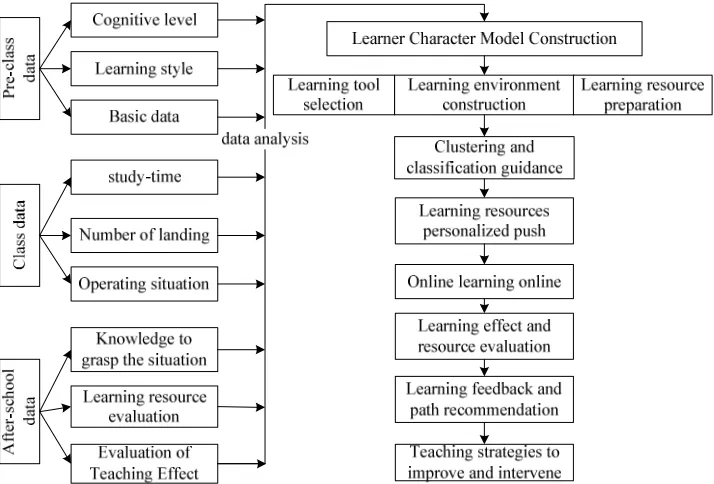
Figure 2. Personalized Teaching Model Based on Learning Data Analysis.
3.1 Data collection and analysis
By collecting the learners' front-end data and online learning dynamic data, we lay the foundation for the construction of learner's characteristic model. The pre-data include learning style, cognitive ability, interest preference and basic information. Students will complete the learning style test after first registration. Learning through the study behavior, dynamic adjustment of learning style; based on learning style and evaluation results recommended personalized learning content, start online learning; combined with learning time, landing number and evaluation results of the data feedback, access to dynamic data in class; After the end of the evaluation, the formation of after-school data, including the unit test results, student self-evaluation, student evaluation of teaching content and resources.
3.2 Learning resources and the creation of the environment
By analyzing the static and dynamic data of the interaction between the learner and the online learning system, the learner characteristic model is established, and then under the guidance of the teaching goal, the individualized learning environment is constructed. Through the analysis of the pre-class, Prepare and push the personalized learning resources on demand; by observing the students' learning situation, the trend forecast; teachers to master the learners learning situation, adjust the teaching strategies, the implementation of teaching intervention.
3.3 Online learning and event design
resource sharing, through a variety of online operations to complete the task objectives. Personalized learning activities are divided into pre-class, class and after school and other links.
The pre-class links mainly include the pre-test data of the students to determine the teaching objectives of this course. Then, according to the teaching objectives and front-end data, the teachers push the learning resources for students to prepare. In view of the problems in the preview, the students discuss and discuss the questions and ask questions. The teachers will improve the teaching plan according to the front-end data, the teaching objectives, the teaching contents and the pre-class test results.
The main part of the course includes the introduction of the subject, mainly to explain the problems of students before and during the course of the study; pre-class preview results show and view sharing; teachers push pro-learning tasks and content. Students to open a group of collaborative learning, interactive discussion, and finally submit the results and display; the implementation of evaluation and feedback, students need to complete the quiz, the teacher based on the test results to find students in this lesson learning effect.Based on the evaluation results and feedback data, the teachers explain and discuss the weak links. According to the learning data, the teachers plan to expand the training to consolidate the teaching contents.
After the class includes teachers based on online learning situation, for each student's learning data, the individual resources of the push; for individual questions for micro-interaction; finally, the classroom summary and reflection teaching strategies.
3.4 Evaluation and teaching strategy adjustment
Personalized teaching mainly uses the whole process of dynamic evaluation, which is pre-class, class, after-school comprehensive evaluation system; make full use of learning data for real-time diagnosis and feedback. The use of data analysis technology to provide evaluation exercises, to collect and judge students have mastered the knowledge and technology, automatic data analysis and feedback for the teacher's teaching strategy to adjust to provide timely and accurate information.Through the quizzes and evaluation system, the implementation of evaluation and statistics, rapid feedback students learning effect, timely adjustment of classroom teaching progress and teaching content, in order to achieve continuous improvement of teaching effectiveness.
4. Conclusion
adjustment of teaching objectives and teaching strategies, as well as differentiated resources to meet the individual needs of students.
Acknowledgment
The work is supported by the Scientific Research Foundation of College of Manzhouli, Inner Mongolia University (No. MYKZ1705); Inner Mongolia philosophy and social science planning project (No. 2017NDC133).
References
[1] Martinez M. Key Design Considerations for Personalized Learning on the Web[J]. Journal of Educational Technology & Society, 2001, 4(1):26-40.
[2] Keller F S. Ten Years of Personalized Instruction [J]. Teaching of Psychology, 1974, 1:4-9.
[3] Kim K J, Bonk C J. The Future of Online Teaching and Learning in Higher Education: The Survey Says. [J]. Educause Quarterly, 2006, 29:22-30.
[4] Siemens G, Baker R S J D. Learning analytics and educational data mining: towards communication and collaboration[C]// International Conference on Learning Analytics and Knowledge. ACM, 2012:252-254.
[5] Prinsloo P, Slade S. An evaluation of policy frameworks for addressing ethical considerations in learning analytics[C]// International Conference on Learning Analytics and Knowledge. ACM, 2013:240-244.