Abstract: Crane hook is a prominent component used for lifting the loads. They often undergo failure due to stress concentration. Hence a study on stresses induced in them helps us better understand how to prevent failure. The aim of the present work is to design a crane hook of different materials and calculate the von mises stress distribution and total deformation when load is applied at an ambient temperature of 25°C. This work gives us an insight on deformation and stress distribution in hooks of different materials, used for lifting in practical scenarios (under normal working conditions).
Keywords: crane hook, von mises stress distribution, total deformation, Ansys workbench.
I. INTRODUCTION
Cranes are industrial machines that are mainly used for material movements in constructional sites, production halls, assembly lines, storage areas, power stations and similar places. [1] Crane hooks are the components which are used to lift heavy loads using wire ropes and cranes in constructional sites and industries. [2, 3] It is basically a hoisting fixture with pulley elongated by a rope or a chain designed to engage a ring or link of a lifting chain or the pin of a shackle or cable socket and must follow the health and safety guidelines. Hence, such an important component in an industry must be manufactured and designed in a way so as to deliver maximum performance without failure. [4, 5] Crane hooks with trapezoidal, circular, rectangular and triangular cross section are commonly used. Crane hooks are highly liable components and are always subjected to failure due to accumulation of large amount of stresses. Cranes undergo continuous loading and unloading. This causes fatigue of the crane hook. If the crack is developed in the crane hook, it can cause fracture of the hook and lead to serious accident. [6] In ductile fracture, the crack propagates continuously and is more easily detectable and hence preferred over brittle fracture. In brittle fracture, there is sudden propagation of the crack and the hook fails suddenly. This type of fracture is very dangerous as it is difficult to detect. [7] Control of lifting hooks can prevent the fall of the load during service and minimize the risk to which people are exposed in the danger zone. [8] Bending stresses combined with tensile stresses, weakening of hook due to wear, plastic deformation due to overloading, and excessive thermal stresses are some of the other reasons for failure.
Continuous use of crane hooks which increases the magnitude of stresses and eventually results in failure of the hook may be prevented if the stress concentration areas are well predicted and some design modification is made to reduce the stresses in these areas. [9] Thus the aim of this work is to design a crane hook using NX-CADD and assign Material properties of commonly used materials for hooks using ANSYS workbench and calculate the total deformation and von mises stress distribution. Von mises stress theory is considered in this work as the factor of safety in this theory is high which facilitates a safer design. The analysis is performed considering an ambient temperature of 25°C in order to replicate normal working conditions.
II. IMPLEMENTATION
Technology (IJRASET)
Figure 1: 2-D Sketch of crane hook.
[image:3.612.225.389.311.432.2]A 3-D model of the crane hook was designed based on the sketch using NX-CADD modeling software as shown in figure 2.
Figure 2: 3-D model of crane hook designed using NX-CADD.
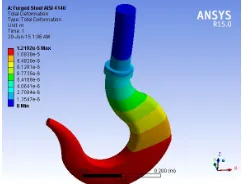
[image:3.612.228.386.495.619.2]Figure 4: Total Deformation in Forged Steel AISI 4140
Figure 5: Total Deformation in Grey cast iron
[image:4.612.245.366.113.205.2]Figure 6: Total Deformation in Carbon Steel ASTM A148
Figure 7: Total Deformation in Stainless steel 316(marine)
Technology (IJRASET)
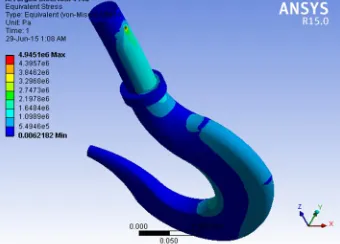
Figure 8: Von Mises stress distribution in Forged Steel AISI 4140
Figure 9: Von Mises stress distribution in Grey cast iron
[image:5.612.221.391.83.205.2]iron
Carbon Steel
ASTM A148 1 KN 1.1583*10-5 4.9451*106
Stainless steel
316(marine) 1 KN 1.2207*10
-2
4.9574*106
IV. CONCLUSIONS
When a point load of 1KN was applied at an ambient temperature of 25°C, it was observed that maximum total deformation occurred in grey cast iron and minimum total deformation occurred in Stainless steel 316(marine). Thus among the four materials used, Stainless Steel 316(marine) is least prone to plastic deformation which leads to failure of the material. It can be seen from the analysis that maximum stress concentration occurred in the hole region in the neck of the hook which is to be attached to a chain or a pulley support. From the Von Mises stress distribution it was observed that maximum stress concentration occurred in Stainless Steel 316(marine) and least stress concentration occurred in Forged Steel AISI 4140 and Carbon Steel ASTM A148. Although the values were comparable with those of Grey cast iron and Stainless Steel 316(marine). Thus, among the viable materials used for making hooks which were analyzed in this work, it was concluded that Forged Steel AISI 4140 and Stainless Steel 316(marine) are more suitable for making crane hooks as they have higher capacity to withstand loading.
REFERENCES
[1] Naresh Chauhan, P.M.Bhatt, “Improving the durability of the E.O.T crane structure by finite element analysis, and optimize the hook material for improving its solidity”, Procedia Engineering, vol. 38, pp 837 – 842, 2012.
[2] Santosh Sahu, Ritesh Dewangan, Manas Patnaik, Narendra Yadav, “Study of Crane Hook Having Trapezoidal Section by Finite Element Method & Design of Experiments”, International Journal of Modern Engineering Research , vol. 2, issue.4, pp 2779-2781, July-August 2012.
[3] Ajeet Bergaley, Anshuman Purohit, “Structural Analysis of Crane Hook Using Finite Element Method”, International Journal of Science and Modern Engineering, vol. 1, issue-10, September 2013
[4] Mr.A.Gopichand, Ms. R.V.S.Lakshmi, Mr. B. Maheshkrishna, “Optimization of design parameters for crane hook using taguchi method”, International Journal of Innovative Research in Science, Engineering and Technology, Vol. 2, Issue 12, December 2013.
[5] Rashmi Uddanwadiker, “Stress Analysis of Crane Hook and Validation by Photo-Elasticity”, Engineering, vol. 3, pp 935-941, 2011.
[6] Patel Ravin B, Patel Bhakti. K, Patel Priyesh M, Patel Dixit. H, Patel Hirak S, “Design and analysis of crane hook with different material”, International Journal of Advanced Computer Technology
[7] Chetan N. Benkar, Dr. N. A. Wankhade, “Finite element stress analysis of crane hook with different cross sections”, International Journal for Technological Research in Engineering, vol. 1, Issue 9, May-2014.
[8] Y. Torres, J.M. Gallardo, J. Domínguez , F.J. Jiménez E, “Brittle fracture of a crane hook”, Engineering Failure Analysis, vol. 17, pp 38–47, 2010.